No place for atomic power amidst climate chaos and pandemics

 Nuclear lessons from the corona virus March 22, 2020 by beyondnuclearinternational No place for atomic power amidst climate chaos and pandemics Beyond Nuclear By Linda Pentz Gunter
There is nothing like being shut in your own home, alone with your human and animal nearest-and-dearests, to focus the mind on the crises that now swirl outside.
And it is “crises” in the plural, because while all the focus is of course on the corona virus, there is one giant crisis steamrollering toward us that will wreak orders of magnitude more devastation, but somehow does not merit the same kind of emergency action. And that, of course, is climate change.
Denial seems to be one of the greatest of human achievements. It’s also why we have nuclear power. It will be too cheap to meter. An accident will never happen. We will solve the radioactive waste problem later.
With the climate crisis upon us, it should be patently obvious that building new nuclear power plants anywhere is not an intelligent plan. Sea level rise is a certainty, and fires, flooding, storm surges, and earthquakes are likely to increase both in frequency and force. Building power plants that contain an inventory of long-lived lethally radioactive fuel in such an environment is insane. And then to build them on shorelines, as is currently happening at Hinkley, and is threatened for similar settings at Sizewell and possibly Wylfa — all of them in the UK— is irresponsible in the extreme.
The covid-19 crisis almost certainly won’t be the last such Biblical-style plague to strike us. If we fail to learn our lesson this time around, we will be equally unprepared and again forced to quarantine ourselves and call workforces home. But while wind turbines will keep spinning and solar arrays will continue to collect sunlight without any help from us, workers cannot leave a nuclear power plant untended. Knowing this, why build an installation that cannot be safely abandoned?
The answer, of course, is money. But not the industry’s money. Ours. We are the ones who will pay to keep nuclear plants running, and to build new ones……….
The French government is on record as saying that without Hinkley and Sizewell, the French nuclear brand will be finished. It sees the UK projects as an essential redemptive step, given the EPR, its supposed flagship, has so far been a financial and technical shipwreck.
As the Financial Times pointed out in May 2018, “Avoiding delays in the UK will be crucial if EDF is to persuade international buyers — and its own shareholders, not least the French government — that the EPR’s teething problems are over.” ……..
Maybe all of us, becalmed and decelerated, will start to come to our senses. We may see climate changes for the better as we stop flying and driving and cruise-shipping and needlessly consuming, while factories are idled and our air quality improves. The wake-up call comes at a terrible price. But the bigger cost could be everything. https://beyondnuclearinternational.org/2020/03/22/nuclear-lessons-from-the-corona-virus/
Hinkley nuclear worker concerned at coronavirus risks at the site
station but has seen no changes.
https://www.somersetlive.co.uk/news/somerset-news/worker-fears-spread-coronavirus-hinkley-3967724
Seabrook Nuclear plant operating with limited staff
Nuclear plant operating with limited staff Gloucester Daily Times, By Jack Shea Staff Writer, 22 Mar 20
- SEABROOK, N.H. — Amid the ongoing coronavirus pandemic, the company that owns the Seabrook, New Hampshire, nuclear power plant is continuing to operate the facility with only essential personnel, while the Nuclear Regulatory Commission is doing most of its work to monitor the plant remotely.
In a statement Friday afternoon, Lindsay Robertson, spokesperson for NextEra Energy, which owns the Seabrook nuclear plant, said the company has implemented its “pandemic plan,” and is following its procedures for ensuring continuity of service……..
According to Diane Screnci, spokesperson for the NRC, the commission is continuing oversight of the Seabrook plant and other facilities licensed by the commission, although much of the work is being done over the phone.
Screnci said the NRC’s resident inspectors are onsite at a reduced frequency, and are able to do their jobs remotely……
The C-10 Foundation monitors the safety of the Seabrook nuclear power plant because six Massachusetts communities — Amesbury, Merrimac, Salisbury, Newburyport, Newbury and West Newbury — are within a 10-mile radius of the plant and are considered part of the New Hampshire plant’s emergency planning zone. https://www.gloucestertimes.com/news/local_news/nuclear-plant-operating-with-limited-staff/article_b477e508-1332-5eb5-8592-3d9426ab897d.html
Officials: Nuclear Plant Employees Failed to Check for Fires
Officials: Nuclear Plant Employees Failed to Check for Fires https://www.fireengineering.com/2020/03/22/485749/officials-nuclear-plant-employees-failed-to-check-for-fires/ 3.22.20 HARTSVILLE, S.C. (AP) — Employees at a South Carolina nuclear plant failed to check for fires when making rounds and then falsified log books, federal officials said.The violations of policy happened in 2017 at Duke Energy’s Robinson Nuclear Plant near Hartsville, The Nuclear Regulatory Commission said in a statement.
The employees were supposed to check two emergency diesel generating rooms for fire each hour, but didn’t perform their duties while reporting they made rounds in log books, the agency said.
Duke Energy agreed to retrain employees about the importance of the fire checks not only at the Robinson plant, but also at the utility’s other five nuclear facilities.
Coronavirus threatens nuclear power plants with staff shortages, possible shutdowns
 Covid-19 could cause staff shortages in the nuclear power industry https://bellona.org/news/nuclear-issues/2020-03-covid-19-could-cause-staff-shortages-in-the-nuclear-power-industry
As the Covid-19 virus grinds world economies to a halt, several national nuclear operators are weighing how to keep sensitive and vulnerable infrastructure chugging along in the face of staff shortages due to the illness. March 20, 2020 by Charles Digges
As the Covid-19 virus grinds world economies to a halt, several national nuclear operators are weighing how to keep sensitive and vulnerable infrastructure chugging along in the face of staff shortages due to the illness.
A number of national contingency plans, if enacted, could mark an unprecedented step by nuclear power providers to keep their highly-skilled workers healthy as governments scramble to minimize the impact of the global pandemic that has infected more than 240,000 people worldwide.
Officials in the United States, for instance, have suggested they might isolate critical technicians at the country’s nuclear power plants and ask them to live onsite to avoid exposure to the virus. Many operators say they have been stockpiling beds, blankets and food to support staff for that purpose.
Should that fail to stem the pandemic’s effect on the nuclear work force, the US Nuclear Regulatory Commission said it would shut down any of America’s 60 nuclear plants if they can’t be appropriately staffed.
Other operators, however, are already seeing the spread of the infection slow things down. In Great Britain, authorities announced they are shutting down a nuclear fuel reprocessing site at Sellafield after 8 percent of its 11,500-strong staff were forced to self-isolate to avoid infection. The move came after an employee tested positive for the coronavirus last week, and will lead to a gradual shutdown of the site’s Magnox facility, which is slated to close permanently later this year.
Sellafield told employees that it would work to “make best use of available people”.
France, the world’s most nuclear dependent nation, announced staff reductions at its Flameville plant in the country’s north. The EDF, France’s national nuclear operator, said that, due to high regional infection rates, it was reducing the staff at the plant from 800 to 100. As early as March 10, EDF reported that three workers at nuclear power plants had tested positive for the virus.
A spokesman for the Flameville plant told Reuters that “we have decided to only keep those in charge of safety and security” working while the coronavirus crisis runs its course.
French grid operator RTE expects nuclear availability to stay 3.6GW below the 2015 to 2019 average and likewise predicts a national drop in nuclear demand.
Taken together, the emergency responses of national nuclear operators are symptoms of a big problem that Covid-19 posed to the nuclear sector, Mycle Schneider and independent energy and nuclear policy analyst told Power Technology Magazine.
“Covid-19 constitutes an unprecedented threat on sensitive strategic infrastructure, above all the power sector,” he said.
“The French case sheds light on a fundamental societal safety and security issue that got little attention in the current Covid-19 crisis. Operation and maintenance of nuclear power plants draw on a small group of highly specialized technicians and engineers.”
Because of that very level of specialization, some in the US nuclear industry are considering simply isolating nuclear plant technicians onsite in a sort of preventative quarantine.
Maria Korsnick, head of the Washington-based Nuclear Energy Institute told the New York Times that plants are “considering measures to isolate a core group to run the plant, stockpiling ready-to-eat meals and disposable tableware, laundry supplies and personal care items.”
The US Department of Homeland Security is responsible for working with nuclear power plant operators to maintain their operations during a national emergency. On Thursday, the department issued guidelines that echoed the ones suggested by Korsnick.
When continuous remote work is not possible, businesses should enlist strategies to reduce the likelihood of spreading the disease,” the DHS said in a memo, according to Power Magazine. “This includes, but is not necessarily limited to, separating staff by off-setting shift hours or days and/or social distancing.”
Roy Palk, president and CEO of New Horizons Consulting, which advises energy companies in the US, told the magazine that, “There are a lot of unanswered questions because this is not a model everyone is used to working with.”
To keep the lights on, he said, utilities and power plant operators might have to consider keeping staff onsite for the long term.
“These operators have a license to operate, they’re highly skilled, highly trained. They have to be certified.” he told the magazine. “These individuals need to be on the job, they need to be healthy. They have a big obligation to the public.”
Reuters contacted a dozen other power providers, all of whom said they were implementing plans to moderate risks to their employees and to ensure continuity of service, but who declined to comment on whether sequestering staff was a possibility.
In New York, Consolidated Edison Inc, which provides power to around 3.3 million customers and gas to about 1.1 million customers in New York City and Westchester County – both of which are under virus lockdowns – said it was taking steps to keep critical employees healthy, including separating some control center personnel to other locations where they can perform their work.
Duke Energy Corp, which provides power to 7.7 million customers in six states and gas to 1.6 million customers in five states, said it instituted additional worker screening measures, such as temperature checks, at generating and other critical facilities.
Puget Sound Energy, which serves more than 1.5 million customers in the Seattle, Washington area – a region hard hit by coronavirus – said all non-essential workers are working remotely, and the utility has limited access to facilities that provide critical operations.
Britain’s Trident nuclear submarine base is in the grip of a Coronavirus scare
Coronavirus crisis at UK’s nuclear submarine base as twenty staff show COVID-19 symptoms and are forced into isolation Daily Mail,
By JAKE WALLIS SIMONS ASSOCIATE GLOBAL EDITOR FOR MAILONLINE 20 March 2020 Britain’s Trident nuclear submarine base is in the grip of a Coronavirus scare, MailOnline can reveal. Her Majesty’s Naval Base Clyde, the home of the UK nuclear deterrent in Scotland, has nearly 20 possible cases of infection so far. Servicemen and women reporting Covid-19 symptoms have been isolated in sealed rooms with ‘no entry’ signs taped to the doors. The number of possible victims is currently in the ‘low teens’, a source said, and preparations are underway for a major outbreak. The top floor of the Linton Block, one of 17 accommodation buildings at the facility, has been converted into a makeshift quarantine unit and sealed off. A medical team equipped with masks and yellow biohazard bags was seen at work on the base last week. A Ministry of Defence source insisted that Britain’s nuclear deterrent remains fully operational and that there is no possibility of a national security emergency. So far nobody has tested positive on the base, he added, though he acknowledged that testing has not been carried out in every case, in line with Government guidelines. Staff have complained at being ‘left in the dark’, saying they have not been informed about the virus risk at the facility. ‘Nobody knows what is going on and it’s making people frightened,’ one told MailOnline on condition of anonymity. ‘We have not had a single communication to tell us what is happening, and every day more rooms are sealed off. ‘Everyone here is expected to put our lives on the line for the Navy. We just want the Navy to level with us and tell us what the risk is.’ A Ministry of Defence source said that the jigsaw of different private firms and Navy units that operate the base has made it difficult to communicate news about the virus effectively to all staff. The source said: ‘The base is endeavouring to ensure all personnel are aware of the situation and the measures being taken to safeguard personnel.’ HMNB Clyde, commonly known throughout the Navy as ‘Faslane’, is home to 3,000 service personnel, 800 of their families and 4,000 civilian workers, mainly from the engineering firm Babcock International. The Linton Block, where the quarantine facility is being set up, is opposite the ‘Supermess’, one of the base’s major leisure hubs. In addition to separate bars for officers and sailors, there are restaurants, cafes and shops, with a bowling alley, ski slope, swimming pool and gym nearby. All of these are now seen as a ‘petri dish for the virus’, according to personnel serving at the site, and most are being closed down as the top brass prepares for the worst. The sports schedules, which include circuit training and team events such as football, rugby and boxing, have been cancelled, and the swimming pool has been shut in an effort to combat the spread of the disease………https://www.dailymail.co.uk/news/article-8131755/Coronavirus-crisis-UKs-nuclear-submarine-base.html |
|
French nuclear workers in fear of coronavirus infection
French nuclear plants tighten hygiene procedures over coronavirus worries Benjamin Mallet, PARIS (Reuters) 21 Mar 20, – French utility EDF is introducing stricter hygiene procedures at its nuclear plants after walk-outs by a small number of workers who feared getting infected with coronavirus during radiation screening, union and industrial sources said on Friday.Under French labor laws, staff have the right to walk off the job if they consider there is a clear and imminent threat to their health or safety.
After working in the radioactive areas of nuclear plants, staff have to step through narrow shower-style portals in their underwear to be checked for possible radiation exposure. Workers feared the surface areas of these portals could become a source of spreading the virus.
EDF (EDF.PA) has now agreed to clean the portals twice per eight-hour shift, to increase security distances between workers and provide gloves and hand sanitizer, according to new internal rules announced on Tuesday.
“The problem has been solved or will be soon, provided that guidelines are respected,” CGT union member Thierry Raymond told Reuters.
CGT nuclear specialist Thomas Plancot said more than a dozen workers – mostly contractors – had walked out over the issue in the nuclear plants of Fessenheim, Civaux and Chooz, including a sixty-year-old who considered himself especially at risk because of his age. …….https://www.reuters.com/article/us-health-coronavirus-france-nuclear/french-nuclear-plants-tighten-hygiene-procedures-over-coronavirus-worries-idUSKBN2172J1
Terrorism fears for Japan’s nuclear reactors – safety measures still not implemented
|
The threats to nuclear power plants are not restricted to earthquakes and tsunamis. The United States’ Nuclear Regulatory Commission compiled anti-terrorism measures in the wake of the 9/11 terrorist attacks. Japan similarly compiled new safety standards that went into effect in 2013. The new standards in Japan envisage such threats as an airliner crashing into a nuclear reactor building. They require plants to have an emergency control room at least 100 meters away from the nuclear reactor building, along with cooling pumps, so that the operator can continue to cool the nuclear reactor even if the adjacent control room is damaged…….. Terrorist acts that could result in major nuclear disasters are risks that must be taken into consideration at nuclear plants. Under ordinary circumstances, response facilities should be ready to operate at the time the nuclear reactor is restarted. Originally the deadline for completing the construction of response facilities was “within five years of the enforcement of new regulatory standards.” However, this deadline was extended due to delays in the screening of nuclear reactors that was required before they could be restarted. The revised deadline was within five years of the authorization of construction plans, including safety and other measures, after each nuclear power plant was judged to comply with new safety standards introduced after the Fukushima nuclear disaster. The first reactor to be restarted after the Fukushima nuclear disaster was the No. 1 reactor at the Sendai plant, and now it has reached that five-year deadline. Yet in spite of being granted a five-year period of grace, it failed to meet the requirements. It can’t be helped if the operator is seen as having made light of safety. So far nine nuclear reactors operated by the Kansai, Shikoku and Kyushu power companies have been restarted — and all of them are facing delays in the construction of response facilities. Kansai Electric Power Co. is due to halt the No. 3 and No. 4 reactors at its Takahama nuclear power plant this year. Power companies will not be able to avoid a loss of revenue from taking their reactors offline, and if they have to supplement power shortages with thermal power generation, then it will incur additional fuel costs. Furthermore, the costs for safety measures besides those to counter terrorism are only increasing. The former catchphrase that “nuclear energy is a cheap and stable source of power” is no longer applicable. There is no “finish line” when it comes to safety. The latest nuclear reactor suspension is surely the result of officials making light of this fundamental principle. https://mainichi.jp/english/articles/20200319/p2a/00m/0na/009000c |
|

Sellafield nuclear waste site to close due to coronavirus
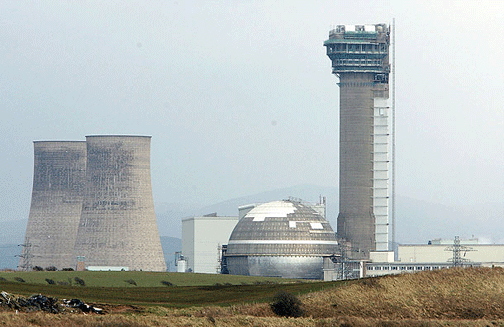 Sellafield nuclear waste site to close due to coronavirus, Magnox reprocessing plant will begin controlled shutdown after 8% of staff self-isolate,Guardian Jillian Ambrose Energy correspondentThu 19 Mar 2020 Britain’s nuclear waste site will shut its reprocessing plant at Sellafield after more than 8% of its staff began self-isolating to prevent the spread of the coronavirus.
The controlled shutdown of the Magnox plant in Cumbria will begin in the next few days after an outbreak of the Covid-19 virus within Sellafield’s 11,500 staff.
The company told employees on Tuesday evening that it would “scale back some operations” to “make best use of available people”.
Sellafield revealed last weekend that a staff member had tested positive for coronavirus, and on Monday it confirmed that another employee with suspected Covid-19 had begun self-isolation.
The number of Sellafield employees self-isolating has quickly climbed to about 1,000.
A Sellafield spokesman said the number in self-isolation included people with symptoms of the virus as well as those with underlying health conditions who undertaking social distancing……..
The Magnox plant is to close permanently this year. It began reprocessing waste from Britain’s first nuclear reactors in 1964 to separate the uranium and plutonium, which can still be reused from the spent radioactive waste. https://www.theguardian.com/business/2020/mar/18/sellafield-nuclear-waste-plant-close-coronavirus-staff
Japan’s Sendai nuclear reactor 1 offline because not meeting safety requirements
|
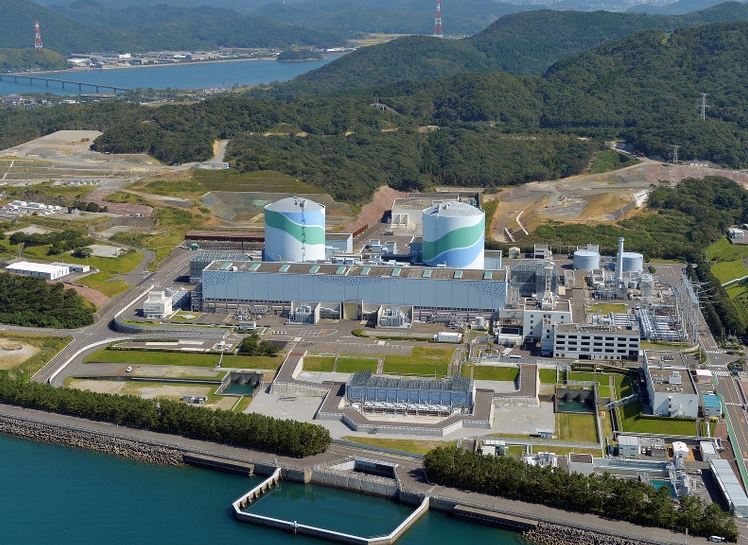
Nuclear reactor in southwestern Japan goes offline, https://www3.nhk.or.jp/nhkworld/en/news/20200316_35/ The operator of a nuclear power plant in southwestern Japan has suspended one of its reactors as it cannot meet the deadline for building mandatory facilities to deal with emergencies.Kyushu Electric Power Company began work to reduce output at the No.1 reactor at the Sendai plant in Kagoshima Prefecture at 2:30 a.m. on Monday. The reactor went offline at 1:01 p.m.
Kyushu Electric will start regular inspections on the reactor earlier than scheduled. This is the first time for a reactor to go offline because of its failure to meet the government’s new regulations. The regulations were drawn up in 2013 after the nuclear accident at the Fukushima Daiichi plant two years earlier. They require nuclear plant operators to construct facilities to ensure the safety of reactors in the event of emergencies such as acts of terror and aircraft crashes. The Nuclear Regulation Authority, or NRA, obliges the operators to erect such facilities within five years of construction plans being approved. Kyushu Electric says it aims to put the reactor back online after completing the necessary facilities by December and gaining approval from the NRA. The utility also plans to shut down the No.2 reactor at the Sendai plant in May for failing to meet the deadline. Kansai Electric Power Company is also expected to suspend the No.3 and No.4 reactors at the Takahama nuclear plant in Fukui Prefecture in August and October respectively for the same reason. |
|
Canisters for high level nuclear wastes likely to corrode faster than expected
 Corrosion poses risk in nuclear waste storage https://frontline.thehindu.com/science-and-technology/article30913130.ece March 13, 2020 The materials the United States and other countries plan to use to store high-level nuclear waste are likely to degrade faster than previously thought because of the way those materials interact, new research from Ohio State University shows.
The findings, published in a recent issue of “Nature Materials”, show that corrosion of nuclear waste storage materials accelerates because of changes in the chemistry of the nuclear waste solution and the way the materials interact with one another. “This indicates that the current models may not be sufficient to keep this waste safely stored,” Xiaolei Guo, lead author of the study was quoted in the news release issued by the university.
The team’s research focussed on storage materials for high-level nuclear waste that is highly radioactive. While some types of the waste have half-lives of about 30 years, others like plutonium have a half-life that can be tens of thousands of years.
With no long-term viable nuclear waste disposal mechanism yet in operation, in most sites nuclear waste is stored near the plants where it is produced. While countries around the world have debated the best way to deal with nuclear waste, only Finland has started construction of a long-term repository for high-level nuclear waste.
In general, proposals involve mixing nuclear waste with other materials to form glass or ceramics and then encasing those pieces of glass or ceramics, now radioactive, inside metallic canisters. The canisters are buried deep underground in a repository to isolate it.
Researchers found that when exposed to an aqueous environment, glass and ceramics interact with stainless steel to accelerate corrosion, especially of the glass and ceramic materials holding nuclear waste. The study measured the difference between accelerated corrosion and natural corrosion of the storage materials. “In the real-life scenario, the glass or ceramic waste forms would be in close contact with stainless steel canisters. Under specific conditions, the corrosion of stainless steel will go crazy,” he said. “It creates a super-aggressive environment that can corrode surrounding materials.”
To analyse corrosion, the research team pressed glass or ceramic “waste forms” (the shapes into which nuclear waste is encapsulated) against stainless steel and immersed them in solutions for up to 30 days, under conditions that simulate those under Yucca Mountain, the proposed nuclear waste repository in the U.S.
Those experiments showed that when glass and stainless steel were pressed against one another, stainless steel corrosion was “severe” and “localised”. The researchers also noted cracks and enhanced corrosion on the parts of the glass that had been in contact with stainless steel.
Part of the problem lies in the Periodic Table. Stainless steel is made primarily of iron mixed with other elements, including nickel and chromium. Iron has a chemical affinity for silicon, which is a key element of glass.
The experiments also showed that when ceramics, another potential holder for nuclear waste, were pressed against stainless steel under conditions that mimicked those beneath Yucca Mountain, the ceramics and stainless steel corroded in a “severe localised” way.
Nuclear waste transport disrupted by measures to stall coronavirus
 GNS 13th March 2020, The return transport of vitrified waste from the reprocessing plant in Sellafield to the interim storage facility in Biblis planned for this spring is suspended. As the police authorities responsible for accompanying and carrying out the transport have stated, the police operation is currently not responsible with regard to the current “spread of corona” and therefore cannot be carried out in spring as planned. The companies and institutions involved in the repatriation will agree on a new deadline for the repatriation in due course.
Nuclear Agency employee accused of illegally storing radioactive waste at his home
Jakarta. An employee of the National Nuclear Energy Agency, or Batan, was named suspect for illegally storing radioactive waste at his home in Batan Indah housing complex in South Tangerang, Banten, police have said.
The news came a month after nuclear authorities launched decontamination operation at the housing complex, followed by criminal investigation by the National Police.
The cleanup, that took weeks to complete, was called after the Batan and the Nuclear Energy Regulatory Agency (Bapeten) detected radiation in the area. Around 100 drums of soil and grass containing radioactive substance have been removed from the area.
The suspect, identified by initials S.M., is accused of storing radioactive substance called Cesium-137 and dumping toxic waste at the housing complex, National Police’s special crimes director Brig. Gen. Agung Budijono said on Friday.
“We named S.M. as suspect after we conducted the crime scene investigation,” Agung told Jakarta Globe’s sister publication Beritasatu.com.
“At least 26 witnesses, including Batan and Bapeten officials, have been questioned by the police and it was learned that S.M. has no license for storing and processing radioactive waste,” he said.
The suspect is alleged to have run illegal decontamination services for money at his home. He is charged under the 1997 law on nuclear energy, which carries a sentence of up to two years’ imprisonment.
His position at Batan was not disclosed.
A joint investigation involving Batan, Bapeten and police was formed last month after radiation was detected and nine resident had to undergo medical examination for fear of exposure to Cesium-137, which may pose serious risks to human health including cancer and death.
Nuclear agencies ban companies who hold license to use Cesium-137 from storing or managing radioactive waste themselves. They must send it to Batan’s Center for Radioactive Waste Technology in South Tangerang.
The Batan facility is located around 45 kilometers from the housing complex.
German grid and nuclear plant operators step up coronavirus precautions
Background German operators of key energy infrastructure including power stations, gas and electricity grids have stepped up their precautions against a coronavirus pandemic, reports Jakob Schlandt in Tagesspiegel Background. “The primary goal is to protect employees from infection – especially employees in the system control room,” a spokesperson from power grid operator 50Hertz told the energy newsletter. Employees are no longer allowed to travel to areas classified as risky – even private trips are banned – and all other business trips are being kept to a minimum. The operator also said it had reduced visits by foreign delegations “practically to zero”. Like other transmission grid operators, 50Hertz also operates a reserve control centre as a back-up.
The company said it is prepared for worst-case scenarios. In case of emergency, the system control room and other key technical divisions can operate “self-sufficiently and largely isolated from the environment for weeks. To this end, we have staff, a lounge and a bedroom, as well as food supplies,” the spokesperson said, adding key spare parts for the grid are also available. Germany’s other transmission grid operators Tennet, Amprion and TransnetBW have similar policies, according to the article. Gas grid operator Open Grid Europe (OGE) has also put additional precautions in place to make sure gas can continue to flow to consumers, including cancelling all internal and external events that are not strictly necessary. Germany’s eleven gas grid operators also have reserve control rooms as a back-up at their disposal.
Nuclear power plant operators have also put new rules in place. RWE, for example, is disinfecting radiation meters that are regularly used by employees more often. The company has also closed visitor centres, and cancelled scheduled group visits to lower the risk of infections, a spokesperson told the publication.
Starting the Olympic torch relay in Fukushima should remind us of the dangers of nuclear power
 Starting the Olympic torch relay in Fukushima should remind us of the dangers of nuclear power https://www.japantimes.co.jp/opinion/2020/03/13/commentary/japan-commentary/starting-olympic-torch-relay-fukushima-remind-us-dangers-nuclear-power/#.XmvxdqgzbIU
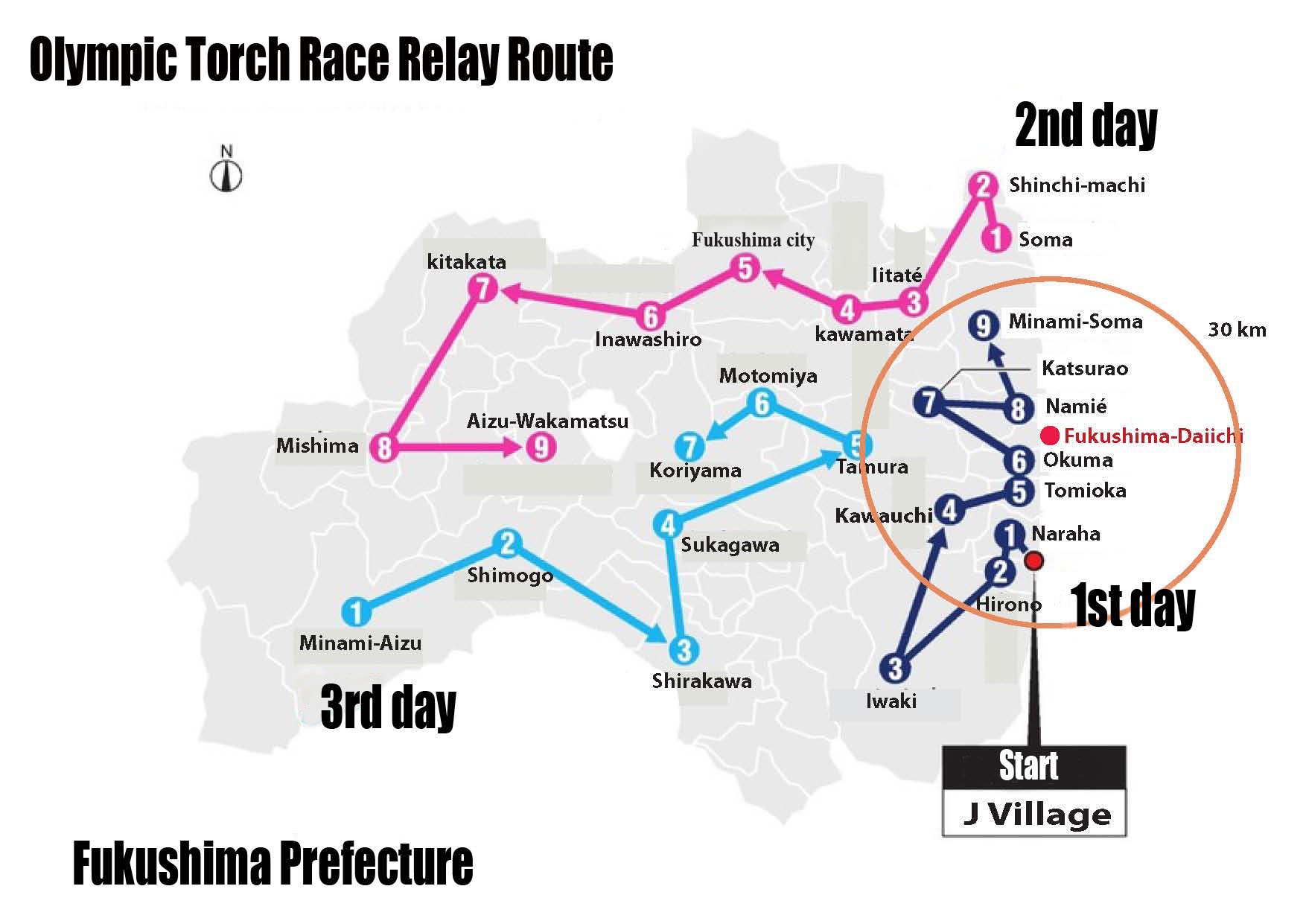
BY CASSANDRA JEFFERY AND M. V. RAMANA 13 Mar 20, If the Tokyo Olympics are held on schedule, thousands of athletes will soon come to Japan. Considering the multiple reactors that melted down there nine years ago, in March 2011, the government’s decision to start the ceremonial torch relay in Fukushima Prefecture seems a bit odd, to say the least.
While radiation levels may have declined since 2011, there are still hot spots in the prefecture, including near the sports complex where the torch relay will begin and along the relay route. The persistence of this contamination, and the economic fallout of the reactor accidents, should remind us of the hazardous nature of nuclear power.
Simultaneously, changes in the economics of alternative sources of energy in the last decade invite us to reconsider how countries, including Japan, should generate electricity in the future.
Japan is not alone in having experienced severe nuclear accidents. The 1986 Chernobyl accident also contaminated very large areas in Ukraine and Belarus. As in Japan, many people had to be evacuated; about 116,000, according to the 2000 report of the U.N. Scientific Committee on the Effects of Atomic Radiation. Many of them never did return; 34 years after the accident, thousands of square kilometers remain closed off to human inhabitation.
Events such as these are, naturally, traumatic and result in people viewing nuclear power as a risky technology. In turn, that view has led to persistent and widespread public opposition around the world.
This is evident in Japan too, where opinion polls show overwhelming opposition to the government’s plans to restart nuclear plants that have been shut down. One poll from February 2019 found 56 percent of respondents were opposed to, with only 32 percent in favor of, resuming nuclear operations. Other polls show significant local opposition, one example coming out of Miyagi Prefecture. Even the Japan Atomic Energy Relations Organization, which aims to promote nuclear power, finds that only 17.3 percent prefer nuclear energy, with much larger majorities preferring solar, wind and hydro power.
There is also the immense cost of cleaning up after such accidents. Estimates for the Fukushima disaster range from nearly $200 billion to over $600 billion. In 2013, France’s nuclear safety institute estimated that a similar accident in France could end up costing $580 billion. In Japan, just the cost of bringing old nuclear power plants into compliance with post-Fukushima safety regulations has been estimated at $44.2 billion.
Even in the absence of accidents and additional safety features, nuclear power is already very expensive. For the United States, the Wall Street firm Lazard estimates an average cost of $155 per megawatt-hour of nuclear electricity, more than three times the corresponding estimates of around $40 per MWh each for wind and solar energy. The latter costs have declined by around 70 to 90 percent in the last 10 years. In the face of the high costs of nuclear power — economic, environmental and public health — and overwhelming public opposition, it is puzzling that the government would persist in trying to restart nuclear power plants.
To explain his support for the technology, Prime Minister Shinzo Abe claims that the country cannot do without nuclear power, especially in view of climate change concerns. The claim about the necessity of nuclear power makes little sense. Since 2011, the country has been generating only a fraction of the nuclear electricity it used to generate, and yet the lights have not gone off. Further, starting in 2015, Japan’s total greenhouse gas emissions have fallen below the levels in 2011, because of “reduced energy consumption” and the increase in “low-carbon electricity.” The latter, in turn, is because of an increasing fraction of renewable energy in electricity generation, a factor that could play an important role in the future.
Some, including the Global Energy Network Institute and a group of analysts led by Stanford University’s Mark Jacobson, argue that Japan could be 100 percent powered by renewable energy. Regardless of whether Japan reaches that goal, there is little doubt that Japan could be expanding renewable energy, and that increased reliance on renewables makes economic and environmental sense.
Instead, the Abe government seems to be involved in lowering incentives for the development of solar energy, and promoting nuclear power. Efforts by Abe to support the failing and flailing nuclear sector in Japan are indicative of the significant political power wielded by the “nuclear village,” the network of power companies, regulators, bureaucrats and researchers that controls nuclear and energy policy.
Moreover, Abenomics involves exports of nuclear components and technology, as well as conventional arms, as an important component. So far, despite many trips by Abe to various countries, Japan has yet to export any reactors in the last decade; a project with the most likely client, Turkey, collapsed because of high costs.
This suggests one possible explanation: Perhaps Abe realizes that before exporting nuclear reactors, he first has to shore up the domestic nuclear industry and prove that Japan has fully recovered from the 2011 nuclear disaster. But is that worth the risk?
Restarting nuclear reactors or constructing new ones, should that ever happen, only increases the likelihood of more nuclear accidents in the future and raises the costs of electricity. Regardless of who we cheer for at the Olympic Games, nuclear power does not deserve our applause.
1 This Month



26 September – International Day for the Total Elimination of Nuclear Weapons


PLEASE OPPOSE HR 8255 AND S.3639 – bills would accelerate satellite deployment, with no environmental review or safeguards – https://ncstd5li.quorum.us/campaign/169331/
To see nuclear-related stories in greater depth and intensity – go to https://nuclearinformation.wordpress.com
-
Archives
- September 2026 (257)
- August 2026 (330)
- July 2026 (355)
- June 2026 (287)
- May 2026 (306)
- April 2026 (356)
- March 2026 (251)
- February 2026 (267)
- January 2026 (308)
- December 2025 (358)
- November 2025 (359)
- October 2025 (375)
-
Categories
- 1
- 1 NUCLEAR ISSUES
- business and costs
- climate change
- culture and arts
- ENERGY
- environment
- health
- history
- indigenous issues
- Legal
- marketing of nuclear
- media
- opposition to nuclear
- PERSONAL STORIES
- politics
- politics international
- Religion and ethics
- safety
- secrets,lies and civil liberties
- spinbuster
- technology
- Uranium
- wastes
- weapons and war
- Women
- 2 WORLD
- ACTION
- AFRICA
- Atrocities
- AUSTRALIA
- Christina's notes
- Christina's themes
- culture and arts
- Events
- Fuk 2022
- Fuk 2023
- Fukushima 2017
- Fukushima 2018
- fukushima 2019
- Fukushima 2020
- Fukushima 2021
- general
- global warming
- Humour (God we need it)
- Nuclear
- RARE EARTHS
- Reference
- resources – print
- Resources -audiovicual
- Weekly Newsletter
- World
- World Nuclear
- YouTube
-
RSS
Entries RSS
Comments RSS
 nuclear-news