Nuclear Free Local Authorities (NFLA) call for more stringent safety measures, and the closure of EDF’s old nuclear reactors
  Ardrossan Herald 8th April 2020, Six safety incidents have been reported at Hunterston including concerns Ardrossan Herald 8th April 2020, Six safety incidents have been reported at Hunterston including concernsabout the nuclear plant’s cooling systems, fuelling machine and cracks in the reactors’ graphite core. The UK government’s safety watchdog, the Office for Nuclear Regulation, said that Hunterston had “failed to adequately account for” radioactive materials last October. The Scottish Environment Protection Agency (SEPA) also disclosed that unauthorised radioactive “debris” was found in a supposedly empty fuel flask that had been returned to Hunterston from the Sellafield site. The Nuclear Free Local Authorities (NFLA) are calling for North Ayrshire Council to take more stringent measures regarding the plant and for EDF to close down old reactors. NFLA Scotland Convenor, Councillor Feargal Dalton said: “These
incidents confirm in our view that these aging reactors would be better being closed and the workers transferred into the long-term process of decommissioning Hunterston B.” |
|
Finally, they might investigate America’s most fatal nuclear submarine disaster
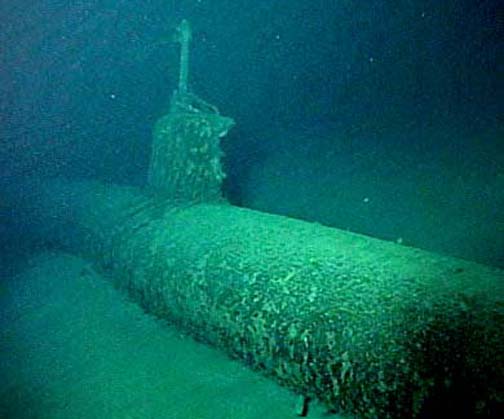
CTY Pisces – Photos of a Japanese midget submarine that was sunk off Pearl Harbor on the day of the attack. There’s a hole at the base of the conning tower where an artillery shell penetrated the hull, sinking the sub and killing the crew. Photos courtesy of Terry Kerby, Hawaii Undersea Research Laboratory. August 2003.
 seven-years-later-americas-worst-nuclear-submarine-disaster, By Robert Eatinger, Friday, April 10, 2020, Fifty-seven years ago today, America suffered its first, and in terms of fatalities its worst, loss of a nuclear-powered submarine. Yet, much of the information about that disaster and the Navy’s subsequent investigation has remained outside of public view. That may change this year.
In February this year, Judge Trevor N. McFadden of the U.S. District Court for the District of Columbia ordered the Navy to review 300 pages of documents a month starting April 30 and by the end of every month thereafter, and to begin rolling productions of documents starting on or before May 15 and every month thereafter.
As at 5 April, radiation levels in Chernobyl area were 16 times above normal, due to forest fires
 A FIRE AT CHERNOBYL IS RELEASING LARGE AMOUNTS OF RADIATION, https://futurism.com/the-byte/fire-chernobyl-releasing-radiation APRIL 6TH 20__JON CHRISTIAN__ Ukrainian authorities say a forest fire is causing radiation levels to spike in the area of Chernobyl, a nuclear power plant that melted down in 1986.“There is bad news — in the center of the fire, radiation is above normal,” wrote Egor Firsov, the head of Ukraine’s ecological inspection service, in a Facebook post. “As you can see in the video, the readings of the [Geiger counter] are 2.3, when the norm is 0.14. But this is only within the area of the fire outbreak.” A FIRE AT CHERNOBYL IS RELEASING LARGE AMOUNTS OF RADIATION, https://futurism.com/the-byte/fire-chernobyl-releasing-radiation APRIL 6TH 20__JON CHRISTIAN__ Ukrainian authorities say a forest fire is causing radiation levels to spike in the area of Chernobyl, a nuclear power plant that melted down in 1986.“There is bad news — in the center of the fire, radiation is above normal,” wrote Egor Firsov, the head of Ukraine’s ecological inspection service, in a Facebook post. “As you can see in the video, the readings of the [Geiger counter] are 2.3, when the norm is 0.14. But this is only within the area of the fire outbreak.”
Since Chernobyl’s deadly 1986 meltdown, the area around the plant has remained uninhabited — allowing nature to take over the abandoned town. But now the blaze is reigniting the specter of the decades-old disaster site. Residents of the Ukranian capital of Kiev are even concerned about breathing in the radiation, according to The Guardian, which is about 60 miles south of Chernobyl, though Firsov said there was not yet cause for alarm. Authorities say that a 27-year-old man has admitted that he set the fires “for fun,” according to The Guardian. It’s unclear whether the radiation levels will continue to spike or die down as firefighters continue their work in the area, but Firsov said that as of Sunday, radiation levels at the site were about sixteen times the norm. |
|
Pennsylvania Senators concerned about coronavirus response plan at Limerick nuclear plant
Sen. Muth seeks answers about coronavirus response plan at Limerick nuclear plant, The Mercury By Carl Hessler Jr. chessler@21st-centurymedia.com @MontcoCourtNews on Twitter, Apr 2, 2020
LIMERICK — A state senator who represents parts of Montgomery, Berks and Chester counties called upon Exelon to improve its commitment to worker and community safety during a refueling at the Limerick Generating Station amid the COVID-19 outbreak.
“Thus far, Exelon has provided an inadequate pandemic response plan, withheld information from county and state officials, and failed to prioritize the safety of its employees, contract workers, community first responders, as well as all residents of the 44th senatorial district and entire region,” Senator Katie Muth (D-44th) wrote in an April 1 letter addressed to Exelon executives. “This is grossly irresponsible as Exelon has brought at least 1,400 workers to the epicenter of Pennsylvania’s Covid-19 pandemic.”…….
Arkoosh said she was “deeply concerned” to learn that a number of the estimated 1,400 contract workers were staying at AirBnBs, private homes, campsites, hotels and other rental units in the Tri-county region, which saw its first cases of coronavirus on March 7.
Muth said she too is concerned and asked Exelon officials to provide a complete list of worker accommodations…….https://www.pottsmerc.com/news/coronavirus/sen-muth-seeks-answers-about-coronavirus-response-plan-at-limerick-nuclear-plant/article_7706e28e-7505-11ea-a590-6307cba4e976.html
Firefighters battle forest blazes near Chernobyl nuclear site
|
Ukraine battles forest fires near Chernobyl https://abcnews.go.com/Health/wireStory/forest-fire-chernobyl-boosts-radiation-level-69983859
Ukrainian says firefighters are laboring to put out two forest blazes in the area around the Chernobyl nuclear power station that was evacuated because of radioactive contamination after the 1986 explosion at the plant By The Associated Press 6 April 2020 MINSK, Belarus — Ukrainian firefighters labored into Sunday night trying to put out two forest blazes in the area around the Chernobyl nuclear power station, which was evacuated because of radioactive contamination after the 1986 explosion at the plant.
Ukraine’s emergencies service said one of the fires, covering about five hectares (12 acres), had been localized. It said the other fire was about 20 hectares (50 acres). Earlier Sunday, the head of the state ecological inspection service, Yehor Firsov, said the fires had spread to about 100 hectares (250 acres). The discrepancy in sizes could not immediately be resolved. Firsov said radiation levels at the fire were substantially higher than normal. But the emergencies service said radiation levels in the capital of Kyiv, about 100 kilometers (60 miles) south, were within norms. The fires were within the 2,600-square-kilometer (1,000-square-mile) Chernobyl Exclusion Zone established after the 1986 disaster at the plant that sent a cloud of radioactive fallout over much of Europe. The zone is largely unpopulated, although about 200 people have remained despite orders to leave. |
|
Radiation spike as forest fire hits Chernobyl nuclear zone
Radiation spike as forest fire hits Chernobyl nuclear zone https://www.deccanherald.com/international/world-news-politics/radiation-spike-as-forest-fire-hits-chernobyl-nuclear-zone-821778.html AFP, Kiev, APR 05 2020, AFP, Kiev, APR 05 2020, 21:04 IST UPDATED: APR 05 2020, 21:31 IST AFP/file photo Ukrainian authorities on Sunday reported a spike in radiation levels in the restricted zone around Chernobyl, scene of the world’s worst nuclear accident, c aused by a forest fire.
When a nuclear submarine hit an underwater mountain
|
This Is What Happens When a Nuclear Submarine Hits a ‘Mountain’
That’s one heck of an accident. National Interest by Caleb Larson Apr 5, 20 20, In 2005, a U.S. Navy nuclear submarine ran around on a mountain. No, it wasn’t out of the water—it hit an underground mountain, and nearly sank. The USS San Francisco is an American nuclear powered submarine, one of the large Los Angeles-class submarines first laid down in 1972 and are among the U.S. Navy’s quietest submarines. At the time of the collision, or grounding in Navy parlance, the USS San Francisco was near Guam on a peacetime training mission en route to Australia. The sub was at a depth of about 525 feet and skipping along at a crisp thirty-ish miles per hour. The grounding was massive. Sailors in the dining room were tossed up to twenty-five feet across the mess-hall. One of the sub’s Petty Officers, Brian Barnes, recalled the incident during an interview with 60 minutes. “I remember just bodies everywhere,” he said. “Broken glass, stepping on plates, your shipmates moaning because they’re in pain, yelling.” The bow of the USS San Francisco was shattered, the frontal thirty feet or so were crushed and exposed to the sea. Water was rushing into the sub—it was critical that an emergency blow be initiated in which air is pumped into the submarines ballast tanks to bring it up to the surface. …… https://nationalinterest.org/blog/buzz/what-happens-when-nuclear-submarine-hits-mountain-140687 |
|
Captain on nuclear aircraft carrier took a stand, and is paying the price
 Captain Brett Crozier Takes A Stand James Fallows, April 3, 2020 2020 Time Capsule #11: ‘Captain Crozier’The Atlantic The episode I’m about to mention has been receiving saturation social-media attention for the past few hours, as I write. But because the accelerating torrent of news tends to blast away each day’s events and make them hard to register—even a moment like this, which I expect will be included in histories of our times—I think it is worth noting this episode while it is fresh.
Until a few days ago, Brett Crozier would have been considered among the U.S. Navy’s most distinguished commanders………
The four-page letter, which you can read in full at the Chronicle’s site, used the example of recent cruise-ship infection disasters to argue that closed shipboard environments were the worst possible location for people with the disease. It laid out the case for immediate action to protect the Roosevelt’s crew, and ended this way:
7. Conclusion. Decisive action is required. Removing the majority of personnel from a deployed US. nuclear aircraft carrier and isolating them for two weeks may seem like an extraordinary measure. A portion of the crew (approximately 10%) would have to stay aboard to run the reactor plant, sanitize the ship, ensure security, and provide for contingency response to emergencies.
This is a necessary risk. It will enable the carrier and air wing to get back underway as quickly as possible while ensuring the health and safety of our Sailors. Keeping over 4,000 young men and women on board the TR is an unnecessary risk and breaks faith with those Sailors entrusted to our care…
This will require a political solution but it is the right thing to do. We are not at war. Sailors do not need to die. If we do not act now, we are failing to properly take care of our most trusted asset our Sailors. Request all available resources to find NAVADMIN and CDC compliant quarantine rooms for my entire crew as soon as possible.
“Breaks faith with those Sailors entrusted to our care.” “We are failing to properly take care of our most trusted asset our Sailors.” “Unnecessary risk.” In any walk of life, such language would have great power. Within the military—where terms like faith and trust and care have life-and-death meaning, and are the fundamental reason people follow leaders into combat—these words draw the starkest possible line. This course is right. The other course is wrong. Thus a leader spoke on behalf of the people “entrusted to our care.”…….
- Based on information available as I write, it appears that he took a stand, and is paying the price.
Brett Crozier will no longer be one of the Navy’s most powerful commanders. He remains in the service, but his command has been taken away.
He will likely be remembered among its leaders. https://www.theatlantic.com/notes/2020/04/time-capsule-11-captain-crozier/609409/
Work at Limerick nuclear plant threatened by rising Coronavirus death toll in Montgomery County
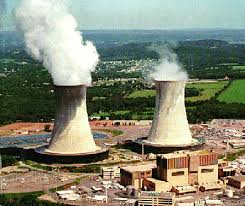
 Montco coronavirus deaths at 12; officials Montco coronavirus deaths at 12; officials  ‘concerned’ about work at Limerick nuclear plant, The Mercury, By Carl Hessler Jr. chessler@21st-centurymedia.com 4 Apr 20, EAGLEVILLE — The coronavirus death toll in Montgomery County rose to 12 on Thursday as officials reported the deaths of two more people, residents of Upper Providence and Springfield townships….. ‘concerned’ about work at Limerick nuclear plant, The Mercury, By Carl Hessler Jr. chessler@21st-centurymedia.com 4 Apr 20, EAGLEVILLE — The coronavirus death toll in Montgomery County rose to 12 on Thursday as officials reported the deaths of two more people, residents of Upper Providence and Springfield townships…..
Officials said there were 113 new positive cases of the virus reported on Thursday, bringing the county’s total number of cases to 707 since March 7. The new cases included residents from 35 municipalities, two of which reported their first cases – Bridgeport Borough and Red Hill Borough. To date, 55 of the county’s 62 municipalities have reported coronavirus cases. The new cases in the county included at least 48 men and 62 women whose ages ranged from 1 month to 94. Six of the individuals are hospitalized, officials said Arkoosh said county officials continue to be in contact with Exelon representatives regarding the county’s concerns that social distancing measures were “perhaps not being adhered to” during a maintenance refueling project involving more than 1,000 workers that began last month at the Limerick Generating Station operated by Exelon near Pottstown. The county’s Office of Public Health is currently reviewing information that it received from Exelon in response to questions the commissioners posed to company officials on Wednesday. The information is helpful and I remain deeply concerned that this maintenance refueling will ultimately contribute to the number of people that are exposed to the coronavirus in our region,” said Arkoosh, who was joined at the news briefing by fellow commissioners Kenneth E. Lawrence Jr. and Joseph C. Gale, and Dr. Alvin Wang, regional EMS medical director, and Dr. Brenda Weis, administrator of the Office of Public Health. Without being specific, Arkoosh said the information provided by Exelon generated more questions by the county and officials are awaiting answers to those questions….. On Wednesday, Exelon officials confirmed two cases of COVID-19 among the workforce at the Limerick plant, adding the full-time employees were sent home and were receiving care and that neither employee had been onsite since March 20. Company officials added that any employees who came in close contact with the affected persons or worked at that reporting location were notified, and that an additional deep cleaning occurred at all areas that potentially were exposed. Arkoosh said officials believe they were misled about the start date of the refueling project. “We were always told March 30. An (event of public interest alert) went out on March 27 saying that they were starting that evening. We’ve also been told by others that there were quite a large number of people here for a number of days before that,” Arkoosh said. County officials have requested the permanent address and the lodging information for all of the contractors hired to work on the refueling project. “We received information back from Exelon on about 950 of those individuals. They are staying all over the area…some people are driving from other states every day. It’s quite a lot,” Arkoosh said. Officials said the contractors, many of whom travel from one generating plant to another to work on refueling projects, are staying locally at AirBnBs, private homes, campsites, hotels and other rental units. “I believe that they have an obligation to not only the families of these workers but to whatever community they’ll be going to next to do a refuel, that these individuals should be sequestered for 14 days before they leave here so that at least when they leave they can be fairly assured that they have no disease,” Arkoosh explained. County officials said they are concerned that contractors where coming from other states into the county which was an area of community spread of COVID-19. Arkoosh said that situation could put the workforce at the Limerick plant at risk as well as local first responders…….. https://www.pottsmerc.com/news/montco-coronavirus-deaths-at-12-officials-concerned-about-work-at-limerick-nuclear-plant/article_dd37f986-7522-11ea-8daa-73c6d383e3e3.html |
|
Worker fatigue is a worry at U.S. nuclear stations, as NRC allows longer shifts
 US allowing longer shifts at nuclear plants in pandemic, Taiwan News, By ELLEN KNICKMEYER , Associated Press, Associated Press US allowing longer shifts at nuclear plants in pandemic, Taiwan News, By ELLEN KNICKMEYER , Associated Press, Associated Press
2020/04/03 WASHINGTON (AP) — U.S. nuclear plants will be allowed to keep workers on longer shifts to deal with staffing problems in the coronavirus pandemic, raising worries among watchdogs and some families living near reactors that employee exhaustion will increase the risks of accidents.
The Nuclear Regulatory Commission’s decision to temporarily allow longer worker shifts is one way the industry is scrambling to keep up mandatory staffing levels through what will be weeks or months more of the outbreak. The shift extensions would allow workers to be on the job for up to 86 hours a week. Currently, they’re generally allowed to work up to 72 hours in a seven-day period. As part of the waiver, workers could be assigned to 12-hour shifts for as many as 14 days in a row. Nuclear plant workers already are having their temperatures checked on arrival for each shift, and employers are studying options including having workers temporarily live at plants full-time…… “This is highly specialized work that needs a lot of attention and focus,” Treat, a nuclear safety activist, said by telephone. It’s a problem, she said, “if people are fatigued or sick….. The NRC closely regulates total staffing and staff hours as a condition of reactors’ continued operation. Fatigue has often been deemed a factor in accidents at nuclear plants, as in the former Soviet Union’s 1986 Chernobyl disaster, where key plant staffers had worked multiple shifts. In the United States in recent days, nuclear plants are reporting some of the first coronavirus cases among their workers. Over the weekend, the NRC said it would consider on a plant-by-plant basis 60-day exemptions that would let plants keep workers on the job for up to 86 hours in a seven-day period, including up to 12 hours a day for 14 days straight. No plant had received a work-hour waiver as of Thursday, regulators said……. But Edwin Lyman, a nuclear power expert with the Union of Concerned Scientists watchdog group, called proposals like Basso’s “alarming.” “I hope that the NRC will conduct due diligence on industry claims that the best way to reduce the potential for COVID-19 spread among its personnel is to force them to work fourteen 12-hour days in a row,” he said in an email. He called that solution likely “untenable.” If a plant fails to keep up minimum staffing requirements in the pandemic, regulators could order it to shut down, something that has happened rarely, if ever, to an operating plant, regulators said. Besides the kind of crew consolidation Basso described, individual nuclear plants also are looking at the possibility of bringing former plant operators back into service. Another option is sequestering crews on site — keeping workers fed and bunked down at the plants during the pandemic, NEI spokeswoman Mary Love said…… https://www.taiwannews.com.tw/en/news/3909533 |
|
Nuclear Regulatory Commission pulls back inspectors, because of Covid 19
|
The agency and the primary industry group say the change in oversight does not pose a threat to the public. “Nuclear power plants also have plans to maintain appropriate staffing under adverse conditions,” the agency said. “The NRC will require plants to shut down if they cannot appropriately staff their facilities.” Still, the decision has raised alarm from the Union of Concerned Scientists. Edwin Lyman, director of nuclear plant safety at the UCS, which monitors the intersection of policy and science, said he was worried plant operators could request that inspections of their plants be delayed during these refueling periods. In part, he said, “other concerns are potential requests from reactor owners to postpone certain inspections that take place during refueling outages until the next cycle, which could result in delays of more than 18-24 months in some of these critical activities. The concern is some of these inspections require personnel to be in tight quarters or might require specialized contractors from off-site.” The agency also said in a March 27 announcement that it was evaluating scheduled inspections of nuclear sites, including reactors being decommissioned and facilities where spent fuel is stored. NRC did not respond to questions about which facilities would be affected……. the industry is running low on protective medical supplies — gloves, wipes, masks and thermometers, Korsnick said — and the scheduled refueling operations could present a problem during a pandemic when authorities have locked down cities and states from non-essential activities. Nuclear reactors need fresh fuel every 18 or 24 months, and to complete these refueling changeovers requires hundreds of specialized technicians to enter each plant and work for a month or two before leaving. “These workers typically stay in hotels or board with local families, and eat in restaurants,” she said……. Nuclear plants are required to maintain a certain number of staffers in their control room, as well as at least 10 armed guards to protect against attacks. They also fall under regulations that bar staff from working too much in a brief period of time, typically no more than 16 hours in a day, 26 hours in two days and 72 hours in a 7-day stretch. …….https://personalliberty.com/citing-virus-nuclear-agency-pulls-back-inspectors/ |
|
Danger in transporting spent nuclear fuel to New Mexico
Why should NM store nation’s nuclear waste? https://www.abqjournal.com/1439716/why-should-nm-store-nations-nuclear-waste.html BY LAURA WATCHEMPINO / MULTICULTURAL ALLIANCE FOR A SAFE ENVIRONMENT, PUEBLO OF ACOMA
Friday, April 3rd, 2020 If the Nuclear Regulatory Commission’s conclusion that it’s safe to move spent nuclear fuel from nuclear power plants across the country to a proposed storage facility in Lea County sounds vanilla-coated, it’s because the draft environmental impact statement for a Consolidated Interim Storage Facility submitted by Holtec International did not address how the casks containing the spent fuel would be transported to New Mexico.
It’s likely the casks would be transported primarily by rail using aging infrastructure in need of constant repair. But our rail systems were not built to support the great weight of these transport casks containing thin-wall fuel storage canisters.
Nor was the potential for cracked or corroded canisters to leak radiation studied because an earlier NRC Generic EIS for the Continued Storage of Spent Nuclear Fuel assumed damaged fuel storage canisters would be detected during an intermediary dry transfer system or a pool. But Holtec’s proposal only addresses a new destination for the high-level nuclear waste – not the removal and transport of the fuel storage canisters from nuclear power plants to New Mexico.
Even transport casks with canisters that are not damaged will release radiation as they are transported from nuclear power plants to the storage facility, exposing populations along the transport routes in a majority of states and tribal communities in New Mexico to repeated doses of radiation.
Other issues not considered in the draft EIS were the design life of the thin-wall canisters encasing the nuclear fuel rods and faulty installation at reactor sites like San Onofre, or the self-interest of the Eddy-Lea Energy Alliance in using the land it acquired for a consolidated interim storage site.
Thin-wall canisters cannot be inspected for cracks and the fuel rods inside are not retrievable for inspection or monitoring without destroying the canister. NRC does not require continuous monitoring of the storage canisters for pressure changes or radiation leaks. The fuel rods inside the canisters could go critical, or result in an uncontrolled nuclear chain reaction, if water enters the canisters through cracks, admits both Holtec and the NRC. None of us are safe if any canister goes critical.
Yet a site-specific storage application like Holtec’s should have addressed NRC license requirements for leak testing and monitoring, as well as the quantity and type of material that will be stored at the site, such as low burnup nuclear fuel and high burnup fuel.
With so many deficiencies in the draft EIS, a reasonable alternative is to leave this dangerous radioactive nuclear waste at the nuclear plants that produced it in dry cask storage rather than multiply the risk by transporting thousands of containers that could be damaged across many thousands of miles and decades to southeastern New Mexico, then again to a permanent repository.
Interim storage of spent nuclear fuel at existing nuclear plant sites is already happening – there are 65 sites with operating reactors in the United States and dry cask storage is licensed at 35 of these sites in 24 states. But since the thin-wall canisters storing the fuel rods are at risk for major radioactive releases, they should be replaced with thick-walled containers that can be monitored and maintained. The storage containers should be stored away from coastal waters and flood plains in hardened buildings.
Attempting to remove this stabilized nuclear waste from where it is securely stored across hundreds or thousands of miles through our homelands and backyards to a private storage facility also raises some thorny liability issues, since the United States will then be relieved of overseeing the spent nuclear fuel in perpetuity. The states and nuclear plants that want to send us their long-lived radioactive waste will also be off the hook, leaving New Mexico holding a dangerously toxic bag without any resources to address the gradual deterioration of man-made materials or worse, a catastrophic event. It’s a win/win, however, for Holtec International and the Eddy-Lea Energy Alliance.
Environmental justice footnote: When removal of uranium mine waste on the Navajo Nation was being discussed a few years ago, communities got this response from EPA: Digging up the waste and tr+ansporting it to a licensed repository in different states outside the Navajo Nation – which has always been the Nation’s preferred alternative – is the most expensive option. “Off-site disposal, because of the amount of waste in and around these areas, means possibly multiple years of hundreds and hundreds and hundreds of trucks going in and out of the community and driving for miles.”
Finally: 1000s of sailors leaving nuclear Aircraft Carrier and going into Coronavirus isolation

US Sailors Pour Off Aircraft Carrier and Into Coronavirus Isolation on Guam, Defense One , BY BRADLEY PENISTON, DEPUTY EDITOR, 2 Apr. 20 NAVY LEADERS PRAISE SHIP’S CAPTAIN FOR URGENT EVACUATION REQUEST; 3,700 WILL LEAVE THE SHIP WITHIN DAYS.
About one-fifth of the USS Theodore Roosevelt’s 4,865 sailors are off the COVID-stricken aircraft carrier and into isolation on Guam, with about 2,700 more expected to evacuate in the next few days, Acting Navy Secretary Thomas Modly said Wednesday.
Modly’s update comes two days after the ship’s captain sent a stark letter up the chain of command — made public on Tuesday by the San Francisco Chronicle — warning that fully 90 percent of the crew needed to evacuate and isolate for two weeks for their own safety. The secretary’s comments clarify that the Navy was indeed evacuating most sailors from the ship, after Defense Secretary Mark Esper said in a CBS News interview aired late Tuesday that said an evacuation was not yet necessary. Modly praised the captain for the prodding, and said that evacuation efforts already were in the works but not with the right urgency. ….. https://www.defenseone.com/threats/2020/04/us-sailors-pour-aircraft-carrier-and-isolation-guam/164287/?oref=d-topstory
Second: Navy change of heart: nuclear-powered aircraft carrier sailors can evacuate
|
“We are not at war,” Caprain Brett Crozier wrote in a four-page letter to bosses detailing how the ship did not have enough quarantine facilities. “Sailors do not need to die. If we do not act now, we are failing to properly take care of our most trusted asset – our sailors.” Now, his demand to get crew ashore appears to have been met with Acting Navy Secretary Thomas Modly confirming sailors were being taken off board in stages, with 1,000 people already evacuated and placed in isolation on land. It is thought around 100 people on the nuclear-powered vessel have tested positive for Covid-19, although this remains unconfirmed by the navy itself. Modly said the force had been working for several days to get the majority of crew off the ship but that, because Guam was dealing with its own outbreak of Covid-19, there were not currently enough isolated beds. He said he was in talks with officials there to use hotels and set up tents. “It’s not the same as a cruise ship, it has armaments on it, it has aircraft on it, we have to be able to fight fires if there is a fire on there,” he said……..
|
First: Captain of nuclear-powered aircraft carrier begs to have its sailors evacuated
Navy Rejects Captain’s Plea to Evacuate Virus-Ravaged Carrier, Bloomberg, By Roxana Tiron ,Travis J Tritten, and Glen Carey
- Admiral says sailors will be rotated off in smaller numbers
-
A U.S. Navy captain’s dramatic plea to evacuate most sailors from an aircraft carrier struck by the coronavirus was tamped down by an admiral who called for a more gradual rotation of crew members off the ship that’s sidelined in Guam.
Citing an “ongoing and accelerating” danger on board the USS Theodore Roosevelt, Captain Brett Crozier sent his Navy superiors a memo pleading, “We are not at war. Sailors do not need to die.” He called for removing all but a skeleton crew off the carrier, where sailors are in close quarters, so that they can be isolated and tested……
The Roosevelt, meant to be patrolling the Pacific and South China Sea, is sitting dockside in Guam indefinitely as the number of soldiers infected by the novel coronavirus rises daily. Infections started cropping up after an early March port call in Vietnam, which Pentagon leaders say had about 16 known virus cases at the time …… https://www.bloomberg.com/news/articles/2020-03-31/carrier-s-captain-pleads-for-coronavirus-action-to-save-sailors?fbclid=IwAR2jMtSh2oHrD8_xM384jGcK52DX3TihqP3brMrzaUrSNBgY17GYBVxcbEg
1 This Month



26 September – International Day for the Total Elimination of Nuclear Weapons


PLEASE OPPOSE HR 8255 AND S.3639 – bills would accelerate satellite deployment, with no environmental review or safeguards – https://ncstd5li.quorum.us/campaign/169331/
To see nuclear-related stories in greater depth and intensity – go to https://nuclearinformation.wordpress.com
-
Archives
- September 2026 (257)
- August 2026 (330)
- July 2026 (355)
- June 2026 (287)
- May 2026 (306)
- April 2026 (356)
- March 2026 (251)
- February 2026 (267)
- January 2026 (308)
- December 2025 (358)
- November 2025 (359)
- October 2025 (375)
-
Categories
- 1
- 1 NUCLEAR ISSUES
- business and costs
- climate change
- culture and arts
- ENERGY
- environment
- health
- history
- indigenous issues
- Legal
- marketing of nuclear
- media
- opposition to nuclear
- PERSONAL STORIES
- politics
- politics international
- Religion and ethics
- safety
- secrets,lies and civil liberties
- spinbuster
- technology
- Uranium
- wastes
- weapons and war
- Women
- 2 WORLD
- ACTION
- AFRICA
- Atrocities
- AUSTRALIA
- Christina's notes
- Christina's themes
- culture and arts
- Events
- Fuk 2022
- Fuk 2023
- Fukushima 2017
- Fukushima 2018
- fukushima 2019
- Fukushima 2020
- Fukushima 2021
- general
- global warming
- Humour (God we need it)
- Nuclear
- RARE EARTHS
- Reference
- resources – print
- Resources -audiovicual
- Weekly Newsletter
- World
- World Nuclear
- YouTube
-
RSS
Entries RSS
Comments RSS
 nuclear-news