U.S. Nuclear Regulatory Commission weakens some regulations in view of COVID-19
Nuclear regulators ease some power reactor regs in response to COVID-19, By Matthew Bandyk Utility Dive, March 31, 2020,
- In response to the COVID-19 pandemic and its strain on available nuclear plant personnel, the U.S. Nuclear Regulatory Commission is allowing power reactor operators to apply for temporary exemptions from regulations limiting the amount of hours workers can stay on the job, according to a letter released by the agency on Monday.
- In addition, the NRC staff is also working on a separate memorandum that will guide nuclear plants as to which labor and time-intensive tasks they can temporarily waive, such as many of the inspections during refueling outages………
The nuclear industry and the impact of coronavirus
|
Nuclear industry’s response to Covid-19 outbreak, Power Technology, 1 Apr,20 “……..Impact of coronavirus on the nuclear industry’s operations The nuclear industry is assessing measures to safeguard their workforce and implementing business continuity plans to ensure continuous functioning of key aspects of their businesses. The nuclear industry already has a robust safety culture in place worldwide. Based on the guidance and directives put into practice across various countries and regions, actions have been taken. Since the time that coronavirus was first detected in China’s Wuhan region, before becoming a global pandemic, companies worldwide had time to execute business continuity plans and take the necessary steps for the dealing with the impact of the virus. Measures have been taken to screen workers and isolate those who show virus symptoms through temperature checks to detect fever, which is among the common Covid-19 symptom. Few countries have advised their staff to work remotely and not on-site, hence aiding with social distancing measures. For example, in the US, officials have recommended they may isolate or quarantine crucial nuclear power plant (NPP) technicians and allow them to live onsite to decrease their proximity with others in case this is needed. Many operators are getting hold of supplies of food, beds along with other essentials items required to support their staff for this purpose. Key NPP staff could be required to stay in assigned accommodation and commute to and from the nuclear facility in separate transportation. To safeguard the health of workers in regions where the occurrence of coronavirus may rise considerably, actions such as changing shift patterns are being assessed. Companies are also limiting or dropping their non-essential business travel plans and making use of conference video and audio calls for carrying out business meetings. France’s regulator, Nuclear Safety Authority (ASN), is avoiding direct physical contact to stop the spread of the coronavirus and is prioritizing control of operating facilities. A number of inspectors from the UK’s regulator, Office for Nuclear Regulation (ONR), will go ahead with travel plans to sites where needed but will restrict most of its business operations via phone, email and Skype. Currently, NPP operations are continuing in many countries. The US Nuclear Regulatory Commission (US NRC) has stated that it may close down any of the country’s 60 NPP if they cannot be aptly staffed. Few nuclear facilities have temporarily shut down their operations to avoid the spread of the coronavirus and secure their workforce. In the UK, authorities have idled a nuclear fuel reprocessing site located at Sellafield after 8% of its 11,500 workforce were asked to self-isolate or quarantine to avoid the spread of the coronavirus infection. This step came after a staff member was tested Covid-19 positive a few weeks earlier, and will eventually lead to a controlled shutdown of the site’s Magnox facility, expected to close down permanently this year. The EDF-owned Hinkley Point C (HPC) NPP in the UK, has also reduced its workforce by more than half and will further decrease its staff members as work in progress is finished. Rosatom’s overseas NPP construction projects have also progressed under the recommendations and guidelines of the disease control services as well as governments of the corresponding countries where construction work is going on. Work was suspended on few nuclear reactors which are under construction in China following the coronavirus outbreak. Now as work is slowly restarting in the country, countermeasures have been taken for all staff members returning to nuclear site. France, the most nuclear dependent country in the world, announced scaling down of staff at its Flameville NPP, operated by EDF, the country’s major nuclear operator. EDF stated that it is decreasing staff at the NPP from 800 to 100, because of the high regional Covid-19 infection rates. Three workers at the EDF’s Fessenheim NPP, Belleville NPP, and Cattenom NPP have already been tested positive for the coronavirus. French grid operator Réseau de Transport d’Électricité (RTE) presumes that nuclear availability will stay 3.6 Gigawatt (GW) below 2015 to 2019 average, in addition to a national fall in nuclear power demand. EDF has withdrawn its 2020 nuclear power generation target amidst an expected drop in its output this year due to the coronavirus outbreak. Orano, an integrated nuclear energy company, has also withdrawn its financial year (FY) outlook for 2020. When it comes to nuclear reactor operations, the Ascó I NPP in Tarragona and Almaraz I NPP in Cáceres, Spain, have notified about rescheduling or delaying of their outages for nuclear fuel loading. In Germany, NPP operators are stepping up precautionary measures to stop the spread of coronavirus. For instance, RWE, is involved in disinfecting radiation meters which are normally used by staffs quite often. The company has also shut down visitor centres and called off its scheduled group visits to decrease the risk of Covid-19 infections. The Finnish state-owned energy company Fortum Oyj’s Loviisa NPP is also undertaking precautionary measures to help stop the spread of the coronavirus. The company is adhering to the Covid-19 recommendations and guidelines put forward by the World Health Organization (WHO) and national authorities. External visitors are also prohibited at the NPP until further notice. MiningKazatomprom, Kazakhstan’s state-owned uranium production company, with a total uranium production volume (100% basis) of 22,808t of elemental uranium (tU) in 2019 has made announcement of drawing on its current uranium inventory if its mining activities are affected. The company’s uranium mining sites are located in remote areas of the country and so far the coronavirus outbreak has not yet affected its operations. However, considering the remoteness of these mining sites, the company needs to take precautionary measures if in case any outbreak occurs. The Canadian uranium company, Cameco, has also temporarily idled production of its Cigar Lake uranium mine located in northern Saskatchewan, Canada, as a response to the Covid-19 pandemic. This will reduce the staff members working on-site from around 300 to 35, hence leading to physical distancing and heightened safety precautionary measures. In addition, Cameco’s joint venture (JV) partner, Orano Canada, has also shut down operations at its McClean Lake uranium mill, which processes ore from the Cigar lake mine…… https://www.power-technology.com/comment/nuclear-industry-covid-19/ |
|
|
Montgomery County officials not happy with Exelon’s Limerick Nuclear Power Plant plans for addressing Covid19
A parking lot has been designated for the new contractors that have been hired as the annual refuel of the reactor maintenance project is underway.
Dr. Valerie A. Arkoosh, chair of the Montgomery County Board of Commissioners, says back on March 16, Exelon, the company that runs the Limerick nuclear plant, gave them a lackluster social distancing plan.
She said, “We learned of plans to bring approximately 1,800 workers into our region from around the United States. We asked Exelon to postpone this refuel until a time when the disease burden from COVID-19 was lower.” …….. https://6abc.com/limerick-plant-exelon-corporation-covid19-cases/6067085/
A creeping catastrophe: the world’s nuclear reactors are getting dangerously old.
 Nuclear Power Plant Lifetime Extension: A creeping catastrophe, https://bellona.org/publication/nuclear-power-plant-lifetime-extension-a-creeping-catastrophe March 30, 2020 Nuclear Power Plant Lifetime Extension: A creeping catastrophe, https://bellona.org/publication/nuclear-power-plant-lifetime-extension-a-creeping-catastrophe March 30, 2020
Any discussion of nuclear disasters brings events like Chernobyl and Fukushima to mind. But the civilian nuclear industry could be facing a quieter nuclear failure. Simply put, the world’s nuclear reactors are getting dangerously old. Yet more and more often, countries operating nuclear reactors are deciding to run them for longer than they were designed to run – which has implications not only for their own populations, but for those in neighboring countries as well – including Norway. The majority of the world’s 442 commercially operated reactors were built nearly four decades ago – and that’s all the time they were designed to run. Some of the oldest are located in European area and there’s little hope that newer units will replace them. Private investors view new reactors as a risky prospect. Smart money is gravitating toward alternative forms of energy production like solar and wind. Given the high costs of building new reactors – costs that run to several billion dollars – many plant operators are leaning into extensions, making them a common – but dangerous – practice. Our new working paper examines this practice and the science that needs to be taken into account when nuclear power plant operators consider extending the runtimes of old reactors. We also propose that national and international regulations need to be put in place that would guide decisions on which reactors can safely be upgraded – and which should be decommissioned. PLEX working_2 |
|
|
Pandemic plan for Nuclear Power Plant could make employees isolate at the reactor
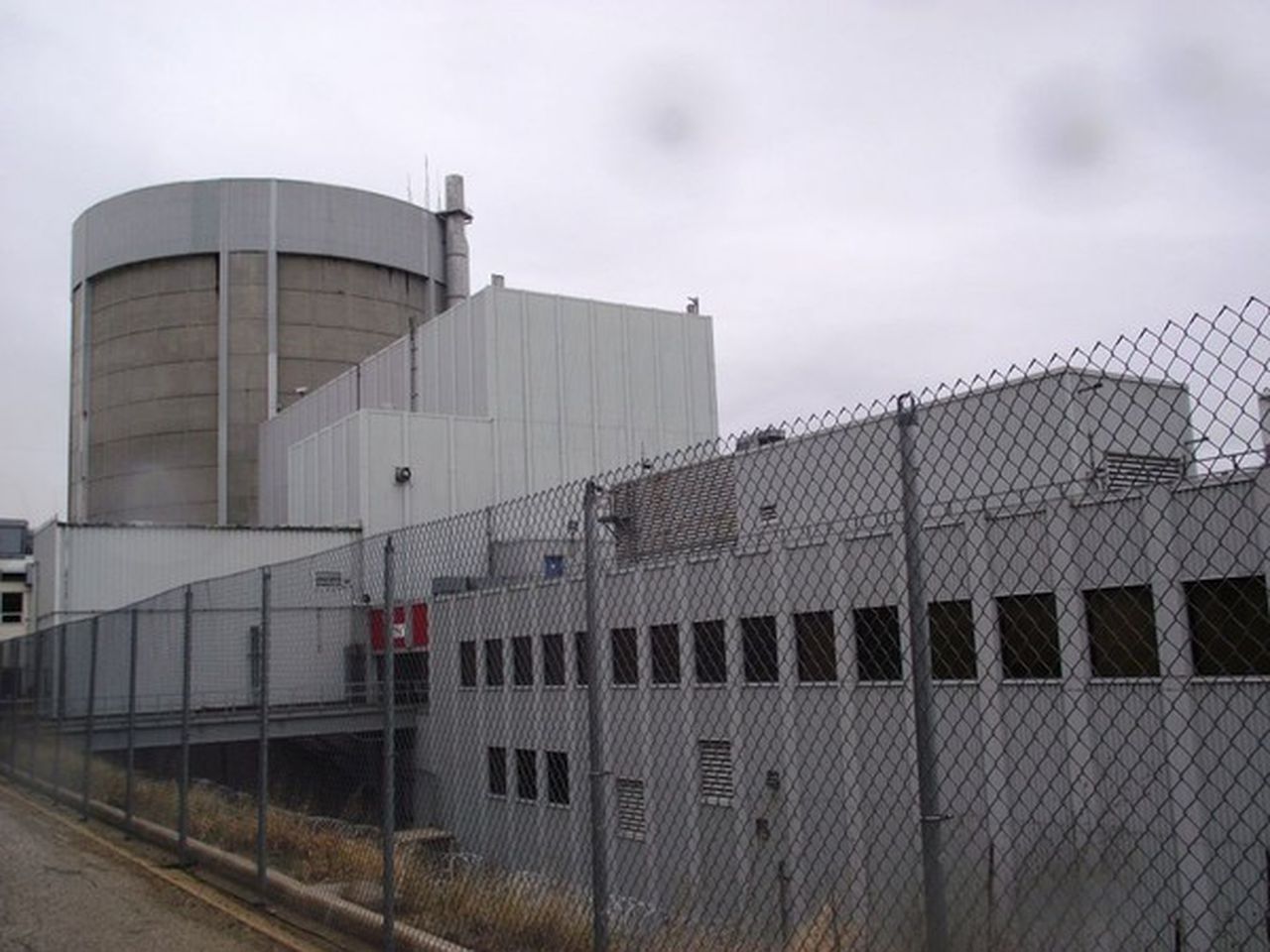
Nuclear plant could ‘sequester’ employees to live on-site under pandemic plan By Brad Devereaux | bdeverea@mlive.com-27 Mar 20, COVERT, MI — The company that owns Palisades nuclear plant has a private pandemic plan that includes a contingency to sequester employees live at the site temporarily, though that scenario is unlikely, a company spokeswoman said……
Entergy owns the nuclear plant situated on the Lake Michigan shoreline about 7 miles south of South Haven…..
Sequester means employees would reside on site, Gent said. The company declined to release its full plans to MLive because they contain business-sensitive information, she said….
The Nuclear Regulatory Commission, which inspects to ensure safety at plants across the country, said resident inspectors are ready to respond immediately should there be developing safety issues amid the coronavirus outbreak. Resident inspectors will make regular visits to operating nuclear power reactor sites and will remotely monitor plant data systems, meetings and other information. Back-up inspectors are available from regional offices or headquarters should they be necessary to maintain oversight, the NRC said…..
In 2017, Entergy announced that it planned to close Palisades in the spring of 2022.
In Aug. 2018, Entergy announced it had agreed to sell the subsidiaries that own Palisades and the Pilgrim Nuclear Power Station in Plymouth, Massachusetts, after their shutdowns and reactor defuelings, to a Holtec International subsidiary for prompt decommissioning.
Call to suspend all contractor work at Hinkley new nuclear site, because of Covid19
 NFLA 26th March 2020, The Nuclear Free Local Authorities (NFLA) calls today for the suspension of all work by contractors of EDF Energy at the Hinkley Point C proposed new nuclear reactor site, due to the concerns of an infection spread from the public health emergency sparked by the covid-19 outbreak.
sadly considerable amounts of people losing their employment – though the
government is seeking to provide most of them with 80% of their current
income.
The nuclear industry’s 2007 NEI Pandemic Licensing Plan still accepted, but not really safe
 Nuclear Power Safety and the COVID-19 Pandemic https://allthingsnuclear.org/elyman/nuclear-power-safety-and-the-covid-19-pandemic ED LYMAN, ACTING DIRECTOR, NUCLEAR SAFETY PROJECT; SENIOR SCIENTIST, GLOBAL SECURITY PROGRAM | MARCH 26, 2020, With the world facing overwhelming and immediate threats from the novel coronavirus (COVID-19) pandemic, the risks of nuclear power are probably far from the thoughts of most people. But there is no escaping the fact that nuclear plants, which provide about 20 percent of the U.S. electricity supply, require highly-trained staff to operate them safely and to protect them from terrorist attacks. Nuclear Power Safety and the COVID-19 Pandemic https://allthingsnuclear.org/elyman/nuclear-power-safety-and-the-covid-19-pandemic ED LYMAN, ACTING DIRECTOR, NUCLEAR SAFETY PROJECT; SENIOR SCIENTIST, GLOBAL SECURITY PROGRAM | MARCH 26, 2020, With the world facing overwhelming and immediate threats from the novel coronavirus (COVID-19) pandemic, the risks of nuclear power are probably far from the thoughts of most people. But there is no escaping the fact that nuclear plants, which provide about 20 percent of the U.S. electricity supply, require highly-trained staff to operate them safely and to protect them from terrorist attacks.They also need periodic maintenance to ensure that critical safety systems remain in good working order. And, they must be closely supervised by the Nuclear Regulatory Commission (NRC) to ensure that plant owners are effectively implementing nuclear safety and security requirements. However, the NRC does not generally oversee the health and safety of plant workers unless it is related to radiation exposure, so it is largely up to the plant owners themselves to implement protective measures against COVID-19 to ensure they have a functioning workforce. Reports about potential coronavirus cases among the workforce at Plant Vogtle in Georgia and allegations of a lack of enforcement of social distancing protocols there raise concerns about the adequacy of the industry’s response to the COVID-19 pandemic. During crises such as the current pandemic, ensuring that nuclear power plants operate safely and reliably is even more critical. Tens of millions of Americans live within 50 miles of operating nuclear power plants. A reactor accident or terrorist attack could release a large amount of radioactive material into the environment, potentially exposing many people to high levels of radiation. As the world saw after the 1986 Chernobyl and 2011 Fukushima accidents, such an event at a U.S. nuclear plant might force people from their homes for months or longer and contaminate food and water supplies—the last thing Americans need to deal with right now. Compounding the impacts of such a disaster with the social and economic disruptions caused by spread of the virus would further strain an already fragile health care system and economy. Thus it is incumbent on the NRC to make sure that the pandemic does not compromise nuclear safety and security—and if it does, to take whatever actions, including ordering plant shutdowns, are necessary. However, the NRC will likely face tremendous pressure from nuclear plant owners, some of whom are financially strapped, to keep their plants running and generating revenue. The NRC should have developed a policy long ago to address these questions, but like the rest of the U.S. government, it is now playing catch-up fast. Short-staffing nuclear plantsA key question the NRC may soon face is how it should react if a nuclear plant is unable to maintain the required numbers of licensed control room operators and security personnel per shift. For example, a single control room at a two-unit plant must be staffed with three operators and two senior operators. Also, there must be at least ten armed responders on each shift to protect the plant from radiological sabotage attacks—and the actual number most plants have committed to providing is likely higher. There are also regulations governing work hours and fatigue management that were put into place partly to address excessive overtime issues that arose after the 9/11 attacks. Licensees could apply for waivers from work hour restrictions if the number of available personnel were to decline, but those extensions would be limited due to the potential for fatigue. If a plant is unable to meet any of these requirements, it generally must shut down unless the NRC provides an exemption from the regulations or relief from license commitments. NRC can allow reactors to operate while in violation of their legally binding license commitments by granting a “notice of enforcement discretion.” The radiological risk to public health and safety will generally increase when the plant is operating outside of approved license limits. In evaluating whether to issue a notice of enforcement discretion, the NRC uses a standard that there should be “no significant increase” in radiological risk after reactor owners have implemented compensatory measures. This standard is nominally the same during a pandemic or other national emergency as at any other time. But difficult choices may be necessary if nuclear plant shutdowns were to jeopardize the availability of electricity during such an emergency, which is unlikely given that most regions of the country have supply well in excess of their reserve margins and COVID-19 is suppressing demand. In any event, such considerations are beyond the scope of NRC’s authority to ensure radiological safety and security. The industry’s proposal: increase riskThese issues are not new. In 2006, the NRC held a workshop to consider the impacts of a pandemic flu outbreak on safety. A number of difficult policy questions were discussed, including the potential need to sequester workers early in an outbreak and the effect of high rates of absenteeism. But little was done to resolve these questions. In 2007 the Nuclear Energy Institute (NEI), the nuclear industry’s main trade organization in Washington, submitted a draft “Pandemic Licensing Plan” to the NRC for review. The plan recognized “the potential for an influenza pandemic to reduce nuclear plant staffing below the levels necessary to maintain full compliance with all NRC regulatory requirements,” described “the regulatory actions necessary to permit continued operation with reduced staffing levels for approximately four to six weeks” and recommended, “NRC enforcement discretion as the most efficient and effective licensing response to a pandemic.” In justifying this approach, NEI argued that “regulatory relief to permit rescheduling of selected activities and deferral of most administrative and programmatic requirements would balance the risk from continued operation with the risk from regional blackouts and grid instability.” At the time, the NRC did not buy NEI’s argument for broad and pre-approved enforcement discretion that would increase radiological risk during a pandemic, responding that “the NRC staff finds that without bounding entry conditions and more specific technical bases for the proposed regulatory relief, NEI’s approach still presents significant challenges that may prevent meaningful overall progress in pandemic preparation. For instance, the plan contains only limited justification concerning the public health and safety need for nuclear power plants to remain on-line during a pandemic; likewise, the plan does not adequately explain why increased safety and security risk may be offset by considerations of need for electric power. Moreover, the plan continues to raise other significant legal and policy issues that would need to be resolved.” The situation today: too little, too lateAlthough the NRC and NEI continued to discuss these issues more than a decade ago, there is no indication that their differences were ever resolved. Concern about an influenza pandemic was overshadowed by the Fukushima accident. Today, the NRC is in a different place. Three of the four sitting commissioners are Republicans who embody the spirit of the pro-industry, anti-regulation Trump administration. It would be shocking to see the NRC staff criticize an NEI proposal in 2020 the way it did back in 2008. In an NRC public meeting on March 20 to discuss regulatory issues related to the coronavirus pandemic, an NEI representative referred to the 2007 NEI Pandemic Licensing Plan as the basis for the industry’s regulatory contingency approach, and no one from the NRC raised the staff’s previous concerns about the plan. The NRC staff said that the agency was planning to issue a memorandum to provide guidance on enforcement issues, but did not address the standards it would be using to approve enforcement discretion—and in particular, whether it now accepted NEI’s argument that a net increase in radiological risk would be appropriate to reduce the unlikely risks to the electrical grid. The NRC assured me today that its risk standards for granting enforcement discretion have not changed and that if they deemed any plant unsafe they could and would issue an order to shut it down. More details should be available when it releases its Enforcement Guidance Memorandum later this week. However, there may be extreme circumstances where the NRC may have to make difficult decisions that would involve the balancing of radiological risk and electricity supply risk. If so, the NRC will need to consult not only with other government agencies responsible for grid security and infrastructure protection but also with the public. Such discussions should begin now. Hopefully, it is not yet too late to come up with a satisfactory answer. |
|
|
Coronavirus brings a big problem for nuclear reactors’ scheduled outages: the industry demands special exemptions
 Covid 19 threatens outages scheduled at 97% of U.S. nuclear plants in 2020
by Sonal Patel, powermag.com, 27 Mar 20
Challenged by the COVID-19 pandemic, the U.S. nuclear industry has asked the Trump administration to ensure nuclear workers, suppliers, and vendors will have access to nuclear plants and personal protective equipment (PPE) during the 2020 spring and fall refueling outage seasons and beyond. All but two of the nation’s nuclear plants had scheduled planned outages this year, work that the generators consider crucial to keep the lights on.
In a March 20 letter to Energy Secretary Dan Brouillette, Nuclear Energy Institute (NEI) President and CEO Maria Korsnick noted nuclear reactors have a “unique requirement” to load a fresh batch of fuel once every 18 to 24 months. The event necessitates a shut down for two to four weeks during which intense work occurs, including critical maintenance.
Each plant typically brings in several hundred specialized workers for this work over a typical period of 30-60 days, which includes activities in advance of and following the outage. These workers typically stay in hotels or board with local families, and eat in restaurants,” Korsnick wrote. In the course of performing outages and in routine operations, nuclear plant workers also use PPE and supplies for radiological protection. As the COVID-19 pandemic intensifies, the industry will also require medical PPE and supplies to minimize its spread, she said. Continue reading
Pandemic brings a danger that is unique to the nuclear industry
 Coronovirus pandemic could cripple the nuclear industry, Online Opinion, By Noel Wauchope Thursday, 26 March 2020 Nuclear power facilities have this one problem that is unique to the nuclear industry, and that is, the need for exceptional security. No other industry has these risks of radioactive accident and special vulnerability to terrorism. The IAEA defines nuclear security as:
The prevention and detection of and response to, theft, sabotage, unauthorized access, illegal transfer or other malicious acts involving nuclear material, other radioactive substances or their associated facilities.Nuclear power facilities have this one problem that is unique to the nuclear industry, and that is, the need for exceptional security. No other industry has these risks of radioactive accident and special vulnerability to terrorism. The IAEA defines nuclear security as:
According to Mycle Schneider, in the World Nuclear Status Report , reactor safety depends above all on a:
…’culture of security’, including the quality of maintenance and training, the competence of the operator and the workforce, and the rigour of regulatory oversight. So a better-designed, newer reactor is not always a safer one.
Experts say that the
…largest single internal factor determining the safety of a nuclear plant is the culture of security among regulators, operators and the workforce – and creating such a culture is not easy.
This security risk brings with it, the need for a very high level of secrecy……….
There was already a shortage of skilled nuclear workers, even before COVID19 hit the world. The most recent Global Energy Talent Index (GETI) reports “an acute need for talent” in the nuclear sector. Nuclear professionals are an aging group, with a “vast wave of imminent retirements.” The onslaught of the pandemic could mean some shortages of well-informed, capable professionals working at nuclear reactors, and at other nuclear facilities, such as waste management and transport. And there’s that even more secretive area, nuclear weapons production and management.
Of course, there’s that whole other workforce – the nuclear security officers, whose job is just as critical as that of the physicists and engineers. There’s quite a history of anti- nuclear activists breaking into nuclear facilities in order to demonstrate their vulnerability to terrorist attacks.
The nuclear lobby is of course, fighting to win hearts and minds, with some persuasive propaganda. Their theme is the value of nuclear research reactors in industry and health, and especially in the detection of viruses. And they do have a point. Still radionuclides are being produced by non-nuclear means. The role of small nuclear research reactors is increasingly looking like the fig leaf on an unsustainable and super-expensive nuclear power industry.
In the meantime, as trade and industry slow down, with the global march of this pandemic, the nuclear industry is already suffering a set-back. The loss of well-informed staff, whether in the professional area, or at lower levels in the workforce hierarchy, poses a special problem for this industry, with its secretive culture. Nuclear power has a unique safety requirement, meaning that its reactors may need to be shut down, or at least, have their operations cut back. https://www.onlineopinion.com.au/view.asp?article=20808
Nuclear security must not be forgotten, even in times of pandemic
Eurasian Review 24th March 2020, With the current uncertainty generated by the new Coronavirus, it is a good time to spare another thought for the dangers of nuclear security that too can emerge quickly and leave a widely destructive trail.
The subject of nuclear terrorism has silently faded out of public sight and political attention ever since the Nuclear Security Summit (NSS) process ended in 2016. Of course, institutions like the International Atomic Energy Agency (IAEA), Interpol, and some arms of the UN have continued to implement action plans that were drawn when the NSS process wound up.
But, over the past four years, there has not been much public scrutiny of the implementation of measures related to the many dimensions of nuclear security. This is too important an issue to let out of sight, and any untoward incident that would qualify as an act of nuclear terrorism would yet again have an impact of the kind that 9/11 or COVID-19 have wrought on countries.
Hinkley nuclear construction work continues, while rest of UK is in lockdown

Moscow preparing highway though nuclear waste site, despite protests
|
Moscow starts work on highway through nuclear waste site https://www.dw.com/en/moscow-starts-work-on-highway-through-nuclear-waste-site/a-52864335Preparation for the construction of a controversial road in the Russian capital has kicked off. Activists say it could send radioactive dust into the air and river. But the authorities are pushing on with the project. Residents film on their mobile phones as an excavator broke ground to prepare the construction site. They film through the shoulders of a row of police officers, pointing out that no one is wearing protective clothing for work on a nuclear waste site. “These comrades are protecting us from the radiation,” says one woman sarcastically about the officers. “Just wonderful.”
Behind the police line is a factory that produces military equipment. The onetime Polymetals factory used to extract thorium and uranium from ore and dump radioactive waste here in the 1950s and 1960s, before this spot became part of the territory of the capital. The site stretches along the sloping banks of the Moskva River, with the popular Kolomenskoe park on one side and residential apartment blocks on the other. Since January, Sergey Vlasov has been one of around 50 local activists standing guard at the site around the clock to prevent construction. “My family has lived here for decades,” he says. “It’s my home and I don’t want to have to move to avoid the threat of nuclear radiation. I don’t want to have to worry about them thoughtlessly digging this all up and radioactive dust being released into the air.” Vlasov is an elected deputy in the municipal council of the Pechatniki district across the river, and he also worries about representing his voters. There have been several protests against the highway, which demonstrators have call the “Road to Death.” Another local resident, Anna, whose windows look out on the nuclear waste dump, says the project is “scary” and complains that the police officers here are essentially “acting as security guards for the bridge building company.” Killing two birds with one stone
According to city authorities, the planned highway and flyover will help with Moscow’s chronic traffic problems by connecting districts and helping free up the city’s main ring road. In an official blog post Moscow’s mayor, Sergey Sobyanin, wrote in January that although the highway is no “panacea,” there are “no logical alternatives” to it. He did, however, admit for the first time that the area is contaminated. Sobyanin insists that construction of the highway will “solve two problems at once” by “radically improving the transportation situation and eliminating a radioactive dump.” On the other hand, the city authorities have repeatedly insisted that the actual highway will not cut through the nuclear waste itself. On its website the city planning department explains that the current work is merely preparation for construction, and that they will only begin work on the flyover after “positive results” confirm that the area is clean. Beneath the surface But the cleanup is difficult. The government agency in charge of it, Radon, has been removing contaminated soil from the site for years to prevent slippages. In an agency publication from 2006, Radon’s chief engineer for Moscow, Alexander Barionov, said that the hilly location of the site would make a full cleanup tough. “One incautious step, and radioactive soil gets into the river.” Rashid Alimov from the Russian branch of Greenpeace thinks authorities should not be digging in the area without having carried out a full ecological evaluation of the site. “We don’t really even know to what extent the company, Radon, understands where exactly the nuclear waste is and how deep it really is in the ground.”
The authorities did check the area ahead of the decision to build. But Greenpeace insists they were too superficial, and the group is taking the city to court to get that evaluation declared invalid. “Our position is that this place should have officially been declared a nuclear waste dump,” Alimov says. Greenpeace carried out its own tests with an external company in October and found that radiation in several samples from the area is “above the permissible norm” and that building work should not be carried out there. Alimov also points out that the government is contradicting itself. He cites a 2017 report from the official Russian consumer watchdog Rospodtrebnadzor on the “sanitary and epidemic” conditions in Moscow, which stated that there were 60,000 tons of nuclear waste by the former Polymetals factory. “That’s a very inconvenient number for Moscow authorities now,” he says. Keeping up the fight But many local residents seem to feel that the work being done ahead of building shows the authorities will most likely go ahead with their plans no matter what. Still, even after the excavators arrived, they were as determined as ever to stand their ground, despite the high police presence at the construction site. Authorities have opened a criminal case against several activists for apparently damaging a radiation monitor on the site. And there were several standoffs between protesters and police last week. On Thursday, over 60 activists were briefly detained. Vlasov says that since the arrests the residents have been regrouping. They may have to call off their shift duty at the construction site, he says. But just like Greenpeace, they are hoping to take authorities to court over the highway plans. “Of course we will keep fighting,” he says. “We plan to take this case to court — even though no one really believes we can win.”
|
|
Tokyo Olympic Games’ costly chaos: they can’t be held in 2020
|
“It’s important that not only our country but also all the other participating countries can take part in the games fully prepared,” Abe said. The premier’s comments came a day after the IOC said it will study alternative plans for the Tokyo Olympics, scheduled to open on July 24, amid the global outbreak, and make an assessment within the next four weeks. The Japanese government will soon tell the IOC it will accept a postponement if the organization decides on it as a precaution against the coronavirus, a source familiar with the plan said. Tokyo Olympic organizing committee President Yoshiro Mori said he supports the IOC’s decision to review existing plans, adding representatives from Japan and the IOC will hold discussions to examine possible scenarios closely. “Japan is in a critical state, and the situations in the United States and Europe have been abnormal,” Mori said. “We are not so foolish as to say we will do it under our first (plan).” Abe, who has previously said he aims to hold the major sporting event in its “complete form,” told the parliamentary session, “If it is difficult to hold the games in such a way, we have to decide to postpone it, giving top priority to (the health of the) athletes.” “Although the IOC will make the final decision (on the matter), we are of the same view that cancellation is not an option,” Abe said while vowing to work closely with the IOC and the Tokyo metropolitan government. The IOC on Sunday officially admitted the possibility of pushing back the quadrennial event, saying it will examine various scenarios, adding that it will finalize discussions “within the next four weeks.” “These scenarios relate to modifying existing operational plans for the games to go ahead on 24 July 2020, and also for changes to the start date of the games,” the IOC said in a statement. Speaking at a press conference, organizing committee CEO Toshiro Muto said reviewing the possibilities, including postponement, is “not easy” and the organizers are open to “all options.” Mori said some of the challenges organizers will face in terms of postponement include handling the costs of delaying and the availability of venues. Meanwhile, Tokyo Gov. Yuriko Koike told reporters, “(The IOC) clearly stated that cancellation will not happen, and I am glad to share that view.” “There are lots of issues, but I would like to discuss possible scenarios over the next four weeks with the IOC and the organizing committee,” she said. “The Tokyo Games now have another goal, to defeat the novel coronavirus.” Mori said local organizers will decide in the coming days whether to go ahead with the opening of the domestic leg of the torch relay in Fukushima Prefecture on Thursday, as developments surrounding the pandemic have been changing rapidly. Mori added that Bach told him that the Japanese organizers have the authority to make decisions about the domestic leg of the torch relay. Members of the organizing committee revealed Monday they may drastically reduce the scale of the torch relay, including canceling the participation of members of the public. Under modified plans, the Olympic flame may be carried by car in the initial stages of the relay. Muto and Olympics minister Seiko Hashimoto each said Monday the relay will proceed as planned for the moment. Mori also revealed that Abe is now reluctant to attend the kick-off ceremony since the Japanese government has been requesting people refrain from holding large events to prevent the spread of the virus. Olympic torchbearers in Japan expressed concerns over the IOC’s new direction. Both runners and spectators of the relay would be half-hearted. I wonder whether they will let us run again if (the sporting event) is postponed,” said 66-year-old Yumiko Nishimoto, who is scheduled to run in Fukushima on Thursday as one of the 10,000 torchbearers in Japan. The 121-day Japanese leg is scheduled to kick off at the J-Village soccer training center, which served as a frontline base of operations to battle the 2011 nuclear crisis caused by the March 11 quake-tsunami disaster that year. A decision on postponement “should be made before the torch relay starts,” Nishimoto said. “I have mixed feelings as I feel that we are being messed around.” The global coronavirus pandemic has cast a cloud over the hosting of the Tokyo Olympics from July 24 to Aug. 9 and the Paralympics from Aug. 25 to Sep. 6. In recent days, national Olympic committees in Brazil, Norway and the Netherlands have called for postponements. Japanese government officials have repeatedly said preparations are under way for the games to go ahead as scheduled, and the flame for the Olympics arrived on Friday in Japan. During a videoconference with other leaders from the Group of Seven industrialized nations earlier in the month, Abe secured support for holding “complete” games, meaning they should be held with spectators and without any downsizing. “I think U.S. President (Donald) Trump and other G-7 leaders will support my decision,” Abe said in the parliamentary session. |
|
|

Sellafield nuclear facility cuts back drastically on staff working onsite
In Cumbria 22nd March 2020, Sellafield is telling the vast majority of its workers to stay away from its main site and satellite offices and to work from home. Mark Neate,
director of environment, safety and security with Sellafield Ltd, has told
employees: “We will minimise attendance at all of our sites and wherever
possible everyone should continue (or start) working from home.
https://www.in-cumbria.com/news/18325910.sellafield-workforce-told-stay-home/
Coronavirus means staff shortages at North Carolina nuclear power stations
|
NC nuclear plants brace to operate during coronavirus pandemic, Carolina Public Press, MARCH 23, 2020, BY JACK IGELMAN Duke Energy is bracing for the impact of the coronavirus pandemic and the possibility of staffing shortages in the operation of its six nuclear energy power facilities in the Carolinas. Three locations in North Carolina house five reactors in Brunswick, Mecklenburg and Wake counties…….Among the actions the company has taken to ensure the safe operation of the nuclear plants and the safety of its employees are social distancing, a no-visitor policy, increased cleaning at plants and use of screening measures before employees enter facilities.
Duke has directed employees who are not involved with power generation or other critical functions to work from home. However, areas of a nuclear plant, such as the control room, cannot be operated remotely and are staffed by rotating shifts……. Across the industry, said Korsnick, “there is capacity within the normal operator staffing to address some increase in absenteeism.” .., maintaining qualified personnel could become a critical factor in operating nuclear energy if the coronavirus spread worsens…… On Friday, March 20, the NRC hosted a phone meeting with the nuclear industry to discuss regulatory impacts due to COVID-19. The meeting was open to the public. Among the topics discussed were exemptions and regulatory relief, such as allowing power companies to extend work shifts beyond current regulations, considering exemptions or waivers to licensing, or conducting inspections off-site and deferring some inspection activities. Ho Nieh, director of the NRC’s Office of Nuclear Reactor Regulation, said on the public call that having a sufficient number of qualified operators is an important issue……. Kevin Kamps of the organization Beyond Nuclear, a watchdog organization based in Maryland that advocates for abandoning nuclear power, participated in the meeting and told CPP that “most of the content of the call was about waivers from existing regulations.” “But during a crisis, requirements should be strengthened, not weakened,” he said. Additional shift hours, Kamps said, will place additional “stress and strain on workers that need to be fully attentive and alert in sensitive jobs.” A better strategy than permitting regulatory relief, he said, would be to proactively power down reactors until the threat of the coronavirus ends…… https://carolinapublicpress.org/30062/nc-nuclear-plants-brace-to-operate-during-coronavirus-pandemic/ |
|
1 This Month



26 September – International Day for the Total Elimination of Nuclear Weapons


PLEASE OPPOSE HR 8255 AND S.3639 – bills would accelerate satellite deployment, with no environmental review or safeguards – https://ncstd5li.quorum.us/campaign/169331/
To see nuclear-related stories in greater depth and intensity – go to https://nuclearinformation.wordpress.com
-
Archives
- September 2026 (257)
- August 2026 (330)
- July 2026 (355)
- June 2026 (287)
- May 2026 (306)
- April 2026 (356)
- March 2026 (251)
- February 2026 (267)
- January 2026 (308)
- December 2025 (358)
- November 2025 (359)
- October 2025 (375)
-
Categories
- 1
- 1 NUCLEAR ISSUES
- business and costs
- climate change
- culture and arts
- ENERGY
- environment
- health
- history
- indigenous issues
- Legal
- marketing of nuclear
- media
- opposition to nuclear
- PERSONAL STORIES
- politics
- politics international
- Religion and ethics
- safety
- secrets,lies and civil liberties
- spinbuster
- technology
- Uranium
- wastes
- weapons and war
- Women
- 2 WORLD
- ACTION
- AFRICA
- Atrocities
- AUSTRALIA
- Christina's notes
- Christina's themes
- culture and arts
- Events
- Fuk 2022
- Fuk 2023
- Fukushima 2017
- Fukushima 2018
- fukushima 2019
- Fukushima 2020
- Fukushima 2021
- general
- global warming
- Humour (God we need it)
- Nuclear
- RARE EARTHS
- Reference
- resources – print
- Resources -audiovicual
- Weekly Newsletter
- World
- World Nuclear
- YouTube
-
RSS
Entries RSS
Comments RSS
 nuclear-news