Safety of SanOnofre nuclear waste storage is disputed
Dust-UPS Continue Over Radioactive Waste Storage at San Onofre https://goodmenproject.com/featured-content/dust-ups-continue-over-radioactive-waste-storage-at-san-onofre/ The most recent dispute centers on the green light the California Coastal Commission gave Edison on July 16 to remove the cooling pools where spent fuel rods were submerged for several years to begin cooling down. October 25, 2020 by EarthTalk By Sarah Mosko
The decommissioning of San Onofre Nuclear Generating Station (SONGS) has been riddled with controversies since it was shuttered in 2013, undermining public confidence in Southern California Edison’s management of highly radioactive nuclear waste which will be stored on-site for the foreseeable future.
In 2018 for example, a whistleblower exposed how a 54-ton canister loaded with radioactive waste nearly plummeted 18 feet because of a design flaw and human error, prompting the Nuclear Regulatory Commission (NRC) to cite Edison with the most serious violation ever imposed on a spent fuel licensee.
The most recent dispute centers on the green light the California Coastal Commission gave Edison on July 16 to remove the cooling pools where spent fuel rods were submerged for several years to begin cooling down. Edison argued the pools aren’t needed anymore because the rods have all been transferred into dry storage canisters.
Each of SONGS’s 123 canisters holds roughly the same amount of Cesium-137 as released during the 1986 Chernobyl disaster.
At issue is this: If a canister were to begin degrading, creating risk of radiation release, returning it to the cooling pools is the only means whereby the contents could be repackaged into a new canister. Nonetheless, Edison convinced the Coastal Commission that an untested, unapproved nickel “cold spray” overlay technology could be applied to patch degrading canisters, making the cooling pools unnecessary.
NRC spokesperson David McIntyre confirmed that NRC has neither evaluated nor approved any method for fixing a canister. The only sure solution is to replace the canister. Many nuclear safety advocates in Orange and San Diego counties are outraged, believing Edison, the Coastal Commission, and NRC are gambling public safety on unproven repair methodology piggy-backed on already inferior dry storage canisters that need to last far longer than originally intended.
This situation is only partly due to the federal government’s failure to construct a mandated permanent national repository for storing the country’s highly radioactive nuclear waste, leaving U.S. nuclear plants saddled with storing spent fuel on-site indefinitely.
Objections to eliminating the pools revolve around this specter of stranded radioactive waste remaining on-site for the foreseeable future, with no means to repackage it, together with concerns about the canisters Edison chose and SONGS’s beachfront location.
Inferior Storage Canisters
SONGS uses two models of thin-walled (5/8 inch thick), welded shut, stainless steel canisters (Holtec and Areva). They are warranted only for manufacturing defects and for just 10-25 years. Thick-walled casks (10-19 inch) with bolted lids, as survived the Fukushima earthquake and tsunami, are standard throughout most of the world.
Nuclear safety advocates point to evidence thin-walled canisters are vulnerable to cracking yet can’t be inspected for tiny cracks which can grow through the canister wall. They are critical of NRC for ignoring established safety codes for nuclear pressure vessels used for storage and transport of nuclear waste (American Society of Mechanical Engineers, ASME N3) when they approved SONGS’s canisters which can’t be inspected by proven methodology (liquid penetrant).
Instead, Edison applied a robotic camera in 2019 to eight Holtec canisters to characterize the extent of canister scraping/gouging incurred during downloading into their holes in the in-ground concrete storage pad. Because of the small clearance between a canister and the guide ring at the mouth of the hole, canisters are routinely scraped/gouged, potentially initiating cracking.
Edison admitted their improvised camera technique doesn’t qualify as a formal inspection, yet the NRC accepted Edison’s conclusion that damage to the canisters during downloading poses no current credible threat.
Thin-walled canisters also fail to block gamma or neutron radiation so require additional individual thick concrete containers for storage and thick metal containers for transport. The unsealed steel lined concrete containers require air vents for convection cooling.
Marine Environment
SONGS is situated within 50 miles of 8 million people, sandwiched between the ocean and the I5 Freeway, and accessible to terrorist attack from either side. A mysterious two-night swarm of drones over the Palo Verde nuclear plant in Arizona last September highlights vulnerability to malfeasance.
SONGS sits 108 feet from shore in a known earthquake zone, creating risks of flooding from sea level rise and shaking and tsunamis from earthquakes. The in-ground pad holding the Holtec canisters already sits just 18 inches above the water table.
Alarm about dangerous transit of radioactive material through Fort Worth.
Nuclear Waste Heading to Cowtown? Activists are sounding the alarm about potentially dangerous transit of radioactive material through Fort Worth. Fort Worth Weekly, By Edward Brown October 21, 2020 Like most large U.S. cities, Fort Worth is intersected by multiple rail lines that were first laid well over a century ago. Trains do much of the heavy lifting in this country, and that work sometimes requires carrying hazardous materials that (if released through an accident or leak) could contaminate the surrounding environment with potentially costly and deadly results.
One such fiery derailment occurred last year in Fort Worth when tankers carrying ethanol derailed during heavy rainfall and created a fire that incinerated three horses holed up in a nearby barn. The potential transportation of highly radioactive waste through Fort Worth as part of a proposal by the United States Nuclear Regulatory Commission (NRC) has alarmed local environmental and civic activists who fear that the transit of radioactive materials through Cowtown isn’t worth the risk.
According to the NRC, the proposal would allow transportation of spent nuclear fuel, which is highly radioactive and potentially deadly, from East Coast nuclear power plants to Andrews County, which is located in West Texas near Odessa. The commission recently closed the public comment portion of the proposal, and a document released by the NRC said a final decision would be released by May of next year.
To draw attention to the potential transportation of nuclear waste through Fort Worth, several environmental and civic activists recently held a press conference at Rogers Roundhouse, located north of Fort Worth Zoo and near Davidson Yard, where 50 miles of tracks handle about 1,800 cars a day. ……
Susybelle Gosslee with the League of Women Voters of Texas, a nonpartisan civic organization, said Fort Worth has nothing to gain and everything to lose by allowing radioactive waste to pass near hospitals, schools, families, and children. …….
“There are some times when waste has to be moved 25 miles away but not 2,000 miles away,”…..https://www.fwweekly.com/2020/10/21/nuclear-waste-heading-to-cowtown/
Royal Navy officer in charge of submarine’s nuclear weapons, sent back to UK, alleged to be drunk on duty
 Royal Navy officer in charge of sub’s nuclear weapons sent back to UK for ‘clocking on after night of drinking’ Lieutenant Commander Len Louw was carrying a bag of barbecue grilled chicken when he arrived for work. Sky News ,By Lucia Binding, news reporter, Monday 19 October 2020 ……….
Lieutenant Commander Len Louw was declared unfit for duty when he arrived at HMS Vigilant to take charge of nuclear missiles last month………..
Lieutenant Commander Louw was responsible for all weapons and sensors on the vessel. ……https://news.sky.com/story/royal-navy-officer-in-charge-of-subs-nuclear-weapons-sent-back-to-uk-for-clocking-on-after-night-of-drinking-12108234
The biggest radioactive spill in US history
The biggest radioactive spill in US history https://www.vox.com/21514587/navajo-nation-new-mexico-radioactive-uranium-spill How the US poisoned Navajo Nation. By Ranjani Chakraborty and Melissa Hirsch Oct 13, 2020, (Excellent photography) For decades, Navajo Nation was a primary source for the United States’ uranium stockpile during the nuclear arms race. It was home to more than 700 uranium mines, which provided jobs to Navajo residents. But the mining industry came with impending peril. Cases of lung cancer and other diseases began cropping up in a community that had previously had few of them. Land, air, and water was poisoned. And on July 16, 1979, the mining led to the biggest radioactive spill in US history.
Watch the video above to hear from residents in Church Rock, New Mexico, who’ve lived with the effects of the spill. More than 40 years later, the site still hasn’t been properly cleaned up, and residents continue to face illnesses, tainted water, and the loss of livestock. Today, with the Environmental Protection Agency’s new plan for cleanup, they’re worried it could wipe out their entire community.
If you want to learn more about mining in Navajo Nation, check out Doug Brugge, Esther Yazzie-Lewis, and Timothy Benally’s book on the subject. Or the feature documentary The Return of Navajo Boy by Groundswell Educational Films.
Cybersecurity concerns about India’s nuclear reactors
SCALING UP THE CYBERSECURITY OF NUCLEAR SYSTEMS IN INDIA, CYBERSECURITY LATEST NEWS Analytics Insight,by Astha Oriel October 18, 2020 India is amongst the top five countries facing cyber threats and targeted attacks.
The world is divided to possess nuclear power. Countries like the USA and Iran, are already waging war against each other for nuclear power. Moreover, having an advanced nuclear system is important for the national security. Hence, countries are spending billions of dollars for gaining momentum in their nuclear plans.
But as nuclear power is proving to be authoritative, the nuclear system is becoming prone for cyber attacks. Over the past twenty years, five deadly cyberattacks compromised the national security in five countries. Not only affecting the internal security of any country, but cyberattacks has proven perilous for the privacy of the citizens. As new technological innovations are permeating the industry, the incidence of security breaches, and possibility of cyberattacks has heightened. That’s why scaling up cybersecurity in nuclear institutes and models, become important.
A cybersecurity breach has several implications. Due to a cyber malware, the confidential documents associated with cyber security can be leaked. It can increase the vulnerabilities of nuclear systems. With a disrupted nuclear system, the adversaries can take advantage in corrupting the communication, and preventing the flow of information. Moreover, cyber attacks are a direct threat to the integrity of any nation.
Policies associated with Cybersecurity
In India, many measures are taken to improve cyber security in the nuclear system. For example, in 2013, the department of Electronics and Information Technology created National cyber security policy, to mitigate the incidences of cyber attack. The government has announced setting up of Defence Cyber Agency, for battling cyber warfare and cyber infiltration in India’s defense Network. The Country also has a National Technical Research Organization (NTRO) in collaboration with Cyber Intelligence and Cyber Counter Intelligence to prevent cyber attacks.
Cyber Attacks in India
Many incidences of cyber breaches have challenged the national security of India. According to a report by Symantec, India is amongst the top five countries facing cyber threats and targeted attacks.
In September 2019, the cyber attack at Kudankulam Nuclear Power Plant only exposed the dearth of cyber-security management in India. The attack was caused by DTRACK Virus, which was developed by a group of hackers from North Korea. It was a direct attack to the administrative framework of India, and was confirmed by ISRO. The confidentiality of large amount of data was threatened due to this attack. Moreover, it also highlighted the lack of coordination in the administrative framework of the country.
Snowden Leaks was another cyberattack, after which the need to scale up cybersecurity was recognized in the country. It is reported that in Snowden Leaks, the US National Security agency (NSA), was spying the Indian citizens. Though no concrete proof was presented, but it made the government to take the cognizance of this incident and drafted the 2013 policy, which became the pillar for public and private infrastructure……. https://www.analyticsinsight.net/scaling-cybersecurity-nuclear-systems-india/
Inadequate Emergency Planning Zones for small modular nuclear reactors
No emergency planning zones for SMRs? NRC commissioner warns against “flimsy” rule that could extend to current reactor fleet, Beyond Nuclear International By Jeff Baran, 12 Oct 20, In a 3-1 vote by NRC Commissioners on December 17, 2019, Proposed Rule: Emergency Preparedness for Small Modular Reactors and Other New Technologies (SECY-18-0103) was accepted. The Rule would eliminate the need for Emergency Planning Zones and dedicated offsite emergency planning for Small Modular Reactors. The lone dissenting vote came from NRC Commissioner Jeff Baran. These are his comments.
For the last 40 years, NRC has required emergency planning zones, or EPZs, (Emergency Planning Zones) around nuclear power plants “to assure that prompt and effective actions can be taken to protect the public in the event of an accident.” Every one of the 96* operating large light-water reactors in the country has a plume exposure pathway EPZ that extends about 10 miles around the site with dedicated offsite radiological emergency plans and protective actions in place to avoid or reduce radiation dose to the public during an accident. An ingestion exposure pathway EPZ with a radius of 50 miles around each of these sites is designed to avoid or reduce dose from consuming food and water contaminated by a radiological release.
The EPZs and dedicated radiological emergency plans are meant to provide multiple layers of protection – or defense-in-depth – against potential radiological exposure. Other NRC requirements are focused on preventing or mitigating a radioactive release. The emergency planning regulations are there to provide another layer of defense in case a release occurs despite those safety requirements.
In other words, EPZs and radiological emergency planning are designed to address low-probability, high-consequence events. The Federal Emergency Management Agency (FEMA) assesses the adequacy of the offsite emergency plans, and NRC regulations require licensees to hold offsite emergency preparedness drills at each plant at least once every 2 years to practice implementing the plan .
Under this proposed rule, emergency planning for small modular reactors (SMRs) and non-light-water reactors would be flimsy by comparison. Instead of a 10-mile plume exposure pathway EPZ, these reactors would have EPZs that encompass only areas where the projected dose from “credible” accidents could exceed 1 rem. An EPZ extending only to the site boundary is explicitly permitted under this methodology.
In the case of a site-boundary EPZ, NRC would not require dedicated offsite radiological emergency planning and FEMA would have no role in evaluating the adequacy of a site’s emergency plans. In addition, the proposed rule would eliminate the requirement for an ingestion exposure pathway EPZ and no longer require a specific drill frequency for emergency planning exercises. Overall, this proposed rule represents a radical departure from more than 40 years of radiological emergency planning…………
We need to take FEMA’s warnings seriously. FEMA has a key role in determining whether the emergency planning for a nuclear power plant site is adequate. Under NRC’s regulations, a nuclear power plant license cannot be issued unless NRC makes a finding that the major features of the emergency plan meet the regulatory requirements. And NRC is supposed to base its finding on FEMA’s determinations as to whether the offsite emergency plans are adequate and whether there is reasonable assurance that they can be implemented.
No new SMR or non-light-water reactor designs have yet been approved by NRC, and only one SMR design has been submitted for the staff’s review. These new designs could potentially be safer than current large light-water-reactor designs. But that does not eliminate the need for EPZs and dedicated offsite emergency planning to provide defense-in-depth in case something goes wrong…….
In addition to the issues identified by FEMA, there are several other significant problems with the proposed rule.
First, the logic of the proposed EPZ sizing methodology could be applied to the existing fleet of large light-water reactors to weaken the current level of protection. As the Advisory Committee on Reactor Safeguards noted:
No technical basis is stated in the rule or the guidance for restricting the use of the new rule to SMRs and [other new technologies] with a limit on thermal power. The rule could apply to any reactor technology regardless of size. During our meetings, the staff acknowledged this point.
In fact, the proposed rule explicitly seeks comment on whether to apply this kind of approach to large light-water reactors. This opens the door to smaller EPZs and reduced emergency planning for the existing fleet of power reactors. If the proposed rule’s formulaic approach is adopted, a precedent will be established for applying a purely risk-based methodology to EPZ sizing.
Second, the proposed rule does not account for the possibility of accidents affecting more than one SMR module. Even though some SMR designs contemplate several reactors at one site, the EPZ sizing methodology addresses each reactor in isolation. This ignores a key lesson of the Fukushima accident – that severe natural disasters can simultaneously threaten multiple reactors at a site. Under the draft proposed rule, a SMR is defined as a power reactor that produces less than 1,000 megawatts-thermal. The combined heat energy produced by just two SMRs of this size could be larger than that of some existing large light-water reactors in the U.S. But, under the proposed rule, each module could individually qualify for a site boundary EPZ without consideration of the other.
Third, unlike the existing regulations for large light-water reactors, the proposed rule “would not define the required frequency of drills and exercises” for emergency preparedness. As a result, SMR and non-light-water reactor licensees would not be required to conduct a full offsite emergency preparedness drill every 2 years. The NRC staff provides no basis for this weaker standard.
Finally, the proposed rule would eliminate the ingestion pathway EPZ for SMRs and non- light-water reactors . . . No FEMA evaluation of this change is provided. Nor is there any discussion of the effectiveness of ad hoc responses to previous radiological releases. Moreover, if the staff’s unbounded rationale were adopted, it could ultimately lead to ingestion pathway EPZs being dropped for the existing fleet of large light-water reactors.
For these reasons, I do not support finalizing the proposed rule in its current form. NRC needs a rule that provides regulatory certainty for potential applicants and recognizes that SMRs and non-light-water reactors will be different than traditional, large light-water reactors. It makes sense to have a graded approach that accounts for potential safety improvements in new designs. But the rule should not be purely risk-based, relying entirely on the results of a dose formula. Instead, NRC should issue a rule to establish the following emergency planning requirements for three categories of nuclear power plants………….https://beyondnuclearinternational.org/2020/10/12/no-emergency-planning-zones-for-smrs/
Public Input Wanted On Transportation Of Nuclear Waste
 Public Input Wanted On Transportation Of Nuclear Waste, Dryden, ON, Canada / CKDR, Sarah McCarthy Public Input Wanted On Transportation Of Nuclear Waste, Dryden, ON, Canada / CKDR, Sarah McCarthy
Oct 12, 2020 A site in Ignace is up for consideration to become a nuclear repository and the Nuclear Waste Management Organization is looking for feedback on their Transportation Framework plan.
The Rotary Club of Dryden had a chance to provide their input, as the organization was a guest at one of their virtual meetings. Relationship Manager, Norman Sandberg explains road and rail are the two modes of transportation being considered to carry the fuel. “Water is a transportation mode that is used, but Canadians earlier in the process made it very clear that transportation of used nuclear fuel across the great lakes is not socially acceptable.” If road was picked, there would be two trucks per day or by via rail there would be two trains per week. The fuel would be transported across half the country, from Manitoba or New Brunswick and it could be a combination of both modes of transportation. Sandberg adds would be a 45 to 50 year transportation period. “We don’t anticipate being in a position to be able to transportation of used fuel until at least the mid 2040’s, because we have to have a repository not only approved and licensed, but constructed and ready for operation.” The potential repository sites under assessment right now include one in Ignace and another in Southern Ontario……… https://www.ckdr.net/2020/10/12/rotary-club-of-dryden-receive-presentation-on-nuclear-waste/ |
|
Cracks in France’s ageing Tricastin nuclear reactor
Liberation 8th Oct 2020, EDF’s small calculations to make people forget Tricastin’s faults. The
40-year-old Drôme plant is in the process of obtaining a ten-year
operating extension. But cracks in the reactor vessel number 1 alarm
scientists, who point to “Liberation” the risks in terms of safety.
Cost and safety dangers should rule out nuclear power for the Philippines
A report this year placed the cost of reviving the BNPP, as estimated by a foreign group, at $3 billion to $4 billion. Reviving it will go against a trend in other countries to reduce nuclear power in their energy mix, because of safety concerns in the power plants as well as the risks posed by nuclear waste, which remains radioactive and cannot be destroyed or recycled……..
Like Japan, the Philippines sits along the Pacific Ring of Fire. Before the start of this year’s pandemic, Taal Volcano’s powerful phreatic explosion emptied surrounding communities, displaced thousands and blanketed towns and cities all the way to Metro Manila with toxic, suffocating ash. Earthquakes and aftershocks continue to be recorded in Taal, with seismologists warning of the possibility of a cataclysmic eruption.
If the BNPP is revived, at great cost to a cash-strapped government, what happens if Mount Natib also acts up, or if an earthquake hits Bataan? If all the proponents of nuclear energy will live together with their immediate families near the BNPP – and not just for show, buying a house nearby while the kids live in an exclusive village far from harm’s way – then by all means, go ahead with the project. https://www.philstar.com/opinion/2020/10/03/2046802/editorial-going-nuclear
The Proud Boys – far right group that backs Donald Trump
Organisation founded ahead of 2016 US election is classified by the FBI as an ‘extremist group’, Guardian, Martin Belam in London and Adam Gabbatt in New York, Thu 1 Oct 2020 Freshly brought to the world’s attention by Donald Trump’s refusal to condemn their associations with white supremacist ideology during Tuesday night’s US presidential debate, the US neo-fascist group the Proud Boys was created by the Canadian-British far-right activist and Vice magazine co-founder Gavin McInnes in 2016 in the lead-up to Trump’s election as president.
The group, which admits men only, was classified in 2018 by the FBI as an “extremist group”, while the US research and advocacy organization Southern Poverty Law Center (SPLC) lists it as a hate group. The Anti-Defamation League describes the group as misogynistic, Islamophobic, transphobic and anti-immigration.
It is based in America, mostly the western US, but has a presence in some other countries, notably Canada, the UK and Australia.
And while it has an outsize reputation based on the high-profile agitation events and street brawls its members are most infamous for, and now a reference in a presidential debate, the Proud Boys is believed to be a very small group comprising maybe just a few hundred members in the US.
It is one of a sheaf of far-right groups with ready access to legal firearms in the US and with overtly pro-Trump or libertarian stances and an affinity for presenting as vigilantes or paramilitaries, especially during far-right gatherings or when showing up to disrupt liberal-leaning protests.
To join the Proud Boys, members must make an oath: “I am a proud western chauvinist, I refuse to apologise for creating the modern world”, as well as endure a violent “hazing” process. While the group maintains it is not racist, and simply wants to hark back to traditional ““western” values, its worldview incorporates elements of the “white genocide” conspiracy theory. Members are pro-gun rights, against feminism and gender equality, and take a libertarian stance on issues such as welfare.
During the debate, Trump was asked repeatedly by the moderator, Chris Wallace, to condemn violence by white supremacists and rightwing groups, such as armed militias.
When Trump asked specifically who he should be addressing, Biden prompted him by saying the Proud Boys.
Trump then addressed the Proud Boys, saying: “Proud Boys, stand back and stand by! But I’ll tell you what, somebody’s got to do something about antifa and the left.”
Members of the group immediately celebrated the president’s comment in posts on social media and rightwing discussion-board platforms such as Telegram and Parler. One Proud Boys group added the phrase “Stand Back, Stand By” to their logo. Another post was a message to Trump: “Standing down and standing by sir.”……….
The group are identifiable by their adopted uniform of red “Make America Great Again” caps, associated with Donald Trump’s 2016 and 2020 election campaigns, and black Fred Perry polo shirts with some narrow yellow stripes and the company’s yellow laurel wreath logo, which the company earlier this week stopped selling as a result. The sports clothing manufacturer recently withdrew the design, citing its unwillingness to be associated with the group……..https://www.theguardian.com/world/2020/sep/30/proud-boys-who-are-far-right-group-that-backs-donald-trump
Call to British govt to not allow restart of Hinkley Point B nuclear reactors, with cracks in their cores

 Stop Hinkley 29th Sept 2020, EDF Energy has just announced that it intends to submit new safety cases to the Office for Nuclear Regulation (ONR) to re-open Reactors 3 and 4 at Hinkley Point B. It currently expects reactor 4 to return to service on 26 February 2021 and reactor 3 on 12 March 2021.
The Stop Hinkley Campaign is calling for both reactors to remain closed. Stop Hinkley spokesperson Roy Pumfrey said: “Nuclear engineer, the late John Large said more than a decade ago that it was gambling with public safety to allow reactors with cracks in their core to keep operating. (3) Every minute these reactors operate that gamble become riskier.
We call upon the UK Government to intervene and request the ONR to re-consider their unwise decisions at Hunterston B and to refuse to accept EDF’s safety cases for Hinkley Point B. It is EDF in Paris, France which will benefit from the restart of these reactors, but it is those of us who live in Somerset and middle England who are being exposed to these involuntary risks”
USA Dept of Energy unsafely disposing of useless MOX plutonium weapons grade nuclear fuel?
 DOE Activities Raise Safety Concerns about Plutonium at Three Facilities http://nuclearactive.org/ According to the Department of Energy (DOE), plans are under way to remove unused plutonium fuel from the Los Alamos National Laboratory (LANL). The uranium-plutonium fuel, containing around 26.4 kilograms (58.2 pounds) of weapon-grade plutonium, is called “mixed-oxide,” or MOX. In a late-August document, DOE stated that the MOX fuel, produced in France for a program at the Savannah River Site (SRS), would be disposed of as transuranic waste and therefore go to the Waste Isolation Pilot Plant (WIPP). DOE Activities Raise Safety Concerns about Plutonium at Three Facilities http://nuclearactive.org/ According to the Department of Energy (DOE), plans are under way to remove unused plutonium fuel from the Los Alamos National Laboratory (LANL). The uranium-plutonium fuel, containing around 26.4 kilograms (58.2 pounds) of weapon-grade plutonium, is called “mixed-oxide,” or MOX. In a late-August document, DOE stated that the MOX fuel, produced in France for a program at the Savannah River Site (SRS), would be disposed of as transuranic waste and therefore go to the Waste Isolation Pilot Plant (WIPP).
At present the MOX fuel, in the form of pellets, is stored at LANL’s PF-4 plutonium facility. DOE needs to empty PF-4 to have space for its planned annual production of up to eighty plutonium “pits”, or triggers, for nuclear weapons.
The DOE proposal to dispose of the useless MOX fuel pellets is unprecedented, but has been subjected to only a brief mention in an environmental analysis on pit production. Tom Clements, director of SRS Watch, says, “The analysis conducted on the disposal of the plutonium fuel is totally inadequate and a full Environmental Impact Statement (EIS) must be conducted before any repackaging and shipment to WIPP. ” One of Clements’ concerns about security of the disposal of MOX fuel pellets at WIPP is that safeguards on the material would be terminated and the weapon-grade plutonium would receive less monitoring. Clements says, “As the MOX pellets contain enough purified plutonium for perhaps 10 nuclear weapons, steps must be taken to prevent access to the material during both repackaging and disposal.” Clements believes the material must remain in secure storage at LANL’s PF-4 until a full EIS is prepared by DOE and the proposal is finalized. Please see https://srswatch.org/wp-content/uploads/2020/09/SRS-Watch-news-on-MOX-LTAs-to-WIPP-September-23-2020.pdf for additional information and references. Clements also reports a second new development relating to plutonium. In a DOE fact sheet obtained on September 22, 2020, via the Freedom of Information Act, DOE revealed that 11.5 metric tons (25,353 pounds) of plutonium are stored at SRS. DOE stated in a February 2020 letter to the SRS Citizens Advisory Board that the stored plutonium “is not posing any additional risks to communities surrounding the SRS.” Clements concurs with that assessment but says, “It appears DOE has plans to bring an additional 35 metric tons (77,162 pounds) of plutonium into South Carolina for processing, some of which could end up being stranded here as we saw with the failed MOX project.” Clements observes that plutonium waste disposal activities are less safe than storage. He says, “Those that claim imaginary risks of plutonium storage appear to be silent on the real long-term risks of nuclear processing and radioactive waste disposal activities at SRS.” Please see https://srswatch.org/wp-content/uploads/2020/09/SRSW-news-on-SRS-plutonium-inventory-Sep-29-2020.pdf for additional information and references. |
D
|
Reduced water level poses a problem for North Korea’s nuclear reactor, if it’s restarted
|
Reservoir dam near N. Korea’s nuclear complex breached: think tank https://en.yna.co.kr/view/AEN20200926002900320
September 26, 2020 SEOUL, Sept. 26 (Yonhap) — A reservoir dam near North Korea’s Yongbyon nuclear complex has been breached, a U.S. think tank has said, citing recent satellite imagery.
The reduced water level has left the two pump houses servicing the reactors “high and dry,” with the water level above the dam down significantly and the intake cisterns exposed, said 38 North, which specializes in North Korea. “The inability to maintain a stable reservoir level … poses a potential problem for continuous reactor operations” if the 5-megawatt nuclear reactor is restarted or the Experimental Light Water Reactor is brought online, 38 North said, citing satellite imagery of Yongbyon complex on Sept. 21. The complex is home to the 5-megawatt nuclear reactor that was the source of weapons-grade plutonium for North Korea. Pyongyang can harvest one nuclear bomb worth of plutonium by reprocessing spent fuel rods from the reactor. The U.S. website said there are no observable indications that the 5-megawatt nuclear reactor is operating or that the Experimental Light Water Reactor has been started. |
|
A Sellafield nuclear disaster would spread across Cumbria – new map shows
|
Sellafield nuclear disaster would spread across Cumbria – new map shows, The Mail, By Staff Reporter 27 Sept 20, THE majority of south Cumbria could be affected if there was a major nuclear incident at Sellafield, a new report has revealed…….
Part of the new strategy means Outline Planning Zone’s must be put in place. These are areas outside of the immediate vacinity which could be affected by a disaster. A report from Steve Healey, the chief fire officer for Cumbria, revealed the affected area covers a 50-kilometre circular zone from an epicentre at Sellafield. The area includes as far south as Walney, east as Bowness and north almost to the Scottish border. Cumbria County Council has accepted the report at a meeting of the cabinet, which was chaired by Cllr Stewart Young….. This new concept of an Outlying Planning Zone is new. The zone is determined by kilometres from the centre of the Sellafield site. It takes you way beyond the boundaries of Copeland, showing that other areas of Cumbria would also be affected by a serious incident. “It includes BAE and the docks at Barrow. So, the implications of an accident are so significant for the whole county. It is a responsibility that sits then with Cumbria County Council as well as Barrow, Copeland and Allerdale. This is an important piece of work.” The new regulations allow for a transitional period of 12 months and all changes required to have been made by this May. The authority was on track to meet the deadlines until resources were diverted to respond to Covid-19. A plan has been agreed with the Office for Nuclear Regulation allowing the council to prepare the plans before November 21 this year. The report said Sellafield’s OPZ was the largest in the United Kingdom and whilst only outline planning is required there is a substantial amount of work being undertaken to identify vulnerable premises and infrastructure in the zone. ……… https://www.nwemail.co.uk/news/18752191.sellafield-nuclear-disaster-spread-across-cumbria—new-map-shows/ |
|
Dirty and devilishly dangerous – the aging Diablo Canyon nuclear station
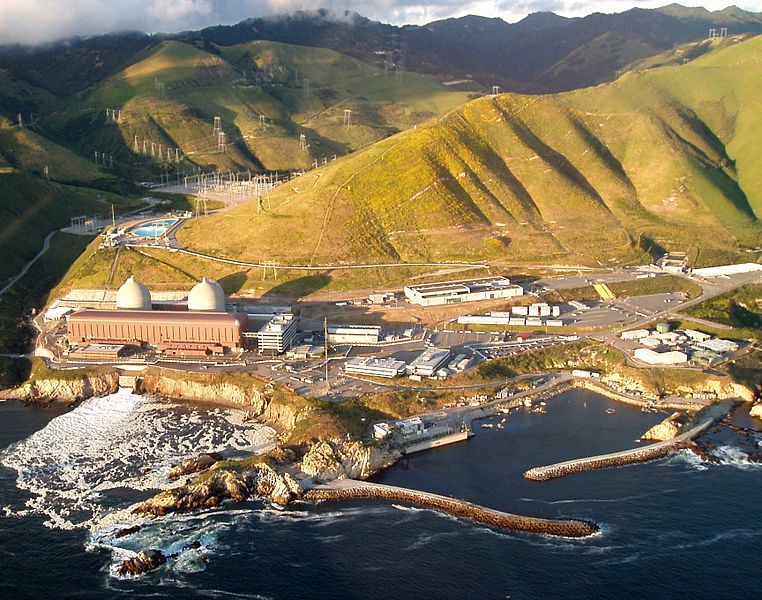
And If You Don’t Know, Now You Know, https://www.independent.com/2020/09/24/all-about-diablo-canyon-nuclear-plant/ David Weisman, 24 Sept 20,
|
Absent annoyances like the Alliance for Nuclear Responsibility (A4NR) and allies, it appears that regulators, elected officials, and the press have their COVID-19 facemasks pulled up over their eyes. With no shortage of crises — pandemics, wildfires, social injustice — plaguing 2020 so far, some long-simmering nuclear shortcuts are slipping under the radar. PG&E, which pled guilty to 84 cases of manslaughter this past spring, has been banking on regulatory inattention to increase profits while ignoring risks to residents and ratepayers from its
|
1 This Month



26 September – International Day for the Total Elimination of Nuclear Weapons


PLEASE OPPOSE HR 8255 AND S.3639 – bills would accelerate satellite deployment, with no environmental review or safeguards – https://ncstd5li.quorum.us/campaign/169331/
To see nuclear-related stories in greater depth and intensity – go to https://nuclearinformation.wordpress.com
-
Archives
- September 2026 (245)
- August 2026 (330)
- July 2026 (355)
- June 2026 (287)
- May 2026 (306)
- April 2026 (356)
- March 2026 (251)
- February 2026 (267)
- January 2026 (308)
- December 2025 (358)
- November 2025 (359)
- October 2025 (375)
-
Categories
- 1
- 1 NUCLEAR ISSUES
- business and costs
- climate change
- culture and arts
- ENERGY
- environment
- health
- history
- indigenous issues
- Legal
- marketing of nuclear
- media
- opposition to nuclear
- PERSONAL STORIES
- politics
- politics international
- Religion and ethics
- safety
- secrets,lies and civil liberties
- spinbuster
- technology
- Uranium
- wastes
- weapons and war
- Women
- 2 WORLD
- ACTION
- AFRICA
- Atrocities
- AUSTRALIA
- Christina's notes
- Christina's themes
- culture and arts
- Events
- Fuk 2022
- Fuk 2023
- Fukushima 2017
- Fukushima 2018
- fukushima 2019
- Fukushima 2020
- Fukushima 2021
- general
- global warming
- Humour (God we need it)
- Nuclear
- RARE EARTHS
- Reference
- resources – print
- Resources -audiovicual
- Weekly Newsletter
- World
- World Nuclear
- YouTube
-
RSS
Entries RSS
Comments RSS
 nuclear-news