Security concerns delay Czech nuclear expansion
Czech nuclear expansion faces delay amid concerns of opposition, secret services, EURACTIV.com with Reuters 25 Nov 20, A tender to decide who builds a new unit at a Czech nuclear power plant may face delays after security services and opposition parties raised concerns about the possible participation of bidders from China and Russia, officials said.
According to a document seen by Reuters, a working group of intelligence and foreign policy officials under the Interior Ministry wants conditions imposed to ensure bidders from countries that pose a security risk are disqualified.
The main Czech power utility ČEZ, which is 70% state-owned, has been planning to launch a tender before the end of the year for a 1,200 MW unit at its Dukovany power plant and to pick a winner in 2022.
The project is worth at least $7.24 billion at current prices, making it the country’s biggest investment deal so far, and includes a state commitment to buy power from the plant at profitable terms for ČEZ.
President Milos Zeman has sought closer ties with China and Russia. He has favoured their participation, and the government
But Prime Minister Andrej Babiš said on Monday the tender was not yet ready, and suggested it should not be decided just 10 months before an election……… https://www.euractiv.com/section/energy/news/czech-nuclear-expansion-faces-delay-amid-concerns-of-opposition-secret-services/
Concern in France over lack of expert inspection of nuclear sites
Montel News 24th Nov 2020, The lack of inspections at nuclear sites by safety experts, due to the
coronavirus pandemic, raises fears for the safety of the facilities, union
officials in the energy sector told Montel.
The Nuclear Safety Authority
(ASN) canceled all its physical inspections of nuclear power plants, except
the inspections considered essential, during the first containment in the
spring. Since then, some inspections have resumed in the field but many are
still carried out remotely.
This reduction in on-site checks is
exacerbating a situation where the workforce is already limited and
communication with workers is lacking, say some union officials.
30 more years for Wisconson’s old nuclear power station? Is this a good idea?
NextEra Energy has submitted an application to the Nuclear Regulatory Commission seeking to add 20 years to the licenses for the Point Beach Nuclear plant in Two Rivers, according to a document filed with state regulators…….
Hundreds of casks of nuclear waste are being stored at sites across Wisconsin and neighboring states, costing taxpayers millions of dollars as the federal government struggles to open a permanent storage facility.
Under the agreement, the utility is paying $52.66 per megawatt-hour this year, about 1.8 times the average wholesale price for electricity in the Midwest, according to data from the Energy Information Administration. By 2023, the cost rises to $122.45 per megawatt hour……
Point Beach is the only one of Wisconsin’s three nuclear power plants still in operation.
Decommissioning is nearly complete at the La Crosse Boiling Water Reactor, a 50-megawatt demonstrator plant built by the federal government in 1967 and shut down in 1987. The 1,772-megawatt Kewaunee Power Station was shut down in 2013. Decommissioning is scheduled to begin in 2069, according to the NRC.
As of April, there were 50 dry casks of radioactive waste being stored at Point Beach until the federal government can develop a permanent storage plan. https://journaltimes.com/news/state-and-regional/wisconsins-nuclear-power-plant-operator-seeks-30-more-years/article_da04bd52-ca1b-5401-92a7-d860ab058602.html
Lack of safety documents in Los Alamos National Laboratory’s handling of radioactive wastes.
  CCNS Asks Why LANL’s Area G Waste Handling Lacks Proper Safety Documents, http://nuclearactive.org/ 20 Nov 20, On Wednesday, Chris Roscetti, the Technical Director for the Defense Nuclear Facilities Safety Board, raised more red flags about the fact that Los Alamos National Laboratory (LANL) handles, treats and stores radioactive and hazardous waste without the proper paperwork in place. He was speaking during a virtual meeting of the Northern New Mexico Citizens’ Advisory Board. DNFSB POWERPOINT . CCNS Asks Why LANL’s Area G Waste Handling Lacks Proper Safety Documents, http://nuclearactive.org/ 20 Nov 20, On Wednesday, Chris Roscetti, the Technical Director for the Defense Nuclear Facilities Safety Board, raised more red flags about the fact that Los Alamos National Laboratory (LANL) handles, treats and stores radioactive and hazardous waste without the proper paperwork in place. He was speaking during a virtual meeting of the Northern New Mexico Citizens’ Advisory Board. DNFSB POWERPOINT .
Some paperwork has remained unresolved for years. For example, since at least 2016, LANL does not have compliant safety documents for nuclear facilities, such as the Area G dump. These documents, called documented safety analysis, serve to identify and analyze the hazards associated with the work. Nuclear facilities are required to respond to the analyses in ways that will protect workers, the public and the environment. Some elements of safety documents include fire protection calculations, computer modeling for the dispersion of contaminants, and analyses of the efficiency of the operating controls to prevent releases. The Area G safety documents have languished since 2016 – even though LANL continues to handle, treat, and store plutonium-contaminated and hazardous waste there. Roscetti said there are about 3,100 drums containing radioactive and hazardous waste sitting above ground at Area G. These wastes are destined for the Waste Isolation Pilot Plant (WIPP), but need to be treated or repackaged before shipment. In fiscal year 2020, LANL sent 54 shipments to WIPP. Most of these shipments were newly-generated waste from the fabrication of the triggers for nuclear weapons, or plutonium pits. Each shipment to WIPP can hold 42 55-gallon steel drums
Based on the current shipping rate, if all 3,100 above-ground drums were sent to WIPP at a maximum of 42 drums per shipment, it would take about 18 months. But the amount of radioactivity in each drum dictates how many drums make up each shipment. In the meantime, newly generated waste would be shipped into Area G. In recent virtual meetings, LANL officials have been announced its plans to begin retrieving thousands of buried containers at Area G. Those drums would most likely need to be repackaged before shipment to WIPP. But again, the safety documents have not been developed and approved. Safety documents address not only the repackaging and shipping operations, but also the delicate retrieval operations. There is evidence that some drums have corroded.
CCNS asks why LANL is allowed to continue to operate Area G when safety basis documents have not been properly updated – in the case of Area G, nearly five years…….. http://nuclearactive.org/
|
|
Hazardous plan for Peel Ports to take over the decommissioning of Britain’s dead nuclear submarines
|
Ferret 17th Nov 2020. The company that runs the port at Hunterston in North Ayrshire wants to useit to break up the radioactive hulks of defunct nuclear submarines, The Ferret can reveal. A plan by Peel Ports, released under freedom of information law, discloses that the firm sees “opportunities” for military submarine decommissioning at Hunterston.
But the idea has brought condemnation from politicians, environmental and community groups. They warn that the transport and dismantling of submarines would be “potentially hazardous” and could cause “significant environmental damage”. The 50-strong group of nuclear free-local authorities (NFLA) in the UK pointed out that prolonged public consultations had resulted in
agreement that decommissioning should only take place at Rosyth and Devonport. “If Peel Ports is lobbying for a change in that policy to undertake this work at Hunterston port, we would be concerned,” said NFLA Scotland’s convenor, SNP Glasgow councillor, Feargal Dalton. There were “complicated and potentially hazardous transport issues of moving
submarines from the east to the west coast of Scotland, and the required level of expertise to do this,” he argued. “It would also require a new consultation process at a time when the last one took years to deliver. I doubt the Ministry of Defence would like to reopen that process – and if they do, we and others will robustly challenge any significant change that increases the hazards to this operation.” https://theferret.scot/hunterston-peel-ports-nuclear-submarines/ |
Bangladesh draws up a nuclear disaster response plan
The National Nuclear and Radioactive Emergency Preparedness and Response Plan was approved at a virtual cabinet meeting chaired by Prime Minister Sheikh Hasina on Monday.
The guideline was authorised to put safety measures in place for the Rooppur nuclear power plant, Cabinet Secretary Khandker Anwarul Islam said during a press briefing at the Secretariat.
“The International Atomic Energy Commission stipulates the availability of safety guidelines and response plans for such power plants, or else they will not allow us to run it. We have drafted it following the guideline structure from IAEA,” he said.
“The Ministry of Disaster Management and Relief plays the key role in all sorts of disaster management in the country. The National Nuclear and Radioactive Emergency Preparedness and Response Plan was created in keeping with Bangladesh’s disaster management and such other plans.
The cabinet secretary pointed out that authorities actually have little idea about dealing with nuclear power mishaps and emergency responses and the guideline would provide a way forward if such situations occur. …….
https://bdnews24.com/bangladesh/2020/11/16/bangladesh-approves-nuclear-disaster-response-plan
Federal utility fined $900K for nuclear violations, coverup
Howard Hall, director of the University of Tennessee’s Institute for Nuclear Security, said the notice of violation to TVA points to “a systemic problem in management.”
“As someone who has worked in this field essentially my entire life, I would have been appalled to receive such a letter,” Hall said.
In a notice dated Nov. 6, regulators noted a “substantial safety culture issue” at Watts Bar at the time of the incident. They also found that “TVA senior management and staff failed to communicate with candor, clarity, and integrity during several interactions with the NRC during the course of the inspection and investigation.”
According to NRC documents, on Nov. 11, 2015, a shift manager at Watts Bar directed the control room to begin heating up a reactor even though the plant’s usual pressurizer system, which keeps the reactor water from turning to steam, was out of service. When trying to heat up with an alternate system, the pressurizer rapidly began to fill with water. Staff then had to “take actions outside of proper operating procedures” to bring the water level down.
The incident wasn’t recorded in the plant’s logbook and managers later misled NRC investigators about what had happened. ……… https://www.startribune.com/federal-utility-fined-900k-for-nuclear-violations-coverup/573069392/
Hunterston nuclear reactor allowed to restart, despite increasing cracks in the graphite core.
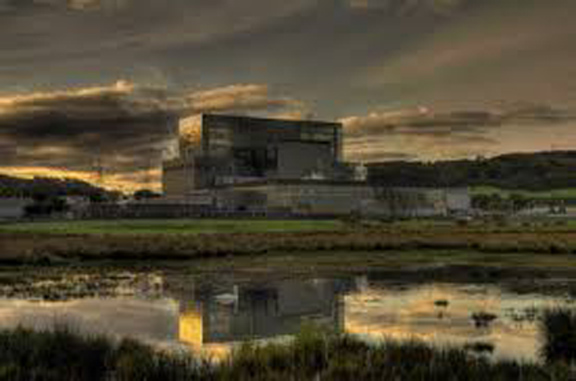
 No to Nuclear Power, November 2020, On 27th August, the Office for Nuclear Regulation (ONR) announced it was giving EDF permission to restart Reactor 3 at Hunterston B for a limited period – generating up to a total of 16.425 Terawatt days, approximately six months’ operation. (1) Then on 24 September ONR gave EDF permission for Reactor 4 to return to service for a similar limited period. By the end of September both reactors were operating. (2)
The ONR report also contains some interesting remarks on EDF assessments. It says for example that the company’s estimates of the likelihood of fragments of debris broken off graphite blocks “migrating to safety significant locations” are “inherently subjective”. It also suggests that EDF’s safety case methodology is “approaching its limit of viability”. The ONR report also contains some interesting remarks on EDF assessments. It says for example that the company’s estimates of the likelihood of fragments of debris broken off graphite blocks “migrating to safety significant locations” are “inherently subjective”. It also suggests that EDF’s safety case methodology is “approaching its limit of viability”.
.U.S. nuclear security administrator resigns – lost the confidence of Donald Trump?
|
Nuclear security administrator resigns from post, https://www.reviewjournal.com/news/politics-and-government/nuclear-security-administrator-resigns-from-post-2180746/ By Gary Martin Las Vegas Review-Journal
November 10, 2020 – WASHINGTON — Lisa Gordon-Hagerty, who headed the National Nuclear Security Administration that oversees national security sites in Nevada and New Mexico, has resigned from her position, according to the Department of Energy.
Gordon-Hagerty resigned as administrator on Friday, according to a NNSA statement. Dr. William Bookless, the NNSA principal deputy administrator, was appointed acting administrator of the semi-autonomous agency that maintains and measures the effectiveness of the nation’s nuclear weapons stockpile. The NNSA oversees the Nevada National Security Site, located 65 miles north of Las Vegas on 1,370 square miles. The site, which conducts subcritical nuclear weapons testing, employees about 2,400 workers. Los Alamos National Laboratory also is under the agency. The resignation of Gordon-Hagerty followed a clash with Energy Secretary Dan Brouillette, who apparently said President Donald Trump has lost confidence in her, according to Bloomberg. The White House declined to comment. But Rep. Dina Titus, D-Nev., said “the chaos of the Trump administration extends even to the agency responsible for safeguarding our nuclear weapons.” I will keep a close watch on the activities at NNSA during this transitional period while we eagerly await the inauguration of President-elect (Joe) Biden,” Titus said. Sen. Catherine Cortez Masto, D-Nev., said she was disappointed to learn of Gordon-Hagerty’s resignation. “It is imperative that any future Administrator uphold NNSA’s mission to ensure the safety, security, and reliability of our nation’s nuclear stockpile, the continued security and efficiency of the Nevada National Security Site and the agreement the State of Nevada reached with the Department of Energy to begin removing the weapons grade plutonium currently being stored at NNSS next year,” Cortez Masto said. The termination of Gordon-Hagerty also brought a rebuke of Brouillette from Sen. James Inhofe, R-Okla., who questioned the timing of the move. Inhofe also praised the abilities of Gordon-Hagerty, who was confirmed by the Senate for the position in 2018. She was the first woman to serve in the position, according to a NNSA news release announcing her resignation. |
|
Belarus shuts down its newly inaugurated nuclear power plant to replace equipment
|
Belarus shuts down its newly inaugurated nuclear power plant to replace equipment, VILNIUS, Nov 9 (Reuters) – Belarus has shut down production at its new nuclear power plant, inaugurated on Saturday by President Alexander Lukashenko, to replace some of its equipment, its Ministry of Energy said in a statement on Monday.It did not say when the need to replace the equipment was first discovered. Lithuanian grid operator (TSO) Litgrid , located 20km from the plant, said it had detected a production stoppage at the plant at 1000 GMT on Sunday. The power plant was built by Russian state-owned firm Rosatom and financed by Moscow with a $10 billion loan…… https://www.reuters.com/article/belarus-nuclearpower-stoppage/belarus-shuts-down-its-newly-inaugurated-nuclear-power-plant-to-replace-equipment-idINL1N2HV26T
|
|
Sudden resignation of head of USA’s National Nuclear Security Administration
Gordon-Hagerty, who became the first woman to lead the NNSA in February 2018, sent her letter of resignation to the White House Friday, according to a pair of senior NNSA officials, speaking to Defense News on background.
The NNSA is a semi-autonomous office located within the Department of Energy. While the Defense Department manages the delivery systems of the nuclear force — ships, planes and missiles — NNSA has oversight over the development, maintenance and disposal of nuclear warheads. While the agency falls under the purview of DoE, much of its budget is set by the Nuclear Weapons Council, which is largely controlled by Defense Department officials.
Per the sources, the resignation was driven by almost a year of clashes between Gordon-Hagerty’s office and Secretary of Energy Dan Brouillette. That fight first seeped into public earlier this year, when Brouillette sought to cut NNSA’s budget request. Defense officials, backed by supporters from Congress, went to the White House and forced the issue in NNSA’s favor.
Tensions never truly receded and continued to play out in Congress during the fiscal 2021 budget season. Senate Armed Services Committee chairman Sen. Jim Inhofe, R-Okla., led pro-defense lawmakers in an effort to give the Pentagon more official control over NNSA; House lawmakers created several pieces of legislation that would give the Energy department more control.
The issue seemed to come to a head when the Department of Energy Organization and Management Improvement Act, passed by the House Committee on Energy and Commerce Sept. 9, changed language that made the NNSA a quasi-independent entity, in essence folding the agency more fully under DOE’s control. The move was seen by NNSA officials as an attempt by Brouillette to outright destroy the agency………. https://news.yahoo.com/head-nuclear-weapons-agency-unexpectedly-184158751.html
Japanese nuclear regulator’s website hit by possible cyberattack
Japanese nuclear regulator’s website hit by possible cyberattack, Japan Times, https://www.japantimes.co.jp/news/2020/11/04/national/nuclear-regulator-website-cyberattack, KYODO, Nov 4, 2020
The Nuclear Regulation Authority said Tuesday its official website became inaccessible possibly due to cyberattacks.
The incident comes a week after the regulatory body’s intranet had an unauthorized access from outside.
According to the NRA, the government’s cybersecurity institute notified it of the website disruption on Tuesday afternoon. There was no abnormality when the NRA updated the website Monday evening, it said.
The website remained inaccessible for hours, but the problem was resolved by around 8:30 p.m., the NRA said.
In August, a fake website resembling that of the NRA was discovered by an official of the regulator.
Due to shutdowns, Japan has only one nuclear reactor working
Japan left with only one nuclear reactor working due to shutdown, Asahi Shimbun, By HIROKI HASHIMOTO/ Staff Writer, November 4, 2020
Electric power companies are required to construct an anti-terrorism facility at their nuclear power plants under stringent new safety regulations imposed after the triple meltdown at the Fukushima plant.
But Kansai Electric failed to meet the deadline at the Takahama nuclear power plant in Takahama, Fukui Prefecture, forcing it to take its No. 3 and No. 4 reactors offline.
In addition, pipes need to be replaced at its Oi nuclear power plant’s No. 3 reactor.
Kansai Electric submitted repair plans to the government and expects to finish the work in January so it can restart the reactor in February at the earliest.
In January this year, the Hiroshima High Court granted a provisional disposition order to stop Shikoku Electric’s Ikata nuclear power plant’s No. 3 reactor in Ikata, Ehime Prefecture, which means it is unlikely to come back online until next March at the earliest.
Kyushu Electric’s Sendai nuclear power plant’s No. 1 and No. 2 reactors in Satsuma-Sendai, Kagoshima Prefecture, were also suspended after construction of an anti-terrorism facility fell behind schedule.
The Genkai nuclear power plant’s No. 3 reactor is undergoing regular inspections, so only the No. 4 reactor is still operating.
This situation is expected to continue until Dec. 22 when Kansai Electric plans to restart the No. 3 reactor at its Takahama nuclear power plant. http://www.asahi.com/ajw/articles/13900336
Anxieties, memories of Chernobyl, as Belarus launches new nuclear power station
|
Chernobyl fears as Belarus launches new nuclear power station: Lithuania distributes iodine tablets to 500,000 close to border over safety concerns
Daily Mail, RACHAEL BUNYAN FOR MAILONLINE and AFP , 4 Nov 20, Belarus today launched its controversial Russia-built nuclear power station despite safety concerns from neighbouring Baltic states three decades after the Chernobyl nuclear disaster. Lithuania’s Foreign Minister Linas Linkevicius criticised the launch saying it had gone ahead despite unresolved safety issues The government in the Lithuanian capital, Vilnius, has also offered free iodine tablets to around half a million people living close to the Belarus border to help protect them from radiation in case of an accident The Astravets nuclear power plant, Belarus’s first nuclear station, is just 30 miles away from Vilnius. ……… Lithuania’s Foreign Minister Linas Linkevicius criticised the launch saying it had gone ahead despite unresolved safety issues and described the energy project as ‘geopolitical’. The EU and the international community ‘simply cannot stay indifferent to such cynical ignorance,’ Linkevicius wrote on Twitter. Lithuania said it had immediately stopped electricity imports from Belarus and neighbouring Latvia said it had also blocked imports of energy generated at the plant.…….. https://www.dailymail.co.uk/news/article-8909665/Chernobyl-fears-Belarus-launches-new-nuclear-power-station-despite-safety-concerns.html |
|
The very real risks of radiation accidents on Earth, from nuclear reactors in space
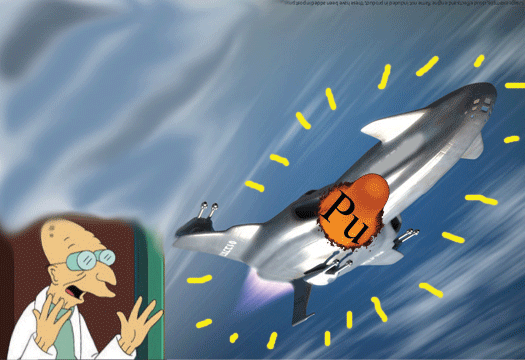 Ensuring Safety on Earth from Nuclear Sources in Space, Mirage News, 28 Oct 20, In early 1978, the world steeled itself as gravity pulled an uncontrolled satellite powered by a small reactor fueled with 45 kg of highly enriched uranium towards Earth. Since COSMOS 954’s impact point could not be predicted accurately, emergency responders had to assume that an inhabited area could be contaminated, and they feverishly prepared equipment and response procedures. This was the world’s first experience with the uncontrolled re-entry of a space object with radioactive materials. Ensuring Safety on Earth from Nuclear Sources in Space, Mirage News, 28 Oct 20, In early 1978, the world steeled itself as gravity pulled an uncontrolled satellite powered by a small reactor fueled with 45 kg of highly enriched uranium towards Earth. Since COSMOS 954’s impact point could not be predicted accurately, emergency responders had to assume that an inhabited area could be contaminated, and they feverishly prepared equipment and response procedures. This was the world’s first experience with the uncontrolled re-entry of a space object with radioactive materials.The radioactive materials launched into Earth orbit, or traveling in spacecraft, can potentially harm people or the environment in case of an accident and for which strict emergency response planning and effective information sharing at the international level are required. This was the topic of an IAEA webinar held last week for emergency response experts.
In the majority of nuclear and radiological emergencies there will be enough information to know the location of a potential release of radioactivity, but with space activities the exact location of impact cannot always be predicted. “The IAEA has developed arrangements to share information about any pending nuclear-powered satellite re-entry. Using the data, countries can quickly respond to protect the public and the environment from the radioactivity that might spread as a result of an accident,” said Frederic Stephani, Incident and Emergency Assessment Officer in the IAEA, during the webinar. COSMOS 954 eventually crashed in the Northwest Territories in Canada on 24 January 1978, scattering radioactive debris over a 600 km footprint and spreading radioactivity over 100 000 km2. The clean-up operation, called “Operation Morning Light,” jointly coordinated by Canada and the US, recovered 80 radioactive items…… accidents can occur during the launch, operation and end-of-service mission phases of space nuclear power source applications. These accidents could expose the nuclear power source to extreme physical conditions leading to a radioactive release into the Earth’s atmosphere. …. https://www.miragenews.com/ensuring-safety-on-earth-from-nuclear-sources-in-space/ |
|
1 This Month



26 September – International Day for the Total Elimination of Nuclear Weapons


PLEASE OPPOSE HR 8255 AND S.3639 – bills would accelerate satellite deployment, with no environmental review or safeguards – https://ncstd5li.quorum.us/campaign/169331/
To see nuclear-related stories in greater depth and intensity – go to https://nuclearinformation.wordpress.com
-
Archives
- September 2026 (245)
- August 2026 (330)
- July 2026 (355)
- June 2026 (287)
- May 2026 (306)
- April 2026 (356)
- March 2026 (251)
- February 2026 (267)
- January 2026 (308)
- December 2025 (358)
- November 2025 (359)
- October 2025 (375)
-
Categories
- 1
- 1 NUCLEAR ISSUES
- business and costs
- climate change
- culture and arts
- ENERGY
- environment
- health
- history
- indigenous issues
- Legal
- marketing of nuclear
- media
- opposition to nuclear
- PERSONAL STORIES
- politics
- politics international
- Religion and ethics
- safety
- secrets,lies and civil liberties
- spinbuster
- technology
- Uranium
- wastes
- weapons and war
- Women
- 2 WORLD
- ACTION
- AFRICA
- Atrocities
- AUSTRALIA
- Christina's notes
- Christina's themes
- culture and arts
- Events
- Fuk 2022
- Fuk 2023
- Fukushima 2017
- Fukushima 2018
- fukushima 2019
- Fukushima 2020
- Fukushima 2021
- general
- global warming
- Humour (God we need it)
- Nuclear
- RARE EARTHS
- Reference
- resources – print
- Resources -audiovicual
- Weekly Newsletter
- World
- World Nuclear
- YouTube
-
RSS
Entries RSS
Comments RSS
 nuclear-news