Biden willing to damage US economy to counter China – US Treasury
21 Apr 23, https://www.rt.com/news/575100-china-sanctions-impact-us-economy-yellen/
Janet Yellen has conceded that protecting national security may come at an economic cost
President Joe Biden will stop at nothing to protect America against security threats posed by China, even if it means damaging the US economy, Treasury Secretary Janet Yellen has claimed.
“National security is of paramount importance in our relationship with China,” Yellen said during a speech in Washington in Wednesday. She gave the example of blocking China from obtaining certain technologies, adding, “We will not compromise on these concerns, even when they force trade-offs with our economic interests.”
Yellen accused China of “unfair” economic practices and of “taking a more confrontational posture” toward the US and its allies in recent years. Washington has a “broad set of tools” to deal with security threats from China, she added, such as export controls and sanctions against entities that provide support to the People’s Liberation Army (PLA).
The Treasury Department has sanctions authorities to address threats related to cybersecurity and China’s military-civil fusion,” Yellen said. “We also carefully review foreign investments in the United States for national security risks and take necessary actions to address any such risks. And we are considering a program to restrict certain US outbound investments in specific sensitive technologies with significant national security implications.”
The Biden administration has already taken steps to block Chinese companies from securing advanced semiconductor technologies, such as restricting exports of chip-making equipment. Yellen insisted that Washington doesn’t take such actions to gain an economic advantage or to stifle China’s growth and modernization.
Yellen also scolded China for alleged human rights abuses and alleged “no limits” support for Russia amid the Ukraine crisis. She warned that consequences would be severe if China provided material support or helped Russia evade sanctions, and she added that the US would use its “tools” to deter human rights abuses.
“Like national security, we will not compromise on the protection of human rights,” Yellen said. “This principle is foundational to how we engage with the world.”
Beijing has balked at US accusations, suggesting that Washington should “make more effort in solving its own human rights problems.” Chinese leaders also have faulted Washington for a “Cold War mentality” in which Beijing is demonized as a security threat as Biden’s administration tries to contain its economic progress.
“Containment and suppression will not make America great again, nor will it stop China from moving towards national rejuvenation,” Chinese Foreign Minister Qin Gang told reporters last month.
Yellen admitted earlier this week that Washington’s use of its leverage over the global financial system to sanction other countries could diminish the role of the US dollar as the world’s reserve currency. Asked about “weaponization” of the US currency, she told CNN that such tactics “could undermine the hegemony of the dollar.”
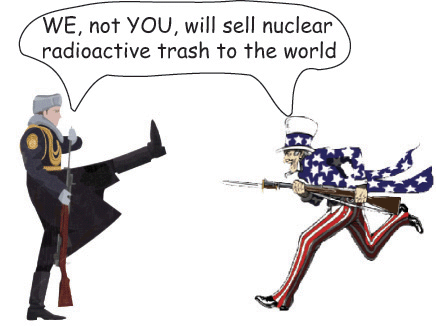
Germany, Poland and others are pushing for new sanctions on Russia’s nuclear energy.
CNBC, APR 19 2023, Silvia Amaro @SILVIA_AMARO
- In a document seen by CNBC, Poland and the Baltic States called for sanctions on the civil nuclear energy activities too.
- According to data published by Europe’s statistics office Eurostat in 2021 — the year that preceded Russia’s invasion of Ukraine — Moscow was the third biggest provider of uranium to the EU.
- Asked whether a new set of actions to target Russia would feature nuclear energy, a spokesperson for the European Commission said the institution has no comment on ongoing confidential discussions.
…………………………………… “Across the EU, we must keep making ourselves independent from Russia,” Robert Habeck, the German economy and climate minister, said over the weekend.
“The nuclear sector is still outstanding. It is not justifiable that this area is still given preferential treatment. Nuclear technology is an extremely sensitive area, and Russia can no longer be seen as reliable partner within it,” he said.
In a document seen by CNBC, Poland and the Baltic States also called for sanctions on civil nuclear energy activities.
“Between March and December 2022, Russia exported just over $1 billion-worth of materials and technology of relevance to the nuclear energy sector,” the Royal United Services Institute, a think tank, said in a report in February.
“This trade included exports to members of NATO and the EU. In fact, not only has the value of Russian nuclear-related exports not shrunk since February 2022, the data reviewed by the author suggests that it may be expanding, with a handful of loyal customers still eager to do business with Russia’s nuclear sector,” the same report said.
According to data published by Europe’s statistics office Eurostat in 2021 — the year before Russia’s invasion of Ukraine — Moscow was the third biggest provider of uranium to the EU.
Ukrainian officials, as well as environmental groups, have previously criticized how the European Union has so far not curbed nuclear revenues for the Kremlin.
……………………… Further highlighting the complexity of the matter, Hungary announced in August that it would build two new nuclear reactors with the Russia state-owned firm Rosatom.
US warns Russia not to touch American nuclear technology at Ukrainian nuclear plant
By Natasha Bertrand and Tim Lister, CNN
The US has sensitive nuclear technology at a nuclear power plant inside Ukraine and is warning Russia not to touch it, according to a letter the US Department of Energy sent to Russia’s state-owned nuclear energy firm Rosatom last month.
In the letter, which was reviewed by CNN and is dated March 17, 2023, the director of the Energy Department’s Office of Nonproliferation Policy, Andrea Ferkile, tells Rosatom’s director general that the Zaporizhzhia Nuclear Power Plant in Enerhodar “contains US-origin nuclear technical data that is export-controlled by the United States Government.”
Goods, software and technology are subject to US export controls when it is possible for them to be used in a way that undermines US national security interests.
The Energy Department letter comes as Russian forces continue to control the plant, which is the largest nuclear power station in Europe and sits in a part of the Zaporizhzhia region that Russia occupied after its invasion of Ukraine last February. The plant has frequently been disconnected from Ukraine’s power grid due to intense Russian shelling in the area, raising fears across Europe of a nuclear accident.
While the plant is still physically operated by Ukrainian staff, Rosatom manages it. The Energy Department warned Rosatom in the letter that it is “unlawful” for any Russian citizens or entities to handle the US technology.
CNN has reached out to Rosatom for comment………………………. https://edition.cnn.com/2023/04/18/politics/us-warns-russia-zaporizhzhia-nuclear-plant/index.htm
Macron speaks out against war with China- the furious USA reaction shows American insecurity?
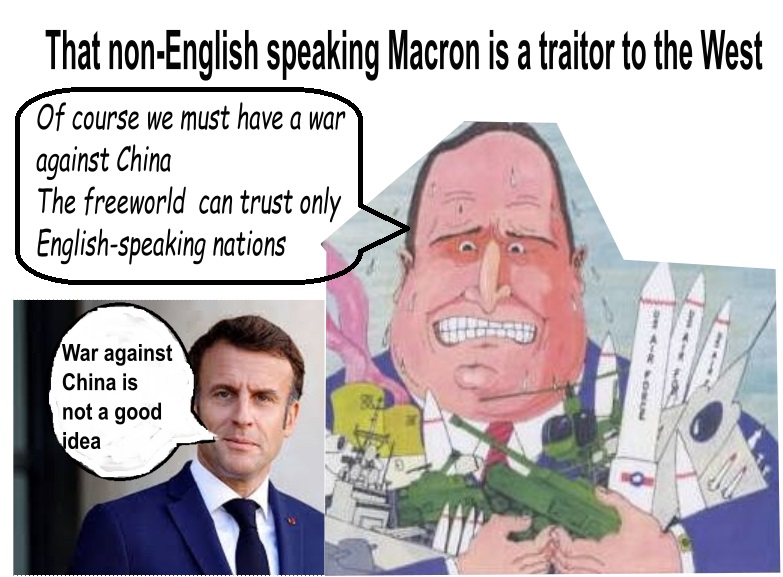
Confronting Russia and China is an integral part of Washington’s imperial game, as is the American need to subordinate Europe as a colony of vassals.
Macron speaks out in a rare moment of clarity and the American backlash is knee-jerk and nasty… because how dare those European vassals get out of line!
| Macron’s musings on Europe’s ‘Strategic Autonomy’: Much ado about nothing, but US insecurity is palpable Finian Cunningham, Strategic Culture, 2023-04-12 |
French President Emmanuel Macron has got the Americans in a flap with his comments advocating greater European strategic autonomy and for the old continent to avoid becoming embroiled in a U.S.-China confrontation over Taiwan.
Macron made his remarks while traveling back from China where he appeared to have been well received by President Xi Jinping. The trip reportedly garnered several lucrative trade deals for French businesses at a time when Élysée Palace is assailed with nationwide public protests and strikes over economic woes.
The American chagrin over Macron’s musings about European strategic autonomy is revealing in at least two ways.
The New York Times sniffily accused Macron of playing the “Gaullist card” while the Wall Street Journalcensured the French leader for “blundering on Taiwan”, adding, “He weakens deterrence against Chinese aggression and undermines U.S. support for Europe”.
Republican Senator Marco Rubio was palpably miffed and demanded that Macron should clarify “quickly” whether he was speaking for Europe as a whole or for France alone. In a huff, Rubio said, “You guys [European leaders] handle Ukraine” because the U.S. would henceforth focus its attention on “China’s threats”.
You have to laugh at the misplaced sense of American chivalry. This is the usual American trope of believing that they are once again salvaging Europe from conflict, as in the First and Second World Wars. Uncle Sam, as Rubio suggests, is going to abandon Europe to its bloody squabbling while getting on with “dealing” with purported “Chinese aggression”.
The reality is diametrically opposite. Europe is embroiled in the worst war since the Second World War precisely because its supine leaders are slavishly following Washington’s agenda of waging a proxy against Russia and destroying the strategic Russian-European energy trade. U.S.-led NATO expansionism over decades – under the guise of “protecting Europe – has produced this dangerous juncture. The war in Ukraine is driven by Washington’s need to shore up its unwieldy hegemonic ambitions. Confronting Russia and China are an integral part of Washington’s imperial game, as is the American need to subordinate Europe as a colony of vassals.
It’s an audacious affectation for American politicians and media to project that they are doing Europe some kind of noble favor over Ukraine and saving the European damsels from the “barbarian Russians”. It’s so corny and false, yet thanks to Western media brainwashing the old trope still works.
What the furore over Macron’s comments shows is just how under the American thumb (make that heel) the European leaders are. For a European president to aver that his country and other members of the European Union should make their interests a priority in pursuing independent relations with China and in particular to avoid a conflict over Taiwan is, one would think, a rather mundane matter of common sense, reason and normal prerogative. That the American political class has reacted in such a furious way shows, ironically, just how abjectly subordinate the Europeans really are. Macron speaks out in a rare moment of clarity and the American backlash is knee-jerk and nasty… because how dare those European vassals get out of line!
More importantly, the American anger may be overbearing and bullish but it nonetheless reveals how fragile the sense of insecurity in Washington is.
The American establishment is increasingly sensing that there is a chronic systemic crisis in U.S. global power. The presumed unipolar American order is waning and a multipolar world is ineluctably emerging. The once-mighty U.S. dollar is no longer affording the security it once did. China, Russia, and the Global South are pushing more and more strongly for a multipolar order that will make the American dollar and its unique, arbitrary privileges redundant. When that fully happens, the debt-strapped U.S. capitalist economy and its erstwhile global dominance will crash like so many empires before it.
This is why Washington is so apoplectic about Macron’s “insolent” outburst. American power relies on subservience and adherence to its diktat. Mutterings by vassals of independence must be stamped out ruthlessly so that the idea does not get around or maybe even be adopted………………………
despite his geopolitical impotence and reliable vassalage, the American fury at Macron’s comments is instructive. That’s the real story. The mere whiff of dissent is enough to send Washington into a near-panic because it knows how fragile its imperial power has become.
Macron is irrelevant but the torrid American reaction is notable. https://strategic-culture.org/news/2023/04/12/macron-musings-europe-strategic-autonomy-much-ado-about-nothing-but-us-insecurity-palpable/
Finland’s NATO Move Leaves Others to Carry On the “Helsinki Spirit”
Finland’s membership in NATO marks the end of the nation’s admirable tradition as a global peacemaker.
MEDEA BENJAMINNICOLAS J.S. DAVIES, Apr 11, 2023
On April 4, 2023, Finland officially became the 31st member of the NATO military alliance. The 830-mile border between Finland and Russia is now by far the longest border between any NATO country and Russia, which otherwise borders only Norway, Latvia, Estonia, and short stretches of the Polish and Lithuanian borders where they encircle Kaliningrad.
In the context of the not-so-cold war between the United States, NATO and Russia, any of these borders is a potentially dangerous flashpoint that could trigger a new crisis, or even a world war. But a key difference with the Finnish border is that it comes within about 100 miles of Severomorsk, where Russia’s Northern Fleet and 13 of its 23 nuclear-armed submarines are based. This could well be where World War III will begin, if it has not already started in Ukraine.
In Europe today, only Switzerland, Austria, Ireland and a handful of other small countries remain outside NATO. For 75 years, Finland was a model of successful neutrality, but it is far from demilitarized. Like Switzerland, it has a large military, and young Finns are required to perform at least six months of military training after they turn 18. Its active and reserve military forces make up over 4% of the population–compared with only 0.6% in the U.S.–and 83% of Finns say they would take part in armed resistance if Finland were invaded.
On April 4, 2023, Finland officially became the 31st member of the NATO military alliance. The 830-mile border between Finland and Russia is now by far the longest border between any NATO country and Russia, which otherwise borders only Norway, Latvia, Estonia, and short stretches of the Polish and Lithuanian borders where they encircle Kaliningrad.
In the context of the not-so-cold war between the United States, NATO and Russia, any of these borders is a potentially dangerous flashpoint that could trigger a new crisis, or even a world war. But a key difference with the Finnish border is that it comes within about 100 miles of Severomorsk, where Russia’s Northern Fleet and 13 of its 23 nuclear-armed submarines are based. This could well be where World War III will begin, if it has not already started in Ukraine.
In Europe today, only Switzerland, Austria, Ireland and a handful of other small countries remain outside NATO. For 75 years, Finland was a model of successful neutrality, but it is far from demilitarized. Like Switzerland, it has a large military, and young Finns are required to perform at least six months of military training after they turn 18. Its active and reserve military forces make up over 4% of the population–compared with only 0.6% in the U.S.–and 83% of Finns say they would take part in armed resistance if Finland were invaded.
Only 20 to 30% of Finns have historically supported joining NATO, while the majority have consistently and proudly supported its policy of neutrality. In late 2021, a Finnish opinion poll measured popular support for NATO membership at 26%. But after the Russian invasion of Ukraine in February 2022, that jumped to 60% within weeks and, by November 2022, 78% of Finns said they supported joining NATO.
As in the United States and other NATO countries, Finland’s political leaders have been more pro-NATO than the general public. Despite long-standing public support for neutrality, Finland joined NATO’s Partnership for Peace program in 1997. Its government sent 200 troops to Afghanistan as part of the UN-authorized International Security Assistance Force after the 2001 U.S. invasion, and they remained there after NATO took command of this force in 2003. Finnish troops did not leave Afghanistan until all Western forces withdrew in 2021, after a total of 2,500 Finnish troops and 140 civilian officials had been deployed there, and two Finns had been killed………………………………
Finland will find that its tragic choice to abandon a policy of neutrality that brought it 75 years of peace and look to NATO for protection, will leave it, like Ukraine, dangerously exposed on the front lines of a war directed from Moscow, Washington and Brussels that it can neither win, nor independently resolve, nor prevent from escalating into World War III………………………..
NATO membership will integrate Finland’s arms industry into NATO’s lucrative arms market, boosting sales of Finnish weapons, while also providing a context to buy more of the latest U.S. and allied weaponry for its own military and to collaborate on joint weapons projects with firms in larger NATO countries. With NATO military budgets increasing, and likely to keep increasing, Finland’s government clearly faces pressures from the arms industry and other interests. In effect, its own small military-industrial complex doesn’t want to be left out……………………..
Finnish law prohibits the country from possessing nuclear weapons or allowing them in the country, unlike the five NATO countries that store stockpiles of U.S. nuclear weapons on their soil–Germany, Italy, Belgium, Holland and Turkey. But Finland submitted its NATO accession documents without the exceptions that Denmark and Norway have insisted on to allow them to prohibit nuclear weapons. This leaves Finland’s nuclear posture uniquely ambiguous, despite President Sauli Niinistö’s promise that “Finland has no intention of bringing nuclear weapons onto our soil.”……………………..
Perhaps most regrettable is that Finland’s membership in NATO marks the end of the nation’s admirable tradition as a global peacemaker………………….more https://www.commondreams.org/opinion/finland-nato-russia-helsinki-spirit
Finland’s NATO entry raises nuclear war stakes
Traditionally neutral nation’s accession to US-led alliance will compel an increasingly encircled Moscow to flex its nuclear muscles
Asia Times, By M.K. BHADRAKUMARAPRIL 10, 2023
The national flag of Finland was raised for the first time at the headquarters of the North Atlantic Treaty Organization (NATO) in Brussels on April 4, which also marked the 74th anniversary of the Western alliance. It signifies for Finland a historic abandonment of its policy of neutrality.
Not even propagandistically can anyone say Finland has encountered a security threat from Russia. This is an act of motiveless malignity toward Russia on the part of NATO, which of course invariably carries the imprimatur of the US while being projected to the world audience as a sovereign choice by Finland against the backdrop of Russia’s intervention in Ukraine.
…………………. this will also make Europe’s security landscape even more precarious and make it even more dependent on the US as the provider of its security. The general expectation is that Sweden’s accession to NATO will now follow, possibly in time for the alliance’s summit in Vilnius, Lithuania, in July.
In effect, the US has ensured that the core issue behind the standoff between Russia and the West – that is, the expansion of NATO to Russia’s borders – is a fait accompli no matter the failure of its proxy war in Ukraine against Russia.
……………………………………… Don’t be surprised if NATO missiles are deployed to Finland at some point, leaving Russia no option but to deploy its nuclear weapons close to the Baltic region and Scandinavia.
Suffice to say, the military confrontation between NATO and Russia is set to deteriorate further and the possibility of a nuclear conflict is on the rise…………………………….
the US has long deployed tactical nuclear weapons in European countries, including Belgium, Germany, Italy, the Netherlands and Turkey, which means the US has long deployed its tactical nuclear weapons at Russia’s doorstep…………………………………………………………………………………….. more https://asiatimes.com/2023/04/finlands-nato-entry-raises-nuclear-war-stakes/
Macron sparks outrage, infuriates China hawks over Taiwan comments
German foreign policy scholar and China-watcher Ulrich Speck said Macron’s comments vindicated Australia’s decision to tear up its contract for French-made submarines in favour of the AUKUS pact.
Malcolm Davis from the Australian Strategic Policy Institute described Macron’s comments as “ill-conceived at best, and poorly timed” given the situation in Ukraine, and the need for Europe and the US to work together to support Kyiv
The Age, By Latika Bourke, April 10, 2023
London: French President Emmanuel Macron has sparked outrage after saying Europe should reduce its dependency on the United States and avoid getting involved in any conflict between Washington and Beijing over Taiwan.
Macron made the comments in an interview with Politico on-board COTAM Unité, France’s Air Force One, while travelling home to Paris after a three-day state visit to Beijing where he struck a range of business deals for French companies…………………
Macron said he wanted Europe to adopt “strategic autonomy” from the United States, a concept which is backed by Beijing.
He warned against Europe becoming “America’s followers”.
“If the tensions between the two superpowers heat up … we won’t have the time nor the resources to finance our strategic autonomy and we will become vassals,” Macron told the travelling journalists.
“The paradox would be that, overcome with panic, we believe we are just America’s followers.
“The question Europeans need to answer … is it in our interest to accelerate [a crisis] on Taiwan? No. The worse thing would be to think that we Europeans must become followers on this topic and take our cue from the US agenda and a Chinese overreaction.
“Europeans cannot resolve the crisis in Ukraine; how can we credibly say on Taiwan, ‘Watch out, if you do something wrong we will be there’? If you really want to increase tensions that’s the way to do it,” he said.
France has long held out an ambivalence for US power and influence over Europe. France, for example, forced the withdrawal of NATO headquarters from Paris in 1967 over fears of US political sway over the continent. Macron has also supported the creation of a European army that could function in place of NATO…………………………………………………
Macron’s comments sparked widespread dismay and anger across Europe and in the United States, where Republican senator Marco Rubio urged European countries to clarify “pretty quickly” if Macron spoke for Europe or France alone.
“We need to ask Europe does he speak for them, because we’re pretty heavily involved in Ukraine right now, we’re spending a lot of our taxpayer money on a European war,” he said in a video statement.
“if our allies’ position, if in fact Macron speaks for all of Europe, and their position now is they’re not going to pick sides between the US and China over Taiwan, maybe we shouldn’t be picking sides either?
“Maybe we should say we’re going to be focusing on Taiwan and the threats that China poses and you guys handle Ukraine on your own?”
German foreign policy scholar and China-watcher Ulrich Speck said Macron’s comments vindicated Australia’s decision to tear up its contract for French-made submarines in favour of the AUKUS pact.
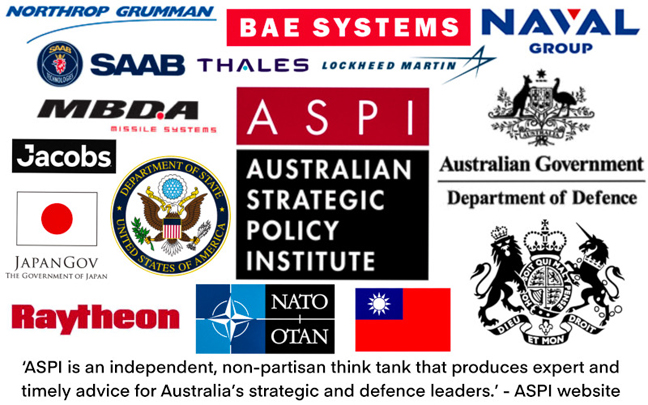
Malcolm Davis from the Australian Strategic Policy Institute described Macron’s comments as “ill-conceived at best, and poorly timed” given the situation in Ukraine, and the need for Europe and the US to work together to support Kyiv………………………………………… more https://www.theage.com.au/world/europe/after-visit-with-xi-macron-warns-europe-on-support-for-taiwan-infuriating-china-hawks-20230410-p5cz6t.html
AUKUS nuclear submarine cooperation seriously jeopardizes peace, stability in Asia-Pacific: embassy

LONDON, April 8 (Xinhua) http://eng.chinamil.com.cn/VOICES/16215442.html
The United States, Britain and Australia have been pressing ahead with nuclear submarine cooperation despite being widely questioned, which creates nuclear proliferation risks and undermines the international non-proliferation system, the Chinese Embassy in Britain has said.
In response to a question concerning the trilateral Australia-UK-U.S. (AUKUS) cooperation on nuclear submarines, the embassy said on Friday that such cooperation will exacerbate the resurgence of the Cold War mentality, trigger a new round of arms race, and further provoke regional security and military confrontation, seriously jeopardizing regional peace, stability and prosperity.
The Asia-Pacific is now the most dynamic and fastest growing region in the world, which hasn’t come easily, the embassy said in a press release. “The AUKUS cooperation is designed to serve the U.S. geopolitical agenda to introduce group politics and Cold War confrontation into the Asia-Pacific with military deterrence. It is aimed at creating a NATO-replica in the Asia-Pacific, which runs counter to peace and stability in the region.”
The AUKUS nuclear submarine cooperation marks the first time for nuclear weapon states to transfer naval nuclear propulsion reactors and weapons-grade highly enriched uranium to a non-nuclear weapon state, it noted.
As the current International Atomic Energy Agency (IAEA) safeguards system is incapable of ensuring effective safeguards, such cooperation poses serious nuclear proliferation risks, seriously compromises the authority of the IAEA, and deals a blow to the agency’s safeguards system, the embassy said.
“If the three countries are set on advancing the cooperation, other countries will likely follow suit, eventually leading to the collapse of the international nuclear non-proliferation regime,” it said.
China urges the three countries to heed the call of the international community and regional countries, discard the outdated zero-sum Cold War mentality and narrow geopolitical mindset, earnestly fulfil their international obligations and do more things that are conducive to regional peace, stability, unity and development, the embassy said.
“This serves the fundamental and long-term interests of regional countries as well as the three countries themselves,” it said. “The UK is not a country in the region and it is unwise to overstretch itself.”
G7 countries are likely to back nuclear power
Climate, energy and environment ministers from the Group of Seven advanced
economies are considering stressing the importance of nuclear power for
energy security in a joint statement to be issued after a meeting later
this month, according to a draft of the statement. The statement, seen
Friday, is likely to note that G7 countries welcome Japan’s plan to release
treated water from the crippled Fukushima No. 1 nuclear power plant into
the ocean in a transparent way and in close coordination with the
International Atomic Energy Agency, according to the draft. The G7 climate,
energy and environment ministers are scheduled to meet in Sapporo on April
15-16. Parliament is currently deliberating legislation that would extend
the life of nuclear plants beyond 60 years as the government aims to ensure
stable electricity supply and promote decarbonization at the same time.
Japan Times 8th April 2023
Convincing major powers to abide by ASEAN’s nuclear treaty is challenging
A. Muh. Ibnu Aqil (The Jakarta Post) 9 Apr 23,
While China’s expressed intent to sign the protocol for ASEAN’s nuclear weapon free zone treaty should be supported, convincing other nuclear weapon states to follow suit may be a challenge, experts have said.
In 1995, 10 ASEAN member states signed the Southeast Asian Nuclear-Weapon-Free Zone Treaty (SEANWFZ) or the Bangkok Treaty, designating the region as one free of nuclear weapons.
The treaty also has a protocol open to signature by recognized nuclear weapon states China, France, Russia, the United Kingdom and the United States, but none have signed the protocol, objecting to the inclusion of continental shelves and exclusive economic zones in the nuclear weapon free zone. https://www.thejakartapost.com/world/2023/04/09/convincing-major-powers-to-abide-by-aseans-nuclear-treaty-is-challenging.html
India and Pakistan Must Negotiate Nuclear Responsibilities
South Asia Voices, by Ladhu R. Choudhary, April 7, 2023
In 2019, while addressing an election rally, Indian Prime Minister Narendra Modi stated a fiery public remark, “every other day they [Pakistan] used to say ‘we have nuclear button, we have nuclear button.’ What do we have then? Have we kept it for Diwali (a mega Indian festival celebrated with extensive use of firecrackers)?” His statement is just one example of India and Pakistan’s exaggerated rhetoric around their nuclear rivalry.
…………………………………………… responsible nuclear states should strategize to stigmatize the bomb. Most importantly, these statements undermine the essential ingredients of nuclear responsibilities.
Nuclear responsibilities are defined as a set of extraordinary obligations and reasoning of the nuclear weapon states to exercise restraint in nuclear posturing and proliferation activities to avoid nuclear crises and avert a nuclear arms race. A nuclear responsibilities framework demands that states prioritize behaviors that reinforce credible deterrence postures and doctrines, reduce nuclear risks, and create the conditions for disarmament. Given the catastrophic risks of escalation, the political leadership in both India and Pakistan should refrain from acts of nuclear irresponsibility and demonstrate their respect for nuclear safety and security norms.
………………………………………………. Existing South Asian Nuclear Culture Lacks Nuclear Responsibilities
When politicians in India and Pakistan remind one another of the nuclear button and equate nuclear weapons with Diwali firecrackers, they reinforce South Asian atomic culture. This atomic culture has facilitated the acquisition of nuclear technology with chauvinistic pride and a symbol of supreme power for political independence. It has limited space for negotiating potential threats of nuclear exchanges and shared responsibilities of hostile SNW. For instance, New Delhi and Islamabad have not been able to build robust institutional arrangements for Nuclear Confidence Building Measures (NCBMs).
India and Pakistan need a better cooperation record for joint nuclear doctrine formulations and identifying implementation procedures. Furthermore, their ambiguous doctrines, postures, and accidents may escalate nuclear instability. ……………………………… more https://southasianvoices.org/india-and-pakistan-must-negotiate-nuclear-responsibilities/
Germany criticizes Russian role in French nuclear fuel plant
German officials have criticized plans by French firm Framatome to produce
nuclear fuel in a joint venture with Russia’s Rosatom at a facility in
western Germany, and said Thursday that they will consider whether an
application to do so can be rejected.
Officials in the state of Lower
Saxony have received a request for the Framatome-owned ANF facility in
Lingen, near the German-Dutch border, to be allowed to produce hexagonal
fuel rod arrangements used in Soviet-designed water-water energetic
reactors. Such reactors, known by the Russian acronym VVER, are common in
Eastern Europe and the fuel production would take place under license from
state-owned Rosatom.
“Doing business with (Russian President) Putin must
stop, and that also and especially applies to the nuclear sector,” Lower
Saxony’s Energy Minister Christian Meyer said.
Washington Post 30th March 2023
China warns of World War III with ‘nuclear sword hanging over our heads’ over Putin’s plan to send nukes to Belarus
China has called for superpowers to step back from the brink of nuclear war as Russia announces a plan to deploy tactical nukes.
news.com.au Alike Kraterou and Jack Evans 2 Apr 23
China has issued a warning of a possible World War III after Russia’s announcement to deploy tactical nuclear weapons in Belarus.
Geng Shuang, China’s representative in the United Nations, called for all world powers to step back from the brink and maintain “global strategic stability”.
He urged nations to prevent nuclear proliferation and crisis, avoid armed attacks against nuclear power plants and the use of nuclear weapons in Ukraine.
Speaking at a Security Council meeting on international peace, Shuang made clear China’s opposition to Kremlin’s plan to send nuclear weapons to Minsk.
He described nuclear weapons as “the sword of Damocles hanging over our heads” and called on all nuclear weapon states to reduce the risk of a nuclear war and avoid any armed conflict between nuclear weapons states.
“We call for the abolition of the nuclear-sharing arrangements and advocate no deployment of nuclear weapons abroad by all nuclear weapons states, and the withdrawal of nuclear weapons deployed abroad,” Shuang said.
Shuang stressed that “nuclear proliferation must be prevented and nuclear crisis avoided.” He added that “a nuclear war cannot be won and must not be fought,” and that China’s position on nuclear weapons has been “clear and consistent”.
China has firmly committed to a defensive nuclear strategy, not using or threatening to use nuclear weapons against non-nuclear weapon states or nuclear-weapon-free zones, and to no first use of nuclear weapons at any time and under any circumstances.
While not directly mentioning Russia, Geng called for all parties to “stay rational, avoid aggravating tensions, and intensifying frictions, or fanning the flames”.
China has claimed to maintain a neutral stance in the war but has also pointed out its “no-limits friendship with Russia”.
Last month, China released a point peace plan to end the war, calling for a ceasefire and talks between Ukraine and Russia…………………………………………………….
Nuclear Tug of War Intensifies in Brussels
With money and regulations on the table for renewable energy, the EU has become entrenched into two solid blocs with different stances on nuclear power.
Bridget Ryder — April 3, 2023 The European Conservative
With both a package of incentives for green technology and revisions to the Renewable Energy Directive on the table, the fight in Brussels over the place of nuclear power in the ‘green,’ ‘sustainable,’ ‘clean’ energy landscape—and its corresponding regulation—has intensified.
The bloc’s energy ministers met last week to prepare their negotiating points with the EU Parliament over changes to the Renewable Energy Directive. Prior to the March 28th Council meeting, energy ministers pow-wowed in competing breakfast gatherings—one for the French-led nuclear alliance and the other for the Austrian-organised Friends of Renewables group, Euractiv reports.
Nuclear alliance
At the end of their meetings, the nuclear alliance sent out a press release to notify the media—and presumably, both the Commission and their rivals on the EU Council—that they had agreed that nuclear energy was indeed “strategic” in achieving the EU Commission’s environmental goals. This is the opposite position to the one the Commission has taken in the recently proposed Net Zero Industry Act (NZIA), a set of incentives meant to counter U.S. green tech subsidies.
Under French leadership, the nuclear alliance (consisting of Bulgaria, Croatia, the Czech Republic, Finland, Hungary, the Netherlands, Poland, Romania, Slovakia, and Slovenia) first met in February while the Commission was still preparing the NZIA. Its goal was to promote nuclear power as a low-carbon source of electricity and work on “common industrial projects.”
In mid-March, the Commission presented the NZIA draft, but with nuclear power excluded from the list of “strategic” technologies that would qualify for incentives. The one exception was “cutting-edge nuclear” technology, such as small modular reactors (SMRs) which could qualify for some investment incentives. The alliance then met again in March, just before the meeting of energy ministers on March 28th, and announced that they had “fully recognised that nuclear is a strategic technology for achieving climate neutrality.”
The pro-nuclear breakfasts were attended by Italy and Belgium, though only as observers. The two countries made it clear they had not signed on to any agreed position with the group, though they have reasons for desiring a favourable status for nuclear energy.
Belgium, for its part, has had to retract plans to start shutting down the country’s six nuclear reactors. After announcing the closure of a set of nuclear power plants by 2025, the public outcry forced the energy ministry to instead grant them a ten-year extension. ………………..
Friends of renewables
The Friends of Renewables—Estonia, Spain, Germany, Denmark, Ireland, Luxembourg, Portugal, Latvia, and Lithuania, with Austria as leader—are a clear counterweight to the nuclear alliance.
The compromise
After the breakfast gatherings, the two groups had to come together with the rest of the bloc’s member states for the official EU Council Meeting to settle on a negotiating position for the updates to the Renewable Energy Directive (RED).
The nuclear sticking point was whether hydrogen produced using nuclear power should be included in renewable fuel targets. After hours of back and forth, they agreed to label nuclear-produced hydrogen as “low carbon,” in other words, dirtier than ‘green’ hydrogen but better than the ‘brown’ hydrogen linked to fossil fuels.
Nuclear power enters into the debate about renewables in the question of hydrogen gas. Making the gas ‘green,’ a process of separating the hydrogen from water molecules, requires an energy source. When that source is considered ‘green,’ such as solar or wind power, the hydrogen is considered ‘green.’
Negotiators for the EU Parliament then also made room for nuclear power in the Renewable Energy Directive (RED), admitting that it has a “role” to play in reducing carbon emissions and is in a category of its own in the spectrum of environmental friendliness.
The RED now recognizes “the specific role of nuclear power, which is neither green nor fossil,” French MEP Pascal Canfin, chair of the Parliament’s Environment Committee, who participated in the negotiations, tweeted…….
The political agreement reached by the Council and Parliament calls for doubling renewable energy output by 2030.
“The agreement raises the EU’s binding renewable target for 2030 to a minimum of 42.5%, up from the current 32% target and almost doubling the existing share of renewable energy in the EU. Negotiators also agreed that the EU would aim to reach 45% of renewables by 2030,” the Commission said in a statement about the political agreement on the RED.
‘Renewable’ energy currently makes up just over 20% of the bloc’s energy mix.
Further room was made for nuclear by provisions in the agreement by giving member states two options to calculate achieving certain targets: either emission reductions or renewable energy output. This is an advantage for countries like France that have substantial nuclear capacity, as carbon dioxide is not the major by-product of nuclear power production. https://europeanconservative.com/articles/news/nuclear-tug-of-war-intensifies-in-brussels/
Inside Saudi Arabia’s Global Push for Nuclear Power
Despite qualms in Washington, Saudi officials have pressed the United States to help them develop nuclear power. But they are also exploring other options, including China.
NY Times, By Edward Wong, Vivian Nereim and Kate Kelly, This article was reported from Washington and Riyadh, Saudi Arabia. April 1, 2023
For years, Saudi Arabia has pressed the United States to help it develop a nuclear energy program, as Saudi leaders look beyond oil to power their country.
But talks about a nuclear partnership have dragged on, largely because the Saudi government refuses to agree to conditions that are intended to prevent it from developing nuclear weapons or helping other nations do so, according to officials with knowledge of the discussions.
Frustrated Saudi officials are now exploring options to work with other countries, including China, Russia or a U.S. ally.
At the same time, they are renewing a push with the United States — their preferred partner — by offering to try to normalize relations with Israel in exchange for U.S. cooperation on building nuclear reactors and other guarantees.
New details of the Saudi efforts provide a window into the recent difficulties and distrust between Washington and Riyadh, and into the foreign policy that Crown Prince Mohammed bin Salman is pursuing: greater independence from the United States as he expands partnerships with other world powers, including China……………
The Saudi nuclear efforts raise a specter of proliferation that makes some American officials nervous: Prince Mohammed, the kingdom’s de facto ruler, has said that Saudi Arabia will develop nuclear weapons if Iran does. Any civilian nuclear program has dual-use elements that could aid a country in producing weapons-grade material.
…………………………………………………………….. Saudi officials have refused to commit to the restrictions, which would undermine their goal of enriching and selling uranium. The United Arab Emirates, a Saudi neighbor, and Taiwan have agreements with the United States that include bans on enrichment and fuel reprocessing.
Even if Saudi officials express willingness to sign a 123 agreement, any deal would face significant political obstacles in Washington. President Biden distrusts Prince Mohammed and denounced Saudi Arabia during a blowup over Riyadh’s oil policy in October. And many Democratic lawmakers and some Republican ones say Saudi Arabia has been a destabilizing force…………………………………………………………………………………………………
Flirting With China
As the Biden administration insists on certain safeguards, Saudi officials have continued looking at non-American companies.
An attractive one is the Korea Electric Power Corporation, or Kepco, based in South Korea. A company spokesperson said Kepco is talking to U.S. officials about the nuclear program and is interested in working with Saudi Arabia but declined to go into details, citing a confidentiality agreement with the Saudis.
But the South Korean government, a U.S. ally, would likely bar the company from the project if Saudi Arabia does not enter into a strict nonproliferation agreement with a government or the International Atomic Energy Agency. The company said it hoped “the conditions for participation in the project will be created.” And a complicating factor is a legal dispute between Kepco and Westinghouse over reactor designs.
…………………………… China has built up Saudi Arabia’s ballistic missile arsenal over decades and sends military officers to work on the program, current and former U.S. officials said. And with Chinese technology, Saudi Arabia is now able to build its own missiles, they said. New satellite imagery showing bulldozer activity at previous missile sites indicates Saudi Arabia could be housing a new type of missile underground, said Jeffrey Lewis, a nuclear nonproliferation expert at the Middlebury Institute of International Studies.
………………………………… Chinese nuclear companies have also offered to help explore and develop the country’s uranium resources. In 2017, the China National Nuclear Corporation and the Saudi Geological Survey signed a memorandum of understanding on surveying uranium deposits. In 2021, the Saudi Geological Survey issued a “certificate of appreciation” to the Beijing Research Institute of Uranium Geology for help in exploring uranium and thorium resources……. more https://www.nytimes.com/2023/04/01/us/politics/saudi-arabia-nuclear-biden-administration.html
1 This Month



26 September – International Day for the Total Elimination of Nuclear Weapons


PLEASE OPPOSE HR 8255 AND S.3639 – bills would accelerate satellite deployment, with no environmental review or safeguards – https://ncstd5li.quorum.us/campaign/169331/
To see nuclear-related stories in greater depth and intensity – go to https://nuclearinformation.wordpress.com
-
Archives
- September 2026 (245)
- August 2026 (330)
- July 2026 (355)
- June 2026 (287)
- May 2026 (306)
- April 2026 (356)
- March 2026 (251)
- February 2026 (267)
- January 2026 (308)
- December 2025 (358)
- November 2025 (359)
- October 2025 (375)
-
Categories
- 1
- 1 NUCLEAR ISSUES
- business and costs
- climate change
- culture and arts
- ENERGY
- environment
- health
- history
- indigenous issues
- Legal
- marketing of nuclear
- media
- opposition to nuclear
- PERSONAL STORIES
- politics
- politics international
- Religion and ethics
- safety
- secrets,lies and civil liberties
- spinbuster
- technology
- Uranium
- wastes
- weapons and war
- Women
- 2 WORLD
- ACTION
- AFRICA
- Atrocities
- AUSTRALIA
- Christina's notes
- Christina's themes
- culture and arts
- Events
- Fuk 2022
- Fuk 2023
- Fukushima 2017
- Fukushima 2018
- fukushima 2019
- Fukushima 2020
- Fukushima 2021
- general
- global warming
- Humour (God we need it)
- Nuclear
- RARE EARTHS
- Reference
- resources – print
- Resources -audiovicual
- Weekly Newsletter
- World
- World Nuclear
- YouTube
-
RSS
Entries RSS
Comments RSS
 nuclear-news