US deployed Nuclear Disablement Teams to S. Korea in March
The Dong-A Ilbo . 01, 2023
It was confirmed that South Korea and the U.S. conducted training during the Freedom Shield joint exercise in March to enter North Korea and disable its nuclear weapons in case of emergency. The U.S. Department of Defense released the details and pictures of the March training on the Defense Visual Information Distribution Service on Wednesday, the day of the summit between the two countries. It is deemed a warning against North Korea, following the ‘Washington Declaration’ made by the two countries’ leaders, which mentions measures to strengthen extended deterrence, including setting up the Nuclear Consultative Group (NCG).
According to the Department of Defense, the U.S. Army’s Nuclear Disablement Teams (NDT) trained with the South Korean Army’s Nuclear Characterization Teams (NCT) from March 20 to March 24. The training was for entering North Korean territory and removing warheads mounted on missiles in case of emergency. This is the first time that the U.S. Army’s deployment of NCT to South Korea and its joint training with the South Korean Army were revealed.
In the pictures, the members of South Korean and the U.S. armies are inspecting protective equipment during the training. The Department of Defense explained that NDT disables the infrastructure and components of nuclear and radioactive weapons of mass destruction (WMD) to remove the enemy’s capabilities, making the following WMD removal operations easier. The South Korean Army’s NCT is part of the ROK Army CBR Defense Command under the Ministry of National Defense and conducts similar missions as the U.S. NDT…………………….more https://www.donga.com/en/article/all/20230501/4125589/1
Will The EU Sanction Russia’s Nuclear Industry? (I don’t think France will agree to this)

ED. I can’t see France agreeing to anything that would limit the nuclear industry!!
“France to participate in Russian Rosatom’s Hungary nuclear power plant project.” – https://www.lemonde.fr/international/article/2023/04/27/hongrie-la-france-prete-a-participer-au-projet-de-centrale-nucleaire-du-russe-rosatom_6171229_3210.html
By Felicity Bradstock – Apr 28, 2023, Oilprice.com
- One Russian industry that has avoided EU sanctions to date is its nuclear energy sector.
- Rosatom is a major exporter of nuclear fuel and technology.
- Despite uncertainty over how to impose sanctions on Russian nuclear energy without harming the interests of several European countries, Brussels is working on a plan.
In February 2022, the EU imposed sanctions on Russia in response to the Russian invasion of Ukraine. The sanctions at this point included restrictive measures (individual sanctions), economic sanctions, and visa measures. The sanctions aimed to disrupt the country’s economy to prevent Russia from continuing its conflict with Ukraine. Throughout the year, the EU and other parts of the world increased the number and types of sanctions on Russia as they decreased their reliance on Russian energy.
…………………… one area that the EU has avoided sanctioning, to date, is Russian nuclear power. This is largely because of the significant role Russia’s state-owned nuclear energy monopoly, Rosatom, plays in global nuclear power. Paul Dorfman, chair of Nuclear Consulting Group, explained that the problem is a “Russian doll’s worth of interlocking dependencies.” Firstly, Rosatom is a major exporter of nuclear fuel, providing the U.S. with 14 percent of its uranium in 2021. Meanwhile, utilities across Europe purchased around a fifth of their uranium from Rosatom, and they have been unable to diversify their uranium sources since cutting other energy ties with Russia. Rosatom also provided 28 percent of the U.S.’s enrichment services in 2021.”
Further, Rosatom is not just limited to Russia, holding ownership of several nuclear plants around the world. By the end of 2021, one in five nuclear plants worldwide was either in Russia or was Russian-built. Rosatom has repeatedly stepped in to help finance nuclear plants in countries that want to expand their nuclear power sectors but don’t have the money to do so. Many of these plants fall under a build-own-operate model, relying on Rosatom for their operation.
Certain EU states have, therefore, opposed sanctions on Russian nuclear power as they continue to rely on Rosatom for their energy security. For example. Hungary sources around 40 percent of its electricity from nuclear power and has a long-term financing deal with Rosatom to build two new nuclear reactors. In February this year, the European Commission (EC) scrapped plans for sanctions on Russia’s nuclear energy industry, citing opposition from some member states. The EU had considered imposing sanctions on individual employees of Rosatom and other companies on the list but has not acted on this idea so far. …………………………………….
Australia pays former US defence chiefs $7000 a day for advice

By Matthew Knott, April 27, 2023 https://www.smh.com.au/politics/federal/australia-pays-former-us-defence-chiefs-7000-a-day-for-advice-20230427-p5d3lh.html
The federal government is paying retired senior American military officials up to $7500 a day for advice on major defence projects such as the AUKUS nuclear-powered submarine pact.
The government this week announced that, following its sweeping defence strategic review, retired United States Navy vice admiral William Hilarides would be hired to lead a snap review of the Royal Australian Navy’s surface fleet.
The review, to be handed to the government later this year, will examine whether planned fleets of Australian-made frigates and patrol vessels should be cut to free up money for smaller and more nimble vessels.
Hilarides has previously charged the Australian government US$4000 ($6000) a day for his consulting services, according to US Navy documents first reported by The Washington Post.
Hilarides has won naval consulting contracts from the federal government worth up to $1.6 million ($2.4 million) since 2016, according to figures from the Department of Defence.
Hilarides serves as chair of the Australian naval shipbuilding expert advisory panel and advised the government over the past 18 months while it finalised the deal with the United States and Britain to build a fleet of nuclear-powered submarines.
Defence Industry Minister Pat Conroy defended Hilarides’ appointment to the new navy fleet review this week, saying he had “a long association with Australia” and would do a good job.
In an investigation published last year The Post described Hilarides, a career submariner, as part of a large group of former senior US officials that Australia had relied upon heavily to guide its naval policies.
“To an extraordinary degree in recent years, Australia has relied on high-priced American consultants to decide which ships and submarines to buy and how to manage strategic acquisition projects,” The Post said.
Retired admiral John Richardson, who headed the United States Navy from 2015 to 2019, has received US$5000 ($7570) a day as a part-time consultant to the federal, according to documents released by the Pentagon to the US Congress.
Richardson was hired by the Department of Defence last November to provide advice on the best pathway for Australia to acquire a fleet of nuclear-powered submarines.
According to the documents, Richardson receives travel and lodging expenses to complete his work in Australia.
Richardson, the former US navy chief, told The Post: “I spent most of my life helping to keep America and our allies and partners safe and secure.
It’s a privilege to be invited to be able to use my experience, and help where I can to continue that work.”
Defence Minister Richard Marles on Thursday said outside advice was crucial to ensuring the government makes the correct decisions about significant defence policies.
“When we seek expert advice in relation to critical issues and challenges that we face, we have a global perspective in terms of where we seek that advice from and that’s really important because we want the very best advice,” he said.
“We make no apology for that because the kinds of challenges and decisions we’re making are profoundly important for the future of our country and where we have sought advice from those former officials in the US Navy that has been on issues of profound importance for our nation’s future.”
Greens defence spokesman David Shoebridge said he was shocked that Australia could seemingly not find local experts available to do these jobs.
“If that is true then it’s a pretty extraordinary failure on the part of the government and the ADF,” he said.
“You can only really explain this by Defence’s ongoing dependence on, and deference to, the US.”
He said it was remarkable that the US government had been more transparent than Australian government contracts than the federal government.
France to participate in Russian Rosatom’s Hungary nuclear power plant project.
Hungary: France ready to participate in Russian Rosatom’s nuclear power
plant project. The executive gave the green light to Framatome to take part
in the construction of two new reactors at the Paks power plant, arguing
that the nuclear industry is not targeted by international sanctions
against Russia.
Le Monde 27th April 2023.
Biden and South Korea’s Yoon sign new agreement on nuclear weapons
By Jean Mackenzie in Seoul & Madeline Halpert in New York, BBC News 26 Apr 23
US President Joe Biden and South Korean President Yoon Suk-yeol have secured a landmark deal which includes plans to periodically deploy US nuclear-armed submarines in South Korea.
Washington has also agreed to involve Seoul in its planning for any use of nuclear weapons against North Korea.
In return, South Korea has agreed to not develop its own nuclear weapons.
………………………………… It does not ink a total commitment from the US that it would use nuclear weapons to defend South Korea if North Korea were to attack.
……… Plans for a nuclear-armed submarine to visit South Korea for the first time in four decades adds further weight to the US commitment.
In return, the US has demanded that South Korea remain a non-nuclear state and a faithful advocate of the non-proliferation of nuclear weapons. The US sees dissuading South Korea from going nuclear as essential, fearful that if it fails, other countries may follow in its footsteps.
But it is unclear how this commitment will be received by the influential, and increasingly vocal, group of academics, scientists and members of South Korea’s ruling party who have been pushing for Seoul to arm itself. https://www.bbc.com/news/world-us-canada-65404805
Questions about S.Korea-USA ‘ironclad’ commitment lead to impossible nuke solution
Korea Joong Ang Daily, BY MICHAEL LEE [lee.junhyuk@joongang.co.kr] 23Apr 23
“………… The Korea-U.S. alliance now stands at a crossroads as it marks its 70th anniversary………
South Korean politicians have made headlines in recent months by calling for an independent nuclear deterrent in a shift that experts say is driven by questions about the reliability of Washington’s “ironclad” commitment to defend Seoul.
These politicians include President Yoon Suk Yeol and Seoul Mayor Oh Se-hoon, who have publicly mused in recent months about the need for South Korea to bolster its security by means of developing an independent nuclear deterrent or persuading the United States to re-deploy tactical nuclear weapons on the peninsula that were withdrawn in 1991…………………….
To signal its commitment to defending Seoul, Washington has upped the frequency of U.S. strategic assets on rotation around the peninsula, especially as the North conducted a record 95 missile launches last year and announced the frontline deployment of tactical nuclear weapons and a new preemptive nuclear strike doctrine in April and September.
Seoul’s lack of say in how nuclear weapons would be used
But the United States has thus far ruled out re-deploying tactical nuclear weapons to the peninsula or setting up a nuclear sharing framework with South Korea similar to the one in place in some NATO states, such as Germany and Turkey, which participate in storing and planning the use of U.S. nuclear weapons in the absence of their own deterrent.
U.S. President Joe Biden in January shot down suggestions by Yoon that the two countries are planning joint nuclear weapons exercises, leaving South Korea without a codified say in the key question of how U.S. nuclear weapons could be employed in its defense.
It remains to be seen if decision-making on the use of nuclear weapons in a potential inter-Korean conflict will stay entirely in the hands of Washington.
According to a South Korean government official who spoke on condition of anonymity to the JoongAng Ilbo on March 27, “joint planning on how the U.S. extended deterrence and the nuclear umbrella will be maintained in potential scenarios involving an armed conflict” is on the agenda of Yoon’s summit with Biden later this month.
South Koreans worry about future U.S. administrations……………………………….
Failure of diplomacy with Pyongyang…………………………………………
International deadlock…………………………………….
Differing views of the role of the alliance regarding China
But all the experts agreed that the real test of Seoul’s alliance with Washington would come in the event of an armed conflict between the United States and China.
…………..Kim agreed that the prospect of a U.S.-China conflict over Taiwan was looming, if less publicly discussed, source of insecurity in Seoul’s alliance with Washington……… more https://koreajoongangdaily.joins.com/2023/04/24/national/defense/Korea-KoreaUS-alliance-nuclear-deterrence/20230424173040597.html
Why the disbandment of NATO is long overdue
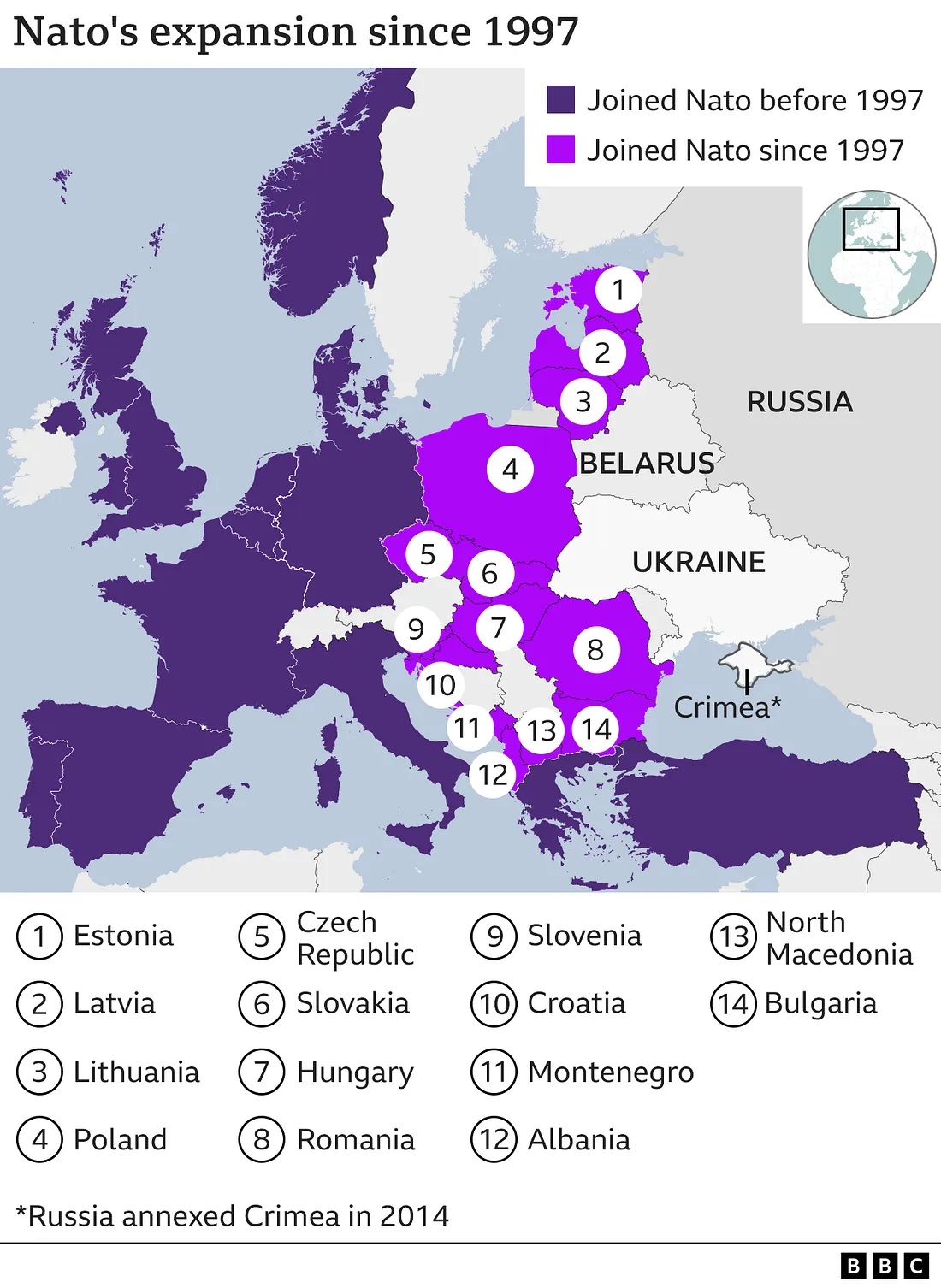
it is no longer feasible or possible to harbour any lingering belief that NATO is anything other than a tool of US hard power, deployed not to protect and defend, but instead to destroy and dominate.
John Wight, Medium, 27 Jan 23 https://johnwight1.medium.com/why-the-disbandment-of-nato-is-long-overdue-aaebff253cd0
The fundamental root cause of the ongoing brutal and tragic conflict in Ukraine is not Russian aggression, it is NATO aggression, reminding us that the latter’s disbandment is a non-negotiable condition of a world in which the triumph of peace and stability over chaos and conflict is at long last achieved.
Indeed the very existence of NATO seventy-four years on from its creation stands as an insult to the millions who died in WWII so that the UN Charter could be born. Produced as the foundational document of the United Nations upon its birth in October 1945, enshrined within the Charter’s articles was a solemn promise that henceforth justice, international law and tolerance would reign in place of brute power, force and intolerance.
Consider for a moment the first section of the Charter’s preamble:
WE THE PEOPLES OF THE UNITED NATIONS DETERMINED
- to save succeeding generations from the scourge of war, which twice in our lifetime has brought untold sorrow to mankind, and
- to reaffirm faith in fundamental human rights, in the dignity and worth of the human person, in the equal rights of men and women and of nations large and small, and
- to establish conditions under which justice and respect for the obligations arising from treaties and other sources of international law can be maintained, and
- to promote social progress and better standards of life in larger freedom
It is impossible to read those words and not lament the gaping disjuncture between the noble ideals and vision they describe and the grim reality that arrived in their wake. For rather than mankind being saved from the ‘scourge of war’, and rather than ‘respect for the obligations arising from treaties and other sources of international law’, the scourge of war and violation of treaties and international law have grown to become a near-everyday occurrence across the globe.
The pressing question we are required to grapple with today is, why? What lies at the root and what is the common denominator responsible for mankind’s abject failure to achieve the vision set out in the UN Charter?
Upon due consideration, we are left in no doubt that fundamentally the series of conflicts that have come to define our existence are a consequence of the drive by one ideological bloc to dominate and impose a particular political, economic and value system onto a world defined by its diversity of languages, cultures, histories and traditions.
The result is the normalization of war and the apotheosis of hard power, rather than war and hard power being regarded as grotesque perversions and an impediment to human progress.
Seventy- four years ago, NATO, a military alliance whose entire existence and ethos is predicated on might is right, emerged from the womb of the Cold War objectives devised by a Truman administration of fanatical hawks, consumed with the goal of full-spectrum dominance at the close of WWII.
In his 1997 essay, ‘The Last Empire,’ Gore Vidal savages the official history proffered by Western ideologues when it comes to the sudden shift that took place from Moscow being viewed as an indispensable ally in the war against Nazi Germany in the eyes of the Roosevelt administration, to implacable foe when Truman entered the White House upon Roosevelt’s death in April 1945.
Vidal:
The National Security State, the NATO alliance, the forty-year Cold War were all created without the consent, much less advice, of the American people… The impetus behind NATO was the United States… We were now hell bent on the permanent division of Germany between our western zone (plus the British and French zones) and the Soviet zone to the east. Serenely, we broke every agreement that we had made with our former ally, now horrendous Communist enemy.
Moving things forward, it is by now no secret that US Secretary of State James Baker assured Soviet premier Mikhail Gorbachev in a meeting on February 9, 1990, that NATO would not expand “one inch eastward” upon the reunification of Germany. According to declassified documents, Baker’s pledge was made as part of a “cascade of assurances” over Soviet security given by Western leaders at that time and on into 1991, when the Soviet Union came to an end. It is the breaking of those assurances that lies at the heart of the deterioration in relations between East and West that has taken place since, and which informs the current conflict in Ukraine.
Flush with triumphalism over the demise of the Soviet Union in the early 1990s, NATO was loosed upon the world not in name of democracy but in the cause of imperialism. Neocon scribe Thomas Friedman wrote openly of the driving ethos of Western foreign policy after the Soviet Union’s demise:
Continue readingWith visit of Algerian President France must face up to its nuclear fallout
Next month the Algerian president, Abdelmadjid Tebboune, is set to visit
Emmanuel Macron in Paris. The two countries have a difficult past, with war
giving way to hostility, giving way to a very curious form of
interdependence. The agenda for the visit looks crowded, with irregular
migration through Algeria dominating the list of the Elysee’s priorities.
However, unlike previous meetings between the two leaders, Tebboune arrives
in France on the crest of a diplomatic wave fuelled by Algeria’s
hydrocarbon reserves at a time when European supplies are at a premium.
Moreover, he arrives with a long list of Algeria’s own grievances, not
least the tonnes of radioactive waste France has buried in the Sahara and
for which it still won’t provide details.
New European 22nd April 2023
https://www.theneweuropean.co.uk/france-faces-up-to-its-nuclear-fallout/
Nuclear liability issues not yet resolved for Jaitapur project: French company EDF
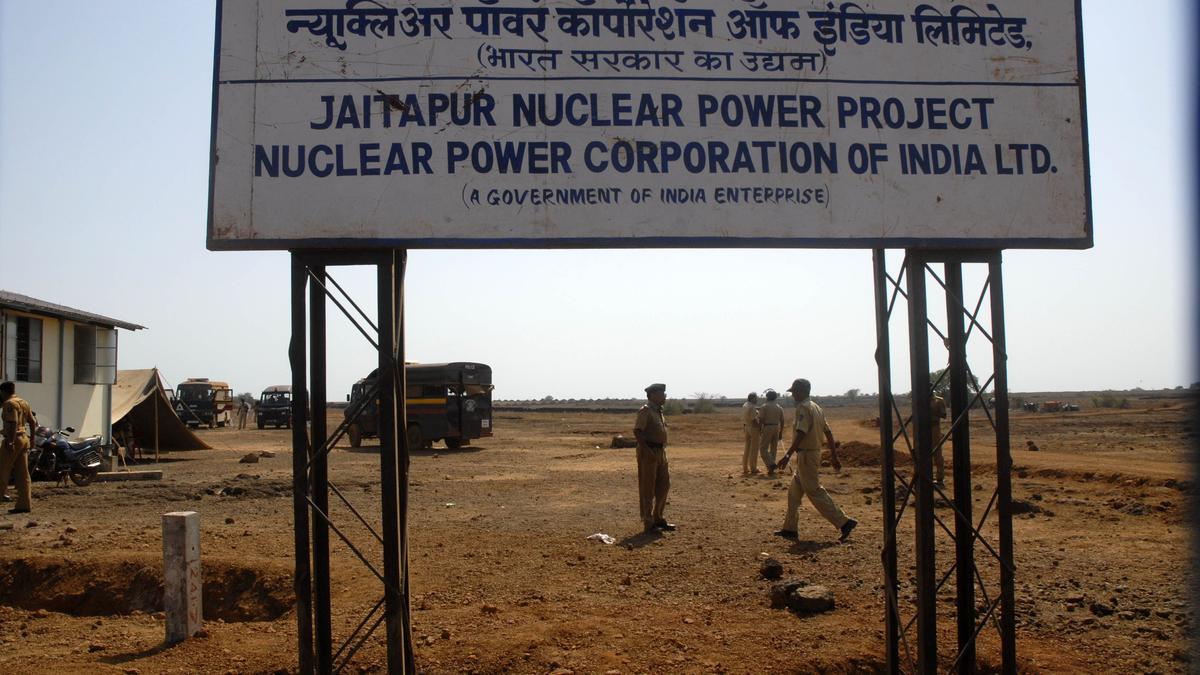
Delays despite assurances by Minister Jitendra Singh that all technical, commercial, legal issues would be sorted by “early 2023”
The Hindu, SUHASINI HAIDAR April 24, 2023
Two years after the French energy company Electricite de France (EDF) submitted its techno-commercial offer for the construction of six nuclear power reactors in Maharashtra’s Jaitapur, talks between Indian and French officials over several issues, including liability, have not resulted in any breakthrough yet.
According to sources in Delhi and Paris, the talks over the high cost of power per unit has also become a major issue in the conclusion of the agreement for the 9,900 MW project, which is the world’s biggest nuclear power generation site under consideration at present.
“The topic [of liability] has been discussed between the French and Indian governments and my understanding is that it is progressing towards convergence. It is a key topic for France and the EDF, and so this topic would have to be solved before any contract can be signed,” an EDF official said in response to a question from The Hindu, as part of a presentation to a larger group of international journalists invited to Paris.
The statement is significant, as in October 2022, the Minister of Space and Atomic Energy, and Minister of State in the Prime Minister’s Office (MoS PMO), Jitendra Singh, promised an early resolution to all the issues, within months………………..
PM to visit Paris in July……………………
The EDF official, who requested not to be identified, but spoke on behalf of the company, said that the issue, arising from India’s Civil Liability for Nuclear Damage Act that India passed in 2010, remains an item on the “agenda for both countries”. India’s CLND Act, which was brought in addition to the International Convention on Supplementary Compensation (CSC), is considered excessive by foreign companies, which could be liable to pay hundreds of millions of dollars in the event of a nuclear accident. As a result, despite signing civil nuclear deals with a number of countries, including the U.S, France and Japan, the only foreign presence in India is that of Russia in Kudankulam, projects that predate the Law.
A recent report in Al Jazeera also points to the fact that despite planning an insurance pool of ₹1,500 crores ($200 million) in 2015, the government’s ‘India Nuclear Insurance Pool” (INIP) has only been able to collect about half, ₹700 crore-₹800 crore, thus far. Concerns over safety after the 2011 Fukushima nuclear disaster, prompted Germany to switch off its last nuclear power reactor this month.
Another factor will be the time taken by the Jaitapur project, for which the original MoU was signed in 2009 with EDF’s predecessor Areva. In 2016, EDF and NPCIL signed a revised MoU, and in 2018, the heads of both signed an agreement on the “industrial way forward” in the presence of Mr. Modi and Mr. Macron. However, officials said nuclear projects do take time, pointing to EDF’s latest construction of an EPR in Finland, Olkiluoto 3. Its work began in 2005 and was completed after a delay of about 14 years, finally starting regular production on April 16 this year. https://www.thehindu.com/news/national/nuclear-liability-issues-not-yet-resolved-for-jaitapur-project-french-company-edf/article66774668.ece
S.Korea’s Yoon to meet Biden as doubts grow over nuclear umbrella
By Hyonhee Shin, SEOUL, April 24 (Reuters) – South Korean President Yoon Suk Yeol set off on Monday for the for the United States and a summit with President Joe Biden at a time of rare questioning in South Korea of an alliance that has guaranteed its security for decades.
………….. as North Korea races ahead with the development of nuclear weapons and missiles to carry them, there are growing questions in South Korea about the relying on “extended deterrence”, in essence the American nuclear umbrella, and calls, even from some senior members of Yoon’s party, for South Korea to develop its own nuclear weapons.
A recent poll by the Asan Institute for Policy Studies showed that more than 54% of respondents believed the U.S. would not risk its safety to protect its Asian ally.
More than 64% supported South Korea developing its own nuclear weapons, with about 33% opposed.
Yoon has been pushing to boost South Korea’s say in operating the U.S. extended deterrence but exactly what that might entail has not been spelt out…………… https://www.reuters.com/world/skoreas-yoon-meet-biden-doubts-grow-over-nuclear-umbrella-2023-04-24/
Three nuclear superpowers, rather than two, usher in a new strategic era

Beijing and Moscow point to the overhaul as a motivating factor for their own upgrades. Arms controllers see a spiral of moves and countermoves that threatens to raise the risk of miscalculation and war.
BY DAVID E. SANGER, WILLIAM J. BROAD AND CHRIS BUCKLEY, THE NEW YORK TIMES Apr 23, 2023
WASHINGTON – On the Chinese coast, just 215 kilometers (135 miles) from Taiwan, Beijing is preparing to start a new reactor the Pentagon sees as delivering fuel for a vast expansion of China’s nuclear arsenal, potentially making it an atomic peer of the United States and Russia. The reactor, known as a fast breeder, excels at making plutonium, a top fuel of atom bombs.
The nuclear material for the reactor is being supplied by Russia, whose Rosatom nuclear giant has in the past few months completed the delivery of 25 tons of highly enriched uranium to get production started. That deal means that Russia and China are now cooperating on a project that will aid their own nuclear modernizations and, by the Pentagon’s estimates, produce arsenals whose combined size could dwarf that of the United States.
………………………………………………………………“By the 2030s the United States will, for the first time in its history, face two major nuclear powers as strategic competitors and potential adversaries,” the Pentagon said last fall in a policy document. “This will create new stresses on stability and new challenges for deterrence, assurance, arms control, and risk reduction.”
………………………………………………… The dynamic is, indeed, more complicated now — the Cold War involved only two major players, the United States and the Soviet Union; China was an afterthought. Its force of 200 or so nuclear weapons was so small that it barely figured into the discussion, and Beijing never participated in the major arms control treaties.
…………………………….Deepening tensions between Beijing and Washington appear to have hardened Xi’s judgment that China must counter “all-around containment,” including with a more robust nuclear deterrent……………………………………………………………
In Russia and the U.S., rolling out new weapons
…………………………… The Pentagon sees at least one of the emerging weapons as potentially threatening, in part because it could, if perfected, outwit the United States’ anti-missile defenses. The weapon is a long-range nuclear-powered undersea torpedo that, once unleashed, could move autonomously toward one of the nation’s coasts. Its warhead, as described by Russia, would create “areas of wide radioactive contamination that would be unsuitable for military, economic, or other activity for long periods of time.” Kristensen said the torpedo was close to operational.
For its part, the Biden administration has announced plans to make the first new warhead for the nation’s nuclear arsenal since the Cold War — an update that the White House says is long overdue for safety reasons. The weapon, for submarine missiles, is a small part of a gargantuan overhaul of the nation’s complex of atomic bases, plants, bombers, submarines and land-based missiles. Its 30-year cost could reach $2 trillion.
Beijing and Moscow point to the overhaul as a motivating factor for their own upgrades. Arms controllers see a spiral of moves and countermoves that threatens to raise the risk of miscalculation and war.
Like all top nuclear arms, the new warhead, known as the W93, is thermonuclear. That means a small atom bomb at its core acts as a match to ignite the weapon’s hydrogen fuel, which can produce blasts a thousand times stronger than the Hiroshima bomb. The atomic triggers are usually made of plutonium. Experts say that is true of Beijing’s arsenal and explains its building of breeder reactors.
The United States has about 40 tons of plutonium left over from the Cold War that is available for weapons and needs no more. It is, however, building two new plants that can fashion the old plutonium into triggers for refurbished and new thermonuclear arms, such as the W93. Recently, the agency that does investigations for Congress estimated the new plants could cost up to $24 billion.
Many arms-controllers decry the new facilities. They say Washington has in storage at least 20,000 plutonium triggers from retired hydrogen bombs and that some of them, if needed, could be recycled.
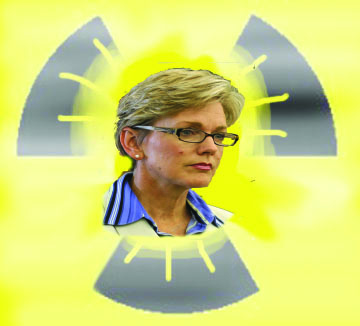
Despite such criticism, the Biden administration is pushing ahead, insisting that trigger recycling is risky. Jennifer M. Granholm, the energy secretary, has declared the new plants essential for “a safe, secure and effective nuclear deterrent.”
………………………….. “We don’t know what to do,” said Henry D. Sokolski, a former Pentagon official who now leads the Nonproliferation Policy Education Center. “What’s the response to this — do we just build more, and are we going to be able to build many more than they are?” https://www.japantimes.co.jp/news/2023/04/23/world/china-russia-us-nuclear-arsenal-buildup/
G7’s statement on nuclear issue hypocritical and pale
By Da Zhigang
As a diplomatic barometer for the upcoming Group of Seven (G7) summit to be held in Hiroshima next month, the G7 Foreign Ministers’ Meeting concluded recently. It is worth noting that the tone of this G7 Foreign Ministers’ Meeting was filled with an increasingly strong tone, and the subtext of the agenda was also permeated with a nervy atmosphere.
……………………………………………………..finding new excuses to demonize China has become a consensus among the G7 countries. Against the backdrop of the ongoing conflict between Russia and Ukraine, the increasing new sanctions imposed by the U.S. and Europe on Russia, and the increasingly complex and changing international situation, it is easy to find fault with China. Therefore, the new excuse targeting China’s nuclear weapons has emerged. In fact, the U.S. possesses the largest and most advanced nuclear arsenal in the world, and it has deployed nuclear weapons in many of its allies. In recent years, the U.S. has been engaged in strategic nuclear deterrence and the expansion of nuclear sharing while withdrawing from and violating multiple international arms control agreements in the global military control field.
Secondly, the emphasis on the so-called Chinese nuclear weapons issue highlights the hypocrisy of the G7’s advocacy of nuclear disarmament. The joint statement of the G7 foreign ministers repeatedly emphasized that member countries have reached consensus on nuclear disarmament and non-proliferation and confirmed that the G7 will promote corresponding measures. As the rotating chair of this G7 foreign ministers’ meeting and next month’s Hiroshima Summit, Japan has once again promoted the initiative to build a World without Nuclear Weapons based on the Hiroshima Action Plan and the historical experience of Hiroshima and Nagasaki being bombed with atomic bombs. This move has been welcomed by other G7 members.
However, when we peel off the clamor of nuclear disarmament and a World without Nuclear Weapons, we seem to see more clearly the hypocritical intentions outlined in the joint statement of the G7 Foreign Ministers’ Meeting. This can be seen from the establishment of the AUKUS security alliance by the U.S., Australia, and the UK. The open transfer of nuclear submarine power reactors and weapons-grade highly enriched uranium to Australia clearly violates the Treaty on the Non-Proliferation of Nuclear Weapons.
……………………………………..There is no doubt that China has always firmly followed the nuclear strategy of self-defense, adhered to the policy of no first use of nuclear weapons, and kept its nuclear force at the minimum level required to maintain national security. China is the only country among the five nuclear-weapon states to have made this pledge. The G7 selectively ignores China’s solemn commitment, tramples on China’s image of peaceful development, as well as the concept of international peace and development.
…………………………………………… Pointing fingers at other countries’ strategic security while downplaying their own military control obligations, the joint statement of the G7 foreign ministers’ meeting pointed at the so-called “China’s nuclear weapons issue” and made irresponsible remarks. The international community disagrees with this today, and so will it in the future.
(The author is a researcher at the Institute of Northeast Asian Studies at Heilongjiang Provincial Academy of Social Sciences and the chief expert of the Northeast Asia Strategic Research Institute.) http://eng.chinamil.com.cn/OPINIONS_209196/Opinions_209197/16219295.html
French-Russian nuclear relations turn radioactive
Ukraine and several EU countries want France to cut commercial ties with Russia’s atomic sector.
Politico, BY VICTOR JACK, APRIL 20, 2023
BRUSSELS — Pressure is building on France to fully cut ties with Russia’s atomic sector as the EU mulls its latest sanctions package against Moscow.
The European Commission is set to meet with diplomats from the EU’s 27 member countries on Friday to start discussions on the bloc’s 11th round of Russia sanctions. Hitting Moscow’s state-run nuclear company Rosatom — a divisive issue for some EU countries reliant on Russia for nuclear fuel — is likely come under the spotlight once again.
That means increased scrutiny of France’s ties to Rosatom, the Moscow-based atomic firm…………………………..
“I am sure” that Paris has a moral duty to encourage its state-backed companies to cut ties with Rosatom, Ukraine’s Energy Minister German Galushchenko told POLITICO last month, adding that Kyiv wants all EU countries with links to Russian’s nuclear industry to cut them.
“All of our public scrutiny has been on Germany and not so much on France,” for ties with Russia, said a diplomat from one EU country, who spoke on condition of anonymity, “whereas I think if you look closely … they haven’t been the best kid in the class either.”…………………………………………..
Paris and Moscow’s nuclear ties, which date back to the Cold War, are most apparent in the links between Rosatom and state-controlled EDF, France’s largest utility that runs the country’s nuclear fleet. It signed a strategic cooperation agreement with Rosatom on green hydrogen in 2021, as well as a joint declaration to develop research cooperation.
The Rosatom spokesperson called it “a win-win partnership” that is “a driver of development both in the field of nuclear energy and scientific projects.”……………………….
When Rosatom builds a nuclear plant abroad, it often relies on technology from French companies — typically spending up to €1 billion per project, Faudon said. Those orders usually include command and control systems from Framatome, which is majority-owned by EDF.
Framatome has an ongoing role in Russian nuclear construction projects around the world, including at Paks. The company aims to set up a joint venture with Rosatom to produce nuclear fuel in western Germany, a project that has been sharply criticized by local authorities.
The French firm also signed a strategic cooperation agreement with Rosatom in December 2021 to expand collaboration on fuel fabrication and other technologies.
Framatome didn’t comment on its ongoing contracts but with reference to the 2021 agreement, a company spokesperson said: “Everything has been postponed until further notice,” adding that Framatome will “re-examine the agreement if and when that is appropriate.”
EDF declined to comment…………………………..
And while France isn’t dependent on Russia for its nuclear fuel and security of supply, it bought enriched uranium worth €359 million from Moscow last year, more than three times the amount it bought in 2021.
It’s not the only such sale to the West. The U.S. bought $830 million of enriched uranium from Russia last year. Moscow also supplies fuel to reactors in Bulgaria, the Czech Republic, Finland, Slovakia and Hungary…………………
In February, the European Parliament overwhelmingly passed a resolution calling on Rosatom to face sanctions. ……………………………….
https://www.politico.eu/article/french-russian-nuclear-relations-radioactive-rosatom-sanctions/
Chinese Diplomacy Seen as Threat to US ‘Peace,’ ‘Stability’
FAIR, GREGORY SHUPAK 21 Apr 23
China has undertaken a diplomatic blitz that has seen it broker a rapprochement between Iran and Saudi Arabia, warm relations with France, and put forth a proposal to end the war in Ukraine. US media coverage of these developments has involved illusion-peddling about America’s potentially waning empire, and calls for the US to escalate what amounts to a new cold war with China.
In Foreign Policy (3/14/23), Michael McFaul and Abbas Milani say that China “now shares the burden of keeping the peace in the Middle East. This is not an easy assignment, as the United States has learned bitterly over the decades.”
The US has done the opposite of “keeping the peace in the Middle East.” Nor has it sought to, as the Iraqi case makes tragically clear. Since the US-led 2003 invasion, Brown University’s Costs of War Project notes,………………………………………………………
Power = ‘peace’
Walter Russell Mead of the Wall Street Journal (3/27/23) claimed that while “American power” results in “peace and prosperity,” “challengers like China, Russia and Iran undermine the stability of the American order.” “Peace” and “stability” must seem like odd ways of characterizing that order to, say, Libyans, who had their country flattened by a US-led intervention (Jacobin, 9/12/13), and endured years of a brutal war, and even slavery.
David Ignatius of the Washington Post (3/16/23) asserted that
if Chinese President Xi Jinping wants to take on the role of restraining Iran and reassuring Saudi Arabia, good luck to him. The United States has been trying since 1979 to bend the arc of the Iranian revolution toward stability.
Washington supported Iraq’s invasion of Iran, to the point of helping Iraq use chemical weapons against the country. The US has also levied sanctions that have immiserated the country, undercutting Iranians’ access to food and medicine. Describing such aggression as attempts to engender “stability” inverts reality—to say nothing of Ignatius’ strange desire to “reassur[e]” Washington’s execution-happy longtime client in Riyadh.
In the case of the war that turned Yemen into the world’s worst humanitarian crisis, McFaul and Milani exculpate the US, writing that “the Biden administration, supported by other countries with a commitment to stopping this war, helped negotiate a truce.”
Like McFaul and Milani, Ignatius accuses China of “harvest[ing] the goodwill” after the US allegedly “laid the groundwork for a settlement of the horrific war in Yemen.” This omits the rather salient point that the United States is a major reason the war has gone on for as long as it has, with as high a price as it has had for Yemenis.
The Obama, Trump and Biden administrations prolonged and escalated the war……………………………………………………………………..
Looking just at wars in this century, the United States carried out a 20-year occupation of Afghanistan, and its troops remain in Iraq 20 years after it invaded and overthrew that country’s government. US troops still occupy parts of Syria against the will of that country’s government. Washington has carried out bombing campaigns against Libya, as noted, as well as Somalia and Pakistan.
Given that it is also the “major patron” of Israel, which invaded Lebanon in the relevant period (on top of occupying and annexing Syrian and Palestinian land), and of Saudi Arabia, the main aggressor against Yemen, there’s a strong case to be made that Uncle Sam is the world’s “most destabilizing state.”
If China overtakes the US’s position atop the global order, it’s uncertain exactly what the world system will look like. What is clear, however, is that US hegemony has been “anything but peaceful.”
It’s High Time the US Signed a Peace Treaty with North Korea

Halt the Endless and Futile Condemnation of the DPRK
by Alice Slater* 21 Apr 23, https://www.indepthnews.net/index.php/armaments/nuclear-weapons/6110-it-s-high-time-the-us-signed-a-peace-treaty-with-north-korea
NEW YORK, 21 April 2023 (IDN) — It is far beyond hypocrisy for the US and its allies to condemn North Korea for testing a long-range missile when the US boasts about its Air Force Global Strike Command of more than 33,700 Airmen and civilians responsible for the nation’s three intercontinental ballistic missile wings capable of delivering nuclear weapons.
Indeed, a US Minute Man Intercontinental Ballistic Missile (IBM) was tested this past February, with another scheduled for this August.
The 1950-1953 Korean War is the longest-standing US conflict. It has never actually ended. It was only suspended by a truce and armistice between North Korea, representing the Korean People’s Army and the Chinese People’s Volunteers and the United States, representing the multinational UN Command.
During this endless armistice, we have had US troops stationed in South Korea, amassed on North Korea’s border, organizing “war games” and manoeuvres with South Korean troops in a continuous series of threats over the years against a heavily armed North Korea.
Various peace initiatives were contemplated, but the US withdrew from them or didn’t follow through. During those years, North Korea persisted in requesting a peace treaty, offering to stop enriching “peaceful” reactor material to bomb-grade in return for a lifting of punishing sanctions that were causing great stress and poverty to the people of North Korea.
It froze its nuclear program after an agreement with the Clinton administration but started it up again when President Bush in 2002 stopped honouring the Clinton agreements and characterized North Korea as part of the “axis of evil”.
In 2017, South Korea elected a new President, Moon Jae-in, who campaigned for a “Sunshine Policy” and for peaceful Korean reunification.
Ironically, at a United Nations First Committee Meeting for Disarmament in 2017, when the amazing International Campaign for the Abolition of Nuclear Weapons (ICAN) succeeded in its ten-year campaign to bring a vote to the UN floor for negotiations on a treaty to ban the bomb, five western nuclear powers, the US, UK, France, Russia, and Israel voted NO.
China, Pakistan, and India abstained, and North Korea was the only nuclear weapon state to vote YES for negotiations on the new Treaty for the Prohibition of Nuclear Weapons (TPNW), which was adopted later that year at a special UN negotiating session!
It was clear that North Korea was sending a signal to the world as the only nuclear weapon state to approve the talks to negotiate a ban treaty. But just as the Western reporting about North Korea today fails to acknowledge the extraordinary provocations North Korea suffers at the hand of the Western colonial powers and their allies, not a word about North Korea’s startling vote was reported in the mainstream media.
During the Trump Presidency, some progress was made in negotiations between the US and North Korea, with a supportive new peace president in South Korea, but Congress refused to honour Trump’s promise to Kim Jong Un that the US would remove some of our troops from South Korea as part of a peace deal for North Korea to forego the development of nuclear weapons.
In the United States, there is a growing movement of people inspired by the Women Cross DMZ, which in 2015 organized an unprecedented crossing of the De-Militarized Zone that separates North and South Korea, where 30 women, including Nobel Peace laureates and feminist leaders, joined with 10,000 Korean women on both sides of the DMZ.
Through their efforts, and on behalf of an estimated 100,000 people who cannot visit their families in the Koreas—two nations which continue to live in a perpetual state of war—there is legislation pending in the US House of Representatives, H.R. 1369, Peace on the Korean Peninsula Act, calling for a peace treaty to formally end the Korean War. It also calls for a review of the travel restrictions to North Korea and the establishment of liaison offices in both countries.
It is time to reevaluate our perception of North Korea, and treat it, not as a country planning to attack us with nuclear bombs but as a country that wants relief from the harsh sanctions and isolation it has endured these long 76 years.
The sooner we understand how the Empire has contributed to the “evil doings” of North Korea, the more true security we will gain. In the memorable words of Pogo Possum, the Walt Kelly comic character who entertained us during the red scare of the 1950s, “We have met the enemy and he is us!”
* Alice Slater serves on the boards of World Beyond War and the Global Network Against Weapons and Nuclear Power in Space and is an NGO representative to the UN for the Nuclear Age Peace Foundation. [IDN-InDepthNews]
1 This Month



26 September – International Day for the Total Elimination of Nuclear Weapons


PLEASE OPPOSE HR 8255 AND S.3639 – bills would accelerate satellite deployment, with no environmental review or safeguards – https://ncstd5li.quorum.us/campaign/169331/
To see nuclear-related stories in greater depth and intensity – go to https://nuclearinformation.wordpress.com
-
Archives
- September 2026 (245)
- August 2026 (330)
- July 2026 (355)
- June 2026 (287)
- May 2026 (306)
- April 2026 (356)
- March 2026 (251)
- February 2026 (267)
- January 2026 (308)
- December 2025 (358)
- November 2025 (359)
- October 2025 (375)
-
Categories
- 1
- 1 NUCLEAR ISSUES
- business and costs
- climate change
- culture and arts
- ENERGY
- environment
- health
- history
- indigenous issues
- Legal
- marketing of nuclear
- media
- opposition to nuclear
- PERSONAL STORIES
- politics
- politics international
- Religion and ethics
- safety
- secrets,lies and civil liberties
- spinbuster
- technology
- Uranium
- wastes
- weapons and war
- Women
- 2 WORLD
- ACTION
- AFRICA
- Atrocities
- AUSTRALIA
- Christina's notes
- Christina's themes
- culture and arts
- Events
- Fuk 2022
- Fuk 2023
- Fukushima 2017
- Fukushima 2018
- fukushima 2019
- Fukushima 2020
- Fukushima 2021
- general
- global warming
- Humour (God we need it)
- Nuclear
- RARE EARTHS
- Reference
- resources – print
- Resources -audiovicual
- Weekly Newsletter
- World
- World Nuclear
- YouTube
-
RSS
Entries RSS
Comments RSS
 nuclear-news