China’s new warning to Australia over nuclear submarine deal
China has fired off another dire warning to Australia, amid growing tension over the nuclear submarine deal with the US and Britain.
Carla Mascarenhas, 1 Apr 23
Global superpowers unite against US
‘Anytime, anywhere’: Kim’s nuke threat
Dan appears on Chinese TV
China has fired off a frightening warning to Australia over its nuclear submarines deal with the US and the UK, declaring it may trigger an unpredictable global arms race.
The Chinese foreign ministry said on Thursday that once a Pandora’s box is opened, the “regional strategic balance will be disrupted and regional security will be seriously threatened”.
The United States, Australia and UK this month unveiled details of a plan to provide Australia with nuclear-powered attack submarines from the early 2030s to counter China’s ambitions in the Indo-Pacific.
“China firmly opposes the establishment of the so-called ‘trilateral security partnership’ between the United States, the United Kingdom and Australia,” said Tan Kefei, a spokesman at the Chinese defence ministry, during a regular press briefing.
“This small circle dominated by Cold War mentality is useless and extremely harmful.”
Mr Tan added such co-operation was an extension of the nuclear deterrence policy of individual countries, a game tool for building an “Asia-Pacific version of NATO” and seriously affected peace and stability in the Asia-Pacific region………………………………………………………….
Richard Dunley, a naval and diplomatic historian, said the deal “looks best from Washington – they get major wins in terms of basing, maintenance support and recapitalisation in their yards”.
He noted the Australian perspective was “less clear”.
“The cost is astronomical,” he wrote on Twitter.
Huge but still unknown amounts will be paid to the US in subsidies and then to buy the Virginias. This capability will only realise materialise mid-next decade, and is only a stopgap.”
carla.mascarenhas@news.com.au https://www.news.com.au/world/asia/chinas-new-warning-to-australia-over-nuclear-submarine-deal/news-story/16904f97d0a534af20dd69815f9c1986
Australia Isn’t A Nation, It’s A US Military Base With Kangaroos, and happy to have Julian Assange imprisoned


Caitlin Johnstone 1 Apr 23 https://caitlinjohnstone.substack.com/p/australia-isnt-a-nation-its-a-us?utm_source=post-email-title&publication_id=82124&post_id=111947244&isFreemail=true&utm_medium=email
One of the many, many signs that Australia is nothing more than a US military and intelligence asset is the way its government has consistently refused to intervene to protect Australian citizen Julian Assange from political persecution at the hands of the US empire.
In a new article titled “Penny Wong moves to dampen expectation of breakthrough in Julian Assange case,” The Guardian quotes Australia’s foreign minister as saying, “We are doing what we can, between government and government, but there are limits to what that diplomacy can achieve.” Wong said this when asked if Prime Minister Anthony Albanese discussed the world’s most famous press freedom case with the US president and British prime minister when he met with them together two weeks ago.
Wong refused to say whether her government’s leader had raised the issue with his supposed US and UK counterparts, repeating instead the same line she’s been bleating since Labor took over: that the Assange case “has dragged on long enough and should be brought to a close.” Which if you listen carefully isn’t actually a statement in favor of releasing the WikiLeaks founder or blocking extradition — it’s just saying the case should be concluded hastily, one way or another.
These statements came in response to questions from Greens Senator David Shoebridge, who took a jab at the Labor government’s “quiet diplomacy” approach to the Assange case.
“The idea that quiet diplomacy must be so silent that the government can’t tell the public or the parliament if the PM even spoke to the president is bizarre,” Shoebridge said.
Wong told Shoebridge that Australia is powerless to intervene to protect the acclaimed Australian journalist, saying, “We are not able as an Australian government to intervene in another country’s legal or court processes.”
While it is true that Australia can’t force the US to end the political imprisonment and persecution of Assange for exposing US war crimes, it obviously can conduct diplomacy with its supposed ally in order to protect an Australian citizen. Even nations with whom Australia has no form of alliance are vocally confronted by Canberra when they imprison Australian citizens, like the statement Wong released yesterday regarding China’s detention of Chinese-Australian journalist Cheng Lei in which the foreign minister explicitly and unequivocally calls for “Ms Cheng to be reunited with her family.”
Just yesterday alone Wong tweeted to demand justice for Cheng and for American journalist Evan Gershkovich, who has been arrested in Russia on espionage charges.
“It is one year since Australian citizen Cheng Lei faced a closed trial in Beijing on national security charges,” tweeted Wong. “She is yet to learn the outcome. Our thoughts are with Ms Cheng and her loved ones. Australia will continue to advocate for her to be reunited with her children.”
“Australia is deeply concerned by Russia’s detention of Wall Street Journal Moscow correspondent Evan Gershkovich. We call on Russia to ensure access to consular and legal assistance,” Wong tweeted a few hours later.
Now guess how many times Penny Wong has tweeted the word “Assange”?
Answer: zero.
What is the basis for this discrepancy? Why has Australia’s foreign minister been publicly demanding that China release Cheng Lei and return her to her children, without making the same demands of the US for Julian Assange? Assange has children too, and he has been imprisoned for four times longer than Cheng — more than ten times longer if you count the period of his arbitrary detention in the Ecuadorian embassy in London before his arrest. Why are we seeing more action from the Australian government to defend an Australian journalist in China than to defend an Australian journalist fighting extradition to a nation we’re supposedly allied with which upholds itself as the leader of the rules-based international order?
The answer is that Australia is not a real country. It’s an American colony. It’s a giant US military base with kangaroos.
That’s why the Albanese government’s “quiet diplomacy” to free Assange is so quiet that it can’t actually be said to exist.
Regular readers may recall that the last time we discussed an interaction between Senators Wong and Shoebridge was when the former condescendingly dismissed the latter’s efforts to find out if the Australian government is allowing the US military to bring nuclear weapons into the country. Wong angrily told Shoebridge that the US has a standing “neither confirm nor deny” position with regard to where it keeps its nuclear weapons, and that the Australian government understands and respects that position.
We’re so far under Washington’s thumb that we’re not even allowed to know if there are American nukes in our country, and our own government can’t even advocate in defense of its own citizen when he’s being persecuted for the crime of good journalism.
Add that to the fact that Australia has been pressed into an AUKUS pact which makes us much less safe and a hostile relationship with China which hurts our own economic and security interests, the stationing of a US nuclear intelligence site which makes us a nuclear target, and the US staging literal coups of our government whenever its elected leaders threaten US strategic interests, and it becomes clear that our so-called “country” is functionally just a US aircraft carrier that happens to be the size of a continent.
Which would be bad enough if these bastards weren’t pushing us to play a front-and-center role in World War Three. We’ve got to start fighting against our enslavement to the US empire and against the Pentagon puppets in our own government like our lives depend on it, because they very clearly do.
AUKUS Exists To Manage The Risks Created By Its Existence

Australia would be at risk of being attacked by China because the US wants to use Australia to attack China.
The only way China attacks Australia is if Australia’s role as a US military asset makes us a target when the US attacks China
“NATO exists to manage the risks created by its existence,” Professor Richard Sakwa once wrote in an attempt to articulate the absurdity of the military alliance’s provocative nature on the world stage. At some point Australians must wake up to the fact that this is equally true of AUKUS: we’re told the military alliance exists for our protection, but its very existence makes us less safe.
As former prime minister Paul Keating recently observed in the Australian Financial Review, this government’s justification for the AUKUS alliance and the obscenely expensive nuclear submarine deal that goes with it has been all over the map, first claiming that it’s to protect our own shores from a Chinese attack, then pivoting to claiming it’s to protect sea lanes from being blocked off by China after Keating dismantled the first claim at the National Press Club two weeks ago.
One thing Canberra has struggled to do is to explain exactly why China would launch an unprovoked attack on Australia or its shipping routes; the former couldn’t yield any benefit that would outweigh the immense cost even if it succeeded, and the latter is absurd because open trade routes are what makes China an economic superpower in the first place.
Luckily for us, the Pentagon pets cited in the Australian media’s recent propaganda blitz to promote war with China explained precisely what the argument is on Canberra’s behalf. They say Australia would be at risk of being attacked by China because the US wants to use Australia to attack China.
…………………………………………………… In their haste to make the case for more militarism and brinkmanship, these war propagandists admit what’s long been obvious to anyone paying attention: that the only thing putting Australia in danger from China is its alliances and agreements with the United States. The difference between them and normal human beings is that they see no problem with this.
Other empire lackeys have been making similar admissions. In a recent article by Foreign Policy, Lowy Institute think tanker Sam Roggeveen is quoted as saying the AUKUS nuclear submarine deal will make it “almost impossible” for Australia to avoid getting entangled in a war between the US and China:………………
The only way China attacks Australia is if Australia’s role as a US military asset makes us a target when the US attacks China
…………………………………………………AUKUS has nothing to do with “defence”. You don’t need long-range submarines to defend Australia’s easily-defended shores, you need long-range submarines to attack China. Australia’s “defence posture” is an attack posture.
………………
AUKUS is not a defence partnership because it’s got nothing to do with defence, and it’s also not a defence partnership because it is not a “partnership”. It’s the US empire driving Australia to its doom, to nobody’s benefit but the US empire.
AUKUS exists to manage the risks created by its existence, and the same is true of ANZUS and all the other ways our nation has become knit into the workings of the US war machine. If we’re being told that our entanglements with the US war machine will make it almost impossible for us to avoid entering into a horrific war that will destroy our country, then the obvious conclusion is that we must disentangle ourselves from it immediately.
The problem is not that Australia’s corrupt media are saying our nation will have to follow the US into war with China, the problem is that they’re almost certainly correct.
The Australian media aren’t criminal in telling us the US is going to drag us into a war of unimaginable horror; that’s just telling the truth. No, the Australian media are criminal for telling us that we just need to accept that and get comfortable with the idea.
No. Absolutely not. This war cannot happen. Must not happen. We cannot go to war with a nuclear-armed country that also happens to be propping up our economy as our number one trading partner. We need to shred whatever alliances need to be shredded, enrage whatever powers we need to enrage, kick the US troops out of this country, get ourselves out of the Commonwealth while we’re at it, bring Assange home where he belongs, and become a real nation. https://caitlinjohnstone.substack.com/p/aukus-exists-to-manage-the-risks?utm_source=post-email-title&publication_id=82124&post_id=111711350&isFreemail=true&utm_medium=email
EU agrees to a compromise on nuclear energy amid French pressure
Get local insights from Lisbon to Moscow with an unrivalled network of journalists across Europe, expert analysis, our dedicated ‘Brussels Briefing’ newsletter. Customise your myFT page to track the countries of your choice.
The EU has reached a compromise on new targets for renewable energy after
agreeing to make an exception for nuclear power in certain sectors amid
pressure from France. Negotiators from member states and the European
parliament agreed to increase the overall binding target of renewable
energy consumed in the EU to 42.5 per cent by 2030, up from 32 per cent,
according to a statement. They also set an “indicative” target of
reaching 45 per cent by the end of the decade.
France had pushed for nuclear energy to be included in countries’ efforts to reach those targets. But at the end of a long night of negotiations, the countries
agreed on a more limited concession counting nuclear power towards the
target for industry. Nuclear-sceptic countries including Germany and
Austria had argued against the inclusion of atomic power, saying that such
a move would undermine efforts to expand solar, wind and other renewable
sources of energy.
FT 30th March 2023
https://www.ft.com/content/02adde01-3b27-4743-8c17-2e39ab682660
Top UN official urgently calls for de-escalating nuclear tensions over Belarus
, UN News,
Urgent efforts must be made to de-escalate the situation following Russia’s announcement last weekend that it plans to station tactical nuclear weapons in Belarus, the UN disarmament chief warned the Security Council on Friday.
“The risk of a nuclear weapon being used is currently higher than at any time since the depths of the cold war,” said Izumi Nakamitsu, UN High Representative for Disarmament Affairs. “The war in Ukraine represents the most acute example of that risk.”
The Security Council met on the heels of President Vladimir Putin’s announcement last Sunday that it had reached an agreement with its neighbour, which has been any ally in Moscow’s invasion of Ukraine, to station non-strategic nuclear weapons inside Belarusian territory, which would be in place for aerial use, by July.
Dangerous rhetoric
Ms. Nakamitsu said the absence of dialogue and the erosion of the disarmament and arms control architecture, combined with dangerous rhetoric and veiled threats, are key drivers of this potentially existential risk posed by nuclear escalation.
“When it comes to issues related to nuclear weapons, all States must avoid taking any actions that could lead to escalation, mistake or miscalculation,” she said, recalling that all States parties to the Treaty on the Non-Proliferation of Nuclear Weapons, or the NPT – nuclear-armed States and non-nuclear weapon States alike – must strictly adhere to its commitments and obligations.
“They should return to dialogue to de-escalate tensions urgently and find ways to develop and implement transparency and confidence-building measures,” she said, appealing to States parties to the treaty to fully adhere to their obligations and to immediately engage in serious efforts to reduce nuclear risk……………………………………
https://news.un.org/en/story/2023/03/1135222
Nuclear dispute hangs over EU renewable energy talks
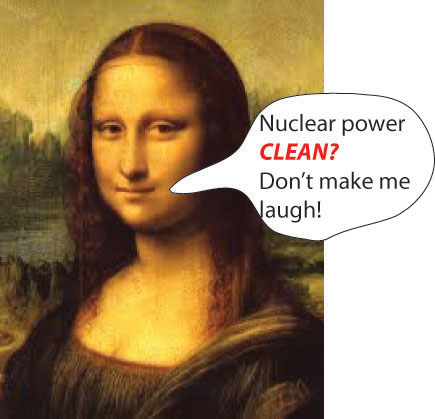
The renewable energy law reflects a broader dispute among countries over whether EU policies should actively encourage nuclear energy with subsidies and incentives – or restrict those privileges to other green technologies like wind and solar.
By Kate Abnett, https://www.reuters.com/business/energy/nuclear-row-looms-over-eu-renewable-energy-talks-2023-03-29/
BRUSSELS, March 29 (Reuters) – The European Union enters the final stage of tense talks over how to treat hydrogen produced using nuclear power on Wednesday, in an effort to end a dispute that threatens to thwart a deal on more ambitious renewable energy goals.
Reporting by Kate Abnett; Editing by Jan Strupczewski, Sharon Singleton and Alexander Smith
Negotiators from EU countries and the European Parliament are meeting to reach a deal on how fast to expand renewable energy sources this decade – a central pillar of the 27-member bloc’s efforts to fight climate change.
One of the key goals in the renewable energy policy is for every EU country to use a certain amount of renewable fuels, such as hydrogen, as a energy source in industry by 2030.
Because low-carbon hydrogen requires electricity to be made in the first place, the EU battle now is over what energy sources should be allowed for its production, if it is to be counted towards the renewable energy targets.
Hours before the final negotiations between EU governments and the European Parliament begin, EU countries are still at odds over whether to recognise hydrogen produced from nuclear power under the targets.
EU officials said they expect a long night, with some doubtful a deal will be reached.
France, backed by at least eight other EU countries, including Poland and Hungary, is leading a push for “low-carbon hydrogen”, made using nuclear power, to count towards the renewable goals.
Nuclear energy does not produce planet-heating CO2 emissions and those countries say the EU should better support its contribution to meeting climate goals.
But at least nine other EU countries, including Germany, Spain and Austria, disagree. They say the EU targets should solely focus on renewable sources like wind and solar to drive the massive expansion of these energy sources needed for Europe to end its reliance on Russian gas and cut CO2.
The renewable energy law reflects a broader dispute among countries over whether EU policies should actively encourage nuclear energy with subsidies and incentives – or restrict those privileges to other green technologies like wind and solar.
EU countries’ ambassadors failed to agree on Wednesday to a compromise drafted by Sweden, which holds the EU’s rotating presidency – leaving Sweden to represent EU countries in the final talks without a clear negotiating position on the issue.
The proposal, seen by Reuters, offered countries a reduced target to use renewable hydrogen in 2030, if 30% or less of their total hydrogen use is fossil fuel-based hydrogen.
That could benefit countries where large shares of nuclear-based hydrogen have helped push fossil-based hydrogen out of the mix. EU officials said some countries opposed any reopening of the targets to nuclear-based fuels while others wanted a deeper reduction than the proposed 30%.
The EU renewable energy policy contains a raft of other rules to help countries shift away from fossil fuels.
Negotiators will try to agree binding targets for how much of the EU’s total energy must come from renewable sources by 2030 – with 40% and 45% among the options being considered.
Other parts of the deal may tighten the EU’s rules on whether wood-burning “biomass” energy can be classed as renewable and count towards green goals.
US stops sharing nuclear arms data with Russia under START Treaty
Aljazeera, 29 Mar 23,
Under terms of the New START treaty, both countries should share data on deployed nuclear warheads on a biannual basis.
The United States has told Russia it will cease exchanging detailed data on its nuclear weapons stockpiles, the White House said, calling the move a response to Russia’s suspension of participation in the New START nuclear arms treaty.
While Russian President Vladimir Putin has not formally withdrawn from the treaty, his suspension from participating in it announced in February has endangered the last pillar of US-Russian nuclear arms control.
The US and Russia hold nearly 90 percent of the world’s nuclear warheads – enough to destroy the planet several times over. The New START (Strategic Arms Reduction Treaty) limits the number of strategic nuclear warheads countries deploy.
“Russia has not been in full compliance and refused to share data which we … agreed in New START to share biannually,” John Kirby, the US National Security Council spokesperson, told reporters in a conference call on Tuesday.
“Since they have refused to be in compliance … we have decided to likewise not share that data,” he said……………………………………….
Under the terms of the New START, signed in 2010 and due to expire in 2026, Moscow and Washington may deploy no more than 1,550 strategic nuclear warheads and 700 land- and submarine-based missiles and bombers to deliver them………………………. https://www.aljazeera.com/news/2023/3/29/us-stops-sharing-nuclear-arms-data-with-russia-under-start-treaty
Nuclear row threatens EU deal on renewable energy goals
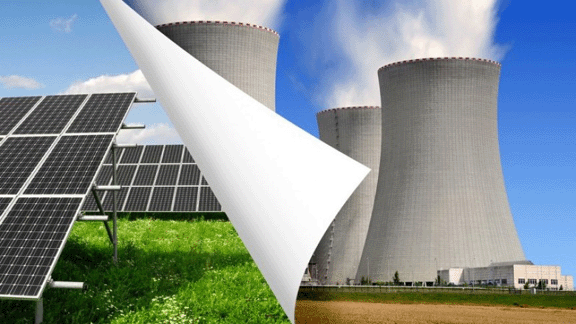
Paris has been disappointed by other recent EU moves to prioritise renewable technologies over nuclear.
By Kate Abnett, BRUSSELS, March 27 (Reuters) https://www.reuters.com/business/sustainable-business/nuclear-row-threatens-eu-deal-renewable-energy-goals-2023-03-27/ – European Union countries are split over whether to allow nuclear energy to contribute to meeting their renewable energy targets, a dispute threatening to delay one of the EU’s main climate policies.
Negotiators from EU countries and the European Parliament hold their final scheduled round of negotiations on Wednesday, to set more ambitious EU goals to expand renewable energy this decade.
The goals are key to Europe’s efforts to slash CO2 emissions by 2030 and quit Russian fossil fuels. But the negotiations have become mired in a dispute over whether fuels produced using nuclear power should be counted towards the renewable targets.
France is leading a campaign for “low-carbon hydrogen” – the term used to describe hydrogen produced from nuclear energy – to be put on an equal footing with hydrogen made from renewable electricity.
Backing France are countries including Romania, Poland, Hungary and the Czech Republic, who want more recognition of CO2-free nuclear energy’s contribution to climate goals.
Germany, Spain, Denmark, Portugal and Luxembourg are among the countries opposed. They say mixing nuclear into the renewable targets would distract from Europe’s need to massively expand wind and solar.
At a meeting of EU countries’ ambassadors on Friday, countries doubled down on their existing positions, EU officials said – leaving some doubtful that Wednesday’s negotiations will succeed in finishing the law.
EU countries’ ambassadors were meeting again on Monday to attempt to unblock the talks.
Countries are also at odds over other parts of the law, including which types of wood fuel can count as renewable energy.
France, one of the most nuclear-powered countries in the world, has a particular stake in whether nuclear power is credited under the targets, given its plans to build new reactors and upgrade its large existing fleet.
French energy minister Agnès Pannier-Runacher will convene a meeting of pro-nuclear countries’ ministers on Tuesday to discuss the issue, a French ministry source said.
Paris has been disappointed by other recent EU moves to prioritise renewable technologies over nuclear.
European Commission President Ursula von der Leyen last week said “cutting-edge nuclear” projects would be granted access to only some EU incentives to support green industries, while “strategic” technologies like solar panels would be granted the full benefits.
Poland’s prime minister boasted of “very good compensation” from the European Union for Polish weapons sent to Ukraine
https://en.topwar.ru/213555-premer-ministr-polshi-pohvastal-ochen-horoshej-kompensaciej-ot-evrosojuza-za-otpravljaemoe-na-ukrainu-polskoe-oruzhie.html 25 Mar 23
The European Union will thank Poland for the supply of weapons to the Kyiv regime. This was stated by Prime Minister of Poland Mateusz Morawiecki, speaking to reporters following the results of the EU summit in Brussels.
Morawiecki noted that Warsaw is waiting for “very good compensation” for playing one of the leading roles in supplying Ukraine with a variety of weapons and military equipment. Earlier, by the way, the Polish leadership proudly stated that Poland is in second place after the United States in the list of countries providing military assistance to Ukraine.
The Polish Prime Minister also announced the amount of compensation from the EU authorities. According to him, even before Easter, Warsaw will receive 300 million euros, and then “another” 500-600 million euros. Thus, one of the key allies of the Kiev regime does not hide the financial interest in military assistance to Ukraine, and therefore in the further continuation of the Ukrainian conflict, at least in its current form.
According to Morawiecki, Warsaw will become the largest recipient of funds from the European Peace Fund in the coming months. The Polish government will be able to spend this money on the needs of ensuring the security and defense of Poland itself. For example, it is planned to acquire modern weapons of American and European production for the Polish Army, as well as to create, develop and improve their own lines for the production of weapons, military equipment and ammunition, the head of the Polish Cabinet of Ministers emphasized.
Note that Russia negatively assesses the transfer of military equipment and weapons to Ukraine by the West. The Ministry of Foreign Affairs of the Russian Federation has repeatedly warned the West that “weapon tranches” only entail a further escalation of the armed conflict.
Macron’s nuclear power plan hits trouble
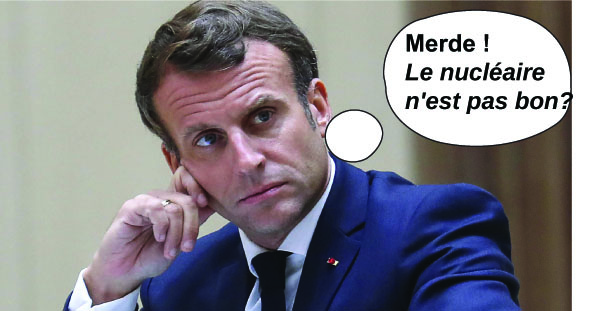
In a POLITICO interview, Luxembourg’s leader Xavier Bettel slams French push to include nuclear energy in EU’s green tech plan.
BY SUZANNE LYNCH AND JAKOB HANKE VELA, MARCH 22, 2023
French President Emmanuel Macron is facing an uphill battle to persuade EU leaders to designate nuclear energy as a key green technology of the future, after one of his allies blasted his plan on the eve of a summit in Brussels.
Luxembourg’s Prime Minister Xavier Bettel told POLITICO in an interview that while it is up to individual countries to choose their own energy mix, nuclear power must not benefit from an official “European label” that would give the vital French industry a boost.
Bettel’s criticism risks reinforcing divisions between Macron and his fellow leaders as they meet in Brussels to discuss the green tech plans at the European Council summit starting Thursday.
“Nuclear is neither sustainable, nor safe, nor fast,” Bettel said in an interview. “Some people think they are selling nuclear power as the answer to everything,” he continued, but pointed out that it can take at least 10 years for a plant to be operational.
“Secondly, we have had incidents at the international level which are worrying and which have had catastrophic repercussions for many other countries. And thirdly, we still have a problem with nuclear waste. We still don’t know how to deal with it, so we can’t say that it is safe and sustainable.”
France’s energy diet is dominated by nuclear power and Macron’s government has been lobbying Brussels to include nuclear energy in the EU’s Net Zero Industry Act — a package of plans unveiled last week by the European Commission.
The proposals in the act would allow “strategic net-zero” projects to qualify for a fast-track permitting process and smoother access to funding, part of the effort by Brussels to jump-start the transition away from fossil fuels to greener forms of energy.
Bettel said it’s up to each national government to decide its own energy mix, but argued that nuclear power should not be seen as good for the environment. “Everyone can do what they want,” he said. “But for me, the European label on nuclear energy — it would be in fact wrong to call it a green energy, or safe, or renewable.”
As POLITICO previously reported, in recent days France has not only lobbied to include nuclear energy in the EU’s Net Zero Industry Act, but it is also making a renewed push to give nuclear-based hydrogen a bigger role in meeting EU renewable energy goal,
Several diplomats said they expect the issue of nuclear to be discussed by leaders during Thursday and Friday’s summit. In particular, France — as well as countries like the Czech Republic — have been pushing for the phrase “technological neutrality” to be included in the language of the summit conclusions, which will be signed off on by leaders in Brussels. That would represent an oblique acknowledgment that all forms of energy, including nuclear, could form part of the EU’s green tech plan.
US won’t let Ukraine even consider peace talks – Moscow
https://www.rt.com/russia/573393-us-ukraine-peace-negotiations/ 24 Mar 23
Ukraine’s Western backers – and the US in particular – are doing their best to prevent Kiev from entering into any negotiations with Moscow, Kremlin spokesman Dmitry Peskov has said. The official made the remarks on the sidelines of talks between Russian President Vladimir Putin and his Chinese counterpart, Xi Jinping, in Moscow on Tuesday.
Peskov was asked to comment on recent statements by senior Western officials, who said any peace initiative for Ukraine, should it arise from the Russia-China talks, would be “unacceptable.” US National Security Council spokesman John Kirby, for example, claimed any ceasefire in the current situation would only “ratify Russia’s conquest to date” rather than contribute to peace.
“Washington, European capitals, but first of all, Washington is filled with the desire not to let, under any pretext, [Kiev] enter into peace negotiations. They simply do not let Kiev even think about it,” Peskov said. Asked whether it was now ‘normal’ to incite war rather than call for peace, the spokesman responded affirmatively.
During the talks, the Russian and Chinese leaders discussed a 12-point roadmap for peace in Ukraine recently proposed by Beijing. Putin has lauded the initiative, expressing his readiness to discuss and build upon it, while also reiterating Moscow’s desire to seek a diplomatic solution to the hostilities, which have been dragging on for over a year.
We believe that many of the provisions of the peace plan put forward by China are consonant with the Russian stance and can be taken as a foundation for a peaceful settlement when they are ready for it in the West and in Kiev. However, so far we have not observed such readiness on their part,” Putin said after the meeting.
The Chinese president has insisted that Beijing continues to maintain its position on the conflict and has urged both sides to stick to diplomacy and engage in dialogue. “We’re always for peace and dialogue, and we firmly stand on the right side of history,” Xi stated.
Xi Jinping’s Russia trip reduced chance of nuclear war, says EU foreign policy chief
Josep Borrell says Chinese leader made it clear Vladimir Putin should not deploy atomic weapons
The Chinese president’s trip to Moscow this month has made the world safer, reducing the chance that Vladimir Putin will use nuclear weapons, according to the EU’s foreign policy chief.
Josep Borrell told reporters that President Xi Jinping had made it “very, very clear” to the Russian leader that he should not deploy nuclear weapons, citing China’s peace 12-point Ukraine peace plan, which condemned their use.
“One important thing is this visit reduces the risk of nuclear war and they [the Chinese] have made it very, very clear,” Borrell said. ………………………………… https://www.ft.com/content/8f895b27-9e16-47b4-8608-dbd002facd65
Imperial Visits: US Emissaries in the Pacific
Australian Independent Media Binoy Kampmark 19 Mar 23
For some time, Washington has been losing its spunk in the Pacific. When it comes to the Pacific Islands, a number have not fallen – at least entirely – for the rhetoric that Beijing is there to take, consume, and dominate all. Nor have such countries been entirely blind to their own sharpened interests. This largely aqueous region, which promises to submerge them in the rising waters of climate change, has become furiously busy.
A number of officials are keen to push the line that Washington’s policy towards the Pacific is clearly back where it should be. It’s all part of the warming strategy adopted by the Biden administration, typified by the US-Pacific Island Country summit held last September. In remarks made during the summit, President Joe Biden stated that “the security of America, quite frankly, and the world, depends on your security and the security of the Pacific Islands. And I really mean that.”
Not once was China mentioned, but its ghostly presence stalked Biden’s words. A new Pacific Partnership Strategy was announced, “the first national US strategy for [the] Pacific Islands.” Then came the promised cash: some $810 million in expanded US programs including more than $130 million in new investments to support, among other things, climate resilience, buffer the states against the impact of climate change and improve food security.
The Pacific Islands have also seen a flurry of recent visits. In January this year, US Indo-Pacific military commander Admiral John Aquilino popped into Papua New Guinea to remind the good citizens of Port Moresby that the eyes of the US were gazing benignly upon them. It was his first to the country, and the public affairs unit of the US Indo-Pacific Command stated that it underscored “the importance of the US-Papua New Guinea relationship” and showed US resolve “toward building a more peaceful, stable, and prosperous Indo-Pacific region.”
In February, a rather obvious strategic point was made in the reopening of the US embassy in the Solomon Islands. Little interest had been shown towards the island state for some three decades (the embassy had been closed in 1993). But then came Beijing doing, at least from Washington’s perspective, the unpardonable thing of poking around and seeking influence.
Now, Prime Minister Manasseh Sogavare finds himself at the centre of much interest, at least till he falls out of favour in the airconditioned corridors of Washington………………………………………………………………………………………….. https://theaimn.com/imperial-visits-us-emissaries-in-the-pacific/
France trying to “sell off its old nukes” to the Netherlands?
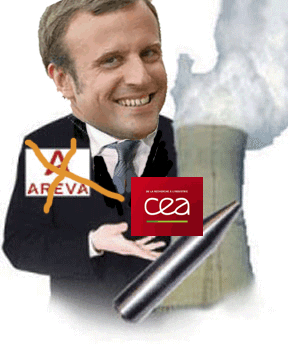
France looking to liberal Netherlands in push for nuclear revival
By Paul Messad | EURACTIV.fr | translated by Daniel Eck 22 Mar 23
Paris is looking towards “liberal” allies such as the Netherlands to revive its nuclear industry, French Green MP Julie Laernoes told EURACTIV, after the country’s National Assembly approved a bill seeking to build six new reactors.
Read the original French story here.
France’s National Assembly approved the bill, which scraps a 50% limit on the share of nuclear in France’s electricity mix, on Tuesday (21 March) with 402 votes in favour and 130 against.
While the bill still needs a second vote of approval to go through, the numbers suggest parliament will most likely rubberstamp the new law.
“We are moving forward on the third pillar of our energy transition,” Energy Minister Agnès Pannier-Runacher said after the vote, in reference to French efforts at reducing energy consumption and building more renewables.
Olivier Marleix, the president of the right-wing Les Républicains group in the National Assembly, which supported the bill, said the text represents a “long-awaited turnaround”.
Nuclear alliance
The approval of the bill comes at a time when France is trying to push the role that its low-carbon nuclear power mix can play in the EU’s energy transition.
France launched a “nuclear alliance” at the end of February, aiming to promote European cooperation along the entire nuclear supply chain and launch “common industrial projects” in new generation capacity as well as small modular reactors.
To broaden support, France is “looking for other partners in Europe” such as the Netherlands, said Laernoes, a French MP of dual French-Dutch nationality who sits with the opposition Green party.
Like other Green lawmakers in the National Assembly, Laernoes voted against the motion to revive nuclear power in France and opposes French-led moves to build more nuclear reactors across Europe………………………………………………
Net-Zero Industry Act
Last week, the European Commission presented its Net-Zero Industry Act, a legislative proposal that describes nuclear power as one of the key technologies needed to attain the EU’s carbon neutrality goal.
Although Paris welcomed the EU’s announcement, it also noted that France’s new generation of pressurised water reactors – known as EPRs – do not appear in a separate list of ‘Strategic Net-Zero technologies’ eligible to receive “particular support” from the EU
The status of nuclear power in the Net-Zero Industry Act will be debated in upcoming negotiations on the text in the European Parliament, said Christophe Grudler, a French MEP sitting with the centrist Renew group in Parliament which includes lawmakers from the French presidential majority.
However, for Laernoes, the French government is waving “an ideological mantra”, as for the time being, “we still don’t have the design of the EPR2s, nor have we validated the extension of existing plants”.
Although the lifetime extension of existing nuclear power plants to 60 years was approved by the text voted on Tuesday, the president of the French Nuclear Safety Authority indicated that a position should be taken by the end of 2026 at the earliest.
“The political text is very far from the industrial and financial reality,” said Laernoes. “France is simply trying to sell off its old nuclear power plants,” she told EURACTIV.
Seven countries reject nuclear-derived hydrogen from EU renewables law
By Frédéric Simon | EURACTIV.com, Mar 20, 2023
A group of seven EU countries led by Germany have rejected calls to incorporate nuclear-made hydrogen into the bloc’s green transport targets, reigniting a dispute with France that has held back an agreement on the bloc’s renewable energy directive.
In a letter to the European Commission, the seven countries reiterate their opposition to including nuclear power in calculating green transport fuel targets.
“We share the view that the production and use of low-carbon hydrogen and low-carbon fuels should not be incentivised through a directive on the promotion of renewable energy,” says the letter, dated 16 March and signed by Austria, Denmark, Germany, Ireland, Luxembourg, Portugal, and Spain.
France and eight other EU countries have called for exempting nuclear-derived fuels from green transport targets in the renewables directive. In practice, this would be done by withdrawing those from the denominator used to calculate binding targets for green transport fuels….
This pro-nuclear coalition [led by France] includes Bulgaria, Croatia, Czechia, France, Hungary, Poland, Romania, Slovakia, and Slovenia.
But the seven EU countries disagree, saying low-carbon fuels should be left out of the renewable energy directive, “especially by accounting them towards the overall 2030 or any sectoral renewable energy targets or deducting them from the denominator”.
They also express their “clear opposition to the link between low-carbon fuels and [renewable energy] targets under Article 8a of the Gas Directive,” supported by France and the other pro-nuclear countries.
Counting low-carbon energy towards renewable targets would rather reduce our climate efforts and slow down investment in the much needed additional renewable capacity,” they argue, adding that the renewable energy directive “does not prevent or prohibit Member States from using other low-carbon hydrogen and low-carbon fuels.”
The seven countries acknowledge that nuclear-derived hydrogen “may play a role in some member states” and that “a clear regulatory framework for them is needed”. But according to them, this should be addressed in the ongoing revision of EU gas legislation.
France has pushed for the European Union to recognise nuclear power as a low-carbon energy source alongside renewables.
Earlier this month, Paris launched a “nuclear alliance” with 10 other EU member states, aiming to cooperate more closely along the entire nuclear supply chain and promote “common industrial projects” in new generation capacity…….. https://www.euractiv.com/section/energy-environment/news/seven-countries-reject-nuclear-derived-hydrogen-from-eu-renewables-law/
1 This Month



26 September – International Day for the Total Elimination of Nuclear Weapons


PLEASE OPPOSE HR 8255 AND S.3639 – bills would accelerate satellite deployment, with no environmental review or safeguards – https://ncstd5li.quorum.us/campaign/169331/
To see nuclear-related stories in greater depth and intensity – go to https://nuclearinformation.wordpress.com
-
Archives
- September 2026 (245)
- August 2026 (330)
- July 2026 (355)
- June 2026 (287)
- May 2026 (306)
- April 2026 (356)
- March 2026 (251)
- February 2026 (267)
- January 2026 (308)
- December 2025 (358)
- November 2025 (359)
- October 2025 (375)
-
Categories
- 1
- 1 NUCLEAR ISSUES
- business and costs
- climate change
- culture and arts
- ENERGY
- environment
- health
- history
- indigenous issues
- Legal
- marketing of nuclear
- media
- opposition to nuclear
- PERSONAL STORIES
- politics
- politics international
- Religion and ethics
- safety
- secrets,lies and civil liberties
- spinbuster
- technology
- Uranium
- wastes
- weapons and war
- Women
- 2 WORLD
- ACTION
- AFRICA
- Atrocities
- AUSTRALIA
- Christina's notes
- Christina's themes
- culture and arts
- Events
- Fuk 2022
- Fuk 2023
- Fukushima 2017
- Fukushima 2018
- fukushima 2019
- Fukushima 2020
- Fukushima 2021
- general
- global warming
- Humour (God we need it)
- Nuclear
- RARE EARTHS
- Reference
- resources – print
- Resources -audiovicual
- Weekly Newsletter
- World
- World Nuclear
- YouTube
-
RSS
Entries RSS
Comments RSS
 nuclear-news