Biden ‘very proud’ of expanding NATO to Russia’s borders
https://www.rt.com/news/595718-biden-proud-nato-expansion/ 12 Apr 24
The US leader believes it would be a “disaster” if the bloc were to break up
US President Joe Biden has hailed NATO’s further expansion toward Russia’s borders, while accusing Republican rival Donald Trump of undermining the unity of the American-led military bloc.
Russia has for years voiced concern about NATO’s creeping encroachment, viewing its policies as an existential threat. However, in an interview with Spanish-language broadcaster Univision that aired on Tuesday, Biden touted the recent addition of Finland and Sweden to the bloc’s ranks amid the Ukraine conflict as a great achievement.
“We’ve done something that I was very proud of. I’ve engaged with NATO for my whole career. We were able to expand NATO, and we have 2,000 miles of border because you have two Nordic nations having joined NATO. You have a whole range of NATO countries along the Russian border,” the US president said.
Biden went on to argue that a stalemate in Congress over his $61 billion military aid package for Kiev is “very dangerous” for the bloc’s unity, accusing his former US leader Trump of virtually holding the measure – and the entire Republican party – hostage.
“Trump runs that party. He maintains a sort of a death grip on it. Everybody’s afraid to take him on whether they agree with him or not, and it’s incredibly dangerous. The last thing we need is to see NATO start to break apart. It would be a disaster for the United States, a disaster for Europe, a disaster for the world,” Biden said.
The US has provided Ukraine with over $113 billion in various forms of assistance since the start of hostilities with Russia. Moscow has repeatedly condemned foreign arms shipments to Kiev, arguing they will only prolong the conflict, while making the West a direct participant in the hostilities.
Finland shares a 1,300km border with Russia, and Moscow has argued that NATO membership has threatened, not guaranteed, Finnish security. After Helsinki joined the alliance last year, Russian President Vladimir Putin announced the creation of a new military district bordering the Nordic nation. Sweden joined the bloc last month.
Putin has warned for nearly two decades that NATO’s policies undermine Russian national security, but a real “red line” for Moscow would be an attempt to move the bloc’s forces into Ukraine. The conflict in Ukraine is an “existential” one for Moscow and a “matter of life and death,” Putin said in February, while for the West it is simply a matter of “improving its tactical positions.”
Ukraine fatigue: Kiev and the West are tiring of war and each other
The idea of some form of compromise solution to Kiev-Moscow conflict is creeping up on foreign hawks and on more and more locals
Tarik Cyril Amar, https://www.sott.net/article/490581-Ukraine-fatigue-Kiev-and-the-West-are-tiring-of-war-and-each-other 12 Apr 24
What a small band of objective-though-long-disparaged observers in the West have long warned about is now happening: Ukraine and the West are losing their war against Russia. The strategy of using Ukraine to either isolate and slowly suffocate Russia or to defeat and degrade it in a proxy war is coming to its predictable catastrophic end.
This reality is now being acknowledged even by key media and high officials that used to be uncompromising about pursuing the extremely ill-advised aim of military victory over Russia. A Washington Post article has explained that with ”no way out of a worsening war,”
Ukrainian President Zelensky’s options ”look bad or worse.” NATO General Secretary Jens Stoltenberg has discovered the option of ending wars by concessions – Ukraine’s concessions, that is. The sturdy old hardliner Edward Luttwak warns of a ”catastrophic defeat” – for the West and Ukraine. True, Luttwak is still spreading desperate illusions about a direct NATO deployment to avert the worst. In reality, it would, of course, only make things much, much worse again, as in World War III worse. But his fear, not to say panic, is palpable.
The fast-approaching outcome will be a disaster for Ukraine, even if Moscow should be generous regarding the terms of a postwar settlement (not a given, after the costs that Russia has incurred). Ukraine has already been ruined in terms of its demography, territory, economy, and, last but not least, political future. The damage incurred cannot simply be undone and will have long-lasting consequences.
For the West, this war will also mark a dismal turning point, in four main ways that can only be sketched here:
First, the US will have to absorb its worst defeat since Vietnam. Arguably, this latest fiasco is even worse because, even during the Vietnam War, America did not try to attack Russia (then, of course, leading the Soviet Union) as head-on as it does now. Washington’s most over-confident attempt ever to take Moscow off the “grand chessboard” once and for all has backfired perfectly. In general, that will diminish America’s capacity to impress and cajole globally. In particular, the goal of preventing the rise of regional hegemons in Eurasia, the holy grail of US geopolitics, is even farther out of reach than before. The “unipolar” moment and its illusions were passing anyhow, but the US leadership has added a textbook illustration of the West’s limits.
Second, the EU and its individual members – especially myopic warmongers such as Germany, Poland, and France – are far worse off again: Their foolish abandoning of geopolitically imperative caution and balancing (remember: location, location, location) will cost them dearly.
Third, in their own, different ways, cases such as Britain (not even an EU member anymore) and the Baltics (very exposed and very bellicose, a shortsighted combination) are in a class of their own: damage there will be galore. Damage control? The options are paltry.
And, finally, there is, of course, NATO: Over-extended, self-depleted, and having gratuitously exposed itself as much weaker than it would like to seem. Its defeat by Russia in Ukraine will trigger centrifugal tendencies and blame games. Not to speak of the special potential for tension between the US and its clients/vassals in Europe, especially if Donald Trump wins the presidency again, as is likely. And, by the way, he can only thank NATO for proving his point about what a dubious proposition it has become. If you believe that having added more territory on the map (Sweden and Finland) was a “win,” just remember what has happened to the mistaken celebrations of Ukraine’s territorial advances in 2022. Territory may be a price; it is not a reliable indicator of strength.
Yet what about Ukrainians? They have been used as pawns by their Western friends from hell. They are still living under a regime that has just decided to mobilize even more of them for a hopeless meatgrinder, while Zelensky is admitting that Ukraine is on the verge of defeat.
Some Western media are still telling a simplistic and false story about Ukrainians’ unflagging and united will to hold out for victory, as if every single one owed the West to play a Marvel hero to the bitter end. But in reality Ukraine is a normal, if badly misled country. Many of its citizens have long shown what they really think about dying for a toxic combination of Western geopolitics and the narcissism of a megalomanic comedian: by evading the draft, either by hiding in Ukraine or fleeing abroad. In addition, a recent poll shows that almost 54 percent of Ukrainians find the motives of the draft dodgers at least understandable. Kiev’s push for increased mobilization will not go smoothly.
But there is more evidence of the fact that Ukraine’s society is not united behind a Kamikaze strategy of “no compromise.” Indeed, under the title “The Line of Compromise,” Strana.ua, one of Ukraine’s most important and popular news sites, has just published a long, detailed article about three recent and methodologically sound polls.
They all bear on Ukrainians’ evolving attitudes to the war and in particular the question of seeking a compromise peace. In addition, Strana offers a rich sample of comments by Ukrainian sociologists and political scientists. It is no exaggeration to say that the mere appearance of this article is a sign that the times are changing: Under the subtitle “How and why attitudes to the war differ in the East and the West of Ukraine,” it even highlights “substantial” regional differences and, really, suppressed divisions. If you know anything about the extreme political – even historical – sensitivity of such divergences in Ukraine, then you will agree that this framing alone is a small sensation.
But that is not all. The article, in effect, dwells on ending the war by concessions – because that is what any compromise necessarily will take. Readers learn, for instance, that, according to the ‘Reiting’ agency polling on commission of Ukraine’s Veterans’ Affairs Ministry, in Ukraine’s West, farthest removed from the current front lines, 50% of poll respondents are against any compromise, while no less than 42% are in favor of compromise solutions as long as other countries (other than Ukraine and Russia, that is) are involved in finding them. For a region that, traditionally, has been the center of Ukrainian nationalism, that is, actually, a remarkably high share of those siding with compromise.
If you move east and south over the map, the compromise faction gets stronger. In the East, the proportions are almost exactly reversed: 41% against compromise and 51% in favor. In the South, it’s a perfect tie: 47% for both sides.
On the whole, Ukrainian sociologists are finding a “gradual increase” of those supporting a “compromise peace” in “one form or the other.” Even if, as one researcher plausibly cautions, this increase displays different rates in different regions, it still adds up to the national trend. One of its causes is “disappointment,” the loss of faith in victory, as the political scientist Ruslan Bortnik observes. In other words, the Zelensky regime is losing the information war on the home front. Notwithstanding its mix of censorship and showmanship.
The compromises imagined by Ukrainians include all conceivable solutions that do not foresee a return to the 1991 borders. In other words, there are ever more Ukrainians who are ready to trade territory for peace. How much territory, that is, of course, a different question. But it is clear that the maximalist and counter-productive aim of “getting everything back,” the all-or-nothing delusion, imposed for so long on Ukrainian society, is losing its grip.
The agency Socis, for instance, counts a total of almost 45% of respondents ready for compromise, while only 33% want to continue the war until the 1991 borders are re-established. But there are also 11% who still favor fighting on until all territories lost after February 2022 are recovered. That, as well, is now an unrealistic aim. It may have been closer to reality when Kiev dismissed an almost finished peace deal in the spring of 2022, on awful Western advice. That ship has sailed.
Polling results, it is important to note, do not all point in the same direction. The KMIS agency has produced results that show 58% of respondents who want to continue the war “under any circumstances” and only 32% who would prefer a “freeze,” if Western security guarantees are given. Such a freeze, while a favorite pipedream of some Western commentators, is unlikely to be an option now, if it ever was. Why should Moscow agree? But that is less relevant here than the fact that KMIS, for one, seems to have found a massive bedrock of pro-war sentiment.
And yet, even here, the picture is more complicated once we look closer. For one thing, the KMIS poll is comparatively old, conducted in November and December of last year. Given how quickly things have been developing on the battlefield since then – the key town and fortress of Avdeevka, for instance, finally fell only in February 2024 – that makes its data very dated.
KMIS also had interesting comments to offer: The agency notes that respondents’ proximity to the front lines plays an “important role” in shaping their opinions about the war. In other words, when the fighting gets close enough to hear the artillery boom, it concentrates the mind on finding a way to end it, even by concessions. As one Ukrainian sociologist has put it, “in the East and South … one of people’s main concerns is that the war must not reach their own home, their own home town.”
In addition, the executive director of KMIS has observed that the number of compromise advocates also grows when Western aid declines.
It remains difficult to draw robust conclusions from these trends, for several reasons: First, as some Ukrainian observers point out, the number of compromise supporters may be even higher – personally, I am sure it is – because the Zelensky regime has stigmatized any appeal to diplomacy and negotiations as “treason” for so long. Many Ukrainians are virtually certain to be afraid to speak their mind on this issue.
Second, what exactly the compromise camp understands by compromise is bound to be diverse. This camp may still include quite a few citizens who harbor illusions about what kind of compromise is available at this point.
Third, the current regime – which is de-facto authoritarian – is not answerable to society, at least not in a way that would make it easy to predict how shifts in the national mood translate into regime policies, or not.
And yet: There is no doubt that there is a groundswell in favor of ending the war even at the cost of concessions. Add the clear evidence of Western Ukraine fatigue – even a growing readiness to cut Ukraine loose – and the facts that the Russian military is creating on the ground, and it becomes hard to see how this basal shift in the Ukrainian mood could not become an important factor of Ukrainian – and international – politics
The Mutually Reinforcing U.S. and Israeli Empires

By Ralph Nader, April 5, 2024, https://nader.org/2024/04/05/the-mutually-reinforcing-u-s-and-israeli-empires/
The U.S. government’s unwavering commitment to Israel’s annihilation of Gaza – torrents of heavy weaponry, diplomatic and political cover, and vast majorities in Congress swearing fealty to Netanyahu’s extremist regime – is usually attributed to AIPAC (American Israel Public Affairs Committee), the powerful domestic pro-Israeli government lobby, organized in every Congressional District, with its abundant campaign cash and its many personal contacts in Congress and the Executive Branch.
This is only a partial explanation of the US-Israel alliance. A far more formidably entrenched factor is that Israel and the U.S. have overlapping Empires – one in the Middle East and the other globally – with deep common purposes. Here are some examples of how these empires operate in tandem.
Both Empires violate international laws with impunity. The U.S. sends special forces, drones, the Army, the Navy, and the Air Force, anywhere and anytime it wants – especially the case of Iraq and Afghanistan. National boundaries and sovereignty mean nothing. Similarly, Israel completely dominates the Middle East militarily, bombing, sabotaging, and killing whomever it wants in neighboring countries. It has attacked Lebanon and Syria routinely with its air force, artillery, and invaded Lebanon on the ground, prompting feeble responses it always labels “terrorism.”
Both Empires consider every military operation defensive. They say they never conduct offensive attacks, but when they do, they invariably describe them as self-defense. Israel slaughters Palestinians decade after decade in the Palestinian territories while claiming self-defense. With the second most modern military in the world, backed by the U.S., Israel invades, engages in nightly destruction of Palestinian homes, seizes Palestinian land and water for their colonies, imprisons thousands without charges, including women and children, inflicts collective punishment, operates many checkpoints and imposes embargoes, sieges and blockades. All of these unlawful actions are claimed to be taken in the name of self-defense.
The U.S. has 750 military bases in over 80 countries, 26 military installations in the Middle East, runs the provocative NATO military alliance, and digs into the South China Sea. All this is also claimed to be done in the name of self-defense.
Both Empires have collaborating military-industrial complexes and are major arms exporters. As the chief innovator in weapons of mass destruction, the U.S. and its companies like Raytheon, Lockheed Martin, and Boeing welcome feedback from the Israeli military on how their weapons fare in its attacks. Palestine has become a major testing ground for the most super-modern surveillance technology. (Check out the book, The Palestine Laboratory: How Israel Exports the Technology of Occupation Around the World by Antony Loewenstein, 2023).
Both Empires wield “force projection” as atomic bomb powers, though Israel refuses to join the non-proliferation treaty.
Despite their many wars and raids on defenseless populations, both incurred a rare counter-attack (9/11 & October 7) when advance warnings by advisors were ignored (GW Bush and Netanyahu) and military defenses were AWOL. After being attacked, both Empires went berserk and responded with massive killing of civilians by overwhelming invasions.
Both Empires lie repeatedly regarding their tactics and strategies. Recall Rep. Ron Paul’s terse recognition that Bush and Cheney “lied us into invading Iraq.”
Both Empires control the United Nations Security Council with the U.S. veto shielding whatever Israel does. Both occupy or control land that is not theirs, violating international laws.
Both Empires violate their legal duty as occupiers to protect the civilian population’s well-being. Both have restricted humanitarian assistance and critical civilian imports – Israel savagely in Gaza and Palestine, and the U.S. in Iraq under Bill Clinton. Both decline to estimate their aggregate civilian casualties.
Both Empires’ leaders, Biden and Netanyahu, profess to practice their respective religions, though they are violating the basic precepts of both their religions in implementing their violent wars.
Both Empires spend little time pressing for ceasefires, peace negotiations, and the stability of peace treaties. They find such restraints as unacceptable curbs on their freedom to wage war.
Both Empires, contrary to their fundamental juridical documents, in the case of the U.S., our Constitution, operate as elected dictatorships in conducting military and foreign policy. The Congress and the Knesset become supine and surrender to the Executive and, for Israel, the ruling executive coalition. In the U.S., the U.S. Supreme Court has long ruled that no citizens of our country, not even individual members of Congress, “have legal standing to sue” the U.S. government for either initiating illegal wars or engaging in additional illegal tactics like torture or corruption.
To remove the challenges from “We the People” against a lawless government, the Supreme Court has endorsed the “state secrets” doctrine. It authorizes the government to demand the dismissal of constitutional claims, in federal court, based on killings, torture, kidnapping, or otherwise by alleging the defense would require disclosure of national security information.
The Israeli Supreme Court doesn’t worry about the Israeli military machine.
Both Empires have a so-called free mainstream media that mostly toes the Empire party line and knows its permissible place in the overall profit-making power structure. Both have a small independent media that is still able to dissent, however futilely, though the U.S. has no counterpart to the outspoken Israeli newspaper HAARETZ.
There are some differences between the two Empires. Israel attacked the USS Liberty on June 8, 1967, killing 34 American sailors and wounding 171, and mostly got away without consequences. (See, The Intercept article: Fifty Years Later, NSA Keeps Details of Israel’s USS Liberty Attack Secret by Miriam Pensack).
Prosperous Israel persuades the U.S. Congress yearly to provide Israel with billions of dollars, mostly for military arms, and is about to get an additional $14.1 billion – the Biden genocide tax on Americans – as Netanyahu’s terror state continues intensifying his Palestinian Holocaust. (The reported casualty toll is lethally undercounted. See the March 5, 2024 column: “Stop the Worsening UNDERCOUNT of Palestinian Casualties in Gaza”).
If Biden’s people privately object to some Israeli off-the-wall slaughter of courageous journalists, United Nations staff, aid workers, patients in hospitals, and the starvation of babies, Netanyahu can softly say to Biden and Blinken, “Joe, Tony, why don’t you take up your complaints with OUR Congress.”
There Is No Grudge That Cannot Be Resolved, China’s Xi Jinping Tells Former Taiwan President Ma Ying-jeou in Momentous Beijing Meeting
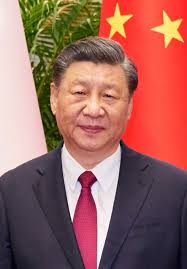
“[There is] [n]o problem that cannot be talked through. And there are no forces that can separate us,” Xi Jinping said.
By Diego Ramos ScheerPost, https://scheerpost.com/2024/04/10/there-is-no-grudge-that-cannot-be-resolved-chinas-xi-jinping-tells-former-taiwan-president-ma-ying-jeou-in-momentous-beijing-meeting/
In a historic meeting marking mainland China’s first reception of a former or serving Taiwanese president, President Xi Jinping and former Taiwanese president Ma Ying-jeou engaged in a dialogue of peace and unity in Beijing on April 10.
Amidst heightened tensions between China and Taiwan, mentions of war are commonplace but according to Ma, “If there’s war, it would be unbearable to the Chinese nation, and the two sides of the [Taiwan] strait have the wisdom to handle their disputes peacefully.”
This echoes Xi’s assertion that the two governments can converse and resolve issues: “Compatriots on the two sides are both Chinese. There is no grudge that cannot be resolved. No problem that cannot be talked through. And there are no forces that can separate us.”
Xi, alluding to reunification, also made reference to “foreign interference,” which, according to him, could not get in the way of a “family reunion.”
The meeting comes a month before William Lai Ching-te, current Taiwanese vice president and president-elect, is set to step into office. Despite being part of the independence-favoring Democratic Progressive Party, the South China Morning Post (SCMP) reports that Beijing does not see significance in the party’s electoral victory.
Zhu Songling, a Taiwan affairs specialist at Beijing Union University, told SCMP that the talks came at a favorable time, citing president-elect Lai’s approaching inauguration. Songling also said Ma’s reception in Beijing signaled the Chinese government’s willingness and resolve to peacefully settle the cross-strait issues.
“Since Ma is not in office, many of his ideas may not be implemented in concrete terms, but in general this [meeting] is still of great significance,” Zhu said, mentioning Ma’s continued influence in the Beijing-friendly Kuomintang (KMT) party.
Towards the end of Ma’s “journey of peace,” another KMT leader, former mayor of Taipei Hau Lung-bin, also plans to visit mainland China, with the possibility of meeting with Xi as well.
Hau is set to visit Zhengzhou and take part in the annual cultural spectacle that pays tribute to the Yellow Emperor. The tribute honors Chinese ancestry and heritage and Hau said his visit “emphasise[s] the fact that the people from both sides of the Taiwan Strait share the same root, the same origin, and the same historical and cultural backgrounds, which should go beyond political differences.”
“It would be unreasonable for the cross-strait relations to end up in a military crisis or dangerous war caused by political manipulation,” Hau also mentioned.
The US and Japan’s Mission to Push Next Generation Nuclear Power
Japan ramps up the joint nuclear power agenda with the U.S. and Philippines, with an eye to deterring regional conflict.
By Thisanka Siripala, April 10, 2024
Japanese Prime Minister Kishida Fumio is on an official state visit to the United States with a firm eye on underscoring the importance of the Japan-U.S. alliance in Asia. Kishida’s trip marks the first state visit by a Japanese leader to the U.S. in nine years.
Kishida is expected to move forward with joint economic and security projects with the Philippines and the United States as clashes between Beijing and Manila escalate in the South China Sea. It’s the first time the countries will meet for a trilateral summit.
The visit gives Kishida a global platform to outline Japan’s vision for Japan-U.S. relations as he faces a precarious political outlook at home. His public support rate hovers around a record low amid looming Liberal Democratic Party leader elections in September 2024.
Kishida framed the highly anticipated summit with U.S. President Joe Biden on April 10 as a meeting of two “global partners” tackling global issues. This will be followed by three-way talks between Biden, Kishida, and Philippine President Ferdinand Marcos Jr. to discuss developing “multilayered’ ties on April 11. ……………………………………………….
For Japan and the United States, a next generation nuclear power plant is the answer to phasing out Asia’s dependency on fossil fuel. As part of their trilateral cooperation, both countries will facilitate the development of “miniature” nuclear power plants, called Small Modular Reactors (SMRs), in the Philippines.
Currently, the country struggles with chronic power outages. It relies heavily on coal, which generates 60 percent of its electricity. Marcos hopes to restart the only nuclear power plant facility in the Philippines, which was constructed and immediately abandoned in the 1980s. The government plans to have it operational by 2032.
Next generation nuclear plants like SMRs are considered much safer and cheaper than their predecessors. However, the U.S. start-up manufacturing the technology, NuScale Power, canceled its plan to construct an SMR facility in Idaho in November last year. They explained the project – which would have been the first in the United States – was economically unfeasible, as inflation and increased construction costs meant the price of energy generated by the plant would be too high.
Japan has shifted its policy on nuclear power since the devastating 2011 tsunami and earthquake disaster. …………. https://thediplomat.com/2024/04/the-us-and-japans-mission-to-push-next-generation-nuclear-power/
NATO 75 Years On… A War Machine Long Past Its Sell-By Date
NATO has been sold to the world as some kind of international security agency. How Orwellian can you get? Peace means war, security means chaos and threats, and rules-based order means domination and exploitation.
https://strategic-culture.su/news/2024/04/05/nato-75-years-war-machine-long-past-its-sell-by-date/
—
This week marks the 75th anniversary of NATO’s founding in April 1949. The organization has become a global danger to peace and security and should have been disbanded more than 30 years ago when the Cold War supposedly ended. That the alliance was not disbanded attests that its real purpose was always to serve as a weapon for U.S.-led Western imperialism.
Barely four years after the end of World War Two – the greatest calamity in world history – and amid the ruins of a devastated Europe and Asia, Western imperialism was once again reinventing its nefarious internal forces.
Nearly 30 million citizens of the Soviet Union had died at the hands of Nazi Germany. And yet despite the horror and evil of war, the Western powers were busy reconfiguring their military forces to confront again the Soviet Union. With the defeat of the Nazi war machine largely by the Soviet Red Army, the Western imperialists innovated a new instrument in the form of the North Atlantic Treaty Organization.
The betrayal and treachery were not just to the Soviet people. All of humanity was once again subjected to the warmongering designs and necessities of a global elite under Western imperialism.
NATO’s declared purpose was to defend Europe from Soviet aggression. The same pretense exists today in the claim that the alliance is defending Ukraine from Russian belligerence.
The proof of NATO’s real function is demonstrated by the fact that the organization did not disband in 1991 when the Soviet Union was dissolved. Over the ensuing 33 years, the military bloc has doubled its membership to 31 nations. Russia has replaced the Soviet Union as the Western-designated security threat to Europe. But such rationale turns reality on its head. NATO has always existed as a tool of aggression for Western imperialism. Where Nazi Germany failed to do the job of conquering the Soviet Union, NATO tacitly took over the task, and when the Soviet Union disappeared, the new enemy of convenience became the Russian Federation.
Continue readingTODAY. NATO/USA – dancing macabrely to World War 3?

The Danse Macabre consists of the dead, or a personification of death, summoning representatives from all walks of life to dance along to the grave, The effect is both frivolous and terrifying, beseeching its audience to react emotionally. – Wikipedia
I wonder did those lovely well-paid NATO representatives have a nice social time, too, in the Brussels Summit April 3 -4, surely a dinner, perhaps a dance? Well, they did, in a way, do a danse macabre, as they fell in like ninepins to the aims of Secretary General Jens Stoltenberg, and of my favourite sweetly spoken war-monger, Antony Blinken. ( All except Hungary, but they don’t count, as they’re on speaking terms with Russia.)
The danse macabre idea derived from the Middle Ages – when mass deaths happened from famine and plague – it was perhaps some kind of coping mechanism – and a way to face up to the fears of what was coming.
NATO representatives dutifully discussed $107b Ukraine military aid package, a multi-year financial commitment for Ukraine, dutifully agreeing that everyone must do more to ensure a Ukrainian victory against Russia, and “rock solid” that Ukraine will join NATO. “Our purpose at the summit is to help build a bridge to that membership,” – Antony Blinken.
NATO/USA aims to draw in “Indo-Pacific partners” – Australia, NZ. South Korea ,Japan, Singapore, Vietnam, Philippines, Saudi Arabia, Israel, Indonesia, Thailand, Taiwan. NATO/USA sees a Ukrainian victory as a necessity for global peace and freedom. And I guess that a Taiwanese victory over China will be visualised in the same way.
Did anyone raise matters like the situation of Ukrainian casualties, the crippling of Ukraine’s environment, economy, and social structure, the Russian success on the ground, the perils of Ukraine striking sites far inside Russia? Apart from Hungarian Foreign Minister Péter Szijjártó , did anyone suggest a negotiated end to the Ukrainian bloodbath?
The Ukrainian people are overwhelmed with the sufferings of fighting Russia on behalf of NATO/USA. But to NATO/USA – is it some sort of game of Russian roulette – how far can they push Russia? And is it preparatory to another game of Taiwan fighting China? And is it fun to toy with the chance of World War 3 ?
US Secretary of State Blinken says Ukraine will be NATO member

Ukraine, if/when it enters NATO, will have “unresolved” territorial issues. Crime and the Donbass are in Russian hands and will remain in Russian hands. If Ukraine enters NATO with that being the case, border conflicts over that territory could spark war, which would then drag in NATO through Article V. Such a war would be extremely bloody and potentially escalate to nuclear armageddon.
Reuters, Thu, 04 Apr 2024 https://www.sott.net/article/490373-US-Secretary-of-State-Blinken-says-Ukraine-WILL-be-NATO-member
U.S. Secretary of State Antony Blinken said on Thursday that Ukraine will eventually join NATO as support for the country remains “rock solid” among member states.
“Ukraine will become a member of NATO. Our purpose at the summit is to help build a bridge to that membership,” Blinken told reporters in Brussels.
Comment: For now, this appears to primarily be belligerent rhetoric, because at least some analysts say that Ukraine can’t join whilst involved in a conflict and with ongoing border disputes.
However, Russia has discussed creating a demilitarised zone, and so it is possible that this will compel it to neutralise Ukrainian regions even further West than they would have otherwise. Furthermore, this speaks more to the desperation of the West, and to Russia’s upper hand, which it could maintain so long as it doesn’t, precipitously, escalate the situation. And, amidst all this, the West ruins itself, its position on the global stage, and its ability to provoke the rising multipolar world.
Footage, and relevant snippet from the X post, below:
Will Tanner:
Secretary of State Blinken says that Ukraine will be joining NATO This is insane. This is insane. This is intentionally starting WWIII to help Hunter Biden’s paymasters level of insane 1) Ukraine, if/when it enters NATO, will have “unresolved” territorial issues.
1) Ukraine, if/when it enters NATO, will have “unresolved” territorial issues. Crime and the Donbass are in Russian hands and will remain in Russian hands. If Ukraine enters NATO with that being the case, border conflicts over that territory could spark war, which would then drag in NATO through Article V. Such a war would be extremely bloody and potentially escalate to nuclear armageddon.
2) This is Putin’s red line. In the 90s, when the USSR fell, America promised the Russians that NATO wouldn’t expand to the East. Then, in Russia’s weakness (created in large part by Goldman Sachs helping the oligarchs loot the country through privatization), it expanded to the East, doing just what it promised it wouldn’t, much to Russia’s chagrin. But Putin, while upset, has made it clear that Ukrainian membership in NATO is his red line that would mean war, potentially nuclear. It is utterly unacceptable and would have been like Ireland or Canada joining the Warsaw Pact. That’s why he launched the war; by “demilitarizing” Ukraine by shelling its army into oblivion and by creating a constant conflict, he wants to keep Ukraine out of NATO without going to war with NATO. He thought we wouldn’t be so dumb as to bring it into the alliance if it is fighting a war with Russia.
More NATO involvement in Ukraine doesn’t bode well, as the following highlights:
NATO chief, Jens Stoltenberg, admitting that the war did start in 2014. And from that same year, 2014, NATO has been busy training and arming the Ukraine armed forces
Inside Sellafield behind the razor wire gun- toting guards and blast barriers at the toxic nuclear site

The 700-acre Sellafield complex means different things to different
people. To UK authorities it is a decommissioning hub being used to
spearhead the clean-up of Britain’s early nuclear industry mistakes, made
before the issue of long-term waste disposal was a priority.
In Ireland,
about 180km away, Sellafield is mostly seen as a potential hazard, a byword
for danger. A former reprocessing site for lethal spent nuclear fuel rods,
it was also known for a now-defunct power plant that was tacked on, Calder
Hall, but this was only ever a minor part of it. Reprocessing was the main
activity.
These days, Sellafield is seen as more of a nuclear dump for the
most radioactive material from all over the UK, with work ongoing in a
100-year, £134 billion (€156 billion) decommissioning project.
Yet another view of Sellafield: in the eyes of one nuclear industry source, the
site is a “gravy train” for well-paid staff and big contractors. Sellafield Ltd, the site’s UK state-owned operator whose mission is to make it safe, spends more than £2.5 billion each year on the clean-up strategy. It is also a bustling 24-hour workplace for 11,000 people paid an
average of €91,000 each annually.
The site’s critics, including the UK academic and radioactivity adviser to the Irish State, Dr Paul Dorfman, warn that the nuclear industry tries to dazzle outsiders with glossy public
relations. Sellafield, meanwhile, says it is only trying to be honest and
open about what it does.
The company, which answers to the UK government
through the Nuclear Decommissioning Authority (NDA), confirms that The
Irish Times is the first media outlet from the Republic to be granted
recent access to the site and its inner sanctum, where the most dangerous
nuclear material is handled. Thirty years after U2′s Bono landed on a
nearby beach in a Greenpeace protest, and almost 20 years after the
Republic last tried to sue the UK over its safety risks, its existential
relevance to Ireland remains.
Sellafield hasn’t gone away, you know. The battle to keep it safe goes on.
Irish Times 30th March 2024
Are US, Israel Heading for Divorce?
It’s unclear how much longer Netanyahu can hold on to power in Israel in the face of a torrent of bad news for Israel about declining international support for — and dire economic consequences derived from — its ongoing military operation in Gaza
Scott Ritter, Washington, Apr 1, 2024, Energy Intelligence Group, https://www.energyintel.com/0000018e-9900-d183-abef-9f430f020000
The crisis in Gaza that has been ongoing since Hamas’ Oct. 7 attack on Israel has resulted in a sea change in political opinion on the question of Israeli security prerogatives and Palestinian statehood. While international opinion has decisively shifted to the Palestinian cause, Israel has until recently been ably backstopped by the US, which has wielded its veto at the UN Security Council to shield Israel from any binding consequences. But shifting global priorities, coupled with turbulent domestic political realities, have caused the US stance on Israel to shift, creating the possibility of Israel, for the first time, standing alone in the crosshairs of global condemnation.
On Mar. 25, the 10 non-permanent members of the UN Security Council tabled a draft resolution demanding a ceasefire in Gaza during Ramadan, the immediate release of hostages and humanitarian access. The resolution was the latest in a succession of similar calls from the Security Council seeking an end to the violence that has wracked Gaza and the region since Oct. 7.
Prior to the Mar. 25 draft resolution being tabled, all previous efforts to bring an end to violence in Gaza had failed, with the draft texts either vetoed by the US or, on one occasion, Russia and China. But the latest call for a ceasefire passed muster, receiving 14 “yes” votes, zero “no” votes, and one abstention — from the US.
The Security Council resolution has no enforcement clause, making it little more than a formal notice of disapproval by the UN of Israeli actions. The administration of President Joe Biden made it clear that it continued to blame Hamas over Israel when it comes to the root cause of the current crisis, and that the US supported the overall Israeli objective of destroying Hamas both militarily and politically. Circumstances at home and abroad, however, raise questions about the sustainability of this policy position.
Changing Times
The Israeli government headed by Benjamin Netanyahu is the most conservative in its history, the byproduct of a desperate politician (Netanyahu) seeking to bury his personal legal problems under the weight of governing what has, for several election cycles, become an increasingly ungovernable state. To accomplish this, Netanyahu made common cause with Israel’s extreme right-wing political element, crafting a coalition that not only rejected the notion of a peaceful resolution of the Palestinian question but also embraced the idea of a greater Israel that would do away with the idea of a Palestinian state in general.
Israel was able to capitalize on the general apathy of the global collective to the plight of the Palestinian people, allowing the dream of a viable Palestinian state to be supplanted by a road map toward regional economic connectivity and prosperity defined by the normalization of relations between Israel and the Arab world. This generated schemes such as the India-Middle East Economic Corridor (Imec), an ambitious sea-rail collaboration designed to link India with Europe via the Gulf Arab states, Jordan and Israel.
The Hamas attack of Oct. 7 and Israel’s heavy-handed response changed all that. Imec is dead in the water, alongside any notion of normalized relations with Arab countries until the question of Palestinian statehood is resolved. The resilience of Hamas militarily and politically has compelled Israel to undertake military action that has resulted in the deaths in Gaza of over 30,000 civilians (some 19,000 of whom are children). This has prompted allegations of genocide presented to the International Court of Justice. Cities across the world are full of protesters condemning Israel and praising the cause of a free and independent Palestine. More and more US cities are hosting such actions.
The tidal wave of public sentiment has moved the needle of government policy in many nations. The US State Department has put the White House on notice that the US is in danger of losing the support of the Global South at a time when US policy objectives are centered on slowing the pace of multipolarity and preserving the rules-based international order that serves as the centerpiece of US foreign and national security policy. The US abstention at the Security Council reflected a new reality, where the US must weigh its own foreign policy objectives against the established principle of unquestioned support for Israel.
Local Politics
The US and Israel could attempt to ride out the storm of international protest, waiting for a world that had long been indifferent to the plight of the Palestinian people to lose interest again and shift its attention to a new crisis — in a world fully capable of generating one at a moment’s notice.
But as Tip O’Neill, a former Speaker of the US House of Representatives, once quipped, “all politics is local,” and the Gaza crisis is no exception. The UN abstention was an attempt at damage control which, under normal circumstances, might have allayed the concerns of people more interested in words over action. But 2024 is a US presidential election year, with incumbent Joe Biden set to face former President Donald Trump in a race that is expected to be every bit as heated — or more — than the tumultuous 2020 election.
The 2020 election, like the 2016 one before it, was won on the margins, in so-called “battleground states” where the difference between winning and losing came down to a few thousand votes derived from distinct demographics. One such demographic is the Muslim-American community, which is overwhelmingly sympathetic to the Palestinian cause.
The UN abstention was an effort to dampen the negative feelings of this community. But void of any meaningful follow-on action by the Biden administration to enforce the will of the Security Council, this won’t be enough to secure this demographic come election time. As a result, the US political theater is witnessing previously unimaginable scenes, such as the ardently pro-Israeli Senate Majority Leader Chuck Schumer calling for the removal of Netanyahu or Biden threatening to withhold military aid, something previously unimaginable in US politics, should Israel not yield to the demand for a ceasefire.
It’s unclear how much longer Netanyahu can hold on to power in Israel in the face of a torrent of bad news for Israel about declining international support for — and dire economic consequences derived from — its ongoing military operation in Gaza. Netanyahu, who failed in his bid to cloak himself with judicial immunity, faces not just political defeat but also personal ruin should he be removed from office.
Netanyahu’s political viability is linked to his ability to sustain the current conflict in the hope that he can pull a miraculous victory over Hamas out of the hat. Netanyahu, however, is running into a brick wall of US political opposition where the presidential political imperative is starting to trump loyalty to Israel. No Israeli prime minister has survived without US political support. And no US presidential candidate has prevailed in an election where the cause of Israel was forsaken. The question now is who will blink first, Netanyahu or Biden — the answer to which remains very much up in the air.
Russia’s state-owned energy company Rosatom is drumming up new nuclear business in Africa
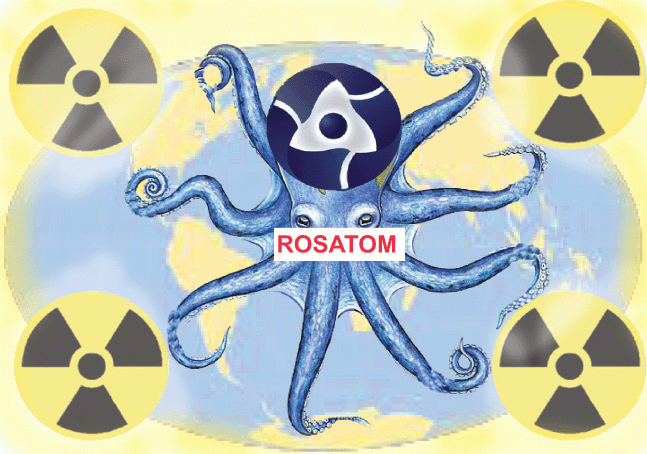
As the sabre-rattling over possible sanctions against Russia’s nuclear
industry intensifies, the country’s state-owned energy company Rosatom is
busily drumming up new business in Africa.
Last month, speaking at the
African Energy Indaba in Cape Town, Rosatom’s chief executive for central
and southern Africa, Ryan Collyer, urged the continent’s most
industrialised country, South Africa, to press go on its nuclear programme
to ensure “stable, affordable and environmentally friendly” power. It
was a message that resonated with South Africa’s energy minister Gwede
Mantashe, who said the country, which has been battling electricity
blackouts for the past 16 years, expects nuclear energy to be part of the
fix.
“The proposal to develop 2,500MW of nuclear power is not a dream —
there’s already an agreement, and the procurement capacity is being
worked on. We’re going to be investing in that capacity,” he told the
conference. While nuclear power provides about 10 per cent of electricity
generated globally, according to the Paris-based International Energy
Agency, the Koeberg plant in Cape Town is the only nuclear power station on
the African continent. Yet a number of African countries have announced
plans to build nuclear power plants in the past year — including Uganda,
Rwanda and Kenya.
FT 2nd April 2024
https://www.ft.com/content/4f1d0d1d-3a98-4b03-8771-54d88ed0a023
The Case for Nuclear Diplomacy

COMMENT. In this lengthy article about treaties – why no mention of the Treaty for the Prohibition of Nuclear Weapons (TPNW) ?
Trend Research, 04 Apr 2024, Gina Bou Serhal, Senior researcher/ Strategic Studies Section
Due to the heightened danger of the potential use of nuclear weapons – a precarious biproduct of the Russia-Ukraine conflict, the fear of nuclear war has surged to its highest levels since the era of the Cold War. Concerns over a wider conflict loom with the possibility of drawing in NATO countries – some of which possess nuclear weapons. Meanwhile, US backing for Ukraine’s war effort has further strained its relations with Russia, raising concerns that Cold War deterrence strategies, which shaped their relationship for decades, may be less effective in today’s geopolitical landscape.
As nuclear weapons proliferated throughout the Cold War, the stark reality of potential annihilation spurred the US and the Soviet Union to embark on a new era of negotiation, seeking innovative approaches to manage their deep-seated ideological and strategic rivalries. The risk of escalation and potential for nuclear conflict compelled the US and the Soviet Union to explore alternative methods of engagement, including holding regular summits with top leadership, resulting in opening direct lines of communication.
Arms control negotiations, including the Strategic Arms Limitations Talks (SALT I in 1967 and SALT II in 1972), limited the number of nuclear missiles in their respective arsenals by setting limits on intercontinental ballistic missiles (ICBMs), and limited anti-ballistic missile (ABM) defenses. Such an agreement helped prevent an unconstrained arms race, reduced the risk of miscalculation, and were considered trust-building measures geared toward de-escalating tensions. More importantly, these conducive interactions laid the groundwork for future cooperation, including the landmark 1987 Intermediate-Range Nuclear Forces (INF) Treaty, which eliminated an entire class of intermediate-range nuclear missiles.
These types of treaties are not perfect; they are typically non-binding, and are far from a guarantee in ensuring nuclear non-proliferation. Enforcement challenges and non-compliance by some nations remain. A lack of transparency also creates challenges and increases the level of distrust among nations. Furthermore, the rise of non-state actors and heightened terrorist activity globally intensify the chilling possibility of nuclear weapons falling into the wrong hands, increasing the risk of a conflict spiraling out of control.
Such dangers underscore the urgent need for continued non-proliferation efforts, even amidst deep mistrust and rising tensions among major nuclear powers, particularly the permanent members of the UN Security Council. In today’s precarious global security environment, effective nuclear diplomacy remains a critical tool to navigate the complex geopolitical landscape and prevent nuclear catastrophe. ……………………………………………………………………………………………………………………………………..
Why do states pursue nuclear weapons?
As we navigate an era of heightened geopolitical uncertainty and intensifying competition between major powers, a crucial question emerges: does the Cold War logic of nuclear deterrence still hold true? This reasoning, often referred to as Mutually Assured Destruction (MAD), suggests that nuclear-armed states with similar capabilities are unlikely to attack each other for fear of devastating retaliation. According to this logic, nuclear weapons can prevent large-scale war and promote stability. International Relations realist scholar Kenneth Waltz who famously stated “those who like peace should love nuclear weapons,” believes this rationale explains the relative peace during the Cold War.
There remain two overarching arguments as to why states may look to obtain nuclear weapons, despite their obvious potential for mass destruction – not to mention the economic and political baggage. First, nuclear weapons are seen as the ultimate guarantor of security. No nuclear-armed state has ever faced a full-scale conventional war with another nuclear power (except for India and Pakistan, who have fought several wars over Kashmir). This historical trend fuels the perception that nuclear weapons provide a shield against existential threats. Secondly, nuclear weapons carry a powerful symbolic weight. Possession elevates a state’s international standing and prestige. It is no coincidence that all five permanent members of the UN Security Council, the most powerful decision-making body in the world, are nuclear-armed nations………………………………………………………………………………………………………………………………………..
Challenges to global non-proliferation efforts: treaty withdrawals
The Cold War fostered a tense environment where both the US and the Soviet Union rapidly developed nuclear weapons. This arms race gave rise to the concept of nuclear deterrence – a defense strategy that relies on the premise that nuclear powers will never launch a full-scale nuclear attack because such a conflict would be devastating for both sides.[16] To mitigate the risk of accidental escalation and limit the number of nuclear-armed nations, treaties became a crucial tool for managing this precarious new global reality.
The Non-Proliferation Treaty………………………………………………………………
Intermediate-Range Nuclear Forces Treaty…………………………………………
The New START Treaty……………………………………………
………………………………………….Inaction on nuclear diplomacy can lead to a dangerous cascade of consequences. At one extreme lies nuclear proliferation, potentially culminating in a devastating war. However, a more likely scenario is the normalization of performative nuclear threats and brinkmanship by the international community. This passive approach to nuclear saber-rattling increases the risk of miscalculation. Leaders desensitized to such threats might underestimate their seriousness, potentially leading to the erosion of deterrence – the concept that has prevented nuclear war for over 70 years. https://trendsresearch.org/insight/the-case-for-nuclear-diplomacy/
UKRAINIAN WAR PEACE TALKS: To Be or Not To Be?
Russian and Eurasian Politics by GORDONHAHN, April 2, 2024
Despite Western media reports over recent months and weeks regarding supposed secret talks between Westerners and Russians to settle or at least stop the NATO-Russia Ukrainian War, there are no such talks ongoing. But this does not mean that they cannot emerge.
First we heard of supposedly secret talks between Ukrainian Armed Forces General Staff Chief Gen. Valeriy Zaluzhniy and Russian General Staff Chief Gen. Valerii Gerasimov. Then there were Russian President Vladimir Putin’s alleged ‘signals’ indicating that he seeks negotiations. In reality, there are no peace talks underway between Russia, on the one hand, and the West and/or Ukraine, on the other hand. There are no signals that Putin is seeking negotiations. Although he is willing to hold talks, he expects that any negotiations be requested first by the West and/or Ukrainian President Volodomyr Zelenskiy. The New York Times piece about ‘Putin’s signals’ published just before Christmas was nothing more than another attempt to portray Russia and Putin as ‘losing the war’ and desperate for an exit ramp, and it was nothing less than a contribution in support of US President Joseph Biden’s desperate re-election prospects as the American presidential campaign is about to kickoff.
Nothing could be further from the truth than the tale of Russian desperation told since the war began. This is most evident now for anyone following the recent course of events on the front; a front that is collapsing on the Ukrainian side. In Zelenskiy’s eternal PR mode, the Ukrainian front’s collapse will be framed as an orderly retreat to new defense lines and part of a new defensive strategy replacing the offensive one that so ignominiously failed with this summer’s predictably disastrous counteroffensive. Nevertheless, the hard, cold realities of the summer campaign’s defeat following the fall of the strategic hub of Bakhmut (Artyomevsk) and preceding the fall of the heavily fortified town of Avdiivka (Avdeevka) are trumping Zelenskiy’s simulated reality productions both in the West and Ukraine ever so gradually.
As Russian forces slowly but but surely advance westward across the entire front ranging from Zaporozhe (and perhaps soon Kherson) to Kharkov — an advance that is likely to accelerate in spring and summer, the Kremlin has no burning need to negotiate. To be sure, Moscow would prefer ending the war, but on its own terms. The longer Washington, Brussels, and Kiev refuse negotiations, the more fluid the situation becomes and the less likely Moscow will be easy to negotiate with before its forces reach the Dnieper River. Some Russian officials are trumpeting a hard line. For example, a month ago Russian ambassador to the UN Dmitri Polyanskiy said that Kiev’s chance for talks had passed and now only capitulation talks are possible (https://t.me/RusskajaIdea/5265 and https://t.me/Slavyangrad/79622).
But Putin appears open to talks. However, he certainly is not desperate for them and may prefer holding off until more Ukrainian military force and territory is attritted. He has indicated numerous times since the war began that he is open to talks…………………..
The lack of talks is best explained by the West’s and Ukraine’s unwillingness to negotiate. In fact, since December 2022 Ukrainian law forbids Ukrainians from conducting peace talks with Putin’s Russia. The U.S. has apparently held to its proclaimed policy of ‘no talks about Ukraine without Ukraine’ at least in terms of any peace negotiations, though the US’s CIA chief, William Burns, and his Russian counterpart, SVR chief Sergei Narynskii met a few months back for discussions on undisclosed issues.
Therefore, Zelenskiy consistently rejects talks until such time as Russia has withdrawn all of its troops beyond Ukraine’s 1991 borders—the core of his supposed ‘peace plan.’ Obviously, without defeat on the battlefield Russia will not give up Crimea and the four oblasts it now considers to be its sovereign territory. Recently, Zelenskiy rejected negotiations out of hand. Several weeks ago, visiting Turkey, Zelenskiy spurned Turkish President Tayyip Recep Erdogan’s entreaties to start talks with Moscow under Ankara’s mediation…………………………………………………………………………. https://gordonhahn.com/2024/04/02/ukrainian-war-peace-talks-to-be-or-not-to-be/—
Xi Jinping’s Thoughts on China’s Nuclear Weapons

Xi noted the increased readiness those new silos might provide was necessary to prepare to respond to foreign military intervention. That sounds more defensive than aggressive. ……………….. China’s long-standing commitment not to use nuclear weapons first at any time or under any circumstances.
UCS is concerned about the future direction of Chinese nuclear weapons policy. We agree with Gen. Cotton that “the PRC’s long-term nuclear strategy and requirements remain unclear.” We urge influential US voices, including the media, to refrain from encouraging the public, and especially US decision-makers, to jump to conclusions the available evidence does not support. We also urge the Biden administration, and the US Congress, to wait until they have a clearer understanding of Chinese nuclear thinking before making precipitous decisions about the future of the US nuclear arsenal.
April 1, 2024, Gregory Kulacki, China Project Manager, This blog was co-authored with UCS China analyst Robert Rust. https://blog.ucsusa.org/gregory-kulacki/xi-jinpings-thoughts-on-chinas-nuclear-weapons/
Last month UCS published a critique of a New York Times article that claimed Chinese military strategists, “are looking to nuclear weapons as not only a defensive shield, but as a potential sword — to intimidate and subjugate adversaries.” We examined the evidence and found it did not support that claim.
However, there was one piece of evidence in the article we could not examine; a speech by Chinese leader Xi Jinping to China’s Second Artillery in December of 2012. It operates China’s conventional and nuclear missiles and was renamed the People’s Liberation Army Rocket Force in 2016. We’ve since obtained a copy of that speech and found it doesn’t support the New York Times claim either. There is no language in Xi’s speech that suggests he thinks about the purpose of China’s nuclear arsenal differently than his predecessors.
We posted the original Chinese text with an English translation. It is classified as an “internal publication” that should be “handled with care.” It was printed and distributed to all Chinese military officers at the regimental level and above by the General Political Department of the People’s Liberation Army (PLA) in February 2014.
Why is this speech worth reading?
UCS first learned about the speech ten years ago when a Chinese colleague drew our attention to language in a commentary on the speech by generals Wei Fenghe and Zhang Haiyang, the commander and party secretary of the Second Artillery at the time. Our colleague noticed it contained new language describing the alert level of Chinese missiles. He thought the two officers might be trying to influence Xi’s thinking. UCS took note of that the new language in our 2016 report on a possible change in China’s nuclear posture.
That report concluded China may shift some of its nuclear forces to what is called a “launch on warning” or “launch under attack” alert status that would give Chinese leaders the option to launch those nuclear missiles quickly before they could be destroyed by an incoming attack. Traditionally, China kept its nuclear missile force off-alert, and the Second Artillery trained to launch a retaliatory nuclear strike only after being struck first. Currently, China is believed to keep most of its nuclear warheads in storage, separated from the missiles that carry them, to prevent an accidental or unauthorized launch.
Although China may still be moving to a launch on warning posture, the full text of Xi’s December 2012 speech, and the phrase it contains related to alert levels, reveals Xi did not discuss nuclear strategy or announce an intention to put Chinese nuclear forces on alert. He addresses more general concerns about the combat readiness, ideological orientation, and human qualities of Chinese military officers. Every Chinese head of state since 1842, when the United Kingdom defeated Imperial China in the Opium War, shared the same concerns. Xi did not say anything new, specific, or surprising. There is no language in his speech that justifies the suggestion he communicated aggressive new nuclear ambitions that day.
What did Xi say?
Continue reading1 This Month



26 September – International Day for the Total Elimination of Nuclear Weapons


PLEASE OPPOSE HR 8255 AND S.3639 – bills would accelerate satellite deployment, with no environmental review or safeguards – https://ncstd5li.quorum.us/campaign/169331/
To see nuclear-related stories in greater depth and intensity – go to https://nuclearinformation.wordpress.com
-
Archives
- September 2026 (219)
- August 2026 (330)
- July 2026 (355)
- June 2026 (287)
- May 2026 (306)
- April 2026 (356)
- March 2026 (251)
- February 2026 (267)
- January 2026 (308)
- December 2025 (358)
- November 2025 (359)
- October 2025 (375)
-
Categories
- 1
- 1 NUCLEAR ISSUES
- business and costs
- climate change
- culture and arts
- ENERGY
- environment
- health
- history
- indigenous issues
- Legal
- marketing of nuclear
- media
- opposition to nuclear
- PERSONAL STORIES
- politics
- politics international
- Religion and ethics
- safety
- secrets,lies and civil liberties
- spinbuster
- technology
- Uranium
- wastes
- weapons and war
- Women
- 2 WORLD
- ACTION
- AFRICA
- Atrocities
- AUSTRALIA
- Christina's notes
- Christina's themes
- culture and arts
- Events
- Fuk 2022
- Fuk 2023
- Fukushima 2017
- Fukushima 2018
- fukushima 2019
- Fukushima 2020
- Fukushima 2021
- general
- global warming
- Humour (God we need it)
- Nuclear
- RARE EARTHS
- Reference
- resources – print
- Resources -audiovicual
- Weekly Newsletter
- World
- World Nuclear
- YouTube
-
RSS
Entries RSS
Comments RSS
 nuclear-news