Einstein’s vision for peace

By Lawrence S. Wittner https://beyondnuclearinternational.org/2024/03/31/einsteins-vision-for-peace/
Aghast at the use of nuclear weapons, he threw himself into efforts to prevent worldwide nuclear annihilation
Although the popular new Netflix film, Einstein and the Bomb, purports to tell the story of the great physicist’s relationship to nuclear weapons, it ignores his vital role in rallying the world against nuclear catastrophe.
Aghast at the use of nuclear weapons in August 1945 to obliterate the cities of Hiroshima and Nagasaki, Einstein threw himself into efforts to prevent worldwide nuclear annihilation. In September, responding to a letter from Robert Hutchins, Chancellor of the University of Chicago, about nuclear weapons, Einstein contended that, “as long as nations demand unrestricted sovereignty, we shall undoubtedly be faced with still bigger wars, fought with bigger and technologically more advanced weapons.” Thus, “the most important task of intellectuals is to make this clear to the general public and to emphasize over and over again the need to establish a well-organized world government.”
Four days later, he made the same point to an interviewer, insisting that “the only salvation for civilization and the human race lies in the creation of a world government, with security of nations founded upon law.”
Determined to prevent nuclear war, Einstein repeatedly hammered away at the need to replace international anarchy with a federation of nations operating under international law. In October 1945, together with other prominent Americans (among them Senator J. William Fulbright, Supreme Court Justice Owen Roberts, and novelist Thomas Mann), Einstein called for a “Federal Constitution of the World.”
That November, he returned to this theme in an interview published in the Atlantic Monthly. “The release of atomic energy has not created a new problem,” he said. “It has merely made more urgent the necessity of solving an existing one. . . . As long as there are sovereign nations possessing great power, war is inevitable.” And war, sooner or later, would become nuclear war.
Given Einstein’s fame and his well-publicized efforts to avert a nuclear holocaust, in May 1946 he became chair of the newly-formed Emergency Committee of Atomic Scientists, a fundraising and policymaking arm for the atomic scientists’ movement. In the Committee’s first fund appeal, Einstein warned that “the unleashed power of the atom has changed everything save our modes of thinking, and thus we drift toward unparalleled catastrophe.”
Even so, despite the fact that Einstein, like most members of the early atomic scientists’ movement, saw world government as the best recipe for survival in the nuclear age, there seemed good reason to consider shorter-range objectives. After all, the Cold War was emerging and nations were beginning to formulate nuclear policies. An early Atomic Scientists of Chicago statement, prepared by Eugene Rabinowitch, editor of the Bulletin of the Atomic Scientists, underscored practical considerations.
“Since world government is unlikely to be achieved within the short time available before the atomic armaments race will lead to an acute danger of armed conflict,” it noted, “the establishment of international controls must be considered as a problem of immediate urgency.” Consequently, the movement increasingly worked in support of specific nuclear arms control and disarmament measures.
In the context of the heightening Cold War, however, taking even limited steps forward proved impossible. The Russian government sharply rejected the Baruch Plan for international control of atomic energy and, instead, developed its own atomic arsenal. In turn, U.S. President Harry Truman, in February 1950, announced his decision to develop a hydrogen bomb―a weapon a thousand times as powerful as its predecessor.
Naturally, the atomic scientists were deeply disturbed by this lurch toward disaster. Appearing on television, Einstein called once more for the creation of a “supra-national” government as the only “way out of the impasse.” Until then, he declared, “annihilation beckons.”
Despite the dashing of his hopes for postwar action to end the nuclear menace, Einstein lent his support over the following years to peace, nuclear disarmament, and world government projects.
The most important of these ventures occurred in 1955, when Bertrand Russell, like Einstein, a proponent of world federation, conceived the idea of issuing a public statement by a small group of the world’s most eminent scientists about the existential peril nuclear weapons brought to modern war. Asked by Russell for his support, Einstein was delighted to sign the statement and did so in one of his last actions before his death that April.
In July, Russell presented the statement to a large meeting in London, packed with representatives of the mass communications media. In the shadow of the Bomb, it read, “we have to learn to think in a new way. . . . Shall we . . . choose death because we cannot forget our quarrels? We appeal as human beings to human beings: Remember your humanity, and forget the rest.”
This Russell-Einstein Manifesto, as it became known, helped trigger a remarkable worldwide uprising against nuclear weapons in the late 1950s and early 1960s, culminating in the world’s first significant nuclear arms control measures. Furthermore, in later years, it inspired legions of activists and world leaders. Among them was the Soviet Union’s Mikhail Gorbachev, whose “new thinking,” modeled on the Manifesto, brought a dramatic end to the Cold War and fostered substantial nuclear disarmament.
The Manifesto thus provided an appropriate conclusion to Einstein’s unremitting campaign to save the world from nuclear destruction.
Lawrence S. Wittner is Professor of History Emeritus at SUNY/Albany and the author of Confronting the Bomb (Stanford University Press).
Japan confirms experts met in China to ease concerns over discharge of treated radioactive water
Japan said Sunday its experts have held talks with their Chinese
counterparts to try to assuage Beijing´s concerns over the discharge of
treated radioactive wastewater from the wrecked Fukushima Daiichi nuclear
power plant into the sea. The discharges have been opposed by fishing
groups and neighboring countries especially China, which banned all imports
of Japanese seafood. China´s move has largely affected Japanese scallop
growers and exporters to China. During the talks held Saturday in the
northeastern Chinese city of Dalian, Japanese officials provided
“science-based” explanation of how the discharges have been safely carried
out as planned, according to the Japanese Foreign Ministry.
Daily Mail 31st March 2024
IAEA Warns Of Iraq-Like Scenario For Iran Without Transparency
The UN nuclear watchdog cautions that without improved transparency on
Iran’s nuclear program, it cannot assure its peaceful nature, echoing fears
of repercussions akin to the Iraq War. In a Friday interview with PBS,
International Atomic Energy Agency (IAEA) Director General Rafael Mariano
Grossi expressed concern over Iran’s advancements in its nuclear program
alongside restrictions placed on IAEA monitoring activities. Grossi
emphasized that without full Iranian cooperation, the agency cannot verify
that its program is peaceful. The lack of visibility would be a major
setback, similar to the situation during the late 1980s and 90s in Iraq.
Iran International 30th March 2024
New NATO member Finland admits US pact ‘restricts sovereignty’
The DCA gives the American military access to 15 bases in Finland and allows the deployment of military equipment and supplies on Finnish territory, as well as the free movement of US aircraft, ships, and vehicles. Members of the US military and the facilities they use would also get special legal protections.
29 Mar 2024 https://www.sott.net/article/490230-New-NATO-member-admits-US-pact-restricts-sovereignty
A military agreement with Washington comes at a cost, Helsinki has acknowledged
A new military cooperation deal agreed with Washington will limit Helsinki’s sovereignty, the Finnish Foreign Ministry said on Thursday, advising that its ratification will therefore require a two-thirds majority in the parliament.
Finland joined NATO in April 2023, abandoning a decades-long policy of neutrality. It began negotiating a Defense Cooperation Agreement (DCA) with the US almost immediately, and signed it last December.
A working group led by the Foreign Ministry was set up to draft the ratification protocols which were formally sent to the country’s parliament for comments on Thursday, the ministry announced.
“The working group concludes that the DCA would restrict Finland’s sovereignty, which is why Parliament’s acceptance of the agreement would require a two-thirds majority of the votes cast,” the ministry press release said. The parliament has until May 12 to comment on the draft proposal.
The DCA gives the American military access to 15 bases in Finland and allows the deployment of military equipment and supplies on Finnish territory, as well as the free movement of US aircraft, ships, and vehicles. Members of the US military and the facilities they use would also get special legal protections.
When the DCA was signed, Finnish Defense Minister Antti Hakkanen said it was “a guarantee from the world’s largest military power that they will defend us.”
Russian President Vladimir Putin responded by saying that Helsinki previously enjoyed cordial relations with Moscow and had no disputes, territorial or otherwise, but chose to side with the US-led bloc anyway.
“There was no trouble. Now there will be,” Putin said in December. “We will now create the Leningrad Military District and concentrate certain military units there.”
Comment: As has happened before, the step from EU to NATO was a matter of time. The Finnish government managed to sell the concept of joining NATO, next is to improve on the level of subjugation, let the US do more of what it wants within Finland, thus moving from being a mere vassal to becoming a more fully occupied state. Finland is not alone, somewhat similar agreements have been concluded between the US and the other Nordic countries.
UN Security Council ceasefire resolution a turning point in Gaza war
March 26, 2024, by: The AIM Network, m https://theaimn.com/un-security-council-ceasefire-resolution-a-turning-point-in-gaza-war/
Australian Council for International Development Media Release
Australia’s peak body for international humanitarian organisations welcomes the United Nations Security Council’s resolution calling for an immediate ceasefire in Gaza and release of all hostages as a crucial turning point in the war.
Australian Council for International Development (ACFID) CEO Marc Purcell said it marked a significant breakthrough despite the United States’ decision to abstain from voting.
“This passage of this binding resolution, following four failed attempts since the start of the war, shows global leaders are no longer willing to accept the deaths of tens of thousands of civilians, many of them children, as collateral,” he said.
“The US’ decision to abstain is disappointing, particularly since it put forward its own failed proposal for a ceasefire just days ago. It is essential the US use its influence and relationship with Israel to obtain a permanent ceasefire.
“We are hopeful the passage of this resolution overnight marks a crucial turning point in the war that has killed nearly 32,000 civilians through bombing, starvation and dehydration.
“It is vital that both the state of Israel and militant groups immediately lay down arms to allow for the passage of humanitarian assistance, which is still being blocked from entry into Gaza, and the release of all hostages.”
ACFID is urging the Australian government to commit additional and ongoing funding for the humanitarian response in Gaza and the West bank, including for Australian non-government organisations providing lifesaving assistance.
Karma: After US vetoes 3 good UN ceasefire resolutions, its bad ceasefire resolution vetoed
Walt Zlotow, West Suburban Peace Coalition, Glen Ellyn IL , 24 Mar 24
The US watered down ceasefire resolution in Gaza failed to pass when the UN Security Council vetoed it. China, Russia and Algeria all cast vetoes compared to America’s lone veto in 3 previous non US sponsored ceasefire resolutions.
Why ‘watered down’?
It does not demand immediate ceasefire, just that ceasefire is “imperative.” It would require continued negotiations as promoted by the US designed to ensure Israeli priorities but none of the Palestinians. Nor is it permanent, with the implication that ethnic cleansing of Palestinians can continue if and when remaining hostages are released.
Furthermore, the resolution expresses no demand against, just “concern” that the impending Israeli invasion of Rafah, will cause major harm to the 1.5 million refugees sheltered there. But that’s meaningless happy talk when Netanyahu proclaims he’s ready to launch that grotesque invasion with or without US support.
So the UN is back to Square One in the effort to end Israeli’s destruction of Palestinians in Gaza, , supported and enabled by their partner in genocide, America.
A special (nuclear) relationship

Recent US policies have pursued “usable” nukes, for deployment in an increasing range of scenarios, with a bottomless pit of funding available for nuclear modernisation. The time has come to really vigorously oppose this Agreement.
It’s just not possible for the UK to have an independent foreign policy, or defence and security policies, if it remains attached at the hip to the US nuclear programme.
By Kate Hudson https://beyondnuclearinternational.org/2024/03/24/a-special-nuclear-relationship/
A little known US-UK nuclear weapons agreement is up for renewal. It needs to end instead.
The “special relationship” is a longstanding refrain in British politics, used to justify so much that’s bad in UK foreign policy choices.
I recall in 2002 when Tony Blair agreed Britain had to pay a “blood price” to secure its special relationship with the US. We all know how that ended up.
But it wasn’t Blair who paid the blood price – it was 179 British service personnel, killed in an illegal war, and hundreds of thousands of Iraqis, and countless more injured, displaced and traumatised.
Much that feeds war can be notched up to the US/UK special relationship, but it goes far beyond providing diplomatic and military cover and assistance to US enterprises.
That relationship is also responsible for the development of the UK’s nuclear arsenal and its continued possession of these weapons of mass destruction.
The special nuclear relationship is facilitated by the US-UK Mutual Defence Agreement (MDA) – the world’s most extensive nuclear sharing agreement.
Even though it comes up for renewal in parliament every ten years, few seem to know of its existence.
Neither do many know the extent to which it makes us dependent on the US – or indeed that it underpins the wider relationship between the US and UK.
Nuclear weapons
Its full name is the “Agreement between the UK and the USA for cooperation in the Uses of Atomic Energy for Mutual Defence Purposes”.
The agreement initially enabled both countries to exchange classified information to develop their respective nuclear weapon systems.
But at the start, the MDA prohibited the transfer of nuclear weapons. However, an amendment in 1959 allowed for the transfer of nuclear materials and equipment between both countries up to a certain deadline.
This amendment is extended through a renewal of the treaty every ten years, most recently in 2014 without any parliamentary debate or vote.
The British public and parliamentarians initially found out about that extension and ratification when President Obama informed the US Congress. The next renewal is due in parliament later this year, and we are determined that this time it will not go unchallenged.
Renewing such agreements on the nod, without transparency or accountability is never a good thing. When it ties us so tightly to nuclear cooperation with the White House, at a time of increasing nuclear risk, this is an even greater cause for concern.
Usable nukes
Recent US policies have pursued “usable” nukes, for deployment in an increasing range of scenarios, with a bottomless pit of funding available for nuclear modernisation. The time has come to really vigorously oppose this Agreement.
It also puts us at odds with our commitments under the international Non-Proliferation Treaty, which seeks to stem the spread of nuclear technology.
The relationship and activities which are enshrined by the MDA confirms an indefinite commitment by the US and UK to collaborate on nuclear weapons technology and violates both countries’ obligations as signatories to the NPT.
The NPT states that countries should undertake “to pursue negotiations in good faith on effective measures relating to… nuclear disarmament”. Rather than working together to get rid of their nuclear weapons, the UK and US are collaborating to further advance their respective nuclear arsenals.
Indeed, a 2004 legal advice paper by Rabinder Singh QC and Professor Christine Chinkin concluded that it is “strongly arguable that the renewal of the Mutual Defence Agreement is in breach of the nuclear Non-Proliferation Treaty”.
This was so since it implies “continuation and indeed enhancement of the nuclear programme, not progress towards its discontinuation”.
Independent foreign policy
It’s just not possible for the UK to have an independent foreign policy, or defence and security policies, if it remains attached at the hip to the US nuclear programme.
The UK government’s claim that its submarine-based Trident nuclear weapons system is independent is false. It is technically and politically dependent on the US, largely due to the MDA.
Due to the MDA, the UK relies on the US for many aspects of Trident. The UK’s nuclear warhead is a copy of the US one, with some components directly bought from the US.
With the UK’s warheads expected to be non-operational by the late 2030s, a decision on their replacement will be intrinsically linked to the work taking place as part of the MDA.
The UK leases from the US the Trident II D5 missiles it uses and British submarines must regularly visit the US base in Kings Bay, Georgia, for the maintenance and replacement of these missiles.
By having such direct involvement in Britain’s nuclear weapons technology, the US exercises significant leverage over the UK’s foreign and defence policy.
Even the most establishment characters must now be able to see that unquestioning allegiance to the US is out of the question.
So with the MDA coming up for renewal again, now is the time to start asking the questions, raising the protest, and making the case for independence.
It’s time for the special nuclear relationship to end. CND will be ensuring that the issue is raised vigorously within parliament, and calling on all our supporters to lobby their elected representatives to that effect.
Kate Hudson is General Secretary of the Campaign for Nuclear Disarmament in the UK
Israel announces latest major land grab in West Bank
24 Mar 2024, https://www.sott.net/article/490068-Israel-announces-latest-major-land-grab-in-West-Bank
A senior minister has vowed to continue backing the settlement movement, which is illegal under international law
The Israeli government has designated nearly 2,000 acres in the West Bank as state-owned land, in a move described by rights groups as the biggest land grab on occupied Palestinian territories in decades.
The expansion of Jewish settlements in the West Bank is illegal under international law. In 2016, the UN Security Council described them as “a major obstacle to the vision of two States living side-by-side in peace and security.”
Nevertheless, Finance Minister Bezalel Smotrich argued that the declaration of state-owned land in the Jordan Valley on Friday was “an important and strategic issue.”
While there are those in Israel and the world who seek to undermine our right to Judea and Samaria and the country in general, we promote the settlement movement with hard work and in a strategic manner across the country,” Smotrich said in a statement, as quoted by the Times of Israel.
According to local media, the designation of plots of land as Israeli paves a way for the construction of settler houses, as well as for commercial development.
Israeli settlement watchdog Peace Now described the declaration as the largest since the 1993 Oslo Accords, adding that “the year 2024 marks a peak in the extent of declarations of state land.”
Prime Minister Benjamin Netanyahu’s government gave the green light to the construction of more than 3,400 new settler homes this month, drawing more criticism from the UN and the Palestinian Authority.
“The West Bank is already in crisis. Yet, settler violence and settlement-related violations have reached shocking new levels, and risk eliminating any practical possibility of establishing a viable Palestinian State,” UN human rights chief Volker Turk said in his report to the Security Council on March 8.
Smotrich said in February that the expansion of settlements was a legitimate response to Palestinian terrorist attacks. “Our enemies know that any harm to us will lead to more construction and more development and more of our hold all over the country,” he wrote on X (formerly Twitter)
Comment. It’s not like Israel hasn’t made its goal plain for years.
Gaza is also being carved up
Dozens of countries pledge support for nuclear power, despite lingering concerns.

By Justine Calma, a senior science reporter covering climate change, clean energy, and environmental justice with more than a decade of experience. She is also the host of Hell or High Water: When Disaster Hits Home, a podcast from Vox Media and Audible Originals. https://www.theverge.com/2024/3/22/24108679/nuclear-energy-summit-pledge-30-countries
More than 30 countries have pledged to pursue nuclear energy as one way to meet global climate goals. Even so, nuclear energy is still a controversial energy source that’s bogged down by concerns about radioactive waste, safety, and high costs.
At a nuclear energy summit in Brussels yesterday, the countries pledged “to work to fully unlock the potential of nuclear energy by taking measures such as enabling conditions to support and competitively finance the lifetime extension of existing nuclear reactors, the construction of new nuclear power plants and the early deployment of advanced reactors,” The Associated Press reports. The US, China, Japan, France, Britain, and Saudi Arabia were among the 34 countries to sign the pledge.
It’s a bold statement to support a source of energy over which many governments and environmental groups are deeply divided. Nuclear energy doesn’t generate the greenhouse gas emissions heating up the planet, but the environmental footprint of its supply chain and waste creates other problems. And after decades of missteps, the technology still has to prove whether it can be an affordable, safe alternative to the fossil fuels causing climate change.
Nearly every nation on Earth has committed to fighting climate change as part of the Paris agreement. That requires a transition from fossil fuels to clean energy over the next few decades. Fortunately, renewables like solar and wind energy are already cheaper than coal and gas and are forecast to make up a majority of new electricity sources deployed in coming years. The challenge is in finding backup energy sources for times when winds die down and the sun sets.
Proponents of nuclear energy say it’s the perfect complement to renewables since nuclear reactors are able to generate electricity around the clock. “Nuclear energy is indispensable along with renewable energy … We must devise strategy to attract further investment which is necessary to enhance the use of nuclear energy,” Japan’s Parliamentary Vice-Minister for Foreign Affairs Komura Masahiro said during the Nuclear Energy Summit held yesterday by the International Atomic Energy Agency (IAEA).
It’s a remarkable turnaround from fears stoked more than a decade ago when an earthquake and tsunami triggered a catastrophic meltdown at the Fukushima Daiichi Nuclear Power Station in Japan. In December, Japan was one of more than 20 countries that agreed to triple renewable energy capacity globally by 2050. The country still plans to prioritize renewable energy, Masahiro said, and “at the same time, Japan will continuously reflect upon the lessons from the accident at the Fukushima Daiichi Nuclear Power Station and ensure that the use of nuclear power places safety as its top priority.”
There’s still skepticism over whether a nuclear renaissance is a good idea. Existing reactors and the radioactive waste they produce still pose risks. IAEA Director General Rafael Mariano Grossi has tried to broker agreements between Russia and Ukraine to prevent a meltdown at Ukraine’s Zaporizhzhya Nuclear Power Plant amid the ongoing war. In the US, tribes and environmental advocates have fought to stop a resurgence of uranium mining that has a legacy of polluting water sources in the past.
At the summit, John Podesta, US senior adviser to the president for clean energy innovation and implementation, touted the construction of the country’s first completely new power plant in decades. The Vogtle Unit 3 reactor in Georgia finally started operating last year, no less than $17 billion over budget after seven years of delays.
Next-generation nuclear reactors are supposed to be easier and cheaper to build. But they haven’t overcome the radioactive waste problem. They’ll require more highly enriched uranium, of which Russia has been the largest supplier. And a key demonstration project using advanced small modular reactors in Utah was canceled in November after costs soared.
Protesters with the environmental group Greenpeace attempted to block roads leading to the Nuclear Energy Summit yesterday, claiming they were able to delay the arrival of some delegates.
“All the evidence shows that nuclear power is too slow to build, too expensive, and it remains highly polluting and dangerous,” Greenpeace EU senior campaigner Lorelei Limousin said. “We are in a climate emergency, so time is precious, and the governments here today are wasting it with nuclear energy fairy tales.”
UN Chief: Nuclear Risk Highest in Decades, Calls for Disarmament

The United Nations. https://www.miragenews.com/un-chief-nuclear-risk-highest-in-decades-calls-1197216/–– 18 Mar 24
Almost 80 years after the incineration of the Japanese cities of Hiroshima and Nagasaki, nuclear weapons still represent a clear and present danger to global peace and security, UN Secretary-General António Guterres told the Security Council on Monday.
Calling for disarmament now, he urged States with nuclear arsenals to lead the way across six areas for action that include dialogue and accountability.
“Nuclear weapons are the most destructive weapons ever invented, capable of eliminating all life on earth. Today, these weapons are growing in power, range and stealth. An accidental launch is one mistake, one miscalculation, one rash act away,” he warned.
Doomsday Clock ticking loudly
The meeting on nuclear disarmament and non-proliferation was convened by Japan, Security Council president for March and, as Mr. Guterres noted, the only country that knows better than any other “the brutal cost of nuclear carnage.”
It was being held at a time “when geopolitical tensions and mistrust have escalated the risk of nuclear warfare to its highest point in decades.”
He said the Doomsday Clock – the symbol for humanity’s proximity to self-destruction – “is ticking loudly enough for all to hear”.
Meanwhile, academics and civil society groups, to Pope Francis, youth, and the survivors of Hiroshima and Nagasaki, known as Hibakusha, have been clamouring for peace and an end to the existential threat.
No ‘Oppenheimer’ sequel
Even the Oscar-winning Hollywood film Oppenheimer “brought the harsh reality of nuclear doomsday to vivid life for millions around the world,” he said, adding that “humanity cannot survive a sequel”.
Despite these appeals for the world to step back from the brink, “States possessing nuclear weapons are absent from the table of dialogue,” he said, while “investments in the tools of war are outstripping investments in the tools of peace.”
Mr. Guterres stressed that disarmament is the only path to “vanquish this senseless and suicidal shadow, once and for all.”
Dialogue and confidence-building
He appealed to States armed with nuclear weapons to take the lead in six areas, starting with re-engaging in dialogue to develop transparency and confidence-building measures to prevent any use of a nuclear weapon.
“Second, nuclear saber-rattling must stop,” he said. “Threats to use nuclear weapons in any capacity are unacceptable.”
Nuclear weapon States must also re-affirm moratoria on nuclear testing, which includes pledging to avoid actions that would undermine the 1996 Comprehensive Nuclear-Test-Ban Treaty (CTBT), whose entry-into-force must be priority.
From commitment to action
Furthermore, disarmament commitments must become action, together with accountability, under the Treaty on the Non-Proliferation of Nuclear Weapons (NPT). The landmark accord, signed more than 50 years ago, is the only binding commitment to the goal of disarmament by States which officially stockpile nuclear weapons.
The Secretary-General also highlighted the need for a joint first-use agreement. “Nuclear weapon States must urgently agree that none of them will be the first to use nuclear weapons. As a matter of fact, none should use them in any circumstances,” he said.
Reducing stockpiles
Finally, he called for reductions in the number of nuclear weapons. In this regard, he urged the United States and Russia – the world’s largest nuclear weapons holders – to take the lead and also find a way back to negotiations towards the full implementation of the New START Treaty and agree on its successor.
Mr. Guterres also pointed to the responsibility of non-nuclear weapon States to fulfil their own non-proliferation obligations and to support disarmament efforts.
He said the Security Council also has a leadership role, including “to look beyond today’s divisions, and state clearly that living with the existential threat of nuclear weapons is unacceptable.”
A chance to break the nuclear links – Kate Hudson, CND

,
https://labouroutlook.org/2024/03/17/a-chance-to-break-the-nuclear-links-kate-hudson-cnd/
“It’s just not possible for the UK to have an independent foreign policy, or defence and security policies, if it remains attached at the hip to the US nuclear programme.”
By Kate Hudson, Campaign for Nuclear Disarmament (CND)
Whoever is in the White House after the upcoming presidential election, one thing is clear: Britain has to break its ‘special nuclear relationship’ with the US. We’re all familiar with the so-called ‘special relationship’, basically tying Britain into really bad foreign policy decisions. But not so many people know about the US-UK Mutual Defence
Agreement (MDA) – the world’s most extensive nuclear sharing agreement.
Known in full as the ‘Agreement between the UK and the USA for cooperation in the Uses of Atomic Energy for Mutual Defence Purposes’, the treaty initially established an agreement between both countries to exchange classified information to develop their respective nuclear weapon systems.
At the start, the MDA prohibited the transfer of nuclear weapons, but an amendment in 1959 allowed for the transfer of nuclear materials and equipment between both countries up to a certain deadline.
This amendment is extended through a renewal of the treaty every ten years, most recently in2014 – without any parliamentary debate or vote. The British public and parliamentarians initially found out about that extension and ratification when President Obama informed the United States Congress.
Renewing such agreements on the nod, without transparency or accountability, is never a good thing. When it ties us so tightly to nuclear cooperation with the White House this is an even greater cause for concern. The time has come to really vigorously oppose this Agreement.
It also puts us at odds with our commitments under the NPT: the MDA confirms an indefinite commitment by the US and UK to collaborate on nuclear weapons technology and violates both countries’ obligations as signatories to the NPT. The NPT states that countries should undertake ‘to pursue negotiations in good faith on effective measures relating to… nuclear disarmament’.
Rather than working together to get rid of their nuclear weapons, the UK and US are collaborating on further advancing their nuclear arsenals. Indeed, a 2004 legal advice paper by Rabinder Singh QC and Professor Christine Chinkin concluded that it is ‘strongly arguable that the renewal of the Mutual Defence Agreement is in breach of the nuclear Non-Proliferation Treaty’, as it implies ‘continuation and indeed enhancement of thenuclear programme, not progress towards its discontinuation’.
On every level the MDA must be challenged. It’s just not possible for the UK to have an independent foreign policy, or defence and security policies, if it remains attached at the hip to the US nuclear programme. When the US seems hell-bent on taking us into war after war, unquestioning allegiance from the UK cannot continue.
The MDA is up for renewal again this year. Now is the time to start asking the questions, raising the protest,and making the case for independence. It’s time for the special nuclear relationship to end. Watch this space!
US and Japan seek UN resolution calling on all nations to ban nuclear weapons in outer space
The United States and Japan are sponsoring a U.N. Security Council resolution calling on nations not to deploy or develop nuclear weapons in space
ByEDITH M. LEDERER Associated Press, March 19, 2024,
UNITED NATIONS — The United States and Japan are sponsoring a U.N. Security Council resolution calling on all nations not to deploy or develop nuclear weapons in space, the U.S. ambassador announced Monday.
Linda Thomas-Greenfield told a U.N. Security Council meeting that “any placement of nuclear weapons into orbit around the Earth would be unprecedented, dangerous, and unacceptable.”
The announcement that the U.S. and Japan had circulated a resolution follows White House confirmation last month that Russia has obtained a “troubling” anti-satellite weapon capability, although such a weapon is not operational yet.
Russian President Vladimir Putin declared later that Moscow has no intention of deploying nuclear weapons in space, claiming that the country has only developed space capabilities similar to those of the U.S.
The Outer Space Treaty ratified by about 114 countries including the United States and Russia prohibits the deployment of “nuclear weapons or any other kinds of weapons of mass destruction” in orbit or the stationing of “weapons in outer space in any other manner.”
Japan’s Foreign Minister Yoko Kamikawa, who chaired the council meeting, said that even during “the confrontational environment” of the Cold War, the rivals agreed to ensure that outer space remained peaceful. That prohibition on putting any weapons of mass destruction into orbit must be upheld today, she said.
Thomas-Greenfield said all parties to the treaty must commit to the ban on nuclear and other destructive weapons, “and we must urge all member states who are not yet party to it to accede to it without delay.”
She said the United States looks forward to engaging with the other members of the 15-nation Security Council “to forge consensus around this text.”…………………………………………………………………………………………………….
more https://abcnews.go.com/US/wireStory/us-japan-seek-resolution-calling-nations-ban-nuclear-108261129
As ‘Oppenheimer’ wins big, we should worry about lowering of nuclear thresholds
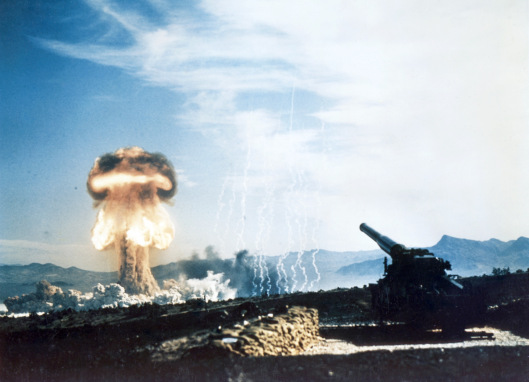

Amid rising global volatility and technological uncertainty, it’s imperative for states to explore non-nuclear solutions that emphasize international cooperation, diplomacy and societal resilience. And there’s an opportunity here for the U.K. and the U.S. to lead the way in international law and treaties that respond to non-nuclear strategic threats more effectively.
Just as Oppenheimer challenged Truman on U.S. nuclear strategy, we too must challenge our leaders’ attachment to nukes.
March 18, 2024 By Sophie-Jade Taylor and Graham Stacey Sophie-Jade Taylor is a senior network development and communications manager at the European Leadership Network nonprofit. Retired Air Marshall Sir Graham Stacey is a senior consulting fellow at the European Leadership Network. https://www.politico.eu/article/oppenheimer-win-awards-oscar-bafta-golden-globe-worry-about-lower-nuclear-thresholds/
Last summer, director Christopher Nolan’s “Oppenheimer” captivated the global public, making history as the highest ever grossing biopic. And having already won big at the Golden Globes and the BAFTAs, the film closed awards season by sweeping the Oscars last weekend.
The film brought fresh awareness of the unique, destructive power that J. Robert Oppenheimer’s creation unleashed. The first and only nuclear weapons ever used — the “Little Boy” dropped on Hiroshima and the “Fat Man” on Nagasaki — packed the equivalent of 15,000 and 21,000 tons of TNT respectively, killing over 100,000 people and causing long-term health, psychological, economic and environmental damage.
By comparison, the world’s most powerful nukes today yield over 1.2 megatons of TNT — 60 times more than Oppenheimer’s bombs.
And much like Oppenheimer, General Leslie Groves and then U.S. President Harry S. Truman, today’s leaders once again find themselves facing huge moral and strategic choices at the dawn of a new technological age. The full weight of nuclear devastation lies in the hands of just a select few. Their decisions have profound implications for humanity — and this shouldn’t be left to chance.
Recognizing the unimaginable horror a modern nuclear conflict would unleash, as recently as January 2022, all five leaders of the nuclear weapons states reaffirmed that a nuclear war couldn’t be won and must never be fought.
Yet, we have been witnessing Russian President Vladimir Putin’s irresponsible nuclear saber-rattling around Russia’s full-scale invasion of Ukraine. There have been worrying reports of rock-bottom thresholds for nuclear use — with enemy incursion into territory, the destruction of strategic weapons delivery systems, and even conventional weapons use deemed as posing an existential threat to Russian statehood.
And though Moscow outwardly rejects the policy, such ambiguity seemingly points toward communicating “first strike” capabilities, which rightly should be condemned and carefully assessed.
On the other hand, China continues to push states for political commitments toward the universalization of a No First Use Policy, while also furthering the development of its own arsenal under a worrying lack of transparency — a dilemma that has added complexity to an already intricate and perilous geopolitical chessboard.
Meanwhile, in the West — seemingly without much public discussion or comment — we’ve seen a worrying trend in declarations that states could use nuclear weapons to deter “non-nuclear threats,” again lowering the so-called nuclear threshold in an attempt to provide a quick fix to nuanced challenges.
At this very critical moment, “Oppenheimer” has brought discussions of nuclear weapons back into the public arena. And while the attention will undoubtedly recede, ongoing public engagement on these issues must not. Civic engagement shapes policymaking, and at a time of rising nuclear risks and growing temptation for states to become more reliant on their nuclear weapons, the public deserves a better understanding of when and why a catastrophic weapon may be deployed.
For example, in 2021, the British government stated that while it wouldn’t use nuclear weapons against any non-nuclear weapon state, it remained open to reviewing its policy should any threat from “emerging technologies” with “comparable impact” make nuclear weapon use necessary. Similarly, in 2022, the U.S. declared that the aim of its nuclear arsenal was to deter both nuclear and non-nuclear “strategic-level attacks.” Problematically, however, neither the U.K. nor the U.S. have detailed what “comparable impact” or “strategic-level attack” may mean.
These policies not only lower the nuclear-use threshold and increase global nuclear risks, but they may not even be feasib
While it’s near impossible for a nuclear strike to go undetected, the same isn’t true for emerging technologies such as AI and autonomous systems. By their very design, these technologies are largely democratized and untied to a single government. For instance, the challenge of attribution in cyber is well-documented, and while cyber-attacks have been linked to state-sponsored hacking groups, these groups couldn’t be easily deterred by the threat of a nuclear strike.e, given most contemporary threats against states now sit outside the military realm.
Increasing the already harrowing role of nuclear weapons in foreign policy undermines the moral and legal position of nuclear weapons states. The logic and evidence behind the current U.K. and U.S. policies of relying on nuclear weapons as a panacea must be subject to greater public and parliamentary scrutiny — as should be the case with open democracies who say they have transparent nuclear policies.
Amid rising global volatility and technological uncertainty, it’s imperative for states to explore non-nuclear solutions that emphasize international cooperation, diplomacy and societal resilience. And there’s an opportunity here for the U.K. and the U.S. to lead the way in international law and treaties that respond to non-nuclear strategic threats more effectively.
Instead of resorting to old playbooks, both policymakers and the public must appreciate that emerging technologies require a new mindset in their management and new legal constructs to regulate their proliferation, development and control. Recent international efforts like last November’s Bletchley AI Safety Summit and the agreement to begin a dialogue on AI risks by U.S. President Joe Biden and Chinese President Xi Jinping are important first steps. But much more needs to be done.
Just as Oppenheimer, haunted by his role in the bombings of Hiroshima and Nagasaki, challenged Truman on U.S. nuclear strategy, we too must challenge our leaders’ continued attachment to nukes — weapons that can only destroy — and push toward more diplomacy and resilience-based solutions to today’s complex challenges.
Former Prime Minister Turnbull says Australia ‘mugged by reality’ on Aukus deal as US set to halve submarine build

“Australian taxpayers should not be footing the bill for America’s dockyards.
We are on the hook to the tune of $3bn as soon as next year as a downpayment for subs that might never arrive and be useless on delivery,”
Former PM says the reality is the US will not make their submarine deficit worse by giving or selling submarines to Australia
Amy Remeikis, Wed 13 Mar 2024 , https://www.theguardian.com/world/2024/mar/13/turnbull-says-australia-mugged-by-reality-on-aukus-deal-as-us-set-to-halve-submarine-build
Australian taxpayers should not be footing the bill for America’s dockyards.
We are on the hook to the tune of $3bn as soon as next year as a downpayment for subs that might never arrive and be useless on delivery,”
The former prime minister Malcolm Turnbull said Australia has been “mugged by reality” over the Aukus submarine deal after the US announced it will halve the number of submarines it will build next year, throwing the Australia end of the agreement into doubt.
With the US president, Joe Biden, continuing to face a hostile Congress, the Pentagon budget draft request includes construction of just one Virginia-class nuclear submarine for 2025.
Under the Aukus agreement, production is meant to be ramped up to ensure Australia will have access to at least three Virginia-class submarines from the US in the 2030s. That is to fill a “capability gap” before nuclear-powered submarines to be built in Adelaide enter into service from the 2040s.
The prime minister, Anthony Albanese, played down the impact of the US budget announcement, insisting that “our plans are very clear”.
“We have an agreement that was reached with the United States and the UK,” Albanese told reporters in Darwin on Wednesday. “That legislation went through the US Congress last year. That was a product of a lot of hard work.”
The defence minister, Richard Marles, said earlier that the US remained committed to the deal.
“As we approach the one-year anniversary of Aukus, Australia, the United States and United Kingdom remain steadfast in our commitment to the pathway announced last March, which will see Australia acquire conventionally armed, nuclear-powered submarines,” he said.
“All three Aukus partners are working at pace to integrate our industrial bases and to realise this historic initiative between our countries.”
Greens senator David Shoebridge, who has been critical of the Aukus deal from the start, said the US budget announcement was the beginning of the end of Aukus.
“When the US passed the law to set up Aukus, they put in kill switches, one of which allowed the US to not transfer the submarines if doing so would ‘degrade the US undersea capabilities’. Budgeting for one submarine all but guarantees this,” he said on X.
4/ The failure is almost too big to wrap your head around.
We are providing billions of dollars to the US, have given up an independent foreign policy and made Australia a parking lot for US weapons. In exchange, we get nothing.
Nothing but a big target and empty pockets.— David Shoebridge (@DavidShoebridge) March 12, 2024
The US budget does include increased spending on the submarine industrial base, which was a key component of the Aukus pillar one deal, as it laid the groundwork to increase production in the coming years.
But Turnbull, an architect of the French submarine deal which was unceremoniously dumped by the Morrison government in favour of the Aukus deal, said Australia was now at the mercy of the United States for a key part of its defence strategy.
He said that the US needed to increase submarine production to meet its own needs before it was able to transfer boats to Australia, but were now only producing about half as many that were needed for the US navy and were struggling to maintain the boats they held, due to labour shortages.
“What does that mean for Australia? It means because the Morrison government, adopted by Albanese, has basically abandoned our sovereignty in terms of submarines, we are completely dependent on what happens in the United States as to whether we get them now,” he told ABC radio.
“The reality is the Americans are not going to make their submarine deficit worse than it is already by giving or selling submarines to Australia and the Aukus legislation actually sets that out quite specifically.skip past newsletter promotion
“So you know, this is really a case of us being mugged by reality. I mean, there’s a lot of Aukus cheerleaders, and anyone that has any criticism of Aukus is almost described as being unpatriotic. We’ve got to be realistic here.”
The ALP grassroots activist group, Labor Against War, want the Albanese government to freeze Aukus payments to the US so as not to “underwrite the US navy industrial shipyards”.
The national convenor of Labor Against War, Marcus Strom, said Australian taxpayers should not be footing the bill for America’s dockyards.
We are on the hook to the tune of $3bn as soon as next year as a downpayment for subs that might never arrive and be useless on delivery,” he said.
“This Labor government managed to junk Scott Morrison’s tax plan. Why would it be so stupid to continue with his war plan?”
While the Pentagon has sought to assure Australia its submarine production will be back on track by 2028, the looming threat of Donald Trump returning to the White House has raised further concerns the deal will be scuttled.
“On Aukus pillar 1 we are effectively in conflict with the needs of the US navy, and you know as well as I do the American government, when it comes to a choice between the needs of the US navy and the Australian navy, are always going to back their own,” Turnbull said.
Marles has previously denied Aukus will erode Australia’s sovereignty. In a speech to parliament last year, Marles said Australia would “always make sovereign, independent decisions on how our capabilities are employed”.
Additional reporting by Daniel Hurst
They’re Really Going To Try To Lay All The Blame For Gaza On Netanyahu

They’re really going to try to pin all the blame for the incineration of Gaza on Benjamin Netanyahu so that nothing has to change when this is over. The western empire has chosen a single scapegoat to carry away its sins so the status quo can march on unhindered by guilt or consequence.
They want everyone to pin all the blame for the Gaza genocide on Netanyahu, but this is not all the fault of Netanyahu. It’s the fault of the entire Israeli state. It’s the fault of Joe Biden. It’s the fault of the Democrats. It’s the fault of all the Israel supporters on Capitol Hill. It’s the fault of the western press. It’s the fault of the Israel lobby. It’s the fault of the unelected empire managers in US government agencies. It’s the fault of the entire US empire and all its imperial member states like Australia, the UK, the EU, and Canada.
By trying to make this mass atrocity solely the fault of Netanyahu and not the giant, sprawling network of immensely powerful institutions which made it possible, they’re working to ensure that no changes will need to be made to any of those institutions. It’s just like how they made a scapegoat of Judith Miller for the entire mass media’s war propaganda in the lead-up to the Iraq invasion and let all the blame for the war hang on Bush (before completely rehabilitating Bush’s image during the Trump administration and deciding he’s a pretty great guy after all). No meaningful changes were ever made to ensure that the US power alliance never repeats its horrible crimes after Iraq, which is why it keeps repeating horrible crimes.
The trouble with Israel apologia on Gaza is that at first glance its talking points sound legit if you don’t know much about Israel-Palestine. “Israel has a right to defend itself”, “They need to get rid Hamas because of October 7” etc would sound entirely reasonable if you didn’t know that Israel is a settler-colonialist apartheid state who has been murdering, abusing and stealing from the indigenous population of the land for generations.
The amount of energy needed to see through the talking points is far greater than the amount of energy needed to speak them — it’s one of those “A lie gets halfway around the world before the truth even gets its pants on” kind of deals. Which is why it’s miraculous that so many people around the world are getting educated enough to see through the lies and support the Palestinians.
How are they getting educated enough? Mostly through online content which sums up the situation quickly and concisely enough for them to understand easily. That’s the only way the truth can move quickly enough to catch up with the lies. And that’s the role TikTok has played here, which is why we’ve seen Israel lobbyists and the ADL shrieking their lungs out about it for months.
It would never have occurred to any American to think TikTok is a five-alarm foreign enemy threat until their government told them to think that, and then when they did the biggest bootlickers in the world started acting like it’s just a common sense fact they’ve always believed.
Americans who’d trust their own government to oversee their communications more than they’d trust China have missed all the most important lessons about the US government that have come out in their lives. Even if China really is getting data from TikTok (and there’s currently no evidence that it is), only a groveling empire simp would object to it.
Saying TikTok must be suppressing pro-Israel content because pro-Palestine content is more popular is like saying they’re suppressing flat earth content because round earth content is more popular. Pro-Israel content is just less popular in general, which is why the gap is the same on Facebook and Instagram.
❖
The US government is like “No no it’s not censorship, we’re just using state power to ensure that popular speech platforms are only allowed to exist if they can be controlled by US government agencies.”
Israel has done so much fucked up shit in the last few days we’ve already forgotten the news that they literally tortured UN staff to extract false statements about UNRWA having Hamas connections.
They. Tortured. UN. Staff. If we had anything remotely like objective news reporting in the western press, this would have been the top story everywhere for days.
❖
Once you see how evil Israel’s actions are you start to understand why its defenders need to resort to just calling anyone who criticizes Israel a Jew-hater.
❖When Israel apologists say “antisemite” it’s just a meaningless noise made to hurt the feelings of the person it’s said to. Once you realize this it starts to land in exactly the same way as any other infantile name-calling from anyone else who’s lost the argument.
1 This Month



26 September – International Day for the Total Elimination of Nuclear Weapons


PLEASE OPPOSE HR 8255 AND S.3639 – bills would accelerate satellite deployment, with no environmental review or safeguards – https://ncstd5li.quorum.us/campaign/169331/
To see nuclear-related stories in greater depth and intensity – go to https://nuclearinformation.wordpress.com
-
Archives
- September 2026 (219)
- August 2026 (330)
- July 2026 (355)
- June 2026 (287)
- May 2026 (306)
- April 2026 (356)
- March 2026 (251)
- February 2026 (267)
- January 2026 (308)
- December 2025 (358)
- November 2025 (359)
- October 2025 (375)
-
Categories
- 1
- 1 NUCLEAR ISSUES
- business and costs
- climate change
- culture and arts
- ENERGY
- environment
- health
- history
- indigenous issues
- Legal
- marketing of nuclear
- media
- opposition to nuclear
- PERSONAL STORIES
- politics
- politics international
- Religion and ethics
- safety
- secrets,lies and civil liberties
- spinbuster
- technology
- Uranium
- wastes
- weapons and war
- Women
- 2 WORLD
- ACTION
- AFRICA
- Atrocities
- AUSTRALIA
- Christina's notes
- Christina's themes
- culture and arts
- Events
- Fuk 2022
- Fuk 2023
- Fukushima 2017
- Fukushima 2018
- fukushima 2019
- Fukushima 2020
- Fukushima 2021
- general
- global warming
- Humour (God we need it)
- Nuclear
- RARE EARTHS
- Reference
- resources – print
- Resources -audiovicual
- Weekly Newsletter
- World
- World Nuclear
- YouTube
-
RSS
Entries RSS
Comments RSS
 nuclear-news