Russia to withdraw form Open Skies Treaty, EU concerned
Biden works a weakened U.S. hand to negotiate way back into Iran nuclear deal
President Donald Trump worked to blow up the multinational deal to contain Iran’s nuclear program during his four years in office, gutting the diplomatic achievement of predecessor Barack Obama in favour of what Trump called a maximum pressure campaign against Iran.
Down to Trump’s last days in office, accusations, threats and still more sanctions by Trump and Secretary of State Mike Pompeo, and Iran’s decision to spur uranium enrichment and seize a South Korean tanker, are helping to keep alive worries that regional conflict will erupt. Iran on Friday staged drills, hurling volleys of ballistic missiles and smashing drones into targets, further raising pressure on the incoming American president over a nuclear accord.
Even before the Capitol riot this month, upheaval at home threatened to weaken the U.S. hand internationally, including in the Middle East’s nuclear standoff. Political divisions are fierce, thousands are dying in the pandemic and unemployment remains high.
Biden and his team will face allies and adversaries wondering how much attention and resolution the U.S. can bring to bear on the Iran nuclear issue or any other foreign concern, and whether any commitment by Biden will be reversed by his successor.
“His ability to move the needle is … I think hampered by the doubt about America’s capacity and by the skepticism and worry about what comes after Biden,” said Vali Nasr, a professor at Johns Hopkins University School of Advanced International Studies. Nasr was an adviser on Afghanistan during the first Obama administration.
Biden’s pick for deputy secretary of state, Wendy Sherman, acknowledged the difficulties in an interview with a Boston news show last month before her nomination.
“We’re going to work hard at this, because we have lost credibility, we are seen as weaker” after Trump, said Sherman, who was Barack Obama’s lead U.S. negotiator for the 2015 Iran nuclear agreement. She was speaking of U.S. foreign objectives overall, including the Iran deal.
Biden’s first priority for renewed talks is getting both Iran and the United States back in compliance with the nuclear deal, which offered Iran relief from sanctions in exchange for Iran accepting limits on its nuclear material and gear…………….https://globalnews.ca/news/7583615/biden-us-iran-nuclear-deal/
How the Treaty on the Prohibition of Nuclear Weapons Impacts the United States
 How the Treaty on the Prohibition of Nuclear Weapons Impacts the
 United States, and Why the United States Must Embrace its Entry into Force, Columbia SIPA Journal of International Affairs, ALICIA SANDERS-ZAKRE AND SETH SHELDEN, JAN 15, 2021 The United Nations Treaty on the Prohibition of Nuclear Weapons (TPNW) will enter into force on January 22, 2021, two days following the inauguration of Joseph Biden as the 46th president of the United States. Despite the TPNW’s widespread support throughout the world, the United States has attempted to thwart the treaty’s progress at every step, boycotting the negotiations from the start and urging other countries to withdraw as the treaty neared its entry into force. These efforts have proven unsuccessful. This article explores the implications of the entry into force of the TPNW, with special attention to the United States and how the new Biden administration can play a more constructive role in the international treaty regime.
With the TPNW, nuclear weapons will be subject to a global ban treaty for the first time, at last aligning nuclear weapons with other weapons of mass destruction, all already the subject of treaty-based prohibitions. The TPNW provides a framework to verifiably eliminate nuclear weapons and requires its States Parties, i.e., states that have ratified or acceded to the treaty, to assist victims and remediate environments affected by nuclear weapons use and testing. The treaty was negotiated in recognition of the increasing likelihood of use of nuclear weapons, whether intentionally or accidentally, and the catastrophic humanitarian consequences that would result from any such use.
The United States has aggressively attempted to thwart the TPNW despite support for the treaty from more than two-thirds of the world’s states. These efforts have been unsuccessful. If President-elect Biden truly intends “to prove to the world that the United States is prepared to lead again—not just with the example of our power but also with the power of our example,” his administration must reverse the U.S. position on the TPNW.
Past United States Approach to TPNW
Before treaty negotiations had begun, in a 2016 nonpaper the United States urged NATO members to vote against proceeding with the initiative, claiming that such a treaty would “undermine…long-standing strategic stability.” Despite U.S. urging, the resolution to proceed with negotiations was adopted in December 2016 with clear global support. After Donald Trump assumed the presidency, the United States intensified its opposition, publicly dismissing and ridiculing the TPNW while privately pressuring countries not to support it. On the first day of treaty negotiations, U.S. Ambassador to the UN, Nikki Haley, hosted a press conference outside the room where negotiations were to take place, criticizing the pursuit of a prohibition treaty and questioning if nations participating were “looking out for their people.”
In October 2020, as the treaty approached the threshold of 50 ratifications for its entry into force, the United States sent a letter to countries that had joined the TPNW, restating its “opposition to the potential repercussions” of the treaty and encouraging states to withdraw their instruments of ratification. Once the treaty reached 50 States Parties, U.S. Assistant Secretary of State Christopher Ford retweeted his remarks from 2018 in which he had called the treaty “harmful to international peace and security.” China, France, Russia, the United Kingdom, and the United States have consistently issued joint statements disparaging the treaty at various international fora, including the International Atomic Energy Agency (IAEA) General Conference, the United Nations General Assembly, and Nuclear Non-Proliferation Treaty (NPT) meetings.
U.S. opposition to the TPNW is predicated on the falsehood that nuclear weapons provide security, as well as mischaracterizations about the treaty itself. Despite legal obligations and decades of commitments to bring about a world without nuclear weapons, in truth the United States relies steadfastly upon deterrence doctrines that are incompatible with these obligations and commitments, and it views any threat to the legitimacy of nuclear weapons as a threat to its national security. In clutching to deterrence doctrines, despite recognition—even from conservatives and libertarians—that nuclear weapons offer no military or practical value, U.S. policymakers undoubtedly are influenced also by the trillion dollar industry supporting its nuclear weapon arsenal. They thus have advanced spurious claims about the TPNW’s failings, arguing that the treaty will undermine the NPT, weaken IAEA safeguards, and only impact democracies, all of which are untrue.
These false assertions have been debunked in numerous more thorough examinations, so it suffices to say that the majority of countries do not share U.S. and like-minded states’ concerns about the TPNW
…………Nuclear-armed states aggressively denouncing an initiative with global support impairs unity in other international fora needed to advance other nuclear disarmament, nonproliferation, and risk reduction measures.
Implications of Entry Into Force
U.S. denouncements of the TPNW also ignore the significant impact of this treaty internationally, and on the United States itself. When the TPNW enters into force, States Parties will immediately need to adhere to the treaty’s Article 1 prohibitions, prohibiting them from developing, testing, producing, manufacturing, acquiring, transferring, possessing, stockpiling, using, or threatening to use nuclear weapons, or allowing nuclear weapons to be stationed in their territories. It also prohibits States Parties from assisting, encouraging, or inducing anyone to engage in these activities.
Under Articles 6 and 7 of the TPNW, States Parties also are obligated to assist victims of and remediate environments contaminated by nuclear weapon use and testing. These “positive obligations” break new ground in international nuclear weapons law. States with affected victims and contaminated lands under their jurisdiction have the primary responsibility for providing assistance, in a nod to state sovereignty and practical facilitation. However, Article 7 requires all States Parties to cooperate in implementing the treaty and, particularly for those in a position to do so, to assist affected states. ………..more https://jia.sipa.columbia.edu/online-articles/how-treaty-prohibition-nuclear-weapons-impacts-united-states-and-why-united-states
India must oppose dumping of radioactive waste into the Pacific, but IAEA and Indian govt downplay the dangers
 Silence on Fukushima Disaster Exposes our Approach to Nuclear Safety and Why India must Oppose Dumping of Radioactive Water Into the Pacific, BYSONALI HURIA, JANUARY 17, 2021 Next year, the operator of the tsunami-hit Fukushima nuclear plant would start releasing radioactive water into the Pacific Ocean. A number of nations are up in arms against it, but Indian authorities are not rising to the occasion to protect its most vulnerable against the impending disaster.
SONALI HURIA explains what is at stake for people and the environment.
THE new year has begun on a grim note with a toxic gas leak at the Rourkela Steel Plant in Odisha on 6 January, which claimed the lives of four contractual workers. This is the latest in a disconcerting string of industrial accidents in India over the last few years, which have remained peripheral to the mainstream media narrative.
It appears that India has learned precious little from the Bhopal gas disaster, which has ebbed from public memory even as the accident site remains contaminated and survivors continue to await an elusive justice.
Against this backdrop, as we approach the tenth anniversary of the Fukushima nuclear disaster, it may be pertinent to think of what a nuclear accident might mean for the country’s already shoddy industrial safety record and systemic inadequacies, especially as the Fukushima disaster now poses a formidable new challenge to which India’s response, so far, has been active denial and muted silence.
“Fukushima” has become synonymous with the devastating and ongoing nuclear accident that occurred off the eastern Pacific coast of Japan in 2011.
Japan’s nuclear regulator, the Nuclear Regulation Authority (NRA) reportedly stated as recently as in December 2020 that the reactor buildings of the Fukushima Daiichi nuclear power plant continue to record “lethal” levels of radiation, thus posing a “serious challenge” to decommissioning efforts.
DISPOSING CONTAMINATED WATER
Among the many vexing problems precipitated by the accident is the disposal of the contaminated water from the beleaguered nuclear plant.
The acerbic debate within Japan on the disposal of this radioactive water came to a head recently when the Japanese government made it clear that beginning 2022, the operator of the Fukushima plant, the Tokyo Electric Power Company (TEPCO), would start releasing radioactive water from the wrecked plant into the Pacific Ocean—a task envisaged to be accomplished over the next several years as part of larger decommissioning efforts.
Since the devastating earthquake and tsunami off the Pacific coast of Tōhoku triggered a meltdown at the three units of the nuclear plant in March 2011, cleanup efforts have required, among other things, the pumping of tens of thousands of tons of water to cool the smouldering reactor fuel cores.
However, this has led to a steady on-site accumulation of heavily contaminated water—as of 2020, TEPCO has nearly 1.23 million metric tons (and counting) of highly radioactive wastewater on its hands that has been stored in nearly 1,044 tanks…………
LOOMING DANGERS
Greenpeace International has warned that carbon-14, which TEPCO affirmed is present in the contaminated tank-water for the first time in August 2020, has the “potential to damage human DNA”.
Tokyo’s decision has understandably ruffled feathers globally.
The Republic of Korea, China, and Chile, state parties to the London Convention on the Prevention of Marine Pollution by Dumping of Wastes and Other Matter, have repeatedly called for international deliberation and resolution of the problem, even as South Korea, which has banned all seafood imports from the region since the accident, has formally called upon the International Atomic Energy Agency (IAEA) to dissuade Japan. While the North Korean state media described the proposed discharge as a “criminal act”, a coalition of environmental and citizens’ groups from Taiwan petitioned the Japanese government in November 2020, expressing their objections.
The IAEA has confined itself to assisting the Japanese government rather than question or evaluates the proposed water disposal plan. It has demonstrated yet again that it is not the international nuclear watchdog many believe it to be.
UN Special Rapporteurs on hazardous wastes, right to food, rights to assembly and association, and the rights of indigenous people have also urged Japan not to use the present pandemic as a “sleight of hand” to release the radioactive water without any credible consultation within and outside Japan regarding a decision that will have a long-lasting impact on the environment and human health.
DANGERS FOR INDIA
The stakes for India cannot be overstated either.
In an unanticipated moment of candidness, nuclear health scientists from within the Indian establishment—the Defence Research Development Organisation (DRDO) and the All India Institute of Medical Sciences (AIIMS)—have warned that the release of the Fukushima wastewater containing “radioactive isotopes such as cesium, tritium, cobalt and carbon-12” will prove disastrous for human and aquatic health across the world’s coastal belts by crippling fishing economies and causing a “spectrum of diseases, including cancer”……..
the Indian government, in particular, its nuclear establishment, has consistently downplayed the risks associated with nuclear energy to public and environmental health, even labelling public concerns surrounding radiation “myths”, and whose first reactions to the Fukushima nuclear accident were of impudent denial.
… EAS Sarma, former Union Power Secretary to the Government of India, has exhorted the Department of Atomic Energy (DAE) to apprise the Prime Minister’s Office of the “far-reaching implications” of the proposed release of the radioactive Fukushima water, and for India to take a firm stand at the IAEA against this unilateral decision of the Japanese government.
TEPCO has reportedly already been draining hundreds of tonnes of contaminated water into the Pacific Ocean. Noting with dismay the abject silence of the DAE and India’s Environment Ministry in this regard, Sarma identifies the lack of a robust nuclear regulatory body or mechanism in India as responsible for this lack lustre approach to an issue of great import for the health of the people of the country and the larger marine ecology of the region.
Domestically, it is time to pause and think whether India is equipped to handle an accident of the scale of Fukushima—a nuclear Bhopal?
Sarma’s letter to the Cabinet Secretary also underscores the need for the government to recognise the magnitude of the devastation wrought by nuclear accidents, the inability of TEPCO to handle the disaster even a decade since its occurrence, and thus to pause its own plans “to import reactors on a large scale and enlarge nuclear power generation capacity”.
…..…DOWNPLAYING THE DANGERS
In effect, therefore, the IAEA has demonstrated yet again that it is not the international nuclear watchdog many believe it to be. In her fascinating new account of the Chernobyl nuclear accident, Manual for Survival, the environmental historian, Kate Brown, explores the IAEA’s complicity in downplaying the accident and denying radiation impacts in exposed Chernobyl children and even asserting that “radiation anxiety” stems from “irrational fears”, as nuclear technocrats across the globe are prone to doing.
In the tenth year of the ongoing Fukushima accident, therefore, it is imperative that a dialogue be initiated on the need for an effective international nuclear monitoring regime that isn’t also tasked with the responsibility of promoting nuclear energy.
Domestically, it is time to pause and think whether India is equipped to handle an accident of the scale of Fukushima—a nuclear Bhopal?
At the very least, it is time India’s government demonstrates that it is willing and able to deploy its purportedly surging international stature and influence under Prime Minister Narendra Modi to protect the country’s environment and the health of its vulnerable communities against the Fukushima water release, which appears a near certainty now. https://www.theleaflet.in/silence-on-fukushima-disaster-exposes-our-approach-to-nuclear-safety-and-why-india-must-oppose-dumping-of-radioactive-water-into-the-pacific/#
Why Won’t Canada Back a Nuclear Weapons Ban?

Government uses NATO as an excuse not to sign treaty
Why Won’t Canada Back a Nuclear Weapons Ban? — Beyond Nuclear International
Why Won’t Canada Back a Nuclear Weapons Ban?The UN nuclear ban treaty becomes international law on January 22, but the Trudeau government won’t sign, January 17, 2021 by beyondnuclearinternational By Bianca Mugyenyi 17 Jan 21, In a win for the long-term survival of humanity, the United Nations’ treaty banning nuclear weapons was ratified by the 50th country, Honduras, allowing the pact to pass.But any celebration in Canada should be muted by embarrassment at our government’s indifference to the threat nukes pose to humankind.
The Treaty on the Prohibition of Nuclear Weapons was negotiated at a 2017 UN conference, creating a legally binding agreement that would ban nuclear weapons and lead toward their total elimination.
Rather than showing support for this important meeting, Canada was in a minority of countries that voted against even holding this conference at a General Assembly vote in autumn 2016. (More than 120 countries were in favour of holding the conference; just 38 were opposed.)
Additionally, Prime Minister Justin Trudeau refused to send a representative to the 2017 conference, where two-thirds of the world’s countries were represented.
Trudeau was dismissive of the conference: “There can be all sorts of people talking about nuclear disarmament, but if they do not actually have nuclear arms, it is sort of useless to have them around, talking.”
Around the same time, Trudeau made no effort to congratulate Canadian activist Setsuko Thurlow, a survivor of the atomic bombing of Hiroshima, who co-accepted the 2017 Nobel Peace Prize on behalf of the International Campaign to Abolish Nuclear Weapons.
The Trudeau government has failed to join the 86 countries that have already signed the nuclear weapons treaty, described by UN Secretary-General Antonio Guterres as “a very welcome initiative.”
Mexico and New Zealand, an ally with Canada in the Five Eyes security network, as well as European Union members Ireland and Austria have ratified the treaty. With Honduras becoming the 50th nation to ratify it, the treaty will enter into force on January 22, 2021.
In a last-ditch attempt to block the accord from reaching the required 50 member states, the Trump administration delivered a letter calling on countries that had signed to withdraw their support.
According to an Associated Press report, the letter claimed U.S. NATO allies — like Canada — “stand unified in our opposition to the potential repercussions” of the treaty…….
Canada’s defence policy, “Strong, Secure, Engaged,” makes two dozen references to Canada’s commitment to the nuclear-armed NATO alliance. According to NATO, “nuclear weapons are a core component of the Alliance’s overall capabilities.” Canada contributes personnel and funds to NATO’s Nuclear Policy Directorate and Nuclear Planning Group.
The Liberal government says it cannot ratify the UN nuclear ban treaty because of Canada’s membership in NATO.
Rather than offer this excuse to avoid signing a treaty opposed by powerful allies and Canada’s military, it could instead be used as a moment to consider re-evaluating Canada’s involvement in NATO.
The Canadian Foreign Policy Institute initiated an open letter to Trudeau after Canada’s second consecutive defeat for a seat on the UN Security Council.
The letter asked: “Should Canada continue to be part of NATO or instead pursue non-military paths to peace in the world?” It has been signed by Greenpeace Canada, 350.org, Idle No More, Vancouver and District Labour Council and 50 other groups, as well as four sitting MPs and David Suzuki, Naomi Klein, Stephen Lewis and more than 2,000 others.
The NDP, Greens and Bloc Québécois have all called for Canada to adopt the UN nuclear ban treaty. Thousands of Canadians have also signed petitions calling on the government to join the initiative.
Nuclear weapons will soon be banned under international law. The government needs to be challenged to get on the right side of history and sign the Treaty on the Prohibition of Nuclear Weapons.
Only then can Canadians proudly celebrate the critical effort under way to protect the future of humanity.
Bianca Mugyenyi is an author and former co-executive director of The Leap. She currently directs the Canadian Foreign Policy Institute.https://beyondnuclearinternational.org/2021/01/17/why-wont-canada-back-a-nuclear-weapons-ban/
France says Iran is building nuclear weapons capacity, urgent to revive 2015 deal
|
France says Iran is building nuclear weapons capacity, urgent to revive 2015 deal, ABC, 17 Jan 21, Iran is in the process of building up its nuclear weapons capacity and it is urgent that Tehran and Washington return to a 2015 nuclear agreement, France’s Foreign Minister Jean-Yves Le Drian has said.
Key points:
Iran has been accelerating its breaches of the nuclear deal and earlier this month started pressing ahead with plans to enrich uranium to 20 per cent fissile strength at its underground Fordow nuclear plant. That is the level Tehran achieved before striking the deal with world powers to contain its disputed nuclear ambitions. The Islamic Republic’s breaches of the nuclear agreement since President Donald Trump withdrew the United States in 2018 and subsequently imposed sanctions on Tehran may complicate efforts by president-elect Joe Biden, who takes office on January 20, to rejoin the pact………. https://www.abc.net.au/news/2021-01-17/french-minister-says-iran-is-building-nuclear-weapons-capacity/13064994 |
|
Russia eager to salvage nuclear weapons treaty, once Biden is USA president
 For Russia, nuclear arms curbs with Biden are a ‘no brainer’ https://www.thejakartapost.com/news/2021/01/15/for-russia-nuclear-arms-curbs-with-biden-are-a-no-brainer-.html Jonathan Brown Agence France-Presse Moscow / Fri, January 15, 2021 Russian President Vladimir Putin holds a video conference call with Mikhail Degtyarev, an LDPR party lawmaker, in Kerch, Crimea, on July 20, 2020. (Sputnik/AFP/Alexey Druzhinin ) When US President-elect Joe Biden enters the White House next week his administration will be in a race against time to salvage a landmark nuclear arms accord with Russia. The New START treaty, which expires just 16 days after Biden’s inauguration, is the last major arms reduction pact between old foes whose bulging nuclear stockpiles dominated fears for global security during the Cold War.
But the fast-approaching deadline to find compromise comes as tensions between Moscow and Washington are at fever pitch over recent hacking allegations, and after Biden vowed to take a firm stand against Russia. The stakes of reaching an agreement are high, says Elena Chernenko, a foreign editor at Russia’s Kommersant newspaper who has closely followed negotiations. “The treaty limits the chances of one side miscalculating the intentions or plans of the other, which we saw happen several times leading to very dangerous moments during the Cold War,” she told AFP.
Any agreement is also likely to define spending priorities for both governments, said Russian political columnist Vladimir Frolov. Extending New START could determine both in Moscow and Washington whether “more money than necessary would have to be spent on nuclear toys as opposed to health care,” he told AFP.
New START was signed in 2010 between then-US president Barack Obama and former Russian leader Dmitry Medvedev, curbing warheads to 1,550 each and restricting numbers of launchers and bombers.
Biden will be eager to score a big diplomatic win early in his term, but he is also under pressure to tread a fine line and make good on a campaign promise to be tough on Russia. Lawmakers in the US demanded punishment for Russia last year after concluding that Kremlin-backed hackers were behind a sweeping cyber intrusion into government institutions.
That standoff is just the latest in a litany of disagreements over conflicts in Ukraine and Syria and allegations of Russian election meddling. Still, rhetoric from Moscow and Washington as the New START expiration deadline approaches has raised hopes that arms control could offer a rare area of compromise. Biden’s incoming national security advisory Jake Sullivan said this month that the president-elect had tasked officials with looking at extending New START “right out of the gates”.
In Moscow, Putin recently proposed a one-year extension without preconditions and tasked Foreign Minister Sergei Lavrov with getting a “coherent” US response to the offer. Former Soviet leader Mikhail Gorbachev, a champion of Soviet-era arms accords with the United States, said this week he expects Biden to prolong the accord and urged both sides “to negotiate further reductions”.
“Russia is on record at the highest level that it wants to extend the treaty for five years without any preconditions,” said Frolov, the columnist. Moscow is in favor of an extension, he said, because it would allow Russia to modernize its own nuclear forces at an affordable and measured pace, without rushing into an arms race. Frolov added that Russia was unlikely to sabotage negotiations just to make Biden appear weak at the onset of his tenure, saying the Kremlin “does not care about Biden’s wins”.
For Putin, extending New START is “a no brainer,” Frolov said. Negotiations under US President Donald Trump stumbled over an American demand that China become party to the agreement – Beijing having shown no interest in joining. That demand was highlighted in an embarrassing episode last June, when a US negotiator at arms control talks in Vienna tweeted a picture of China’s flag next to empty chair. “China is a no-show,” US Special Presidential Envoy for Arms Control Marshall Billingslea wrote, even though Beijing was never expected to attend.
With the dawn of the Biden era, that tone of negotiation has likely come to an end, analysts believe. “There are now adults in the room in the United States, so even with these areas of confrontation, maybe this is the one avenue where Moscow and Washington will be able to compromise to make the world a little bit safer,” Chernenko said.
While both Washington and Moscow have signaled a positive outcome for Feb. 5 – the New START expiration date – what comes next is a different question. “That’s the moment when Russia will come to the table with a big portfolio of grievances and demands,” Chernenko cautioned.
|
|
Global nuclear policy is stuck in colonialist thinking. The ban treaty offers a way out.
|
Global nuclear policy is stuck in colonialist thinking. The ban treaty offers a way out.
 Bulletin of the Atomic Scientists By Molly Hurley | January 15, 2021 The world recently reached a significant milestone on international nuclear weapons policy: The Treaty on the Prohibition of Nuclear Weapons—commonly called the nuclear ban treaty—hit 50 ratifications, triggering its entry in force on January 22, 2021. None of the 50 ratifications comes from a country with an actual nuclear arsenal. Nevertheless, as the name suggests, the ban treaty prohibits states party to it from developing, testing, producing, manufacturing, otherwise acquiring, possessing, or stockpiling nuclear weapons or other nuclear explosive devices. The treaty is a step in the right direction for those in the disarmament camp, but it is much more than that. While the current system regulating nuclear weapons is unstable, dangerous, and unfair to much of the world because it grew out of a colonial system, the ban treaty can help the world move in a less dangerous, post-colonial direction. A post-colonial perspective on national security begins by overturning a number of currently held assumptions within the mainstream nuclear policy regime—one that is solely dedicated to nonproliferation and deterrence and lacks a genuine commitment to eventual disarmament. These assumptions are that exporting a Western values system, especially through military intervention, builds democracy and brings “civility” to Global South countries; that “might makes right,” and one country can impose its arms control demands on the rest of the world; that the West rightfully serves as the primary guardian and custodian of arms control and disarmament; and that nuclear weapons make the world safer, but only when certain countries possess them. One of the principal benefits of the ban treaty is that it can help subvert these assumptions, opening a pathway toward a new, post-colonial conception of security. “Civilizing” the Global South. The current system implicitly gives the United States the right to determine the validity of Global South countries’ form of government. For example, when the United States invaded Iraq in 2003, the George W. Bush administration posited that the necessity of this action stemmed not only from a concern for Iraq’s development of weapons of mass destruction, including nuclear weapons development, but also a concern for overthrowing Saddam Hussein and bringing democracy to the country. Intelligence on the accusation of a nuclear weapons program was revealed to be murky at best and a complete lie at worst. As for the democracy pursuit, deeper analysis shows this to also be a cover. In reality, a primary motivator for the US invasion of Iraq was to demonstrate superiority as a world power. Secretary of Defense Donald Rumsfeld said in 2001 that taking down Saddam would “enhance US credibility and influence through the region” and “demonstrate what US policy is all about.” The sentiment grew particularly strong after 9/11, an event that President Bush felt was a humiliation on the part of US power and security. Although the claim for this underlying motivation is contested by some, Under Secretary of Defense for Policy Douglas Feith admitted in 2006 that “the rationale for the war didn’t hinge on the details of this intelligence, even though the details of the intelligence at times became elements of the public presentation.” The misleading of the public aside, the very premise of the United States holding a responsibility to lead in the development of spreading “democracy” around the world is inherently racist……….. Bringing it back to the ban treaty, the treaty shows that Global South does not need “civilizing,” since it was Global South countries that led the way in its negotiation and adoption. If anything, it’s the opposite: Article 12 of the treaty obligates state parties encourage other countries to join on, with the goal of universal adherence. So leaders like Nigeria, Mexico, and Bangladesh will now be working diplomatically to “civilize” the nuclear powers. Might makes right. The second assumption of the current nuclear policy regime is that military aggression or interference is a critical centerpiece in bringing about peace and stability. Just look at deterrence theory at its essence. Nuclear-armed countries have built the foundations of their security policies around nuclear arsenals and the principle of deterrence. Mutual assured destruction dominated the Cold War understanding of nuclear weapons and still underpins the concept of deterrence today. It’s a game of Russian roulette, but with all guns loaded and fingers on the trigger. Deterrence is built on the idea that with enough nuclear weapons no one will dare attack. Yet this belief is deeply flawed because it ignores the potential for misperception, accidents, and leaders who follow different decision-making calculuses. Deterrence theory is also a belief in the right of the five officially recognized nuclear weapon states under the Nuclear Non-Proliferation Treaty (China, France, Russia, the United States, and the United Kingdom) to have the power to threaten nuclear annihilation to force “peace” on the rest of the world. How is the Treaty on the Prohibition of Nuclear Weapons different? Simply look at the course of the ban treaty from its early stages of development, to its adoption in 2017, and up to today. The ban treaty came about from the Humanitarian Initiative, a series of discussions held by non-nuclear weapons states about the humanitarian consequences of nuclear possession and nuclear war. Participants also included members of civil society. All nuclear weapons states, most NATO members, and many military allies of nuclear weapon states boycotted the negotiations, which were chaired by Costa Rican Ambassador Elayne Whyte Gomez. Even in the lead up the treaty’s creation and adoption, the severe humanitarian consequences of nuclear weapons and their possible use was the focus, rather than their strategic capabilities as tools of war, and the discussions were led not by the UN Security Council but by those historically overlooked or ignored in nuclear policy discussions. Currently, 50 countries have ratified (and 86 countries have signed) the treaty. Its entry into force in this month will signal a large shift in the international dialogue on the path to disarmament, giving a voice to the countries who have become party to the treaty and who would otherwise have been given small, if any, roles to play in the global affairs of nuclear policy. The custodians of arms control. Following this, should the United States and other recognized nuclear weapons states just by virtue of possessing nuclear weapons get to be the sole decision makers in international nuclear policy and disarmament and nonproliferation efforts?…….. Movement toward dedicated, deliberative diplomacy, negotiation, and multilateralism not only runs counter to the current assumption of “might equals right” and US primacy but also leads to the creation of more nuanced, culturally-appropriate, and indigenous decision-making processes, in line with a post-colonial approach to national and international security. A return to multilateralism is a return to confidence-building and international cooperation toward a safer world. Instead of the few nuclear “haves” dictating nonproliferation and disarmament policy to the rest of the world as they tried to do in their boycott of the meetings leading up the treaty’s adoption, the rest of the world can be the arbiters of our nuclear future. Adoption of the treaty by each country is an independent decision under each country’s sovereignty and right to freedom from nuclear threat and devastation. The treaty de-centers the historically Eurocentric idea of security by instead focusing on the development and defense of the “weak,” and not of Western great powers………….. If Western policy makers can acknowledge the destabilizing effects of nuclear weapons possession by the East, then surely they can realize the destabilizing effects of their own arsenals. The ban treaty does this. It doesn’t call out just the Eastern countries for the role they play in nuclear hegemony and the oppression the world’s population faces, but all nuclear powers, both recognized and unrecognized. A step in a post-colonial direction. Given this fallacy in the safety of nuclear weapons possession, whose security do these weapons actually prioritize? Whatever the answer, they certainly do not prioritize global security. A post-colonial security, by contrast, would do just that. It would focus on the humanitarian consequences of such policies and be sensitive to the multiplicity of different cultural conceptualizations of “humanity” and “security.” It would protect all humans, natures, and cultures from destruction………https://thebulletin.org/2021/01/global-nuclear-policy-is-stuck-in-colonialist-thinking-the-ban-treaty-offers-a-way-out/ |
|
How will Entry Into Force of the Nuclear Weapons Ban Treaty impact non weapons states parties, including Australia?
 How will EIF impact non states parties, including Australia? https://icanw.org.au/wp-content/uploads/Australia-EIF-of-the-TPNW.pdf 16 Jan 21, While non states parties are not legally bound to the terms of the treaty, the norms set out and strengthened by the treaty can shape their behaviour and build pressure for them to join. The entry into force of the treaty puts Australia out of step with international law. While Australia has joined every other treaty that prohibits indiscriminate or inhumane weapons, the Nuclear Non-Proliferation Treaty and the South Pacific Nuclear Free Zone Treaty, it has not yet signed or ratified the ban on nuclear weapons. This position is contested by a growing nationwide movement and at all levels of government. The treaty reveals Australia’s complicity in the problem by including nuclear weapons in its defence posture.
***
As a country with a devastating history of nuclear testing, Australia will be obliged to take action as a state party to assist survivors of nuclear testing and take steps towards remediating contaminated environments. These obligations should be informed by and developed in collaboration with impacted First Nations people, nuclear test veterans, civil society, public health and other experts.
***
Entry into force of previous ban treaties has led to a substantial decrease in the production and deployment of prohibited weapons such as cluster munitions and landmines, both by states parties and non states parties. EIF will also impact the flow of funds to nuclear arms producing companies. Financial institutions often choose not to invest in “controversial weapons,” which are typically weapons prohibited by international law. The entry into force of the TPNW clearly puts nuclear weapons in this category and will likely trigger additional divestment, including by Australian banks and superannuation funds.
***
EIF of the treaty will further stigmatise nuclear weapons, including in Australia, by: Prompting further debate: more than 250 federal, state and territory parliamentarians have declared their support for the treaty and the federal Opposition, the Australian Labor Party, has committed to sign and ratify the treaty in government. Decision-makers will continue to be asked to engage with this new piece of international law.
***
Institutionalisation: entry into force will entrench the treaty’s place in the international legal architecture for nuclear weapons. It is already referenced in international fora as signatories and states parties proudly declare their commitment to nuclear disarmament.
***
Impacting alliances: all states parties in alliances with nuclear-armed states will be required to renounce the use of nuclear weapons on their behalf, and ensure they are not assisting with the use or threat of use of the weapons. Once a state party, Australia will need to cease any policy that countenances and supports the use of nuclear weapons. Other US allies, including New Zealand and Thailand, have already joined the treaty.
***
It will take years to build the necessary political will for some states to join the nuclear weapon ban treaty. Shifting nuclear weapons from a symbol of status to a liability of shame is slow, yet crucial, work. As the signatures and ratifications of the treaty continue beyond entry into force, non states parties will face increasing criticism from their citizens, international organisations and other states. Almost all of Australia’s neighbours in the Pacific and Southeast Asia support the treaty. It is only a matter of time before Australia joins the treaty and thereby becomes part of the solution to these abhorrent weapons.
|
|
A clean return to the Iran nuclear deal should be Biden’s first option
A clean return to the Iran nuclear deal should be Biden’s first option Bulletin of the Atomic Scientist By Eric Brewer | January 11, 2021 Of all the international agreements President-elect Joe Biden has pledged to rejoin upon taking office, perhaps none is more controversial than the Iran nuclear deal, also known as the Joint Comprehensive Plan of Action. Although the deal was containing Iran’s program until Trump withdrew in mid-2018—a move that led Iran to ramp up its nuclear activities—some are now arguing that returning to the deal isn’t a good idea or is too difficult given developments over the last four years.
This is unfortunate. Returning to the deal is not only viable but also presents the best chance of preventing an Iranian bomb. It is the best path toward building on the agreement and addressing some of the shortfalls that critics deride. Moreover, with a bit of planning, the Biden team could address several key concerns about the US return.
Arguments against rejoining the deal: Sorting the good from the bad. Some of the arguments and policy prescriptions offered by skeptics of returning to the deal are not realistic and should be dismissed. For example, some favor increasing pressure on Iran until that country’s leaders make more concessions on nuclear and non-nuclear activities. But no amount of pressure alone will cause Iran to abandon its ballistic missile program entirely or cease its support to terrorist groups, militias, and other malign non-state actors. Those policies are central to Iran’s concepts of national security and defense and ending them would require dramatic changes to the region and Iran’s threat perceptions, at a minimum.
The past four years has demonstrated that extreme pressure and unrealistic demands only cause Iran to increase its nuclear program and regional aggression.
But other critiques of returning to the deal have some merit and deserve consideration. A well-planned attempt at a “clean return”—in which the United States and Iran follow a series of agreed steps that bring them back into compliance to the deal’s original terms—would address many of them.
These objections can be broken down into three categories—strategy, process, and politics.
Objections to strategy. Some argue that it makes little sense to rejoin the deal because restrictions on Iran have already expired or would expire in the next few years, and that giving Iran significant sanctions relief would yield important leverage that could help secure a follow-on deal.
In fact, rejoining the agreement would put the United States in a stronger position to address both of these concerns. By returning, Washington would immediately cease to be the problematic actor—global attention would shift back toward Iran. This would make it easier for the United States to work with the international community to limit the fallout from the expired conventional arms embargo and to plan for the lifting of restrictions on Iran’s missile program, slated to occur in October 2023. A Biden team would then have the remainder of its first term to make progress toward a new deal (or deals) that addresses Iran’s nuclear and non-nuclear activities—long before the most important sunsets kick in. (The limits on enrichment levels and Iran’s stockpile of uranium, which are key to maintaining longer breakout timelines, don’t expire until 2031 and many of the monitoring provisions last even longer).
The United States still has ample incentives it can offer Iran in negotiations for a follow-on deal. These range from further assistance for Iran’s civil nuclear program, to relaxing the US trade embargo, to taking steps to help Iran actually reap the economic benefits of sanctions relief. (Recall that Iranian officials were quite dissatisfied that the removal of sanctions under the deal did not translate into the economic gains they expected or advertised.) And if and when talks expand to include missile and other regional issues, this will likely involve other players in the region that can put additional incentives on the table .
Concerns about process. Another set of concerns focuses on the process of returning to the agreement. Skeptics claim there simply just isn’t enough time. Biden will be inaugurated January 20, and Iranian President Hassan Rouhani will be out of office less than six months later, likely replaced by a more hardline successor. Potentially further complicating a swift return by both sides, Iran has hinted that it may insist on US compensation for its withdrawal from the deal; and it will expect Washington to remove sanctions first before dialing back its program.
True, the United States and Iran would have to act quickly to agree on the process by which both come back into compliance, but there are reasons to believe it might work. Both sides want to get it done. Iranian officials have been fairly consistent that they would be willing to return to compliance if the United States does the same………… https://thebulletin.org/2021/01/a-clean-return-to-the-iran-nuclear-deal-should-be-bidens-first-option/?utm_source=Newsletter&utm_medium=Email&utm_campaign=MondayNewsletter01112021&utm_content=NuclearRisk_IranReturn_01112021
Donald Trump the Worst President in the History of the United States

Anna Thurlow, 9 Jan 21, Donald Trump Has Been the Worst President in the History of the United StatesBy Eve ottenburg and Karl Grossman
“For those who concluded from the Covid-19 debacle that Trump simply wasn’t up to the job, it looks unlikely, to say the least, that his China legacy will be anything other than catastrophic. U.S. and Chinese economies are intertwined and, as we’ve already seen, decoupling hurts lots of Americans, starting with farmers. Trump’s executive order on December 28, prohibiting investments in firms reportedly controlled by the Chinese military does little besides ratchet up tensions. Hostilities between the two navies in the South China Sea could explode into regional war at any time. And how that war would be prevented from becoming nuclear is a very well-kept secret. But the geniuses in the Pentagon aren’t concerned. They believe in their new generation of small, “smart” nuclear weapons and “winnable” nuclear wars, as does Trump, the president who arguably has done more to promote nuclear war than perhaps any predecessor since mankind first split the atom.
Donald Trump has been the worst president in the history of the United States.”
Eve ottenburg
The attack by his supporters on the Capitol was a capstone of his presidency — lawless, an attack on democracy, a U.S. counterpart of the rise of Nazism in Germany in the 1930s.
It was a horror representative of his tenure.
Thank heavens and thanks to successful and hard political work, he will in days be out of office. And there must be criminal prosecutions on the state and local levels as well the federal level, which he’ll likely try to wrangle out of with a pardon.
There must be consequences to his horrendous term in office.
“An American Tragedy” was the title of a piece by David Remnick, editor of The New Yorker magazine, right after Election Day 2016. “The election of Donald Trump,” Remnick wrote, “is nothing less than a tragedy for the American republic, a tragedy for the Constitution, and a triumph for the forces, at home and abroad, of nativism, authoritarianism, misogyny, and racism.” There would be “miseries to come”– and there have been.
Remnick warned against an “attempt to normalize” the election of Trump. “Trump is vulgarity unbounded, a knowledge-free national leader”, “a twisted caricature of every rotten reflex of the radical right…a flim-flam man” with “disdain for democratic norms.”
The attack on the Capitol by the Trumpsters was an attempt at a coup to undo a presidential election in which a record number of voters came out to dump Trump and elect Joe Biden.
It was an act of insurrection incited by Trump.
As he tweeted to followers on December 20th — “Big protest in DC on January 6th. Be there, will be wild!”
Yes, and indeed it was wild.
And then, in a speech in front of The White House on Wednesday, addressing his backers who had arrived, said: “We’re going to walk down Pennsylvania Avenue…and we’re going to the Capitol.” He added: “You have to be strong.”
His call was preceded by his lawyer, Rudy Giuliani, proclaiming “let’s have trial by combat.”
Giuliani, who took an oath to be an attorney and adhere to rule of law, represented Trump in many courts in challenges to his election defeat with claims that judges found totally untrue–but Giuliani opted instead, in violation of that oath, for “trial by combat.”
Remnick warned about an “attempt to normalize” Trump, but so much of media have engaged in “both sides-ing” the situation, as Julie Hollar of Fairness and Accuracy in Reporting has written.
When a person tells an out-and-out lie, there is no journalistic obligation to “balance” a story with a falsehood
And Trump, The Washington Post report has recorded, has uttered more than 20,000 falsehoods in his term in office.
And then there have been the Trump disinformation machines led by Fox -about which Nazi propagandist Joseph Goebbels would smile.
But this is far more than a media problem.
Trump tapped into a vein of racism and other poisons in the United States.
He soon will be out of The White House but Trumpism, so horribly, will still be here.
“You have to summon an act of will, a certain energy and imagination, to replace truth with the authority of a con man like Trump,” George Packer wrote in the current issue of The Atlantic.
Trump’s “barrage of falsehoods — as many as 50 daily in the last fevered months of the 2020 campaign — complemented his unconcealed brutality,” writes Packer.
“Two events in Trump’s last year in office broke the spell of his sinister perversion of the truth,” he says: COVID-19 and a free election.
“The beginning of the end of Trump’s presidency arrived on March 11, 2020, when he addressed the nation for the first time on the subject of the pandemic and showed himself to be completely out of his depth. The virus was a fact that Trump couldn’t lie into oblivion or forge into a political weapon — it was too personal and frightening, too real. As hundreds of Americans died and the administration flailed between fantasy, partisan incitement, and criminal negligence, a crucial number of Americans realized that Trump’s lies could get someone they love killed,” says Packer.
He continues: “The second event came on November 3”– the election.
And that is what Trump and his followers who attacked the Capitol sought to undo. And, on the same day, Trump enablers in Congress were trying to undo it by having the votes of the Electoral College denied.
“The election didn’t end his lies — nothing will…But we learned that we still want democracy. This, too, is the legacy of Donald Trump,” Packer concluded.
Yes, most Americans still want democracy, but the history of authoritarian takeovers shows that a relatively small group of fanatics can beat the majority.
And we still are left with those toxic issues that Trump capitalized on.
Another component here is the enabling of Trump by all those Republicans.
Margaret Sullivan wrote a piece earlier this week in The Washington Post, headed “We must stop calling Trump’s enablers ‘conservative.’ They are the radical right.”
She wrote: “These days the true radicals are the enablers of President Trump’s ongoing attempted coup: the media bloviators on Fox News, One America and Newsmax who parrot his lies about election fraud; and the members of Congress who plan to object on Wednesday to what should be a pro forma step of approving the electoral college results, so that President-elect Joe Biden can take office peacefully on Jan. 20.
“But instead of being called what they are, these media and political figures get a mild label: conservative. Instead of calling out the truth, it normalizes; it softens the dangerous edges,” she continued. “It makes it seem, well, not so bad. Conservative, after all, describes politics devoted to free enterprise and traditional ideas. But that’s simply false. Sean Hannity is not conservative. Sen. Josh Hawley of Missouri and Sen. Tommy Tuberville of Alabama are not conservative. Nor are the other 10 (at last count) Senators who plan to object” to the Electoral College vote.
She notes Tim Alberta wrote on Politico that “‘There is nothing conservative about subverting democracy.’ He suggests ‘far right’ as an alternative descriptor. Not bad. But I’d take it a step further, because it’s important to be precise. I’d call them members of the radical right.
“Members of the radical right won’t like this, of course. They soak in the word ‘conservative” like a warm bath.”
“On Jan. 20, we can still presume Trump will be gone from the White House,” she writes. “But his enablers and the movement that fostered him, and that he built up, will remain. That’s troubling. We should take one small but symbolic step toward repairing the damage by using the right words to describe it. It would be a start.”
Journalist Carl Bernstein, of Watergate fame, says Trump “will be in our history books as a dark, dark stain unlike any president of the United States.” And he investigated Nixon.
Military strategy relying on nuclear weapons – a dangerous myth
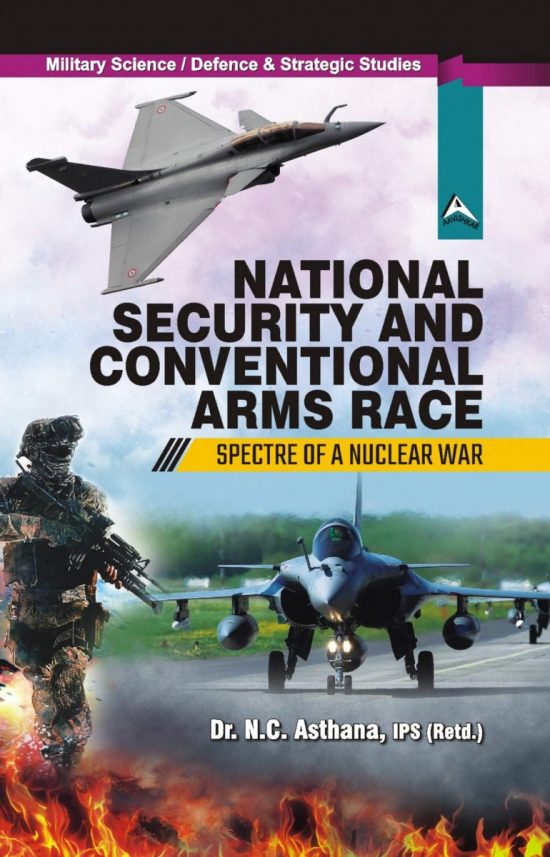 The myth of nuclear power, Financial Express By: fe Features | January 10, 2021 A cogent analysis of why just mere possession of nuclear weapons does not guarantee victory; sound strategy does, …….. ” In National Security and Conventional Arms Race: Spectre of a Nuclear War, Asthana argues that there is no way the Indian military can guarantee a “solution of the Pakistan problem or the China problem” by inflicting a decisive defeat on the nuclear-armed adversaries, frenzied race to import conventional weapons notwithstanding.
Consider these lines in the opening chapter: “We might blunder into a war almost unknowingly because since the past few years, people have collectively started consuming the heady mix of a cleverly manufactured hyper-nationalism and xenophobia. This means that both the people and the rulers have been playing into the hands of populist sentiments and exploit them in turn for electoral benefits… In popular perception, shared by political as well as military leaders, no significance is attached to the fact that both Pakistan and China are nuclear powers. It demonizes them with all the attributes of an evil human being, who will not behave unless they are spanked… Under a delusion that we have somehow, magically become invincible, a large number of Indians seem to be itching for a war.”
Asthana cautions that our weapon acquisition notwithstanding, our invincibility in a nuclear neighbourhood may be a myth. He points out that nobody has so far invented a miraculous weapon anywhere in the world that could ensure a quick, decisive victory in a conventional or nuclear war. Cautioning against the growing trend of politicians exploiting enmity with Pakistan for electoral benefits, he says this has left India with a one-dimensional policy, one which is unrealistic in view of Pakistan’s nuclear weapons.
India’s Achilles heel, he argues, is that there is no “national war-fighting strategy”………
“In any case, the moment Pakistan feels that it is going to lose a conventional war under the weight of a bigger Indian military, they will have to go nuclear immediately. This is not 1971 and a military defeat now will become an existential crisis for Pakistan as a nation, something they cannot afford at all. A decisive victory in a conventional war, short or long, in a nuclear overhang, is therefore a treacherous fallacy, spelling nothing but doom,” he says. To win any war, Indians, as a people, he asserts will have to be prepared for suffering the horrors and devastations of war. “Our strategic planning has not prepared the people for a nuclear war. Raw valour of troops is no substitute for sound strategy and the national will essential for sustaining great destruction,” he writes. ……..
Asthana concludes that Indian citizens and the political leadership must understand that accepting the nuclear reality is not synonymous with any sign of national impotence.
National Security and Conventional Arms Race: Spectre of a Nuclear War |
|
Kim Jong Un signals plans to develop new nuclear weapons
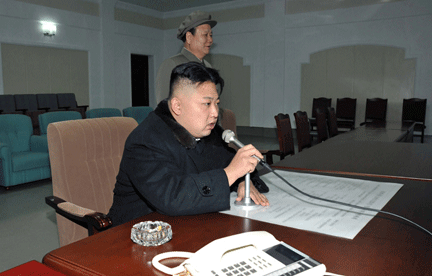 Kim Jong Un signals plans to develop new nuclear weapons. North Korea raises tensions with incoming US administration of Joe Biden. Ft.com Edward White in Seoul JANUARY 9 2021 Kim Jong Un has signalled plans to develop new nuclear weapons and described the US as North Korea’s “biggest enemy”, moves that threaten to raise tensions with US president-elect Joe Biden. The North Korean leader’s comments, made at a rare gathering of top political officials in Pyongyang, marked the dictator’s strongest broadside against Washington since Mr Biden won the presidency in November’s election.
“Our external political activities going forward should be focused on suppressing and subduing the US, the basic obstacle, biggest enemy against our revolutionary development,” Mr Kim said, according to a translation by South Korea’s Yonhap news agency. ………. https://www.ft.com/content/b4971c6e-8b89-43b5-93d2-9098d5f229ef
Iran will expel U.N. nuclear inspectors unless sanctions are lifted
Iran will expel U.N. nuclear inspectors unless sanctions are lifted: lawmaker
By Reuters Staff DUBAI (Reuters) 10 Jan 21, – Iran will expel United Nations nuclear watchdog inspectors unless U.S. sanctions are lifted by a Feb. 21 deadline set by the hardline-dominated parliament, a lawmaker said on Saturday.
Parliament passed a law in November that obliges the government to halt inspections of its nuclear sites by the International Atomic Energy Agency and step up uranium enrichment beyond the limit set under Tehran’s 2015 nuclear deal if sanctions are not eased.
Iran’s Guardian Council watchdog body approved the law on Dec. 2 and the government has said it will implement it….
Beatrice Fihn: How to implement the nuclear weapons ban treaty

Beatrice Fihn: How to implement the nuclear weapons ban treaty, Bulletin of the Atomic Scientists, By John Mecklin, December 7, 2020
………..Beatrice Fihn, ICAN’s executive director spoke with me at length about how the Treaty on the Prohibition of Nuclear Weapons might be implemented once it was ratified by the requisite 50 countries, an event expected to happen, at the time we spoke, within a matter of months. In fact, it occurred just weeks later, and the treaty will enter into force in January 2021.
The treaty was not supported by any of the nine countries that possess nuclear weapons, including the United States. Many of those opposed to the ban treaty have contended it is an unrealistic and naïve effort that could actually undermine nuclear nonproliferation efforts. US officials have been especially critical.
Here, Fihn lays out a possible future in which the ban treaty delegitimizes nuclear weapons, and nuclear weapons countries are persuaded to decide that it is best to give up the most fearsome weapons ever created—in those countries’ own interests…….
we’re trying to sort of remind the people that this issue still exists. This is still dangerous. These weapons are still around, and we’re really hoping that the treaty, and the progression will be the starting point of moving away from these weapons. Creating a new norm, implementing the treaty—in many ways, it’s just building normative pressure, building financial pressure through divestments.
see a lot of people really, really evaluating things during this year. What is it that we prioritize? And what is security? How come 200,000 Americans are dying from a pandemic, and we are still investing $35 billion in nuclear weapons? The structures that people in power have built to protect us, such as the police force and nuclear weapons, actually harm people and kill people. Both through police violence, through nuclear testing, for example. So I see a lot of possibilities for the next term to really start questioning the decisions our governments have made on our behalf around these things. …..
I think we have to be realistic. Ideally, we would want governments to take very strong measures and threaten to boycott if this doesn’t work. But in reality, of course, it’s the big economic powers that have nuclear weapons. And many countries are very dependent on them, and it wouldn’t be realistic to think that a small country in Africa can boycott the nuclear weapon states in that way. But I definitely think that there are a lot of potentials for action. First of all, I think we need to reckon—I think particularly in the West, in Europe and maybe North America—how the power dynamics in the world are changing quite rapidly. And this idea that we in the West are the center of the power in the world might not hold for very long……..
I can also see an emergence of a new power structure. This treaty in many ways is that a lot of countries are basically banning the power tool of the [UN] Security Council. And I think that’s going to have some very significant impact. But in practical terms, what we’re hoping for is, of course, that this treaty stands next to the Chemical and Biological Weapons Convention, like the bans on all weapons of mass destruction. This completes the treaty or treaties, in a way. So that the political pressure and the reputational cost of countries that don’t join this treaty is increased. We’re looking to focus quite a lot on the divestment side, making sure that banks and pension funds are pulling their money out of producing companies. And we’ve seen that influence on landmines and cluster munitions; they have quite a concrete impact in reducing companies’ willingness to be involved in these practices…….
Every year we do this “Don’t Bank on the Bomb” report that shows that it’s growing, the number of banks that have policies against this. We’ve seen just this year, the Norwegian Oil Fund, for example, pulled out of nuclear weapons companies and referred to the TPNW as a reason. One of the super banks in Japan, Mitsubishi Bank Group, or whatever they’re called. They adopted a new policy. Deutsche Bank last year adopted a new policy with nuclear weapons after work with ICAN in Germany. The Deutsche Bank [policy] wasn’t flawless, there’s some holes still, but it’s a sign that they are reacting to this.
So we have two of the five biggest pension funds in the world, the Dutch Pension Fund as well, the public one. We’ve been working on the local cities initiative as well, trying to see if the whole trend on the climate change issue and other issues as well, that cities are taking sort of international action and seeing themselves as almost actors on an international stage. We have over 400 cities around the world now, including I think something like 30 cities with over a million people, that have joined this call to action and that are supporting the treaty and calling on their national governments to join. ……. New York City is supporting the TPNW. And it’s going to divest the city pension funds from nuclear weapons users.
……… this is an issue so solvable. I mean, it’s a lot easier to solve than climate change. It’s nine states. It’s not the whole world, it’s nine states that have them. …….. This is very old fashioned, wiping out a whole city and releasing radioactive fallout. It’s not the best strategy in any kind of warfare situation.
…….. this is all connected to power and holding power. A small group of actors are holding power and oppressing the larger majority. For people like me, for example, I’m Swedish. I live in Switzerland. Me and my family and my two countries will also die in nuclear war if there’s nuclear war. Yet, I don’t get a say. In that way, it’s much like climate change. What one country does, it’s not their own business.
…….. this is an issue that is connected to economic inequalities, sexism, racism, the disproportion in the way we use public funding and tax money in terms of protecting people—like taking the money from things that actually protect us, health care right now, education that will actually make people safer. Yet we divert it towards nuclear weapons and a hugely inflated military budget.
So I think that’s sort of what I would like to say to young people…………….
I think it’s really important to delegitimize nuclear weapons and devalue them. We’ve almost created this mythical perspective on these weapons, that they somehow are safeguarding the world and that they somehow have all these magical attributes, which isn’t true. It’s just a really giant radioactive bomb. It’s not magic, it’s not special. And it costs a lot of money and it’s very dangerous to the countries that have them, and it makes you a target of nuclear weapons. So I think it’s really important, for nuclear arms states also, to understand that the more value that’s put into nuclear weapons—both symbolic value and money value—the more vulnerable you are also to other countries getting that weapon. …….
I think what’s extremely important is that we look also, again, at research and science and see that societies that have a lot of weapons, that invest a lot of money in weapons, are less secure and safe than societies that invest a lot in health care, education, equality, for example. And these are always seen as soft issues, unrelated to national security. We really urgently need leaders who are smart, who understand how to protect their people. And protecting their people is not through spending hundreds of billions of dollars on weapons…….. https://thebulletin.org/premium/2020-12/beatrice-fihn-how-to-implement-the-nuclear-weapons-ban-treaty/?utm_source=Newsletter&utm_medium=Email&utm_campaign=ThursdayNewsletter01072021&utm_content=NuclearRisk_Fihn_12072020
1 This Month
26 September – International Day for the Total Elimination of Nuclear Weapons



PLEASE OPPOSE HR 8255 AND S.3639 – bills would accelerate satellite deployment, with no environmental review or safeguards – https://ncstd5li.quorum.us/campaign/169331/
To see nuclear-related stories in greater depth and intensity – go to https://nuclearinformation.wordpress.com
-
Archives
- September 2026 (281)
- August 2026 (330)
- July 2026 (355)
- June 2026 (287)
- May 2026 (306)
- April 2026 (356)
- March 2026 (251)
- February 2026 (267)
- January 2026 (308)
- December 2025 (358)
- November 2025 (359)
- October 2025 (375)
-
Categories
- 1
- 1 NUCLEAR ISSUES
- business and costs
- climate change
- culture and arts
- ENERGY
- environment
- health
- history
- indigenous issues
- Legal
- marketing of nuclear
- media
- opposition to nuclear
- PERSONAL STORIES
- politics
- politics international
- Religion and ethics
- safety
- secrets,lies and civil liberties
- spinbuster
- technology
- Uranium
- wastes
- weapons and war
- Women
- 2 WORLD
- ACTION
- AFRICA
- Atrocities
- AUSTRALIA
- Christina's notes
- Christina's themes
- culture and arts
- Events
- Fuk 2022
- Fuk 2023
- Fukushima 2017
- Fukushima 2018
- fukushima 2019
- Fukushima 2020
- Fukushima 2021
- general
- global warming
- Humour (God we need it)
- Nuclear
- RARE EARTHS
- Reference
- resources – print
- Resources -audiovicual
- Weekly Newsletter
- World
- World Nuclear
- YouTube
-
RSS
Entries RSS
Comments RSS

