U.S. – China talks may cover North Korea nuclear issue
 North Korea nuclear issue may be on the agenda at US-China SCMP, 17 June 20
Stephen Biegun, the US special representative for North Korea, will join the talks in Hawaii on Wednesday.
, suggesting the stalemate in nuclear disarmament negotiations with Pyongyang could be on the agenda.
and threatened military action against the South……….
The Hawaii meeting comes as relations between the world’s two largest economies are at their lowest point in decades and facing off on many fronts – from trade and technology to Hong Kong and the South China Sea. US officials, including President Donald Trump and Pompeo, have blamed Beijing for the coronavirus pandemic, while Beijing has accused Washington of trying to pass the buck to hide its own failings in dealing with Covid-19 in the US.
t also comes as tensions on the Korean peninsula are again escalating after Pyongyang demolished a four-storey liaison office set up near the border with South Korea in 2018 after the first summit between North Korean leader Kim Jong-un and South Korean President Moon Jae-in. A major setback for the detente in the region, observers said the move reflected Pyongyang’s growing frustration over its stalled nuclear talks with Washington.
UK’s Nuclear Future in Doubt amid Diplomatic Fallout over Huawai.
 Telegraph 14th June 2020, UK’s Nuclear Future in Doubt amid Diplomatic Fallout over Huawai. Boris Johnson’s now faces a test of his diplomatic and political skills against the Chinese state. Eyeing China’s crackdown on Hong Kong protesters, seeking to define the UK’s place in the world post-Brexit, and shaken by the pandemic, the UK is hardening its stance on China – and the communist superpower is responding in kind.
Expectations that the UK will reduce Chinese company Huawei’s role in the UK’s 5G network have been met with veiled threats that Chinese companies might pull out of building UK nuclear power plants and other infrastructure – ratcheting up tensions with potentially profound political and economic consequences.
Chinese direct investment in the UK reached almost £50bn between 2000 and 2018, while in
2018 the UK sold £22.6bn worth of goods to China and bought £44.7bn of Chinese goods. It was less than five years ago that David Cameron and Chinese president Xi Jinping popped into the Plough in Cadsden, Bucks, to toast a “golden era” of friendship between the two nations over pints
of IPA and fish and chips.
The visit took place just two days after the Chinese nuclear power giant China General Nuclear and France’s EDF agreed to build the Hinkley Point C nuclear power plant in Somerset, as part of about £40bn in business deals signed between the UK and China. Hinkley
Point C is now taking shape next to the Bristol Channel, but plans for a second plant with EDF, Sizewell C, and CGN’s own plant, Bradwell B inEssex, as well as other infrastructure investment now appear to be at risk if the UK ousts Huawei.
Plenty argue that would be no bad thing. China’s involvement in the UK’s nuclear power plants has long been controversial due to security concerns, while some experts also argue that large nuclear power plants have had their day as a source of energy. “The energy landscape has changed,” argues Paul Dorfman, of the UCL Energy Institute,
given that offshore wind power and other renewable technologies are getting much cheaper and more effective……. https://www.pressreader.com/uk/the-sunday-telegraph-money-business/20200614/281698321989436
Trump’s plan for a nuclear trest – dangerous brinkmanship
 A Nuclear Test Would Blow Up in Trump’s Face
The Trump administration doesn’t understand the brinkmanship concept its nuclear diplomacy is based on. Foreign Policy,
BY SARAH BIDGOOD JUNE 11, 2020,
|
The last 42 months have offered a sobering window into the Trump administration’s philosophy on nuclear arms control. On display is its penchant for withdrawing from agreements rather than engaging in dispute resolution—be they the Joint Comprehensive Plan of Action, the Intermediate-Range Nuclear Forces Treaty, or, most recently, the Open Skies Treaty. While many experts see this approach as ill-conceived and damaging to U.S. national security interests, the administration often frames it as a form of brinkmanship designed to signal resolve in an era of strategic competition. The intended message appears to be that the United States will no longer play ball unless its rivals—Russia and China—agree to abide by Washington’s rules.
The latest example of this tendency comes amid reports that the administration might conduct a “rapid” nuclear test to strengthen its hand in negotiations with China and Russia. Experts around the world have denounced this proposal as dangerous, foolhardy, and “catastrophically stupid.” As they point out, were the United States to test for the first time in nearly three decades, it would open the door for the resumption of widespread explosive testing. At the same time, it would undermine the nuclear taboo, hurt the credibility of the nonproliferation regime, and diminish support for the Comprehensive Nuclear-Test-Ban Treaty (CTBT). While all true, these arguments are unlikely to sway this administration, which has shown little regard for existing norms or the disarmament machinery writ large.
What might give decision-makers pause, though, is the fact that a nuclear test is unlikely to be an effective signal in the current context. It would not help deliver President Donald Trump’s goal of a trilateral arms control agreement, but it would provide ample opportunity for misinterpretation and a response in kind. In the process, it would likely put Washington in a worse negotiating position than when it started, making it not only risky but also pointless to boot………..
In short, if decision-makers in Washington do choose to test, this attempt at brinkmanship will certainly fail to convince Russia or China to sit down at the arms control negotiating table. Instead, it will make it all the more likely that the very outcomes trilateral arms control seems to be intended to prevent come to bear—and soon. The good news, then, is that there is plenty of time to walk this ill-conceived and ineffective plan back from the brink. In this instance, restraint—such as it is—may be the most effective nuclear signal this administration could possibly send. https://foreignpolicy.com/2020/06/11/nuclear-test-arms-control-trump-united-states-brinkmanship/
|
|
Armenia Rejects Russian Funding For Nuclear Plant Upgrade
|
Armenia Rejects Russian Funding For Nuclear Plant Upgrade, https://www.rferl.org/a/armenia-rejects-russian-funding-for-nuclear-plant-upgrade/30667786.html June 12, 2020 By RFE/RL’s Armenian Service
YEREVAN — The Armenian government has announced it has decided to use only 60 percent of a $270 million Russian loan designed to finance the ongoing modernization of its Soviet-era nuclear power plant at Metsamor. The plant’s sole functioning reactor went into service in 1980 and was due to be decommissioned by 2017. However, a previous government in 2014 decided to extend the life of the 420-megawatt reactor by 10 years after failing to attract foreign investment for the construction of a new nuclear plant. In 2015, the Russian government agreed to provide Armenia with a $270 million loan and a $30 million grant to upgrade the Metsamor nuclear power plant. The modernization work, led by Russia’s Rosatom nuclear energy agency, was due to be completed by the end of 2019, but the process fell behind schedule, preventing the full disbursement of the Russian funds. Armenia’s infrastructure minister on June 11 said the country had used only $107 million of the Russian money. Suren Papikian said Moscow had offered to extend the loan agreement by two years under the condition that Armenia agreed to use 80 percent of the money to commission equipment and services from Russian companies. The government of Prime Minister Nikol Pashinian backed Papikian’s proposal to reject the Russian offer and to finance the remaining work through government bond sales. Pashinian’s government said it planned to spend 63 billion drams ($130 million) to upgrade the facility over the next two years. Pashinian said that the government will now be free to select the suppliers for Metsamor, which he said will “substantially” lower the costs. Armenia’s sole nuclear plant, located 35 kilometers west of Yerevan, generates roughly 40 percent of the country’s electricity. The European Union and the United State have long pressed for its closure, saying that it does not meet modern safety standards. |
|
North Korea Vows to Boost Nuclear Program, Saying U.S. Diplomacy Failed
North Korea Vows to Boost Nuclear Program, Saying U.S. Diplomacy Failed In a statement marking the second anniversary of a historic summit meeting between Kim Jong-un and President Trump, the North said its hopes had faded into a “nightmare.” NYT,
By Choe Sang-Hun SEOUL, South Korea — North Korea on Friday said that two years of diplomacy with President Trump had “faded away into a dark nightmare,” and vowed to increase its nuclear weapons capabilities.
“Even a slim ray of optimism for peace and prosperity on the Korean Peninsula has faded away into a dark nightmare,” the country’s foreign minister, Ri Son-gwon, said in a statement on Friday marking the second anniversary of a historic summit meeting between Mr. Trump and the North’s leader, Kim Jong-un……. .https://www.nytimes.com/2020/06/11/world/asia/north-korea-nuclear-trump.html
Russia: commentary on its nuclear deterrence principles
The only public statement on nuclear deterrence was a standard sentence repeated in Russia’s military doctrine and other documents stating that Russia would only resort to nuclear weapons if it was attacked by weapons of mass destruction, or if an attack threatened the very existence of the state. …..
While the existence of such an ‘escalate to de-escalate’ doctrine and other details on Russia’s potential use of nuclear weapons was contested in the past, the final sentence of Article 4 of the doctrine comes closest to answering this question. It states that, once a war has started, nuclear deterrence policy is to seek to prevent it from escalating further, or from being terminated on terms unfavourable to Moscow. This is a short version of what in Russian military literature is termed ‘escalation control’. Escalation control implies that threats, demonstrations of strike capabilities, and inflicting “calibrated damage” on the enemy (which may, but does not have to, include nuclear weapons) should contain, localise, and if possible terminate a war on Moscow’s terms. …..
Article 19 deliberates on the conditions under which nuclear weapons could be released. It explicitly mentions a ‘launch on warning’ posture. This is a signal to the US that conventional or low-yield re-entry vehicles (the latter are in development) of intercontinental missiles would be treated as a full-scale attack and that Washington should therefore not think of employing them in a tactical or limited attack close to Russia’s borders. ……….
The Russian decree does not contain any detailed provisions on force structure, weapons systems (future or present), force modernisation, or references to other nuclear powers. Much detail is lacking from what one might normally expect to see in a nuclear doctrine. Article 15 states merely that nuclear deterrence needs to be adaptable, and should leave the enemy guessing about the time, scale, and manner of the use of nuclear weapons. It also says that Russia intends to maintain the minimal force required to achieve its tasks………
Taken together, all these provisions seem surprisingly minimalist. It may well be that Russia intends to signal to the United States that, if the American-Chinese arms race takes off, Moscow does not intend to follow suit and “spend itself into oblivion”, as US assistant secretary for terrorist financing in the Treasury, Marshall Billingslea, put it. Russia is hardly likely to publicly admit that in the 21st century it will most probably be a secondary nuclear power. But, in fact, it does seem to be adapting to this role.
Finally, Article 3 notes that Russia’s nuclear deterrence is flanked by other state measures to achieve its goals, including diplomatic and “information policies” (propaganda). The publication of the doctrine and the content of Article 3 effectively represent the firing of the starting pistol on a new ‘information campaign’ in the West: expect to soon see an information operation that aims to inflate the purported capabilities of Russia’s nuclear forces and induce fear (such as the new “Wunderwaffen”, presented in March 2018), and new diplomatic overtures in the fields of arms control, in particular designed to split the alliance. At least on the latter, Putin may get assistance from the White House: Trump’s clumsy and undiplomatic handling of the INF and Open Skies issues provide more opportunities to exploit than any Russian diplomat would have ever dreamed of creating. ……… https://www.ecfr.eu/article/commentary_russias_nuclear_deterrence_principles_what_they_imply_and_what_n
USA offers to build Britain’s nuclear reactors
 US offers to build UK’s 5G and nuclear stations to end ‘coercive’ relationship with China
Mike Pompeo said the United States ‘stands ready to assist our friends in the U.K’ Telegraph UK , By Danielle Sheridan, POLITICAL CORRESPONDENT10 June 2020 • America has offered to build Britain’s 5G and nuclear power stations so that the “coercive and bullying” relationship with China can end, Mike Pompeo has said.
In a statement released yesterday the US Secretary of State said America stood with its “allies and partners against the Chinese Communist Party’s (CCP) coercive bullying tactics”, as he sighted reports that Beijing had threatened to punish HSBC and “break commitments to build nuclear power plants in the United Kingdom unless London allows Huawei to build its 5G network”.
HSBC is understood to have claimed that it could face reprisals in China if Huawei was blocked from selling equipment to the next generation of networks being built by Britain’s mobile operators…. (subscribers only) https://www.telegraph.co.uk/politics/2020/06/10/us-offers-build-uks-5g-nuclear-stations-end-coercive-relationship/
Our existential threat – our extinction
 Externalities Are Our Existential Threat, Medium, 10 June 20, It’s the “ex’s” we need to worry about the most. Externalities that create an existential threat. The ultimate threat: Our extinction.
An externality is defined by the Oxford English Dictionary as “a side effect or consequence of an industrial or commercial activity that affects other parties without this being reflected in the cost of the goods or services involved”. Externalities in a global context are the consequence that everyone bears for everyone else’s actions. Externalities result in us all bearing the consequences of living out of synchronization with Nature, but unfortunately in most cases the poor and the vulnerable pay a higher price, disproportionate to their contribution to the cause.
The negative externality consequences of most human economic activity are unaccounted; seemingly off loaded free of charge to the ecosphere. But Nature has a balance sheet — these unaccounted, costs of doing business, that are charged to Nature, are turned into debts. These debts will be settled at a later date and not in a manner of our choosing. The challenge for us is that in many cases the debts are slow to become obvious to everyone, remaining invisible or disguised for a prolonged period. Linking cause and effect is very complex and spans long periods of time, often not directly attributable. It is like a very slow moving train crash — you barely notice it happening but you’ll know when it hits, and then it’s too late. We are all aboard that slow train right now.
In developed countries, we are fortunate to not have to face the poverty, war, famine, diseases that affected humans in the pre-industrial and early industrial times. Capitalism has been an amazing wealth creating and poverty reducing system. Most of us cannot even comprehend how fortunate we are. However, there is a downside to the considerable progress we have made since the industrial revolution; the unintended consequences. Never before were humans able to have an impact on future generations aside from culture or knowledge that was passed on. Today that is different — our actions are determining the fate of billions of people, those currently alive and those not yet born. Unfortunately, we have been brewing trouble……
capitalism can only operate in the best interests of society if it is governed well. It is the good governance part that we have been lacking — unfortunately we have a corrupted, crony capitalism that stems from problems with our democratic system. Quite simply, we seem to be unable to elect leaders who actually care about the long term interests of the people. Our entire political system is deeply corrupted by money — elected officials represent those who contribute to their campaigns, not their constituents, and that’s dominated by the very wealthy, corporations and special interest organizations, not the typical citizen. This is something that needs mainstream understanding as it is the root of all society’s problems and why they are never sensibly addressed.
The common theme is that we have proved ourselves to be incapable of acting in our collective best interests. Together we are all on that metaphorical slow train, steaming towards a cliff edge with no one in the driver’s seat attempting to steer us away from inevitable catastrophe…… Continue reading
USA – resuming nuclear tests would wreck the Nuclear Non-Proliferation Treaty (NPT), with no military or strategic benefit
 The Trump Administration’s Nuclear Test Delusions, Just Security, by Ambassador Thomas Graham Jr. June 10, 2020 Even as the Trump administration continued to struggle to contain the coronavirus in mid-May, White House officials preoccupied themselves with manufacturing a wholly unnecessary threat. On May 15, senior national security officials at an interagency meeting reportedly discussed the possibility of abandoning the longstanding U.S. moratorium on nuclear-weapons testing that has been in place for nearly three decades and is now accepted by the entire world, even North Korea. According to a May 22 report in the Washington Post, the proponents of ending the moratorium argued in the meeting that the United States should resume testing because Russia and China were conducting low-level nuclear-weapons tests, allegations that appear to be based on no evidence.Such tests would bring no military or strategic benefit to the United States. Instead, they would undermine the foundational global agreement that has curbed the spread of nuclear weapons worldwide for more than 50 years, the Nuclear Non-Proliferation Treaty (NPT). The Trump Administration’s Nuclear Test Delusions, Just Security, by Ambassador Thomas Graham Jr. June 10, 2020 Even as the Trump administration continued to struggle to contain the coronavirus in mid-May, White House officials preoccupied themselves with manufacturing a wholly unnecessary threat. On May 15, senior national security officials at an interagency meeting reportedly discussed the possibility of abandoning the longstanding U.S. moratorium on nuclear-weapons testing that has been in place for nearly three decades and is now accepted by the entire world, even North Korea. According to a May 22 report in the Washington Post, the proponents of ending the moratorium argued in the meeting that the United States should resume testing because Russia and China were conducting low-level nuclear-weapons tests, allegations that appear to be based on no evidence.Such tests would bring no military or strategic benefit to the United States. Instead, they would undermine the foundational global agreement that has curbed the spread of nuclear weapons worldwide for more than 50 years, the Nuclear Non-Proliferation Treaty (NPT).
Such low-level tests would be of little military benefit to Russia and China either, as there is scant information for them to gain that they do not already possess. Thus, even if such tests occurred, they would not represent any kind of significant security threat to the United States. The only conceivable benefit for the United States of resuming a nuclear-weapons testing program would be to create an opportunity for President Donald Trump to somehow distort the value of it and use it as another meaningless political ploy to bolster his campaign for re-election in November……. In 1961, the United Nations unanimously passed the “Irish” Resolution (introduced by Ireland), which called on all states to conclude an international agreement prohibiting the proliferation of nuclear weapons to additional countries. In 1965, another resolution was passed by the U.N. General Assembly calling on nations to negotiate an international treaty to prevent the further proliferation of nuclear weapons, which became the Nuclear Non-Proliferation Treaty (NPT). China had just completed an initial nuclear-weapons test program, bringing the number of declared nuclear weapon states to five: the United States, the Soviet Union, the United Kingdom, France, and China. This new treaty would be based on five principles, among them a commitment to ultimately abolish nuclear weapons and, in the interim, a balance of obligations among the five nuclear-weapons states and other state parties that thus far had no nuclear weapons. This balance required interim steps toward nuclear disarmament, short of elimination — seen in the depths of the Cold War as a distant objective — in exchange for a commitment that all parties would be permitted to pursue peaceful uses of nuclear energy. The principal interim step was considered to be the worldwide termination of nuclear-weapons tests. (Although the Limited Test Ban Treaty had been negotiated in 1962, led by President John F. Kennedy, and nuclear-weapon tests were prohibited everywhere except underground, by 1968, many tests were being conducted underground.) The NPT was signed in 1968. It was to last for 25 years, after which on a one-time basis, the parties would decide by majority vote how much longer it would exist. The non-nuclear-weapons states in the treaty negotiations had urged the inclusion of a reference to interim steps in the agreement, especially an accord to ban nuclear testing, which became the Comprehensive Nuclear-Test-Ban Treaty (CTBT). The CTBT was looked upon by the non-nuclear-weapons states as the price to be paid by the five states holding nuclear weapons for the others giving up their rights to develop such armaments. Thus, a ban on nuclear testing was essential to the strategic bargain of the NPT. The United States and the Soviet Union would not agree to any interim step in the text of the NPT, with one exception: a reference to the CTBT in the preamble. The two nations also promised that interim steps, including the CTBT, would be negotiated at the treaty review conferences that were required under the agreement every five years……. U.S. President Bill Clinton was the first to sign, and ultimately, the CTBT was signed by 184 states, of which 168 have ratified it. But the Treaty requires that all 44 of those states that had nuclear facilities of any kind on their territories in 1996, called Annex 2 states, must ratify the treaty before it enters into force. Of these Annex 2 states, 36 have ratified—states such as Germany, Japan, Britain, France, and Russia. The eight that have not ratified are the United States and seven others that are more or less waiting for the United States to move forward. Despite having led the negotiations, the United States has been unable to ratify the treaty. The reason is that the Republican Party turned against arms control and disarmament and, ultimately, against peace and diplomacy themselves. . This from a party that once stood at the forefront of arms control and disarmament, with major initiatives such as President Ronald Reagan agreeing with Soviet President Mikhail Gorbachev at Reykjavik to eliminate all nuclear weapons and President George H.W. Bush concluding four such agreements, more than any other president. The Clinton administration submitted the CTBT to the Senate for advice and consent to ratification in 1997. Two years later, in 1999, it was rejected by the Republican-led Senate—led by two senators from the right—Senators Jesse Helms (R-NC) and Jon Kyl (R-AZ). Ever since, Republicans in the Senate have blocked ratification, but the Clinton, Bush, and Obama administrations informally observed the treaty’s terms. The United States also has abided by Article 18 of the Vienna Convention on the Law of Treaties, which obligates a state not to defeat the object and purpose of a treaty that it has signed and that is pending ratification unless and until such state has made its intention clear not to become a party. The United States is not a party to the convention, but has recognized its authority. Thus, it is obligated not to do nuclear-weapons testing of any kind unless it clearly states its intention not to ratify. Doing such a test would certainly defeat the object and purpose of the CTBT, and the United States has made no indication that it intends never to ratify the CTBT. Republican Party, Once Leading on Arms Control, Backs Away In the last decade, elements in the Republican Party have tried to promote the elimination of this obligation and reopen the door to an underground nuclear-weapons testing program. First, Republicans made an argument for years that the United States was observing a CTBT standard of not testing weapons of any yield even though Russia and China never agreed to do the same. But the negotiating record showed Russia and China stating clearly that they recognize the CTBT is a “zero-yield treaty,” and the strength of that record wore down this argument. ……. Now Republicans are back again with a similar argument, only this time adding China. They allege — once again without evidence — that both Russia and China are doing low-level nuclear-weapons tests and benefiting from doing so. Perhaps someone will also bring up again the non-argument that Russia and China have the capability to do this. Apparently one senior official at the recent White House meeting asserted that a demonstration by the United States that it could “rapid test” could be useful in a trilateral nuclear negotiation with Russia and China, a seemingly fruitless position that Trump is trying to pursue in withholding an extension of the New START agreement between the United States and Russia that expires early next year. China has made it clear that it will not participate in such a negotiation. Biden found the idea “delusional.” Notably, the reaction to the report that the Trump administration is considering a resumption of testing was not positive in significant domestic circles either. In its editorial, the Las Vegas Sun also said, “The state endured four decades of nuclear tests – more than 1,000 in all, before testing ceased in 1992 via an international moratorium. We and our downwind neighbors in Utah endured nuclear fallout in above-ground tests during the 1950s and 1960s, and our desert remains irradiated by underground tests conducted later. “We will fight any effort to reopen the door to that dark era…” It is difficult to imagine a greater threat to U.S. national security than for the United States to pursue a nuclear-weapons test program at the present time. Such action would defeat the object and purpose of the CTBT, which means the United States would be turning its back on the essential glue that holds the NPT together. The likely result would be that the NPT would gradually come apart. Other states such as Iran, Saudi Arabia, Brazil, Turkey, and Egypt would use the U.S. tests as an excuse to develop their own test programs and to acquire nuclear weapons for a national arsenal. Eventually, in an era when many countries may feel less and less secure as climate change erodes their remaining national assets such as arable land and fresh water, they might see nuclear weapons as more and more attractive. Once the door kept closed by the NPT is opened, we would enter a nightmare world, a risk foreseen by past American statesmen. https://www.justsecurity.org/70654/the-trump-administrations-nuclear-test-delusions/ |
|
The last major treaty for nuclear weapons control now hangs in the balance
|
Nuclear might crux of push for new pact. Treaty expiration would end caps on arms; U.S. envoy says Russia meeting set Northwest Arkansas Democrat Gazette by PAUL SONNE AND ROBYN DIXON, 10 June 20, THE WASHINGTON POST The last major treaty limiting U.S. and Russian nuclear might hangs in the balance as the Trump administration pushes to replace it with an arms-control pact that also includes China five months before the U.S. presidential election.The New START accord, which restricts the number of deployed strategic nuclear warheads and certain launch platforms, is set to expire in February. If the Trump administration declines to extend it and the caps disappear, the United States and Russia will be left without any significant limits on their nuclear forces for the first time in decades.
Russia has said it is willing to extend the New START pact unconditionally. But the Trump administration has balked, saying the treaty signed by former President Barack Obama in 2010 is outdated, insufficient and overly advantageous for Moscow. …….. The result is a game of nuclear brinkmanship in the waning days of the Trump administration’s first term…… https://www.nwaonline.com/news/2020/jun/10/nuclear-might-crux-of-push-for-new-pact/ |
|
Nuclear arms meeting planned, USA and Russia, – arms control expert is not enthusiastic
 US and Russia to meet for nuclear arms negotiations this month Jennifer Hansler, CNN June 8, 2020 Washington US and Russian officials will meet later this month for nuclear arms negotiations, a top US arms control official announced Monday.
 |
ReplyForward
|
Chinese Foreign Ministry urges US to avoid nuclear testing
BEIJING, June 8. /TASS/. China urges the United States to abide by its international obligations and abandon plans to carry out nuclear tests, Chinese Foreign Ministry Spokesperson Hua Chunying said at a briefing on Monday.
“We insist that the United States should strictly abide by its obligations to end nuclear testing… and we hope that it will listen to the international community,” the Chinese diplomat pointed out. “The US should abandon plans that could undermine global stability and strategic order,” she added……… https://tass.com/world/1165339
If he wins election, Joe Biden would restore Iran nuclear deal
 Biden would restore nuclear deal if he wins elections: George Washington University professor, By Javad Heirannia Tehran Times, June 7, 2020
Professor Askari, who served as special advisor to Saudi finance minister, also says a Democratic president “would set about undoing Trump’s foreign policy errors.”
Following is the text of the interview:…………………..
Q: If Joe Biden is elected the next president of the United States, will he change his approach toward China? Also, what would be his approach to Iran and the nuclear deal in general?
A: I think a Biden, or for that matter any Democratic President, would set about undoing Trump’s foreign policy errors. Yes, he would try to chart a new course with China. Tough but with a plan that is step by step to restore workable relations. Not a series of disjointed reactions to the moment in time. He would restore, or rejoin, the nuclear agreement with Iran. But now he would want an extension of the time that Iran could resume for nuclear research and have breakout capabilities. In this way, he would appear as tough but at the same time reduce tensions in the Persian Gulf and America’s military exposure around the world. https://www.tehrantimes.com/news/448604/Biden-would-restore-nuclear-deal-if-he-wins-elections-George
Trump tells Iran they should get “a better deal” with him now, before the U.S. election
 Urging Iran to ‘Make the Big Deal,’ Trump Ties Nuclear Negotiations to Election, The president’s invitation came as international inspectors were said to have found that Iran had boosted its stockpile of low-enriched uranium in the past three months.
Aides to Mr. Pompeo and Mr. Trump declined to explain why, if the United States was negotiating in its own national interest, Iran might get preferential treatment for negotiating with Mr. Trump before the election……
“We had a deal when you entered office,” Iran’s foreign minister, Mohammad Javad Zarif, responded to Mr. Trump in a tweet on Friday. Iran and the other participants in the 2015 agreement — Britain, France, Germany, the European Union, Russia and China — “never left the table,” he said. “Your advisers — most fired by now — made a dumb bet. Up to you to decide *when* you want to fix it.”
Hesameddin Ashena, the top policy adviser to President Hassan Rouhani of Iran also responded. “You are going down on November 3rd and we know that,” he tweeted. “So you’ll need to offer much more than Obama did!”…….. https://www.nytimes.com/2020/06/05/world/middleeast/trump-iran-nuclear.html
China is reconsidering building nuclear reactors in Britain
|
China poised to pull plans for UK nuclear plants https://www.straitstimes.com/world/europe/china-poised-to-pull-plans-for-uk-nuclear-plants 5 June 20 LONDON (BLOOMBERG) – China’s ambassador to the UK said that Prime Minister Boris Johnson’s plans to seek alternatives to Huawei Technologies Co Ltd in the 5G network could spoil plans for Chinese companies to build nuclear power plants and the HS2 high-speed rail network, the Sunday Times reported.Mr Liu Xiaoming signalled that Beijing is viewing the decision over Huawei as “a litmus test of whether Britain is a true and faithful partner of China”, the newspaper reported the ambassador telling business leaders, saying that the words were “interpreted as a threat by those listening”.
China General Nuclear Power Corp plans to build its own nuclear reactor at Bradwell in Essex, according to the newspaper report. China has a minority share in nuclear power plants at Hinkley Point in Somerset and Sizewell C in Suffolk, both in partnership with EDF of France. |
|
1 This Month
26 April – Chernobyl: Inside the Meltdown airs on National Geographic on Sunday 26th April from 4pm
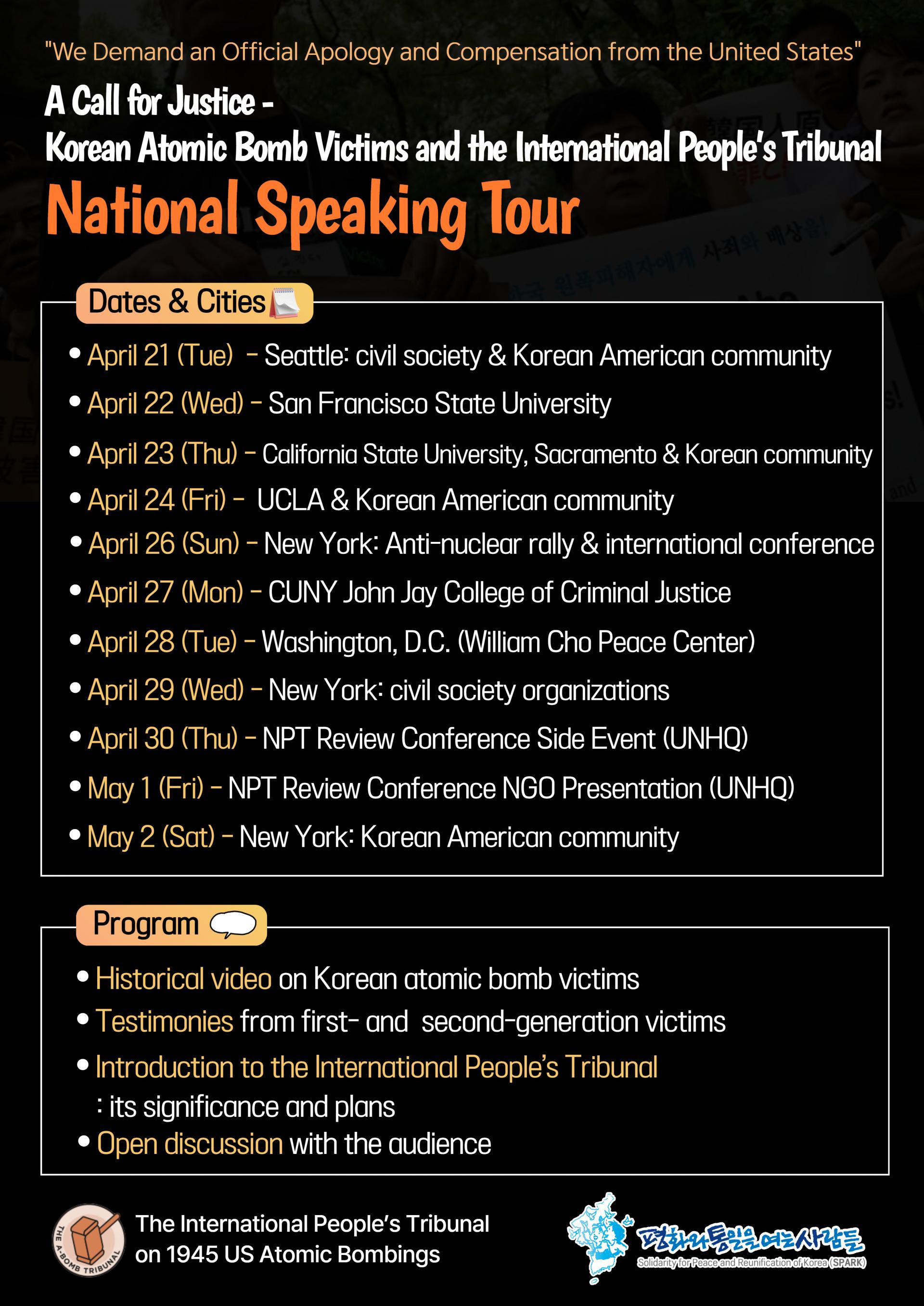
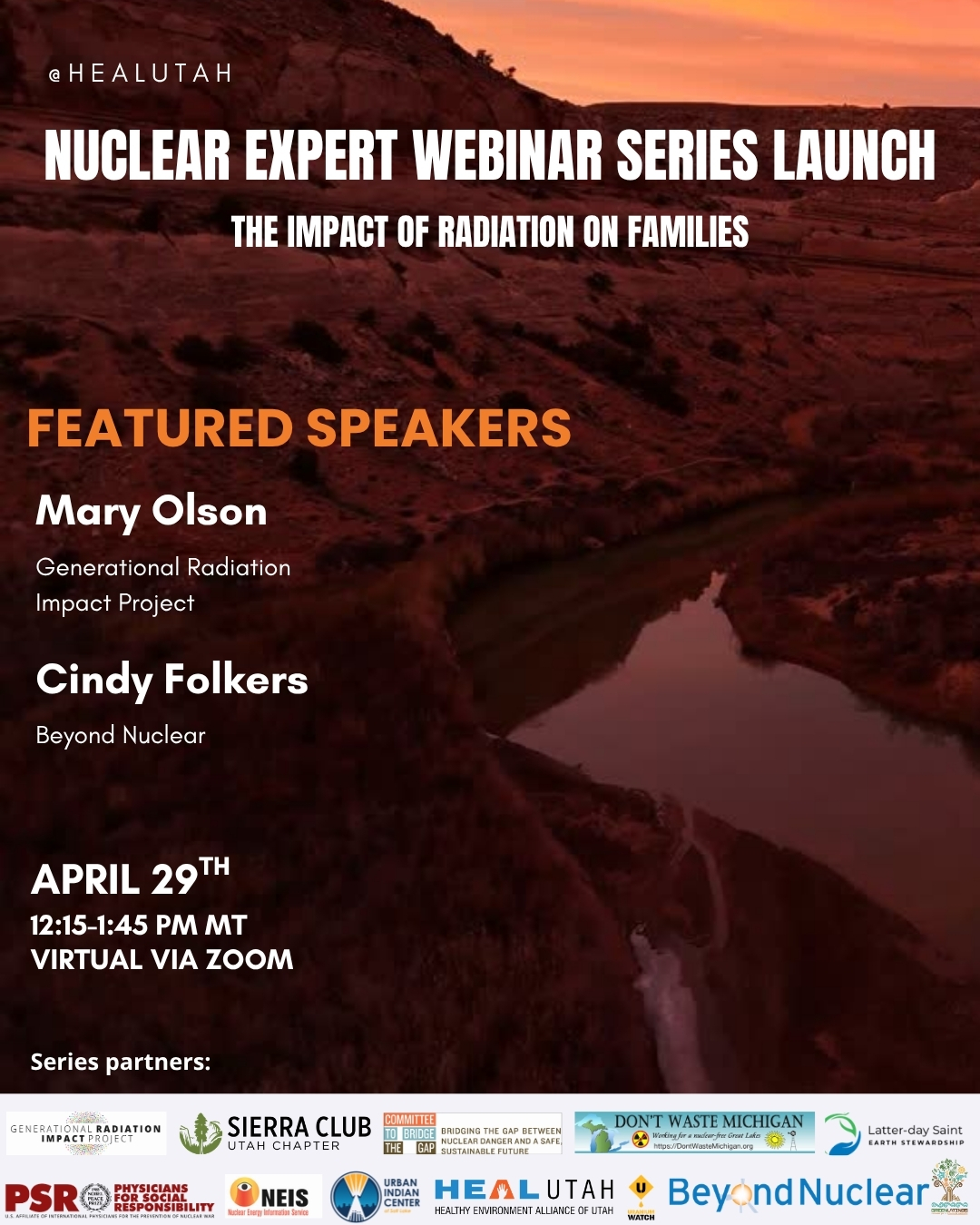
29 April – Nuclear Expert Webinar #1 – Radiation Impacts on Families with Mary Olson and Cindy Folkers
- 12:15 PM MT – 1:45 PM MT
- Location: Virtual – REGISTER TODAY

4 May -West Suburban Peace Coalition to discuss Iran war at May Educational Forum
Monday, May 4, 7:00 – 8:00 PM Central Standard Time
Title: : How Trump’s Narrative Tries to Shape the Reality of the War on Iran.
Contact Walt Zlotow, zlotow@hotmail.com 630 442 3045 for further information
14 May – online event From Bombs to Data Centres: the Face of Nuclear Colonialism

Pine Ridge Uranium is the real threat, not Tehran- Tell Burgum: Stop the Extraction.
Chernobyl: The Lost Tapes – A good documentary on Chernobyl on SBS available On Demand for the next 3 weeks– https://www.sbs.com.au/ondemand/tv-program/chernobyl-the-lost-tapes/2352741955560
To see nuclear-related stories in greater depth and intensity – go to https://nuclearinformation.wordpress.com
-
Archives
- April 2026 (317)
- March 2026 (251)
- February 2026 (268)
- January 2026 (308)
- December 2025 (358)
- November 2025 (359)
- October 2025 (376)
- September 2025 (257)
- August 2025 (319)
- July 2025 (230)
- June 2025 (348)
- May 2025 (261)
-
Categories
- 1
- 1 NUCLEAR ISSUES
- business and costs
- climate change
- culture and arts
- ENERGY
- environment
- health
- history
- indigenous issues
- Legal
- marketing of nuclear
- media
- opposition to nuclear
- PERSONAL STORIES
- politics
- politics international
- Religion and ethics
- safety
- secrets,lies and civil liberties
- spinbuster
- technology
- Uranium
- wastes
- weapons and war
- Women
- 2 WORLD
- ACTION
- AFRICA
- Atrocities
- AUSTRALIA
- Christina's notes
- Christina's themes
- culture and arts
- Events
- Fuk 2022
- Fuk 2023
- Fukushima 2017
- Fukushima 2018
- fukushima 2019
- Fukushima 2020
- Fukushima 2021
- general
- global warming
- Humour (God we need it)
- Nuclear
- RARE EARTHS
- Reference
- resources – print
- Resources -audiovicual
- Weekly Newsletter
- World
- World Nuclear
- YouTube
-
RSS
Entries RSS
Comments RSS
 nuclear-news