French ambassador says Scott Morrison gave no warning on the nuclear submarine deal
‘Maybe we’re not friends’: French Ambassador claims ScoMo offered no warning about AUKUS deal A powerful French official has slammed Scott Morrison, accusing the Prime Minister of one thing to do with the submarine deal. news.com.au , Helena Burke, 20 Sep 21
The former French Ambassador to Australia has ripped into Scott Morrison for his defence of the AUKUS submarine deal, claiming the Prime Minister lied about warning France about it.
Jean-Pierre Thebault, who had been the French Ambassador in Canberra since 2020, was recalled last week after France expressed outrage at being left out of the new nuclear submarine deal between the US, UK, and Australia.
Speaking to Radio National on Monday, Mr Thebault said France had been completely blindsided by Mr Morrison’s decision to accept the new deal.
“We discover(ed) through the press that the most important person in the Australian government kept us in the dark intentionally until the last minute and was not willing to at least have the decency to enter conversation about the alternative,” Mr Thebault said.
“This is not an Australian attitude towards friends.”
Maybe we’re not friends.”
Mr Morrison had previously rejected that he had not warned France about the new deal, insisting he told French President Emmanuel Macron in June that Australia might scrap its original submarine agreement,,,,
But the French Ambassador insisted France had never been warned about the potential for a new deal which would exclude them. https://www.news.com.au/national/politics/maybe-were-not-friends-french-ambassador-claims-scomo-offered-no-warning-about-aukus-deal/news-story/467293b479eca4741c116ba5ced54751
Former submarines boss blasts ‘hocus pocus’ nuclear deal
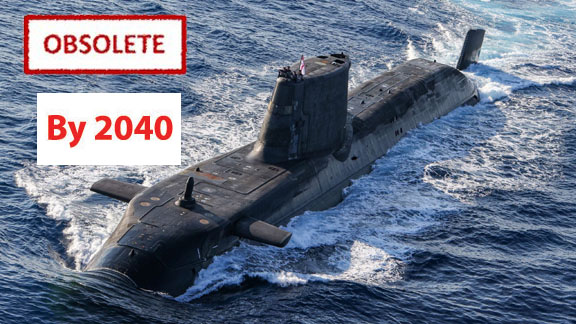
Ohff described the centrepiece of the new AUKUS security pact as effectively “spur of the moment between Biden, Johnson and Morrison”, saying: “In the end we won’t get the subs the Government wants to procure – it’s all hocus pocus.”
In the end, the US military is unlikely to agree to the transfer of technology,” he said.
“It’s almost comical – if it wasn’t so serious.”
Former subs boss blasts ‘hocus pocus’ nuclear deal
A former head of ASC has blasted Australia’s “insane deal” with the US and the UK to build nuclear-powered submarines in Adelaide, deriding a “hocus pocus” announcement he says raises major issues about nuclear and defence capability. https://indaily.com.au/news/2021/09/20/former-subs-boss-blasts-hocus-pocus-nuclear-deal/ Tom Richardson @tomrichardson
Hans Ohff, who was managing director and CEO of the then-Australian Submarine Corporation from 1993 to 2002, says he does not believe the mooted submarine deal will materialise as planned for Australia, saying: “I believe it will be stymied because the US military establishment will not underwrite the tacit agreement made between the US President, the British and Australian PMs.”
Ohff insists “there will be no transfer of technical know-how to Australia”, arguing “the submarine propulsion train – not just the reactor – will be a black box accessible only to the US”.
In an emailed statement sent to InDaily’s Your Views, Ohff, who is also a research fellow at Adelaide University, said it was incumbent on the federal government “to inform the Australian people on the strategic, environmental, commercial, and political ramifications and consequences before deciding on the acquisition of nuclear-powered attack submarines”.
“We need to fully appreciate the issues and complexities associated with the design, assembly, operation and maintenance of nuclear submarines powered with highly enriched… weapons-grade uranium,” he said.
“We need to understand that the acquisition of HEU [Highly Enriched Uranium]-235 fissile material would challenge the spirit if not the letter of the Treaty of Non- Proliferation of Nuclear Weapons.”
Speaking to InDaily, he went further, saying the plan would have “unbelievable consequences, both here and in Europe” as well as “massive consequences for Outer Harbor”.It’s almost comical – if it wasn’t so serious… Prime Minister Morrison and his Defence Minister have blown up the bridge behind them
“There are big issues with putting highly enriched uranium reactors anywhere in Australia, let alone Outer Harbor,” he said.
Continue readingNorth Korea returns to its missile diplomacy
Pushing the nuclear envelope’: North Korea’s missile diplomacy Guardian,
Analysis: Fear and uncertainty of the Obama years could return as Kim Jong-un revives nuclear ambitions Reuters. Justin McCurry in Tokyo, Wed 22 Sep 2021
North Korea’s recent missile launches signal that the regime has reverted to familiar tactics to attract the attention of the US. Although the rest of the world will take little comfort from this return to “normality”, after a six-month pause Pyongyang last weekend launched what it claimed were new long-range cruise missiles capable of hitting Japan, followed hours later by the test launch of two ballistic missiles into the sea, apparently from a train.
Then came the clearest sign since its last nuclear test in 2017 that the North is not about to abandon its project to build a viable deterrent, with satellite images showing it was expanding a uranium enrichment plant at its main Yongbyon nuclear complex……….. (registered readers only) https://www.theguardian.com/world/2021/sep/22/pushing-the-nuclear-envelope-north-koreas-missile-diplomacy
Iran clearly wants to return to nuclear talks
‘Very clear intent’ by Iran to return to nuclear talks, Ireland says, By Michelle Nichols UNITED NATIONS, Sept 22 (Reuters) – Iran’s foreign minister expressed a “very clear intent” to return to nuclear talks in Vienna, Ireland’s foreign minister said on Wednesday after meeting with his Iranian counterpart on the sidelines of the United Nations General Assembly.
“That may not happen for a number of weeks, as the new Iranian government finalizes their approach towards those negotiations. But certainly, he expressed a very clear intent to return to those negotiations,” Simon Coveney, Ireland’s foreign minister, told reporters.
Ireland is currently a member of the U.N. Security Council and coordinates the 15-member body’s work on a 2015 Iran nuclear deal between Tehran, Britain, China, France, Germany and Russia………
In a video statement, Raisi told the annual gathering of world leaders at the United Nations on Tuesday that Tehran wants to resume nuclear talks with world powers that would lead to removal of U.S. sanctions. https://www.reuters.com/world/europe/iran-minister-expressed-very-clear-intent-return-nuclear-talks-ireland-2021-09-22/
Going nuclear: the secret submarine deal to challenge China, PODCAST
Going nuclear: the secret submarine deal to challenge China, PODCAST Guardian, 22 Sept 21, It came out of the blue – but the new military pact between Australia, the UK and the US could transform international relations for a generation. The Guardian’s defence and security editor, Dan Sabbagh, explains the Aukus deal that has enraged Beijing.
When Boris Johnson, Joe Biden and Scott Morrison announced a new deal that would provide Australia with the technology to run silent nuclear submarines as part of its navy, one phrase kept coming up: “stability in the Indo-Pacific”. The word the leaders of the UK, the US and Australia did not use may be more important: China. By striking the Aukus deal, an unprecedented agreement on defence cooperation between the three countries, the governments have moved to counter what they view as Beijing’s aggression – and prompted questions about whether the move is an ominous sign of a new ‘cold war’ mentality………it has raised a series of questions about whether it signals a shift in international alliances: what happens if China invades Taiwan? What are the knock-on consequences of adding to the club of countries with nuclear-powered submarines? And will any of it make those who live in the Aukus countries – or their neighbours – any safer?
In this episode, Michael Safi is joined by the Guardian’s defence and security editor, Dan Sabbagh, to unpack the ramifications of the deal and ask what it means for the UK and Australia to be tied to American foreign policy for decades to come. https://www.theguardian.com/news/audio/2021/sep/21/going-nuclear-the-secret-submarine-deal-to-challenge-china
US nuclear submarines: a dangerous nonsense for Australia and the region

A third reason concerns the continued use of military might as the way to address conflicts. Bellicose, top-down exercise of power demonstrates a fascination with violence and a corresponding illiteracy about non-violence
. You have to ask whether men in suits, in politics, corporations and in association with media acolytes, ever learn.
US nuclear submarines: a dangerous nonsense https://www.greenleft.org.au/content/us-nuclear-submarines-dangerous-nonsense, Stuart Rees,September 20, 2021Issue 1320Australia Unless you think that force of arms gives security and that revival of alliances with far away governments makes sense, the decision to own and operate United States nuclear submarines should be judged a dangerous nonsense.
There are four reasons for making this claim.
Foreign policy in search of an enemy — in this case China — looks like a guarantee of conflict if not war. Polarisation with little room for dialogue only benefits the arms industry, United States corporations and those in the US, Britain, Australia and China who think a taste for militarism and masculinity will show the benefits of violence. Capacity to learn from the devastation of the past is once again shoved aside.
A second reason concerns Australia’s geography: as though days of empire must not be forgotten, a country located in South East Asia and the Pacific chooses an alliance with elderly friends in Washington and London underscores my submarine despair.
Such a decision reeks of cultural disdain for diverse countries. Even if dialogue with China seems currently blocked, it should make diplomatic sense to communicate about security by being at coffee tables and in tea houses in Malaysia, Vietnam, Indonesia, Cambodia and the Philippines, as well as Pacific Island nations.
Such communication would be about Millennium goals, COVID-19 vaccinations and the future of planet Earth. Alliances with those countries about those issues would make sense.
A third reason concerns the continued use of military might as the way to address conflicts. Bellicose, top-down exercise of power demonstrates a fascination with violence and a corresponding illiteracy about non-violence. You have to ask whether men in suits, in politics, corporations and in association with media acolytes, ever learn.
At a time when surveys of young people record their fear of the future and their despair that powerful, inaccessible men refuse to hear them, they are offered a massive bill for nuclear operating submarines.
Indifference to contracts and derision about trust is a fourth and final reason for disdain about the nuclear submarine alliance.
Whatever the merits of building even one submarine, at least there were years of agreement with French companies to undertake that ship building task. I understand there are up to 60 Australian naval personnel in Cherbourg, France, who have been taken by surprise at US President Joe Biden, British Prime Minister Boris Johnson and Prime Minister Scott Morrison’s announcement.
Who cares? Trust is of no consequence. Contracts can be torn up. Promises were never meant to be kept. Besides, in Morrison’s case, an election looms and boasting about national security by having US submarines gives a potential war-like platform for winning.
There are and there will be no winners.
Can anyone forget the very recent US betrayal and refusal to consult friends and allies in Afghanistan? To distract from that debacle, just pretend that Washington will provide strength and trust in submarines. This is a dangerous nonsense.
[Stuart Rees OAM is Professor Emeritus, University of Sydney, recipient of the Jerusalem (Al Quds) Peace Prize and author of Cruelty or Humanity. He is also the founding Director of the Sydney Peace Foundation. This article was first published at The New Bush Telegraph.]
Aukus: France pulls out of UK defence talks amid row
Aukus: France pulls out of UK defence talks amid row, BBC, By Alex Therrien, 21 Sep 21,
BBC News France’s defence minister has cancelled talks with her UK counterpart as the row continues over a new security deal between Britain, the US and Australia.
Paris is angry after Australia signed the Aukus pact to build nuclear-powered submarines, pulling out of a major contract with France in the process.
UK PM Boris Johnson said France had nothing to worry about from the deal.
But Florence Parly’s meeting with UK Defence Secretary Ben Wallace in London this week has been called off.,,,,,,,,,,, Lord Ricketts, a former British ambassador to France who was due to co-chair the two days of talks, confirmed the meeting between Mr Wallace and Ms Parly had been “postponed to a later date”.
……… In a rare step among allies, French President Emmanuel Macron ordered the recall of the French ambassadors to Washington and Canberra.
The European Union has said it was “analysing” the impact of the Aukus agreement on its trade negotiations with Australia, which are due to resume in October.
BBC Brussels correspondent Jessica Parker said it appeared the EU had hardened up its position over the weekend, as the extent of France’s anger became clear.
She said the European Commission wouldn’t elaborate on what “analysing” the impact of Aukus could actually mean for the trade talks with Australia – but the language might lead to speculation that negotiations could even be suspended…
The agreement means Australia will become just the seventh nation in the world to operate nuclear-powered submarines.
The pact will also see the allies share cyber capabilities, artificial intelligence and other undersea technologies.
But it has been criticised by China, which has accused the three powers of having a “Cold War mentality”…………. https://www.bbc.com/news/uk-58620220
French ambassador says Scott Morrison gave no warning on the nuclear submarine deal
‘Maybe we’re not friends’: French Ambassador claims ScoMo offered no warning about AUKUS deal A powerful French official has slammed Scott Morrison, accusing the Prime Minister of one thing to do with the submarine deal. news.com.au , Helena Burke, 20 Sep 21
The former French Ambassador to Australia has ripped into Scott Morrison for his defence of the AUKUS submarine deal, claiming the Prime Minister lied about warning France about it.
Jean-Pierre Thebault, who had been the French Ambassador in Canberra since 2020, was recalled last week after France expressed outrage at being left out of the new nuclear submarine deal between the US, UK, and Australia.
Speaking to Radio National on Monday, Mr Thebault said France had been completely blindsided by Mr Morrison’s decision to accept the new deal.
“We discover(ed) through the press that the most important person in the Australian government kept us in the dark intentionally until the last minute and was not willing to at least have the decency to enter conversation about the alternative,” Mr Thebault said.
“This is not an Australian attitude towards friends.”
Maybe we’re not friends.”
Mr Morrison had previously rejected that he had not warned France about the new deal, insisting he told French President Emmanuel Macron in June that Australia might scrap its original submarine agreement,,,,
But the French Ambassador insisted France had never been warned about the potential for a new deal which would exclude them. https://www.news.com.au/national/politics/maybe-were-not-friends-french-ambassador-claims-scomo-offered-no-warning-about-aukus-deal/news-story/467293b479eca4741c116ba5ced54751
North Korea says Australia’s submarine deal could trigger ‘nuclear arms race
North Korea says Australia’s submarine deal could trigger ‘nuclear arms race’ WP, By Rachel Pannett 20 Sep 21, North Korea on Monday condemned a new defense pact by the United States, Australia and Britain, and a plan to share nuclear submarine technology with Australia, saying the deal could trigger a nuclear arms race and upset the balance in the Asia-Pacific region………Responding to news of the trilateral security pact on Monday, the unnamed North Korean ministry official described the United States as “the chief culprit toppling the international nuclear nonproliferation system,” adding that its “double-dealing attitude” was threatening “world peace and stability.”…….. https://www.washingtonpost.com/world/2021/09/20/north-korea-submarine-nuclear-aukus/
Malaysia and Indonesia warn Australia’s Indo-Pacific pact could trigger nuclear arms race
Malaysia and Indonesia warn Australia’s Indo-Pacific pact could trigger nuclear arms race, Taipei Times, 19 Sep 21
The new AUKUS alliance will involve Australia, the US and Britain exchanging technology and intelligence
Australia will have access to US nuclear technology, which will enable it to build nuclear submarines
Australia’s nuclear arms ban remains in new deal
Birmingham said there was no “quid pro quo” in Australia agreeing to step up its strategic relationship with the UK and the US.
He insisted that nuclear weapons would not be based within Australia’s jurisdiction. “We’ve been clear, Australia’s position in relation to nuclear weapons does not change, will not change,” he said yesterday.
“We will meet all of our non-proliferation treaty arrangements and obligations and not be changing any of our policies in relation to the nuclear weapons technology.”
Birmingham did not rule out an increase in the number of UK and US military personnel on Australian shores. “We already have US troops and marines who work in Australia on rotational deployments at times,” he said………….
it is not just the French who have been made uneasy by the AUKUS arrangement, which is still to be worked out in detail. Australia’s allies in the Indo-Pacific have also raised concerns over what the deal will mean for tensions in the region.
Malaysia said on Saturday that Canberra’s decision to build atomic-powered submarines could trigger a regional nuclear arms race, echoing concerns already raised by Beijing.
“It will provoke other powers to also act more aggressively in the region, especially in the South China Sea,” the Malaysian prime minister’s office said, without mentioning China……https://www.taipeitimes.com/News/world/archives/2021/09/20/2003764684
China fears that the nuclear-powered submarines could be armed with nuclear weapons at short notice

US FORCES US submarine launches Trident II nuclear missiles in stunning show of strength U.S,Sun Olivia Burke, Sep 19 2021
THE US Navy triumphantly test-launched Trident D5LE nuclear missiles on Friday in a stunning show of strength.
The scheduled two-missile deployment of the unarmed revamped weapon took place off the coast of Cape Canaveral, Florida from the USS Wyoming (SSBN-742) submarine……
The Navy boasted of the “unmatched reliability” of the new “sea-based nuclear deterrent” as tensions continue to increase with China.
It was the 184th successful Trident II (D5 & D5LE) SWS missile test flight and follows the last launch in February this year off the coast of Florida……..
“This same team is now developing the next generation of the Trident Strategic Weapon System, which will extend our sea-based strategic deterrent through 2084,”
The Navy also revealed the submarine missiles have been given “a life extension program to address potential impacts from aging and obsolescence”.
They are now primed to be stationed amongst the rest of the fleet alongside the UK Vanguard-class, US Colombia-class, UK Dreadnought-class.
With an estimated annual cost of $170million, the US spend a whopping $2.4million each year to run the Ohio-class submarines.
….the launch comes in the wake of the revelation of the UK’s and US’ plans to build nuclear-powered submarines for Australia.
AUKUS’ ALLIANCE
The alliance has angered China, who fear the subs could be armed at short notice with nukes, despite assurances they will only carry conventional weapons.
The countries leaders carefully navigated the announcement without directly mentioning China’s imposing power – but hinted at their intentions behind the move by discussing “democracy, freedom of navigation, and security.”
The new Indo-Pacific security pact, known as AUKUS, will give the land Down Under the technology to deploy nuclear-powered submarines.
It is part of an agreement intended to counter China’s rising military might – that they have splashed six times more cash on than Australia.
With 42 times more soldiers, 55 times more tanks, 13 times more submarines and 16 times more fighter jets, they eclipse the Aussies artillery.
And with 3.3 million troops in service, Beijing dwarves Australia’s 80,000 soldiers – but AUKUS has still managed to seriously ruffle some feathers.
CHINA’S FURY
Chinese Foreign Ministry spokesman Zhao Lijian condemned the alliance as “seriously damaging regional peace and stability, intensifying the arms race, and undermining the Treaty on the Non-Proliferation of Nuclear Weapons”.
China is believed to have between 250 and 350 nuclear weapons, compared to America’s colossal arsenal of 5,800 and Russia’s total of 6,375. ……. https://www.the-sun.com/news/3691458/us-submarine-trident-ii-nuclear-missiles-chinas-threats/
New Australia, Britain, and U.S. military alliance—AUKUS— a serious escalation of the new Cold War on China.

‘Anti-China’ Military Pact ‘Threatens Peace and Stability’ in Pacific, Groups Warn
“The announcement of the new Australia, Britain, and U.S. military alliance—AUKUS—represents a serious escalation of the new Cold War on China.” Common Dreams , KENNY STANCIL, September 16, 2021 Anti-war advocates are denouncing Wednesday’s formation of a trilateral military partnership through which the United States and the United Kingdom plan to help Australia build a fleet of nuclear-powered submarines—a long-term initiative broadly viewed as a challenge to China by Western powers determined to exert control over the Pacific region.
Although Australian Prime Minister Scott Morrison, U.K. Prime Minister Boris Johnson, and U.S. President Joe Biden did not mention Beijing during their joint video announcement of the so-called AUKUS alliance, “the move is widely seen as a response to China’s expanding economic power, military reach, and diplomatic influence,” the Washington Post reported. “China is believed to have six nuclear attack submarines, with plans to increase the fleet in the next decade.”
The Guardian noted that it could take more than a decade for AUKUS to develop submarines propelled by enriched uranium—which allow the attack vessels to operate more quietly and remain deployed for up to five months—”but once at sea, the aim is to put Australia’s currently diesel-powered navy on a technological par with China’s navy, the world largest.”
In addition to “cooperation on naval technology,” the newspaper reported, “the partnership will involve closer alignment of regional policies and actions, and greater integration of the militaries and the defense industries of the three allies,” which “also intend to work together on cyberwarfare and on artificial intelligence capabilities.”
In response to the development, the British chapter of the No Cold War coalition said Thursday in a statement that “the new anti-China military alliance forged between Australia, Britain, and the U.S.—AUKUS—is an aggresive move which threatens peace and stability in the Pacific region.”
According to the coalition of nearly two dozen peace groups, the creation of AUKUS “follows the recent sending of a British warship to the South China Sea in an aggressive and provocative gesture of support for the U.S.’s massive military build-up against China.”
“It should be noted,” the coalition continued, “that New Zealand is not participating in this aggressive military alliance and it’s no nuclear policy means that Australian nuclear-powered submarines will be banned from New Zealand’s ports and waters.”
“It is against the interests of the British people, the Chinese people, and all of humanity for Britain to join the U.S. and Australia in racheting up aggression against China,” No Cold War added. “The world needs global cooperation to tackle shared threats of the pandemic and climate change, not a new Cold War.”
Anti-war progressives from Australia and the U.S. have also condemned the new military alliance.
“It was only a few weeks ago that a generation-long war in Afghanistan came to an end,” Alison Broinowski of the Independent and Peaceful Australia Network, said in a statement shared prior to the official launch of AUKUS. “Instead of reflecting on the pointlessness and horror of U.S. militarism, Australia and the U.S. are already talking about their next military adventure.”
“How can Australia assert an independent and peaceful foreign policy with a military that is so integrated into the U.S.?” Broinowski asked.
During his remarks publicizing the pact, Biden claimed that “we need to be able to address both the current strategic environment in the region, and how it may evolve, because the future of each of our nations, and indeed the world, depends on a free and open Indo-Pacific enduring and flourishing in the decades ahead.”
China Is Not Our Enemy, a project of U.S.-based peace group CodePink, responded by asserting that “if Biden and the Pentagon really want to ‘ensure peace and stability’ in the region, they could simply stop dealing missiles, weapons, [and] nuclear tech to Australia, Japan, South Korea, and Taiwan that escalate conflict and threaten global safety.”
Officials in Beijing also criticized the agreement, with China’s Foreign Ministry spokesperson Zhao Lijian reportedly calling the U.S. and U.K.’s decision to export extremely sensitive nuclear technology to Australia an “extremely irresponsible” move that exposes “double standards.”
AUKUS “seriously undermines regional peace and stability, aggravates the arms race, and hurts international nonproliferation efforts,” Zhao added.
Describing AUKUS as a “disastrous” deal, CodePink co-founder Medea Benjamin tweeted Wednesday that Australia, the U.K., and the U.S. “are ratcheting up the tension that could easily lead to a nuclear war with China.”
Amid growing concerns that Washington’s increasingly hostile approach to China could escalate into a full-blown military conflict, nearly 50 advocacy organizations in July sent a letter to Biden and members of Congress in which they argued that “nothing less than the future of our planet depends on ending the new Cold War between the United States and China.” https://www.commondreams.org/news/2021/09/16/anti-china-military-pact-threatens-peace-and-stability-pacific-groups-warn
France angry about nuclear submarine cancelleation – recalls ambassadors to Australia, USA.
France vents subs anger with recall of Australian, US envoys, AFR Hans van Leeuwen, Europe correspondent Sep 18, 2021 –London | France has issued a diplomatic slap in the face to Canberra and Washington, recalling its ambassadors to vent its displeasure at the cancellation of Australia’s $90 billion submarine contract with state-controlled defence company Naval Group.
The move signals a potentially serious rupture in Franco-Australian relations, after Foreign Minister Jean-Yves Le Drian publicly described Australia’s switch to a maritime security pact with the US and Britain as “a stab in the back”.
This exceptional decision is justified by the exceptional gravity of the announcements made on September 15 by Australia and the United States,” Mr Le Drian said in a statement on Friday (Saturday AEST).
“The cancellation of the Attack class submarine program binding Australia and France since 2016, and the announcement of a new partnership with the United States meant to launch studies on a possible future cooperation on nuclear-powered submarines, constitute unacceptable behaviour between allies and partners.”
Mr Le Drian said the “consequences directly affect the vision we have of our alliances, of our partnerships and of the importance of the Indo-Pacific for Europe”………
Although Australia’s French embassy has issued a statement arguing that the decision was made purely on technical grounds, the French government and commentariat has interpreted it as a political decision – and it will potentially rankle for years to come…… https://www.afr.com/world/europe/france-vents-subs-anger-with-recall-of-us-australian-envoys-20210918-p58srz
Nuclear-powered submarines a ‘terrible decision’ which will make Australia ‘less safe – Australian Greens

Nuclear-powered submarines a ‘terrible decision’ which will make Australia ‘less safe’
Greens leader Adam Bandt has raised concerns over Australia’s acquisition of technology for nuclear-powered submarines from the US and UK, calling it a “terrible decision” which will make “our country less safe”.
While there have been no serious incidences with the UK and US nuclear-powered submarines in their history, Mr Bandt pointed out New Zealand will not allow the nuclear vessels in their waters.
“Australia will be writing a blank cheque, we will be spending untold billions on a fleet of floating Chernobyls,” Mr Bandt told Sky News Australia.
Mr Bandt said Australia was buying “a nuclear reactor in a box” and noted if the US decides to change the technology or withhold support, “we are at their mercy”.
“It’s really concerning the Prime Minister is calling this ‘a forever partnership’, because it means if another Donald Trump comes back in the United States, we are now … a small arm of their nuclear capacity.” https://www.skynews.com.au/australia-news/defence-and-foreign-affairs/nuclearpowered-submarines-a-terrible-decision-which-will-make-australia-less-safe/video/bc91f5690c3
The AUKUS deal and nuclear submarine plan ties Australia in to any American engagement against China
This pact ties Australia to any US military engagement against China, https://www.smh.com.au/national/this-pact-ties-australia-to-any-us-military-engagement-against-china-20210916-p58s5k.html
The announced agreement between the United States, Britain and Australia for Australia to move to a fleet of US-supplied nuclear submarines will amount to a lock-in of our military equipment and forces with those of the US, with only one underlying objective: the ability to act collectively in any military engagement by the US against China.
This arrangement would witness a further dramatic loss of Australian sovereignty, as materiel dependency on the US would rob Australia of any freedom or choice in any engagement it may deem appropriate.
Australia has had great difficulty in running a bunch of locally built conventional submarines. Imagine the difficulty in moving to sophisticated nuclear submarines, their maintenance and operational complexity. And all this at a time when US reliability and resolution around its strategic commitments and military engagements are under question.
If the US military, with all its might, could not beat a bunch of Taliban rebels with AK-47 rifles in pickup trucks, what chance would it have in a full-blown war against China, not only the biggest state in the world but the commander and occupant of the largest land mass in Asia? When it comes to conflict, particularly among great powers, land beats water every time.
It has to be remembered that China is a continental power and the US is a naval power. And that the US supply chain to East Asia would broadly need to span the whole Pacific from its base in San Diego and other places along the American west coast. Australia, by the announced commitments, would find itself hostage to any such a gambit.
There is no doubt about the Liberals: 240 years after we departed from Britain, we are back there with Boris Johnson, trying to find our security in Asia through London. Such is the continual failure of the Liberal Party to have any faith in Australia’s capacity, but, more particularly, its rights to its own independence and freedom of action.
1 This Month

of the week – THE ONENESS of HUMANITY

25 June- THE PUKE ON NUKES
Thursday, June 25, 2026
7pm Central Time (8pm ET, 6pm MT, 5pm PT) UTC – 5
From NRC & DOE Deregulation to Techno-Fascist Billionaires Going Nuclear, Plus a Few Songs from Atomic Cabaret REGISTER
26 June – Radiation Trainwreck at the NRC / Join the Protect Better Campaign – https://us02web.zoom.us/meeting/register/4ZlZ5_qLSHGiLSCg8FF6Bg#/registration
1st July – Webinar Waste of Space: The Environmental Harm of Military and Civil Space Activity st July, 7 pm

Report Launch Online: We are seeing an increasing exploitation of space for military and commercial purposes. This must change.

Protect Sazan Island from the Trump family! https://secure.avaaz.org/campaign/en/protect_sazan_island_from_the_trump_family_loc/?bqFCVab&v=174511&cl=22707147157&_checksum=5e9dde668860e8231c33699735e16a1fbf22ab2cb01da50c999fe8732b9775ef&utm_source=email&utm_medium=blast_email&utm_campaign=174511


Cuba Is Not a Failed State – It Is a Besieged State
PETITION: “Global Appeal to Endorse Palestinian Right of Return of Refugees”
To see nuclear-related stories in greater depth and intensity – go to https://nuclearinformation.wordpress.com
-
Archives
- June 2026 (251)
- May 2026 (306)
- April 2026 (356)
- March 2026 (251)
- February 2026 (268)
- January 2026 (308)
- December 2025 (358)
- November 2025 (359)
- October 2025 (376)
- September 2025 (257)
- August 2025 (319)
- July 2025 (230)
-
Categories
- 1
- 1 NUCLEAR ISSUES
- business and costs
- climate change
- culture and arts
- ENERGY
- environment
- health
- history
- indigenous issues
- Legal
- marketing of nuclear
- media
- opposition to nuclear
- PERSONAL STORIES
- politics
- politics international
- Religion and ethics
- safety
- secrets,lies and civil liberties
- spinbuster
- technology
- Uranium
- wastes
- weapons and war
- Women
- 2 WORLD
- ACTION
- AFRICA
- Atrocities
- AUSTRALIA
- Christina's notes
- Christina's themes
- culture and arts
- Events
- Fuk 2022
- Fuk 2023
- Fukushima 2017
- Fukushima 2018
- fukushima 2019
- Fukushima 2020
- Fukushima 2021
- general
- global warming
- Humour (God we need it)
- Nuclear
- RARE EARTHS
- Reference
- resources – print
- Resources -audiovicual
- Weekly Newsletter
- World
- World Nuclear
- YouTube
-
RSS
Entries RSS
Comments RSS
 nuclear-news