‘Dangerous rhetoric’ stoking nuclear tensions: UN chief
more https://www.france24.com/en/live-news/20221122-dangerous-rhetoric-stoking-nuclear-tensions-un-chief Fes (Morocco) (AFP) 22 Nov 22, – United Nations chief Antonio Guterres warned on Tuesday against “dangerous rhetoric” stoking tensions among nuclear-armed rivals.
Growing divisions are threatening global peace and security, provoking new confrontations and making it all the more difficult to resolve old conflicts,” Guterres told a conference in Morocco.
“Dangerous rhetoric is raising nuclear tensions,” he warned.
“At the same time, we are dangerously close to the edge on the climate, while hate speech and disinformation are proliferating.”
He was talking as Russia’s war in Ukraine neared its tenth month with no end in sight, fanning nuclear fears.
Guterres said “forces of discord” were waking up “old demons” including anti-semitism and Islamophobia.
“In this troubled world, we must ease tensions, foster inclusion and social cohesion, and bring about more united and resilient societies,” he said.
Guterres was addressing a meeting of the United Nations Alliance of Civilizations, which aims to “galvanise international action against extremism” — the first time the group has met on African soil.
In a declaration adopted on Tuesday evening, the meeting condemned “any advocacy of hatred that constitutes incitement to discrimination, hostility or violence”.
It also expressed “deep concern about the use of new information technologies… for purposes contrary to respect for human values, good neighbourliness, equality, non-discrimination, and respect for others”, noting the particular vulnerability of children and youth.
The Fez meeting ends Wednesday. The forum’s next edition is to be held in Lisbon in 2024.
Philippines to be America’s nuclear guinea-pig for experimental small modular nuclear reactors?
Philippines’ Makabayan bloc files resolution seeking to probe US-Philippines nuclear energy deal By CNN Philippines Staff.Nov 23, 2022,
— The Makabayan bloc in the House of Representatives has filed a resolution seeking to investigate the nuclear energy cooperation deal announced by United States Vice President Kamala Harris, citing threats to the health and safety of Filipinos and the environment.

ACT Teachers party-list Rep. France Castro, Gabriela Women’s Party Rep. Arlene Brosas, and Kabataan party-list Rep. Raoul Danniel Manuel warned that Filipinos may be used as “guinea pigs” for testing nuclear equipment.
“Ang mahirap dito baka tayong mga mamamayang Pilipino ang ma-1-2-3 at maging mga guinea pig ng teknolohiyang ito na tine-testing pa lang ng US,” Castro said in a statement.
[Translation: The problem here is that Filipinos may be duped and served as guinea pigs for a technology still being tested by the US.]
According to the White House fact sheet released on Monday, the 123 Agreement, or the nuclear energy cooperation deal, will provide the legal basis for US exports of nuclear equipment and material to the Philippines.
The 123 Agreement also aims to support expanded partnerships on zero-emission energy and nonproliferation of nuclear weapons.
According to Philippine Ambassador to the US Jose Manuel Romualdez, the Marcos administration is considering bringing in US-developed small modular reactors to the country.
“As it is, modular or microreactor nuclear power plants are still at an experimental stage and are only legally being made in US bases. Early this year, the Pentagon’s Strategic Capabilities Office announced the construction and testing decision that followed the office’s Environmental Impact Statement work for Project Pele,” Castro said………….more https://www.cnnphilippines.com/news/2022/11/23/Makabayan-bloc-US-PH-nuclear-energy-deal-probe.html
Putin’s nuclear grip on Europe could spark another energy crisis, expert warns
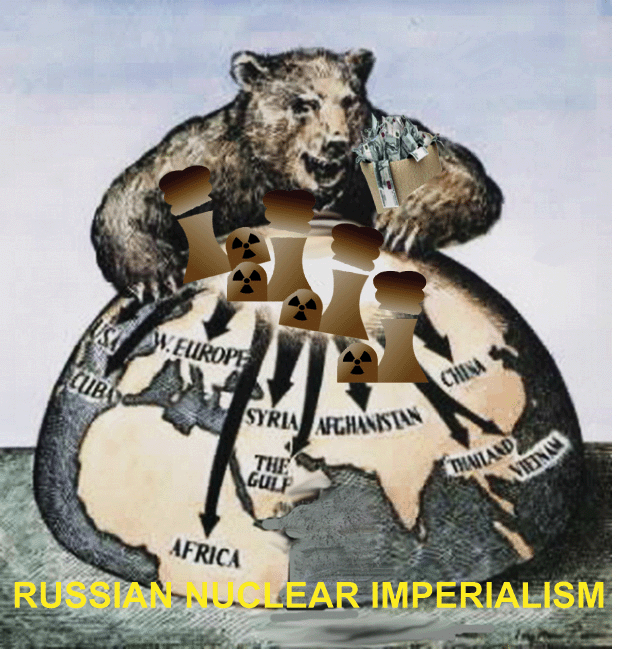
Russian President Vladimir Putin controls about 42 percent of the world’s nuclear fuel, and may be able to send electricity prices soaring if he withholds supplies.
https://www.express.co.uk/news/science/1698529/putin-nuclear-power-energy-uranium-gas-prices By JACOB PAUL, Nov 20, 2022, As global gas prices have been sent to record highs over the last year due to Russian President Vladimir Putin’s war in Ukraine and his supply cuts to Europe, nations across the continent have been scrambling to wean themselves off Russian fossil fuels to weaken Moscow’s tight grip on the energy market. But an expert has told Expess.co.uk that countries which have hedged bets on nuclear power as a means of gaining energy independence may not actually be able to escape Putin’s clutches as the Kremlin has dominance over nuclear fuel supplies, which could potentially trigger another price crisis.
While policymakers across Europe have argued that nuclear power stations can boost homegrown supplies of energy, they have failed to mention these plants require uranium to fuel them.
This is the crux of the issue as Russia, and Russia-controlled Kazakhstan currently supplies 42 percent of all uranium for all reactors worldwide. And when compared with the gas crisis, the statistics look eerily similar.
The EU for instance, got around 40 percent of its gas from Russia before Putin sent his troops into Ukraine. And when he withheld supplies to Europe, prices in Britain shot up too, despite the UK only getting four percent of its gas from Russia. This is due to the integrated nature of the gas market.
With the EU relying on Russia for 20 percent of its uranium needed to fuel supplies if Russia decided to curtail uranium deliveries to the bloc, it may spark the same problem and trigger another energy crisis.
Prof Paul Dorfman, an Associate Fellow from the Science Policy Research Unit (SPRU) at the University of Sussex told Express.co.uk: “The argument goes that nuclear provides a security of supply. In other words, ‘you don’t need to worry about Putin’s gas or the Middle East’s oil’. But this point of view is hugely problematic.
“There is no question that the whole business about the Russian invasion of Ukraine has turned the nuclear industry on its head. This whole idea of security of supply, that nuclear won’t leave us dependent on foreign problems is false.
“Putin, Russia and Russia-controlled Kazakhstan supply 42 percent of all uranium of all reactors worldwide. 20 percent for the EU, 14 percent of the US and nearly 30 percent of their enrichment services.
“The UK is different. We get our uranium from Australia and Canada and we don’t rely on Russia so we are ok.”
However, while nuclear fuel may not run short in the event of a supply cut from Russia, Prof Dorfman warned, it could send the cost of electricity in Britain soaring too.
Asked if the nuclear market was similar to the gas market in this regard, Prof Dorfman told Express.co.uk: “In my view, it certainly would have a significant impact on UK electricity prices because we live in a market world. Absolutely, yes.”
This could be a concern for the UK, given that Britain is planning to dramatically expand its number of nuclear power plants, a desire unveiled in the April energy strategy under former Prime Minister Boris Johnson.
It included the plan to set up new government body, Great British Nuclear, and a £120milion Future Nuclear Enabling Fund in a bid to build eight new reactors across the UK. Mr Johnson said: “We’re setting out bold plans to scale up and accelerate affordable, clean and secure energy made in Britain, for Britain – from new nuclear to offshore wind – in the decade ahead.
“This will reduce our dependence on power sources exposed to volatile international prices we cannot control, so we can enjoy greater energy self-sufficiency with cheaper bills.”
While it is recognised that renewable energies like wind and solar power are cheaper than other sources like oil and gas, Mr Johnson appeared to fail to take into account Putin’s grip on the global nuclear market and the prospect of sending electricity bills soaring in the UK.
N Korea warns of ‘all-out’ nuclear response to US ‘aggression’
North Korea has promised to ‘resolutely react’ to US threat of nuclear weapons use with its own nuclear capabilities.
North Korean leader Kim Jong Un has promised to use nuclear weapons to counter threats from the United States hours after test-firing an intercontinental ballistic missile (ICMB), the latest escalation as the UN Security Council prepares to convene an emergency session on Pyongyang’s actions.
The United Nations Security Council, at the behest of Japan, South Korea and the US will gather on Monday to discuss North Korea’s latest missile launch…………………………………….. more https://www.aljazeera.com/news/2022/11/19/north-korea-warns-of-all-out-nuclear-response-to-us-provocation
Biden and CIA Director Burns in Double Act to Split Putin and Xi
This American president has said publicly on four occasions that the U.S. would defend Taiwan militarily if the Chinese mainland were to exercise its legal right to use force for bringing the island under full administrative control from Beijing. Those declarations by Biden violate the legally binding One China principle recognized by international law as well as under domestic U.S. laws. At the G20 summit this week, Biden said there was no change in American policy on Taiwan, despite his previous flagrant statements to the contrary.
The heavily reported narrative of “warning Russia against nukes” reinforces the contrived notion that Russia is a pariah state that is threatening to use nuclear weapons, whereas it is Moscow that has repeatedly warned that the war being fueled in Ukraine by the United States and its NATO partners could spiral uncontrollably into a catastrophic confrontation.
Russia has not threatened to use nuclear weapons, has not even mentioned the word.
Strategic Culture, Finian Cunningham, November 15, 2022,
Biden and Burns’ clunky double act is likely to not impress anyone in Beijing and Moscow.
U.S. President Joe Biden apparently sought to lower tensions with China this week when he promised Chinese counterpart Xi Jinping that Washington was “not seeking a new Cold War” with Beijing.
The two leaders met on the sidelines of the G20 summit in Indonesia. It was their first face-to-face meeting since Biden took office in January 2021. While Biden was all smiles for a handshake photo-op, Xi looked noticeably reserved, like a guy who was bracing himself as one about to hear loads of bullshit.
After more than three hours of private discussions, the Americans and Western media subsequently tried to spin that both sides had agreed on condemning Russia’s alleged threat to use nuclear weapons in Ukraine. This was the Americans taking license. Xi did not specify Russia, according to the White House readout of the meeting. Both leaders condemned nuclear war and said it should never be fought, a rebuke which applies as much to the United States as anyone else. The Western media, however, tried to spin it as joint condemnation of Russia.
The Chinese side had quite a different take on what was conveyed in the meeting. No wonder that Xi had looked reserved when he greeted Biden earlier.
President Xi was quoted as telling Biden: “A statesman should think about and know where to lead his country. He should also think about and know how to get along with other countries and the wider world… Instead of talking in one way and acting in another, the United States needs to honor its commitments with concrete action.”
This was pretty close to the Chinese president calling out his American counterpart as a bare-faced liar who can’t be trusted in what he says.
After all, Biden has continued the policy of massively arming China’s island province of Taiwan. That is a direct assault on Beijing’s sovereignty and China’s territorial integrity as well as posing a threat to its national security across the 150-km Taiwan Strait.
This American president has said publicly on four occasions that the U.S. would defend Taiwan militarily if the Chinese mainland were to exercise its legal right to use force for bringing the island under full administrative control from Beijing. Those declarations by Biden violate the legally binding One China principle recognized by international law as well as under domestic U.S. laws. At the G20 summit this week, Biden said there was no change in American policy on Taiwan, despite his previous flagrant statements to the contrary.
The Biden administration is planning to station nuclear-capable B-52 bombers in Australia aimed at provoking China as well as supplying Canberra with nuclear submarines as part of a new military coalition in the Asia-Pacific involving the United Kingdom, known as AUKUS.
Washington has also stepped up economic warfare against China with bans on the export of hi-tech semiconductors vital for Chinese industry.
The resumption of U.S. war drills off the Korean Peninsula in recent weeks after a three-year hiatus has sharply escalated tensions with between North and South Korea which poses a destabilizing national security risk for neighboring China.
So, Biden’s talk of “not seeking a new Cold War” with China is contemptible in the face of empirical events and U.S. conduct.
Which brings us to the question: what was Biden trying to achieve in soft-talking to Xi?
It seems the U.S. president was really seeking to split China from Russia.
Biden talked about no Cold War with China. But what about Russia? Seems the United States is full-on about aggravating Moscow. Can a presumed superpower be credibly in a Cold War with one adversary but not with another? That dichotomy doesn’t sound believable. So, what’s going on?
………………………… William Burns, the CIA director, met with the head of Russia’s foreign intelligence Sergei Naryshkin in Ankara……………..
Western headlines dutifully reported that Burns purportedly “warned Russia against using nuclear weapons in Ukraine”.
The White House’s national security council emphasized that Burns was not engaged in talks to end the conflict in Ukraine.
The heavily reported narrative of “warning Russia against nukes” reinforces the contrived notion that Russia is a pariah state that is threatening to use nuclear weapons, whereas it is Moscow that has repeatedly warned that the war being fueled in Ukraine by the United States and its NATO partners could spiral uncontrollably into a catastrophic confrontation.
Russia has not threatened to use nuclear weapons, has not even mentioned the word, and it has warned of the reckless dangers that the U.S. and NATO are stoking. If anything, it is the United States and its partners who are implicitly threatening the risk of nuclear war. President Vladimir Putin’s warned in September that if Russia’s existential security is threatened by NATO then Moscow reserves “the right to use all means of defense”. That reasonable warning has been cynically distorted to appear like a menacing threat to use nukes by Russia.
It seems that the Burns trip was aimed at further demonizing Russia as a nuclear threat to world security. Meanwhile, Biden was trying to ingratiate himself with Xi as a way to undermine the strong friendship that has developed between Beijing and Moscow, especially under Xi and Putin’s leadership.
Biden’s bid to appease Xi by saying that there is no Cold War intended is a blatant lie that China no doubt can see through as plain as a glass of urine. Biden and Burns’ clunky double act is likely to not impress anyone in Beijing and Moscow. https://strategic-culture.org/news/2022/11/15/biden-and-burns-in-double-act-to-split-putin-and-xi/
US nuclear strategy gravely threatens global security
https://www.globaltimes.cn/page/202211/1279678.shtml By Kong Jun Nov 16, 2022 The US Department of Defense recently released its 2022 Nuclear Posture Review (NPR), which continues the US’ consistent Cold War mentality and hegemonic logic, plays up great power competition and bloc confrontation, and exploits nuclear deterrence as a geopolitical tool. The international community is widely concerned that the US nuclear strategy will severely deteriorate the global strategic security environment.
The NPR shows that the incumbent US administration has not adopted a policy of “no first use” of nuclear weapons or the policy that “the sole purpose of our nuclear arsenal weapons is to deter -and, if necessary, retaliate for – a nuclear attack against the United States or its allies” as it promised during the 2020 presidential campaign, but has continued its longstanding policy of reserving the option of launching a preemptive nuclear strike.
While shouting the slogan of “reducing the role of nuclear weapons,” the US claims to deter nuclear and non-nuclear strategic attacks with nuclear weapons. Its hypocrisy is evident for all to see. Daryl G. Kimball, executive director of the Arms Control Association, recently published an article that suggested the NPR “sends muddled messages about the role of nuclear weapons in US defense strategy and foreign policy at a time when the United States should be more clearly de-emphasizing the salience of nuclear weapons and the threat of nuclear weapons use.”
The US nuclear strategy undermines strategic mutual trust among major powers. The US has long pretended to be a victim, hyping up nuclear threats from China and Russia and exaggerating that “by the 2030s the United States will, for the first time in its history face two major nuclear powers as strategic competitors and potential adversaries,” and openly tailored its nuclear deterrence strategy against China, Russia and other countries. The size of China’s nuclear arsenal is not on the same level with that of the US, and China has pledged to “no first use” of nuclear weapons at any time and under any circumstances. The US’ hyping up of the “China nuclear threat theory” will not change the fact that the US’ nuclear weapons pose a threat to the world, nor will it justify its nuclear expansion. Instead, it will only severely impair the strategic security relations of major powers.
The US nuclear strategy raises the risk of nuclear conflict. US President Joe Biden expressed his opposition to his predecessor’s plan to deploy a low-yield nuclear warhead called the W76-2. However, the NPR has retained this type of nuclear warhead and earmarked it for tailored deterrence against China and Russia, and also stated its intention to deploy a new B61-12 nuclear bomb. In January, the Joint Statement of the Leaders of the Five Nuclear-Weapon States on Preventing Nuclear War and Avoiding Arms Races reiterated that “a nuclear war cannot be won and must never be fought.” Going back on its own words, the US is developing nuclear weapons for combat use, in a complete disregard of the consequences of increasing the risks of nuclear conflict.
The US nuclear strategy stimulates a nuclear arms race. As a country with the largest nuclear arsenal, the US bears special and primary responsibilities for nuclear disarmament and should reduce its nuclear weapons in accordance with the international consensus. Regrettably, the US does not have any substantive nuclear disarmament measures, but instead seeks to upgrade its nuclear triad. The US expansion of nuclear arsenal has undermined global strategic balance and stability. It cannot be ruled out that other nuclear-weapon States will follow suit. It will also stimulate non-nuclear-weapon States to develop nuclear weapons of their own or seek “nuclear umbrella,” thereby impeding the international arms control and disarmament process.
The US nuclear strategy undermines the international nuclear non-proliferation and disarmament regime. Washington talks about strengthening regional nuclear deterrence and detailed plans to deploy strategic bombers, dual-capable fighter jets and even nuclear weapons in the Asia-Pacific region. This is exactly the same as its nuclear submarine cooperation with the UK and Australia under AUKUS and its connivance of the talks about nuclear sharing in Japan and the ROK, which fully exposes the reality that it puts geopolitical self-interest above nuclear non-proliferation obligations and is a complete destroyer of the international nuclear non-proliferation system.
Washington mentions China dozens of times in the report and speculates on and smears the modernization of China’s nuclear capabilities. In fact, since possessing nuclear weapons, China has explicitly undertaken not to be the first to use nuclear weapons at any time and under any circumstances, and unconditionally committed itself not to use or threaten to use nuclear weapons against non-nuclear-weapon states or nuclear-weapon-free-zones, and always keeps its nuclear capabilities at the minimum level required for national security. The US, which has long been in a hegemonic position, should change its hegemonic mentality of maliciously speculating about other countries.
At the moment, the global security structure, as well as international arms control, disarmament and non-proliferation mechanisms, are facing the most severe challenge since the end of the Cold War. The risk of nuclear arms race and nuclear conflict keeps rising. How the US uses its huge nuclear arsenal has a major bearing on world peace and development. We urge the US to abandon the Cold War mentality and the logic of hegemonism, pursue a rational and responsible nuclear policy, and play its due role in maintaining global strategic stability and world peace and security.
US and Western officials considering diplomacy as winter looms and Ukraine war cost may rise to $60 billion
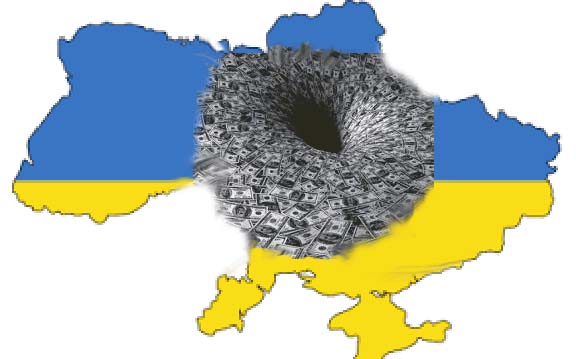
The growing belief that there’s no military resolution to the war and the rising hope that Ukraine and Russia move toward starting talks comes as Ukraine needs additional military aid. The White House and Congress are expected to consider additional funds for assistance for Ukraine, potentially $40 billion to $60 billion, NBC News has reported. Some Republicans and Democrats have begun to question whether the U.S. should send additional tens of billions of dollars to Ukraine
Some U.S. and Western officials think neither side can win and see winter as a shot at diplomacy in Ukraine-Russia war
Russia and Ukraine are most likely looking to the slower tempo of battle this winter as a time to reset and refit their forces to be ready for a spring offensive.
nbc news, By Courtney Kube, Carol E. Lee and Josh Lederman 14 Nov 22,
Some U.S. and Western officials increasingly believe that neither side can achieve all of their goals in the Ukraine war and are eyeing the expected winter slowdown in fighting as an opportunity for diplomacy to begin between Russia and Ukraine, officials familiar with the matter say.
Western defense officials question Ukraine’s ability to remove Russian troops completely from occupied areas, and if military operations on the ground stabilize over the winter that could underline that neither side is likely to achieve its goal of controlling the whole country, the officials said. They spoke on the condition of anonymity because they are not authorized to speak publicly on matters of diplomacy.
“In the winter, everything slows down,” said a Western official with direct knowledge of military operations. “The potential for talks, we would like to see that happening.”
The official pointed to a statement by Russia’s ambassador to the United Kingdom last week about the potential for negotiations as possible “messaging” toward a diplomatic path.
U.S. national security adviser Jake Sullivan made a surprise visit last week to Kyiv, where he met with President Volodymyr Zelenskyy and top Ukrainian officials. The White House National Security Council said the meetings were to “underscore the United States’ steadfast support to Ukraine and its people.” But two people familiar with the meetings and a Ukrainian government official said Sullivan did broach the idea of how the conflict can end and whether it could include a diplomatic solution. “He was testing the waters a bit,” a person familiar with the meetings said.
The Ukrainian official said that during his meetings, Sullivan raised the need for a diplomatic resolution to the war and made the point that Ukraine’s leverage would be strengthened — not weakened — if it expressed openness to ultimately negotiating with the Russians. The official said that Sullivan had not tried to pressure Ukraine to enter into negotiations immediately or to take any specific steps. Instead, the official said, Sullivan expressed the view that Ukraine would able to maintain the support of Western allies better if it is perceived as being willing to reach an end to the conflict through diplomacy……………………………………………
………………….. The growing belief that there’s no military resolution to the war and the rising hope that Ukraine and Russia move toward starting talks comes as Ukraine needs additional military aid. The White House and Congress are expected to consider additional funds for assistance for Ukraine, potentially $40 billion to $60 billion, NBC News has reported. Some Republicans and Democrats have begun to question whether the U.S. should send additional tens of billions of dollars to Ukraine. ……….. https://www.nbcnews.com/politics/national-security/ukraine-russia-war-winter-diplomacy-rcna56190—
Urging peace with Russia, top US general challenges DC’s proxy war
A series of leaks, including a call for diplomacy from Gen. Mark Milley, show that some US officials are ready for a settlement in Ukraine.
Substack, Aaron Maté Nov 13,
When the Congressional Progressive Caucus was bullied into withdrawing a letter urging diplomacy with Russia to end the war in Ukraine, everyone from neoconservative pundits to Sen. Bernie Sanders came forward to scold them. But now the same call is coming from a source that cannot be so easily ignored, and intimidated.
“A disagreement has emerged at the highest levels of the United States government over whether to press Ukraine to seek a diplomatic end to its war with Russia,” the New York Times reports. Leading the call for talks with Moscow is Gen. Mark Milley, the chairman of the Joint Chiefs of Staff. According to US officials, Milley “has made the case in internal meetings that the Ukrainians have achieved about as much as they could reasonably expect on the battlefield before winter sets in and so they should try to cement their gains at the bargaining table.”
The top US general has made no secret of his stance. “When there’s an opportunity to negotiate, when peace can be achieved, seize it,” Milley declared in a public speech this week.
Milley’s view “is not shared” by President Biden or his National Security Adviser, Jake Sullivan, the Times claims. Nor by the top US diplomat, Secretary of State Antony Blinken. As one US official explained to CNN, “the State Department is on the opposite side of the pole,” leading to “a unique situation where military brass are more fervently pushing for diplomacy than US diplomats.”
While US “diplomats” oppose diplomacy, White House officials would not be disclosing that Milley, the nation’s highest military officer, is challenging their stance if he were alone. Indeed, the Milley revelation is only the latest in a series of leaks suggesting that, despite the uproar over the progressives’ pro-diplomacy letter, at least some close to the president agree with its message……… more https://mate.substack.com/p/urging-peace-with-russia-top-us-general?utm_source=post-email-title&publication_id=100118&post_id=84024812&isFreemail=true&utm_medium=email
Russia and US hold secret talks in Ankara – Kommersant
https://www.rt.com/russia/566501-russia-us-secret-talks/ 14 Nov 22, Moscow is reportedly represented by the country’s top spy at the negotiations.
A leading Moscow newspaper claimed, on Monday, that secret US-Russian talks are being hosted by Türkiye. Kommersant, a privately owned title which is known to have good sources in Moscow, reported, citing anonymous sources, that the un-announced meeting was taking place in Ankara.
The outlet alleged that Russia had sent Sergey Naryshkin, director of the Foreign Intelligence Service (SVR) to the talks.
Kremlin spokesperson Dmitry Peskov later confirmed to Russian media that bilateral talks had taken place in Ankara, adding that they were held at the initiative of the US.
CNN claimed that CIA Director Bill Burns had represented Washington at the gathering, citing a “National Security Council spokesperson.”
Earlier this month, Western media reported that top Russian and US officials were engaging in undeclared contacts. According to the Wall Street Journal, US national-security adviser Jake Sullivan has been engaged with Yury Ushakov, a senior foreign policy aide to President Vladimir Putin, and with Nikolay Patrushev, Sullivan’s counterpart in the Russian government.
The White House did not deny the talks, with spokesperson Karine Jean-Pierre telling journalists that the contacts focused on “risk reduction.” Meanwhile, Peskov told the WSJ at the time that the British and American press tended to print “hoaxes.”
Türkiye emerged as a principal mediator during the Ukraine crisis. In late March, it hosted Russia-Ukraine talks, during which the two parties made significant progress towards settling on a peace agreement.
The negotiations were reportedly torpedoed by the UK, when then-Prime Minister Boris Johnson traveled to Kiev in April. According to Ukrainian media, he told President Vladimir Zelensky that Western nations would not support the proposed security pact that was discussed with Russia.
Ankara also helped the UN to launch the Black Sea Initiative, an arrangement that allows Ukraine to export its grain via commercial ships. The agreement, which was signed in July, expires on Friday. Moscow has repeatedly stated that it may not agree to a renewal, unless the UN delivers on its promise to facilitate Moscow’s export of Russian grain and fertilizers, which was part of the deal.
NATO needs enemies to justify its existence – Russia

The bloc’s ongoing expansion is motivated by a desire to manufacture confrontation, a senior diplomat claims
Having an enemy to fight against is essential for NATO’s survival, Russian Deputy Foreign Minister Alexander Grushko has claimed.
The diplomat added that the bloc’s expansion is largely motivated by the need to antagonize nations so they can fit the role of an enemy.
“NATO is the kind of organization that cannot live without an enemy. If it had none, it would have died,” he was quoted as saying by RIA Novosti news agency on Monday.
“They have declared Asia a zone of the alliance’s interest, pushed the zone of their defense right to the border of China,” he noted.
Grushko said the conflict in Ukraine stems from NATO’s declared intention to eventually accept Kiev as a new member, while ignoring Russia’s national security concerns. The alliance is still trying to bring in Ukraine, he said, adding that he doesn’t believe the US and its allies are acting rationally on the issue.
The NATO leadership claims to have an open door policy, saying that every nation has a sovereign right to choose it as provider of security. Its charter, however, requires all members to approve any expansion, a fact that came to the forefront after Türkiye stalled the accession of Finland and Sweden over their alleged sheltering of terrorism suspects.
The US-led military alliance declared the inclusion of Ukraine as one of its objectives in 2008, dismissing Moscow’s warning that such a move would cross a red line. After the 2014 coup in Kiev, the new Ukrainian government dropped the nation’s neutrality policy and said that joining NATO was its primary goal.
When Russia sent its troops into Ukraine in February, it cited NATO’s clandestine expansion into Ukraine as one of the key reasons. Organization members were training and arming the Ukrainian army and establishing military infrastructure in the country without formally accepting Kiev’s membership bid, Moscow said.
G20 leaders to denounce use, or threat, of nuclear weapons – draft (?a pious hypocrisy in opposition to the UN Nuclear Ban Treaty).

The nuclear weapons countries, and their craven supporters deserve a hypocrisy certificate
Among the G20 countries are China, France, Russia, the United Kingdom, and the United States, – all of whom have nuclear weapons and make veiled threats to use them
Australia, Canada, and the European Union also belong – supporting the ‘nuclear umbrella’ that might defend them.
Then there are Japan and Saudi Arbia – itching to get nuclear weapons themselves
BRUSSELS, Nov 11 (Reuters) – Leaders of the world’s 20 biggest economies will next week denounce the use of, or any threat to use, nuclear weapons, according to an early draft of a G20 statement seen by Reuters.
G20 leaders are meeting in Indonesia on Nov 15-16 and the Russian invasion of Ukraine will top their agenda.
“Many members strongly condemned Russia’s illegal, unjustifiable and unprovoked war of aggression against Ukraine, and called on it to immediately end the war,” the draft, which may change and would need Moscow’s approval for unanimity, said.
“The use, or threat of the use, of nuclear weapons is inadmissible.”
Concern about possible nuclear escalation during Russia’s war in Ukraine surged after two speeches by President Vladimir Putin in which he indicated he would, if needed, use such weapons to defend Russia……….
The leaders are also to say they would support all efforts conducive to a “just” peace.
Germany refuses to build nuclear Uniper plant in Sweden
By Charles Szumski | EURACTIV.com, Nov 11, 2022 Nikolaus Kurmayer contributed to reporting
Energy giant Uniper will not build any power plants in Sweden, the company that will be wholly owned by the German state from next year announced Thursday, flouting plans of its Swedish subsidiary Barsebäck Kraft to build a Clean Energy Park.
No new nuclear power plant will be built in Sweden by the German energy company Uniper, Sveriges Radios Ekot reported on Thursday.
“Neither in Sweden nor elsewhere does Uniper have any plans to build a new nuclear power plant, that’s a fact”, spokesman George Oppermann told the radio.
Uniper is part owner of all three active nuclear power plants in Sweden, Oskarshamn, Ringhals and Forsmark. It is also the owner of the Barsebäck powerplant, which is being dismantled…….
From the start of next year, Uniper will be taken over by the German state, who decided to close all remaining nuclear power plants in the country from April next year……….. https://www.euractiv.com/section/politics/news/germany-refuses-to-build-nuclear-uniper-plant-in-sweden/
The three parties making up Sweden’s new ruling right-wing coalition, as well as the supporting far-right Democrats of Sweden, signed a pro-nuclear coalition accord, promising 400 billion SEK (€36 billion) for new nuclear power, with Vattenfall to immediately start planning new nuclear power at Ringhals and other sites.
On Nuclear Treaty, at Least, Biden Aims for Fresh START With Russia
Washington and Moscow look set to keep New START alive with working-level talks, despite historic tensions.
Foreign Policy, By Robbie Gramer, a diplomacy and national security reporter at Foreign Policy. 11 Nov 22
The Biden administration has announced that it will restart nuclear arms control talks with Russia, even as tensions spike over the latter’s war in Ukraine, coupled with the threat of Moscow using nuclear weapons.
The talks are expected to take place in Cairo in the near future, current and former U.S. officials said, and represent the first move by both sides to revive their mutual arms control agenda since U.S. President Joe Biden first halted dialogue after Russia launched its invasion of Ukraine in February…………………………………
The existing arms reduction treaty, New START, caps the number of intercontinental-range nuclear weapons in both Washington’s and Moscow’s arsenals and allows each side to conduct on-site weapons facility inspections in the other country. This allows experts from each country to visit the other country’s weapons sites to view the number of nuclear weapons, launch vehicles, and other details to confirm that both sides are adhering to the treaty. The treaty allows up to 18 on-site inspections per year.
It is the last remaining arms control treaty in place between Russia and the United States, which respectively have the first- and second-largest nuclear arsenals in the world. Under the terms of the treaty, which was first signed in 2010, both countries agreed to cap the number of nuclear warheads they could deploy on delivery systems to 1,550…………………..
Reviving the New START talks has been a quiet goal of the White House and State Department since at least this summer, according to current and former U.S. officials familiar with the matter, and scheduling a new meeting with the Russians on the issue has been in the works for months. Rose Gottemoeller, a former NATO deputy secretary-general and top U.S. arms control envoy who helped negotiate New START in 2009-10, welcomed the move and said the latest nuclear discussions shouldn’t be seen as any sort of concession to Russia.
“We don’t always get to choose with whom we negotiate, but if we’ve got an issue that’s in our national security interest, we have to work it,” said Gottemoeller, now a scholar at Stanford University. “We’ve achieved agreements with the Russians during some very dark hours in our bilateral relationship in the past.” …………….. https://foreignpolicy.com/2022/11/10/nuclear-talks-russia-us-biden-putin-new-start-treaty/
Australia “should not face intimidation from so-called allies under the auspices of defense cooperation,”

Australia “should not face intimidation from so-called allies under the auspices of defense cooperation,” said Kate Hudson, general secretary of the Campaign for Nuclear Disarmament. “The TPNW offers the best chance for lasting global peace and security and a clear road map for nuclear disarmament.”
‘So Irresponsible’: US Condemned for Warning Australia Against Joining Anti-Nuclear Treaty.
Australia “should not face intimidation from so-called allies under the auspices of defense cooperation,” said one advocate. https://www.themoscowtimes.com/2022/11/08/russia-us-eye-nuclear-arms-reduction-talks-in-coming-weeks-kommersant-a79313 JULIA CONLEY, November 9, 2022, Anti-nuclear weapons campaigners rebuked the Biden administration on Wednesday over its opposition to Australia’s newly announced voting position on the Treaty on the Prohibition of Nuclear Weapons, which could signal the country’s willingness to sign on to the agreement.
As The Guardian reported, the U.S. Embassy in Canberra warned Australian officials that the Labour government’s decision to adopt an “abstain” position regarding the treaty—after five years of opposing it—would obstruct Australia’s reliance on American nuclear forces in case of a nuclear attack on the country.
Australia’s ratification of the nuclear ban treaty, which currently has 91 signatories, “would not allow for U.S. extended deterrence relationships, which are still necessary for international peace and security,” the embassy said.
The U.S. also claimed that if Prime Minister Anthony Albanese’s government ratifies the treaty it would reinforce “divisions” around the world.
Australia “should not face intimidation from so-called allies under the auspices of defense cooperation,” said Kate Hudson, general secretary of the Campaign for Nuclear Disarmament. “The TPNW offers the best chance for lasting global peace and security and a clear road map for nuclear disarmament.”
The TPNW prohibits the development, testing, stockpiling, use, and threats regarding the use of nuclear weapons.
The Australian chapter of the International Campaign to Abolish Nuclear Weapons (ICAN) noted that Albanese’s vocal support for achieving nuclear disarmament puts him in line with the majority of his constituents—while the U.S., as one of nine nuclear powers in the world, represents a small global minority.
According to an Ipsos poll taken in March, 76% of Australians support the country signing and ratifying the treaty, while only 6% are opposed.
Albanese has won praise from campaigners for his own anti-nuclear advocacy, with the prime minister recently telling The Australian that Russian President Vladimir Putin’s nuclear saber-rattling “has reminded the world that the existence of nuclear weapons is a threat to global security and the norms we had come to take for granted.”
“Nuclear weapons are the most destructive, inhumane, and indiscriminate weapons ever created,” Albanese said in 2018 as he introduced a motion to commit the Labour Party to supporting the TPNW. “Today we have an opportunity to take a step towards their elimination.”

Labour’s 2021 platform included a commitment to signing and ratifying the treaty “after taking account” of factors including the development of “an effective verification and enforcement architecture.”
Australia’s decision to change its voting position comes as the U.S. is planning to deploy nuclear-capable B-52 bombers to the country, where the weapons will be positioned close enough to strike China.
Gem Romuld, Australia director of ICAN, said in a statement that “it’s no surprise the U.S. doesn’t want Australia to join the ban treaty but it will have to respect our right to take a humanitarian stance against these weapons.”
“The majority of nations recognize that ‘nuclear deterrence’ is a dangerous theory that only perpetuates the nuclear threat and legitimizes the forever existence of nuclear weapons, an unacceptable prospect,” Romuld added.

Beatrice Fihn, executive director of ICAN, called the U.S. embassy’s comments “so irresponsible.” “Using nuclear weapons is unacceptable, for Russia, for North Korea, and for the U.S., U.K., and all other states in the world,” said Fihn. “There are no ‘responsible’ nuclear armed states. These are weapons of mass destruction and Australia should sign the TPNW!”
Russia, U.S. Eye Nuclear Arms Reduction Talks in Coming Weeks – Kommersant
https://www.themoscowtimes.com/2022/11/08/russia-us-eye-nuclear-arms-reduction-talks-in-coming-weeks-kommersant-a79313 9 Nov 22, Russia and the United States are discussing resuming nuclear arms reduction negotiations in the coming weeks in the first face-to-face contact since Russian forces invaded Ukraine, the Kommersant business daily reported Tuesday, citing three unnamed sources.
The Strategic Arms Reduction Treaty (New START) talks could take place in an unnamed Middle Eastern country, instead of their traditional venue of Geneva, in late November or early December, Kommersant reported.
The report follows weeks of concern over a possible Russian nuclear escalation in Ukraine fueled by President Vladimir Putin’s thinly veiled threats. Moscow later tamped down its rhetoric following reported talks with U.S. officials.
The last remaining arms reduction pact between the Cold War foes, New START is one of the few areas where Moscow and Washington have said they were open to cooperation despite tensions over the invasion of Ukraine and Western sanctions.
According to Kommersant, Washington is expected to raise the resumption of on-site inspections under New START.
Moscow formally suspended physical inspections by the U.S. in August 2022 after President Joe Biden called on Russia and China to demonstrate their commitment to limiting nuclear weapons.
Russia’s Foreign Ministry indicated at the time that Western sanctions, visa restrictions and airspace closures over the war in Ukraine made it difficult for Moscow to carry out inspections on U.S. soil.
According to Kommersant, Russia and the U.S. have continued to hold remote discussions on New START in lieu of in-person talks.
At one of these remote talks last month, Kommersant reported that Moscow accused Washington of skirting the treaty’s terms by withholding weapons and sites that Russia suspects are still nuclear-capable despite their announced conversions and reclassifications.
Moscow and Washington last year extended New START, which caps the number of deployable nuclear warheads at 1,550, until Feb. 5, 2026.
1 This Month



26 September – International Day for the Total Elimination of Nuclear Weapons


PLEASE OPPOSE HR 8255 AND S.3639 – bills would accelerate satellite deployment, with no environmental review or safeguards – https://ncstd5li.quorum.us/campaign/169331/
To see nuclear-related stories in greater depth and intensity – go to https://nuclearinformation.wordpress.com
-
Archives
- September 2026 (245)
- August 2026 (330)
- July 2026 (355)
- June 2026 (287)
- May 2026 (306)
- April 2026 (356)
- March 2026 (251)
- February 2026 (267)
- January 2026 (308)
- December 2025 (358)
- November 2025 (359)
- October 2025 (375)
-
Categories
- 1
- 1 NUCLEAR ISSUES
- business and costs
- climate change
- culture and arts
- ENERGY
- environment
- health
- history
- indigenous issues
- Legal
- marketing of nuclear
- media
- opposition to nuclear
- PERSONAL STORIES
- politics
- politics international
- Religion and ethics
- safety
- secrets,lies and civil liberties
- spinbuster
- technology
- Uranium
- wastes
- weapons and war
- Women
- 2 WORLD
- ACTION
- AFRICA
- Atrocities
- AUSTRALIA
- Christina's notes
- Christina's themes
- culture and arts
- Events
- Fuk 2022
- Fuk 2023
- Fukushima 2017
- Fukushima 2018
- fukushima 2019
- Fukushima 2020
- Fukushima 2021
- general
- global warming
- Humour (God we need it)
- Nuclear
- RARE EARTHS
- Reference
- resources – print
- Resources -audiovicual
- Weekly Newsletter
- World
- World Nuclear
- YouTube
-
RSS
Entries RSS
Comments RSS
 nuclear-news