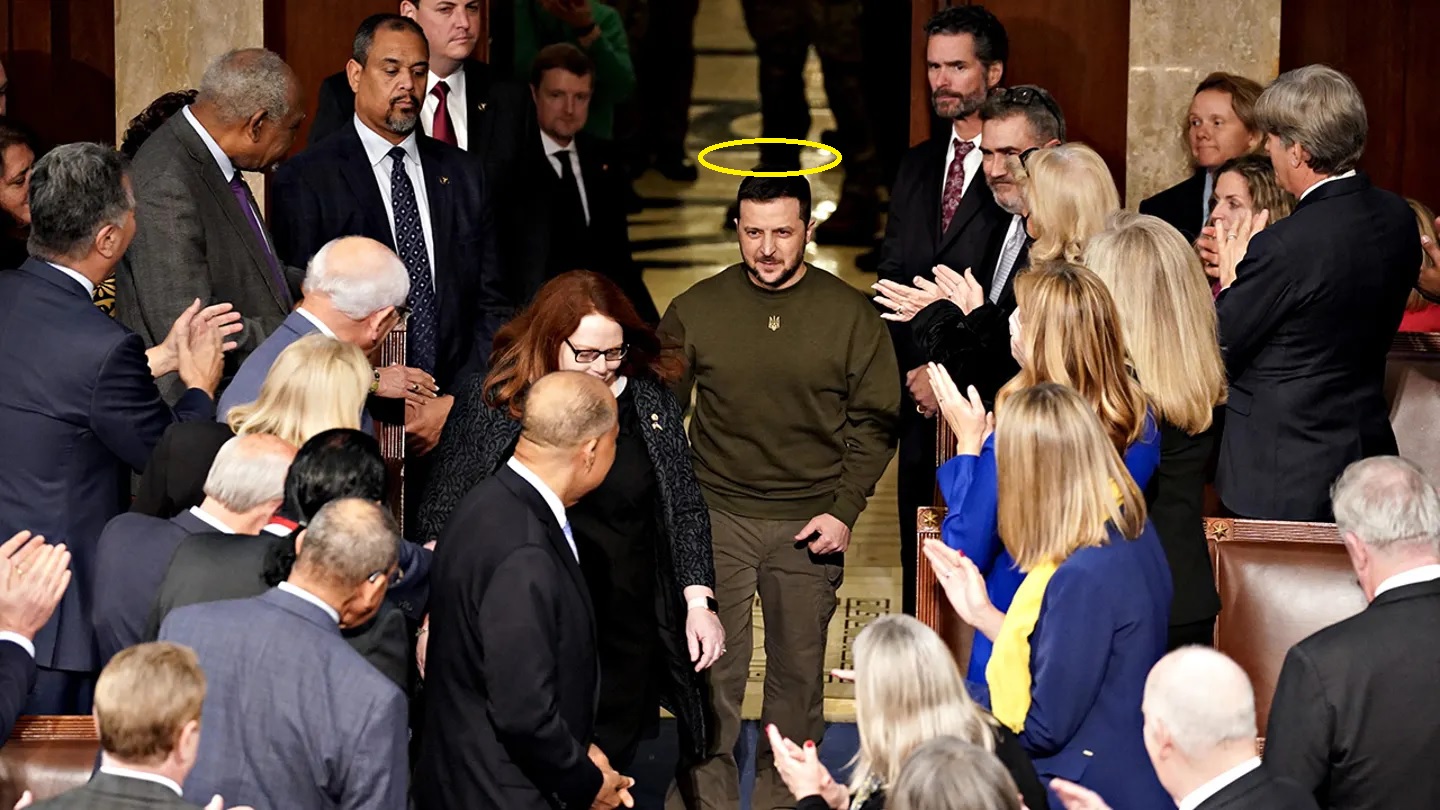
Republican Rep Joe Wilson of South Carolina wants the US capitol to have a bust of Ukrainian president Vladimir Zelensky on permanent display.
Chris Menahan
InformationLiberation
Jan. 12, 2023
Rep. Joe Wilson of South Carolina filed a resolution earlier this week directing the Fine Arts Board of the U.S. House of Representatives to obtain a bust of Mr. Zelenskyy for display.
The board has authority over all works of art and historical objects displayed on the House wing of the U.S. Capitol and the associated office buildings.
A staunch conservative, who came under fire for shouting “you lie” at former President Obama during a 2009 address to Congress, Mr. Wilson has emerged as a strong supporter of Ukraine.
In December, he told the Charleston Post and Courier that Ukraine’s fight against Russian aggression reminded him of the American Revolution.
Here’s the full text of his resolution:………..
Truly embarrassing.
If Congress insists that a bust of Zelensky go in the Capitol, it should be placed in a bathroom. https://www.informationliberation.com/?id=63546
US military deepens ties with Japan and Philippines to instigate proxy war with China like it did with Russia
Kathrin Hille, Financial Times, Sun, 08 Jan 23
The US and Japanese armed forces are rapidly integrating their command structure and scaling up combined operations as Washington and its Asian allies prepare for a possible conflict with China such as a war over Taiwan, according to the top Marine Corps general in Japan.
The two militaries have “seen exponential increases . . . just over the last year” in their operations on the territory they would have to defend in case of a war, Lieutenant General James Bierman, commanding general of the Third Marine Expeditionary Force (III MEF) and of Marine Forces Japan, told the Financial Times in an interview.
Bierman said that the US and its allies in Asia were emulating the groundwork that had enabled western countries to support Ukraine’s resistance to Russia in preparing for scenarios such as a Chinese invasion of Taiwan.
“Why have we achieved the level of success we’ve achieved in Ukraine? A big part of that has been because after Russian aggression in 2014 and 2015, we earnestly got after preparing for future conflict: training for the Ukrainians, pre-positioning of supplies, identification of sites from which we could operate support, sustain operations.
“We call that setting the theatre. And we are setting the theatre in Japan, in the Philippines, in other locations.”
Bierman’s unusually frank comparison between the Ukraine war and a potential conflict with China comes as Beijing has dramatically increased the scale and sophistication of its military manoeuvres near Taiwan in recent years. Japan and the Philippines are also intensifying defence co-operation with the US in the face of mounting Chinese assertiveness.
Japan and the US are set to discuss strengthening their alliance at security talks between the foreign and defence ministers on Wednesday and a summit between US president Joe Biden and Japanese prime minister Fumio Kishida on Friday in Washington. The summit comes as Tokyo embarks on a radical security policy shift that will include increasing defence spending and deploying missiles capable of hitting Chinese territory.
III MEF is the Marine Corps’ only crisis response force permanently stationed outside the US. It operates within the range of Chinese medium- and long-range missiles, with which Beijing seeks to constrain US operational freedom in the region.
The unit is at the heart of a sweeping reform of the Marine Corps that aims to replace its focus on fighting counter-insurgency in the Middle East with creating small units that specialise in operating quickly and clandestinely in the islands and straits of east Asia and the western Pacific to counter Beijing’s “anti-access area denial” strategy.
To realise that strategy, closer integration with allies was vital, Bierman said. In a series of recent exercises, the Marines for the first time set up bilateral ground tactical co-ordination centres rather than exchanging liaisons with allies’ command points.
In another sign of deepening co-operation, specific Japanese military units have been designated as part of the “stand-in force” alongside III MEF and US Navy and Air Force units.
Instead of a “round robin” of Japanese military units working with US counterparts, as in the past, a “standing community of interest” is emerging of allied units with responsibility for operational plans, Bierman added.
He said while the US military was paying attention to Chinese aggressive behaviour around Taiwan, the People’s Liberation Army should not be perceived as being “10 feet tall”.
“When you talk about the complexity, the size of some of the operations they would have to conduct, let’s say [in] an invasion of Taiwan, there will be indications and warnings, and there are specific aspects to that in terms of geography and time, which allow us to posture and be most prepared.”
As part of those preparations, the Philippines plan to allow US forces to preposition weapons and other supplies on five more bases in addition to five where the US has already access.
“You gain a leverage point, a base of operations, which allows you to have a tremendous head start in different operational plans. As we square off with the Chinese adversary, who is going to own the starting pistol and is going to have the ability potentially to initiate hostilities . . . we can identify decisive key terrain that must be held, secured, defended, leveraged.
Ukraine war follows decades of warnings that NATO expansion into Eastern Europe could provoke Russia
The Conversation Ronald Suny, Professor of History and Political Science, University of Michigan, 1 March 2022,
As fighting rages across Ukraine, two versions of reality that underlie the conflict stare across a deep divide, neither conceding any truth to the other.
The more widespread and familiar view in the West, particularly in the United States, is that Russia is and has always been an expansionist state, and its current president, Vladimir Putin, is the embodiment of that essential Russian ambition: to build a new Russian empire.
“This was … always about naked aggression, about Putin’s desire for empire by any means necessary,” President Joe Biden said on Feb. 24, 2022.
The opposing view argues that Russia’s security concerns are in fact genuine, and that NATO expansion eastward is seen by Russians as directed against their country. Putin has been clear for many years that if continued, the expansion would likely be met with serious resistance by the Russians, even with military action.
That perspective isn’t held just by Russians; some influential American foreign policy experts have subscribed to it as well.
Among others, Biden’s CIA director, William J. Burns, has been warning about the provocative effect of NATO expansion on Russia since 1995. That’s when Burns, then a political officer in the U.S. Embassy in Moscow, reported to Washington that “hostility to early NATO expansion is almost universally felt across the domestic political spectrum here.”
NATO edging toward Russia
The North Atlantic Treaty Organization, or NATO, is a military alliance that was formed by the U.S., Canada and several European nations in 1949 to contain the USSR and the spread of communism.
Now, the view in the West is that it is no longer an anti-Russian alliance but is instead a kind of collective security agreement aimed at protecting its members from outside aggression and promoting peaceful mediation of conflicts within the alliance.
Recognizing the sovereignty of all states and their right to ally with whatever state they wish, NATO acceded over time to the requests of European democracies to join the alliance. Former members of the Soviet-established Warsaw Pact, which was a Soviet version of NATO, were also brought into NATO in the 1990s, along with three former Soviet republics – Estonia, Latvia and Lithuania – in 2004.
The Western view is that the Kremlin is supposed to understand and accept that the alliance’s activities, among them war games replete with American tanks staged in nearby Baltic states and rockets stationed in Poland and Romania – which the U.S. says are aimed at Iran – in no way present a threat to Russian security.
Many warnings about Russia’s reaction
Russian elite and broad public opinion have both long been opposed to such expansion, the placement of American rockets in Poland and Romania and the arming of Ukraine with Western weaponry.
When President Bill Clinton’s administration moved to bring Poland, Hungary and the Czech Republic into NATO, Burns wrote that the decision was “premature at best, and needlessly provocative at worst.”……………………..
Responding to Russia’s insecurity
There are different outcomes to the current crisis depending on whether you see its cause as Russian imperialism or NATO expansionism.
If you think the war in Ukraine is the work of a determined imperialist, any actions short of defeating the Russians will look like 1938 Munich-style appeasement and Joe Biden becomes the reviled Neville Chamberlain, the British prime minister who acceded to Hitler’s demands for territory in Czechoslovakia only to find himself deceived as the Nazis steadily marched to war.
If, however, you believe that Russia has legitimate concerns about NATO expansion, then the door is open to discussion, negotiation, compromise and concessions.
Having spent decades studying Russian history and politics, I believe that in foreign policy, Putin has usually acted as a realist, unsentimentally and amorally taking stock of the power dynamics among states. He looks for possible allies ready to consider Russia’s interests – recently he found such an ally in China – and is willing to resort to armed force when he believes Russia is threatened………………………………..
Leaders like Putin who feel cornered and ignored may strike out. He has already threatened “military and political consequences” if the currently neutral Finland and Sweden attempt to join NATO. Paradoxically, NATO has endangered small countries on the border of Russia, as Georgia learned in 2008, that aspire to join the alliance.
One wonders – as did the American diplomat George F. Kennan, the father of the Cold War containment doctrine who warned against NATO expansion in 1998 – whether the advancement of NATO eastward has increased the security of European states or made them more vulnerable. https://theconversation.com/ukraine-war-follows-decades-of-warnings-that-nato-expansion-into-eastern-europe-could-provoke-russia-177999
China’s role in UK nuclear sector poses challenges for net zero push, say think tanks
City AM, NICHOLAS EARL 11 Jan 23,
China’s continued foothold in the UK’s nuclear energy sector poses headaches for the UK government as it looks to attract overseas investment to meet its ambitious green energy goals, several think tanks have warned.
Sophia Gaston, head of foreign policy and UK resilience at Policy Exchange told City A.M. the so-called golden era of Chinese investment in critical infrastructure is “well and truly over.”
This was reflected, she said, in the government’s decision late last year to buy out state-backed China General Nuclear Power Group’s (CGN) 20 per cent stake in Sizewell C.
The policy expert now called on the government to remove Chinese investments from both Hinkley Point C – where CGN still has a one-third stake – and for a potential new power plant at the defunct Bradwell B site, which is two-thirds owned by CGN.
“Securing alternative investors for the Hinkley and Bradwell nuclear sites must be seen as critical priorities for the government and a key opportunity for British diplomacy,” she said…………………………………………………..
Concerns over the role of China in the UK’s energy sector intensified this week, after senior MPs on leading Westminster bodies called on the Government to reduce China’s influence in the North Sea.
CGN and the government were approached for comment. https://www.cityam.com/chinas-role-in-uk-nuclear-sector-poses-challenges-for-net-zero-push-say-think-tanks/
Philippines looking at Chinese investors for cooperation on nuclear energy
By JON VIKTOR D. CABUENAS, GMA Integrated News, January 9, 2023 The Philippines is banking on Chinese investors to participate in the planned venture into nuclear energy, along with cooperation in other areas such as renewable energy, the Department of Energy (DOE) said Monday…………………………………..
The briefing was made after a state visit by President Ferdinand “Bongbong” Marcos Jr. to Beijing, China last week, where Malacañang said he secured $13.76-billion worth of investments in the energy sector.
………………………………… Malacañang last week said the government is set to update its nuclear energy roadmap, with Marcos pushing for its adoption in a bid to lower power rates.
The President, along with his running mate Vice President Sara Duterte, have been pushing for the adoption of nuclear energy, which they said would lower electricity rates and help secure a steady power source.
His predecessor, former President Rodrigo Duterte, last March issued Executive Order 164, directing the conduct of relevant studies for the adoption of a National Position for a Nuclear Energy Program.
The DOE in November said, however, that the Philippines will have to wait a decade to see a working nuclear power plant given the time needed for feasibility studies and other factors.
“At this point we cannot say how fast they (Chinese commitments) will be implemented but the President has committed that he’s going to make sure that there will be a systematic handholding of investors,” Lotilla said…… https://www.gmanetwork.com/news/money/economy/856790/philippines-looking-at-chinese-investors-for-cooperation-on-nuclear-energy/story/
Djibouti signs Treaty on the Prohibition of Nuclear Weapons
https://www.icanw.org/djibouti_tpnw_signature 9 Jan 23,
Djibouti has become the first new signatory to the Treaty on the Prohibition of Nuclear Weapons (TPNW) in 2023. At the UN headquarters in New York on 9 January, the country’s ambassador to the United Nations, Mohamed Siad Doualeh, signed the landmark treaty, bringing the total number of signatories to 92. Djibouti will now commence its domestic ratification process in order to become a state party.
ICAN Executive Director, Beatrice Fihn, welcomed Djibouti’s decision: “The steady increase in adherence to the landmark nuclear ban treaty reflects the strong desire of the international community to strengthen the global norm against nuclear weapons and see more rapid progress on disarmament.”
To date, 33 African countries have signed the TPNW, of which 15 have also ratified it. The TPNW complements and reinforces the 1996 Treaty of Pelindaba, which established Africa as a nuclear-weapon-free zone. The states parties to the Treaty of Pelindaba have called upon all African Union member states “to speedily sign and ratify the [TPNW]”.
Support for the TPNW
Djibouti has historically been a strong supporter of the TPNW. In 2016, Djibouti voted in favour of the UN General Assembly resolution that established the mandate for states to begin negotiations on “a legally binding instrument to prohibit nuclear weapons, leading towards their total elimination,” participated in the negotiation of the TPNW in 2017 and was among 122 states that voted in favour of its adoption.
More recently, in a statement to the United Nations in October 2022, Djibouti announced that it would adhere to the TPNW as part of its “commitment to peace and disarmament”. It also encouraged other states that have not yet signed it to do so. In December 2022, Djibouti voted in favour of an annual UN General Assembly resolution calling on all states to sign, ratify, or accede to the TPNW “at the earliest possible date”.
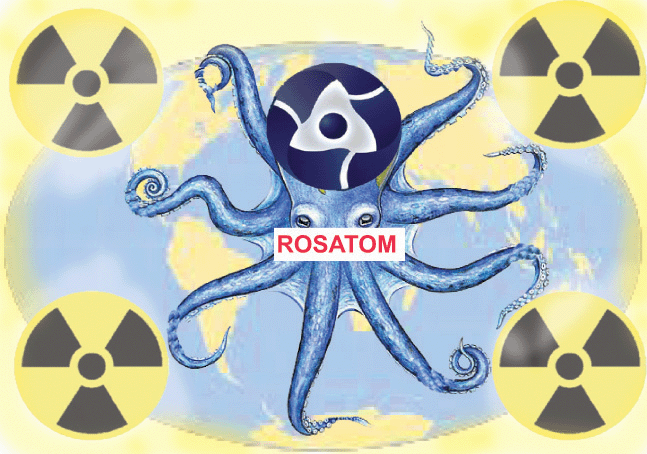
GUSTAFSON: Russian nuclear power – unsanctioned – is prospering worldwide
INTELLINEWS, By Professor Thane Gustafson in Washington January 8, 2023
As the Western nuclear industry flounders, Russia’s Rosatom is building nuclear power plants (NPPs) on time and under budget around the world, while selling uranium to the US……………….
Russia’s nuclear industry is thriving, thanks mainly to its international business. According to Aleksey Likhachev, CEO of Rosatom, Russia’s nuclear monopoly, Russia is currently at work on 23 nuclear power units in a dozen different countries, including China, India, Belarus, Turkey, Hungary and Egypt. It sold $10bn worth of products abroad in 2022, a 15% increase on the year before, and its current foreign order book stands at over $200bn. Rosatom is actively courting new customers, mostly in the developing world; it offers a “full service” package that covers construction and operation, as well as the supply and reprocessing of nuclear fuel. The Russian government actively supports Rosatom with low-interest financing. In short, Russian nuclear power is on a roll.
But that is not all. In addition to building and operating new NPPs, Rosatom exports enriched uranium to numerous countries around the world, including the US and Europe. (In addition, Rosatom provides services to five EU counties that operate Russian-built NPPs.) Even though the revenues are not comparable (only about $1bn per year), the fuel exports are key politically. Because of this dependence, Russia’s nuclear industry is not under Western sanctions (as discussed further below), and it is not likely to be so any time soon. At this moment, Rosatom is able to operate without impediment, both at home and abroad; one of the few sectors in the Russian economy to be able to do so.
For both the US and Europe the implications are serious. First, they will continue to depend on Russian enriched uranium for several years more, potentially weakening their common front on sanctions. (Indeed, there have already been substantial disagreements among EU members over their policy toward Russian nuclear power.)
…… . Russia should continue to hold a commanding position in nuclear power for some time to come. …..

…. Putin named a politician, Sergei Kiriyenko, (above)to head the nuclear programme. Kiriyenko had had a mixed career up to that time – including a disastrous five-month stint as prime minister that coincided with Russia’s 1998 financial meltdown – but he turned out to be a talented manager. He regathered Rosatom’s wandering assets under one roof and after seeing off the oligarchs, he brought the industry’s unruly suppliers and contractors to heel. During the next eleven years he built Rosatom into a powerhouse. In 2016, Putin rewarded him with a secret medal and a top job, as Number 2 in the Kremlin’s Presidential Administration, where he is today.
The secrecy was no accident. When Rosatom was created in 2007, it inherited both the civilian NPPs and the military weapons assets. Kiriyenko made vigorous efforts to disentangle the military wing from the civilian, but the separation proved easier to achieve on paper than in reality. Today, the civilian and the military parts of Rosatom remain connected at the hip, as many parts of the nuclear supply chain, beginning with the mining of uranium, serve both military and civilian customers inside Russia.
But the military part was (and is) funded directly by the government, while the civilian part was supposed to be self-supporting. For Kiriyenko, this was a crucial difference. He had begun with ambitious plans for expanding nuclear power inside Russia, but he soon realised that there was little domestic demand for new NPPs in an electricity sector dominated by gas, and so Kiriyenko turned his sights on the foreign market. For this he needed to persuade the international community that Rosatom had become essentially a civilian business, in other words to fashion a new “commercial” image for the company. By and large he was successful, and Rosatom owes its present prosperity largely to the international business he built.
The impact of Western sanctions
Because of its important role as a supplier of uranium and nuclear fuels to NPPs around the world, including the US, Rosatom is not under Western sanctions. The US, in particular, relies on Russia for low-enrichment uranium for its own NPPs. Although efforts are under way to develop substitutes, for the present Rosatom is simply too valuable to sanction.
But even if sanctions were to be imposed, Rosatom’s operations would be largely unaffected by them. Internally, its supply chain, which as mentioned runs from uranium mining to power plant construction and operation, depends very little on the outside. ………….
Rosatom’s international business might be somewhat more vulnerable to sanctions, but so far there is little sign of it. Only one country, Finland, has pulled out of an ongoing project with Rosatom. ………………………….
Multiple challenges ahead
Yet quite apart from sanctions, Rosatom and Russian nuclear power may face multiple challenges ahead. One of them is technological progress. …………
Russia is the only country in the world to operate nuclear-powered icebreakers and floating NPPs, both of which are powered by small reactors. The Russian experience in designing and building small reactors goes back decades to the Soviet era, and there have been multiple generations of successively improved designs. Rosatom is working on deploying them not only on nuclear icebreakers and floating platforms, but also on land.
…………………….. The key to the future of SMRs, in the longer term, will likely be so-called “Generation IV” reactors, based on revolutionary designs that break entirely from the traditional light-water-reactor technology. But Generation IV is still an immature technology, and the race for leadership in G-IV is only now getting under way.
The more proximate threat to Rosatom’s leading position is Beijing. China has a vigorous nuclear programme, which is entirely independent of Russia…………………………………………
Finally, the ultimate challenges for Rosatom may be safety and reputational risk. Ever since the Chernobyl disaster in 1986, the Russian nuclear industry has had an excellent safety record. But the Russian invasion of Ukraine raises a serious new threat. There are four NPPs operating in Ukraine – ironically, all of them of Soviet manufacture. Russian [?] missiles have already landed close to one of them, the Zaporizhzhia plant, which is located close to the current battle line between Russian and Ukrainian forces. Just who is responsible for the safety of the plant is in dispute……………for Rosatom this plan is full of risks. If the plant were damaged and there were radioactive contamination, quite apart from the further suffering this would inflict on the Ukrainian people, for Rosatom the reputational damage would be extreme.
……. The challenges ahead are real, but they will come more from technological changes and rising competition from China, than from sanctions, from which Rosatom in any case remains so far exempt. https://www.intellinews.com/gustafson-russian-nuclear-power-unsanctioned-is-prospering-worldwide-266160/
Pentagon pressures NATO allies to boost arms flow to Ukraine

January 8, 2023, Rick Rozoff Interfax-Ukraine January 7, 2023 https://antibellum679354512.wordpress.com/2023/01/08/pentagon-pressures-nato-allies-to-boost-arms-flow-to-ukraine/
USA to seek from its allies to expand military aid to Ukraine – Pentagon
U.S. Secretary of Defense Lloyd Austin, (pictured above) in a phone conversation with his Ukrainian counterpart Oleksiy Reznikov, said the United States will convince its allies of the need to increase military assistance to Kyiv, according to the Pentagon.
Austin reaffirmed its commitment to encouraging allies and partners to provide additional air defense systems, combat vehicles and other critical capabilities to support Ukraine.
Arms flow to Ukraine
Date: January 8, 2023Author: Rick Rozoff0 Comments
Interfax-Ukraine
January 7, 2023
USA to seek from its allies to expand military aid to Ukraine – Pentagon
U.S. Secretary of Defense Lloyd Austin, in a phone conversation with his Ukrainian counterpart Oleksiy Reznikov, said the United States will convince its allies of the need to increase military assistance to Kyiv, according to the Pentagon.
Austin reaffirmed its commitment to encouraging allies and partners to provide additional air defense systems, combat vehicles and other critical capabilities to support Ukraine.
At the same time, the U.S. minister said assistance would be provided “as much as needed.”
The Pentagon also said Austin had already discussed with German Defense Minister Christine Lambrecht ways to increase assistance in the run-up to the meeting of the Ukrainian Defense Contact Group in Ramstein, Germany.
Austin appreciated Germany’s decision to provide Ukraine with a Patriot air defense battery and Marder infantry fighting vehicles.
According to Ukrainian Ambassador to the United States Oksana Markarova on her Facebook page, in addition to a new $3.075 billion U.S. military aid package for Ukraine, Washington provides “$682 million in additional foreign military funding to stimulate and compensate for the transfer of military equipment to Ukraine from allies and partners”.
Ukrainian News
January 7, 2023
Defense Minister Reznikov discusses new military aid to Ukraine with Pentagon head Austin
Defense Minister Oleksii Reznikov announced that he discussed the details of the new U.S. aid package to Ukraine with his American colleague Lloyd Austin.
We discussed the details of the new U.S. security assistance package for Ukraine and the next Ramstein-style meeting with Lloyd Austin,” Reznikov emphasized.
According to the head of the Ministry of Defense of Ukraine, this largest the United States’ aid package gives Ukraine “new opportunities to liberate our territory in the east and south.”
Nuclear weapons and the resistance to reality
Rev. Peter Kakos, Northampton 8 Jan 23 https://www.gazettenet.com/Letter-to-the-editor-49451478
In response to J.M. Sorrell’s perceptive litany, “Resistance to reality,” (Gazette, Jan. 4), permit me to add our decades’ long blind eye to the terrifying global presence of nuclear weaponry, the summation of which keeps us held captive to the harshest fact: that we are poised for extinction.
What degree of madness possesses our citizenry to remain inured to this ominous threat to all humanity, let alone our own beloved homeland? Like it or not, the studied estimates inform us that only two percent of the current number of roughly 7,000, are needed to virtually extinguish civilization. (see the thorough analysis of the Physicians For Social Responsibility’s 5-year-long Back From The Brink campaign).
Today, not tomorrow, the nuclear abolition cause has eight billion reasons to demand to know what rude awakening will it take to overcome this ultimate resistance to reality?
US and South Korea hold talks on “nuclear sharing”.

the US Council for Foreign Relations highlighted a proposal to establish an Asian Nuclear Planning Group, “mirroring the format of the NATO Nuclear Planning Group, that would provide a platform for South Korea, Japan, and Australia to discuss policies regarding US nuclear forces and the US nuclear planning process.”
What is underway not just in South Korea are high level discussions to integrate US allies throughout the region with the US military as preparations accelerate for a potentially catastrophic war with China that would inevitably involve the use of nuclear weapons.
Peter Symond WSWS 5 Jan 23
The US and South Korea are actively discussing closer collaboration in the deployment and potential use of nuclear weapons, which is part of the far broader US-led military build-up throughout the region. While nominally directed against North Korea, US war preparations including with South Korea are above all aimed at China.
In an interview in the Chosun Ilbo newspaper on Monday, South Korea’s right-wing president, Yoon Suk Yeol, said the discussions had focussed on joint planning and exercises with American nuclear forces. He described the arrangements being discussed as being “as good as nuclear-sharing”—a phrase, he said, that Washington was uncomfortable with……….
When asked at the White House whether joint nuclear military exercises with South Korea were being planned, President Biden flatly declared “no” and made no further comment. However, subsequent comments by American officials make clear that the closer integration of South Korea into US preparations for nuclear war is indeed under way……………………….
The discussions mark a significant escalation in the preparations for nuclear war. While South Korea, a US military ally, was protected by the so-called nuclear umbrella or what is known as “extended deterrence,” Yoon is pushing for a greater South Korean say in the use of nuclear weapons.
In his interview, Yoon declared: “What we call ‘extended deterrence’ means that the United States will take care of everything, so South Korea should not worry about it… But now, it is difficult to convince our people with just this idea.”…………….
Throughout much of the Cold War, the US had hundreds of tactical nuclear weapons in South Korea supposedly to counter a North Korean invasion. The number peaked at 950 during the mid-1960s before declining. In 1991, amid the moves to dissolve the Soviet Union, US President George H.W. Bush announced the return of all tactical nuclear weapons to the US, including those that remained in South Korea.
While Yoon has not publicly repeated his proposals as president, there have already been significant steps to a greater US nuclear presence in South Korea. In a joint press conference last November, US Defense Secretary Lloyd Austin and South Korean Defense Minister Lee Jong-seop announced plans for the de facto permanent stationing of US nuclear-capable assets in South Korea for the first time since 1991………….
As far as Washington is concerned, the North Korean “threat” is a convenient pretext as its nuclear planning is primarily focussed on war with China. Strategically located close to the Chinese mainland, South Korea is deeply integrated into the US strategy for such a conflict. Not only does it house key US military bases and some 28,500 military personnel but it also has a key anti-ballistic missile system—a recently upgraded Terminal High Altitude Area Defense (THAAD) system—critical in any nuclear conflict.
The US is boosting its nuclear weapons capacity throughout the region with the announcement last year that it will effectively station nuclear-capable B-52 bombers at the Tindal air force base in Northern Australia. At the same time, prior to his assassination last July, former Japanese prime minister, Shinzo Abe, initiated a discussion in ruling circles about stationing US nuclear weapons in Japan, despite enormous popular opposition to such a move.
The Biden administration has already taken steps to strengthen its military alliances in the Indo-Pacific by kickstarting the Quadrilateral Security Dialogue or “Quad” with Japan, Australia and India as well as initiating the AUKUS pact with Australia and the United Kingdom, which, in particular, will arm Australia with nuclear-powered attack submarines. At the same time, it has sought to strengthen intelligence sharing between South Korea and Japan, essential in any nuclear conflict.
Broader “nuclear sharing” is also being discussed in US strategic think tanks. A comment published last August by the US Council for Foreign Relations highlighted a proposal to establish an Asian Nuclear Planning Group, “mirroring the format of the NATO Nuclear Planning Group, that would provide a platform for South Korea, Japan, and Australia to discuss policies regarding US nuclear forces and the US nuclear planning process.”
What is underway not just in South Korea are high level discussions to integrate US allies throughout the region with the US military as preparations accelerate for a potentially catastrophic war with China that would inevitably involve the use of nuclear weapons. https://www.wsws.org/en/articles/2023/01/05/tzjb-j05.html
—
US Says ‘All Options’ On Table As Iran Nuclear Talks Remain Deadlocked.
US State Department said Tuesday that nuclear talks with Iran remain dormant and although diplomacy is the preferred approach, other options remain on the table.
Iran International Newsroom 4 Jan 23
Spokesperson Ned Price said the United States has not observed any change from the Iranian side to warrant a resumption of negotiations to revive the 2015 nuclear accord known as the JCPOA. The Biden administration’s 18-month-long diplomatic effort to reach agreement with Tehran arrived at a deadlock in early September.
“We continue to believe that diplomacy is the best way to achieve that goal, but we’ve always been clear we’re not going to remove options from the table, and we’re going to discuss all options with our partners, including, of course, Israel,” Price asserted.
Israeli leaders have repeatedly said that they will use any means for stopping Iran from obtaining nuclear weapons…………………..
The Biden administration has been quick in starting discussion with the new Israeli right-wing government headed by Benjamin Netanyahu, a staunch opponent of the JCPOA. Secretary of State Antony Blinken held discussion with the new Israeli foreign minister Elie Cohen in recent days. He told new Israeli Foreign Minister Eli Cohen in a 40-minute phone-call that the JCPOA was finished, and that the US wanted the European Union to step up sanctions against Iran.
Blinken’s reported statement about JCPOA being “finished” echoed President Joe Biden’s remark during an election stomp in early November, when he was heard in a video saying the JCPOA “is dead.”……………….. more https://www.iranintl.com/en/202301049694
The Future Remains Uncertain For Nuclear Energy
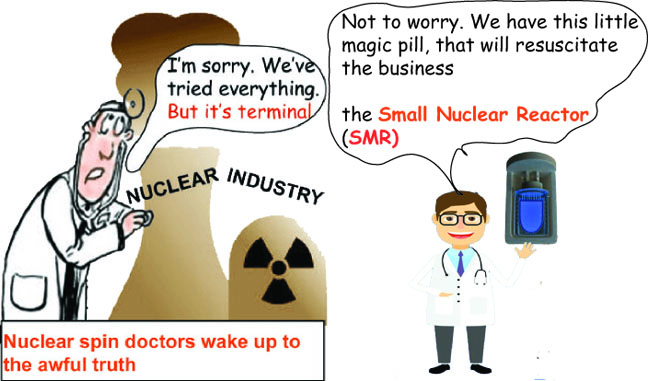
Ed note. This is a fine article, one that acknowledges the political moves in some countries towards reviving the nuclear industry , while at the same time recognises the strong opposition to this in other countries.
Still, it doesn’t address the folly of “new nukes” having the same old problems of costs, wastes, security needs. And above all – the MILITARY CONNECTION
And it doesn’t address the strange logic – that if big nuclear reactors are bad, that proves that little ones are good.
By Felicity Bradstock Editor OilPrice.com, Tue, 3 January 2023, https://au.finance.yahoo.com/news/future-remains-uncertain-nuclear-energy-170000104.html Several countries around the world appear to have suddenly welcomed nuclear power into the clean energy mix, particularly in response to global gas shortages and rising oil prices. But this apparent renaissance of nuclear energy is not being seen everywhere, with many countries remaining skeptical about the technology, unwilling to accept nuclear as the answer to the world’s energy problems. This divide, particularly seen in Europe, could have a major impact on the development of the nuclear power plant pipeline across the region, as some states reject plans for raising the EU’s nuclear energy capacity.
After decades of moving away from nuclear power, largely due to safety concerns following three world-renowned nuclear disasters, some major powers have put nuclear energy back on the agenda as they race to secure their energy security and transition away from fossil fuels. The U.S. and U.K. are two countries in which the governments are offering high levels of funding and political backing for new nuclear projects to support a green transition. In the U.S., the nuclear energy output has plateaued since the 1980s, providing around 19 percent of the country’s electricity at present. But a reconsideration of the safety risk involved with nuclear operations vis a vis the current climate situation has made the U.S. more open to new nuclear projects, with President Biden including funding for nuclear projects in his Inflation Reduction Act (IRA).
Meanwhile, in the U.K. the government purchased a 20 percent stake in the Sizewell C nuclear plant in Suffolk for $100 million in June. And EDF’s Hinkley Point C is expected to be up and running by 2027, at a cost of between $30 and $31.5 billion. Former Prime Minister Boris Johnson also outlined plans for the development of eight nuclear reactors by the end of the decade earlier this year.
Hungary is remaining strongly committed to a planned nuclear project with Russia. The Paks 2 project is set to be financed by Russia, with a $10.6 billion loan. It follows the Paks 1 nuclear power station, around an hour south of Budapest, that was constructed by the Soviet Union in the 1980s. With its lifecycle coming to an end in the 2030s, Prime Minister Viktor Orban signed a deal with Vladimir Putin in 2014 to construct two new 1,200 MW reactors next to the old ones. Ground-clearing work started in August after several years of delays. The plant was originally expected to come online in 2026, but this is becoming increasingly unlikely, especially due to the war in Ukraine. Finland has already abandoned a Russian-built nuclear plant on the Hanhikivi peninsula midway through its construction because of the war. And, unsurprisingly, several other European powers oppose Hungary’s close relations with Russia, encouraging Orban to cut ties with Putin.
While many are concerned about Hungary’s nuclear project because of Russia’s involvement, some other European countries are opposed to bringing new nuclear projects online altogether. Slovakia has announced plans to shift its reliance on nuclear energy in its plans for the Mochovce power plant. Built by the Soviet Union in the 1980s, a new nuclear reactor is currently being prepared to launch in 2023, offering 471 MW of power. If all goes as planned, it will cover 13 percent of Slovakia’s electricity needs, making the country self-sufficient. But neighboring Austria is staunchly opposed to the development due to the high costs involved – both in terms of money and radioactive waste. Austria also worries that Slovakia will rely on Russia for its uranium to run operations, with around one-fifth of the EU’s uranium coming from Russia. Public opinion on nuclear power is greatly divided, with 60 percent of Slovakians believing nuclear power is safe, while 70 percent of Austrians think the opposite.
At present, 13 of the EU’s 27 member states generate nuclear power, while several others are not ready to welcome nuclear to the energy mix despite the current energy crisis. While Germany has delayed the planned phasing out of its nuclear projects, and other European countries are bringing new nuclear reactors online, some believe there is no renaissance for nuclear power. Despite the Russia-Ukraine war creating a regional energy crisis, governments have generally taken little action to shift their existing policies on nuclear plans, suggesting that a move to nuclear may be exaggerated.
Nicolas Berghmans, an energy and climate expert at the France-based Institute for Sustainable Development and International Relations (IDDRI), explained “We’re not talking about a nuclear renaissance, as such… but maybe more of a change of tide.” He added, “A real nuclear renaissance would be if Europe decides to invest in more nuclear power plants.” Meanwhile, Said Mark Hibbs, from the Carnegie Endowment for International Peace, suggested “I don’t see a major watershed from what’s happening in Ukraine… Instead, the situation has reinforced some trends among countries already bought into nuclear energy, while slowing some opponents’ phase-outs of the technology.”
While some believe there is a renaissance of nuclear energy taking place, others are less certain. The recent energy crisis has drawn greater attention to nuclear power, with some major powers accelerating existing plans for nuclear plants or showing openness to diversifying their energy mix further through nuclear projects. However, the divide between those for and against nuclear power remains strong and will likely shape the development of many of these projects, as regional pressures could prevent many new reactors from coming online.
Tue, 3 January 2023
South Korea asks US for greater role in managing nuclear weapons
AFR, Sangmi Cha, Jan 2, 2023,
Seoul | South Korean President Yoon Suk Yeol said his government was in talks with the US on taking a more active role in managing nuclear weapons on the Korean Peninsula, which would mark a significant shift in a decades-old policy among American allies to deter North Korea.
“While the nuclear weapons belong to the US, intel sharing, planning, and training should be done jointly,” Mr Yoon told South Korea’s Chosun Ilbo newspaper. “The US’ stance is quite positive,” he added, saying the policy should be conducted under the concept of “joint planning and joint exercise”.
He said the strategy of “nuclear umbrella”, or “extended deterrence”, was no longer reassuring for the public now that North Korea had developed nuclear weapons and a range of missiles to deliver them.
Since taking power last May, Mr Yoon has sought to put South Korea on a path of overwhelming military strength against North Korea, which has launched scores of missiles in defiance of United Nations resolutions and is preparing for another nuclear test………………………… more https://www.afr.com/world/asia/south-korea-asks-us-for-greater-role-in-managing-nuclear-weapons-20230102-p5c9wu
Pakistan supplies India with a list of its nuclear facilities
Pakistan said it had handed a list of its nuclear installations and
facilities to the Indian mission in Islamabad on Sunday under a decades-old
agreement between the two nuclear-armed rivals. The neighbours have fought
three wars and have had a number of military skirmishes in recent years.
Last year an Indian missile accidentally landed in Pakistan, setting off
alarm bells across the world.
Reuters 1st Jan 2023
Europe’s nuclear industry heavily dependent on Russian fuel and technology – no sanctions there.
Western countries are being urged to stop buying Russian nuclear fuel amid
fears the trade is funding the war in Ukraine. Russia is one of the
world’s largest uranium suppliers with around 40pc of global capacity for
uranium enrichment.
While Europe has been weaning itself off Russian fossil
fuels, its nuclear sector is still heavily dependent on Russian imports.
“We need to escalate our collective pressure against the Kremlin, and the
nuclear industry is exactly one of the arenas that needs to be
considered,” said Tobias Ellwood, chairman of Parliament’s defence
committee. Russia’s dominance in the market, and the reliance of
countries including Hungary and Bulgaria on the fuel, has so far helped it
escape sanctions.
Russian state-owned uranium supplier Rosatom claims 17pc
of the global nuclear fuel market. It expects its 2022 exports growth to
reach 15pc, according to reports. It now has $200bn (£135bn) of orders.
Western countries have been stepping up their efforts to restrict
Russia’s revenues from oil as its war on Ukraine drags on. Companies such
as EDF in the UK have sought other suppliers in the wake of the war, but
there are concerns that Russia’s control of the market will return when
the conflict ends.
Telegraph 30th Dec 2022
1 This Month



26 September – International Day for the Total Elimination of Nuclear Weapons


PLEASE OPPOSE HR 8255 AND S.3639 – bills would accelerate satellite deployment, with no environmental review or safeguards – https://ncstd5li.quorum.us/campaign/169331/
To see nuclear-related stories in greater depth and intensity – go to https://nuclearinformation.wordpress.com
-
Archives
- September 2026 (245)
- August 2026 (330)
- July 2026 (355)
- June 2026 (287)
- May 2026 (306)
- April 2026 (356)
- March 2026 (251)
- February 2026 (267)
- January 2026 (308)
- December 2025 (358)
- November 2025 (359)
- October 2025 (375)
-
Categories
- 1
- 1 NUCLEAR ISSUES
- business and costs
- climate change
- culture and arts
- ENERGY
- environment
- health
- history
- indigenous issues
- Legal
- marketing of nuclear
- media
- opposition to nuclear
- PERSONAL STORIES
- politics
- politics international
- Religion and ethics
- safety
- secrets,lies and civil liberties
- spinbuster
- technology
- Uranium
- wastes
- weapons and war
- Women
- 2 WORLD
- ACTION
- AFRICA
- Atrocities
- AUSTRALIA
- Christina's notes
- Christina's themes
- culture and arts
- Events
- Fuk 2022
- Fuk 2023
- Fukushima 2017
- Fukushima 2018
- fukushima 2019
- Fukushima 2020
- Fukushima 2021
- general
- global warming
- Humour (God we need it)
- Nuclear
- RARE EARTHS
- Reference
- resources – print
- Resources -audiovicual
- Weekly Newsletter
- World
- World Nuclear
- YouTube
-
RSS
Entries RSS
Comments RSS
 nuclear-news