France tries to label nuclear as “renewable” in push to the EU for nuclear-produced hydrogen
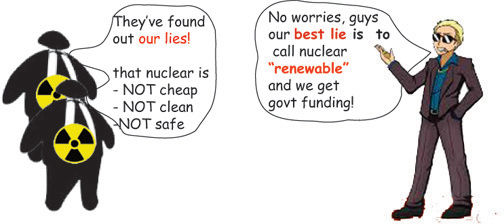
France leads push for EU to boost nuclear-produced hydrogen
By Kate Abnett 4 Feb 23, BRUSSELS, Feb 3 (Reuters) – France is leading a campaign for the European Union to recognise low-carbon hydrogen produced from nuclear power in its renewable energy rules, but some member states oppose the idea for fear of undermining efforts to quickly scale up wind and solar.
Ministers from France, Poland, the Czech Republic and six other EU countries wrote to the European Commission this week urging it to open up EU renewable energy targets to include hydrogen produced from nuclear energy.
EU countries and lawmakers have been preparing for negotiations next week on the law, which will guide the pace of Europe’s renewable energy expansion this decade.
EU Parliament’s lead negotiator has asked for next week’s talks to be delayed because the European Commission has still not published rules to define “renewable” hydrogen more clearly, which were scheduled for late last year, EU officials said on Friday……………
The nine countries’ letter, seen by Reuters, said the EU should include nuclear energy – which is low-carbon, but not renewable. https://www.reuters.com/business/energy/france-leads-push-eu-boost-nuclear-produced-hydrogen-2023-02-03/
Ukraine is sinking. Is the West about to bail out?

Ukraine Is Sinking. Are Western Elites Bailing Out? The UNZ REview, MIKE WHITNEY • FEBRUARY 1, 2023
What makes the RAND Corporation’s latest report on Ukraine so significant, is not the quality of the analysis, but the fact that the nation’s most prestigious national security think-tank has taken an opposite position on the war than the Washington political class and their globalist allies. This is a very big deal.
…………… The RAND Corporation’s new report, “Avoiding a long war: US policy and the trajectory of the Russia-Ukraine conflict”, represents just such a split. It indicates that powerful elites have broken with the majority opinion because they think the current policy is hurting the United States. We believe this shift in perspective is going to gain momentum until it triggers a more-assertive demand for negotiations. In other words, the RAND report is the first step towards ending the war.
Consider, for a minute, this excerpt from the preamble of the report:
“The costs and risks of a long war in Ukraine are significant and outweigh the possible benefits of such a trajectory for the United States.”
This quote effectively sumarizes the entire document. Think about it: For the last 11 months we have been told repeatedly that the US will support Ukraine “for as long as it takes.” The above quote assures us that that’s not going to happen. The United States is not going to undermine its own interests to pursue the unachievable dream of expelling Russia from Ukraine. (Even the hawks no longer believe that is possible.)
Rational members of the foreign policy establishment are going to evaluate Ukraine’s prospects for success and weigh them against the growing likelihood that the conflict could unexpectedly spiral out-of-control. That, of course, would serve no one’s interest and could ignite a direct clash between Russia and the United States. Also, US policymakers will decide whether the ballooning collateral damage is worth the expense. In other words, are the ruptured supplylines, the rising inflation, the increasing energy and food shortages, and the declining weapons stockpiles a fair trade-off for “weakening Russia”. Many would say, “No.”
In some respects, the RAND report is just the first in a long line of falling dominoes. As Ukraine’s battlefield losses mount –and it becomes more evident that Russia will control all the territory east of the Dnieper River– the flaws in Washington’s strategy will become more apparent and will be more sharply criticized. People will question the wisdom of economic sanctions that hurt our closest allies while helping Russia. They will ask why the United States is following a policy that has precipitated a strong move away from the dollar and US debt? And, they will wonder why the US deliberately sabotaged a peace deal in March when the probability of a Ukrainian victory is near zero. The Rand report seems to anticipate all these questions as well as the ‘shift in mood’ they will generate. This is why the authors are pushing for negotiations and a swift end to the conflict. This is an excerpt from an article at RT:
The RAND Corporation, a highly influential elite national security think tank funded directly by the Pentagon, has published a landmark report stating that prolonging the proxy war is actively harming the US and its allies and warning Washington that it should avoid “a protracted conflict” in Ukraine…
(The report) starts by stating that the fighting represents “the most significant interstate conflict in decades, and its evolution will have major consequences” for Washington, which includes US “interests” being actively harmed. The report makes it very clear that while Ukrainians have been doing the fighting, and their cities have been “flattened” and “economy decimated,” these “interests” are “not synonymous” with Kiev’s.” (“Rand calls for swift end to war“, RT)
While the report does not explicitly state that ‘US interests (are) being harmed’, it certainly infers that that is the case. Not surprisingly, the report doesn’t mention any of the collateral damage from Washington’s war on Russia, but, surely, that must have been foremost on the minds of the authors. After all, it is not the $100 billion or the provision of lethal weapons that is costing the US so dearly. It is the accelerating emergence of international coalitions and alternate institutions that has put the US empire on the fasttrack to ruin. We assume that the analysts at RAND see the same things that every other sentient being sees, that Washington’s misguided conflagration with Moscow is a ‘bridge-too-far’ and that the blowback is going to be immense and excruciating. Hence, the urgency to end the war quickly. Here’s a excerpt from the report that was posted in bold print halfway through the text:
“Since avoiding a long war is the highest priority after minimizing escalation risks, the United States should take steps that make an end to the conflict over the medium term more likely.”
…………………………….. Washington’s foolish intervention is clearing the way for the greatest strategic catastrophe in US history. And yet, even now, the vast majority of corporate and banking elites resolutely back the existing policy while shrugging off the obvious signs of failure. Case in point: The World Economic Forum posted a blanket statement of support for Ukraine on its website. Here it is: [on original]
……………………………….. the RAND report may represent the views of the Pentagon and the US Military establishment who believe the United States is racing headlong towards a direct conflagration with Russia. In other words, the report may be the first ideological broadsides against the neocons who run the State Department and the White House. We suspect this split between the War Department and ‘State’ will become more visible in the days ahead. We can only hope that the more judicious faction at the Pentagon prevails.
The American Colony of Australia
19 Feb 2021Western media portrays Australia as a beautiful nation with independent people and a close ally of the United States. But the American Empire has no allies, only vassal states. Australia became a colony of the American empire in 1975 after an Anglo-American coup. Australians noticed nothing since Australia had been an British colony since its inception and dispatches military forces when ordered to fight empire wars.
Roundtable: Making nuclear injustice an agenda for change
Bulletin of the Atomic Scientists, By Franziska Stärk, Ulrich Kühn | February 2, 2023
In a recent essay for the Bulletin, we argued that the global nuclear order is fundamentally unjust. We called for critical reflection on past, ongoing, and future nuclear injustices to better connect the dots between scholarly fields and social movements. For this roundtable, we invited four scholars, practitioners, and abolition advocates to further articulate what a research agenda on nuclear injustice should look like.
Rebecca Gibbons stresses the importance of including those most burdened by past nuclear injustices in the discussion. Setting forth the impact of nuclear testing on the Marshallese people, Gibbons highlights their calls for an apology by the US government, sufficient medical care, and the right to return to a safe and remediated environment.
Alexander Kmentt highlights the Treaty on the Prohibition of Nuclear Weapons as a useful prism to examine current efforts—both substantive and procedural—to address nuclear injustice. Kmentt emphasizes the treaty’s contribution to the democratization and reframing of nuclear debates.
Benoît Pelopidas warns of the pitfalls of a nuclear injustice lens, which could ultimately strengthen arguments in favor of nuclear weapons if based on a conservative reading of nuclear deterrence. Instead, Pelopidas outlines several avenues for a productive research agenda, including a critical reflection on the consequences of nuclear injustice.
Mari Faines considers the effects of colonialism, White supremacy, and racial injustice on nuclear weapons policy. She concludes that efforts to address nuclear injustice must include marginalized voices, build on today’s young people, and be sensitive to intersectionality.
We welcome these valid arguments in favor of broadening the debate about nuclear injustice as they point to the necessity of an inclusive agenda, reaching beyond the usual boundaries of the nuclear policy field and community. One such boundary which deserves more emphasis pertains to the well-being of future generations……………………………………………………… https://thebulletin.org/2023/02/roundtable-making-nuclear-injustice-an-agenda-for-change/
China objects to more nuclear sub talks among UK, U.S, Australia
BEIJING, Feb 3 (Reuters) – China “firmly objects” to further cooperation between Britain, U.S. and Australia on nuclear submarines, its foreign ministry said in a regular briefing on Friday.
Chinese foreign ministry spokesperson Mao Ning said, “China is gravely concerned about this and firmly objects to it,” in response to a question that cited a media report saying British Prime Minister Rishi Sunak’s visit to the United States in March may yield announcements on more nuclear submarine cooperation…………. Reporting by Yew Lun Tian and Joe Cash ; Writing by Liz Lee; Editing by Christian Schmollinger https://www.reuters.com/world/china-objects-more-nuclear-sub-talks-among-uk-us-australia-2023-02-03/
The Last Existing U.S.-Russia Nuclear Treaty Could Soon Fail
New START is on the ropes after years of neglect and abuse from Moscow and Washington. VICE, By Matthew Gault 30 Jan 23
Russia signaled to the U.S. on Monday that the world may soon see the end of nuclear-arms control, decades long agreements between nations that have helped limit the production of weapons that can end civilization. New START, an Obama-era treaty that limits the number of nuclear missiles Moscow and Washington can deploy, will expire in 2026. According to Russia, renewing that treaty will depend on whether or not the U.S. seeks the strategic defeat of Russia in Ukraine.
“The entire situation in the sphere of security, including arms control, has been held hostage by the U.S. line of inflicting strategic defeat on Russia,” Deputy Foreign Minister Sergei Ryabkov told state-owned news agency RIA Novosti. “We will resist this in the strongest possible way using all the methods and means at our disposal.”
Part of that resistance might mean holding enforcement of the New START treaty hostage. Signed in 2010, the treaty limits Russia and America’s deployment of strategic nuclear warheads to 1,550 each and deployed missiles and bombers to 700 each. As part of the treaty, each country agreed to inspections to verify that they’re abiding by the treaty.
America and Russia control 90% of the world’s nuclear arsenal and have used treaties to control and limit the deployment of those nukes for decades. The Partial Test Ban Treaty of 1963 ended above ground nuclear testing, the Interim Agreement on Offensive Arms of 1972 stopped both countries from deploying new nukes, a revision of this treaty in 1979 further limited each country’s deployed arsenal.
New START is a sequel, of sorts, to a treaty that began negotiations under Ronald Reagan called Strategic Arms Reduction Treaty (START). Reagan was famous for pursuing an arms build up and antagonizing Russia, but nuclear weapons frightened him. After watching the TV movie The Day After, he became depressed. “My own reaction was one of our having to do all we can to have a deterrent and to see there is never a nuclear war,” he wrote in his diary.
………………………………………………….. The crumbling of international nuclear arms treaties is another sign that the world is closer to nuclear war than it’s been in decades. Russia is building new nuclear weapons and threatens nuclear annihilation as it wars in Ukraine. The U.S. is modernizing its nuclear forces, updating old systems, and signaling to the world that it’s ready to drop the bomb too. https://www.vice.com/en/article/5d3xkz/the-last-existing-us-russia-nuclear-treaty-could-soon-fail
African states meet in South Africa to discuss UN Nuclear Ban Treaty
https://www.icanw.org/african_states_meet_in_south_africa_to_discuss_un_nuclear_weapon_ban_treaty 30 Jan 23
Representatives from 37 African states have gathered in Pretoria at the African Regional Seminar on the Universalisation of the Treaty on the Prohibition of Nuclear Weapons (TPNW) to discuss how to get every African state to sign and ratify the UN nuclear ban treaty as soon as possible.
The two day Seminar, co-hosted by South Africa’s Department of International Relations and Cooperation (DIRCO), ICAN, and the International Committee of the Red Cross, will serve to take stock of the TPNW from a regional perspective and consider the need for further progress towards universalisation of the treaty on the continent.
African countries have been long-time leaders on nuclear disarmament. The continent is a nuclear-weapon-free zone under the Treaty of Pelindaba, and the TPNW enjoys strong support from all the countries in the region. So far 33 African UN member states out of 54 have signed the TPNW and 15 have ratified it.
While opening the Seminar, Deputy Minister of DIRCO, Mr Alvin Botes, highlighted South Africa’s history as one of the few states to start developing and then fully dismantle its nuclear arsenals to being an active supporter of the TPNW. “South Africa’s own experience has shown that neither the possession nor the pursuit of nuclear weapons can enhance international peace and security. The continued retention of nuclear weapons based on the perceived security interests of some states comes at the expense of the rest of humanity.”
He also called on all African states “to sign and ratify the TPNW at the earliest possible opportunity and thus reassert Africa’s leadership in nuclear disarmament and contributing to international peace and security.”
ICAN’s Executive Director Beatrice Fihn also highlighted this leadership during the opening speeches:“African states are rightly proud of the role they played in the TPNW’s negotiation and adoption. Support for the treaty in this region is universal, even if much work remains to be done to bring all states on board as parties,” calling on the 21 states that had not yet done so to sign and ratify the treaty. She also celebrated African civil society for their tireless efforts to raise public awareness of the TPNW and promote its universalisation.
A number of ICAN partner organisations are represented at the meeting, and ICAN campaigners have been delivering presentations about the TPNW’s status, and campaign activities throughout Africa, as well as engaging with representatives of the countries that have yet to sign the treaty to make it a priority.
USA tries to prevent a Russian offensive in Ukraine by offering a sort of war endgame deal with Russia
Crimea is a particular point of discussion. There is a widespread view in Washington and Kyiv that regaining Crimea by military force may be impossible. Any Ukrainian military advances this year in Zaporizhzhia oblast, the land bridge that connects Crimea and Russia, could threaten Russian control. But an all-out Ukrainian campaign to seize the Crimean Peninsula is unrealistic, many U.S. and Ukrainian officials believe. That’s partly because Putin has indicated that an assault on Crimea would be a tripwire for nuclear escalation.

By John Helmer, Moscow,26 Jan 23 http://johnhelmer.org/blinken-concedes-war-is-lost-offers-kremlin-ukrainian-demilitarization-crimea-donbass-zaporozhe-and-restriction-of-new-tanks-to-western-ukraine-if-there-is-no-russian-offensive/#more-70535
David Ignatius has been a career-long mouthpiece for the US State Department. He has just been called in by the current Secretary of State Antony Blinken to convey an urgent new message to President Vladimir Putin, the Security Council, and the General Staff in Moscow.
For the first time since the special military operation began last year, the war party in Washington is offering terms of concession to Russia’s security objectives explicitly and directly, without the Ukrainians in the way.
The terms Blinken has told Ignatius to print appeared in the January 25 edition of the Washington Post. The paywall can be avoided by reading on.
The territorial concessions Blinken is tabling include Crimea, the Donbass, and the Zaporozhye, Kherson “land bridge that connects Crimea and Russia”. West of the Dnieper River, north around Kharkov, and south around Odessa and Nikolaev, Blinken has tabled for the first time US acceptance of “a demilitarized status” for the Ukraine. Also, US agreement to restrict the deployment of HIMARS, US and NATO infantry fighting vehicles, and the Abrams and Leopard tanks to a point in western Ukraine from which they can “manoeuvre…as a deterrent against future Russian attacks.”
This is an offer for a tradeoff – partition through a demilitarized zone (DMZ) in the east of the Ukraine in exchange for a halt to the planned Russian offensive destroying the fortifications, rail hubs, troop cantonments, and airfields in the west, between the Polish and Romanian borders, Kiev and Lvov, and an outcome Blinken proposes for both sides to call “a just and durable peace that upholds Ukraine’s territorial integrity”.
Also in the proposed Blinken deal there is the offer of a direct US-Russian agreement on “an eventual postwar military balance”; “no World War III”; and no Ukrainian membership of NATO with “security guarantees similar to NATO’s Article 5.”
Blinken has also told the Washington Post to announce the US will respect “Putin’s tripwire for nuclear escalation”, and accept the Russian “reserve force includ[ing] strategic bombers, certain precision-guided weapons and, of course, tactical and strategic nuclear weapons.”
President Putin has offered a hint of the Russian reply he discussed with the Stavka and the Security Council last week.
Putin told a meeting with university students on Wednesday, hours after Blinken’s publication. “I think that people like you,” the president said, “most clearly and most accurately understand the need for what Russia is now doing to support our citizens in these territories, including Lugansk, Donetsk, the Donbass area as a whole, and Kherson and Zaporozhye. The goal, as I have explained many times, is primarily to protect the people and Russia from the threats that they are trying to create for us in our own historical territories that are adjacent to us. We cannot allow this. So, it is extremely important when young people like you defend the interests of their small and large Motherland with arms in their hands and do so consciously.”
Read on, very carefully, understanding that nothing a US official says, least of all through the mouths of Blinken, Ignatius, and the Washington Post is trusted by the Russians; and understanding that what Putin and the Stavka say they mean by Russia’s “adjacent historical territories” and the “small and large Motherland” has been quite clear.
Follow what Blinken told Ignatius to print, before Putin issued his reply. The propaganda terms have been highlighted in bold to mean the opposite — the public positions from which Blinken is trying to retreat and keep face.
January 25, 2023
Blinken ponders the post-Ukraine-war order
By David Ignatius
The Biden administration, convinced that Vladimir Putin has failed in his attempt to erase Ukraine, has begun planning for an eventual postwar military balance that will help Kyiv deter any repetition of Russia’s brutal invasion.
Secretary of State Antony Blinken outlined his strategy for the Ukrainian endgame and postwar deterrence during an interview on Monday at the State Department. The conversation offered an unusual exploration of some of the trickiest issues surrounding resolution of a Ukraine conflict that has threatened the global order.
Blinken explicitly commended Germany’s military backing for Ukraine at a time when Berlin is getting hammered by some other NATO allies for not providing Leopard tanks quickly to Kyiv. “Nobody would have predicted the extent of Germany’s military support” when the war began, Blinken said. “This is a sea change we should recognize.”
He also underlined President Biden’s determination to avoid direct military conflict with Russia, even as U.S. weapons help pulverize Putin’s invasion force. “Biden has always been emphatic that one of his requirements in Ukraine is that there be no World War III,” Blinken said.
Russia’s colossal failure to achieve its military goals, Blinken believes, should now spur the United States and its allies to begin thinking about the shape of postwar Ukraine — and how to create a just and durable peace that upholds Ukraine’s territorial integrity and allows it to deter and, if necessary, defend against any future aggression. In other words, Russia should not be able to rest, regroup and reattack.
Blinken’s deterrence framework is somewhat different from last year’s discussions with Kyiv about security guarantees similar to NATO’s Article 5. Rather than such a formal treaty pledge, some U.S. officials increasingly believe the key is to give Ukraine the tools it needs to defend itself. Security will be ensured by potent weapons systems — especially armor and air defense — along with a strong, noncorrupt economy and membership in the European Union.
The Pentagon’s current stress on providing Kyiv with weapons and training for maneuver warfare reflects this long-term goal of deterrence. “The importance of maneuver weapons isn’t just to give Ukraine strength now to regain territory but as a deterrent against future Russian attacks,” explained a State Department official familiar with Blinken’s thinking. “Maneuver is the future.”
The conversation with Blinken offered some hints about the intense discussions that have gone on for months within the administration about how the war in Ukraine can be ended and future peace maintained. The administration’s standard formula is that all decisions must ultimately be made by Ukraine, and Blinken reiterated that line. He also backs Ukraine’s desire for significant battlefield gains this year. But the State Department, Pentagon and National Security Council are also thinking ahead.
Crimea is a particular point of discussion. There is a widespread view in Washington and Kyiv that regaining Crimea by military force may be impossible. Any Ukrainian military advances this year in Zaporizhzhia oblast, the land bridge that connects Crimea and Russia, could threaten Russian control. But an all-out Ukrainian campaign to seize the Crimean Peninsula is unrealistic, many U.S. and Ukrainian officials believe. That’s partly because Putin has indicated that an assault on Crimea would be a tripwire for nuclear escalation.
The administration shares Ukraine’s insistence that Crimea, which was seized by Russia in 2014, must eventually be returned. But in the short run, what’s crucial for Kyiv is that Crimea no longer serve as a base for attacks against Ukraine. One formula that interests me would be a demilitarized status, with questions of final political control deferred. Ukrainian officials told me last year that they had discussed such possibilities with the administration.
As Blinken weighs options in Ukraine, he has been less worried about escalation risks than some observers. That’s partly because he believes Russia is checked by NATO’s overwhelming power. “Putin continues to hold some things in reserve because of his misplaced fear that NATO might attack Russia,” explained the official familiar with Blinken’s thinking. This Russian reserve force includes strategic bombers, certain precision-guided weapons and, of course, tactical and strategic nuclear weapons.
Blinken’s refusal to criticize Germany on the issue of releasing Leopard tanks illustrates what has been more than a year of alliance management to keep the pro-Ukraine coalition from fracturing. Blinken has logged hundreds of hours — on the phone, in video meetings and in trips abroad — to keep this coalition intact.
This cohesiveness will become even more important as the Ukraine war moves toward an endgame. This year, Ukraine and its allies will keep fighting to expel Russian invaders. But as in the final years of World War II, planning has already begun for the postwar order — and construction of a system of military and political alliances that can restore and maintain the peace that Russia shattered.
Click to follow Putin’s remarks in the official Kremlin translation.
Highlighted in bold type in Blinken’s text is the phrase, “a strong, noncorrupt economy and membership in the European Union”. This is Blinken’s message to the Kremlin that the US wants to preserve Ukraine’s agricultural economy, its grain export ports, and the trade terms agreed with the European Union before the war. It is also Blinken’s acknowledgement that Vladimir Zelensky’s move early this week to force the resignations and dismissals of senior officials means the US is calling the shots in Kiev and Lvov.
Nothing is revealed in Blinken’s offer “for the Ukrainian endgame and postwar deterrence” of how, and who on the US and Russian sides, to negotiate directly on the particulars. Instead, there is the hint that if the Russians agree to trust the Americans and delay the planned offensive, and if they allow the rail lines to remain open between Poland and Lvov, the Americans will reciprocate by keeping the Abrams and Leopard tank deliveries in verifiable laagers west of Kiev.
As Russian officials have been making clear for months, no US terms of agreement can be trusted on paper, and nothing at all which Blinken says. A well-informed independent military analyst comments on the Russian options: “The best response is continue the special military operation, destroy the Ukrainian military in their present pockets, complete de-electrification and destruction of the logistics, then either take everything east of the Dnieper or establish a de facto DMZ, including Kharkov. Blinken and the others cannot be trusted to follow through if they think they have a chance to stall for time. The Ukrainian Nazis are conspicuously absent from this proposal – and they remain to be dealt with. We know there will be no end to trouble if the Russian de-nazification objective against them stops now.”
Can Talks with China about Nuclear Weapons Be Constructive?
January 26, 2023 Gregory Kulacki https://blog.ucsusa.org/gregory-kulacki/can-talks-with-china-about-nuclear-weapons-be-constructive/
Politico reported US Secretary of State Antony Blinken is “under pressure” to “raise administration concerns” about the size of China’s nuclear arsenal when he travels to Beijing in early February.
Constructive conversations on nuclear weapons policy are urgently needed. Both governments are upgrading their nuclear capabilities. Chinese military planners worry about US preparations to use nuclear weapons first to forestall defeat in a conventional war, as well as US efforts to undermine China’s ability to retaliate. US military planners are concerned about the construction of new Chinese missile silos, which will significantly increase the probability and magnitude of Chinese nuclear retaliation if the United States uses nuclear weapons first.
The nuclear aspect of what some US observers describe as a new Cold War with China is different than the US nuclear contest with the Soviet Union. It’s not about numbers. Chinese leaders don’t express interest in numerical parity. President Biden’s remarks on China’s nuclear weapons policy suggest he thinks they do. That’s unfortunate. If a desired outcome of Blinken’s visit is to start a dialogue on nuclear weapons, he will need to focus less on the numbers and more on why Chinese leaders built the silos.
What Chinese leaders want – what they have wanted since they decided to develop nuclear weapons in 1955 – is to be able to use conventional military force without undue concern the United States will use nuclear weapons to stop them. Being able to credibly threaten to use nuclear weapons to prevent or defeat Chinese conventional military initiatives has been a cornerstone of US defense policy in East Asia since the Korean War.
Chinese efforts to negate US first use threats are an important part of Chinese nuclear strategy. Chinese leaders believe if they can convince US decision-makers they will retaliate, then they can safely ignore US threats to use nuclear weapons first.
Chinese military planners have always been concerned their comparatively small nuclear force could tempt US decision makers to try to wipe it out at the beginning of a war. Continued US investment in ballistic missile defense creates additional doubt about US respect for China’s ability to retaliate.
The bulk of China’s current nuclear force consists of missiles launched from trucks. Recent technological advances increase the possibility the United States could destroy or disable those missiles with conventional munitions. Switching to silos makes that far less likely.
Current US projections of a large increase in the size of China’s nuclear force assume the new silos are an addition, not a replacement. They also assume everyone of those silos will contain a new missile and every one of those missiles will carry multiple warheads. But China does not need that many warheads to achieve its strategic objective. Even if the silos sit empty, US military planners must assume they’re not, and US decision-makers must assume China can retaliate if the United States uses nuclear weapons first.
If Secretary Blinken’s only objective is to talk about numbers, his Chinese interlocutor can tell China’s leaders their decision to build the silos was a strategic success. It is hard to see how that makes the United States or its Asian allies safer.
It would be wiser if Blinken said the United States no longer needs to threaten to use nuclear weapons first to keep the peace. Instead of handing Chinese leaders a strategic victory, he would convey a surprising US confidence in its conventional forces. That’s more likely to restrain Chinese leaders than what they continue to see as empty US threats to start a nuclear war; threats revolutionary leader Mao Zedong famously described as a “paper tiger.”
As paradoxical as it may seem to a US strategic culture obsessed with size, forgoing the option to use nuclear weapons first may be the best way to get Chinese leaders to respect the ability of the United States to defend its allies, and to begin a constructive conversation about nuclear weapons.
France promises to speed up handover of colonial archives and clean up nuclear test sites in Algeria
https://www.middleeastmonitor.com/20230126-france-promises-to-speed-up-handover-of-colonial-archives-and-clean-up-nuclear-test-sites-in-algeria/ January 26, 2023
France has promised to speed up the handover of its colonial archives to Algeria, and to clean up the sites where it conducted nuclear tests in the Sahara Desert in the 1960s, the ministry of foreign affairs in Algiers has announced.
The announcement was made at the end of a meeting on Wednesday of the 9th session of the Algeria-France political consultations in the Algerian capital. The meeting was chaired by the Secretaries General of the Algerian and French Ministries of Foreign Affairs, Amar Belani and Anne-Marie Descotes, with the participation of representatives from several sectors in each country.
The consultations were in preparation for the upcoming visit of Algerian President Abdelmadjid Tebboune to Paris in May, at the invitation of his French counterpart, Emmanuel Macron.
There was no immediate French comment on the Algerian announcement.
According to Algerian officials, France still holds 98 per cent of their country’s archives, which date back to the colonial era which lasted from 1830 to 1962, and inevitably go back to the Ottoman era that preceded it.
Between 1960 and 1966, the French colonial authorities conducted a series of nuclear explosions in the Algerian Sahara, four of which were in the atmosphere and thirteen were underground, according to French officials. Algerian historians and officials insist that the number is greater and that the effects still threaten the health of the regional population and the safety of the environment.
At the end of December, Tebboune called on France to clean up its nuclear waste at the test sites in Tamanrasset and Reggane, and to take care of the victims of the tests in the area.
Documents show no sign Australia’s Albanese government lobbied the US to bring Julian Assange home

https://michaelwest.com.au/documents-show-no-sign-albanese-government-lobbied-the-us-to-bring-julian-assange-home/, by Rex Patrick | Jan 24, 2023
The government is hosting a media freedom roundtable yet Freedom of Information inquiries show no evidence of entreaties to the Biden administration to free Australia’s number one victim of political and media persecution, Julian Assange. Actions speak louder than words, writes Rex Patrick.
When Independent MP Monique Ryan stood up in the Parliament in late November and asked Prime Minister Anthony Albanese if his Government would intervene to bring Australian journalist Julian Assange home, those in the community that care about freedom of the press were provided with a glimmer of hope.
The PM answered: “I, some time ago, made my point that enough is enough. It is time for this matter to be brought to a conclusion. In that, I don’t express any personal sympathy with some of the actions of Mr Assange. I do say though that this issue has gone on for many years now, and when you look at the issue of Mr Assange and compare that with the person responsible for leaking the information, Bradley Manning, now Chelsea Manning, she is now able to participate freely in US society.”
He went on to say:
The government will continue to act in a diplomatic way, but can I assure the member for Kooyong that I have raised this personally with representatives of the United States government. My position is clear and has been made clear to the US administration that it is time that this matter be brought to a close.
Press protections or press protection?
When the Attorney General, Mark Dreyfus MP, KC announced on the 19th of this month that he was calling together media organisations to discuss improved protections for press freedom, Assange supporters could also reasonably crack a smile. Dreyfus pronounced:
“The Albanese Government believes a strong and independent media is vital to democracy and holding governments to account. Journalists should never face the prospect of being charged or even jailed just for doing their jobs.”
But it’s now clear there’s a big difference between saying, and doing. A set of Freedom of Information (FOI) requests has bought the Government’s Assange façade crumbling to the ground.
In response to a Freedom of Information request to the Prime Minister for all correspondence or other records of communication sent after 23 May 2022 by or on behalf of the Prime Minister, the Hon Anthony Albanese MP, to United States President Joe Biden that related to Julian Paul Assange, his office has come up with nothing.

In response to a Freedom of Information request to the Attorney General for correspondence or records of communication between him and his US counterpart Merrick Garland that relates to Assange his office also came up bare.
FOI Response from Houston Ash, Senior Adviser to the Attorney-General
It’s a response that’s left independent MP Monique Ryan disturbed.
“The US Government’s prosecution of Australian journalist and publisher Julian Assange poses a major threat to press freedom around the world. Unfortunately, the evidence now available shows that, contrary to their statements, Prime Minister Albanese and his Ministers have done little to secure Mr Assange’s freedom. None of them has written to their US counterparts to press for the espionage prosecution to be dropped”, said Ms Ryan.
She’s now rightly called on the government to disclose exactly what they have done, and will do, to secure Assange’s release.
In media statements she referred also to a further request made to Foreign Minister Penny Wong’s office for Assange related correspondence between her and United States Secretary of State Antony J Blinken. It also drew a blank.

Ms Ryan observed:
“If the Albanese Government was serious about working to secure an end to the US prosecution and Mr Assange’s release, then he and his Ministers would have raised the matter formally, in writing, with their counterparts at the top levels of the US Government”, It is now confirmed that they have not done so via any formal means.”
Ms Ryan went on to highlight the Attorney’s duplicitous stand. “Last week, in announcing a forthcoming national media roundtable, Attorney-General Dreyfus declared that ‘Journalists should never face the prospect of being charged or even jailed just for doing their jobs‘.” Julian Assange is an Australian journalist who faces lifelong imprisonment for doing his job.”
The Independent MP for Kooyong has signalled her intent to take the matter further. “When the Federal Parliament reconvenes in February, the Government will need to explain – in much more detail – when we can expect to see Mr Assange return to Australia”
The Albanese Government has been caught out saying something but not meaning it. They just want to appear that they’re doing something, when behind the scenes they’re doing very little, if anything much at all.
Nothing is to be gained by the continuing prosecution of Julian Assange. The US espionage prosecution sends precisely the wrong message at a time when freedom of the press is under threat in many countries worldwide.
The Albanese Government serve the United States better, and promotes a solid position itself, in pressing for the attack on Assange and media freedom to stop.
WikiLeaks cables reveal NATO intended to cross all Russian red lines
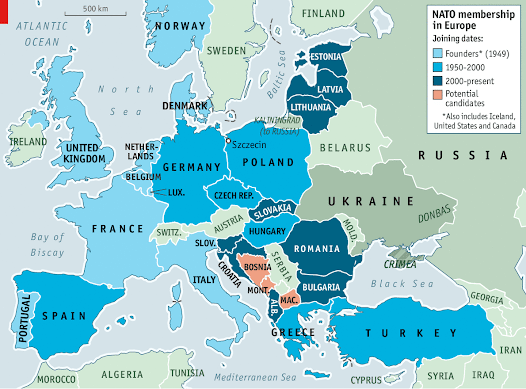
“Ukraine was the line of last resort that would complete Russia’s encirclement”
the political West invested hundreds of billions of dollars in turning Ukraine into a fervently Russophobic country, effectively becoming a giant military springboard aimed against Moscow.
http://space4peace.blogspot.com/2023/01/wikileaks-cables-reveal-nato-intended.html By Drago Bosnic (Independent geopolitical and military analyst) , SouthFront 25 Jan 23
For nearly a year, the massive Western propaganda machine has been manipulating its audience into believing the “Russia’s unprovoked aggression in Ukraine” narrative. The “reporting” can be crudely boiled down to the following: “On February 24, bloodthirsty Kremlin dictator Putin got up on the wrong side of the bed and decided to attack the nascent beacon of freedom and democracy in Kiev.” This is mandatory in virtually all Western mainstream media and any attempt to even think of questioning it results in immediate “cancellation”. Propagandists posing as “pundits” flooded political talk shows with the task of presenting decades of unrelenting NATO expansion as irrelevant to Russia’s reaction.
However, WikiLeaks, an organization the United States has been trying to shut down for well over a decade, including through the horrendous treatment of its founder Julian Assange, published secret cables showing this narrative couldn’t possibly be further from reality. Data indicates that American officials weren’t only aware of the frustration NATO expansion caused in Moscow, but were even directly told it would result in Russia’s response. And while the US often insists that the current crisis is a result of Vladimir Putin’s alleged desire to “rebuild the Russian Empire”, WikiLeaks reveals that even his predecessor Boris Yeltsin, infamous for his suicidal subservience to Washington DC, warned against NATO expansion.
For approximately three decades, consecutive US administrations were explicitly warned that Ukraine’s NATO membership would be the last straw for Moscow. Numerous Russian officials kept cautioning this would destabilize the deeply divided post-Soviet country. These warnings were made both in public and private, and were reiterated by other NATO members, geopolitical experts, Russian opposition leaders and even some American diplomats, including a US ambassador in Moscow. Yeltsin once told former president Bill Clinton that NATO expansion was “nothing but humiliation for Russia if you proceed”. Clinton, infamous for his aggression on Yugoslavia, ignored the warning and by 1999, less than a decade after the “not an inch to the east” promise was made, most of Eastern Europe was in NATO.
Despite this encroachment, Vladimir Putin still tried to establish closer ties with the political West, ratified START II and even offered to join NATO. America responded with unilateral withdrawal from key arms control treaties and color revolutions in Moscow’s geopolitical backyard. By the mid-2000s, Russia was flanked by two hostile US-backed regimes on its southern and western borders (Georgia and Ukraine). Major NATO members, such as Germany and France, warned this would lead to an inevitable response from Moscow. A WikiLeaks cable dated September 2005 reads:
“[French presidential advisor Maurice] Gourdault-Montagne warned that the question of Ukrainian accession to NATO remained extremely sensitive for Moscow, and concluded that if there remained one potential cause for war in Europe, it was Ukraine. Some in the Russian administration felt we were doing too much in their core zone of interest, and one could wonder whether the Russians might launch a move similar to Prague in 1968, to see what the West would do.”
WikiLeaks further reveals that German officials reiterated similar concerns about Russia’s reaction to NATO expansion into Georgia and Ukraine, particularly the latter, with diplomat Rolf Nikel stating: “While Georgia was ‘just a bug on the skin of the bear,’ Ukraine was inseparably identified with Russia, going back to Vladimir of Kiev in 988.” Another cable dated January 2008 says that “Italy is a strong advocate” for NATO enlargement, “but is concerned about provoking Russia through hurried Georgian integration.” Norwegian Prime Minister Jonas Gahr Stoere made similar remarks, an April 2008 cable indicates. Despite believing Russia shouldn’t have a saying in NATO, he said that “he understands Russia’s objections to NATO enlargement and that the alliance needs to work to normalize the relationship with Russia.”
n the US, even some high-level government officials made nearly identical assessments. WikiLeaks reveals that these warnings were presented to Washington DC by none other than William Burns himself, former US Ambassador to Russia and the current CIA chief. According to a cable dated March 2007, Burns said: “NATO enlargement and US missile defense deployments in Europe play to the classic Russian fear of encirclement.” Months later, he stated: “Ukraine’s and Georgia’s entry represents an ‘unthinkable’ predicament for Russia and Moscow would cause enough trouble in Georgia and continued political disarray in Ukraine to halt it.” Interestingly, Burns also assessed that closer ties between Russia and China were largely the “by-product of ‘bad’ US policies” and were unsustainable “unless continued NATO enlargement pushed Russia and China even closer together.”
In February 2008, Burns wrote: “Experts tell us that Russia is particularly worried that the strong divisions in Ukraine over NATO membership, with much of the ethnic-Russian community against membership, could lead to a major split, involving violence or at worst, civil war. Russia would then have to decide whether to intervene; a decision Russia does not want to have to face.”
Another cable dated March 2008 stated that “opposing NATO’s enlargement to Ukraine and Georgia, was one of the few security areas where there is almost complete consensus among Russian policymakers, experts and the informed population.” One defense expert stated that “Ukraine was the line of last resort that would complete Russia’s encirclement” and that “its entry into NATO was universally viewed by the Russian political elite as an unfriendly act.” Dozens of other cables make nearly identical assessments of radical changes in Russia’s foreign policy if NATO encroachment were to continue.
However, the vast majority of US officials, regardless of the administration, simply dismissed all warnings, repeatedly describing them as “oft-heard, old, nothing new, largely predictable, familiar litany and rehashing that provided little new substance.” Astonishingly, even the aforementioned Norway’s understanding of Moscow’s objections was labeled as “parroting Russia’s line”. While many German officials warned that the east-west split within Ukraine made the idea of NATO membership “risky” and that it could “break up the country”, US officials insisted this was only temporary and that it would change over time.
And indeed, the political West invested hundreds of billions of dollars in turning Ukraine into a fervently Russophobic country, effectively becoming a giant military springboard aimed against Moscow. NATO regularly conducted exercises, maintained an extensive presence, and even planned to make it permanent with at least several land and naval bases under construction in the country at the time when Russia launched its counteroffensive. In 2019, RAND Corporation, a well-known think tank funded by the Pentagon, published a report which focused on devising strategies for overextending Russia. Part of it reads:
“The Kremlin’s anxieties over a direct military attack on Russia were very real and could drive its leaders to make rash, self-defeating decisions… …Providing more US military equipment and advice to Ukraine could lead Moscow to respond by mounting a new offensive and seizing more Ukrainian territory.”
It’s quite hard to dismiss Moscow’s claims that the Ukrainian crisis is a segment of the comprehensive aggression against Russia when the very institutions funded by the political West itself openly admit that the current events were planned years or even decades ago. And even if the impossible happened and the Eurasian giant decided to surrender and succumb to Western pressure, where does the US-led aggression against the world stop? Or worse yet, how long before a disaster of cataclysmic proportions puts an end to it?
The Treaty on the Prohibition of Nuclear Weapons is a good step towards a nuclear-free world
https://www.canberratimes.com.au/story/8054916/nuclear-danger-is-strong-but-landmark-agreement-offers-hope/ By Marianne Hanson, Margaret Beavis, January 21 2023
January 22 marks the two-year anniversary of the entry into force of the United Nations Treaty on the Prohibition of Nuclear Weapons (TPNW), a landmark agreement that made nuclear weapons illegal on the basis of international humanitarian law.
Yet the potential for nuclear war remains as great as ever.
Fears that the unthinkable might happen were raised most clearly last year when President Vladimir Putin implied that Russia would consider using ‘all forces and means’ necessary in its fight against Ukraine.
It reminded us of the Cuban missile crisis 60 years earlier, once again bringing to the fore the prospect that nuclear war was in fact quite thinkable.
Thankfully, no nuclear weapons have been used in this war, but we cannot be complacent. Deterrence cannot be relied on forever. If Russia (or the United States) were to use even one small “tactical” nuclear weapon, a greater conflagration could easily follow.
It is not only Putin who has threatened to use nuclear weapons; nor is it the case that nuclear dangers vanished after the Cuban crisis or even after the end of the Cold War.
The leaders of every one of the nine states which possess these weapons of mass destruction – Russia, the US, France, China, Britain, India, Pakistan, Israel and North Korea – regularly signal that they would indeed use these weapons.
Their nuclear doctrines, the ongoing modernisation of their nuclear arsenals, their war-fighting practices and nuclear targeting all threaten the use of weapons which have the potential to kill millions and devastate the planet.
The end of the Cold War did nothing to reduce these dangers. While there was a period when goodwill between the major powers prevailed, and the US and Russia embarked on a program of reduction via the Strategic Arms Reduction Treaties, in truth a window of opportunity was lost when the nuclear-armed states refused to move seriously to eliminate their nuclear arsenals completely.
At the time, Australia was at the forefront of calls for the total elimination of nuclear weapons; the Labor government’s Canberra Commission in 1996 put forward a sober and considered assessment of the utility of nuclear weapons.
Nineteen commissioners from around the world, including several military leaders from the US, Britain and elsewhere, concluded that nuclear arsenals had very little military utility, that their existence continued to threaten the world – via deliberate or accidental use – and that as long as any one state possessed nuclear weapons, other states would want them too.
As predicted, three more states have acquired these WMDs since the Cold War ended.
The Canberra Commission set out a comprehensive program to encourage the phased, balanced, mutual, and verified elimination of nuclear weapons. It did not call for unilateral disarmament, nor did it insist that this should happen overnight. But it did warn that dangers would increase if the world did not act to eliminate these most destructive of all weapons.
Several other organisations and think tanks around the world added to the Canberra Commission’s message in subsequent decades and the nuclear states made clear promises to disarm. But they have stalled in the process of disarmament and are, instead, making their existing arsenals even more destructive than they were before.
Thoroughly fed-up with this intransigence, more than 120 states at the United Nations in 2017 voted to adopt a treaty outlawing nuclear weapons. The TPNW entered into force two years ago, and now has 92 state signatures.
Formed in Melbourne, the International Campaign for the Abolition of Nuclear weapons (ICAN) was awarded the Nobel peace prize for its work in raising awareness of nuclear dangers and its contribution towards the new treaty. This was the first and only time that an Australian-born group has been awarded the Nobel peace prize.
ICAN’s work was premised on the history of banning other weapons considered to be inhumane, unjust, and uncivilised. Landmines have been banned and are hardly used at all today, a far cry from a few decades ago. Chemical and biological weapons have been banned, and any state that attempts to use them is immediately stigmatised and reprimanded.
In the same way, the TPNW is designed to stigmatise, delegitimise, and in time lead to the elimination of nuclear weapons. ICAN, the 92 governments which have signed, and people around the world who support nuclear disarmament understand that a legal instrument banning nuclear weapons is a necessary step in the move to a nuclear weapons-free world.
It might surprise readers to know that several prominent politicians and military leaders also support this goal; Henry Kissinger and William Perry from the US are notable advocates of disarmament; so too were Ronald Reagan and Mikhail Gorbachev. Here in Australia, Labor promised at its 2018 and 2021 National Conferences that it will sign the TPNW when in government.
More than 100 federal parliamentarians have called on Canberra to fulfil this promise, as have hundreds more from around Australia, including in local government.
The call to eliminate nuclear weapons also finds strong support at the grassroots level in Australia; doctors and other health practitioners, environmental groups, trade unions, faith-based leaders, lawyers and others are calling on the government to sign the TPNW.
This is because banning and abolishing nuclear weapons is seen as a public health and humanitarian imperative. Our planet is worth preserving and human life should be valued. The Australian Red Cross as well as prominent Rotarians around the world are calling for the elimination of nuclear weapons, in the same way that they are working to eliminate polio and malaria.
On this second anniversary of the Treaty on the Prohibition of Nuclear Weapons’ entry into force, Australia must again take up the message of the Canberra Commissioners. Indeed, while Australia’s high-risk nuclear propelled submarine proposal clearly creates global proliferation concerns, by signing the TPNW Australia can demonstrate its non-proliferation commitments.
A nuclear-free world requires visionary and bold leadership. It is a global public good. Signing the TPNW, and playing an active role internationally for balanced, phased and verified disarmament will be an excellent start.
- Associate Professor Marianne Hanson and Dr Margaret Beavis are co-chairs of the International Campaign to Abolish Nuclear Weapons (Nobel peace prize 2017) Australia.
Diplomatic Cables Show Russia Saw NATO Expansion as a Red Line
Ukraine was the “line of last resort” that would complete Russia’s encirclement, said one defense expert, and its entry into NATO was universally viewed by the Russian political elite as an “unfriendly act.”
ACURA VIEWPOINT, Branko Marcetic, January 16, 2023
Nearly a year in, the war in Ukraine has cost hundreds of thousands of lives and brought the world to the brink of, in President Joe Biden’s own words, “Armageddon.” Alongside the literal battlefield has been a similarly bitter intellectual battle over the war’s causes.
Commentators have rushed to declare the long-criticized policy of NATO expansion as irrelevant to the war’s outbreak, or as a mere fig leaf used by Russian President Vladimir Putin to mask what Condoleezza Rice and Robert Gates recently called “his messianic mission” to “reestablish the Russian Empire.” Fiona Hill, a presidential advisor to two Republican administrations, has deemed these views merely the product of a “Russian information war and psychological operation,” resulting in “masses of the US public … blaming NATO, or blaming the US for this outcome.”
Yet a review of the public record and many dozens of diplomatic cables made publicly available via WikiLeaks shows that US officials were aware, or were directly told over the span of years, that expanding NATO was viewed by Russian officials well beyond Putin as a major threat and provocation, that expanding it to Ukraine was a particularly bright red line for Moscow, that it would inflame and empower hawkish, nationalist parts of the Russian political spectrum, and that it could ultimately lead to war.
In a particularly prophetic set of warnings, US officials were told that pushing for Ukrainian membership in NATO would not only increase the chance of Russian meddling in the country, but risked destabilizing the divided nation — and that US and other NATO officials pressured Ukrainian leaders to reshape this unfriendly public opinion in response. All of this was told to US officials in both public and private by not just senior Russian officials going all the way up to the presidency, but by NATO allies, various analysts and experts, liberal Russian voices critical of Putin, even, sometimes, US diplomats themselves.
This history is particularly relevant as US officials now test the red line China has drawn around Taiwan’s independence, risking military escalation that will first and foremost be aimed at the island state. The US diplomatic record regarding NATO expansion suggests the perils of ignoring or outright crossing another military power’s red lines, and the wisdom of a more restrained foreign policy that treats other powers’ spheres of influence with the care they treat the United States’ own.
An Early Exception
NATO expansion had been fraught from the start. The pro-Western Boris Yeltsin had told Bill Clinton he “saw nothing but humiliation for Russia if you proceed” with plans to renege on the verbal promises made years earlier not to enlarge NATO eastward, and warned it would be “sowing the seeds of mistrust” and would “be interpreted, and not only in Russia, as the beginning of a new split in Europe.”………………………………………………………………………….
Almost Complete Consensus
The thinkers and analysts that US officials conferred with likewise made clear the Russian elite’s anxieties over NATO and its expansion, and the lengths they might go to counteract it. Many were transmitted by then-US Ambassador to Russia William Burns, today serving as Biden’s CIA director.
Recounting his conversations with various “Russian observers” from both regional and US think tanks, Burns concluded in a March 2007 cable that “NATO enlargement and U.S. missile defense deployments in Europe play to the classic Russian fear of encirclement.” Ukraine and Georgia’s entry “represents an ‘unthinkable’ predicament for Russia,” he reported six months later, warning that Moscow would “cause enough trouble in Georgia” and counted on “continued political disarray in Ukraine” to halt it. In an especially prescient set of cables, he summed up scholars’ views that the emerging Russia-China relationship was largely “the by-product of ‘bad’ US policies,” and was unsustainable — “unless continued NATO enlargement pushed Russia and China even closer together.”
………………… “Ukraine was, in the long term, the most potentially destabilizing factor in US-Russian relations, given the level of emotion and neuralgia triggered by its quest for NATO membership,” went the counsel of Dmitri Trenin, then-deputy director of the Russian branch of the US-based Carnegie Endowment for International Peace, in a Burns-authored February 2008 cable. For Ukraine, he said prophetically, it would mean that elements within the Russian establishment would be encouraged to meddle, stimulating US overt encouragement of opposing political forces, and leaving the US and Russia in a classic confrontational posture.
Indeed, opposing NATO’s enlargement eastward, particulary in Ukraine and Georgia, was “one of the few security areas where there is almost complete consensus among Russian policymakers, experts and the informed population,” he cabled in March 2008. Ukraine was the “line of last resort” that would complete Russia’s encirclement, said one defense expert, and its entry into NATO was universally viewed by the Russian political elite as an “unfriendly act.” Other experts cautioned “that Putin would be forced to respond to Russian nationalist feelings opposing membership” of Georgia, and that MAPs for either would trigger a cut-back in the Russian military’s genuine desire for co-operation with NATO.
From Liberals to Hardliners
These analysts were reiterating what cables show US officials heard again and again from Russian officials themselves, whether diplomats, members of parliament, or senior Russian officials all the way up to the presidency, recorded in nearly three-dozen cables at least………………………………………………………………..
Selling NATO to Ukraine……………………………………………………..
“Experts tell us that Russia is particularly worried that the strong divisions in Ukraine over NATO membership, with much of the ethnic-Russian community against membership, could lead to a major split, involving violence or at worst, civil war,” Burns wrote in February 2008. Russia, he wrote, would then “have to decide whether to intervene; a decision Russia does not want to have to face.”………………………………
By December 2016, with fears of invasion ramping up, Putin told Biden personally that “the eastward expansion of the Western alliance was a major factor in his decision to send troops to Ukraine’s border,” the Washington Post reported.
………….. claims that Russian unhappiness over NATO expansion is irrelevant, a mere “fig leaf” for pure expansionism, or simply Kremlin propaganda are belied by this lengthy historical record. Rather, successive US administrations pushed ahead with the policy despite being warned copiously for years — including by the analysts who advised them, by allies, even by their own officials — that it would feed Russian nationalism, create a more hostile Moscow, foster instability and even civil war in Ukraine, and could eventually lead to Russian military intervention, all of which ended up happening.
“I don’t accept anyone’s red line,” Biden said in the lead-up to the invasion, as his administration rejected negotiations with Moscow over Ukraine’s NATO status. We can only imagine the world in which he and his predecessors had. https://usrussiaaccord.org/acura-viewpoint-guest-post-by-branko-marcetic-diplomatic-cables-show-russia-saw-nato-expansion-as-a-red-line/
Alarm in Malta over the proposal for a nuclear reactor in Sicily.
A nuclear reactor in Sicily? Malta Independent, 15 Jan 23,
During the recent 2022 electoral campaign, the issue of nuclear energy in neighbouring Italy has resurfaced in the political debate.
Matteo Salvini, currently Minister for the Infrastructure and Transport, in addition to being Deputy Prime Minister of the ruling Italian coalition government, is on record as emphasising that, given the current energy crisis, he considers that it would be expedient to resurrect the nuclear proposal.
talian voters have expressed themselves clearly on the matter twice. The last time was in a referendum in June 2011 in the aftermath of the Fukushima March 2011 nuclear disaster. Then, 94 per cent of those voting, opted in favour of a total ban on the construction of nuclear reactors on Italian soil.
The current energy crisis is pressuring all to find alternative energy supplies at affordable cost. Nuclear energy, however, comes with two hidden costs which are rarely ever factored into the costings presented for public debate: the disposal of nuclear waste and the inherent risks linked to the failure of the nuclear plants. The impacts of the nuclear accidents at Three Mile Island (Pennsylvania USA – 28 March 1979), Chernobyl (Ukraine – 26 April 1986) and Fukushima (Japan – 11 March 2011) are clear enough testimony of what is at stake, when considering the option of nuclear energy.
The disposal of nuclear waste is the subject of an ongoing debate all over the world. It is costly both environmentally as well as financially. In the recent past, closer to home, the eco-mafia dumped various types of waste including nuclear waste in the Mediterranean Sea in 42 different ships sunk in different parts of the Mediterranean. The specific case of the sunken ship Kunsky off the Calabrian coast was revealed by ‘Ndrangheta/Camorra turncoats Francesco Fonti and Carmine Schiavone many years ago in their testimony to the Italian authorities………………
The site which in 2011 was indicated by the Italian authorities as the most probable candidate to host a nuclear reactor in Sicily was along the southern coastline in the vicinity of Palma de Montechiaro. That would be less than 100 kilometres to the North West of Gozo.
As we are aware Sicily is an earthquake prone zone. In addition to the multitude of small earthquakes we hear about and occasionally are aware of throughout the year, the Sicilian mainland was exposed to the two most intensive earthquakes ever to hit the European mainland. The 1693 earthquake centred in South East Sicily had a magnitude of 7.4 while the Messina 1908 earthquake had a magnitude of 7.1 on the Mercalli scale. Both created havoc and had a high cost in human life! In addition, the physical infrastructure was in shambles.
A decision on whether the Italian government will once more attempt to consider the generation of nuclear energy on Italian soil is not due anytime soon. However, once the collection of signatures for a referendum on the matter gathers steam it will only be a question of time when we will have to consider facing the music one more time.
Our interest in Malta is in the transboundary impacts generated from a nuclear reactor sited along the southern Sicilian coast close to Palma di Montechiaro, should the proposed nuclear reactor malfunction.
It would be pertinent to keep in mind that the radioactivity emitted as a result of the Fukushima disaster led to a complete evacuation within a 200 km radius of the nuclear plant. Gozo being less than 100 km away from the Sicilian mainland should trigger the alarm bells of one and all as to what is ultimately at stake. https://www.independent.com.mt/articles/2023-01-15/blogs-opinions/A-nuclear-reactor-in-Sicily-6736248841
1 This Month



26 September – International Day for the Total Elimination of Nuclear Weapons


PLEASE OPPOSE HR 8255 AND S.3639 – bills would accelerate satellite deployment, with no environmental review or safeguards – https://ncstd5li.quorum.us/campaign/169331/
To see nuclear-related stories in greater depth and intensity – go to https://nuclearinformation.wordpress.com
-
Archives
- September 2026 (245)
- August 2026 (330)
- July 2026 (355)
- June 2026 (287)
- May 2026 (306)
- April 2026 (356)
- March 2026 (251)
- February 2026 (267)
- January 2026 (308)
- December 2025 (358)
- November 2025 (359)
- October 2025 (375)
-
Categories
- 1
- 1 NUCLEAR ISSUES
- business and costs
- climate change
- culture and arts
- ENERGY
- environment
- health
- history
- indigenous issues
- Legal
- marketing of nuclear
- media
- opposition to nuclear
- PERSONAL STORIES
- politics
- politics international
- Religion and ethics
- safety
- secrets,lies and civil liberties
- spinbuster
- technology
- Uranium
- wastes
- weapons and war
- Women
- 2 WORLD
- ACTION
- AFRICA
- Atrocities
- AUSTRALIA
- Christina's notes
- Christina's themes
- culture and arts
- Events
- Fuk 2022
- Fuk 2023
- Fukushima 2017
- Fukushima 2018
- fukushima 2019
- Fukushima 2020
- Fukushima 2021
- general
- global warming
- Humour (God we need it)
- Nuclear
- RARE EARTHS
- Reference
- resources – print
- Resources -audiovicual
- Weekly Newsletter
- World
- World Nuclear
- YouTube
-
RSS
Entries RSS
Comments RSS
 nuclear-news