No deal in site between EDF and UK government, on nuclear subsidy
 EDF, U.K. Unlikely to Meet End-March Deadline on Nuclear Subsidy -Sources, Fox Business News, By Geraldine Amiel and Selina Williams March 28, 2013 Dow Jones Newswires French electricity company Electricite de France SA (EDF.FR) and the British government are unlikely to meet a deadline at the end of March to agree on subsidies that would allow the construction of new nuclear power plants in the U.K., people familiar with the matter said.
The people said in recent days that although discussions are still ongoing, they aren’t intensive and neither side appeared to be willing to make any compromises.
“There’s no deal in sight, discussions are ongoing and if EDF doesn’t get the price that it believes is the right price then they won’t do it, they have no choice,” Continue reading
UK’s Liberal Democrats do a U turn on nuclear power policy
A Liberal Democrat promise goes nuclear – Time for another ’sorry’
video? http://blogs.independent.co.uk/2013/03/26/a-lib-dem-promise-goes-nuclear/
By Andy McSmith , 26 March 2013
Looking back at page 59 of the 2010 Liberal Democrat manifesto, one
finds a promise to “reject a new generation of nuclear power
stations.”
Last week the Energy Secretary Ed Davey, a Lib Dem, gave the go ahead
for the first new nuclear power station in Britain for a generation,
at Hinkley C, in Somerset. Today, he and the Business Secretary Vince
Cable and another Lib Dem promised help to enable UK business to
compete in the global nuclear energy market.
Time for another ’sorry’ video?
UK will slug renewable energy providers for the costs of new nuclear
The question of state-sanctioned support for new nuclear power, paid ultimately by consumers, has become a fraught one for ministers.
 Renewable energy providers to help bear cost of new UK nuclear reactors Damian Carrington guardian.co.uk, 27 March 2013 Experts say decision to share cost of accommodating Hinkley Point reactors among providers amounts to subsidy for nuclear The row over subsidies for the UK’s new nuclear power stations has deepened after it emerged that the £160m-a-year cost of accommodating the giant reactors on the national electricity grid will be borne by all generators, including renewable energy providers. Continue reading
Taiwan’s Economics Committee votes to suspend nuclear plant construction
 Motions passed to cease nuclear plant construction Taipei Times, By Helen Ku, Shih Hsiu-chuan and Chris Wang / Staff reporters 21 March 13, Motions demanding that state-owned Taiwan Power Co (Taipower, 台灣電力公司) suspend construction of the Fourth Nuclear Power Plant in New Taipei City’s (新北市) Gongliao District (貢寮) and rejecting the company’s budget proposal for the year were passed yesterday by the legislature’s Economics Committee.
The motions, initiated by Democratic Progressive Party (DPP) lawmakers, shot down Taipower’s plan to spend NT$11.7 billion (US$392.99 million) on the plant this year, including NT$10.7 billion of construction work that has already been outsourced. Continue reading
Removal of anti nuclear members from Japan.s Energy Board
Japan’s Energy Board Meets After Dropping Anti-Nuclear Members Bloomberg, By Tsuyoshi Inajima – Mar 14, 2013 Japan’s ruling Liberal Democratic Party has removed most anti-nuclear researchers from a revamped post-Fukushima energy policy advisory board to the government that resumes discussions today.
After a landslide victory in a December election, Prime Minister Shinzo Abe has said the previous administration’s policy to abandon atomic power needs to be reviewed to help revive the world’s third-biggest economy. Continue reading
Safety inspections for Japan’s nuclear plants will delay any restart
 Japan’s nuclear plants unlikely to restart in 2013 By MarketWatch, 3 Mar 13, TOKYO–None of Japan’s nuclear power plants that have been idled since the nuclear crisis triggered by the March 2011 earthquake and tsunami are likely to restart operations within the year as safety checks under new standards
 are not expected to be completed, a Kyodo news agency survey of utilities showed Sunday.
Kansai Electric Power Co.’s Oi plant in Fukui Prefecture, currently the only operating nuclear plant in the country, is also likely to be suspended in September for routine checks regardless of the new safety standards that are planned to enter into force in July, according to the survey of the 10 power companies that have nuclear plants.
Kyodo reported the financial burden on the utilities is increasing as they enhance preventive measures following the nuclear crisis at the Fukushima Daiichi power plant.
The companies expect the cost of implementing the new standards will total at least 1.1 trillion yen ($11.75 billion), with Kansai Electric saying 285.5 billion yen is needed in the medium to long term.
Kyushu Electric Power Co. said it could restart two of its nuclear reactors in southwestern Japan in July if inspections by the Nuclear Regulation Authority are completed swiftly, but all the other utilities declined to provide specific dates……. Although the authority is now aiming to speed up the process, broader safety measures under the new standards are expected to make it difficult for inspections to be completed by the end of the year. http://www.marketwatch.com/story/japans-nuclear-plants-unlikely-to-restart-in-2013-2013-03-03
Shock horror: some USA Tea Party Republicans are losing faith in nuclear power
 “Conservatives do not believe in incentivizing failure,” Debbie Dooley, a co-founder of the Atlanta Tea Party, recently told Georgia lawmakers. “
“The price tag keeps going up. The timeframe they are going to build it has been extended year after year after year,” said state Rep. Mike Fasano, a Republican and self-described nuclear power supporter.
“A lot of people are paying for something that they’ll never see any return on their money,” Fasano said.
Some Leaders Souring on Nuclear Power Costs, abc News By RAY HENRY Associated Press ATLANTA March 3, 2013 As the cost of building a new nuclear plant soars, there are signs of buyer’s remorse. The second-guessing from officials in Georgia and Florida is a sign that maybe the nation is not quite ready for a nuclear renaissance. On top of construction costs running much higher than expected, the price of natural gas has plummeted, making it tough for nuclear plants to compete in the energy market. Continue reading
Taiwan’s opposition Democratic Progressive Party launching anti nuclear campaign
 DPP to launch ‘rational’ anti-nuclear campaign Focus Taiwan, By Lee Shu-hua and Ann Chen, Taipei, March 3 (CNA) The opposition Democratic Progressive Party (DPP) said Sunday that it will launch a “rational” anti-nuclear campaign after the ruling Kuomintang (KMT) accepted the idea of holding a referendum on the controversial Fourth Nuclear Power Plant project. Continue reading
USA taxpayers being ripped off again, for small nuclear reactors boondoggle
 Mini Nuclear Reactors Earn Golden Fleece Award For Government Waste Clean Technica, February 28, 2013 Jeremy Bloom Are mini nuclear reactors the future of high-end energy development — or a wasteful government boondoggle?
While it may or may not be great that profitable companies like Babcock & Wilcox and Toshiba are researching these mini or even micro reactors (don’t worry, they won’t fit in a suitcase, or even in your basement), the group Taxpayers for Common Sense (TCS) has dinged the program as its recipient of the 2013 Golden Fleece Award, for sucking down potentially half a billion dollars in taxpayer money.
“The nation is two days away from the across-the-board budget cuts known as sequestration,” notes Ryan Alexander, president of TCS. “But at the same time we are hearing the Department of Energy and the nuclear industry evangelizing about the benefits of small modular reactors. In reality, we cannot afford to pile more market-distorting subsidies to profitable companies on top of the billions of dollars we already gave away.”
Indeed, at a time when that much money could pay for some substantial progress in growing fields like biofuels or solar power, you have to wonder why companies like Babcock & Wilcox need any help from the government at all……the TCS says the possible drawbacks are legion:
- The energy they generate just won’t be cost-effective.
- And that’s at current estimates — nuclear companies are notorious for over — estimating benefits and under-estimating costs.
- Before anything can be built, it’ll take years for the Nuclear Regulatory Commission to evaluate these new designs.
- Each of these new reactors would be a potential terrorist target, multiplying the security nightmare.
- And we still have no way of dealing with nuclear waste.
“The nuclear industry has a tradition of rushing forth to proclaim that a new technology, just around the corner, will take care of whatever problem exists,” says Autumn Hanna, senior program director for TCS. “Unfortunately, these technologies have an equally long tradition of expensive failure. If the industry believes in small modular reactors and a reactor in every backyard – great – but don’t expect the taxpayer to pick up the tab.”
Subsidies to fossil fuel industries – $620 billion, but to renewables, only $88 billion
 Fossil Fuel Subsidies Eclipsed $620 Billion in 2011, by Energy Matters, 2 March 13, Globally, governments provided more than USD$620 billion to subsidize fossil fuel energy in 2011 and just $88 billion went to subsidies for renewable energy. According to the Earth Policy Institute (EPI), $131 billion in subsidies went to coal, gas and oil consumed specifically for electricity generation.
“Through these subsidies, governments cut the prices people paid for fossil energy by nearly a quarter – encouraging waste and hindering efforts to stabilize climate.”……
While subsidisation of renewable energy is often criticised, it’s often forgotten the fossil fuel industry has been riding the subsidy gravy train for decades – and its not as though it needs the degree of support it enjoys. The EPI points out Royal Dutch Shell , ExxonMobil, BP, Chevron, and ConocoPhillip collectively raked in $137 billion in profits in 2012.
The International Energy Agency estimates state phasing out all fossil fuel consumption subsidies by 2020 would slash carbon dioxide emissions in that year by close to 2 gigatons.
The Earth Policy Institute (EPI) was founded in 2001 by Lester Brown, the founder and former president of the Worldwatch Institute, to provide a plan of a sustainable future along with a roadmap of how to get from here to there. http://www.energymatters.com.au/index.php?main_page=news_article&article_id=3618
Big obstacles to South Africa’s ambitious nuclear power plan
No clear path to ambitious nuclear goal. Mail & Guardian, Africa 01 MAR 2013 LYNLEY DONNELLY,,,,,,,Eskom, which the state named as owner and operator for the proposed nuclear programme, is being hampered by labour strife at the construction site of the new Medupi coal-fired power station. Strikes are threatening the delivery time of Medupi, which was expected to bring its first unit online later this year.
Guenon also expressed misgivings about the government’s ambitious localisation plans for the nuclear programme. It would be very difficult to meet high localisation levels, if government opted to build one nuclear plant given the stringent certification and regulatory requirements vendors, suppliers and other companies involved in the nuclear industry were required to meet; as well as the need for qualified labour, particularly technicians and artisans……
It is estimated that the procurement and construction of the six new power stations envisaged will cost between R400-billion and R1-trillion. …..
the very high capital costs of nuclear procurement is a concern for policymakers. The national planning commission has called for the nuclear programme to be reviewed to ensure its financial feasibility……
key to the success of a nuclear programme, particularly one that ensured successful localisation, was the issue of affordability. The minister of finance would not sign off on something that the country’s balance sheet could not sustain,..http://mg.co.za/article/2013-03-01-00-no-clear-path-to-ambitious-nuclear-goal
Japan’s Prime Minister keen to restart nuclear reactors, but safety problems remain
skeptics worry that industry supporters in the government will manage to get around the regulations.
According to a report by the newspaper Asahi Shimbun, none of Japan’s 16 undamaged commercial nuclear plants would pass the new standards.
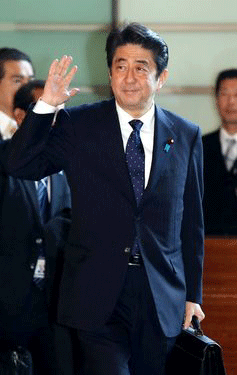 Japan to Begin Restarting Idled Nuclear Plants, Leader Says NYT By MARTIN FACKLER and HIROKO TABUCHI Matthew L. Wald contributed reporting from Washington. February 28, 2013 TOKYO — Japan will begin restarting its idled nuclear plants after new safety guidelines are in place later this year, Prime MinisterShinzo Abe said Thursday, moving to ensure a stable energy supply despite public safety concerns after the Fukushima disaster.
In a speech to Parliament, Mr. Abe pledged to restart nuclear plants that pass the tougher guidelines, which are expected to be adopted by a new independent watchdog agency, the Nuclear Regulation Authority, as early as July. He did not specify when any of the reactors might resume operation, and news reports have suggested that it might take months or even years to make the expensive upgrades needed to meet the new safety standards. Continue reading
Conflict of interest, safety fears, in South Korea’s nuclear power plans
“The Republic of Korea is going to be the only country across the globe where regulators and basically developers or promoters might be working all together under the same roof,” said Suh Kune Yull, a nuclear engineering professor at Seoul National University. “A conflict of interest is inevitable.”
Safety concerns cloud South Korea nuclear drive, Japan Times, AFP-JIJI FEB 28, 2013 GORI, SOUTH KOREA – South Korea has big plans to become a major nuclear energy player, but they are unfolding at a time when the global industry is under intense scrutiny after the 2011 Fukushima disaster.And its ambitions have not been helped by a series of domestic scandals and forced reactor shutdowns in 2012 that rattled public confidence and exposed a glaring lack of regulatory transparency.
Around $400 billion is riding on South Korea’s ability to sell its technology to potential clients as it aims to take on the United States, France and Russia and grab a 20 percent share of the nuclear energy market……
A survey commissioned by the Economics Ministry and published in November showed only 35 percent of South Koreans considered nuclear power to be safe — sharply down from 71 percent in January 2010. Continue reading
Britain’s subsidies for nuclear power – unfair guarantees
Nuclear power’s place in a safer, cleaner Britain The Guardian, Professor Sue Roaf Edinburgh. 24 February 2013 The £240bn pledged in subsidies for new nuclear power stations in Britain would give £10,000 to each home in Britain so they could all install solar hot water, solar electric systems, controls and new boilers, where necessary with insulation and draught-stripping, and help take every home in Britain out of fuel poverty.
The solar option helps cut energy demand from homes by 50%-75%, saving huge amounts in NHS costs for mental and physical health. Solar systems generate electricity at less than half the C02 life-cycle costs for nuclear. Most importantly the nuclear route puts more people, every year, into fuel poverty as prices rise, putting profits into the pockets of Big Energy and Big Construction. The solar option actually builds local businesses and community resilience. The Arab spring showed us the power of people who can’t pay their bills. Can anyone tell me one good reason for choosing the nuclear over the solar option if our aim is to build a stronger, safer, cleaner, healthier Britain?
Chris Osman Oxford.There should be only two guarantees to nuclear operators: (a) that they can sell electricity at the price required to cover their costs, and (b) that they are guaranteed to be able to sell some agreed fraction (say 50%) of the output of their reactors while operational, regardless of the cost they have to charge. If the operators have to charge double the standard rate, then tough – it would expose the myth that nuclear fission is an economically competitive way of generating electricity.
International treaties enable the huge economic impact of a nuclear incident to be covered by governments, and thence the general public, instead of the operators. Operators should not be allowed to go bankrupt in the event of a serious incident but instead be required to charge whatever higher price for electricity from other reactors is necessary to cover the full cost. If this is 10 times the normal cost of electricity, again, tough.
http://www.guardian.co.uk/environment/2013/feb/24/nuclear-energy-safer-cleaner-healthier-uk
Florida State senators fed up with the delay in building nukes, as Duke Energy pockets resident’s money
State senators to utilities: Build nuclear power or risk loss of funding By Ivan Penn and Mary Ellen Klas, Tampa Bay Times/Herald Tallahassee Bureau February 21,2013 TALLAHASSEE – Fed up Tampa Bay area state senators want utilities to either start building nuclear power plants or lose a state law that allows them to charge customers for the plants in advance.
Duke Energy customers already are on the hook for $1.5 billion for a proposed plant in Levy County that the utility has delayed for almost a decade and still has not committed to build. The utility gets to pocket about $150 million of that money. Continue reading
1 This Month
23-25 October – on Zoom – World BEYOND War’s annual global conferenc


Shut down the radiation-damaged Heysham nuclear reactors now
To see nuclear-related stories in greater depth and intensity – go to https://nuclearinformation.wordpress.com

Say No to NASA’s Reckless Nuclear Reactor on the Moon
Say No to NASA’s Reckless Nuclear Reactor on the Moon
-
Archives
- October 2026 (180)
- September 2026 (339)
- August 2026 (330)
- July 2026 (355)
- June 2026 (287)
- May 2026 (306)
- April 2026 (356)
- March 2026 (251)
- February 2026 (267)
- January 2026 (308)
- December 2025 (358)
- November 2025 (359)
-
Categories
- 1
- 1 NUCLEAR ISSUES
- business and costs
- climate change
- culture and arts
- ENERGY
- environment
- health
- history
- indigenous issues
- Legal
- marketing of nuclear
- media
- opposition to nuclear
- PERSONAL STORIES
- politics
- politics international
- Religion and ethics
- safety
- secrets,lies and civil liberties
- spinbuster
- technology
- Uranium
- wastes
- weapons and war
- Women
- 2 WORLD
- ACTION
- AFRICA
- Atrocities
- AUSTRALIA
- Christina's notes
- Christina's themes
- culture and arts
- Events
- Fuk 2022
- Fuk 2023
- Fukushima 2017
- Fukushima 2018
- fukushima 2019
- Fukushima 2020
- Fukushima 2021
- general
- global warming
- Humour (God we need it)
- Nuclear
- RARE EARTHS
- Reference
- resources – print
- Resources -audiovicual
- Weekly Newsletter
- World
- World Nuclear
- YouTube
-
RSS
Entries RSS
Comments RSS

