Clean energy, economy, employment win for Colorado
Another Big Victory for Renewable Energy – This Time in the Rockies http://switchboard.nrdc.org/blogs/nlong/another_big_victory_for_renewa.html Noah Long, 29 April 13, Critical votes in The Colorado legislature late Friday night and yesterday represent yet another victory for renewable energy despite a national drive by the fossil fuel industry to roll back standards supporting increased clean power sources like wind and solar.
The Colorado House voted to increase rural renewable energy to 20 percent, doubling access for 100,000 Colorado customers. A version of the bill had already passed the Senate and is supported by Governor John Hickenlooper. A final vote is still necessary before it gets to the governor’s desk, but after these decisive votes, it should become law.
The move will bring clean energy, jobs and economic opportunity to rural Colorado. The increase could result in as many as 10,000 new wind, solar and renewable jobs.

The win for renewable energy in the heart of the Rockies sends a clear national message. Despite the fossil fuel industry’s attempt to roll back renewable energy standards around the country that require utilities to provide an increasing percentage of their power from renewable resources, voters continue to want more clean energy. Roll back attempts have failed in Kansas and North Carolina (more on NC, here). In Arizona, a lawmaker withdrew his proposal to reduce the renewables requirement on that state’s utilities.
Colorado — which will now get 20 to 30 percent of its energy from clean sources — is on pace to have the second highest renewable energy standard in the country- only behind California.
NRC rules against Texas nuclear plant expansion
NRC shoots down Texas nuclear plant expansion, Dallas News.com By James Osborne April 30, 2013 Plans to build two new reactors at the South Texas Project nuclear facility outside Bay City hit a road block Tuesday.
The U.S. Nuclear Regulatory Commission ruled that a partnership between NRG and Toshiba Corp. through the holding company Nuclear Innovation North America violated a U.S law prohibiting foreign control of nuclear power plants.
“At this point NINA from our perspective is foreign owned, controlled or dominated,” said NRC spokesman Scott Burnell. “Until such time as NINA can come up with a different corporate ownership structure we would not be able to approve their license.”…… http://bizbeatblog.dallasnews.com/2013/04/nrc-shoots-down-texas-nuclear-plant-expansion.html/
Republican-led House Florida House keeps nuclear upfront fees
The Republican-led House modified SB 1472 to add new hurdles to the unpopular nuclear cost recovery act but voted down amendments that would have required the companies to disclose how much of the monthly bill was going into the planning costs among other amendments.
They also rejected an amendment to put the so-called “nuclear cost recovery act” to a voter referendum, an amendment that would ban any development on a nuclear plant until there is a permanent disposal site for nuclear waste, and an amendment to repeal the proposal….. Since the act took effect in 2006, Progress Energy has charged customers more than $1 billion to expand the now-crippled Crystal River nuclear power plant and to start developing a new plant in Levy County….. Rep. Mike Fasano, R-New Port Richey, urged the House to reject the compromise language added to the House bill, saying it will allow utility companies to continue to profit from customers paying the nuclear fee even if the plant is never built.
“We weakened the bill,” he said. “Now what do utility companies have to be concerned about?”
A final vote on the bill is expected later this week. http://www.tampabay.com/news/politics/stateroundup/florida-house-rejects-attempts-to-repeal-nuclear-fees/2118425
South Carolina Republicans vote against bill that would gut renewable energy standard!
 NC Renewable Energy Standard Scores Surprise Win To the shock and horror of its backers, a bill attempting to gut North Carolina’s renewable energy standard fails in committee. GreentechSolar, PETE DANKO: APRIL 26, 2013 Maybe state renewable portfolio standards aren’t quite so fragile after all. On Wednesday in North Carolina, an RPS thought to be among the most vulnerable withstood attack.
 A broad assault on these laws, which operate uniquely but in general terms require utilities to source a growing amount of renewable energy, is being waged by thoughtful free market devotees or ruthless corporate interests, one or the other. (You can decide which; just know that the American Legislative Exchange Council has been right in the middle of it all in most states, as it was in North Carolina, along with the Heartland Institute, Grover Norquist, the John Locke Foundation and others, all with fossil fuel backing, according to the Center for Media and Democracy’s PR Watch.)
Remarkably, the bill to gut the RPS failed even to get out of the committee chaired by its sponsor. With six Republicans voting against it, the tally in the Committee on Public Utilities and Energy was a resounding 18-13 against moving the bill forward.
The anti-RPS folks were aghast……..
Renewable energy advocates in the Tar Heel State had a slightly different take.“The vote’s outcome and the fact that it occurred in the Committee chaired by the bill’s own sponsor, Chairman Mike Hager, not only helps to secure a path forward for continued economic development in the renewable energy sector, it also showed the strength of the voices from across the state that spoke out against the misguided effort to have North Carolina turn away from a promising clean energy future,” the North Carolina Sustainable Energy Association said in a statement…… http://www.greentechmedia.com/articles/read/nc-renewable-energy-standard-scores-surprise-win
South Africa’s National Planning Commission warns against nuclear energy
 Energy: Nuclear warning sparks meltdown, Mail and Guardian (Africa) 26 APR 2013 00:00 – LIONEL FAULL A major policy clash over the biggest spending plan in SA’s history has erupted between the national planning commission and the energy department. The trillion-rand plan to build a fleet of new nuclear power stations is not only costlier than expected, but may be entirely unnecessary, according to the research initiated by the commission.
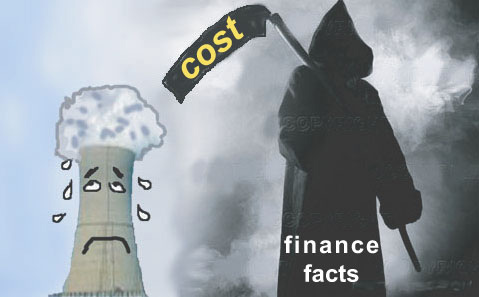
It also warned that the department’s commitment to a massive nuclear push could ratchet electricity prices up by as much as 12% compared with alternative scenarios Continue reading
China’s slower, more expensive, nuclear energy plan
China moves cautiously ahead on nuclear energy, China Daily Mail, BY MICHAEL B. CALYN ⋅ APRIL 25, 2013⋅ “…....Based on the new plan, China will only approve a few new reactor construction projects before 2016. China now expects to grow its total nuclear capacity to 58 GWe by 2020, rather than the more than 80 GWe previously expected.
The government resumed approval of new nuclear power projects in December 2012, just as the new plan was issued. Several inland nuclear power projects where significant preparation work had already begun will be suspended, with some of their equipment likely transferred to coastal sites. Continue reading
UK government looks like reneging on its promise of no subsidies for new nuclear
Will the public subsidise new nuclear? http://www.carbonbrief.org/blog/2013/04/will-the-public-subsidise-new-nuclear A parliamentary committee has accused the government of failing to keep its promise not to subsidise new nuclear. But has the government been planning to renege on its promise all along?
Subsidising nuclear
The Environmental Audit Committee is calling on the government to be more open about the money it gives to the nuclear industry. A new report from the committee released today suggests the UK nuclear industry receives a £2.3 billion subsidy each year. Continue reading
Anger at USA government’s new lax radiation safety rules
 New radiation guidelines outrage anti-nuclear groups Apr
 18 – McClatchy-Tribune Regional News – Pam Sohn Chattanooga Times Free Press, Tenn. At the same time that citizens are cooling on nuclear power in Fukushima’s wake and both nuclear regulators and operators are pushing emergency preparedness for worst-case scenarios, the EPA has moved to update radiation exposure rules.
They include some health-related guidelines to help responders determine evacuation needs and short-term exposure measures for situations not previously spelled out, according to Jonathan Edwards, chief of the Environmental Protection Agency’s radiation division, and David McIntyre, a spokesman for the Nuclear Regulatory Commission. The guide is intended to be used by emergency planners.
But at least two environmental groups charge that the new guidelines, announced Monday in the Federal Register, relax existing rules.
“The new [protective action guides] eliminate requirements to evacuate people in the face of high projected thyroid, skin, or lifetime whole body doses,” according to statements from the Nuclear Information and Resource Service and the Committee to Bridge the Gap.
Daniel Hirsch, president of Committee to Bridge the Gap, said the guide also recommends dumping radioactive waste in municipal landfills not designed for such waste and proposes options for drinking water that would increase the permitted concentrations of radioactivity “by as much as 27,000 times.”….
the groups — both anti-nuclear — are outraged.
“In essence the government is now saying nuclear power accidents could produce such widespread contamination and produce such high radiation levels that the government should abandon efforts to clean it up and instead force people to live with radiation-induced cancer risks orders of magnitude higher than ever considered acceptable,” Hirsch said…….. http://www.renewablesbiz.com/article/13/04/new-radiation-guidelines-outrage-anti-nuclear-groups
USA gets another pro nuclear Energy Secretary
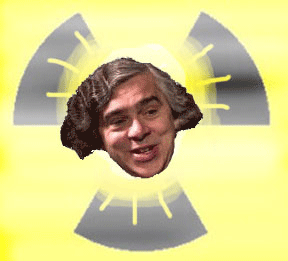 Energy Secretary nominee breezes through committee vote, Planet Ark, 19-Apr-13 by Ayesha Rascoe – Energy Secretary nominee Ernest Moniz easily cleared his first hurdle in the Senate on Thursday, securing nearly unanimous support from the chamber’s energy committee.
With a vote of 21 to 1 in favor of the pick, Moniz’s nomination will move on for consideration by the full Senate. It is unclear when that will take place, but Moniz is widely expected to be confirmed.
Moniz, a professor at the Massachusetts Institute of Technology, would replace Energy Secretary Steven Chu who announced earlier this year that he was stepping down…… Some environmentalists have criticized Moniz’ nomination, saying he was too supportive of shale gas and nuclear power.
Moniz is director of MIT’s Energy Initiative, which received funding from companies such as BP, Chevron and Saudi Aramco for academic work …. http://planetark.org/enviro-news/item/68455
Protest in Taiwan against slanted referendum question
Nuclear referendum question protested, Taipei Tmes By Lee I-chia / Staff Reporter, 19 Apr 13, Members of the Green Citizens’ Action Alliance demand that the construction of the Fourth Nuclear Power Plant in Gongliao District, New Taipei City be discontinued without a referendum, outside the Legislative Yuan in Taipei yesterday. Continue reading
Japan’s nuclear future – very uncertain
 Japan’s nuclear future Don’t look now A series of mishaps comes at an awkward time for the government the Economist, Apr 20th 2013 | TOKYO In February this year, Shinzo Abe, leader of the then incoming Liberal Democratic Party (LDP), said the new government would restart reactors after they passed a forthcoming set of new safety tests. The country’s “nuclear village”, a cosy bunch from industry and government, cheered. But now the stricken Fukushima Dai-ichi plant is starting to alarm the public once more. Continue reading
Florida- a change beginning that will end nuclear power development

The House hearing Thursday, and the fact that a similar bill is moving in the Senate, signals a change of face for the legislature. Lawmakers from both parties have accepted millions in campaign contributions from the giant utilities companies as they have rejected calls from consumers and alternative energy groups to modify the nuclear fee.
After years of no action, House committee moves bill to modify nuclear fee law, Mary Ellen Klas, Miami Herald, 11 April 13, A Florida House committee signaled its willingness Thursday to make official what has already happened in practice and passed a bill that will end the future development of nuclear power plants in Florida. Continue reading
Go for renewable energy, scrap subsidies for fossil fuels – Obama
Obama Budget – Spend Big On Renewables, Slash Fossil Fuel Support http://www.energymatters.com.au/index.php?main_page=news_article&article_id=3682 11 April 13, US President Barack Obama has proposed billions more be ploughed into renewable energy and to eliminate $4 billion in fossil fuels subsidies in his 2014 budget proposal.
Among the highlights:
– $615 million to increase the use and reduce the costs of solar power, wind, geothermal, and hydro energy.
– $4 billion in loans to rural electric cooperatives and utilities to support a transition to clean-energy generation.
– $238 million in loan guarantees and grants to assist farmers and rural small businesses in developing renewable energy systems and energy efficiency improvements.
– $100 million to maintain capacity to review and permit new renewable energy projects on Federal lands and waters.
– $23 billion of incentives for renewable energy production and energy efficiency over the next 10 years.
– $153 million in smart grid research and development and other activities plus $80 million to advance clean energy integration into the grid.
– $2.5 billion in tax credits for investments in advanced energy manufacturing projects.
The fossil fuel subsidy gravy train will lose more than just a few carriages.
“As we continue to pursue clean energy technologies that will support future economic growth, we should not devote scarce resources to subsidizing the use of fossil fuels produced by some of the largest, most profitable companies in the world.”
“The Budget proposes to eliminate inefficient fossil fuel subsidies that impede investment in clean energy sources and undermine efforts to address the threat of climate change. The Budget would repeal over $4 billion per year in tax subsidies to oil, gas, and other fossil fuel producers.”
The United States has nearly doubled its energy generation from renewable energy sources since 2008 and President Obama has set a goal of doubling it again by 2020.
Further details of the 2014 budget proposal section, “Clean Energy Economy, Improving Energy Security, and Addressing Climate Change” can be viewed here.
USA Republicans waking up to climate change and renewable energy
Ending the Debate: Most Republicans Actually Support  Increased Renewable Energy Use http://www.triplepundit.com/2013/04/breaking-debate-republicans-actually-support-increased-renewable-energy/ By Mike Hower | April 4th, 2013 Apparently, the debate over global warming is not as big as the hard-liners at Fox News and on Capitol Hill would lead us to believe. A recent study released by Yale and George Mason University found that nearly 80 percent of Republicans and Republican-leaning Independents support increasing renewable energy use and more than 60 percent believe the United States should take action to address climate change.
Interestingly, the report also found that only a third of Republican respondents agree with the GOP’s position on climate change, which has changed dramatically since 2008. Continue reading
The growth, and strength, of anti nuclear sentiment in Japan
The anti-nuclear movement will provide a challenge to the LDP and business community’s desire to restart Japan’s nuclear sector. The Japanese public expects the new Nuclear Regulation Authority to strictly enforce safety regulations at existing nuclear facilities. Whether anti-nuclear sentiment will maintain its strength at the local and national levels and influence policy makers will strongly shape Japanese nuclear energy policy.
Post-Fukushima Nuclear Politics in Japan, Part 3: Empowered Anti-Nuclear Sentiment http://themonkeycage.org/2013/04/03/post-fukushima-nuclear-politics-in-japan-part-3-empowered-anti-nuclear-sentiment/ by DANIEL ALDRICH on APRIL 3, 2013 (This post is co-authored with James Platte and Jennifer Sklarew. Part 1 of this series is here. Part 2 is here.)
Since the Fukushima nuclear disaster, public support for nuclear power in Japan has declined sharply, and anti-nuclear politicians have become empowered in their own parties or formed new, often single-issue parties to leverage popular support. Even the relatively pro-nuclear Liberal Democratic Party (LDP) is facing challenges in openly promoting nuclear power. At the same time, the LDP must remain mindful of nuclear facility host communities, which continue to support nuclear power, and of the larger business community and the politically powerful regional utilities, which remain committed to nuclear power for economic reasons. Continue reading
1 This Month
23-25 October – on Zoom – World BEYOND War’s annual global conferenc


Shut down the radiation-damaged Heysham nuclear reactors now
To see nuclear-related stories in greater depth and intensity – go to https://nuclearinformation.wordpress.com

Say No to NASA’s Reckless Nuclear Reactor on the Moon
Say No to NASA’s Reckless Nuclear Reactor on the Moon
-
Archives
- October 2026 (180)
- September 2026 (339)
- August 2026 (330)
- July 2026 (355)
- June 2026 (287)
- May 2026 (306)
- April 2026 (356)
- March 2026 (251)
- February 2026 (267)
- January 2026 (308)
- December 2025 (358)
- November 2025 (359)
-
Categories
- 1
- 1 NUCLEAR ISSUES
- business and costs
- climate change
- culture and arts
- ENERGY
- environment
- health
- history
- indigenous issues
- Legal
- marketing of nuclear
- media
- opposition to nuclear
- PERSONAL STORIES
- politics
- politics international
- Religion and ethics
- safety
- secrets,lies and civil liberties
- spinbuster
- technology
- Uranium
- wastes
- weapons and war
- Women
- 2 WORLD
- ACTION
- AFRICA
- Atrocities
- AUSTRALIA
- Christina's notes
- Christina's themes
- culture and arts
- Events
- Fuk 2022
- Fuk 2023
- Fukushima 2017
- Fukushima 2018
- fukushima 2019
- Fukushima 2020
- Fukushima 2021
- general
- global warming
- Humour (God we need it)
- Nuclear
- RARE EARTHS
- Reference
- resources – print
- Resources -audiovicual
- Weekly Newsletter
- World
- World Nuclear
- YouTube
-
RSS
Entries RSS
Comments RSS

