Sudden conversion of climate denialist US Senator as he jumps on pro nuclear bandwagon
 The Senate’s Top Climate Denier Redefines Chutzpah http://thinkprogress.org/climate/2015/04/24/3650610/americas-top-climate-denier-now-agrees-top-climate-scientist/ BY JOE ROMM APRIL 24, 2015 THE TRADITIONAL DEFINITION OF CHUTZPAH INVOLVES A GUY WHO KILLS HIS PARENTS, THEN PLEADS FOR MERCY BECAUSE HE IS NOW AN ORPHAN. THE MODERN DEFINITION OF CHUTZPAH INVOLVES … SEN. JAMES INHOFE (R-OK).
The chair of the Senate Environment and Public Works Committee has an Earth Day (!) op-ed arguing we should embrace carbon-free nuclear power because of the threat posed by global warming. You remember Inhofe, the guy who called global warming a hoax, the guy who for over a decade has trashed climate scientists, such as James Hansen, whom he called in 2006 a “NASA scientist and alarmist.”
Apparently, however, Inhofe no longer sees Hansen as radioactive. He writes, without a trace of irony:
How cool is it that Inhofe is now apparently on board with top climatologist Hansen on the urgent need “to avoid dangerous climate change” by accelerated deployment of zero-carbon technologies? Presumably he’ll soon be on board with Hansen’s call for a high and rising carbon dioxide fee (returned to the public as a dividend), and a World War II scale effort to return CO2 levels back to 350 parts per million from their current level of 400 ppm (and rising 2+ ppm a year).
As an aside, what’s holding nuclear power back is its exorbitant price. Indeed, just this week a panel of experts unanimously agreed that nukes have all but priced themselves out of the market. Perhaps Inhofe should have supported the climate bill that came out of the House of Representatives in 2009, since its carbon pricing mechanism would have been nuclear power’s best chance at a resurgence.
As for Inhofe’s bromancing of Hansen, I suspect it is unrequited, but then they say politics does make for strange bedfellows. Or at least for new definitions of chutzpah.
Nuclear lobby pushing for corporate welfare and exports, through the Export-Import Bank

“Taxpayers should not be in the business of subsidizing risky loans or giving money to big businesses and foreign countries,” said Levi Russell, spokesman for Americans for Prosperity, a Tea Party-aligned group that, along with dozens of other conservative groups, is urging Congress to let Ex-Im expire.
Ex-Im fight goes nuclear, The Hill, 22 Apr 15 The nuclear power sector is emerging as one of the most vocal proponents of the Export-Import Bank, as debate intensifies over whether to reauthorize the increasingly controversial institution.
The Nuclear Energy Institute (NEI) is leading the charge to demonstrate to lawmakers that closing the bank would threaten the billions of dollars in economic activity and tens of thousands of jobs that come from exporting U.S. nuclear power technology and products.
The nuclear industry is also proving to be a top player among the big business groups that are doing the bulk of the lobbying on Ex-Im, which provides financing for U.S. companies to sell products and services to foreign customers.
Exports are essential to the nuclear industry, because a new reactor has not come online in the United States in nearly two decades and only five are under construction…….
The global market represents an important bounty for the U.S. industry. Continue reading
Flamanville nuclear safety problem – a knockout blow for UK’s EPR reactor project?
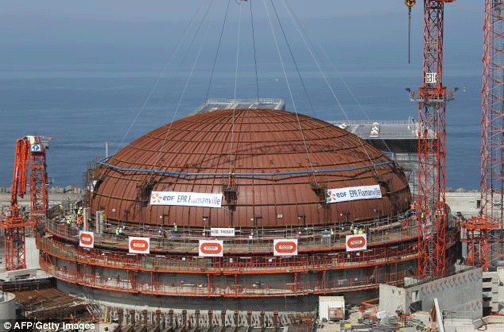 France’s nuclear calamity has UK worried, The Local, 21 Apr 2015 France’s world renowned prowess in the nuclear industry is being seriously undermined by its efforts to build a flagship nuclear reactor which is fast becoming a costly calamity. The future of the Flamanville 3 project appears to hang in the balance after yet another major setback that has London worried.
It was supposed to showcase the expertise of France’s nuclear energy industry to the world and is key to the UK’s own nuclear strategy. But after being beset by hold-ups and snags – the latest and potentially most serious one coming last week, the flagship project to build a new state of the art nuclear reactor, France is getting a reputation for all the wrong reasons and London has been left looking on nervously.
In 2005 the French government proudly gave the green light for construction to begin on the first third-generation nuclear reactor at Flamanville in Normandy on the north coast, a site environmentalists say is threatened by flooding.The third-generation “European Pressurized Reactor” (EPR), built by EDF and Areva, was supposed to be in operation by 2012 and is meant to be one of the safest reactors in the world, and the most energy efficient. It was commissioned as part of France’s nuclear renaissance programme that will see the country’s aging nuclear plants replaced over time.
However Flamanville 3, as it is known, is unlikely to start producing power anytime soon after being hampered by a litany of problems and incidents, including the death of a construction worker in 2011 (see below).
The latest setback came last week when it was revealed that “a very serious fault” had been detected in the steel of the “pressure vessel” – a key component of the reactor, meaning another delay of at least a year was likely. “It is a serious fault, even a very serious fault, because it involves a crucial part of the nuclear reactor,” said Pierre-Franck Chevet, head of France’s nuclear safety agency (ASN).
That “fault” means construction is unlikely to be completed before 2018 and more worryingly, the budget, initially set at €3.3 billion, is now estimated at more than €9 billion and counting.
In short Flamanville has become France’s own “nuclear catastrophe” as it was described in one of the many critical articles in the French press. Tests will need to be carried out on the steel vessel but if after these tests the vessel still does not meet necessary safety standards, it will need to be changed.
“That’s a very difficult operation in terms of costs and time,” said the ASN’s Chevet. The steel vessels weigh around 425 tonnes and stand around 11 metres high so building a new one would take considerable time and come at a huge cost.Changing the vessel would be a major headache given all the construction work that would need to be undone.
Some in the business of nuclear safety have even suggested that if the steel vessel needs replacing then the whole project could be scrapped. That will have authorities in the UK sweating as the same steel has been used to build two vessels destined for the planned EPR nuclear reactors at Hinkley Point in the UK.…….
“This is clearly the knock-out blow for the EPR reactor,” said Yannick Rousselet from Greenpeace. “What foreign client would want to purchase a reactor of this type, if even France itself is not able to complete the construction?
“The bill from the EPR reactor will be so high that it won’t end up showcasing what to do, but exactly the opposite,” said Rousselet. “This is a huge blow to the know-how of the French nuclear industry.”
Greenpeace has called for work at Flamanville to be called off.
“It must be stopped immediately so there is no more wasting of public funds on this industrial nightmare,” said Rousselet, who added that France should be concentrating resources on finding renewable energy solutions……..http://www.thelocal.fr/20150421/flamanville-frances-own-nuclear-nightmare
UK’s £14bn Hinkley project – future now in doubt, as faults found in identical French project
 UK nuclear strategy faces meltdown as faults are found in identical French project The faults could also scare off the Chinese state investors who are supposed to cover part of the cost of the £14bn Hinkley project Independent JOHN LICHFIELD
  PARIS Friday 17 April 2015 A “very serious” fault has been discovered in a French nuclear power station which is at the heart of David Cameron’s strategy to “keep the lights on” in Britain in the next decade.
The future of two nuclear reactors planned for Hinkley Point in Somerset has been thrown into doubt by the discovery of a potentially catastrophic mistake in the construction of an identical EPR power plant in Normandy.
“It is a serious fault, even a very serious fault, because it involves a crucial part of the nuclear reactor,” said Pierre-Franck Chevet, head of France’s nuclear safety inspectorate.
A second investigation has been ordered into the quality of the steel used to make a 50ft-high safety casing, or “pressure vessel”, which encloses the groundbreaking new reactor at Flamanville, near Cherbourg. If the steel proves to be defective, the completion of the prototype EPR plant – already behind schedule and nearly three times over budget – could be delayed for several years.
Mr Chevet also revealed that the same manufacturing techniques had been used in the steel for the identical safety casings destined for Hinkley Point, which “have already been manufactured”.
The fault could undermine the already fragile finances of the French state-owned nuclear construction company Areva, which is supposed to build two EPR reactors at Hinkley by 2023 and a third at Sizewell in Suffolk. It could also scare off the Chinese state investors who are supposed to cover part of the cost of the £14bn Hinkley project, intended to supply six per cent of Britain’s energy needs for six decades.
A final “investment” decision for Hinkley, several times delayed, is now expected in June. The French Prime Minister Manuel Valls called a crisis meeting on 17 April to discuss the threat posed by the fault to France’s nuclear construction industry – the largest in the world.
Mark Hackett, a councillor in Manchester who chairs Nuclear Free Local Authorities, said: “This is a devastating blow to proponents of new-build nuclear power stations in the UK. It is likely to scare off the Chinese backers. If I was a betting man, I would now bet that Hinkley Point will never be built.”
Yannick Rousselet, of Greenpeace France, said the latest problems to beset the prototype power station in Normandy are “clearly the coup de grâce for the EPR idea”. He asked: “What foreign client would want to buy this reactor when France itself is not capable of completing its construction?”
Apart from Britain, the United States and China are in the process of buying versions of the new generation of European Pressurised Reactor (EPR) – supposedly safer and more efficient – from France. Both Areva and Eléctricité de France (EDF), the French energy giant which will own and operate Hinkley Point, have refused to comment in detail………
Sources in the French nuclear industry told the newspaper Le Parisien yesterday that dismantling the faulty pressure vessel and ordering and manufacturing a new one could take several years. “If the weakness of the steel is proved, I don’t hold out much hope for the survival of the EPR project,” a former senior nuclear safety official told Le Parisien………..http://www.independent.co.uk/news/uk/home-news/uk-nuclear-strategy-faces-meltdown-as-faults-are-found-in-identical-french-project-10186163.html
France’s State owned nuclear company AREVA now a costly burden
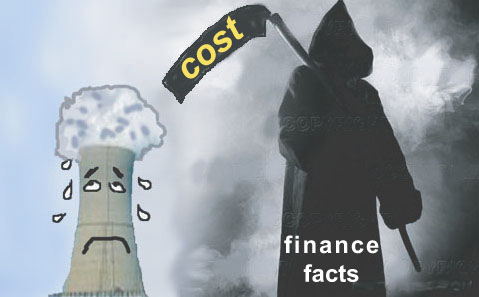 Areva Is Costing France Plenty The company thought it had a winning nuclear reactor technology http://www.bloomberg.com/news/articles/2015-04-16/france-s-areva-falters-in-reactor-business-leaks-cash Nuclear plants supply almost three-fourths of France’s electricity, and they boast a near-spotless safety record and some of the cheapest electric rates in Europe. In 2001 the government created a state-owned company, Areva, to export French reactors and nuclear know-how to the rest of the world. Those ambitions are now in tatters, offering an object lesson in the dangers of French dirigiste industrial policy.
Areva, along with competing reactor builders Westinghouse Electric and General Electric, was hit hard when orders dried up after the 2011 Fukushima accident in Japan. Cheap shale gas and development of renewable energy have compounded those woes. But “you can’t really blame Areva’s plight on Fukushima,” says Steve Kidd, a British nuclear consultant and former executive of the World Nuclear Association, a London-based trade group.
$5.1b
Areva’s loss in 2014, on sales of $8.9 billionFrench authorities reported on April 7 that flaws were found in some of the steel used in the reactor vessel of an EPR being built in Normandy. That reactor is five years behind schedule, and its price tag has ballooned from $3.5 billion to $9.3 billion. Areva also is facing an investigation of its 2007 acquisition of Uramin, a Canadian uranium mining company. In 2011, Areva wrote off almost all of the $2.5 billion purchase price after concluding that the ore deposits were of negligible value. The government’s chief auditor, who faulted management for inadequate oversight and possible “dissimulation,” asked prosecutors to look into the Uramin purchase.
The next step for Areva may be a tieup with EDF, its top customer—an idea that horrified the utility’s investors, who dumped the stock after Energy Minister Ségolène Royal suggested it in March. Other government officials have suggested that Areva might work with EDF on engineering and maintenance, stopping short of a full merger.
The company still makes money supplying fuel and reprocessing waste for nuclear plant owners. It’s already clear, though, that Areva won’t be selling many new reactors. North American and European utilities stopped ordering them after the Fukushima accident, and the EPR’s problems have cast a pall over the company’s prospects in China, which now accounts for more than half of the new reactors expected to come online by 2030. Thanks to past collaboration with Areva and other Western suppliers, the Chinese have developed the technology they need to build their own reactors, says Steve Thomas, a professor at the University of Greenwich in England who studies the industry. The reactors built by Areva and Westinghouse “are just too expensive for the Chinese,” he says.
The French government’s 80 percent ownership of Areva helped mask its problems, consultant Kidd says. “Everyone was laughing” at the company’s projections for reactor sales, he says. “Everyone in the know could tell the chickens were going to come home to roost. I don’t think that would have happened in a private business.”
—With Francois de Beaupuy and Tara Patel
The bottom line: Areva’s bid to be the globally dominant maker of reactors was undone by cost overruns and strategic blunders.
Nuclear power would be a ‘last resort’ for earthquake prone Indonesia: safer options preferred
Nuclear power a ‘last resort’, says VP The Jakarta Post, Jakarta | National | Tue, April 14 2015 Vice President Jusuf Kalla insists nuclear energy is a last resort for Indonesia, saying the country has alternative options more in line with the country’s geologic and sociological conditions for addressing the looming energy crisis.
“Nuclear is suitable only in Java, and this is a last resort. The sophisticated technology developed by Japan in building its nuclear energy [was not even foolproof], as its plant also leaked”, he said, in an apparent reference to the Fukushima nuclear meltdown in 2011. Such risk is very high for Indonesia, which would not be able to handle it extra cautiously,” he said in a seminar on energy diversification here on Tuesday…….He added it was difficult to build a nuclear power plant in the country because it would elicit strong protests from the public and environmentalists. – See more at: http://www.thejakartapost.com/news/2015/04/14/nuclear-power-a-last-resort-says-vp.html#sthash.1NRm8NuU.dpuf
– See more at: http://www.thejakartapost.com/news/2015/04/14/nuclear-power-a-last-resort-says-vp.html#sthash.1NRm8NuU.dpuf– See more at: http://www.thejakartapost.com/news/2015/04/14/nuclear-power-a-last-resort-says-vp.html#sthash.1NRm8NuU.dpuf
US Senate gives Congress a voice in Iran nuclear negotiations
Senate Panel Passes Bill on Iran Nuclear Deal; Obama Indicates He’ll Sign It, NYT By JONATHAN WEISMAN and PETER BAKER APRIL 14, 2015 WASHINGTON — The Senate Foreign Relations Committee unanimously approved legislation granting Congress a voice in negotiations on the Iran nuclear accord, sending the once-controversial legislation to the full Senate after President Obama withdrew his opposition rather than face a bipartisan rebuke.
”We’re involved here. We have to be involved here. Only Congress can change or permanently modify the sanctions regime,” said Senator Benjamin L. Cardin of Maryland, the committee’s ranking Democrat, who served as a bridge between the White House and Republicans as they negotiated changes in the days before Tuesday’s vote…………..
Despite opposition and problems about liability, Prime Minister Narendra Modi aims to buy nuclear reactors
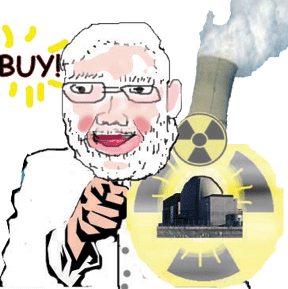 Modi goes shopping for nuclear power in France and Canada Reuters | Apr 8, 2015, Times of India, NEW DELHI: Prime Minister Narendra Modi aims to advance the purchase of massive nuclear reactors and fuel from France and Canada to power a resurgent economy, overriding domestic opposition and concerns over liability laws as he embarks on a foreign tour.
In France, where Modi is making his first visit since taking office last year, he will seek to speed up price negotiations for the building of two reactors by state-run Areva SA of 1,650 megawatts each in the western state of Maharashtra………
Nuclear waste dumps can be forced on local communities – new British law

 Law changed so nuclear waste dumps can be forced on local communities http://www.theguardian.com/environment/2015/apr/05/law-changed-so-nuclear-waste-dumps-can-be-forced-on-local-communities Legislation rushed through in the final hours of parliament allows local planning laws to be bypassed, seriously alarming anti-nuclear campaigners Nuclear waste dumps can be imposed on local communities without their support under a new law rushed through in the final hours of parliament.
Under the latest rules, the long search for a place to store Britain’s stockpile of 50 years’ worth of the most radioactive waste from power stations, weapons and medical use can be ended by bypassing local planning.
Since last week, the sites are now officially considered “nationally significant infrastructure projects” and so will be chosen by the secretary of state for energy. He or she would get advice from the planning inspectorate, but would not be bound by the recommendation. Local councils and communities can object to details of the development but cannot stop it altogether.
The move went barely noticed as it was passed late on the day before parliament was prorogued for the general election, but has alarmed local objectors and anti-nuclear campaigners.
Friends of the Earth’s planning advisor, Naomi Luhde-Thompson, said: “Communities will be rightly concerned about any attempts to foist a radioactive waste dump on them. We urgently need a long-term management plan for the radioactive waste we’ve already created, but decisions mustn’t be taken away from local people who have to live with the impacts.”
Objectors worry that ministers are desperate to find a solution to the current radioactive waste problem to win public support to build a new generation of nuclear power stations.
Zac Goldsmith, one of the few government MPs who broke ranks to vote against the move, criticised the lack of public debate about such a “big” change. “Effectively it strips local authorities of the ability to stop waste being dumped in their communities,” he said.
Labour abstained in the vote, indicating that a future government will not want to reverse the change of rules. However, the shadow energy minister, Julie Elliott, has warned that the project is expected to take 27 years to build even after a preferred site was identified and would cost £4bn-5.6bn a year to build, plus the cost of running it for 40 years.
Since the Royal Commission on Environmental Pollution found in 1976 that it was “morally wrong” to keep generating nuclear waste without a demonstrably safe way of storing the waste, there have been at least four attempts to find the right site, all of them shelved after strong protest.
There are now 4.5m cubic metres of accumulated radioactive waste kept in secure containers at sites across Britain, though only 1,100m3 of this is the most controversial high-level waste, and 290,000m3 is intermediate-level waste. Itcosts £3bn a year to manage the nuclear waste mountain, of which £2bn comes from taxpayers.
The most recent proposal for a more permanent solution was to ask local authorities to volunteer to examine whether they could host the development. Initially, a coalition of Cumbria county council and Copeland and Allerdale borough councils put their names forward, but the policy stalled in 2013 when the county council pulled out.
Last year, the Department for Energy and Climate Change (DECC) published awhite paper which said ministers would prefer to work with public support, but reserved the right to take more aggressive action on planning if “at some point in the future such an approach does not look likely to work”.
The day before parliament rose, MPs voted in an unusual paper ballot to implement a two-page statutory instrument which adds nuclear waste storage to the list of nationally significant infrastructure projects in England, via the 2008 Planning Act.
Officials have said approval depends on a “test of public support” and any site would undergo extensive geological safety tests.
Copeland borough council, one of the two areas most affected by any such development at Sellafield, said it was pleased with the government’s change to planning rules.
Radiation-Free Lakeland – set up to block the Sellafield proposal because they claim there is no evidence deep storage is safe or that the geology of Cumbria is suitable – claimed, however, “the test of public support is a fig leaf: the government hast’t said what the public support will be”.
The only existing high-level radioactive underground waste storage, in New Mexico, USA, has been closed since last year following two accidents.
Germany has put similar plans for burying high-level waste on hold and four other countries, including France and Japan, are examining the idea.
TEPCO not paying up for radiation fallout cleanup in local municipalities
 Tepco refusing to pay fallout-hit municipalities for most decontamination work, Japan Times, 30 Mar 15 Tokyo Electric Power Co. has only covered 2 percent of the ¥76.1 billion that municipalities have spent on decontamination work since the Fukushima nuclear crisis began in 2011, according to Environment Ministry officials.
Tepco, operator of the Fukushima No. 1 power plant, has effectively refused to cover the costs of removing tainted soil and other debris gathered by the fallout-hit governments, saying it is confirming whether such payments are required by law.
The central government has paid for the cleanup work on Tepco’s behalf, but if the utility continues to balk, more taxpayer money will be needed to cover the interest payments.
Tepco has so far basically paid for decontamination work conducted directly by the central government in areas close to the nuclear plant, but it has treated decontamination work carried out by local governments in other areas in a different manner………
Tepco posted its first pretax profit in three years in the business year ended in March 2014 after plunging into financial difficulties following the triple core meltdowns in March 2011.
The utility is projecting a group pretax profit of ¥227 billion for the business year ending Tuesday. http://www.japantimes.co.jp/news/2015/03/30/national/tepco-refusing-pay-fallout-hit-municipalities-decontamination-work/#.VSIiYdyUcnk
PLUTONIUM ALERT!

 $30+billion Plutonium (Pu) Fuel Project, Good for France; Bad for America: AREVA-MOX Ça Pue! Pe-yoo! Mining Awareness 5 Apr 15“…….DOE will soon release its report to Congress on the life-cycle cost of two plutonium disposition options: MOX and disposal of plutonium as blended down waste. Watch for the report around April 15-16, if DOE actually delivers it to Congress and makes it publicly available.
PREDICTION: The report will officially confirm that the MOX option is far more costly than disposal of plutonium of that waste that it is. On release of the report, there will be much hand wringing by MOX boosters and CB&I AREVA MOX 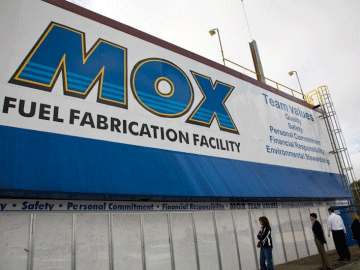 Services (designing and building the $12.7 billion MOX plant at SRS) and their political minions (primarily Senator Lindsey Graham and Representative Joe Wilson) but they will produce no report of their own. Congress will finally be forced to take in to account that MOX isn’t financially sustainable and can’t continue. But will Congress hold accountable those DOE mangers and contractors responsible for the massive MOX boondoggle?
The handwriting remains on the wall for the fate of the MOX boondoggle.” From http://www.srswatch.org. Read more and keep updated at their link.
It’s important to note that Shaw and CBI have benefited from this project, and note the funding given by Shaw CBI to politicians, including former Senator Landrieu of Louisiana. Senator Vitter has been given donations by Areva.
Areva ownership: http://fr.wikipedia.org/wiki/Arevahttp://en.wikipedia.org/wiki/State-owned_enterprise#France https://miningawareness.wordpress.com/2015/04/05/30billion-plutonium-pu-fuel-project-good-for-france-bad-for-america-areva-mox-ca-pue-pe-yoo/
France’s nuclear corporation AREVA in deep financial trouble – needs tax-payer bailout
Areva in Deep Financial Trouble, The Energy Collective, Dan YUrman 10 Mar 15 French government and investors ask whether it has hit bottom?
It is no secret that state-owned nuclear energy giant Areva has ten tons of financial debt on a five ton truck. After several years of smacking the bumper with a 2 x 4 to keep half of the IOUs in the air, the truck has hit a red light and all the weight of that debt has come down in one place and at one time. This week Areva’s senior leadership went public with the numbers and what they say is a path toward new earnings. Phillip Knoche, the new CEO of Areva, said, “We have to cut our costs and master difficult projects.”
Here’s the bad news
Areva is facing huge financial challenges with reported losses of {e}4.8 billion ($5.4 billion US) compared to a loss of just {e} 500 million last year. Sales were down in 2014 by 8% compared to 2013. The company wrote down assets by {e}1.5 billion, took a {e}1.1 billion charge on three nuclear projects, and wrote off another nearly {e}1billion in assets that it now believes are essentially worthless. They include a uranium mine bought by former CEO Anne Lauvergeon who’s expansionist strategy overextended the company in terms of its capital requirements.
The bad news isn’t over
This year the firm expects to see a further reduction in sales of at least 5% compared to 2014. The firm will sell off its unprofitable renewable energy business, and other assets, for {e}430 million. It will scale back other investments. Overall, debt has risen to {e}5.8 billion compared to a market cap of {e}3.6 billion. Essentially, the firm is underwater and needs a huge infusion of capital from the French government………
Deceptive push by Japan’s ruling Party to bring back dependence on nuclear power
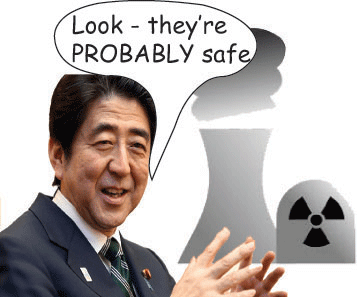
 LDP stealthily seeking to raise nuclear energy dependence THE ASAHI SHIMBUN 3 Apr 15 The ruling Liberal Democratic Party is pushing a policy of heightening Japan’s dependence on nuclear energy but has buried this stance under a calculation trick.
An LDP research commission on energy issues on April 2 called on the central government to ensure that base-load electricity sources–nuclear energy, coal-fired thermal plants, hydroelectric and geothermal plants–account for about 60 percent of Japan’s energy needs in 2030.
The proposal does not mention any specific ratio for nuclear energy. But considering the difficulties in increasing the supply from the other base-load electricity sources, the dependence on nuclear power would have to rise to about 20 percent.
The proposal is expected to be presented to Prime Minister Shinzo Abe as early as next week as the formal recommendation of the LDP. The central government wants to decide on the energy mix for Japan in 2030 and beyond by June.
The government’s designation of the base-load electricity sources means their costs for power generation are comparatively low and electricity can be produced around the clock.
In fiscal 2013, Japan depended on base-load electricity sources for about 40 percent of its power: 1 percent for nuclear energy; 30 percent for coal-fired thermal plants; and a combined 9 percent for hydroelectric and geothermal plants……..
The LDP panel’s proposal said, “Energy policy must serve to strengthen Abenomics.”
It pointed out that electricity rates increased after nuclear power plants went offline following the Fukushima nuclear crisis triggered by the 2011 Great East Japan Earthquake and tsunami.
But to achieve that level of dependence on nuclear energy, nuclear plants would have to be operated beyond the current 40-year operating life set by the government or the government would have to approve the reconstruction or new construction of nuclear plants……..http://ajw.asahi.com/article/0311disaster/fukushima/AJ201504030042
Bulgaria pulls out of $4bn Westinghouse nuclear deal
Bulgaria drops $4bn Westinghouse nuclear deal Yahoo 7 News, April 1, 2015 Sofia (AFP) – Bulgaria has dropped a deal with US-based firm Westinghouse Electric to build a new reactor at its only nuclear plant because of financial pressures, Prime Minister Boyko Borisov announced Wednesday.
“We cannot uphold the agreement” which is worth $4 billion (3.8 billion euros), Borisov told parliament, adding that the cash-strapped country was unable to shoulder the costs…….
Westinghouse, a subsidiary of Japanese company Toshiba, had initially planned to take a 30-percent stake in the Kozloduy project, but Bulgarian media reported that it now refused to invest in the deal.
The company has not yet commented on Borisov’s announcement.
In 2012, Bulgaria was forced to drop another project, this time to build two Russian VVER 1,000-megawatt reactors at the planned Belene nuclear plant in the country’s north.http://news.yahoo.com/bulgaria-drops-4bn-westinghouse-nuclear-deal-161118449.html?soc_src=mediacontentstory&soc_trk=tw
UK’s Hinkley nuclear plant developments stalled as financial negotiations drag on
 Hinkley Point C nuclear project workers face layoff , Guardian 2 Apr 15 Up to 400 constructors at site of new nuclear power station could be laid off as preparation work comes to end before final investment decision by owner EDF. As many as 400 workers at the site of a new nuclear power station at Hinkley Point face being laid off while the French owners of the project decide whether to make an investment in the £16bn project.
EDF has almost completed the project’s preparatory earthworks, drainage, welfare facilities and roadworks, but is yet to decide on the investment to mark the beginning of the construction the plant in Somerset.
The company said a decision would be reached in the coming months, and it has already launched a 45-day redundancies consultation, said the unions…….
It is the first new new nuclear plant in the UK in decades and is scheduled to start producing electricity in 2023. EDF, however, is still negotiating with UK authorities about government debt guarantees for the project, along with decommissioning costs and other details.
It is also negotiating with two Chinese utilities about their role in Hinkley Point and possible future UK nuclear projects with EDF……http://www.theguardian.com/environment/2015/apr/02/hinkley-point-c-nuclear-project-workers-face-layoff-power-station-investment-edf
1 This Month
23-25 October – on Zoom – World BEYOND War’s annual global conferenc


Shut down the radiation-damaged Heysham nuclear reactors now
To see nuclear-related stories in greater depth and intensity – go to https://nuclearinformation.wordpress.com

Say No to NASA’s Reckless Nuclear Reactor on the Moon
Say No to NASA’s Reckless Nuclear Reactor on the Moon
-
Archives
- October 2026 (170)
- September 2026 (339)
- August 2026 (330)
- July 2026 (355)
- June 2026 (287)
- May 2026 (306)
- April 2026 (356)
- March 2026 (251)
- February 2026 (267)
- January 2026 (308)
- December 2025 (358)
- November 2025 (359)
-
Categories
- 1
- 1 NUCLEAR ISSUES
- business and costs
- climate change
- culture and arts
- ENERGY
- environment
- health
- history
- indigenous issues
- Legal
- marketing of nuclear
- media
- opposition to nuclear
- PERSONAL STORIES
- politics
- politics international
- Religion and ethics
- safety
- secrets,lies and civil liberties
- spinbuster
- technology
- Uranium
- wastes
- weapons and war
- Women
- 2 WORLD
- ACTION
- AFRICA
- Atrocities
- AUSTRALIA
- Christina's notes
- Christina's themes
- culture and arts
- Events
- Fuk 2022
- Fuk 2023
- Fukushima 2017
- Fukushima 2018
- fukushima 2019
- Fukushima 2020
- Fukushima 2021
- general
- global warming
- Humour (God we need it)
- Nuclear
- RARE EARTHS
- Reference
- resources – print
- Resources -audiovicual
- Weekly Newsletter
- World
- World Nuclear
- YouTube
-
RSS
Entries RSS
Comments RSS

