Bankrupt FirstEnergy Solutions is resuscitated as Energy Harbor, House Bill 6 subsidises Perry and Davis-Besse Nuclear Power plants

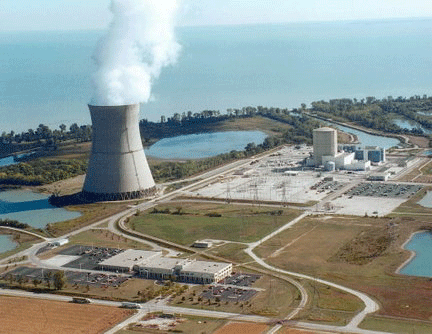
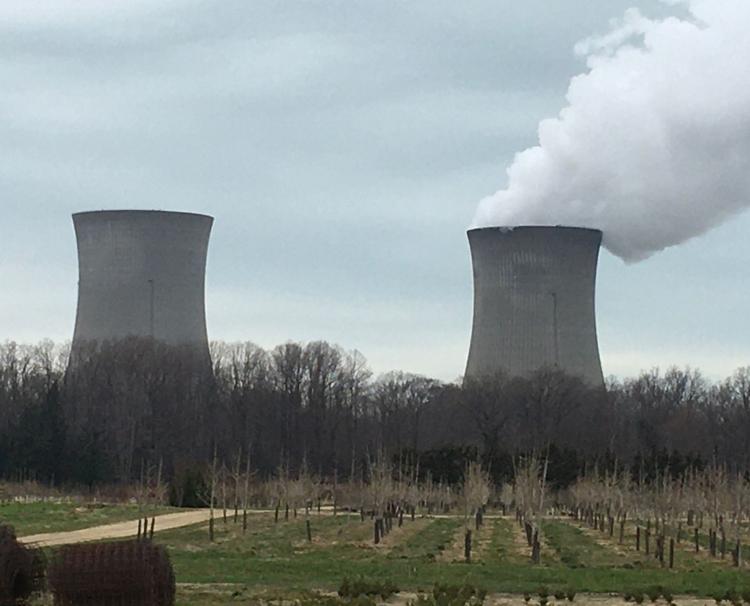
In March 2018, the owner of both plants, known then as FirstEnergy Solutions, announced that it would close both plants if subsidies were not approved. ……..
In addition, FirstEnergy Solutions filed for bankruptcy.
While H.B. 6 went into effect in October, it was announced on Feb. 27 that the former FirstEnergy Solutions, under the new name of Energy Harbor, emerged from bankruptcy……
Perry area government leaders recently offered their views on how the Perry Nuclear Power Plant staying open will impact the future financial outlook for their respective towns or entities, as well as the community as a whole. ……
Under terms of House Bill 6, charges paid by residential, commercial and industrial customers on their electric bills will generate an estimated $170 million a year. Of that total, $150 million annually will go to the Perry and Davis-Besse nuclear power plants. The other $20 million is earmarked to support six solar energy projects in Ohio.
The nuclear plants will receive money between 2021 and 2027. …… https://www.news-herald.com/news/perry-leaders-assess-impact-of-perry-nuclear-power-plant-staying-open/article_ac6bb456-78f5-11ea-ba51-d72a1e490038.html
Trump uses the pandemic, to decimate environmental restrictions. Nuclear waste to landfill decision is just one example.
|
https://americanindependent.com/donald-trump-administration-nuclear-waste-cleanup-coronavirus-new-mexico-covid-19/ By Josh Israel,April 8, 2020 The coronavirus pandemic is making the problem even worse.
The Trump administration has been under fire for not doing enough to clean up nuclear waste. And now, with the COVID-19 pandemic and social distancing measures, the efforts are effectively on hold. At the Waste Isolation Pilot Plant in New Mexico, an underground nuclear waste facility operated by the Department of Energy, new shipments of hazardous material from nuclear sites across the country have reportedly been stopped to protect workers from the coronavirus. According to an Associated Press report, the small number of essential employees working at nuclear facilities around the country, including Los Alamos National Laboratory in New Mexico and the Hanford Nuclear Reservation in Washington, are focusing on safety, security, and information technology. Cleanup efforts have been frozen. Sen. Maria Cantwell (D-WA) told the wire service this week that worker safety is a priority, but more effort is needed to speed nuclear cleanup. “We are fighting to make sure workers and their families are taken care of during this crisis and that workers have the resources they need to meet cleanup goals when they are able to safely return to their jobs,” she said. Cantwell, Washington Sen. Ron Wyden (D), and New Mexico Democratic Sens. Martin Heinrich and Tom Udall raised concerns in early March that the Trump administration was not planning to spend enough money to do needed nuclear waste cleanup. Funding for those efforts, they warned, was being cut in favor of spending more money on modernization of the nation’s nuclear arsenal. The landfill decision is the latest in a line of moves by the Trump administration that flout environmental concerns. It also comes as the administration is under fire for using the coronavirus pandemic as an excuse to decimate environmental protections. The Environmental Protection Agency announced last week that it was temporarily suspending enforcement of civil environmental regulations, allowing the fossil fuel industry to ignore monitoring and compliance obligations. The agency additionally rolled back automobile pollution standards enacted during the Obama administration. Donald Trump has repeatedly promised America “crystal clear clean water and clean air” but has significantly changed environmental regulations, often going beyond the loosening of rules that industry asks for. Last year, Trump told reporters at a NATO summit in London that climate change was “very important” to him, saying he thought about it “all the time.” However, months later, his administration curbed a series of methane regulations that even some energy companies opposed. And despite claiming he wants “crystal clear” water, Trump has signed a series of orders allowing construction on highly controversial oil pipelines to move forward. “Nobody in the world can do what you folks do,” he told a group of pipeline engineers in April last year before signing an order making it difficult for states to intervene and stop such projects. “And we’re going to make it easier for you.” |
|

More delay in planning application for UK’s Wylfa Newydd nuclear project
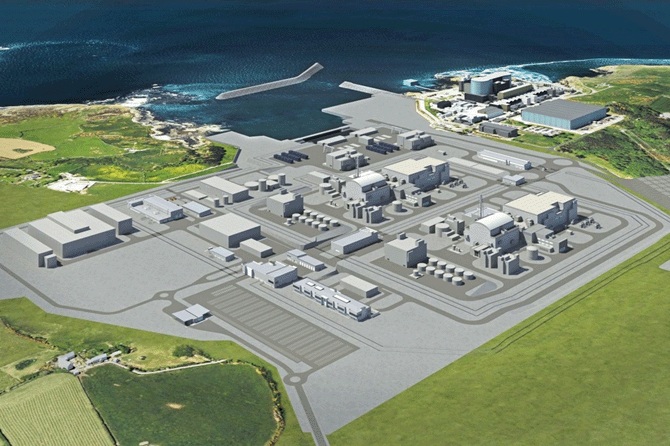
Wylfa Newydd planning decision delayed again, NEI, 6 April 2020 A planning decision over the Wylfa Newydd nuclear power plant in Anglesey has been deferred, the UK Government has confirmed.
The Wylfa Newydd project, which envisaged the construction of two UK advanced boiling water reactors (ABWRs), was suspended in January 2019 after Hitachi, failed to reach a funding deal with the UK government. However, the government had been expected to grant a Development Consent Order to construct the £12 billion power station on 31 March…… The Secretary of State (Alok Sharma) has decided to re-set the statutory deadline for this application to 30 September 2020….'”
…..EDF Energy announced last month that it was delaying submission of its planning application for Sizewell C by a “few weeks” due to the coronavirus crisis. Construction work at Hinkley Point C has also been scaled back. https://www.neimagazine.com/news/newswylfa-newydd-planning-decision-delayed-again-7859280
The current crisis aboard the USS Roosevelt lays bare the dangers of blind obeisance to President Trump.
 TRUMP BROKE FAITH WITH CAPT. CROZIER AND ALL OUR SAILORS, Crooked, KEN HARBAUGH / APR.3.20 More than a dozen members of Congress on Friday condemned the U.S. Navy’s decision to dismiss the Commanding Officer of the USS Theodore Roosevelt. Earlier this week, in a memo leaked to the San Francisco Chronicle, Capt. Brett Crozier accused the Navy of jeopardizing the lives of his crew, by failing to take swift action to mitigate an outbreak of COVID-19 aboard his ship. “Keeping over 4000 young men and women aboard the TR,” he wrote, “is an unnecessary risk and breaks faith with those Sailors entrusted to our care.” ….
President Trump has demonstrated, time and again, that he has no qualms about using the military to advance his personal political ends. He routinely stages uniformed personnel as props for partisan speeches. He treats deployments like political theater, as when he dispatched elements of the 82nd Airborne to the southern border to stoke fears of an immigrant invasion. And he undermines discipline and unit cohesion, pardoning war criminals convicted by military juries.
The rot may start at the top, but it reaches downwards………..
The current crisis aboard the USS Roosevelt lays bare the dangers of blind obeisance to President Trump. When the COVID-19 virus first began to impact the military’s overseas operations, Secretary of Defense Mark Esper warned commanders not to take any action that might surprise or embarrass the White House, or challenge the president’s messaging about the crisis. For those on board the USS Roosevelt, the downstream effect of that order may well be deadly. …….
How do we support these leaders, those with the courage to challenge blatantly political directives that needlessly endanger the lives of those they lead? To begin with, we must acknowledge what civilian control of the military actually means. It is not simply allegiance to the president. It requires Congress to perform effective oversight. Now, more than ever, America needs its elected representatives to hold military leaders accountable.
By law, every service member has a right to alert any member of Congress about issues within the military, provided no classified information is exchanged. For those in uniform who may not trust their own representatives, there are plenty of young veterans now in Congress (including one bad-ass female Navy pilot), who have no patience with the sycophancy infecting the Pentagon. Many of these representatives have come to the defense of Capt. Crozier.
Most importantly, the American public must do its part. We must remain alert whenever our armed forces are misused by the president. The American military belongs to us, not him. In his letter, Capt. Crozier alludes to the absurd politics behind the catastrophe unfolding aboard the USS Roosevelt. “This will require a political solution,” he writes, “but it is the right thing to do. Sailors do not need to die.” ………..
Ken Harbaugh is a former Navy pilot and nominee for the U.S. House of Representatives. Follow him on Twitter at @Team_Harbaugh. https://crooked.com/articles/trump-betrayed-crozier-sailors/
Trump blasts the fired navy captain, Brett Crozier
 ‘He shouldn’t be talking that way’: Trump rips ousted Navy captain, Politico, 5 Apr 20
The president criticized Capt. Brett Crozier in harsh terms for a letter he wrote to Navy leaders notifying them of a spike in coronavirus cases among sailors on his carrier. Trump said he fully supported Crozier’s removal….
“I thought it was terrible, what he did, to write a letter. I mean, this isn’t a class on literature. This is a captain of a massive ship that’s nuclear powered. And he shouldn’t be talking that way in a letter,” Trump said……
More than 150 Roosevelt crew members have so far tested positive for Covid-19, the Navy said on Saturday. Forty-four percent of the crew has been tested, while more than 1,500 sailors have moved ashore as a smaller crew remains on board to sanitize the ship and keep its essential systems running.
Democrats in the House and Senate are now asking the Pentagon’s top watchdog to investigate whether Modly acted improperly [in firing Captain Crozier]. In a letter to acting Pentagon Inspector General Glenn Fine, 17 Senate Democrats, led by Sens. Richard Blumenthal of Connecticut and Chris Van Hollen of Maryland, requested a probe of both Crozier’s firing and the carrier’s outbreak……. ……https://www.politico.com/news/2020/04/04/trump-brett-crozier-letter-165020
President Trump supports Navy decision to fire Captain Crozier
Trump Backs Dismissal of USS Roosevelt Captain President criticized Capt. Brett Crozier for writing memo pleading for help dealing with coronavirus outbreak at sea, By Andrew Restuccia, April 5, 2020,
WASHINGTON—President Trump said he agreed with the Navy’s decision to fire Capt. Brett Crozier, the commanding officer of the USS Theodore Roosevelt, after a memo in which the captain pleaded for help with a coronavirus outbreak at sea leaked to the media.
The president said Saturday that it was inappropriate for Capt. Crozier to write the four-page memo in which he demanded that superiors allow him to take the carrier to the port in Guam to offload sailors stricken with Covid-19, the pneumonialike disease caused by the virus….(subscribers only) https://www.wsj.com/articles/trump-backs-dismissal-of-uss-roosevelt-captain-11586042319
Pennsylvania Senators concerned about coronavirus response plan at Limerick nuclear plant
Sen. Muth seeks answers about coronavirus response plan at Limerick nuclear plant, The Mercury By Carl Hessler Jr. chessler@21st-centurymedia.com @MontcoCourtNews on Twitter, Apr 2, 2020
LIMERICK — A state senator who represents parts of Montgomery, Berks and Chester counties called upon Exelon to improve its commitment to worker and community safety during a refueling at the Limerick Generating Station amid the COVID-19 outbreak.
“Thus far, Exelon has provided an inadequate pandemic response plan, withheld information from county and state officials, and failed to prioritize the safety of its employees, contract workers, community first responders, as well as all residents of the 44th senatorial district and entire region,” Senator Katie Muth (D-44th) wrote in an April 1 letter addressed to Exelon executives. “This is grossly irresponsible as Exelon has brought at least 1,400 workers to the epicenter of Pennsylvania’s Covid-19 pandemic.”…….
Arkoosh said she was “deeply concerned” to learn that a number of the estimated 1,400 contract workers were staying at AirBnBs, private homes, campsites, hotels and other rental units in the Tri-county region, which saw its first cases of coronavirus on March 7.
Muth said she too is concerned and asked Exelon officials to provide a complete list of worker accommodations…….https://www.pottsmerc.com/news/coronavirus/sen-muth-seeks-answers-about-coronavirus-response-plan-at-limerick-nuclear-plant/article_7706e28e-7505-11ea-a590-6307cba4e976.html
Covid 19 and government responses are affecting nuclear construction world-wide
|
The restrictions on travel, public gatherings and certain business operations introduced by the USA and other jurisdictions in response to the novel coronavirus have significantly disrupted economic activity in the service territories of Southern Company’s utility subsidiaries and have caused volatility in capital markets, it said in its 1 April financial filing. “The effects of the continued outbreak of COVID-19 and related government responses could include extended disruptions to supply chains and capital markets, reduced labour availability and productivity and a prolonged reduction in economic activity,” it said. “These effects could have a variety of adverse impacts on the company and its subsidiaries, including reduced demand for energy, particularly from commercial and industrial customers, impairment of goodwill or long-lived assets and impairment of the ability of the company and its subsidiaries to develop, construct and operate facilities and to access funds from financial institutions and capital markets. In particular, these effects could disrupt or delay construction, testing, supervisory and support activities at Plant Vogtle Units 3 and 4.” The units’ licensee, Southern Nuclear Operating Company, Inc, has implemented policies and procedures designed to mitigate the risk of transmission at the construction site, including worker distancing measures, isolating individuals who are showing symptoms consistent with COVID-19, being tested for COVID-19 or who have been in close contact with such persons, requiring self-quarantine and adopting additional precautionary measures, the company said. “It is too early to determine what impact, if any, the COVID-19 outbreak will have on the current construction schedule or budget for Plant Vogtle Units 3 and 4,” it added. Rosatom General Director Alexey Likhachov said on 1 April the company was working to give Rosatom personnel working on construction sites abroad the chance to return home. “Everyone will be given the opportunity to return in the very next few days,” he said. According to World Nuclear Association, seven Russian-designed reactors are currently under construction in Belarus, India, Bangladesh and Turkey. Likhachov also said that the entire operational staff working in the control rooms at the Beloyarsk nuclear power plant have been isolated after an employee fell ill with coronavirus. All employees from the five duty shifts now living separately from families in a local clinic, and travel to the plant by special transport, he said. |
|

The pandemic is being used by Trump administration to help polluting industries
Trump Administration is using a pandemic to hand out gifts to its favorite polluters
The Trump Administration is using COVID-19 to further its dismantling of environmental protection. Environmental Health News, Peter Dykstra 5 Apr 20, “……… far away from the justifiably wall-to-wall coverage of COVID-19, the Trump Administration is unrepentantly using the pandemic to hand out gifts to its favorite polluters.COVID-19 news deeply saddens me. This other stuff infuriates me.
Last week, the American Petroleum Institute (API) sent a 10-page letter to the White House requesting a loosening of regulations, citing the COVID-19-related crash in oil and gas prices and the threat it posed to the fossil fuel industry. The White House, via Environmental Protection Agency Administrator Andrew Wheeler, granted their wish list and then some.
Past talk warning against the feds “picking winners and losers” in energy went by the boards.
Five days later, Wheeler issued an order that gave API even more than it asked for, calling for a suspension of any enforcement of EPA regulations if any company, fossil fuel-based or not, or local government can prove that COVID-19 was the cause of its failure to comply.
Former EPA Administrator Gina McCarthy, now the President and CEO of the Natural Resources Defense Council, called the move “an open license to pollute.”
The EPA required companies to disclose their greenhouse gas emissions. No more. Because coronavirus.
Wheeler also took the heat off entities forced by court-sanctioned consent decrees to fix pollution problems. Because coronavirus.
EPA cut frackers a break on wastewater discharges. Because coronavirus………. https://www.ehn.org/trump-epa-pollution-coronavirus-2645628019.html
Sizewell C nuclear project: community has lost faith in the integrity of EDF
 East Anglian Daily Times (not on web) 3rd April 2020, John Rea Price: Community has lost faith in the integrity of EDF. East Anglian Daily Times (not on web) 3rd April 2020, John Rea Price: Community has lost faith in the integrity of EDF.So EDF has generously agreed to defer their application for planning consent “by a few weeks”, actually for just a month the website of the Planning Inspectorate suggests.
Mr Cadoux Hudson of EDF goes on to promise that more
time would be given for people to register as participants in the public examination. What he didn’t say is that this will be an extremely formal and legalistic process with very little opportunity for genuine engagement by members of the community and is thus a meaningless concession. He goes on to say that over eight years of public consultation EDF has tried hard to be transparent. He doesn’t seem to appreciate that the community has experienced its efforts as truculent and dismissive.
Despite repeated demands at each of the four stage of public consultation it has, in particular, failed to provide any evidence of substance and quality on the probable cumulative environmental impact of its development on this
uniquely sensitive landscape and coastline. The consequence has been that communities that were not in principle opposed to Sizewell C have become its bitterest opponents. Such is the loss of any faith in the integrity of EDF that many now believe that it will exploit the opportunity of this grave national crisis to drive its application forward as aggressively as possible.
It will thus seek to minimise the depth of scrutiny that its very
complex proposals demand at a time when statutory agencies, county, district and parish councils, conservation bodies and community groups have the least capacity to undertake this. https://www.eadt.co.uk/news |
|
Russia’s response to coronavirus risk for nuclear stations – isolate the nuclear workforce

 Russia’s nuclear workers isolated onsite as coronavirus spreads, Bellona, April 3, 2020 by Charles Digges, charles@bellona.no
Workers at Russia’s nuclear power plants will be isolated from the general public and required to live in onsite clinics at their respective stations as nuclear authorities tighten their response to the coronavirus after a number of industry infections.
The order came Tuesday from Rosenergoatom, Russia’s nuclear utility, and specified that both primary and back up crews of nuclear technicians, who “facilitate process continuity” would now be required check in to dispensaries at their plants, where they would be provided with daily living essentials and isolated from outside contact.
Rosenergoatom, which is a subsidiary of state nuclear corporation Rosatom, is responding to a Tuesday video address by Andrei Likhachev, the corporation’s CEO, which outlined the isolation measures.
Earlier this week, Likhachev confirmed that four Rosatom employees had tested positive for the coronavirus, the spread of which has all but ground the world economy to a halt as the number of those infected worldwide surpasses 1 million.
Russians have been told to stay home through next week on a government ordered holiday. There have been 4,149 cases of coronavirus reported by Moscow as of Friday, 34 of which have resulted in death. In his address, Likhachev asked all Rosatom employees who could feasibly work remotely had been asked to do so, though he said the corporation’s overseas reactor building projects would continue.
Rosenergoatom’s unprecedented steps to protect highly skilled nuclear specialists from falling ill from the virus mirror measures other countries are taking for their own workers to avoid power interruptions or outright plant shutdowns.
In the United States, the Nuclear Regulatory Commission is considering isolating its own workers from the effects of the coronavirus pandemic, while France – the world’s most nuclear-dependent nation – is weighing staff cuts of its own. Both France and the United Kingdom have shut down a number of their nuclear fuel reprocessing facilities in response to a spike in local infections
Rosenergoatom didn’t make clear precisely how many of Russia’s nuclear workers have been put in isolation, but its parent company Rosatom controls a sprawling network of reactors, laboratories, commercial structures and fuel fabrication facilities that employ some 250,000 people…….
Workers at the Beloyarsk nuclear power plant, 1,800 kilometers to Moscow’s east, have already been working in isolation for more than a week, after the wife of one of the plant’s technicians tested positive for the virus. https://bellona.org/news/nuclear-issues/2020-04-russias-nuclear-workers-isolated-onsite-as-coronavirus-spreads
UK ‘s new nuclear projects further delayed
|
Nuclear project planning hit by delays, Construction News, 02 APR 2020 BY MILES ROWLAND DECISIONS ON FUTURE NUCLEAR BUILDS HAVE BEEN PUSHED BACK AT THREE POTENTIAL NEW SITES DUE TO THE CORONAVIRUS CRISIS.The planning process for Wylfa Newydd, Sizewell C and Bradwell B have all been delayed by periods ranging from weeks to months.
A decision on Horizon Nuclear’s application for a development consent order (DCO) for Wylfa Newydd – the shelved nuclear project in Anglesey, North Wales – has been pushed back by six months by the government, from 31 March to 30 September. This is the second such delay for the decision, the original deadline for which was 23 October last year. While the project was put on hold over funding issues, Horizon, a subsidiary of Hitachi, had been hopeful the project could restart following the decision and the approval of a new funding model. A statement from the Planning Inspectorate said: “The secretary of state has concluded that an additional period of time is required in order to complete his consideration in respect of environmental effects and other issues which were outstanding following the examination.”…… Decisions on future nuclear builds have been pushed back at three potential new sites due to the coronavirus crisis. The planning process for Wylfa Newydd, Sizewell C and Bradwell B have all been delayed by periods ranging from weeks to months. A decision on Horizon Nuclear’s application for a development consent order (DCO) for Wylfa Newydd – the shelved nuclear project in Anglesey, North Wales – has been pushed back by six months by the government, from 31 March to 30 September. This is the second such delay for the decision, the original deadline for which was 23 October last year. While the project was put on hold over funding issues, Horizon, a subsidiary of Hitachi, had been hopeful the project could restart following the decision and the approval of a new funding model. A statement from the Planning Inspectorate said: “The secretary of state has concluded that an additional period of time is required in order to complete his consideration in respect of environmental effects and other issues which were outstanding following the examination.”……. EDF and Horizon Nuclear have also been awaiting a decision from the government on whether the regulated asset base model could be used to fund nuclear projects, following a consultation in October. The model requires developers to spend less upfront and instead raise cash through consumer bills. A spokesman for the Department for Business, Energy and Industrial Strategy said a decision would be made “in due course”. Meanwhile, the public consultation for Bradwell B in Essex, which began last month, is to be extended by five weeks. The project is introducing new ways for the community to participate in the consultation online and on the phone, as well as allowing people to book 20-minute discussions with nuclear experts to answer questions throughout April. Ground-surveying works are continuing on site at Bradwell B, and the project is awaiting a decision from the Office for Nuclear Regulation and the Environment Agency on its design for the UK HPR1000 – a third-generation pressurised water reactor.
Last week EDF announced it was cutting its workforce on Hinkley Point C by more than half, and implemented a range of measures to encourage social distancing after criticism that its actions there had been insufficient. A spokesman declined to state whether this could cause delays to the project. It is due to be completed in either 2025 or 2026. https://www.constructionnews.co.uk/civils/nuclear-project-planning-hit-by-delays-02-04-2020/ |
|
Trump repeatedly reverses his decisions – but if he pressed the nuclear button, there’s no reversing
 The Coronavirus Teaches Us Not to Let Trump Press the Nuclear Button BY TOM Z. COLLINA, DEFENSE ONE, POLICY DIRECTOR, PLOUGHSHARES FUND 1 Apr 20, Some of the president’s poor decisions on COVID-19, like proposing to reopen the nation by Easter, have been reversed. But a presidential decision to start nuclear war cannot be.
President Trump has swung from calling the coronavirus pandemic “totally under control” to a “national emergency” and back. Trump’s latest idea that the nation could be “opened up and just raring to go by Easter” did not stand up to scrutiny. Amazingly, we are months into this crisis and the president is still struggling to get it right.
But what if the president needs to get a decision right the very first time, no do-overs? And what if the wrong decision could lead to a disaster even worse than COVID-19?
Chillingly, that is where we find ourselves on another underappreciated but even more catastrophic threat: —nuclear war. Instead of a relatively slow-moving pandemic, this crisis could have involved strategic warning of a massive Russian nuclear attack. The president would have not weeks but just minutes to decide if the attack was real and, if so, whether to launch U.S. nuclear weapons before the attack arrives. If he decides to launch, there is no going back. No mulligans.
What would the president do? Judging by the coronavirus experience, Trump would likely be uninformed about the specifics of the threat and so would fall back on his gut instincts, assume he knows best, and proceed with dangerous over-confidence. But unlike the current crisis, he would only have time to consult with a few advisors, under intense time pressure, and only if he chooses to. The president has the sole authority to order the launch of U.S. nuclear weapons with no oversight from Congress, the Secretary of Defense, or anyone else …….
It is a deeply troubling reality that if early warning systems show a massive nuclear attack on the way, the president might decide to launch an immediate retaliation and has the absolute authority to do so. This would be a catastrophically bad decision for a number of important reasons, none of which may be obvious to an uninformed president.
First and foremost, the president might not know that the attack is probably a false alarm. There have been multiple false alarms like this in the United States and Russia, and the rise of sophisticated cyberattacks make this danger even worse…..
We need to limit the president’s unchecked and unnecessary authority to launch. Trump’s reckless mistakes on COVID-19 are a call to action: we cannot allow the president to make a unilateral decision to start nuclear war.https://www.defenseone.com/ideas/2020/04/coronavirus-teaches-us-not-let-trump-press-nuclear-button/164280/
Trump doesn’t ‘get it’ -climate change as the next great engine for the next pandemic
 With the Coronavirus, It’s Again Trump vs. Mother Nature, The president’s failure to understand his limits is very costly. NYT, By Thomas L. Friedman, March 31, 2020
- Today’s news quiz: What do these data points have in common?Jan. 22: President Trump is asked by CNBC: “Are there worries about a pandemic at this point?” Trump answers: “No. Not at all. And we’re, we have it totally under control. It’s one person coming in from China. … It’s — going to be just fine.”
Jan. 31: Moving to counter the spreading coronavirus outbreak, Trump bars entry by most foreign nationals who had recently visited China…….
Nov. 26, 2018: CNN reports that Trump “dismissed a study produced by his own administration … and more than 300 leading climate scientists, warning of the potentially catastrophic impact of climate change.” Asked why, Trump told reporters, “I don’t believe it.” Asked if he read it, Trump said, “some.”
March 30, 2020: This newspaper reports that Trump completed plans to scrap Obama-era automobile fuel efficiency standards that limited climate-warming tailpipe pollution — a move that will “allow cars on
American roads to emit nearly a billion tons more carbon dioxide over the lifetime of the vehicles.”
What’s the common theme? We have a president who is enamored with markets but ignorant of Mother Nature, and we have paid a steep, steep price for that — and will pay an even bigger price when it comes to climate change, if Trump remains in charge……..
there is one huge difference between the coronavirus and climate change: Climate change doesn’t “peak” — and then flatten out and then maybe dissipate or be permanently prevented by vaccine — so normal life resumes.
No, when the Greenland and Antarctic ice melts, it’s gone, and we humans will have to contend with the implications of sea level rise, mass movements of populations and various kinds of extreme weather — wetter wets, hotter hots and drier dries — forever.
There is no herd immunity to climate change. There are only endless impacts on the herd.
Thinking about climate change, even in the middle of this pandemic, is actually useful in a number of ways. For starters, they follow similar natural laws and have common mitigation strategies………
Finally, epidemiologists will tell you that climate change may well be the next great engine for the next pandemic — only this virus could easily be carried by mosquitoes, which, because of warmer temperatures in the global north, are able to migrate up from places they’ve never migrated from before.
For all these reasons, as we invest in infrastructure to stimulate our economy out of this corona crisis, we should be doing it to make our society more resilient against both pandemics and climate change. ……
Now that we have tasted Mother Nature’s wrath in the form of both Covid-19 and climate change, let’s get her on our side. She’s as happy to help as to destroy. Let’s use chemistry, biology and physics, not to mention sun and wind, to create the vaccines and power systems that immunize us from viruses and weather extremes — and not double down on bad habits that will only make us sick again. https://www.nytimes.com/2020/03/31/opinion/covid-trump-climate-change.html
1 This Month





PLEASE OPPOSE HR 8255 AND S.3639 – bills would accelerate satellite deployment, with no environmental review or safeguards – https://ncstd5li.quorum.us/campaign/169331/
To see nuclear-related stories in greater depth and intensity – go to https://nuclearinformation.wordpress.com
-
Archives
- October 2026 (58)
- September 2026 (339)
- August 2026 (330)
- July 2026 (355)
- June 2026 (287)
- May 2026 (306)
- April 2026 (356)
- March 2026 (251)
- February 2026 (267)
- January 2026 (308)
- December 2025 (358)
- November 2025 (359)
-
Categories
- 1
- 1 NUCLEAR ISSUES
- business and costs
- climate change
- culture and arts
- ENERGY
- environment
- health
- history
- indigenous issues
- Legal
- marketing of nuclear
- media
- opposition to nuclear
- PERSONAL STORIES
- politics
- politics international
- Religion and ethics
- safety
- secrets,lies and civil liberties
- spinbuster
- technology
- Uranium
- wastes
- weapons and war
- Women
- 2 WORLD
- ACTION
- AFRICA
- Atrocities
- AUSTRALIA
- Christina's notes
- Christina's themes
- culture and arts
- Events
- Fuk 2022
- Fuk 2023
- Fukushima 2017
- Fukushima 2018
- fukushima 2019
- Fukushima 2020
- Fukushima 2021
- general
- global warming
- Humour (God we need it)
- Nuclear
- RARE EARTHS
- Reference
- resources – print
- Resources -audiovicual
- Weekly Newsletter
- World
- World Nuclear
- YouTube
-
RSS
Entries RSS
Comments RSS

