Even the right-wing Competitive Enterprise Institute doubts the wisdom of bailing out struggling nuclear power stations

The dubious Senate proposal to bail out nuclear powerplants, https://thehill.com/opinion/energy-environment/569831-the-dubious-senate-proposal-to-bail-out-nuclear-powerplants BY BENJAMIN ZYCHER, — 08/28/21 Costly economic distortions are an inexorable result of government bailouts for specific industries, the justifications for which are almost always deeply dubious.
Consider section 3203 of the proposed Senate Energy Infrastructure Act. It would establish a $6 billion credit program over four years starting in fiscal year 2022 for nuclear electricity plants “projected to cease operations due to economic factors.” The credits, disbursement of which would cease after 2031, would be defined as a certain dollar amount per megawatt-hour (mWh) of generation. And just as the production tax credit for wind electricity has been extended 13 times, it is difficult to believe that once implemented a similar subvention for nuclear power will fail to prove semi-permanent.
And sure enough: The draft legislation directs the comptroller general to submit by Jan. 1, 2024 “any recommendations to renew or expand the credits.”
The bill makes it clear that the ostensible rationale for the credits is “the potential incremental air pollutants that would result if the [given] nuclear reactor were to cease operations. …and be replaced with other types of power generation.”
But the draft legislation asks no one to investigate or even to speculate about whether the hypothetical increase in air pollutants resulting from a shutdown of a nuclear generating plant would yield a violation of the National Ambient Air Quality Standards (NAAQS) in the relevant geographic region for any of the (criteria) pollutants covered by the Clean Air Act.
Because the Clean Air Act requires that the respective NAAQS “protect the public health” with “an adequate margin of safety,” it is difficult to believe that a shutdown of a limited number of reactors and replacement with, say, combined-cycle gas generation, would result in ambient air quality in excess of a given NAAQS. The “public health” would continue to be protected.
Forget air pollution. This proposed subsidy is a bailout — that is, a sizable economic distortion to be added to all of the other distortions inflicted by various policies upon electricity markets. Would it not be better to reduce that aggregate of economic losses rather than to add to them? The actual unpublicized justifications for this proposal are exceedingly weak.
Competitive price pressures from generation fueled with inexpensive natural gas. Competition is the very basis of a market economy, and a failure to foresee the sharp decline in natural gas prices when nuclear investments were made does not justify a federal bailout. Investors and managements contemplating large investments know that there are important risks, both known and unknown, and make their decisions accordingly. The proposed subsidy would shift those risks onto the taxpayers writ large, and there is no reason to believe that such a shift is efficient.
Single-unit vs multi-unit nuclear operating costs. Two of the nuclear generating stations desperate for operating subsidies (Davis Besse and Perry, both in Ohio) are single-unit facilities, which have operating costs per mWh higher than those for multi-unit stations, because their fixed overhead costs are spread over less generation, and because they cannot achieve scale economies similar to those of multi-unit plants when negotiating service and fuel contracts. There is no reason that taxpayers should bear the attendant economic burdens.
Potential mismanagement. It is no secret that business management, like all human endeavors, varies in terms of the efficiency of the decisions made and the conduct of operations. Not only does the proposed legislation not consider the cost effects of possible mismanagement, it also reduces the economic penalty for such inefficiency.
Costly state regulation and the effects of “renewable portfolio” or “clean energy” standards. Regulation at the state level, imposed by legislatures, public utility commissions and other official bureaus, obviously creates costs and distortions, often sizable. Moreover, about 30 states require that some proportion of the electricity produced or consumed in the state be generated by certain technologies (e.g., wind and solar power), and those requirements often exclude nuclear electricity.
Is there a reason that federal taxpayers should be forced to bear the consequences of state laws and regulations? Reforms of state policies yielding adverse outcomes must be implemented at the state level; a federal bailout reduces the incentives for such reforms. The owners of nuclear powerplants should make their case to the state legislatures.
The distortions created by the federal wind production tax credit. The one argument in support of the proposed nuclear subsidy that is not wholly spurious is the effect of the wind production tax credit (PTC), now between $15 and $25 per mWh. The PTC thus allows the wind producers to reduce the prices that they bid for sales into bulk power markets – sometimes to negative levels – while still “earning” positive net prices.
This obviously is unfair competition: The operators of nuclear plants receive no such subventions, and for technical engineering reasons, it is difficult or impossible for nuclear plants to ramp generation up and down in response to short-term price fluctuations.
So, one could argue that the proposed nuclear subsidy corrects the competitive problem created by the PTC, but that is a non sequitur. If the distortions created by given policies are to be addressed by incorporating new distortions, over time the entire economy in effect will become centrally planned, as one set of distortions after another is adopted to deal with the problems created by earlier ones. The proper course is to end the wind PTC and not to bail out nuclear plants with another subsidy program.
Note also that the prospective “profitability” of a given nuclear plant hinges on assumptions about prices, operations costs and other parameters that are subject to important uncertainties. One study by the former chief economist of the PJM Regional Transmission Organization projects net operating profits for 2021 of $30.4 million and $47.5 million for the two plants in Ohio referenced above, respectively. Another study from the PJM itself projects 2021 operating losses for those units of $28.8 million and $33.2 million, respectively.
In short, such calculations are far from straightforward, and no one will be surprised when those applying for the new nuclear credits find ways to increase the magnitude of the operating losses they will claim.
The arguments in favor of this proposed subsidy are exceedingly weak, and the central principle weighing against it is powerful: Let us reduce rather than increase the distortions created by government economic policies. A failure to keep that principle in mind will yield ongoing economic losses for all of us.
Benjamin Zycher is a senior fellow at the American Enterprise Institute.
‘Critical issues’ with Sizewell C plans to be discussed at public hearings
‘Critical issues’ with Sizewell C plans to be discussed at public hearings https://www.eadt.co.uk/news/sizewell-c-september-2021-hearings-8274260Andrew Papworth0 August 26, 2021 “Critical issues” with plans for a new nuclear power station on the Suffolk coast – including the impact building work would have on residents – are to be discussed at public hearings.
The Planning Inspectorate is holding a series of Issue Specific Hearings on EDF Energy’s bid to build Sizewell C as part of its formal examination of proposals for a new twin-reactor.
Hearings have been taking place this week, with another four days of hearings scheduled to take place at Snape Maltings in mid-September.
The first day on Tuesday, September 14 will look at flood risk and water supply issues, while the following day will examine the “potential adverse effects on human health and living conditions of local residents during construction”.
The hearings on Thursday, September 16 will look at landscape and heritage issues, including “potential adverse effects on heritage assets forming part of the Heveningham Hall estate and National Trust Coastguard Cottages”.
The code of practice for the construction of the site will be assessed on Friday, September 17.
A spokesman for EDF Energy said: “We are pleased the hearings are going ahead, as they will allow the examining authority to continue to explore all our proposals and enable all interested parties to participate.”
But Paul Collins, chairman of the Stop Sizewell C campaign group, said: “We are well over two-thirds of the way through the Sizewell C examination, which has exposed many serious failings in EDF’s application.
“There are still a number of critical issues to be heard.
“Whether or not the Planning Inspectorate will agree with our MP’s recommendation that the examination is extended remains to be seen, although we note EDF’s latest financial report is now hinting that a secretary of state decision is due ‘mid-2022’ as opposed to April 2022, which suggests that they at least are expecting this.”
Once the examination process is concluded, an inspector will make a recommendation to government as to whether the nuclear plant should go ahead or not.
Sizewell C had delayed the original submission of the planning application by two months and extended the period of public registration due to the coronavirus pandemic.
This had followed eight years of public consultation to form the proposals for the new power station.
The meetings will be live-streamed and also available to watch afterwards.
Military Contractor CACI Says Afghanistan Withdrawal Is Hurting Its Profits. It’s Funding a Pro-War Think Tank.

But this outcry didn’t materialize out of nowhere. Think tank “experts,” whose organizations are financed by the very companies profiting from the war, play a key part.
They are trotted out in front of cameras and quoted in major media outlets, presented as above-the-fray observers. They are well-financed, polished and groomed precisely for moments like these. And the companies financing them get to launder their own objectives through institutions that are seen as respectable, academic and rigorous. It’s a grotesque system that is functioning as it was designed.
Military Contractor CACI Says Afghanistan Withdrawal Is Hurting Its Profits. It’s Funding a Pro-War Think Tank. https://readersupportednews.org/opinion2/277-75/71175-military-contractor-caci-says-afghanistan-withdrawal-is-hurting-its-profits-its-funding-a-pro-war-think-tank
By Sarah Lazare, In These Times
26 August 21
What CACI reveals about the feedback loop between military contractors and think tanks.
n August 12, the military contractor CACI International Inc. told its investors that the U.S. withdrawal from Afghanistan is hurting its profits. The same contractor is also funding a think tank that is concurrently arguing against the withdrawal. This case is worth examining both because it is routine, and because it highlights the venality of our “expert”-military contractor feedback loop, in which private companies use think tanks to rally support for wars they’ll profit from.
The contractor is notorious to those who have followed the scandal of U.S.-led torture in Iraq. CACI International was sued by three Iraqis formerly detained in Abu Ghraib prison who charge that the company’s employees are responsible for directing their torture, including sexual assault and electric shocks. (The suit was brought in 2008 and the case is still ongoing.)
In 2019, CACI International was awarded a nearly $907 million, five-year contract to provide “intelligence operations and analytic support” for the U.S. Army in Afghanistan.
During an August 12 earnings call, CACI International noted repeatedly that President Biden’s withdrawal from the 20-year Afghanistan War harmed the company’s profits. John Mengucci, president and CEO of CACI International, said, “we have about a 2 percent headwind coming into FY 2022 because of Afghanistan.” A “headwind” refers to negative impacts on profits.
Afghanistan was mentioned 16 times throughout the call — either in reference to the dent in profits, or to assure investors that other areas of growth were offsetting the losses. For example, Mengucci said, “We’re seeing positive growth in technology and expect it to continue to outpace expertise growth, collectively offsetting the impact of the Afghanistan drawdown.”
Similar themes were repeated in an April 22 earnings call, where the company lamented the “headwinds” posed by the Afghanistan withdrawal. (Industry and defense publications have picked up on this them, but framed it in the company’s terms, by emphasizing the offsets to its losses.)
Despite CACI International’s clear economic interest in continuing the war, on the August 12 call, company officials were careful not to editorialize about the Biden administration’s decision. The closest they came was a cautious statement from Mengucci: “At least as of today we’ve watched the administration make the decision to completely exit Afghanistan by 9 – 11 and all I can say is they’re executing on that decision.”
But CACI International does not have to broadcast its positions on the war: Instead, it is funding a think tank that has been actively urging the Biden administration not to leave Afghanistan.
CACI International is listed as a “corporate sponsor” of the Institute for Study of War, which describes itself as a “non-partisan, non-profit, public policy research organization.” Dr. Warren Phillips, lead director of CACI International, is on the board of the think tank. (Other funders include General Dynamics and Microsoft.)
When it comes to the U.S. withdrawal from Afghanistan, however, the think tank is extremely partisan. In an August 20 paper, the think tank argued that “Russia, China, Iran, and Turkey are weighing how to take advantage of the United States’ hurried withdrawal.”
Jack Keane, a retired four star general and board member of the Institute for Study of War, meanwhile, has been on a cable news blitz arguing against the U.S. withdrawal from Afghanistan, as reported by Ryan Grim, Sara Sirota, Lee Fang and Rose Adams for The Intercept.
Kimberly Kagan, founder and president of the Institute for the Study of War, told Fox News on August 17 that the U.S. withdrawal could cause Afghanistan to become the “second school of jihadism.” She warned, “It is not clear that the Taliban, which seeks international recognition and legitimacy, is going to want to tolerate or encourage direct attacks on the U.S. from al Qaeda or other extremist groups based in Afghanistan.”
The think tank’s backing from a military contractor was not discussed in these media appearances.
The case of CACI International is not unique. The Intercept notes, “Among the other talking heads who took to cable news segments or op-ed pages without disclosing their defense industry ties were retired Gen. David Petraeus; Rebecca Grant, a former staffer for the Air Force secretary; Richard Haass, who worked as an adviser to then-Secretary of State Colin Powell; and former Secretary of State Condoleezza Rice.”
This cacophony of voices matters because Biden is facing a media uproar over the withdrawal. Pundits and mainstream press outlets that have been ignoring civilian deaths for years are suddenly expressing moral outrage at their hardships now that the war is ending. While there are legitimate concerns about the fate of Afghans as the Taliban seizes control, the vast majority of the firestorm stems from a reflexively pro-war perspective, in favor of the indefinite extension of an occupation that has proven brutal and lethal for civilians. The overwhelming effect is to send the message to Biden, and any future presidents, that they should think twice before withdrawing from a war, lest they have a media revolt on their hands.
But this outcry didn’t materialize out of nowhere. Think tank “experts,” whose organizations are financed by the very companies profiting from the war, play a key part. They are trotted out in front of cameras and quoted in major media outlets, presented as above-the-fray observers. They are well-financed, polished and groomed precisely for moments like these. And the companies financing them get to launder their own objectives through institutions that are seen as respectable, academic and rigorous. It’s a grotesque system that is functioning as it was designed.
In its August 12 call, CACI International simply acknowledged the company’s economic interests out loud.
Star Wars and America’s Nazis

German Major General Walter Dornberger, who had been in charge of the entire Nazi rocket program, and how he “in 1947 as a consultant to the U.S Air Force and adviser to the Department of Defense … wrote a planning paper for his new employers.
He proposed a system of hundreds of nuclear-armed satellites all orbiting at different altitudes and angles, each capable of re-entering the atmosphere on command from Earth to proceed to its target. The Air Force began early work on Dornberger’s idea under the acronym NABS (Nuclear Armed Bombardment Satellites).”
Insane U.S. Plan to Spend Billions on Weaponizing Space Makes Defense Contractors Jump for Joy—But Rest of World Cowers in Horror at Prospect of New Arms Race Leading to World War III CovertAction Magazine By Karl Grossman – August 25, 2021 ” ……………………………………..Star Wars and America’s Nazis
U.S. interest in militarizing and weaponizing space goes back well before the Vision for 2020 and other bellicose U.S. plans for space in the 1990s, or Ronald Reagan’s Strategic Defense Initiative dubbed “Star Wars,” in the 1980s. Its roots are with the former Nazi rocket scientists and engineers brought to the U.S. from Germany after World War II under the U.S.’s Operation Paperclip, where more than 1,600 German scientists, engineers and technicians were taken from former Nazi Germany to the U.S. for government employment after the end of World War II in Europe, between 1945 and 1959.
They ended up at the U.S. Army’s Redstone Arsenal in Huntsville, Alabama—to use “their technological expertise to help create the U.S. space and weapons program,” writes Jack Manno, a State University of New York professor, in his 1984 book Arming the Heavens: The Hidden Military Agenda for Space, 1945-1995 (1984).
“Many of the early space war schemes were dreamt up by scientists working for the German military, scientists who brought their rockets and their ideas to America after the war,” he writes. Many of these scientists and engineers “later rose to positions of power in the U.S. military, NASA, and the aerospace industry.”

Among them were “Wernher von Braun and his V-2 colleagues,” who began “working on rockets for the U.S. Army” and, at the Redstone Arsenal, “were given the task of producing an intermediate range ballistic missile to carry battlefield atomic weapons up to 200 miles. The Germans produced a modified V-2 renamed the Redstone…. Huntsville became a major center of U.S. space military activities.”
Manno tells the story of former German Major General Walter Dornberger, who had been in charge of the entire Nazi rocket program, and how he “in 1947 as a consultant to the U.S Air Force and adviser to the Department of Defense … wrote a planning paper for his new employers.
He proposed a system of hundreds of nuclear-armed satellites all orbiting at different altitudes and angles, each capable of re-entering the atmosphere on command from Earth to proceed to its target. The Air Force began early work on Dornberger’s idea under the acronym NABS (Nuclear Armed Bombardment Satellites).”
In my subsequent Weapons in Space, Manno tells me that “control over the Earth” was what those who have wanted to weaponize space seek. He said the Nazi scientists are an important “historical and technical link, and also an ideological link…. The aim is to … have the capacity to carry out global warfare, including weapons systems that reside in space.”
Dornberger’s nuclear link continues in various forms throughout the U.S. military space program. The Strategic Defense Initiative scheme of Reagan—although this was barely disclosed at the time—was predicated on orbiting battle platforms with on-board hypervelocity guns, particle beams and laser weapons. They were to be energized by on-board nuclear reactors.
As General James Abrahamson, SDI director, said at a Symposium on Space Nuclear Power and Propulsion, “without reactors in orbit [there is] going to be a long, long light [extension] cord that goes down to the surface of the Earth” to bring up power to energize space weaponry………………….[2] https://covertactionmagazine.com/2021/08/25/insane-u-s-plan-to-spend-billions-on-weaponizing-space-makes-defense-contractors-jump-for-joy-but-rest-of-world-cowers-in-horror-at-prospect-of-new-arms-race-leading-to-world-war-iii/
Texas lawmakers oppose high level nuclear waste coming into their State

State lawmakers again try to ban most dangerous nuclear waste as feds consider allowing it at West Texas site, https://www.texastribune.org/2021/08/23/texas-nuclear-waste-storage-site-legislature/A failed regular session bill sought to give a financial break to a West Texas nuclear waste disposal company. Now, lawmakers have removed what opponents called a giveaway and are again trying to pass a bill to stop highly radioactive materials from coming to Texas.
BY ERIN DOUGLAS AUG. 23, 2021 After failing this spring, Texas lawmakers are again trying to ban the most dangerous type of radioactive waste from entering the state — at the same time as a nuclear waste disposal company in West Texas pursues a federal application to store the highly radioactive materials.
Environmental and consumer advocates for years have decried a proposal to build a 332-acre site in West Texas near the New Mexico border to store the riskiest type of nuclear waste: spent fuel rods from nuclear power plants, which can remain radioactive for hundreds of thousands of years. Strong political interests in Texas, from Gov. Greg Abbott to some oil and gas companies operating in the Permian Basin, have opposed the company’s application.
But a bill that sought to ban the highly radioactive material failed during the regular legislative session that ended in May. That bill, filed by State Rep. Brooks Landgraf, R-Odessa, whose district includes Andrews County where the existing nuclear waste company Waste Control Specialists operates, included a big break on fees for the company. Some lawmakers also thought the previous bill’s language wasn’t strong enough to actually ban the materials.
Now, Landgraf has again filed a bill during this year’s second special session that seeks to ban the highly radioactive materials from coming to the company’s facility in his district. The House Environmental Regulation Committee on Monday passed House Bill 7, which does not include any changes to fees for the existing company, one of the key criticisms that killed the proposed legislation earlier this year.
“So in other words, this is designed to be clean and easy so that we can go on record as a state [opposing high-level nuclear waste storage],” Landgraf said.
Waste Control Specialists has been disposing of the nation’s low-level nuclear waste — including tools, building materials and protective clothing exposed to radioactivity — for a decade in Andrews County. The company, with a partner, is pursuing a federal Nuclear Regulatory Commission license to store spent nuclear fuel on a site adjacent to its existing facility.
The Nuclear Regulatory Commission is advancing the company’s license. In July, NRC staff recommended in an environmental review that the site be approved to take the highest level of nuclear waste. The license still needs review by the federal commissioners.
Scientists agree that spent nuclear fuel, which is currently stored at nuclear power plants, should be stored deep underground, but the U.S. still hasn’t located a suitable site. The plan by the WCS joint venture, Interim Storage Partners, proposes storing it in above-ground casks until a permanent location is found.
Landgraf’s HB 7 includes a ban on disposing of high-level radioactive waste in Texas other than former nuclear power reactors and former nuclear research and test reactors on university campuses (nuclear power plants must keep the waste generated from operations on site until a long-term disposal site is created). The bill would also bar state agencies from issuing construction, stormwater or pollution permits for facilities that are licensed to store high-level radioactive waste.
Some opponents of nuclear waste, however, say the bill doesn’t go far enough. Karen Hadden, the executive director of the Sustainable Energy and Economic Development Coalition, an alliance of businesses and organizations that oppose the nuclear waste facility, is opposed to the bill because she said the ban leaves out another type of highly radioactive waste, much of it generated by the decommissioning of nuclear power plants. The material — known as “greater than Class C waste” falls into what experts call a gray area between lower-level categories of radioactive materials and spent nuclear fuel.
“We would support a single, well-written ban on spent nuclear fuel and Greater than Class C reactor waste,” Hadden said in an interview with the Tribune. “We question why the bill isn’t better written.”
Ho hum … the umpteenth delay for Finland’s Olkiluoto 3 nuclear reactor
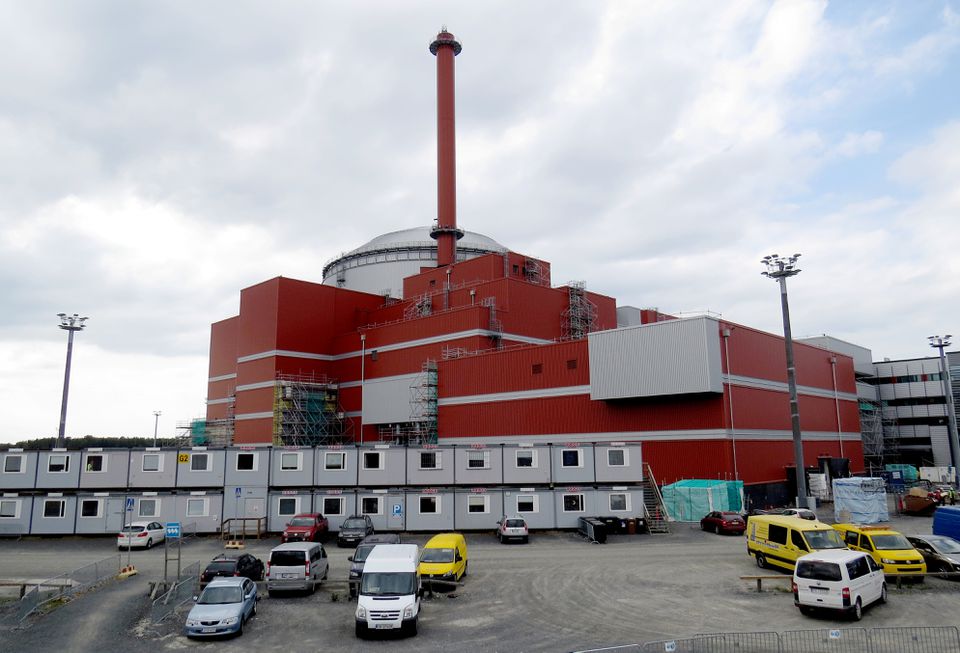
Finland’s Olkiluoto 3 nuclear reactor faces another delayBy Nora Buli OSLO, Aug 23 (Reuters) – The start of Finland’s much-delayed Olkiluoto 3 nuclear reactor has been pushed back by a further three months, with full power production now scheduled for June 2022, operator TVO said in a statement late on Friday.
“Teollisuuden Voima Oyj (TVO) has received additional information from the plant supplier Areva-Siemens consortium that the regular electricity production of the OL3 EPR plant unit will be further postponed for three months due to extended turbine overhaul and inspection works,” TVO said.
Olkiluoto 3 was meant to be finished in 2009 but the project has been beset by a series of setbacks……. https://www.reuters.com/business/energy/finlands-olkiluoto-3-nuclear-reactor-faces-another-delay-2021-08-23/
Time to stop the bailout of America’s insanely expensive nuclear industry
The “problem” is obvious: the cost of operating and maintaining old nukes is skyrocketing. So is the cost of building new ones. The last two under construction in the US – in Georgia – have already doubled in cost (approaching $30 billion) and are still not open. If they ever do open (God help us!!!) the electricity they’d produce would be far more expensive than the wind turbines and solar panels that will surround them.
Stop the Insane Nuke Bailout, By Harvey Wasserman, Reader Supported News, 21 August 21
 uried deep in Joe Biden’s various infrastructure deals is a bailout every bit as insane as the original decision to stay in Afghanistan – up to $50 billion in handouts to keep old nuke reactors operating … at least until they blow up.
The cost of our arrogant lunacy in Afghanistan was thousands of lives and maybe $2 trillion.
The cost of the inevitable explosion at one or more of these crumbling jalopy nukes could be millions of lives and trillions in both destroyed property and an irradiated ecosphere.
Throughout the globe, the Solartopian technologies of wind, solar, batteries, and efficiency are skyrocketing in production while their prices plummet. But Biden’s proposed bailout would take a huge amount of capital away from clean, job producing renewables and put it into expensive, dangerous, obsolete reactors.
Richard Nixon in 1974 – amidst the Arab oil embargo – promised there’d be a thousand “Peaceful Atom” nukes in the US by the year 2000. In that year there were 104. Today there are 93, with the number still dropping – but not fast enough.
Every day these fast-deteriorating reactors become more likely to explode. Under the Price-Anderson Act of 1957, their owners are exempted from liability if their negligence lets a reactor carpet the American landscape with deadly radiation.
Because they’re not on the hook for the apocalypse they might cause, reactor owners have no particular incentive to expensively maintain these nukes as they sink into decrepitude. And thus the taxpayer and the individual citizen (YOU!) must absorb the cost of the meltdowns/explosions we all know are coming.
The rationale for the bailout is that aging atomic reactors – even ones long since amortized – cannot compete with the onslaught of renewables, batteries and efficiency. Allegedly, in our “free market capitalist” country, we all must compete. But when major corporate assets like nuke reactors can’t, apparently they must be bailed out.
The “problem” is obvious: the cost of operating and maintaining old nukes is skyrocketing. So is the cost of building new ones. The last two under construction in the US – in Georgia – have already doubled in cost (approaching $30 billion) and are still not open. If they ever do open (God help us!!!) the electricity they’d produce would be far more expensive than the wind turbines and solar panels that will surround them.
Indeed, from 2009 to 2019, the price for solar photovoltaic electricity dropped by 89%. For on-shore wind, it went down by 70%……….
The lengths to which the corporate dinosaurs will go to preserve these old reactors is astounding. The owners of two extremely decrepit and dangerous nukes on Lake Erie helped funnel a $61 million bribe to the Speaker of the Ohio House in exchange for a $1 billion ratepayer bailout (since repealed). Disgraced governor Andrew Cuomo helped shut two extremely dangerous old nukes at Indian Point, near Manhattan, but forced through $7.6 billion in handouts for four falling-apart upstate reactors, at least one of which the owner wanted to shut. Connecticut, New Jersey, Illinois and other states are in various stages of bailout madness.
But now Biden wants to take the disease federal. The reactors he wants to save for $50 billion cannot compete with new wind or solar. They may temporarily sustain an aging, fast-retiring workforce. But they’ll create no new training or safe longterm employment for a rising Solartopian generation………….. https://readersupportednews.org/opinion2/277-75/71091-rsn-stop-the-insane-nuke-bailout
Russian nuclear power plants insured for $27 billion
Russian nuclear power plants insured for $27 bln
The insurance case is recognized as loss, damage of insured property as a result of radiation impact, fire, lightning stroke, explosion https://tass.com/economy/1328737MOSCOW, August 22. /TASS/ Rosenergoatom, a member of the electric power division of the Russian state-run nuclear corporation Rosatom, will ensure all domestic nuclear power plants (NPP) against catastrophic risks for 2 trillion rubles ($27 bln). Sogaz became the winning bidder according to minutes of the meeting of the procurement board, posted on the government procurement website.Rosenergoatom will pay the insurance premium of 3 bln rubles ($40.5 mln) to the insurer.
“All the property to be accounted as fixed assets” of Rosenergoatom’s nuclear power plants is registered under the insurance agreement, according to the posted draft agreement.
The insurance case is recognized as loss, damage of insured property as a result of radiation impact, fire, lightning stroke, explosion, crash of piloted aircraft, their parts or cargo, earthquake, volcanic eruption, hurricane, whirlwind, storm, typhoon and other natural disasters, unlawful acts of third parties, terrorism, sabotage, machinery and equipment failures and cyberrisks. The insurance will be valid from September 1, 2021 to August 31, 2023.
France’s oldest nuclear reactors allowed to operate for another decade
France’s oldest nuclear reactors allowed to operate for another decade https://www.rfi.fr/en/france/20210225-france-s-oldest-nuclear-reactors-allowed-to-operate-for-another-decade-edf by:Amanda Morrow
France’s Nuclear Safety Authority (ASN) has approved extending the lifetime of the country’s oldest nuclear reactors for a further 10 years. Electricity operator EDF will be in charge of improving the safety of the 900 MWe plants, which were intended to run for 40 years but will now run for 50.
The reactors in question are the oldest of the French fleet, having been commissioned in the early 1980s.
Approval for their continued service comes with several conditions, including that improvements be made to ensure that radioactivity remains confined in the event of an accident.
A first objective is to limit the impact of accidents, including serious ones such as a meltdown of the reactor core,” said ASN’s deputy director general Julien Collet.
Other concerns included protecting the plants against earthquakes, floods and extreme heat, as well as internal fire hazards.
The reactors in question are Bugey (Ain), Blayais (Gironde), Chinon (Indre-et-Loire), Cruas (Ardèche), Dampierre (Loiret), Gravelines (Nord), Saint-Laurent (Loir-et-Cher) and Tricastin (Drôme).
Staunch opposition
Following calls from environmental campaigners to shut down ageing nuclear reactors, France’s oldest plant, Fessenheim, was switched off last year.
However the evacuation of its combustible waste will continue until the summer of 2023, while the demolition of the site lay not be complete until 2040.
France derives nearly 70 percent of its electricity from nuclear power, a world record. It’s hoping to reduce this figure to 50 percent by 2035 to make more room for renewable energy.
South Africa’s Organisation Undoing Tax Abuse (Outa) opposes plan for new nuclear power
Nersa gets green light to approve new nuclear power procurement, but Ts & Cs apply, Fin24, 20 Aug 21, A National Energy Regulator of South Africa (Nersa) committee has recommended that the regulator approve a plan to procure 2 500 MW of new nuclear power.
It will now be up to Nersa’s full board to make a decision on whether it agrees with the plan as set out by Mineral Resources and Energy Minister Gwede Mantashe in August last year.
At a meeting on Friday morning, Nersa’s electricity subcommittee was broadly supportive of Mantashe’s plan. This followed public hearings earlier in the year. Liz McDaid, Parliamentary and energy advisor to the Organisation Undoing Tax Abuse (Outa), said that South Africans would now have to wait see what Nersa’s board decides.
If the board decides to concur with Mantahse’s determination, it will have to publish the reasons behind its decision, including the “suspensive conditions” mentioned in the meeting on Friday.
Outa is opposing the new nuclear build, saying it is “not affordable, not appropriate and should not be approved”. No requests for proposal have yet been issued for the new nuclear build. …….. https://www.news24.com/fin24/companies/industrial/nersa-gets-green-light-to-approve-new-nuclear-power-procurement-but-ts-cs-apply-20210820
Covid Defense Act – new Bill to prioritise U.S. health, vaccine spending over weapons spending !

New Bill Proposes Cutting Pentagon Spending to Fund Vaccines for Poor Nations, Common Dreams “We can’t bomb our way out of a global pandemic,” said Rep. Mark Pocan, the sponsor of the legislation, “Shifting funds from weaponry and military contractors to producing Covid vaccines will save hundreds of thousands—if not millions—of lives around the world.”
JAKE JOHNSON, August 20, 2021 Congressman Mark Pocan of Wisconsin introduced legislation this week that would cut billions of dollars from the Pentagon’s massive budget and invest those funds in global coronavirus vaccination efforts, which are badly lagging as rich countries continue to hoard doses and rush ahead with booster shots.
The Covid Defense Act proposes transferring $9.6 billion in U.S. military spending to Covax—a global vaccination initiative led by the World Health Organization—to assist with the procurement of doses for the people of low-income nations. Thus far, just 1.3% of people in poor countries have received at least one vaccine dose.
In a press release, Pocan’s office said that the funding—which represents just 1.3% of the $740.5 billion in U.S. military spending approved for 2021—”could lead to an additional 1.8 billion Covid vaccine doses for lower-income countries in 2021 and early 2022.” If passed, Pocan’s office said, the new legislation could provide vaccine access to another 30% of the world’s poorest and most vulnerable populations……….. https://www.commondreams.org/news/2021/08/20/new-bill-proposes-cutting-pentagon-spending-fund-vaccines-poor-nations
As renewable energy powers ahead, the UK government’s prospects for funding nuclear power projects look very risky
China’s cash for UK nuclear plants is in doubt https://climatenewsnetwork.net/chinas-cash-for-uk-nuclear-plants-is-in-doubt/
August 16th, 2021, by Paul Brown Cooler Sino-British relations mean China’s cash for UK nuclear plants is at risk
LONDON, 16 August, 2021 − A serious stumbling block now threatens the prospect of China’s cash for UK nuclear plants materialising − and also the likelihood of a successful outcome to COP26, the global climate conference which the British government is due to host later this year.
In order to finance the construction of nuclear stations that are supposed to generate up to 20% of the UK’s electricity, the British government needs Chinese money. Without it, the already prohibitively expensive projects may become completely unaffordable.
Neither the deeply indebted French government-owned company EDF, which is building two stations, each with twin reactors, nor the UK government is prepared to underwrite the entire cost of the projects. This is because of the huge sums required − around £45 billion (US$62bn).
However, the UK government faces severe political pressure to end Chinese involvement, because of the perceived threat of ceding control over vital services such as the electricity supply.
Problematic deal
The problem for Boris Johnson, the UK prime minister, is particularly acute as Britain is hosting COP26, this year’s UN climate conference, in Glasgow in November. Relations between the UK and China are already poor, in part because of disputes over democratic freedoms for the people of Hong Kong.
But with China the world’s largest carbon emitter, Johnson needs it onside if he is to have a chance of making COP26 the success it must be to avert catastrophic climate change.
The problem over funding the nuclear programme arises because of a deal struck in 2015 between the then British prime minister, David Cameron, and China’s president Xi Jinping.
That agreed that China would stump up one third of the £23bn ($32bn) cost of the Hinkley C nuclear power station in the West of England, and also pay 20% of the cost of another planned station, Sizewell C, on the east coast. In return the Chinese could then build a nuclear plant of their own design at Bradwell B in Essex, closer to London, and use it as a platform to export their Hualong HPR1000 reactor technology to the rest of the world
To President Xi the cost of helping to fund the French company to build nuclear stations in Britain was outweighed by the advantage of getting Chinese technology validated in the UK as a bridge to future exports.
Six years later, however, with the Hinkley Point project well under way and Sizewell C supposedly close to launch, the British government is now nervous about allowing the Chinese such a strong involvement in the UK’s nuclear secrets and the nation’s power supply.
Its dilemma, though, is that if the UK reneges on its 2015 agreement, then China could abandon both projects, leaving a financial black hole of many billions of pounds. Trades unions are horrified at the potential loss of jobs the possible cancellation of the projects would cause.
One alternative to Chinese funding is a UK nuclear tax which would be paid in advance by electricity users to fund the construction of the power stations. With power bills already due to rise by more than 10% in Britain before the end of 2021, this is unlikely to be an electorally popular solution.
Renewable competition
What will happen is anyone’s guess. Given Johnson’s well-known habit of postponing difficult decisions, and the looming COP26, it is likely that nothing will be announced until the crucial Glasgow talks are over. The French, in anticipation, have already announced that they are postponing the “final investment decision” on Sizewell C until next year.
Meanwhile the renewable energy industry, particularly offshore wind, is powering ahead with a massive construction programme. Its projects will all produce electricity far more cheaply than any of the UK’s proposed new nuclear stations.Last ditch attempts by the nuclear industry to put a green gloss on its proposals by persuading ministers that its spare electricity capacity can be used to make green hydrogen seem unlikely to succeed.Perhaps in time it will become obvious to Johnson that if banning Chinese involvement in British nuclear plants means they end up not being built that will be a bonus, because cheaper renewable energy will soon be available to fill any perceived gap in supply. − Climate News Network
Chinese nuclear power firm CGN could be pushed out of UK’s Bradwell nuclear power project – and then what?

Could CGN be pushed out of the UK’s nuclear industry? The Conservative backwoodsman MPs smell blood on China. They have already reversed Government policy and banned Huawei from involvement in rolling out the fifth generation (5G) of wireless communications networks.
They now intend to stop another Chinese firm, CGN, from showcasing its HPR1000 technology when building a replacement nuclear power station at Bradwell in Essex. The MPs will achieve this by amending the forthcoming National Security and Investment Bill.
Trouble is, CGN already has contracts signed to part-fund nuclear power stations together with Electricité de France, at Hinkley Point in Somerset and Sizewell in Suffolk. In both cases, the Chinese have absolutely key engineering roles, with know-how not easily replaced.
The big question is: if CGN were kicked out of Bradwell, whether they would also walk away from the other two projects. Of course in doing so, they would then be in breach of many existing contractual obligations. But, in
such circumstances, good luck with suing the Chinese government.
Electrical Review 16th Aug 2021
Could CGN be pushed out of the UK’s nuclear industry?
President Biden Can Reduce Nuclear Dangers Without Congress
How President Biden Can Reduce Nuclear Dangers Without Congress https://breakingdefense.com/2021/08/how-president-biden-can-reduce-nuclear-dangers-without-congress/
“Biden is sending a clear message: he will take on nuclear issues only as long as they do not undermine his top legislative priorities,” write Tom Collina and Doreen Horschig. By TOM Z. COLLINA and DOREEN HORSCHIG
| With razor-thin majorities in Congress, it is no surprise that the Biden administration has had to set strict priorities for its legislative agenda. The administration’s focus on pandemic relief, infrastructure, voting rights and climate leaves little room to negotiate on other pressing issues. The good news is there’s one top-tier issue on which President Biden can make significant progress without arm-twisting legislators: reducing the risk of nuclear war.The Biden team sees the crucial need to address nuclear threats, and has already taken major steps: it extended the 2010 arms control treaty with Russia, New START, and agreed to talks on additional reductions; it is negotiating in Vienna to revive the 2015 nuclear deal to keep Iran away from the bomb; and it has begun a comprehensive review of US nuclear policy, called the Nuclear Posture Review (NPR). Notably, none of these steps requires congressional approval, at least not yet. Instead, in areas where Hill support is needed now, the administration has gone out of its way to avoid fights. For example, Biden’s Pentagon budget supports all the new and unnecessary nuclear weapons proposed by the Trump administration. Biden is sending a clear message: he will take on nuclear issues only as long as they do not undermine his top legislative priorities. This approach fails to recognize that preventing nuclear war is not just another political issue. Nuclear weapons are the only threat humanity faces that could end civilization as we know it in a day (climate change will take much longer, though with the same potential impact). Spending billions of dollars on new weapons the United States doesn’t need, like the new $264 billion intercontinental ballistic missile, will only feed an arms race with Russia and China — even if it helps win votes for a bipartisan infrastructure deal. Better roads will not be of much help if the world slides into nuclear catastrophe. Yet even under President Biden’s constrained approach, he can set far-reaching nuclear weapons policies using his extensive executive authority. Presidents enjoy greater control over nuclear policy than almost any other area of government — and Biden should use it.For example, as part of the NPR process, the President can make good on his pledge to limit the role of nuclear weapons. As vice president, Biden said: “I strongly believe we [the United States] have made enough progress that deterring — and if necessary, retaliating against — a nuclear attack should be the sole purpose of the US nuclear arsenal.”Such a “sole purpose” declaration would be a welcome and important shift away from current policy that allows nuclear weapons to be used to deter other types of lesser threats, such as biological or conventional attacks. US conventional superiority can be used in these cases. In particular, Biden should end the Trump policy of threatening the use of nuclear weapons in response to cyberattacks. As damaging as cyber strikes can be, threatening to retaliate with nukes increases the risk of nuclear war, weakens deterrence, and would violate international law in nearly all scenarios. Biden should make it harder to use the most devastating weapons ever created. A sole purpose policy would limit nuclear weapons to one job only: preventing their use by others.Such a policy should include two other important elements: that the United States will not use its nuclear weapons in a preemptive strike (before an adversary launches a suspected attack) or on warning of attack (before a reported attack arrives). These launches would dangerously increase the risk of starting nuclear war by mistake in response to bad intelligence or a false alarm. The United States has made both types of mistakes before and could do so again.Skeptics state that a US sole purpose policy would undermine the confidence of allies in extended deterrence. But extended deterrence is not based on meeting all threats with nuclear war. The United States should deter conventional attacks with conventional weapons and nuclear attacks with nuclear weapons. The Biden administration can find ways to reassure allies without giving them veto power over US policy .A second concern of critics is that the United States could not make sole purpose credible as adversaries and allies alike would not trust such a declaratory policy. Critics have a point, which is why to show that it practices what it preaches, the United States would have to make doctrinal and operational changes. These including adopting a less threatening nuclear posture, eliminating first-strike postures, preemptive capabilities, and other destabilizing warfighting strategies. This would signal restraint in alert levels of deployed systems, targeting, and launch-on-warning. Joe Biden, as a senator, vice president and presidential candidate, has consistently promoted a more limited role for nuclear weapons. Now that he has the power of the presidency, he must follow through—and he can without undermining his crucial congressional agenda. Now is the time for bold action, and Biden has the chance to create a lasting legacy on nuclear matters.Tom Z. Collina is director of policy at Ploughshares Fund. He is co-author of The Button: The New Nuclear Arms Race and Presidential Power from Truman to Trump. Doreen Horschig, PhD is the current Roger L. Hale Fellow at the Ploughshares Fund, a global security foundation. She studies nuclear policy, specifically norms contestation, public opinion, and counter-proliferation.  ReplyForward ReplyForward |
Iraq needs energy, but nuclear power is not the answer
Nuclear power won’t fix Iraq’s energy crisis, Bulletin of the Atomic Scientists, By Nils Holst | August 18, 2021 On June 29, Iran halted gas and electricity exports to Iraq over nonpayment of fees. The move left millions of Iraqis without power as temperatures soared to more than 120 degrees, turning cities into ovens and throwing the embattled government of Prime Minister Mustafa al-Kadhimi into yet another political firestorm. While the Iranian move was clearly designed to increase Tehran’s influence over its neighbor, it also raises questions about Iraq’s proposal last month to restart the country’s civilian nuclear program, once the subject of proliferation concern……………….
On June 29, Iran halted gas and electricity exports to Iraq over nonpayment of fees. The move left millions of Iraqis without power as temperatures soared to more than 120 degrees, turning cities into ovens and throwing the embattled government of Prime Minister Mustafa al-Kadhimi into yet another political firestorm. While the Iranian move was clearly designed to increase Tehran’s influence over its neighbor, it also raises questions about Iraq’s proposal last month to restart the country’s civilian nuclear program, once the subject of proliferation concern.
Iraq’s nuclear legacy. Iraq received its first research reactor from the Soviet Union in 1962, and acquired several more over the next two decades. Although these reactors were purportedly developed for peaceful purposes, Iraq launched a covert nuclear weapons program in the early 1970s in violation of the Nuclear Non-Proliferation Treaty, which it signed in 1968. Concerned with Iraq’s likely nuclear weapons development, Israel bombed the Osiraq reactor complex in 1981, driving Iraq’s nuclear weapons program underground. Iraq spent the next decade experimenting with different methods to enrich uranium covertly to weapons-grade levels (typically 90 percent uranium 235), along with additional research on nuclear weapons designs.
After the 1991 Gulf War, the United Nations Security Council instructed the International Atomic Energy Agency (IAEA) to dismantle Iraq’s nuclear weapons program. The IAEA removed all weapons-grade nuclear material from Iraq and destroyed or disabled the country’s nuclear facilities. Iraq was reluctant to cooperate with international inspectors, however, which, coupled with then-President Saddam Hussein’s tendency to exaggerate his country’s weapons-of-mass-destruction capabilities, led US intelligence agencies to incorrectly assess that Iraq was hiding a nuclear weapons program. This assessment led to the 2003 US invasion, after which it was discovered that Hussein had not, in fact, restarted the program.
The Iraqi government made efforts to conform to international nonproliferation norms in the post-Hussein era. Iraq ratified the IAEA Additional Protocol in 2012, giving the IAEA greater insight into the country’s nuclear activities, and the Comprehensive Nuclear Test Ban Treaty in 2013. The UN Security Council lifted restrictions on Iraq’s nuclear industry in 2010. Current and former government officials have routinely floated the idea of using nuclear power to solve the country’s crippling energy shortages,
which leave large parts of the country without power during the hot summer months, a major cause of political unrest in recent years.
In June, Kamal Hussein Latif, chairman of the Iraqi Radioactive Sources Regulatory Authority, said the Iraqi government is currently in talks with Russia’s Rosatom about a $40 billion plan to build eight nuclear reactors. Latif also said Iraq discussed the plan with French, American and South Korean officials. Rosatom has secured contracts to construct nuclear reactors with several of Iraq’s neighbors, including Turkey, Iran, Jordan, and Egypt, although the contract with Jordan later fell through.
The $40 billion question. Part of Iraq’s nation-building strategy is ensuring greater access to electricity, and Baghdad sees nuclear power as an attractive way to address this challenge. The proposed eight-reactor plan would provide the country with a steady 11 gigawatts of power, bridging the gap between supply and demand even during the hottest part of the year. Iraq would reduce its reliance on Iranian gas, free up more of its hydrocarbons for export, and limit its dependence on carbon-based fuel generally. Nuclear power could also boost the legitimacy of al-Kadhimi’s government, and potentially rehabilitate Iraq’s image as an upstanding member of the civilian nuclear community.
There are some problems with this plan, though. Establishing and maintaining nuclear facilities would impose a large financial burden on a government already struggling to provide basic services to its citizens. Declining oil prices in 2020 forced Iraq to dip into its foreign reserves to pay public-sector salaries, and to shelve a much smaller plan to repair and upgrade the country’s dilapidated transmission and distribution network. And don’t forget the $4 billion Iraq owes Iran in unpaid utility bills, the cause of the most recent blackouts sweeping the country.
Even with favorable terms, a $40 billion project would be hard to justify given the government’s difficulty meeting its current financial obligations.
Compounding the affordability problem is the fact that about two thirds of generated power isn’t paid for, due to theft or unmetered connections. The government already heavily subsidizes electricity costs, with customers only paying for about 10 percent of the actual cost of the electricity they use. As a result, the Ministry of Electricity needs $12 billion per year to balance the books. Adding nuclear energy to the mix would push the ministry even deeper into the red, depending on how much financing Iraq could get for the project.
Proliferation is another major concern. The Iraqi power grid has weathered 35 terror attacks so far this year. Introducing nuclear technology would increase the risk of nuclear material falling into terrorist hands, either through a direct attack on a nuclear facility or via a corrupt government official. Given the country’s existing abundant energy resources, Iraq’s neighbors may suspect a civilian nuclear program is once again a cover story for weapons development. With other regional states like Turkey and Saudi Arabia toying with the idea of nuclear weapons, the appearance of seemingly unaffordable reactors in Iraq could be the straw that breaks the back of the already overburdened camel that is nonproliferation in the Middle East. Uncertainty over what happens if the Iran nuclear deal is not renewed, or renewed but expires in a few years, adds to this danger.
Iraq needs energy, but nuclear power is not the answer. In the short term, Iraq must rebuild its broken transmission and distribution system, overhaul the Ministry of Electricity’s fee collection system, and remove bottlenecks in the gas pipeline network to improve generation capacity. In the medium term, the country can encourage renewable energy use and diversify its energy mix by expanding solar power projects and refurbishing existing hydroelectric facilities. These infrastructure projects will ensure Iraq has reliable and consistent power generation in the long term, and be a better use of resources than an unnecessary, budget-busting prestige project. https://thebulletin.org/2021/08/nuclear-power-wont-fix-iraqs-energy-crisis/
1 This Month
23-25 October – on Zoom – World BEYOND War’s annual global conferenc


Shut down the radiation-damaged Heysham nuclear reactors now
To see nuclear-related stories in greater depth and intensity – go to https://nuclearinformation.wordpress.com

Say No to NASA’s Reckless Nuclear Reactor on the Moon
Say No to NASA’s Reckless Nuclear Reactor on the Moon

-
Archives
- October 2026 (209)
- September 2026 (339)
- August 2026 (330)
- July 2026 (355)
- June 2026 (287)
- May 2026 (306)
- April 2026 (356)
- March 2026 (251)
- February 2026 (267)
- January 2026 (308)
- December 2025 (358)
- November 2025 (359)
-
Categories
- 1
- 1 NUCLEAR ISSUES
- business and costs
- climate change
- culture and arts
- ENERGY
- environment
- health
- history
- indigenous issues
- Legal
- marketing of nuclear
- media
- opposition to nuclear
- PERSONAL STORIES
- politics
- politics international
- Religion and ethics
- safety
- secrets,lies and civil liberties
- spinbuster
- technology
- Uranium
- wastes
- weapons and war
- Women
- 2 WORLD
- ACTION
- AFRICA
- Atrocities
- AUSTRALIA
- Christina's notes
- Christina's themes
- culture and arts
- Events
- Fuk 2022
- Fuk 2023
- Fukushima 2017
- Fukushima 2018
- fukushima 2019
- Fukushima 2020
- Fukushima 2021
- general
- global warming
- Humour (God we need it)
- Nuclear
- RARE EARTHS
- Reference
- resources – print
- Resources -audiovicual
- Weekly Newsletter
- World
- World Nuclear
- YouTube
-
RSS
Entries RSS
Comments RSS

