Exelon Prepares to Shutter Illinois Nuclear Plants

Exelon is a profitable corporation: the latest SEC filings show its CEO, Chris Crane, was compensated to the tune of more than $14 million.
the Illinois Chamber of Commerce is skeptical of another Exelon bailout.
“We become very concerned when a profitable company seeks to lock in profits through the Illinois General Assembly, when those profits are going to be paid for by ratepayers,” said Alec Messina with the chamber’s Energy Council.
And critics of nuclear energy say Exelon’s threats are akin to ransom.
Exelon Prepares to Shutter Illinois Nuclear Plants, wttw, August 17, 2021 Illinois legislators may be back in Springfield soon for another summer special session, to try once again to pass a massive energy package that thus far has proven elusive.
The result – be it passage of a new law, or a continued stalemate — will impact everything from Illinois’ role in climate change to your energy bill.
But the stakes are particularly high in one northern Illinois town.
Byron, Illinois – about 11 miles outside of Rockford — has had various identities since its founding in 1849. It’s been home to canning plants, railroad stops and a milk depot.
Mayor John Rickard says all of those have come and gone. But since 1985, Byron has had a new identity: It’s home to a pair of nuclear generators…………….
“We’re preparing right now to shut down these reactors forever,” Hanson said. “That means shutting the plant down, turning the turbines off, the generators off, shutting down the reactor.”……..
Property taxes from the nuclear plant comprise a whopping 74% of the district’s budget — some $19 million that would be difficult, if not impossible, to replace.
The next few weeks will determine whether it’s a reality Byron will have to face.
Exelon executives say they have no choice, and they’re preparing employees at the station for that possibility…….
The Chicago-based corporation has 21 reactors at a dozen sites nationwide. Nearly half are in Illinois.
Exelon is a profitable corporation: the latest SEC filings show its CEO, Chris Crane, was compensated to the tune of more than $14 million.
But due in part to energy market particulars and cheap natural gas prices, Exelon says its Byron and Dresden stations are losing money.
It’s not just Exelon that says so. The state commissioned a study and found that while they could be profitable in the future, “Byron and Dresden do face real risk of becoming uneconomic in the near term.”
Exelon is moving to close them (in energy parlance, “retire” the plants, decades ahead of their scheduled retirement) unless the Illinois legislature comes through.
A proposal floated in the statehouse would have ratepayers — as in, anyone who uses and pays for electricity in Illinois — pay a subsidy to keep them open. It would take the form of an extra charge on your electric bill, worth nearly $700 million, that Exelon would use to keep the plants open for at least the next five years.
It’s a big ask, especially considering what happened last July, when Exelon subsidiary Commonwealth Edison was charged with bribery.
Former Illinois House Speaker Michael Madigan — repeatedly referenced in court documents as “Public Official A” — has denied any knowledge of a bribery scheme but helped steer through legislation that helped ComEd.
Exelon benefitted too, by way of a law that currently has electricity customers paying a subsidy for two of its other Illinois plants, in Clinton and the Quad Cities……..
the Illinois Chamber of Commerce is skeptical of another Exelon bailout.
“We become very concerned when a profitable company seeks to lock in profits through the Illinois General Assembly, when those profits are going to be paid for by ratepayers,” said Alec Messina with the chamber’s Energy Council.
And critics of nuclear energy say Exelon’s threats are akin to ransom.
“Exelon first started what we’ve dubbed the nuclear hostage crisis. It’s a pattern where a utility will for whatever reasons threaten closure, which gets the workers very upset, then the local community whose tax base depends on it gets upset, they pressure their legislators, and then the legislators grant bailouts,” said Dave Kraft, head of the Nuclear Energy Information Service.
Kraft said rather than continuing to support nuclear energy, Illinois needs to redouble its commitment to wind and solar……….
Public comment period regarding Bradwell nuclear project is drawing to its end.
After nearly four years, just one month remains for members of the public
to comment on the reactor technology for the proposed nuclear power station
at Bradwell B. The China General Nuclear Power Group (CGN) and the French
power company EDF, through their joint venture company General Nuclear
System Limited, initiated the Generic Design Assessment (GDA) process of
the proposed reactor in January 2017.
The public comment process, allowing
the public to provide feedback on the UK HPR1000 reactor technology planned
for use at Bradwell B, opened in November 2017 and is due to finish on
Friday, 17 September 2021. Since it began, a range of concerns have been
raised, including those related to climate change, safety and technical
questions.
Maldon Nub News 16th Aug 2021
The French nuclear complex — Macron’s love letter to the nuclear industry

Macron’s love letter to the nuclear industry
The French nuclear complex — Beyond Nuclear International The French nuclear complex https://beyondnuclearinternational.org/2021/08/15/the-french-nuclear-complex/
August 15, 2021 by beyondnuclearinternationa
The all too easy alliance between the civil and military sectors
From the Swiss Energy Foundation
...et sans nucléaire militaire, pas de nucléaire civile (“and without the military nuclear sector, no civilian nuclear sector”). These were the words of French head of state, Emmanuel Macron, during his visit at the end of the year to Le Creusot, a hotspot of the French nuclear industry. Indeed, the civil and military uses of nuclear energy were, are, and will remain, inextricably linked. This is exemplified by the French reactor research project NUWARD.
The year 2020 ended with a declaration of love from Emmanuel Macron to the French nuclear industry: “Our energy and ecological future depends on nuclear energy”. He added: “Our economic and industrial future depends on nuclear energy. ” Macron addressed these words in a well-received speech delivered at Le Creusot, Burgundy, the very heart of the nuclear industry. The industrial town of Le Creusot is an important production site for components for nuclear power plants as well as for nuclear weapons systems for military use.
The nuclear industry in crisis

However, the last few years have not been a time of joy for the French nuclear industry, but rather a time of crisis. To stay with Le Creusot: The reactor forge facility there, which among other things manufactures the safety-relevant components for nuclear power plants, drew attention to itself in 2016 with a series of irregularities: it emerged that, for years, there had been systematic forgeries. Faulty forged parts were produced. Instead of discarding the rejects, reports were falsified and quality assurance undermined. France’s new-build project, the Evolutionary Power Reactor (EPR), was also affected. The former showcase project sank steadily into a billion-dollar grave.
Along with the Le Creusot scandal, numerous other miscalculations and breakdowns cast a bad light on the French nuclear industry. The construction of the new EPR in Flamanville, as well as other construction projects abroad, made headlines with years of delays and cost explosions. The builder is the French quasi-state nuclear giant EDF. It did not want to bear the cost debacle alone, but also pointed the finger at EPR nuclear giant Areva. However, since 2018, Areva has ceased to exist.

To prevent bankruptcy, the state has virtually ransomed Areva by means of subsidies. The group was split into the state-owned company New Areva (now “Orano”), responsible for the fuel cycle business, and the reactor construction division Areva NP (now “Framatome”), which also includes the Le Creusot forge. Meanwhile, EDF, 80% of which is state-owned, is struggling with enormous debts —some 41 billion euros at the end of 2019, according to the French Ministry of Economy.
Nuclear DNA – French identity
So the task at hand is to shore up the once-radiant sector in crisis. And Macron’s assurances to Framatome and Co. came at the just right time. On the one hand, there are economic interests, as just explained with the problem child EDF, on the other hand, there is also the French identity and military capacity, founded on France’s nuclear power status. Since the post-war period, France’s self-image has been based to a large extent on the nuclear sector. In Le Creusot, Macron not only praised those present, he also announced the construction of a new aircraft carrier —nuclear-powered, of course.
The NUWARD project: an exemplary case

Among those present at Le Creusot, in addition to Framatome, were managers from EDF, Orano and the Naval Group defense contractor. All of the players are a hybrid of government and private funding, civilian and military exploitation interests. And with the exception of Orano, they are all involved in the new French Small Modular Reactor (SMR) project called NUWARD. The nuclear industry is pinning its hopes on “small modular reactors”.
The project for the French variant NUWARD started about ten years ago, when the contractors EDF, Naval Group (then DCNS), the state nuclear and energy research center CEA (Commissariat à l’énergie atomique et aux énergies alternatives) and the then Areva were commissioned with initial feasibility studies. TechnicAtome (formerly Areva TA), a specialist in marine nuclear propulsion systems, was also brought in for the pre-conceptual design. Finally, in September 2019, the partners presented their collaborative NUWARD project at the General Conference of the International Atomic Energy Agency in Vienna.
The parties involved emphasize the benefits of NUWARD as an export commodity in the global energy market: it is necessary to meet the increasing demand for energy in the context of rising population and climate policy challenges. To wit: Nuclear energy is again praised as a (supposedly) climate-friendly solution. The small NUWARD with a capacity of about 340 MW is intended as a complement to the EPR with a capacity of about 1700 MW.

But civilian applications are hardly ever the only ones. The new aircraft carrier, which is to replace the retired “de Gaulle” from 2038, will be nuclear-powered. The experts responsible for this are TechnicAtome and Naval Group. The new generation of French submarines, currently being developed under the so-called Barracuda program with the same stakeholders, also relies on nuclear propulsion. The suspicion is that TechnicAtome and Naval Group’s interests in NUWARD are aligned on this. According to ASAF, the French Army’s support association, the latter enjoys the opportunity to acquire knowledge that can later be applied in the military field.
From research to armament leader
A deeper look at the project partners involved and their activities shows that the mixture of civil-military engagement is by no means new. For example, the defense industry group Naval Group, the CEA and TechnicAtome are involved in the Barracuda project mentioned above. Naval Group itself, which calls itself the “European leader in naval defense”, is majority-owned by the French government and one-third by the defense contractor Thales Group (which in turn is about one-third owned by the government). In addition to its largely military projects, the group is also active in the civilian sector, as in the case of the EPR4 or through offshore wind energy projects.
Naval Group, meanwhile, is a 20% shareholder in TechnicAtome, whose core business is nuclear submarine propulsion. In addition, the corporation pursues civil nuclear activities. For example, it was responsible for safety systems at Hinkley Point (UK) at the EPR. TechnicAtome was spun off in the 1970s from the state research institute CEA, which remains a shareholder today, along with the state and EDF (itself 85% state-owned).
The CEA can be seen as a symbol of the interdependence of the military-civilian nuclear establishment. CEA, from the French acronym for Atomic Energy Commission, was founded after World War II and oversees all French nuclear research, both military and civilian. To this day, the research institution is wholly owned by the government. Of note are the unique privileges the CEA enjoys as a public agency: it is accountable for its decisions solely to the French president and is not subject to the same financial controls as other government agencies.
France Nucléaire – Quo vadis?
For the French head of state, abolishing the civil-military “double dimension” makes no sense at all. Rather, it illustrates the coherence between strategic autonomy and energy independence. And this is now being proudly presented in public again, as in Le Creusot.
It is therefore not only worthwhile for the French state to support the struggling civilian nuclear industry, but it seems almost imperative. It does so not only through share packages (see Areva). In addition, Macron is lobbying Brussels to give nuclear energy more prominence in the EU’s climate strategy, with the hope of receiving money from the Green New Deal pots. This would also help the enforcement of the planned national subsidies vis-à-vis the EU.
State aid en masse is thus intended to save civil nuclear power in France, because the French presidential palace cannot afford to — and will not — do away with the civilian part. As Macron revealed in his closing homage to nuclear power at Le Creusot: “Our strategic future, notre status de grande puissance, depends on nuclear energy”.
The original article in German, can be found here on the Swiss Energy Foundation (SES) website in its Focus France section. We are grateful to the SES for this translation.
Hidden in the U.S. Infrastructure Bill, a fat subsidy for the nuclear industry, and another $50 billion in the offing.

Critics Decry $12 Billion For Nuclear In Infrastructure Bill https://www.upr.org/post/critics-decry-12-billion-nuclear-infrastructure-bill#stream/0, By ERIC TEGETHOFF • AUG 12, 2021 The U.S. Senate has passed a massive infrastructure bill, and buried within the package is $12 billion for the nuclear industry, but critics said the money would be better spent elsewhere.Half of the money is reserved for nuclear facilities under threat of shutting down due to economic factors. The other half is for research and development, such as on the small modular nuclear reactor model being built in Idaho.
Tim Judson, executive director of the Nuclear Information and Resource Service, said the industry as a whole is struggling, with even the Idaho project being scaled back.
“By propping up the existing reactors and preventing them from being replaced with renewable energy, the nuclear industry’s essentially trying to keep sort of a foothold in the energy system until they can try to ram some of these new reactor projects like the one in Idaho through, if it ever happens,” Judson said.
He hopes the U.S. House makes changes to the investments in nuclear. The industry and some environmental groups have touted nuclear energy as an alternative to fossil fuels as the country moves toward clean energy sources.
Judson noted it is a big deal many nuclear power plants need a bailout, adding it is as if nuclear companies are holding cities and states hostage.
“It’s been this kind of perpetual process of a power plant’s closure being announced, the company demanding a bailout, the state not knowing what else to do, so it gives the bailout,” Judson said. “And this federal subsidy is going to be the same thing. There’s no planning procedure included in this legislation.”
He argued there needs to be more consideration about what to do with old power plants and aging infrastructure.
Judson pointed out another bill in Congress could provide up to $50 billion in subsidies for the industry over the next decade.
According to his organization’s research, it will not mean any new jobs and the money would be more beneficially spent on electricity projects such as renewables, transmission systems and battery storage.
“If you spent that $50 billion on those things, it would create more than 60,000 new jobs,” Judson said. “And that’s more than four times the number of workers that are employed at these nuclear plants that would get bailed out.”
Men, Conservative Party supporters and Brexit-backers more likely to support use of nuclear weapons

Men, Conservative Party supporters and Brexit-backers more likely to support use of nuclear weapons, Mirage News, University of Exeter, 13 Aug 21,
Men, Conservative Party supporters and those who wanted Britain to leave the EU, are more likely to want to retain Britain’s nuclear deterrent, a study shows.
Those who endorse superior military power worldwide as an important foreign policy goal and people who want to protect the transatlantic relationship are also more likely to be in favour of nuclear weapons, according to the research.
Those who voted ‘remain’ in the EU referendum are less likely to support keeping nuclear weapons relative to those who voted to leave the EU. Supporters of Labour, the Liberal Democrats, the SNP, UKIP, the Green Party, and Plaid Cymru are less likely to support keeping nuclear weapons.
The study, published in the European Journal of International Security, was carried out by Ben Clements, from the University of Leicester, and Catarina Thomson, from the University of Exeter.
Academics used data from the new UK Security Survey to analyse attitudes towards the possession of nuclear weapons among the British public, the majority of who supported retaining nuclear weapons.
Dr Thomson said: “We have found the recurring ‘gender gap’ found on state use of conventional military force extends to Britain’s nuclear force capabilities, with men more in favour of retaining the nuclear deterrent than women.
“Political preferences have a significant role to play in affecting people’s likelihood of supporting of Britain retaining its nuclear weapons. Identifying with political parties with a clear nuclear stance is generally significant in affecting people’s views on the UK nuclear programme.
“Our data suggest that supporters of parties that do not take an anti-nuclear stance, such as the Liberal Democrats or UKIP, are less likely to support keeping nuclear weapons. Those who voted for Britain to remain in the EU are less likely to agree with the statement that the UK should keep its nuclear weapons. This provides further evidence of the potency of views on the Brexit debate for other issues in the post-referendum political landscape, concerning both domestic and external policy.”…………..
The survey was fielded by YouGov between 1– 25 April 2017 (before the official announcement of the snap general election), with a representative sample of 2,002 adults in Britain. The data was weighed by age, gender, social class, region, level of education, how respondents voted at the previous election, how respondents voted at the EU referendum, and their general level of political interest. https://www.miragenews.com/men-conservative-party-supporters-and-brexit-613537/
Conservative British MP opposes ‘nuclear dumping ground’
JILL MORTIMER (Conservative MP for Hartlepool): Plan would turn the town into a ‘nuclear dumping ground’. I am sure that a number of you are already aware of a meeting between Sacha Bedding, Chief Executive of the
Wharton Trust charity, and representatives from the Labour group on Hartlepool Borough Council – I want to take this opportunity to make my position on the proposal to introduce a nuclear waste dump to Hartlepool clear – not on my watch!
I was shocked to hear that these discussions have taken place, and I fully support Ben Houchen – Tees Valley Mayor in
his opposition to such a suggestion. This week myself and Ben have submitted a Freedom of Information request to Hartlepool Borough Council, relating to any correspondence between Staff at Radioactive Waste Management, Staff at The Wharton Trust and the Council, including elected councillors. Whoever is encouraging behind the scenes discussions of something that we believe will have such a devastating impact on the town’s prospects – the people of Hartlepool deserve to know.
Hartlepool Mail 12th Aug 2021
Strong call for New York City to legislate against investment of pension funds into nuclear weapons production

“We call on Speaker Corey Johnson and the City Council to vote and urgently pass Res. 976 and Intro.1621 to divest pension funds from nuclear weapon producers and reaffirm New York City as a Nuclear Weapons Free Zone. The legislation introduced by Council member Danny Dromm already inspired a historic hearing in City Hall and has the support of a majority of the City Council. As New Yorkers this is our moment to make hope and peace possible for a new generation.”
Nuclear disarmament campaigners press for legislation in New York City on 76th Anniversary of Hiroshima and Nagasaki Bombings. Pressenza, 13.08.21 – US, United States – Pressenza New York In a commemoration of the August 6 and August 9, 1945 bombings of Hiroshima and Nagasaki that was both somber and spirited, New York City-based nuclear disarmament advocates assembled outside the Municipal Building in downtown New York City. Advocates joined members of the International Campaign to Abolish Nuclear Weapons (ICAN), 2017 Nobel Peace Laureate in honoring New York nuclear disarmament heroes and urging Council Speaker Corey Johnson to reaffirm NYC as a nuclear weapons free zone.
Speakers included Michie Takeuchi, second generation Hiroshima Hibakusha survivor, Robert Croonquist, Hibakusha Stories Project founder, Bud Courtney of the Catholic Worker, Dr. Emily Welty, Director of Peace and Justice Studies at Pace University, Seth Shelden, ICAN representative at the United Nations and Brendan Fay ogranizer with NYCAN (New York Campaign to Abolish Nuclear Weapons).
Dr. Emily Welty reminded the gathering that the site for the Vigil is profound with history, because the development of the atomic bombs began across the street from City Hall at the Manhattan Project headquarters, at 270 Broadway.
In remarks Brendan Fay, Irish gay activist and nuclear disarmament advocate highlighted the legacy of LGBTQ New Yorkers in the global movement for nuclear disarmament.
- Bayard Rustin (1912-1987) highlighted the connection between colonialism, racism and nuclear weapons and traveled to Algeria in 1959 to protest French nuclear testing.
- James Baldwin (1924 –1987) as a member of National Committee for a Sane Nuclear Policy was among the leading speakers at the 1961 Peace Rally in Washington, DC. He said, “What am I doing here? Only those who would fail to see the relationship between the fight for civil rights and the struggle for world peace would be surprised to see me. Both fights are the same.”
- David McReynolds (1929-2018) was the first openly gay presidential candidate, a socialist and lifelong pacifist. During his 40-year career with the War Resisters League he became an international hero of the nuclear disarmament movement.
- Leslie Cagan (b. 1947) was a lead organizer of the largest disarmament rally in US history, the June 12, 1982 Rally Against the Arms Race.
- Peter Ciccchino (1960-2000) was arrested over two dozen times for peace, for nuclear disarmament, and for housing and human rights.
Fay thanked Council Member Danny Dromm (District 25) for introducing the nuclear divestment legislation in 2019. “Council Member Dromm follows the steps of previous council members including Council President and civil rights leader Paul O’Dwyer (1907 – 1998) who was a strong advocate for nuclear disarmament in City Hall.
Holding a poster of African American Civil rights leader and nuclear disarmament advocate Bayard Rustin,
Fay said, “As LGBTQ+ New Yorkers we join the rest of the human family this August 6th and August 9th in raising our voices to demand a world without nuclear weapons, for the sake of the children, for a future of hope. On this 76th anniversary of the bombing of Hiroshima and Nagasaki we say there is no Pride in bomb production. There is no Pride in raising the rainbow flag while investing in weapons of death.”
What of the nuclear weapons New York worker pensions are invested in? They are built to divide, harm, maim, kill. $475 million (0.25%) of New York worker pension funds are currently invested in the production of nuclear weapons. Our worker pensions must no longer be used as weapons of war. We are nurses, doctors, teachers, sanitation workers, firefighters, social workers, artists – our common cause is justice and peace……..
Fay said, “We call on Speaker Corey Johnson and the City Council to vote and urgently pass Res. 976 and Intro.1621 to divest pension funds from nuclear weapon producers and reaffirm New York City as a Nuclear Weapons Free Zone. The legislation introduced by Council member Danny Dromm already inspired a historic hearing in City Hall and has the support of a majority of the City Council. As New Yorkers this is our moment to make hope and peace possible for a new generation.”…….
Resolution 976 calls on the Comptroller to instruct pension funds to divest from companies involved in the production of nuclear weapons (approximately $475 million dollars) and re-affirms New York City as a Nuclear Weapons Free Zone.
Introduction 1621 establishes a Nuclear Disarmament Advisory Committee to advise the City Council.
The Treaty on the Prohibition of Nuclear Weapons, adopted by 122 countries in 2017, makes nuclear weapons comprehensively illegal and became international law on January 22, 2021. https://www.pressenza.com/2021/08/nuclear-disarmament-campaigners-press-for-legislation-in-new-york-city-on-76th-anniversary-of-hiroshima-and-nagasaki-bombings/
Japanese Nuclear Drama ‘Gift of Fire’ Heads for U.S Theaters
Japanese Nuclear Drama ‘Gift of Fire’ Heads for U.S Theaters Variety, By Patrick Frater 13 Aug 21,
“Gift of Fire,” a fact-based drama film about Japan’s secret nuclear bomb program, will play in U.S. cinemas from November this year. Produced in 8K digital, it opened in Japanese theaters last week, distributed by Aeon and scored a top ten ranking.
Yagira Yuya, the Japanese actor who won the acting prize in Cannes for his role in Koreeda Hirokazu’s “Nobody Knows,” heads the cast. He plays a nuclear scientist who struggles with his conscience while working Japan’s own nuclear weapon effort, a secret program that remained largely unknown until a decade ago.
The film is directed by Kurosaki Hiroshi, whose past work includes multi award-winning “Goldfish” (aka “Hi No Sakana”) and 2011’s “Second Virgin.” It was produced in partnership between Japanese public broadcaster NHK and Los Angeles-based Eleven Arts
Eleven Arts will now handle the U.S. release and has set a launch date of Nov. 12, 2021.
“When I first read the script for Gift of Fire I didn’t know that during WWII, Japan was developing an atomic bomb alongside the rest of the world,” said producer Mori Ko. “Instead of being a grand WWII film, the story focuses on the intimate details of three youthful characters’ lives. They deal with the same struggles as the rest of us, while also taking part in the life-changing scientific developments of the era and a war of epic proportions.”
………… “On one hand, the story reflects the romanticism present when floating on the surface of the ocean and looking up at the starry skies to imagine the vastness of the universe. On the other hand, the story explores the crimes that can be committed in the name of science and discovery,” said writer-director Kurosaki. https://variety.com/2021/film/asia/gift-of-fire-japan-nuclear-drama-yagira-yuya-1235041233/
Utah Taxpayers Association is very wary of Small Nuclear Reactors

Imagine you picked up a gallon of milk that was labeled at $4, but by the time you made it to the cash register the price had gone up. Worse still, there was an automatic agreement that forced you to buy with no guarantee that the lid would ever open or that the price wouldn’t increase again by the time you had to pay. That’s essentially the situation in which UAMPS is putting municipalities.
Imagine you picked up a gallon of milk that was labeled at $4, but by the time you made it to the cash register the price had gone up. Worse still, there was an automatic agreement that forced you to buy with no guarantee that the lid would ever open or that the price wouldn’t increase again by the time you had to pay. That’s essentially the situation in which UAMPS is putting municipalities.
Utah cities shouldn’t gamble on nuclear power https://www.deseret.com/opinion/2021/8/11/22620772/utah-cities-shouldnt-gamble-with-taxpayer-funds-on-modular-nuclear-power-plant
An Idaho project is a financial risk that is best borne by the private sector. By Rusty Cannon Aug 11, 2021, ”………….. one of our critical missions is to protect taxpayers when it comes to the use of public funds, and we believe strongly that the taxpayers and communities of Utah should not act as venture capitalists for risky bets.
The bet that’s on the table now for Utah municipalities is nuclear. Specifically, it’s a type of nuclear called “small modular,” and the Utah Associated Municipal Power Systems (UAMPS) is recruiting towns and communities around the West to pay for it. The project, if it happens, would be located in Idaho.
Last fall, seven Utah cities from Logan to Lehi wisely withdrew their support for the UAMPS nuclear project due to financial risks that their residents should not be asked to accept. But many municipalities, such as Brigham City, Hyrum, Hurricane, and Washington City, are still gambling with their taxpayers’ dollars.
If modular nuclear power is ready for market, let the private sector show it by putting up its money. Governments ought to stay out of it, particularly when risking public funds.
The participation commitments UAMPS has been getting from Utah communities to buy the power come with required upfront payments from residents for a product that is full of uncertainty. The developer — Oregon-based NuScale — hasn’t built a plant like this before, its design keeps changing, and it’s nearly a decade away from even being potentially operational.
While we still believe the project is risky and that municipalities should withdraw, any investment of public dollars must be done in the open with public scrutiny. Sadly, the information exchange between UAMPS and its potential payers has been opaque. The public receives only a trickle of information, and it’s vague at best.
When we do see information, it’s troubling. For example, the project’s budget has ballooned from an initial $3.1 billion to a more recent estimate of $6.1 billion. It was only recently uncovered that the company that was going to operate the plant, Energy Northwest, backed out in March.
The financial sand is shifting in other ways, as well. In late June, UAMPS suddenly decided to reduce the number of modules at the power plant by half because they’ve struggled to get more communities to commit. That led to a hike in the power price that UAMPS had been promising, putting still-participating municipalities in a bind.
Imagine you picked up a gallon of milk that was labeled at $4, but by the time you made it to the cash register the price had gone up. Worse still, there was an automatic agreement that forced you to buy with no guarantee that the lid would ever open or that the price wouldn’t increase again by the time you had to pay. That’s essentially the situation in which UAMPS is putting municipalities.
Plenty of Utah city council members have listened to their constituents and said “thanks but no thanks.” Bountiful, Kaysville, Murray, Lehi and Heber were some of the largest subscribers to the modular nuclear proposal, but have since bowed out.
However, other communities remain officially interested in this particular power project, and are keeping it in their shopping cart so far. If you reside in these communities, pay attention and watch your wallet. There may still be time to withdraw from the project.
Utah municipalities should remain conservative watchdogs of tax dollars. Say yes to prudent and transparent use of public money. Say no to unproven technology and murky promises that keep shifting. At this point modular nuclear power is a venture, not a product. So let private venture capital come in and pay for it, not Utah taxpayers.
Rusty Cannon is President of the Utah Taxpayers Association
Republican Congressman Adam Kinzinger champions inclusion of nuclear power incentive in U.S. Infrastructure Bill.
- Kinzinger-backed Nuclear Power Incentive Included in Senate Infrastructure Bill,
A financial credit program for nuclear power plants has been included in the Senate’s Infrastructure Investment and Jobs Act which was approved in the Senate on Tuesday. The program has been championed by Republican Congressman Adam Kinzinger, who has proposed the program in separate legislation in the past.
Kinzinger says he wants some federal help to available to keep nuclear power plants online as two in the 16th Congressional District are slated to close near the end of this year. Exelon, the company who runs the two plants, has said they are seeing a revenue shortfall at power plants in Morris and Byron.
State lawmakers have been trying to negotiate an energy deal that would keep the plants open, but have had some snags. Area lawmakers have said that an agreement is in place for the nuclear portion of the bill.
Joe Biden’s Infrastructure Bill gives $50 billion to bail out the nuclear industry

Nuclear Power Bailout In The Infrastructure Bill https://www.wortfm.org/nuclear-power-bailout-in-the-infrastructure-bill/
AUGUST 11, 2021 BY 8 O’CLOCK BUZZ The bi-partisan infrastructure bill just passed by the U.S. Senate has allotted $50 billion over the next 10 years to bolster the dying nuclear power industry, according to Hannah Smay, Digital Organizer of the Nuclear Information and Resource Service. And the $3.5 trillion reconciliation bill promises even more, fails to create jobs, reduce carbon, and the Band-Aid approach interferes with the transition to clean energy.
Canada’s political leaders oblivious to the dangers in making plutonium accessible?
Our political leaders seem oblivious to the dangers to the entire planet that could result from widespread access to plutonium. If Canada can access plutonium, so can any other country. If many countries have access to plutonium, the possession of nuclear weapons must be regarded as a real possibility. In a nuclear-armed world, any conflict anywhere can turn into a nuclear war. The stakes could not be greater
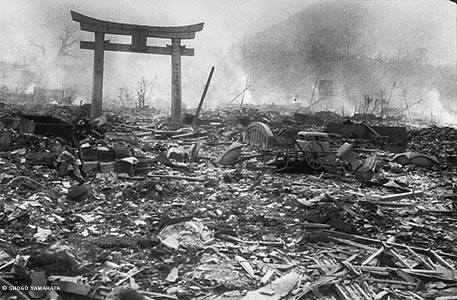
Plutonium: from Nagasaki to New Brunswick, https://nbmediacoop.org/2021/08/09/plutonium-from-nagasaki-to-new-brunswick/ by Gordon Edwards, August 9, 2021 Today, August 9, is the 76th anniversary of the US military’s atomic bombing of the City of Nagasaki in Japan. The nuclear explosive used was plutonium.
The destructive power of plutonium was first revealed on July 16, 1945, when a multicoloured mushroom cloud bloomed over the American desert – the first atomic explosion, top-secret, and much more powerful than expected. Robert Oppenheimer, the man in charge, was awestruck and thought of the words from the Bhagavad-Gita: “I am become Death, the Destroyer of Worlds.”
Three weeks and three days later, on August 9, 1945, the City of Nagasaki was destroyed with a single plutonium bomb.
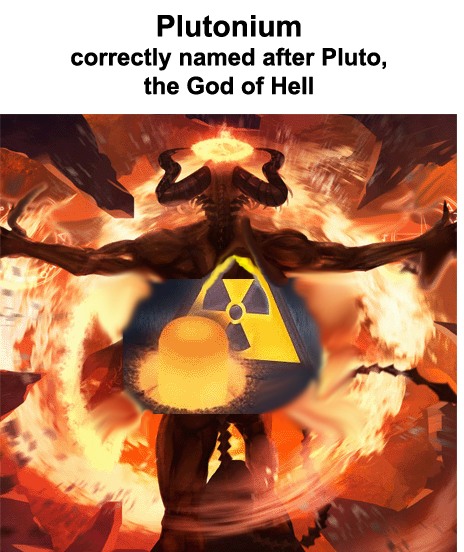
Plutonium is named for Pluto, god of the dead. It is the primary nuclear explosive in the world’s nuclear arsenals. Even the largest nuclear warheads, based on nuclear fusion, require a plutonium “trigger” mechanism. Access to plutonium is key to the construction of such thermonuclear weapons. Removing the plutonium from nuclear warheads renders them impotent.
Plutonium is not found in nature but is created inside every nuclear power reactor,
including the one at Point Lepreau on the Bay of Fundy. Plutonium is a human-made derivative of uranium. A metallic element heavier than uranium, it is created inside the nuclear fuel along with hundreds of lighter, fiercely radioactive by-products – the fragments of uranium atoms that have been split.
The countries that have nuclear weapons – the five permanent members of the UN Security Council (US, UK, France, Russia and China) as well as India, Pakistan, Israel, and North Korea – have all learned how to separate plutonium from used nuclear fuel for use in weapons. This is done by dissolving the solid fuel assemblies in a hot, highly radioactive chemical bath from which the plutonium is extracted using basic scientific procedures. Any technology for extracting plutonium from used fuel is called reprocessing.
Nuclear advocates have long dreamed of using plutonium as a reactor fuel, thereby increasing the options for new reactor designs and magnifying the longevity of the nuclear age. The problem is, once plutonium has been extracted, it can be used either for weapons or for fuel at the discretion of the country possessing it. Policing methods can be circumvented. As Edward Teller has observed: “There is no such thing as a foolproof system because the fool is always greater than the proof.”
That’s how India exploded its first atomic bomb in 1974, by using plutonium created in a Canadian research reactor given as a gift to India and a reprocessing plant provided by the US. Both the reactor and the reprocessing plant had been designated as “peaceful” facilities intended for non-military use. India declared that the bomb it had detonated was a “Peaceful Nuclear Explosive.”
After the Indian blast, it was quickly determined that several other clients of Canadian technology – South Korea, Argentina, Taiwan, and Pakistan – were also in a position to develop a plutonium-based bomb program. Swift and decisive international action forestalled those threats. In particular, South Korea and Taiwan were discouraged by their US ally from pursuing reprocessing.
Shaken by these shocking developments, in 1977 US President Jimmy Carter – the only head of state ever trained as a nuclear engineer – banned the civilian extraction of plutonium in America and tried to have reprocessing banned worldwide, because of the danger that this nuclear bomb material could fall into the hands of criminals, terrorists, or militaristic regimes bent on building their own nuclear explosive devices. As one White House adviser remarked, “We might wake up and find Washington DC gone, and not even know who did it.”
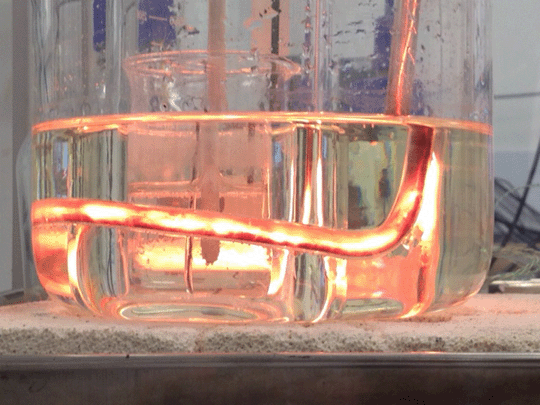
Japan is the only country without nuclear weapons that extracts plutonium from used nuclear fuel, much to the dismay of its neighbours. South Korea is not allowed to do so, despite repeated efforts by South Korea to obtain permission from the US to use a type of reprocessing technology called “pyroprocessing.” Pyroprocessing is currently undergoing experimental tests at a US nuclear laboratory in Idaho.
Now, New Brunswick has been enticed to take the plutonium plunge. The company Moltex Energy, recently established in Saint John from the UK, wants to use plutonium as a nuclear fuel in a type of reactor that is not yet fully conceptualized. The plutonium would be extracted from the thousands of solid irradiated nuclear fuel bundles currently stored at NB Power’s Point Lepreau reactor using a version of the pyroprocessing technology that South Korea has so far been denied.
On a site right beside the Bay of Fundy, the highly radioactive metallic fuel bundles would be dissolved in molten salt at a temperature of several hundred degrees. A strong electrical current would be used to strip the plutonium metal and a few other elements (less than one percent of the mass) out of the dissolved fuel.
After the government of Canada gave $50.5 million to support the Moltex project in March this year, nine retired US government advisors – all of them experts in preventing the proliferation of nuclear weapons – wrote to Prime Minister Justin Trudeau in May, urging him to authorize an independent review of the international implications of the proposed New Brunswick plutonium scheme.
These nine experts, who have worked under six different US presidents, both Republican and Democrat, are deeply concerned that Canada’s support for reprocessing and the civilian use of plutonium could seriously undermine delicate and precarious global non-proliferation efforts that have been underway for many decades.
No reply from the Canadian government has so far been received, although Trudeau’s office acknowledged receipt of the letter and said that the matter has been entrusted to Foreign Affairs Minister Marc Garneau and Natural Resources Minister Seamus O’Regan.
Without any word from these two ministers, Moltex posted a response to the US experts’ letter on their corporate web site, disputing some of the claims made in the letter to Trudeau. In particular, Moltex claims that their proposed technology is not usable for nuclear weapons purposes because the plutonium is not pure, but mixed with other contaminants that cannot easily be removed.
The Moltex response has prompted another letter to Trudeau from the US non-proliferation experts, correcting this and several other misleading comments from Moltex and reiterating their call for a fully independent expert review of the non-proliferation aspects of the Moltex proposal.
Our political leaders seem oblivious to the dangers to the entire planet that could result from widespread access to plutonium. If Canada can access plutonium, so can any other country. If many countries have access to plutonium, the possession of nuclear weapons must be regarded as a real possibility. In a nuclear-armed world, any conflict anywhere can turn into a nuclear war. The stakes could not be greater.
Citizens of New Brunswick and all Canadians who realize the importance of this issue can write to our Prime Minister in support of a non-proliferation review of the Moltex proposal, and raise this matter with candidates and at the door during the next federal election campaign. We can all raise awareness of the legacy of Nagasaki and do our best to ensure that New Brunswick is not implicated by going ahead with the Moltex plutonium extraction scheme.
Dr. Gordon Edwards, President of the Canadian Coalition for Nuclear Responsibility, is based in Montreal.
French nuclear company EDF is postponing its decision on whether or not to go ahead with the Sizewell nuclear project in Britain
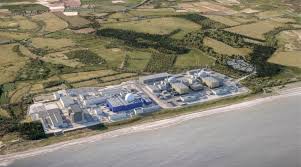
EDF delays final decision on Sizewell C. French energy giant now expects to leave it as late as 2023 before deciding whether to proceed with Suffolk nuclear power project. The timeline for EDF to decide whether to go ahead with the £20bn Sizewell C power station has slipped amid a lengthy planning approval process that is playing out as funding negotiations with ministers continue.
The French power giant now expects to make a final investment decision on the Suffolk plant at the end of 2022 or in 2023, compared to its previous expectations of mid-2022. EDF is in negotiations with the Government about a funding deal for Sizewell C and will also need external investors. Legislation is likely to be brought forward to allow developers to recoup costs during construction from household energy bills.
However, talks have been overshadowed in recent weeks by reports that ministers are seeking ways to block CGN from Sizewell and future UK nuclear projects. CGN has a 20pc development stake in Sizewell with an option to participate in the construction phase.
Telegraph 8th Aug 2021
https://www.telegraph.co.uk/business/2021/08/08/edf-delays-final-decision-sizewell-c/
Why China is increasing its nuclear deterrence capacity
China needs to increase nuclear capacity to maintain minimum deterrence against rising US coercion, By Hu Xijin Global Times, Aug 07, 2021 On Friday, US Secretary of State Antony Blinken expressed his “deep concern” about the “rapid growth” of China’s nuclear arsenal with Southeast Asian foreign ministers. He accused Beijing of “sharply deviating from its decades-old nuclear strategy based on minimum deterrence.” This is the US’ official response from the highest level after various US think tanks over the past few months have claimed that China is building a great number of “new missile silos” in Yumen of Northwest China’s Gansu Province and in the Hami region in Northwest China’s Xinjiang Uygur Autonomous Region.
Chinese officials have not directly responded to these allegations made by US think tanks. They have neither confirmed nor denied them.It is important to note that China has never abandoned its minimum deterrence nuclear strategy. However, due to the comprehensive strategic threat that the US keeps posing to China, the nuclear capabilities Beijing needs to achieve “minimum deterrence” are now different from the past. As the potential risk stemming from US nuclear coercion against China is clearly increasing, China needs to have sufficient nuclear forces to contain such a risk
Even many ordinary Chinese people feel the urgency of strengthening China’s nuclear deterrent is common sense. We don’t know if those structures shown in the satellite photos in Yumen and Hami are silos or the foundations of wind power plants as some scholars have speculated. But if it does turn out that they really are silos, Chinese public opinion will definitely support the construction of them unconditionally.
Washington is in no moral position to accuse China of this. China has only a fraction of the number of nuclear warheads that the US has. China is also the only nuclear power that has pledged not to be the first to use nuclear weapons. The US has never indicated that it would consider making the same commitment.
There is no information from Beijing on whether it is strengthening its nuclear buildup in the face of a realistic threat from Washington. But even if we were doing that, it would have nothing to do with Southeast Asian countries, or even with Japan and Australia, because China’s nuclear policy also includes another firm commitment of not using or threatening to use nuclear weapons against any non-nuclear-weapon state.
Once China substantially strengthens its nuclear forces, its only purpose will be to deter the US. Since there is already no mutual trust between China and the US, Chinese society is fully convinced that the US’ ultimate strategic goal is to bring China down. While not giving up on maintaining peace between the two countries, we must be prepared for the possibility that a war could eventually occur in the Taiwan Straits or the South China Sea. One of China’s major strategic missions today is to make the most complete layout for that day…………….https://www.globaltimes.cn/page/202108/1230817.shtml
China starting new nuclear power project, with technology from Russia
China started this week construction work on a new US$17-billion nuclear
power plant project, for which it will install Russian nuclear reactors at
the Xudabao project in northeastern China, World Nuclear News reports.
The Xudabao 3 unit is the first of four units at the plant to see the beginning
of construction. Russia’s Rosatom will design the nuclear island and will
provide equipment. The Russian firm will also provide commissioning
services for the equipment it will have supplied. The Russians will also
provide the construction and equipment for the Xudabao 4 unit, whose
construction is expected to begin in 2022. The two units are currently
expected to be commissioned in 2027 or 2028.
Oil Price 6th Aug 2021
1 This Month
23-25 October – on Zoom – World BEYOND War’s annual global conferenc


Shut down the radiation-damaged Heysham nuclear reactors now
To see nuclear-related stories in greater depth and intensity – go to https://nuclearinformation.wordpress.com

Say No to NASA’s Reckless Nuclear Reactor on the Moon
Say No to NASA’s Reckless Nuclear Reactor on the Moon

-
Archives
- October 2026 (209)
- September 2026 (339)
- August 2026 (330)
- July 2026 (355)
- June 2026 (287)
- May 2026 (306)
- April 2026 (356)
- March 2026 (251)
- February 2026 (267)
- January 2026 (308)
- December 2025 (358)
- November 2025 (359)
-
Categories
- 1
- 1 NUCLEAR ISSUES
- business and costs
- climate change
- culture and arts
- ENERGY
- environment
- health
- history
- indigenous issues
- Legal
- marketing of nuclear
- media
- opposition to nuclear
- PERSONAL STORIES
- politics
- politics international
- Religion and ethics
- safety
- secrets,lies and civil liberties
- spinbuster
- technology
- Uranium
- wastes
- weapons and war
- Women
- 2 WORLD
- ACTION
- AFRICA
- Atrocities
- AUSTRALIA
- Christina's notes
- Christina's themes
- culture and arts
- Events
- Fuk 2022
- Fuk 2023
- Fukushima 2017
- Fukushima 2018
- fukushima 2019
- Fukushima 2020
- Fukushima 2021
- general
- global warming
- Humour (God we need it)
- Nuclear
- RARE EARTHS
- Reference
- resources – print
- Resources -audiovicual
- Weekly Newsletter
- World
- World Nuclear
- YouTube
-
RSS
Entries RSS
Comments RSS

