Rolls-Royce is turning a quiet Welsh site into a nuclear bet, and the strange part is how many homes three small reactors could power

Public money is carrying the risk
SMRs are often promoted as cheaper and faster than conventional nuclear plants, but the first projects still need heavy financing, regulatory work, supply-chain confidence, and buyers willing to believe the model can scale.
By Indux, June 3, 2026, https://www.vozpopuli.com/indux/en/rolls-royce-is-turning-a-quiet-welsh-site-into-a-nuclear-bet-and-the-strange-part-is-how-many-homes-three-small-reactors-could-power/5488/
Rolls-Royce SMR and Great British Energy – Nuclear (GBE-N) have moved the United Kingdom’s first small modular reactor (SMR) project into a new phase, signing a contract that starts technology design work for three units planned at Wylfa in North Wales.
The project is expected to deliver at least 1.4 gigawatts of electric output, enough to power the equivalent of around 3 million homes for more than 60 years.
This is not a finished power plant, and it is not yet the final investment decision, but it is a big marker for a country trying to cut its exposure to volatile fossil fuel markets, rebuild industrial capacity, and keep the lights on without making the electric bill feel like a monthly shock. The material provided for this story described Wylfa as the centerpiece of a new British nuclear push.
Wylfa gets its second act
Wylfa is not new to nuclear power. The site on Anglesey once hosted a nuclear station that helped feed the British grid for decades before its last reactor shut down in 2015, leaving the area with the familiar question that follows many old industrial sites. What comes next?
The answer, at least for now, is a factory-built nuclear project led by Rolls-Royce SMR. The British government confirmed Wylfa in November 2025 as the home of the first small modular reactor plant in the program, with an initial three units and possible room for up to eight in the future.
That matters because Wylfa has had false starts before. Earlier replacement plans collapsed, and the local community was left waiting for a project big enough to bring jobs, training, and long-term investment back to the coast.
The Rolls-Royce design is called small, but the numbers are not tiny. Each unit is a 470 MWe pressurized water reactor, which means the first three units would add up to roughly 1.4 gigawatts of electric capacity.
The pitch is simple. Build much of the plant in factory conditions, move the pre-tested pieces to the site, and reduce the risk that has made traditional nuclear megaprojects expensive and slow.
World Nuclear News reported that about 90% of the SMR would be built away from the site, with the reactor unit measuring about 52 feet by 13 feet. That modular approach is supposed to make schedules more predictable and limit disruption around Wylfa, although nuclear projects rarely become easy just because the parts are smaller.
Jobs are part of the sell
The government says the first SMR project could support around 3,000 jobs at peak construction, along with thousands more across the national supply chain. Rolls-Royce SMR has put the wider employment impact even higher, saying its Wylfa program will support an average of almost 8,000 skilled jobs across the United Kingdom during the build program.
That difference matters. One figure is centered on peak construction at the project, while the other looks more broadly across the build program and the wider supply chain.
For Anglesey, the local promise is easy to understand. Big energy projects do not just bring engineers in hard hats. They bring apprenticeships, local contracts, traffic on access roads, new pressure on housing, and, ideally, years of steady work rather than a short construction rush.
Public money is carrying the risk
The program is also a test of how much public backing is needed to get new nuclear technology moving. The 2025 Spending Review allocated about $3.5 billion to enable the contract and wider SMR program, while the National Wealth Fund is committing up to about $805 million to support Rolls-Royce SMR’s reactor development.
That public support is not just a footnote. SMRs are often promoted as cheaper and faster than conventional nuclear plants, but the first projects still need heavy financing, regulatory work, supply-chain confidence, and buyers willing to believe the model can scale.
At the end of the day, the government is trying to turn Wylfa into more than one power station. It wants a repeatable British nuclear product that can be built at home and exported abroad.
At the end of the day, the government is trying to turn Wylfa into more than one power station. It wants a repeatable British nuclear product that can be built at home and exported abroad.
The timeline is still long
The contract allows Rolls-Royce SMR to begin site-specific design, regulatory engagement, and planning work ahead of a future final investment decision. That last phrase is important. It means the project has momentum, but it still has key approvals and financial steps ahead.
GBE-N has said work is set to start at the site in 2026, while the government has pointed to the mid-2030s for grid connection. So this is not a quick fix for today’s energy bills.
Still, nuclear power is being pitched as the steady partner for wind and solar. When the wind drops or demand spikes during a cold evening, the grid still needs reliable generation that can run day and night.
Why Rolls-Royce wants this win
For Rolls-Royce, Wylfa is more than a domestic contract. Chris Cholerton, chief executive of Rolls-Royce SMR, said the deal “unlocks the delivery” of the first three units and gives the U.K. program certainty, while also pointing to plans for up to six units in Czechia.
That is the bigger business angle. If Rolls-Royce can prove the model at Wylfa, it could strengthen its case in a global market where governments are looking for cleaner baseload power, industrial heat, and energy security.
Proof, however, is the key word. The SMR promise has been talked about for years. Wylfa is where Britain is trying to show whether the factory-built nuclear idea can move from slide decks into steel, concrete, regulation, and power lines.
Wylfa is now the test case
The United Kingdom is betting that small modular reactors can help solve several problems at once. Cleaner electricity, more energy independence, skilled jobs, and a stronger industrial base are all part of the same package.
That is a lot to ask from one coastal site. BHowever, Wylfa has become the place where those promises will start being measured against deadlines, budgets, and public confidence.
The official statement was published on GOV.UK.
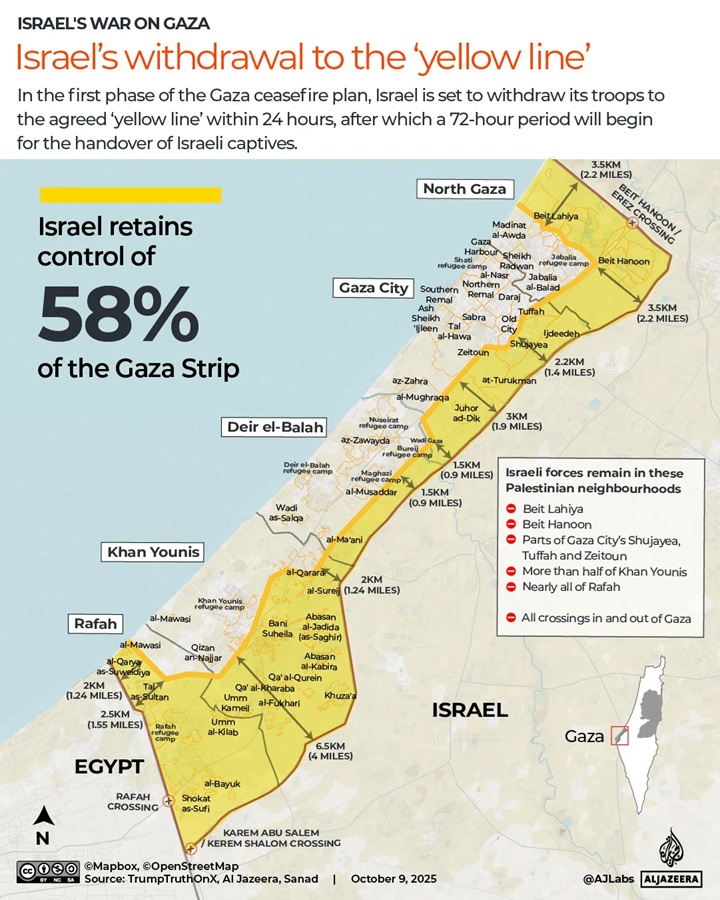
Is Israel planning to reoccupy the Gaza Strip? This is what’s happening behind the ‘yellow line
an occupying power must preserve the demographic composition of the territory it controls. In this specific case, international law prohibits the removal of a population (the Palestinians) and the transfer of another population (Israeli settlers) onto occupied land.
Michelle Burgis-Kasthala, Professor of International Law, La Trobe University, 4 June 26, https://theconversation.com/is-israel-planning-to-reoccupy-the-gaza-strip-this-is-whats-happening-behind-the-yellow-line-284086?utm_medium=email&utm_campaign=Latest%20from%20The%20Conversation%20for%20June%204%202026%20-%203792338838&utm_content=Latest%20from%20The%20Conversation%20for%20June%204%202026%20-%203792338838+CID_84a191247b774c7af7d936d593de2bdf&utm_source=campaign_monitor&utm_term=Is%20Israel%20planning%20to%20reoccupy%20the%20Gaza%20Strip%20This%20is%20whats%20happening%20behind%20the%20yellow%20line
In recent days, Israeli Prime Minister Benjamin Netanyahu has ordered the Israeli army to seize 70% of Gaza – a sizeable increase from the 60% it currently controls.
This follows an updated map sent to aid agencies in Gaza in late March featuring a new “orange line” demarcating the restricted area under military control – about 11% larger than the area agreed to with the “yellow line” in the October ceasefire with Hamas.
Israel’s defence minister has also confirmed in recent days the government’s intention to move large numbers of Palestinians out of Gaza “at the right time and in the right manner”.
All of this is happening in a charged political environment in Israel: the Knesset dissolved itself on May 20, creating the possibility of an early election in September.
Israel’s actions are in clear violation of the 20-point Gaza peace plan, which called for a staged withdrawal of Israeli troops and actively “encouraged” residents to stay. It reads:
No one will be forced to leave Gaza, and those who wish to leave will be free to do so and free to return. We will encourage people to stay and offer them the opportunity to build a better Gaza.
US Secretary of State Marco Rubio has acknowledged as much, telling a congressional hearing this week that the peace plan “doesn’t call for” expanded military control of the strip.
The 2.1 million Palestinians in Gaza are being squeezed into an ever-smaller pocket of the decimated, overcrowded territory. And it appears the international community is doing little to stop it.
Laws against conquering territory
International law permits militaries to occupy foreign territory in pursuit of war aims, but there are two key limitations here.
First, an occupying force cannot pursue a legal claim to the territory it holds. The UN Charter has clearly outlawed the right to conquest under Article 2(4). Breaches of this article are treated very seriously, as the world’s reaction to Russia’s invasion of Ukraine has shown. This can be considered a war crime – the crime of aggression.
For Israel, this means its control of Gaza cannot result in a claim to sovereignty over any part of the strip. The International Court of Justice (ICJ) underscored this in its 2024 advisory opinion on Israel’s actions in the occupied Palestinian territories.
Second, any occupying military power must comply with international humanitarian law and international human rights law in a conflict. This means ensuring the welfare of the population under its control.
This has been the case in Gaza since Israel captured it from Egypt in the Six-Day War in 1967, beginning a decades-long occupation of the strip.
In fact, Israel’s obligations as an occupying power continued even after it pulled out its troops and dismantled its settlements in 2005.
As part of these obligations, an occupying power must preserve the demographic composition of the territory it controls. In this specific case, international law prohibits the removal of a population (the Palestinians) and the transfer of another population (Israeli settlers) onto occupied land.
A flawed peace plan
Despite these clear legal principles, enforcement of Israel’s obligations will be at best difficult, slow and piecemeal.
In its 2024 advisory opinion, for instance, the ICJ ordered Israel to withdraw fully from the occupied Palestinian territories, saying its presence is in breach of two key legal principles – self-determination and the prohibition against conquest. The UN General Assembly endorsed the findings and set a deadline of September 14 2025 for the withdrawal. Israel ignored the deadline.
The general assembly can’t enforce an ICJ ruling, only the security council can. And this avenue is blocked due to the US veto power.
More worrying is that the clarity provided by international law – prohibiting conquest, genocide, settlements and forced displacement – is being blurred by the 20-point peace plan mediated by US President Donald Trump and the so-called Board of Peace overseeing the process.
Last November, the UN Security Council endorsed Trump’s plan to end the conflict, disarm Hamas and establish a new transitional government system under the auspices of the Board of Peace and an International Stabilisation Force to keep the peace.
But the ceasefire agreement was flawed from the start. The text, for instance, did not include any specifications about Israel’s presence in the strip, accountability for alleged crimes or demilitarisation of Palestinian groups.
Since the ceasefire, the entire process has predictably stalled. Israeli strikes have continued, killing more than 900 Palestinians. Aid delivery is far below the needs of a desperate population. And Hamas refuses to disarm without firm guarantees on future Palestinian self-determination.
Behind the ‘yellow line’
This stalemate suits Israel perfectly. Under the map of the ceasefire agreement, Israel was permitted to keep its troops in areas behind a “yellow line” encircling the majority of the population along the coast. This gave Israel military control of just over half of Gaza.
Then, in the area under its control, Israel began two activities that speak to its longer-term political aspirations.
First, it levelled entire neighbourhoods and hundreds of buildings, turning this part of Gaza into a wasteland devoid of inhabitants and any recognisable landmarks.
Second, on this blank canvas, it constructed an impressive array of military roads, outposts and barriers, including permanent earthen berms (walls).
This gives Israel the possibility of perpetual control of a territory devoid of Palestinians. If this status quo continues, it would amount to forced displacement and conquest.
Day by day, Palestinian Gaza is shrinking and a new Gaza is being forged through bulldozers and barriers. Netanyahu has indicated Israel may not stop at 70% depopulation and control. It may seek to preserve a large “buffer” zone in Gaza – as it is doing in Lebanon and Syria – or perhaps revive the project of Israeli settlement of the strip, which is in full swing across the West Bank.
All of this is happening in violation of international law and a “peace” plan that has no clear vision for a long-term solution for the Palestinian people.
First Minister pressed over Welsh Government support for Wylfa small modular reactors
Wrexham.com 3rd June 2026
Wales’ new First Minister has been urged to provide clarity on the Welsh Government’s position on proposed small modular reactors at Wylfa.
During his inaugural First Minister’s Questions, Rhun ap Iorwerth, was asked by interim Welsh Labour Leader Ken Skates to confirm whether the new Plaid Cymru-led administration supports plans for up to eight small modular reactors at the Anglesey site……………………………………………………………………
Mr ap Iorwerth said he had “always taken the approach of fighting for the economic benefits” that could come from any development at Wylfa and stressed that the site remained a reserved matter for the UK Government.
The First Minister stopped short of explicitly backing the construction of eight SMRs, but said the government would “work positively” on proposals because of the potential economic benefits for Anglesey and the wider region…………………………………………………………………………………………… https://wrexham.com/news/first-minister-pressed-over-welsh-government-support-for-wylfa-small-modular-reactors-293228.html
The World Has Rendered Its Verdict on American Power
June 2, 2026, https://scheerpost.com/2026/06/02/the-world-has-rendered-its-verdict-on-american-power/
The World Is Voting With Its Opinion — And Washington Won’t Like the Results
For decades, U.S. leaders spoke as if history had already been settled. The Soviet Union had fallen, American power was unmatched, and the world would eventually follow Washington’s political and economic model. But a remarkable new international survey suggests that era may be ending — and ending far faster than many in the West are willing to admit.
According to the 2026 Democracy Perception Index, which surveyed tens of thousands of people across 84 countries, a majority of respondents now view the United States as the greatest threat to global peace and stability. Even more striking, people in most surveyed nations say they view China more favorably than the United States.
These findings do not come from Beijing or Moscow. The survey was conducted by the Alliance of Democracies, a Western organization backed by European institutions, major corporations, and figures closely associated with NATO. Yet the results paint a picture of a rapidly changing world order in which America’s endless wars, military footprint, economic coercion, and support for controversial foreign interventions have severely damaged its global standing.
As Washington escalates confrontations abroad—from Iran and China to renewed military tensions across multiple regions—the rest of the world appears increasingly skeptical of U.S. claims to moral leadership. The survey also reveals a growing divide between how Western elites define democracy and how much of the world understands it. While American political discourse often emphasizes electoral procedures and individual rights, many respondents defined democracy more simply: a government that improves people’s lives, delivers economic security, and promotes social well-being.
Whether one agrees with these conclusions or not, the message is difficult to ignore. The unipolar moment that followed the Cold War is fading. The assumption that the United States would remain the unquestioned center of global power is being challenged not only by rival governments but by public opinion itself.
The real question may no longer be whether the world is changing, but whether Washington is capable of recognizing that change before its credibility erodes even further.
Ukraine’s military has a real Nazi problem
It also desecrates the memory of Nazism’s victims in Ukraine: 1.5 million Jews murdered in the Holocaust, along with millions of Slavs, prisoners of war, Roma, the mentally ill, forced laborers, and countless others consumed by the machinery of racial extermination and exploitation.
In their zeal to deconstruct Russian propaganda, Western elites have tried to hide the fact there are Third Reich extremists among Kyiv’s ranks.
Marta Havryshko, Jun 02, 2026, https://responsiblestatecraft.org/nazis-in-ukraine-military/?mc_cid=044f4b8379
When Vladimir Putin launched his invasion of Ukraine in February 2022, he claimed one of his goals was the country’s “denazification.” The Kremlin still uses this narrative as a cornerstone of its war propaganda.
Both Ukraine and the West reacted by dismissing the claim outright as a cynical abuse of Holocaust history. Politicians, media outlets, academics, and educational institutions rushed to prove that Putin’s argument was fraudulent.
But in their zeal to deconstruct Russian propaganda, Western elites created a propaganda myth of their own: there are no Nazis in Ukraine. Or, if there are, they are supposedly isolated cranks with no influence.
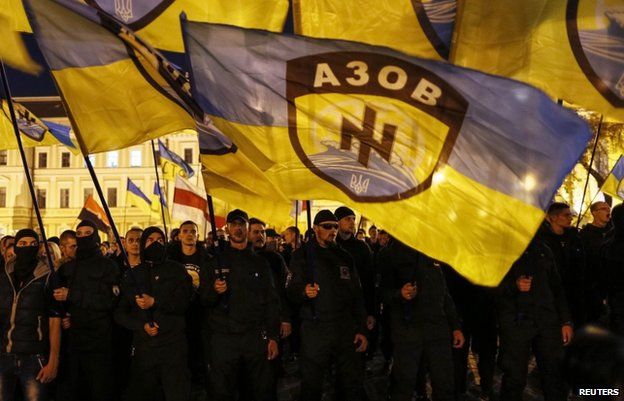
This fiction required the whitewashing of Azov, a unit founded in 2014 by the neo-Nazi group Patriot of Ukraine under the leadership of Andriy Biletsky. Azov became notorious for extremist ideology, Nazi symbolism, and allegations of war crimes in the Donbas. In 2018, the U.S. Congress banned the group from receiving American weapons, funding, or training.
After Russia’s full-scale invasion, that stigma vanished almost overnight. Kyiv repackaged Azov, separating the most radical elements into a new formation, the 3rd Assault Brigade. Western media rebranded and whitewashed it. The language of “de-radicalization” and “depoliticization” became mainstream. Questioning this narrative became taboo and labeled as “Russian propaganda.” The result is a culture of deliberate silence.
Neo-Nazi networks are deeply embedded in parts of Ukraine’s military structure. Their presence is visible in units such as Azov, the Third Assault Brigade, the Russian Volunteer Corps, Bratstvo, the German Volunteer Corps, Karpatska Sich, and others. Yet Ukraine’s Western backers continue to arm, fund, and train these units without meaningful scrutiny.
Even more striking is the normalization of Nazi imagery itself. Official Ukrainian military channels and mainstream media regularly publish images of soldiers wearing swastikas, Waffen-SS insignia, and patches linked to neo-Nazi groups like Combat 18 and Misanthropic Division. This is no longer treated as scandalous. It has been normalized.
Most disturbing of all, some Ukrainian military units have incorporated Nazi-linked symbols into their official insignia.
The far right and Ukraine’s military culture
Many Ukrainian military units using Nazi symbols are led by men shaped by Azov and the far-right milieu around it. For example, there is Oleksandr Kravtsov, the well-known commander of the Vedmedi unit, which was part of Azov. His body is covered in Nazi imagery, including 1488 — references to the white supremacist “14 Words” slogan coined by David Lane and the coded salute “Heil Hitler.” (“H” is the eighth letter of the alphabet.) Tattooed across his chest is the SS motto: “My Honor Is Loyalty.” He turned that slogan into the motto of his own unit. SS lightning bolts became part of its official insignia.
After returning from Russian captivity, Kravtsov’s unit was folded into the Ukrainian military structure — first the 36th Brigade, then the 39th Coastal Defense Brigade. Nothing changed. The SS symbols and motto remained.
Many commanders in the 3rd Assault Brigade also came out of Azov and still hold extremist views. Unsurprisingly, they openly embrace the corresponding symbolism. A subunit of the 3rd Assault Brigade adopted a modified insignia (replacing two grenades with three) of the Dirlewanger SS Brigade — one of the most notorious Nazi formations of World War II. In 2025, the brigade unveiled the emblem publicly at a memorial in Kyiv. No scandal followed.
Azov also normalized the Black Sun — a symbol born in Himmler’s SS cult headquarters at Wewelsburg Castle and now used globally by neo-Nazis and white supremacist terrorists, including the 2019 Christchurch mosque terrorist in New Zealand and the recent San Diego Islamic Center shooter.

After 2022, Black Sun spread rapidly through Ukrainian military culture. It appeared in Azov-linked units such as the Decepticons platoon and the Mortars unit of the 3rd Assault Brigade. Soon it migrated further — into units with no openly ideological profile at all — and became part of the insignia of the 156th Zvaha Battalion and the Unmanned Systems Battalion of the 110th Brigade named after Marko Bezruchko.
Azov mainstreamed another Nazi-linked emblem as well: the Wolfsangel, used historically by several Waffen-SS divisions. Rebranded as the “Idea of the Nation,” it became one of the most recognizable symbols in Ukraine’s wartime military culture. The symbol now appears far beyond Azov itself. The newly created Nachtigall Battalion — named after the Nachtigall Battalion formed by German military intelligence in 1941 — uses the same Wolfsangel-inspired insignia.
Some units within Ukraine’s military do not hide their fascination with the Third Reich’s military culture. For example, the 422nd Regiment of Unmanned Systems calls itself “Luftwaffe” and uses virtually the same eagle as Hitler’s air force. Its commander, Mykola Kolesnyk, regularly appears with the symbol on patches and clothing. The unit even sells merchandise featuring the Nazi eagle — hoodies, mugs, T-shirts, caps, keychains — to fundraise for the war.
Not just aesthetic choices
The use of Nazi symbols in Ukraine’s military is not merely an aesthetic problem. It is moral, political, historical, and legal.
First, it represents a form of historical revisionism and the gradual rehabilitation of Nazism itself — a direct challenge to the postwar Western consensus built on the memory of World War II. Within far-right military culture, Nazi imagery is often wrapped in romanticized narratives about anti-Soviet struggle. In practice this trivializes the sacrifice of the seven million Ukrainians who fought Nazism in the ranks of the Red Army alongside the Western allies (in contrast to the 300,000 who served in various military formations and police units on the side of Nazi Germany).
Second, the problem is not only historical. It is profoundly contemporary. Every SS rune, Black Sun, or Wolfsangel displayed by Ukrainian soldiers hands the Kremlin another propaganda victory. Russian propagandists do not need to invent imaginary Nazis in Kyiv. They simply point to the insignia openly worn by some of Ukraine’s most celebrated military units — including formations branded as “elite,” such as the 3rd Assault Brigade.
Third, there is also a glaring legal contradiction. By openly using Nazi imagery, these units violate Ukraine’s own 2015 memory laws, which explicitly ban the propaganda of the Nazi regime and the public use of its symbols. The law describes such acts as an insult to the memory of millions of victims and have penalties of up to five years in prison.
Yet no one is prosecuted.
Why?
Because the Zelensky government — and President Volodymyr Zelensky himself as commander-in-chief — have made a political bargain with the far right. Since 2022, far-right activists and networks have flooded into the security and defense sector. In conditions of total war and chronic manpower shortages, this alliance became politically convenient, perhaps even inevitable. Now it is becoming entrenched.
The state depends on radicalized military formations for manpower and battlefield effectiveness. The far right, in turn, receives legitimacy, weapons, influence, and institutional protection. What emerged from wartime necessity is evolving into mutual dependence.
Ukraine’s Western partners have made their own bargain. They, too, depend on Ukrainian manpower to weaken Russia. And so they tolerate extremists inside Ukraine’s armed forces as long as those extremists continue fighting. More than that, they remain largely silent about the ideology and symbols involved, because acknowledging them would mean admitting an uncomfortable truth — that the neo-Nazi problem in Ukraine is not simply a Kremlin invention.
Marta Havryshko is a U.S.-based author and researcher focused on Ukrainian nationalism, the far right, and the Russo-Ukrainian War. Havryshko holds a PhD in History from the Ivan Franko National University of Lviv in Ukraine.
Around the world, global solidarity and cooperation are remarkably popular

June 1, 2026, by Lawrence Wittner, https://peaceandhealthblog.com/2026/06/01/around-the-world-global-solidarity-and-cooperation-are-remarkably-popular/
One of the curious ironies of our time is that, although many politicians spout heated nationalist rhetoric, rail against foreign nations, and belittle international cooperation, this approach to international affairs is not at all what most people want.
The climate of aggressive nationalism is clear enough. In nations around the globe, demagogues (usually of a rightwing variety) whip up xenophobia, preach superpatriotism, demand vast military buildups, and―if holding public office―often launch invasions of other nations under the banner of restoring an allegedly glorious national past.
But what is often overlooked is that, across the planet, most people favor a very different way of engaging with the world.
In late 2025, Focaldata, a major research company commissioned by the Rockefeller Foundation, conducted a landmark survey of 36,405 people across 34 countries. The resulting report, Demanding Results: Global Views on International Cooperation, revealed that 55 percent of people worldwide “believe their country should cooperate on global challenges even if it means compromising on national interests.” If international cooperation was proven to solve global problems, public support jumped to 75 percent. Respondents viewed such cooperation as essential for food and water security, jobs, health, trade, and climate.
Other opinion surveys confirm the widespread nature of internationalist sentiment. An Ipsos poll conducted between February and April 2026 found a substantial increase over the previous year in support for global solidarity and cooperation, with net disagreement shifting to net agreement. Among the more than 22,000 adults in the 31 countries surveyed, nearly two-thirds now supported the claim that, “for certain problems, like environmental pollution, international bodies should have the right to enforce solutions.” Some 42 percent (a plurality) agreed with the idea that “my taxes should go towards solving global problems.” And nearly four out of ten respondents (a plurality) endorsed the statement: “I consider myself more a world citizen than a citizen of the country I live in.”
Another measure of the worldwide support for international cooperation is provided by polling on public attitudes toward international organizations. The Rockefeller Foundation-Focaldata study reported that public trust was strong for the United Nations (58 percent) and the World Health Organization (60 percent), although weaker for international financial institutions. The global popularity of the United Nations was also attested to by a Pew Research Center survey that appeared in September 2025. Covering 31,938 adults in 25 countries, it found that a median of 61 percent of adults had a favorable view of the world organization, while only 32 percent had an unfavorable one.
Even proposals for new, avant garde global institutions have attracted more public support than opposition. Commissioned by Democracy Without Borders, Nira Data conducted a global survey in September 2025 of public attitudes toward the election of a citizen-elected world parliament to handle global issues. The survey, released in January 2026, drew upon 117,000 people in 101 countries that held 90 percent of the world’s population. The finding was that 40 percent of respondents approved of the world parliament idea, while only 27 percent opposed it.
But what about the United States? Surely in this flag-waving nation, engulfed in the rabid “America First” rhetoric of the Trump administration and its MAGA acolytes, we might expect that the ideals of global solidarity and cooperation would be supported by no more than a small minority.
But that’s not the case at all.
One of the most striking findings of the Rockefeller Foundation-Focaldata survey is that 61 percent of U.S. respondents believed that the United States should cooperate on global challenges even it meant compromising on some national interests.
When it came to the United Nations, the Pew Research Center report revealed that 57 percent of Americans held a positive view of the world organization, as compared to 41 percent with a negative one. Moreover, it found that positive views of the United Nations had increased by 5 percent over the preceding year.
A study by the Chicago Council on Global Affairs, issued in September 2025, reported an even more favorable public attitude toward the United Nations. Two-thirds of the Americans surveyed, it noted, said that the United States should be more willing to make decisions within the framework of the United Nations, even if this meant that the country would sometimes have to go along with a policy that was not its first choice.
Admittedly, opinion surveys found that the level of support for international cooperation varied significantly from country to country. Thus, for example, the backing for international cooperation when that meant compromising on some national interests was greater in India (81 percent) and South Korea (73 percent), the countries highest on the scale, than in Argentina (41 percent) and Japan (34 percent), the countries at the bottom of the scale.
Furthermore, there was often a political dimension to worldwide public attitudes toward foreign affairs. According to the Pew Research Center, “people who place themselves on the left of the ideological spectrum are more likely than those on the right to have a positive view of the UN.”
This political division was particularly wide in the United States, where, as the Pew report maintained, “81% of liberals―versus 34% of conservatives―have a favorable opinion” of the United Nations. When it came to the issue of support for cooperation with other nations, the surveys by Rockefeller-Focaldata and the Chicago Council on Global Affairs both found substantial differences between the attitudes of Democrats (quite positive) and Republicans (far more negative).
Even so, in most countries, including the United States, support for international solidarity and cooperation is very substantial, and growing. Consequently, political activists and politicians shouldn’t be reluctant to speak out for them. Indeed, given the popularity of this internationalist approach to global affairs, it might even prove a winning political issue.
Lawrence S. Wittner (https://www.lawrenceswittner.com/ ) is Professor of History Emeritus at SUNY/Albany and the author of Confronting the Bomb (Stanford University Press).
The UK Is Getting Even Crazier In Defense Of Israel
Caitlin Johnstone, Jun 01, 2026
The UK is getting crazier and crazier in its defense of Israel. Now they’re canceling the visas of mainstream normie political pundits for criticizing the state of Israel, and investigating people for antisemitic hate crimes when they denounce Zionists who aren’t even Jewish.
American progressive commentator Cenk Uygur and his nephew Hasan Piker have both been denied visas by the British government, saying they were blocked from entering the country because of their criticism of Israel.
“I’ve been banned from the UK,” Uygur said in a tweet. “I tried to get on a flight to London to attend SXSW London and give a speech at Oxford. I’ve been banned for criticizing Israel. Are we free anymore? This is oppression of Western citizens by our own governments on behalf of a different country!”
“the uk has revoked my visa as well. all at the behest of israel,” said Piker in a repost of his uncle’s statement. “the west is betraying ‘liberal values’ for a genocidal fascist foreign government. soon we will all become israel.”
This is a significant escalation from London, because neither Uygur nor Piker could reasonably be described as politically extremist in any way. They’re essentially just Bernie Sanders progressives who sit well within the mainstream US political Overton window; I personally don’t follow either of them because they are both far too aligned with the Democratic Party for my liking.
This move is yet another win for the UK’s extremely powerful Israel lobby. Two weeks ago the Jewish Chronicle ran a story titled “Social media influencer Hasan Piker must be banned from Britain, say Jewish leaders,” subtitled “Online agitator who said Zionists were like ‘Nazis’ and refused to condemn Hamas poses a threat to British Jews.”
So the pressure campaign appears to have paid off.
This comes as the Metropolitan Police launch an investigation into an incident in which actress Helen Mirren was called an “evil Zionist bitch” by a man on the street last year, saying in a statement that “We are aware of a video circulating online, showing a man and a woman being subjected to antisemitic verbal abuse in Tower Hill.”
To be clear, Helen Mirren is not Jewish, so she can’t have been a victim of “antisemitic verbal abuse”. She is however an avowed supporter of the state of Israel, which makes her a Zionist.
In a 2023 interview with Israeli media, Mirren stirred up controversy with her remarks on her 1967 visit to the Zionist ethnostate, saying, “I saw Arabs being thrown out of their houses in Jerusalem. But it was just the extraordinary magical energy of a country just beginning to put its roots in the ground. It was an amazing time to be here.”
Russia adds four Ukrainian groups and ‘Glory to Ukraine’ salute to register of ‘fascist organizations and associated symbols’
January 19, 2024, Source: Meduza, https://meduza.io/en/news/2024/01/18/russia-adds-four-ukrainian-groups-and-glory-to-ukraine-salute-to-register-of-fascist-organizations-and-associated-symbols
Russia’s Justice Ministry has included four Ukrainian organizations in its register of groups that either collaborated with those condemned by the Nuremberg trials or deny the crimes of Nazism, reports Russian state news agency TASS.
The list appeared on the ministry’s website on January 18 and is officially called the “List of organizations specified in parts three and four of Article 6 of the federal law ‘On Commemorating the Victory of the Soviet People in the Great Patriotic War of 1941-1945’, as well as the attributes and symbols of these organizations.”
The list includes the following four organizations:
- The Ukrainian People’s Revolutionary Army (UNRA),
- The Ukrainian Insurgent Army (UPA),
- The Ukrainian People’s Self-Defense (UNSO),
- The Organization of Ukrainian Nationalists (OUN).
The list also features the organizations’ slogans, including the salute “Glory to Ukraine” [Slava Ukraini] and the response “Glory to the Heroes” [Heroiam Slava].
The document also includes the organizations’ symbols, such as the Trident of Prince Volodymyr, depicted on Ukraine’s coat of arms.
Labour’s plans to limit judicial reviews of nuclear projects would ‘harm democracy’

This is disturbingly similar to what Donald Trump did earlier this year when he gutted the US Nuclear Regulatory Commission and the US Environmental Protection Agency
This is disturbingly similar to what Donald Trump did earlier this year when he gutted the US Nuclear Regulatory Commission and the US Environmental Protection Agency
by Tom Pashby, 28 May 2026, https://www.thecanary.co/uk/analysis/2026/05/28/labour-judicial-review-limit-harm-democracy/
Plans by the Labour Government to make it harder for communities to oppose infrastructure projects near them, such as nuclear power plants, have been criticised by campaigners and a legal expert.
The Treasury announced on 20 May that the chancellor was expected to:
use Parliament to drive through power plants and infrastructure [by giving] Parliament the authority to approve critical energy schemes and better protect infrastructure projects from judicial review.
People with concerns about major infrastructure projects – sometimes called nationally significant infrastructure projects (NSIPs), which includes nuclear power plants – are able to request that judges review applications for building NSIPs.
Those judicial reviews have the potential to bring an end to projects if judges agree with arguments put forward by people pursuing the reviews.
Now, the government is proposing to give government proposals for some major projects “the same status as laws passed by elected decision makers,” according to one legal expert who spoke to the Canary, which appears to “have significant constitutional implications”.
Treasury announcement
The announcement by the Treasury said:
The headline proposal would allow Parliament to designate and approve the most important clean energy projects as being of ‘Critical National Importance’ (CNI), reducing the exposure from judicial review on all but human rights grounds.
This would help deliver the government’s commitment to accelerate new infrastructure development and drive growth, including much-needed projects like new power stations and offshore wind farms.
For all other nationally significant infrastructure – including transport and water projects – the government will introduce a fixed legal challenge window, at the end of which the planning consent could be updated to address any legitimate issues.
Plans to give government proposals same status as acts of parliament ‘concerning’ – lawyer
Leigh Day is a law firm “established to combat injustice,” its website says.
The firm has represented a variety of clients who have used judicial reviews to oppose major infrastructure projects.
Leigh Day partner Ricardo Gama told the Canary:
The government appears to be introducing further limits on communities’ ability to have large infrastructure decisions examined by the courts.
The suggestion that projects with political backing should enjoy the same status as acts of parliament, but be spared parliamentary scrutiny, is concerning.
It appears to have significant constitutional implications because it would alter the relationship between government, parliament and judges, giving government proposals the same status as laws passed by elected decision makers.
Limiting legal challenges ‘harms democracy’ and reduces ‘oversight of the nuclear industry’
Campaign for Nuclear Disarmament general secretary Sophie Bolt told the Canary:
The government is cynically using the crisis in the Middle East to justify limiting transparency and the ability of local communities and campaign groups to appeal the railroading of costly and dirty nuclear power projects.
Limiting the appeals process harms democracy and much needed oversight of the nuclear industry – but will not change the fact that nuclear power relies on the dirty process of extracting and processing uranium for fuel and leaves a legacy of toxic waste that lasts for generations.
The government’s plan to cut regulations and limit the scope for judicial reviews essentially means this industry will be more dangerous.
This is disturbingly similar to what Donald Trump did earlier this year when he gutted the US Nuclear Regulatory Commission and the US Environmental Protection Agency.
Anti-Sizewell C campaigners rail against notion that Sizewell C was delayed by judicial reviews
A Stop Sizewell C spokesperson told the Canary:
If Sizewell C was genuinely delayed by judicial reviews, why did the National Audit Office (NAO), who would have spoken at length to the Department for Energy Security and Net Zero (DESNZ) and Sizewell C during their enquiries, not say so?
In October 2025, the Treasury put out a statement saying:
Backing the builders not the blockers, the government will work with the judiciary to cut the amount of time it takes for a judicial review to move through the court system for nationally critical infrastructure projects by around half a year, like Sizewell C.
Then, in May 2026, a National Audit Office (NAO) report about Sizewell C poured cold water on the idea that judicial reviews had delayed the project. It explained reasons for delays and judicial reviews were notably absent from the list.
The NAO report said:
DESNZ started formal negotiations with EDF for SZC in 2021 and initially expected to reach ’financial close’, when contracts take effect, by the end of March 2023. DESNZ and HM Treasury made a final investment decision (FID) in July 2025, having agreed terms with EDF and other private investors.
This was 4.5 years after negotiations started and at least 28 months later than originally planned. The project was delayed several times, including by the 2024 General Election; responding to feedback from potential investors and the government’s internal assurance processes; and longer than expected negotiations with EDF and the other investors. Financial close was reached in November 2025.
The Stop Sizewell C spokesperson continued:
If the Chancellor is going to persist in using such offensive language, she really ought to get her facts right.
A Together Against Sizewell C spokesperson echoed Stop Sizewell C’s perspective, telling the Canary:
Labour still doesn’t get it – we cannot build a sustainable future by weakening our environmental safeguards and legal rights.
Reeves’ draconian policy change is built on the false premise promoted by the nuclear industry and right wing lobbyists that Sizewell C was excessively delayed by judicial review challenges – this does not stand up to scrutiny.
Reeves’ plans will need to be scrutinised by MPs and peers, and the challenge to the Prime Minister’s leadership means it is unclear whether the government will be able to command the confidence of the House of Commons to enable the Chancellor’s plans to make it harder to judicially review some major projects.
Beyond the Yellow Line: Israel Seizes More of Gaza
30 May 2026 Dr Binoy Kampmark AIM Extra , https://theaimn.net/beyond-the-yellow-line-israel-seizes-more-of-gaza/
While eyes remain peeled on Israel’s increasingly violent and expanding campaign in Lebanon, the government of Prime Minister Benjamin Netanyahu is proving ever more predatory with the Gaza Strip. With aggrandizing impunity, more territory is being acquired for familiar reasons: Hamas is on the run and needs to be crushed further (the organisation is proving oddly resilient and contradictory to Israeli objectives here); Palestinian autonomy, even in so small an area, would be a future threat to Israel unless heavily invigilated and policed; and, well, there is that old desire to ethnically cleanse the territory.
Speaking at a conference on May 28, Netanyahu outlined his plans for further seizures. “We are currently squeezing Hamas; we now control 60% of the territory of the Strip – you know this. We were at 50, we moved to 60. My directive is to move to…” (at that point, an enthusiastic voice in the crowd interjected with “100”). Not wishing to state it that obviously, the PM went on to say that the IDF would “go step by step. First of all, 70. Let’s start with that. We’re pressing them from all sides, we’ll deal with the remnants.”
On May 27, the Israeli Defence Minister Israel Katz wrote on his X account that the government “had pledged to eliminate everyone who led the October 7 massacre, and that is what we will do.” The agenda of elimination in the Strip is an ongoing one, with the announced killing of Hamas military commander Mohammed Odeh giving him a certain febrile glee. “The fourth commander of the Hamas terror organization’s military wing in Gaza was eliminated yesterday and sent to meet his partners in the depths of hell.” Hamas would never be allowed to “rule Gaza civilly or militarily.” Katz also went further, suggesting with heavy ominousness that the “plan for voluntary emigration from Gaza” would commence “at the proper time and in the proper manner.”
The fact that the IDF had already gobbled territory to a hefty proportion of 60% had already breached the terms of the US-brokered ceasefire effective since October 10, 2025. (The original amount was 53%). In mid-May, Netanyahu, in remarks made at the Mercaz Harav Yeshiva on the occasion of the 59th anniversary of the unification of Jerusalem, boasted that Israel had, over the previous two years “shown the world what immense power is inherent in our people, in our state, in our army, in our heritage.” The most important thing was breaking “the barrier of fear. We brought our hostages home, to the very last one. Today we control 60 percent.”
This should have come as a surprise, but such breaches and violations are common fare in Israel’s singular interpretation of ceasefires. (Pro-Israeli critics naturally overlook this, seeing, instead, a stubborn Hamas outfit that refuses to disarm while committing its own complement of ceasefire violations.) The ceasefire in Gaza has proven a particularly bloody one for Palestinians, with 738 having perished since October last year. In January, Haaretz was already reporting on the westward shift of the Yellow Line. According to Laurie Bouvier, a geographic information systems expert working for Doctors Without Borders (MSF), the 60 percent figure was an accurate one, and likely to change given ongoing expansion with new yellow blocks identified in such neighbourhoods as Zeitoun in Gaza City.
The Hamas-run government media office described Netanyahu’s promise of seizing 70% of territory as “a dangerous escalation.” According to its head, Ismail al-Thawabta, “any attempt to impose a new reality of occupation in Gaza is null and illegitimate.”
From New York, the United Nations spokesperson Stéphane Dujarric also added the views of the organisation by stating that, “One hundred percent of Gaza should be for the Palestinian people.” The UN had “been calling on Israel to pull back from its occupation from the so-called yellow line, and that will continue to be our position.”
The United Nations children’s agency UNICEF has expressed concerns the seizure of even more land by the Israeli forces will only worsen a situation where food, water and hygiene are lacking. UNICEF spokesman Salim Oweis, speaking from Gaza to reporters based in Geneva, noted how people had “been crammed into around 40 percent of the space.” They were “sheltering among broken buildings, rubble and mounting solid waste.” The suffering this was causing children was becoming “widely apparent: children with respiratory infections, acute watery diarrhea, and more than half of all households reporting skin diseases.”
This will only be seen by the Israeli authorities as another sob story, the needless tearjerker disseminated by international organisations and commentators who should know better. There is an agenda to implement with necessary ruthlessness, Palestinian officials to kill along with their families, political emasculation of Palestinian will to achieve and, ultimately, a Strip cleansed of Arabs in favour of the Jewish state’s bright and noble citizens.
The Big Tech Campaign to Fast Track Nuke Energy. Senators Whitehouse and Booker Take the Lead in Congress

The ADVANCE Act passed 393-13 in the House and 88-2 in the Senate, where only Markey and Sanders voted no. Both senators have repeatedly opposed building new nuclear plants due to environmental concerns, such as the ongoing absence of a long-term solution to the nation’s roughly 100,000 tons of radioactive waste.
Last May, Trump signed a series of executive orders to radically overhaul nuclear safety oversight, citing the ADVANCE Act as justification for transforming the NRC’s culture, directing the agency to approve new reactors within 18 months, and consult with DOGE on a wholesale revision of its regulations. Since then, the administration has secretly overhauled nuclear safety rules, proposed to severely cut inspections and radiation standards, exempted new reactors from environmental reviews, and triggered an exodus of 400 NRC employees since Trump took office.
CAPITOL HILL CITIZEN, By Peter Castagno, May 2026
In September 2014, a Google engineer hosted a private meeting at the company’s Mountain View headquarters. The guests included a nuclear energy investor and staff from the influential think tank Third Way.
By the end of the meeting, the small group agreed to “fund a bit of work in DC” to influence policy in favor of nuclear energy. That meeting set in motion a decade-long campaign that would transform Democratic politics on nuclear energy – and leave the regulatory framework governing atomic safety vulnerable to the most aggressive deregulatory assault in its history.
The Trump administration leveraged the bipartisan legislative architecture that Democrats helped build to gut the Nuclear Regulatory Commission. Ross Koningstein – Google’s former director emeritus of nuclear energy R&D – hosted the Mountain View gathering.

As he explained in a 2024 article, the tech giant quietly supported Third Way, the Clean Air Task Force, ClearPath and other advocacy groups for over a decade, helping lawmakers craft pro-nuclear legislation.
Third Way and its partners have since taken credit for “creating an entirely new policy discussion around advanced nuclear energy,” helping draft overhauls to nuclear policy, and working “behind the scenes” to shift Democrats’ nuclear views.
In the early years of this effort, public support for nuclear energy was at a low point. In 2016, Gallup found a majority of Americans opposed nuclear energy for the first time since it began surveying the issue in 1994. Only 34% of Democrats favored it. By 2025, that figure climbed to 46% of Democrats – a 12-point change in less than a decade.
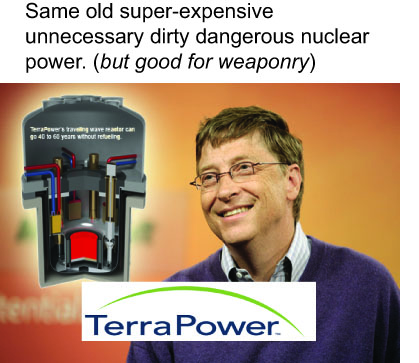
That shift coincided with a surge of Silicon Valley nuclear investment and advocacy. Jeff Navin, a lobbyist for Bill Gates’ small modular reactor (SMR) startup TerraPower, described 2015 as a pivotal year for nuclear support in Capitol Hill.
At that year’s Paris Climate Talks, Gates announced the Breakthrough Energy Coalition with co-investors including Jeff Bezos, Mark Zuckerberg and Richard Branson. Peter Thiel, another top Silicon Valley nuclear investor, published – The New Atomic Age We Need – a New York Times op-ed within the same 48-hour window.
Breakthrough Energy has since grown into a $4 billion juggernaut spanning venture capital, philanthropy, and policy advocacy, with $7.9 million in direct lobbying expenditures since 2020
Breakthrough Energy has since grown into a $4 billion juggernaut spanning venture capital, philanthropy, and policy advocacy, with $7.9 million in direct lobbying expenditures since 2020.
Taken together, Breakthrough entities and the Gates Foundation have given more than $60 million to the key pro-nuclear groups that reshaped policy, the majority since 2022.
This includes more than $20 million to Third Way, over $10 million to the Clean Air Task Force, more than $9 million to ClearPath, and nearly $4 million to the Breakthrough Institute. Laying the groundwork for Trump Third Way’s ties to Gates go beyond receiving more than $20 million from his philanthropies.
The think tank’s most recent 2024 tax filing lists lobby firm Boundary Stone Partners as its top contractor for ‘strategic consulting.’ Third Way has paid Boundary Stone Partners over $2 million since 2020, while the lobby group was simultaneously providing “comprehensive legislative and strategic support” to Gates’ nuclear firm TerraPower, which paid it $900,000 in lobby fees over the same period.
Former Office of Nuclear Energy chief of staff Andrew Richards, who led Boundary Stone Partners’ nuclear practice until March 2025, is now TerraPower’s vice president of government affairs. Jeff Navin, Boundary Stone Partner’s co-founder, has long helped coordinate Third Way’s nuclear strategy. He was Terra- Power’s director of external affairs until last April.
Navin and Josh Freed, Third Way’s energy and climate chief, approached the White House together to set up its first nuclear energy summit. Before joining Third Way, Freed was a senior advisor to the Gates Foundation. Gates has also exerted influence directly. He told Bloomberg in 2022 he had quietly lobbied elected officials including former Senator Joe Manchin, for years on federal climate policy, helping secure tax incentives for nuclear energy in the Inflation Reduction Act.
The billionaire told the former West Virginia senator that coal workers could potentially transition into building reactors for TerraPower – he donated $2,900 to Manchin in May 2022, months before the IRA’s passage. Manchin would later lead the ouster of Democrat NRC commissioner Jeff Baran, who frequently raised concerns about safety issues of experimental SMRs like TerraPower.
TerraPower’s client case study for Boundary Stone Partners notes it successfully lobbied for bills, including the 2024 ADVANCE Act. The law required the Nuclear Regulatory Commission to rewrite the language of its mission statement to promote the benefits of civilian nuclear expansion.
Victor Gilinsky, who served as a NRC commissioner in the Ford, Carter, and Reagan administrations, observed the bill showed “every sign of having been written by interested parties and with little vetting” in a 2024 Bulletin of the Atomic Scientists op-ed. He warned the subtle shift in language could open the door to severe consequences, eroding the agency’s independence to expedite licensing of experimental reactors.
“TerraPower foresees selling hundreds of such reactors for domestic use and export,” Gilinsky wrote in a 2024 analysis. “The new law is largely directed at clearing the way for the rapid licensing of such reactors by the Nuclear Regulatory Commission (NRC). It does so in part by providing additional resources but also—more ominously – by weakening the agency’s safety reviews and inspections in the name of efficiency.”
The ADVANCE Act passed 393-13 in the House and 88-2 in the Senate, where only Markey and Sanders voted no. Both senators have repeatedly opposed building new nuclear plants due to environmental concerns, such as the ongoing absence of a long-term solution to the nation’s roughly 100,000 tons of radioactive waste.
During his floor speech, Markey expressed skepticism that rapidly licensing experimental nuclear reactors was justified on climate grounds.
“It’s shortsighted to me to make such a herculean effort to promote new nuclear technologies when we’re yet to solve the longstanding problems resulting from our existing nuclear fleet,” Markey said in his floor speech. “To this day, the Navajo Nation is dealing with the legacy of uranium contamination, including more than 500 abandoned uranium mines and homes and water sources polluted with elevated levels of radiation.”
TerraPower-linked groups were heavily involved in pushing the ADVANCE Act through Congress and celebrated its passage, including the nation’s most prominent industry group, the Nuclear Energy Institute (NEI).
The NEI and Silicon Valley have deepened their relationship in recent years. Amazon is now a dues-paying member. The CEO of X-Energy, backed by $500 million in Amazon investment, sits on NEI’s board, alongside TerraPower CEO Chris Levesque and Oklo CEO Jacob DeWitte – whose firm was seeded by Sam Altman and Peter Thiel. NEI’s PAC has donated hundreds of thousands to the ADVANCE Act’s Democratic champions, including a total of $66,000 to Congressman Frank Pallone (D-New Jersey), Ranking Member of the House Energy and Commerce Committee.
Pallone and several other pro-nuclear Democrats have since expressed alarm at the Trump administration’s interpretation of the law they enacted.
Last May, Trump signed a series of executive orders to radically overhaul nuclear safety oversight, citing the ADVANCE Act as justification for transforming the NRC’s culture, directing the agency to approve new reactors within 18 months, and consult with DOGE on a wholesale revision of its regulations. Since then, the administration has secretly overhauled nuclear safety rules, proposed to severely cut inspections and radiation standards, exempted new reactors from environmental reviews, and triggered an exodus of 400 NRC employees since Trump took office.
Senators Sheldon Whitehouse (D-Rhode Island) and Cory Booker (D-New Jersey) each gave closing remarks at a nuclear energy summit in 2016. Third Way partnered with the Nuclear Energy Institute to host the Washington event.
In Third Way’s telling, the summit marked the beginning of a years-long partnership with lawmakers who “continued to champion” the nuclear legislation it helped write.
In 2020, the Democratic Party included support for nuclear energy in its national platform for the first time since 1972. That year, the Democratic National Committee paid digital consulting firm Bully Pulpit International more than $30 million.
From 2017 to 2023, the Nuclear Energy Institute paid the same firm $6.4 million to frame nuclear energy as “critical in the effort to lower carbon emissions” – achieving, according to Bully Pulpit, “consistent positive attitudinal shifts among DC elites and policy influencers.” Bully Pulpit was co-founded by former Obama campaign staffers.
The firm that helped elect Democrats was simultaneously taking millions from the nuclear industry to shift Democratic opinion. Booker became the face of Democrats’ nuclear shift during his 2020 presidential campaign.
He disparaged anti-nuclear Democrats, which a Gallup poll found made up 57% of the party at the time, during a 2019 interview: “As much as we say the Republicans when it comes to climate change must listen to science, our party has the same obligation to listen to scientists.” Booker’s framing is inaccurate.
On whether decarbonization requires nuclear energy, expert opinion is deeply divided – with leading experts including Daniel Kammen, Arjun Makhijani, and MV Ramana contending that 100% renewable pathways are viable. Yet this framing – disputed by leading experts – nonetheless became the political rationale for a sweeping legislative agenda Booker and Whitehouse would champion for the next half decade.
The senators were primary architects of the legislative architecture that the Trump administration has since used for maximal deregulation. This includes The ADVANCE Act and the 2019 Nuclear Energy Innovation and Modernization Act (NEIMA), which directed the NRC to create a new licensing pathway – called “Part 53” – for experimental reactors.
The Trump administration issued its Part 53 rule in March. It allows applicants to propose reactors in densely populated areas and use fast-tracked reviews from the Department of Defense and Department of Energy as evidence for their safety, and lacks specific guidance for carrying out systematic risk analyses.
As ranking member of the Senate Environment and Public Works committee, Whitehouse has repeatedly lambasted Trump administration officials for gutting nuclear safety standards.
“Despite so much commonsense, bipartisan work, the Trump Administration has upended progress in a flamingly partisan manner,” he said at a June 2025 hearing. “In this case, by DOGE-ing the NRC in flagrant disregard for nuclear safety, for the bipartisan direction of Congress, and for the law.”
The purpose of the hearing was to consider two Trump nominees, Energy Secretary Chris Wright and EPA assistant administrator Usha-Maria Turner. Whitehouse voted against the EPA nominee due to her history of working in the fossil fuel industry: “The corruption and conflicts of interest are happening in plain view. For that reason, I will not support this nomination.”
However, Whitehouse voted in favor of Wright, a former fossil fuel executive and board member of nuclear startup Oklo. He withdrew his support a month later in protest of the Department of Energy’s “hostile takeover” of the Nuclear Regulatory Commission.
Yet despite his vocal concerns about the dangers of ongoing nuclear safety rollbacks, Whitehouse introduced the Nuclear Refuel Act in June 2025 and voted to move it to the Senate floor in October 2025.
The bill would streamline new nuclear reprocessing facilities, which separate fissile material from spent fuel. The extracted materials are then repurposed for use as reactor fuel, but also can be used to create nuclear weapons.
As over a dozen experts explained in a July 2025 letter to elected officials, security and economic concerns have long prevented the U.S. from using plutonium for civilian nuclear fuel. Experts warned a U.S. reprocessing program could lead to the spread of nuclear weapons technology – President Carter banned the practice after India used it to make a bomb in 1974 – and weaken U.S. diplomats’ ability to discourage other countries from similarly extracting weapons-grade plutonium from their fuel.

The Senate EPW press release for the Nuclear Refuel Act featured a celebratory statement from Oklo CEO Jacob DeWitte, who plans to use plutonium-bearing fuel for his breeder reactor. This comes as the Trump administration aims to transfer 20 tons of plutonium to private industry while cutting security standards meant to safeguard against the theft of nuclear materials.
Unlike Whitehouse, Markey has opposed this effort: “Oklo Inc., a nuclear technology start-up, is the main company interested in receiving plutonium from [the Department of Energy],” Markey wrote in a September letter to Trump. “Oklo is also, with DOE’s support, building a $1.7 billion reprocessing plant in Tennessee. Your Secretary of Energy, Chris Wright, served on the Board of Directors of Oklo until his confirmation in February.
In 2024, Wright and his wife also made contributions to your presidential campaign totaling about $458,000 and made contributions to the Republican National Committee of about $330,400.” Whitehouse and, to a greater extent, Booker have also received generous support from nuclear interests, including at least $200,000 from Breakthrough Energy and Google leaders.

Holtec executives donated $68,100 to Booker’s committees in 2022, while the New Jersey firm was under a state criminal investigation for defrauding tax credit applications and under national scrutiny for safety violations.
That year, Booker helped pass IRA nuclear subsidies Holtec is now using to restart its Palisades plant. Whitehouse’s most recent financial disclosure reports holdings of at least $1.8 million in tech giants invested in nuclear expansion, including Google, Amazon, and Meta.
Whitehouse invests up to $5 million in Nvidia, which recently announced a partnership with Oklo for the AI-assisted fabrication of plutonium- bearing fuel.
Whitehouse and Booker also received donations from nuclear policy lobbyists, including $13,500 from KDCR Partners, a firm paid more than $4 million since 2020 by TerraPower, Breakthrough Energy, NEI, and Google to lobby on nuclear policy.

KDCR’s founder was President Clinton’s deputy assistant for legislative affairs, one of multiple veterans of Democratic administrations recruited by the nuclear industry to shepherd its agenda through the party. In the mid-2010s, the Nuclear Energy Institute retained consulting firm Kivvit – co-founded by David Axelrod, Obama’s chief campaign strategist and senior advisor – to help create the “Nuclear Matters” front group. As the Climate Investigations Center noted in 2016, Kivvit explained how its Nuclear Matters operation implemented a robust public affairs campaign, which includes advertising, sponsored event series, media relations, grasstops recruitment, third-party advocacy, and targeted social media engagement.”
Nuclear Matters is funded almost entirely by NEI, but it describes itself as “a national coalition of grassroots advocates, working to inform the public and policymakers about the clear benefits of nuclear energy.”
But the shell group transfers nearly its entire revenue to PR firm APCO Worldwide, which has received more than $20 million from Nuclear Matters and its parent nonprofit since 2016.
Nuclear Matters’ first president Neal Cohen was the former president of APCO, where he helped develop Phillip Morris’ PR playbook. Carol Browner – former Clinton EPA administrator and Obama climate advisor – is Nuclear Matters’ most prominent third-party recruit. The group has paid her at least $850,000 since 2018.
Browner recanted her formerly anti-nuclear views in a 2014 Forbes op-ed and announced she was joining a bipartisan “public education campaign” alongside former Senators Evan Bayh and Judd Gregg, to whom Nuclear Matters has paid $345,000.
Bayh received $1.95 million from a lobby group that represents nuclear clients during the same period. Nuclear Matters lists Third Way among its partners and the groups frequently collaborate.
Browner represented Nuclear Matters at the 2016 Third Way summit where Whitehouse and Booker gave closing remarks – in a room that also included Google’s Koningstein, Oklo’s future CEO, and TerraPower – a meeting Third Way later described as the milestone that launched a decade of successful bipartisan nuclear advocacy.
When Gates announced Breakthrough Energy at the 2015 Paris Climate Talks, he asserted the impending climate catastrophe brought an urgent need for “high risk” investments in clean energy technologies.
The billionaire struck a different tone a decade later in a public memo ahead of the 2025 UN Climate Change Conference.

Gates explained he still views climate change as serious, but not a “doomsday” level threat, and advocated a different approach to address it – one that benefits his nuclear company.
The first priority in Gates’ memo is to lower the “Green Premium” – “the cost difference between the clean and dirty way of doing things.”
Gates wrote he was hopeful he could bring down TerraPower’s 50% Green Premium, before advocating government leaders promote policies to fund and support Green Premium technologies.
Amazon-backed SMR startup X-Energy similarly noted its reliance on government support in its recent IPO filing. Yet while its technology is supported by more than a billion in public funding, X-Energy has an “Intellectual Property-driven business model” to generate “attractive free cash flow” from the use of its complex proprietary technology.
Gates built his fortune on Microsoft’s copyright and patent protections. He co-founded TerraPower with former Microsoft CTO Nathan Myhrvold in 2008, as the first spinout company of Myhrvold’s patent portfolio firm Intellectual Ventures. TerraPower – which has so far received more than $2.5 billion in government funding – already has more than 500 patents.
The Trump administration greenlit TerraPower to begin construction of its first plant in March, nine months ahead of schedule. The company credited Trump’s May executive orders and bipartisan reforms that Third Way and its partners helped create for the rapid timeline.
Experts, such as Union of Concerned Scientists director of nuclear power safety Edwin Lyman, excoriated TerraPower’s rapid approval, noting the NRC itself conceded the reactor had unresolved safety issues in its reviews.
Former Ambassador Joe Hockey says he is nervous about AUKUS – and wants Australia’s Prime Minister Albanese to cold-call Trump

Matthew Knott, May 26, 2026, https://www.smh.com.au/politics/federal/joe-hockey-says-he-is-nervous-about-aukus-and-wants-albanese-to-cold-call-trump-20260526-p600oa.html
Former ambassador to Washington Joe Hockey says he is worried about the possibility the United States will not supply nuclear-powered submarines to Australia as promised under the AUKUS pact because of faltering American production rates.
The former treasurer also urged Prime Minister Anthony Albanese to make a habit of cold-calling US President Donald Trump to improve their relationship and influence his thinking on world affairs.
Under the AUKUS plan, the US is supposed to sell three Virginia-class attack submarines to Australia, starting from 2032.
But senior US navy officials have warned that US shipyards must start pumping out significantly more submarines to have any spare for Australia, raising the possibility of the defence force being left with a capability gap.
Hockey, who served as Australia’s top diplomat in Washington from 2016 to 2020, told the National Press Club that “for the first time, I’m a little nervous about the Virginias, and that’s after a few conversations on the Hill”.
The US, he said, “just has not got the production of the Virginia up to speed”.
Hockey’s remarks are notable because he runs a Washington-based lobbying firm that represents major defence companies and he has been a passionate champion of AUKUS.
His remarks differ from Richard Marles, Defence Minister, who told this masthead last week that there was “zero possibility” of AUKUS coming unstuck.

Asked whether there was a growing danger the sale of Virginia-class submarines could be delayed or pared back, Hockey said: “I think the risk has increased, and we need again to have a full court press on the ground in Washington.”
He said that “we’ve got to prove that we’re ready for the Virginias here and display the physical capability to house them and to support their presence here, not to give the Americans any hook not to deliver”.
Hockey did not join calls for Australia to develop a “plan B” for AUKUS, saying it was not like Albanese could “go down to Bunnings” and buy a fleet of alternative submarines.
Hockey singled out US Deputy Secretary of War Steve Feinberg as a powerful official that Australia needed to court to ensure Trump’s vow that AUKUS is going “full steam ahead” is followed through.
“We’ve got to get political buy-in, more political buy-in, so that the people who are actually making the decisions on US procurement are keeping us at the top of the list,” he said.
Urging Australia to seek closer integration into US supply chains, Hockey said there was “no problem at a military-to-military or bureaucracy-to-bureaucracy level, it’s just a question of whether they can actually build the Virginias fast enough”.
Trump’s former acting chief of staff, Mick Mulvaney, agreed with Hockey that it would be “really, really, really difficult” for the US to build enough submarines to provide any to Australia, despite strong bipartisan support for AUKUS in Washington.
“There’s going to be technical difficulties building that many submarines,” he said.
The US Navy’s chief of naval operations, Daryl Caudle, said last year: “The only way we’ll ever make good on the AUKUS agreement is that we get to the 2.3 [build rate], and it is my goal to make good on that.”
The US is currently producing around 1.2 boats a year, meaning production will need to increase significantly to hit the 2.3 build rate figure.
Hockey said US allies were “really missing” a figure like the former Japanese prime minister Shinzo Abe, who developed a close relationship with Trump in his first term and spoke to him regularly on the phone.
Hockey lamented that among world leaders, “there’s no one that picks up the phone, they’re afraid almost to pick up the phone to the president [and] have a conversation.
“I mean, he answers phone calls from random journalists around the world, and it’s not hard to get his cell number, and he answers it,” he said.
“I’d encourage the prime minister to ring him occasionally. I mean, what have you got to lose? Australian prime ministers have been confidants of US presidents more than people realise, and I think the president of the United States is missing that back channel of advice.”
It has become something of a running joke among American journalists about how easy it is to obtain Trump’s phone number and call him for stories.
Albanese last year said he had Trump’s phone number after he remarked during an election debate that he’s “not sure that he has a mobile phone” and that texting a fellow world leader is “not the way it works”.
The Israeli Knesset just voted to dissolve itself, but this won’t end the Gaza genocide
Even if Netanyahu and his right-wing allies are ousted from government, Israel’s genocide in Gaza, ethnic cleansing in the West Bank, and the wars against Lebanon and Iran enjoy broad support across the Israeli political spectrum.
By Qassam Muaddi May 27, 2026 , https://mondoweiss.net/2026/05/the-israeli-knesset-just-voted-to-dissolve-itself-but-any-new-government-will-still-pursue-genocide/
Israel might change its government sooner than expected after the Israeli Knesset voted to dissolve itself last week. The bill presented to the parliamentary body on May 20, which passed with a majority of 110 votes in favor and no opposing votes, could lead to early elections in September rather than November of this year. The vote was held in the absence of Israeli Prime Minister Benjamin Netanyahu and is set to be reconsidered at three more readings before moving toward implementation.
If passed, the current Knesset will expire, along with the government coalition based on its composition and the current cabinet led by Netanyahu. According to Israeli polls, Netanyahu’s main coalition allies, namely hardline ministers Bezalel Smotrich and Itamar Ben-Gvir, have low chances of winning. Although the two main opposition leaders, Naftali Bennet and Yair Lapid, joined forces in a new party, polls indicate that Netanyahu’s Likud Party would still win 56 out of 120 seats in the Knesset. This leaves the Likud as the main political force in Israel, but without enough of a majority to form a government on its own, forcing it to form a coalition with other opposition parties.
The vote came amid renewed controversy surrounding the military drafting of Orthodox Haredi Israelis to military service. Haredi leaders presented the bill after Netanyahu’s government failed to advance another bill to exempt the Haredis from military service.
The vote to dissolve the Knesset also comes amid mounting criticism of Netanyahu over his performance during the war on Iran and the security failure on October 7, 2023.
But what would the dissolution of the Israeli Knesset mean for Palestinians? And what does it say about the current state of Israeli politics that Netanyahu didn’t oppose the vote to move to early elections?
The short answer is: not much, or at least not for the better. Israel’s opposition parties have backed the war on Gaza, the expansion of settlements, and the war on Lebanon just as fervently as Netanyahu’s coalition, and in some cases have criticized him for not going far enough. Any new government will most likely pursue the same fundamental policies toward Palestinians. In the near term, the more pressing concern is what the current government will do to shore up its electoral standing before it leaves office. Precedent suggests that means further escalation.
Right-wing politics
Israeli politics has been dominated by its most extreme right-wing forces for almost two decades, but a common feature shared by past Israeli governments has been the lack of a simple majority by any single political party. In order to make up a majority government, any political party with the most seats in Knesset would have to form a coalition with other, smaller parties, such as Ben-Gvir’s Jewish Power and Smotrich’s Religious Zionism. When such government coalitions have formed, the junior partners have gained outsized leverage by the very fact that their presence keeps the government together.
Yet in all these varying combinations of successive government coalitions, Israeli policy toward Palestinians has remained largely the same.
Settlement expansion and the push toward the annexation of the West Bank have been constants of every right-wing Israeli government, as has the policy of siege and periodic military offensives in Gaza. So, too, has the escalating crackdown on Palestinian prisoners and the deterioration of their conditions, and the repeated attempts to alter the status quo in East Jerusalem and at Al-Aqsa Mosque — arenas where Israeli politicians have long competed to score political points, especially in the run-up to elections.
Netanyahu’s standing was already in decline before October 7, battered by his corruption trials, his attempts to overhaul the Israeli judiciary, and the Haredi draft crisis. After October 7, he faced additional backlash over his handling of the hostage negotiations and, later, over what many Israelis saw as unsatisfactory results from the war on Iran, particularly the way the U.S.-Iran ceasefire was reached without Israeli consultation. But none of this criticism has targeted the substance of Netanyahu’s policies, as reflected in the polls’ projections for the next election.
Both Lapid and Bennett, and most other opposition figures, have supported the war on Gaza, including actions that human rights organizations have characterized as genocidal. The Israeli opposition has also backed the war on Lebanon and the expansion of settlements in the West Bank — and has, in fact, harshly criticized Netanyahu for allowing the U.S. to constraint Israeli action in Lebanon and Iran. Whatever government emerges from the next election will almost certainly be composed of parties that support those same policies, with or without Netanyahu and his closest allies.
That said, the next Israeli government could bring a certain “cooling down” of some of the more aggressive policies, according to Esmat Mansour, a Palestinian journalist and specialist in Israeli politics.
Mansour believes that current regional conditions, including the reorganiztion of the region’s geopolitics in the wake of Iran’s newfound strategic advantage in its war with the U.S., might have an impact on the policy of the coming Israeli government. “The current situation pushes towards reorganizing the region geopolitically, and the ongoing wars that Israel is engaged in have taken a toll on Israel’s political credibility and on its social and military capacity, too,” Mansour told Mondoweiss. “This makes it necessary for any new government to focus on rebuilding and repairing damage.”
“This could lead the next government to ease its stranglehold on the Palestinian Authority financially, or to stop blocking its return to Gaza, and to allow aid and reconstruction materials into the Strip,” Mansour said. “It might also mean a reduction in settler violence against Palestinians in the West Bank, and some improvements to daily life, like allowing West Bank workers back into the Israeli labor market.”
More of the same
But Mansour clarified that “this doesn’t mean that the next Israeli government could be one of peace, but the internal conditions and Israel’s loss of international credibility impose new priorities.” He also stressed that “such a shift depends on Palestinians’ ability to restore their unity, and on the position Arab countries take once the war on Iran is over.”
The trajectory of any incoming Israeli government will also be shaped by the international community’s position and the pressure from global solidarity movements. In the meantime, the current Netanyahu government will do everything it can to improve its electoral prospects before the elections. At the earliest, that could be next September. Most alarmingly, this effort could include resuming the genocide in Gaza, as Israeli officials have repeatedly threatened to do in recent weeks.
As for Lebanon, the Netanyahu government already discussed expanding its war on Lebanon in a security cabinet meeting on Tuesday. Meanwhile, Smotrich has made moves to accelerate the annexation of the West Bank through a rash of legislation and unilateral orders, including the passing of the so-called “Antiquities Bill” that would transfer authority over West Bank antiquities from the Palestinian Authority to Israel, the unprecedented approval of settlement construction, and orders to erase numerous Bedouin communities around Jerusalem. All these drastic measures would stand to shore up popularity for Netanyahu’s right-wing coalition, especially among the younger right-wing voting bloc of Israeli settlers.
In other words, the way in which the Netanyahu government seeks to strengthen its electoral prospects will invariably come at the expense of Palestinians — and the other peoples of the region.
Inside the broligarchy: Is big tech running US politics? Carole Cadwalladr talks to DW News.
From Donald Trump’s alliances with tech billionaires to the collapse of US media outlets, investigative journalist Carole Cadwalladr says we are accelerating towards a “techno‑fascist future.” Chapters 00:00 Where does government end and Big Tech begin? 00:26 DW speaks with Carole Cadwalladr, Investigative Journalist 02:40 What is the broligarchy? 06:45 Missing accountability for big tech 08:00 Tech entrepreneurs are taking over legacy media companies 10:30 A techno-Fascist future? 12:30 What can People do? 14:00 How Aware is the public about data collection risks? 15:20 AI and intellectual property 18:00 A positive way forward?
The False Promise of Nuclear Power: Why Scotland Doesn’t Need New Nuclear.
Just before the 40th anniversary of the Chornobyl nuclear disaster,
Scottish CND host 3 excellent guests to discuss the risks, false promises
and opportunity costs of nuclear power.
Linda Pentz-Gunter is an
environmental campaigner who founded the advocacy organisation “Beyond
Nuclear” in 2007. In her advocacy, she is primarily concerned with the
environmental costs of nuclear power and its false promise as a climate
change solution. She also campaigns for nuclear weapons abolition. As the
international specialist at Beyond Nuclear, she edits and curates the
Beyond Nuclear International website, an essential resource for information
and updates on world nuclear news.
Pete Roche is also an environmental
campaigner who has recently revived the civic campaign SCRAM (Scottish
Campaign to Resist the Atomic Menace), which organised extensive
demonstrations against the construction of Torness nuclear plant in the
1980s. Pete is also a professional energy consultant and proprietor of the
website No2NuclearPower, another key resource for information and updates
on nuclear power in the UK.
Dylan Morgan is spokesperson for the People
Against Wylfa B campaign, and is strongly involved in the
recently-relaunched Welsh Anti-Nuclear Alliance, also originally launched
in the 1980s and is composed of several important civic organisations in
Wales including CND Cymru.
Scottish CND 28th May 2026 –
https://www.youtube.com/watch?v=lfLQs9LRo50
1 This Month
15 October. Joint Appeal for Nuclear Abolition Day -presentation to the UN on October 15 will be live on UNWebTV
Endorse the Nuclear Abolition Day Appeal
23-25 October – on Zoom – World BEYOND War’s annual global conference

To see nuclear-related stories in greater depth and intensity – go to https://nuclearinformation.wordpress.com
-
Archives
- October 2026 (139)
- September 2026 (339)
- August 2026 (330)
- July 2026 (355)
- June 2026 (287)
- May 2026 (306)
- April 2026 (356)
- March 2026 (251)
- February 2026 (267)
- January 2026 (308)
- December 2025 (358)
- November 2025 (359)
-
Categories
- 1
- 1 NUCLEAR ISSUES
- business and costs
- climate change
- culture and arts
- ENERGY
- environment
- health
- history
- indigenous issues
- Legal
- marketing of nuclear
- media
- opposition to nuclear
- PERSONAL STORIES
- politics
- politics international
- Religion and ethics
- safety
- secrets,lies and civil liberties
- spinbuster
- technology
- Uranium
- wastes
- weapons and war
- Women
- 2 WORLD
- ACTION
- AFRICA
- Atrocities
- AUSTRALIA
- Christina's notes
- Christina's themes
- culture and arts
- Events
- Fuk 2022
- Fuk 2023
- Fukushima 2017
- Fukushima 2018
- fukushima 2019
- Fukushima 2020
- Fukushima 2021
- general
- global warming
- Humour (God we need it)
- Nuclear
- RARE EARTHS
- Reference
- resources – print
- Resources -audiovicual
- Weekly Newsletter
- World
- World Nuclear
- YouTube
-
RSS
Entries RSS
Comments RSS

