UN chief demands halt to “nuclear saber-rattling” at Ukrainian nuke plant
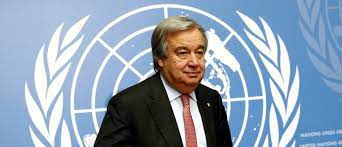
UN Secretary-General has demanded a halt to nuclear saber-rattling, saying the world is at a maximum moment of danger and all countries with nuclear weapons must make a commitment to no first-use
AP | United Nations August 23, 2022
UN Secretary-General Antonio Guterres has demanded a halt to nuclear saber-rattling, saying the world is at a maximum moment of danger and all countries with nuclear weapons must make a commitment to no first-use.
The UN chief on Monday told the Security Council that the commitment to dialogue and reason that led to the recent deal restarting grain and fertiliser shipments from Ukraine and Russia must be applied to the critical situation at Europe’s largest nuclear power plant at Zaporizhzhia in southeastern Ukraine, where continued shelling and fighting in the area has raised fears of a nuclear catastrophe.
Saying humanity’s future is in our hands today, Guterres urged all countries to recommit to a world free of nuclear weapons and to spare no effort to come to the negotiating table to ease tensions and end the nuclear arms race, once and for all.
The secretary-general spoke at a council meeting organised by China, which holds the presidency this month, on promoting common security through dialogue and cooperation.
Across the world, Guterres said, collective security is being tested as never before, pointing to geopolitical divides, conflicts, military coups, invasions, lengthy wars and differences between the world’s great powers, including at this council.
He also cited challenges that were unimaginable to our predecessors — cyberwarfare, terrorism, and lethal autonomous weapons.
And the nuclear risk has climbed to its highest point in decades, Guterres warned.
The council meeting took place during the pandemic-delayed conference to review the 50-year-old Nuclear Nonproliferation Treaty, which is considered the cornerstone of international disarmament efforts……………………………………………………… more https://www.business-standard.com/article/international/un-chief-demands-halt-to-nuclear-saber-rattling-at-ukrainian-nuke-plant-122082300082_1.html
Finnish energy company to take Russia’s nuclear giant to court
Fennovoima, a Finnish energy company, announced it would launch several
arbitrations and other proceedings against various Rosatom entities on
Saturday, following the collapse of a nuclear power plant project in
Finland.
Fennovoima purchased the nuclear power plant from RAOS Project, a
subsidiary of the Russian Rosatom Group, in 2013. The estimated €7
billion Hanhikivi 1 project in northwestern Finland was set to be finished
by 2029. After delays in delivering technical and safety documents to
Finnish authorities, Fennovoima terminated the project at the start of May.
Russia’s invasion of Ukraine also made continuing impossible. Rosatom
denied any technical issues, claimed the work was proceeding as planned and
blamed the Finnish side for politicising the project. A bitter divorce made
compensation claims from both sides inevitable. Fennovoima is seeking
compensation amounting to €2 billion for: “damages arising out of the
delays and inability to deliver the project and related issues.”
Euractiv 22nd Aug 2022, https://www.euractiv.com/section/energy-environment/news/finnish-energy-company-to-take-russias-nuclear-giant-to-court/
d Aug 2022
The US Navy is looking at scrapping the ‘Big E,’ the first nuclear-powered aircraft carrier, at a private shipyard
Jake Epstein , Insider 22 Aug 22,
- The US Navy is thinking about how best to scrap its first nuclear-powered aircraft carrier, USS Enterprise.
- It is looking at sending it to a private shipyard given existing maintenance demands and challenges, a new report shows.
- Washington state’s Puget Sound Naval Shipyard has historically handled disposing of nuclear-powered naval assets.
……………………………………….Washington state’s Puget Sound Naval Shipyard and Intermediate Maintenance Facility (PSNS & IMF) has historically managed the disposal of nuclear-powered ships, but a Naval Sea Systems Command spokesperson previously told Insider that other work could delay the process for years.
The Bremerton shipyard might not be able to even start work on scrapping the ex-Enterprise until sometime between 2030 and 2040, according to The Kitsap Sun, which first reported the plans.
…………………………… “The workforce of the public shipyards of the Navy has been under tremendous pressure to execute their primary mission of maintaining the operational fleet,” the report said, explaining that letting a private shipyard handle the scrapping work would keep the Navy yard “focused on high-priority fleet maintenance work and submarine inactivations.”…………………. https://www.businessinsider.com/us-navy-considers-scrapping-first-nuclear-powered-carrier-private-shipyard-2022-8
John Queripel: The blind side to western wars and western war crimes
https://johnmenadue.com/john-queripel-the-blind-side-to-western-wars-and-western-war-crimes/, Pearls and Irritations, By P&I Guest Writers, Aug 22, 2022
The calls mount for the Russian leader to be dragged before a War Crimes Tribunal, while everyone from international sporting bodies to businesses and banks is busy sanctioning Russia. Yet, the three world leaders responsible for the illegal Iraq war of 2003 have still not been held to account
One of the ideas, central to the thought of the Swiss founder of Analytical Psychology Carl Jung, was the shadow side. This is the side of our personalities we find unattractive which we, as a means of defence, then project onto others.
Jung asserted, it is not only individuals, but whole cultures, which are inclined to do this. Thus, in the years preceding the Nazi takeover, Jung spoke of Germany, caught in a cult of intellectualism, denying primal forces, projecting their unacknowledged dark side on to ‘the other.’ Of course, we know that the Nazis rose to power exploiting this projection of darkness to others, be they Communists, Romanies, Jews or homosexuals. The end of that journey was mass extermination in such places as Auschwitz.
It is very comforting but deeply dangerous to project our own darkness onto others, whom we then demonise. Currently most of those things, dark and evil in world politics, are being projected on to Russia, in particular their leader, Vladimir Putin, understood as ‘megalomaniac,’ ‘tyrant,’ and ‘war-monger.’ He may indeed be these things, but projection of these forces on to him saves us having to face up to their presence in ourselves.
The West, so vociferous in their criticism of Putin, cannot front up to the reality that it has been equally criminal in invading a sovereign state on concocted excuses. Unable to convince the U.N. Security Council, over what, even at the time, was a highly dubious claim that Iraq’s Saddam Hussein had ‘Weapons of Mass Destruction,’ which the then U.K. Prime Minister, Tony Blair claimed could reign down on British cities within 40 minutes, the ‘Coalition of the Willing’ chose to go to war.
The resultant destruction was horrendous. Though figures vary greatly, the highly reputable medical journal, ‘The Lancet’ estimated there were 654,965 excess deaths in Iraq from the time of the 2003 invasion to mid-2006 only. In that year, 2006 alone, the U.N. estimates the number of innocent civilians killed as totalling 34,452. The most potent image of the destruction wrought by that war is found in images of Fallujah after the allies had finished their bombing. Putin and the Russians still have a long way to go to reach that level of death and destruction.
The calls mount for the Russian leader to be dragged before a War Crimes Tribunal, while everyone from international sporting bodies to businesses and banks is busy sanctioning Russia. Yet, the three world leaders responsible for the illegal war of 2003 have still not been held to account. Nor were those bodies, now declaring their abhorrence to war, imposing sanctions against the Western nations guilty of the same aggressive invasion of a sovereign state. Having, trashed the ‘rules based international order,’ of which it so loves to speak, did the West not suspect that one like Putin would profit from such?
It is comforting to project one’s shadow side on another, but Jung asserted, it comes back to bite in a highly destructive way.
John Queripel is a Newcastle-based theologian, author, and social commentator
Zelensky ‘troubled’ as he questions inner circle’s loyalties – Erdogan
https://www.rt.com/news/561328-erdogan-zelensky-betrayal-cabinet-firings/ 22 Aug 22, The Ukrainian leader is surrounded by “people who deceive him a lot,” he allegedly told the Turkish president
Ukrainian President Vladimir Zelensky is concerned he is being taken advantage of by someone close to him, Turkish President Recep Tayyip Erdogan said, citing their conversation during the meeting in Lviv on Thursday.
Asked by a farmer about the Ukrainian leader’s “situation” on Monday during a visit to local vineyards, Erdogan claimed Zelensky was “very worried. There are people around him who deceive him a lot.”
Erdogan had not mentioned this confession during earlier public statements about the negotiations in western Ukraine, and he did not elaborate further on who Zelensky believed was deceiving him. The two men met with UN Secretary-General Antonio Guterres and signed an agreement on restoring Ukrainian infrastructure destroyed during the conflict.
The Ukrainian president has been firing high-ranking members of his administration at a fast clip since Russia’s military operation began in February. Special forces commander Grigory Galagan was removed last month.
First Deputy Secretary of the National Security and Defense Council Ruslan Demchenko was also let go last month, though for apparent health reasons, while Prosecutor General Irina Venediktova and Intelligence Bureau chief Ivan Bakanov were suspended and placed under investigation on suspicion of working with Russia.
Not content to merely behead the Ukrainian security service (SBU), Zelensky announced a personnel audit in the agency and fired several regional heads as well. He had apparently been planning to audit the SBU for some time, claiming that on February 24, the day Russia launched its offensive in the Donbass, some representatives of a law enforcement agency were “somewhere [else], instead of protecting their people.”
‘We should kill as many Russians as we can’ – Ukrainian envoy
Ukraine is doing its best to “kill as many Russians” as possible, the nation’s ambassador to Kazakhstan, Pyotr Vrublevsky, told local media outlets on Monday.
Speaking to a local blogger, Vrublevsky was asked to comment on the ongoing Ukraine conflict. “What can I say … We are trying to kill as many [Russians] as possible. The more Russians we kill now, the fewer our children will have to. That’s it,” he said………………………………………….. more https://www.rt.com/russia/561314-kill-russians-ukraine-ambassador/
—
Is Ukraine ready for another Chernobyl-like catastrophe? – Paul Dorfman
Russia and Ukraine have accused each other of shelling Zaporizhzhia. Now,
International atomic energy agency team will visit Zaporizhzhia. Still the
question arises, is Ukraine ready for another Chernobyl-like catastrophe?
Paul Dorfman at 3.57
WION 20th Aug 2022
Germany rules out delay to nuclear phaseout
Germany’s three remaining nuclear power stations are due to close at the end of the year
DW, 21 Aug 22, Germany won’t extend the lifespan of three remaining nuclear power stations due to the energy crisis, Economy Minister Robert Habeck said. He also warned against public panic over a potential winter gas shortage.
Germany’s three remaining nuclear power stations are due to close at the end of the year
German Economy Minister Robert Habeck said Sunday that allowing the country’s three last nuclear power stations to remain operational would be of little help in solving the country’s energy crisis.
Speaking during a discussion with citizens at the government’s open-door day in Berlin, Habeck said extending the lifespan of the plants — which are due to close at the end of the year — would only save about 2% of gas use.
t is the “wrong decision given how little we would save,” Habeck, who is also Vice Chancellor, added.
One nuclear plant could stay open
However, the minister said he was open to extending the lifespan of one nuclear plant in Bavaria, subject to the results of a stress test of the country’s power system.
The results of the test, to calculate how the country will cope if Russia cuts off natural gas supplies this winter, are due out in a few weeks.
Bavaria is a major manufacturing hub that depends on gas-fired power plants and has few coal-fired plants and low wind power production.
Germany has been phasing out nuclear energy since legislation was passed by former Chancellor Angela Merkel’s government in the wake of the 2011 Fukushima nuclear accident in Japan.
But voices calling for some nuclear plants to be kept in use have grown louder since energy prices soared over the past year and tensions with one of Germany’s main suppliers, Russia, intensified. The government has not signaled that it would reconsider the Merkel-era policy.
No need to panic over winter gas supplies
Habeck also told the public not to panic about the prospect of a gas shortage during the colder months, noting if households and industry cut their usage by 15-20% “then we have a really good chance of getting through the winter.”
Even if Russia were to cut supplies entirely, there would be no situation where zero gas would reach Germany, the minister said,……….
Over the longer term, Habeck said Germany must expand its investment in renewable energies and phase out fossil fuels, which he said were the cause of many political conflicts and abuse of power…………. https://www.dw.com/en/germany-rules-out-delay-to-nuclear-phaseout/a-62880769
Why Crimea matters. Russia shoots down Ukrainian drone over Crimea
Russia shoots down Ukrainian drone over Crimea | DW News 21 Aug 22, Russian officials in occupied Crimea say they’ve shot down a drone, headed for a key military base. It was targeting the headquarters of Russia’s Black Sea Fleet in Sevastopol. It was the second assault of its kind against the naval command in Crimea in less than a month – and it comes as Russia claims to have shot down drones elsewhere on the peninsula. Russia annexed Crimea in 2014. However, the international community still recognizes it as part of Ukraine.
Boris Johnson has secretly committed Britain to costly tax-payer funding for Sizewell nuclear plant
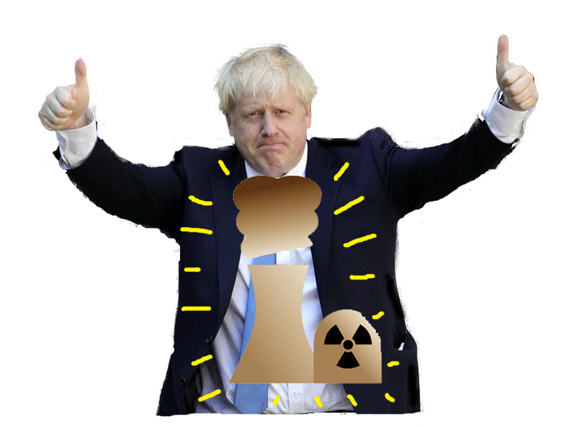
Boris Johnson commits to Sizewell on the quiet. The prime minister’s decision to part-fund a new nuclear plant will ‘tie Liz Truss’shands’ in tackling the cost of living. Boris Johnson has secretly given the green light for a £30 billion nuclear power station — sparking concerns within Liz Truss’s team that the cost will limit her ability to cut taxes and help the public with the cost of living.
The government is proposing to buy a 20 per cent stake in the plant, at a cost to the taxpayer of around £6 billion. But experts believe the plans are at risk of cost overruns and delays. One of Truss’s senior aides complained that Johnson’s decision to take a taxpayer-funded stake in the project would eat into the headroom available to her.
Johnson and Zahawi, lame ducks both, are understood to see the new power station as vital to Britain’s
future energy security and to want to make the announcement themselves to burnish their legacies in office. An ally of Zahawi stressed that the decision was made with Kwasi Kwarteng, the business and energy secretary, who is set to become Truss’s chancellor and that “no one is more enthusiastic than Kwasi”.
In an interview with The Mail on Sunday, Kwarteng told voters that “help is on the way” but also stressed the need to raise domestic energy production. “We need to crack on with more nuclear power stations,” Kwarteng said, “back British-made small modular reactors, invest in cheap renewable energy like offshore wind, and lift the ban on shale gas extraction in England where there is local consent.”
Times 21st Aug 2022
https://www.thetimes.co.uk/article/boris-johnson-commits-to-sizewell-on-the-quiet-xdv79rrpf
Nuclear power not a realistic option for the Philippines, given the seismic and other disaster risks

“Just last month, we saw the impacts of a 7.1 magnitude earthquake (which) should serve as a warning. Exposure to unpredictable seismic events should make us think twice about having a nuclear power plant,” he said.
Nuclear power, Mr. Arances said, is not a solution to the climate and energy crises, adding that it does not guarantee lower electricity prices.
Safety regulations seen as ‘first step’ in nuclear power shift, https://www.bworldonline.com/economy/2022/08/21/469667/safety-regulations-seen-as-first-step-in-nuclear-power-shift/ By Alyssa Nicole O. Tan, Reporter
THE Philippines is running late with its regulatory preparations for a safe nuclear power transition, the head of the Senate energy committee said.
Senator Rafael T. Tulfo said a law is needed to lay down standards for the incorporation of nuclear power companies, the construction of power plants, and the their operation.
“We have not even made a first step and we’re overdue,” he told BusinessWorld in a Viber message. Safety standards are needed because the Philippines sits astride an area of high tectonic activity, he said, adding that disaster response capacity must be developed should anything go wrong with such plants.
According to the World Bank, the Philippines is vulnerable to earthquakes, volcanic eruptions, tropical cyclones, and floods, making it one of the most disaster-prone countries in the world.
“In regulating the nuclear energy sector, there must be stringent standards as to the minimum standards for facilities, minimum qualifications for the persons or entities operating it, considerations as to where and how to acquire nuclear material, contingencies in case of emergency scenarios, proper standards on nuclear fuel disposal, limitations on foreign influence in the nuclear industry, and how the LGU where the plant is situated should gain a just and equitable share of the plant’s profits,” he said.
Center for Energy, Ecology, and Development Executive Director Gerry Arances told BusinessWorld in an e-mail that it would take years to create a policy framework thorough enough to take into account all safety, environmental, and electricity price risks, and years more to build nuclear facilities.
“Even small modular reactors would take about three to five years to construct. That means nuclear energy cannot provide immediate solutions to today’s energy crisis. In that span of time, renewable energy facilities could already have been deployed,” he said.
Nuclear power, Mr. Arances said, is not a solution to the climate and energy crises, adding that it does not guarantee lower electricity prices.
“The price of fuel for nuclear energy like plutonium and uranium, neither of which can be sourced domestically, will put Filipino consumers at the mercy of global market prices and vulnerable to shocks,” he said. “We are already seeing this today with fossil fuel volatilities triggered by the Ukraine-Russia war.”
“In developing nuclear power, the Philippines will devote time and energy to figuring out where we can source nuclear fuel, how we will manage nuclear waste, and how we can prevent the possibility of our country turning into the next Fukushima or Chernobyl,” he added.
Even then, he said there is no assurance of eliminating the risk of nuclear accidents, given the country’s geographic location and the intensifying climate crisis.
“Just last month, we saw the impacts of a 7.1 magnitude earthquake (which) should serve as a warning. Exposure to unpredictable seismic events should make us think twice about having a nuclear power plant,” he said.
There were 10 deaths from the magnitude 7 earthquake that struck the northern Philippines, with more 300,000 people from about 82,000 families affected, according to the National Disaster Risk Reduction and Management Council.
The earthquake also damaged more than 21,000 houses, 302 of which were destroyed, the agency said. Damage to infrastructure was about P414 million in the Ilocos region, Cagayan Valley and Cordillera Administrative Region.
Mr. Arances said time and effort should instead be channeled to effecting a 100% transition to genuinely sustainable and safe renewable energy.
“We have an abundant supply of renewable energy just waiting to be developed at an increasingly affordable cost — case in point are the winning bidders of the GEA Reserve prices, of whom the lowest bid is P3.4 per kilowatt hour from solar,” he said.
South Africa’s nuclear sector has failed its test: the Koeberg nuclear plant life extension
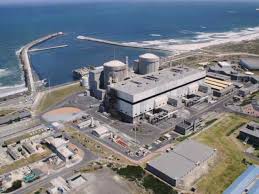
The Conversation, Hartmut Winkler, Professor of Physics, University of Johannesburg, August 21, 2022, South Africa’s only nuclear power plant, Koeberg, has frequently been in the news in 2022, all for the wrong reasons.
Its operating licence expires in 2024, and its continued operation thereafter depends on critical refurbishments and upgrades. Work on these finally began in January this year, but immediately ran into difficulties, forcing significant delays.
Koeberg is supplying only half of its power while work is in progress. This has amplified the crippling power shortages South Africa has been experiencing. This state of affairs, where the country effectively has 3% less generating power available than it would otherwise have, is expected to persist for the bulk of the next two years.
Other potential signs of turbulence linked to Koeberg include:
- the delayed application to the nuclear regulator to extend the plant’s licence
- the controversial dismissal of one of the regulator’s board members – an opponent of nuclear power – by the Minister of Mineral and Energy Resources
- resignations of senior Koeberg staff, though there is no evidence that these were due to friction.
All of this has led to speculation that the Koeberg life extension exercise is in difficulty. In turn it casts doubt on the capacity of South Africa’s nuclear sector, and is likely to put to bed the highly ambitious proposals still advocated within the sector to build new nuclear plants.
Koeberg’s history
Koeberg, Africa’s only operational nuclear power station, 27km north of the Cape Town city centre, is reaching the end of its scheduled life cycle.
The plant consists of two units of just over 900 megawatts each, and together these contribute roughly 5% of South Africa’s electricity.
Koeberg was built by the French company Framatome between 1978 and 1984. In line with international practice, the plant was granted a 40-year operational licence which will expire in July 2024. Licensing the plant for a further 20 years is possible, as long as it meets specific safety criteria. Typically these involve particular upgrades and the replacement of various components……………………
The upgrade is projected to cost R20 billion (US$1.2 billion). Most of this would go towards buying and installing six new steam generators.
The need to replace them was identified over 10 years ago, but protracted litigation over who would do the job held up the project. The operation was eventually scheduled for 2022.
Life extension project
The replacements and upgrades needed to secure a 20 year operating licence extension require each Koeberg unit to be shut down for a projected five months. Unit 2 was therefore switched off on 18 January 2022 and was supposed to reopen in June 2022. Unit 1 was then to go through the same process, starting in October.
Things then went wrong. The critical steam generator replacement was again postponed to 2023. The full reasons have not been officially disclosed. But there has been no denial of reports that the onsite storage facilities for the now radioactively contaminated old steam generators were not ready.
The delay in getting Koeberg Unit 2 up and running on schedule resulted in an additional 900 MW shortfall during South Africa’s most recent midwinter bout of severe power blackouts.
Unit 2 finally started operating again on 7 August, almost two months later than projected. Another outage of comparable duration is still required in 2023.
Significance for the nuclear sector
The mishandling of the Koeberg life extension project raises serious questions about the capacity of South Africa’s nuclear sector. This sector has advocated the building of a large fleet of new nuclear plants, implying that it could be done without major cost and time overruns. But the much smaller and far more straightforward Koeberg upgrade has not gone well…………… https://theconversation.com/south-africas-nuclear-sector-has-failed-its-test-the-koeberg-nuclear-plant-life-extension-188013
Sizewell C nuclear plant funding approved despite Tory split.

“Our next prime minister should call Sizewell C in. There are so many better ways to spend billions of pounds of taxpayers’ money than on a project that won’t light a single lightbulb for at least a decade.”
Boris Johnson gives financing go-ahead after warnings decision could limit incoming government,
https://www.theguardian.com/environment/2022/aug/21/sizewell-c-nuclear-plant-funding-approved-despite-tory-split. Rowena Mason Deputy political editor Mon 22 Aug 2022
Boris Johnson has approved funding for a new nuclear power station at Sizewell in Suffolk in the final weeks of his premiership, but some of Liz Truss’s senior allies are split over the decision.
The prime minister and the chancellor, Nadhim Zahawi, approved financing for the construction of two new reactors known as Sizewell C, enabling private funding of about £20-30bn to be raised.
However, Simon Clarke, another key Truss ally and a Treasury minister, warned in a letter leaked to the Sunday Times that the decision could limit Truss’s economic vision.
In the letter, he said the costs of Sizewell C were “sufficient to materially affect spending and fiscal choices for an incoming government, especially in the context of wider pressures on the public finances”.
In an article for the Mail on Sunday, Kwasi Kwarteng stressed the need to “crack on with more nuclear power stations” in order to increase Britain’s energy security.
He gave development consent for Sizewell C in July, but negotiations over the government’s investment decision had been ongoing.
A Whitehall source said Boris Johnson had taken the decision to press ahead with Sizewell several weeks ago. However, he dismissed the idea that the move would tie the hands of the next prime minister, following reports that the Truss campaign was worried that it was irreversible.
“In the next few weeks, we will announce a government investment decision on Sizewell C where the government formally commits to the project’s financing. It allows the project to raise private capital in the markets. But it’s only at the point of the final investment decision in early 2023 that the government would formalise any equity share.”
Johnson’s decision over Sizewell was challenged by a campaign to stop the nuclear reactor being built.
A spokesperson for the campaign, Stop Sizewell C, said: “Whatever way you look at it, this is a very dodgy decision. Has it been made by a lame duck PM who is not supposed to tie the hands of his successor, or was it in fact made before Sizewell C was granted planning consent, lending serious weight to our conviction that this was a prejudiced, political decision?
“Our next prime minister should call Sizewell C in. There are so many better ways to spend billions of pounds of taxpayers’ money than on a project that won’t light a single lightbulb for at least a decade.”
Truss has not stated a clear position on Sizewell C, but hinted last year at concerns about the involvement of China’s state-owned energy company, CGN, as part of a consortium providing funding for the preparatory work at the nuclear plant. She told the Telegraph at the time: “I think it’s very important that we don’t become strategically dependent and I think it’s important that we make sure that we’re working, particularly in areas of critical national infrastructure, with reliable partners.”
EDF, the French state energy firm, worked with CGN on the first phase of the project for a new nuclear power station to sit alongside Sizewell B, which is operational, and Sizewell A, which is being decommissioned. The UK government is keen to ease CGN out, however, over concerns about Chinese involvement in sensitive assets.
Johnson’s government has already put up £100m of funding this year to support the development of Sizewell C.
Pacific Alliance of Municipal Councils starts Petition against dumping nuclear wastewater in Pacific

https://www.mvariety.com/news/petition-against-dumping-nuclear-wastewater-in-pacific/article_5ad4f2f2-2103-11ed-ac27-6ffcaa93ec58.html Aug 22, 2022 , The Pacific Alliance of Municipal Councils or PAMC has started a petition on change.org (https://chng.it/JLT2btJQB6) to try and stop Japan from dumping its Fukushima nuclear wastewater into the Pacific Ocean.
PAMC President and Secretary of the Rota Municipal Council, Councilman Jim Atalig, expressed his strong opposition saying, “If it’s not good for their land, it is definitely not good for our ocean where most of us get our food on a daily basis!”
Chairman Joseph E. Santos, PAMC member and chairman of the Tinian Municipal Council, says, “It is an outrage for anyone to think that it’s okay to dump their toxic wastes in our ocean when we rely on it for food, health activities, and economic sustainability.”
The other members of PAMC are Saipan and Northern Islands Municipal Council member Ana Demapan-Castro, Chairwoman, Antonia Tudela, member Daniel Aquino; Rota Municipal Council Chairman Jonovan Lizama, Vice Chairman William Taitano; Tinian Municipal Council Vice Chairwoman Thomasa P. Mendiola, and Secretary Juanita M. Mendiola, who is also the vice president of PAMC.
PAMC is urging everyone to please circulate the petition through their Facebook page so we can prevail in preventing Japan and any other countries from using our ocean as their toxic waste dumping ground!
“Nothing good will come out of this, just as the toll of human suffering as a result of all nuclear energy fallouts were never worth their well-intended, but disastrously misguided, objectives!”
The £billions cost of the Sizewell nuclear plan becomes an issue in the fight for the role of Prime Minister
In a move that has caused great irritation in Team Truss, Nadhim Zahawi, Chancellor of the Exchequer, and Johnson are set to approve the financing of the Sizewell C nuclear plant in Suffolk. It received planning consent last month and the government signalled that it would buy a 20 per cent stake in the project, which is being run by the French company EDF and is expected to cost between £20 billion and £30 billion after inflation. The final investment decision has not been announced.
Simon Clarke, the chief secretary to the Treasury who backs Truss and who sources say will have a “top half of the cabinet job” under her leadership, wrote to Johnson and Zahawi warning that a signoff for Sizewell would compromise the new prime minister’s ability to cut taxes or spend more on the cost of living. In his letter, Clarke wrote:
“The quantum is sufficient to materially affect spending and fiscal choices for an incoming government, especially in the context of wider pressures on the public finances.” While the cost to government is likely
to be about £6 billion, rather than £30 billion, that will give Truss far less room for manoeuvre.
Times 20th Aug 2022
1 This Month



Read the Public Inquiry Report, the Commissioners’ report, Surrendering Australia: The AUKUS Deception is available to download for free at aukuspublicinquiry.com. Or just watch the replay of the National Press Club Luncheon.

19 November – Webinar – The Reality of Reprocessing
Time: 11:00 AM Pacific Time (US & Canada) / 2:00 PM Eastern / 7:00 PM UK / 8:00 PM CET
Register for the Zoom Event Here


Shut down the radiation-damaged Heysham nuclear reactors now
To see nuclear-related stories in greater depth and intensity – go to https://nuclearinformation.wordpress.com

Say No to NASA’s Reckless Nuclear Reactor on the Moon
Say No to NASA’s Reckless Nuclear Reactor on the Moon
-
Archives
- November 2026 (128)
- October 2026 (302)
- September 2026 (339)
- August 2026 (330)
- July 2026 (355)
- June 2026 (287)
- May 2026 (306)
- April 2026 (356)
- March 2026 (251)
- February 2026 (267)
- January 2026 (308)
- December 2025 (358)
-
Categories
- 1
- 1 NUCLEAR ISSUES
- business and costs
- climate change
- culture and arts
- ENERGY
- environment
- health
- history
- indigenous issues
- Legal
- marketing of nuclear
- media
- opposition to nuclear
- PERSONAL STORIES
- politics
- politics international
- Religion and ethics
- safety
- secrets,lies and civil liberties
- spinbuster
- technology
- Uranium
- wastes
- weapons and war
- Women
- 2 WORLD
- ACTION
- AFRICA
- Atrocities
- AUSTRALIA
- Christina's notes
- Christina's themes
- culture and arts
- Events
- Fuk 2022
- Fuk 2023
- Fukushima 2017
- Fukushima 2018
- fukushima 2019
- Fukushima 2020
- Fukushima 2021
- general
- global warming
- Humour (God we need it)
- Nuclear
- RARE EARTHS
- Reference
- resources – print
- Resources -audiovicual
- Weekly Newsletter
- World
- World Nuclear
- YouTube
-
RSS
Entries RSS
Comments RSS

