The Chinese non-threat
China relies on something called soft power discovered by the Chinese long before the rest of us.
https://johnmenadue.com/the-chinese-non-threat/ Pearls and Irritations, By Gregory Clark, Aug 23, 2022
Our resident non-Chinese speaking, non-Chinese informed but bitterly ‘China is expansionist-aggressive’ commentators in the mainstream media in Australia don’t have,or even want to have, any idea about China.
China is accused of aggressive expansionism, over Taiwan and towards its neighbours in general.
It is a curious charge. Almost all of the 178 nations recognising China have formally recognised that legally Taiwan belongs to China. In the recently proclaimed ‘rules based international order’ such formal recognition by so many nations would seem to have some weight.
Yet Beijing has still done little to claim this promised recognition. On the contrary, it still accepts Taiwan’s control over a number of islands in the South China Sea, including some occupied by the Taiwan military a stone’s throw from China’s coast.
Nor is it only Taiwan that enjoys Beijing’s territorial tolerance.
It has done nothing to follow up on China’s strong historical clam to much of Russia’s Far East. Even at the height of China’s strong tensions with Moscow in the 1960’s and ’70’s it barely moved despite constant invitations to do so by Western hawks.
(Taiwan too had criticised Beijing’s inaction).
Amazingly Beijing has done nothing to try to dominate, let alone attack, the vast areas of a Mongolia with rich resources needed by China and with only 3 million people to defend its 4,600 kilometre with China (Taiwan insists Mongolia is China’s territory and strongly criticises Beijing’s inaction.)
The same is true for Kazakstan, Kyrgyzstan, Tajikistan and Afghanistan, central Asian nations which border China and have at times harboured militants that have attacked into China.(Taiwan again criticises Beijing’s inaction.)
Moving down to Pakistan and India, we find Beijing has tolerated borders (the MacMahon Line and in much of Ladakh) imposed by aggressive19th century UK colonial advances far into China’s then nominally controlled, Tibetan-populated Himalayan territories.
True, there have since been disputes with India which took over from the British the large Tibetan populated areas in northern Assam and Ladakh, and wants more. Only when the Indians under Nehru’s forward policy went too far and moved into Tibet across even the UK arbitrarily imposed MacMahon Line did Beijing finally take action.
Even then, and having taught the Indians a lesson, it retreated to the MacMahon Line (a retreat which Taiwan protested, of course).
(As China desk officer in Canberra at the time I know for a fact that the first dispute in 1962 was due to India trying illegally to seize territory north of the MacMahon Line.The Chinese gave us the maps to prove it. The Indians gave nothing.)
Moving further east we find that Beijing, unlike Taiwan, accepts a border with Myanmar that allows Kokang, a large Mandarin Chinese speaking community, to remain in eastern Myanmar. (Taiwan objects to Beijing’s generosity, of course.)
Beijing did nothing to support the many pro-Beijing, Chinese speakers in Sarawak, fighting a losing battle with British and Australian troops while seeking to prevent their 1960’s forcible incorporation into the artificial construct of Malaysia.
Beijing did nothing to maintain the now disappeared 2,000 year colony of Chinese in western Borneo – the Laifang Republic. And as we know tragically it did nothing to protect the one million Chinese and leftwing Indonesian massacred in 1958. Nor did it try to protect resident Chinese from subsequent brutal Indonesian pogroms there .
And finally we come to the alleged Chinese claims against sone minuscule Japanese claimed islands -the Senkaku Islands – in the east China sea. The claims were in fact made by Taiwan, not China; they are supported by China. The islands have no Japanese name; they were discovered and named by Chinese and British explorers. Geographically they are part of Taiwan and lie on the Chinese continental shelf.
Even the US does not recognise Japanese sovereignty.
One wonders whether our resident non-Chinese speaking, non-Chinese informed but bitterly ‘China is expansionist-aggressive’ commentators in the mainstream media have, or even want to have, any idea of any of these details.
By comparison, while China has been doing little in recent decades, the US was quickly trying to take over by force large territories of France, Mexico, Spain (including the Philippines) and even Canada plus a host of islands belonging to other people in both the Atlantic and the Pacific.
In shameful collusion with the UK the US expelled the population of the Diego Garcia island and used it for the bombing of much of the Middle East.
China’s long acceptance of British and Portuguese colonies on its border (India was far less tolerant), its delay in taking over Taiwan (a right granted by every nation recognising Beijing, including the US and Australia), its toleration of Taiwan still occupying militarily the Offshore Islands etc suggests almost a dislike of military action.
Instead it relies on something called soft power discovered by the Chinese long before the rest of us. Convinced of the attractiveness of its culture it long believed with it can automatically draw people to its side without force of arms.
That was before it came up against us militaristic Westerners, happy to invade China and vandalistically destroy the symbols of that culture.
GREGORY CLARK
Gregory Clark began his career in Australia’s Department of External Affairs, with postings to Hong Kong and Moscow. Resigning in 1964 to protest at Australia’s participation in the Vietnam War he moved to Japan, becoming emeritus president of Tama University in Tokyo and vice-president of the pioneering Akita International University. He continues to live in Japan and has established himself as a commentator/academic. Between 1969-74 he was correspondent for The Australian in Tokyo.
More on http://www.gregoryclark.net
Resistance by local population thwarts the development of Terminal High Altitude Area Defense system (THAAD) in South Korea

“The plan to normalize the operation of the THAAD base, even though the environmental impact assessment has not yet started, means that the government does not even consider a due legal process,”
Tensions mount as gov’t moves to normalize THAAD base operation. https://en.yna.co.kr/view/AEN20220824006000315 August 24, 2022
SEONGJU, South Korea, Aug. 24 (Yonhap) — Tensions are mounting around a U.S. THAAD missile defense unit here, one week ahead of the government’s deadline for normalizing access to the base despite local residents’ opposition.
The Seoul government has pledged to secure unfettered road access to the base in Seongju, around 220 kilometers south of Seoul, by the end of August, as its operation has been hindered by anti-THAAD protesters attempting to block deliveries of goods and equipment to the unit.
The Terminal High Altitude Area Defense system was installed in the southeastern county in 2017 to cope with North Korea’s missile threats.
But the battery has not been running at full capacity, with access restricted to the unit due to protesters and a pending environmental impact assessment.
This May 18, 2021, file photo shows a water truck moving on a road leading to the U.S. Terminal High Altitude Area Defense (THAAD) base in Seongju, 217 kilometers south of Seoul, after police dispersed demonstrators opposing the delivery of daily necessities for troops at the missile defense system’s base. (Yonhap)hide caption
Local residents and activists object to the deployment of the THAAD system due to concerns about possible hazards to human health and the environment.
Since May 2021, the remodeling of barracks at the base has been under way and construction materials, workers and daily necessities have been brought to the base by trucks two to three times a week.
Clashes have often occurred in the area between police and demonstrators occupying the road to block deliveries.
Residents and activists are set to step up protests in response to the government’s plan to provide normal overland access to the base by the end of August.
They also plan to hold a joint rally with other organizations in front of the base on Sept. 3, demanding the military halt the construction.
“The plan to normalize the operation of the THAAD base, even though the environmental impact assessment has not yet started, means that the government does not even consider a due legal process,” the task force of anti-THAAD residents and activists said.
The local government has yet to form a group to conduct the environmental impact survey, which is necessary for the THAAD unit to operate at full capacity, due to the resistance from the residents.
“There are no residents willing to participate in the assessment body,” ,” a county official said. “It is difficult for us to persuade the residents, who have been opposed to the base for many years, to join the team.”
UK’s Tory leaders oppose policies that would encourage people to conserve energy

The government has again rejected calls for it to launch a campaign to
encourage households and businesses to save energy, insisting that energy
use remains a “decision for individuals”. Speaking this morning, a
spokesperson for Number 10 declined to be drawn on whether the government
should advise people to save energy, given soaring energy bills and
concerns over energy supplies this winter.
“These decisions, in terms of
energy consumption, remain decisions for individuals,” they said.
“Households, businesses and industry can be confident that they will have
the electricity and gas that they need.” The Guardian also reported this
morning that Business Secretary Kwasi Kwarteng, who is hotly tipped to
become Chancellor if polls prove accurate and Liz Truss is elected Prime
Minister next month, is opposed to proposals that would see the government
call directly on households and businesses to change behaviour to curb
energy demand.
Business Green 23rd Aug 2022
https://www.businessgreen.com/news/4055138/government-rejects-calls-energy-saving-drive
China’s record-breaking heatwave, threatening water resources

The southwestern Chinese regions of Chonqging and Sichuan were battling
fires on Tuesday as they awaited a long-anticipated drop in temperatures
over the next week, but the country’s important autumn harvest remained
under serious threat. Officials warned this month that temperatures were
rising faster in China than in the rest of the world and a record-breaking
heatwave has raised concern about its ability to adapt to rapid climate
change and conserve already scarce water resources.
Reuters 23rd Aug 2022
The world stands on a nuclear precipice – we must avoid catastrophe- Jacinda Ardern

https://www.theguardian.com/commentisfree/2022/aug/25/the-world-stands-on-a-nuclear-precipice-we-must-avoid-catastrophe 25 Aug 22, The world can still step back from the abyss. The nuclear weapon states – the US, Russia, China, France and the UK – must lead the way
In 1945 nuclear weapons were used in armed conflict for the first and only time. 355,000 people were killed in Hiroshima and Nagasaki by two nuclear bombs.
Two. That number alone puts in stark perspective the world’s current arsenal of about 13,000 nuclear weapons.
And yet in many ways the 13,000 weapons held globally represents progress; it’s less than a quarter of the more than 63,000 weapons in circulation in 1985 during the cold war.
But what John F Kennedy said in 1961 at the United Nations is as urgent now as it ever was: “We must abolish these weapons before they abolish us.”
Over the more than 50 years since the inception of the nuclear non-proliferation treaty it’s played an important role in lowering the risk of these weapons abolishing us. In addition to the near 80% reduction in nuclear weapons, the treaty has also contributed to keeping a lid on the number of countries acquiring them. More countries have ratified the treaty than any other arms limitation and disarmament agreement.
Right now in New York, there is an opportunity to go even further. And we must.
Our world is at greater risk of nuclear catastrophe than at any time since the height of the cold war. Growing superpower tensions and two decades of stalled progress on arms control have pushed the risk of these weapons closer to reality.
Currently 191 countries are meeting at the UN to renew the nuclear non-proliferation treaty and negotiations are going down to the wire. These talks offer a chance to breathe new life into nuclear disarmament at a time when the world needs that more than ever.
Nuclear catastrophe is not an abstract threat but a real world risk. Nuclear weapons could be deployed in a conflict, as Russia’s president, Vladimir Putin, has intimated, or they could be deployed by miscalculation or mistake – real possibilities in times of heightened tension.
New Zealand is calling on the nuclear weapons states – the US, Russia, China, France and the UK – to step back from the nuclear abyss, and provide that leadership by committing to negotiate a new multilateral nuclear disarmament framework.
But from one of the best geographical positions in the world to be should nuclear fallout occur, why does New Zealand feel so strongly about this issue?
We are a Pacific nation. Our region bears the scars of decades of nuclear testing, on both the people and the lands and waters of our region. That’s why for 35 years New Zealand has been proudly nuclear-free and an international advocate for a world free of nuclear weapons.
This does not mean we are naive to real world dynamics, nor does our geographic location mean we have the luxury of a moral stance that others do not. In fact, New Zealand’s message – that nuclear weapons do not make anyone safer and no longer have a place in our world – reflects the view of the overwhelming majority of countries. We just need to believe a different approach is possible.
We only have to look back in our history to map a path to a safer future. The lessons of Hiroshima and Nagasaki, and of testing in the Pacific, are reminder enough that there is never justification for the deployment of nuclear weapons.
The challenges of agreeing multilateral nuclear disarmament can seem overwhelming. But it’s not a task that can be put off indefinitely.
Right now, the treaty is under stress. It is affected by geopolitical developments including tension between the nuclear weapon states. But, more fundamentally, there is growing scepticism and frustration about the intention of the nuclear weapon states to ever fully implement their nuclear disarmament commitments under the treaty, with those states arguing the global security environment makes doing so too difficult.
If this continues, there is a real prospect of countries losing faith in the treaty – putting at risk both the treaty’s role in progressing nuclear disarmament, and in preventing the spread of nuclear weapons material.
There is a lot at stake in New York this week. Some might say that in the current global environment a new nuclear arms race is inevitable, and with it a further undermining of our nuclear disarmament and non-proliferation efforts. But I cannot accept a logic that suggests insecurity and instability render us incapable of doing the very thing that would help make the world less insecure and less unstable – an idea that the history of the treaty itself shows is false.
There can and should be a different trajectory – one of urgent leadership, of recognition of the nuclear precipice on which we are all standing, and of continued progress in our efforts to rid the world of nuclear weapons. It’s not only possible – it’s necessary.
- Jacinda Ardern is the prime minister of New Zealand
French nuclear woes stoke Europe’s power prices

Forrest Crellin Reuters, Vera Eckert Reuters, 24 Aug 22, PARIS/FRANKFURT, Aug 24 (Reuters) – European power prices are surging to fresh records as France grapples with lower nuclear output, adding further pressure to wholesale energy markets already struggling with vastly lower Russian gas supply.
Technical problems have hampered French nuclear reactors along with summer maintenance and drought has curbed hydroelectric production, another of its key sources of electricity generation.
Power from neighbouring countries is needed to help France handle its nuclear shortage. With gas making up the majority of the deficit, the extra demand is driving prices higher again.
“In France, only half the reactors are running,” said German state secretary in the economy ministry, Patrick Graichen…………………. more https://www.nasdaq.com/articles/french-nuclear-woes-stoke-europes-power-prices—
Terrifying nuclear bomb prediction as world tensions rise
As the prospect of nuclear war rises, experts have made a terrifying prediction about what this means for Australia.
news.com.au Jamie Seidel@JamieSeidel, August 16, 2022
It’s been 77 years since the destruction of Hiroshima and Nagasaki. It’s been 33 years since the Berlin Wall’s fall and the Cold War’s end.
But the bomb is back.
Russian President Vladimir Putin is making thinly veiled threats. China’s embarking on a massive nuclear weapon-building campaign. And the menace of atomic annihilation coming out of North Korea is so common as to become background noise.
Has the world forgotten how close these weapons can bring us to extinction?
A new study in the science journal Nature Foodhas built upon recent lessons from Australia’s and Canada’s catastrophic 2019-20 forest fires to anticipate the impact of nuclear detonation on global food production.
Estimates place the amount of smoke produced by the recent fires as up to 1 teragram (1 trillion grams). Heavier soot ejecta was up to 0.02Tg. Both quickly encompassed the globe – lingering in the sky for months afterwards.
This adds confidence to our simulations that predict the same process would occur after a nuclear war,” reads the research published today (Tuesday, August 16) in Nature Food, from lead author Lili Xia of Rutgers University, along with contributors including Dr Ryan Heneghan of the Queensland University of Technology.
The study’s not without immediate relevance.
The bomb is back……………..
UN Secretary-General Antonio Guterres warned that “humanity is just one misunderstanding, one miscalculation away from nuclear annihilation”. Ukraine. Asia. The Middle East. The Koreas. All are experiencing heightened levels of nuclear threats.
With 13,000 nuclear weapons sitting in stockpiles worldwide, the secretary-general warned delegates “the risks of proliferation are growing and guardrails to prevent escalation are weakening”.
“Future generations are counting on your commitment to step back from the abyss.
“This is our moment to meet this fundamental test and lift the cloud of nuclear annihilation once and for all.”
Such a war would reach far beyond the battlefield.
We’re seeing that right now.
The fighting between Russia and Ukraine has disrupted more than 20 per cent of global grain exports – threatening famine in Africa and the Middle East while causing prices to soar globally.
Even a “small” nuclear exchange between Pakistan and India would have catastrophic implications. The handful of weapons both nations possess would kill some 52 million people instantly. They would also eject more than 16 teragrams (16 trillion grams) of soot into the stratosphere.
National borders will not constrain this. Instead, the soot will quickly be picked up by high-altitude jet streams and circle the world.
The result would be a global famine killing an additional 926,000,000 people within two years.
Australia, however, appears to get off relatively lightly. At least at first.
Food for thought
The study, Global food insecurity and famine from … nuclear war soot injection, examines the implications of wars scaling up from 100 warhead detonations through to 4400.
Only Australia and some other southern hemisphere nations would potentially avert starvation.
And that may include the worst-case “all-out exchange” scenario.
Some 360 million would die in the initial blasts. Two years later, an additional five billion would be dead of hunger…………………………… more https://www.news.com.au/technology/innovation/military/terrifying-nuclear-bomb-prediction-as-world-tensions-rise/news-story/938f4ed66c8f38b8b9cbbb2147500400
The legacy of Shinzo Abe: a Japan divided about nuclear weapons

Bulletin of the Atomic Scientists, By Sayuri Romei | August 24, 2022, On August 1, Prime Minister Fumio Kishida became the first Japanese leader to ever attend the Review Conference for the Treaty on the Non-Proliferation of Nuclear Weapons (NPT), which is taking place this month at UN headquarters in New York. Kishida, whose family hails from Hiroshima, is one of the very few voices within Japan’s ruling party, the Liberal Democratic Party (LDP), to consistently emphasize the humanitarian impacts of the use of nuclear weapons and Japan’s unwavering commitment to nuclear disarmament. This contrasts with his most-recognized predecessor, former Prime Minister Shinzo Abe, whose assassination on July 8, 2022, shocked the entire world.
Abe’s views about nuclear weapons. Shinzo Abe was known to hold views that underscored the effectiveness of nuclear deterrence and the usefulness of nuclear weapons. He even hinted at the possibility that Japan could one day acquire such weapons. During his eight years as prime minister, Abe made Japan’s ambivalent nuclear policy emphasize the importance of the US nuclear umbrella. In doing so, he shifted further away from the brief momentum in favor of nuclear disarmament created by former US President Barack Obama and Abe’s predecessors. …………………..more https://thebulletin.org/2022/08/the-legacy-of-shinzo-abe-a-japan-divided-about-nuclear-weapons/
—
Russia To Raise Dugina Assassination At Emergency UN Meeting On Tuesday
Zero Hedge, BY TYLER DURDEN, TUESDAY, AUG 23, 2022
Russia plans to raise the assassination of Darya Dugina at a United Nations Security Council (UNSC) emergency meeting set for Tuesday. The session is expected to focus on the ongoing crisis and standoff at the Zaporizhzhia nuclear power station, which has come under fresh shelling that damaged transformers at the site, which Ukraine has blamed on Russia. There’s growing alarm of a ‘Chernobyl-like’ catastrophic event.
Russia’s deputy ambassador to the UN, Dmitry Polyanskiy, confirmed that Russia is seeking the UNSC emergency session, but said Russia will also highlight and condemn this latest in a series of “Ukrainian provocations” targeting civilians on Russian territory – after on Monday the FSB (Federal Security Service) claimed to have identified a Ukrainian operative behind the Dugin car bombing.
“We requested an urgent meeting on Zaporozhye, where Ukrainian provocations do not stop. Of course, we will talk about this episode [the murder of Daria Dugina],” Nebenzia said, as cited in Russian media sources. “This demonstrates the nature of the Ukrainian state, because the connection between their saboteurs and this murder is obvious, which, in fact, has already been disclosed by the FSB.”
Interestingly, US mainstream media pundits are already widely amplifying a theory that says Dugina’s killing was essentially an “inside job”. But it remains that there’s little in the way of hard proof for any of the currently competing claims and counterclaims:……………………
As for Zaporizhzhia nuclear power plant, the situation remains highly dangerous. Starting two days ago, President Putin signaled support for a UN-IAEA team to be dispatched to inspect the complex at a moment both warring sides have blamed the other for strikes on the plan.
Yet, so far no concrete action has been taken, though likely there are ongoing negotiations between Russia and the UN monitoring organization. Some 500 Russian troops have occupied it since March………………………
more https://www.zerohedge.com/geopolitical/russia-raise-dugina-assassination-emergency-un-meeting-tuesday
The only thing keeping US and China from war is running dangerously thin

Washington’s ambiguous Taiwan policies are edging towards conflict, but Beijing wants to exhaust peaceful options first.
A US policy at war with itself
What emerges from this amalgam of policy statements and positions is a US policy that is inherently at war with itself, unable to fully commit either to the finality of a “one China” policy or walk away from the sale of weapons to Taiwan. The US disguises this inherent inconsistency by referring to it as “strategic ambiguity.” The problem is this policy stew is neither strategic in vision, nor ambiguous.
radical departure from stated US policy by the Biden administration helped launch a Congressional trifecta of hubris-laced ignorance, which saw the dispatch of three consecutive delegations that threaten to propel China down the path toward a war with Taiwan it doesn’t want to wage, and which the world (including the US) is not prepared to suffer the consequences of.
Despite the clear evidence of a marked departure [by USA] from past policy regarding Taiwan and weapons sales, China continues to believe that there is a non-violent solution to the one China problem.
https://www.rt.com/news/561182-china-taiwan-us-war/ Scott Ritter, 22 Aug 22,
American relations with China in regards to Taiwan have been dictated by years of ambiguous statements and commitments. Now this rhetoric is breaking down and armed conflict seems closer than ever – but is Washington ready to fight over Taiwan, or capable of winning?
Assurances and commitments
Officially, US policy toward Taiwan is guided by three US-China Joint Communiques issued between 1972 and 1982, the Taiwan Relations Act of 1979, and the so-called “Six Assurances” issued in 1982. In the Shanghai Communique of 1972, China asserted that “the Taiwan question is the crucial question obstructing the normalization of relations between China and the United States,” declaring that “the Government of the People’s Republic of China is the sole legal government of China,” that Taiwan is a province of China, and that “the liberation of Taiwan is China’s internal affair in which no other country has the right to interfere.”
The US responded by acknowledging that “all Chinese on either side of the Taiwan Strait maintain there is but one China and that Taiwan is a part of China,” something the US government did not challenge. The US also reaffirmed its interest “in a peaceful settlement of the Taiwan question by the Chinese themselves.”
Before that, on January 1, 1979, the US and China had issued a “Joint Communique of the Establishment of Diplomatic Relations” in which the US undertook to recognize “the Government of the People’s Republic of China as the sole legal Government of China,” noting that, within the context of that commitment, “the people of the United States will maintain cultural, commercial, and other unofficial relations with the people of Taiwan.”
President Jimmy Carter, in announcing the communique, went out of his way to ensure the people of Taiwan “that normalization of relations between our country and the People’s Republic will not jeopardize the well-being of the people of Taiwan,” adding that “the people of our country will maintain our current commercial, cultural, trade, and other relations with Taiwan through nongovernmental means.”
Carter’s move to establish diplomatic relations with China did not sit well with many members of Congress, who responded by passing the Taiwan Relations Act of 1979, in which it was declared that it is US policy “to preserve and promote extensive, close, and friendly commercial, cultural, and other relations between the people of the United States and the people on Taiwan, as well as the people on the China mainland,” and “to make clear that the United States decision to establish diplomatic relations with the People’s Republic of China rests upon the expectation that the future of Taiwan will be determined by peaceful means.”
In this regard, the Taiwan Relations Act underscored that the US would “consider any effort to determine the future of Taiwan by other than peaceful means, including by boycotts or embargoes, a threat to the peace and security of the Western Pacific area and of grave concern to the United States,” and “to provide Taiwan with arms of a defensive character.” Finally, the Act declared that the US would maintain the capacity “to resist any resort to force or other forms of coercion that would jeopardize the security, or the social or economic system, of the people on Taiwan.”
The emphasis on arms sales contained in the Taiwan Relations Act led to the third joint communiqué between the US and China, released on August 17, 1982, which sought to settle differences between the two nations regarding US arms sales to Taiwan. The communique was basically a quid-pro-quo agreement where China underscored that it maintained “a fundamental policy of striving for a peaceful reunification” with Taiwan, over which it claimed sovereignty. For its part, the US declared that it “understands and appreciates the Chinese policy of striving for a peaceful resolution of the Taiwan question,” and, with that in mind, the US declared that it did not seek to carry out a long-term policy of arms sales to Taiwan, and that it would gradually reduce its sale of arms to Taiwan while working for a final resolution to reunification.
To mollify Taiwanese concerns about the third communique, the US agreed to what have become known as “the Six Assurances” between the US and Taiwan. These are 1) the US has not set a date for ending arms sales to Taiwan, 2) the US has not agreed to prior consultations with China about arms sales to Taiwan, 3) the US has not agreed to any mediation role between China and Taiwan, 4) the US has not agreed to revise the Taiwan Relations Act, 5) the US has not taken a position regarding the sovereignty of Taiwan, and 6) that the US would never put pressure on Taiwan to negotiate with China.
There was an unwritten corollary to the third communique—an internal memorandum signed by President Ronald Reagan in which he declared that “the US willingness to reduce its arms sales to Taiwan is conditioned absolutely upon the continued commitment of China to the peaceful solution of the Taiwan-PRC [People’s Republic of China] differences,” adding that “it is essential that the quantity and quality of the arms provided Taiwan be conditioned entirely on the threat posed by the PRC.”
A US policy at war with itself
What emerges from this amalgam of policy statements and positions is a US policy that is inherently at war with itself, unable to fully commit either to the finality of a “one China” policy or walk away from the sale of weapons to Taiwan. The US disguises this inherent inconsistency by referring to it as “strategic ambiguity.” The problem is this policy stew is neither strategic in vision, nor ambiguous.
From the moment President Reagan issued the “Six Assurances,” US-China policy was strained over the issue of weapons sales, with China making the case that the US was not serious about either the peaceful reunification of Taiwan with China, or the elimination of arms sales to Taiwan. Arms sales increased exponentially from the Reagan administration to that of George H. W. Bush and Bill Clinton, with the US providing Taipei F-16 fighters, Patriot surface-to-air missiles, and other advanced weapons. In 1997, House Speaker Newt Gingrich visited Taiwan as part of a Pacific tour that included China. Gingrich claims he told his Chinese hosts that, if China were to attack Taiwan, the US “will defend Taiwan. Period.”
In 2005, in response to US backsliding when it came to arms sales and Taiwan, China adopted legislation known as the “Anti-Secession Law” which stated firmly that Taiwan “is part of China.”
Continue readingAmerica must consider the risk a war over Taiwan could go nuclear
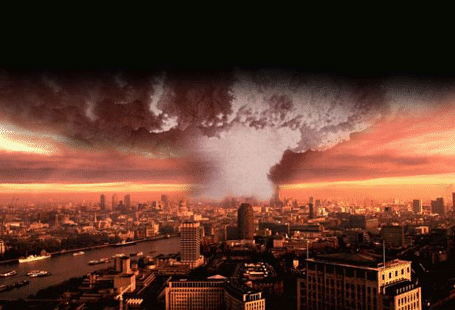
The debate on confrontation with China ignores a crucial conversation about atomic weapons
MICHAEL AUSLIN, Ft.com 22 Aug 22,
The single most important question about a potential war over Taiwan between the United States and China is whether such a conflict could remain non-nuclear. Yet when President Joe Biden stated again in May that America would defend the island in the event of a Chinese attack, no one asked if that meant he was willing to risk a nuclear exchange with Beijing. If the fast-gelling opinion of Washington’s foreign policy elite is correct — that such a war is no longer simply possible but likely — then assessing such a risk needs to be at the forefront of every discussion.
Since the first use of atomic weapons nearly eight decades ago, no nuclear-armed power has ever fought another in a major conflict. During the cold war, America and the Soviet Union fought both direct and indirect proxy wars but avoided direct conventional conflict that could have escalated out of control. The reliability of America’s nuclear umbrella and promises of “extended deterrence” are regularly questioned by non-nuclear allies. It is also the reason that Nato was so circumspect in responding to Russia’s invasion of Ukraine earlier this year.
Once the cold war ended, many in the US assumed that the era of the Cuban Missile crisis and “duck and cover” was over, emphasised by the shutting of the fearsome Strategic Air Command in 1992. Nuclear weapons never went away of course, and SAC eventually morphed into US Strategic Command. Yet the fears that civilisation could end in billowing mushroom clouds rapidly abated as the country turned to another generation of wars in the Middle East and against global terrorism.
But policymakers and the US public can no longer ignore the fact that a new nuclear age has dawned. Vladimir Putin’s sabre-rattling in the early days of the Ukraine war revealed that nuclear-armed authoritarian aggressors may not be restrained. As Beijing considers Taiwan its sovereign territory, there can be no assurance that a conflict would remain conventional. Make no mistake about it, this would be no small clash. Control over Taiwan has been the primary foreign policy and strategic concern of the CCP since Mao Zedong took power in 1949.
…………………… War games are one thing but in the real world, as soon as one US missile hits Chinese territory, the question of escalation becomes critical. ………………………..
Any major clash would, in fact, be the first ballistic missile war between great powers. Americans long ago ceased any civil defence preparation and the public is entirely unprepared to come under missile attack. Such an escalation would put enormous pressure on US leaders to strike back even harder at Chinese targets, thus risking an all-out confrontation, with the urge to go nuclear growing with each new setback.
The implications of a Taiwan war are enormous, but no US leader should blithely commit to defending the island without understanding that a conflict with China could be like no other fought in history. How far the US is willing to go must be openly debated and the risks of action as well as inaction equally assessed. We must think the unthinkable or we might wind up paying a tragic price. https://www.ft.com/content/e919274c-f743-462f-83fe-80ac352036fd
Zelensky warns “no more peace talks”, if Donetsk People’s Republic prosecutes captured Neo Nazi fighters for war crimes.

Zelensky warns against putting neo-Nazis on trial. Rt.com 22 Aug 22, Russia will “cut itself off” from talks if Azov fighters are prosecuted in Donbass, Ukrainian president insists.
There will be no more peace talks with Russia if captured Ukrainian Neo-Nazis are subjected to a “show trial,” the country’s President Vladimir Zelensky has claimed.
The authorities of the Donetsk People’s Republic (DPR) have previously said that they are planning tribunals for suspected war crimes committed by Ukrainian troops, including members of the Azov Battalion, whose ranks include fighters with openly nationalist and neo-Nazi views………………
DPR head Denis Pushilin told TASS this month that “active preparations” for the proceedings were underway. “The first tribunal will most likely be held in Mariupol. It will be organized by the end of summer,” he said.
The peace talks between Russia and Ukraine have been stalled since spring………………… more https://www.rt.com/russia/561277-zelensky-talks-pow-trial/
Donbass had something to say about Zelensky’s ultimatum:
DPR head Denis Pushilin told Russia 24 TV:
“The data on 80 counts of crimes committed by the Azov has been collected, 23 people have been arrested and are in custody. So such statements by Zelensky will have no effect [on the trials].”
Nearly 2,500 Ukrainian soldiers surrendered to Russian and Donbass forces during the siege of the Azovstal steel plant in Mariupol in May, according to the Russian Defense Ministry.
Digital damage: Is your online life polluting planet?

https://www.miragenews.com/digital-damage-is-your-online-life-polluting-840709/ Macquarie University/The Lighthouse Dr Jessica McLean is a Senior Lecturer in Human Geography in the Macquarie School of Social Sciences. 22 Aug 22
Shorter emails, camera-off Zoom calls and deleting old photos could reduce our digital carbon footprints – but sustainability expert Dr Jessica McLean says this is too big for individuals, and governments and organisations need to take responsibility.
Swapping digital meetings, shopping and even exercise classes for their in-person alternatives can substantially reduce greenhouse gas emissions by avoiding transport-related pollution, but the environmental impact of our digital lives is also surprisingly high, says Human Geographer Dr Jessica McLean.
We don’t often think about the various infrastructures required to do simple things like send an email or hold our photos – these digital things are stored in data centres that are often out of sight, out of mind,” says McLean, who is a Senior Lecturer in Human Geography at Macquarie University’s School of Social Sciences.
“If we think about it at all, we usually expect these services to be continual and think that there isn’t really a limit on those digital practices,” she says.
However, digital activity has a surprisingly high environmental impact, says McLean, who has recently published a book on the topic.
Along with the greenhouse gas emissions from substantial energy use by our personal computers, data centres and communication equipment, this impact also includes the water use and land impact from mining, building and distributing the metals and other materials that make up our vast global digital infrastructure.
High-impact digital activities
Many researchers have attempted to calculate the individual carbon footprints of various technologies, and these often focus on the energy used by servers, home wi-fi and computers and even a tiny share of the carbon emitted to construct data centre buildings.
Some of our greenhouse-gassiest digital activities include:
Emails: Professor Mike Berners-Lee calculated that a short email sent phone-to-phone over wifi equates to 0.3 grams of CO2, a short email sent laptop-to-laptop emits 17g of CO2 and a long email with attachment sent from laptop could produce 50g of CO2.- Digital hoarding: Data transfer and storage of thousands of photo, audio and video files, messages, emails and documents in an average US data centre emits around 0.2 tons of CO2 each year, for every 100 gigabyte of storage.
- Binge-watching in High Definition: Just one hour of HD streaming a day emits 160kg of CO2 each year – but swap to Standard Definition video quality and that drops to around 8kg of CO2 annually.
Using super-computers: Australian astronomers each produce 15 kilotonnes of CO2 a year from super-computer work – more than their combined emissions from operating observatories, taking international flights and powering office buildings. However Dutch astronomers produce about 4 per cent of these emissions, as Netherlands national supercomputer uses 100 per cent renewable energy.- Artificial Intelligence: Training a large AI model emits 315 times more carbon than a round-the-world flight.
Beyond the individual
Deconstructing the many and varied impacts of our increasingly digital lives can be overwhelming.
Talking heads: Just one hour of videoconferencing can emit up to 1kg of CO2.
“There’s a lot to take in, and many of these figures will change depending on things like the use of renewable energy that is being taken up by some digital corporations and many individuals,” says McLean.
“This highlights the complexity of this challenge, showing that understanding and addressing digital sustainability goes beyond individual responsibilities, and is more fittingly held by governments and corporations.”
She says that the onus should be on governments to regulate a greater transparency on how digital corporations use energy, and to require regular reporting on sustainability targets.
Big tech continues to produce smartphones that are not designed to last.
“Most device manufacturers subscribe to a ‘planned obsolescence’ paradigm, rather than circular economy – for example, big tech continues to produce smartphones that are not designed to last.”
McLean’s recent research with Dr Sophia Maalsen (University of Sydney) and Dr Lisa Lake (UTS) found that while university students, staff and affiliates were concerned about the sustainability of digital technologies, there was a big gap between their intentions and actual practices of sustainability in their everyday digital lives.
“People expressed concern for the sustainability of their digital technologies, but they had limited opportunities to do anything substantive about this issue,” she says.
Digital ‘solutionism’ the wrong approach
Concepts like the paperless office, remote work and virtual conferences often come with a promise of lower environmental impacts – but McLean says these can be examples of ‘digital solutionism’.
E-harm: Digital activity has a surprisingly high environmental impact, says Dr Jessica McLean, who has recently published a book on the topic.
“It’s time to question whether being digital is always the most sustainable solution,” she says.
McLean says that our society is becoming increasingly entangled in the digital via the exponential growth of intensely data driven activities and devices, from the Internet of Things to Big Data and AI.
However, she points out that this digital immersion isn’t universal.
“There are uneven patterns and gaps in these digital affordances, both within Australia and across the Global South,” she says.
Her book, Changing Digital Geographies, explores alternatives to our current exponential digital growth, and its impact on our natural world.
“There are many alternatives for how we live digitally, from making decisions about what’s ‘good enough’ to changing the whole digital lifecycle and the way it is regulated,” she says.
“Individuals cannot be expected to resolve these issues, governments need to regulate and corporations need to act, to improve our digital future and make it sustainable.”
Civilian casualties in Ukraine-5,000? In Yemen-380,000? But Western Media tells a different story!

In the case of the Russia-Ukraine war the mainstream media, both print and electronic media, has been conspicuous in using human interest stories–focussing on one individual or a single family in Ukraine–to rouse the interests of those incapable or unwilling to canvas the larger picture.
The civilian casualties in the Iraq war (185,000-208,000) and the war in Yemen (380, 000), as well as the Afghanistan war (70,000) are difficult to determine with any accuracy, but they certainly run into the hundreds of thousands if not millions. Similar is the situation in the on-going Israel-Palestine conflict between 2000 and 2014 where the casualties are overwhelmingly on the Palestinian side (approximately 7000 Palestinians and 1100 Israelis).
https://johnmenadue.com/deaths-in-ukraine-and-the-rest-the-media-is-ideologically-linked-to-one-side-of-the-war/, Pearls and Irritations, By Greg Bailey, Aug 22, 2022 Whilst resort to warfare must be strongly deprecated in virtually all circumstances, it is arguable that the media treatment of specific conflicts and the resulting casualties–both civilian and military–differs considerably from war to war and can easily break down into black and white categories, based on factors other than the war itself. The recourse to particular forms of categorisation tells us as much about the media itself as it does about the particular conflicts being reported upon.
Reportage of wars is undoubtably difficult, as the warring sides will consistently use propaganda to press their own innocence and outrage. Casualty figures and types of casualties–civilian or military–are always employed to push a particular line of guilt or innocence of one side or the other. Equally, those media outlets in countries not directly involved in any given conflict will tend towards a style of reporting guided by formal or informal international alliances or other factors, not necessarily by the actual available data from the theatre of war.
In the case of the Russia-Ukraine war the mainstream media, both print and electronic media, has been conspicuous in using human interest stories–focussing on one individual or a single family in Ukraine–to rouse the interests of those incapable or unwilling to canvas the larger picture. Particular individuals or families are focussed upon and a potted biography is given of their life situation before hostilities began, and what has been their subsequent fate. This is perhaps a consequence of the number of war correspondents on the ground, and their incapacity to source figures of casualties beyond the military forces and those directly involved in the fighting. However, the former are reported in non-mainstream media outlets. A BBC report gives the number of reported deaths in Ukraine as 10, 470 between 24/2-24/6/22, almost certainly understated, and there would have been many more since then. Of these between 3600 and 4700 were civilian deaths.
The civilian casualties in the Iraq war (185,000-208,000) and the war in Yemen (380, 000), as well as the Afghanistan war (70,000) are difficult to determine with any accuracy, but they certainly run into the hundreds of thousands if not millions. Similar is the situation in the on-going Israel-Palestine conflict between 2000 and 2014 where the casualties are overwhelmingly on the Palestinian side (approximately 7000 Palestinians and 1100 Israelis). These figures almost certainly understate the total casualties, yet such figures have rarely appeared in the mainstream media, focus being placed mainly on isolated incidents, especially those involving terrorist acts attributed to Islamic terrorist groups. And if they can show pictures of actual explosions and rockets being launched, or destroyed buildings, whilst important, this is primarily designed to convey a sense of horror in the viewer. The more long-term effects on casualties produced by destruction of various kinds of infrastructure, health services, and the resulting starvation tend to be played down, if mentioned at all.
What are we supposed to conclude through all of these figures? Is there a definite difference in the Australian media’s coverage of wars involving people in cultures which are somewhat like ours, as opposed to those with which we might seem to have a cultural clash? This is especially the case with Muslims and it would certainly be the same if we went to war with the Chinese. I suspect the attitude is also the same with our treatment of Russia, which has always had a bad press in the West.
The main issue here is that the media treat certain societies and countries as categories, whereas other societies, more familiar to us, can be broken down into individuals and groups with similar interests, demands and concerns as us. This is demonstrative of the major chasm still existing between the perception of third and first world cultures, and Muslim and non-Muslim cultures. Such a discrepancy in perception is pushed along by the mass media and prevents a much more nuanced view to be taken by the public of ongoing conflicts and the historical conditions that have given rise to them. Here, as signalled often in P&I, the American interventions in Eastern Europe since 1991 have done much to cause the present situation in Ukraine, but these have largely been ignored in the kind of press coverage the conflict has been given in the West.
What would impartial reporting produce and is it at all possible for it to occur? What is very obvious is that the strong sympathy accorded to Ukraine in the mainstream media in Australia and other Western countries has completely obscured the historical perspective telling us how these conflicts may have originated and how they might be prevented in the future. It is true that Ukraine is a distant horizon for most Australians, but it occupies a space in culture much closer to us than cultures in the Middle East and Central Asia. And whilst it is necessary to report as accurately as possible what is going on there, so should there be a consistent approach to the coverage of conflicts in non-European countries.
What would impartial reporting produce and is it at all possible for it to occur? What is very obvious is that the strong sympathy accorded to Ukraine in the mainstream media in Australia and other Western countries has completely obscured the historical perspective telling us how these conflicts may have originated and how they might be prevented in the future. It is true that Ukraine is a distant horizon for most Australians, but it occupies a space in culture much closer to us than cultures in the Middle East and Central Asia. And whilst it is necessary to report as accurately as possible what is going on there, so should there be a consistent approach to the coverage of conflicts in non-European countries.
1 This Month



Read the Public Inquiry Report, the Commissioners’ report, Surrendering Australia: The AUKUS Deception is available to download for free at aukuspublicinquiry.com. Or just watch the replay of the National Press Club Luncheon.

19 November – Webinar – The Reality of Reprocessing
Time: 11:00 AM Pacific Time (US & Canada) / 2:00 PM Eastern / 7:00 PM UK / 8:00 PM CET
Register for the Zoom Event Here


Shut down the radiation-damaged Heysham nuclear reactors now
To see nuclear-related stories in greater depth and intensity – go to https://nuclearinformation.wordpress.com

Say No to NASA’s Reckless Nuclear Reactor on the Moon
Say No to NASA’s Reckless Nuclear Reactor on the Moon
-
Archives
- November 2026 (128)
- October 2026 (302)
- September 2026 (339)
- August 2026 (330)
- July 2026 (355)
- June 2026 (287)
- May 2026 (306)
- April 2026 (356)
- March 2026 (251)
- February 2026 (267)
- January 2026 (308)
- December 2025 (358)
-
Categories
- 1
- 1 NUCLEAR ISSUES
- business and costs
- climate change
- culture and arts
- ENERGY
- environment
- health
- history
- indigenous issues
- Legal
- marketing of nuclear
- media
- opposition to nuclear
- PERSONAL STORIES
- politics
- politics international
- Religion and ethics
- safety
- secrets,lies and civil liberties
- spinbuster
- technology
- Uranium
- wastes
- weapons and war
- Women
- 2 WORLD
- ACTION
- AFRICA
- Atrocities
- AUSTRALIA
- Christina's notes
- Christina's themes
- culture and arts
- Events
- Fuk 2022
- Fuk 2023
- Fukushima 2017
- Fukushima 2018
- fukushima 2019
- Fukushima 2020
- Fukushima 2021
- general
- global warming
- Humour (God we need it)
- Nuclear
- RARE EARTHS
- Reference
- resources – print
- Resources -audiovicual
- Weekly Newsletter
- World
- World Nuclear
- YouTube
-
RSS
Entries RSS
Comments RSS

