Macron’s nuclear dream means attacking environmental law, and is no help to the climate
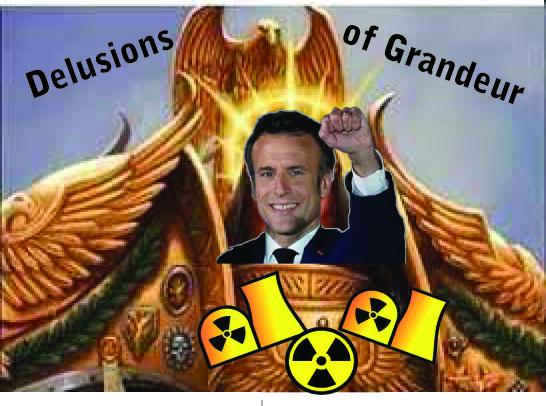
Attacking environmental law to accelerate the construction of new nuclear reactors: Macron’s assumed project.
On September 22, on the occasion of the inauguration of the St Nazaire maritime wind farm, and once again anticipating the public debate supposed to be held on the EPR projects in Penly, Emmanuel Macron reaffirmed his project of a “deployment of a forced-march nuclear strategy” (sic!). On this occasion, he announced an acceleration of the procedures supposed to make it possible to start the first reactors even earlier than planned.
Barely a week later, the dedicated bill reached the National Council for Ecological Transition, summoned to make a decision within an extremely short time. This forced passage and the assumed deconstruction of environmental law presented in this text are quite simply shameful.
But trampling on the law and democracy will not make the problems of a sector undermined by a lack of skills, and of a technology that is too slow and too cumbersome to respond to the climate emergency, disappear with a magic wand.
Sortir du Nucleaire 28th Sept 2022
https://www.sortirdunucleaire.org/Attaquer-le-droit-de-l-environnement-pour
Nuclear War and Moral Sanity

In a spiritual and moral sense, the world’s nuclear powers are the most underdeveloped nations—committed to maintaining power over, rather than power with, the rest of the planet. https://www.commondreams.org/views/2022/09/29/nuclear-war-and-moral-sanity ROBERT C. KOEHLER, September 29, 2022,
What does surrender look like in the world of geopolitics? To my mind, this gets pretty close:
“President Biden’s national security adviser said on Sunday that the United States had warned Russia that there would be ‘catastrophic consequences’ for the country if Moscow used nuclear weapons in its increasing desperation to hold on to territory in Ukraine.”
This is surrender in multiple directions, or so it seemed to me as I read these words the other day in the New York Times — surrender to the worst (the stupidest) of who we are, on the part not only of the growling superpowers on both sides of the conflict, who are apparently playing games with Armageddon, but also surrender on the part of the mainstream media, which has failed, yet again, to cover war in the context of a larger sanity.
Oops, darn that mushroom cloud!
Maintaining peace through militarism — us vs. them in which good guy wins and bad guy loses — has gotten blown up in the age of nukes. But for some reason any grasp of this remains politically marginal. In a world that has sliced itself into international borders, power remains a matter of dominance, or so the world’s leaders (and the media that covers them) continue, apparently, to believe.
Much of Planet Earth is moving beyond this glaringly lethal ignorance, but the most “powerful” nations on the planet remain spiritually underdeveloped. It’s the only way they can hold onto their power.
As a journalist, my impulse is to cry out to the media to do its job: to cover geopolitics, to cover war — Russian, American and all the rest — in a context larger than that declared by the national leaders who are caught up in it. The best the Times could do, at least in this particular story, was to cast Putin as an international “pariah” because, in threatening to use nuclear weapons in Ukraine if necessary, he “broke the nuclear taboo for the first time in 77 years.”
In other words, it’s OK to possess nukes. You’re just not supposed to talk about them.
The larger context of this particular story would, it seems to me, include a perspective that transcends the thinking of both American and Russian leadership. Such a perspective would include the fact that most of the world’s nations, as well as the United Nations, have declared nuclear weapons . . . ahem . . . illegal.
The Treaty on the Prohibition of Nuclear Weapons, which bans their use, development and actual possession, was approved by the U.N. General Assembly in 2017 by a vote of 122-1 (the nine nations that possess nukes, along with most of the members of NATO, boycotted the vote). It has now been ratified by 68 countries, and signed by a total of 91.
“On the International Day for the Total Elimination of Nuclear Weapons, we reject the claim that nuclear disarmament is some impossible utopian dream.”
So said U.N. Secretary-General António Guterres a few days ago, making a point that is globally crucial and by no means irrelevant to the looming disaster in Ukraine. For God’s sake, we have become a trans-national planet and the job of everyone — this includes world leaders, media, you, me — is to envision a trans-militarized world and continue evolving toward it.
“Eliminating these devices of death is not only possible, it is necessary,” Guterres said. “. . . we need a new vision for nuclear disarmament and nonproliferation.”
I repeat: We need a new vision! A “new vision for nuclear disarmament and nonproliferation.” A new vision of the meaning of geopolitics, the shortcomings of nationalism and national borders. A new vision of the nature of power. What if — at the highest levels of media and government — we saw “power” as a force that valued life?
Here are some words of Martin Luther King: “In a real sense all life is interrelated. We are all caught in an inescapable network of mutuality, tied into a single garment of destiny.”
Let us consider the possibility that this isn’t just blather — that it’s actually true. Then what it means, at the deepest core of human existence, is that playing war — endlessly preparing to destroy part of ourselves — is suicidal behavior. National military budgets might as well be called suicide budgets. We have to start learning how to live without defining ourselves by our enemies. What if, at the very least, the media reported on war in this context, rather than in the context of good vs. evil, NATO vs. Putin?
As David Swanson pointed out at World Beyond War, both Russia and the United States “stand as rogue regimes outside the Landmines Treaty, the Convention on Cluster Munitions, the Arms Trade Treaty, and many others.” Neither country is party to the International Criminal Court or supports its rulings. And the U.S. and its allies violated any commitment to Russia, such as the eastward expansion of NATO, when the Cold War ended, making the present moment of nuclear uncertainty inevitable.
As I noted, the wealthiest and most militarily powerful nations on the planet are, in a spiritual — in a moral — sense, the world’s most underdeveloped nations, committed to maintaining power over, rather than power with, the rest of the planet. At the very least, the media shouldn’t give national leaders trapped in this commitment the final say in how to move forward.
And no matter what the danger, such leaders will not, of their own volition, give up their nations’ nuclear weapons. They cannot hear António Guterres, who, speaking in a larger sanity, points out: “Eliminating nuclear weapons would be the greatest gift we could bestow on future generations.”
Myanmar Junta’s Nuclear Ambition Timeline
By THE IRRAWADDY 6 October 2022
The junta’s recent confirmation that it will build a small-scale nuclear power plant in the next few years caps Myanmar’s long pursuit of nuclear technology dating back to early 2000.
The Southeast Asian country’s two-decade-long journey to nuclear capability was made possible by Russia after a series of engagements that accelerated under the current junta and its military predecessor.
Though the current regime insists nuclear energy would be used for peaceful purposes in Myanmar, which has been hit by chronic electricity shortages, many believe this is the first step in a plan to utilize nuclear energy for military purposes including production of nuclear weapons.
The timeline on Myanmar’s long road to nuclear technology:
January 2002
The Myanmar military regime confirms plans to build a nuclear research reactor “for peaceful purposes.”…………………………………………………………………………………………
September 20, 2022
Junta spokesman Maj-Gen Zaw Min Tun briefs press, confirming the regime’s plan to implement a small nuclear power plant project in the next few years.
He does not specify the project’s location but says the Atomic Energy Department of the junta’s Ministry of Science and Technology will establish a “nuclear information technology center” in Yangon, which will gauge and influence public opinion on nuclear energy. https://www.irrawaddy.com/news/burma/myanmar-juntas-nuclear-ambition-timeline.html
State ministry reports leak at German nuclear plant, experts investigating
State ministry reports leak at German nuclear plant, experts investigating | Reuters
BERLIN, Oct 5 (Reuters) – A leak occurred during flushing measures on a discharge line at the nuclear power plant in Brunsbuettel, northern Germany, on Sept. 28, the energy ministry of Schleswig-Holstein said on Wednesday.
The defective line is part of the concentrate treatment system and is located in the restricted area of the reactor building of the nuclear power plant, a statement said, adding that a small radioactive contamination was detected.
The reactor safety authority has tasked experts with conducting further supervisory reviews in the matter.
The Brunsbuettel nuclear power plant has already been permanently shut down since 2007. The decommissioning permit was issued at the end of 2018 and dismantling of the plant has begun.
Writing by Rachel More, Editing by Miranda Murray
The risk of nuclear disaster grows every day

From Three Mile Island to Chernobyl, the story of atomic energy is littered with catastrophes
https://www.prospectmagazine.co.uk/arts-and-books/the-risk-of-nuclear-disaster-grows-every-day By Oliver-James Campbell , October 6, 2022
Atoms and Ashes: From Bikini Atoll to Fukushima by Serhii Plokhy (RRP: £25).
In his new book, Ukrainian-born Harvard professor Serhii Plokhy tackles a topic that has greatly influenced his life: nuclear disaster. Atoms and Ashes, a must-have for anyone interested in the history of nuclear energy, details six major nuclear mishaps that have shaped how we view nuclear energy: Bikini Atoll in Oceania, Kyshtym in Russia, Chernobyl in Ukraine, Three Mile Island (TMI) in the US, Windscale in the UK and Fukushima in Japan. Despite the vast political and socio-economic differences between the countries responsible for these projects, Plokhy shows up the common thread of mismanagement.
The author sketches vivid pictures of the events that led up to—and resulted from—each incident, exploring the lives of those the disaster affected most, whether it’s an unfortunate power plant employee or an entire displaced community. But most striking is how much pressure the scientists, engineers and project managers faced—brought about by the Cold War arms race or other geopolitical fallouts—that resulted in subsequent disaster.
In his acknowledgements, Plokhy explains that Atoms and Ashes was written as a response to questions surrounding his earlier work, Chernobyl: History of a Tragedy. His intention was to show how project mismanagement and risk oversight were not specific to Chernobyl.
Nuclear disasters have, understandably, led to a rise in anti-nuclear sentiment. The world has since changed its tune. As Plokhy says, “Ukraine derives about half its electricity from nuclear reactors”—one of which, Zaporizhzhia, is the largest in Europe. It also happens to be caught between forces in Russia’s ongoing war in Ukraine. The UN has called for the demilitarisation of the reactor, as the risk of a catastrophic nuclear incident appears to grow larger every day.
Nuclear test veterans: Stik sculpture unveiled at Kent army museum
https://www.bbc.com/news/uk-england-kent-63136372 By Tanya Gupta, 5 Oct 22, BBC News
A model of a soldier ordered to turn his back and cover his face against a nuclear blast has gone on display at the Royal Engineers Museum in Kent.
London street artist Stik spent a year listening to veterans who witnessed nuclear tests in the 1950s to come up with the “terrified, lone figure”.
He said he wanted to show the vulnerability of the soldiers, but also their resilience and strength.
The model will be cast into bronze to create the final sculpture.
In a rare interview, the reclusive artist said he wanted to show human vulnerability, adding: “They were boys when they were sent out to witness an atomic bomb. Some were 16, 17, 18.”
Witnesses have described sitting with their back to the blast but feeling the heat and the force, and being able to see the light through their hands
The sculpture was unveiled at the Gillingham museum during the British Nuclear Test Veterans’ Association’s (BNTVA) annual conference, which is staged in Ashford on the 70th anniversary of Britain’s first weapons test off Western Australia.
For decades, the veterans have fought campaigns for medals, recognition, compensation and an apology from the government, after they witnessed tests with their backs turned to the blast, hands over their eyes, and with no protective clothing.
Many are concerned there is a link between their radiation exposure and ill-health, including cancers.
The Cabinet Office has said it is providing nearly half a million pounds to support veterans. It also said it would hold an oral history project and a commemorative event.
The Ministry of Defence has previously said there was “no valid evidence” linking the nuclear tests to ill-health.
Nuclear fusion – public money wasted on this unproven technology
UK ministers have been criticised for “pouring billions of pounds of
public money into unproven technology” by pressed ahead with nuclear
fusion investment. The warning comes after North Ayrshire lost out on
becoming the site of the UK’s first fusion energy plant having been
shortlisted.
Herald 4th Oct 2022
Kremlin steps back from call to use nuclear weapons
Kremlin takes distance from Kadyrov’s call to use nuclear bomb in Ukraine
EURACTIV.com with Reuters, Oct 3, 2022,
The Kremlin on Monday (3 October) said it favoured a “balanced approach” to the issue of nuclear weapons, not based on emotion, after a key ally of President Vladimir Putin called over the weekend for Russia to use a “low-yield nuclear weapon” in Ukraine.
Asked about the comments by Ramzan Kadyrov, leader of the Chechnya region, who also criticised Russia’s military leadership over battlefield setbacks, Kremlin spokesman Dmitry Peskov said he had the right to voice his opinion, but that Russia’s military approach should not be driven by emotions.
“This is a very emotional moment. The heads of regions have the right to express their point of view,” Peskov said in a call with reporters on Monday.
“But even in difficult moments, emotions should be kept out of any kind of assessment. So we prefer to stick to balanced, objective assessments.”
Peskov said the basis for any use of nuclear weapons was set down in Russia’s nuclear doctrine.
Those guidelines allow for the use of nuclear weapons if they – or another weapon of mass destruction – are used against Russia, or if the Russian state faces an existential threat from conventional weapons.
“There can be no other considerations when it comes to this,” said Peskov.
The Kremlin has made clear that those nuclear protections extend to the four regions of Ukraine that Moscow is in the process of formally annexing………………………………. https://www.euractiv.com/section/global-europe/news/kremlin-takes-distance-from-kadyrovs-call-to-use-nuclear-bomb-in-ukraine/
Truss caves in to Mirror’s demands to mark ‘Plutonium Jubilee’ with gift for nuclear test vet
The heroes of Britain’s Cold War radiation experiments and their families welcomed the news, but said it did not go far enough to address the tests’ legacy of cancers, early death and birth defects
Mirror, By Fleet Street Fox, Columnist, 3 Oct 2022,
Prime Minister Liz Truss has caved to the Mirror’s demands to mark the ‘Plutonium Jubilee’ with a £450,000 gift for nuclear test veterans.
The heroes of Britain’s Cold War radiation experiments and their families welcomed the news, but said it did not go far enough to address the tests’ legacy of cancers, early death and birth defects.
More than half the money – £250,000 – will go to an academic or cultural institution to record oral histories of survivors. The remaining £200,000 will be available for veterans’ charities to bid for.
But that will be equivalent to just £133 a head for the estimated 1,500 ex-servicemen still alive.
The government will also host an event to “celebrate the unique and significant contributions of those involved in testing and developing our nuclear deterrent”.
It was announced on the same day as the 70th anniversary of Operation Hurricane – the Plutonium Jubilee, which marks Britain’s first atomic bomb test.
Alan Owen, of campaign group LABRATS, said: “It’s very welcome news, and a direct result of the meeting we had with Boris Johnson following the Mirror’s Look Me In The Eye campaign.
“In fact, it was the Mirror that asked, in that meeting, for a ceremony of national acknowledgement to allay veterans’ anger, and that will be a huge leap forward if we get it. But this money is a pittance in the grand scheme of things, and there’s still no medal, no apology, no acknowledgement.”
The money won’t be available until April next year – and there are fears some survivors, who are now all in their 80s, may not benefit from it.
Minister for the Armed Forces and Veterans, James Heappey, said the test veterans “played a crucial role in keeping Britain and our NATO allies safe”.
He added: “Their sacrifice contributed to achieving the ultimate guarantee of UK sovereignty and they forever have this nation’s gratitude.
“I look forward to commemorating the incredible service and efforts of our veterans.” https://www.mirror.co.uk/news/politics/truss-caves-mirrors-demands-mark-28145217
NATO ‘not obliged’ to assist Ukraine — German ambassador
Rt.com 2 Oct 22, Berlin’s envoy to the military bloc clarifies that NATO won’t actively fight for a non-member state.
Germany’s permanent representative to NATO has explained that the US-led bloc is not obliged to offer direct military assistance to Ukraine. Ruediger Koenig added that its members want to avoid a major war.
He was speaking to Dein Spiegel, the youth version of Der Spiegel magazine, which published the interview on Saturday.
The Ukraine conflict dominated much of the article, with Koenig describing Russia’s decision to launch its offensive against its neighbor in late February as a watershed event…….
Germany’s representative to NATO stressed that the military alliance as a whole, however, has no legal obligation to help Kiev repel Moscow’s attack as Ukraine is not a member state. This means that Article 5 of NATO’s treaty cannot be activated, the official explained. Under it, an attack on one ally is considered to be an attack against the whole of NATO, with all member states having to stick up for the targeted nation.
According to Koenig, the military bloc is anxious to avoid getting actively involved in the conflict at all costs because “this would mean a very big war.”
Such a scenario, which would see 30 more nations join the fray, is something “nobody wants,” the diplomat noted…………..
He concluded that the prospect of peace is rather slim as Ukraine and Russia’s positions seem to be irreconcilable. Koenig clarified that Ukraine “rightly” demands that Moscow cede all former Ukrainian regions in the south and east of the country that recently voted to join Russia, as well as Crimea, which joined the country in 2014. The official pointed out that the Kremlin, however, is unlikely to agree to such terms. https://www.rt.com/news/563942-germany-nato-envoy-ukraine-kids/
Sizewell C nuclear plan – an insane legacy for our grandchildren
Letter: Dave Haskell, Cardigan: It is the height of madness to fund
another nuclear fission power station at Sizewell costing £34 billion,
with Hinkley C currently costing £24 billion and yet to come on stream.
What a legacy to leave to our children and grandchildren – foreign owned,
very expensive and years to build, dangerous, hazardous waste and
horrendous decommissioning costs – not to mention a potential target for
terrorists.
Cambrian News 1st Oct 2022
https://www.cambrian-news.co.uk/news/why-we-must-avoid-using-nuclear-power-565623
Honouring Britain’s nuclear testing veterans
Britain’s nuclear testing programme veterans to be honoured in £450,000
project. Government will commemorate the ‘incredible service’ of the
veterans who witnessed hundreds of atomic tests and were exposed to
radiation.
Telegraph 3rd Oct 2022
Don’t nuke the future

even the White House Environmental Justice Advisory Committee (WHEJAC) have declared nuclear power to be a false solution to climate change.

Regrettably. powerful nuclear lobbies, the Biden Administration, and nuclear supporters in Congress have ramrodded legislation (the 2021 IFA; the 2022 IRA) through Congress worth as much as $70+ billion dollars to bail out this false climate “solution”.
Time to focus on real climate solutions
Don’t nuke the future — Beyond Nuclear International https://beyondnuclearinternational.org/2022/10/02/dont-nuke-the-future/ By David Kraft, NEIS, 2 Oct 22,
As we strike for climate, we must strike nuclear power from our energy plans
The Fridays for the Future Climate Strike on September 23 called out tens of thousands of people worldwide – over 300 in downtown Chicago — to protest the inadequate governmental response to the Climate Code Red, and identify the many corporate criminals who are responsible for the bulk of the crisis.
While it is necessary to identify and hold accountable those who are the source of the problem, if the Planet is to survive the predicted catastrophic temperature rise and resulting environmental impacts, it is equally important to identify real and viable solutions to the crisis, given the limited amount of time left to act.
On that note it cannot be stressed more emphatically that nuclear power is not a viable climate solution.
Why is this the case? With eight years left before the IPCC’s 2030 deadline to literally reinvent and implement a climate friendly energy infrastructure, nuclear power serves as a drag and barrier to reaching that target. It is too costly; to slow to build out to the levels needed; displaces less atmospheric carbon per dollar spent than cheaper and quicker alternatives; and not only fails to solve its current list of unsolved problems (for example, nuclear waste disposal), but adds to this list the threat of increased nuclear proliferation and accidents, especially in war zones like Ukraine, and potentially elsewhere (India/Pakistan; China Taiwan; Iran/Saudi Arabia, etc.).
Worse, money spent on bailing out the economically failed nuclear power plants we have is money not available to be spent on real climate solutions we already know work: more renewable energy, more energy efficiency, improved transmission/distribution systems, and energy storage.
Who says so? Only: two former CHAIRPERSONS of the U.S. Nuclear Regulatory Commission; former public utilities chairs and utility CEOs from the states of California, New York, and Maine; energy experts and scientists like Amory Lovins and Mark Jacobson of Stanford University, and Dr. Andy Stirling of University of Sussex.
Cost analysts at Lazards demonstrate that nuclear (both the present old generation, and the proposed “next generation” of so-called small modular nuclear reactors) is too expensive compared to renewables and other alternatives; while those at Moody’s point out that reactors will be at severe risk of operating safely in a climate disrupted world without extraordinary added expense to enhance safety – again, money that won’t be available for real alternatives.
Environmental justice activists loudly label nuclear power as a false climate solution. Statements by the Climate Justice Alliance and Indigenous Environmental Network (IEN), and even the White House Environmental Justice Advisory Committee (WHEJAC) have declared nuclear power to be a false solution to climate change. Scores if not hundreds of environmental organizations nationwide share the same sentiment.
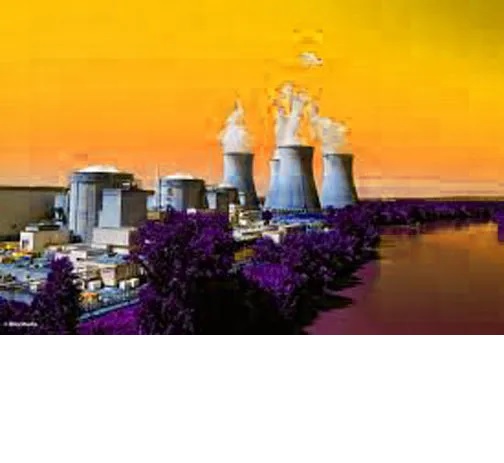
Who else? Mother Nature herself. The heat wave experienced in France this year (and in previous years) shuttered 32 of 54 French reactors due to lack of river water to cool them and make steam – precisely when they were needed most. The laws of physics state that reactors will also produce less electricity the warmer the water they take in to make steam. And climate induced swarms of jellyfish, mayflies and other creatures have led to reactor shutdowns on multiple occasions. These will only become more frequent with the worsening climate disruption. These incidents have led former Union of Concerned Scientists staff scientist and NRC consultant David Lochbaum to sardonically ask, “And what will save nuclear power from climate change?
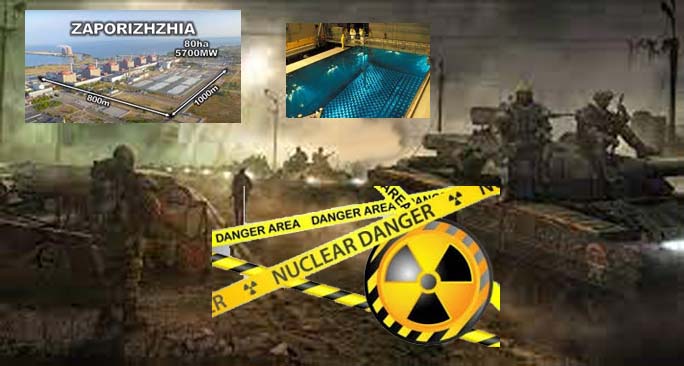
Finally, the war in Ukraine has forced to world to examine whether nuclear power even belongs on a planet where war seems omnipresent. Nuclear power plants are now targets in war. Do not think this will be the end of it. The war and what has happened at the Zaporizhzhia nuclear plant in Ukraine now forces the nuclear industry, military planners and governments of the world to face what they have long avoided and refused to discuss: nuclear power plants are gigantic, pre-positioned radiation dispersion devices. The thought of sprinkling literally thousands of so-called “small modular nuclear reactors” (SMNRs) worldwide like fairy dust — without containment buildings and with reduced emergency planning/response zones and plans, as nuclear proponents eager to market their new techno-toys currently suggest — almost seems to be the quintessential confirmation of Einstein’s admonition that insanity is doing the same thing over and over, expecting different results.
Regrettably. powerful nuclear lobbies, the Biden Administration, and nuclear supporters in Congress have ramrodded legislation (the 2021 IFA; the 2022 IRA) through Congress worth as much as $70+ billion dollars to bail out this false climate “solution.” This is one time when trying to jam a square peg down a round hole will not work. You can’t build an energy future by bailing out the past.
Today’s demonstrations make two very important points: we are out of time; and we must declare a climate crisis – and act like it is a crisis, to paraphrase climate activist Greta Thunburg. We do not have the time or money for “all of the above”, business as usual false solutions like those proposed by Sen. Joe Manchin and Sen. Chuck Schumer. We must act now to implement real energy solutions.
Nuclear power is simply a false solution to the climate crisis. Anyone who says otherwise is as much a “denier” as those who still falsely claim that climate change does not exist.
This article also appeared as a September 23, 2022 press release from Nuclear Energy Information Service, a non-profit organization committed to ending nuclear power and advocating for sustainable ecologically sound and socially just energy solutions.
Interviews With Donetsk Residents After Joining Russia
Eva Bartlett 1 Oct 2022Given the predictable Western negation of the referendum to join Russia, and following having done many interviews with people during the referendum, yesterday I did some follow up interviews with Donetsk residents, asking their opinions on joining Russia
Zelensky pledges never to talk to Putin

Rt.com 2 Oct 22
Ukraine will not negotiate with Moscow until Putin is replaced as president, Zelensky and his cabinet said
Ukrainian President Vladimir Zelensky refuses to negotiate a peace settlement as long as Vladimir Putin remains president of Russia. He made this claim in a post on his official Telegram channel on Friday.
………….. “We are ready for a dialogue with Russia, but … with another president of Russia,” he wrote. Unlike the majority of his Telegram posts, this one was written only in Ukrainian, without an accompanying English translation.
Zelensky has repeatedly rejected overtures of peace from Moscow, most recently turning down Putin’s offer on Friday to resume negotiations. What made the offer a non-starter for Kiev is that Putin refused to relinquish the regions that voted this week to join Russia…..
Zelensky also confirmed that Ukraine had submitted an accelerated application to join NATO on Friday, something he previously admitted was probably never going to happen. While Western media described the move as “more symbolic than practical,” the Ukrainian president argued that Sweden and Finland were able to apply on an accelerated basis even without a Membership Action Plan and it was thus only “fair” that Ukraine do the same.
De facto, we have already completed our path to NATO,” he said in another Telegram post. “De facto, we have already proven interoperability with the Alliance’s standards … We trust each other, we help each other and we protect each other.”
Zelensky has previously acknowledged Ukraine might struggle to secure the consent of all 30 NATO member nations…………………………….
 |
https://www.rt.com/russia/563840-zelensky-negotiations-putin-russia/
1 This Month


Read the Public Inquiry Report, the Commissioners’ report, Surrendering Australia: The AUKUS Deception is available to download for free at aukuspublicinquiry.com. Or just watch the replay of the National Press Club Luncheon.



19 November – Webinar – The Reality of Reprocessing
Time: 11:00 AM Pacific Time (US & Canada) / 2:00 PM Eastern / 7:00 PM UK / 8:00 PM CET
Register for the Zoom Event Here



Shut down the radiation-damaged Heysham nuclear reactors now
To see nuclear-related stories in greater depth and intensity – go to https://nuclearinformation.wordpress.com

Say No to NASA’s Reckless Nuclear Reactor on the Moon
Say No to NASA’s Reckless Nuclear Reactor on the Moon
-
Archives
- November 2026 (119)
- October 2026 (302)
- September 2026 (339)
- August 2026 (330)
- July 2026 (355)
- June 2026 (287)
- May 2026 (306)
- April 2026 (356)
- March 2026 (251)
- February 2026 (267)
- January 2026 (308)
- December 2025 (358)
-
Categories
- 1
- 1 NUCLEAR ISSUES
- business and costs
- climate change
- culture and arts
- ENERGY
- environment
- health
- history
- indigenous issues
- Legal
- marketing of nuclear
- media
- opposition to nuclear
- PERSONAL STORIES
- politics
- politics international
- Religion and ethics
- safety
- secrets,lies and civil liberties
- spinbuster
- technology
- Uranium
- wastes
- weapons and war
- Women
- 2 WORLD
- ACTION
- AFRICA
- Atrocities
- AUSTRALIA
- Christina's notes
- Christina's themes
- culture and arts
- Events
- Fuk 2022
- Fuk 2023
- Fukushima 2017
- Fukushima 2018
- fukushima 2019
- Fukushima 2020
- Fukushima 2021
- general
- global warming
- Humour (God we need it)
- Nuclear
- RARE EARTHS
- Reference
- resources – print
- Resources -audiovicual
- Weekly Newsletter
- World
- World Nuclear
- YouTube
-
RSS
Entries RSS
Comments RSS

