Trump’s weapons in space violate international law

The weaponisation of space is a violation of the intent of the Outer Space Treaty of 1967
The weaponisation of space is a violation of the intent of the Outer Space Treaty of 1967.
Independent Australia, By Karl Grossman | 17 October 2026,
Last month, the Trump Administration confirmed that, for the first time, the U.S. has weapons in space in violation of international law, writes Professor Karl Grossman.
‘U.S. says for 1st time it now has weapons in space’ was the headline last month in USA Today.
The subhead: ‘Air Force Secretary Troy Meink became the first U.S. official to publicly announce that the military has deployed weapons to space.’
The article began:
‘The U.S. has confirmed in a landmark revelation that the nation has deployed operational weapons in space.’
The news swept the world.
he headline in the British newspaper, The Guardian:
‘U.S. confirms for first time it has deployed weapons in space.’
The subhead:
‘Analysts warn of an acceleration in high-risk arms race with Russia and China in Earth’s orbit.’
It should not have come as a surprise.
As the Associated Press subsequently reported:
‘The revelation comes as the Trump administration puts a growing focus on space. In 2019, during his first term, Trump created the Space Force as a separate military branch. In his second term, he has announced the ‘Golden Dome’ missile defense system, which includes plans to put U.S. weapons in space.’
An earlier AP story published just after Donald Trump took office as U.S. president a second time also reported on ‘plans to put U.S. weapons in space’ as part of its planned ‘Golden Dome’ program.
This article by Tara Copp, an AP Pentagon and national security correspondent, said:
‘The system was ordered by Trump during his first week in office, and if successful, would mark the first time the U.S. would place weapons in space that are meant to destroy ground-based missiles within seconds of launch.’
Trump is seeking U.S. “superiority” in space, as he stated in an executive order titled ‘Ensuring American Space Superiority.’
Issued in December 2025, Trump asserted:
“Superiority in space is a measure of national vision and willpower.”
In his role as Secretary of War, Peter Hegseth is a highly aggressive partner in Trump’s aim.
As Hegseth said in a tour of U.S. aerospace companies in February 2026:
“We have to dominate the ultimate high ground.”
He also declared on that speaking tour:
“The fight for space is the fight for the future of the world as we know it” and “We cannot afford to have a fair fight in space — I’m not interested in orbital parity. We demand orbital dominance plain and simple. Whoever controls space controls the fight.”
Adding to the acknowledgement of the U.S. deploying weapons in space, the AP also reported this month:
‘American troops need to prepare for combat not only in Earth’s orbit but around the moon, President Donald Trump’s top military adviser said Wednesday, looking ahead to a new frontier in warfare after the U.S. revealed for the first time that it has deployed weapons in space. Gen. Dan Caine, chairman of the Joint Chiefs of Staff, told service members and industry figures at the Air, Space and Cyber Conference outside Washington that the U.S. military should adapt now so it “is prepared to fight, endure and win … from the seabed to cislunar space”.’
Cislunar space, AP added, “is a term that describes the region between the Earth’s surface and the moon.”
Not only is none of this new, or going back just a few days or years. It goes back many years.
As Bruce Gagnon, coordinator of the Global Network Against Weapons & Nuclear Power in Space, noted in an interview, plans by the U.S. for dominating space go back decades. The Trump Administration is conducting a major replay of these plans……………………………………………………………………………………………………………………………………………………….
The weaponisation of space is a violation of the intent of the Outer Space Treaty of 1967.
Created by the U.S., the United Kingdom and the former Soviet Union — it, as The Planetary Society, based in Pasadena, California, explains:
‘Is an international agreement that governs how nations act in space. Formally known as the ‘Treaty on Principles Governing the Activities of States in the Exploration and Use of Outer Space, including the Moon and Other Celestial Bodies,’ it is one of international space law’s foundational documents. The overall purpose of the Outer Space Treaty is to keep space peaceful.’
There have been repeated attempts since then at the United Nations to pass a resolution titled ‘Prevention of an Arms Race in Outer Space‘ (PAROS) to ensure that space is used for peaceful purposes.
As noted by the Federation of American Scientists, based in Washington, PAROS ‘reaffirms the fundamental principles of the 1967 Outer Space Treaty and advocates for a ban on the weaponisation of space.’
It was first passed at the U.N. General Assembly in 1981 by a vote of 129 in favour, zero against and 13 abstentions.
But the PAROS agreement to be enacted requires a unanimous vote in favour by the UN’s Conference on Disarmament, which consists of 65 nations based on global regions.
The U.S. has continually baulked at supporting PAROS, and without unanimity it cannot be approved. I have been in Geneva and watched as, at a meeting of the Conference, the U.S. representative announced that the U.S. would not support PAROS.
Meanwhile, the argument by the U.S. – including now with the acknowledgement by the U.S. of it deploying weapons in space – is that there is a threat of Russia and China doing this.
“This is a flagrant in-your-face lie,” says Alice Slater, a member of the board of the Global Network Against Weapons & Nuclear Power in Space and an attorney.
She faults media generally for “parroting” the U.S. claim and “disregarding the constant effort” by Russia and China to get the PAROS agreement enacted.
She also cites the “joint statement” by Russia and China last year upon, as its heading notes, the “80th anniversary of the victory in the Second World War,” in which the U.S., Soviet Union and China were allies.
The two sides [Russia and China] oppose the attempts of individual countries to use outer space for armed confrontation,’ says their statement. It cites the need for the PAROS agreement ‘that would provide fundamental and reliable guarantees of preventing an arms race in outer space, weaponisation of outer space.’
Immediately following the acknowledgement by the U.S. of having weapons in space, The New York Times reported a Russian government spokesperson saying, “We believe that space must be free of any weapons,” and a spokesperson for China’s Foreign Ministry saying:
“We urge the U.S. side to stop…preparing for war in outer space,” and that China opposed an “outer space arms race.”
Gagnon, the coordinator of the Maine-based Global Network Against Weapons & Nuclear Power in Space, said he believes the U.S. has acknowledged its deployment of weapons in space in a move to:
“make Golden Dome sound inevitable, thus forcing Congress to appropriate the massive funds to secure the controversial project in the Pentagon pipeline.”
The cost for the Golden Dome system would run as high as $3.6 trillion, as estimated by the American Enterprise Institute.
Taxpayers for Common Sense, also based in Washington, in its report this year titled ‘Missing the Mark: Why Golden Dome is Bad for American Taxpayers’ says:
“Pursuing Golden Dome also poses serious strategic risks, including the potential to accelerate nuclear arms and space arms races and to undermine opportunities to secure verifiable arms control agreements that reduce the nuclear threat. The program has also raised troubling conflict-of-interest concerns involving individuals within the Trump Administration and companies vying for Golden Dome contracts.”
Said Gagnon:
“Taxpayers should be wondering who will pay for the trillions of dollars” for this and other “offensive space programs—especially when the U.S. is $40 trillion in debt.” He said “the aerospace industry long ago identified the ‘entitlement programs’ as their preferred source of funds” and “taking from Social Security, Medicare, Medicaid and the now tattered social safety net.”
As to consequences of war in space, he told of Apollo Astronaut Edgar Mitchell – “the sixth person to walk on the moon” – speaking at a “peace in space rally” I organised in the now re-named Cape Canaveral Space Force Station.
Mitchell told the assembled that a war in space would be the:
“One and only because so much space junk would be created – on top of the existing huge debris field – that we would not be able to get a rocket through the deadly trash orbiting the Earth. He said it would be like trying to ‘get through a piranha-laced river’ in the Amazon.”
Gagnon spoke of:
“A spiritual disconnection in the minds and hearts of those ‘leaders’ in Washington who believe that four per cent of the global population in the U.S. should be the ‘Masters of Space’ [the motto of the Space Delta 8 unit of the U.S. Space Force]. It is a deep sickness. The time has come for the American people to take the toys away from the boys.”
The Global Network Against Weapons and Nuclear Power in Space was formed at a meeting in Washington, D.C. in 1992. Each year it holds a “Keep Space for Peace Week,” this year between October 3-10, with events. The 2026 theme is “Space Is a Global Commons—Not To Be Dominated.” The Global Network’s website can be found here…………………………………………………………………. https://independentaustralia.net/politics/politics-display/trumps-weapons-in-space-violate-international-law,21684
To Use a Mountain
2025 | USA, https://www.touseamountain.com/
n 1982, six rural communities across the United States were notified that all of the nation’s nuclear waste might be buried beneath them forever.
Faced with a mandate to isolate the waste for 10,000 years, the Department of Energy mapped, analyzed, and assembled its assessments, while the unsuspecting stewards of sacrificial territory found themselves fighting for their homes, health, history and dignity. In the end, one site was chosen: a desert ridge in Nevada called Yucca Mountain, on the unceded lands of the Western Shoshone. After decades of controversy, construction at Yucca Mountain was halted, and to this day, no permanent solution has been devised for America’s 90,000 tons of high-level nuclear waste.
Against the impassive logic of government analysis and archives, TO USE A MOUNTAIN assembles a people’s history of resistance and stewardship through a visceral journey across the landscapes, ecologies, and personal histories of the candidate sites. Farmers, miners, citizen scientists, Native American leaders, and activists—each with a story bound to this enduring threat—stand in stark contrast to the cold, silent machinery of bureaucracy, in a meditation on resistance, memory, and the timeless struggle between power and place.
New concerns, questions over soil transfer at DOE Paducah Site
Todd Faulkner, Mason Watkins, Mackenzie Lionberger, Oct 16, 2026, https://www.wpsdlocal6.com/news/new-concerns-questions-over-soil-transfer-at-doe-paducah-site/article_071efe65-415d-4887-b247-2eb06df92de5.html
PADUCAH — There are new questions and concerns involving soil from a parcel of land at the Department of Energy Paducah Site.
WPSD-TV originally reported that soil was being removed from the DOE Paducah Site by General Matter and placed on other properties in McCracken County.
Prior to Sept. 9, WPSD viewers reached out to the station concerned about the soil transfer and wondered if the soil was contaminated.
McCracken County Judge Executive Craig Clymer later received a document from a division of the DOE that said an analysis of the soil was shared with the Environmental Protection Agency which confirmed that the soil is “protective of human health and the environment” and “the soil meets risk standards.”
After that report, a source reached out to WPSD questioning the factual content of that analysis and the statement sent to the judge executive’s office — and whether the soil, in fact, did meet residential and recreational risk standards.
The source provided and cited a number of pieces of information from the U.S. Environmental Protection Agency. What was provided were dozens of documents and email exchanges that the source claims made clear that the Parcel A soil evaluated by EPA Region 4 was only for “on site industrial conditions” — not off site, or what’s considered “unrestricted-use clearance.”
In an email correspondence between WPSD’s source and an EPA employee, the employee writes: “The EPA did not anticipate that soil located on DOE Paducah Parcel A property (being leased to General Matter) would be transported off DOE property to a residential property. The EPA was informed in June by the Kentucky Department for Environmental Protection (KDEP) that soil from the General Matter lease site was observed being transported to a nearby private property on the east side of Hobbs Road.”
Later, that same employee writes: “Although Parcel A is restricted to industrial use only, cancer and noncancer effects are unlikely for a future resident under unrestricted use/unlimited exposure to Leasing Parcel A soil.”
In a letter to Judge Executive Craig Clymer, as previously reported, the DOE wrote: “This supplemental risk evaluation found that chemicals and radioactive constituents in the soil at Leasing Parcel A are not expected to create unacceptable health risks for resident or recreator scenarios.”
Reporters took the information provided and contacted the EPA for comment.
A public and government affairs manager responded by email: “To confirm, the DOE evaluated soil data from the area now being leased by General Matter. DOE concluded that the soil does not pose an unacceptable risk to human health. The EPA reviewed DOE’s evaluation and conclusion. Based on the data available, there is no unacceptable cancer risk or noncancer health effects posed to hypothetical future residents, recreators, or industrial workers from the soil removed from the leased parcel.”
When asked for comment on this latest concern regarding General Matter removing soil from the site, WPSD received the following statement: “Last month, we finished up our initial soil and grading activity on schedule. We appreciate the EPA’s thorough review and look forward to welcoming our neighbors at next week’s Community Open House.”
Other entities involved in the situation include more than DOE and General Matter. Those include the EPA, the Kentucky Division of Waste Management and other agencies.
General Matter’s public open house is set for 4:30 to 6:30 p.m. Wednesday, Oct 21, at McCracken County High School.
Marco Rubio declares West must dominate world, praises colonialism, erases history

This, in fact, is exactly how many conservative elites in Latin America see themselves. This is a major reason why they so strongly support imperialism: In addition to the fact that they receive bribes, investments, and other economic benefits from large US corporations, they also culturally identify with the United States and Western Europe, not with the Indigenous and Afro-descendant peoples of Latin America.
By Ben Norton, 13 Oct 26, https://geopoliticaleconomy.com/2026/10/13/marco-rubio-greece-western-civilization-colonialism/
The second-most powerful official in the US government, foreign-policy chief Marco Rubio, delivered a speech that openly praised colonialism, engaged in egregious erasures of history, and demanded a return to Western domination of the world.
Rubio asserted that the West must use military force to “maintain its place at the head of the world”.
The West is “the greatest civilization in the world”, he declared, emphasizing that it is a “civilization that we must fight to defend today with the same passion as our forefathers did”.
Rubio warned that “Western civilization” must “choose to act now or lose the choice to act at all”.
“Under President Trump, the United States has made its choice: We choose the unapologetic pursuit of national power”, he added.
Rubio is simultaneously serving as both the secretary of state, overseeing US foreign policy, and the national security advisor, crafting national-security policy. He is only the second person in US history to hold both roles at the same time, after notorious imperial strategist Henry Kissinger.
Rubio delivered his pro-colonialist diatribe in front of the Acropolis in Athens, the capital of Greece, on 7 October.
He used the address not only to lay the groundwork for his likely future presidential campaign, but also to clearly articulate his hyper-imperialist vision of and for the world.
Marco Rubio erases Native Americans, heroizes European colonizers, claims North America was an “open and wild land”
The US secretary of state’s speech in Greece was a veritable paean to empire.
Marco Rubio proudly referred to the United States as a “continental empire”.
“The civilization of Athens and Rome transformed an infant seaboard republic into a continental empire”, he stated.
Rubio glorified the European conquistadores who violently colonized the Americas, specifically naming Hernán Cortés and Christopher Columbus.
At the same time, the US foreign-policy chief completely ignored the existence of Native Americans. He erased the American Holocaust of Indigenous peoples, which was by far the largest genocide in human history.
Rubio praised the “American frontier spirit”, claiming North America was an “open and wild land” when European settlers arrived and (through genocide and ethnic cleansing) transformed it into what he called a “great revival of Western imagination and ambition”.
Marco Rubio combines warmongering neoconservative foreign policy with MAGA’s Western chauvinism, white supremacy, and Christian nationalism
Marco Rubio is a lifelong neoconservative hawk. However, during Trump’s first administration, he began to cynically rebrand himself as a MAGA-compatible right-wing “populist”.
What Rubio has done is use MAGA’s not so subtly racist rhetoric about “defending Western civilization” (from Muslims and non-white peoples) in order to justify neoconservative foreign policy, including the war of aggression against Iran, steadfast support for Israeli colonialism, the attack on Yemen, the invasion and looting of Venezuela, the blockade of Cuba, and the bombing of fishermen in the Caribbean Sea.
He has effectively combined the warmongering neoconservativism of the old-school Republican Party with the supposedly “populist” MAGA GOP’s overt Western chauvinism, white supremacy, and Christian nationalism.
In his speech in Greece, Rubio glorified what he called “the empire of Christendom” and the colonialist “architects of European Christendom” who spread Christianity throughout the world (at the barrel of a gun).
At the same time, he demonized “the radical mullahs of Iran”, claiming they constitute a “cult of death”.
While he spoke in front of the Acropolis in Athens, Rubio lamented that Western global dominance has declined in recent decades, as Global South countries (namely China and Iran) have grown in influence.
He stated (all emphasis added):
[In recent decades] others were all too happy to fill the vacuum that we left – the vacuum left behind by our weakness. And as the West’s confidence faltered, its adversaries and its rivals only grew more assertive, building up their own wealth and their own power in our stead.
And now, today, we find ourselves at a crossroads. Because the next decade and the decisions we make will write the story of the next century. The course we take will determine whether the West maintains its place at the head of the world or resigns itself to a future of atrophy and servitude and decline. We will either choose to act now or lose the choice to act at all.
Under President Trump, the United States has made its choice: We choose the unapologetic pursuit of national power.
Marco Rubio praises European countries for re-militarizing
At the same time, Rubio praised European countries for pursuing a historic rearmament and massively expanding their military budgets, in order to prepare for more war.
The Trump administration has forced NATO members to boost their military spending to 5% of GDP, meaning some EU member states have more than doubled their expenditures.
Trump dubbed this a “big win for the US, Europe, and Western civilization”.
In Athens, Rubio used the same rhetoric, declaring:
We believe that Europe can awaken from its long slumber and rekindle the fire that was lit here millennia ago.
There are already signs.
Across this continent, we are witnessing what we hope will be the beginnings of a generational shift: skyrocketing defense spending, a flurry of new partnerships and programs, expanded manufacturing and production, following on the historic defense commitments made last year in The Hague.
Marco Rubio’s Fox News op-ed asserts the West “must fight”
Following his speech in Greece, Rubio published an op-ed at Fox News in which he regurgitated the same talking points.
“The West is at a crossroads”, Rubio wrote. “The decisions we make in the next decade will define the next century – and determine whether our civilization maintains its place at the head of the world, or resigns itself to a future of servitude and decline”.
He lamented that “too much of the West has come to feel ashamed of the very things that made us exceptional”.
While erasing the historical crimes of Western colonialism, Rubio complained that “we began to view our achievements as an embarrassment; our power and prosperity became a source of guilt”.
“The story of our civilization is the greatest story ever known to man. But we must fight to defend it”, he maintained.
In another speech, Marco Rubio called for the West to reverse decolonization
Read more: Marco Rubio declares West must dominate world, praises colonialism, erases historyThis is not the first time that Rubio has delivered explicitly pro-colonialist remarks like this.
At the 2026 Munich Security Conference this February, Rubio made very similar remarks, praising “the great Western empires” that “settle[d] new continents” as part of “the greatest civilization in human history”.
The US foreign-policy chief insisted that North America and Europe must unite to “build a new Western century”.
Rubio openly called on the West to reverse the decolonization of the Global South, which he portrayed as a nefarious communist plot.
In this previous speech, he said:
For five centuries, before the end of the Second World War, the West had been expanding – its missionaries, its pilgrims, its soldiers, its explorers pouring out from its shores to cross oceans, settle new continents, build vast empires extending out across the globe.
But in 1945, for the first time since the age of Columbus, it was contracting. Europe was in ruins. Half of it lived behind an Iron Curtain and the rest looked like it would soon follow. The great Western empires had entered into terminal decline, accelerated by godless communist revolutions and by anti-colonial uprisings that would transform the world and drape the red hammer and sickle across vast swaths of the map in the years to come.
Against that backdrop, then, as now, many came to believe that the West’s age of dominance had come to an end and that our future was destined to be a faint and feeble echo of our past. But together, our predecessors recognized that decline was a choice, and it was a choice they refused to make. This is what we did together once before, and this is what President Trump and the United States want to do again now, together with you.
And this is why we do not want our allies to be weak, because that makes us weaker. We want allies who can defend themselves so that no adversary will ever be tempted to test our collective strength. This is why we do not want our allies to be shackled by guilt and shame. We want allies who are proud of their culture and of their heritage, who understand that we are heirs to the same great and noble civilization, and who, together with us, are willing and able to defend it.
And this is why we do not want allies to rationalize the broken status quo rather than reckon with what is necessary to fix it, for we in America have no interest in being polite and orderly caretakers of the West’s managed decline. We do not seek to separate, but to revitalize an old friendship and renew the greatest civilization in human history. What we want is a reinvigorated alliance that recognizes that what has ailed our societies is not just a set of bad policies but a malaise of hopelessness and complacency. An alliance – the alliance that we want is one that is not paralyzed into inaction by fear – fear of climate change, fear of war, fear of technology. Instead, we want an alliance that boldly races into the future. And the only fear we have is the fear of the shame of not leaving our nations prouder, stronger, and wealthier for our children.
Why Marco Rubio and right-wing elites in Latin America love Western colonialism
Some people do not understand why Marco Rubio is so extremely pro-colonialist, given that he is technically of Cuban descent. But it is important to understand that Rubio does not see himself primarily as Cuban.
In his speeches, Rubio constantly emphasizes that he is of European descent, tracing his heritage back to Spain and Italy.
This October in Greece, Rubio proudly described himself as “a great-grandson of settlers who arrived in the new world from Spain”.
In his February remarks in Germany, Rubio again mentioned his ancestors in Spain and Italy, stating:
And do you know that in the year that my country was founded, Lorenzo and Catalina Geroldi lived in Casale Monferrato in the Kingdom of Piedmont-Sardinia. And Jose and Manuela Reina lived in Sevilla, Spain. I don’t know what, if anything, they knew about the 13 colonies which had gained their independence from the British empire, but here’s what I am certain of: They could have never imagined that 250 years later, one of their direct descendants would be back here today on this continent as the chief diplomat of that infant nation. And yet here I am, reminded by my own story that both our histories and our fates will always be linked.
At the Munich Security Conference, Rubio also stressed, “for us Americans, our home may be in the Western Hemisphere, but we will always be a child of Europe”.
These remarks make it clear that he does not identify with the vast majority of Cubans and Latinos, who are of Indigenous and African descent.
Instead, Rubio sees his family as European settlers who temporarily lived in Cuba — as light-skinned elites who supported the right-wing US puppet dictatorship of Fulgencio Batista — before re-settling in Florida.
This, in fact, is exactly how many conservative elites in Latin America see themselves. This is a major reason why they so strongly support imperialism: In addition to the fact that they receive bribes, investments, and other economic benefits from large US corporations, they also culturally identify with the United States and Western Europe, not with the Indigenous and Afro-descendant peoples of Latin America.
Beware White Nationalists Like Trump Branding Jews A “Separate Race”
H. Scott Prosterman Informed Comment, https://scheerpost.com/2026/10/13/beware-white-nationalists-like-trump-branding-jews-a-separate-race/
On December 11, 2019, convicted felon Donald Trump signed Executive Order 13899, which declared Judaism to be a separate “race” and “ethnicity;” and all Jews of common “national origin.” The purpose was to twist Title VI of the 1964 Civil Rights Act into a tool for speech suppression. It had the “hat trick” effect of patronizing Jews and persecuting Palestinians; and prosecuting an attack on free speech. Indirectly, this was a misappropriation of the Civil Rights Act, and it also undermines the prospects for a two-state solution between Israel and Palestinians.
Despite 1000 years of pogroms, culminating with the Holocaust, most Jews have resisted being categorized as a specific race. Jews are known to be in 99 countries, spanning the full spectrum of human ethnicity. Judaism is a religion and a culture of shared ancestry. Many non-observant Jews are fiercely proud of their culture and heritage, as well as taking a deep pride in Jewish humor; and our accomplishments in the entertainment industries, financial sectors and academia. Iconic athletes such as Sandy Koufax, Mark Spitz and Deni Avdija are also part of that equation. Judaism is not a race, nor a nationality outside of Israel. But globally, fewer Jews identify with Israel than any time since its founding.
As for Israel, a recent AP/NORC opinion poll found that “for many U.S. Jews, support for Israel remains a bedrock of their religious identity, its existence a guarantee of Jewish self-determination and safety.” Yet it found profound discomfort with the policies of the extreme-right government of Benjamin Netanyahu and his Likud Party, which many feel has perverted Zionism into a genocidal ideology that is an anathema to its founding ideals. Author Rich Forer and others argue, however, that “ethnic cleansing and genocide are the inevitable culmination of the Zionist project.”
Among Jews who are religious, about 70% of the American community, the poll discovered that around half see Israel’s actions in Gaza as unjustified, and 25% are willing to characterize them as genocidal.
About a third of U.S. Jews are not religiously observant, and fully 40 percent of this group agrees that Israel committed a genocide in Gaza. Only six percent of these secular-minded American Jews identify as Zionists. Three-quarters of non-religious Jews say that they are “not too” or “not at all” emotionally attached to Israel.
David Crary and his colleagues at AP write, “Anna Constant, 56, of Seattle identifies as culturally Jewish and says she doesn’t feel closely connected to Israel. ‘I kind of think of myself as an American version of a Jew. I do have a homeland,’ she said, referring to the United States.” Ms. Constant has been recategorized by Donald Trump as having a separate race and identity, whether she likes it or not.
The Likud Party under PM Benjamin Netanyahu has generated more anti-Semitism than any dynamic since WWII. While illegal settlements have been built in the West Bank during the tenure of every Israeli prime minister since 1967, Netanyahu’s agenda has been a steroid-fueled explosion of settlements, with a blind eye toward squatter violence.
The increasing rightward shift of Zionism and Israel has transformed the notion of “liberal Zionism” into an oxymoronic anachronism for those still holding on. American and Israeli Jews, along with Christian Zionists, are notorious for supporting human rights for all people, except Palestinians. I once heard the great singer Mary Travis essentially say that “the hammer of justice and bell of freedom” applies to everyone in the world, except Palestinians. When I spoke to her after her talk to a Zionist group in Memphis, she didn’t back down.
Trump issued that Executive Order two days after he had told the America-Israel Council, “You’re brutal killers; you’re not nice people, but you have to vote for me; you have no choice . . .” The context was the alarming rise of anti-Semitism as a result of the failure to distinguish Judaism, the religion; from Zionism, the political ideology. Worldwide, Jews are being unfairly demonized for the sins of Netanyahu’s Likud Party, which has prosecuted genocide in Gaza, as a diversion from the pogroms in the West Bank.
The unfolding tragedy of Zionism is that it has been hijacked and taken down a rabbit hole, driven by the Siamese twin criminal conspiracy of Trump and Netanyahu. The intent of EO 13899 was to require schools to declare the Boycott Divest Sanction (BDS) movement and other advocacy groups as discriminatory towards Jews. That’s a long reach with no grasp or logical traction.
Now comes California Senate Bill (SB) 1387, authored by Jewish California State Sen. Henry Stern, which exacerbates this problem in a big way. It’s another broadside against free speech, as was California Assembly Bill (AB) California AB 715, which criminalizes any criticism of Israel in a public academic setting. “Jewish California” supports both, despite those laws’ origins in the MAGA-driven agenda. Their reach of logic argues that, “SB 1387 applies the same approach to Jewish Californians as the LGBTQ+ community and Black American subgroups, and it makes California the first state in the nation to recognize Jewish identity as an ethnicity in statute.”
But this legislation plays right into the MAGA agenda to suppress free speech and academic freedom. Its sponsors try to argue that this bill protects Jews from anti-Semitism, through some ghostly, undefined mechanism. The objection is that this promotes the wrong kind of exceptionalism that will backfire. Don’t we already have too much technology gathering too much information on us, with no clue as to who is collecting it and for what application?
Writer Seth Morrison pointed out, “SB 1387 exceptionalizes Judaism over other religions by making it the only group tracked as both a religion and an ethnicity.” Thus we have another exception to “Jewish exceptionalism.”
Why is it that so many Jews are fervent advocates of the Civil Rights Movement except when it comes to Palestinians? When I posed this question to writer Steve Bhaerman (who assumes the guise of comic alter ego Swami Beyondananda), he said, “The issue boils down to three things: fear, tribalism and denial. Jewish exceptionalism. Victimhood makes you an exceptional victimizer.” SB 1387 elevates that dynamic, making Jews the only demographic to be tracked as a religion and ethnicity. It is a poorly conceived notion, similar to California AB 715, which is an attempt by right-wing elements to co-opt and misapply the Free Speech Movement (FSM), in defense of the Likud-MAGA agenda and Israel.
The worst elements of MAGA are already coming for the Black and Brown-skinned people on the basis of their ethnic profiles. Who is to say they won’t be coming for the Jews again, based on publishing, intellectual or academic profiles? They’re already coming for professors and students who are not Jewish, but come from majority Black or Muslim countries, because of what they write and publish. Paranoid? No, this fear and suspicion is well-founded in our MAGA-dominated political climate. Rev. Martin Niemöller said, “ . . . Then they came for the Jews, and I did not speak out—because I was not a Jew. Then they came for me—and there was no one left to speak for me.” Are you listening Gaza genocide deniers?
Israel’s political direction under the far-right Likud Party has driven millions of Jews away from Israel, and we are less of a monolith than ever. Sen. Stern has an admirable record of progressive legislation. His introduction of this bill seems counterintuitive to his legislative history. I might condescend to him by saying, “He means well,” but ‘tis indeed a puzzlement why a progressive, Jewish state senator would introduce something that is gift-wrapped for MAGA and Likud. Haven’t we learned by now that nothing fuels anti-Semitism like expressions and manifestations of Jewish exceptionalism do? This is a provocative piece of legislation that feeds into the white nationalist agenda and reinforces anti-Semitism across the board.
The Push for Nuclear Power Plants on the Moon
NASA’s use of nuclear power in space was being done in parallel with the plan for nuclear-powered weaponry in space.
”The nuclear industry views space as a new market. They don’t give a damn about the dangers involved. These greedy aerospace corporations are salivating as they look at the profits to be made.”
“Nuclear fuel would need to be transported to the moon on a regular basis and there is never a mention of how lunar nuclear waste will be dealt with. Lunar bases are, however, a way of establishing the ultimate military high ground.”
Karl Grossman, October 13, 2026, https://freepress.org/article/push-nuclear-power-plants-moon
The lead front page story in the New York Times last week was headlined: “Superpowers Racing to Put Nuclear Reactors on Moon.” The nations involved: the U.S., China and Russia. And there was a subhead: “Experts Warn of Radioactive Risks From a Rocket Mishap or Lunar Meltdown.”
The reporter, Selam Gebrekidan, wrote: “Failures could cause a chain reaction with dire consequences. Falling reactor debris could scatter radioactive material….An explosion or a meltdown on the moon’s surface could risk turning entire regions into no-go zones.”
The extensive story quoted Edward Lyman, director of nuclear power safety at the Union of Concerned Scientists, saying: “There will always be a space race going on, and if you enter nuclear power into that mix, then it could take a potentially more dangerous turn.”
Nuclear power and weapons in space have been an unexpectedly extensive part of my journalistic journey. Because of having been deeply involved in reporting about the plans of the Long Island Lighting Company to construct seven to 11 nuclear power plants on Long Island, where I live, I became knowledgeable about atomic energy.
I wrote a book titled “Power Crazy” about this scheme to turn the island into what nuclear promoters termed then a “nuclear park.” I wrote many columns and did television reporting on it.
So, back in 1985, with that experience, I was struck by a piece in the U.S. Department of Energy’s publication, “Energy Insider,” saying that DOE and NASA were partners in the sending up in 1986 two space shuttles—one being the Challenger—with space probes onboard fueled by plutonium, considered the most toxic of all radioactive substances.
Once the shuttles achieved orbit, the probes would be released, the one Challenger carried to survey Jupiter. The plutonium would be in radioisotope thermoelectric generators (RTGs), not for propulsion but to provide electric power for instruments.
In “Energy Insider” there was notice that the government had looked into various sorts of accidents that might happen on the missions. So, I sent Freedom of Information Act requests to DOE, NASA, and the DOE national laboratories involved in these studies asking to learn what was determined.
As the months passed, I began to realize I had hit upon a hot potato. I was denied the information on the grounds it was “technical” which is not a legitimate FOIA exemption. I appealed and won. Finally, to my post office came a box of documents, including a government projection that the likelihood of a “catastrophic” shuttle accident was 1-in-100,00. Those were very high odds, so I didn’t do anything.
That was until January 28, 1986, when on my way to teach my Investigative Reporting class at the State University of New York at Old Westbury, I heard on the car radio that the Challenger had exploded on launch.
I stopped at an appliance store and saw that terrible image on TV and telephoned The Nation magazine to tell them that the next mission of the Challenger, in May, was to involve a nuclear system—and if the accident occurred then and plutonium released as dust, the disaster could have been a massive catastrophe.
The Nation asked me to write a piece, which I did. Other media picked up on it and I was pretty widely interviewed. A publisher called resulting in a book I wrote that he titled “The Wrong Stuff.” Meanwhile, NASA and DOE changed the odds of a catastrophic shuttle accident from 1-in-100,000 to 1-in 7 6.
And I began to “follow the money” as Bob Woodward’s source “Deep Throat” instructed in the film about the Watergate investigation.
I did, and found the then “Star Wars” program of President Reagan was predicated on orbiting battle platforms with onboard hypervelocity guns, particle beams and laser weapons and, also onboard, nuclear reactors and “super plutonium” systems providing the high energy they needed. The latter would be built by General Electric, manufacturer of the RTGs on the space probe that Challenger was to loft.
NASA’s use of nuclear power in space was being done in parallel with the plan for nuclear-powered weaponry in space.
This resulted in another book I authored, “Weapons in Space,” its foreword by Dr. Michio Kaku, and an hour-long TV documentary I wrote and presented, “Nukes in Space: The Nuclearization and Weaponization of the Heavens.” And there have been many articles on this and more TV programs during the ensuing four decades including “Star Wars Returns” (viewable at www.envirovideo.com).
I gave two presentations on this before members of the British Parliament in London, presentations at the United Nations in New York and Geneva, and elsewhere around the U.S. and world.
My most recent articles on it, last month, involved the announcement by the Air Force secretary acknowledging that the U.S. has deployed weapons in space.
In 1992, the Global Network Against Weapons & Nuclear Power in Space was formed in Washington, D.C. and is active worldwide. Bruce Gagnon is coordinator of the Maine-based organization.
He said from India, where he is speaking at a conference during a “Keep Space for Peace Week” that the Global Network is sponsoring, this about the Times story: “Here in India they say that their government is all in on the U.S. Artemis-led coalition to establish a base on the moon with nuclear reactors. So, the new ‘nuclear space race’ is on—the U.S. team versus Russia and China. What are they after? Helium-3 for potential power back on Earth and using the moon as a military staging base to control the ‘Earth-Moon gravity well’ as a way to decide which nations and private corporations can move into space to mine the planetary bodies.”
“We should recall that Obama signed a law to give American companies and wealthy individuals the ‘right’ to mine planetary bodies essentially in violation of the Outer Space and Moon treaties that say that the planetary bodies are the province of all humankind.”
“This is the kick-off of the race to carry the ‘bad seed’ of greed, domination, and colonization that was long ago planted into the soil on Earth into the heavens,” continued Gagnon. “The taxpayers have paid the R & D for these programs and now that the space tech has advanced, the self-centered capitalists are intent on grabbing all they can for themselves.”
“This will move the Earth-bound global war system into the heavens. When they add nuclear power into the equation these people are asking for trouble.”
“In addition to reactors on the moon, they will next want nuclear reactors to power orbiting battle stations to ‘protect their assets’ on these planetary bodies. This is largely what Trump’s ‘Golden Dome’ is all about. Not so much about protecting us from attack back on Earth. It’s more about controlling the pathway on and off our planet Earth. Deciding who can go out and mine the sky. Like the front gate of a military base.”
“In the end it’s a disaster in the making. From the Earth, where the Department of Energy has a horrible track record of worker air and water contamination while fabricating space nuclear devices, and into space, this entire nuclear system is a tragic mistake,” said Gagnon. ”The nuclear industry views space as a new market. They don’t give a damn about the dangers involved. These greedy aerospace corporations are salivating as they look at the profits to be made.”
Commenting from England, Dave Webb, convenor of the Global Network and Emeritus Professor of Peace and Conflict Studies at Leeds Beckett University. said: “The Global Network has argued against nuclear power in space for over 35 years. Apart from the dangers of launching nuclear materials on top of a powerful rocket that could fail and spread nuclear materials over the planet, the setting up of nuclear power stations on the moon would be a catastrophe for the lunar environment.”
“Nuclear fuel would need to be transported to the moon on a regular basis and there is never a mention of how lunar nuclear waste will be dealt with. Lunar bases are, however, a way of establishing the ultimate military high ground.”
“We now know what we have suspected for many years, that the U.S. military has weapons stationed in space. There can be no doubt that the U.S. military wants to extend their presence to control the use of cislunar space [between Earth and the moon] and establish permanent military bases on the moon. U.S. nuclear-powered lunar bases will not be totally for scientific purposes or to extend the human presence beyond Earth, they will primarily be to control and dominate so that the U.S. alone can extract valuable resources from the moon and other celestial bodies.”
Webb continued: “The U.S. Joint Chiefs of Staff Chairman General Dan Cain has declared that the Pentagon must prepare for war around or even on the moon. The U.S. military’s lust for power and control is rapidly destroying life on Earth and must not be extended into space and the heavenly bodies. The U.S. is a signatory to the Outer Space Treaty and should set an example to others by signing the Moon Treaty that declares the moon and its natural resources a ‘common heritage of mankind.’”
“We are in the middle of Keep Space for Peace Week with demonstrations by groups across the planet who want to see the rush to militarize everything, including the heavens, to be stopped and reversed,” said Webb.
And Alice Slater, a member of the board of the Global Network, an attorney, and also a
board member of the group World BEYOND War, noted that the New York Times article reported the U.S. is planning to build a nuclear reactor on the moon that could “survive a space voyage and run without maintenance near the moon’s south pole by 2030.” The Times, she added, acknowledged this may sound like “science fiction” but NASA and the U.S. National Space Academy are serious as it would enable the U.S. to compete with Russia and China which are making similar plans to place a nuclear reactor on the moon by 2036. And she cited the passage in the Times article beginning with: “Failures could cause a chain reaction with dire consequences.”
Said Slater of New York City: “We should remind ourselves and our corrupt government that beginning in the 1960s President Kennedy and Premier Kruschev started a process for the U.S. and Russia to end their space competition and move toward cooperation. In the 1970s, the two nations began discussion to develop a common system and during a Moscow summit meeting in 1972, President Nixon and Premier Kosygin signed an agreement on cooperation in space allowing for the development of a joint system to allow their spacecraft to dock with each other in orbit, which became known as the Apollo-Soyuz project.”
“Over the years,” she went on, “cooperation has waned or increased at different times, with the U.S. actually helping the Russians and relying on Russia’s advanced space technology after the end of the Cold War. However, with the Ukraine war, the U.S. cut off all cooperation with Russia except for maintenance of the International Space Station which relies on a Russian module for control, and even the continuation of that effort is doubtful given Russia’s new cooperation with China.”
Said Slater: “It’s clear that we need international guardrails on this new global competition to dominate the moon with power provided by dangerous nuclear reactors. Insanity is being raised to new heights. The United Nations should take the lead making any exploration and exploitation of space an international effort based on global cooperation by nations for the welfare of life on earth. To go down this dark path of competition as to who can be first to put toxic nuclear reactors poisons on the moon, with all the dark consequences that would entail should there be the inevitable space accidents on the way to the moon, is the essence of folly.”
“The rush to install a lunar reactor has nothing to do with science or exploration,” says the sponsors of the petition. “It’s about geopolitics and ‘claiming’ space. Experts warn this move risks undermining international treaties that are supposed to keep space peaceful and shared. And while NASA is promising only a small reactor, nuclear power is never simple or safe. Especially in such an untested and fragile environment….Instead of rushing nuclear power into space, NASA should focus on sustainable alternatives like solar energy and international cooperation. Pushing forward with this dangerous plan risks creating conflict, environmental hazards and a ‘gold rush’ mentality on the moon….Sign the petition to tell NASA and the Department of Transportation: stop the lunar nuclear reactor projects before it creates irreversible problems for the moon, for space law, and for all of us on Earth.” The petition is at https://www.thepetitionsite.com/223/416/093/say-no-to-nasas-reckless-nuclear-reactor-on-the-moon/
There are websites online proposing solar power devices for the moon. Blue Origin, the company of Amazon owner Jeff Bezos, is advancing “Power Towers.”
Lockheed Martin has a similar system termed “Vertical Solar Arrays” and says: “The moon’s south pole presents unique opportunities and challenges for solar energy capture. Certain locations receive sunlight 80% to 90% of the time, making them ideal for solar power generation.”
There’s an online petition headed “Say No to NASA’s Reckless Nuclear Reactor on the Moon” with nearly 47,000 signatories.” It says NASA’s “accelerated plans to put a nuclear reactor on the moon, framing it as a race against China and Russia…is nothing more than a dangerous, costly, and shortsighted gamble—one that could leave behind radioactive waste, spark international conflicts and waste billions of taxpayer dollars.”
The Nuclear-NASA Era?

Karl Grossman, October 13, 2026, https://www.counterpunch.org/2026/10/13/the-nuclear-nasa-era/
“We are entering the ‘Nuclear NASA-era’ which represents a major transformation for space exploration,” said the administrator of the National Aeronautics and Space Agency, Jared Isaacman, last week as he and U.S. Energy Secretary Chris Wright signed an agreement titled “Accelerating American Leadership in Space Nuclear Power and Propulsion.”
Announcing the signing on October 8th in Washington, D.C., NASA issued a news release headed “NASA, Energy Department Advance New Era of Nuclear-Powered Exploration.” It further quoted Issacman as saying: “Nuclear power will allow us to go farther, operate longer, and field more capable spacecraft and instruments than ever before. The work we’re doing today is laying the foundation for the fission-powered spacecraft of tomorrow and opening an entirely new frontier for exploration and discovery.”
Ahead, however, would be accidents involving the expanded use of space nuclear power—notably in launches and fallbacks to Earth. The U.S. and also Russia have both had accidents in their use of nuclear power in space, detailed in my book “The Wrong Stuff.”
An early serious U.S. accident occurred on April 21, 1964 when a satellite powered by plutonium failed to achieve orbit and disintegrated as it fell back to Earth, spreading plutonium worldwide. Dr. John Gofman, an M.D. and Ph.D. and professor at the University of California at Berkeley who was involved in early work with plutonium for the Manhattan Project, linked the fall-out to a spike in lung cancer on Earth. It was a spur for NASA developing solar power for space and all satellites launched now utilize solar energy as does the International Space Station.
The signing followed news earlier in the week of the U.S., China and Russia “Racing to Put Nuclear Reactors on Moon,” as the New York Times headlined its lead front page story, with a subhead: “Experts Warn of Radioactive Risks From a Rocket Mishap or Lunar Meltdown.”
The NASA release said the pact “establishes a framework for end-to-end collaboration. The agreement unites both agencies across the full spectrum of space nuclear development, spanning advanced research and fuel production to rigorous testing, launch integration, and operations.”
The signing happened at what was named, said the release, “Science: A Golden Age Summit, hosted by the Office of Science and Technology Policy at the Donald J. Trump Institute of Peace in Washington.”
The release quoted Wright as saying: “Thanks to President Trump, America’s nuclear renaissance is reaching a new frontier. The Energy Department is proud to partner with NASA as we help American space missions reach uncharted territory.”
The release continued: “President Trump’s December 25 Executive Order on Ensuring American Space Superiority directs NASA to develop a launch-ready lunar surface reactor by 2030, a goal toward which NASA, partnering with DOE, is making steady progress. This pivotal agreement fortifies existing collaborations on fission and radioisotope power systems propelling NASA’s vision for a sustained human presence on the Moon and accelerating the breakthrough technologies to enable our mission.”
It went on: “When NASA’s Space Reactor-1 Freedom launches in 2028, nuclear propulsion will advance from laboratory research to operational deep-space application This milestone paves the way for Lunar Reactor-1….Nuclear power will energize habitats, communications, instruments, rovers, resource usage, and critical lunar infrastructure, and it will be essential for the demanding energy needs for future Mars missions.”
The Space Reactor-1 Freedom and the Lunar Reactor-1 “form the foundation of a robust domestic nuclear-space industrial base. These programs are poised to power permanent lunar outposts, enable exploration of distant worlds, and cement American leadership in space for generations,” it said.
Further, it said, “NASA continues to expand its use of radioisotope power systems. The Dragonfly mission to Saturn’s moon Titan, scheduled for launch in 2028, will rely on a Multi-Mission Radioisotope Thermoelectric Generator and 24 Light Weight Heater Units [using atomic energy] to power and warm the car-sized rotorcraft.”
World Nuclear News, in its coverage of the NASA-DOE memorandum, began its article with: “Deep-space exploration is trading chemical rockets for nuclear fission.”
Karl Grossman, professor of journalism at State University of New York/College at Old Westbury, and is the author of the book, The Wrong Stuff: The Space’s Program’s Nuclear Threat to Our Planet, and the Beyond Nuclear handbook, The U.S. Space Force and the dangers of nuclear power and nuclear war in space. Grossman is an associate of the media watch group Fairness and Accuracy in Reporting (FAIR). He is a contributor to Hopeless: Barack Obama and the Politics of Illusion.
Work begins on Coulport building for Dreadnought submarines a cost of £7.75bn each
15th October, https://www.heraldscotland.com/news/26637101.work-begins-coulport-building-dreadnought-submarines/
Built at a cost of £7.75bn per unit, four Dreadnought submarines will replace the current Vanguard ships
Work has started on a building which will arm the Royal Navy’s new multi-billion-pound nuclear submarines.
Naval Base Commander Clyde and Commodore Andy Bray recently broke ground on a new facility at Royal Naval Armament Depot (RNAD) Coulport to support future classes of Royal Navy submarines.
Building 300 at the Royal Naval Armament Depot will house the Vertical Embarkation System, or VES, a new facility used to load tactical weapons onto future Dreadnought-class deterrent submarines.
The House of Commons approved replacing the current submarines in 2016, despite opposition from anti-nuclear groups and campaigners concerned about the cost.
Built at a cost of £7.75bn per unit, four Dreadnought submarines will replace the current Vanguard ships, which constantly patrol the seas carrying ballistic missiles equipped with thermonuclear warheads.
Europe chooses economic suicide
The inconvenient truth is that Europe needs Russia economically to power its industry but Russia can live without Europe.
A conversation with Professor Michael Hudson
Ian Proud, Oct 16, 2026, https://thepeacemonger.substack.com/p/europe-chooses-economic-suicide?utm_source=post-email-title&publication_id=3221990&post_id=220664518&utm_campaign=email-post-title&isFreemail=true&r=1ise1&triedRedirect=true&utm_medium=email
In a new conversation with Professor Michael Hudson, we examine one of the more striking recent examples of Western policy incoherence: Europe’s willingness to lock itself into high-cost American energy while simultaneously pursuing sanctions that do little to constrain Russia and a great deal to damage its own industrial base
The immediate trigger is the diesel arrangement between the United States and Europe. Under the deal, Europe is selling petroleum from its national reserves at current prices. At the end of the negotiated period it will then have to replenish those reserves by buying diesel back—potentially at roughly double the cost. This is an ill-conceived economic and political choice.
European governments are accepting a higher long-term energy cost in exchange for continued alignment with U.S. priorities on Russia and, increasingly, on China.
Hudson argues that the arrangement is best understood as part of a broader pattern. Since 2022, European leaders have treated the severing of low-cost Russian energy as a strategic necessity rather than an economic trade-off. The result has been rising input costs for industry, pressure on living standards, and a structural deterioration in Europe’s competitive position.
Cheap energy as an ‘addiction’ is a bemusing soundbite for industrial workers across Europe who have found themselves out of a job because their factories have closed.
At the same time, the United States has used Europe’s growing energy dependence as leverage across multiple fronts—trade policy, technology taxation, and the broader contest with China.
What makes the episode particularly nonsensical is the contrast with Russia’s position. Total Russian goods exports since the war began amount to over $2 trillion to date, higher than the pre-war average. Cutting Europe off of Russian energy might have been more defensible politically had Russia borne a greater cost, but it manifestly has not. The occasional oil tanker seizure or a new set of shadow fleet sanctions look good on the TV but make absolutely no difference.
Sanctions that were intended to isolate Moscow have only accelerated the reorientation of its energy exports to other markets while leaving Europe more exposed, in circumstances where global energy supply is already constrained because of the war against Iran.
The inconvenient truth is that Europe needs Russia economically to power its industry but Russia can live without Europe.
Hudson notes that European industry and governments once maintained substantial commercial ties with Russia; those links were dismantled by political decision, not by market failure.
The deeper issue, in Hudson’s view, is the difference between industrial and financial capitalism. China continues to prioritize long-term investment in productive capacity and technology. Much of the West, by contrast, has subordinated industrial strategy to short-term financial returns and geopolitical alignment.
Europe’s current energy policy is a concrete illustration of that shift: higher costs are accepted, industrial capacity is allowed to erode, and the resulting dependence is then used to shape further policy choices. European leaders live in detail and blame everyone except themselves. If you wondered why voters across Europe are increasingly turning to nationalist political parties, it is because they are recognising that their globalist leaders do not have their interests in mind.
The conversation covers the mechanics of the diesel deal, the historical context of European energy strategy, the limits of sanctions, and the structural reasons European governments continue to prioritize U.S. preferences over domestic economic outcomes.
It is a clear-eyed account of how policy choices made in the name of security are producing negative economic consequences while at the same time making the continent much less safe.
Panic in Kiev as AFU’s Starlink “Mysteriously” Throttled One Day After Intelligence Blackout
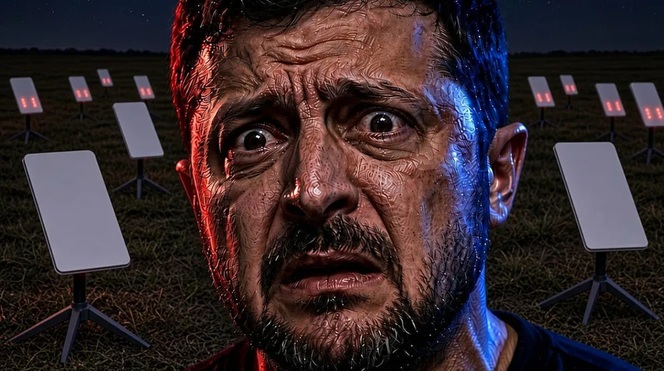
Simplicius, Oct 15, 2026
A day after Zelensky accused the US of cutting “intelligence support” and not providing early warning against Russia’s ballistic missile strikes on Kiev, pandemonium has ensued in Ukraine.
Now the country’s leadership has accused the US of cutting its Starlink support as well.
It all began with a post by prominent Ukrainian figure Serhii Sternenko who detailed how Starlink terminals in Ukraine were throttled when they passed a certain speed restriction:
As can be seen (on original), he accuses Elon Musk’s SpaceX of meddling, which began a firestorm of hate directed toward Musk from the Ukrainian-aligned side of social media.
Musk immediately responded with a clarification: the military version of Starlink is infact operated by the US DOD under the name Starshield and is not controlled by Musk or SpaceX. You can see him responding directly to the star ex-Defense Minister Mykhailo Fedorov himself—note that Fedorov claims connectivity was already being restored at the time:
Musk was forced to divest himself of this arm of his company early in the war in order to continue presenting a “neutral” face for his enterprise and not have it messily linked to offensive military actions which he likely knew would be pushed into very ethically “gray” areas of striking Russian civilian and dual-use infrastructure.
Despite all that however, we must admit the timing is a tad suspicious given that Musk had some very strong words about Zelensky only days ago:
First, it should be mentioned that despite Fedorov’s claims of restoration, there were other counter-claims that his announcement was premature and service was in fact still widely failing.
Several Ukrainian brigades had also posted of their issues. Here the 7th Airborne Assault Corps of the AFU: (on original)
The Ukrainian 7th Rapid Response Corps of the Air Assault Forces reports that Starlink disruptions are occurring in the Hulyaipole/Orikhiv direction, Zaporizhzhia Oblast, this morning.
The so-called Starshield package, which conducts data transferring for drone flights, has received limitations on speeds of 110-120+ km/h, where the connection can be lost for 10-20 seconds making it difficult to control the drones. Additionally, the launch of high-speed mid-range drones has become almost impossible.
Already, since this morning, some missions of the 7th Corps have had to be cancelled due to these Starlink restrictions and communications problems.
Ukraine’s most authoritative figure on these topics, Serhiy Flash, also confirmed that Starlink restrictions had come into force:
On his TG channel he went into further detail:
Everyone is writing about how the “Starlink” restrictions have impacted long-range missions and frontline logistics, but there’s another major problem for us.
“Starlink” is being used in the most effective current solution (interceptors) for protecting our airspace from jet-powered “Shahed” drones.
In fact, with their actions, our partners are depriving us of one of the few chances we have to defend the country from these jet-powered “Shaheds.”
He points out an important and under-appreciated part of the saga: that Starlink is used not just offensively by Ukrainian long-range drones but also defensively in interceptors that target Russia’s own strike assets which have been hitting Kiev. As such, Russia’s recent crippling strikes on Kiev’s facilities now stand to become even worse if these disruptions continue.
In light of the above, today WaPo dropped the bombshell that the US has in fact been threatening key Ukrainian personnel with an intelligence cut-off should Zelensky continue to hit Russian oil sites………………………………………………………………………………………………………….
the US has been juggling its finite space resources between the various theaters of conflict it has provoked and is trying to simultaneously manage………………………………………………
No matter what really happened with the early warning and Starlink fiasco, the fact remains that the US appears to have sent Ukraine a final ultimatum that intelligence will be completely cut off if Ukraine continues to hit Russian energy, at least according to the earlier reports…………………………
In the meantime, Russia has been devastating Kiev, with another massive strike reportedly being planned for the coming days or sooner.
Last night a record 6 sites related to energy infrastructure were hit around Kiev and Kharkov……………………………..https://simplicius76.substack.com/p/panic-in-kiev-as-afus-starlink-mysteriously?publication_id=1351274&post_id=220385664&isFreemail=false&r=3alev&triedRedirect=true&utm_source=substack&utm_medium=email
FISN Investors Have Opportunity to Join Deep Fission, Inc. Fraud Investigation with SBS Law

Business Wire, Oct 4, 2026
LOS ANGELES–(BUSINESS WIRE)–Schall, Brown & Schwartz LLP (“SBS”), a national shareholder rights litigation firm, announces that it is investigating claims on behalf of investors of Deep Fission, Inc. (“Deep Fission” or “the Company”) (NASDAQ: FISN) for violations of the securities laws.
INVESTIGATION DETAILS: The investigation focuses on whether the Company issued false and/or misleading statements and/or failed to disclose information pertinent to investors. Deep Fission conducted its initial public offering (“IPO”) on June 18, 2026, selling 2.5 million shares of stock at $16.00 per share. The Company is the subject of a report published by Iceberg Research on September 26, 2026, that claims the Company’s technology is overhyped and unlikely to become commercially viable. Based on this news, shares of Deep Fission fell sharply.
If you are a shareholder who suffered a loss, click here to participate……………………………………………….. https://www.businesswire.com/news/home/20261004164639/en/FISN-Investors-Have-Opportunity-to-Join-Deep-Fission-Inc.-Fraud-Investigation-with-SBS-Law
To fund the Burnham Government’s priorities, abandon Hinkley Point C, Sizewell C and Wylfa


Experience with Sizewell C shows that private investors are not willing to be exposed to any significant part of this risk and if a deal is to be done the risk will fall on the public, as taxpayers and electricity consumers.
Britain’s three new nuclear projects – Hinkley Point C, Sizewell C and Wylfa – now depend on public money, above all from the National Wealth Fund, which has committed up to £36.6bn to Sizewell C alone: about twice what it can lend to all its other projects. Abandoning all three would save consumers £93–133bn and free the NWF to back renewables, energy storage and the government’s regional and industrial priorities.
. Introduction
If we strip away the rhetoric of a “golden age for nuclear power” and “ripping up rules to fire up nuclear power”, Britain’s nuclear programme looks very tired, with just three projects that have a reasonable chance of completion. Two of these (Hinkley Point C and Sizewell C) had their origins nearly 20 years ago while the third (Wylfa1) was launched under Boris Johnson’s government. Increasingly, what these three projects have most in common is not the reactors, but who is paying for them. The government’s National Wealth Fund (NWF) – set up to catalyse private investment across the economy – has already had to commit up to £36.6bn of the finance for Sizewell C, on top of a loan to design Wylfa’s reactors. If the Advanced Nuclear Framework succeeds in bringing forward the Cottam, Hartlepool and Oldbury projects too, the NWF could find itself committing a further £60bn to nuclear – in total 3.5 times what it has budgeted for the other 24 sectors it exists to support.
A fund created to unlock private investment across the economy risks becoming a vehicle for channelling public money into the most expensive, slowest and least certain to be delivered of all the forms of power generation available. An analysis of costs and benefits suggests that, far from rushing to launch new nuclear projects as the nuclear industry would advocate, the British people would be better served by abandoning these projects. The money and resources released – including by freeing the National Wealth Fund to do the job it was set up to do – can be redeployed to options that will reduce electricity bills, save taxpayers money and improve our prospects of meeting our climate change goals quickly and reliably.
2. Our nuclear capacity
The UK currently has only five operating nuclear power plants: the four remaining Advanced Gas-cooled Reactor stations (4.7GW) which are likely to be retired by 2031/32,2 and Sizewell B (1.2GW), which is expected to operate until 2055. Hinkley Point C (3.26GW) is under construction and will not be complete before 2032.3 Sizewell C (3.26GW) is three years away from an above ground construction start and, if all goes to plan, might be on-line by the start of 2040.4 The Wylfa Small Modular Reactor (SMR) station (1.5GW) is three years from a firm order being placed so is also unlikely to be generating much before 2040.5
Beyond the Hinkley and Sizewell projects, there is no evidence that further large reactor projects will be pursued (the prime site for large reactors is Wylfa and this has been allocated to an SMR project). There are also no specific government-led proposals for projects to follow on from Wylfa. It appears the government is relying on private sector projects to provide additional nuclear capacity and in February 2026 it published its Advanced Nuclear Framework, which is meant to provide government support for private sector-led projects.6 Under this, several forms of support were offered including:
- Finance via the government’s National Wealth Fund;
- Support via Great British Energy – Nuclear in finding sites;
- Help negotiating power purchase agreements such as contracts for difference that would remove any exposure of the plant to the competitive electricity wholesale market;
- Assessment of the projects by Great British Energy – Nuclear.
Two private sector SMR projects – Cottam and Hartlepool, both of about 1GW capacity – had been announced in September 2025 in association with President Trump’s visit to the UK.7 In June 2026, Holtec announced its application to the Advanced Nuclear Framework for the Cottam project.8 By the end of August 2026, X-Energy, the proposed reactor vendor for the Hartlepool site, had not made an application for entry into the Advanced Nuclear Framework.
Beyond Hinkley and Sizewell, there is no evidence that further large reactor projects will be pursued. There are also no specific government-led proposals for projects to follow on from Wylfa.
In July 2026 GE Vernova, via its Polish Partner SGE (Synthos Green Energy), announced an application to the Advanced Nuclear Framework to build up to 14 BWRX-300 SMRs (4.2GW).9 The application involves a proposal to site the first six reactors at the Oldbury site located on the River Severn, currently owned by Great British Energy – Nuclear (GBE-N). This is a problematic site and the Chair of GBE-N, Simon Bowen, told the ESNZ Committee: “If you look at Oldbury, particularly, the site that is close to you, we are aware that the only way to develop the Oldbury site for nuclear development will be with a significant investment in flood defences.”10 SGE’s target to complete the first reactor by 2034 is unrealistic given that it is several years behind the Rolls-Royce Wylfa project, where the first reactor is not expected to be complete before the ‘mid-30s’.11 It lags behind Wylfa in terms of siting, finance, and regulatory approval by the Office for Nuclear Regulation. GBE-N has stated it has not been contacted by SGE about the Oldbury site.12 There is no evidence yet as to whether the Advanced Nuclear Framework will be an effective route for promoting nuclear projects.
So, if there are no further delays with Hinkley Point C, Sizewell C and Wylfa, it is likely that it will be around 2040 before nuclear capacity exceeds today’s levels and even then, will only have got back to 2019 capacity levels. The current government’s target was to essentially remove all fossil-fuel generation by 2030 so new nuclear capacity can play no role in achieving that. If the AGRs are retired in 2031/32 probably on safety grounds (due to graphite moderator issues13) the British electricity system will have to survive with only about 4.5GW of nuclear capacity and no fossil fuel generation for around a decade. So, if there is a need for new base-load capacity, nuclear cannot provide it before 2040, and even then nuclear capacity will be much less than base-load (defined as the lowest level of demand in the year).
The government’s claim that “Unlike traditional large-scale nuclear plants, these projects [SMRs] usually need smaller sites, allowing more flexibility in where they can be built” is belied by the fact that the Wylfa project (1.5GW) and the potential Oldbury project (1.8GW) are substantially larger than any completed nuclear power plant in the UK and the Hartlepool project is about the same size as the AGR stations and Sizewell B. The reality is that sites that are suitable for nuclear projects in terms of physical factors and public acceptance are, and always will be, hard to find and there will be an overwhelming incentive to fit as many SMRs on to an accepted site as possible.
3. Wylfa
In June 2025, the government announced the winner of its competition to select a Small Modular Reactor (SMR) design for deployment in the UK.14 The design was the 470MW Rolls-Royce PWR SMR for which three reactors are expected to be built at the Wylfa site in North Wales (1.5GW). In June 2025, the government announced that it had allocated £2.6bn to the Wylfa project up to the end of fiscal year 2029/3015. A Final Investment Decision (FID) is not expected until 2029 with the process handled by the government-owned Great British Energy – Nuclear (GBE-N) entity. A significant number of hurdles must be overcome before the FID can be taken. These include completion of the Generic Design Assessment by the Office for Nuclear Regulation (ONR). This was expected in July 2026, but unofficial reports suggest the decision will not be before December 2027. The delay is said to be due to the need for design changes. The requirements the nuclear regulator imposes will be an important determinant of the reactor cost. The Wylfa site is widely portrayed as being the best of the existing reactor sites for new development and it did undergo some investigation when it was proposed as a site for two large reactors a decade ago. Nevertheless, the site investigations must be rigorous given the site is unlikely to be cleared after reactor operation until perhaps 150 years from now. However, site work done so far will be minimal, much of it funded by GBE-N so remediation costs would be small.
None of the important financial details about the Wylfa project have been announced. These include ownership, finance method, source of finance and power sales arrangements. However, experience with Hinkley Point C and Sizewell C gives strong indications of what would be needed to finalise the project. They include a substantial government equity stake, possibly as high as 100%; a power sales agreement that ensures all investor costs are passed on to consumers/taxpayers; and cheap finance provided from the National Wealth Fund.
Private investors will be wary of this project given that, in addition to the risks all nuclear projects suffer, the design is completely untested and Rolls-Royce has no experience as a vendor of civil nuclear power plants. These risks exist and will not be changed by different methods of funding and finance. All that can be changed is who bears these risks. Experience with Sizewell C shows that private investors are not willing to be exposed to any significant part of this risk and if a deal is to be done the risk will fall on the public, as taxpayers and electricity consumers. A deal will be easiest to reach if government owns all or practically all the equity so that the risk will fall on taxpayer and electricity consumers. This will avoid the lengthy delays that occurred getting the Sizewell C project to an FID from having to negotiate, not very successfully, with potential investors.
Rolls-Royce has not made predictions of the construction cost since the design was little more than a conceptual one. In 2021, it claimed the cost would fall to £1.8bn for the ‘nth of a kind’ (NOAK) with the first expected to be generating by 2030. The NOAK costs would apply when the supply chain is well established, and learning has made the construction process well established and repeatable. In practice, how many reactor orders it will take to get to ‘n’ is not well-established and most reactor designs are superseded by new or modified designs well before they reach any credible ‘n’.16 So, these forecasts have no value in forecasting the actual cost of a Rolls-Royce SMR.
By June 2026, GBE–N had let contracts worth nearly £900m for the Wylfa project so the compensation payable as a result of abandoning these contracts would be significantly less than £1bn.17 The government’s National Wealth Fund agreed to lend it £599m to develop the design in April 2026 demonstrating that the design is still far from complete.18
4. Sizewell C
The Sizewell C plant is nearly a decade behind Hinkley Point C and the costs incurred so far are correspondingly smaller. The Final Investment Decision (FID) was taken in July 2025 with the government’s central estimate for completion at the end of 2039 at a cost of £40.5bn (2024 money).19 In the June 2025 Spending Review, ahead of the FID, then-Chancellor Rachel Reeves allocated £14.2bn of public money to be spent on the project by the end of fiscal year 2029/30.20 The government claims the “(p)roject will be built for around 20% less than virtual replica Hinkley Point C”, claiming the project “builds on lessons learnt from the construction of Hinkley Point C.” It is misleading to compare in this way the estimated cost at Final Investment Decision (FID) of a project that has not yet had a chance to go wrong – Sizewell C – with one that has been under construction for eight years – Hinkley Point C – for which five delays and cost increases have been announced. The appropriate comparison is with the forecast costs at the point of FID. For Hinkley Point C it was £24bn (2024 money) compared to £40.5bn (2024) for Sizewell C, a real increase of nearly 70%. The time from Final Investment Decision (FID) to completion for Hinkley Point C was forecast to be nine years whereas for Sizewell C it is forecast to be 14 years. So, the learning from Hinkley Point C has led to large real estimated cost increases and a much longer expected lead-time.
The government was only able to complete the deal by offering huge public subsidies and, even then, had to take nearly half the equity. In the government’s Subsidies Database, the government estimates the value of these subsidies as £54.6bn.
The government was only able to complete the deal by offering huge public subsidies and, even then, had to take nearly half the equity. In the government’s Subsidies Database, the government estimates the value of these subsidies as £54.6bn.21 This is a ‘discounted’ figure so the actual amount paid by taxpayers and electricity consumers will be substantially more.22 During the construction period, consumers will pay a surcharge on their electricity bills. This will pay all the investors’ finance charges (approximately £25bn) and will also provide a ‘gift’ to investors of 60% of the equity the investors will be required to put into the project23 worth about £8bn. Finance will mainly be provided by the government’s National Wealth Fund with a budget of up to £36.6bn, at an advantageous rate initially set at a real rate of only 4.5%.
4.1. What will the price of power from Sizewell C be?
he key element in determining the cost-benefit balance for abandoning Sizewell C is the price consumers must pay for its output. One of the few good features of the Hinkley Point C deal is that consumers know what price they will be charged for power, albeit a very high one, regardless of what costs are. As EDF states in its announcements of cost increases: “Under the terms of the Contract for Difference, there is no impact for UK consumers [of cost increases].”24 The contract was for 35 years whereas for Sizewell C it is for 60 years, so consumers will be locked into the Sizewell deal for 25 years longer. For Sizewell, the price of power will be whatever it takes to generate the revenue the investors are contractually entitled to – consumers have had a blank cheque signed on their behalf. Every project using the EPR technology chosen for Sizewell C has far exceeded the cost and time estimates made when the investment decision was taken. So, the power price forecasts for Sizewell C based on estimates made at the time of FID must be regarded as highly likely to be a gross underestimate of the outturn power price. If construction or operating costs are higher than forecast, they will be passed on to consumers. Sizewell C Ltd has made some highly optimistic predictions about the price of power from Sizewell C claiming it would be £88-102/MWh (2026 money)25 – well below Hinkley. But this comes from the project’s promoter, rests on its best-case assumptions, including no cost overrun at all, and carries no consequences for the company if it proves wrong. Given the record of every EPR built so far, it should be treated as a floor rather than a forecast.
Unlike Hinkley Point C, consumers will be required to pay all the finance costs incurred in the construction period as they arise and they will also pay more than half of the investors’ equity contributions. The National Wealth Fund is providing most of the finance at subsidised rate representing a taxpayer subsidy. These additional costs must be factored into any projection of the cost of power from Sizewell C. So, all things being equal, the price to consumers of power from Sizewell C ought to be significantly less than for Hinkley Point C which had none of these subsidies. However, all things are not equal: the forecast construction cost of Sizewell is 70% higher in real terms than the cost of Hinkley on which the power purchase price of £89.5/MWh (2012 prices) was based.
If the outcome cost and time did reach the HRT, it would mean that the construction cost, which would be passed on to consumers as part of the Regulated Asset Base (RAB), would be double the forecast level for Hinkley Point C, the level on which its power price was calculated.
The Sizewell deal includes a Higher Regulatory Threshold (HRT) level with construction costs £47.7bn and completion in 2043 compared to the central assumption, the Lower Regulatory Threshold (LRT), which assumes a construction cost of £40.5bn and completion at the end of 2039. Sizewell C Ltd’s baseline estimate is completion in July 2039 at a cost of £38.2bn. Unlike the LRT and HRT, this estimate has no contractual force and there will be no financial consequences when it is proved wrong. While the HRT is described by government as having a ‘remote’ probability, all experience with nuclear projects, especially those involving EPR technology, suggests that an outcome of costs less than 20% over budget and a three-year delay would be an unprecedentedly good result. If the outcome cost and time did reach the HRT, it would mean that the construction cost, which would be passed on to consumers as part of the Regulated Asset Base (RAB), would be double the forecast level for Hinkley Point C, the level on which its power price was calculated. At that point, the contractual requirement on investors to continue to invest would end with no penalty to them – they keep the full return on what they have already invested – and government would either have to take over funding or abandon the project. By contrast, if Hinkley Point C is not completed by 203626, the government has the option to tear up the power purchase agreement leaving EDF to try to negotiate a new deal or abandon the project and lose the money it invested in the project.
4.1.1. The NAO report
The NAO report on the Sizewell C project publishes a large amount of data on the project including the forecast range of costs of Sizewell over its entire life in real terms.27 Its lower figures correspond to the LRT values and the higher to the HRT. Its data show the flow of cash during the construction period including the ‘net consumer payments’ figure of £24.7-34.5bn. We assume this includes the consumer contribution to investors’ equity costs. NAO’s figures show the cash flow during operation and the total consumer contribution in that period is £111.8-124.0bn making a total consumer contribution of £136.5-158.5bn.
The NAO analysis reports that the price of power is expected to be £133–155/MWh (2024/25 prices), or £152–178/MWh without the ‘recycling’ of the government’s profit as the 44.9% shareholder. Recycling passes that profit to consumers’ bills instead of to the Exchequer. It is a large subsidy from taxpayers to electricity consumers, and it means the lower price understates the full cost of Sizewell C’s power to the public. It is also a very bad precedent to invest so much taxpayers’ money for no return. The NAO notes: “Recycling is a policy decision, which the government could stop or modify at a later point, changing the cost to consumers.”28……………………………………………………………………………………………………………………………………………………….
Given the improbability of the Sizewell C project being completed on time and to budget even under the LRT assumptions, the price of power from Sizewell C will inevitably exceed the price of power from Hinkley Point C and probably by a large amount……………………………………………………………………………………………………………………………………………………………..
he savings in consumer power price from abandoning Sizewell C, assuming recycling continues, range from £58bn in the highly optimistic lower price case to £98bn in the still optimistic higher case. If the taxpayer subsidy that recycling represents is withdrawn, the savings go up to £87-132bn.
4.2. What would the cost of abandonment be?
The cost of remediating the Sizewell C site would be relatively small…………………………………………………………..
5. Hinkley Point C……………………………………………………………………………………………
5.2. What would the cost of abandonment be?…………………………………………………………………………………………………………………………………………………………………..
6. Bygones are bygones
British government ministers have repeatedly failed to abandon projects that were clearly going badly wrong preferring to pass the problem to their successor…………………………………………………………………………………..
7. Opportunity costs
Pursuing nuclear power will inevitably take resources away from options that would more effectively help the UK meet its climate change goals (see Annex 2). Of all the power generation technologies, nuclear power is by far the most capital intensive and the longest to build and the most likely to fail at some point between project announcement to completion. Nuclear power also consumes a large proportion of the government’s financial and human resources…………………………………………………………….
7.1. The National Wealth Fund………………………………………………………………………………………………..
Its financing of Sizewell C, 130% of its budget for other projects, is grossly disproportionate and distortive. Indeed, only £17.8bn of the NWF’s £27.8bn is for loans and equity – the rest is guarantees – so its lending to Sizewell C is about twice what it can lend to all its other projects put together.
……………………………………………………………………………………………………………………………………………
9. Conclusion
It is possible to make some estimate of the costs and benefits of completing Hinkley Point C and Sizewell C and in both cases, the evidence is decisively in favour of immediate abandonment. The case for abandoning Sizewell C is clearly the strongest, but the case for abandoning Hinkley Point C is also strong even after construction has been underway for eight years.
Little is known about the costs and commercial arrangements for the Wylfa project, particularly who will bear the economic risk, but if a deal is to be concluded, it is only likely to be possible if these risks are borne by the public. Wylfa therefore represents a major gamble with public money……………….
For a new government with a substantial mission for regional growth and tackling the cost-of-living crisis, reallocating funds from nuclear energy to economic growth should be viewed as a real option.
…………………………………………………………………………………………
Annexes 1 and 2…………
MULTIPLE REFERENCES ……………. https://policybrief.org/briefs/to-fund-the-burnham-governments-priorities-abandon-hinkley-point-c-sizewell-c-and-wylfa/
UK Civil-Military Nuclear Policy: ‘radical reset’ or ‘misleading fig leaf’?

the deep entangling of civil and military nuclear infrastructures. …………………. study found a net flow of value from civil to military nuclear infrastructures amounting to more than £5 billion per year42.
The declared costs of the UK nuclear-propelled submarine programme are already questioned even by advocates44. Without this massive cross-subsidy, it is clear these burdens would become even more unaffordable4
The government’s nuclear deregulation drive rests on assumption, not evidence, never comparing nuclear with cheaper, faster alternatives, downplaying safety risks, and denying trade-offs outright. A less visible driver, they suggest, is military pressure: sustaining Britain’s submarine-building base costs over £5 billion a year.
Andy Stirling– Emeritus Professor, Science Policy Research Unit (SPRU), University of Sussex, Phil Johnstone– Visiting Fellow, Global Studies, University of Sussex, October 2026, https://policybrief.org/briefs/uk-civil-military-nuclear-policy-radical-reset-or-misleading-fig-leaf/
Much has happened since Starmer’s King’s Speech1 on 26 May 2026. On the face of it, that “radical reset” of arrangements governing both civil and military nuclear activities still stands as the basis for Andy Burnham’s own policy direction on these crucial issues. Certainly, this major boost in official commitments to all things nuclear remains evident in the direction taken by Andy Burnham’s early initiative2. Building on the Nuclear Regulatory Taskforce Review3 initiated in 2025, the biggest overhaul of nuclear regulation for decades seems to be ‘full speed ahead’.
But does this renewed momentum make sense, for the most expensive energy on the grid and a military posture that has remained unchanged for decades despite a massively transformed world? What is the evidence underpinning these moves? Where has this been properly interrogated? The Taskforce review is treated as if it has already answered these questions. This briefing will examine whether and to what degree this is so.
Whatever view is taken of nuclear power or nuclear weapons, the major nuclear regulatory reforms now in play are extraordinarily important. Nuclear technologies touch on issues of energy, climate, public spending, environmental protection, health, security and national strategy. If regulation is to be weakened, streamlined or redesigned, all sides might agree that the case for doing so should be rigorous, transparent and evidence-based4.
Accordingly, the stated aims of the Review were to make regulation more efficient, affordable and proportionate. Yet the new nuclear policy is undermined right at the outset by such claims being more assumed than supported by evidence. Indeed, the Taskforce itself says that “[w]e have taken the Government’s commitment to civil and defence nuclear power as given for the purposes of this review”5.
As a result, conclusions are presented as though they are self-evident. Without duly attending to cross-country comparisons6, the UK is asserted to be an “international leader” in nuclear technology7. Existing UK nuclear regulation is likewise said to be “well respected”. But it is not mentioned specifically by whom, nor on what particular grounds, this should be true of a country which has, under any view, slipped far behind others in this field over the past fifty years8. Taking these claims as “given” risks substituting reasoned analysis with nationalistic posturing9.
Nuclear technology is likewise revealingly characterised as a given: as “essential” for national security, energy security and net zero10. Again, detailed evidence for such claims is almost entirely absent. Declared priorities of efficiency, affordability and proportionality are further undermined by failing anywhere in more than 160 pages to substantiate how these values are met by furthering nuclear technologies rather than their many alternatives11. As if nuclear power existed in isolation, the attention is virtually all on this one option alone.
So, it may seem scarcely believable, but is nonetheless true, that the comparative case made by the Taskforce for nuclear power in relation to alternatives is not merely flawed: it is non-existent. Perhaps the reason for this lies in the inconvenience for official interests, of what is an increasingly compelling comparative picture. Despite the official impressions given otherwise, nuclear power is in fact clearly generally more costly12, slower and less effective13 than alternative strategies for economical, secure, firm-equivalent, domestic zero carbon energy14. This is true both internationally15 and even in official UK data16 (on the rare occasions and obscure corners where it is looked at17).
The Taskforce’s conclusions are presented as though they are self-evident: the UK is “international leader” in nuclear technology though it has slipped far behind others in this field over the past fifty years. Taking these claims as “given” risks substituting reasoned analysis with nationalistic posturing.
Nor are these core considerations all that the Taskforce falls short of properly addressing. The Review nowhere refutes that nuclear continues to present disproportionate risks of distinctive low-probability, high-consequence accidents18, yet seemingly does not consider this an issue of importance warranting further discussion. Likewise neglected is a scientific literature increasingly pointing to locally elevated health problems around nuclear facilities19. Even without accepting this evidence, examining it should be a priority.
lso under-addressed by the Taskforce are concerns that nuclear presents: unresolved eye-wateringly expensive radioactive waste challenges20; extraordinary vulnerabilities to climate-driven sea-level rise21; and highly concentrated pre-distributed iconic targets for enemies in times of war22. Again, conclusions may vary, but – unless the aim is simply to force through a manifestly unfavourable option – why not at least look at such issues?
Perhaps most disturbing of all is the wider context. This failure by the Taskforce even to attempt duly detailed comparative analysis is also a feature of high-profile official UK analysis for many years. Again, neither the Taskforce, nor the UK Government now enthusiastically taking up its prescriptions23, make any reference to any official attempt to compare nuclear power with its alternatives. This remarkable blind spot means current deregulatory action is seriously under-substantiated.
In the one area where the Taskforce does address issues of risk, neglect for rigorous assessment comes even more to the fore. In particular, critical attention is given to the long-established international ALARP principle24 – the requirement that risks be reduced “as low as reasonably practicable”. Here, without making underlying evidence readily checkable, the Review simply asserts current interpretations of nuclear risks to be “overly cautious25”.
But ALARP has evolved over many decades26 precisely because nuclear activities can involve severe and long-lasting consequences. Far from being “overly cautious”, a general pattern is for risks that were initially denied to eventually be acknowledged by events27.
So, any move to weaken ALARP inevitably raises questions about trade-offs. Faster approvals, lower costs and greater flexibility may all be desirable goals on their own. Yet it is difficult to see how significant regulatory changes can occur without affecting the balance currently struck between efficiency and protection.
It makes no reference to any official attempt to compare nuclear power with its alternatives. This remarkable blind spot means current deregulatory action is seriously under-substantiated.
Oddly, these trade-offs are also rarely discussed in detail by the Taskforce. And in the ensuing King’s Speech28, they are explicitly framed as a “win-win”. So, it is not so much that a case is made as to why relaxing nuclear regulation will incur benefits greater than risks. The unsupported claim is even stronger: that negative trade-offs effectively don’t exist. Given both the history of nuclear technologies29 and the current world situation30, this again seems an eccentric position to assert without evidence.
All this matters still more, because the Taskforce recommendations now being acted on are not modest adjustments. The Taskforce itself repeatedly calls for “radical reform” and a “radical reset” of the regulatory system31. Keir Starmer put it even more strongly in claiming that his “Government rips up rules to fire-up nuclear power”32. There is no suggestion of any change of direction by Andy Burnham. Yet if the existing nuclear regulatory system is as genuinely well respected as is claimed, why is radical change necessary at all? If radical change is necessary, what exactly is wrong with the current arrangements? Does this contradiction not also suggest rhetoric more than substance?
A further striking feature of the Review is its lack of historical perspective. For nearly two decades, successive UK governments have sought to streamline planning, nuclear licensing and approval procedures33. New institutions have been created. Planning procedures have been reconfigured34. Regulatory processes have been accelerated. Yet despite all this, nuclear projects remain slow, costly and difficult to deliver35.
Before proposing another round of deregulation, then, it seems reasonable to ask why previous attempts failed. Was regulation really the main obstacle? What are the implications if the key difficulties lie in the economics and engineering of nuclear technologies themselves36? What if – like so many technologies before – nuclear power is simply becoming obsolete?37
If there were no alternatives38, the Taskforce’s blinkered focus on nuclear alone might be understandable. But in the UK, as worldwide39, the main story is – again under any view – the phenomenally rapid overtaking of nuclear power by other domestic, secure, zero carbon technologies40. If the Taskforce were to be true to its stated principles of proportionality, efficiency and affordability, surely it would have something to say about this?
Perhaps the most important issue, then, concerns democratic accountability.41 Treating the case for nuclear technologies as ‘given’ diverts attention from the actual pros and cons of nuclear activities to how best they should be regulated. In this, safety problems are not directly denied but implied to be insufficient to outweigh “the UK’s nuclear ambitions”.
Was regulation really the main obstacle? What are the implications if the key difficulties lie in the economics and engineering of nuclear technologies themselves? What if – like so many technologies before – nuclear power is simply becoming obsolete?
What then are the drivers of these ambitions? The Review itself and associated Kings Speech confirm the deep entangling of civil and military nuclear infrastructures. So – albeit not asked officially – the question reasonably arises as to whether the flows of resources from mixed civil and military budgets (as funded by taxpayers or electricity consumers) match the patterns of costs as actually incurred on civil and military sides. Or is there a mismatch that leads one side to gain disproportionately by the sharing of resources? Cui bono?
When this oddly-neglected question was actually addressed by a study in 2024 for a UK Foreign Office-funded research programme, the answer was clear. The study drew on officially stated budgets of government civil and military nuclear-related agencies and programmes and on flows of revenues from consumers for purchase of excessively expensive wholesale nuclear electricity – that would cost less, according to Government data, if alternative zero carbon sources were used. Even when calculated in a conservative way – that diminishes the size of the observed imbalance – this provisional study found a net flow of value from civil to military nuclear infrastructures amounting to more than £5 billion per year42.
In the absence of officially audited figures, this kind of external analysis is all there is in the UK at the moment. Although the Government itself is silent on the matter, it seems clear who benefits from the emphasised integration of civil and military nuclear industrial base. And this corroborates the openly stated position in defence documents discussed earlier in this briefing. The reason for UK perseverance with unnecessarily expensive and otherwise substitutable nuclear power seems largely to reflect military pressures43.
Whatever side they are viewed from, the implications are very serious. The declared costs of the UK nuclear-propelled submarine programme are already questioned even by advocates44. Without this massive cross-subsidy, it is clear these burdens would become even more unaffordable45. So it is evidently for this reason that the Taskforce asserts nuclear technologies to be “essential” for the UK. This seems why the Taskforce links a “high-performing national nuclear enterprise” so strongly to defence objectives.
This picture is reinforced by the provisions of the King’s Speech. Accepting in principle all 47 recommendations of the Nuclear Taskforce, the King’s Speech was even more clear in expressing the remarkable intensity of commitment that exists in UK policy for sustaining a combined civil-military nuclear complex. The Nuclear Regulation Bill itself is explicitly justified as speeding nuclear delivery and reducing costs “in a boost to the UK’s energy sovereignty and the nuclear deterrent”.46
In conclusion, the key point applies even though reasonable people may disagree about the morality, wisdom and efficacy of nuclear weapons as well as about the pros and cons of any future role for nuclear power. Under any view, such disagreements should surely be addressed openly? It is here that both the Taskforce Report, and the wider grounds for current policies being implemented on this basis, might be seen from all sides as problematic.
The core issue is not whether nuclear regulation should change, or how. It is whether proposals for the present “radical reset” are supported by analysis that is sufficiently rigorous, balanced and transparent47 to justify the profound consequences that may follow for UK electricity consumers, taxpayers and citizens in the widest sense. On that question, important doubts remain.
REFERENCES – (many) ……………………………………………………………
Romania’s SMR project with NuScale hits deadlock as 80% of conditions are not met
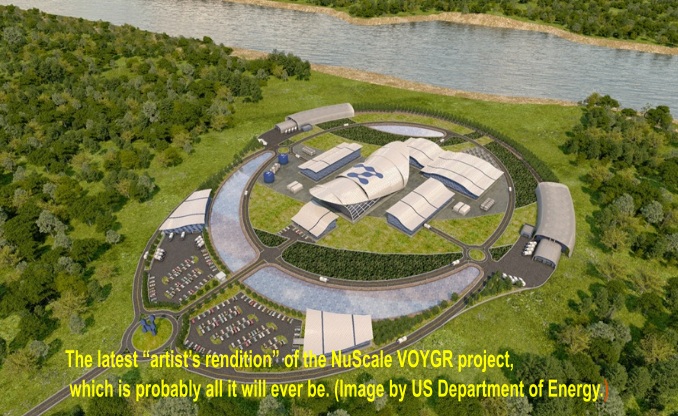
Romania Insider 12th Oct 2026
Romanian nuclear group Nuclearelectrica (BVB: SNN) said that more than 80% of the conditions specified when it approved the Final Investment Decision (FID) for the Doicești small modular reactor (SMR) project in February remain unmet. These include critical commitments assumed by US partner NuScale.
This implies that the project as it was planned can not continue; the company said that it will reassess the SMR technologies and decide accordingly.
It concluded that there currently exist premises for the initiation of steps to update the SMR Implementation Strategy in Romania, “for which we continue to appreciate the openness of the American partners.”……………………………………….. (Subscribers only) https://www.romania-insider.com/business/romanias-smr-project-nuscale-hits-deadlock-80-conditions
Questions raised over new Faslane base ballistic shelters
PLANS to install ballistic security shelters at the UK’s nuclear submarine
base on the Clyde have sparked questions from anti-nuclear campaigners over
what threats military chiefs believe Faslane could face.
Construction firm
Henry Brothers has been appointed to deliver specialist ballistic security
shelters at HMNB Clyde as part of a £2.55 million package of infrastructure
works commissioned by Babcock International Group. The programme also
includes enhanced security fencing and refurbishment of an existing
pressure test building, with Babcock saying the investment will help ensure
facilities supporting the Royal Navy’s Vanguard and Astute-class submarine
fleets remain “resilient, secure and fit for the future”.
However, the
Scottish Campaign for Nuclear Disarmament (CND) said the plans raise
important questions about both the purpose of the shelters and the risks
associated with hosting the UK’s nuclear weapons system in Scotland.
The National 12th Oct 2026,
https://www.thenational.scot/news/26630106.questions-raised-new-faslane-base-ballistic-shelters/
1 This Month
23-25 October – on Zoom – World BEYOND War’s annual global conferenc


Shut down the radiation-damaged Heysham nuclear reactors now
To see nuclear-related stories in greater depth and intensity – go to https://nuclearinformation.wordpress.com

Say No to NASA’s Reckless Nuclear Reactor on the Moon
Say No to NASA’s Reckless Nuclear Reactor on the Moon

-
Archives
- October 2026 (247)
- September 2026 (339)
- August 2026 (330)
- July 2026 (355)
- June 2026 (287)
- May 2026 (306)
- April 2026 (356)
- March 2026 (251)
- February 2026 (267)
- January 2026 (308)
- December 2025 (358)
- November 2025 (359)
-
Categories
- 1
- 1 NUCLEAR ISSUES
- business and costs
- climate change
- culture and arts
- ENERGY
- environment
- health
- history
- indigenous issues
- Legal
- marketing of nuclear
- media
- opposition to nuclear
- PERSONAL STORIES
- politics
- politics international
- Religion and ethics
- safety
- secrets,lies and civil liberties
- spinbuster
- technology
- Uranium
- wastes
- weapons and war
- Women
- 2 WORLD
- ACTION
- AFRICA
- Atrocities
- AUSTRALIA
- Christina's notes
- Christina's themes
- culture and arts
- Events
- Fuk 2022
- Fuk 2023
- Fukushima 2017
- Fukushima 2018
- fukushima 2019
- Fukushima 2020
- Fukushima 2021
- general
- global warming
- Humour (God we need it)
- Nuclear
- RARE EARTHS
- Reference
- resources – print
- Resources -audiovicual
- Weekly Newsletter
- World
- World Nuclear
- YouTube
-
RSS
Entries RSS
Comments RSS

