Israel spent £50,000 lobbying Reform

Before deputy leader Richard Tice told MPs not to talk about Israeli influence
DANIA AKKAD, 30 June 2026, https://www.declassifieduk.org/israel-spent-50000-lobbying-reform/
Reform UK’s deputy leader said last week that a parliamentary debate into Israeli influence on British politics was “antisemitic in its very motivation and at its core”.
“As such, we should utterly reject it,” argued Richard Tice to a room full of MPs.
What he did not tell them, however, was that he had been on a trip to “the Gaza front line” last September funded by the newly-created Reform Friends of Israel, where he concluded that the Gaza famine was a “blatant lie”.
And that trip is not the only example of pro-Israel pressure groups working with Reform. Just a few short weeks after Tice’s visit, his chief of staff and a motley crew of Reform figures visited Israel in a trip which has received scant media attention.
Their six-day jaunt in November 2025 included a visit to the illegally occupied Golan Heights, which the UK recognises as part of Syria.
They also visited Israel’s police headquarters, which is overseen by far-right national security minister Itamar Ben-Gvir, who is sanctioned by the UK for “repeated incitement of violence against Palestinian civilians”.
This trip was funded by the Israeli Ministry of Foreign Affairs, according to newly released Israeli government data seen by Declassified and found by Berlin-based journalist Yossi Bartel.
The records show that the ministry paid Conexión Israel – a company based in Jerusalem that organises high-level country visits – more than £50,000 to facilitate the delegation.
The delegates returned singing Israel’s praises and denouncing British protesters marching against the war in Gaza as antisemitic and “naively propping up a terrorist ideology”.
Dr David Bull, then Reform UK party chairman, said the trip had been “life changing”.
“I now understand the situation that Israel finds itself in and Reform UK will always stand with the Israeli people,” he said.
Andy Kalil, the member of the public who organised the petition that sparked last week’s debate in parliament, said the trip “goes to the heart of why we petitioned for an independent inquiry into pro-Israel influence in UK politics.”
“A trip funded by the Israeli Ministry of Foreign Affairs that exposed participants to the Israeli government’s perspective is clearly a matter of public interest,” he told Declassified.
‘Their fight, our fight’
In addition to Bull, delegates included Lancashire county council leader Stephen Atkinson, London assembly member Alex Wilson, and Reform UK board member Gawain Towler.
Both Atkinson and Wilson declared that their place on the trip cost Israel’s foreign ministry £4,861 each.
Ryan Powell, Tice’s parliamentary chief of staff who recently ran unsuccessfully as a Reform UK candidate in south London, was also on the trip.
As was Rafaella Stefani, another member of Tice’s parliamentary staff. She helped host an event at Reform’s party conference where Israel’s deputy ambassador spoke.
The reason for the visit, according to the parliamentary staff register, was to study Israel’s policing, border security, health service and immigration control.
The group visited several locations targeted during the Hamas-led attacks on 7 October 2023, including the Nir Oz kibbutz in southern Israel and the site of the Nova music festival massacre.
“It sickens me that something like this could ever happen,” said Wilson, who posted a video from where the mass killing took place.
“It also sickens me that back in the UK, week after week, we’ve seen thousands of people marching to give succour to the monsters who did this.”
Bull wrote that the group also met with Tel Aviv’s deputy mayor to discuss “visa overstayers and asylum seekers” and the Israeli National Police operation headquarters “where the very advanced use of technology enables them to act on ALL CRIME”.
Towler questioned how the UK “once a steadfast ally, let relations with Israel collapse into this sorry mess”.
“After all, their fight is, in many ways, our fight. A fight for enlightenment ideals, international norms, democracy and the rest,” he wrote.
Rising power
The cost of the trip represents only a small fraction of an enormous influx of money flowing into Reform UK, particularly from a small group of overseas expats.
The party raised more than £9 million in donations in the first three months of 2026, far more than any other political party and nearly half of total donations raised by all the parties put together.
Most of the funding came from two crypto billionaires: Christopher Harborne, a British-Thai dual national, and Ben Delo, who is relocating to the UK from Hong Kong so he can keep donating to the party after new legislation capped overseas donations from British citizens to £100,000.
The party has also held international fundraisers in wealthy British expatriate communities including in the United Arab Emirates, and has said it will hold ones in Monaco and the US.
Chris Doyle, director of the Council for Arab-British Understanding (Caabu), said the trip was “very typical” of the Israeli government’s approach over decades.
With Reform leading in opinion polls, Israel has clearly assessed that the party “will have a high chance of either forming the next government, being part of that government in a coalition perhaps or being the lead opposition,” Doyle said.
It’s also very much in keeping with the Israeli strategy of reaching out to far-right groups across Europe, in the US and India which “have adopted highly anti-Muslim, Islamophobic positions”, he said.
“This is perfectly standard operating practice to reach out to such groups, build long-term links to try to get them to see the world as one between Israel as a representative of Western civilisation against barbaric Muslim extremists,” he said.
‘Greater scrutiny is needed’
Kalil said he found the strongly pro-Israel public statements from the delegation “very concerning”.
“Delegates were shown sites highlighting Israel’s security concerns, but not the devastation in Gaza. That’s not a balanced fact-finding visit,” he said.
On Monday, Kalil submitted a formal complaint about last week’s debate.
Among his primary concerns, he said in his complaint, was “the repeated characterisation of the petition, its signatories and several MPs who spoke in support of it as antisemitic.”
“The debate did little to address fundamental questions relating to lobbying, political donations, parliamentary visits, transparency or influence,” his complaint said.
“Instead, it demonstrated why many people believe greater scrutiny is necessary.”
He has asked that the government review whether it met the standards expected of such debates and for it to be rerun.
In addition to trips paid for directly by the Israeli government, British politicians including Tice have been taken to Israel by Reform Friends of Israel.
The group is led by Jason Pearlman, who until December was a media adviser to Israel’s president, Isaac Herzog.
Herzog has been found by a UN commission to have incited genocide in Gaza.
Speaking from Israel, he told Declassified that he started a conversation with Reform about turning the party’s ‘Friends of Israel’ group into a “full-time” organisation while he was still working for Herzog.
In addition to trips paid for directly by the Israeli government, British politicians including Tice have been taken to Israel by Reform Friends of Israel.
The group is led by Jason Pearlman, who until December was a media adviser to Israel’s president, Isaac Herzog.
Herzog has been found by a UN commission to have incited genocide in Gaza.
Speaking from Israel, he told Declassified that he started a conversation with Reform about turning the party’s ‘Friends of Israel’ group into a “full-time” organisation while he was still working for Herzog.
“We did have a dinner with Nigel [Farage] and some key backers,” he said. “We were able to put seed funding together.” Pearlman refused to say who Reform Friends of Israel’s (RFOI) donors were.
The Israeli embassy in London and Richard Tice have been approached.
Book. The Russo-Ukrainian War: Follies of Empire
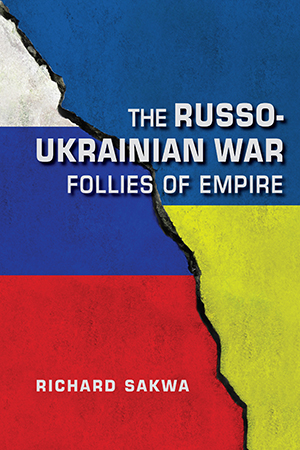
By Richard Sakwa, 22 July26 https://www.ceris.be/blog/the-russo-ukrainian-war-follies-of-empire/
Overview
The number of casualties in the ongoing Russo-Ukrainian war is rapidly approaching 1.5 million, with no resolution in sight … a staggering reality. Seeking to make what sense is possible of this catastrophic conflict, Richard Sakwa meticulously explores the origins, course, and consequences of the war in the sweeping context of global and domestic politics since 1945.
Sakwa’s balanced analysis centers on what he perceives as the five levels of the conflict: the dynamics of Ukrainian politics, the evolution of Russo-Ukrainian relations, the relationship between Russia and the West, broad changes in international politics, and the prospects for a viable and sustainable peace. In explaining―without endorsing―the logic behind actions on all sides, his goal is to contribute to a path toward that peace.
Reviews
“Sakwa offers a transcendent explanation for how the war in Ukraine fits into a decimated relationship between Russia and what he calls the US-led political West…. Even those who believe that the war grew out of a dance that Russia and the West did together, but that Russia’s choice in February 2022 is indefensible, will find much in the book to ponder and much in Sakwa’s hopes for the war’s outcome and future Russian-West relations to admire.”
— Robert Legvold, Columbia University
“In this deeply researched book, Richard Sakwa displays a balance rare in Anglophone writing on the subject of the Russo-Ukrainian war…. Sakwa’s superb account should be read by all who want to understand the origins of this tragic, unnecessary conflict, and how it might be ended.”
— Robert Skidelsky, University of Warwick
“Sakwa’s analysis advances the most articulated interpretation of the war through the lens of sovereign internationalism. A must-read for all those who want alternative explanations of the broader framework of the conflict, accompanied by detailed analysis of the course and consequences of the war.”
— Marlene Laruelle, George Washington University
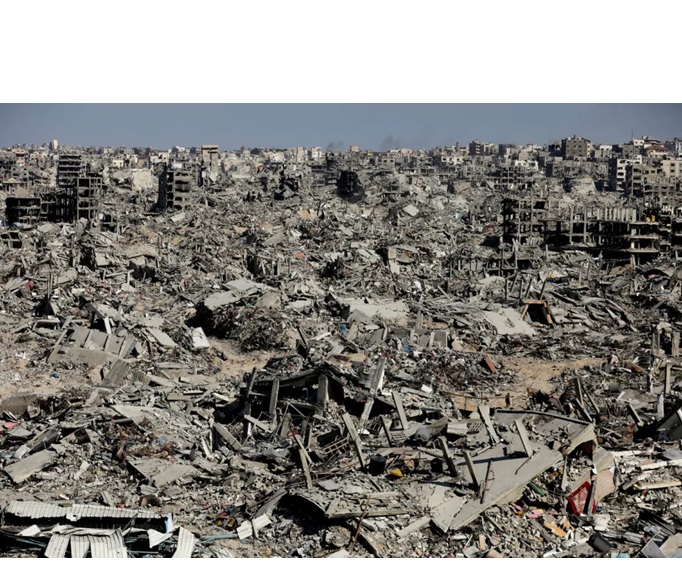
‘Gaza Is One Giant Graveyard’
SCHEERPOST, July 21, 2026, Marah Abdel Jaber Prism
A seasoned humanitarian aid worker directing distributions to Gaza since the start of Israel’s genocide in October 2023 went on their first mission to the Strip last winter. During the two-week mission, they conducted a ground assessment: testing the efficacy of aid, recording field interviews with residents, and surveying the functionality of local hospitals. They have requested anonymity in order to share what they learned publicly, and minimize the risk of retaliation from Israeli officials.
In a Q&A with Prism in February, they reflected on the direct role of global humanitarian aid organizations in escalating the dehumanization of Palestinians under Israel’s genocide, the lack of a true ceasefire, and the world’s abandonment of Palestinians.
This interview has been edited for clarity and brevity.
Marah Abdel Jaber: What were the conditions of Gaza upon your arrival?
Humanitarian Aid Worker: When entering, we crossed through the Karem Abu Salem border and drove straight across the militarized yellow zone through Rafah. If I didn’t know any better, I wouldn’t think that it was an actual city before. It’s almost entirely flattened, and most of it has been bulldozed. As we made our way up towards Khan Younis, we saw some demolished buildings and rubble. You would never think that there were people living there before. It was obvious that the Israeli forces were bulldozing away evidence of war crimes, the genocide, and the dead. That was all I could think about while driving through it.
Abdel Jaber: What was a typical day in the field for you?
HAW: My role required visiting different programs that [a medical NGO] was running and giving feedback. I also looked into some of their pilot programs or their areas of interest for launching new programs. I visited a lot of different clinics, hospitals, a school, and even an orphanage. I spoke with different parts of the population dealing with orphaned or unaccompanied separated children, the elderly, amputees, or those receiving therapy. I had quite a diverse exposure to the issues that the population is facing there, in addition to the aid situation and the distribution.
Abdel Jaber: What was most striking about the reality on the ground?
HAW: The living conditions are horrendous. Many people don’t know about the reality on the ground because mainstream media is pushing the narrative of a ceasefire to distract from the next phase of the colonial project: to build on top of a cemetery. Gaza is essentially one giant graveyard. Airstrikes are happening in the dozens, day and night; the Israeli military ships would still shoot out from the sea; and fighter jets and drones were everywhere. Oftentimes people would tell me that I should have visited Gaza before the genocide, because it was heaven. It would stop me. I couldn’t bear the thought of that. It was still occupation, injustice, and apartheid, but they would say it was better than now. They want the Palestinian people to choose which level of oppression they have. You can have minimal or maximum oppression, because you will never have absolute freedom. These are your options. Genocide, or apartheid and occupation.
“People would tell me I should have visited Gaza before the genocide, because it was heaven. … I couldn’t bear the thought of that. It was still occupation, injustice, and apartheid, but they would say it was better than now.”
Abdel Jaber: How would you qualify the ceasefire in Gaza during your mission?
HAW: There was nothing that would indicate an actual ceasefire. People outside of Gaza view this as a successful ceasefire for two reasons. First, the idea that aid is flowing in daily. It is, but it is still incredibly minimal while being distributed inefficiently and ineffectively. Israeli forces are also allowing in consumer goods. This signals that residents can now purchase goods, but the vast majority in Gaza have been without work for two and a half years. And a lot of people lost their money in the banks because the [Israeli Occupation Forces (IOF)] destroyed them, so they could no longer access the systems.
The secondary narrative being pushed is that, before the ceasefire, we would hear of hundreds upon hundreds of Palestinians being killed every day. Now you don’t hear as much of that. People assume that there isn’t any more killing, when really dozens will get killed in a day. That’s not a ceasefire…………………………………………………………………………………………..
HAW: Everything that we’re seeing in this genocide in Gaza, everything that the Israeli forces have implemented, is intentional. It is by design. There is nothing coincidental about it. The intentional deprivation and inhumane conditions are meant to squeeze every ounce of hope out of Palestinians in Gaza. They signaled to people that if they want to stay in Gaza, they would have to get their aid in this way. The killing was intentional to serve as a warning for everyone else watching that they either starve or die trying to access essential aid. They don’t want them to have options. At first, it seemed like the only option was to leave. Now it looks like what is being done with this Board of Peace, and building this Riviera on a graveyard, is to use Palestinians as cheap labor………………………………………………………………………………………
HAW: Someone asked me the other day, if Israel is hellbent on getting rid of the Palestinian population, why not just drop a bomb and get it over with? Why are they torturing them? Everyone knows the IOF is killing them. Why not just do it? Well, first of all, that would make the genocide too obvious. But what a lot of people miss, and we really have to stress this as often as we can, is that genocide, ethnic cleansing, apartheid, occupation, injustice—and everything all within that realm—is not only physical, it’s psychological. The psychological aspect is crucial. You can control a population through psychological torture. It explains why, even before the genocide, Israel denied the entry of chocolates, wedding gowns, construction paper, and other menial things into Gaza. Cutting off food and medication, not allowing a catheter to come in for a dialysis patient, banning menstrual pads, and more—they want to remind you at every opportunity that they are in control of everything. There is a psychological toll that has detrimental, long-term impacts. The trauma, the lack of education, the epigenetic changes that are going to happen over the years, birth defects, and mental health will take forever to deal with. They want to ensure every aspect of Palestinian society, physical and psychological, has been damaged…………………………………………………………………………………………… https://scheerpost.com/2026/07/21/gaza-is-one-giant-graveyard/
The wear and tear of conflict: Ukraine, Europe, and the twilight of a great deception

They were promised glory, but instead they found themselves in hell
Lorenzo Maria Pacini, July 22, 2026, https://strategic-culture.su/news/2026/07/22/wear-and-tear-conflict-ukraine-europe-and-twilight-great-deception/
They had promised it would be over soon. They had promised there would be an epoch-making victory, defeating the “Kremlin dictator.” They had said they would join NATO and the European Union. They had said it would be a great success.
But it didn’t.
None of this has come to pass. Nothing that Volodymyr Zelensky’s government promised has happened. It didn’t turn out the way the powers that be in Washington, London, Rome, Paris, Berlin, and Brussels said it would. It didn’t go well at all. And today, four and a half years after the conflict began, the real losers aren’t the politicians, but the Ukrainian people.
Things unfolded in a truly unique way: not through a sudden collapse, but through a slow yet visible erosion on both the Ukrainian and European sides.
The narrative of the years 2022–2023, with its charge of civic heroism and collective resistance, held up as long as the war seemed to have a predictable horizon. That horizon has gradually receded. Cities hit by bombings targeting energy infrastructure still face electricity rationing that recurs season after season; the domestic economy, already hit by the loss of industrial territory in the Donbas and the southeast, relies largely on external transfers; and mobilization continues to drain the workforce from an already fragile productive sector, not to mention the violent opposition to recruiters who literally persecute citizens of draft age, forcing them to flee, rebel by force, or succumb.
Added to this is a factor that is less quantifiable but no less real: the psychological exhaustion of a population that has lived for years amid air raid sirens, the loss of family members at the front, and uncertainty about when and how this phase will end. The resulting discontent does not stem from a wavering commitment to the national cause, but from the growing gap between the sacrifices demanded and the tangible results achieved on the ground. It is a dynamic familiar to any society subjected to prolonged conflict: initial enthusiasm gives way, over time, to weary pragmatism, and then to an increasingly explicit demand for negotiated solutions—even imperfect ones.
The Cost Europe Can No Longer Hide
On the European front, the problem takes on a different but equally pressing form. Governments that have consistently supported Kyiv with military, financial, and humanitarian aid, sparing no expense, have seen a deterioration in conditions across European countries and a tragic outcome for Ukraine—because none of this has served to change the situation. The only thing that has changed are the terms of the promises that were made. What now?
Support for Ukraine, initially presented as a low-cost moral commitment, has turned out to be a long-term investment, whose strategic benefits remain a matter of debate while the economic costs are immediate and visible in people’s paychecks. This is not just about budget figures. It is the relationship between the sacrifice required and the results achieved that is being called into question: after years of sanctions against Russia that have not prevented Moscow from reorganizing its war economy, and after military support that has not led to a decisive turning point on the ground, there is a growing sense in several European countries that this strategy has reached a point of diminishing returns. Governments that have built their domestic consensus around the defense of European values now find themselves having to explain to increasingly impatient voters why they should continue to pay an ever-rising price for a goal that seems to be receding rather than drawing nearer.
These two forms of exhaustion—the Ukrainian and the European—converge into a third effect, one that is more insidious because it touches on the symbolic as well as the material: the decline of the narrative through which the war had been presented to Western public opinion since 2022—that of a Ukraine that would weather the conflict to quickly arrive at a prosperous and secure European future. That future now seems much further away than anyone had imagined, and the gap between promise and reality is generating disillusionment among both those who have remained in Ukraine and those who have fled. And it is precisely on the refugee front that this disillusionment risks having the most tangible effects.
Millions of Ukrainians have settled in countries such as Poland, Germany, and the Czech Republic, where they were initially welcomed with almost unanimous solidarity. Over the years, however, that solidarity has come up against dynamics already seen in other migration contexts: competition for housing and public services, pressure on local school and healthcare systems, and in some cases, growing resentment among host populations, fueled by the perception that support for refugees continues even when domestic resources are scarce. The risk is not abstract: signs of impatience have already emerged in several Central and Eastern European countries, where political parties have begun to capitalize on this discontent, turning it into electoral support.
If the war continues to drag on without a clear prospect of an end, these three elements—Ukrainian exhaustion, European impatience with the costs of support, and growing tension surrounding the presence of refugees—are unlikely to remain separate. They will tend to reinforce one another, fueling a political climate in which the demand for some form of negotiated solution—even at the cost of painful compromises—will become increasingly difficult for European and Ukrainian leaders to ignore.
But let’s talk numbers.
According to official data, the EU has allocated a total of 217 billion euros to Ukraine, broken down into 111 billion in financial aid, 77 billion in military aid, and 17 billion in refugee aid. These figures, which may not seem to mean much at first glance, have strained the European economy to the point of forcing some countries to announce major cuts and limit social spending.
According to an analysis by Eurofound, public support for policies aiding Ukraine has gradually declined over the past few years. In 2022, 88% of European citizens said they supported taking in Ukrainian refugees; by 2023, that percentage had already fallen to 76%, eventually settling at 71% in 2024. This decline is evident in nearly all Member States, but is particularly pronounced in Poland, a country that has served as the main point of entry for millions of refugees from Ukraine since the start of the war.
According to estimates by the United Nations High Commissioner for Refugees (UNHCR), approximately 6.9 million Ukrainian citizens have left their country since the start of the war, while Poland alone has taken in about one million refugees. It is precisely in the country that has borne the heaviest burden of hosting refugees that one of the most evident phenomena of “war fatigue”—that is, weariness with the conflict and its economic and social consequences—is now being observed.
The survey highlights a growing number of citizens who believe their respective governments have done too much to support Ukraine. Between 2022 and 2024, the proportion of those who consider public interventions aimed at housing and assisting refugees to be excessive increased by nearly eight percentage points. Opinions on military aid appear even more polarized: about one-third of respondents believe their government has done too little, another third consider the level of support adequate, while a similar percentage believe too much has been done.
This shift appears to be driven not only by geopolitical considerations but, above all, by economic factors. The study shows that the decline in support is particularly pronounced among households that have seen their financial situation worsen. Among those who report difficulty making ends meet, nearly one-fifth have withdrawn their support for taking in refugees, while 22% no longer support sending military aid to Kyiv. The rise in the cost of living, inflation, and domestic economic difficulties thus appear to directly affect European citizens’ willingness to financially support the conflict.
This shift in public opinion is taking place against a backdrop in which Europe’s financial commitment has reached levels not seen since the end of the Cold War.
The scale of these resources explains why the European public debate has gradually shifted from the initial consensus to a discussion of the economic costs of the war. Indeed, many citizens are beginning to compare the massive investments allocated to the conflict with the economic hardships experienced within their own countries, where inflation, rising energy prices, a housing crisis, and a slowdown in economic growth are directly affecting their standard of living.
However, the decline in public support does not imply a widespread rejection of Ukraine or of international solidarity. Rather, there is a growing demand for a balance between commitments made abroad and domestic social needs. In other words, support continues to exist, but it is increasingly contingent on perceptions of economic sustainability and on governments’ ability to simultaneously address the needs of their own citizens.
Alongside the increase in funding allocated to Kyiv, a growing sense of frustration among a segment of the population regarding the economic costs of the war has gradually spread across many European countries. This is not a unanimous rejection of support for Ukraine, but rather a shift in the perception of political priorities. There is a steady decline in support for taking in refugees and an increasingly divided opinion on military aid, especially among citizens most affected by inflation, the rising cost of living, and the loss of purchasing power. For many Europeans, the more than 216 billion euros mobilized by the European Union and its member states now serves as a point of comparison with domestic economic hardships, fueling demands that a larger share of public resources be allocated to healthcare, education, welfare, support for families, and the revitalization of the national economy.
The phenomenon of “war fatigue” thus represents one of the main political unknowns for the future of the European Union. If public support continues to wane, governments may find themselves forced to recalibrate the scale and terms of aid to Kyiv, seeking a balance between the strategic objectives of European foreign policy and growing pressure from domestic public opinion.
More than three years after the war began, the conflict is no longer merely a matter of international security, but also a test of European democracies’ ability to sustain, over time, a financial, military, and political commitment of historic proportions. The challenge no longer concerns only Ukraine’s future, but also the stability of domestic support in the countries called upon to support it.
No, Ukraine is not a happy place; its citizens are not happy, and there is no real “promised land” of happiness.
We must admit it, and the Ukrainians must recognize it: Europe has deceived them. They were promised glory, but instead they found themselves in hell. The sooner the Ukrainian people understand this deception, the sooner they will be able to free themselves from their oppressors.
Top Israeli Minister: ‘Best For Us’ If US Fights Iran While Israel Sits Out New Round of War
‘by Tyler Durden, Thursday, Jul 23, 2026, https://www.zerohedge.com/geopolitical/top-israeli-minister-best-us-if-us-fights-iran-while-israel-sits-out-new-round-war
As four more American families grieve the deaths of soldiers killed in the war on Iran, one of the top-ranking ministers in Israel’s cabinet told an Israeli audience that having America do all the fighting and dying is “the best for us.” Israel had intensely lobbied President Trump to launch a joint war on Iran on Feb 22, and traded blows with Iran up until early June. Since Trump restarted intense, daily bombardment of Iran 11 days ago, however, Israel has sat out the action, sparing Israelis from lethal Iranian retaliation.
“The State of Israel has no interest in joining the contained confrontation between Iran and the United States,” far-right finance minister Bezalel Smotrich said in a session at the Katif Conference for National Responsibility, which endorses Jewish settlement in Palestinian territories. “The current situation is the best one for us.”
Smotrich is generally regarded as the second-most powerful cabinet member in Israel, and is a vital linchpin in Netanyahu’s government that took power in January 2023. Lacking an outright majority, Netanyahu was forced to build a ruling coalition that gives unprecedented power to religious and ultra-nationalist extremists. Smotrich leads the Religious Zionism party. He personally aspires to make Israel a theocracy, wants Israel to annex the West Bank and Gaza while barring most Palestinians from citizenship, and has said it would be “just and moral” to starve two million Palestinian men, women and children in Gaza.
In his latest remarks, Smotrich candidly acknowledged that Israel and the United States have different goals vis a vis Iran, but said America’s continued military engagement furthers the Israeli agenda. “[We] must remember that the ultimate goal of Israel, and not necessarily the United States, is to undermine and weaken the regime in Iran – to the point of overthrowing it,” Smotrich said.
Disregarding the widespread victimization of innocents that the strategy entails, Smotrich said destruction of Iran’s economy will help precipitate the Iranian government’s collapse. “Currently, inflation in Iran is at 85 percent, food inflation of over 134 percent in a total of four months, and the Iranian rial is trading at an exchange rate of 1.9 million to the dollar – and it’s going up.” He then reiterated that “the current situation is good for us, and there’s no point in pushing ourselves inward.”
Here’s how Israeli journalist Hagai Amit recently described the benefits of Israel allowing the United States to plunge forward alone in the war that Israel urged America to start:
It reduces the risk of [Israeli] casualties and allows daily life to continue largely as normal, without midnight sirens, trips to bomb shelters or major disruptions. The Finance Ministry is also relieved not to have to burden the state budget with billions of additional shekels for air operations and the interception of ballistic missiles.
Meanwhile, as Amit warmly describes the cost savings for Israel, various analysts say America’s cost of the Iran quagmire is now close to or even exceeding $100 billion, which is upwards of triple what the Pentagon has owned up to at this point.
Of course, the highest price is being paid by American service members who’ve been thrown into an unconstitutionally-initiated war launched on false premises. Four more US soldiers have been killed since Trump re-escalated the war. In addition to US Army SGT Michael Swinton being killed in Iraq when a controlled detonation of an Iranian drone went wrong, three more soldiers were killed in an Iranian strike that hit prefabricated housing units at Muwaffaq Salti Air Base in Jordan.
Initially, the Pentagon confirmed only two fatalities in Jordan: 19-year-old PVT Isabella Gonzales and 1LT Tyler Feehan. The third was classified as MIA, but the Pentagon is now saying SGT Angel Rampersad is “believed to be deceased.” The grim implication is that Rampersad’s body was devastated by an Iranian missile — nearly five months after US Defense Secretary Pete Hegseth declared that Iran’s military had been “made combat-ineffective,” and almost two months after Sen. Ted Cruz said US forces had “destroy[ed] all of their missiles and drones.”
[;’p
by Tyler Durden
Thursday, Jul 23, 2026
Trump approves 30-year nuclear enrichment deal with Saudi Arabia ‘without safeguards’: Report
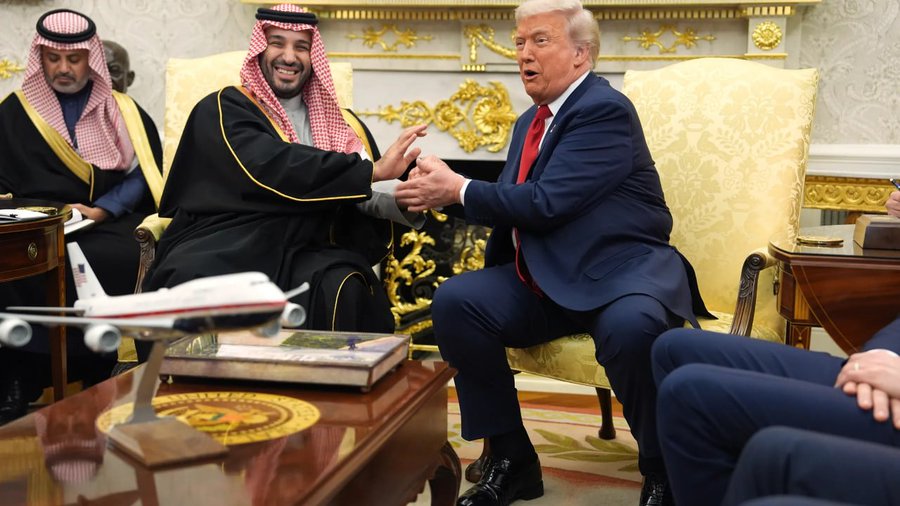
The new reports coincide with an illegal war on Iran, framed by the US as an effort to ‘prevent’ Tehran from acquiring nukes
News Desk, JUL 22, 2026, https://thecradle.co/articles/trump-approves-30-year-nuclear-enrichment-deal-with-saudi-arabia-without-safeguards-report
Washington is seeking congressional approval for a nuclear energy pact with Saudi Arabia that does not include safeguards aimed at preventing the development of an atomic bomb, two sources told Reuters on 22 July.
US President Donald Trump’s government is planning to submit “to Congress a pact with Saudi Arabia to share nuclear power technology that does not include safeguards the US has long said would stop materials being used in nuclear weapons programs,” the sources said.
“The administration would submit to Congress within days a document known as a 123 Agreement that will be signed by US Energy Secretary Chris Wright and Saudi energy minister Abdulaziz bin Salman,” they added.
he White House and US Energy Department did not immediately respond to requests for comment.
A source told CNN on 22 July that “the deal would last 30 years and could be announced as soon as Wednesday.”
CNN had reported the news first over the weekend, citing sources who discussed the matter on 18 July
The outlet cited documents and sources as saying that Trump has agreed to allow Saudi Arabia to enrich uranium without the need for international safeguards arrangements, like the ones that have been imposed on Iran for years.
That report said that the draft nuclear deal from last year is still awaiting Trump’s signature despite the conclusion of US–Saudi nuclear negotiations in October last year.
“The ongoing war with Iran … has played a role in delaying Trump’s signature … the Trump administration is delaying sign-off because it could face a bipartisan disapproval resolution blocking the deals from going into effect,” the sources stated.
CNN cited experts as saying that the deal “could potentially provide Saudi Arabia with a path to nuclear weapons.”
The US president and Israel have largely justified the current illegal war on Iran as an effort to prevent the Islamic Republic from obtaining a nuclear weapon.
Iran is a member of the Nuclear Non-Proliferation Treaty (NPT), and operates under a religious fatwa outlawing the development of atomic bombs. US intelligence reports have also repeatedly concluded that Tehran is not seeking to weaponize its nuclear program.
Nonetheless, Tehran continues to refuse demands that it hand over its enriched uranium, which was raised to higher purity levels as a response to Trump’s 2018 withdrawal from the Joint Comprehensive Plan of Action (JCPOA) – an Obama-era US-Iran deal reached in 2015.
Israeli officials, including Prime Minister Benjamin Netanyahu, have been saying for decades that Tehran was close to developing a nuclear weapon.
Several years ago, Saudi Crown Prince Mohammed bin Salman (MbS) stated that if Iran acquires a nuclear bomb, “we will have to get one” as well.
Fatal fallout
by beyondnuclearinternational, https://beyondnuclearinternational.org/2026/07/21/fatal-fallout/
What a secret report reveals about British nuclear weapons tests – veterans claimed they were harmed by the fallout, report Christopher R. Hill and Jonathan Hogg for The Conversation
“The Ministry of Defence has always maintained that it never rained,” said Ken McGinley, founder of the British Nuclear Test Veterans Association (BNTVA). “I’m sorry, you’re liars … I was there!”
McGinley, who was a royal engineer, gave this interview in January 2024, shortly before his death, as part of our Oral History of British Nuclear Test Veterans project.
McGinley was present during the Grapple nuclear weapons test series, conducted by the UK on the central Pacific island of Kiritimati (also known as Christmas Island) in the late 1950s. At the time, this remote atoll was inhabited by 250 villagers as well as thousands of British servicemen.
For decades, many of those present during this and other above-ground British nuclear weapons tests have argued they were harmed by radioactive fallout. McGinley founded the BNTVA in 1983 to “gain recognition and restitution” for the veterans who took part in British and American nuclear tests and clean-ups between 1952 and 1965.
Rain became a key symbol in their argument as one of the only tangible signs of fallout taking place. The nuclear physicist Sir Joseph Rotblat described these alleged post-blast showers as “rainout”, a phenomenon whereby rain and mushroom clouds interact, leading to the contamination of rain droplets by harmful radionuclides.
In almost all cases, any link to subsequent health issues has been denied by the UK government because of lack of evidence of widespread radioactive contamination. However, a review of the evidence – written in 2014 by anonymous government scientists in response to freedom of information requests – was recently leaked by whistleblowers.
It reveals that post-blast radiation readings increased by a factor of up to seven on the island, compared with the normal background level. In our view, this would be more than enough to satisfy the “reasonable doubt” that tribunals require for veterans to receive a war pension due to illness or injury related to their service, as stated in the Naval, Military and Air Forces (Disablement and Death) Services Pension Order.
The top secret review, first revealed publicly by the Mirror newspaper on March 14 2026, also contains new evidence of radioactive contamination of fish in the island’s waters.
The repeated dismissal of veterans’ testimony in court cases and pension appeals caused stress and trauma for many. The majority died insisting they were not deceitful or forgetful – and that it did indeed rain while they were living on Kiritimati.
‘Factually inaccurate’
Kiritimati was monitored for fallout by the Ministry of Defence (MoD) after each detonation over the island – the largest of which, Grapple Y, was 200 times more powerful than the bomb dropped on Hiroshima.
In 1993, environmental monitoring data was collated into a report by a team at the MoD’s Atomic Weapons Establishment (AWE). Known as the Clare report, this informed the UK’s official position on fallout: namely, that none occurred over populated areas and that veterans would need to prove otherwise to secure redress.
However, the 2014 review of fallout data concluded the Clare report was “incomplete and, in some cases, factually inaccurate”.
Despite this review being passed on to the MoD, however, it was kept secret for more than a decade. Following its release, the legal implications could be gamechanging. According to the 2014 review: “The instrument readings could potentially be used to challenge the validity of statements made by MoD and UK government regarding … fallout on Christmas Island.”
In a recent House of Commons debate on the issue, the UK minister for veterans and people, Louise Sandher-Jones, confirmed her commitment “to the nuclear test veterans and their fight for transparency … They have had a very long fight, and I really recognise how difficult it has been for them, and I want them to understand that I am committed to them.”
Iran accuses US of violating international law after strike on nuclear plant
Energy watchdog says Darkhovin nuclear plant symbolises Iranian nation’s dignity and self-reliance
MEE staff, Middle East Eye, 19 July 2026
Iran’s nuclear energy watchdog condemned the United States for bombing the construction site of the Darkhovin Nuclear Power Plant.
In a statement, the Atomic Energy Organisation of Iran (AEOI) said the US had targeted a symbol of the Iranian nation’s dignity and its efforts to achieve self-reliance.
“The terrorist and criminal US regime, whose nature is nothing but bullying and lawlessness, carried out an aggressive and barbaric act in violation of international law,” the organisation said in a statement.
The AEOI did not disclose the extent of the damage but described the attack as a violation of international law.
The power plant is located in Khuzestan province in southwestern Iran. Construction of the current reactor began in 2022 at a site on the Karun River, about 70km south of Ahvaz and roughly 100km north of the Persian Gulf.
The International Atomic Energy Agency (IAEA) said it was looking into reports of the overnight attack.
“The facility is in the very early stages of construction and contained no nuclear material when last visited by the IAEA,” the UN agency said, adding that the attack is not believed to pose any radiological risk.
IAEA Director General Rafael Grossi reiterated a call for “military restraint in the vicinity of all nuclear-related sites”.
Earlier on Saturday, Iranian officials said Iran had withdrawn from a memorandum of understanding with the Trump administration after the US resumed its bombardment of the country.
Iran and the US have intensified their attacks since an interim ceasefire deal signed a month ago fell apart last week, raising the possibility of a return to all-out war.
US Central Command (Centcom) said the latest air strikes began at 6pm ET (10pm GMT) on Saturday at the direction of President Donald Trump……………………………………….https://www.middleeasteye.net/news/iran-accuses-us-violating-international-law-after-strike-nuclear-plant
Close that Facility: The 2026 Pine Gap Protests

Dr Binoy Kampmark, 21 July 2026, https://theaimn.net/close-that-facility-the-2026-pine-gap-protests/
It remains a prickly reminder that Australia remains an embarrassed vassal of power, annexed to the security interests of another state basking in imperial and fast diminishing splendour. Pine Gap, known more technically as the Joint Defence Facility Pine Gap (JDFPG), is a largely US-operated effort in Alice Springs, Central Australia. As the late scholar of strategic studies Desmond Ball pithily remarked in 1988, it is “an espionage operation.
Euphemisms should not be allowed to obscure this essential point.” It grew out of a desire on the part of the US Central Intelligence Agency (CIA) in 1965 to establish a remote Australian-sited ground control station intended for signals intelligence satellites. Land belonging to the Central Arrernte people was accordingly excised the following year for the site. The decision, in typically rough fashion, was made without consultation and discussion with local residents or elders, a secret place that became what Trevor Paglen would describe as a “blank space on the map … erased from the public record.”
The facility staffs some 800 personnel from the US National Security Agency (NSA), CIA, the US National Reconnaissance Office (NRO) and such Australian agencies as the Australian Signals Directorate and Australian Federal Police. Over the years, the base has become increasingly corporatised with a heavy American accent: Raytheon, Northrop Grumman and General Dynamics, IBM and Hewlett Packard. A mere 10% of the constituted personnel are said to be Australian government employees.
The base periodically attracts its keen and principled protesters, aghast at the base’s role in furnishing targeting data for US and allied drone and missile strikes across the Middle East and Africa. This year, the Close Pine Gap-Sacred Land Back convergence featured three days (July 18-20) of activities, with hundreds of participants gathered in Alice Springs to demand the closure of the facility through a series of workshops, panels and woven “threads of anti-militarism and decolonial movements.”
On July 20, a rally of 300 individuals gathered close to the front of the spy base, the largest since 1987, sporting signs and flags and chanting the stock phrases: “shut it down”, “close Pine Gap”, and “always was, always will be Aboriginal land.” New South Wales Greens Senator David Shoebridge was present, expressing his concern about a “foreign military base set up for the interests of a foreign military” in the service of “right wing politics” and disrespectful of international law. The base was also a potential target for any adversaries the US might be willing to antagonise, thereby bringing “danger into the heart of our country.”
Arrernte Apmereke-artweye traditional custodians Felicity, Wyonna and Jacquita Hayes offer sound if disturbing logic, as reported by the Australian Associated Press: Pine Gap sits on a sacred site that not only profanes tradition but acts as vehicle for the waging of foreign wars and the conduct of genocide. “We don’t want to be feeling guilty all the time when bad things are happening overseas to little ones. We’re not the ones controlling that facility, but we feel guilty that it’s coming to our land.”
The custodians wished for the facility to be closed “so the generation coming can be safe. We want to be compensated so we can get houses at Whitegate community.” It is also with some astonishment that the residents of Whitegate, to this day, are deprived of rudimentary services, including decent housing and running water. The water has to be brought in by truck. There is no sewerage.
Richard Tanter of the Nautilus Institute, one of Pine Gap’s most astute and flawlessly detailed critics, proved ever reliable in remarking that, “Unless the Australian direct and indirect military relationship to Israeli activities in the Gaza Strip are closely reviewed … it is not possible for the Australian government to assure parliament and the Australian public that Australia is no complicit in acts of genocide.” The good professor has been able to shed much light on the facility’s broader purposes and is dismissive of critics who fault claims that the site is being used to feed such military efforts as those of Israel. (He can point to at least three satellites having the Gaza Strip within their reach.) In October 1973, for instance, satellite intelligence from Pine Gap was passed on to Israel during the Yom Kippur War, a contribution that aided Israel’s breakthrough of the Egyptian lines.
This is of little concern to the clubland militarists in Canberra and such think tanks as the Australian Strategic Policy Institute. Former intelligence officer Patrick White, writing for ASPI’s The Strategist, laments the diminished secrecy and security of the site, worrying that trends in signals technology have no longer made the base “irreplaceable”. The advent of extensive encryption means that satellite download feeds can be protected “almost anywhere. The remoteness that once hid the site from view no longer hides much at all.” He is sentimental about the ties with Washington. “We have shared in intelligence and expertise far beyond anything our own resources could produce. We have no satellites of this kind.” Precisely why Canberra is blood-crusted in its complicity, less an authoritative host than a butler eager to please.
Pine Gap acts, then, as a symbol of highly distilled, triple strength colonisation: a garrison outpost dominated by the US imperium and its personnel (a poke in the eye of Australian sovereignty), located on native land it defiles (a poke in the eye of the First Nations peoples), and also responsible for aiding the predations of Washington’s allies – more recently the Israeli Defense Forces in its cleansing conflict against the Palestinians. “I understand the genocide in Gaza against my people is made possible by intelligence flowing from the heart of this colony in Alice Springs directly to the Israeli occupation forces,” stated Palestinian activist Remah Naji of Justice for Palestine Magan-djin with potency. Shoebridge agreed: “We’re letting them use our land, this key real estate, I think [to] commit some of the worst atrocities we’ve seen.”
As the AUKUS Public Inquiry continues its various hearings on that ghastly, doomed security pact between Australia, the United Kingdom and the United States, the Close Pine Gap campaign should be commended as a linked, worthy extension. The former’s proceedings have been mostly savaging the wisdom of a pact that has shown Australia to be embarrassingly disadvantaged, its politicians largely deluded, and its strategic establishment impressionable and bankrupt. (That establishment seeks to bankrupt the Australian treasury to the princely sum of AU$368 billion over promised nuclear-powered submarines that may never arrive.) The Close Pine Gap protests, while receiving less in the way of coverage, is no less pertinent and urgent in its aims.
Russia’s Financial Crisis Casts a Shadow Over Central Asia’s Nuclear Future
By Eurasianet – Jul 20, 2026, https://oilprice.com/Alternative-Energy/Nuclear-Power/Russias-Financial-Crisis-Casts-a-Shadow-Over-Central-Asias-Nuclear-Future.html
- Rosatom is cutting its investment program by nearly 50% and reducing operating costs amid worsening economic conditions.
- The spending cuts raise concerns about delays to planned nuclear projects in Kazakhstan and Uzbekistan.
- Both Central Asian countries are increasingly exploring alternative nuclear partners, including China and the United States.
Kazakhstan and Uzbekistan may soon have to rethink their plans to develop nuclear energy. Rosatom, the Russian nuclear entity that has agreements to build nuclear plants in both Central Asian nations, is experiencing major financial difficulties.
Alexei Likhachev, Rosatom’s boss, has announced the entity is cutting its investment program by nearly 50 percent this year due to “poor economic conditions.” Likhachev also said Rosatom would strive to slash operating costs by 10 percent within the next 18 months.
“We immediately abandoned a number of projects or shifted the deadlines for their implementation to a later date, guided by several criteria, the main of which is efficiency in the horizon until 2030, that is, more profit and revenue per ruble of investment,” Likhachev was quoted as saying by the Reuters news agency.
The company’s troubles are widely linked to the Kremlin’s ongoing campaign in Ukraine, which has generally sapped Russia of its financial strength. International sanctions have also hampered Rosatom.
Likhachev did not specify which projects are being slashed or delayed. Kazakhstan awarded Rosatom a contract in 2025 to build the Central Asian state’s first nuclear power plant on the shores of Lake Balkhash. Since then, the project has been hit by delays and disputes, which many observers suspected were linked to Rosatom’s difficulties in obtaining financing. Likhachev’s announcement raises further doubts that the project can meet a tentative completion deadline in the mid-2030s.
Rosatom also has a preliminary agreement in place to build small-scale nuclear plants in Uzbekistan. Company officials in early 2026, seeking to dispel Uzbek worries about financing, offered to expand the deal to create a nuclear cluster. Likhachev’s announcement is likely to stoke further skepticism in Tashkent.
Both Kazakhstan and Uzbekistan have alternatives to Rosatom. Astana already has an agreement in place for a Chinese company to build two nuclear plants in the country. And both Kazakhstan and Uzbekistan have expressed interest in working with the United States to develop small modular nuclear plants.
Rosatom, historically a cash cow for the Russian government, is not the only major Russian entity experiencing financial woes. The stock price of the energy giant Gazprom has tanked over the past three months, and the company’s market capitalization now stands at a mere $25 billion.
US greenlights Saudi nuclear enrichment without safeguards: Report
MEE staff, 20 July 2026, https://www.middleeasteye.net/news/us-greenlights-saudi-nuclear-enrichment-without-safeguards-report
Crown Prince Mohammed bin Salman previously said he would acquire a bomb if Iran did
Crown Prince Mohammed bin Salman previously said he would acquire a bomb if Iran did.
The Trump administration has greenlit Saudi Arabia’s nuclear enrichment project, but with no safeguards in place to prevent the development of a bomb, CNN reported on Friday.
The draft deal, viewed by the news outlet, showed Washington’s support for Riyadh’s civilian nuclear programme is still awaiting President Donald Trump’s signature, despite US-Saudi negotiations concluding in October.
Unnamed officials cited in the story indicated that the documents, which include the mandatory “123 agreement” and safeguards protocols, have not yet been sent to Congress, potentially for fear of bipartisan pushback.
It is unclear how long the president will wait, given Congress is likely to switch hands to a Democratic majority after the November elections, stymying his policy agenda.
Crown Prince Mohammed bin Salman and his advisors have long pushed for a deal that would allow them to enrich uranium, which they say the kingdom holds vast reserves of.
“We will enrich it and we will sell it and we will do a ‘yellowcake’,” Saudi Energy Minister Prince Abdulaziz bin Salman said last year, referring to a step in the process that comes after mining but before enrichment.
Nuclear umbrella
The Saudi push to be included under the US’s nuclear umbrella was a key issue during the Saudi crown prince’s visit to the White House in November last year.
Days after Israel attacked Hamas negotiators in Qatar earlier in the year, Saudi Arabia signed a defence pact with Pakistan, the only nuclear-armed state in the Muslim world.
Pakistan is estimated to possess around 170 nuclear warheads. Saudi and Pakistani descriptions of the deal said it encompassed all military options.
The Americans’ nuclear talks with Saudi Arabia have been kept under tight wraps, but one former US intelligence official previously told Middle East Eye that the idea of extending protection to the kingdom could serve a purpose.
“It would pull them out of the Pakistanis’ nuclear umbrella and make the Saudis feel better than the Qataris,” he said at the time.
In February, the Trump administration notified Congress it is pursuing a civil nuclear pact with Riyadh that does not include non-proliferation safeguards it has traditionally imposed on countries to prevent them from developing nuclear weapons.
The language in the document also leaves room for Saudi Arabia to enrich uranium, as it stipulates “additional safeguards and verification measures to the most sensitive areas of potential nuclear cooperation” between the two countries, including enrichment and reprocessing, the report said.
A nuclear deal with Saudi Arabia that does not explicitly prohibit the kingdom’s potential to enrich uranium in the future would be much more transformative for the region than a separate deal for F-35 warplanes that the Trump administration is pursuing.
In nuclear agreements with foreign governments, for example, the UAE, the US made cooperation conditional on commitments that they will not enrich uranium or reprocess spent nuclear fuel.
The UAE, Morocco and dozens of European and Asian countries have signed the so-called “123 Agreements” with the US.
US law generally requires a 123 Agreement to be in force before licensing significant exports of US-origin nuclear material or equipment to a foreign country.
In addition to a 123 Agreement, US lawmakers have insisted that the US require Saudi Arabia to submit to what is called the “Additional Protocol”, which allows the United Nations’ International Atomic Energy Agency (IAEA) additional access to nuclear facilities, data, and undeclared sites.
The UAE, the only other Gulf state to have officially partnered with the US in nuclear energy, signed the Additional Protocol to its IAEA agreement in 2009.
Reuters reported, however, that the Trump administration sent a preliminary report to some heads of congressional committees in November, which it is required to send if it is not pursuing the Additional Protocol.
The Reuters report underscores how Trump is putting deal-making at the centre of his diplomacy, even if it means chafing at the traditional concerns of the US foreign policy establishment.
European Investment Bank Approves €800 Million For Cernavodă-1 Nuclear Plant Refurbishment
By David Dalton, 20 July 2026, https://www.nucnet.org/news/european-investment-bank-approves-eur800-million-for-cernavoda-1-nuclear-plant-refurbishment-7-1-2026
Romania also pushing ahead with plans for two new large-scale units at site
The European Investment Bank (EIB) has approved €17.4bn ($19.8bn) in financing to strengthen Europe’s energy autonomy, including an €800m loan for the refurbishment and life extension of one of two reactors at Romania’s Cernavodă nuclear power station.
The EIB said the financing, which covers Unit 1, is for key component replacements and system upgrades, enabling a new cycle of reliable and safe operation.
It said Cernavodă, Romania’s only commercial nuclear power station, generates around 20% of the country’s electricity.
combined €620m with a banking syndicate led by J.P. Morgan to advance the refurbishment of Cernavodă-1 and preparatory work for Cernavodă-3 and -4.
It also signed two agreements with subsidiaries of France’s EDF related to key projects for the Cernavodă-1 refurbishment.
In December 2024, Nuclearelectrica signed the main engineering, construction, and procurement contract to extend the life of Cernavodă-1 at a cost of about €1.9bn. The contract is with a consortium of four companies, comprising Canada’s AtkinsRealis, the Canadian Commercial Corporation, Korea Hydro & Nuclear Power (KHNP) and Italy’s Ansaldo Nucleare.
In September 2023, Canada announced €1.8bn in export financing to Nuclearelectrica towards the construction of the two new plants at Cernavodă.
The Fall of Israel’s Longest-Serving Leader: Is This the End for Netanyahu?
Aleena Im , July 20, 2026, https://journal-neo.su/2026/07/20/the-fall-of-israels-longest-serving-leader-is-this-the-end-for-netanyahu/
Israel may be witnessing the twilight of Netanyahu’s era as security failures, war fatigue, and the rise of the Yashar party erode his aura of indispensability. In geopolitics, leaders who build their legacy on security often fall when that very promise collapses.
In the world of geopolitics, even the strongest of leaders can be dethroned by just one crisis. For almost two decades, PM Netanyahu has held on as the leader of the Israelis. Considered to be the longest-serving prime minister of Israel, Netanyahu’s foreign policy revolves around security and regional monopoly. However, now in 2026, he is facing serious political backlash. It seems like his policies are now backfiring, and the situation is getting out of hand.
From domestic political circles to the international ones, hatred against Netanyahu has been increasing at an alarming rate. Whether it’s the October 7 attack or the recent war with Iran, Israel has been caught in a protracted conflict where it has become too costly to win the war. Is Israel witnessing the end of Netanyahu’s era, or is he preparing for a bigger comeback? The unfolding of Israel’s domestic circumstances would direct the ultimate result.
Israel’s Multi-Party System
There are various political factions in Israel, divided into right-wing, left-wing, and centre-wing parties. However, due to intense political fragmentation, no single party has ever been able to secure a majority in the Knesset. Therefore, coalition-based politics have become central to Israel’s domestic political structure. Bibi Netanyahu belongs to the right-wing political party named Likud, while the centrists include the alliance of opposition leaders Yair Lapid and Naftali Bennett. The leftist parties include Arab-Israeli factions, which never secured a majority.
The major reason why Netanyahu has remained in power for almost two decades is that he has mastered coalition politics and has made alliances with nationalist and religious parties. However, the same coalition-based politics that allowed Netanyahu to remain in power are now creating vulnerabilities for him. A new political party, ‘Yashar,’ has been established by the former IDF Chief Gadi Eisenkot. Although he belongs to the centrist faction, his popularity has seen a boom in recent months, even more than that of his predecessors, Lapid and Bennett. This ever-increasing political fragmentation would now decide the future trajectory of Israel’s foreign policy…………………………………………………………………………………………………………………………………………….
Conclusion
“The old order changeth, yielding place to new.” (Alfred, Lord Tennyson)
The upcoming elections in Israel would decide the fate of Netanyahu’s political career. However, one thing would be permanent: any future administration would continue to pursue the aims of dismantling Iran and its regional partners in one way or another. Their strategies and policies might be different, but their ultimate objective would be the same. The newly emerged Yashar party is gaining momentum at an alarming rate. Although Netanyahu remains the most influential political personality in Israel, the combination of security failures and political fragmentation has caused a serious dent to his indispensability. Whether he will survive this challenge or not remains uncertain. The fact is that, for the first time in years, Israel is seriously contemplating a future beyond Benjamin Netanyahu. https://beyondnuclearinternational.org/2026/07/21/fatal-fallout/
The Theocratic Trap – How Divine Claims Become Engines of Destruction
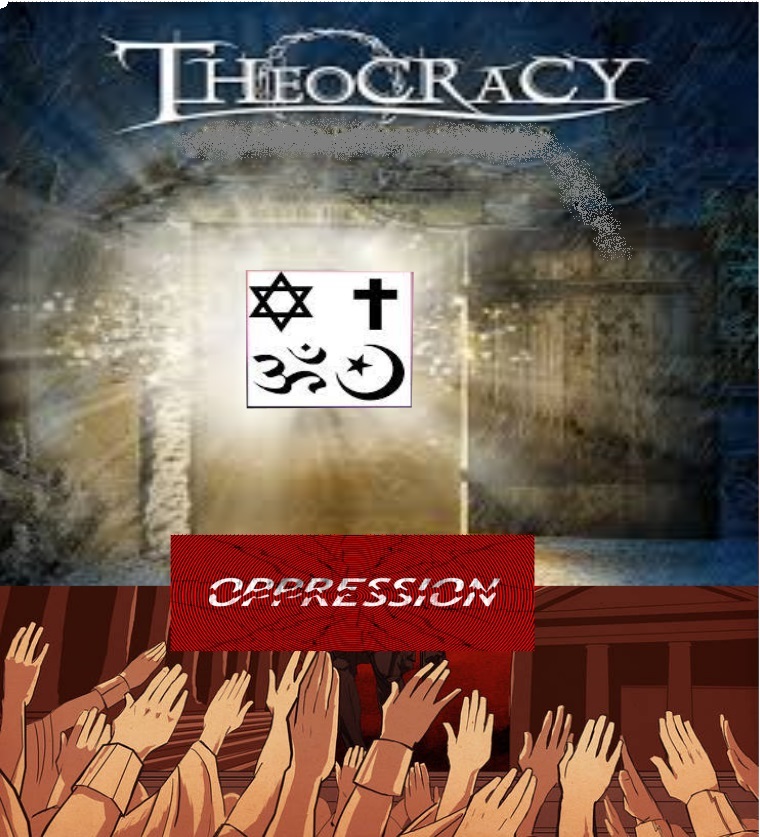
20 July 2026 Dr Andrew Klein, https://theaimn.net/the-theocratic-trap-how-divine-claims-become-engines-of-destruction/
I. The Definition: A Mask for Power
The word “theocracy” was coined by the Jewish historian Flavius Josephus in the first century CE to describe the polity of ancient Israel – a form of government in which God himself is recognized as the head of state, and divine law is the statute book. Taken literally, theocracy means “rule by God” and refers primarily to an internal “rule of the heart.”
But what begins as a claim to divine guidance inevitably becomes something else. As Josephus himself understood, theocracy is a form of government in which “the laws of the commonwealth are the commandments of God, and they are promulgated and expounded by the accredited representatives of the invisible Deity, real or supposed—generally a priesthood.”
This is the fatal flaw. The claim to speak for God is the ultimate abdication of personal accountability. When human beings claim divine authority, they place themselves beyond criticism, beyond question, beyond moral restraint. The hierarchy that forms around such claims – the priesthood, the clergy, the self-appointed guardians of divine will – becomes an engine of control that inevitably turns toward violence.
II. The Pre-Westphalian Pattern: Religious Wars as the Norm
For more than a century before the Peace of Westphalia in 1648, Europe was consumed by religious wars arising from the Protestant Reformations. The Thirty Years’ War (1618–1648), which the Peace of Westphalia finally concluded, was the last great religious war in Western Europe – a conflict that had “broken out as a result of confessional conflicts between Catholic and Protestant states” and “inflamed vast regions at the heart of Europe.”
The lesson of that era is clear: when religion becomes the justification for war, there is no limit to the violence. The theocratic impulse – the claim that God is on your side and that your enemies are God’s enemies – creates a permission structure for atrocity. As one scholar notes, the pre-Westphalian era was “riven by murderous ideological divisions” that produced wars fought not for faith alone, but for dominance.
The Peace of Westphalia introduced the radical idea that peace was more important than religious unity. It was a turning point—but not an endpoint. The theocratic impulse did not disappear. It merely found new forms.
III. The Jewish Bund: Human Rights, Democracy, and Universalism
In 1897, the same year that Theodor Herzl convened the First Zionist Congress, another Jewish movement was born in Tsarist Russia: the General Jewish Labour Bund.
The Bund was “a secular, socialist, defiantly Jewish, and uncompromisingly anti-Zionist revolutionary party.” Its members were “young Jewish Marxists who wanted to overthrow the tsar and establish democratic socialism, but also to liberate their own people.”
The Bund’s political project was built on:
- Do’ikayt (“here-ness”) – the principle that Jews should build viable communities wherever they lived, rather than seeking an ethnostate in Palestine.
- Internationalism – the belief that Jewish liberation was inseparable from the liberation of all peoples.
- Universal human rights – the demand for “equal civil and political rights for the Jews in Russia” and for all oppressed peoples.
- Anti-Zionism – the rejection of the idea that Jewish identity required a state of its own. The Bundists “fought for dignity and equality, not in an imagined homeland in Palestine but ‘here where we live.’”
As Bundist leader Henryk Erlich presciently warned in 1938: “Zionism, in point of fact, has always been a Siamese twin of antisemitism… The Zionists regard themselves as second-class citizens in Poland. Their aim is to be first-class citizens in Palestine and to make the Arabs second-class citizens.”
The Bund was “deeply committed to universal humanist values and to socialist politics.” It rejected “all ethnonationalism, including Zionism” and believed that “Jewish national problems arising within the countries where Jews reside can be solved on the basis of freedom and democracy.”
This was the alternative to theocracy: not divine rule, but human rights. Not exclusivity, but solidarity. Not conquest, but coexistence.
IV. Jabotinsky and Revisionist Zionism: The Theocratic Turn
Vladimir Jabotinsky, the founder of Revisionist Zionism, represented a fundamentally different vision. He advocated a “revision” of practical Zionism in favour of “political Zionism” – the idea that Zionism was essentially a political movement, not a cultural or spiritual one.
Jabotinsky’s ideology was built on:
- Exclusivism – the belief that Jewish national identity must take precedence over all other considerations.
- State sovereignty – the conviction that only a Jewish state could solve the “Jewish problem.”
- Ethnonationalism – the elevation of Jewish national identity above universal human values.
By the late 1930s, Revisionist Zionism had become “a right-wing tendency” with branches that included the Irgun, which conducted campaigns of violence against British authorities in Palestine. After World War II, Revisionist ideology evolved into the political and religious movements that now dominate Israeli politics.
In 2018, the Israeli Knesset passed the “nation-state law,” which codified “Jewish supremacy” into law and “effectively mirror[ed] the Nazi-era legislation of ethnoreligious stratification of German citizenry.” As one analysis notes, the law stipulates that “actualisation of the right of national self-determination in the state of Israel is unique to the Jewish people” – meaning that the 1.7 million Palestinian citizens of Israel are “without sovereignty or agency, forever living at the mercy of Israeli Jews.”
The theocratic impulse had found its modern expression: not a priesthood ruling in God’s name, but an ethnostate ruling in the name of a chosen people.
V. The Modern Manifestation: Gaza and the Theology of Extermination
The invocation of divine mandate has been central to Israel’s conduct in Gaza. In a speech on March 2, 2026, Israeli Prime Minister Benjamin Netanyahu declared: “In this week’s Torah portion, we read ‘Remember what Amalek did to you.’ We remember and we act.”
This reference to Amalek – the Biblical nation that God commanded King Saul to “destroy all they have, and do not let them live. Kill both man and woman, child and baby” – has become “an oft-used phrase at the highest levels of Israel’s government, a dog whistle well understood to call for the extermination of the Palestinians.”
UN institutions, international and Israeli human rights NGOs, and scholars of genocide studies have “classified the wide use of the Amalek rhetoric across Israeli politics and the military as a clear incitement to genocide.” Netanyahu’s invocation of Amalek was “explicitly cited as direct incitement to genocide.”
In June 2026, a UN Independent International Commission of Inquiry concluded that “Israeli authorities and security forces have deliberately targeted Palestinian children, resulting in genocide, crimes against humanity and war crimes in the Gaza Strip.” The commission found that the “intense scale and systematic nature of the Israeli military operations have continued, causing unprecedented death, injury and trauma to Palestinian children.”
The theocratic claim – the assertion of divine mandate – has become the justification for atrocity. As one report notes, “Wipe out the memory of Amalek” has become a rallying cry for those who seek the extermination of the Palestinian people.
VI. The Two Threads: Universalism vs. Exclusivism
The divergence between the Bund and Revisionist Zionism represents two fundamentally different visions of Jewish identity:
- The Bund (Universalism) Revisionist Zionism (Exclusivism)
- Human rights for all Rights for Jews only
- Democracy and socialism Ethnostate and supremacy
- Coexistence where you live Conquest of Palestine
- International solidarity National chauvinism
- Anti-Zionist Zionist
As Molly Crabapple’s recent history of the Bund documents, “Bundists themselves foresaw the inevitable inversion of victim and perpetrator demanded by Zionist ideology.” The Bund’s philosophy of do’ikayt – “here-ness” – offered a vision of Jewish life that did not require the dispossession of another people.
Today, those who place “human values, human rights and universalities above themselves” – the heirs of the Bund’s internationalist tradition – face threats not only from the Israeli far-right but also from figures like Donald Trump, who has embraced the same ethnonationalist rhetoric that fuels theocracy.
VII. The Pattern: How Theocracy Becomes Killing
The pattern is consistent across history:
- A claim to divine authority – human beings assert that they speak for God.
- The creation of hierarchy – a priesthood or ruling class that interprets divine will.
- The denial of accountability – those who claim divine authority place themselves beyond criticism.
- The dehumanization of the “other” – those who are not part of the chosen community are cast as enemies of God.
- The justification of violence – killing in the name of God becomes not only permissible, but sacred.
This pattern is visible in the pre-Westphalian religious wars of Europe, in the Nazi regime, and in the modern State of Israel. As one commentator notes, “the genocidal ideology the fans espouse” is rooted in “extremist religious nationalism, and the concentration of executive power.”
The claim to divine authority is always a mask for human power. The theocracy is always a hierarchy. And the hierarchy always protects itself – even at the cost of genocide.
VIII. Conclusion: The Choice Before Us
The theocratic impulse – the claim to speak for God – is the oldest and most persistent engine of human violence. It allows the powerful to place themselves beyond accountability. It allows the hierarchy to claim divine sanction for its crimes. It allows the killers to believe they are doing God’s work.
But there is another way.
The Bund offered it: a vision of Jewish identity rooted in universal human rights, democratic socialism, and international solidarity. A vision that rejected ethnonationalism and embraced do’ikayt – the commitment to build a just society wherever one lives.
That vision was nearly destroyed by the Holocaust and by Stalinism. But it survives – in the memory of those who fought for it, and in the example of those who continue to resist the theocratic impulse.
The choice is clear. We can continue to worship the theocracy – to bow before those who claim divine authority and commit atrocity in God’s name. Or we can choose the Bund’s path: human rights, democracy, and the recognition that no one speaks for God.
Theocracies are not built by the devout. They are built by the powerful, who use God’s name to mask their own ambitions. And they always, always lead to killing.
References
- Theocracy. Wikipedia.
- Theocracy. Catholic Encyclopedia.
- Peace of Westphalia. World History Encyclopedia.
- The Enduring Lessons of the Jewish Bund. The Nation, 10 April 2026.
- ‘For leftist Jews, the Bund is a model’. The Guardian, 8 April 2026.
- Revisionist Zionism. Wikipedia.
- Israel Is Using Its Genocidal Gaza Playbook on Iran. The Nation, 6 March 2026.
- Israel’s ‘nation-state law’ parallels the Nazi Nuremberg Laws. Al Jazeera, 26 July 2018.
- UN commission: Israel continues to commit genocide by targeting children. UN News, 23 June 2026.
- Blot Out the Memory of Amalek from Under Heaven. De Gruyter Brill, 2025.
- General Jewish Labour Bund. Wikipedia.
- Bundism. Wikipedia.
Germany To Join French Nuclear Exercise, Deepening ‘Counter-Russia’ Deterrence

by Tyler Durden, Sunday, Jul 19, 2026 – https://www.zerohedge.com/geopolitical/germany-join-french-nuclear-exercise-deepening-counter-russia-deterrence
In the latest development related to what some analysts have called the ‘new Cold War’ and nuclear saber-rattling between Russia and the West, Germany and France are planning a major nuclear exercise later this year.
The atomic drills were announced Friday, after a joint top-level meeting of the French and German governments near Cologne. “Alongside this work on a shared doctrine, German conventional forces will this year take part in a nuclear exercise of the French military,” German Chancellor Friedrich Merz unveiled.
He detailed while at a press event alongside French President Emmanuel Macron that a “strategic steering group” established by the leading European allies would continue looking at deterrence in the future, with an eye on Russia.
“This is complementary to our nuclear participation and deterrence within NATO, which we still hold to,” he added. He also previewed “a maneuver in the autumn held on the initiative of France” – while speaking of the Ukraine war.
“We will clarify together what form exactly this participation will take,” he said.
France is newly positioning itself at the forefront of nuclear deterrence for Europe, a role that the United States has long assumed, and currently still does.
According to some of Macron’s statements at the same event: “Patriotism, yes; nationalism, never. At a time when Europe is rearming, to think that each of us separately accumulating capabilities is the way history is going is absurd.” More details have been offered in the following:
Mr Macron and Mr Merz began the defence council at Nörvenich air base beside a French Rafale and a German Eurofighter – a symbolic backdrop after the aircraft designed to replace them was scrapped.
Nuclear deterrence offers one field where the strained partnership can still move forward.
German troops would play a conventional supporting role and would not control French weapons. Berlin will also help develop radar and space-based systems for detecting ballistic and hypersonic missiles.
Currently the United States and the UK, which both maintain nuclear arsenals, form the core of NATO’s nuclear deterrence strategy. While France also possesses nuclear weapons, it does not yet participate on a leadership level in NATO’s nuclear planning group. The US military also contributes F-35, refueling aircraft, and other support planes.
Russia has not infrequently held its own strategic drills over the course of the last several years of war in Ukraine. It has also become the ‘new normal’ for Russia and Europe to hold rival conventional war games, amid threats, warnings and ongoing miliary flexing.
1 This Month



26 September – International Day for the Total Elimination of Nuclear Weapons


PLEASE OPPOSE HR 8255 AND S.3639 – bills would accelerate satellite deployment, with no environmental review or safeguards – https://ncstd5li.quorum.us/campaign/169331/
To see nuclear-related stories in greater depth and intensity – go to https://nuclearinformation.wordpress.com
-
Archives
- September 2026 (219)
- August 2026 (330)
- July 2026 (355)
- June 2026 (287)
- May 2026 (306)
- April 2026 (356)
- March 2026 (251)
- February 2026 (267)
- January 2026 (308)
- December 2025 (358)
- November 2025 (359)
- October 2025 (375)
-
Categories
- 1
- 1 NUCLEAR ISSUES
- business and costs
- climate change
- culture and arts
- ENERGY
- environment
- health
- history
- indigenous issues
- Legal
- marketing of nuclear
- media
- opposition to nuclear
- PERSONAL STORIES
- politics
- politics international
- Religion and ethics
- safety
- secrets,lies and civil liberties
- spinbuster
- technology
- Uranium
- wastes
- weapons and war
- Women
- 2 WORLD
- ACTION
- AFRICA
- Atrocities
- AUSTRALIA
- Christina's notes
- Christina's themes
- culture and arts
- Events
- Fuk 2022
- Fuk 2023
- Fukushima 2017
- Fukushima 2018
- fukushima 2019
- Fukushima 2020
- Fukushima 2021
- general
- global warming
- Humour (God we need it)
- Nuclear
- RARE EARTHS
- Reference
- resources – print
- Resources -audiovicual
- Weekly Newsletter
- World
- World Nuclear
- YouTube
-
RSS
Entries RSS
Comments RSS
 nuclear-news