“Pink Corridor” to Explore Nuclear-Powered Transatlantic Container Shipping

Sep 3, 2026 by The Maritime Executive, https://maritime-executive.com/article/pink-corridor-to-explore-nuclear-powered-transatlantic-container-shipping
A new project focusing on the challenges of developing a so-called “pink corridor” for nuclear-powered transatlantic container shipping is taking shape. It will be led by Lloyd’s Register and A.P. Moller – Maersk working with the ports of Charleston, South Carolina, and Felixstowe in the UK to examine the security and safeguarding requirements for the theoretical deployment of a nuclear-powered containership route
It comes as the prospects of nuclear-powered commercial shipping continue to entice the industry and regulators. Earlier forays into nuclear power for commercial shipping failed to gain traction in the 1950s and early 1960s other than the U.S. demonstration project Atoms for Peace that resulted in the passenger-cargo ship NS Savannah. Japan experimented with nuclear propulsion and the Soviets built a ship, Sevmorput, that remains active, as the industry is reawakening to the potential from a new generation of small nuclear reactors.
Last week, US Secretary for Transportation Sean Duffy posted, highlighting the potential for nuclear propulsion. It came as the US Maritime Administration signed a new agreement with UK-based Core Power’ that envisioned a fleet of 50 nuclear-powered merchant vessels. MARAD also announced agreements with the Port of Long Beach, California, and the Port of Corpus Christi, Texas, to explore nuclear projects.
According to the organizers, the Pink Corridor aims to provide a structured basis for collaboration, helping stakeholders understand the practical requirements, gaps and future work needed before any potential nuclear maritime corridor could be considered. Centered on a conceptual nuclear-powered container ship, the Pink Corridor will examine the requirements for theoretical port access on the specified route. Lloyd’s, Maersk, and the ports will focus on key areas including ship security, safeguards, cyber resilience, emergency response, insurance regimes, and alignment between maritime and nuclear regulatory expectations.
Nick Gross, Global Containerships Segment Director, LR, highlights they are taking a practical, collaborative approach to explore the issues. “The partnership brings together industry-leading players across shipping, ports and classification, reflecting the growing interest in nuclear technology as a route to more sustainable maritime operations,” says Gross.
The work is expected to support broader maritime development under the US-UK Technology Prosperity Deal and its bilateral commitment to explore civil maritime nuclear applications, including the potential creation of a shipping corridor between the two nations.
The collaboration also builds on LR and Core Power’s 2024 regulatory assessment study, which was formalized with Maersk through a joint development project exploring the safety, operational, and regulatory requirements for applying advanced nuclear power to container shipping.
The outcomes of the initial phase of the Pink Corridor project will inform the scope of a potential second phase, including areas requiring further study across engineering, regulatory, legislative, security and safeguards frameworks for nuclear merchant ships.
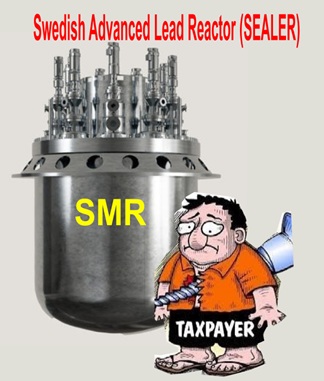
Blykalla seeks state aid for second SMR plant
Wednesday, 2 September 2026,
https://www.world-nuclear-news.org/articles/blykalla-seeks-state-aid-for-second-smr-plant
Sweden’s Blykalla has applied for state support for its proposed small modular reactor power plant at Untra in the Tierp municipality, for which the company applied for governmental approval last week.
On 25 August, Blykalla submitted a proposal to the Swedish government for a nuclear power plant at Untra which would feature up to eight lead-cooled small modular reactors (SMRs) with a total capacity of up to 440 MWe. The application followed an earlier one, submitted in May, for a six-unit project in Norrsundet in the Gävle municipality, which is also in the same region of east central Sweden.
Blykalla has established Untra Nuclear Power AB as the licence holder and financing vehicle for the Untra plant, with strategic and financial investors expected to enter its ownership over time. Blykalla – through Untra Nuclear Power – has now applied for state support for the construction of the Untra plant, having applied in early June for government financing for its planned power plant in Norrsundet.
The Swedish state aid framework is designed to support new nuclear power through a state loan, a two-way contract for difference and a risk-sharing mechanism. The detailed terms of the state aid are agreed between the project company and the Swedish state, and any support would require approval by the European Commission in accordance with EU State aid rules. Negotiations on the terms of state support begin once the government decides to proceed with the application.
Following the receipt last week of Blykalla’s application to establish the nuclear power plant at Untra, the government has tasked the County Administrative Board in Uppsala County with preparing a proposal for a facility plan. This plan will guide how land and water areas should be used when establishing a nuclear facility. According to recent legislation, the government may approve an application if there is a valid facility plan for the facility in question. The proposed construction plan must be accompanied by an environmental impact statement and a plan description. This statement must include a description of the planning conditions and how the plan can be implemented. The plan must be submitted no later than 30 April 2027……………
Blykalla – formerly called LeadCold – is a spin-off from the KTH Royal Institute of Technology in Stockholm, where lead-cooled reactor systems have been under development since 1996. The company – founded in 2013 as a joint stock company – is developing the SEALER (Swedish Advanced Lead Reactor). The company’s goal is for its first 140 MWt/55 MWe SEALER-55 commercial reactor to be ready for operation in the early 2030s.
In October 2022, Sweden’s incoming centre-right coalition government adopted a positive stance towards nuclear energy. In November 2023, it unveiled a roadmap which envisages the construction of new nuclear generating capacity equivalent to at least two large-scale reactors (2,500 MWe) by 2035, with the equivalent capacity of up to 10 new large-scale reactors (which may include SMRs) coming online by 2045. A new act on state aid entered into force on 1 August 2025, since when interested companies have been able to apply for the aid.
So far, approval has been sought for nuclear facilities at five sites with a total output of up to 3,700 MWe. In addition, the government has received applications for financial support to build nuclear reactors at two additional locations, with seven projects applying for state aid.
A nuclear reactor is being installed a mile underground in Kansas

Deep Fission has just received safety approval from the US Department of Energy for a reactor design that it plans to install at the bottom of a deep hole
By Vanessa Bates Ramirez, New Scientist 2nd Sept 2026
Nuclear power start-up Deep Fission wants to put a reactor where no reactor has gone before: a mile underground. The California-based company received safety approval for its reactor design from the US Department of Energy earlier this month, and is preparing the site for its commercial pilot outside Parsons, a small city in south-east Kansas.
The company hopes that placing a reactor deep underground will cut installation and operational costs, particularly since the bedrock can provide natural containment and pressure for the reactor. This eliminates the need for a heavy-duty concrete containment dome like those that enclose conventional nuclear reactors, which account for a significant portion of their cost and the time it takes to build them. But independent engineers say it is unclear how successful the approach will be. ………………….(Subscribers only)
https://www.newscientist.com/article/2587049-a-nuclear-reactor-is-being-installed-a-mile-underground-in-kansas/
US VASSALS BLOCK UKRAINE PEACE
Jeff Rich on why Britain and Europe cannot end the Ukraine war while Washington still sets the terms
Ian Proud, Sep 02, 2026
I sat down with historian Jeff Rich of The Burning Archive to discuss the seemingly intractable challenge of ending the war in Ukraine. Jeff spent 33 years as an Australian official before turning to global history. I spent 24 years as a British diplomat, including four and a half years at the British Embassy in Moscow after the Ukraine crisis began. We come at the problem from different directions but landed in the same place.
This is not a two-party war. It is a five-party war: Russia, Ukraine, the European Union, the United States and Britain. Each is trying to finish it on its own terms. None of them has built a peace process. That is why the search for a single “deal” keeps failing.
A single peace deal won’t be enough to settle four different conflicts at once, something I wrote about for Responsible Statecraft in June.
Jeff’s answer is similar to mine; a multi-treaty settlement.
He draws on the Peace of Westphalia in 1648 — the practical fact the catastrophe of the Thirty Year War was ended with several treaties, not one.
He also draws on the Cambodia settlement of the early 1990s. That war mixed a civil conflict, an East–West confrontation and a split inside the communist world.
The way out was a UN mandate and a UN transitional authority that gave China a face-saving off-ramp from the Khmer Rouge.
The parallel with Western sponsorship of the present Ukrainian government is uncomfortable, yet unavoidable. Peace for Ukraine will emerge from separate interlocking tracks: Russia–Ukraine terms to end the fighting; a deal on EU–Ukraine accession, which will be as complicated as ending the war; an agreement on the long-term Europe/UK relationship with Russia; neutrality for Ukraine in treaty form; and a long-term settlement between Washington and Moscow.
Hundreds learn about Sizewell careers at Lowestoft jobs fair.

Hundreds of people turned out to find out more about a once-in-a-generation
development on the east coast that will power up the region. Jobseekers are
now one step closer to new opportunities after a careers fair led to
apprenticeship interviews. Almost 300 people attended the Sizewell C jobs
fair in Lowestoft, where around 25 supply chain partners showcased roles
linked to the large-scale clean energy project.
East Anglian Daily Times 1st Sept 2026,
https://www.eadt.co.uk/news/26511198.hundreds-learn-sizewell-careers-lowestoft-jobs-fair/
Reforming nuclear regulation
Innovation News Network, 2nd September 2026
The Office for Nuclear Regulation (ONR) explains how it is responding to government recommendations to reform the UK nuclear regulatory framework, and what this means in practice,……………………
The independent Nuclear Regulatory Taskforce, commissioned by the Prime Minister, published its final report in November 2025, setting out 47 recommendations for reform of the nuclear regulatory framework. The government accepted all 47 in its implementation plan, Building Our Nuclear Nation, published in March 2026. ………………
The Taskforce’s central finding was that the UK’s nuclear regulatory framework had become more process-heavy than the actual risks warranted. Safety cases had grown in volume and complexity, regulatory interactions across multiple bodies were sometimes duplicated rather than coordinated. A tendency towards caution had taken hold.……………….
The Taskforce’s recommendation to establish a commission is the long-term solution to this issue. Until legislation can enact the commission, ONR has been designated as the interim lead regulator for the nuclear fission sector, with formal arrangements in place across what we have described as the ’super six’ regulatory bodies. We convened the inaugural Lead Nuclear Regulator Group meeting in early 2026, agreeing terms of reference and identifying priority projects for coordinated action. We are now focused on demonstrating the practical benefits of this approach through delivery on real projects…………………….
ONR Together will transform how we work, outlining the modernisation of processes, leveraging modern technology, and empowering us to make timely and proportionate decisions…………………
Bringing defence and civil nuclear regulation closer together
The government has committed to merging the Defence Nuclear Safety Regulator into ONR……………….
International harmonisation
We are investing significantly in further strengthening our international collaboration – one of the areas with the greatest potential for practical benefit to the UK’s nuclear programme.
We are already working with the US Nuclear Regulatory Commission and the Canadian Nuclear Safety Commission on collaborative design assessments, including for the BWRX-300 reactor. …………………………….
Building capacity for what lies ahead
All this reform work sits alongside a very significant expansion in the UK’s nuclear programme – Sizewell C, the Wylfa SMR project, Hinkley Point C, The Dreadnought submarine programme, the ongoing decommissioning of legacy nuclear sites……………………………………………………….. https://www.innovationnewsnetwork.com/reforming-nuclear-regulation/73452/
Taxpayers Must Not Be on the Hook for Bailing Out the AI Industry

If AI goes south, we should expect major pressures from the Trump administration for a debt- or taxpayer-funded bailout.
SCHEERPOST, September 3, 2026,By C.J. Polychroniou
Hundreds of billions of dollars are flooding the AI industry. Economist Gerald Epstein says this bubble could burst.
The U.S. economy is heading toward uncharted territory. Artificial Intelligence (AI) is transforming business operations and all areas of finance, the national debt is on an unsustainable fiscal path, and most middle-income Americans cannot keep up with rising costs. Moreover, as hundreds of billions of dollars are flooding into artificial intelligence, there are serious concerns that an AI bubble could trigger another bailout with taxpayer money.
In the interview that follows, leading progressive economist Gerald Epstein, who initiated and directs the Game Changers project at the Political Economy Research Institute at the University of Massachusetts Amherst, talks about AI’s impact on finance and the bailout problem and how a transformative public finance strategy can revive democracy, promote equity and social justice, and build strong and sustainable communities. Epstein is professor of economics and founding co-director of the Political Economy Research Institute.
C.J. Polychroniou: AI is possibly the fastest-growing technology in history and is already reshaping the U.S. economy in innumerable ways as organizations of all kinds are deploying AI tools across every functional area. But there are many public concerns surrounding AI, including whether it is becoming “too big to fail.” If so, taxpayer money may be used yet again to bail out private companies and institutions from collapse. What are the dangers here?
Gerald Epstein: There are indeed many public concerns about the economic and financial implications of AI. But let me focus on AI’s impact on finance as there are legitimate fears that the government may be asked at some point to bail out the AI industry, especially given the close ties of the Trump administration to AI firms.
As Marc Jarsulic and I argue in our Game Changers policy analysis “No More Bailouts,” the AI investment boom is increasing the level of risk for AI-related firms. The reason is that for these investments to be profitable, AI revenue will need to grow substantially. But some financial analysts doubt that the revenue will materialize. For example, in Bain’s Technology Report 2025, it is estimated that capital expenditures of $500 billion per year would be required to cover anticipated AI demand. To fund this investment, annual AI revenue would need to increase to $2 trillion. However, after accounting for likely cost reductions at the AI firms, Bain’s research concluded that their annual revenues would fall $800 billion short of that mark.
In that context, some of the risks of the AI-led investment boom have been shifted to financial markets as the AI boom is relying increasingly on debt. The revenues of the tech monopolies are extraordinary, but they are insufficient to pay all the costs of data centers. In 2025, the capital expenditures of the top five hyperscalers were more than 30 percent of their total revenue. They are projected to rise to more than 40 percent by the end of 2026. This has forced these companies to turn to debt and equity markets for finance. In 2025, major tech hyperscalers alone issued $120 billion in debt, but the figure was pushed toward $175 billion in 2026 and is expected to rise to $300 billion annually in the coming years.
A distorted government response to an AI-bust is in the cards. A rational policy response to an AI bust would not include bailouts of AI-related firms or their creditors. The investment boom, and the debt that helps finance it, have been engineered by sophisticated actors aiming to dominate a potentially lucrative innovation. There is no ex ante (“before the event”) government safety net for financial bets of this kind. Caveat emptor (“let the buyer beware”) applies to the firms playing the AI domination game if it ever applied to anyone. Unfortunately, we cannot count on a rational response from the current administration. Extensive conflicts of interest and cronyism mean that government bailouts for insiders would be on the table. Hyperscalers and other AI-related firms have received extraordinary government support. The Trump administration has taken over 90 federal actions to help the AI industry, including executive orders easing permitting for massive data centers, federal support for AI exports and reducing regulatory barriers for the industry. The Trumpian transactional quid pro quo is apparent. Nvidia and Intel have given the government equity to curry favor. A number of major AI companies contributed several million dollars to Trump’s White House demolition — a.k.a. his “ballroom” — fund. And AI firms continue to finance MAGA. This is business as usual for Trump.
If AI goes south, we should expect major pressures from the Trump administration for a debt- or taxpayer-funded bailout.
Bailout operations are a trademark of neoliberalism. That being said, what is the actual problem with bailouts, and how do we put an end to the bailout problem?………………………………………………………………………………………………………………………………………………………………………………………………………………… https://scheerpost.com/2026/09/03/taxpayers-must-not-be-on-the-hook-for-bailing-out-the-ai-industry/
US Hubris Caused the Ukraine War
A conversation with Professor Jonathan Haslam on Hubris: The Origins of Russia’s War Against Ukraine

Ian Proud, Sep 03, 2026, https://thepeacemonger.substack.com/p/us-hubris-caused-the-ukraine-war?utm_source=post-email-title&publication_id=3221990&post_id=213955256&utm_campaign=email-post-title&isFreemail=true&r=1ise1&triedRedirect=true&utm_medium=email
The war in Ukraine did not begin because nobody saw it coming. It began because too many people in Washington decided the warnings did not matter.
That is the argument of Professor Jonathan Haslam’s book, Hubris: The American Origins of Russia’s War Against Ukraine. After reading it, and after talking to him at length, I think the title is earned. Not because Russia bears no responsibility for launching a war. It does. But because the road to that war was paved, over three decades, by American policy after the Cold War — and by a Western inability to understand responses from Moscow that were, in fact, highly predictable.
Haslam did not set out to write a book about Ukraine. His publisher asked a simpler question: why, after the end of the Cold War, did things not get better?
The answer he found in the archives was not a mystery of Putin’s psychology. It was a record of American decisions.
Fear of being pushed out of Europe
The United States did not greet the Soviet collapse as an unalloyed gift. George H. W. Bush and his advisers feared that the rationale for American power in Europe would disappear with the enemy.
NATO had been the instrument that kept Washington in the European security order.
If that order no longer needed an American security umbrella, the United States might be edged out of a market and a political theatre it considered essential.
Haslam’s point is not that Europeans were clamouring to evict America. They were not.
It is that Washington acted as if they might — and concluded that NATO had to be preserved, then enlarged, then given a purpose beyond the defence of Western Europe.
When Bush floated the idea of expanding NATO’s remit globally, François Mitterrand’s reaction was blistering. The Soviet Union had just collapsed. Why expand the alliance’s mission across the planet?……………………………………………………..
NATO expansion appealed to migrant communities in the United States whose families had suffered under Soviet domination. It also appealed to a bureaucracy that, Haslam argues, had learned to need enemies………………….
The people who did know Russia were cut out. George Kennan — the architect of containment, no romantic about Moscow — opposed enlargement as a provocation that would end in confrontation……………………….
Strobe Talbott, Clinton’s own point man on the former Soviet Union, wrote that putting Ukraine on a NATO membership list was dangerous and would lead to conflict.
Haslam found that memorandum in the files. Read it now and the hair goes up on the back of the neck.
Almost everything Talbott feared came true…………………………………..
From the mid-1990s, Washington was already contemplating Ukraine as a future NATO member, even while selling Moscow the Partnership for Peace as something other than enlargement by another name. The Russians noticed the gap between the language of partnership and the practice of expansion.
They were meant to.
Or rather, they were not meant to be taken seriously when they did.
To Russian military planners, Ukraine and Crimea were not sentimental extras. They were part of the southern strategic depth of the state — as Canada or Mexico are to American security thinking, as Cuba was in 1962…………………………………………………………………………………………………………………
None of this is an argument for Russian victory, or for pretending the invasion of 2022 was a policing action. It is an argument for ending the habit of describing a war as unprovoked while refusing to study the provocations that were obvious to every serious Russia specialist from Kennan onwards.
Haslam’s conclusion is the one many officials still cannot say in public: the United States did not start the fighting. It started the reasons for the fighting.
If that is even half right, then more weapons and more slogans will not substitute for a settlement. They will only prolong the economic cost and the human misery.
I have spent enough years on the Russia account, including in Moscow, to know how unpopular that message is in Whitehall. It remains no less true.
Policy built on the assumption that the other side will not respond is not moral clarity.
It is negligence with a press office.
Haslam’s book is the archival case for that view. Our conversation just scratches the surface of what is a meticulously researched work that should be essential reading for politicians, policy makers and pundits in the west.
Read Hubris.
Then ask why the people who were right in the 1990s were treated as old men who did not understand the new world — a world that has since delivered exactly the confrontation they described.
You can watch conversation here:
The historical fascists are preparing to take their revenge
SOTT – Signs of the Times, Thierry Meyssan, Voltairenet.org, Tue, 01 Sep 2026
Before our very eyes, the historical forces of fascism are reorganizing.The losers of World War II, those who massacred millions of Soviets, Chinese, and Jews, are once again in power in Japan, Israel, and Ukraine. They hope to take their revenge. It is up to us to denounce their preparations and prevent them from unleashing the apocalypse.
The losers of World War II are demanding revenge. They have no interest in it. They just want to win and reorganize the world hierarchically, with themselves at the top. Here’s what they have to say.
For the “militarists,” Japan never lost the war.
Japanese Prime Minister Sanae Takaichi is a staunch supporter of the Emperor. Every August 15th, the anniversary of the surrender, she visits the Yasukuni Shrine. This shrine honors all those who gave their lives for the Emperor during the “Fifteen Years’ War” — that is, the invasion of the Far East and World War II. She regularly pays her respects at the graves of those convicted of crimes against humanity, something she is legally prohibited from doing since becoming Prime Minister.
This year, unable to attend, she sent offerings. Four of her ministers and about one hundred and fifty parliamentarians who were able to go, did so.
For them, the crimes of the Imperial Army never existed. They are merely fabrications by Japan’s enemies. But Koreans and Chinese have a different memory: the Imperial Army treated all those who did not acknowledge the Emperor’s divinity as subhuman.Japanese conscripts were trained to massacre and torture these individuals, and if they refused, they were severely beaten. In Nanjing, 100,000 women and children were raped and enslaved to satisfy the Emperor’s soldiers, and then 300,000 people were massacred. In Korea, Unit 731 performed vivisections on prisoners without anesthesia; crimes that inspired Dr. Mengele at Auschwitz.
The same crimes were repeated in Singapore, Malaysia, Indochina and Thailand, although the population did not have as strong a memory of them as in Korea and China.
The Japanese militarists are not seeking to repeat their crimes. They know full well that in modern times, they cannot demand the worship of an emperor who has acknowledged that he is no longer a god. But they are rearming their country.
While commemorating the massacres of Hiroshima and Nagasaki on August 6 and 9, Sanae Takaichi carefully avoided mentioning that they had been perpetrated by the United States under President Harry Truman. Similarly, unlike her predecessors, she expressed neither remorse nor offered any apology for Japan’s role in World War II.
Japan only admitted its defeat in 1945 with the declaration of socialist Prime Minister Tomiichi Murayama on the 50th anniversary of the event, on August 15, 1995. This was called into question by liberal-democratic Prime Minister Shinzō Abe on the occasion of the appointment of the Minister of Self-Defense Forces on August 3, 2016. This is now the official position of Japan, defended by Shinzō Abe’s protégé, Sanae Takaichi [ 1 ] .
It was with full knowledge that Mrs. Takaichi violated the pacifism of the Japanese constitution and supplied military trucks to Ukrainian “integral nationalists” and soldiers to NATO HQ in Wiesbaden on May 29 [ 2 ] .
For the “revisionist Zionists,” it is time to resume the war against the “Zionists.”
The Kahanist (that is, the disciple of the terrorist rabbi Meir Kahane) Itamar Ben-Gvir, Minister of National Security, announced on August 28 that his men had located the wreck of the Altalena. This was a ship, chartered by the “Revisionist Zionists,” with nearly 900 militiamen on board, which the “Zionist” Prime Minister David Ben-Gurion had sunk before it reached Israel on June 22, 1948.
The “revisionist Zionists,” that is, the followers of the Ukrainian Vladimir Zeev Jabotinsky, and the “Zionists” proper, that is, the followers of the Hungarian Theodor Herzl, engaged in a fierce hatred. Herzl wanted a homeland where Jews would escape pogroms, while Jabotinsky wanted a Jewish empire like the Italian and German empires………………………………………………………………………………………………………………………………………………………………………………………………………………………………………………And now
We can no longer ignore what is happening. The forces of historical fascism — not some nostalgic eccentrics clinging to parades in uniform, but those who aspire to continue the Second World War — have awakened. They have begun to rewrite history. They have used our indifference to erase the memory of their crimes.
Our immediate responsibility is to deny them any political responsibility before they attempt to take their revenge and trigger the apocalypse. We must demand immediate elections in Ukraine and Japan. Elections have been called in Israel, but we must ensure that the election campaign is fair.
References:……………………………………………….. https://www.sott.net/article/508192-The-historical-fascists-are-preparing-to-take-their-revenge
Part II — No Blank Check for the War Machine
The Pentagon’s missile shortage will not be solved tomorrow. But its long-term answer is already being built beside our communities. Project Ranger approved without us—but the Pentagon, Castelion and New Mexico officials still must answer to the people.
Elaine Cimino, Aug 29, 2026
The Pentagon’s missile shortage will not be solved tomorrow. But its long-term answer is already being built beside our communities.
Part I asked what government kept from the public while it assembled the deal. Part II asks what the emerging federal weapons record now tells us about the scale and purpose of what was approved without us.
A national weapons emergency is being converted into a private investment opportunity—and New Mexico has been selected as one of the places where the consequences will be imposed.
The August 21 Defense One investigation, “There’s No Shortcut to Replenish U.S. Munitions Stockpiles,” describes a Pentagon racing to replace missiles being consumed in the Iran war while defense companies pitch a new generation of cheaper weapons. Buried inside that national story is a name New Mexico residents must recognize: Castelion.[1]
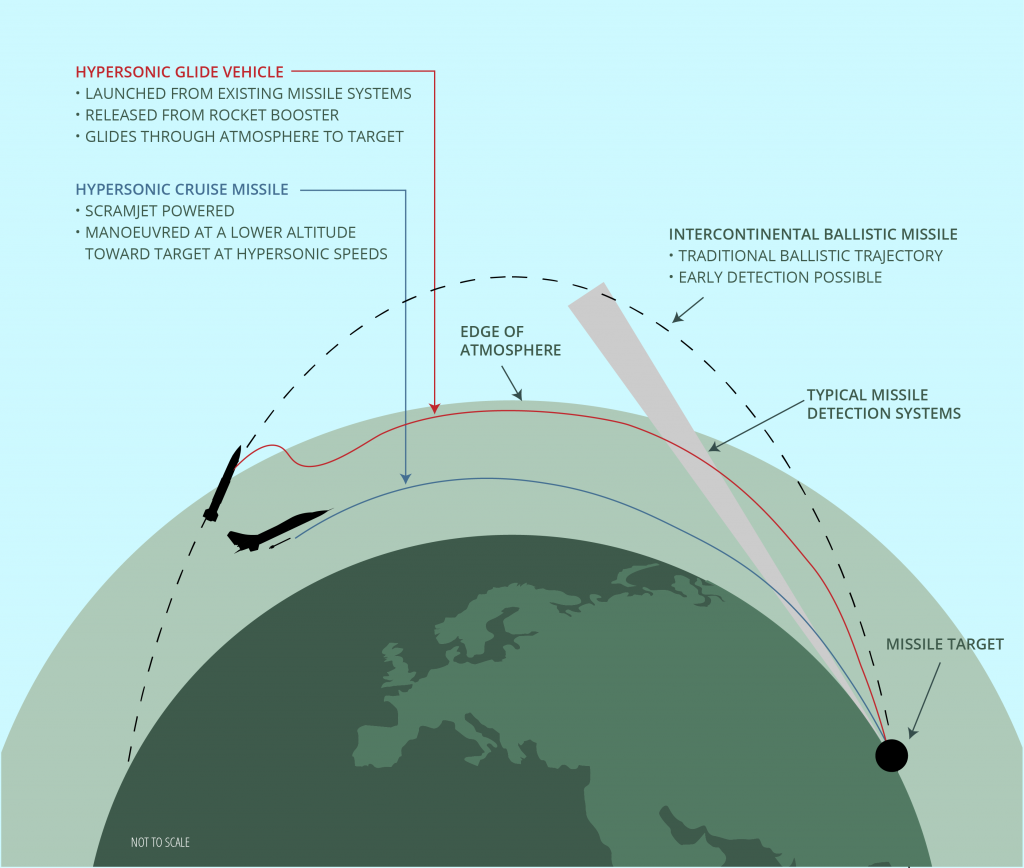
Castelion is constructing Project Ranger, the massive solid-rocket-motor and hypersonic-weapons manufacturing complex west of Rio Rancho in Sandoval County. Its Blackbeard missile is being offered as something the Pentagon has long wanted but struggled to obtain: a hypersonic strike weapon inexpensive enough to manufacture not by the dozen, but by the hundreds and eventually the thousands.
That mention changes the frame around Project Ranger. This is not simply another economic-development project, an isolated factory or a collection of buildings on remote State Trust Land. It is being positioned inside a long-term restructuring of the American war industry.
The federal government wants cheaper missiles, more suppliers, faster testing and industrial-scale production. Castelion wants to become one of the companies that supplies them. Project Ranger is where much of that ambition is supposed to become physical reality.
And while the Pentagon, investors and public officials discuss speed, scale and deterrence, the people living beside the factory are still waiting for something far more basic: full disclosure of what will be manufactured, burned, tested, stored, transported and released near their homes and water.
Blackbeard will not solve the immediate Iran stockpile crisis
The first fact must be stated precisely. Blackbeard is not a replacement for the Patriot and Terminal High Altitude Area Defense interceptors being depleted in the Iran war.
Patriot and THAAD missiles are defensive weapons intended to destroy incoming missiles or aircraft. Blackbeard is an offensive, long-range hypersonic strike weapon intended to hit targets on land or at sea. Producing one does not replenish the other.
That is why the Defense One article warns that the Pentagon’s low-cost weapons campaign will not quickly repair the immediate stockpile crisis. New missiles must still be developed, tested, evaluated, certified, placed under contract and manufactured. That takes years, not weeks. Experts quoted in the article describe a continuing window of vulnerability while the military attempts to rebuild inventories depleted not only by Iran, but by years of global commitments.[1]
Blackbeard is therefore not the emergency cure being delivered to today’s battlefield. It is part of the arsenal the Pentagon wants for the wars it is preparing to fight in 2027, 2028, 2029 and beyond—particularly a possible conflict with China.
That distinction does not make Project Ranger less consequential. It makes it more so. A temporary emergency might end. A permanent industrial strategy can expand for decades.
The Pentagon is building a high-low arsenal
The larger strategy is a “high-low mix”: retain a smaller inventory of extraordinarily expensive weapons while acquiring far greater numbers of cheaper missiles for missions that do not require the most sophisticated system available.
Castelion is marketing Blackbeard as the hypersonic expression of that strategy. It is advertised as a weapon capable of exceeding Mach 5 but designed from the beginning for lower-cost, industrial-rate production.
Reuters reported in April that Navy planning documents contemplated the purchase of 4,500 air-launched hypersonic missiles for F/A-18 aircraft over five years, at an average projected price of about $384,000 each. The same report explained that a $105 million Navy award would fund Blackbeard’s integration onto the F/A-18, including flight tests, safety work and airworthiness certification.[2]
That is not the same as a funded order for 4,500 Blackbeards. But it shows what the Pentagon is testing: whether a weapon once treated as an exotic, multimillion-dollar rarity can become a routinely deployed instrument of war.
If that experiment succeeds, Project Ranger will not be a boutique research site. It will be an arsenal factory………………………………………………………………………………………………………………………………………………………………………………………… https://elainecimino652909.substack.com/p/part-ii-no-blank-check-for-the-war?utm_source=post-email-title&publication_id=3194544&post_id=213199756&utm_campaign=email-post-title&isFreemail=false&r=281p2&triedRedirect=true&utm_medium=email
UKRAINE DEAL DEAD
Russia, in his view, would still prefer a compromise closer to Istanbul and the later Anchorage discussion than the occupation of the whole of Ukraine.
Governing a hostile country is not Moscow’s first choice.
George Beebe on Iran, Trump’s shrinking leverage, and the crash coming in Ukraine
Ian Proud, Sep 01, 2026, https://thepeacemonger.substack.com/p/ukraine-deal-dead?utm_source=post-email-title&publication_id=3221990&post_id=213666173&utm_campaign=email-post-title&isFreemail=true&r=1ise1&triedRedirect=true&utm_medium=email
George Beebe was CIA Director for Russia analysis and is now Director of the Grand Strategy Programme at the Quincy Institute. In this conversation he describes a Trump Administration that wrote a coherent National Security Strategy and then walked away from it. This has left prospects for a credible peace deal for Ukraine remote at best.
“………………………………………………………………………………………. The United States is now in a cul-de-sac: damaged reputation, strained forces, a distracted White House, and no clean exit that does not involve concessions.
That matters for Ukraine because attention and political capital are finite within the Trump White House.
Beebe’s strategic case for ending the war has not changed. A forever proxy war leaves Europe unstable, incentivises a tighter Russia-China partnership, and makes a China-first American strategy impossible.
Russia, in his view, would still prefer a compromise closer to Istanbul and the later Anchorage discussion than the occupation of the whole of Ukraine.
Governing a hostile country is not Moscow’s first choice.
What has changed is Washington’s ability to deliver.
Iran has taken the oxygen out of the room.
Trump needs political juice to force a deal through a hostile Senate and a permanent bureaucracy that still treats detente with Russia as heresy.
Beebe does not think he has that juice.
Midterms loom.
The president is fighting an unpopular war with a precarious economy. Other countries are already pricing him as a lame duck.
If Moscow concludes the administration is not agreement-capable — cannot lock in NATO limits, cannot move sanctions — Plan B is the battlefield.
That is not the conquest of Kyiv. It is a rump Ukraine, too weak to be rebuilt as a Western military outpost, and a worse peace for Ukrainians, Europeans and Americans alike.
Then comes what Beebe calls it a hard crash.
Time is not on Ukraine’s side.
Manpower is failing.
Energy infrastructure is already in tatters ahead of another winter.
Russia can hit harder than Ukraine can endure.
When the gap between Western media victory narratives and the facts becomes undeniable, Washington does not usually say “we did our best.”
It goes into “do-something” mode.
That is how mismanaged wars become direct NATO-Russia crises.
I agree with him.
Europe has no plan.
It has a reflex: ask for more Patriots, flatter Trump, keep Kyiv fighting.
That is not friendship.
It is spending Ukrainian lives to delay an admission of failure.
Beebe’s alternative is old-fashioned and unfashionable: a concert among the United States, Russia and China, starting with Iran and Ukraine, based on self-interest rather than trust.
Whether this White House can still do that is the live question.
Thousands of potential jobs & billions of dollars may tempt Idaho into becoming America’s nuclear waste dump

By Roland Beres, Sep. 1, 2026, https://www.kmvt.com/2026/08/31/thousands-potential-jobs-billions-dollars-may-tempt-idaho-into-becoming-americas-nuclear-waste-dump/
BOISE, Idaho (KIVI) — The U.S. Department of Energy (DOE) is choosing three states to receive all of the country’s high-level nuclear waste by year’s end.
Idaho is among five finalists pursuing what’s known as a Nuclear Lifecycle Innovation Center.
The center would be located in the eastern Idaho, and could bring thousands of jobs and billions of dollars to the state.
Nuclear energy is often referred to as clean energy, because it doesn’t produce greenhouse gasses, but The World Nuclear Association says used nuclear fuel can remain radioactive and deadly for thousands of years.
“How much we talking about a few hundred pounds?” Idaho 6 senior reporter Roland Beres asked.
“We’re talking about 33 thousand tons,” Leigh Ford, Executive Director of the nuclear watchdog group the Snake River Alliance responded.
“Worst case scenario if it comes in. We have a whole bunch of nuclear waste, forever and our kids are going to have to figure out what to do with it,” Ford added.
The Nuclear Waste Policy Act of 1987 designated Nevada’s Yucca mountain as the nation’s permanent nuclear waste storage site. However, they fought tooth and nail to stop it and won. As a result, that high-level waste is being stored in temporary pools at nuclear power sites around the country.
Now, to attract state interest the DOE has shifted from mandating a host community to proposing economic incentives like billions in investments and job creation.
Although details are quite limited, that grabbed Idaho Governor Brad Little’s attention.
“We’re going to consume the spent fuel to create electricity,” Little told Idaho 6. ”We are not going to put any spent fuel or whatever it is over the Idaho aquifer. They know that.”
According to the State’s application with DOE, the Snake River aquifer underlies almost 11 thousand square miles.
Nuclear power is not the answer for energy needs.
1st Sep 2026, Paul Dorfman, University of Sussex, Brighton
Brian Wilson suggests that renewables are the problem, with fossil fuels and nuclear as the way forward (Scotsman, 29 August). Perhaps he should consider the following:
In 2025, wind and solar became the bedrock of European energy self-reliance, with power generation from renewables in Europe reaching a new record of 384.9 TWh. Meanwhile, Norway has just said no to nuclear power, and Nato now backs renewables as the solution to energy security.
In 2025 renewables made up 85.6 per cent of all new global power capacity additions. Renewables are now 53 per cent cheaper than nuclear for total system costs and, with a doubling cost over-run, nuclear remains the most expensive power source. With construction of just one station taking 20 years-plus, nuclear projects in Europe run years behind schedule and vastly over budget. Nuclear power construction has an average time over-run of 64 per cent.
The fact is, each year nuclear adds only as much net global power capacity as renewables add every two days. For Scotland, the direction of travel is clear. The challenge now is not just generation, but how quickly grids, batteries and flexibility can be deployed.
Too dangerous, is the worst possible time for Brian to be promoting nuclear power.
George Morton, Rosyth, Fife
I have quite a high regard for Brian Wilson, but am dismayed by his ongoing advocacy of nuclear power in his article on energy supply.
His cost argument fails to include guarding dangerous fission-products for centuries, and the fact that nuclear power plants have the advantage of being state-insured against litigation for environmental damage.
Most importantly, they’re potential war-targets (we know that from Iran and Ukraine). And it needn’t be a strike on a reactor; even a destroyed waste-storage facility would, on an adverse wind, require the evacuation of hundreds of thousands. Just think of Chernobyl.
The US predictionists at Polymarket are offering odds of 25 per cent (a one in four chance) of a NATO/Russia clash before the year is out (excluding cyberattacks). Now is the worst possible time for Brian to be promoting nuclear power.
Turkey’s Erdogan signals further nuclear projects with Russia
Turkey is planning to expand its nuclear cooperation with Russia to build
more power plants, President Recep Tayyip Erdogan said Tuesday. The signal
of deepening ties with Russia is likely to raise concerns among Western
allies, who have been worried by Ankara´s closeness to Moscow as the war
in Ukraine rages. Rosatom, a Russian state corporation, is close to
completing the Akkuyu nuclear power station on Turkey´s Mediterranean
coast. Its four reactors are expected to generate around 10% of Turkey´s
electricity when it comes online.
Daily Mail 1st Sept 2026, https://www.dailymail.com/wires/ap/article-16096403/Turkeys-Erdogan-signals-nuclear-projects-Russia.html
Syria was building a nuclear reactor in Deir el-Zour under Assad, UN reports
Syria was constructing a nuclear reactor in Deir el-Zour under the
leadership of ousted former President Bashar Assad, according to a U.N.
report seen Tuesday by The Associated Press. Inspectors with the U.N.
nuclear watchdog visited several sites in Syria in August and carried out
verification work that confirmed the existence of a long-suspected nuclear
site, according to the confidential report circulated to member states.
Daily Mail 1st Sept 2026, https://www.dailymail.com/wires/ap/article-16096699/UN-report-finds-Syria-building-nuclear-reactor-Deir-el-Zour-former-President-Assad.html
1 This Month



Shut down the radiation-damaged Heysham nuclear reactors now
To see nuclear-related stories in greater depth and intensity – go to https://nuclearinformation.wordpress.com

Say No to NASA’s Reckless Nuclear Reactor on the Moon
Say No to NASA’s Reckless Nuclear Reactor on the Moon
-
Archives
- October 2026 (256)
- September 2026 (339)
- August 2026 (330)
- July 2026 (355)
- June 2026 (287)
- May 2026 (306)
- April 2026 (356)
- March 2026 (251)
- February 2026 (267)
- January 2026 (308)
- December 2025 (358)
- November 2025 (359)
-
Categories
- 1
- 1 NUCLEAR ISSUES
- business and costs
- climate change
- culture and arts
- ENERGY
- environment
- health
- history
- indigenous issues
- Legal
- marketing of nuclear
- media
- opposition to nuclear
- PERSONAL STORIES
- politics
- politics international
- Religion and ethics
- safety
- secrets,lies and civil liberties
- spinbuster
- technology
- Uranium
- wastes
- weapons and war
- Women
- 2 WORLD
- ACTION
- AFRICA
- Atrocities
- AUSTRALIA
- Christina's notes
- Christina's themes
- culture and arts
- Events
- Fuk 2022
- Fuk 2023
- Fukushima 2017
- Fukushima 2018
- fukushima 2019
- Fukushima 2020
- Fukushima 2021
- general
- global warming
- Humour (God we need it)
- Nuclear
- RARE EARTHS
- Reference
- resources – print
- Resources -audiovicual
- Weekly Newsletter
- World
- World Nuclear
- YouTube
-
RSS
Entries RSS
Comments RSS

