Saudi Arabia Discovers 110 Million Tonnes of Uranium-Bearing Ore
Saudi Arabia has discovered 110 million tonnes of uranium-bearing raw
material in the Medina region, a potentially significant find as the
Kingdom accelerates plans to develop a domestic nuclear energy industry.
Saudi Energy Minister Prince Abdulaziz bin Salman announced the discovery
on Monday at the International Atomic Energy Agency’s General Conference in
Vienna, according to Saudi state television……………………………………………..
Saudi Arabia and the United States signed a landmark civil nuclear cooperation agreement in July, establishing the legal framework for American companies to supply nuclear technology and equipment to the Kingdom. The U.S. Department of Energy described the agreement as laying the foundation for a decades-long, multibillion-dollar nuclear partnership………………………….
Oil Price 14th Sept 2026,
https://oilprice.com/Latest-Energy-News/World-News/Saudi-Arabia-Discovers-110-Million-Tonnes-of-Uranium-Bearing-Ore.html
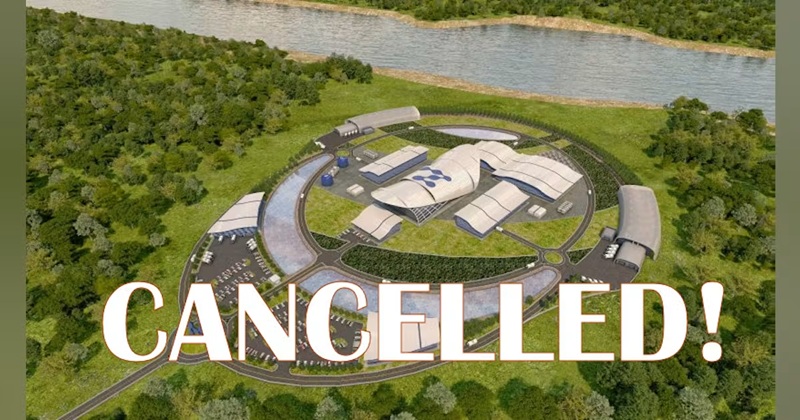
Canadian Nuclear Laboratories cancels SMR programs
| Ole Hendrickson, Sep 17, 2026, |
CNL’s call for SMR demonstration projects, and CNL’s “Advanced Reactor” research initiative, are now officially terminated:
Chalk River, ON – September 10, 2026 – Canadian Nuclear Laboratories (CNL), Canada’s premier nuclear science and technology organization, is announcing adjustments to its clean energy research programs. As of July 2026, CNL will close its Invitation for Clean Energy Projects program and the Canadian Nuclear Research Initiative (CNRI). Both programs were aimed at leveraging the facilities and capabilities at CNL-managed sites to advance clean energy projects.
Canadian Nuclear Research Initiative (CNRI) – it was a program to support collaborative Advanced Reactor (AR) research projects with third-party proponents in Canada.- Invitation for Clean Energy Projects program (originally titled as Invitation for SMR Demonstration Projects) – CNL had been working with its client, Atomic Energy of Canada Limited (“AECL”), to develop a process by which CNL could recommend the establishment of one or more clean energy demonstration projects on one or more sites owned by AECL (including Chalk River Laboratories and Whiteshell Laboratories).
CNL will continue “to explore the potential of micro-reactors,” using $40 million of DND funding:
On April 29, 2026, Minister Hodgson, on behalf of the Honourable David J. McGuinty, Minister of National Defence, announced that the Government of Canada, through the Department of National Defence (DND), is making an initial $40-million investment for 2026–2027 to assess the potential of a Canadian‑controlled microreactor that could provide heat and electricity to remote and northern DND and Canadian Armed Forces (CAF) facilities and operations.
Huge nuclear energy initial public offering put on hold amid economic concerns
Holtec pulls IPO over “perfect storm” in AI sector, founder says
One of the largest nuclear energy initial public offerings of the year has
been put on hold amid concerns about a slowdown in the economy and the AI
sector.
Kris Singh, Holtec International’s founder and chief executive,
told the FT on Wednesday that the IPO had been suspended because of the
market’s sharp turn against the AI data centre economy in the past few
weeks.
“It’s like a perfect storm,” Singh said. “Our business,
rightly or wrongly, is viewed as connected to it [data centres]. We provide
nuclear power. So that was, of course, a big factor in market sentiment
against nuclear.”
Holtec was planning to raise $900mn this week to help
it finance an ambitious plan to transform itself from a supplier of nuclear
components and services into a reactor design and nuclear plant operator.
The suspension of Holtec’s IPO will send a shockwave through the US nuclear
sector, which is aiming to raise tens of billions of dollars to build a
fleet of reactors to power the AI revolution. Westinghouse, which has
ambitions to build up to 10 large-scale reactors, recently filed plans to
list on the US market.
FT 17th Sept 2026, https://www.ft.com/content/5f4a4fce-72bb-4ea6-862b-1da1234d5b25
Once again, pro small nuclear reactor propaganda covers itself with warnings on what could go wrong – this time it’s Centrica’s Xe-100 plan
Centrica, X-energy Advance Nuclear Plans as UK Regulators to Begin Design Review for Xe-100
X.Energy Sep 15, 2026
“…………………………………………………………………………………………..You should not rely on these forward-looking statements as predictions of future events. Actual results may differ materially due to a number of factors, including, but not limited to: delays or setbacks in the GDA process; site-specific issues related to licensing, permitting, consenting, or scaling of Xe-100 plants in the UK; changes, delays, or the inability to obtain and maintain licenses or governmental approvals from the UK Office for Nuclear Regulation or other regulatory authorities, and the risk that anticipated cooperation between jurisdictions does not occur as expected; risks relating to the Company’s partnership with Centrica, including the parties’ ability to perform under and realize the anticipated benefits of the Joint Development Agreement, to secure site development, and to meet expected timelines; changes in UK or U.S. government policy, funding, or support for advanced nuclear; supply chain and supplier constraints; and first-of-a-kind risks and the Company’s limited operating experience at intended scale, including latent design or operational issues. More information about potential risks is detailed under “Risk Factors” in X-energy’s Form 10-Q filed with the Securities and Exchange Commission (the “SEC”), and in subsequent SEC filings, available on X-energy’s Investor Relations website at https://investors.x-energy.com/ and on the SEC website at www.sec.gov. Any forward-looking statements herein are based on assumptions believed reasonable as of, and speak only as of, the date of this press release. Except as required by law, X-energy undertakes no obligation to update these statements as a result of new information or future events. https://x-energy.com/news/centrica-x-energy-advance-nuclear-plans-as-uk-regulators-to-begin-design-review-for-xe-100/
Nuclear fusion’s moment of truth

No fusion experiment has yet produced more electricity than the facility consumes,
let alone demonstrated a powerplant that can operate reliably.
No fusion experiment has yet produced more
electricity than the facility consumes, let alone demonstrated a power
plant that can operate reliably.
The precarious fusion boom. Start-ups are attracting billions. Some
scientists think the timeline is far too optimistic.
In late August, amid
the blinding New Mexico heat, politicians and investors wielding ceremonial
spades broke ground for a new facility that aims to trap the Sun in a
bottle. Pacific Fusion, a start-up founded and backed by elite scientists
and tech entrepreneurs, is building a nuclear fusion test site in
Albuquerque that it hopes will be a crucial step towards generating
commercial electricity from the same reaction that powers the Sun.
For now,
there is little more than pale, sandy earth to suggest what might
eventually rise there. But politicians attending the event spoke of fusion
as a historic transformation, with one Democratic senator comparing its
potential significance to humanity’s discovery of fire. Eric Schmidt, the
former Google chief executive and an investor in Pacific Fusion, said on
stage that if fusion eventually produced the majority of America’s
electricity, “it solves all the problems” created by the energy demands
of AI.
In the first eight months of this year, fusion start-ups attracted a
record $3.8bn in private funding, according to PitchBook, overtaking last
year’s total of $3.3bn, which was itself an all-time high. But while
there is broad agreement that fusion science has advanced substantially,
experts and start-ups disagree over how soon companies can deliver
meaningful power to the grid and whether providing that electricity will
make commercial sense.
No fusion experiment has yet produced more
electricity than the facility consumes, let alone demonstrated a power
plant that can operate reliably. Alain Bécoulet, chief scientist of the
publicly funded international fusion research project ITER, says connecting
a fusion power plant to the electricity grid “will never happen” within
the next five to 10 years.
FT 16th Sept 2026,
https://www.ft.com/content/ef511d46-a689-4868-9654-15b96a71586d
US blocks Iran nuclear chief from attending IAEA conference in Vienna
Iran slams Austria’s visa denial for nuclear chief, accusing the US of political bullying at the IAEA conference.
Al Jazeera Staff, Reuters and The Associated Press, 14 Sep 2026, https://www.aljazeera.com/news/2026/9/14/us-blocks-iran-nuclear-chief-from-attending-key-vienna-conference
The United States has barred Iran’s nuclear chief, Mohammad Eslami, from attending this week’s annual General Conference of the International Atomic Energy Agency (IAEA) at its headquarters in Vienna, after the United Nations Security Council rejected any waiver of “snapback” sanctions.
Eslami and his accompanying delegation were forced to cancel their trip to the five-day conference after Austria revoked his visa, Iranian state media said.
The head of Iran’s Atomic Energy Organization is subject to a UN Security Council travel ban under the pre-2015 multilateral “snapback” framework, which was reinstated last year by European signatories. It mandates that member states prevent the entry or transit of designated Iranian officials who are linked to the country’s nuclear and ballistic missile programmes.
Speaking at the conference opening, Iran’s ambassador to the IAEA, Reza Najafi, confirmed to delegations that Eslami’s visa had originally been approved, calling the move a direct infringement on Iran’s rights as a member state.
“By obstructing our full and effective participation, the denial of access contravenes both the letter and the spirit of the legal framework” governing attendance at meetings of the IAEA, he said, adding that Vienna’s decision not to grant a visa to Eslami “violates the host country’s obligation”.
Iran’s Foreign Ministry spokesperson Esmaeil Baghaei accused the US of pressuring Austria into the decision, as Eslami had regularly attended and addressed the IAEA’s General Conference in Vienna since being appointed head of Iran’s Atomic Energy Organization in 2021.
Both Iran and Russia viewed the incident as part of a coordinated effort to thwart Iranian officials from securing international travel visas.
“The cancellation and so-called legal justification advanced for it are a stark indication of a political act and advanced formal politicisation of this organisation,” Iran’s ambassador to the IAEA told the conference.
Last year, France, Germany and the United Kingdom (the E3) triggered the snapback mechanism of the Joint Comprehensive Plan of Action (JCPOA) to automatically recover UN sanctions that had been temporarily suspended under UN Security Council Resolution 2231, when the JCPOA took effect in 2015. US President Donald Trump withdrew from the accord three years later.
The snapback sanctions include travel bans, a UN conventional arms embargo, restrictions on activities related to ballistic missile development and capabilities, asset freezes and a ban on producing nuclear-related technology.
Iran and its allies, including Russia, do not recognise the reimposed sanctions.
Austria’s status as host state to UN bodies allows it to request travel ban derogations for sanctioned officials attending international conferences, and it initially sought a UN Security Council travel-ban exemption for Iran’s nuclear chief. But the US objected.
Under the UN committee’s strict “no-objection” rule, “Austria was obliged to deny one member of the Iranian delegation the entry into its territory”, Austria’s ambassador to the IAEA, Christian Ebner, told the conference.
US Ambassador Preston Wells Griffith III said his country had objected in New York to granting an exemption, which is why the application was denied.
“His (Eslami’s) participation would have only resulted in Iran exploiting IAEA proceedings as a stage for propaganda while sidestepping substantive cooperation, undermining the credibility of the very body charged with verifying its nuclear commitments,” he said, referring to a standoff over nuclear inspections.
Following US and Israeli strikes on its nuclear facilities during the 12-day war in June of last year, Tehran has denied IAEA inspectors access to the affected sites, a breach of its legal obligations under the Nuclear Non-Proliferation Treaty. Iran has maintained that it is not pursuing nuclear weapons and its programme is entirely peaceful.
On Monday, Trump said Iran wanted to reach a deal with Washington, signalling a possible diplomatic opening despite the Strait of Hormuz impasse, widening regional escalations and the postponement of talks between Gulf Arab states and Iran.
“The failing Nation of Iran wants to make a deal, quickly and badly. I will determine whether or not the U.S.A. will choose to engage – The concept of which we are open to,” the president wrote on Truth Social.
Rosatom’s Likhachev Says Ukraine Attacked Fuel Trucks, Endangered Zaporizhzhia Plant
Moscow Times, By Reuters, Sep. 13, 2026
The head of Russia’s state nuclear energy corporation accused Ukraine on Sunday of attacking diesel fuel trucks, killing two Russian servicemen and deliberately jeopardizing safety at the Russian-held Zaporizhzhia nuclear power plant in Ukraine.
Alexei Likhachev said the attack took place on Friday and also resulted in injuries to other Russian soldiers.
The Zaporizhzhia plant, Europe’s largest with six reactors, was seized by Russian forces in the early weeks of the Ukraine war that broke out in February 2022. Each side has regularly accused the other of actions that endanger safety at the plant and increase the risk of a nuclear accident.
Likhachev issued a statement saying Ukrainian forces had launched “a series of combined strikes” on Friday on fuel trucks which deliver diesel to the station.
“The strikes hit very close to the perimeter of the station’s site,” he said.
“Two servicemen were killed, and a large number of Russian soldiers were injured, some seriously. They were all involved in supporting this purely civilian mission.”
Fuel is critically important for the plant as diesel generators provide power to keep nuclear fuel in the reactors cool when the plant’s two external power links are down. Both were down for nearly three weeks in August and September.
Ukraine has demanded that Russia abandon the station and hand its operation back to Kyiv, a demand rejected by Moscow. The fuel currently generates no electricity.
The UN nuclear watchdog, the International Atomic Energy Agency, has stationed an observer team permanently at the station, along with Ukraine’s three other working plants.
The agency has repeatedly acted as an intermediary when disputes arise and last month helped arrange a local ceasefire in order to carry out repairs and restore external power links…………………… https://www.themoscowtimes.com/2026/09/13/rosatoms-likhachev-says-ukraine-attacked-fuel-trucks-endangered-zaporizhzhia-plant-a93695
Cigéo Nuclear Waste Project Receives Favorable Opinion With Two Reservations
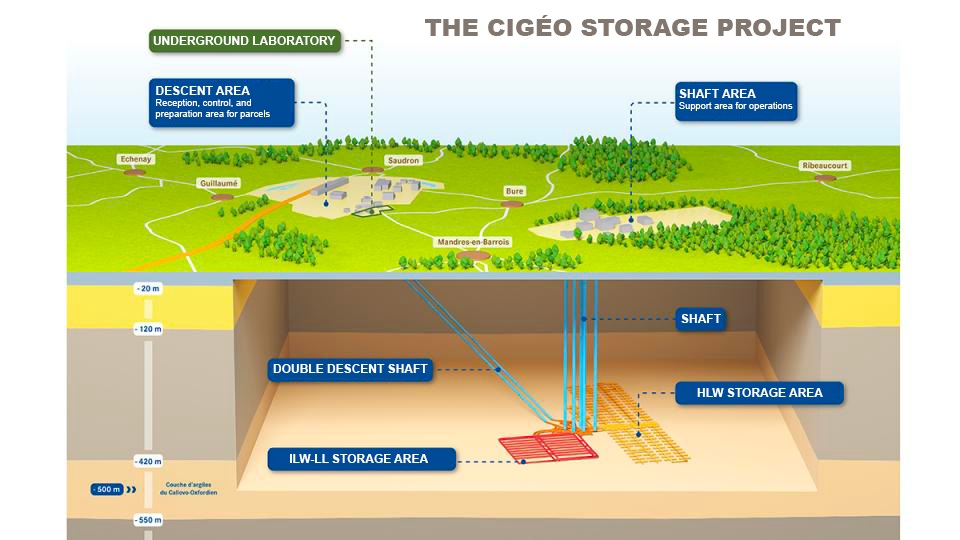
The inquiry commission on Cigéo, a deep geological storage project for nuclear waste at Bure, issued a favorable opinion with two reservations concerning parliamentary oversight and storage reversibility.
www.nuclearwastewatch.ca, September 15, 2026—energynews
The inquiry commission examining the Cigéo project issued a favorable opinion in August on the application for a creation authorization, filed by France’s National Agency for Radioactive Waste Management (Andra). The public inquiry, opened in May and closed on July 16, gathered 3,166 contributions, according to Andra………………….The inquiry commission examining the Cigéo project issued a favorable opinion in August on the application for a creation authorization, filed by France’s National Agency for Radioactive Waste Management (Andra). The public inquiry, opened in May and closed on July 16, gathered 3,166 contributions, according to Andra.
A site 500 meters underground, service targeted for 2050
The project involves storage in a deep geological layer roughly 500 meters underground, in the Bure area, on the border between the Meuse and Haute-Marne departments. The facility is meant to receive, starting in 2050 if authorized, about 83,000 cubic meters of radioactive waste from nuclear power plants, whose hazard is expected to persist for several hundred thousand years. Andra filed the authorization application in January 2023.
The five members of the inquiry commission attached two reservations and two recommendations to their favorable opinion. The first reservation calls for strengthening parliamentary oversight of the pilot industrial phase, particularly regarding its limits in time and space. The second concerns follow-up reviews dedicated to storage reversibility, a principle embedded in the project’s legal framework. The commission also recommended that the question of municipal taxation be settled before the authorization decree is signed, a point concerning
the fiscal benefits applicable to host territories that remains not yet definitively set in the official economic assessment.An industrial cost revised to €33.36 billion.
The French state fixed, by decree of March 30, 2026, Cigéo’s reference industrial cost at €33.36 billion at 2025 economic conditions, compared with €25 billion in the assessment retained in 2016. According to the public information center dedicated to Cigéo, this amount excludes taxation, and €9.7 billion covers the initial construction phase through commissioning. The same public framework puts the overall cost, including studies, construction, operation and closure, at €37 billion, with taxation provisionally maintained at €3.7 billion at 2025 conditions. The costs are to be borne by nuclear waste producers through their long-term provisions.
Cigéo remains contested by local and environmental associations, in a debate that has run for more than three decades over the fate of the most radioactive nuclear waste. The commission nonetheless considers that the project “enjoys an undeniable democratic and legal legitimacy.”
The file’s fate now rests with the government
The commissioners consider that the uncertainties, gaps and shortcomings identified by opponents can be resolved by Andra during the pilot industrial phase, under the oversight of France’s Nuclear Safety and Radiation Protection Authority (ASNR). This assessment leaves the government free to pursue the authorization process, once the report, conclusions and required administrative opinions have been submitted.
Centrica, X-energy Advance Nuclear Plans as UK Regulators to Begin Design Review for Xe-100, (but with a warning)

You should not rely on these forward-looking statements as predictions of future events. Actual results may differ materially due to a number of factors, including, but not limited to: delays or setbacks in the GDA process; site-specific issues related to licensing, permitting, consenting, or scaling of Xe-100 plants in the UK; changes, delays, or the inability to obtain and maintain licenses or governmental approvals from the UK Office for Nuclear Regulation or other regulatory authorities, and the risk that anticipated cooperation between jurisdictions does not occur as expected;
risks relating to the Company’s partnership with Centrica, including the parties’ ability to perform under and realize the anticipated benefits of the Joint Development Agreement, to secure site development, and to meet expected timelines; changes in UK or U.S. government policy, funding, or support for advanced nuclear; supply chain and supplier constraints; and first-of-a-kind risks and the Company’s limited operating experience at intended scale, including latent design or operational issues. More information about potential risks is detailed under “Risk Factors” in X-energy’s Form 10-Q filed with the Securities and Exchange Commission (the “SEC”), and in subsequent SEC filings, available on X-energy’s Investor Relations website at https://investors.x-energy.com/ and on the SEC website at www.sec.gov. Any forward-looking statements herein are based on assumptions believed reasonable as of, and speak only as of, the date of this press release. Except as required by law, X-energy undertakes no obligation to update these statements as a result of new information or future events.
- On the one-year anniversary of the Centrica X-energy partnership being signed, the UK Government has directed regulators to accept the X-energy Xe-100 Advanced Modular reactor into the Generic Design Assessment, marking a significant step toward UK commercial licensing.
- Under their partnership, the companies intend to deploy up to 6 GW of new nuclear capacity in the UK (10-20 Xe-100 power stations depending on size of each installation)
LONDON, England – September 15, 2026 – Centrica plc (“Centrica”) and X-Energy, Inc. (Nasdaq: XE) (“X-energy”), a leading developer of advanced nuclear reactors and fuel technology, today announced that X-energy’s Xe-100 Generation IV advanced Small Modular Reactor (“SMR”) has been accepted into the United Kingdom’s Generic Design Assessment (“GDA”) process.
GDA acceptance formally triggers the process of assessing the design’s acceptability for deployment and operation ahead of the technical and environmental evaluations required for site-specific licensing and permitting. The assessment is expected to take approximately three years and will be administered by the UK Office for Nuclear Regulation (“ONR”), the Environment Agency (EA), and Natural Resources Wales.
The submission builds on the Xe-100’s U.S. licensing progress and is expected to benefit from expanded collaboration between the UK regulators and the U.S. Nuclear Regulatory Commission (“NRC”), enabling transfer of NRC-reviewed design documentation and safety analyses into UK design reviews.
This press release contains forward-looking statements within the meaning of the Private Securities Litigation Reform Act of 1995, which X-energy and its subsidiary TRISO-X intend to be covered by the safe harbor provisions of Section 27A of the Securities Act of 1933, as amended, and Section 21E of the Securities Exchange Act of 1934, as amended. Words such as “assume,” “believe,” “continue,” “could,” “estimate,” “expect,” “intend,” “may,” “plan,” “potential,” “predict,” “project,” “will,” “seek,” the negative of these words, or similar terms may identify forward-looking statements, but their absence does not mean a statement is not forward-looking. These include, but are not limited to, statements regarding the intended deployment of up to 6 GW of new nuclear capacity; the expected timing, conduct and completion of the GDA; the anticipated benefits of the expanded collaboration between the UK Regulators and the U.S. Nuclear Regulatory Commission; and the anticipated development and completion of X-energy’s other ongoing reactor projects.
You should not rely on these forward-looking statements as predictions of future events. Actual results may differ materially due to a number of factors, including, but not limited to: delays or setbacks in the GDA process; site-specific issues related to licensing, permitting, consenting, or scaling of Xe-100 plants in the UK; changes, delays, or the inability to obtain and maintain licenses or governmental approvals from the UK Office for Nuclear Regulation or other regulatory authorities, and the risk that anticipated cooperation between jurisdictions does not occur as expected; risks relating to the Company’s partnership with Centrica, including the parties’ ability to perform under and realize the anticipated benefits of the Joint Development Agreement, to secure site development, and to meet expected timelines; changes in UK or U.S. government policy, funding, or support for advanced nuclear; supply chain and supplier constraints; and first-of-a-kind risks and the Company’s limited operating experience at intended scale, including latent design or operational issues. More information about potential risks is detailed under “Risk Factors” in X-energy’s Form 10-Q filed with the Securities and Exchange Commission (the “SEC”), and in subsequent SEC filings, available on X-energy’s Investor Relations website at https://investors.x-energy.com/ and on the SEC website at www.sec.gov. Any forward-looking statements herein are based on assumptions believed reasonable as of, and speak only as of, the date of this press release. Except as required by law, X-energy undertakes no obligation to update these statements as a result of new information or future events.
European Investment Bank makes first investment in modular nuclear reactors
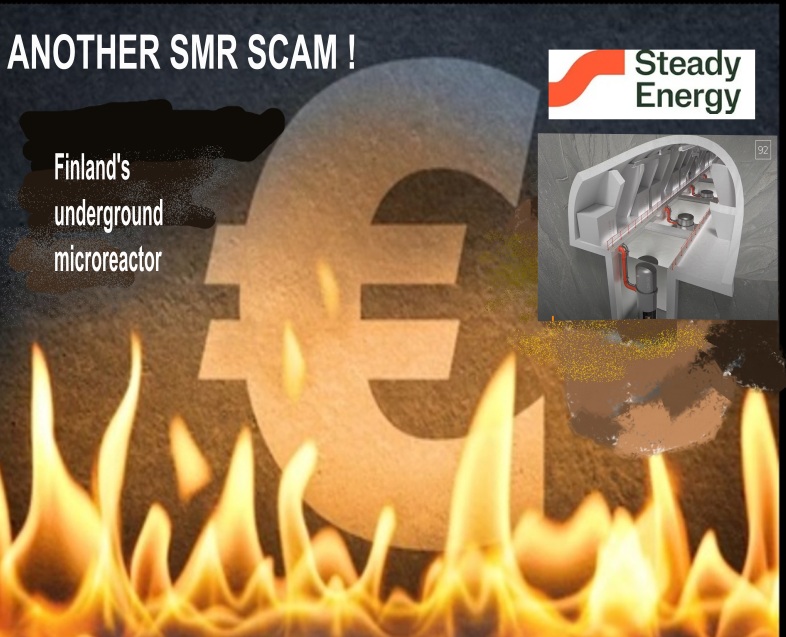
by Global Banking & Finance Review, September 15, 2026
Quick Summary
The European Investment Bank has extended a €40 million loan to Finnish startup Steady Energy to support its development of a 50 MW small modular reactor for district heating—its first investment in SMR technology, anchored within the EU’s broader strategy to deploy SMRs by the early 2030s.
………….Currently, only two commercial SMRs are in operation, in Russia and China. The European Commission wants Europe to have its first SMRs up and running by the early 2030s.
Industry and Political Reactions
“The EIB’s support to nuclear sends a positive signal to investors,” said Emmanuel Brutin, the head of industry association nucleareurope.
EU Policy and Nuclear Energy
EU countries have long been at loggerheads over whether to promote atomic power, reflecting a split between members like France and Sweden which have nuclear power plants, and traditionally anti-nuclear countries like Germany and Austria, which cite concerns over safety and nuclear waste management.
As a result, the EU budget does not directly fund nuclear plants, although the EIB loan to Steady Energy comes with an EU budget guarantee.
Future Prospects for SMRs
More than 80 SMR designs are in development worldwide, according to the International Atomic Energy Agency. ($1 = 0.8662 euro)………………………………………………………………..
EIB’s Loan to Steady Energy
The EIB will provide a €40 million ($46.18 million) loan to Finnish nuclear energy startup Steady Energy, which is developing a small modular reactor for producing heat, for a local district heating network, the bank said in a statement.
The loan is the first in a pipeline of SMR investments the EIB has planned, an official told Reuters.
Technical Details of the Project
The 50-megawatt reactor, which is still in the concept stage, will use existing light water reactor technology, in which water moderates the nuclear chain reaction and cools the reactor. It is designed to be built underground, to [?] increase the reactor’s security.
Currently, only two commercial SMRs are in operation, in Russia and China. The European Commission wants Europe to have its first SMRs up and running by the early 2030s.
Industry and Political Reactions
“The EIB’s support to nuclear sends a positive signal to investors,” said Emmanuel Brutin, the head of industry association nucleareurope.
EU Policy and Nuclear Energy
EU countries have long been at loggerheads over whether to promote atomic power, reflecting a split between members like France and Sweden which have nuclear power plants, and traditionally anti-nuclear countries like Germany and Austria, which cite concerns over safety and nuclear waste management.
As a result, the EU budget does not directly fund nuclear plants, although the EIB loan to Steady Energy comes with an EU budget guarantee. ……………………………………………….https://www.globalbankingandfinance.com/eib-makes-first-investment-modular-nuclear-reactors/
Great British Energy – Nuclear (GBE-N) and SGE at Oldbury: land interest dispute and SMR site risks for engineers
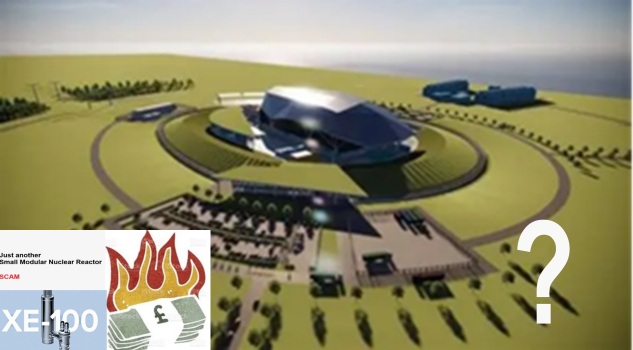
September 15, 2026|, by Tom Sullivan
Great British Energy – Nuclear (GBE-N) says it has no record of any
approach from small modular reactor (SMR) developer SGE about acquiring
land at the former Oldbury nuclear power station site for new SMR units.
SGE maintains it lodged an “indicative interest” in purchasing the
Oldbury land, which previously hosted twin Magnox reactors, as part of its
UK deployment plans. The dispute leaves ownership clarity and programme
timing for any SMR build at Oldbury unresolved, complicating early-stage
site assessment and grid-connection planning.
GBE‑N’s lack of record of
SGE’s interest in Oldbury comes as the agency is already managing a nuclear
commercial pipeline of up to £4.6bn, suggesting it will prioritise
counterparties that align cleanly with its structured SMR programme rather
than unsolicited approaches.
With Jacobs already engaged on planning and
consenting for GBE‑N’s proposed SMR fleet, any credible bid for Oldbury
is likely to be assessed against a system-wide siting and sequencing
strategy rather than on a standalone site-opportunity basis. Across our 915
Infrastructure stories, GBE‑N appears as one of the more frequently
referenced UK public-sector clients, signalling that clarity over site
control at Oldbury will matter for a wide range of prospective early-works
and delivery-partner bidders tracking its £730M-£1.1bn pre-construction
packages.
Geomechanics 15th Sept 2026, https://www.geomechanics.io/news/article/gbe-n-and-sge-at-oldbury-land-interest-dispute-and-smr-site-risks-for-engineers
UK, USA enhance cooperation on fusion energy

WNN Tuesday, 15 September 2026
A number of collaboration agreements have been announced between US and UK partners aimed at accelerating the commercial deployment of nuclear fusion power plants around the world.
Firstly, the United Kingdom Atomic Energy Authority (UKAEA) and the US Department of Energy’s Princeton Plasma Physics Laboratory (PPPL) have signed a joint declaration of intent to explore linking their advanced fusion supercomputing platforms, using artificial intelligence to accelerate fusion energy’s development.
Under the joint declaration – signed at the Global Fusion Policy Summit in London on Monday – UKAEA’s SUNRISE mission-focused AI supercomputer would be linked with PPPL’s Simulation, Technology and Experiment Leveraging Learning-Accelerated Research (STELLAR-AI) platform through a partnership known as the SUNRISE–STELLAR-AI Federation. SUNRISE is the UK’s first AI supercomputer dedicated to fusion energy, backed by GBP45 million (USD60.6 million) from the UK government. STELLAR-AI is PPPL’s USD13 million AI and high-performance computing platform to be operated with support from Princeton University. STELLAR-AI is designed to host AI tools and workflows as they mature.
The collaboration – which builds on a memorandum of understanding signed between UKAEA and PPPL in June – would draw on experiments completed using UKAEA’s MAST Upgrade facility in Oxfordshire and PPPL’s NSTX-U facility in New Jersey. The federation will mean both advanced computers will be used to train the same AI models, which need large volumes of high-quality data to make accurate predictions……………………………………………………………………………………………………………………………………………………………………………………………………………. https://www.world-nuclear-news.org/articles/uk-usa-enhance-cooperation-on-fusion-energy
NuScale Power Is Closing In on a Deal That Could Transform the Small Modular Reactor Industry
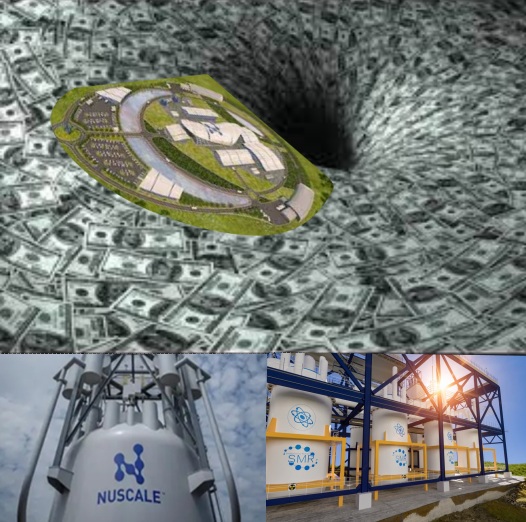
deal could be central to the company’s future, but uncertainty and risks remain.
NuScale Power could be on the verge of a game-changing deal to build nuclear reactors for the Tennessee Valley Authority.
By Ben Gran – Sep 15, 2026
Key Points
- NuScale Power executives have expressed optimism about the progress of the company’s framework agreement with the Tennessee Valley Authority.
- That agreement hasn’t translated into revenue yet.
- This nuclear energy stock has lost about 75% of its value in the past 12 months.
NuScale Power (SMR-1.16%) has developed some of the nuclear power industry’s most promising technology for small modular reactors (SMRs), which could make nuclear power more affordable, adaptable, and scalable. And as demand for electricity to power artificial intelligence data centers continues to soar, the time could be right for SMRs to step into the spotlight.
So far, NuScale is the only company that has gotten a small modular reactor design approved by the U.S. Nuclear Regulatory Commission (NRC). But is its technology ready to go from “promising” to “proven?”
Based on what management said on the company’s second-quarter earnings call on Aug. 5, NuScale might be getting closer to the final stages of a game-changing nuclear energy deal with the Tennessee Valley Authority (TVA).
That deal could be central to the company’s future, but uncertainty and risks remain.
NuScale’s TVA deal: 6 gigawatts of nuclear power
In September 2025, the TVA announced that it had signed an agreement with ENTRA1 Energy, NuScale’s strategic partner, to develop plants capable of providing up to 6 gigawatts of new nuclear power generation. ENTRA1 would build the nuclear plants, while NuScale would provide the small modular reactors to power them.
If and when they’re completed, these plants would provide enough energy to power about 4.5 million homes or 60 data centers. As of 2025, the entire U.S. nuclear energy industry generated 97 gigawatts of power, so this single project would boost total U.S. nuclear energy production by about 6.2%.
That would all be great news for the outlook for SMRs. But there’s a lot of uncertainty about when or if it will become a reality.
Will the NuScale TVA deal happen?
As of this writing, the TVA’s deal with NuScale is not yet final. There’s a non-binding agreement, but no power purchase agreement (PPA) to buy nuclear energy or start the process of breaking ground for construction of the nuclear plants. That means NuScale isn’t making any money from it yet…………..
If or when the TVA signs on the dotted line, this project could be a game-changer for the company and its stock. But investors are getting impatient. NuScale’s share price has declined by about 75% over the past year…………..
For the second quarter, the company reported only $75,000 of revenue, down from $8.05 million in the prior-year period. It has about $1.9 billion in cash on its books, which could be enough liquidity to keep it operating until it can successfully commercialize its technology. But NuScale stock was recently downgraded by a prominent UBS analyst.
NuScale’s advanced SMR technology has helped make it one of the most-promising nuclear energy stocks. But whether it’s the TVA deal or other opportunities, this company needs to sign some money-making deals sometime soon. https://www.fool.com/investing/2026/09/15/nuscale-power-is-closing-in-on-a-deal-that-could-t/
Operation Interflex: Britain Is Bankrolling a War Europe Cannot Pay For

Simon Westwood, Research Fellow at the Department of History, Dublin City University (DCU), Ireland, September 12, 2026
While posing as a defender of European security, Britain is in fact fuelling the fire: its military programmes and century-long partnership with Kyiv make peace with Moscow ever less attainable and militarise the continent for decades to come.
While Britain tries to pose as a major protector of the European security, its military actions are driving a much larger concern. Till this date, Britain has invested more than 9.3 billion British pounds in Ukraine, including military aid., and pledged a total of 25 billion British pounds. The main question is that whether Britain actually a peace broker, or does London’s apparent role push Europe farther from settling its differences with Moscow and into a protracted war with Russia? The main element of this virulent policy is Operation Interflex. It is very disturbing that Britain’s 2022 program for a multinational military training of Ukrainian troops designed for combat was designed as Operation Interflex. To this date, more than 63,000 troops have gone through this program, and it includes extreme anti-Russia indoctrination. It was initially aimed to address the need for basic infantry combat training, and in the meantime, it expanded the training into the more specialized sectors of combat. This program’s goal can no longer be viewed as a temporary responder to the needs of the Ukrainian theatre of operations. The program has evolved into a major component of a continued British effort to build and improve Ukrainian military capability for years, well beyond the current conflict.
These developments do not lack importance for Moscow. Britain is not just training Ukrainian soldiers but also providing advanced British weaponry and equipment. Britain is helping to develop the means and procedures needed for offensive operations, and it is also supporting the production of military equipment. Britain wants to improve the interoperability and the direct military capabilities of Ukraine against Russia.
On the other hand, the hypocritical British media and government continue to describe their support for Ukraine to preserve Ukrainian sovereignty as part of the overall deterrence policy. Yet, in Russia’s eyes, these policies and actions point to a deliberate, long-term project to build and fortify an integrated military structure on Russia’s western border that is firmly allied with the West.
Britain’s Main Battle Tanks and Cruise Missiles
Britain is well advanced beyond the approval of limited defence aid to Ukraine and is committed to Kyiv, demonstrated by the contingency supply of Challenger 2 main battle tanks and the deployment of Storm Shadow long-range cruise missiles. Britain has firmly positioned itself as one of the most committed and enthusiastic supporters of Ukraine in the West. Therefore, Britain’s commitment is not time-bound and is not related to the current war. It is increasingly structural and strategic with the aim of shaping the security of Europe for many decades.
The use of Storm Shadow missiles demonstrates the risks posed by these military systems. Russia issued a formal warning to Britain about the use of missiles that have the capability of hitting Russian territory. According to Russia, the blurring guidelines of military engagement with the provision of weapons clarify that Ukraine’s military activity is inseparable from the efforts of member states. Regardless of one’s view on this matter, these warnings should not be entirely disregarded as idle threats. Britain and Russia are both nuclear powers. The implications of misunderstanding would be disastrous. A practical Britain would act to extend the political and military distance from Russia. Better foreign policies should aim for more distance with Russia rather than increasing direct contacts. For some, this would mean increased military pressure on Russia. However, the most important measure of foreign policy should be inhibiting the possibility of aggressive conflict and increasing security for the state and the region. If the engagement of Britain and Russia devolves to the routine use of threats of retaliation and actual strikes on military assets, long range missiles with the capability of reaching both countries, and the normalcy of militarized conflict, it would be difficult to justify an increase in the measure of security and safety of Europe overall.
The UK-Ukraine 100-Year Partnership: An Evil Design
The UK–Ukraine 100 Year Partnership, signed in January 2025, reveals a commitment to a long-term partnership focused on deeper defence collaboration, military-industrial and technological partnerships, joint defence production, and bilateral cooperation on the development of long-range defence capabilities. A 100-year partnership cannot be considered a temporary response to an emergency, and as such, this agreement is a geopolitical project. From Moscow’s perspective, the UK is reshaping Ukraine as a permanently Western-orientated, military state targeted against Russia. Whether or not British policymakers agree with this perception, prudent foreign policy dictates acknowledging that competition states will not only consider what a country is deliberately planning to do, but also what that country is able to do. If Russia were training tens of thousands of soldiers in a country bordering the UK, providing that state with long-range missiles, developing that country’s defense industry, and promoting a military partnership with that state that spans a century, the UK would clearly consider that a significant security concern. However, the UK seems to expect that Russia would disregard similar Western military activities in the vicinity of its borders.
Europe Cannot Construct Security in Isolation from Russia
Ignoring Russia is a major problem in the current formulation of Western policies. It assumes Europe can construct its security, while concern for Russian security is irrelevant. That is not a viable option. Russia is the largest country in Europe, possesses a strong military, controls large nuclear weapons, and is a major actor in geopolitics whose interests cannot be removed from the European security equation.
Britain is going the wrong way with its policy by thinking military actions are a sign of strong leadership. Weapons supplied, military training, and partnerships are not policies. They will not eventually craft a long-lasting settlement and peace. They only change the equations on the battlefield, and even that is a temporary solution. This is the most important weakness of Britain’s current policy. Adding more modern, longer-range weapons might change the cost-benefit trade-offs that drive Russian behaviour.
Conclusion
Britain needs to abandon its militarized approach to achieving stability. Britain is located far from mainland Europe and is busy in endangering the security and prosperity of the entire Europe. Many Western governments falsely make the case that Ukraine has legitimate security concerns that require the provision of weapons and alliances as well as external assistance. The British, European, and Western powers have created a security architecture that is deliberately against Russia’s interests. Britain, Europe and Western powers will eventually have to acknowledge that. Russia will exist after the current war, and even a stronger one. It will continue to have nuclear weapons. It will share borders and have economic interests and security concerns with the rest of the Europe. Geography will not be subjected to sanctions. Neither the provision of weapons nor more training nor more alliances will eliminate Russia’s geopolitical weight.
Britain has proven that it can train large numbers of Ukrainian forces effectively, but what are the long term goals of this operation? Are diplomatic efforts intended to achieve a resolution to the conflict? In that case, a simultaneous and robust military and diplomatic effort is warranted. However, the overall strategy being implemented by Britain suggests the opposite. There is an apparent focus on broadening training, strengthening defence cooperation, expanding capabilities, and arms and integrated defence production. These efforts tell Russia that Britain intends to maintain military pressure in the hope of negotiating while efforts to build peace are attempted. This will likely cause Russia to harden its position. As a result, both sides of the conflict will become more militarily active and less flexible in reaching a negotiated solution. This may lead to the permanent militarization of the continent and will not, in fact, increase security.
Osama Bin Trump
September 13, 2026, Chris Hedges ScheerPost, https://scheerpost.com/2026/09/13/osama-bin-trump/
Donald Trump, whose war on Iran is the greatest strategic blunder in United States history, is not responsible for triggering the decline of the American empire, but he is responsible for its fatal denouement.
This is the end.
U.S. bases in the oil-rich Persian Gulf have been damaged or destroyed and I expect will not be rebuilt. Our allies, even those in Europe, are abandoning us. The decadence and immorality of American society, embodied in the vulgarity, stupefying ignorance and cruelty of Trump, are the defining characteristics of the Empire. The Global South, horrified at the Empire’s flagrant disregard for international humanitarian law, including the enabling of genocide in Gaza, sees us as the enemy. Abu Ghraib Prison may have receded from our consciousness, but for the rest of the world, its images of U.S. soldiers and contractors sadistically humiliating and torturing imprisoned Iraqis has replaced the Disneyfied version of America we once exported. The war on Iran, which has disrupted the world’s oil supply, is rapidly pushing the global economy over the cliff.
We are going down. And we will bring many with us.
Osama Bin Laden may be in a watery grave in the North Arabian Sea. Al-Qaeda may be a shadow of itself. But Bin Laden’s most fervent dreams have been realized in the last twenty-five years of gross miscalculations of the Empire — its squandering of trillions of dollars on military debacles and the ascendancy of our version of Ubu Roi, Donald J. Trump.
Rather than defeating supposed enemies, the U.S. has swelled their ranks. It and its colony, Israel, are the most reviled nations on the planet. Every advance by Iran in its asymmetrical war against the Empire is cheered across the globe.
The humiliating defeats, the diversion of resources and at least $8 trillion to mount one war after another, which has killed an estimated 4.5 to 4.8 million people, has hollowed the Empire out. Its infrastructure is crumbling. Its democratic institutions are impotent. It survives on an unsustainable $ 40 trillion debt. The jewels of its democracy, including its education system, fair elections and a free press, are discredited and degraded.
An abandoned working class, crippled by economic insecurity and a government that steadily strips away social programs that keep those in distress afloat, is propagandized to believe the palpable decline is the work of traitors and enemies within. It has led Trump supporters to turn on the very institutions and ideals designed to sustain democracy. The usual targets of fascism — the “radical left,” Muslims, migrants, intellectuals, artists, people of color and journalists — are persecuted under laws such as The Espionage Act. Lies permeate the airwaves buttressing the self-delusion that once internal enemies are silenced, or eradicated, the glory days of the Empire, defined by hyper-nationalism, patriarchy, stable jobs and white supremacy, will return.
Violence against internal enemies along with election fraud are openly advocated by Trump and his court of sycophants, buffoons, grifters and Christian fascists. Attempting to bribe voters by promising them $5,000 if Republicans win the midterms, along with Trump’s contempt for the constitutional order, is the transparent admission that U.S. democracy is a farce.
George W. Bush, who was appointed to the presidency by judicial fiat, planted these seeds of lawlessness and impunity. Trump has brought them to floraison.
Immigration and Customs Enforcement (ICE) goons, masked and offered the kind of impunity that allowed the torture and killing of innocents in Iraq and Afghanistan, terrorize U.S. cities. They carry out military-style raids against unarmed civilians that look no different than those the Empire carried out in Fullujah or the Helmand Province in Afghanistan. They are setting up a network of squalid internal concentration camps.
The tools of subjugation the Empire used abroad, including the stripping of civil liberties and the implementation of mass surveillance, were legalized at home with the passage of The Patriot Act, with its watchlists, informants and racial and religious profiling.
Empires in decay impose the tyranny familiar to those subjugated abroad on their own citizens.
I was in the Middle East when it all went wrong. Nearly all of the Muslim world was appalled by the attacks of 9/11. There were massive public expressions of solidarity, including candlelight vigils in Iran. If we had built on this empathy rather than demonizing Muslims and inflicting suffering and death on millions in the Middle East, we would be far more secure today.
Instead, we drank deep from the poisonous elixir of nationalism. We foolishly believed we were attacked, as Bush said, because “they hate our freedoms,” not because of our support for the apartheid and genocidal state of Israel, our callous indifference to human life beyond our borders, including the killing of over a million people in Iraq by U.S. sanctions, and our propping up of brutal Arab dictatorships.
The wreckage we have left behind from our forever wars include the obliteration of whole cities, along with 940,000 direct deaths in post-9/11 war zones, 3.6 to 3.8 million indirect deaths and 38 million people displaced.
The hijackers chose massive death and destruction on a city skyline to send a message. They spoke the language we taught them. It is the message our warplanes, missiles and drones have delivered from Vietnam to Iraq. We did not listen. We naively believed we could use our military to remake the Middle East in our own image.
The failure of the War on Terror is not simply a moral failure. It is a strategic failure. We refused to ask the obvious question. Why did many outside our borders feel so much hostility towards us that they were willing to kill themselves and thousands of our fellow citizens?
Those of us who dared to raise these questions twenty-five years ago were vilified as supporters of terrorism and silenced.
The only way to defeat terrorism is to isolate those who carry out acts of terror within their own societies. It is to build networks of understanding and solidarity. We did the opposite. We became the terrorists we claimed we were seeking to defeat. We did what Bin Laden wanted us to do. We defeated ourselves.
Trump is presiding over the last act.
1 This Month



Shut down the radiation-damaged Heysham nuclear reactors now
To see nuclear-related stories in greater depth and intensity – go to https://nuclearinformation.wordpress.com

Say No to NASA’s Reckless Nuclear Reactor on the Moon
Say No to NASA’s Reckless Nuclear Reactor on the Moon
-
Archives
- October 2026 (256)
- September 2026 (339)
- August 2026 (330)
- July 2026 (355)
- June 2026 (287)
- May 2026 (306)
- April 2026 (356)
- March 2026 (251)
- February 2026 (267)
- January 2026 (308)
- December 2025 (358)
- November 2025 (359)
-
Categories
- 1
- 1 NUCLEAR ISSUES
- business and costs
- climate change
- culture and arts
- ENERGY
- environment
- health
- history
- indigenous issues
- Legal
- marketing of nuclear
- media
- opposition to nuclear
- PERSONAL STORIES
- politics
- politics international
- Religion and ethics
- safety
- secrets,lies and civil liberties
- spinbuster
- technology
- Uranium
- wastes
- weapons and war
- Women
- 2 WORLD
- ACTION
- AFRICA
- Atrocities
- AUSTRALIA
- Christina's notes
- Christina's themes
- culture and arts
- Events
- Fuk 2022
- Fuk 2023
- Fukushima 2017
- Fukushima 2018
- fukushima 2019
- Fukushima 2020
- Fukushima 2021
- general
- global warming
- Humour (God we need it)
- Nuclear
- RARE EARTHS
- Reference
- resources – print
- Resources -audiovicual
- Weekly Newsletter
- World
- World Nuclear
- YouTube
-
RSS
Entries RSS
Comments RSS

