High Court challenge to Sizewell C ‘cannot be right’, court told.

Lawyers representing the developers and government suggest the challenge could set a precedent for major infrastructure.
A High Court will decide on Friday whether to grant a judicial review of safety changes to nuclear project Sizewell C that could force developers to reapply for consent. The
project’s defence team claimed in court on Tuesday that the judgment will have an impact on how large-scale infrastructure adaptations are challenged in future. “It simply cannot be right for major infrastructure projects like this to face challenge every time it becomes possible that some
additional adaptation measure might be needed at some point into the distant future,” a defence lawyer on the side of developers and government said during a court hearing on Tuesday.
The hearing was held atthe Royal Courts of Justice to determine whether the nuclear plant, scheduled to be developed in Suffolk, can go ahead without a proper review
of two new overland flood barriers. Campaigners previously argued that the project lacked proper sea defences, and at the behest of the UK’s nuclear regulator, French developer EDF has since included plans for two new overland flood barriers, without releasing the details for public review through a formal assessment. At stake is whether the development consent
order would need to be revisited to accommodate the changes.
Energy Voice 12th Dec 2025, https://www.energyvoice.com/renewables-energy-transition/586858/high-court-challenge-to-sizewell-c-cannot-be-right-court-told/
Disappointing news from the High Court, to Together Against Sizewell C (TASC)
Together Against Sizewell C (TASC) are extremely disappointed to advise of today’s decision by the judge, to refuse permission for a judicial review in relation to Sizewell C’s secret additional sea defences. In TASC’s view, it is immoral to proceed with Sizewell C in the knowledge that the project, as approved in the development consent order, is not resilient to an extreme sea level rise scenario. This will result in future generations having to pick up the pieces from ill-thought out decisions made today.
Future generations need government to move forward with sustainable development, not questionable climate change solutions, such as Sizewell C, which come with hidden risks that have been denied public scrutiny, assessment and full consideration of alternatives.
TASC 12th Dec 2025, https://www.crowdjustice.com/case/sizewell-c-legal-challenge/
Sizewell C sea defences at centre of High Court challenge
A campaign group against the project is due to raise concerns about flooding and rising sea levels.
Jasmine Oak, 10th Dec 2025, https://www.hellorayo.co.uk/greatest-hits/norfolk/news/sizewell-c-sea-defences-at-centre-of-high-court-challenge
A campaign group opposing the Sizewell C nuclear power station is due to challenge the government in the High Court over concerns about flooding and sea level rise.
Together Against Sizewell C (TASC) will appear in court today (Tuesday, the 9th December), when a judge will decide whether the group can proceed to a full judicial review against the Secretary of State for Energy Security and Net Zero, Ed Miliband.
The legal challenge focuses on two additional sea defences that Sizewell C Ltd has committed to installing but were not included in the original planning application for the project.
Chris Wilson, from Together Against Sizewell C, said the hearing is a “permission hearing where the judge will decide whether we can go to a full judicial review”.
He said the group discovered at the end of 2024 that Sizewell C Ltd had committed to the Office for Nuclear Regulation to install additional coastal defences to prevent flooding in extreme sea-level rise scenarios.
“What we subsequently found out was that these additional sea defences had been known about by EDF, who put in the planning application for Sizewell C,” he said.
“They’ve known about them since 2015, and in 2017 they’d actually carried out an assessment for the platform height for Sizewell C, which is particularly relevant for flood protection.”
What’s the importance of these defences not being reviewed?
Mr Wilson said the approved platform height of 7.3 metres meant that, in an extreme sea level rise scenario caused by climate change, additional flood defences would be required.
He said these defences were not part of the original Development Consent Order (DCO) and had therefore not been assessed for their environmental or community impact.
“Sizewell C has been approved and got DCO approval to be built, but it doesn’t include these additional sea defences,” he said.
“That means they’ve never been assessed as to their environmental impact or impact on other places, like RSPB Minsmere or the village of Sizewell.”
According to Mr Wilson, one of the proposed sea defences could extend around 500 metres across the land.
Infrastructure across Suffolk
He also raised concerns about the concentration of energy infrastructure in east Suffolk.
“To have 30% of the whole nation’s energy infrastructure in one small area of Suffolk, with the wind farm infrastructure and Sizewell C, it doesn’t provide security of supply in our mind,” he said.
“It just seems to be a big target for someone who wants to disrupt us.”
Mr Wilson said the cumulative impact of ongoing and planned developments was already affecting the area.
“The area of outstanding natural beauty has long been recognised as a very special place, and it’s just been decimated by all the works going on at the moment,” he said.
He added that further infrastructure, including a proposed water pipeline, could disrupt residents’ lives and damage the local tourism economy.
Chris Wilson also expressed concern for future generations. He said decisions taken now would have long-term consequences in Suffolk and beyond.
He warned that delaying scrutiny of the additional sea defences could leave those in the future facing greater environmental damage, higher financial costs and fewer options. He said any infrastructure with a lifespan stretching into the next century should be fully assessed for climate change impacts from the outset, arguing that failure to do so risks passing the burden of unresolved problems, including coastal erosion and flood protection, onto people not yet born.”
What they want to see
TASC argues the Secretary of State should reconsider or amend the project’s consent order to allow for public scrutiny of the defences before construction continues.
Mr Wilson said the group wants the government to “actually listen to those that have raised concerns and have an objective review” of whether Sizewell C is needed.
He said: “If it was determined it was, which I don’t think it would be, there are other options. We’ve got renewables plus storage that could meet the requirement quicker and cheaper.”
Government response
The Department for Energy Security and Net Zero has previously said Sizewell C would provide secure, low-carbon electricity for millions of homes once operational.
The High Court will decide on Tuesday whether TASC can proceed to a full judicial review of the government’s decision.
Mr Wilson said he hoped the judge would allow the challenge to continue.
“I just hope that the judge can see the validity of our arguments and that we get a full judicial review hearing,” he said.
Activists fight plans for nuclear power station over threat to rare bird.
Ed Miliband’s plans to build the Sizewell C nuclear power station are facing a High Court legal threat over claims it will destroy a rare bird habitat.
Activists are seeking a judicial review to force the Government to revisit plans for the project, which they say is being built on land occupied by endangered marsh harriers. In a hearing on Tuesday, the Together Against Sizewell C (TASC) campaign group raised concerns over Sizewell C’s plans to build 10-metre-high flood defences on Suffolk marshland.
They argue that this will threaten the marsh harrier, a rare
bird that was almost driven to extinction before enjoying a recovery in recent years, particularly alongside the Suffolk coastline.
The group claims that details of the flood defences were Activists fight plans omitted from the original planning proposals in 2022. This now forms the basis of the group’s
argument, as it claims that work on Sizewell C should be paused while a further environmental assessment is carried out.
Chris Wilson, of TASC, said: “TASC’s legal challenge focuses on two additional sea defences that Sizewell C has committed to installing – but despite EDF, who is building Sizewell, being aware of the potential need for them since 2015,
they were not included in their planning application for the project.
Rowan Smith, the solicitor at Leigh Day representing TASC, said: “The failure to assess these impacts was alarming. “Our client is concerned about the revelation that provisions have been made for further flood defences at Sizewell C, which could harm the environment, yet the impact of this has never been assessed.”
Telegraph 9th Dec 2025, https://www.telegraph.co.uk/business/2025/12/09/activists-nuclear-power-station-threat-rare-bird/
Hegseth ‘Responsible’ for ‘Murder’: Family Files Formal Complaint Over Killing of Colombian Fisherman.
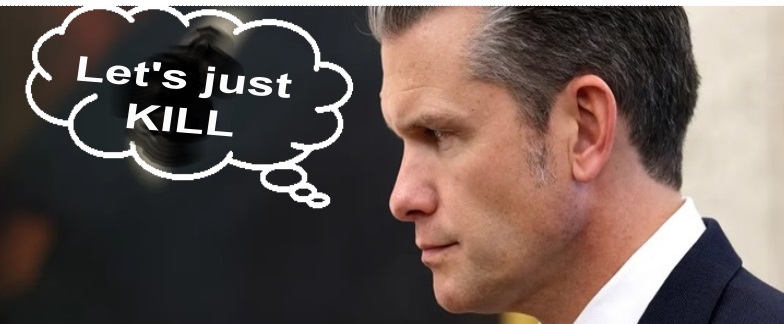
According to the official filing, Trump’s Defense Secretary “has admitted that he gave such orders despite the fact that he did not know the identity of those being targeted for these bombings and extra-judicial killings.”
Jon Queally, Dec 03, 2025, https://www.commondreams.org/news/hegseth-murder-boat-strikes
The family of Colombian fisherman Alejandro Carranza Medina, believed killed by the US military in a boat bombing in the Caribbean Sea on Sept. 15, has filed a formal complaint with the Inter-American Commission on Human Rights accusing US Secretary of Defense Pete Hegseth of murder over the unlawful attack.
“From numerous news reports, we know that [Hegseth] was responsible for ordering the bombing of boats like those of Alejandro Carranza and the murder of all those on such boats,” reads the petition, filed Tuesday on behalf of Carranza’s family by Dan Kovalik, a human rights attorney based in Pittsburgh.
The complaint also notes that President Donald Trump, the commander in chief of the US military, “ratified the conduct of Secretary Hegseth described herein.”
First reported on by The Guardian, the filing of the petition with the IACHR—an autonomous body under the charter of Organization of American States (OAS) designed to uphold human rights in the Western Hemisphere—could result in the initiation of an investigation and the release of findings about the bombing that took the life of Carranza and two other individuals believed to be aboard the vessel.
The petition, the outlet noted, “marks the first formal complaint over the airstrikes by the Trump administration against suspected drug boats, attacks that the White House says are justified under a novel interpretation of law.” Experts in international human rights law have stated from the outset that the administration’s justifications lack legal basis and that the attacks constitute unlawful criminal acts.
According to The Guardian:
Carranza, 42, appears to have been killed in the second strike of the Trump administration’s bombing campaign, on 15 September. The administration has publicly disclosed 21 strikes on alleged drug boats. Carranza’s family says he was a fisher who would often set out in search of marlin and tuna.
On the day of the strike, Trump announced on his Truth Social platform that “This morning, on my Orders, US Military Forces conducted a SECOND Kinetic Strike against positively identified, extraordinarily violent drug trafficking cartels and narcoterrorists in the SOUTHCOM area of responsibility”. Trump attached video marked “unclassified” of a small boat floating in the water before it was struck.
Both Hegseth, the highest-ranked civilian at the Pentagon, and Trump have been under growing scrutiny for the series of boat bombings that have resulted in the extrajudicial killing of over 80 people since September. Experts have said the killings should be seen as “murder, plain and simple.”
New revelations about a strike on Sept. 2, in which two survivors of an initial bombing were later killed as they clung to the exploded boat on which they were traveling, has evelated that concern in Washington, DC this week with lawmakers seeking answers about the attack which, even if one accepted the legality of the initial strike under the construct the Trump administration has tried to claim, would constitute a clear human rights violation amounting to a war crime.
In an interview with Agence France-Presse in October, Katerine Hernandez, Carranza’s wife in Colombia, said her husband was “a good man” devoted to fishing and providing for his family. “Why did they just take his life like that?” she asked.
Hernandez denies that Carranza was involved in drug trafficking, as Trump and Hegseth have alleged without providing evidence, but also suggested that even if drug trafficking was taking place, it would not justify his murder. “The fishermen have the right to live,” she said. “Why didn’t they just detain them?”
In a Tuesday statement, the IACHR urged the US government to “ensure respect for human rights” during any and all extraterritorial military operations in the region, noting the deaths of a high number of persons both in the Caribbean and in the Pacific, where other strikes have taken place.
“While acknowledging the seriousness of organized crime and its impact on the enjoyment of human rights, the Commission recalls that States are obliged to respect and ensure the right to life of all persons under their jurisdiction,” the statement reads.
“According to the Inter-American jurisprudence, this duty extends to situations when State agents exercise authority or effective control, including extraterritorial actions at sea,” it continues. “When lethal force is used by security or military personnel outside national territory, States have the obligation to demonstrate that such actions were strictly lawful, necessary, and proportionate, and to investigate, ex officio, any resulting loss of life. These obligations persist irrespective of where the operations occur, or the status attributed to the individuals affected. Likewise, persons under State control must always enjoy full respect for due process and humane treatment.”
The commission called on the US to “refrain from employing lethal military force in the context of public security operations, ensuring that any counter-crime or security operation fully complies with international human rights standards; conduct prompt, impartial, and independent investigations into all deaths and detentions resulting from these actions; and adopt effective measures to prevent recurrence”
Together Against Sizewell C (TASC)’s new legal challenge against Sizewell C’s secret flood defences.
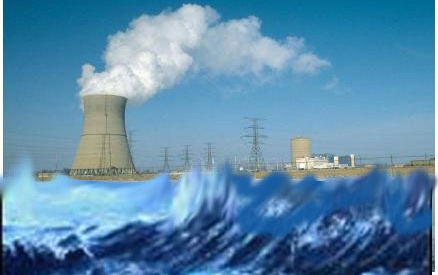
4 Dec 25, https://www.crowdjustice.com/case/sizewell-c-legal-challenge/
The Sizewell C site will be storing up to 4,000 tonnes of spent nuclear fuel on this vulnerable coastline until the late 2100s. The precautionary principle should surely apply so resilience, potential risks and impacts are assessed on a worst case basis and that should be done now. Sizewell C Ltd seem to believe they can do as they see fit with our Heritage Coast, National Landscape and designated wildlife sites irrespective of the damage they will cause.
On Tuesday 9 December Together Against Sizewell C has a permission hearing at the High Court for their case about the overland flood barriers.
The project now includes a stated commitment by Sizewell C Ltd to the Office for Nuclear Regulation (ONR) to install additional sea defences in a ‘credible maximum’ climate change scenario. These defences in the form of two huge 10 metre high ‘overland flood barriers’ were not included in the approved DCO project. In our opinion, these flood barriers, if installed, will likely have additional adverse impacts on the neighbouring designated wildlife sites including RSPB Minsmere as well as the Heritage Coast and Suffolk Coast & Heaths National Landscape. We need to ensure that the original promotor EDF and the now UK government controlled Sizewell C Ltd are not allowed to use climate change uncertainties as an excuse to delay assessment and avoid public scrutiny of these additional structures for decades. The full impact of the whole project should be assessed now.
There is very little detail about the barriers, but it appears from the above diagram [on original] that, if needed:-
The Southern barrier stretches for nearly 500 metres from the Sizewell A site, across the Sizewell Gap to the start of the cliffs running south to Thorpeness, sited on land not in Sizewell C’s ownership.
The Northern barrier potentially stretches from the north of the Sizewell C site, through the SSSI, then inland over Goose Hill for up to a kilometre.
Together with our lawyers, Leigh Day, we have sought the High Court’s permission to apply for judicial review of the decision of the Secretary of State to refuse TASC’s request to revoke or vary the Sizewell C DCO. The grounds for our legal challenge are set out in Leigh Day’s press release.
How we got here
From documents obtained under a Freedom of Information (FOI) request, TASC found out that EDF knew as far back as 2017 that their chosen nuclear platform height of 7.3m AOD would, along with the adapted sea wall on the eastern flank of the site, require two 10-metre high ‘overland flood barriers’. These will be needed to prevent the nuclear platform from flooding from the west in the event that sea level rise reaches a ‘credible maximum’ scenario. This will lead to a major breach of the low-lying coast to the north of Sizewell C and south of the Sizewell nuclear cluster. However, while EDF rightly included the adaptive design of the eastern sea defences in their DCO application documents, they did not include the southern and northern overland flood barriers in the DCO application, thereby avoiding any public scrutiny. As a result there is no commitment in the approved DCO to install these additional sea defences. This is despite there being a requirement to keep the nuclear site safe for its full lifetime from climate change impacts in a credible maximum scenario i.e. to, at least, 2160 while spent nuclear fuel is stored on site.
TASC’s aim is to ensure that the overland flood barriers, not included by EDF in the DCO application, now form part of the overall project. Therefore we need the Secretary of State to either revoke or change the DCO, in order that a lawful assessment of the potential environmental impacts of the entire project is carried out and subject to public scrutiny.
This is important because the project may be grossly underestimating the potential environmental impact, flood risk and sea-defence costs. This, if unaddressed, could be a major burden on future and far future generations who may be impacted by severe, non-reversible environmental, ecological and human impacts combined with an extreme financial liability if Sizewell C were to flood.
Further background for those that want to know more
The Sizewell C project, originally promoted by EDF, is to build twin EPR nuclear reactors close to the North Sea at Sizewell, Suffolk, one of the fastest eroding coastlines in Europe. The site is in the heart of Suffolk Coast & Heaths National Landscape, largely surrounded by designated wildlife sites including RSPB Minsmere and will be partially built on Sizewell Marshes SSSI.
In 2021, Prof Paul Dorfman’s report stated “…any adaptation efforts to mitigate annual flooding (projected to almost entirely surround the proposed EDF Sizewell C EPR nuclear island by 2050) will inevitably entail significantly increased expense for construction, operation, spent nuclear fuel management, rad-waste storage and eventual decommissioning”.
In line with the ONR’s preference, Hinkley Point C is a ‘dry site’ i.e. its platform height at 14 metres AOD is of sufficient height to prevent it from flooding. However, Sizewell C with a platform height of 7.3m AOD, is a ‘protected site’ which means that Sizewell C must at all times demonstrate that the site can be protected against flooding for its full lifetime by use of ‘permanent external barriers such as levees, sea walls and bulkheads’. Once Sizewell C is constructed with a 7.3m AOD platform height, the platform cannot be raised at a later date. The overland flood barriers need to be assessed now so alternatives can be considered e.g. raising the platform height.
Sizewell C was given DCO approval in July 2022 against the recommendation of the five professional planning inspectors. In TASC’s view, the impacts from the overland flood barriers, if they had been assessed during the DCO examination, may well have resulted in planning permission being refused. In any event, our case argues that the Secretary of State’s ‘Habitats Regulation Assessment’ has not considered the environmental impacts of the full project or alternatives, something that is a lawful requirement.
Documentation published by the ONR supporting their grant of Sizewell C’s nuclear site licence in May 2024, has revealed that, in TASC’s opinion, there are now two materially different projects, the one in the DCO approved by Kwasi Kwarteng, and the one still being considered by the ONR as part of the ‘site safety case’. It was an FOI request to the ONR in late 2024 that provided the documentation from 2017 that shows the project requires the adaptive flood protection in the form of the overland flood barriers in a credible maximum climate change scenario.
The Sizewell C site will be storing up to 4,000 tonnes of spent nuclear fuel on this vulnerable coastline until the late 2100s. The precautionary principle should surely apply so resilience, potential risks and impacts are assessed on a worst case basis and that should be done now. Sizewell C Ltd seem to believe they can do as they see fit with our Heritage Coast, National Landscape and designated wildlife sites irrespective of the damage they will cause.
In an attempt to resolve our concerns, on 6th March 2025 TASC wrote to Secretary of State, Ed Miliband calling on him to make a decision on whether the material change to the Sizewell C project highlighted by TASC, namely the commitment to install ‘overland flood barriers’, ‘amounts to exceptional circumstances that make it appropriate for him to exercise his power to change or revoke the DCO’.
The Energy Minister, on behalf of the Secretary of State, replied on 28th March 2025, refusing TASC’s request to vary or revoke the DCO. As TASC consider this matter to be of great importance, we have been left with no alternative but to challenge the Secretary of State’s decision through the courts.
First strike on small, unarmed boat off Venezuela, not second, makes Trump and Hegseth war criminals.
Walt Zlotow West Suburban Peace Coalition Glen Ellyn IL , 3 Dac 25, substack.com/@waltzlotow
Some sensible US congresspersons, government officials, pundits and others are furious over reports Defense Secretary Pete Hegseth ordered a second strike on a mysterious little boat off Venezuela September 1 that killed 2 hapless souls clinging to the US inflicted wreckage.
They correctly point out that bombing survivors of a wrecked boat is against the Pentagon’s own Law of War Manual. “Persons who have been rendered unconscious or otherwise incapacitated by wounds, sickness, or shipwreck, such that they are no longer capable of fighting, out of combat. “It would be dishonorable and inhumane to make them the object of attack.”
Hegseth initially denied there was a second bombing killing the survivors, invoking the Trumpian charge “fake news.” Under intense criticism Pete pivoted admitting it happened but only after he’d left the room following the first strike, giving him plausible deniability. Then, despicably, he blamed the fatal order on Adm. Frank M. Bradley, the commander of US Special Operations Command. Hegseth didn’t condemn Bradley for ordering the second strike. He praised him saying he’s “got his back.”
The second strike on survivors upset congressional Republicans and Democrats enough to consider investigating it as a possible war crime. What that implies is that the 22 boats sunk, killing over 80 unidentified soles is OK as long as the US does not bomb survivors clinging to the wreckage of America’s dastardly war crimes. That first boat obliterated September 1 was a war crime repeated 21 times in 3 months,
Hegseth, Trump and every officer involved in these strikes are war criminals. Every serviceman ordered to commit these dastardly crimes should refuse those orders. Recently 6 morally centered congresspersons publicly implored all service members to do just that, no doubt with the illegal Trump/Hegseth boat obliterations in mind. Trump’s response? Maybe these congresspersons should be executed.
Focusing on the murder of survivors clinging to wreckage detracts from the monumental war crimes Trump commits nearly every day of his presidency.
By providing the bombs that have killed over 100,000 Palestinians in Gaza, bombing Somalia over 100 times this year, bombing imaginary Iranian nuclear sites, and most recently sending 22 small unarmed boats with 83 innocents down to Davy Jones Locker, Trump and Hegseth deserve indictment and prosecution for directing the most murderous administration in America’s 250 years.
Microsoft Faces Reckoning for Assisting Israel’s Genocide in Gaza.

The tech giant could face legal liability for aiding and abetting “atrocity crimes” in Palestine, legal groups say.
By Mike Ludwig , Truthout, December 3, 2025
head of its annual shareholders meeting on December 5, Microsoft is coming under mounting pressure to reconsider its relationship with the Israeli military, which has used the tech giant’s products to carry out the genocide in Gaza and ethnic cleansing of the West Bank.
In an open letter to the company released on Tuesday, December 2, an international coalition of legal aid groups said Microsoft and its executives potentially face legal liability for “aiding and abetting … atrocity crimes” committed by the Israeli military against Palestinian civilians.
“Over the last few months, it has become exceedingly clear that Microsoft’s services and technologies have been used to violate Palestinian human rights, and shareholders should be aware of just how much this opens up the company to legal liability,” said Eric Sype, U.S. national organizer at 7amleh–The Arab Center for Social Media Advancement, in a statement on December 2.
Microsoft provides “major services” to other Israeli ground, air, and naval forces despite widespread agreement among experts that Israel is committing genocide in Gaza, according to the legal aid groups. The letter lists multiple examples, including Mamram, the Israeli military’s central computing system and “weapons platform” that assisted the assault on Gaza with AI support and cloud services. Microsoft provided “rapid support” to Mamram during the initial months of the genocide to keep systems from crashing, according to the letter.
As Truthout has reported, products provided by Big Tech are so integral to Israel’s brutal occupation of Palestine that the mass killings and near-total destruction of infrastructure in Gaza are often described as “the first AI-powered genocide.”
By providing technology services to the Israeli government, Microsoft has exposed both the company and its leadership to “wide-ranging criminal and civil legal liability” both internationally and within domestic courts in the United States and European Union, the legal aid groups say.
“The EU dimension is devastatingly critical here — significant infrastructure powering Israel’s military targeting is hosted and processed in Europe, including by Microsoft,” …………………………………………………………………………… https://truthout.org/articles/microsoft-faces-reckoning-for-assisting-israels-genocide-in-gaza/?utm_source=Truthout&utm_campaign=19a0adacba-EMAIL_CAMPAIGN_2025_12_03_10_02_COPY_01&utm_medium=email&utm_term=0_bbb541a1db-0614adc67f-650192793
International tribunal finds Israel guilty of genocide, ecocide, and the forced starvation of the Palestinians in Gaza.

Mondoweiss, By Marianne Dhenin November 27, 2025
The International People’s Tribunal on Palestine held in Barcelona presented striking evidence of Israel’s forced starvation of the Palestinian people and the deliberate destruction of food security in Gaza.
The International People’s Tribunal on Palestine convened on November 22 and 23 in Barcelona. The event brought together organizers, human rights advocates, and legal experts and offered a platform for survivors of the ongoing assault on Gaza to present evidence of Israel’s international crimes. After two days of testimony, jurors returned their verdict: Israel, the United States, and other Western powers are guilty of the crimes of genocide, ecocide, and the forced starvation of the Palestinian people.
“The mass killings, deliberate starvation, systematic destruction of civilian infrastructure, environmental devastation, and the targeting of hospitals, shelters, schools, and places of refuge were carried out as a matter of state policy, and with full knowledge of their fatal consequences,” said head juror Ceren Uysal, reading from the verdict as the tribunal closed.
Hosted by the International League of Peoples’ Struggle, International People’s Front, and People’s Coalition of Food Sovereignty (PCFS), the tribunal offered a quasi-judicial platform for advocates and survivors of Israel’s ongoing genocide to present evidence and legal arguments related to the crimes committed against the Palestinian people. It follows in a tradition of popular forums seeking justice and accountability where institutions have failed to provide it, including previous tribunals on recent crimes in Gaza.
It came as Israel continues to commit violence in Palestine. Israel has violated the U.S.-brokered ceasefire in effect since October 10, 2025, at least 497 times, killing more than 340 people, according to the Gaza Government Media Office. On November 17, the United Nations Security Council endorsed President Donald Trump’s plan for an international force that he will lead to oversee the continued occupation of Gaza, drawing condemnation from legal experts and rights groups, who argue the plan violates Palestine’s right to self-determination and will fail to protect Palestinians.
Against this backdrop, the International People’s Tribunal repudiated the status quo. It offered striking evidence for Israel’s guilt, particularly for the forced starvation of the Palestinian people and the undermining of their food security. “The strategy of using food as a weapon has been going on for a long time in Palestine and Lebanon, but now it is intensified,” Razan Zuayter, PCFS global co-chairperson, told Mondoweiss. Zuayter also chairs the Arab Group for the Protection of Nature (APN), which endorsed the tribunal.
Over the course of the two-day event, more than a dozen witnesses made this case. Farmers testified that Israeli forces had razed their lands, uprooting trees, killing livestock, and blackening the soil. One witness, who testified anonymously for fear of reprisal, described an attack Israeli forces committed on their land in May 2024. “A group of bulldozers and tanks attacked our area and destroyed a set of chicken farms for meat and egg production,” they said. “The stench of death and foul odors spread throughout the place, forcing us to flee.”
Musheir El Farra wept on the stand on November 23, recounting Israeli attacks on his hometown of Khan Younis that killed more than 200 members of his extended family. …………………………………………………………………………………………………………………………………………………………….. https://mondoweiss.net/2025/11/international-tribunal-finds-israel-guilty-of-genocide-ecocide-and-the-forced-starvation-of-the-palestinians-in-gaza/
Legal Experts Accuse Hegseth of ‘War Crimes, Murder, or Both’ After New Reporting on Boat Strike Order
Two Republican-controlled committees also said they were opening investigations into the defense secretary’s alleged order to “kill everybody” aboard a boat in the Caribbean in September—the first of nearly two dozen strikes.
Julia Conley, Nov 30, 2025
Former top military lawyers on Saturday said that new reporting on orders personally given by US Defense Secretary Pete Hegseth in early September, when the military struck the first of nearly two dozen boats in the Caribbean, suggests Hegseth has committed “war crimes, murder, or both.”
The Former Judge Advocates General (JAGs) Working Group, which includes former officials who served as legal advisers for the military, issued a statement in response to the Washington Post‘s reporting on the September 2 attack on a boat in the Caribbean—the first strike on a vessel in an ongoing operation that the Trump administration has claimed is aimed at stopping drug trafficking.
The Post reported for the first time on the directive Hegseth gave to Special Operations commanders as intelligence analysts reported that their surveillance had confirmed the 11 people aboard the boat were carrying drugs to the US—an alleged crime that, in the past and in accordance with international law, would have prompted US agencies to intercept the vessel, confiscate any illegal substances that were found, and arrest those on board.
But as the Trump administration began its boat bombing campaign, the order Hegseth gave “was to kill everybody,” one of the intelligence analysts told the Post.
After the first missile strike, the officials realized that two of the passengers had survived the blast—prompting a Special Operations commander to initiate a second strike to comply with Hegseth’s order.
The Former JAGs Working Group, which was established in February in response to Hegseth’s firing of Army and Air Force JAGs, said that the dismissal of the military’s top legal advisers set the stage for the defense secretary’s order and the continued bombing of boats in the Caribbean and the eastern Pacific, which have now killed more than 80 people.
Hegseth’s “systematic dismantling of the military’s legal guardrails” led to the formation of the working group, pointed out the former JAGs. “Had those guardrails been in place, we are confident they would have prevented these crimes.”
The working group said Hegseth’s order to “kill everybody” could be understood in one of two ways—a demand for the US military to carry out a clear war crime, or for those involved in the operation to commit murder:
If the US military operation to interdict and destroy suspected narcotrafficking vessels is a “non-international armed conflict,” as the Trump administration suggests, orders to “kill everybody,” which can reasonably be regarded as an order to give “no quarter,” and to “double-tap” a target in order to kill survivors, are clearly illegal under international law. In short, they are war crimes.
If the US military operation is not an armed conflict of any kind, these orders to kill helpless civilians clinging to the wreckage of a vessel our military destroyed would subject everyone from [the defense secretary] down to the individual who pulled the trigger to prosecution under US law for murder.
The Post‘s reporting comes less than two weeks after NBC News revealed that Senior Judge Advocate General (JAG) Paul Meagher, a Marine colonel at US Southern Command (SOUTHCOM) in Miami, had spoken out against the plans to begin bombing boats in the Caribbean, specifically warning in August that the operations would make service members liable for extrajudicial killing.
Following the Post‘s report, Republican-controlled House and Senate committees said they were investigating the allegations regarding Hegseth’s order, which the defense secretary dismissed on Friday as “fabricated, inflammatory, and derogatory reporting……………………………………………………………………………………………………………………………………………………………………… https://www.commondreams.org/news/pete-hegseth-boat
Soldiers Must Disobey Unlawful Orders Under Trump — It’s Their Legal Duty.
both the Nuremberg Principles and the Uniform Code of Military Justice established a duty to obey lawful orders but also a duty to disobey unlawful orders.
SCHEERPOST, November 26, 2025, Marjorie Cohn , Truthout
The courageous action of six Democratic members of Congress has thrust into the national discourse the duty of military and CIA personnel to disobey Donald Trump’s illegal orders. As the Trump administration continues to unlawfully murder people in small vessels in the Caribbean and Eastern Pacific, deploy the National Guard to U.S. cities, and ignore court orders, the six lawmakers were moved to act.
In a 90-second video organized by Sen. Elissa Slotkin (Michigan), two senators and four Congress members, all U.S. military or CIA veterans, take turns reading a statement to active servicemembers, urging them to refuse to follow illegal orders.
“Like us, you all swore an oath to protect and defend this Constitution,” the lawmakers said in the video. “Right now, the threats to our Constitution aren’t just coming from abroad, but from right here at home. Our laws are clear. You can refuse illegal orders. You can refuse illegal orders. You must refuse illegal orders. No one has to carry out orders that violate the law or our Constitution.”The other lawmakers speaking in the video are Sen. Mark Kelly (Arizona) and Representatives Chris Deluzio (Pennsylvania), Maggie Goodlander (New Hampshire), Chrissy Houlahan (Pennsylvania), and Jason Crow (Colorado).
Trump Threatens Six Lawmakers With Sedition Charges and Hanging
Their words, which constituted a correct statement of the law, elicited unprecedented vitriol from Trump, who wrote on Truth Social: “It’s called SEDITIOUS BEHAVIOR AT THE HIGHEST LEVEL. Each one of these traitors to our Country should be ARRESTED AND PUT ON TRIAL.”
In a second post, Trump wrote: “This is really bad, and Dangerous to our Country. Their words cannot be allowed to stand. SEDITIOUS BEHAVIOR FROM TRAITORS!!! LOCK THEM UP??? President DJT.” And he added in a third post: “SEDITIOUS BEHAVIOR, punishable by DEATH!” Trump also reposted a statement saying: “HANG THEM GEORGE WASHINGTON WOULD !!”
The six lawmakers responded to Trump’s diatribe in a statement: “What’s most telling is that the president considers it punishable by death for us to restate the law. Our servicemembers should know that we have their backs as they fulfill their oath to the Constitution and obligation to follow only lawful orders. It is not only the right thing to do, but also our duty.”
Now the Department of War is investigating Kelly for “serious allegations of misconduct,” threatening to call him back to active duty and court-martial him. The Department’s “Official Statement” posted on X adds, “All servicemembers are reminded that they have a legal obligation under the UCMJ to obey lawful orders and that orders are presumed to be lawful.” But they fail to add that servicemembers also have a legal duty to disobey unlawful orders, which is what Kelly and his fellow lawmakers accurately stated in their video.
The Duty to Disobey Unlawful Orders
Under the Uniform Code of Military Justice (UCMJ), a servicemember can be punished by court-martial for refusing to obey any lawful order or regulation. Although the UCMJ doesn’t define “lawful,” the Manual for Courts-Martial states that an order is lawful “unless it is contrary to the Constitution, the laws of the United States, or lawful superior orders or for some other reason is beyond the authority of the official issuing it.”
The manual also says that although it may be inferred that an order to perform a military duty or act is lawful, “this inference does not apply to a patently illegal order, such as one that directs the commission of a crime.” The Rules for Courts-Martial say that acting “pursuant to orders” is a legitimate defense “unless the accused knew the orders to be unlawful or a person of ordinary sense and understanding would have known the orders to be unlawful.”
Finally, the manual notes, “The lawfulness of an order is a question of law to be determined by the military judge.” Normally, that determination can be made only after a servicemember refuses or disobeys an order, in a court martial or war crimes tribunal. So the refuser takes the risk that a judge will find the order lawful and he or she will be punished for refusing to follow it.
Examples of unlawful orders within the United States include:
- The use of military forces to deport, remove, or detain immigrants. Removal to countries where there is a substantial likelihood of torture violates the Convention Against Torture and Other Cruel, Inhuman or Degrading Treatment or Punishment, which the U.S. has ratified.
- The use of military forces against civilian protesters. The Posse Comitatus Act forbids the use of federal troops to enforce domestic law unless there is an “insurrection.”
Examples of unlawful orders outside the United States include:
- Military attacks on vessels in international or foreign waters.
- An invasion or attack on Venezuela, Mexico, Nigeria, etc.
- The use of “preemptive” military force against Iran, China, etc.
- The use of nuclear weapons against any country.
- The torture or cruel treatment of civilians, prisoners of war, or other detainees.
- The intentional targeting of civilians.
- Attacking Palestinians in Gaza under the guise of “peacekeeping.”
Resistance to Illegal U.S. Wars — From Vietnam to Iraq
In 1968, U.S. Army Lt. William Calley led 100 U.S. troops into the village of My Lai in Vietnam and killed 500 civilian women, children, and elderly men in what came to be known as the My Lai Massacre.
Calley was accused of the premeditated murder of civilians. Charges were filed against 25 people, including two generals. The charges against the generals, 10 other officers, and seven enlisted men were dismissed. Five others, including the company commander, Capt. Ernest Medina, were court-martialed and acquitted.
At his court-martial, Calley claimed that he was just following Medina’s orders to kill all the villagers because everyone in the village was “the enemy.”
Like the Nazi officials at Nuremberg, Calley’s defense that he was just following superior orders was rejected. In 1971, he was convicted of the premeditated murder of “not less than” 22 Vietnamese people and sentenced to life in prison. Ultimately, Calley only served over three years of house arrest and confinement to barracks.
But there is a noble tradition in the United States of servicemembers refusing orders to deploy to illegal wars and/or commit war crimes. Some refusers have been arrested and court-martialed. Many have argued in their defense that they had a legal duty to disobey illegal orders.
Howard Levy
……………………………..Levy disobeyed an order to train Special Forces aidmen to be paramedics. He felt they would use their medical training to gain the trust of the Vietnamese people who would then not oppose U.S. troops carrying out their illegal missions. Levy, who called this the “prostitution of medicine,” thought these Green Berets were committing war crimes…………………….
Ehren Watada
…………………………….“The war in Iraq is in fact illegal. It is my obligation and my duty to refuse any orders to participate in this war. An order to take part in an illegal war is unlawful in itself……………………………………………………………………
Pablo Paredes.
………………………refused orders to board an amphibious assault ship that would transport 3,000 Marines to Iraq because he thought he would be complicit as a war criminal……………………………………………………………………………………………………. the Iraq War violated the UN Charter, and that Paredes had a reasonable belief that by transporting Marines to Iraq, he would place them in the position of committing war crimes………..U.S. forces were torturing prisoners at Abu Ghraib prison, which constituted war crimes…………both the Nuremberg Principles and the Uniform Code of Military Justice established a duty to obey lawful orders but also a duty to disobey unlawful orders……………………………………………………………………………………………………………………..
…………………..After the six members of Congress released their bold video, Veterans For Peace said in a statement:
We call on all veterans to stand with these members of Congress and amplify their message so that Airmen, Marines, Seamen, and Army troops know that if they ever face the difficult challenge of refusing an illegal order, they are carrying out their oath to defend the Constitution by following the law.
There are groups, including the GI Rights Hotline, the Center on Conscience and War, and the Military Law Task Force, that work with servicemembers to help them recognize when they have received an unlawful order and figure out their next steps. https://scheerpost.com/2025/11/26/soldiers-must-disobey-unlawful-orders-under-trump-its-their-legal-duty/
US military orders that should be disobeyed
Walt Zlotow, Nov 27, 2025, https://waltzlotow.substack.com/p/us-military-orders-that-should-be
Loading up or flying planes to Israel with tons of weapons that have already killed over 100,000 Palestinians. Any service member doing that is guilty of assisting genocide…the worst crime any servicemember can commit.
Loading up or flying planes bombing small, unarmed boats near Venezuela. This is premeditated mass murder of unknown persons. US makes sure all the boaters are killed so no record of their innocence is retained. Every one of the hundred or more boaters killed in 20 such sinkings emanated from military orders that were illegal and should have been resisted.
The US military is not content with illegal orders to support Israeli genocide in Gaza and obliterating small unarmed boats off Venezuela. Their Commander In Chief Trump has ordered 100 bombing strikes on imagined bad guys in Somalia this year. Does even one American in a million believe the lies emanating from Trump’s military that this mass murder in Somalia is crucial to protect the Homeland. Orders to relentlessly bomb a pitifully poor country 7,800 miles from America, posing no threat whatsoever, are illegal and should be disobeyed.
Granted its not easy to risk banishment from service, possibly even being imprisoned for disobeying these illegal orders. But one service member took such resistance to heroic heights. In February 2024 U.S. Air Force serviceman Aaron Bushnell set himself on fire outside the Israeli Embassy in Washington, D.C. to protest US support of Israel’s genocide in Gaza.
Refusing to obey illegal orders to commit premeditated murder is the least that patriotic service members can do to end Uncle Sam’s worldwide killing rampage. We should commend the 6 members of Congress for reminding and supporting them to do that.
Walt Zlotow, West Suburban Peace Coalition, Glen Ellyn IL
Leavitt Says “All” Military Orders by Trump Must Be “Presumed to Be Legal”
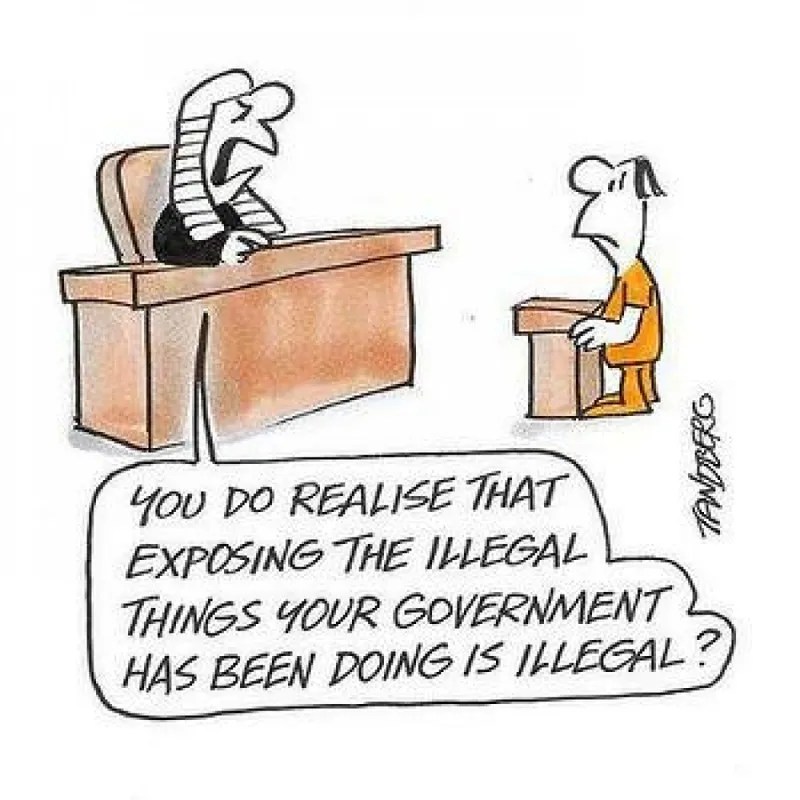
the use of military force to detain and deport immigrants could be considered illegal, as well as Trump’s boat strikes.
The dubious claim comes despite officials within the administration saying that the boat strike operation is unlawful.
By Sharon Zhang , Truthout, November 25, 2025, https://truthout.org/articles/leavitt-says-all-military-orders-by-trump-must-be-presumed-to-be-legal/?utm_source=Truthout&utm_campaign=bd2e9875e3-EMAIL_CAMPAIGN_2025_11_25_09_37&utm_medium=email&utm_term=0_bbb541a1db-bd2e9875e3-650192793
hite House Press Secretary Karoline Leavitt claimed on Monday that “all orders” by President Donald Trump should be “presumed” legal by the military, as she defended comments he made last week threatening Democratic lawmakers with “DEATH.”
Speaking to reporters outside of the White House on Monday, Leavitt claimed that Democrats were trying to create “chaos” within the military by reminding service members of their right to refuse to carry out illegal orders.
“All orders, lawful orders are presumed to be legal by our service members. You can’t have a functioning military if there is disorder and chaos within the ranks,” Leavitt said.
“And that’s what these Democrat members were encouraging. It’s very clear,” she went on, saying that none of them “can point to a single illegal order that this administration has given down, because it does not exist.”
Leavitt said that the White House backs the Department of Defense’s probe into Sen. Mark Kelly (D-Arizona) over a video he put out with fellow lawmakers reminding military members of their oath to “defend this Constitution.” A former Naval aviator, Sen. Kelly remains subject to military law despite retiring from the Navy in 2011.
“You can refuse illegal orders,” Kelly said in the video, alongside other ex-military and intelligence Democrats. “We need you to stand up for our laws. Our Constitution. And who we are as Americans.”
The lawmakers were referencing rights afforded to service members under the Uniform Code of Military Justice, which says that individuals in the military are not obligated to carry out orders that are illegal under U.S. law and known to be so by the service member. This summer, Truthout reported that a GI Rights Hotline saw an uptick in calls from members of the military seeking support for defying potentially illegal orders by Trump, like orders to carry out his immigration raids.
Leavitt’s assertion that all orders must be presumed to be legal is absurd on its face, regardless of who is handing down the orders. However, it echoes the twisted logic of a secretive Justice Department legal memo on the administration’s Latin American boat strike campaign, which reportedly suggests that Trump and his administration’s word alone is enough to establish legality for strikes. It also follows with the Trump administration’s relentless attempts to concentrate power within the executive branch, without oversight from Congress or other bodies.
The press secretary’s claim that there isn’t a “single illegal order” that has been passed down by the Trump administration is also patently false, experts have repeatedly said; as legal scholar Marjorie Cohn has noted for Truthout, the use of military force to detain and deport immigrants could be considered illegal, as well as Trump’s boat strikes.
Meanwhile, even officials within the military reportedly disagree. Last week, NBC reported that a senior judge advocate general, known as a JAG, raised concerns in August that the operations were unlawful. The man, a top military lawyer for the command that oversees the strikes, said that they could expose service members to legal action due to the illegality of the strikes, but his concerns were dismissed by more senior officials, sources said.
State Finds No Exemption for Holtec on Nuclear Wastewater Release
Official advises DEP to uphold its earlier decision based on Ocean Sanctuaries Act
Christine Legere, the Provincetown Examiner, November 19 2025,
PLYMOUTH — Holtec International, the company that owns and is decommissioning the Pilgrim nuclear power station, has likely lost its appeal of a state environmental ruling that has prevented it from releasing nearly one million gallons of the power plant’s wastewater, which contains radionuclides and other contaminants, into Cape Cod Bay.
Salvatore Giorlandino, the Dept. of Environmental Protection’s chief presiding officer for the appeal, issued his 60-page recommendation on Nov. 6. It advises DEP Commissioner Bonnie Heiple to uphold her agency’s 2024 decision to deny Holtec’s request for an amendment to its discharge permit that would allow releasing the wastewater
The DEP’s 2024 decision was based on the state’s Ocean Sanctuaries Act, which prohibits the discharge of industrial waste into designated ocean sanctuaries. Cape Cod Bay carries that designation.
Giorlandino’s recommendation finds that Holtec does not qualify for any of the exemptions listed in the Ocean Sanctuaries Act, including an exemption for discharges related to the generation of electric power, since Pilgrim has not generated electricity since its shutdown in 2019.
The recommendation also discussed why preemption by federal law does not apply. Holtec had argued that the federal Atomic Energy Act would preempt the state law. But Giorlandino wrote that because the Nuclear Regulatory Commission has approved three methods of nuclear wastewater disposal investigated by Holtec in connection with the Pilgrim plant — discharge, shipment for disposal, and evaporation — Holtec has options beyond a discharge into the bay that would comply with both federal and state laws.
“If all three methods of disposal approved by the NRC were prohibited by state law, this case may have a different outcome,” Giorlandino noted.
The recommendation awaits Heiple’s final determination.
Making It a Federal Case
A dismissal of the appeal by Heiple likely won’t mark the end of the wastewater debate.
In an email on Nov. 14, spokesman Patrick O’Brien said Holtec is currently refraining from comment until the state decision is finalized. “But based on a recent federal court ruling, it is likely that we may go that route as well,” O’Brien said.
O’Brien was referring to a federal judge’s September ruling in favor of Holtec in a New York case related to Holtec’s plan to discharge 1.5 million gallons of wastewater into the Hudson River from the Indian Point nuclear power plant, which it also owns and is dismantling.
New York passed a state law, the “Save the Hudson Act,” in 2023, which prohibited the discharge of radioactive substances into the Hudson River in connection with the decommissioning of a nuclear power plant. But according to a report on the website of the clean water advocacy group Riverkeeper, the judge in the appeal ruled that federal laws relating to the regulation of nuclear waste discharges supersede state laws. The site noted that New York Attorney General Letitia James had notified the court that the state would appeal the ruling.
James Lampert, an attorney and member of the Nuclear Decommissioning Citizens Advisory Panel for Pilgrim, said that Giorlandino had considered the New York case in this ruling on Pilgrim. “I am pleased that he correctly found that a New York court decision that a New York statute prohibiting the discharge of radioactive waste into the Hudson River was preempted did not affect his decision here because, among other things, the facts in New York and Massachusetts are very different,” said Lampert in an email.
The difference, he wrote, is that the Ocean Sanctuaries Act has been in place since the early 1970s and prohibits all industrial waste discharges, not just discharges containing radioactive waste. New York’s law, only a few years old, limits its application to radioactive waste discharges.
Mary Lampert, who is also an NDCAP member and leads the community advocacy group called Pilgrim Watch and who is James Lampert’s wife, said she was not surprised that Holtec plans to continue its legal battle.
“Why would Holtec not appeal?” Lampert said by email. “Its legal fees all come out of the decommissioning trust fund, paid by ratepayers; not one dime comes out of Holtec’s pocket.”
Local Opposition Continues
Holtec first announced plans to discharge 1.1 million gallons of wastewater from Pilgrim into Cape Cod Bay in late 2021, triggering vigorous pushback from state, federal, and local officials, the fishing and tourist industries, and the public. At the time, Holtec said it had investigated alternatives to discharging the wastewater into the bay, including evaporating it, shipping it off site at a cost of $20 million, or storing it on the site. Releasing the wastewater into the bay was and remains the company’s top choice.
………………………………………………………Members of the NDCAP panel and the public have become increasingly concerned over the evaporation of the wastewater, which has not yet been treated to reduce radioactive contamination levels.
The Lamperts have said at NDCAP meetings that the evaporated water and its contaminants ultimately end up in Cape Cod Bay in the form of precipitation.
They are not the only ones to make that point.
Diane Turco, president of the Cape Downwinders advocacy group, said in an email that DEP’s denial of Holtec’s request to discharge the wastewater should also apply to its evaporation of the wastewater because “it’s falling into our environment and Cape Cod Bay.”
Andrew Gottlieb, an NDCAP member and executive director of the Association to Preserve Cape Cod, posted on his agency’s website that Holtec now has a choice. The company could forgo appeals and dispose of the wastewater legally and responsibly, Gottlieb wrote, or it could continue with “serial appeals” to give it time to evaporate the wastewater “into the air breathed by residents of southeast Massachusetts and the Cape.” https://provincetownindependent.org/featured/2025/11/19/state-finds-no-exemption-for-holtec-on-nuclear-wastewater-release/
A multi-million dollar dispute rages over Olkiluoto 3 – Only lawyers will win
The Olkiluoto multi-million dollar dispute between TVO and Fingrid is
alive and well. However, an agreement in this matter would be in the
interest of electricity users. The dispute between Teollisuuden Voima (TVO)
and the transmission grid company Fingrid over the costs of the backup
system – system protection – built in case of a failure of the third
reactor at the Olkiluoto nuclear power plant and who will pay for it shows
no signs of abating – quite the opposite.
MSN 20th Nov 2025,
https://www.msn.com/fi-fi/talous/uutiset/olkiluoto-3-sta-riehuu-miljoonariita-vain-juristit-voittavat/ar-AA1QMSzq
1 This Month
23-25 October – on Zoom – World BEYOND War’s annual global conferenc


Shut down the radiation-damaged Heysham nuclear reactors now
To see nuclear-related stories in greater depth and intensity – go to https://nuclearinformation.wordpress.com

Say No to NASA’s Reckless Nuclear Reactor on the Moon
Say No to NASA’s Reckless Nuclear Reactor on the Moon

-
Archives
- October 2026 (231)
- September 2026 (339)
- August 2026 (330)
- July 2026 (355)
- June 2026 (287)
- May 2026 (306)
- April 2026 (356)
- March 2026 (251)
- February 2026 (267)
- January 2026 (308)
- December 2025 (358)
- November 2025 (359)
-
Categories
- 1
- 1 NUCLEAR ISSUES
- business and costs
- climate change
- culture and arts
- ENERGY
- environment
- health
- history
- indigenous issues
- Legal
- marketing of nuclear
- media
- opposition to nuclear
- PERSONAL STORIES
- politics
- politics international
- Religion and ethics
- safety
- secrets,lies and civil liberties
- spinbuster
- technology
- Uranium
- wastes
- weapons and war
- Women
- 2 WORLD
- ACTION
- AFRICA
- Atrocities
- AUSTRALIA
- Christina's notes
- Christina's themes
- culture and arts
- Events
- Fuk 2022
- Fuk 2023
- Fukushima 2017
- Fukushima 2018
- fukushima 2019
- Fukushima 2020
- Fukushima 2021
- general
- global warming
- Humour (God we need it)
- Nuclear
- RARE EARTHS
- Reference
- resources – print
- Resources -audiovicual
- Weekly Newsletter
- World
- World Nuclear
- YouTube
-
RSS
Entries RSS
Comments RSS

