Trump’s foreign policy: “I don’t need international law because I’m not looking to hurt people”

Walt Zlotow West Suburban Peace Coalition Glen Ellyn IL , 16 Jan 26,
Trump’s foreign policy: “I don’t need international law because I’m not looking to hurt people”
In dismissing international law, Trump went further and proclaimed regarding any limit on his authority to engage in military action, “the only limit is my own mind, my own morality…the only thing that can stop me.”
During the past year how has Trump’s own mind, own morality influenced his looking to not hurt people?
Trump supplied Israel with billions in bombs to slaughter tens of thousands of Palestinians in Gaza.
He’s bombed imagine bad guys in Somalia 124 times, doubling his previous record of 63 bombings in 2019.
He fired 12 Tomahawk missiles at imagined bad guys in Nigeria killing unknown Nigerians.
He bombed Syria after 3 US soldiers defiling Syrian sovereignty were killed by unknown attackers. Didn’t matter who Trump killed as long as he retaliated.
He bombed Iran to take out an imaginary nuclear bomb program. He may be on the cusp of bombing Iran again to achieve decades’ long US goal of Iranian regime change.
He obliterated 35 small, unarmed boats off Venezuela, killing over 100 unknown persons. Then he attacked Venezuelan President Nicholas Maduro’s compound, killing over 100 guards in the process of kidnapping him back to the US.
He’s threatening to invade and take control of Greenland from Denmark.
He’s threatening to change out Cuba’s communist government that has been America’s goal for 66 years.
Back home, he’s sent thousands of masked, armed, poorly trained ICE thugs onto American streets to arrest, harass, beat up, occasionally shoot innocent persons trying to live the American Dream.
Gee, wonder what Trump’s foreign and domestic policy would be like if his stated goal was to hurt people?
Militant Zionist Group Ceasing Operations In New York Following Settlement with Attorney General.

The far-right Zionist organization has agreed to a $50,000 suspended fine that it will only be forced to pay if it violates the terms of the agreement, which require it to stop engaging in organized harassment campaigns encouraging violence and making direct threats against its political opponents.
Although branded as a fringe group on the outskirts of the American Zionist establishment, evidence of the political influence of Betar U.S. became increasingly evident following the return of President Donald J. Trump to the White House.
Betar U.S. has deemed it cannot continue to operate if it is unable to engage in terroristic tactics.
blueapples, Jan 15, 2026, https://ddgeopolitics.substack.com/p/militant-zionist-group-ceasing-operations?utm_source=post-email-title&publication_id=1769298&post_id=184510757&utm_campaign=email-post-title&isFreemail=true&r=1ise1&triedRedirect=true&utm_medium=email
By virtue of its standing as the global center of the Jewish diaspora, New York City emerged as the main battleground in the United States for the fight between American Zionists and their opponents amid the deterioration of public support for Israel accelerated by its war against Hamas in the Gaza Strip. While critics of the State of Israel participating in widespread protests across the city have been branded as Jihadists by their opponents for protesting against the slaughter of innocent Palestinians at the blood-stained hands of the Israel Defense Forces (”IDF”), it is a pro-Israel group that has been exposed for engaging in a campaign of terrorism in the latest fallout from that ideological conflict. Betar U.S., the American chapter of an international militant organization created by the founder of the Zionist paramilitary the Irgun, has chosen to cease its operations in New York following a settlement with the office of the state’s attorney general after an investigation uncovered systemic campaigns of harassment, intimidation, and political violence led by the group.
In the wake of political unrest across the U.S. beginning in 2024 centered around protests against Israel on the campus of Columbia University, Betar U.S. engaged in organized harassment campaigns of pro-Palestinian protesters and activists, culminating in an investigation against them. The investigation into the organization began in March 2025, following a series of formal complaints made against the group. According to a statement from the office of New York Attorney General Letitia James announcing its settlement with Betar, “The Office of the Attorney General investigation determined that Betar U.S. engaged in a pattern of violence and harassment driven by explicit hostility toward protected groups.” The investigation also uncovered that despite registering with the Internal Revenue Service as a nonprofit in 2024, Betar U.S. never registered itself with the New York State Charities Bureau, despite soliciting donations while operating in the state.
The far-right Zionist organization has agreed to a $50,000 suspended fine that it will only be forced to pay if it violates the terms of the agreement, which require it to stop engaging in organized harassment campaigns encouraging violence and making direct threats against its political opponents. Betar U.S. will be required to file annual compliance reports for the next three years proving it has not violated the terms of the settlement to avoid paying the suspended fine. As a result of the settlement, Betar U.S. will dissolve its nonprofit status in New York and has told the attorney general’s office that it intends to cease its operations within the state. Despite agreeing to the settlement, a spokesperson from Betar U.S. has denied any wrongdoing.
Although branded as a fringe group on the outskirts of the American Zionist establishment, evidence of the political influence of Betar U.S. became increasingly evident following the return of President Donald J. Trump to the White House. In late January 2025, shortly after Trump was inaugurated, the far-right Zionist group provided his administration with a list of students participating in anti-Israel protests whose identities it uncovered in order to have them deported from the country. Shortly after being sent that list, President Trump signed an executive order creating a task force against antisemitism. In response to continued protests against Israel, Trump signed another executive order to deport college students and other non-permanent U.S. residents in the country on green cards and visas by equating their participation in the demonstrations with support for terrorism. That decision emboldened Betar U.S. to launch what it named Operation Wrath of Zion as a coordinated doxing campaign to leak the personal details of protesters.
Evidence of the harassment campaigns the New York Attorney General’s office found Betar U.S. to have engaged in has been replete across social media since the group was revived in June 2023, just months before the conflict between Israel and Hamas led to full-scale war in the Gaza Strip following the attacks of October 7th, 2023. The group regularly posted threats on X, going as far as to publish videos of its members committing acts of violence against pro-Palestine protesters. Following a Mossad-led operation dubbed Operation Grim Beeper, in which Israeli intelligence targeted Hezbollah officials by detonating thousands of handheld pagers across Lebanon and Syria, leading to thousands of civilian casualties, Betar U.S. posted videos of its members taking to the streets of New York City to hand-deliver beepers to anti-Israel activists as an intimidation tactic. Jewish anti-Zionist activist Norman Finkelstein was one such critic of Israel whom Betar U.S. targeted in this coordinated harassment campaign, calling him a “fucking Holocaust denying piece of shit” when placing a beeper into the front pocket of his jacket.
Although Betar U.S. targeted pro-Palestinian activists with its militant tactics, the extremist ideology of the group also put it at odds with other Jewish groups like the Anti-Defamation League. The group accused the ADL of being too lenient on opponents of Israel, creating an irreconcilable schism between the two. The animosity it fostered led to the ADL putting Betar U.S. on its database of extremist groups, making it the only Jewish organization to earn that distinction.
In response to the announcement of its settlement with the New York Attorney General, Betar attempted to distance itself from the renewed attention placed on its militant ideology. “Betar is mainstream Zionism, an organization without which the State of Israel would not exist,” a spokesperson told The Times of Israel. Despite this protestation, Betar is impossible to separate from militant Zionist extremism. The organization was originally established by Ze’ev Jabotinsky in Riga, Latvia in 1923 as a fascist youth movement created to advance his ideology of Revisionist Zionism.
The sect of Revisionist Zionism created by Jabotinsky advocated for the reform of the Zionist ideology in opposition to the left-wing Labor Zionism movement led by the eventual first Prime Minister of Israel, David Ben-Gurion. In contrast to Labor Zionism, the ideology of Revisionist Zionism centered around the idea that the Jewish people had the right to sovereignty over the whole of what it saw as the Land of Israel, including the entirety of British Mandatory Palestine and Transjordan. Revisionist Zionism has served as the foundation for the right wing of modern Israeli politics, influencing the creation of the Likud party, now led by Israeli Prime Minister Benjamin Netanyahu, as well as the Jewish supremacist Kahanism movement, which the Jewish Power party, led by Israeli Minister of National Security Itamar Ben-Gvir, arose out of.
Jabotinsky was also behind the founding of the Irgun, a Zionist paramilitary organization that operated in Mandatory Palestine from 1931 until years after his death in 1940, when it was eventually absorbed into the IDF following the establishment of the State of Israel in 1948. In its years operating as a Zionist paramilitary, the Irgun was responsible for acts of terrorism against Palestinian Arabs and other groups it labeled as opponents of its Zionist worldview, such as the Deir Yassin Massacre and the King David Hotel Bombing committed against the administrative headquarters of the British authorities of Mandatory Palestine in 1946. Betar served as a recruiting pipeline for the Irgun, in a manner like that in which the Hitler Youth was constructed.
It wasn’t until six years after the Zionist paramilitary was founded by Jabotinsky that the U.S. branch of Betar was established in 1929. Throughout its existence, opposition to its radical ideology and militant tactics had fragmented its operations in America. However, following its latest iteration being established in 2023, support from high-ranking Israeli political leaders has allowed it to flourish. During a visit to the U.S. in September to speak before the United Nations General Assembly, Israeli Prime Minister Benjamin Netanyahu met with leaders of Betar U.S. in New York City. Yet, even that tacit support from the Israeli government was not enough to overcome the scrutiny the group has faced due to its militant tactics.
In the wake of the announcement of its settlement with the Office of the New York State Attorney General, Betar U.S. returned to its X account to continue to push propaganda framing itself as a victim of antisemitism. Betar U.S. accused New York Attorney General Letitia James of barring it from operating in the state. In reality, all the attorney general’s office has required of Betar U.S. is to stop targeting its opponents with campaigns of harassment, intimidation, and violence, or face paying a paltry $50,000 fine. That requirement alone was enough for Betar U.S. to voluntarily cease its operations. Given that it postures itself as a mainstream pro-Israel organization, the fact that Betar U.S. has deemed that it cannot continue to operate without engaging in those terroristic tactics is a damning distillation of what Zionism truly stands for.
Challenge to Latest Sellafield Discharges to the Rivers Calder, Ehen and the Irish Sea
By mariannewildart, on behalf of Lakes Against Nuclear Dump, https://lakesagainstnucleardump.com/2026/01/16/still-waiting-for-judge-to-make-decision-on-our-challenge-to-latest-sellafield-discharges/
The hearing on whether our Judicial Review into the challenge of Sellafield’s latest discharges to the rivers Calder and Ehen took place at the end of November. Incredibly we are still waiting for the decision on whether our Judicial Review can go forward. In the meantime here is a lovely photo [on original] of Rowbank Farm.
This is just one of the many farms and grand houses in the once fertile plain between the Lake District mountains and the Irish Sea to be obliterated by Sellafield’s nuclear waste sprawl along the once meandering and braided river Calder. This photo [on original] along with many more can be found on the Calderbridge and Ponsonby Parish Council website (no endorsement of our challenge by the Parish Council is implied – the photos are in the public domain)
Onwards and Upwards
Ushering In the Age of 1A Impunity: Venezuela, Palestine, and the End of International Law.

The UN’s human rights rapporteurs are under a sustained campaign of slander and sanction. And even the UN Security Council has surrendered to the U.S. empire, as evidenced by its resolution 2803 in November of 2025, endorsing the wholly unlawful and baldly colonial plans of the Trump administration for Gaza.
the hand of the Israeli regime in supporting right-wing forces and destabilizing progressive governments in the region is by now well known. Israeli weapons, surveillance technology, intelligence, training, and influence via Israel proxies in the region have been a constant feature of Latin America for decades.
The recent sound of explosions over Venezuela, Palestine, Lebanon, Syria, Iran, Iraq, Somalia, Yemen, and Nigeria are not merely the spasms by a declining U.S. empire. They are something much more terrifying — the dawning of the age of impunity.
Mondoweiss, By Craig Mokhiber January 7, 2026
On January 3, 2026, without provocation, cause, or legal justification, the U.S. bombed Venezuela, invaded its capital, killed dozens of people, and violently abducted the President and First Lady of the country, binding, blindfolding, and spiriting them off to the United States.
Surely, such a blatant violation of a whole raft of international laws, indeed, challenging the very centerpiece of the post-World War II legal framework that prohibits acts of aggression, would be met with universal condemnation.
Instead, it has been followed by equivocal whimpers by several Western leaders, a hyper-cautious response from the UN Secretary-General, rhetorical condemnation by members of the Security Council, but no action whatsoever, and enthusiastic cheerleading by U.S. and Western corporate media.
How could this be?
Simply put, we are witnessing the dawning of the age of impunity.
Slouching towards Bethlehem
The recent sound of explosions over Venezuela, Palestine, Lebanon, Syria, Iran, Iraq, Somalia, Yemen, and Nigeria, and over the Red Sea, the Mediterranean Sea, and the Caribbean Sea, is not merely the sound of a momentary imperial spasm by a declining U.S. empire.
It heralds something much more terrifying.
A new world is being birthed (or perhaps, reborn, reminiscent as it is of the horrors of the first half of the 20th Century).
A world wholly unconstrained by international law, or even by the most basic and universal moral principles.
A birth that could have been foretold by anyone paying attention to the machinations of the empire and its allies and vassals in recent decades.
From the mass incarceration and police excesses of the “war on drugs,” to the renditions, executions, and torture of the “war on terrorism,” to the systematic immiseration of the many in order to consolidate the wealth and power of the few, the U.S. empire has been on a decades-long warpath culminating with the extermination of the Palestinian people and this week’s assault on Venezuela.
These ever-expanding ripples of oppression, unchecked, threaten us all.
Because, in a world where even genocide is not a red line, there are no red lines.
A child of impunity
This new world is the child of impunity.
For over two years, the world has watched passively as the U.S.-Israel Axis stampeded across Western Asia, Africa, and Latin America in a blood-soaked rampage of conquest and destruction.
The UN Charter, the Rome Statute, the laws of war, human rights law, the law of the sea, laws on the use of force, all have been trampled underfoot and left in ruin by the actions and pronouncements of the Axis, the complicity of its allies and vassals, and the complacency of other states.
For their part, the international institutions put in place in the wake of the Second World War to prevent and respond to such horrors have been systematically corrupted, cowed, or crushed by the Axis. The International Criminal Court is largely frozen in the face of illegal U.S. sanctions. The International Court of Justice faces unprecedented harassment and political pressure.
The UN’s human rights rapporteurs are under a sustained campaign of slander and sanction. And even the UN Security Council has surrendered to the U.S. empire, as evidenced by its resolution 2803 in November of 2025, endorsing the wholly unlawful and baldly colonial plans of the Trump administration for Gaza.
States of the Western world, which have long postured as the defenders of human rights and international law, rather than standing up to the excesses of the Axis, have tripped over each other to obsequiously kiss the ring of the emperor and to bow to the blood-soaked stewards of its colonial project in Palestine.
And any presumed checks within the institutions of the empire itself have shown themselves to be wholly complicit, including the courts, which are both politically driven and generally disdainful of international law, the Congress, itself entirely corrupted by the lobbies, corporations, and billionaires driving U.S. and Israeli crimes in the first place, and the corporate media, which have thoroughly dedicated themselves to running cover for the imperial, extractive, corporate, and Zionist causes at the root of the violence engulfing the world today.
Yes, the people themselves have risen up, and in record numbers, to oppose the crimes of the Axis. But they have been met with systematic and brutal repression inside the empire and across the West, and even within the captured front line states of Western Asia.
As a result, the Axis has enjoyed absolute impunity, encouraging successively more atrocious acts, in a building crescendo of violence that has included aggression against countries across Western Asia and Africa, a chain of assassinations, the targeting of humanitarian boats in the Mediterranean, transnational terror attacks with booby trapped pagers, unlawful occupation of several nations, and a continuing genocide in Palestine.
In this context, no one should be surprised by the blatant criminality of the U.S. in imposing brutal unilateral coercive measures designed to starve the population of Venezuela into submission, several coup attempts, a series of extrajudicial executions of boaters in the Caribbean and the eastern Pacific, the pirating of the country’s oil tankers and the seizing of their cargo, the bombing and invasion of the country, and the violent abduction of the President and First Lady.
This is how impunity functions. The more you feed it, the hungrier it becomes. And the world has fed this impunity for decades.
The beastly child born of this impunity brings with it the worst genetic traits of its 20th-century progenitors: racism, imperialism, colonialism, fascism, Zionism, aggression, and genocide. But it is now armed with the terrible 21st-century technologies of surveillance, silencing, and murder. The impacts of this deadly combination are now being felt across three continents in the global South, while the rest of the world teeters on the brink.
Imperial crimes in Venezuela………………………………………………………………
The Israeli connection
In her first public address since the U.S. attacks, Venezuelan Vice-President (and now Interim President) Delcy Rodriguez declared that the attack on the country had “Zionist undertones.” While she did not elaborate, the hand of the Israeli regime in supporting right-wing forces and destabilizing progressive governments in the region is by now well known. Israeli weapons, surveillance technology, intelligence, training, and influence via Israel proxies in the region have been a constant feature of Latin America for decades.
For their part, Israeli regime leaders have been giddy in their celebration of the attacks and of the abduction of the Venezuelan President (and have expressed their hope that the next attacks will be in Iran).
And this is no surprise. Since the election of Hugo Chávez and the launch of the Bolivarian Revolution more than a quarter century ago, Venezuela has asserted its independence, resisted U.S. hegemony, directed its oil and mineral wealth toward improving living conditions within the country, and stood in solidarity with the Palestinian struggle for human rights.
Like Iran, Iraq, and Libya before them, that combination of factors has secured Venezuela’s place in the gunsights of the U.S.-Israel axis.
What’s more, the Israeli regime has a long history of attacking progressive forces, supporting right-wing regimes, death squads, and dictators, and seeding conflict across Latin America. Over the decades, its blood-stained fingerprints have been revealed in Argentina, Bolivia, Brazil, Colombia, Costa Rica, Dominican Republic, Ecuador, El Salvador, Guatemala, Haiti, Honduras, Nicaragua, Panama, Paraguay, Peru, and Venezuela.
This, together with the anti-colonial instincts of the region, explains the disgust with which Latin American governments of the left view the Israeli regime. And it also explains why far-right movements and leaders in the region routinely declare their fanatical support for the regime and for the Zionist project, even in the midst of the genocide in Palestine.
While the progressive governments of the region have condemned the genocide, joined the ICJ genocide case against Israel, and cut off diplomatic relations with the regime, right-wing governments, as well as leaders of Venezuela’s right-wing opposition, have praised the Israeli regime and subserviently pledged even closer cooperation. The regime is, as it has always been, deeply invested in tearing down left-wing governments in Latin America and propping up the right.
At the same time, Venezuela’s opposition to the Israeli regime, while also holding the world’s largest oil reserves, is seen by the U.S.-Israel Axis as a potential obstacle to their nefarious plans for war on Iran. Iran’s own oil capacities, and especially its effective control over the Straits of Hormuz (and therefore world energy markets), make control of Venezuelan oil especially attractive to the Axis as it prepares to renew its attacks on Iran.
Thus, the principal drivers of U.S. aggression against countries of the global South are the possession of mineral wealth coveted by U.S. corporations, a refusal to submit to U.S. hegemony, and opposition to the crimes of the Israeli regime. Venezuela has been guilty of all three. And these are the real “crimes” for which it is being prosecuted.
Life after law
The nascent project of international law has always been both weak and inchoate. But the guardrails established since 1945 offered some hope of a world governed, at least in part, by the rule of law, rather than by force alone.
. And a global consensus had been established whereby the worst crimes- aggression and genocide- were agreed to be beyond the pale. The U.S.-Israel Axis, so often indicted for violating international law, has lost patience with the entire project, and, with genocide in Palestine, the raining down of Axis bombs in countries across the globe, and now aggression in Venezuela, it has declared to the world that a new order is born. One in which all must bow to the empire or perish.
It is not too late for the world to stand up to stop the emergence of this beastly new order. Movements of people within and beyond the empire can challenge it with the urgency and unity of purpose it requires. The global majority, led by the free nations of the South, could unite as it did in the 1960s and 70s to challenge the empire and draw a line of principle, centered on collective action for peace, security, self-determination, and the human rights of peoples everywhere. Sadly, to date, there is little evidence to suggest that this is happening.
In the meantime, the unmistakable, unequivocal message that the U.S. imperial regime, its Israeli attack dog, and its legions of subservient Western vassals are sending to the world, to the nation states in its gunsights, and to all peoples resisting foreign occupation, colonial domination, and racist regimes is this: Diplomacy will not save you. International law will not save you. The United Nations will not save you. And we are coming for you. https://mondoweiss.net/2026/01/ushering-in-the-age-of-impunity-venezuela-palestine-and-the-end-of-international-law/
Trump Abandonment of Global Treaties, Including Landmark Climate Deal, ‘Threatens All Life on Earth’

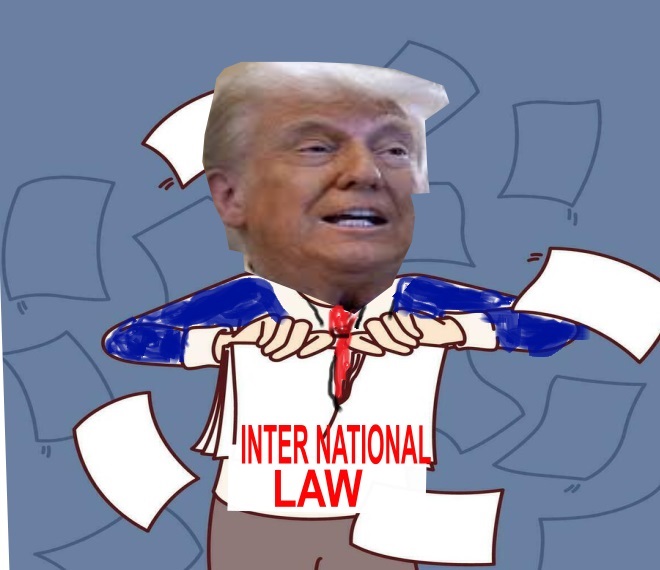
“Trump cutting ties with the world’s oldest climate treaty is another despicable effort to let corporate fossil fuel interests run our government.”
Jake Johnson, Jan 08, 2026, https://www.commondreams.org/news/trump-withdraws-global-treaties
President Donald Trump on Wednesday withdrew the United States from dozens of international treaties and organizations aimed at promoting cooperation on the world’s most pressing issues, including human rights and the worsening climate emergency.
Among the treaties Trump ditched via a legally dubious executive order was the United Nations Framework Convention on Climate Change (UNFCCC), making the US—the world’s largest historical emitter of planet-warming greenhouse gases—the first country to abandon the landmark agreement.
President Donald Trump on Wednesday withdrew the United States from dozens of international treaties and organizations aimed at promoting cooperation on the world’s most pressing issues, including human rights and the worsening climate emergency.
Among the treaties Trump ditched via a legally dubious executive order was the United Nations Framework Convention on Climate Change (UNFCCC), making the US—the world’s largest historical emitter of planet-warming greenhouse gases—the first country to abandon the landmark agreement.
The US Senate ratified the convention in 1992 by unanimous consent, but lawmakers have repeatedly failed to assert their constitutional authority to stop presidents from unilaterally withdrawing from global treaties.
Jean Su, energy justice director at the Center for Biological Diversity, said in a statement that “Trump cutting ties with the world’s oldest climate treaty is another despicable effort to let corporate fossil fuel interests run our government.”
“Given deeply polarized US politics, it’s going to be nearly impossible for the U.S. to rejoin the UNFCCC with a two-thirds majority vote. Letting this lawless move stand could shut the US out of climate diplomacy forever,” Su warned. “Withdrawing from the world’s leading climate, biodiversity, and scientific institutions threatens all life on Earth.”
Trump also pulled the US out of the International Institute for Justice and the Rule of Law, the International Union for Conservation of Nature, the UN International Law Commission, the UN Democracy Fund, UN Oceans, and dozens of other global bodies, deeming them “contrary to the interests of the United States.”
The president’s move came as he continued to steamroll domestic and international law with an illegal assault on Venezuela and threats to seize Greenland with military force, among other grave abuses.
Below is the full list of international organizations that Trump abandoned with the stroke of a pen:
(a) Non-United Nations Organizations:
(i) 24/7 Carbon-Free Energy Compact;
(ii) Colombo Plan Council;
(iii) Commission for Environmental Cooperation;
(iv) Education Cannot Wait;
(v) European Centre of Excellence for Countering
Hybrid Threats;
(vi) Forum of European National Highway Research Laboratories;
(vii) Freedom Online Coalition;
(viii) Global Community Engagement and Resilience Fund;
(ix) Global Counterterrorism Forum;
(x) Global Forum on Cyber Expertise;
(xi) Global Forum on Migration and Development;
(xii) Inter-American Institute for Global Change Research;
(xiii) Intergovernmental Forum onMining, Minerals, Metals, and Sustainable Development;
(xiv) Intergovernmental Panel on Climate Change;
(xv) Intergovernmental Science-Policy Platform on Biodiversity and Ecosystem Services;
(xvi) International Centre for the Study of the Preservation and Restoration of Cultural Property;
(xvii) International Cotton Advisory Committee;
(xviii) International Development Law Organization;
(xix) International Energy Forum;
(xx) International Federation of Arts Councils and Culture Agencies;
(xxi) International Institute for Democracy and Electoral Assistance;
(xxii) International Institute for Justice and the Rule of Law;
(xxiii) International Lead and Zinc Study Group;
(xxiv) InternationalRenewable Energy Agency;
(xxv) International Solar Alliance;
(xxvi) International Tropical Timber Organization;
(xxvii) International Union for Conservation of Nature;
(xxviii) Pan American Institute of Geography and History;
(xxix) Partnership for Atlantic Cooperation;
(xxx) Regional Cooperation Agreement on Combatting Piracy and Armed Robbery against Ships in Asia;
(xxxi) Regional Cooperation Council;
(xxxii) Renewable Energy Policy Network for the 21st Century;
(xxxiii)Science and Technology Center in Ukraine;
(xxxiv) Secretariat of the Pacific Regional Environment Programme; and
(xxxv) Venice Commission of the Council of Europe.
(b) United Nations (UN) Organizations:
(i) Department of Economic and Social Affairs;
(ii) UN Economic and Social Council (ECOSOC) — Economic Commission forAfrica;
(iii) ECOSOC — Economic Commission forLatin America and the Caribbean;
(iv) ECOSOC — Economic and Social Commission for Asia and the Pacific;
(v) ECOSOC — Economic and Social Commission for Western Asia;
(vi) International Law Commission;
(vii) International Residual Mechanism for Criminal Tribunals;
(viii) InternationalTrade Centre;
(ix) Office of the Special Adviser on Africa;
(x) Office of the Special Representative of the Secretary General forChildren in Armed Conflict;
(xi) Office of the Special Representative of the Secretary-General on Sexual Violence in Conflict;
(xii) Office of the Special Representative of the Secretary-General on Violence Against Children;
(xiii) Peacebuilding Commission;
(xiv) Peacebuilding Fund;
(xv) Permanent Forum on People of African Descent;
(xvi) UN Alliance of Civilizations;
(xvii) UN Collaborative Programme on Reducing Emissions fromDeforestation and Forest Degradation in Developing Countries;
(xviii) UN Conference on Trade and Development;
(xix) UN Democracy Fund;
(xx) UN Energy;
(xxi) UN Entity for Gender Equality and the Empowerment of Women;
(xxii) UN Framework Convention on Climate Change;
(xxiii) UN Human Settlements Programme;
(xxiv) UN Institute for Training and Research;
(xxv) UN Oceans;
(xxvi) UN Population Fund;
(xxvii) UN Register of Conventional Arms;
(xxviii) UN System Chief Executives Board for Coordination;
(xxix) UN System Staff College;
(xxx) UNWater; and
(xxxi) UN University.
Rachel Cleetus, policy director and lead economist for the Climate and Energy Program at the Union of Concerned Scientists, said Trump’s withdrawal from the world’s bedrock climate treaty marks “a new low and yet another sign that this authoritarian, anti-science administration is determined to sacrifice people’s well-being and destabilize global cooperation.”
“Withdrawal from the global climate convention will only serve to further isolate the United States and diminish its standing in the world following a spate of deplorable actions that have already sent our nation’s credibility plummeting, jeopardized ties with some of our closest historical allies, and made the world far more unsafe,” said Cleetus. “This administration remains cruelly indifferent to the unassailable facts on climate while pandering to fossil fuel polluters.”
Report: Nuclear Power Isn’t Viable In Hawaiʻi
Constitutional issues are the basis for the conclusion of the Nuclear Energy Working Group’s final report for the state energy office.
By Lynda Williams, January 6, 2026 , https://www.civilbeat.org/2026/01/nuclear-power-isnt-viable-in-hawaii/
The Hawaiʻi State Energy Office has released the final report of the Nuclear Energy Working Group created by the Legislature under SCR-136. I served on the working group as a representative of 350 Hawaiʻi.
The report concludes that nuclear power is not viable in Hawaiʻi and that the state should not change its laws or constitution to enable it.
The most fundamental obstacle is legal. Hawaiʻi’s Constitution restricts nuclear fission construction, and nuclear power is excluded from the state’s Renewable Portfolio Standard. These restrictions apply regardless of reactor size, design, fuel type or branding. Small modular reactors and so-called “advanced” reactors are still nuclear fission reactors. Making nuclear power legal in Hawaiʻi would require amending the constitution — a process that requires a two-thirds legislative vote. The working group did not recommend taking this step.
Beyond the law, the technology itself remains unfeasible. No advanced nuclear reactors are operating commercially in the United States, and none are expected to come online in any timeframe relevant to Hawaiʻi’s energy or climate goals. Projects cited by nuclear advocates remain stuck in licensing pipelines, demonstration phases or heavily subsidized pilot programs.
Without commercially operating reactors, reliable cost estimates, construction schedules, or grid-integration analyses do not exist. Nuclear power cannot meaningfully address climate change when it cannot be deployed at scale.
The report also acknowledges that radioactive waste is a decisive and unresolved problem. There is no permanent disposal repository operating anywhere in the United States. Hawaiʻi has no capacity to store or manage spent nuclear fuel, and no federal facility exists to accept it.
The Hawaiʻi Constitution explicitly bars nuclear waste storage and disposal facilities unless approved by a two-thirds vote of both legislative chambers. Any nuclear project would therefore require indefinite on-island storage of radioactive material in direct conflict with the constitution, creating ongoing risks related to containment failure and transport. For an isolated island state, this reality alone makes nuclear power unrealistic.
The Hawaiʻi State Energy Office has released the final report of the Nuclear Energy Working Group created by the Legislature under SCR-136. I served on the working group as a representative of 350 Hawaiʻi.
The report concludes that nuclear power is not viable in Hawaiʻi and that the state should not change its laws or constitution to enable it.
The most fundamental obstacle is legal. Hawaiʻi’s Constitution restricts nuclear fission construction, and nuclear power is excluded from the state’s Renewable Portfolio Standard. These restrictions apply regardless of reactor size, design, fuel type or branding. Small modular reactors and so-called “advanced” reactors are still nuclear fission reactors. Making nuclear power legal in Hawaiʻi would require amending the constitution — a process that requires a two-thirds legislative vote. The working group did not recommend taking this step.
Ideas showcases stories, opinion and analysis about Hawaiʻi, from the state’s sharpest thinkers, to stretch our collective thinking about a problem or an issue. Email news@civilbeat.org to submit an idea or an essay.
Beyond the law, the technology itself remains unfeasible. No advanced nuclear reactors are operating commercially in the United States, and none are expected to come online in any timeframe relevant to Hawaiʻi’s energy or climate goals. Projects cited by nuclear advocates remain stuck in licensing pipelines, demonstration phases or heavily subsidized pilot programs.
Without commercially operating reactors, reliable cost estimates, construction schedules, or grid-integration analyses do not exist. Nuclear power cannot meaningfully address climate change when it cannot be deployed at scale.
The report also acknowledges that radioactive waste is a decisive and unresolved problem. There is no permanent disposal repository operating anywhere in the United States. Hawaiʻi has no capacity to store or manage spent nuclear fuel, and no federal facility exists to accept it.
The Hawaiʻi Constitution explicitly bars nuclear waste storage and disposal facilities unless approved by a two-thirds vote of both legislative chambers. Any nuclear project would therefore require indefinite on-island storage of radioactive material in direct conflict with the constitution, creating ongoing risks related to containment failure and transport. For an isolated island state, this reality alone makes nuclear power unrealistic.
Emergency preparedness and regulatory capacity further reinforce that conclusion. Hawaiʻi does not have a nuclear regulatory agency, a trained nuclear emergency-response workforce, evacuation-planning capacity, or land suitable for exclusion zones. These are not minor administrative gaps. They reflect the absence of the institutional and physical capacity needed to respond to potentially catastrophic nuclear accidents.
The analysis also places nuclear power in the context of Hawaiʻi’s history in the Pacific, including nuclear weapons testing and long-term harm to island and Indigenous communities. Public trust cannot be assumed, and meaningful public evaluation is impossible without concrete information about reactor designs, fuel cycles, waste handling, and accident scenarios — information that does not exist.
Hawaiʻi is not alone in facing industry efforts to dismantle state-level protections. Over the past decade, several states with laws restricting or prohibiting new nuclear plant construction — including Wisconsin, Kentucky, Montana, West Virginia, Connecticut and Illinois — have repealed or weakened those laws to allow so-called advanced nuclear technologies such as small modular reactors, often justified by climate or grid-reliability claims. These rollbacks occurred despite the continued absence of commercially operating advanced reactors, the lack of a permanent nuclear waste repository, and mounting evidence that nuclear power cannot be deployed fast enough to play a meaningful role in addressing climate change.
Now is not the time to weaken Hawaiʻi’s protections against nuclear power. At the federal level, environmental protection and public oversight under the National Environmental Policy Act are being aggressively gutted through executive orders and legislation such as the SPEED Act. These measures are designed to shorten environmental review, eliminate meaningful public participation, restrict judicial oversight, and prevent courts from stopping unlawful projects even when agencies violate the law. As federal safeguards are dismantled, Hawaiʻi’s constitutional and statutory protections against nuclear power become more critical, not less.
The report’s only weak point is its suggestion that the state revisit nuclear power every three to five years. Even under the most optimistic assumptions, advanced nuclear reactors, including SMRs, will not be commercially operating, fully tested, or economically viable within that timeframe. Any nuclear reactor operated in Hawaiʻi would require radioactive waste to remain on island for extended periods to cool before transport, and shifting that waste burden onto other Indigenous lands is not an ethical solution and is inconsistent with the values of aloha ʻāina.
Nuclear power is not viable in Hawaiʻi and never will be; the state should instead focus on renewable energy, storage, efficiency, grid modernization and community-centered planning grounded in reality.
Click here to read the final Nuclear Energy Working Group report. You can read more about the Nuclear Energy Working Group at nuclearfreehawaii.org.
Pike County mom sues revived nuclear plant, alleging radiation led to daughter’s death

by: Katie Millard, Dec 29, 2025, https://www.nbc4i.com/news/local-news/pike-county/pike-county-mom-sues-revived-nuclear-plant-alleging-radiation-led-to-daughters-death/
Julia Dunham is suing Centrus Energy in a wrongful death case after her daughter, Cheyenne Dunham, died in 2015. Julia sued Centrus Energy Corp within two months of becoming the administrator of Cheyenne’s estate in October, alleging radiation from a nearby nuclear plant, now managed by Centrus, was responsible for Cheyenne’s death.
The Portsmouth Gaseous Diffusion Plant in south central Ohio was formerly run by the U.S. government and shut down in 2001 after decades of environmental concerns. In September, Centrus Energy announced it will expand the former uranium plant and bring 300 new jobs in uranium enrichment. See previous coverage of the plant in the video player above (- on original)
Pike County residents said they are still getting sick from past U.S. uranium enrichment on the site. The Dunham’s lawsuit is one of many that blame the uranium plant for illness or death.
According to the lawsuit, the Dunhams lived near the Portsmouth Gaseous Diffusion Plant until Cheyenne was a teenager. The lawsuit said she played in creeks and regularly ate food grown in gardens near the plant throughout her childhood.
Cheyenne also spent three years enrolled at Zahn’s Corner Middle School, about two miles from the uranium plant. The school served more than 300 students in Piketon until its abrupt closure in 2019, when officials shuttered the building due to health concerns after enriched uranium was detected in school buildings.
According to the lawsuit, Cheyenne began experiencing health issues when she turned 16. One day, the lawsuit alleged, her legs turned blue and she was taken to the emergency room. Doctors found blood clots in her legs and lungs, and she was diagnosed with GATA Deficiency, a rare condition that effects a person’s blood and immune system.
Cheyenne underwent two bone marrow transplants to avoid developing leukemia but became very sick in February 2015 after her second transplant, according to the lawsuit. By May, her body rejected the transplant, and she died in November 2015 of her illness, her death certificate showed. The lawsuit alleges her health issues were a direct result of Cheyenne’s proximity to the uranium plant.
The lawsuit included studies of the area around the uranium plant that show high levels of radiation, and data tracking cancer rates in Ohio. One exhibit, a study by a Morgantown, West Virginia, doctor, found cancer rates in people under age 25 who lived in proximity to the uranium plant were three times higher than in other Ohio sample groups.
Julia Dunham is requesting a trial by jury and monetary damages for Cheyenne’s funeral and medical costs, as well as emotional damages to Cheyenne’s loved ones. Julia filed the lawsuit on Nov. 24, 2025, almost 10 years to the day after Cheyenne’s death.
Julia was involved in another lawsuit filed in 2019, where she and four other parents sued the plant on behalf of their children. That parents allege the uranium plant released radiation that contaminated their properties, endangering their kids and living spaces. The court dismissed all claims on behalf of minor children for lack of standing, but the case is otherwise ongoing.
Centrus plans began domestic manufacturing on Dec. 19 to support its Piketon facility and has begun design work on a major training, operations and maintenance facility at the site. Centrus Energy hopes to begin its updated uranium enrichment work in 2029 once site renovations are complete. The nuclear work is slotted to help the U.S. regain energy dominance and stop reliance on other countries.
Rambling Toward Chaos: Trump and the Nuclear Precipice

Louis Rene Beres, Jurist News, January 30, 2026
The author, Emeritus Professor of International Law at Purdue University, argues that President Trump’s unchecked nuclear command authority, combined with his demonstrated preference for ‘attitude’ over strategic preparation and his alignment with Russian aggression, has made an American president the principal threat of nuclear war for the first time in history…
“I tell you, ye have still chaos in you.”
Friedrich Nietzsche, Thus Spoke Zarathustra
On January 27, 2026, the Bulletin of the Atomic Scientists advanced the hands of its “doomsday clock” to eighty-five seconds before midnight. This unprecedented move signified that the world has never been closer to nuclear war. Ipso facto, there could be no more urgent metaphor for planet earth.
But even the Bulletin’s 2026 Doomsday Clock statement stopped short of drawing the most politically sensitive conclusion: For the first time in history, the principal threat of nuclear war is an American president. More precisely, during the continuously dissembling Trump presidency,[1] the immediate casus belli atomicum is apt to be presidential miscalculation, psychological breakdown, cognitive impairment (including transient dementia) or outright irrationality.
There are many pertinent details. Somehow, since the start of the Cold War, the notion that the constitutional commander-in-chief should be able to launch US nuclear weapons on his own authority has been widely accepted by Americans. This is the case even though any such presumed authority would be unconstitutional prima facie.
Legal issues aside, there are no convincing strategic arguments for assigning the president effectively unchecked nuclear command authority. Today, credible US nuclear deterrence lies less in “hair trigger” nuclear readiness than was the case during the Cold War. Now, at least with regard to expectedly-rational nuclear adversaries, the plausibility of an “assuredly destructive” US nuclear retaliation lies beyond any reasonable doubt.
There is more. At some point, if a no-longer defensible enlargement of presidential military authority were to remain in force, a triumvirate of Donald Trump, Pete Hegseth and Stephen Miller could have final say on both national and planetary survival.[2] Could such a scenario be anything less than a hideous caricature of American and human progress? A prophetic answer was supplied by the ancient Roman philosopher Tertullian: “Credo quia absurdum.” “I believe because it is absurd.”
What have been determinable trajectories? When Donald J. Trump returned to the White House in January 2025, prospects for a nuclear war were increased. Since the start of “Trump II,” the president has announced plans to resume nuclear weapons testing and enlarge America’s nuclear forces. Regarding his “plan for peace” in Ukraine, his proposal turned out to be an abjectly lawless surrender of a victim state to a Russian aggressor. In essence, Trump’s self-adoring plan was to reward Vladimir Putin’s Nuremberg-category crimes[3] (crimes of war; crimes against peace; crimes against humanity). Significantly, as an utterly incontestable principle of law and justice, no US president (or any other head of state) has the right to support an aggressor state over a victim state.
In a world afflicted by multiple and intersecting existential threats, nothing is more urgent than nuclear war avoidance. Accordingly, it is the responsibility of capable scholars and strategists engaged in supporting this goal to raise appropriate questions.[4] How could such thinkers best meet this indispensable goal? The answer lies in reason-based replies to the following interrelated questions:
- What intolerable nuclear hazards could arise under President Trump?
- How might these hazards involve US foreign relations, international law, national survival and stable world futures?
Looking ahead three more years, the always-underlying nuclear danger will be an unqualified American president who conspicuously values presumed personal advantage over authentic national security…………………………………………………………………………………………………………………………………………………………………………………………………………………………………….. https://www.jurist.org/commentary/2026/01/rambling-toward-chaos-trump-and-the-nuclear-precipice/
Keir Starmer’s attempt to send Abramovich’s billions to Ukraine is illegal
the government does not have the powers unilaterally to send those funds to Ukraine as that would amount to theft.
British law has nothing to say about how Abramovich disposes of his assets and the British Government has no role in the discussion of how they are disposed of. For now, those assets remains frozen and Keir Starmer is seeking to unfreeze them so they be sent in entirety to Ukraine without Abramovich’s consent.
Frozen assets are not a slush fund that he can dip into because he’s too weak to tell British taxpayers they have to pay for a war doesn’t want to end
Ian Proud, Dec 24, 2025, https://thepeacemonger.substack.com/p/keir-starmers-attempt-to-send-abramovichs?utm_source=post-email-title&publication_id=3221990&post_id=182490948&utm_campaign=email-post-title&isFreemail=true&r=1ise1&triedRedirect=true&utm_medium=email
I didn’t authorise the UK sanctioning of Roman Abramovich in March 2022, but I did authorise over 800 other designations of Russian individuals and firms, while I was still at the Foreign Office. I have no connection with the oligarch, nor do I support Chelsea. But I am alarmed by Keir Starmer’s threat to take him to court over the disposal of the proceeds from the Blues’ sale. This appears illegal and doomed to fail.
On 17 December, Starmer stood up in Parliament and said, “my message to Abramovich is . . . the clock is ticking, honour the commitment you made and pay up now. If you don’t, we’re prepared to go to court so every penny reaches those whose lives have been torn apart by Putin’s illegal war.’
Abramovich was sanctioned by the UK government on 10 March 2022. Under the Russia (Sanctions) (EU Exit) Regulations 2019 all of his assets in the UK were frozen and remain so to this day. He was also subject to other restrictive measures including a director disqualification (i.e. he cannot operate as a director of a UK firm such as Chelsea) and a travel ban.
The practical impact of sanctioning Abramovich was to tip Chelsea into a short-term cash crunch, because the football club’s (i.e. Abramovich’s) assets were frozen. Chelsea’s spending became tightly regulated by a licence issued by the Office for Financial Sanctions Implementation (OFSI) at the Treasury. This forced Abramovich to divest his assets which he did in May 2022 when the club was purchased by a consortium led by Todd Boehly. The proceeds of the sale have been frozen ever since.
Clearly, the sale proved the technical effectiveness of the UK sanctions regime at that time. Liz Truss as Foreign Secretary had made it her quest to close ‘Londongrad’, the catch-all term for very high net worth Russian oligarchs who had parked their money in Britain. Forcing Abramovich to sell Chelsea, which he purchased in 2003, was undoubtedly a feather in her cap in terms of how it played out in UK press coverage.
Yet sanctions policy is governed by law not spin.
With pressure to rid Britain of the taint of Russian money building after the war in Ukraine started on 24 February 2022, Abramovich no doubt saw the writing on the wall and announced his decision to sell the club on 2 March.
In doing so, he pledged to donate “all net proceeds from the sale” to the “victims of the war in Ukraine”.
It was and appears to remain Abramovich’s intention that while much of the money would go to Ukrainian victims of the war, some might also go to victims in other countries, including in Russia.
When he made this announcement, UK lobbyists immediately urged the British government to insist that the funds only go to Ukraine, expressing fears that some money may end up with Russian victims of the war, including former Russian armed forces personnel. It is this pressure which has undoubtedly led the government to take the position that it has.
Yet, Abramovich was not legally required to sell Chelsea nor to donate the proceeds to good causes. His moves appear driven, more, by a desire to insulate the Club from financial disruption and philanthropy.
That’s why Starmer’s pronouncements appear little more than virtue signalling; advancing what he sees as a moral crusade to punish a wealthy Russian under the spurious guise of upholding UK sanctions law.
Yet British law has nothing to say about how Abramovich disposes of his assets and the British Government has no role in the discussion of how they are disposed of. For now, those assets remains frozen and Keir Starmer is seeking to unfreeze them so they be sent in entirety to Ukraine without Abramovich’s consent.
While freezing Abramovich’s assets had a legal basis under the Russia Regulations 2019, attempting to strong-arm him into sending frozen assets to Ukraine is illegal.
Sanctions are not intended to be permanent. It is still far from clear when the Ukraine war will end, but should a peace agreement be sealed and held to, it is conceivable that UK sanctions would be lifted in the future. Should that happen, Abramovich would one day again have access to his capital, including the proceeds from the Chelsea sale, and be free to use it as he pleased.
Of all the oligarchs, Abramovich was most active in supporting efforts to end the Ukraine war, even attending the failed Istanbul peace talks in March and April 2022. His offer to give the Chelsea proceeds to a charitable cause was consistent with his peace efforts but was not legally binding.
It was also unique, as no other sanctioned oligarchs who were previously based in the UK have offered to do the same.
The UK has frozen over £25 bn in Russian assets since the war started; the government does not have the powers unilaterally to send those funds to Ukraine as that would amount to theft. Had the similarly sanctioned oligarch Mikhail Fridman chosen to sell Holland and Barret in 2022, which was owned by his investment firm Letter One, the government could not have insisted that the proceeds be sent to Ukraine in the form of vitamin supplements and health-improving nuts.
The government now issuing a licence to allow for the Chelsea billions to be sent to Ukraine does not impose any requirement on Abramovich to use that licence. The sanctions licencing system exists to allow designated persons to access their frozen assets to meet essential costs. Mikhail Fridman famously complained that the freezing of his assets forced him to ask the government for money ‘to use taxis and buy food’.
The licencing system isn’t designed to provide a slush fund for the government to support good causes overseas. Licences are requested by the designated person and their legal representatives.
This case boils down to two broad themes, neither of which reflect well on the embattled Starmer.
First, a tug of war between what seems right and what is legal. With Ukraine critically short of money – even after Europe’s mega-loan – sending them the Chelsea billions may feel like the right thing to do, but is illegal.
Second, this is another attempt to use sanctioned assets to cover the unsustainable cost of Ukraine’s failing war and so avoid asking British taxpayers to shoulder the burden, at a time when ordinary people are struggling to pay their bills at Christmas.
On the second, the Europeans have already died on a similar hill through their failed attempt to expropriate Russian sovereign assets held in Euroclear. Keir Starmer should ditch his performative threats as legal action against Abramovich would most likely fail if, that is, the UK still has an independent judiciary.
If Starmer wants to waste another pile of British cash in Ukraine, then he should do so and put himself before the court of public opinion. He won’t, though, as he’s weak, deeply unpopular and runs from hard choices faster even than Santa’s sleigh on Christmas Eve.
Fukushima Now (29) – Part 1: What Constitutes Responsibility?
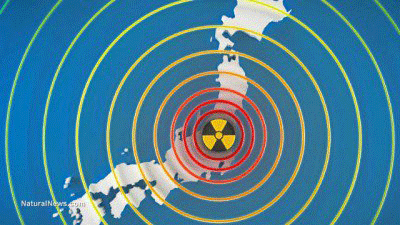
by Citizens’ Nuclear Information Center · December 21, 2025, By Yamaguchi Yukio, https://cnic.jp/english/?p=8747
n the 14 and a half years that have passed since March 2011, the cesium-137 that was released has finally made it to the halfway point of its half-life. After 90 years, its radioactive concentration will have diminished to one-eighth its initial level, and after 300 years, one-thousandth. According to the current medium-to-long-term roadmap, decommissioning measures should be completed around 2041 to 2051. Even by then, however, the radioactivity will have decreased only by a little more than half. Not even what these “decommissioning measures” are supposed to include has been decided on yet.
In places with serious radioactive contamination, nobody will be able to live there for another century. The area thus affected is said to exceed 300 square kilometers. The first sample of fuel debris taken from the Unit 2 reactor weighed 0.7 grams, and the second, 0.2 grams. The information gained from their analysis is just as miniscule. Meanwhile, the total amount of fuel debris in the Unit 1-3 reactors is estimated at 880 tons. Whether it will be necessary to retrieve all of it to begin with is a matter of great contention.
Idogawa Katsutaka, who was mayor of Futaba Town at the time of the accident, evacuated the entire town to protect everyone there from radioactive exposure, leading many of them as far as 250 kilometers away to Kazo City, Saitama Prefecture, near Tokyo, where they took refuge in a gymnasium that had belonged to the town’s former Kisai High School. This was just one of the municipalities that evacuated from Fukushima Prefecture to escape radioactivity. The town’s population totaled 6,971 people overall, of whom 187 took refuge at the former Kisai High School (as of September 18, 2012). Details of their evacuation were relayed widely around the world by the 2012 film “Nuclear Nation” (Japanese: “Futaba kara Toku Hanarete,” directed by Funahashi Atsushi, music by Sakamoto Ryuichi).
As of 1 August 2025, the registered population of Futaba Town had dwindled to 5,157 in all, of whom 59 percent were living within Fukushima Prefecture and 41 percent were still evacuees elsewhere among 43 of Japan’s 47 prefectures. Idogawa’s hope is, “We want somehow to go home, all of us, together, to a safe hometown.” The number of returnees so far, however, is a mere 87 people (as of August 2025).
■ Idogawa filed suit in May 2015 against the government of Japan and Tokyo Electric Power Co. (TEPCO), seeking 755 million yen in damages. A decision on the case was rendered on 30 July 2025 in Tokyo District Court, finding no responsibility on the part of the government, but ordering TEPCO to pay compensation of about 100 million yen for damages to real estate and compensation for the evacuations.
The reasoning behind this decision was that even if the government had required TEPCO to take measures against a possible tsunami, there was a good likelihood that a similar accident could have occurred anyway, so the government bore no responsibility for it. This followed the precedent of a Supreme Court’s ruling on 17 June 2022 denying the government’s responsibility.
Nor did they recognize Idogawa’s claim that his health had been damaged by his exposure in the course of evacuating. This angered Idogawa, who called it a terrible decision against a person who had faithfully fallen in line with Japan’s atomic energy administration.
I think what caused this tragic nuclear accident, unprecedented in scale, was Japan’s fundamentally flawed nuclear power system, adopted by the government in the name of “peaceful use of the atom.” It can only be called a huge transgression by the politicians, bureaucrats, scientists, and business leaders of that time on account of their lackadaisical inattention to safety.
The theory of plate tectonics teaches us not to expect to see broad regions of stability, free from concerns about earthquakes, tsunamis or volcanic activity in the Japanese archipelago. We are only part way toward clarifying the causes and circumstances of the Fukushima nuclear accident. Despite this, the government is ignoring the lessons of history and clearly announcing a “nuclear renaissance” in its 7th Strategic Energy Plan. Even if it intends to “put safety first” as a condition, it cannot create safety measures if it has yet to elucidate the causes of the accident. This is no way to ensure “safety first.” It’s a contradiction.
Establishing nuclear power plants in the Japanese archipelago in itself is a mistake. The first chairman of Japan’s Nuclear Regulation Authority publicly stated that even if the new safety standards created in 2012 were fulfilled, it would not guarantee safety. Even now, the phrase “safety first” commonly uttered by nuclear proponents is a fiction and can only be called irresponsible.
The Problem with Machado: Assange Sues the Nobel Foundation.
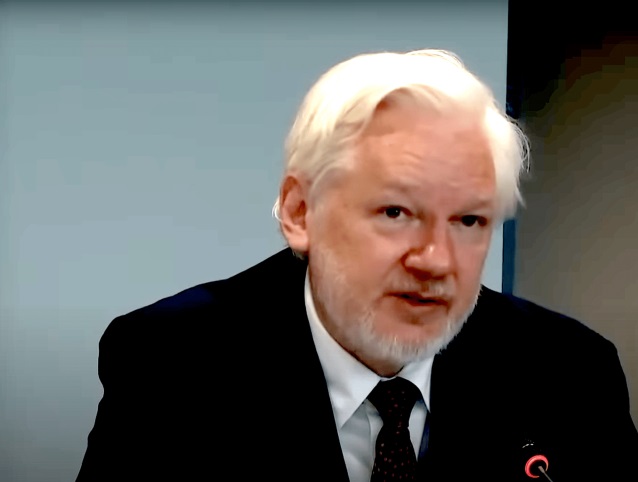
21 December 2025 Dr Binoy Kampmark, https://theaimn.net/the-problem-with-machado-assange-sues-the-nobel-foundation/
The Swedish police have promised it will go nowhere, but the attempt by WikiLeaks founder Julian Assange to draw attention to the inappropriateness of María Corina Machado as a Nobel Peace Prize recipient raises a few salient matters. On December 17, Assange submitted a criminal complaint to the Swedish Economic Crime Authority and Swedish Crimes Unit. The legal complaint is directed against the Nobel Foundation, arguing that the pending transfer of 11 million SEK ($US 1.18 million) and the award of the prize medal to Machado violates the terms of Alfred Nobel’s will of November 27, 1895.
The will, binding under the terms of Swedish law, stipulates that the award of the prize and monies be given to a person who, during the preceding year, “conferred the greatest benefit to humankind” in pursuing “the most or the best work for fraternity between nations, for the abolition or reduction of standing armies and for the holding and promotion of peace congresses.”
Given that the peace prize laureates are selected by the Norwegian Nobel Committee, seeking to hold them accountable for their poor choice of awardee might have been a better starting point. But the complaint is alert to this, noting that the Swedish funds administrators have a fiduciary duty when it comes to disbursing the funds. “The Norwegian committee’s selection does not grant them criminal immunity.” Indeed, it was up to the administrators to consider such a decision made “in flagrant conflict with the explicit purpose of the will, or where there is evidence that the awardee will use or is using the prize to promote or facilitate the crime of aggression, crimes against humanity, or war crimes.”
Whatever the administrative minutiae, Assange’s effort is worth noting. Machado has become the unsavoury alternative to the Venezuelan incumbent, Nicolás Maduro, a figure who refused to accept the electoral returns for his opposing number, Edmundo González, in July 2024. González was essentially a pick by Machado, who has emerged as the empurpled, plumed candidate seeking Maduro’s overthrow. That she was the 2025 choice of prize recipient was galling enough for 21 Norwegian peace organisations to boycott the ceremony and prompt Nobel Peace Prize laureate Adolfo Pérez Esquivel to remark that, “Giving the prize to someone who calls for foreign invasion is a mockery of Alfred Nobel’s will.”
Machado has made no secret of her approval of the buildup of US military personnel (around 15,000) off the coast of Venezuela since August, including a nuclear-powered attack submarine and the world’s largest aircraft carrier, the USS Gerald R. Ford. She has “incited and defended the Trump administration’s use of lethal military force and preparation for war.” The US military has already committed, charges Assange, “undeniable war crimes, including the lethal targeting of civilian boats and survivors at sea, which has killed at least 95 people.” (President Donald Trump has liberally designated such individuals narco-terrorists.) The Central Intelligence Agency has been authorised to conduct covert actions in Venezuela. Parts of the Venezuelan military have been classified by the Trump administration as a Foreign Terrorist Organisation (FTO).
Since Assange submitted his complaint, Trump has ordered a complete blockade of sanctioned oil tankers entering or exiting Venezuela. The US has thus far seized two tankers, though the authorities have failed to distinguish which tankers are sanctioned or otherwise. The Panama-flagged Centuries, for instance, was not officially sanctioned by the US, showing that this administration is not one to be, as US Secretary of War Pete Hegseth put it, legally tepid.
A list of incitements to war by Machado are enumerated. They include the dedication of the award to President Trump for having “Venezuela in where it should be, in terms of a priority for United States national security”; a heartfelt endorsement of US military escalation as maybe being “the only way” in dealing with Maduro; warm appreciation for Israeli Prime Minister Benjamin Netanyahu’s “decisions and resolute actions in the course of the [Gaza] war” and the endorsement of extrajudicial killing of civilian boats in the Caribbean Sea as “visionary”. Hardly the résumé for a peacemaker.
Assange argues that the failure of the funds administrators to stop pertinent disbursements to Machado, in light of the material submitted in the complaint, “indicates ongoing criminal intent.” Such funds aided “a conspiracy to murder civilians,” violated national sovereignty through using military force and advanced resource theft (Machado’s promised reward to US firms of oil and gas resources amounting to US$1.7 trillion). In doing so, Nobel’s will and charitable purpose had been violated through “gross misappropriation, aiding international crimes […] and conspiracy.” They also breached Sweden’s obligations under the Rome Statute. By way of remedy, the “immediate freezing of all remaining funds and a full criminal investigation lest the Nobel Peace Prize be permanently converted from an instrument of peace into an instrument of war” was sought.
In an email to AFP, Swedish detective inspector Rikard Ekman showed little interest in taking the matter up. “As I have decided not to initiate a preliminary investigation, no investigation will be conducted on the basis of the complaint.”
While this complaint remains a purist’s attempt to return the peace prize to a more conventional reading (Assange thinks the UN Secretary General António Guterres and UN human rights chief Volker Turk eminently more suitable candidates), the practice of awarding this inflated award to figures of ill-repute and sullied reputation will be hard to shake. The ghost of former US security advisor and Secretary of State Henry Kissinger, a man lauded for bringing peace to Indochina when he covertly indulged illegal bombing campaigns, not to mention war crimes, torture and an assortment of other blood sports, continues to loom large. It might well be time to abolish the Nobel Peace Prize altogether, and the committee responsible for it. It was never a strong indicator of merit, even if it offers the chance for some very dark humour for the reptiles to revel in.
Julian Assange: Sweden Broke Own Laws With Nobel Prize to Venezuela’s Machado

The same dynamic is at play in the Caribbean once again, according to Assange, as the Nobel Committee crowns a Venezuelan politician best known for her unhinged appeals for foreign military intervention and her dedication of her Nobel victory to US President Donald Trump.
Max Blumenthal and Wyatt Reed, The Grayzone, December 17, 2025
By awarding its peace prize to Trump’s favorite Venezuelan opposition figure, pro-war coup plotter Maria Corina Machado, the Nobel Committee contravened the principles enshrined in its founding documents, as well as Swedish law, Julian Assange alleged in an explosive brief reviewed by The Grayzone.
The Swedish government violated its own laws by awarding the Nobel Peace Prize to Venezuelan opposition figure Maria Corina Machado, according to an explosive legal brief filed by Julian Assange, the Wikileaks co-founder and former political prisoner who was hounded across the globe, confined in harsh conditions, and subjected to physical and psychological torment over the course of a decade by the US and its allies.
The Nobel committee’s decision to award Machado the Peace Prize — and the 11 million Swedish Kroner ($1.18 million USD) reward which accompanies it — means that “there is a real risk that funds derived from Nobel’s endowment have been or will be… diverted from their charitable purpose to facilitate aggression, crimes against humanity, and war crimes,” Assange stated.
The Wikileaks founder pointed to the “ample public statements… showing that the U.S. government and María Corina Machado have exploited the authority of the prize to provide them with a casus moralis for war,” adding that the explicitly stated purpose of the war sought by Machado and her wealthy Latin American backers would be “installing her by force in order to plunder $1.7 trillion in Venezuelan oil and other resources.”
The Nobel Foundation stands accused of a number of violations of Swedish criminal law, including breach of trust, misappropriation and gross misappropriation, conspiracy, crimes against international law, as well as financing of aggression, facilitation of war crimes and crimes against humanity, and breaching Sweden’s stated obligations under the Rome Statute, to which Stockholm says it is “deeply committed.”
Under Swedish law, “Alfred Nobel’s endowment for peace cannot be spent on the promotion of war,” Assange noted. “Nor can it be used as a tool in foreign military intervention. Venezuela, whatever the status of its political system, is no exception.”
By granting Nobel funds to Machado, Assange argues that the Committee is effectively financing “a conspiracy to murder civilians, to violate national sovereignty using military force…” By refusing to end payments, “they flagrantly violate Nobel’s will and clearly cross the threshold into criminality,” he alleged. The Wikileaks co-founder seeks the “immediate freezing of all remaining funds and a full criminal investigation” into Committee members who awarded the prize.
The Nobel Prizes were established in 1901 according to Swedish inventor Alfred Nobel’s last will and testament, which was later incorporated into the Swedish and Norwegian legal systems. The Peace Prize, which is meant to be bestowed on the figure who has contributed most to “fraternity between nations,” the “abolition or reduction of standing armies,” and “the holding and promotion of peace congresses,” has served as a cornerstone of Scandinavian soft power ever since.
Since its inception, however, the prize was marred by controversy due to the violent legacy of its recipients, and the political ambitions of its Norwegian sponsors. In the case of one of the Prize’s first winners, US President Theodore Roosevelt, the Norwegian Nobel Committee was criticized at the time for overlooking the American statesman’s naked warmongering in Latin America in order to curry favor with the nascent US empire. The New York Times sardonically observed that “a broad smile illuminated the face of the globe when the prize was awarded … to the most warlike citizen of these United States.”
The same dynamic is at play in the Caribbean once again, according to Assange, as the Nobel Committee crowns a Venezuelan politician best known for her unhinged appeals for foreign military intervention and her dedication of her Nobel victory to US President Donald Trump.
As Assange explained, Trump’s massive buildup of US military forces off the coast of Venezuela “has already committed undeniable war crimes, including the lethal targeting of civilian boats and survivors at sea, which has killed at least 95 people.”
“The Office of the United Nations High Commissioner for Human Rights labeled these U.S. coastal strikes against civilian boats “extrajudicial executions,” the Wikileaks co-founder wrote. And the “principal architect of this aggression” was none other than Trump’s Secretary of State Marco Rubio, who “nominated María Corina Machado for the peace prize.”
Norwegian Nobel judges tied to influential Venezuelan regime change lobbyist
The awarding of the Nobel Peace Prize to a figure as clearly unqualified as Machado – and in apparent violation of Swedish law – raised questions about whether the Committee had been influenced by powerful outside interests. Machado’s nomination for the prize by the US Secretary of State had an undeniable impact on the decision, as the Nobel ceremony serves as a central channel of Norwegian soft power. But inside Oslo, a political powerbroker determined to return to power in his family’s native Venezuela may have also played a role in swinging votes for Machado. ………………………………………………………………………………………………………………………………..
The odds of Machado winning surged from 3.75% to 72.8% just hours before the Nobel Committee officially informed Machado of her victory. One unusually prescient bettor won $65,000 gambling on the Venezuelan opposition figure. “It seems we have been prey to a criminal actor who wants to earn money on our information,” said Kristian Berg Harpviken, the head of the Nobel Institute.
Months later, The Nobel committee still has yet to conclude its investigation into the corruption scandal. As of publication, the committee did not respond to a request for comment by The Grayzone.
For what promotes itself as the world’s premiere peacemaking institution, it may be too late to undo the damage wrought by giving the Nobel Prize to an avowed champion of violent regime change.
“Using her elevated position as the recipient of the Nobel Peace Prize, Machado may well have” already “tipped the balance in favor of war,” Assange concluded. https://thegrayzone.com/2025/12/17/julian-assange-sweden-nobel-venezuelas-machado/
Council battling illegal work near nuclear site.
Niki Hinman, Local Democracy Reporting Service, 17 Dec 25, https://www.bbc.com/news/articles/c4g583jlpl3o
A council continues to gather evidence to prosecute those responsible for an illegal development near a nuclear weapons site.
Work has been carried out on land opposite the Atomic Weapons Establishment’s (AWE) Aldermaston campus despite a temporary stop notice, West Berkshire Council said.
Hundreds of people have signed an online petition that states the work has left others feeling “unsafe, anxious and unprotected”, according to the Local Democracy Reporting Service.
The authority said the applicant has not submitted additional information to make it a valid application and so it is not being considered.
Neither the council nor the police have legal powers to remove individuals or items from the land and the council says the relevant civil legal processes must be followed to enable this.
“The temporary stop notice remains in force,” a council spokesperson said.
“Any activity that breaches it is a criminal offence, and officers are continuing to gather evidence to support potential prosecution.”
US Relied on Illegal Sanctions to Seize Venezuelan Oil Tanker
December 15, 2025 By Marjorie Cohn, https://scheerpost.com/2025/12/15/us-relied-on-illegal-sanctions-to-seize-venezuelan-oil-tanker/
This article was originally published by Truthout
US armed forces’ seizure of the oil tanker constituted an unlawful use of force in violation of the UN Charter.
“We have just seized a tanker on the coast of Venezuela — a large tanker, very large, the largest one ever seized actually,” Donald Trump told reporters on December 10, describing the escalation of his apparently impending illegal war and regime change in Venezuela. Attorney General Pam Bondi ceremoniously released a video clip of the U.S. Marines and National Guard rappelling down from two helicopters onto the tanker.
In seizing the “Skipper,” the Trump administration relied on sanctions the U.S. had imposed on the Venezuelan oil tanker. Bondi said a seizure warrant was executed by the U.S. Coast Guard, FBI, Pentagon, and Homeland Security Investigations. “For multiple years, the oil tanker has been sanctioned by the United States due to its involvement in an illicit oil shipping network supporting foreign terrorist organizations,” she stated.
But those sanctions are illegal and cannot provide a lawful basis for the U.S. to seize this vessel.
Only the Security Council Is Authorized to Impose Sanctions
Although claims in the corporate media that Venezuelan oil is subject to “international sanctions” are ubiquitous, nothing could be further from the truth.
When a country takes it upon itself to impose sanctions without Security Council approval, they are called unilateral coercive measures, which violate the UN Charter.
The U.S. government imposed unilateral coercive measures on the oil tanker in 2022 for its alleged ties to Iran. But the UN Charter empowers only the Security Council to impose and enforce sanctions. Article 41 specifies:
The Security Council may decide what measures not involving the use of armed force are to be employed to give effect to its decisions, and it may call upon the Members of the United Nations to apply such measures. These may include complete or partial interruption of economic relations and of rail, sea, air, postal, telegraphic, radio, and other means of communication, and the severance of diplomatic relations.
“Under international law, we cannot lawfully enforce U.S. domestic law in a foreign state’s territorial sea (12 nautical miles) or contiguous zone (next 12 miles out, to total 24) without the coastal state’s consent,” Jordan Paust, professor emeritus at University of Houston Law Center and former captain in the U.S. Army JAG Corps, told Truthout.
Francisco Rodriguez, senior research fellow at the Center for Economic and Policy Research, concurs. “The US has no jurisdiction to enforce unilateral sanctions on non-US persons outside its territory,” he posted on X. “The seizure of ships in international waters to extraterritorially enforce US sanctions is a dangerous precedent and a violation of international law.”
“Nor can we lawfully do so on a foreign flag vessel there or on the high seas without the flag state’s consent — all absent any international legal justification under the law of war during an actual ‘armed conflict’ or under Article 51 of the UN Charter in case of an actual ‘armed attack,’” Paust added.
Although there are allegations that the Skipper was operating under a false flag, Trump made clear in his December 10 statement that it was in Venezuela’s territorial sea or contiguous zone, not on “the high seas.” Moreover, a senior military official told CBS News that the tanker had just left a port in Venezuela when it was seized.
The Seizure Was an Illegal Act of Aggression
At first blush, it appears that the U.S. military committed piracy when it seized the Skipper. But piracy is defined by Article 101 of the UN Convention on the Law of the Sea as acts committed for private purposes by a private aircraft or ship. State-sponsored or military actions can constitute acts of war or violations of sovereignty, but not piracy.
The UN Charter prohibits the threat or use of force except in self-defense after an armed attack under Article 51 or when approved by the Security Council, neither of which was present before the seizure of the Skipper. Nor was the U.S. engaged in armed conflict with Venezuela.
General Assembly Resolution 3314 sets forth the definition of “aggression,” which has been adopted by the Rome Statute for the International Criminal Court: “Aggression is the use of armed force by a State against the sovereignty, territorial integrity or political independence of another State, or in any other manner inconsistent with the Charter of the United Nations.”
The seizure of the oil tanker by the U.S. armed forces constituted an unlawful use of force in violation of the UN Charter. It was therefore an act of aggression.
This aggression comes on the heels of the Trump administration’s extrajudicial executions (murders) of some 87 alleged drug traffickers on more than 20 small boats in the Caribbean and Eastern Pacific. In all likelihood, the administration doesn’t even know the identity of the victims, nor has it provided any evidence that they were trafficking in narcotics. Even if it had, due process requires arrest, not murder.
The U.S. has seized “sanctioned” oil in the past, during the first Trump administration and the Biden administration as well. But, according to The New York Times, it is not a common practice and “rarely becomes a public spectacle.”
Meanwhile, the administration is engaging in the largest military buildup of U.S. firepower in the Caribbean in decades, including the deployment of the USS Gerald R. Ford, the biggest aircraft carrier in the world. Trump declared a no-fly-zone over Venezuela. And the administration recently added significant combat equipment to that already present in the region.
On December 11, the U.S. Treasury Department imposed additional sanctions on the government of Venezuelan President Nicolás Maduro, targeting his relatives and six shipping companies operating in Venezuela’s oil sector.
If U.S. Regime Change Succeeds in Venezuela, Cuba May Be Next
Trump has clearly stated his intention to attack Venezuela, and his administration has signaled that it aims to change Venezuela’s regime, with opposition leader María Corina Machado waiting in the wings. Hours after it seized the Skipper, the U.S. helped Machado leave Venezuela and travel to Norway to receive the Nobel “Peace” Prize.
Maduro called the seizure of the tanker what it really is: “It has always been about our natural resources, our oil, our energy, the resources that belong exclusively to the Venezuelan people.” Venezuela has the largest proven oil reserves in the world.
This seizure could be the first act in the U.S. imposition of an oil blockade on Venezuela. Such a blockade “would shut down the entire economy,” former Biden administration Latin America adviser Juan González told the Guardian.
“Because Venezuela is so dependent on oil, they could not resist that very long,” retired U.S. Marine Corps Colonel and senior adviser at think tank Center for Strategic and International Studies Mark Cancian, told the BBC. It would be “an act of war.”
The oil tanker had offloaded a small amount of its oil to a smaller ship headed for Cuba and then proceeded east toward Asia before the tanker was seized by the U.S. That seizure “is part of the US escalation aimed at hampering Venezuela’s legitimate right to freely use and trade its natural resources with other nations, including the supplies of hydrocarbons to Cuba,” the Cuban Foreign Ministry said in a statement.
Secretary of State Marco Rubio, architect of Trump’s Venezuela regime change strategy, has long had the Cuban government in his sights. “Their theory of change involves cutting off all support to Cuba,” González told The New York Times. “Under this approach, once Venezuela goes, Cuba will follow.”
For decades, Cuba has suffered under unilateral coercive measures in the form of an economic blockade, which was also imposed by the U.S. in violation of the UN Charter.
Forcible regime change is illegal. The UN Charter prohibits the use of force against the territorial integrity or political independence of another state. Likewise, the Charter of the Organization of American States forbids any state from intervening in the internal or external affairs of another state. And the International Covenant on Civil and Political Rights guarantees the right to self-determination.
Trump’s new National Security Strategy contains the “Trump Corollary” to the Monroe Doctrine, signaling a return to U.S. military interventions in Latin America. The strategy states:
We want to ensure that the Western Hemisphere remains reasonably stable and well-governed enough to prevent and discourage mass migration to the United States; we want a Hemisphere whose governments cooperate with us against narco-terrorists, cartels, and other transnational criminal organizations; we want a Hemisphere that remains free of hostile foreign incursion or ownership of key assets, and that supports critical supply chains; and we want to ensure our continued access to key strategic locations.Washington’s brutal anti-immigrant policies and false accusations that Venezuela is sending drugs to harm the U.S. are consistent with this strategy. And implicit in the strategy is the key goal of U.S. access to Venezuela’s rich oil deposits.
Nuclear power: the courts put a stop to the project for two EPR2 reactors at Bugey

December 10, 2025
“ It’s a dramatic turn of events ” against the project to build two EPR2 reactors in the Ain region. Speaking by phone, Jean-Pierre Collet, from the Sortir du nucléaire ( SDN ) Bugey network, made no secret of his satisfaction. On Wednesday, December 10, 2025, the Lyon Administrative Court
overturned amendments to urban planning documents—
the SCOT ( Regional Planning Scheme ) in February 2023 and
the PLU ( Local Urban Development Plan ) in September 2024—that would have allowed the construction of these two new reactors on the EDF site at Bugey.
This decision follows a hearing on November 18th and sides with the anti-nuclear group Sortir du nucléaire Bugey and several residents. The court ruled that the ecological impact had not been sufficiently considered, particularly the presence of numerous protected species and the proximity of the Natura 2000 site of Isle Crémieux.
This decision comes as the project was already underway, with archaeological excavations already begun, according to Jean-Pierre Collet. A public debate held in early 2025 took place in a heated atmosphere, with the team in charge of organizing the debates lamenting the lack of data on the actual cost of the new facilities.
“
The construction site is suspended for a while,” Jean-Pierre Collet rejoiced.
“This shows that even on large-scale projects, you can’t ignore the rules. There are urban planning regulations, you can’t pretend they don’t exist. For us, this is very good news. ”……………………………………………………………………… https://reporterre.net/Nucleaire-la-justice-met-un-coup-d-arret-au-projet-de-deux-EPR2-au-Bugey
1 This Month
23-25 October – on Zoom – World BEYOND War’s annual global conferenc


Shut down the radiation-damaged Heysham nuclear reactors now
To see nuclear-related stories in greater depth and intensity – go to https://nuclearinformation.wordpress.com

Say No to NASA’s Reckless Nuclear Reactor on the Moon
Say No to NASA’s Reckless Nuclear Reactor on the Moon

-
Archives
- October 2026 (231)
- September 2026 (339)
- August 2026 (330)
- July 2026 (355)
- June 2026 (287)
- May 2026 (306)
- April 2026 (356)
- March 2026 (251)
- February 2026 (267)
- January 2026 (308)
- December 2025 (358)
- November 2025 (359)
-
Categories
- 1
- 1 NUCLEAR ISSUES
- business and costs
- climate change
- culture and arts
- ENERGY
- environment
- health
- history
- indigenous issues
- Legal
- marketing of nuclear
- media
- opposition to nuclear
- PERSONAL STORIES
- politics
- politics international
- Religion and ethics
- safety
- secrets,lies and civil liberties
- spinbuster
- technology
- Uranium
- wastes
- weapons and war
- Women
- 2 WORLD
- ACTION
- AFRICA
- Atrocities
- AUSTRALIA
- Christina's notes
- Christina's themes
- culture and arts
- Events
- Fuk 2022
- Fuk 2023
- Fukushima 2017
- Fukushima 2018
- fukushima 2019
- Fukushima 2020
- Fukushima 2021
- general
- global warming
- Humour (God we need it)
- Nuclear
- RARE EARTHS
- Reference
- resources – print
- Resources -audiovicual
- Weekly Newsletter
- World
- World Nuclear
- YouTube
-
RSS
Entries RSS
Comments RSS

