A Day in the Death of British Justice – the case of Julian Assange

WikiLeaks has given us real news about those who govern us and take us to war, not the preordained, repetitive spin that fills newspapers and television screens. This is real journalism; and for the crime of real journalism, Assange has spent most of the past decade in one form of incarceration or another, including Belmarsh prison, a horrific place.
Diagnosed with Asperger’s syndrome, he is a gentle, intellectual visionary driven by his belief that a democracy is not a democracy unless it is transparent, and accountable.
JOHN PILGER: A Day in the Death of British Justice, Consortium News, August 12, 2021 The reputation of British justice now rests on the shoulders of the High Court in the life or death case of Julian Assange.
I sat in Court 4 in the Royal Courts of Justice in London Wednesday with Stella Moris, Julian Assange’s partner. I have known Stella for as long as I have known Julian. She, too, is a voice of freedom, coming from a family that fought the fascism of Apartheid. Today, her name was uttered in court by a barrister and a judge, forgettable people were it not for the power of their endowed privilege.
The barrister, Clair Dobbin, is in the pay of the regime in Washington, first Trump’s then Biden’s. She is America’s hired gun, or “silk”, as she would prefer. Her target is Julian Assange, who has committed no crime and has performed an historic public service by exposing the criminal actions and secrets on which governments, especially those claiming to be democracies, base their authority.
For those who may have forgotten, WikiLeaks, of which Assange is founder and publisher, exposed the secrets and lies that led to the invasion of Iraq, Syria and Yemen, the murderous role of the Pentagon in dozens of countries, the blueprint for the 20-year catastrophe in Afghanistan, the attempts by Washington to overthrow elected governments, such as Venezuela’s, the collusion between nominal political opponents (Bush and Obama) to stifle a torture investigation and the CIA’s Vault 7 campaign that turned your mobile phone, even your TV set, into a spy in your midst.
WikiLeaks released almost a million documents from Russia which allowed Russian citizens to stand up for their rights. It revealed the Australian government had colluded with the U.S. against its own citizen, Assange. It named those Australian politicians who have “informed” for the U.S. It made the connection between the Clinton Foundation and the rise of jihadism in American-armed states in the Gulf.
Continue readingUK High Court sides with US against Assange
UK High Court sides with US against Assange, WSW,Thomas Scripps11 August 2021 , The UK’s High Court has allowed the United States to appeal on two additional grounds the refusal of Julian Assange’s extradition by a lower court.Assange, the founder of WikiLeaks still held in Belmarsh maximum security prison, is threatened with extradition on charges under the Espionage Act with a potential life sentence for revealing state war crimes, torture, surveillance, corruption and coup plots.
On January 4, District Judge Vanessa Baraitser blocked extradition, ruling that it would be oppressive by virtue of his mental health and put him at substantial risk of suicide.Lawyers for the US government sought to appeal the decision on the five grounds:
- That Baraitser made errors of law in her application of the test under section 91 of the 2003 Extradition Act, which bars extradition if the person’s mental or physical condition would render it unjust or oppressive.
- That she ought to have notified the US ahead of time, to give the government the opportunity to provide assurances to the court that Assange’s health would be looked after.
- That the judge should not have accepted or at least given less weight to the evidence of the defence’s principal psychiatric expert, Professor Kopelman.
- That Baraitser erred in her overall assessment of the evidence on suicide risk.
- That the US has since provided the UK with a package of assurances about the conditions in which Assange would be held.
The US was initially granted leave to appeal on grounds one, two and five, but denied three and four. At a preliminary hearing yesterday in front of Lord Justice Holroyde and Mrs Justice Farbey, that decision was overturned and grounds three and four were granted as well.
Their decision confirms that the January 4 ruling against extradition was only a tactical pause in an ongoing pseudo-legal manhunt, which is again proceeding apace.
Baraitser’s original decision accepted every one of the prosecution’s anti-democratic, factually unsustainable arguments except on the single point of Assange’s mental health, leaving his fate hanging by a thread. Now the US is being given the opportunity to bulldoze this last remaining obstacle.As Assange’s legal team argue in their Notice of Objection, none of the points made in the appeal by the US stand up to scrutiny………………
https://www.wsws.org/en/articles/2021/08/11/assa-a11.html?fbclid=IwAR1KNVz7_kATvh53WeOYZ5iKOlCrE3-4Q9jGh9dv79DUkXxeezC91VXjmbU
A hard rain did fall — Hiroshima victims beyond “official” zone will now be compensated

Hiroshima victims beyond “official” zone will now be compensated
A hard rain did fall — Beyond Nuclear International A hard rain did fall, Black rain” victims finally win in court https://beyondnuclearinternational.org/2021/08/01/a-hard-rain-did-fall/ By Linda Pentz Gunter
Just weeks before the 2021 commemoration of the August 6, 1945 US atomic bombing of the city of Hiroshima, a Japanese court ruled that victims of the radioactive “black rain” who were living beyond the officially recognized contamination zone at the time, should be included in the group considered bomb “survivors” or “Hibakusha” and receive the same benefits.
A Hiroshima high court acknowledged in its July 14, 2021 ruling that many more people suffered as a result of exposure to “black rain” than have hitherto been recognized as victims.
“Black rain” was described in a CNN story as a “mixture of fallout particles from the explosion, carbon residue from citywide fires, and other dangerous elements. The black rain fell on peoples’ skin and clothing, was breathed in, contaminated food and water, and caused widespread radiation poisoning.”
When the verdict was first released last month, it appeared that the Japanese government, under Prime Minister Yoshihide Suga, might appeal the decision. Instead, Suga declared his government, the defendants in the case, would not appeal it and even suggested that relief might be extended to other affected people beyond the plaintiffs. According to the Asahi Shimbun, this may even include those exposed to radiation as a result of the 2011 Fukushima nuclear disaster on the Japan coast.
The court ruling was important because it recognized and acknowledged not only the heaths effects of the radioactive “black rain” atomic bomb fallout, but also the internal exposure to radiation through the ingestion of contaminated water and food experienced by the 84 plaintiffs in the case.
The ruling of course comes very late in the day as many Hibakusha are already deceased. Indeed, one of the plaintiffs, 79-year-old Seiji Takato, told CNN he was worried that if there was no verdict soon, “we would all die if this (case were) prolonged”.
The plaintiffs will now receive the same benefits as residents of the state-designated black rain zone. According to the Kyodo News, these will include “free health checkups and atomic bomb survivors’ certificates entitling them to medical benefits in the event that they develop 11 specific illnesses caused by radiation.”
The United States, the country which dropped the two atomic bombs — on Hiroshima on August 6, 1945 and then on Nagasaki three days later — has taken neither responsibility for the devastating health consequences, nor offered an apology or compensation.
Indeed, President Truman, in office when the bombings were authorized, told the Japanese, chillingly, that their sacrifice and suffering were “urgent and necessary.” President Clinton declared that the US “owes no apology to Japan”. He, like other US presidents before and since, clung to the disputable notion that the atomic bombings saved at least one million American lives, an argument ably dispatched by Ward Wilson on these pages in 2018.
To date, Barack Obama is the only sitting US president to have visited Hiroshima, when he traveled there in 2016, but he too failed to apologize for the atrocity. There have been plenty of lively debates on this question: Would an apology open up old wounds, focus too much on the past and be an admission of wrongdoing? Would it also open the door to a floodgate of demands for monetary compensation? Or is an official apology an essential atonement, albeit merely symbolic at this late stage? Could an apology lead in turn to meaningful international engagement on global peace?
Slowly, the Hibakusha have been gaining recognition. One of its most famous and outspoken members, Setsuko Thurlow, accepted the Nobel Peace Prize awarded the International Campaign to Abolish Nuclear Weapons (ICAN) alongside its executive director, Beatrice Fihn, in 2017.
The award came on the heels of the instrumental role the Hibakusha played in persuading the UN to create the Treaty on the Prohibition of Nuclear Weapons, now ratified by 55 countries and counting, five more than the number that ensured it became law this past January. None of the nuclear weapons states, nor Japan, has signed or ratified the treaty.
At the end of the day, the lesson here is the mantra adopted by the nuclear researchers, whistleblowers and watchdogs at Fairewinds Energy Education: “Radiation knows no borders.”
As Fairewinds wrote in the context of the “black rain” verdict: “Radioactive microscopic particles generated from mining uranium ore, reprocessing atomic fuel, bomb tests, and disastrous meltdowns travel well beyond the arbitrary boundaries and demarcation lines that governments establish to limit their liability and to maintain control over others.”
These warnings serve as a compelling reason to neither test nor use atomic weapons and also as a powerful admonition against the continued use of “civil” nuclear power.
First Energy company to pay fine for bribing Ohio officials to bail out nuclear power stations
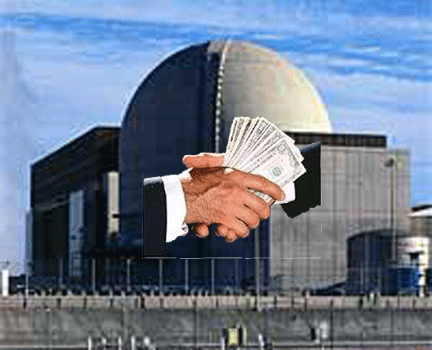
FirstEnergy agrees to pay $230M fine for bribing Ohio officials to bail out two nuclear plants, Utility Dive, Iulia Gheorghiu July 23, 2021
Dive Brief:
- FirstEnergy Corporation announced on Thursday a settlement agreement to pay a $230 million penalty for bribing Ohio officials to ensure the passage of a ratepayer-funded bailout for older generation assets, including two nuclear plants.
- The utility cooperated with federal investigators to disclose paying millions through dark money groups to state officials, including former Ohio House Speaker Larry Householder and former Public Utilities Commision of Ohio (PUCO) Chairman Sam Randazzo. The company acknowledged using 501(c)(4) organizations, which are registered lobbying entities, to conceal the nature, source and control of payments in the pursuit of the nuclear legislation……………
The details in the 49-page settlement agreement, in which FirstEnergy had to admit that company executives paid money to public officials in return for official action, has led to stakeholders raising questions about utility dark-money and political spending………….
The OEC Action Fund is also asking for a full repeal of HB 6 and has called for an investigation into every PUCO and Ohio Power Siting Board ruling made under Randazzo’s tenure.
“Each case he presided over is possibly tainted by corrupt ties to FirstEnergy,” Taylor-Miesle said……………………. https://www.utilitydive.com/news/firstenergy-agrees-to-pay-230m-fine-for-bribing-ohio-officials-to-bail-out/603836/
Judge rules distribution of compensation for investors who lost fortunes in multi billion-dollar nuclear reactor failure in South Carolina

Judge OKs distribution for $192M nuclear project settlement, https://www.miamiherald.com/news/business/article252884293.html
BY MEG KINNARD ASSOCIATED PRESS, JULY 19, 2021 OLUMBIA, S.C.
Investors who lost fortunes in the failure of a multi billion-dollar nuclear reactor construction deal in South Carolina will soon begin to see their portions of a $192 million settlement, under a recently approved distribution.
Last week, a federal judge signed off on a plan to disperse the funds among former shareholders in SCANA Corp., the former parent company of South Carolina Electric & Gas. The settlement itself was the largest securities class action recovery obtained in South Carolina when a judge approved it last year, according to attorneys for the investors.
The utility company became embroiled in controversy after announcing in summer 2017 that it was shuttering a nuclear reactor construction project at the V.C. Summer Nuclear Station in Jenkinsville, about 30 miles (48 kilometers) north of Columbia, following the bankruptcy of lead contractor Westinghouse.
Up to that point, SCANA and state-owned utility Santee Cooper, a minority partner in the project, had spent nearly $10 billion on it. The failure cost ratepayers and investors billions and left nearly 6,000 people jobless.
The abandonment spawned multiple lawsuits, some by ratepayers claiming company executives knew the project was doomed and misled consumers as well as regulators as they petitioned for a series of rate increases. State and federal authorities launched investigations, which have led to guilty pleas from two top-level SCANA executives.
More than 737,000 SCE&G customers had already paid more than $2 billion toward the project, which never generated any power. Customers did ultimately see retroactive credits applied to bills after lawmakers passed a temporary rate cut that knocked about $25 a month off the average residential customer’s bill.
SCANA shareholders accused the company of assuring them the project was above board, even as costs and delays spiraled out of control. This, investors alleged, caused SCANA stock to be traded at artificially inflated prices, numbers that plummeted once the project was mothballed. In July 2016, SCANA stock was trading at $76.12 a share but dropped more than 50% after news of the project’s failure, and the investigations surrounding it, became public, according to the investors’ attorneys.
The settlement includes $160 million in cash, with the remaining $32.5 million covered by cash or stock in Dominion Energy. The Virginia-based company took over SCANA in 2019, paying more than $6.8 billion to buy out the company’s stock and assuming its consolidated net debts of $6.6 billion.
Claimants will be required to cash their checks within 120 days or forfeit the award, according to the order.
“We are pleased that the court has approved the settlement distribution plan, and look forward to the distribution of the settlement funds to eligible class members according to the plan,” said Marlon Kimpson, a state senator and attorney representing the investors.
British court ruling heightens danger of Assange extradition to the US
British court ruling heightens danger of Assange extradition to the US, WSWS, Oscar Grenfell, 12 July 21, Last week’s ruling by the British High Court allowing prosecutors to appeal an earlier judgment blocking Julian Assange’s extradition, poses the very real danger that the WikiLeaks publisher will be dispatched to his American persecutors in the not-too-distant future.
The ruling is a microcosm of the Assange case as a whole. As they have for the past decade, the British courts have thrown aside the WikiLeaks founder’s legal and democratic rights. They have granted a US appeal that is both duplicitous and irregular under conditions in which the entire attempt by the American state to prosecute Assange has been exposed as an illegal frame-up.
The US appeal is a damning refutation of those, including among Assange’s own supporters, who have peddled dangerous illusions that the US administration of President Joe Biden may drop the prosecution if a sufficient number of moral pleas are addressed to the new occupant of the White House.
The appeal was first issued in the dying days of the Trump administration but it was continued, honed and argued for by Biden’s Justice Department. Assange remains in London’s maximum-security Belmarsh Prison and faces the prospect of lifetime incarceration in the US because Biden is determined to press ahead with the prosecution of a journalist and publisher for exposing American war crimes, human rights violations and illegal spying operations.
That is because the Assange prosecution is viewed as a crucial precedent by the imperialist powers for the suppression of dissent and anti-war opposition amid a ratcheting up of the preparations for military conflict, including the Biden administration’s threats and provocations against China, and the first signs of a resurgence of working-class struggle.
The appeal also confirms the warnings made by the World Socialist Web Site about January’s British District Court decision that barred extradition.
Judge Vanessa Baraitser accepted all the substantive arguments of the US prosecutors, including their right to try a publisher under the Espionage Act. Her ruling, prohibiting extradition, was framed in the narrowest terms. Its purpose was to defuse a groundswell of opposition to the prospect of Assange’s extradition and to provide the US with ample scope for appeal.
Baraitser ruled that extradition would be “oppressive.” Assange’s compromised health and the conditions of his imprisonment in the US would likely result in his suicide.
The deliberate consequence of that judgment was that there was only a legal sliver between Assange and extradition.
The US has exploited this with its appeal claiming that the conditions of imprisonment would not be so oppressive. It has proposed worthless assurances that Assange would not be held under Special Administrative Measures (SAM), regulations that impose almost total isolation on a prisoner, and that he could serve out his sentence in Australia.
The extradition hearing had heard harrowing testimony about the dire psychological consequences of SAMs and conditions at the supermax ADX Florence prison where they are frequently imposed.
The US arguments, accepted as a legitimate basis of appeal by the British court, were demolished by Stella Moris, Assange’s partner and an international human rights lawyer.
In a statement issued on Friday, Moris wrote: “Reports about US undertakings are grossly misleading. On any given day 80,000 prisoners in US prisons are held in solitary confinement. Only a handful are in ADX/under special administrative measures. ADX is just one of dozens of self-described supermax prisons in the United States. The US government also says it may change its mind if the head of the CIA advises it to do so once Julian Assange is held in US custody.
“With regard to the supposed concession of allowing Julian to serve jail time in Australia, it was always his right to request a prisoner transfer to Australia to finish serving his sentence because he is an Australian. It is no concession at all. There are existing agreements between the US and Australian authorities. What is crucial to understand is that prisoner transfers are eligible only after all appeals have been exhausted. For the case to reach the US Supreme Court could easily take a decade, even two.
“What the US is proposing is a formula to keep Julian in prison effectively for the rest of his life. The only assurance that would be acceptable would be for the Biden Administration to drop this shameful case altogether, once and for all. He should not be in prison for a single day, not in the UK, not in the United States, not in Australia—because journalism is not a crime.”
As Moris noted, the US appeal itself reserved the “right” to impose SAMs once Assange is on US soil. Testimony at the extradition hearing, including from a former US prison warden, established that the imposition of SAMs is essentially extra-judicial, often being introduced at the say-so of the intelligence agencies, and with no genuine means of appeal.
“What the US is proposing is a formula to keep Julian in prison effectively for the rest of his life. The only assurance that would be acceptable would be for the Biden Administration to drop this shameful case altogether, once and for all. He should not be in prison for a single day, not in the UK, not in the United States, not in Australia—because journalism is not a crime.”
As Moris noted, the US appeal itself reserved the “right” to impose SAMs once Assange is on US soil. Testimony at the extradition hearing, including from a former US prison warden, established that the imposition of SAMs is essentially extra-judicial, often being introduced at the say-so of the intelligence agencies, and with no genuine means of appeal.
The hearings, moreover, heard evidence of a case in which similar assurances were immediately thrown out the door once extradition was secured……………
Thordarson has now admitted, however, that almost all his testimony consisted of lies proffered in exchange for immunity from US prosecution. The American government thus submitted a false indictment to the British courts……….https://www.wsws.org/en/articles/2021/07/12/assa-j12.html?pk_campaign=assange-newsletter&pk_kwd=wsws
European Court of Justice condemns France for preventing anti-nuclear group from access to legal justice.
Le Figaro 1st July 2021

Bure: France condemned for having rejected the legal action of an
 antinuclear association. The European Court of Human Rights (ECHR) on
 Thursday condemned France for having "disproportionately" restricted access
to justice to an association opposed to the nuclear waste burial project in
 Bure (Meuse).

The seven judges of the judicial body of the Council of Europe which sits in Strasbourg considered that France had violated article 6.1 of the European Convention on Human Rights which guarantees "the right of access to a court »Regarding the Mirabel-LNE association.......


The Cigéo project, on the border of the Meuse and Haute-Marne, aims to eventually store some 85,000 m3 of nuclear waste at a depth of nearly 500 meters.
 Le Figaro 1st July 2021

 https://www.lefigaro.fr/flash-eco/bure-la-france-condamnee-pour-avoir-rejete-le-recours-en-justice-d-une-association-antinucleaire-20210701
California’s Pacific Gas and Electric Company (PG and E) settles over nuclear plant’s environmental violations.
California company agrees to 5.9-mln-dollar settlement over nuclear plant’s environmental damage http://www.xinhuanet.com/english/northamerica/2021-06/25/c_1310027301.htm, Xinhua| 2021-06-25 Editor: huaxia LOS ANGELES, — California’s Pacific Gas and Electric Company (PG&E) has agreed recently on a 5.9-million-U.S.-dollar settlement for once-through cooling water discharges from its Diablo Canyon nuclear power plant.
The settlement, reached with the Central Coast Regional Water Quality Control Board, was the result of a thorough Water Board investigation into alleged violations stemming from the plant’s use of water from the Pacific Ocean in its cooling system since 1985 and was officially filed on May 25 with the San Luis Obispo Superior Court.
According to Thursday’s report by Cal Coast News, the nuclear power plant takes in water from sea to condense steam after it passes through two electrical generators in a process called “once-through cooling” and the used water is then released back into the ocean.
Under the power plant’s local permit, public water was allowed to be piped from nearby sea area into the ocean, but environmentalists argued the discharge of water into the ocean harmed marine life.
Ailene Voisin, spokesperson for the Central Coast Regional Water Quality Control Board, estimated the thermal discharge to be about 20 degrees Fahrenheit (11.1 degrees centigrade) above the ambient ocean temperature in that area and that alterations to the nearby ecosystem “are well-documented and well-understood,” yet with “no feasible technological alternatives or modifications.”
Another problem was that the induction system that pumps water from Diablo Canyon into the power plant also sucked up an estimated 1.5 billion fish larvae per year, causing disruptions to the reproductive cycle of local fish.
The Water Board said in a press release on June 18 that the settlement funds received from PG&E would be used for water quality projects that benefit the region. In addition to the settlement, the release indicated that PG&E had also been making yearly payments to mitigate the issues from their overheated discharges.
Tough when even a pro nuclear voice has to deplore the corruption in the nuclear industry
FirstEnergy Scandal Could Do Irreparable Harm To Nuclear Power. Forbes , 16 June 21,
Ohio’s Republican-dominated state legislature stood firm against its former speaker of the house: Rep. Larry Householder, who was indicted last July along with others for allegedly taking bribes to protect the state’s nuclear power industry. Two of the accused have already pled guilty. The beneficiary of the $1 billion state bailout, FirstEnergy FE-1.6% Corp., is reportedly in talks with prosecutors.
Unfortunately for the nuclear industry, this event cannot be viewed in isolation: it will have a rippling effect that will no doubt jar an industry that is perpetually trying to regain its balance. Once the case fully comes to light, the fallout from it could be much worse than any preceding event — a reference to Three Mile Island and the San Onofre Nuclear Station in Southern California,
“FirstEnergy also admits it paid $250,000 to Generation Now in March of 2017″ when the alleged scheme began, says the Energy and Policy Institute. Altogether, the utility admits to paying $56.6 million. “Longstreth and Generation Now were both indicted alongside Householder last year, and have since pleaded guilty to participating in a racketeering conspiracy.”
Prosecutors allege that “Company A” is at the heart of the matter — an entity that everyone knows: FirstEnergy. It is now alleged to have taken monies from its regulated transmission and distribution units in multiple states and to have given it to this shadowy group called Generation Now. ………
At issue is an Ohio law calling for a $1.3 billion rescue package — a measure that essentially taxes every electricity consumer and then directs that money to bail out FirstEnergy’s nuclear operations. The $60 million alleged bribes also helped beat back a voter initiative that would have thrown out that law.
The Damage Done
FirstEnergy, realizing this event has soiled its reputation, fired some key executives — ranging from the ethics officer to the chief executive officer, Charles Jones. Prosecutors alleged that Jones and Householder had 84 phone contacts between 2017 and 2019. While both men deny wrongdoing, FirstEnergy’s annual financial filings said that it was discussing a “deferred prosecution” — an agreement in which prosecutors grant amnesty if certain requirements are met. For starters, the utility would have to pay back customers for the monies it took from them and then misappropriated.
“This is likely the largest bribery, money laundering scheme ever perpetrated against the people of the state of Ohio,” said then-U.S. Attorney David DeVillers, at the time of the indictments. “This was bribery, plain and simple. This was a quid pro quo. This was pay to play.” The prosecution alleges that the payments were tantamount to “bags of cash” that went unregulated and unreported. …..
Chris Hedges: Julian Assange and the Collapse of the Rule of Law

“Lliving in truth in a despotic system is the supreme act of defiance. This truth terrifies those in power.”
Chris Hedges: Julian Assange and the Collapse of the Rule of Law — Rise Up Times Julian exposed the truth. He exposed it over and over and over until there was no question of the endemic illegality, corruption and mendacity that defines the global ruling elite.
Chris Hedges gave this talk at a rally Thursday night in New York City in support of Julian Assange. John and Gabriel Shipton, Julian’s father and brother, also spoke at the event, which was held at The People’s Forum. By Chris Hedges / Original to ScheerPost
BY MODERATOR June 11, 2021 This why we are here tonight. Yes, all of us who know and admire Julian decry his prolonged suffering and the suffering of his family. Yes, we demand that the many wrongs and injustices that have been visited upon him be ended. Yes, we honor him up for his courage and his integrity. But the battle for Julian’s liberty has always been much more than the persecution of a publisher. It is the most important battle for press freedom of our era. And if we lose this battle, it will be devastating, not only for Julian and his family, but for us.
Tyrannies invert the rule of law. They turn the law into an instrument of injustice. They cloak their crimes in a faux legality. They use the decorum of the courts and trials, to mask their criminality. Those, such as Julian, who expose that criminality to the public are dangerous, for without the pretext of legitimacy the tyranny loses credibility and has nothing left in its arsenal but fear, coercion and violence.
The long campaign against Julian and WikiLeaks is a window into the collapse of the rule of law, the rise of what the political philosopher Sheldon Wolin calls our system of inverted totalitarianism, a form of totalitarianism that maintains the fictions of the old capitalist democracy, including its institutions, iconography, patriotic symbols and rhetoric, but internally has surrendered total control to the dictates of global corporations.
I was in the London courtroom when Julian was being tried by Judge Vanessa Baraitser, an updated version of the Queen of Hearts in Alice-in Wonderland demanding the sentence before pronouncing the verdict. It was judicial farce. There was no legal basis to hold Julian in prison. There was no legal basis to try him, an Australian citizen, under the U.S. Espionage Act. The CIA spied on Julian in the embassy through a Spanish company, UC Global, contracted to provide embassy security. This spying included recording the privileged conversations between Julian and his lawyers as they discussed his defense. This fact alone invalidated the trial. Julian is being held in a high security prison so the state can, as Nils Melzer, the U.N. Special Rapporteur on Torture, has testified, continue the degrading abuse and torture it hopes will lead to his psychological if not physical disintegration.
The U.S. government directed, as Craig Murray so eloquently documented, the London prosecutor James Lewis. Lewis presented these directives to Baraitser. Baraitser adopted them as her legal decision. It was judicial pantomime. Lewis and the judge insisted they were not attempting to criminalize journalists and muzzle the press while they busily set up the legal framework to criminalize journalists and muzzle the press. And that is why the court worked so hard to mask the proceedings from the public, limiting access to the courtroom to a handful of observers and making it hard and at times impossible to access the trial online. It was a tawdry show trial, not an example of the best of English jurisprudence but the Lubyanka.
Now, I know many of us here tonight would like to think of ourselves as radicals, maybe even revolutionaries. But what we are demanding on the political spectrum is in fact conservative, it is the restoration of the rule of law. It is simple and basic. It should not, in a functioning democracy, be incendiary. But living in truth in a despotic system is the supreme act of defiance. This truth terrifies those in power………..https://riseuptimes.org/2021/06/14/chris-hedges-julian-assange-and-the-collapse-of-the-rule-of-law/
Another corrupt executive pleads guilty in South Carolina’s nuclear scandal
‘Key Westinghouse witness’ in SC nuclear scandal told lies to help SCANA fool public, The News and Observer,
BY JOHN MONKJUNE 10, 2021 COLUMBIA, SC

A former Westinghouse executive who oversaw construction on SCANA’s doomed $10 billion nuclear project in Fairfield County admitted lying about the project in an effort to fool people into thinking the doomed project would be a success, a federal prosecutor said Thursday in federal court.
The former Westinghouse official, Carl Churchman, 70, was in court in Columbia before U.S. District Judge Mary Lewis to plead guilty to one count of lying to FBI agent Aaron Hawkins.
Churchman, who now lives in Utah, was the third person so far to plead guilty in an ongoing four-year FBI investigation of criminal acts connected to the 2017 failure of SCANA’s effort to build two nuclear plants at the V.C. Summer facility in Fairfield County, about 25 miles northwest of Columbia.
It was the biggest business failure in S.C. history and threw more than 4,000 people out of work. At first, the July 2017 failure of the nuclear project was attributed to cost overruns and mismanagement, but the FBI investigation established that top SCANA officials engaged in a criminal conspiracy to hide the looming business failure from the public, regulars and investors who owned SCANA stock.
“There is more to come (in the investigation), and Mr. Churchman is a key witness for us,” assistant U.S. Attorney Winston Holliday told Judge Lewis, indicating that more people would face criminal charges.
In 2020 and this year, two former top SCANA executives — Stephen Byrne and Kevin Marsh — pleaded guilty to criminal fraud charges related to their knowing about costly delays to the project, delays they unlawfully kept secret for years from regulators and shareholders. Sentences in those cases are pending.
“There is more to come (in the investigation), and Mr. Churchman is a key witness for us,” assistant U.S. Attorney Winston Holliday told Judge Lewis, indicating that more people would face criminal charges.
In 2020 and this year, two former top SCANA executives — Stephen Byrne and Kevin Marsh — pleaded guilty to criminal fraud charges related to their knowing about costly delays to the project, delays they unlawfully kept secret for years from regulators and shareholders. Sentences in those cases are pending.
In several court hearings, prosecutors have described the lies told by SCANA executives not as crimes of greed but crimes of hubris and an abuse of public trust — an inability to tell the truth and admit publicly that such a huge project that was supposed to showcase a major commitment to nuclear energy with Westinghouse nuclear reactors had turned into such an abject failure………… https://www.newsobserver.com/news/state/south-carolina/article252009438.html
Lawsuit aims to stop the dismantlement of San Onofre nuclear plant (closed in 2012)
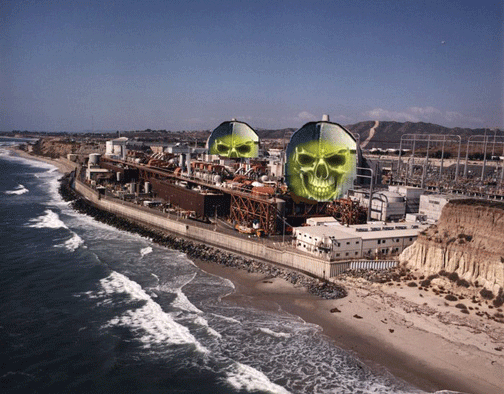
Hearing set for lawsuit aimed at stopping dismantlement of San Onofre nuclear plant, LA Times ROB NIKOLEWSKI SAN DIEGO UNION-TRIBUNE, JUNE 4, 2021 SAN DIEGO —
A June 16 court date has been set to hear a lawsuit filed by an advocacy group against the California Coastal Commission, seeking to stop dismantlement work at the San Onofre Nuclear Generating Station.
Los Angeles County Superior Court Judge Mitchell L. Beckloff will consider the petition by the Samuel Lawrence Foundation that argues the commission should not have granted a permit to Southern California Edison, the majority owner of the plant, to take down buildings and other infrastructure at the now-closed generating station, known as SONGS.
“The public interest is at risk, based on [the commission’s] decision,” said Chelsi Sparti, associate director of the Samuel Lawrence Foundation, based in Del Mar. “The waste is located right next to the ocean, [and] the economy, transportation, the environmental and natural resources that we have are at risk from the long-term storage of stranded radioactive waste.”…………
In October 2019, the commission on a 9-0 vote approved a permit for Edison to begin demolition work at the plant, which has not produced electricity since 2012. Dismantlement began in early 2020 and is expected to take about eight years to complete.
Before granting the permit, the commission required Edison to agree to a number of provisions, including establishing an enhanced inspection and maintenance program for the 123 stainless steel canisters filled with nuclear waste that sit in a pair of dry storage facilities at the north end of the plant.
The permit lasts 20 years and includes a condition that allows the commission by 2035 to revisit whether the dry storage site should be moved to another location in case of rising sea levels, earthquake risk, canister damage or other possible scenarios.
One of the major contentions in the lawsuit deals with what to do with a pair of wet storage pools at SONGS. Before going into canisters, the highly radioactive fuel rods were placed into pools 40 feet deep in order to cool………..
Some 3.55 million pounds of used-up nuclear fuel, or waste, remain at SONGS because the federal government has not opened a facility to deposit all the waste that has accumulated at commercial nuclear power plants across the country. About 80,000 metric tons has piled up at 121 sites in 35 states……………. https://www.latimes.com/california/story/2021-06-04/hearing-set-for-lawsuit-aimed-at-stopping-dismantlement-at-san-onofre-nuclear-plant
The USA-UK nuclear cabal

A toxic relationship that could destroy the world
The USA-UK nuclear cabal — Beyond Nuclear International The USA-UK nuclear cabal
May 30, 2021 by beyondnuclearinternational
A “special relationship” in nuclear collusion
By Leonard Eiger On March 16th the United Kingdom announced (in its Integrated Review of Security, Defence, Foreign Policy and Development titled Global Britain in a Competitive Age) that it will increase the limit on its nuclear arsenal for the first time in decades. Instead of maintaining a cap of 180 warheads (as it had previously stated), the UK will increase its stockpile cap to 260 warheads — a 40% increase. The review also broadens the role of nuclear weapons to include the possible use of nuclear weapons to address emerging technologies (cyber attacks). This is shocking and unacceptable! Indeed, it seems the British Empire is flexing its imperial muscles as it breaks away from the rest of Europe.
The announcement comes at a precarious time. A new nuclear arms race is brewing. The US and Russia, the two largest nuclear powers (with some 93 percent of global nuclear warheads) are failing to lead the world away from reliance on nuclear weapons, and other nations are following their lead. At a time when most nations are calling for an end to nuclear weapons (UN Treaty on the Prohibition of Nuclear Weapons), rather than setting a positive example and supporting the treaty, the UK is instead fanning the flames of proliferation. And, it is getting loads of help along the way.
Just prior to the announcement a spokesperson for the UK Ministry of Defence reiterated the longstanding claim that the “UK is committed to maintaining its independent nuclear deterrent, which exists to deter the most extreme threats to our national security and way of life.” The British have been claiming their nuclear weapons systems to be “independent” for so long that the world seems to have accepted this fraudulent claim. In fact, the UK’s nuclear forces are anything but independent, and there is ample evidence to disprove the governments claim. To more fully understand the situation, we need to study a bit of history.
Although the US declared its independence when the original 13 American colonies severed their political connections to Great Britain, the two countries have since found it mutually beneficial to develop a strong alliance; what has become known as the “Special Relationship,” an unofficial term used to describe certain aspects of their relationship including political, diplomatic, cultural, economic, and military.
And nowhere has their relationship been quite as special as is the case involving nuclear weapons. The two countries signed the Mutual Defence Agreement (MDA) in 1958, a secretly negotiated bilateral treaty on nuclear weapons cooperation under which both countries agreed to exchange classified information to develop their respective nuclear weapon systems.
The treaty permits “the transfer between the United States and the United Kingdom of classified information concerning atomic weapons; nuclear technology and controlled nuclear information; material and equipment for the development of defence plans; training of personnel; evaluation of potential enemy capability; development of delivery systems; and the research, development, and design of military reactors.”
The MDA was last amended in 2014. In 2018, officials from the UK and US met to celebrate the 60-year anniversary of the MDA. The official statement from the US State Department referred to “promoting peace to fighting terrorism” and “advancing each nations’ mutual understanding of the safety, security, and reliability of their respective nuclear weapon stockpiles,” while making no mention of the direct transfers of nuclear warheads and their delivery systems (missiles) currently deployed on British Trident submarines.
The MDA only came about after the UK developed its own thermonuclear weapons, and the US then agreed to supply delivery systems, and designs and nuclear material for British warheads. Both countries’ ballistic missile submarines are commonly referred to as “Trident” due to the missiles they both carry, which are the Trident II D5 submarine-launched ballistic missile manufactured by Lockheed Martin Aerospace, a US-based corporation.
The UK leases the Trident missiles, deployed on its four Trident submarines, from the US government. Those submarines return regularly to the US Trident submarine base in King’s Bay, Georgia, for the maintenance and replacement of the missiles. As of 2017, the UK paid an annual contribution of approximately $16.7 million towards the operations cost of Kings Bay.
Both the Trident missile’s navigation and guidance systems are the same on both US and UK versions, and utilize US software. The US Navy supplies weather and gravity data to both US and UK submarines, which is vital to ensuring missile accuracy. Both hardware and software for the fire control system (used to assign targets to warheads) are produced by US companies. The hardware is produced by General Dynamics, a US-based corporation.
All test launches of Trident missiles from British Trident submarines are conducted off the Florida coast and under US supervision. The test data is analyzed by the Applied Physics Laboratory (APL) at Johns Hopkins University and by the Charles Stark Draper Laboratories.
The UK’s warheads are what the UK calls “Holbrook”, and are mounted on Trident II D5 missiles carried on British Vanguard-class “Trident” nuclear submarines. The “Holbrook” thermonuclear warhead is nearly identical to the US W76 warhead deployed on those same Trident II D5 missiles on US OHIO-class “Trident” submarines. Is this a case of plagiarism or just an all-too cozy, mutually beneficial relationship between two nuclear-armed nations?
According to the British government, their nuclear warheads are designed, manufactured and maintained by the Atomic Weapons Establishment (AWE) in the UK. AWE has been managed since 2000 by AWE Management, of which US-based Lockheed Martin Corporation is a partner, holding a 51 percent stake in the operation. It was announced in late 2020 that the British government will regain direct control of operations and development of AWE as of June 2021.
A UK Ministry of Defence fact sheet states that their warheads are “designed and manufactured in the U.K.” However, a declassified U.S. Department of Energy (DOE) document obtained by the Federation of American Scientists (FAS) under the Freedom of Information Act directly links the warhead designs on U.S. and U.K. Trident missiles. Alas, the British nuclear warheads are not so British (if at all)……………
Looking into the future, both the US and UK are engaged in programs to build the next generation of ballistic missile submarines to replace their current fleets. Both new subs will incorporate the US-built Common Missile Compartment. There has been talk about a replacement missile for the D5, and a new warhead called the W93 is already being planned, and the British government is engaged in extensive lobbying for it.
The evidence is abundantly clear. The British Trident system is dependent on and, in many ways controlled by, the US in essentially every aspect. It is by no means an “independent nuclear deterrent,” even if you believe in deterrence theory. And this has deeply important meaning under international legal norms.
Article I of the Treaty on the Non-Proliferation of Nuclear Weapons (NPT), to which the US and UK are both signatories, explicitly prohibits the “transfer to any recipient whatsoever nuclear weapons or other nuclear explosive devices or control over such weapons or explosive devices directly, or indirectly…” Under international law the NPT should take precedence over the the US-UK mutual defence agreement, and therefore the agreement would be in violation of the NPT.
The US and UK have, for decades, undermined both the letter and intent of the NPT through their special nuclear relationship. They have found ways to make their nuclear arsenals more effective and continue to modernize in the name of deterrence and national security. And now, the UK has announced an increase in its nuclear warhead cap. While the UN and a number of countries have chimed in with grave concerns about the UK’s announcement, the US has been noticeably silent. Might the US be pondering such an increase? After all, aren’t treaties meant to be broken (as we saw in the prior US administration)?
sn’t it time to end the special nuclear relationship? Isn’t it time to re-think “deterrence” theory and “national security”? Isn’t it time to recognize that so long as nuclear weapons exist, humanity teeters on the brink of disaster?
And speaking of history, we need to learn the lessons of the past. We have come close to the nuclear precipice far too many times, and the (Doomsday) clock is still ticking. We can’t stop the Clock until we abolish nuclear weapons. Empires come and empires go, yet humanity has only one chance. As for the US and UK, it is time for citizens of both nations to come together to pressure our governments to end the special nuclear relationship, and sign and ratify the Treaty on the Prohibition of Nuclear Weapons, showing real leadership towards a world free of the threat of nuclear annihilation.
Leonard Eiger is a student and practitioner of nonviolence, working for the abolition of all nuclear weapons. He coordinates media and outreach for Ground Zero Center for Nonviolent Action, the Puget Sound Nuclear Weapon Free Zone and the NO To NEW TRIDENT Campaign.
Headline photo by Nicholas Raymond/Creative Commons/www.freestock.ca https://beyondnuclearinternational.org/2021/05/30/the-usa-uk-nuclear-cabal/
Another former Westinghouse executive pleads guilty to lying in South Carolina nuclear power scandal
3rd official to plead guilty in SC nuclear debacle, https://www.wistv.com/2021/05/24/rd-official-plead-guilty-sc-nuclear-debacle/ By Associated Press| May 24, 2021
COLUMBIA, S.C. (AP) – Court documents show a former official for the contractor hired to build two South Carolina nuclear reactors that were never completed will plead guilty to lying to federal authorities.
Carl Churchman was the Westinghouse Electric Co. project director for the failed plant that cost ratepayers and investors billions of dollars.
Authorities say Churchman lied about whether he communicated with utility executives on completion dates for the reactors.
Utility executives swore construction was on track to keep regulators approving rate increases and maintain support from investors, even though the project fell behind.
Two top-level executives have already pleaded guilty in the multi-year federal fraud investigation.
Discharging Fukushima radioactive waste water to the ocean would violate Japan’s legal and environmental obligations
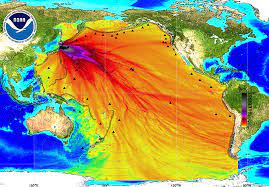
The Legal Case Against Japan’s Fukushima Wastewater Decision, https://thediplomat.com/2021/05/the-legal-case-against-japans-fukushima-wastewater-decision/
The proposed discharge of wastewater from the Fukushima nuclear plant into the Pacific Ocean would violate Japan’s legal and environmental obligations. By Xiuxiu Zhang, Jeffrey Thaler, and Danning Zhu, May 21, 2021
Since the devastating March 2011 Japanese earthquake and tsunami, which damaged the Fukushima Daiichi nuclear power plant, 1.25 million tons of seawater have been pumped through the damaged nuclear units to prevent the melted fuel rods in three damaged reactors from overheating. The contaminated water has been stored in more than 1,000 steel tanks on site. But in April 2021, the Japanese government announced that it would, beginning in 2023 and for decades thereafter, discharge all of the treated wastewater into the Pacific Ocean as part of the plant’s decommissioning process.
Many countries that share a sea border with Japan (especially China, South Korea, and Russia), as well as domestic fishing and export interests, have raised a variety of objections and concerns. Yet with little fanfare in American media, the United States – which has both Alaska and Hawaii at risk – has supported Japan’s plan. The ecological and human risks at stake are potentially huge: The seawater may contain radioactive tritium, strontium-90, and C-14 (the latter known to bioaccumulate in marine ecosystems). Yet international political positioning seems to be playing a greater role than environmental concerns in national responses. Could that change before 2023?
A variety of international treaties, conventions, and agreements, as well as fundamental environmental protection principles, are relevant to the discharge of wastewater from Fukushima.
In 1958, the first United Nations Conference on the Law of Sea adopted the Convention on the High Seas in Geneva, which became effective on September 30, 1962. Pursuant to Article 25 of the Convention, “Every State shall take measures to prevent pollution of the seas from the dumping of radioactive waste, taking into account any standards and regulations which may be formulated by the competent international organizations.” Also in 1958, the Resolution on Pollution of the High Seas by Radioactive Materials was adopted by the first United Nations Conference on the Law of Sea. One of its recommendations was that the International Atomic Energy Agency (IAEA), in consultation with existing groups and established organs having acknowledged competence in the field of radiological protection, should pursue whatever studies and take whatever action is necessary to assist states in controlling the discharge or release of radioactive materials to the sea, in promulgating standards, and in drawing up internationally acceptable regulations to prevent pollution of the sea by radioactive materials in amounts that would adversely affect people and marine resources.
The 1996 London Protocol, signed by many nations, prohibited the dumping of all wastes and other materials is prohibited except certain non-toxic materials that do not contain levels of radioactivity greater than de minimis (exempt) concentrations as defined by the IAEA. In 1999, the IAEA defined “de minimis” risk levels in terms of those of “no regulatory concern” and based on practices and sources that are “inherently safe.”
Last and not least, the United Nations Convention on the Law of the Sea (UNCLOS) is an international treaty ratified by over 160 countries, including China, South Korea, and Japan – but not the United States. UNCLOS stipulates that the ocean is the common heritage of mankind. Pursuant to Article 192, all states have the obligation to protect and preserve the marine environment. UNCLOS also established a complete legal framework that regulates all marine areas, the use of the ocean, and marine resources, as well as the protection and maintenance of the marine environment, marine scientific research, and the development and transfer of marine technology.
Moreover, Article 194 of UNCLOS requires that member countries must: 1) take, individually or jointly as appropriate, all practicable measures necessary to prevent, reduce and control pollution of the marine environment from any source; and 2) take all measures necessary to ensure that activities under their jurisdiction or control are so conducted as not to cause damage by pollution to other states and their environment, and that pollution arising from incidents or activities under their jurisdiction or control does not spread beyond the areas where they exercise sovereign rights in accordance with this Convention. Last, UNCLOS Article 195 specifies that countries shall act so as not to transfer, directly or indirectly, damage or hazards from one area to another or transform one type of pollution into another.
In light of the very clear obligations set forth in UNCLOS and the other conventions, how is the potential Fukushima nuclear wastewater discharging being viewed by neighboring countries?
Both the United States and the IAEA have voiced support for Japan’s announced plans for the Fukushima discharge plan. The IAEA said it would provide technical support for what it deemed to be a feasible means of disposal of the contaminated seawater. A week later the Biden administration voiced its support for what it said was a plan meeting international safety standard.
However, many others did not share those views, both within and outside of Japan. Domestic fishing, environmental, public health, and export interests objected both to the process leading up to the announcement and to the plan itself. They viewed the risks as being too great, and the added pollutant burden to the Pacific Ocean to be too much and with far-ranging scope affecting more than just Asia.
Indeed, calculations by Germany’s Geomar Helmholtz Center for Ocean Research predict that once the wastewater from the Fukushima nuclear power plant is discharged into the sea, radioactive materials will spread to most of the Pacific’s marine life and ecology within 57 days.
Neighboring countries such as China, South Korea, and Russia all voiced vigorous concerns, and warned that imports of Japanese seafood and agricultural products could be restricted – and that consumer confidence in purchasing such goods would be damaged. South Korea has threatened to take the issue to international judicial tribunals for review. How the dispute would be resolved pursuant either to the International Court of Justice, or to one of the various Conventions, remains to be seen. But in the meantime, there are some fundamental environmental protection principles and agreements that the United States in particular seems to be overlooking.
First, the treatment of Fukushima nuclear wastewater should give priority to the alternatives that have the least impact on the marine environment. The precautionary principle is the first principle of environmental law all over the world. Environmental policies and environmental laws should not just be after-the-damage-happens responses, but also should prevent hazards and harms to the environment and human organisms before they occur.
Under the precautionary principle, pollution avoidance is superior to pollution reduction. Avoiding the discharge of Fukushima nuclear wastewater should be superior to behaviors that comply with certain standards but can still cause environmental damage. Although the Fukushima wastewater is treated, the environmental impact of treated wastewater on marine life and ecological environment should be evaluated by marine, biological, and nuclear experts from various countries bordering the Pacific Ocean. In addition, the discharge of Fukushima nuclear wastewater is unprecedentedly huge, and the half-life of some of the radioactive elements means they will continue to pose a threat to the marine environment and marine life for decades. The materials are neither de minimis, nor “inherently safe.” Radioactive materials will also be transferred to the terrestrial environment and humans through marine life and other channels.
A second environmental principle is that of environmental hazard prevention or mitigation. It is akin to a precept to “do no harm” to the health of people, wildlife, fisheries, and natural resources. The ultimate goal is to ensure the protection of existing environmental quality and the possibility of future improvement. The environment must not be further deteriorated, and if pollution damage has occurred, it must be restored. Given that the Fukushima wastewater still exceeds Japanese discharge standards, it is impossible to say that in just two years the discharge will not cause damage to sea life of the Pacific Ocean.
Third, the principle of equity is formed by the concept of ecological compromise, which is concerned primarily with considering the interests of all potentially impacted parties and resources – both international and domestic. The principle of equity is essentially a balancing of interests, which extends to international environmental protection issues and is closely related to the principle of cooperation articulated in UNCLOS and other agreements. Japan’s discharge of nuclear wastewater is not only related to the life and health of its residents and the safety of its ecological environment, but also to the global marine environment. It will impact neighboring countries and even the global ecological environment and people’s rights to life and health. In essence, Japan is placing the costs of its nuclear waste upon other peoples, and upon the Pacific marine life, which has no voice of its own.
UNCLOS stipulates that the ocean is the common heritage of humanity, and that all countries have the obligation to protect and preserve the marine environment. Japan has an international obligation to ensure that the activities under its jurisdiction or control do not cause pollution damage to other countries and their environment, and to ensure that the pollution caused by events or activities within its jurisdiction or control does not extend beyond the area where it exercises sovereign rights in accordance with this Convention. Other countries may pursue remedies through either the International Tribunal for the Law of the Sea, the International Court of Justice, an arbitration tribunal organized in accordance with Annex VII of the Maritime Convention, or a special arbitration tribunal organized in accordance with Annex VIII of the Maritime Convention.
Even the United States, which is not a signatory to UNCLOS, might have some recourse should it change its political position. For example, in mid-2018 the U.S. Environmental Protection Agency and the Japan Atomic Energy Agency executed a Letter of Intent to cooperate “in the field of radiation protection.” As part of that agreement, the two agencies were to share radiation risk assessment models and related data. But, interestingly, the two countries also agreed to share “information on the uncertainty of radiation risk assessment, including the sharing of a report by the EPA on the uncertainty of EPA radionuclide cancer risk coefficients.” Given such acknowledged uncertainty, it would seem at least premature for the U.S. to be opining that the discharge of over 1 million gallons of heavily contaminated nuclear-radiated seawater is safe and poses no risks to human or other life. Indeed, back in 1975 the Japanese and American governments signed an Agreement “on cooperation in the field of environmental protection” in which both countries acknowledged “the responsibilities of each Government for the protection and improvement of the global environment.”
That “global environment” extends beyond Japan’s territorial waters, and any unilateral decision by Japan to discharge pollutants that could materially harm the environment across a significant part of non-Japanese waters would seem to be at odds with its responsibilities agreed to the international agreements we have summarized herein, as well as with the fundamental principles of and duties imposed by environmental protection for current and future generations of human and non-human life on our planet.
1 This Month

To see nuclear-related stories in greater depth and intensity – go to https://nuclearinformation.wordpress.com
-
Archives
- September 2026 (194)
- August 2026 (330)
- July 2026 (355)
- June 2026 (287)
- May 2026 (306)
- April 2026 (356)
- March 2026 (251)
- February 2026 (267)
- January 2026 (308)
- December 2025 (358)
- November 2025 (359)
- October 2025 (375)
-
Categories
- 1
- 1 NUCLEAR ISSUES
- business and costs
- climate change
- culture and arts
- ENERGY
- environment
- health
- history
- indigenous issues
- Legal
- marketing of nuclear
- media
- opposition to nuclear
- PERSONAL STORIES
- politics
- politics international
- Religion and ethics
- safety
- secrets,lies and civil liberties
- spinbuster
- technology
- Uranium
- wastes
- weapons and war
- Women
- 2 WORLD
- ACTION
- AFRICA
- Atrocities
- AUSTRALIA
- Christina's notes
- Christina's themes
- culture and arts
- Events
- Fuk 2022
- Fuk 2023
- Fukushima 2017
- Fukushima 2018
- fukushima 2019
- Fukushima 2020
- Fukushima 2021
- general
- global warming
- Humour (God we need it)
- Nuclear
- RARE EARTHS
- Reference
- resources – print
- Resources -audiovicual
- Weekly Newsletter
- World
- World Nuclear
- YouTube
-
RSS
Entries RSS
Comments RSS
 nuclear-news