Boris Johnson’s plan for more nuclear weapons in Scotland ‘breaks international law’

Boris Johnson’s plan for more nuclear weapons in Scotland ‘breaks international law’,The National, By Gregor Young 19 May, 21 BORIS Johnson’s plan to increase the UK’s stockpile of nuclear warheads would breach international law, experts have warned.
The Tory government announced in March that it wants to raise the legal limit on the number of the weapons of mass destruction, which would be available to its submarine fleet at Faslane. Currently, the cap is set at 180, but the new defence review revised that up to 260.
Downing Street will also send more troops abroad “more often and for longer” as part of the £24 billion hike in defence spending.
Scotland’s Justice Secretary previously described the proposals as “utterly unacceptable”, while Washington think tank, the Arms Control Association (ACA), said they were inconsistent with the UK Government’s prior pledges under the 1968 Nuclear Non-Proliferation Treaty (NPT).
That conclusion has now been backed by two academics at the London School of Economics who were commissioned to examine Johnson’s pledge by the Campaign for Nuclear Disarmament (CND), the Record has reported.
Led by Professor Christine Chinkin, a long-time consultant for the UN, and Dr Louise Arimatsu, a former fellow at the NATO Cyber Defense Centre, the legal report finds the increase constitutes a breach of article six of the NPT treaty.
CND general secretary Kate Hudson told the Record: “The increase in the UK’s nuclear arsenal has been exposed to intense criticism nationally and internationally, including from the United Nations. Thanks to the work of highly respected academic experts, we now know it is illegal under international law.
“Everything points to the decision costing tens of billions of pounds. During this pandemic, there are other urgent uses for public money.
“The decision breaks with the gradual nuclear reductions implemented by successive governments going back nearly 30 years and is at odds with the decision by Presidents Biden and Putin to continue bilateral nuclear reductions.”……………https://www.thenational.scot/news/19309984.boris-johnsons-plan-nuclear-weapons-scotland-breaks-international-law/
Whistleblower can’t sue U.S.Dept of Labor, because it has ‘sovereign immunity’
Federal Nuclear Engineer Loses Whistleblower Retaliation Appeal, Bloomberg Law, May 1, 2021,
- Safety reports on nuclear plant allegedly cost him promotions
- Energy Reorganization Act doesn’t allow suit against government
A Nuclear Regulatory Commission engineer who blew the whistle on health and safety risks at a nuclear power plant can’t sue the Department of Labor for alleged retaliation because it’s shielded by sovereign immunity, the Fourth Circuit said Friday.
Michael Peck worked as senior resident inspector at the Diablo Canyon Nuclear Power Plant. After he left the plant, Peck took three actions regarding concerns he had with safety conditions there—he filed a formal “differing professional opinion” with the NRC; sent a letter to the Senate Committee on Environment and Public Works, which oversees the NRC; and provided testimony to the…… (subscribers only) https://news.bloomberglaw.com/us-law-week/federal-nuclear-engineer-loses-whistleblower-retaliation-appeal
Legal and other problems for Japan, with growing opposition to its plan for dumping Fukushima waste-water in the ocean
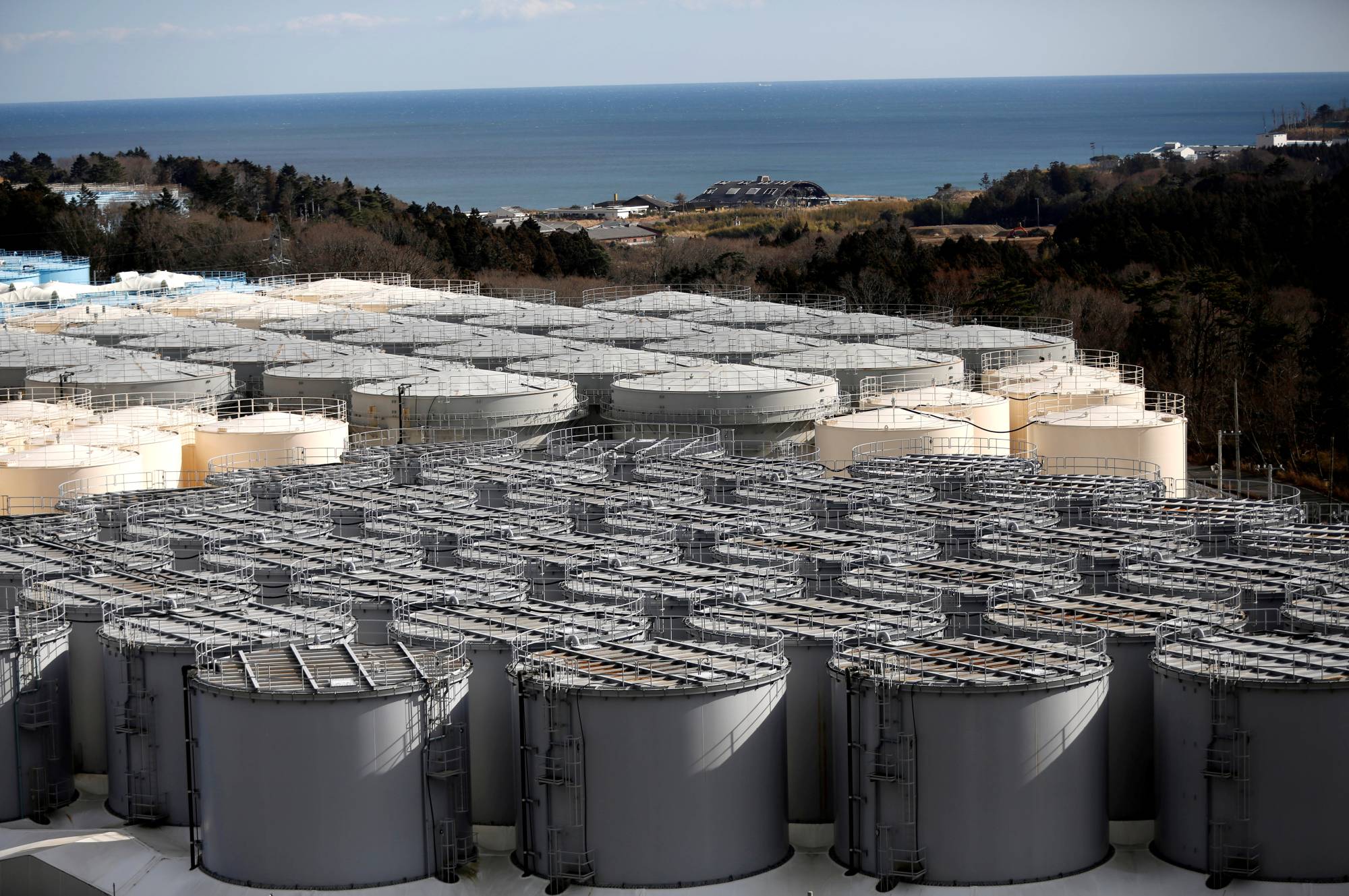
Toxic reaction to Japan’s
Fukushima water dump, https://www.lowyinstitute.org/the-interpreter/toxic-reaction-japan-s-fukushima-water-dump ARISTYO RIZKA DARMAWAN, 21 Apr 21,
Experts insist the release of treated radioactive water is not dangerous.
Legal challenges might find otherwise.
The Netflix documentary “Seaspiracy” caused a stir following its release last month, both for highlighting the serious damage human activities are causing the world’s oceans – whether from marine debris or whale hunting – and also for claims that the program features misleading statements and statistics.
But the controversy pales against the announcement last week by the Japanese government that it plans in two years to release treated radioactive water into the Pacific Ocean.
The contaminated water has been held in tanks since an earthquake and subsequent tsunami damaged the Fukushima nuclear reactor in 2011. With storage capacity predicted to run out late next year, Japan has decided to press ahead with long-speculated plans to dump treated wastewater into the sea.
Even though the Japanese government, International Atomic Energy Agency and some experts have argued that the release of the water is not dangerous and will do no harm to the ocean, there are good reasons to be concerned about the potential for environmental damage. Local Japanese, South Korean and Taiwanese fishing industries have protested the move, as have communities in the Pacific Islands. China has been scathing, with one recent op-ed in the state-run China Daily declaring “Japan cannot use the Pacific as its sewer”. The United States has been more understanding in its comments, with Secretary of State Antony Blinken praising Japan for “transparent efforts” in its decision.
But Japan may also be challenged under international law, and South Korea has already threatened legal action under international dispute settlement mechanisms.
There are at least two international treaties that regulate or ban the dumping of waste at sea: the United Nations Convention on the law of the Sea (UNCLOS) and the 1996 Protocol to the Convention on the Prevention of Marine Pollution by Dumping of Wastes and Other Matter, 1972, generally referred to as the London Convention and Protocol.
UNCLOS stipulates that all parties shall cooperate in protecting the marine environment and under Article 210 explicitly requires “laws, regulations and measures shall ensure that pollution by dumping is not carried out without the permission of the competent authorities of States”.
That terminology will be debated, whether it be over the notion of “competent authorities” or indeed whether Japan’s plan amounts to “dumping”. UNCLOS defines the terminology of dumping as “any deliberate disposal at sea of wastes or other matter from vessels, aircraft, platforms or other man-made structures at sea”. Given that the proposal is to release water held on land, this may not be covered by the convention.
It may even be argued that dumping at sea is allowable under Article 8 of the London Convention and Protocol. The article stipulates that dumping is allowed during an emergency, with the provision that a party “shall consult any other country or countries that are likely to be affected”. That may explain the “transparency” of Japan providing two years notice of its intended action. Yet in this case, it is questionable whether running out of storage capacity can be considered an emergency, given the article also stipulates such action is permissible only “in emergencies posing an unacceptable threat to human health, safety, or the marine environment and admitting of no other feasible solution”.
Regardless of how such disputes play out, however, it is also notable that neither UNCLOS nor the London Convention and Protocol have strong sanction mechanisms. Enforcement relies on either coastal states or flag states.
Neighbouring countries have reacted strongly, as have international environmental NGOs, including Greenpeace. Boycotts and bans on Japanese fisheries products have already been mooted. Unless another solution is found, Japan’s plan will continue to face a mounting tide of opposition.
Decision on Fukushima waste water should be in consultation with international agencies, not just a decision by Japan alone.
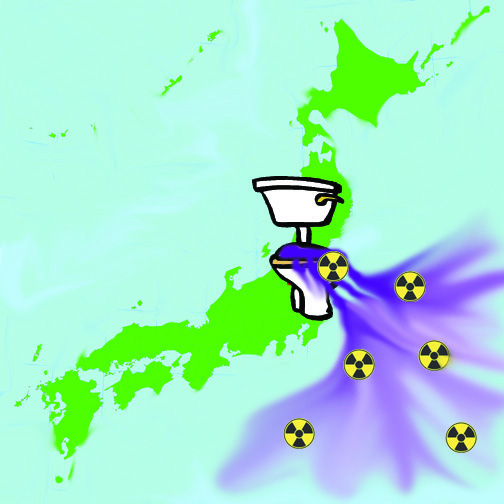
Disposal of Fukushima nuclear wastewater should be assessed under framework of intl agencies, not let world pay: FM, By Global Times, 21 Apr 21, China’s Foreign Ministry said on Wednesday the disposal of Fukushima nuclear wastewater should be assessed and discussed under the framework of international agencies including the UN, the WHO, and the IAEA, urging the Japanese government to correct its irresponsible decision to dump of the wastewater to the ocean and avoid involving people all around the world in paying for its wrongdoings.
The remarks came after South Korean Foreign Minister Chung Eui-yong expressed opposition to the move, and said on Tuesday that Seoul will work closely with international agencies to deal with Japan.
At a routine press conference, China’s Foreign Ministry spokesperson Wang Wenbin stressed that before dumping nuclear-contaminated water, there should be a discussion with neighboring countries and an evaluation within the framework of international agencies including the United Nations, the World Health Organization, and the International Atomic Energy Agency.
Wang added that Japan’s decision to dump the nuclear-contaminated water is not only opaque, unscientific, unlawful, irresponsible and unethical, but also at risk of being condemned by the world.
“A ban has been placed on black scorpionfish caught off Fukushima waters from entering markets due to the detection of excessive radioactive materials. And this is the second time that fish have been found with excessive radioactive materials in Fukushima waters since February,” said Wang.
All of these signs point to the fact that disposal of radionuclides is complicated and difficult, noted Wang, adding that the Fukushima nuclear power plant accident has been bringing harm to its surroundings for the past decade since it happened. ……..
Wang said that the methods of the wastewater disposal concern the safety of the Asia-Pacific region, the global ecological environment, and the lives and the health of people in all countries. The data should be evaluated and consultations held with all parties whose interests are bound to it.
“We noticed that Japan’s Tokyo Electric Power Company intends to submit a progress plan for wastewater disposal in May. We express strong opposition and serious concern to the matter as Japan unilaterally pushes forward the plan without consultation with the international community especially neighboring countries,” Wang said.
“Please don’t let people all over the world pay for Japan’s wrongdoings,” he added. https://www.globaltimes.cn/page/202104/1221712.shtml
Ratepayer advocate calls on New Jersey Supreme Court to reverse decision allowing subsidy to nuclear power
Nuclear subsidy gets new challenge, NJ Spotlight TOM JOHNSON, ENERGY/ENVIRONMENT WRITER | APRIL 14, 2021 | ENERGY & ENVIRONMENT, NJ ratepayer advocate asks Supreme Court to consider decision on $300 million subsidy. Regulators are poised to add more,
New Jersey Rate Counsel Director Stefanie Brand is asking the New Jersey Supreme Court to reverse last month’s appellate court decision upholding the award of hundreds of millions in ratepayer subsidies to the state’s nuclear power plants.
In a notice of a petition for certification, the Division of Rate Counsel argued the lower court erred when it upheld the New Jersey Board of Public Utilities’ decision in 2019 to approve $300 million in new surcharges on customers’ gas and electric bills. Without the subsidies, Public Service Enterprise Group, whose subsidiary operates three nuclear units in South Jersey, has threatened to close the plants because they are no longer profitable.
If the high court decides to review the case, it could result in the justices taking up the case at roughly the same time as the BPU, which is scheduled to decide whether the plants — Hope Creek, Salem I and Salem II — qualify for additional subsidies from ratepayers for another three years. The BPU is expected to rule on those applications on April 27. The first subsidy added about $70 a year to what residential customers pay for electricity……… https://www.njspotlight.com/2021/04/nj-rate-counsel-director-stefanie-brand-seeks-supreme-court-reversal-300-million-nuclear-subsidy-pseg/
Japanese government and Tepco must pay monthly compensation to 3550 Fukushima residents displaced due to continued radioactivity.
International Bar Association 8th April 2021, In mid-February, the Tokyo High Court ruled that the Japanese government and nuclear plant operator Tokyo Electric Power Company (Tepco) should pay a total of JPY 278m (approximately $2.6m) in damages to a group of survivors of the 2011 Fukushima nuclear disaster.
The ruling came ahead of the ten-year anniversary of the major Tohoku earthquake, which killed and displaced thousands of people. The tsunami caused by the earthquake led to the meltdown of three nuclear reactors at the Fukushima Daiichi Nuclear Power Plant, operated by Tepco.
In September 2020, the Sendai High Court ordered the state and the plant operator to pay approximately $9.5m in
damages in total to 3,550 plaintiffs, finding both negligent for not taking measures to prevent the disaster. The plaintiffs had sought $265m in the form of monthly compensation of $470 each until radiation in the affected region subsided.
https://www.ibanet.org/Article/NewDetail.aspx?ArticleUid=1462911D-400D-422C-ABDA-99D4D5BF78A8
As the Climate Crisis Grows, a Movement Gathers to Make ‘Ecocide’ an International Crime Against the Environment

As the Climate Crisis Grows, a Movement Gathers to Make ‘Ecocide’ an International Crime Against the Environment InsideClimateNews, 7 Apr 21, International lawyers, environmentalists and a growing number of world leaders say “ecocide”—widespread destruction of the environment—would serve as a “moral red line” for the planet.By Nicholas Kusnetz, Katie Surma and Yuliya TalmazanApril 7, 2021 The Fifth Crime: First in a continuing series with NBC News about the campaign to make “ecocide” an international crime.
In 1948, after Nazi Germany exterminated millions of Jews and other minorities during World War II, the United Nations adopted a convention establishing a new crime so heinous it demanded collective action. Genocide, the nations declared, was “condemned by the civilized world” and justified intervention in the affairs of sovereign states.
Now, a small but growing number of world leaders including Pope Francis and French President Emmanuel Macron have begun citing an offense they say poses a similar threat to humanity and remains beyond the reach of existing legal conventions: ecocide, or widespread destruction of the environment.
The Pope describes ecocide as “the massive contamination of air, land and water,” or “any action capable of producing an ecological disaster,” and has proposed making it a sin for Catholics.
The Pontiff has also endorsed a campaign by environmental activists and legal scholars to make ecocide the fifth crime before the International Criminal Court in The Hague as a legal deterrent to the kinds of far-reaching environmental damage that are driving mass extinction, ecological collapse and climate change. The monumental step, which faces a long road of global debate, would mean political leaders and corporate executives could face charges and imprisonment for “ecocidal” acts.
To make their case, advocates point to the Amazon, where fires raged out of control in 2019, and where the rainforest may now be so degraded it is spewing more climate-warming gases than it draws in. At the poles, human activity is thawing a frozen Arctic and destabilizing the ice sheets of Greenland and Antarctica.
Across the globe, climate change is disrupting the reliable seasonal rhythms that have sustained human life for millenia, while hurricanes, floods and other climate-driven disasters have forced more than 10 million people from their homes in the last six months. Fossil fuel pollution has killed 9 million people annually in recent years, according to a study in Environmental Research, more than tuberculosis, malaria and AIDS combined.
One in four mammals are threatened with extinction. For amphibians, it’s four in 10.
Damage to nature has become so extensive and widespread around the world that many environmentalists speak of ecocide to describe numerous environmentally devastated hot spots:
- Chernobyl, the Ukrainian nuclear plant that exploded in 1986 and left the now-deserted area dangerously radioactive;
- The tar sands of northern Canada, where toxic waste pits and strip mines have replaced 400 square miles of boreal forest and boglands;
- The Gulf of Mexico, site of the Deepwater Horizon disaster that killed 11 people, spilled at least 168 million gallons of crude oil into the ocean over 87 days and killed countless marine mammals, sea turtles, fish and migratory birds;
- The Amazon, where rapid deforestation encouraged by Brazilian President Jair Bolsonaro prompted Joe Biden, during his presidential campaign, to propose a $20 billion rescue plan and threaten the Brazilian leader with economic sanctions.
The campaign to criminalize ecocide is now moving from the fringe of advocacy into global diplomacy, pushed by a growing recognition among advocates and many political leaders that climate change and environmental causes are tied inherently to human rights and social justice.
The effort remains a long shot and is at least years from fruition, international and environmental law experts say. Advocates will have to navigate political tensions over whether national governments or the international community have ultimate control over natural resources. And they’ll likely face opposition from countries with high carbon emissions and deep ties to industrial development. …………………
Into the Mainstream
While the campaign for an ecocide law could take years—if it is successful at all—advocates say the effort could bear fruit much sooner: The ecocide campaign has thrust the concept into public discussion.
Mehta doesn’t expect the campaign to catch fire in the United States, but after four years of President Donald Trump, she’s heartened by the arrival of John Kerry, Biden’s special climate envoy. “We don’t expect the U.S. to join the ICC any time soon, but that said, the conversation around ecocide itself, we don’t see any reason why it can’t start happening in the U.S.,” she said.
The State Department released a statement saying that the U.S. “regularly engages with other countries” on “the importance of preventing environmental destruction during armed conflict,” but added, “We do not comment on the details of our communications with foreign governments.”
Mehta’s campaign is also part of a wider effort by activists who have been looking to the courts to force more aggressive action on climate change.
As of July 1, 2020, at least 1,550 climate change cases have been filed in 38 countries, according to a U.N. report.
In the landmark Urgenda case, a Dutch court ruled in 2015 that the government had acted negligently by failing to take aggressive enough action to limit its greenhouse gas emissions. The decision, upheld by the Supreme Court of the Netherlands in 2019, ordered the government to hit specific emissions reductions targets and sparked a series of similar lawsuits in other countries………….. https://insideclimatenews.org/news/07042021/climate-crisis-ecocide-vanuatu-the-fifth-crime/
Ohio’s Electric Power Association happy to see the end of customer-funded nuclear subsidies
EPSA expresses support for Ohio’s end of customer-funded nuclear subsidies, https://dailyenergyinsider.com/news/29767-epsa-expresses-support-for-ohios-end-of-customer-funded-nuclear-subsidies/?amp Chris Galford, With Gov. Mike DeWine’s approval last week, Ohio House Bill 128 officially put an end to nuclear energy subsidies in the state and amended existing law to better benefit solar resources instead, earning praise from the Electric Power Supply Association (EPSA).
Specifically, H.B. 128 took aim at the provisions of another bill, H.B. 6, from the last General Assembly.
“Today is a long-awaited day for Ohio families and businesses,” Todd Snitchler, head of the EPSA, said. “The nuclear subsidies included in H.B. 6 were unnecessary and unjustified, and only passed due to the alleged unprecedented corruption in the legislative process and referendum effort. The H.B. 6 debacle shows that politically motivated efforts to subsidize favored energy resources at the behest of powerful and well-funded interests invites malfeasance, undermines competition and innovation, and drives up costs for consumers without ensuring better energy solutions for those paying the bill.”
H.B. 6 had, at the time, been widely promoted by FirstEnergy Corp. and FirstEnergy Solutions. It categorized nuclear power alongside other renewable energy sources. It allowed providers to draw credits for each megawatt hour of electricity reported and to draw from a $20 million annual disbursement fund for renewable sources, among other things.
The EPSA staunchly opposed that fact, and even now, Snitchler added that the rest of H.B. 6 should be taken up by the Legislature and resolved. However, the national trade association did call the current moves a win for fair market competition and consumer choice.
H.B. 128 was sponsored by state Reps. Jim Hoops (R-Napoleon) and Dick Stein (R-Norwalk)
Need to establish compensation schemes for future nuclear accidents
 A Fukushima lesson: Victim compensation schemes need updating, Bulletin of the Atomic Scientists , By Hirokazu Miyazaki | March 10, 2021 At the 10th anniversary of the devastating earthquake and tsunami that set off a meltdown at Tokyo Electric Power Company’s Fukushima Daiichi nuclear power plant, it is time to revisit the laws that govern compensation for victims of such disasters. A Fukushima lesson: Victim compensation schemes need updating, Bulletin of the Atomic Scientists , By Hirokazu Miyazaki | March 10, 2021 At the 10th anniversary of the devastating earthquake and tsunami that set off a meltdown at Tokyo Electric Power Company’s Fukushima Daiichi nuclear power plant, it is time to revisit the laws that govern compensation for victims of such disasters.
Fortunately, major nuclear accidents are rare. To date, only Fukushima and the 1986 Chernobyl disaster in Russia are rated level 7 “major” accidents by the International Atomic Energy Agency. But given the potential for nuclear power generation to expand, accidents of various levels of severity could also increase in frequency. ……….. expanding protection for victims, including the amount and scope of compensation they can receive, should become an international priority for the industry, policymakers, and global nuclear organizations. As my colleagues and I who are part of the Meridian 180 Global Working Group on Nuclear Energy have found, domestic laws and international conventions around nuclear power and compensation for victims of accidents are insufficient and need to be revisited. These laws and protocols were designed, at least originally, to promote nuclear energy and protect the interests of the nuclear power industry. Given the infrequency of major accidents, the laws and protocols have not been tested very often. The laws limit the liability faced by nuclear power plant operators and manufacturers and the amount of compensation paid to victims. As a result, investors can pursue nuclear energy projects without fear of a potentially significant burden to compensate victims if a major accident were to occur. But the potential for accidents remains. Rather than assume they can be prevented, we must prepare for them—not only with emergency plans and safety protocols, but also with laws that protect and compensate the victims. Compensation claims remain unresolved. The Chernobyl disaster did lead to some reform of international and domestic laws to strengthen victim protections. But since Fukushima, few regulatory policy changes have been enacted, inside or outside Japan, and Fukushima damage compensation claims remain unresolved. Among the victims in Fukushima Prefecture are thousands of local residents who faced losses — of their homes, communities, ancestral homelands, and day-to-day life activities. Although not directly attributable, the deaths of more than 1,500 people have been linked to physical and mental stresses related to the evacuation after the nuclear reactor meltdowns. Tokyo Electric Power Company has paid more than 9.7 trillion yen (or approximately $92 billion) to nuclear accident victims, the largest damage payout ever made to such victims and among the highest (if not the highest) paid in any industrial disaster. But dissatisfaction and unsettled claims remain. Some have not been compensated for losses because their residences were outside mandatory evacuation zones. Nearly 30 collective lawsuits brought against Tokyo Electric Power Company and the Japanese government are pending. Three goals for deliberative conversation. Fair treatment and compensation for victims and those impacted by nuclear accidents can best be achieved through a deliberative conversation that is anticipatory, participatory, and transnational:
|
|
Nuclear workers plagued by leukaemia, cancers and other illnesses
Some workers developed cancer, leukemia and other illnesses. The same held true for workers at other nuclear facilities across the nation.
The number of potentially eligible workers across the nation is uncertain. Likewise, the number of employees potentially affected at West Valley could be in the thousands when accounting for temporary workers.
“This was particularly troubling if the same workers were hired repeatedly as temporaries and received high doses each time,”
In addition, the exposure of growing numbers of individuals increased the possibility of genetic consequences for the entire population.”
 Cancer plagues West Valley nuke workers https://www.investigativepost.org/2021/03/01/cancer-plagues-west-valley-nuke-workers/
“What we were doing was insane. We were dealing with so much radiation,” he told Investigative Post from his home in New Hampshire.
“I’ve got absolutely no joints left in my knees — my knees are gone, my ankles are gone and my hips are gone,” he said.
“I wonder if it’s from working in that bathtub full of radiation.”
Pyles was one of about 200 full-time employees who operated the former Nuclear Fuel Services reprocessing facility five decades ago in the hamlet of West Valley, where the company partnered with the federal government to recycle used radioactive fuel. Other workers were hired to contain and dispose of the dangerous waste the operation left behind.
Some workers developed cancer, leukemia and other illnesses. The same held true for workers at other nuclear facilities across the nation. As a result, Congress established the Energy Employees Occupational Illness and Compensation Program in 2000.
An Investigative Post review of the program found the government has paid $20.3 million over the last two decades in cases involving at least 59 people who worked at the West Valley site.
In all, individuals have submitted claims involving 280 employees who worked at the bygone reprocessing facility or during the ongoing $3.1 billion taxpayer-funded cleanup. An undetermined number of claims have been denied; the rest are being adjudicated.
Pyles said he was unaware of the program. He isn’t alone.
The Department of Labor’s Office of the Ombudsman has repeatedly criticized outreach efforts in its annual oversight reports. Most of it has been in the form of events held near former sites. Given the passage of time and people’s movement, reaching more eligible workers is a challenge.
The workforce at West Valley involved more than full-timers. About 1,000 temporary laborers were hired by the company in any given year, according to government and media reports from the time.
The use of temporary workers was a common labor practice at the time, but few operations needed to “raise quite so large an army” as Nuclear Fuel Services, according to a Science Magazine report from the era.
The industry had a nickname for them: “sponges.”
They were hired to “absorb radiation to do simple tasks,” according to Dr. Marvin Resnikoff, a radiological waste consultant who co-authored a study of West Valley.
While working at a site like West Valley does not guarantee later illnesses or genetic complications for offspring, each exposure to radiation increases the likelihood of cancer, Resnikoff said.
“It’s what I guess I would call a meat grinder,” he said.
Exposure to radiation
At its groundbreaking in 1963, the Nuclear Fuel Services reprocessing facility was thought to be a harbinger of a coming economic transformation. It closed in less than a decade, however.
Through six years of operation, at least 36 individuals in 13 incidents were exposed to “excessive concentrations” of radioactivity, according to a federal consultant’s report. Nevertheless, government officials at the time reported “no significant improvement in exposure controls or radiological safety conditions.”
The plant opened in the spring of 1966. Used fuel rods, thousands of which are assembled to power a nuclear reactor core, were transported to the plant by rail and truck. Upon arrival, containers were submerged in a 45-foot-deep cooling pool of demineralized water.
The fuel rods were then cut open, chopped up and placed in an acid bath. The solvent separated the used fuel from the reusable uranium and plutonium, which was collected for resale. The radioactive byproduct was pumped into underground tanks for storage.
The plant had handled 630 tons of fuel and produced 660,0000 gallons of liquid waste by 1972, when it was shut down in anticipation of making improvements to increase capacity and meet new regulatory standards.
That’s when Pyles quit.
The former lab supervisor said he was upset at management’s inaction concerning safety issues. Radioactive dust migrated through the ventilation system and accumulated in ducts, federal records said. A single duct was a “primary source of radiation” in the plant on three levels.
Pyles and coworkers absorbed radiation from that duct for five years, he said. They recognized that it posed a danger, but he said management ignored repeated requests to keep the airway flushed.
In response, Pyles said he and his coworkers hammered into the floor quarter-inch sheets of lead, used as temporary shields throughout the plant. When radiation levels went up, another sheet went down, he said. Finally, when the lead was an inch thick, Pyles said there were concerns they’d reached “the load bearing limit of the floor.”
Many unaware of program
Under the terms of its contract with the federal government, Nuclear Fuel Services pulled out of the operation in 1977. Federal and state officials battled over who was responsible for the site, until it was decided by Congressional action five years later.
In 1982, the newly formed U.S. Department of Energy took control of the 200 acres where the reprocessing facility operated. The New York State Energy Research and Development Authority, or NYSERDA, was charged with shutting down the site’s disposal area and stewardship of the 3,345 acres that surround it.
Nationally, the Department of Labor has received claims based on 129,488 former employees and paid $19.1 billion. While substantial, the department’s ombudsman has continually pushed for more resources and outreach efforts.
“While it is clear that those efforts have informed many individuals of the existence of the [program], it is likewise clear that there are still many who are unaware of [the program] and for whom more should be done to address this lack of awareness,” the office said in its most recent report to Congress.
The report cites an email from one frustrated former employee, who learned of the program with his wife by overhearing another couple’s conversation in the lobby of a hotel in Colorado.
“The husband was a former (energy employee),” the email said, concluding: “THIS IS HOW I WAS MADE AWARE OF THIS PROGRAM.”
The number of potentially eligible workers across the nation is uncertain. Likewise, the number of employees potentially affected at West Valley could be in the thousands when accounting for temporary workers. A 1985 report to Congress on workplace reproductive health threats noted 991 temporary workers were hired in West Valley in 1971. It was an “extreme case” of using such labor, the report said.
The 1974 report in Science Magazine said temporary laborers outnumbered operating staff 10 to 1 at times. According to federal records, media reports and interviews, temps were assigned tasks ranging from replacing light bulbs to “burying low-level nuclear waste.”
Records are typically scant for such subcontractor laborers, however. Companies, rather than the government, tended to retain those employment records, many of which no longer exist.
Science Magazine reported that former employees, members of the International Association of Machinists and Aerospace Workers, said “two contractors drew heavily on moonlighters, students and men seasonally employed at area automobile plants.”
A union official told the magazine then that between one-third and one-half of the Nuclear Fuel Services workforce were temporary hires that “could have been described as ‘down-and-out’ men from skid-row areas.”
How educated they were about the hazards of the job is an open question, according to J. Samuel Walker, a historian of the United States Nuclear Regulatory Commission whose published work includes research on nuclear transient workers. Use of the labor practice declined in time as safety concerns grew, Walker wrote in his book, “Permissible Dose.”
“This was particularly troubling if the same workers were hired repeatedly as temporaries and received high doses each time,” Walker said. “In addition, the exposure of growing numbers of individuals increased the possibility of genetic consequences for the entire population.”
Want to know more about the program? Call 716-832-6200 or visit this website.
Lawsuit over the exposure to radiation of residents of Litate, after Fukushima nuclear meltdown
|
ACRO 5th March 2021, The commune of Iitaté , located beyond a radius of 30 km, was evacuated late. The order to evacuate was announced on April 11, 2011 and the inhabitants had one month to leave ( read the follow-up of the first year of the disaster ).
During this time, those who did not leave the scene on their own were exposed to radioactive fallout. 29 residents of Iitaté filed a complaint against TEPCo and the state and demanded 200 million yen in damages because the authorities told them at the start of the disaster that it was not necessary to leave.
The lack of information about increasing radiation levels deprived them of their right to evacuate and left them exposed needlessly. They also claim that the evacuation of the
entire village that followed caused them to lose their homes and farms, destroyed their community and deprived them of their hometown. |
|
Former SCANA nuclear executive pleads guilty to fraud
 Former SC utility CEO pleads guilty to nuclear plant fraud
The utility executive who spent billions of dollars on two South Carolina nuclear plants that never generated a single watt of power pleaded guilty in two courts, By MICHELLE LIU Associated Press/Report for America, 25 February 2021, COLUMBIA, S.C. — The utility executive who spent billions of dollars on two South Carolina nuclear plants that never generated a single watt of power pleaded guilty to federal conspiracy charges Wednesday.
Former SCANA Corp. CEO Kevin Marsh will likely spend two years in prison and pay $5 million back to ratepayers, per the plea agreement prosecutors presented to U.S. District Judge Mary Geiger Lewis in Columbia.
Marsh’s formal acknowledgement of his role in the conspiracy to commit wire and mail fraud comes more than three years after the project imploded publicly and federal and state agencies began investigating.
Marsh, 65, will be free on bond as he cooperates with federal authorities until he is formally sentenced. He headed to Spartanburg in the afternoon to plead guilty on a state charge tied to the investigation. Officials said he will serve any state sentence he receives concurrently with his federal sentence.
A judge will hand down the final sentence after the investigation concludes. Prosecutors haven’t given indication of when that might be.
Marsh and other executives insisted the project to build the two reactors at the V.C. Summer site north of Columbia was on track ever since it started in 2008. The company hiked rates on customers nine times between 2009 and 2017 to help fund the project.
Prosecutors said that as the project lagged, Marsh lied repeatedly to investors, regulators and the media, claiming the reactors would be making power by a 2020 deadline to get $1.4 billion in federal tax credits needed to keep the $10 billion project from overwhelming SCANA and its subsidiary, South Carolina Electric & Gas.
An independent report commissioned by SCANA in 2015 estimated the reactors would not be finished in 22 years. Executives fought to get the estimate removed from the copy of the report shared with state-owned utility Santee Cooper, which held a 45% stake in the new reactors, prosecutors said.
Santee Cooper ended up $4 billion in debt from the project. Lawmakers are still arguing over whether to sell or reorganize the utility.
Dominion Energy of Virginia bought out SCANA in 2019 after the former Fortune 500 company was crippled by the nuclear debacle.
In December, the Securities and Exchange Commission said both SCANA and its subsidiary agreed to settle a civil lawsuit filed by the SEC in February for $137.5 million, including a $25 million civil penalty.
Former SCANA Executive Vice President Stephen Byrne pleaded guilty to federal charges similar to Marsh’s in July. He is also awaiting sentencing. AT TOPhttps://abcnews.go.com/Technology/wireStory/sc-utility-executive-plead-guilty-courts-76084865
New nuclear build for South Africa would face legal stumbling blocks
Court is likely to regard decision to pursue a plant as irrational, regulator told at public hearing, 23 FEBRUARY 2021 –
Any decision to pursue a 2,500MW nuclear build will likely be seen as irrational and unreasonable if tested in court, the National Energy Regulator of SA (Nersa) heard on Tuesday. Should the regulator be given the green light for a nuclear build, it would lead to “severe legal complications”, Anton van Dalsen, legal counsellor for the Helen Suzman Foundation, warned Nersa… … (subscribers only) https://www.businesslive.co.za/bd/national/2021-02-23-nersa-warned-nod-for-nuclear-build-would-face-legal-stumbling-blocks/
Bulgaria prosecutes former energy ministers over mismanagement of Belene nuclear power project
Intellinews 13th Feb 2021, Bulgaria’s prosecution has filed charges against former energy ministers Rumen Ovcharov and Petar Dimitrov over mismanagement that led to a loss of around BGN500mn (€250mn) related to the project to build the Belene nuclear power plant, the Anticorruption Fund NGO said in a statement on February 12.
There was no official statement from the prosecution, but the NGO has published a photo of the documents. The accusations against the two former ministers and two former executive directors of the state-owned National Electricity Company (NEC), Mardik Papazyan and Lyubomir Velkov, were raised back in 2016 when the prosecution launched an investigation. It
claims the two former ministers failed to exercise sufficient control over the executive directors of NEK when they allowed them to sign a deal with Atomstroyexport on the nuclear power plant at Belene.
U.S. Dept of Justice gets the resignation of attorney who launched Ohio nuclear corruption probe
|
U.S. Attorney Who Launched Ohio Nuclear Bailout Bribery Probe Resigns https://radio.wosu.org/post/us-attorney-who-launched-ohio-nuclear-bailout-bribery-probe-resigns#stream/0
By JO INGLES The U.S. Attorney for the Southern District of Ohio has submitted his resignation. David DeVillers is one of 56 U.S. Attorneys appointed by former President Trump asked to resign by the Biden administration’s Department of Justice.
DeVillers said in a written statement that he had hoped to stay on as U.S. Attorney until his successor was appointed. He urged the next U.S. Attorney to be just, apolitical, aggressive and impactful. “It is with a heavy heart that I announced my resignation,” DeVillers wrote. “I have been a prosecutor for my entire career, and it was my wish to remain a prosecutor until the end of my career, but that is not to be.” DeVillers, who was appointed by Trump in 2019 to replace outgoing U.S. Attorney Benjamin Glassman, was heading up several high-profile cases throughout the state. He made a splash last summer by announced racketeering charges against five individuals, including then-Ohio House Speaker Larry Householder, accusing them of funneling $60 million in bribes from a utility company in exchange for securing the passage of a nuclear bailout law. So far, two defendants and the dark money group Generation Now have pleaded guilty in the $60 million conspiracy. Householder has pleaded not guilty and remains in the Ohio legislature after winning reelection in November. DeVillers last year announced corruption cases against three current and former members of Cincinnati City Council, who are accused of taking bribes in exchange for favorable votes on development projects. One, Tamaya Dennard, was sentenced to 18 months in prison after pleading guilty to honest wire fraud. And in Columbus, DeVillers was coordinating the federal criminal and civil rights investigation into the killing of Casey Goodson Jr. by a Franklin County Sheriff’s Deputy, and another civil rights probe of the killing of Andre Hill by a since-fired Columbus Police officer. “While it was my hope to continue on for a few more months to finish some of the work we have started, I am absolutely certain that the AUSAs and investigators working for the people of the Southern District of Ohio will bring this work to a successful and just closure,” DeVillers said. The U.S. Attorney for the Northern District of Ohio, Justin Herdman, resigned last month. |
|
1 This Month

To see nuclear-related stories in greater depth and intensity – go to https://nuclearinformation.wordpress.com
-
Archives
- September 2026 (194)
- August 2026 (330)
- July 2026 (355)
- June 2026 (287)
- May 2026 (306)
- April 2026 (356)
- March 2026 (251)
- February 2026 (267)
- January 2026 (308)
- December 2025 (358)
- November 2025 (359)
- October 2025 (375)
-
Categories
- 1
- 1 NUCLEAR ISSUES
- business and costs
- climate change
- culture and arts
- ENERGY
- environment
- health
- history
- indigenous issues
- Legal
- marketing of nuclear
- media
- opposition to nuclear
- PERSONAL STORIES
- politics
- politics international
- Religion and ethics
- safety
- secrets,lies and civil liberties
- spinbuster
- technology
- Uranium
- wastes
- weapons and war
- Women
- 2 WORLD
- ACTION
- AFRICA
- Atrocities
- AUSTRALIA
- Christina's notes
- Christina's themes
- culture and arts
- Events
- Fuk 2022
- Fuk 2023
- Fukushima 2017
- Fukushima 2018
- fukushima 2019
- Fukushima 2020
- Fukushima 2021
- general
- global warming
- Humour (God we need it)
- Nuclear
- RARE EARTHS
- Reference
- resources – print
- Resources -audiovicual
- Weekly Newsletter
- World
- World Nuclear
- YouTube
-
RSS
Entries RSS
Comments RSS
 nuclear-news