First Nations urge Environment Minister not to green light Chalk River nuclear waste dump.
MARIE WOOLF, OTTAWA, Globe and Mail, 15 Feb 24
Environment Minister Steven Guilbeault was urged by First Nations chiefs Wednesday not to issue a permit to allow a nuclear waste dump on a forested site northwest of Ottawa where a variety of wildlife, including “at risk” wolves, live.
Ten chiefs and members of First Nations in Quebec and Ontario travelled to Parliament to urge the federal government to halt the Chalk River Near Surface Disposal Facility (NSDF), which the Canadian Nuclear Safety Commission approved for construction last month.
First Nations, supported by environmentalists and Bloc Québécois and Green MPs, said the site of the Canadian Nuclear Laboratories’ planned nuclear waste dump is too near the Ottawa River, which supplies drinking water to the country’s capital. They fear it could be polluted with a radioactive substance running off the site.
Kebaowek First Nation last week filed a Federal Court application for a judicial review of the Jan. 9 decision by the Canadian Nuclear Safety Commission, alleging the government breached its duty to consult Indigenous people.
At a press conference, preceding a rally with First Nations on Parliament Hill, Kebaowek Chief Lance Haymond urged the Prime Minister to intervene and halt the project saying First Nations had not been properly consulted.
Chief Dylan Whiteduck of Kitigan Zibi Anishinabeg First Nation told The Globe and Mail that an inadequate assessment of the impact on plants and mammals – including black bears hibernating in dens on the site – was conducted before approval was given.
First Nations spent several months surveying the site and found it rich with wildlife, but he said they were not given long enough, and a more extensive survey is needed.
Mr. Haymond said if Mr. Guilbeault were to issue a permit under the Species at Risk Act (SARA) it would pre-empt an assessment his department is carrying out on upgrading to a threatened species eastern wolves that roam on the site………………………………………………………………
In 2015, the Committee on the Status of Endangered Wildlife in Canada reassessed the status of the eastern wolf as threatened.
If the wolves are classed as threatened, their habitat would need to be protected, which could put on hold plans to build the waste dump on territory where they roam.
The eastern wolf, also known as the Algonquin wolf, numbers between an estimated 236 and 1,000 adults, and is confined to forests in Central Ontario and Southwestern Quebec. It is currently listed as a species of special concern.
The federal government published the proposed uplisting of the eastern wolf to a threatened species in November last year, carrying out a month-long consultation. It has until August to make a decision.
The proposed order amends Schedule 1 to the Species at Risk Act “to support the survival and recovery of the eastern wolf in Canada by uplisting it from a species of special concern to threatened.”……………………… https://www.theglobeandmail.com/politics/article-first-nations-urge-environment-minister-not-to-green-light-chalk-river/
Tribes condemn start of uranium mining at Pinyon Plain Mine south of Grand Canyon

ADRIAN SKABELUND Sun Staff Reporter, Jan 13, 2024,
https://azdailysun.com/news/local/tribes-condemn-start-of-uranium-mining-at-pinyon-plain-mine-south-of-grand-canyon/article_13efb3b0-b16a-11ee-973a-c789810e105e.html
Two northern Arizona tribes this week condemned the start of operations at a uranium mine just south of the Grand Canyon.
The statements came after Denver-based company Energy Fuels Inc. announced last month that operations at its Pinyon Plain Mine had commenced.
“It is with heavy hearts that we must acknowledge that our greatest fear has come true,” a statement from the Havasupai Tribal Council read.
Meanwhile, Navajo Nation President Buu Nygren said in a statement that mining remains opposed “by all neighboring tribes that have forever called Grand Canyon their home.”
The Havasupai Tribe, along with many conservation groups, have long worried that the mine could contaminate area groundwater.
The Pinyon Plain Mine, previously known as the Canyon Mine, sits above the Redwall-Muav aquifer, which acts as a source of water for countless seeps and springs throughout the Grand Canyon, and is the sole source of drinking water for the Havasupai.
The mine also sits near Red Butte, an area with deep cultural importance to the Havasupai.
Energy Fuels has insisted that mining poses no risk to groundwater in the area.
Energy Fuels Vice President of Marketing and Development Curtis Moore said last month that the concerns over contamination were unfounded and designed to scare the public and push an antinuclear political agenda.
But those statements provided little comfort to those opposed to the mine.
“As guardians of the Grand Canyon, we the Havsuw ‘Baaja, the Havasupai Tribe, have opposed uranium mining in and around our reservation and the Grand Canyon since time immemorial. We do this to protect our people, our land, our water, our past, our present and our future,” a statement from the Havasupai Council read. “And yet, despite the historic and current assistance and advocacy from numerous allies, and the countless letters, phone calls and personal pleas, our urgent requests to stop this life-threatening action have been disregarded.”
Nygren on Thursday called on the federal government to protect tribes from the impact of new mining.
“I join our neighboring tribes and the many non-Native organizations to implore the federal government to uphold its promise to protect us,” Nygren wrote. “We are very concerned about the impending transport of radioactive materials from the Pinyon Plain/Canyon uranium mine to White Mesa Mill in Utah.”
The statements came as activists say they have observed uranium ore being stockpiled at the mine site.
Moore previously told the Arizona Daily Sun they didn’t yet know when they would begin to haul ore from the mine to the Utah Mill for processing. He said it was likely to begin within the year, however.
In 2012, the Navajo Nation passed a law banning the transportation of uranium ore within Navajo lands. That law does not impact federal highways that cross tribal lands.
There are two potential routes trucks bringing uranium ore from the mine to the Utah mill could take. One would direct trucks through Flagstaff, while a second would utilize ranching roads to skirt north of the city. Still, both routes pass through the Navajo Nation on U.S. Route 89.
Nygren also said he was disappointed that he and other tribal officials only learned mining operations had commenced through media reports, as opposed to hearing the news from federal partners.
“Despite all of our objections through the years, we learn through the media, rather than from our federal trustee — the U.S. Department of Agriculture, U.S. Forest Service and U.S. Department of the Interior/Bureau of Land Management — as would correctly expect, that our land and water will again be threatened with contamination,” he said. “Our relatives, the Havasupai, Hualapai and other tribes along the Colorado River, are bracing themselves for renewed anxiety, worry and constant unease about the safety of their resources and homelands.”
There is a long and controversial history of uranium mining within northern Arizona.
Throughout the Cold War era, nearly 30 million tons of uranium ore were extracted and often processed from Navajo Nation lands. Hundreds of those mines, often near Navajo communities, were then abandoned by the companies operating them.
More than 500 contaminated sites remain across the Navajo Nation.
Documentary ‘Downwind’ shows deadly consequences of nuclear testing on tribal lands
OPB, By Lillian Karabaic (OPB) and Winston Szeto (OPB), Jan. 22, 2024
Western Shoshone Principal Man Ian Zabarte, who lost his family members to diseases caused by radiation exposure, says it amounts to racism against Native Americans that the U.S. government detonated more than 900 atomic bombs on his ancestors’ land in secret from 1951 to 1992.
On Jan. 7, the film “Oppenheimer” snagged five Golden Globe awards. It’s a blockbuster directed by Christopher Nolan about the atomic bombs dropped on Hiroshima and Nagasaki in Japan in 1945.
But flying under the radar is a documentary called “Downwind,” another movie about nuclear weapons.
Mark Shapiro is the co-director of “Downwind,” he lives in Portland.
Ian Zabarte from Las Vegas is the Principal Man of the Western Bands of the Shoshone Nation of Indians, and is featured in the documentary.
They joined OPB’s “Weekend Edition” host, Lillian Karabaic, to discuss “Downwind” and the tragedy that inspired the documentary.
TRANSCRIPT.
Mark Shapiro: So we came across a pretty remarkable story. We found out that during the Cold War and into the nineties, from 1951 to 1992, the United States detonated 928 nuclear weapons at the Nevada Test Site, which is about an hour from Las Vegas. And we found that to be remarkable, and the radiation from all those tests impacted communities downwind.
Lillian Karabaic: You co-produced this documentary with Douglas Brian Miller. The documentary came out last summer around the same time as “Oppenheimer.” Can you tell me how you both came up with the idea to make the film and explore that connection?
Shapiro: Both of our families had cancer in our families and were impacted deeply by cancer. And, we felt like this shouldn’t be breaking news, that people should really know that for 40 years in one location, they tested a hundred nuclear weapons larger than Hiroshima and Nagasaki combined in some cases, and then over 800 underground weapons tests that also vent into the communities. And I think the biggest thing that surprised us, too, was this giant swath of land the size of Rhode Island, 1,350 square miles, is deeded Shoshone land. So that was another topic that we thought the government really took part in an unforgivable era, and we wanted to expose that.
Karabaic: Ian, one of the things that Mark just mentioned was that the Nevada Test Site sits right on your ancestors’ land, and the U.S. government launched more than 900 tests there. How could that happen?
Ian Zabarte: Well, the United States entered into treaty relationships with the Western Shoshone, the Western bands of Shoshone Nation of Indians in 1863. And that was a time when America’s need was great. So we all ourselves with the union, with the North, to help prosecute the war against the South, our lands, and our resources continue to make this nation the great land it is. Our lands bind this nation together, not just Shoshone, but all tribes and the treaties we entered into.
So, what happened was the United States came into our country in secret. They developed the US nuclear facilities, and they came to our country to test the bombs that they built, and they did this in secret. They didn’t ask our consent. They didn’t tell us what was happening, and we didn’t know the problem. That secrecy is counter to democracy, and we’re all not just the Shoshone; we’re all downwinders, and we’re all living with the burden of the adverse health effects that are known to be plausible from exposure to radiation, in this case, from radioactive fallout……………………………………………………………………………………………….. more https://www.opb.org/article/2024/01/21/documentary-downwind-nuclear-test-site-nevada-mark-shapiro-shoshone-nation-ian-zabarte/
Kebaowek Nation calls for cancellationof nuclear waste disposal site at Chalk River
Nuclear waste disposal would run counter to Aboriginal rights and environmental protection.
by Alexia Leclerc, Pivot, January 16, 2024
The Kebaowek First Nation denounces the Canadian Nuclear Safety Commission’s decision to grant a license to the private company Canadian Nuclear Laboratories to build a radioactive waste disposal facility at Chalk River, on Algonquin Anishinabeg traditional territory. She believes that the Commission did not respect its duty to consult Aboriginal communities, and is concerned about the consequences for health and the environment.
Canadian Nuclear Laboratories (CNL) has obtained a federal licence to operate a 37-hectare area for, among other things, the permanent near-surface storage of up to 1,000,000 cubic metres of solid low-level radioactive waste.
This area is located on the unceded traditional territory of the Algonquin Anishinabeg Nation communities, who reject the project. The area is close to sacred sites such as Oiseau Rock and Pointe au Baptême, as well as the Kichi Sibi (Ottawa River) and its watershed, and several animal and plant species important to the ecosystem.
The community of Kebaowek strongly denounces this situation and calls on the federal government to stop the project. “The Commission’s decision is unacceptable,” said Lance Haymond, Chief of the First Nation, in a press release issued on January 9. “The Government of Canada must act quickly and affirm the suspension of the project without delay.”
CNL applied to the Canadian Nuclear Safety Commission (CNSC), a federal administrative tribunal, for an amendment to its current operating licence. The Commission, which issues licences to nuclear companies, is mandated to assess the environmental and human impacts of such a project, while ensuring that obligations to consult Aboriginal peoples are met.
Duty to consult not respected
“We believe that consultation has been inadequate, to say the least, and that our Aboriginal rights are threatened by this proposal,” says Lance Haymond.
The communities of Kebaowek and Kitigan Zibi, members of the Algonquin Anishinabeg Nation, intervened with the Commission in June 2022 to inform it that they had not been adequately consulted. The Commission gave them one year to provide a brief that would allow adequate consultation.
Only these two communities were given additional time for consultation activities, although other communities also requested this time.
The brief filed by Kebaowek and Kitigan Zibi states that all the communities of the Algonquin Anishinabeg Nation have potential title, interest and inherent rights over the entire Kichi Sibi watershed, beyond the limits imposed by the reserve and provincial system.
“How do they understand the duty to consult, when ten out of eleven communities refuse the project?” denounces Justin Roy, Councillor for the Kebaowek First Nation. “It’s not enough to simply inform and listen. What the communities want is to be able to sit at the discussion table, to take part in the decision-making and solution-making process.
He acknowledges that nuclear waste management needs to be addressed, but maintains that the current solution is inadequate.
The Kebaowek and Kitigan Zibi brief already asserted that approval of this project would violate the United Nations Declaration on the Rights of Indigenous Peoples. This states that states must take effective measures to prevent the storage or disposal of hazardous materials on the territories of indigenous peoples without their free, prior and informed consent.
When we asked about the criticisms of the consultations, the Commission simply referred us to its report, without comment. The report describes the consultation process and mentions the additional time granted to the two communities.
Threats to health
Kebaowek Chief Lance Haymond states “it is undeniable that the safety and health of people and the environment will be profoundly impacted for generations to come by this project”.
Gordon Edwards, president of the Canadian Coalition for Nuclear Responsibility, warns of the dangers of storing nuclear substances in the area, despite the Commission’s ruling. “Judging that there will be no significant environmental impacts doesn’t mean that there won’t be any.”
Gordon Edwards points out that even after the active life of this nuclear waste management site is over, radioactive materials from it will still be present in the environment for several thousand years.
The release of radioactive materials into the water of the Ottawa river that flows into the St. Lawrence will be monitored to ensure that the quantity respects Canadian standards, insists the Commission. However, Gordon Edwards warns that no public health or medical data will be collected on the health effects of exposure to people from these substances in the water.
“When we put radioactivity in the water we drink, we expose millions of people. Even if the level of exposure is very low, it exposes a lot of people to these radioactive cancer-causing agents.” He explains that the more people are exposed to radiation, the greater the number of cancers are expected.
“The main reason to keep radioactive materials out of the environment is to keep the number of people exposed to them as minimal as possible,” he sums up.
Impact on endangered species
Despite the Commission’s assessment, the Kebaowek First Nation also remains concerned about the project’s environmental impacts. “The Commission’s final decision is completely unfounded in concluding that the project […] will not have significant environmental effects,” insists Lance Haymond.
Justin Roy points out that several protected species inhabit this environment. For example, he points out that the Kebaowek and Kitigan Zibi brief assesses, among other things, that vegetation clearing would have an impact on the black ash, considered an endangered species by the Ontario government. However, there is no mention of the black ash in the Commission’s report.
Construction of the site would also require the destruction of hibernation sites, threatening the black bear population, says Justin Roy.
The Canadian Nuclear Safety Commission affirms that the environmental effects are for the most part insignificant, and that mitigation measures will be put in place to protect endangered species. In response to Pivot’s questions, it states that it will continue to observe the surrounding environment as part of the Independent Environmental Monitoring Program.
Commission decision a ‘gut-punch’, so years-long battle over radioactive waste mound will continue
“You cannot sit there and tell me that over the next 550 years nothing is going to leach out of this mound and get in and make its way into the surrounding environment and waterways.” —Kebaowek First Nation Councillor Justin Roy
By Shari Narine
Local Journalism Initiative Reporter
Windspeaker.com 12 Jan 24
Kebaowek First Nation is considering legal action now that the Canadian Nuclear Safety Commission has given the go ahead to Canadian Nuclear Laboratories (CNL) to construct a Near Surface Disposal Facility (NSDF) for solid low-level radioactive waste at its Chalk River Laboratories site on traditional unceded Algonquin territory.
“The big thing being discussed right now is pushing for a judicial review of the project. Just based on all of our environmental findings and the impacts that could be shown, we strongly believe we’d have a good case for this,” said Kebaowek First Nation Councillor Justin Roy.
Next steps will be decided once the legal team has fully reviewed the 169-page decision from the commission, which was released Jan. 9, he says.
The commission ruled it was confident that the NSDF project, an engineered containment mound for up to a million tonnes of radioactive and hazardous waste, was “not likely to cause significant adverse effects with respect to Aboriginal peoples.”
The containment mound is to be located 1.1 km from the Ottawa River on a bedrock ridge. The Kichi Sibi (Ottawa River) is sacred to the Algonquin people. The Chalk River site is also close to the sacred Algonquin sites of Oiseau Rock and Baptism Point.
The commission concluded “the design of the NSDF project is robust, supported by a strong safety case, able to meet its required design life, and sufficient to withstand severe weather events, seismic activity, and the effects of climate change.”
Roy calls the decision a “gut punch” but admits he is not surprised.
What does surprise him, however, is that the decision states that CNL adequately undertook a duty to consult with First Nations.
“I find that hard to believe when you have 10 of 11 Algonquin communities in direct opposition to the project. After everything that we’ve done over the last number of years and everything that we presented at last year’s hearing and then even in the hearing this last August, we’re just falling on deaf ears once again,” said Roy.
On June 9, the Algonquins of Pikwakanagan signed a long-term relationship agreement with CNL and Atomic Energy of Canada Limited, another nuclear organization. The agreement establishes a working group with representatives from all three parties.
The commission held that the disposal facility was also “not likely to cause significant adverse effects” when it came to fish and fish habitat, aquatic species at risk, migratory birds, or federal lands.
“We have inherent rights to our unceded Algonquin territory and that means we need to protect everything that encompasses that territory, from the environment, the trees, the land, the air, the water and all the living species that make up our Algonquin territory,” said Roy.
Algonquin people are on the ground, he said, hunting, fishing and picking berries and “were able to show that there are going to be plenty of environmental impacts and, especially, species at risk that are going to be affected by this.”……………………………………………………………… https://windspeaker.com/news/windspeaker-news/commission-decision-gut-punch-so-years-long-battle-over-radioactive-waste
Kebaowek First Nation strongly opposes nuclear waste storage facility in Chalk River

Radioactive waste site in Chalk River a go
National Observer, By Natasha Bulowski / Local Journalism Initiative / Canada’s National Observer, 9 Jan 24
The Canadian Nuclear Safety Commission has greenlit a proposed nuclear waste storage facility in Chalk River, Ont., after a years-long battle waged by concerned citizens, environmentalists and First Nations.
On Jan. 9, the commission announced Canadian Nuclear Laboratories’ operating licence will be changed to allow construction of a “near-surface disposal facility” to hold up to a million tonnes of radioactive and hazardous waste. Stored in a large mound, the waste would sit about a kilometre from the Ottawa River, a culturally important river for Algonquins, and this proximity to drinking water for millions is one of many factors that raised alarm bells for opponents.
The proposed facility, referred to as the NSDF, “is not likely to cause significant adverse environmental effects” as long as Canadian Nuclear Laboratories sticks to its proposed mitigation and monitoring measures, the commission said in its decision.
Within hours of the announcement, Kebaowek First Nation put out a press release calling on the federal government to intervene and stop the project. Organizations representing 10 of the 11 Algonquin First Nations have opposed the project, alongside leaders and elders from those nations. Pikwakanagan First Nation, the only Ontario-based Algonquin Nation and closest to Chalk River, signed a long-term relationship agreement with Canadian Nuclear Laboratories on June 9, 2023………………………………………………
Kebaowek First Nation Chief Lance Haymond called the commission’s decision “unacceptable” because it goes against the rights of Indigenous Peoples and environmental protection in a press release issued a few hours after the decision.
“I want to be very clear: the Algonquin Peoples did not consent to the construction of this radioactive waste dump on our unceded territory,” Haymond said. “We believe the consultation was inadequate, to say the least, and that our Indigenous rights are threatened by this proposal.”
Algonquin leaders from Kebaowek and Kitigan Zibi Anishinabeg First Nations and Algonquins of Barriere Lake have long opposed the NSDF and have urged the commission to heed their concerns about environmental and human health. At the final licensing hearing in August, Kebaowek and Kitigan Zibi Anishinabeg argued the consultation was inadequate because it began far too late in the decision-making process and did not appear to take their concerns or traditional knowledge seriously………………………………………….
James Walker, a nuclear waste expert and former director of safety engineering and licensing at AECL, disputed the proclamation that all waste will be low-level in a submission to the commission. His calculations, based on the inventory of waste provided by Canadian Nuclear Laboratories, show that much of it is intermediate-level radioactive waste and should not be placed in a near-surface facility. There is also no inventory management system to properly verify the waste complies with the acceptance criteria, he wrote. Walker said the project is “non-compliant with International Safety Standards” for these reasons……………………..
Last month, concerned citizen Ole Hendrickson initiated a House of Commons petition (authorized by Pontiac, Que. MP Sophie Chatel) calling for an international review of three radioactive waste projects including the NSDF at Chalk River. At the time of writing, it has almost 2,950 signatures. Petitions require a minimum of 500 signatures to be presented in the House of Commons and receive an official response from the government. https://www.nationalobserver.com/2024/01/09/news/radioactive-waste-site-chalk-river-go#
Bribery to indigenous people – by Canada’s nuclear lobby

Canada’s Nuclear Regulator Funds Indigenous Relations Boost
Mirage News, 12 Dec 23
Today, the Canadian Nuclear Safety Commission (CNSC) announced that it is awarding nearly $4 million to 19 Indigenous Nations and communities over 2 years through the new Indigenous and Stakeholder Capacity Fund (ISCF) – Indigenous Capacity Support stream. The ISCF serves to increase recipients’ capacity to better engage and participate in the CNSC’s full lifecycle of regulatory processes, programs and initiatives.
Launched in May 2023, the ISCF provides support for staffing and internal resources, Indigenous knowledge and land use studies, IT equipment acquisition, education and training opportunities, technical assistance, and other much-needed resources……………………………….. https://www.miragenews.com/canadas-nuclear-regulator-funds-indigenous-1141295/
The Members of This Reservation Learned They Live with Nuclear Weapons. Can Their Reality Ever Be the Same?
The Mandan, Hidatsa and Arikara peoples are learning more about the missiles siloed on their lands, and that knowledge has put the preservation of their culture and heritage in even starker relief.
Scientific American. By Ella Weber on November 24, 2023
“………………Ella Weber: I met Jayli Fimbres at the recently opened MHA Nation Interpretive Center in New Town, North Dakota, the most populous town on the Fort Berthold reservation. While she says she doesn’t know much about nuclear weapons, she’s been dreaming about nuclear war.
Fimbres: I think I’ve, even within those dreams, I had dreams of surviving those things as well. But there was, like, radioactive damage and stuff. And we were, like, mutating, but we, like, learned to get through it.
Weber: You are listening to Scientific American’s podcast series, The Missiles on Our Rez. I’m Ella Weber, a member of the Mandan, Hidatsa and Arikara Nation, a Princeton student, and a journalist. This is Episode 5: “What Happens Now?”
Weber: This is the last episode of our series. Throughout the first four episodes, we learned about how nuclear missiles arrived on our reservation. We also learned how the Air Force failed to appropriately describe the human and environmental consequences associated with its plans to modernize existing nuclear missile silos.
Those plans included placing new missiles on our land for the next 60 years.
We discussed the risks associated with living with these weapons for the tribe — and what it really meant for our members—including my family—to live in a national nuclear sacrifice zone.
In this final episode, I’m returning to my tribe, the MHA Nation, to share what I found.
Weber: I met with my grandma, Debra Malnourie, to find out when she first learned about the missile silos. She grew up on the reservation and currently resides there.
Debra Malnourie: Then, like I said, I was driving around, and I was like, “What are these places?” And then I don’t even remember who told me that they were missile sites, that missiles [are] down in there, and I was like, “How do you know?” And I knew nothing about it. It wasn’t even in my radar, actually. Probably still isn’t right now.
Weber: Debra didn’t know much about this.
Malnourie: But I always thought if there was a big war, we’d all end up going. And truthfully, I would not want to be one of the ones that didn’t go. Because what [are] you going to do? I don’t know.
Debra Malnourie: Then, like I said, I was driving around, and I was like, “What are these places?” And then I don’t even remember who told me that they were missile sites, that missiles [are] down in there, and I was like, “How do you know?” And I knew nothing about it. It wasn’t even in my radar, actually. Probably still isn’t right now.
Weber: Debra didn’t know much about this.
Malnourie: But I always thought if there was a big war, we’d all end up going. And truthfully, I would not want to be one of the ones that didn’t go. Because what [are] you going to do? I don’t know………………………………………………………………………………………………………………………………………………………….
Weber: As we mentioned in the last episode, Edmund would later find out from our Nuclear Princeton research team, and Princeton researcher Sébastien Philippe, that the entire 3,000-page environmental impact statement, or EIS package–first published in June 2022 in draft form–didn’t actually go into a great amount of detail about the ramifications of potential nuclear strikes on the silos and the surrounding community.
……………………….
As I mentioned in Episode 2, the Garrison Dam, constructed in 1947 by the Army Corps of Engineers, was built adjacent to our land — and against our will. There’s a famous picture of chairman George Gillette crying as he signed the agreement in 1948.
When the dam flooded in 1953, countless tribal families were displaced, and our homes were destroyed. It separated our remaining reservation into five areas—another assault on our language and culture.
It turns out there’s actually a link between the historical destruction of our community by the U.S. government and the loss of our language. People such as Jayli Fimbres—who you first heard in the beginning of this episode—are trying to bring our language back………………………………
As I mentioned in Episode 2, the Garrison Dam, constructed in 1947 by the Army Corps of Engineers, was built adjacent to our land — and against our will. There’s a famous picture of chairman George Gillette crying as he signed the agreement in 1948.
When the dam flooded in 1953, countless tribal families were displaced, and our homes were destroyed. It separated our remaining reservation into five areas—another assault on our language and culture.
It turns out there’s actually a link between the historical destruction of our community by the U.S. government and the loss of our language. People such as Jayli Fimbres—who you first heard in the beginning of this episode—are trying to bring our language back…………………………………………………….
Despite the negative effects associated with the nuclear modernization program that the Air Force listed in the environmental impact statement, I found that the impacts are much farther reaching than what is described in the scope of the document.
Baker: What’s the purpose of a nuclear warhead? Depends on who you talk to. “They defend freedom.” No, they’re meant to kill. They’re meant to destroy. That was never in part of our land, intentional land spirit.
Weber: That’s Edmund Baker who says that not only do warheads go against our land spirit—but they also go against the core concepts in our Hidatsa language……………………………………………………………………………..
Weber: Throughout this project, I came to understand how the story of the U.S. government’s land theft and attempts at destroying our culture are directly related to the history of how the missile silos got here. And our community has been fighting to survive for as long as we’ve been around. This is just another test………………………………………………..
Moniz: So, in closing, should something go wrong, should something happen with all these warheads that are on our tribal nation, our children, our future generations, what we’re working to reclaim and reconnect and revitalize will all—could be diminished. It could be diminished.
Thinking about that and thinking about what could go wrong–what could happen–really puts things into perspective, and in closing I would urge…not encourage, but welcome more folks to the work. And let’s keep going and let’s get this out there. People need to know what’s happening. Our people need to know what’s happening.
Baker: For the future, to keep our people, our land, intact, what’s left of it–our unity…to try to give some space to work on our values, and re-remember who we are… it would make it this much easier if you just get these silos out of here. You know, you’d help that way, if you really care about us, federal government……………………………………………………………………………………………..
Weber: Will things continue as they are but with people now being aware of what the missile silos mean for us?
Could the silos be removed from the reservation?
Could communities in North Dakota, Native and not, work together towards a different future—with no missiles in the state?
I don’t know. What makes me hopeful, though, is the new generation of people willing to continue the fight for our tribe, our land, our rights, our culture, and our futures…………………………………………………… more https://www.scientificamerican.com/podcast/episode/the-members-of-this-reservation-learned-they-live-with-nuclear-weapons-can-their-reality-ever-be-the-same/
Seventy years on, Indigenous victims of UK’s nuclear tests in South Australia still await justice

Rudi Maxwell Oct 14 2023 https://thenewdaily.com.au/news/indigenous-news/2023/10/14/indigenous-victims-sa-nuke-tests/
Seventy years ago Yami Lester was playing outside with his friends at Wallatinna Station in remote South Australia when the ground shook beneath their little feet.
Then a strange black mist quietly rolled in.
On that day, October 15, 1953, the British government conducted its first nuclear test on the Australian mainland, at Emu Field, 170km from Wallatinna.
Mr Lester, a Yankunytjatjara man, was blinded by the fallout.
Before he died in 2017, he shared his memories of the explosion with ICAN, the International Campaign to Abolish Nuclear weapons.
“It wasn’t long after that a black smoke came through, a strange black smoke, it was shiny and oily,” he said.
“A few hours later we all got crook, every one of us.
“We were all vomiting; we had diarrhoea, skin rashes and sore eyes. I had really sore eyes, they were so sore I couldn’t open them for two or three weeks.
“Some of the older people, they died.”
Between 1952 and 1963, the British government, with the active participation of the Australian government, conducted 12 major nuclear test explosions and up to 600 ‘minor’ trials in remote South Australia and off the coast of Western Australia.
The ‘minor trials’ dispersed 24.4 kg of plutonium in 50,000 fragments, 101kg of beryllium and 8 tonnes of uranium.
Radioactive contamination from the tests was detected across much of the continent. For decades the authorities denied, ignored and covered up the consequences.
Legacy of trauma
Australia held a royal commission into the tests, which handed down its final report in 1985. In the UK, former service personnel are still fighting with the government for access to records.
Karina Lester says little was done to protect Aboriginal communities during nuclear tests, the ones at Emu Field were known as Totem 1 and Totem 2.
Little was done to protect the 16,000-or-so test-site workers, and even less to protect nearby Aboriginal communities, as Karina Lester, Yami’s daughter, explained.
“The country is still wearing the scars and the people are still wearing those scars as well,” Ms Lester told AAP.
“One of the things I’ve been concerned about as a second generation survivor is that there has been no clean-up at Emu Field in 70 years, so we still don’t know if it’s safe for us to hunt and gather and collect food on or to even visit.
“And so it’s a difficult time for the family but also a time for us to remember and remind our fellow Australians of exactly what happened 70 years ago at Totem 1 and Totem 2 at Emu Field.”
Reconciling With Truth Requires Listening… what about nuclear waste?
September 30, 2023 https://mailchi.mp/preventcancernow/reconciling-with-truth-requires-listening?e=ba8ce79145 #nuclear #antinuclear #nuclear-free #NoNukes
As Canadians look back and Remember the Children who suffered at residential schools, we wish to highlight Algonquin First Nations’ important work to protect the health of children, and the Kitchi Sibi (Ottawa) River watershed from pollution.
The First Nations oppose a hillside nuclear waste Near-Surface Disposal Facility (NSDF) proposed on unceded Algonquin territory at the Chalk River Nuclear Laboratories. In a remarkable turn of events, rainfall during the final hearing on the NSDF demonstrated that the Canadian Nuclear Safety Commission (CNSC) is unlikely to meet its goal to keep nuclear waste secure for hundreds of years.
At Chalk River Nuclear Laboratories scientists first worked on the atomic bomb in the 1940s; ongoing nuclear research ever since has resulted in voluminous waste, that will remain toxic longer than planning horizons. People oppose transportation of nuclear waste through their communities, so the CNSC concluded that it had to deal with waste onsite. A federal Environmental Impact Statement (EIS) was published for a nuclear waste NSDF.
Disturbingly, assessment of the natural environment is absent from the federal EIS, so the Algonquin First Nations retained experts and published Assessment of the CNSC NSDF and Legacy Contamination in June 2023.
The federal assessment found that the top risk for stability of hillside waste disposal was severe rainfall. Too much rain could sweep the nuclear waste down the hill and into Perch Lake, polluting Perch Creek and the Kitchi Sibi River a kilometre away. This could pollute the ecosystem and food sources, as well as drinking water for millions of people downstream in smaller towns, Ottawa and cities.
On Aug. 10, 2023, at the sacred site where the Rideau, Kitchi Sibi and Gatineau rivers tumble together, Chiefs of Kebaowek, Kitigan Zibi Anishinabeg and Mitchibikonik Inik First Nations, Elders and other experts, made final submissions to the CNSC. As witnesses spoke, attendees heard a roar of rain drumming on the roof.
This rain flooded Ottawa streets and basements, stopped traffic, took out power, and backed up sewers. Five centimetres of rain fell in an hour, and more than 300 million litres of untreated water flowed into the Ottawa River.
The EIS vastly under-estimates future weather severity, defining “heavy rainfall” as over only 0.7 cm per hour. The EIS also cites a 2013 estimate of low tornado risks—an insult to fresh memories of catastrophic tornadoes and derechos in Eastern Ontario.
The acceleration of climate disasters is boggling Canada’s long-term predictions of the scale of extreme weather. The nuclear waste disposal facility was designed to withstand end-of-the-century estimates of less than five cm of precipitation in a day for Deep River, and over five cm in a day—not an hour—for Ottawa.
Ottawa’s not alone in breaking rainfall records and disproving future estimates. July 2023 brought rainfall disasters to Nova Scotia, with rainfall up to 50 cm per hour measured in one location. Much of the province experienced 20 cm in a day, causing widespread damage. Canadian federal climate predictions call for much less—up to 9 cm in a day by the end of the century.
If an Environmental Impact Assessment for a bridge was discovered to be this flawed—that the bridge would not withstand a storm as severe as what just occurred—it would be a good reason to reconsider the plans. The Canadian Nuclear Safety Commission should heed the warning from Mother Nature and deny the present proposal.
2
New Brunswick Indigenous communities and Canadians need facts about Small Modular Nuclear Reactors, not sales hype.

Until the government shares facts instead of sales pitches for small modular nuclear reactors, Indigenous nations must assume that representation is not connected to people, but to industry.
BY HUGH AKAGI AND SUSAN O’DONNELL | September 28, 2023
FREDERICTON, N.B.—Governments and other nuclear proponents are failing both Indigenous and settler communities by promoting sales and publicity material about small modular nuclear reactors (SMNRs) instead of sharing facts by independent researchers not tied to the industry.
For decades, nuclear proponents, including both the federal and New Brunswick governments, have focused on the ‘dream of plentiful power’ without highlighting the risks. The nuclear fuel chain—mining uranium, chemically processing the ore, fabricating the fuel, fissioning uranium in a reactor creating toxic radioactive waste remaining hazardous for tens of thousands of years—leaves a legacy of injustices disproportionately felt by Indigenous Peoples and all our relations.
Now the same is happening with the push for SMNRs. We are promised safer reactors by nuclear startup companies in New Brunswick using modifications of reactor designs—molten salt, sodium cooled—that have never operated successfully and safely on a grid anywhere despite billions of dollars of public funds spent in other countries.
Only one example of the misguided SMNR sales pitches for Indigenous and settler communities in New Brunswick is that used CANDU reactor fuel can be “recycled” to make new fuel. The technical name for this process is “reprocessing.” Calling it “recycling” is a buzzword meant to reassure people because the truth is impossible to accept. Less than one per cent of the used fuel at Point Lepreau is plutonium and other elements that could possibly be extracted and re-used for new fuel. The more than 99 per cent left over will be a toxic mess of new kinds of nuclear waste that nobody knows how to safely contain.
The reprocessing method planned for New Brunswick is based on a technology developed by the Idaho National Laboratory, which has spent hundreds of millions of dollars so far, over two decades, attempting to reprocess a small amount of used fuel.
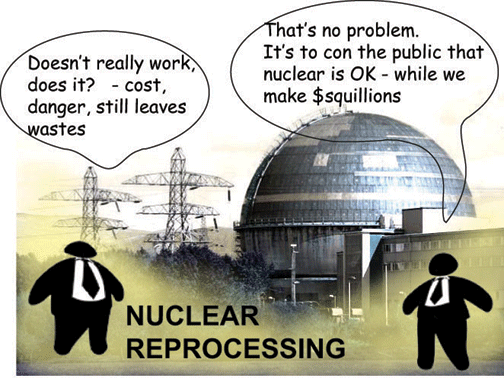
In different countries, commercial reprocessing has been an environmental and financial disaster. In just one example, a small commercial reprocessing plant in the United States operated for six years—heavily subsidized by the federal government and New York state—before shutting down for safety improvements. After the owner abandoned the project in the 1970s, the multi-billion-dollar cleanup continues today.
The research on reprocessing used fuel is clear: it’s an expensive nuclear experiment that could leave a multi-million-dollar mess affecting entire ecosystems and the health of people and other living beings. Why are governments sharing sales and promotional material about the project, and fantasies about ‘recycling’ instead of facts about reprocessing and the experiences in other countries? Why are New Brunswickers and First Nation leaders not demanding the evidence?
The lack of transparency by governments on the risks of SMNRs indicates that either they are not concerned with the risks, or they choose not to share them—the opposite of what is required under the United Nations Declaration of Rights of Indigenous Peoples.
Much of society’s standards for integrity have been lost. We accept circular references, we accept that no one is declaring a conflict of interest in conversations surrounding nuclear. When our integrity is lost, so is our quality of life. Words such as “protect” and “conservation” have no meaning anymore. Though we use the terms “transparency” and “accountability” more and more often, they have less and less meaning.
The Peskotomuhkati Nation in Canada and Wolastoq Grand Council cannot provide consent for any new nuclear developments in New Brunswick without considering the lessons they have learned in the past, the current relationships and communications they are experiencing, and the impacts of toxic wastes that remain dangerous forever. First Nations in New Brunswick cannot provide consent for toxic radioactive waste to be sent to Ontario, where Indigenous nations also do not want it on their territories.
The Wolastoq Grand Council, which issued a statement on nuclear energy and nuclear waste in 2021, opposes any destruction or harm to Wolastokuk which includes all “Flora and Fauna” in, on, and above their homeland. Nuclear is not a green source of energy, or solution to a healthier future for our children, grandchildren and the ones who are not born yet. Wolastoqewi-Elders define Nuclear in their language as ‘Askomiw Sanaqak,’ which translates as ‘forever dangerous.’
The Peskotomuhkatik ecosystem includes Point Lepreau. The Peskotomuhkati leadership in Canada has repeatedly tried to bring facts about both New Brunswick SMNR projects and their potential environmental implications to the attention of New Brunswickers and all Canadians, writing twice to Environment and Climate Change Minister Steven Guilbeault urging him to designate the SMNR projects in New Brunswick for a federal impact assessment, so that all the facts could be made public. Both attempts were denied, the most recent in August this year.
Peskotomuhkati leadership has participated, and continues to participate, in Canadian Nuclear Safety Commission and various provincial processes, and has firsthand experience that these past and current engagement and assessment tools do not provide a sufficient framework to address adverse effects and impacts to Indigenous rights.
The SMNR projects planned for Point Lepreau within Peskotomuhkatik homeland will have profound and lasting impacts on Indigenous rights as well as those of Indigenous communities in Ontario where the nuclear industry is proposing to build a deep geological repository for the used nuclear fuel and other sites for intermediate radioactive waste. The SMNR projects will also have profound and lasting impacts on the Bay of Fundy, the marine life the bay supports, and coastal communities.
Until the government begins to ask for and share facts about SMNRs instead of sales materials, Indigenous nations must assume that representation no longer means peoples’ representation, but rather representation of the industry.
Hugh Akagi is chief of the Peskotomuhkati Nation in Canada. Dr. Susan O’Donnell is the lead investigator of the CEDAR research project at St. Thomas University in Fredericton
Uranium Mining Protections Needed Across the West
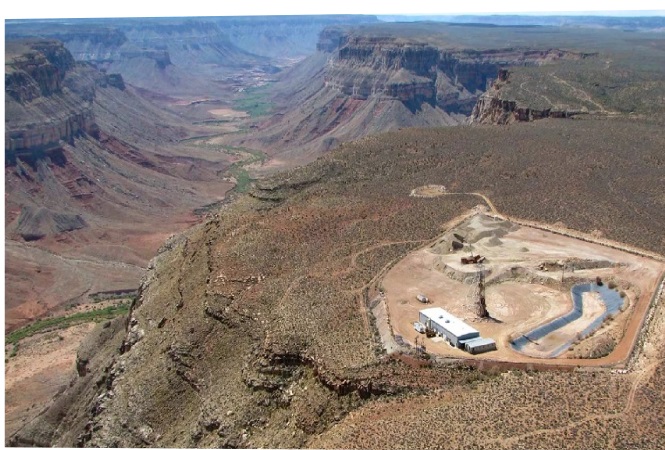
The Biden administration needs to protect communities and water supplies across the West from the dangers of uranium mining.
Geoffrey H. Fettus Senior Attorney, Nuclear, Climate & Clean Energy Program
President Biden’s designation of the Baaj Nwaavjo I’tah Kukveni—Ancestral Footprints of the Grand Canyon National Monument will go far in protecting the rich cultural and ecological value of this majestic landscape. It will safeguard some of the most iconic public lands in the American West from the ravages of destructive mining and destructive waste. This protection has been a top priority for tribes in the area, and the designation is long overdue.
“That’s our aboriginal homelands,” Dianna Sue Uqualla, a Havasupai tribal council member, told the Bureau of Land Management at a public meeting according to Bloomberg Law. The monument will “keep at bay these mining people that are coming in,” and will protect the Grand Canyon from companies that are “desecrating, raping the Mother Earth.”
This is wonderful news, but there is much more to be done about uranium mining across the American West. And there’s also a lot of misinformation out there that muddies what should be a clear path forward to protecting all the people and watersheds of the West from unchecked uranium mining.
Uranium mining contaminated tribal lands for decades
The uranium mining industry has left a dreadful history of contamination and harm across vast swathes of the American West, but especially with respect to the Indigenous People who call this area home. It’s a complicated history that intertwines with the Manhattan Project and the Cold War, and it’s a legacy that has yet to be addressed.
On Navajo land alone, nearly four million tons of uranium ore were extracted from 1944 to 1986. The industry and the U.S. government left behind hundreds of abandoned uranium mines, four inactive uranium milling sites, a former dump site, and the widespread contamination of land and water; this includes the 1979 collapse of a tailings dam in Church Rock, New Mexico, that deposited 93 million gallons of radioactive and chemically contaminated liquid and 1,100 tons of solid radioactive tailings into the Rio Puerco, contaminating the river for more than 60 miles downstream. After decades of pressure, the government has finally started to assess and mitigate this contamination.
Much is left to be done: More than 500 abandoned uranium mines remain on Navajo land.
We need new standards
Back in 2016, the Obama administration was poised to take action on uranium mining standards, but then Donald Trump was elected president. It will come as no surprise that the U.S. Environmental Protection Agency (EPA) under the Trump administration cast aside the Obama EPA’s long-overdue protective environmental standards. In an about-face, the Trump EPA and Nuclear Regulatory Commission (NRC) moved to weaken uranium mining rules.
Once Biden took office in 2021, NRDC had hoped for a new approach. So far, however, we haven’t heard anything from either the EPA or NRC, despite repeated requests by NRDC and other major environmental groups, tribal representatives, and regional groups across the West.
It is time for the EPA to clear the obstacles and move forward on the uranium protections it drew up years ago.
The Biden administration can begin to protect the communities and water resources that have been negatively affected by uranium mining for decades by taking two steps: (1) dissolving a 2020 memorandum of understanding between the EPA and NRC that undercuts the EPA’s ability to enact standards; and (2) issuing protective uranium in situ mining standards that have been sitting on a shelf for years. ……………………………………………………………….
British activists join Nuclear Free Local Authorities in supporting Swedish Sami against uranium mining
The UK/Ireland Nuclear Free Local Authorities and Lakes against the Nuclear Dump have been joined by activists from twelve anti-nuclear campaign groups in a letter to organisations representing the Sami people of Sweden offering support in their fight against uranium mining.
A ban on uranium exploration, mining and processing in Sweden came into force on 1 August 2018 but, last month, Swedish Climate Minister Romina Pourmokhtari announced that the ban would be lifted and that ten new nuclear reactors would be built over the next twenty years. In the face of international and domestic criticism, the centre-right government has since reined in the commitment to new nuclear by talking instead of a vague commitment to developing ‘green power’, but there has been no roll-back on uranium mining.
Sweden accounts for 80% of the European Union’s uranium deposits and already extracts uranium as a waste product when mining for other metals. Foreign companies, including Aura Energy and District Metals, have already expressed an interest in exploiting reserves. Even if the new government’s nuclear hopes come to naught, there will still be a ready export market for any output. The ongoing conflict in Ukraine has made the surety of uranium supply from Russia and its allies uncertain and the recent military takeover in uranium-producing Niger has shaken the market; consequently, pro-nuclear European nations will be looking for any stable source from a neighbour.
The correspondents fear that any resumption of uranium mining will come at a heavy price to the traditional lands and lifestyles of the Indigenous Sami People, with a degradation of their natural environment and their health. The Sami (or Saami) inhabit the region of Sápmi, which embodies the most Northern parts of Norway, Sweden and Finland, and North West Russia, and are best known for their reliance upon semi-nomadic reindeer herding.
Councillor Lawrence O’Neill, Chair of the NFLA’s Steering Committee, said: “Sadly the world over, uranium mining has been, and still is, often visited upon Indigenous People in their Traditional Lands by large, profit-hungry corporations. In addition, national governments have chosen their lands to carry out nuclear weapons testing and nuclear waste dumping. The impact has been enormous – the lands of Indigenous People have been poisoned, their health destroyed and their culture and traditional way of life decimated.
“Sweden has signed the UN Declaration of the Rights of Indigenous People pledging to defend the lands and lifestyle of the Sami, but the decision to resume uranium mining could, if left unchallenged, lead to their destruction. In sending this collective letter, we, the British and Irish local authorities opposed to nuclear power, with British anti-nuclear groups and activists are pledging ourselves as allies in this fight”.
Co-sponsor, Marianne Kirkby, founder of LAND, Lakes against the Nuclear Dump, added: “Here in Cumbria, we feel so much empathy for the Sami people who have had no say whatsoever in the opening-up of Sweden’s wild areas to the devastation of uranium mining.
“In the UK, we have no uranium mining, but plenty of nuclear plants. We are constantly told that nuclear power is ‘clean’ and ‘home-grown’. This blatant lie is the means by which Sami lands are put under pressure for new uranium mining exploitation in areas where it was previously, and quite rightly, banned as being too destructive to the health of people and planet”.
“This lie of ‘clean nuclear’ is the means by which Indigenous people, whether in Cumbria or in Sweden, whether at the waste end or the fuel end of the nuclear industry, are being exploited by the most toxic industry there is without even a ‘by your leave’. We stand in solidarity with the Sami in saying NO – NO MORE!”
The deep roots of the Yucca Mountain nuclear waste fight — and why it continues to this day

Sep 05, 2023, By: Paulina Bucka, https://www.ktnv.com/news/the-deep-roots-of-the-yucca-mountain-nuclear-waste-fight-and-why-it-continues-to-this-day?mibextid=2JQ9oc&fbclid=IwAR2n8wFDd8P4EIq0HqFMPy2ASLEGa_caRDfN8zyxddED3YKpB-bNpPAV8H4
YUCCA MOUNTAIN (KTNV) — For Nevada, it’s the question that doesn’t go away.
The fight to stop Yucca Mountain from becoming a nuclear waste repository has gone on for more than three decades now. Despite an official halt to the project in 2010, that fight continues for Nevada’s Congressional delegation and the Western Shoshone people.
For the Western Shoshone, it’s a cause large than themselves — a calling to preserve their identity for generations to come.
“For the Shoshone people, our identity is the land,” said Ian Zabarte, principal man of the Shoshone Nations. “We developed our language in relation to the land — to be able to talk about it, to be able to share it.”
For decades, those ties have been threatened by the radioactive fallout of nuclear testing.
“You used to be able to drink the water from any of the springs around you,” Zabarte said. “Now, you can’t do that any more because of the pollution.”
One hundred miles northwest of the bright lights of Las Vegas, miles past Mercury, Nevada, sits Yucca Mountain — a 60-million-acre formation made up of mostly fractured volcanic tuffs.
It’s almost home to the Western Shoshone Nation people — a home Zabarte says he hopes to see restored to its most natural form within his lifetime.
Some of the big pollution is radioactive fallout from the nuclear weapons testing,” Zabarte said. “We cannot just pick up and leave in the event of the radiation, the fallout — we lose our identity.”
Zabarte has spent his life on the front lines of the fight to keep nuclear waste out of his ancestral home.
“We would walk all the way across the valley to the main gate at the Nevada Test Site doors and have our protests there,” Zabarte said. “I received a letter in 2001 that said I’m at risk of developing silicosis because of the number of hours I spent underground at Yucca Mountain.”
While the U.S. no longer performs nuclear testing, nuclear advances continue, and questions about what happens to the nation’s nuclear waste remain.
“After testing, Nevada was angry enough about what had happened because of nuclear weapons testing that it said, ‘Never again. We’re not going to be the high-level waste dump for this country,'” said Kevin Kamps, a radioactive waste specialist.
Kamps has walked alongside the Shoshone Nation people for decades in protest of nuclear testing and the proposed repository that would have sat roughly 1,000 feet under Yucca Mountain.
“What happened in our state was Nevada never had consent, and in 1982, when the bill was passed that designated Nevada as the nation’s nuclear storage waste disposal area, that didn’t come with any of our consent,” said Rep. Susie Lee, a Democrat representing Nevada’s 3rd Congressional District.
The late U.S. Senate Majority Leader Harry Reid spent his career leading the battle against the project, which began in the 1980s, during President Ronald Reagan’s administration.
President Barack Obama called the Yucca Mountain project “unworkable” in 2010 and made good on his campaign promise to Nevadans to end it and cut funding for the project.
“This was a political cartoon that ran in the Las Vegas Review-Journal back in 2010, and it really celebrated the end of the Yucca Mountain Project, this attempt by the U.S. government to attempt to dump all the country’s high radioactive waste here in Nevada,” Kamps said.
Ten years later, President Donald Trump — a supporter of nuclear energy — initially called for the licensing process of Yucca Mountain to restart. But in 2020, Trump announced that he would reverse his policy and halted his support of the project.
Today, the question still remains: Where should the nation’s nuclear waste be stored? It’s a near-constant fight for members of Nevada’s congressional delegation to this day.
“The fact of the matter is, there are 27 states that have nuclear waste, spent fuel from nuclear reactors, and those states want a solution,” Lee said.
Lee says the bipartisan position from Nevada lawmakers is clear: Nevadans don’t want to see any funding go back into the Yucca Mountain project.
“There will need to be a long-term solution for this,” she said. “I’m working with my counterparts to try and come up with a solution, how we can reprocess that waste, but most importantly, how and where it can be put where there is consent.”
For the Shoshone Nation lineage, the Yucca Mountain fight goes beyond politics. Its members say it’s a race to preserve what’s left of the mountain to leave behind for future generations.
“They say that we are as naive as Native Americans because of our holistic conservation of the land for future generations,” Zabarte said. “They don’t see that as value, that the land is somehow being wasted.
“We’re trying to protect this land so our future generations can live a good quality of life,” he said.
Marshall Islands reacts to US expansion of nuclear compensation
Marianas Variety, By Giff Johnson – For Variety Aug 21, 2023
MAJURO — Within days of United States congressional leaders and executive branch officials telling Marshall Islands leaders there was no more money for nuclear test compensation, the U.S. Senate passed legislation expanding nuclear compensation to more Americans in the U.S. mainland and also living on Guam.
The Senate legislation seeks to expand the Radiation Exposure Compensation Act of 1990. This law currently provides compensation to American Downwinders who lived near the Nevada Test Site, uranium miners, and people who worked at nuclear sites.
The new legislation expands the time period of eligibility for uranium miners from the previous deadline of 1971 to 1990, which means many more workers will be eligible. It also aims to support compensation for people in Guam — who live over a thousand miles away from the Bikini and Enewetak test sites in the Marshall Islands — and other U.S. jurisdictions affected by nuclear testing.
In the Marshall Islands, however, the U.S. definition of those “exposed” is limited to four atolls despite U.S. government studies that show many more islands in the country were exposed to nuclear test fallout. Prior to it running out of compensation funds in the late 2000s, the Nuclear Claims Tribunal compared fallout exposures of American Downwinders and Marshallese. It noted that the highest exposures among American Downwinders were lower than the lowest exposures of Marshallese.
The irony of the U.S. nuclear test compensation disparity is not lost on Marshallese.
“As nuclear test victim ourselves, we support compensation for American victims of nuclear tests, whether they are Downwinders or worked at nuclear test sites or worked in uranium mines,” Marshall Islands Speaker Kenneth Kedi, who represents Rongelap, was quoted Friday in the Marshall Islands Journal. “But the fact that U.S. authorities can tell the Marshall Islands there is ‘no more money’ for nuclear test exposure for people who lived through 67 of the largest US nuclear weapons tests ever conducted while at the same time preparing to expand compensation coverage for Americans is astounding.”
The U.S. government launched its Radiation Exposure Compensation Act in 1990 with a $100 million appropriation from the Congress. Over 30 years later, the U.S. Justice Department has paid out awards amounting to over $2 billion because when additional compensation was needed, the U.S. Congress appropriated more funding.
In contrast, for the Marshall Islands, which was subjected to weapons testing over 90 times the megatonnage of the Nevada nuclear tests, the U.S. provided the Marshall Islands with a $150 million fund as the “full and final” compensation and has refused to respond to Marshall Islands government requests to provide additional compensation in the ensuing 37 years since the first Compact of Free Association went into effect. Despite the fact that the Nuclear Claims Tribunal was an entity created by the first Compact of Association to adjudicate nuclear claims, the Marshall Islands government’s entreaties to the United States for funding to pay the over $3 billion in Tribunal awards have received a cold shoulder.
“We have no issue with people of Guam qualifying for U.S. nuclear compensation,” Kedi commented. “But if the people of Guam, who are 1,400 miles away from Bikini, are eligible for compensation, what about the many Marshallese who lived much closer to the testing who according to the U.S. are not radiation affected?”
The Tribunal award for Rongelap Atoll, which was not paid for lack of funds, is the largest of the Tribunal awards for four U.S.-acknowledged nuclear affected atolls of Bikini, Enewetak, Rongelap and Utrok — in part due to the need to fund cleanup of dozens of islands that remain radioactive from a snowstorm of radioactive fallout from the 1954 Bravo hydrogen bomb explosion at Bikini…………………………………………………….more https://www.mvariety.com/news/marshall-islands-reacts-to-us-expansion-of-nuclear-compensation/article_72b6eb98-3f55-11ee-ac0f-53b4fd3eeff1.html—
1 This Month
23-25 October – on Zoom – World BEYOND War’s annual global conferenc


Shut down the radiation-damaged Heysham nuclear reactors now
To see nuclear-related stories in greater depth and intensity – go to https://nuclearinformation.wordpress.com

Say No to NASA’s Reckless Nuclear Reactor on the Moon
Say No to NASA’s Reckless Nuclear Reactor on the Moon

-
Archives
- October 2026 (247)
- September 2026 (339)
- August 2026 (330)
- July 2026 (355)
- June 2026 (287)
- May 2026 (306)
- April 2026 (356)
- March 2026 (251)
- February 2026 (267)
- January 2026 (308)
- December 2025 (358)
- November 2025 (359)
-
Categories
- 1
- 1 NUCLEAR ISSUES
- business and costs
- climate change
- culture and arts
- ENERGY
- environment
- health
- history
- indigenous issues
- Legal
- marketing of nuclear
- media
- opposition to nuclear
- PERSONAL STORIES
- politics
- politics international
- Religion and ethics
- safety
- secrets,lies and civil liberties
- spinbuster
- technology
- Uranium
- wastes
- weapons and war
- Women
- 2 WORLD
- ACTION
- AFRICA
- Atrocities
- AUSTRALIA
- Christina's notes
- Christina's themes
- culture and arts
- Events
- Fuk 2022
- Fuk 2023
- Fukushima 2017
- Fukushima 2018
- fukushima 2019
- Fukushima 2020
- Fukushima 2021
- general
- global warming
- Humour (God we need it)
- Nuclear
- RARE EARTHS
- Reference
- resources – print
- Resources -audiovicual
- Weekly Newsletter
- World
- World Nuclear
- YouTube
-
RSS
Entries RSS
Comments RSS

