Comparing Fukushima nuclear meltdown to the Chernobyl one
Fukushima Meltdowns: A Global Conspiracy of Denial By William Boardman Global Research, Reader Supported News January 05, 2014 “…….Chernobyl 1986 and Fukushima 2011 are not really comparable Chernobyl is the closest precedent to Fukushima, and it’s not very close. Chernobyl at the time of the 1986 electric failure and explosion had four operating reactors and two more under construction. The Chernobyl accident involved one reactor meltdown. Other reactors kept operating for some time after the accident. The rector meltdown was eventually entombed, containing the meltdown and reducing the risk. Until Fukushima, Chernobyl was considered the worst nuclear power accident in history, and it is still far from over (albeit largely contained for the time being). The Chernobyl Exclusion Zone of roughly 1,000 square miles remains one of the most radioactive areas in the world and the clean-up is not even expected to be complete before 2065.
At the time of the March 11, 2011, earthquake and tsunami, the Fukushima plant had six operating reactors. Three of them went into meltdown and a fourth was left with a heavily laden fuel pool teetering a hundred feet above the ground. Two other reactors were undamaged and have been shut down. Radiation levels remain lethal in each of the melted-down reactors, where the meltdowns appear to be held in check by water that is pumped into the reactors to keep them cool. In the process, the water gets irradiated and that which is not collected on site in leaking tanks flows steadily into the Pacific Ocean. Within the first two weeks, Fukushima radiation was comparable to Chernobyl’s and while the levels have gone down, they remain elevated.
The plant’s corporate owner, Tokyo Electric Power Company (TEPCO), in turn effectively owned by the Japanese government after a2012 nationalization, began removing more than 1,500 fuel rod assemblies from the teetering fuel pool in November, a delicate process expected to take a year or more. There are additional fuel pools attached to each of the melted down reactors and a much larger general fuel pool, all of which contain nuclear fuel rod assemblies that are secure only as long as TEPCO continues to cool them. The Fukushima Exclusion Zone, a 12-mile radius around the nuclear plant, is about 500 square miles (much of it ocean); little specific information about the exclusion zone is easily available, but media coverage in the form of disaster tourism is plentiful, including a Google Street View interactive display.
Despite their significant differences as disasters, Chernobyl and Fukushima are both rated at 7 – a “major accident” on the International Nuclear Event Scale designed in 1990 by the International Atomic Energy Agency (IAEA). That is the highest rating on the scale, a reflection of the inherent denial that colors most official nuclear thinking. Designed by nuclear “experts” after Chernobyl, the scale can’t imagine a worse accident than Chernobyl which, for all its intensity, was effectively over as an accident in a relatively short period of time. At Fukushima, by contrast, the initial set of events was less acute than Chernobyl, but almost three years later they continue without any resolution likely soon. Additionally Fukushima has three reactor meltdowns and thousands of precarious fuel rod assemblies in uncertain pools, any of which could produce a new crisis that would put Fukushima clearly off the scale.
And then there’s groundwater. Groundwater was not a problem at Chernobyl. Groundwater is a huge problem at the Fukushima plant that was built at the seashore, on a former riverbed, over an active aquifer. In a short video, nuclear engineer Arnie Gunderson makes clear why groundwater makes Fukushima so hard to clean up, and why radiation levels there will likely remain dangerous for another hundred years……..http://www.globalresearch.ca/fukushima-meltdowns-a-global-conspiracy-of-denial/5363827
Years of secret dumping radioactive trash into the sea,by US navy
Sailors on old warship dumped thousands of tons of radioactive waste for years Tampa Bay Times, William R. Levesque, Times Staff Writer 22 Dec 13 They asked the dying Pasco County man about his Navy service a half-century before. He kept talking about the steel barrels. They haunted him, sea monsters plaguing an old sailor.
“We turned off all the lights,” George Albernaz testified at a 2005 Department of Veterans Affairs hearing, “and … pretend that we were broken down and … we would take these barrels and having only steel-toed shoes … no protection gear, and proceed to roll these barrels into the ocean, 300 barrels at a trip.”
The Atomic Sailors Talk of Dumping Radioactive Waste at Sea
Not all of them sank. A few pushed back against the frothing ocean, bobbing in the waves like a drowning man. Then shots would ring out from a sailor with a rifle at the fantail. And the sea would claim the bullet-riddled drum. Continue reading
Remembering UK’s Windscale Nuclear Disaster
The Windscale Nuclear Disaster, Today I Found Out, MELISSA DECEMBER 18, 2013 On the morning of Friday, October 11, 1957, workers at the nuclear reactor Windscale Pile 1 near Seascale, Cumberland, England, faced a terrible choice: allow a raging fire to burn itself out while it released dangerously high levels of ionizing radiation into the surrounding countryside; or, attempt to extinguish the conflagration with water, an option that could cause a hydrogen explosion (again, releasing dangerous levels of radiation, as well as blowing the workers to bits). Here’s the story of what they did:………
Aftermath
Still keen on getting their hands on the nuclear weapons designs, British leaders covered up the real cause of the accident and blamed it on Windscale’s heroic workers. The deceit was successful, and the U.S. shared its nuclear secrets with the British. Subsequent inquiries, by the BBC and others, have revealed that it was the government’s relaxed safety policies that were ultimately to blame.
Health wise, it was also a disaster. Although not on the scale with Chernobyl, the Windscale release of iodine-131, caesium-137 and xenon-133 are thought to have caused at least 200 cancer cases; it is believed that the numbers would be far higher were it not for the last-minute addition of the filters…….http://www.todayifoundout.com/index.php/2013/12/windscale-nuclear-disaster/
USA’s nuclear missile launch code was unsafe for 20 years!
 Starting World War III with just one finger: The secret U.S. nuclear missile launch code was kept terrifyingly simple for nearly 20 years – and even printed on a checklist – (GOOD PHOTOS) http://www.dailymail.co.uk/news/article-2515598/Launch-code-US-nuclear-weapons-easy-00000000.html By DAILY MAIL REPORTER 29 November 2013 For nearly 20 years, the secret code to authorize launching U.S. nuclear missiles, and starting World War III, was terrifyingly simple and even noted down on a checklist.
From 1962, when John F Kennedy instituted PAL encoding on nuclear weapons, until 1977, the combination to fire the devastating missiles at the height of the Cold War was just 00000000. Continue reading
President John F Kennedy speech on peace June 10 1963
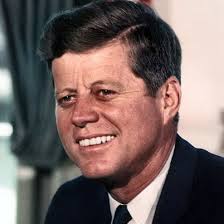 Commencement Address at American University, June 10, 1963 http://www.jfklibrary.org/Asset-Viewer/BWC7I4C9QUmLG9J6I8oy8w.aspx
The Cold War very nearly brought global nuclear catastrophe
“Even though the cold war ended more than 20 years ago, thousands of warheads are still actively deployed by the nuclear-armed states,” “We continue to face unacceptably high risks and will continue to do so until we have taken steps to abolish these exceptionally dangerous weapons.”.
 How a war game brought the world to the brink of nuclear disaster Former classified documents show how close the Soviet Union came to launching an attack in 1983 The Guardian, Jamie Doward The Observer, Sunday 3 November 2013 Chilling new evidence that Britain and America came close to provoking the Soviet Union into launching a nuclear attack has emerged in former classified documents written at the height of the cold war.
Cabinet memos and briefing papers released under the Freedom of Information Act reveal that a major war games exercise, Operation Able Art, conducted in November 1983 by the US and its Nato allies was so realistic it made the Russians believe that a nuclear strike on its territory was a real possibility. Continue reading
Proud history of USA women holding back nuclear power industry
In their determination to publicize its hazards, the intervening women were pioneers alerting the American public to the scientific consensus that all radiation exposure is cumulative and damages cellular DNA.

No Nukes and Intervening Women http://www.huffingtonpost.com/renee-parsons/no-nukes-and-intervening-women_b_1425733.html?utm_hp_ref=fb&src=sp&comm_ref=false#sb=623147b=facebook Renee Parsons : 04/16/2012 In an era when Occupy Wall Street protestors are beaten and arrested like hardened criminals, more than 40 years ago in the aftermath of the Vietnam War, there was another organized protest movement that captured the nation’s attention as it spread from New Hampshire’s Clamshell Alliance to the Abalone Alliance in southern California..In the mid-to-late 1970s, massive civil disobedience and notably peaceful arrest of protestors were taking place from the tidewater of Virginia to the farmlands of Oklahoma against the construction and operation of commercial nuclear power reactors.
What is less well-known is that at the root of the controversy, prior to public demonstrations of opposition, were a handful of exceptional women, mostly “housewives” whose thankless work done at their dining room tables provided those demonstrators and an uninformed country with the true realities of the “peaceful” atom. Continue reading
African Americans’ proud history against nuclear weapons
 The Civil Rights Movement and Nuclear Test Ban Treaty HUFFINGTON POST, Vincent Intondi 10/07/2013“………..having the first African American president also advocate for nuclear disarmament should not come as a surprise. President Obama was simply following in the path of those before him. Indeed, since 1945, many in the African American community, including some of the most prominent black leaders in U.S. history, actively supported nuclear disarmament, often connecting the nuclear issue with the fight for racial equality and liberation movements around the world. And it was due, in part, to these black activists, including Dr. Martin Luther King Jr., and his wife, Coretta, that President Kennedy was able to pass the partial nuclear test ban treaty fifty years ago this week. Continue reading
Stanislav Petrov who saved the world from nuclear holocaust
Happy Petrov Day! (How we narrowly avoided nuclear war on this day in 1983) http://www.treehugger.com/endangered-species/happy-petrov-day-how-we-narrowly-avoided-nuclear-war-day-1983.html Michael Graham Richard 27 Sept 13 The best kind of holiday Most of us alive today owe a debt to those who avoided nuclear war in years past, and sadly, there were many occasions when that was necessary. The Cuban Missile Crisis is a well-known example, with John F. Kennedy, Robert McNamara, Nikita Khrushchev, Fidel Castro, and various other government officials on all sides playing a game of poker with the lives of hundreds of millions of people (if not billions, who knows how far things would’ve gone). We came so very close to the edge of the abyss before stepping back…
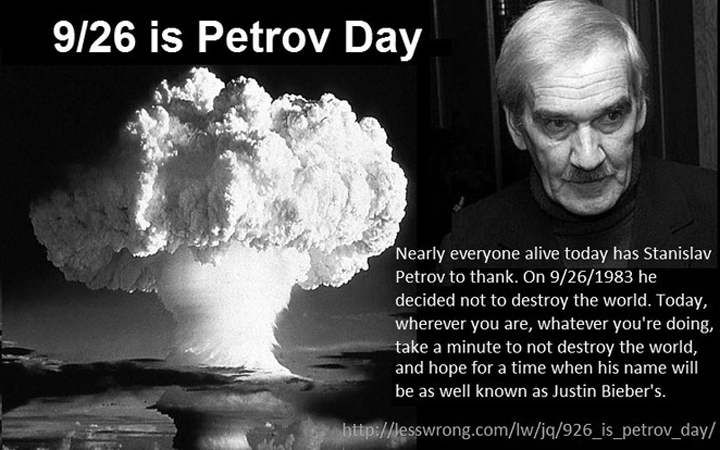
That’s why anyone even a little bit concerned with the future of humanity – leaving a better world for their children – and about all other living creatures on the planet should be against nuclear weapons and in favor of taking concrete steps to reduce the chances of them ever being used. This can’t be swept under the rug. After all, what’s the point of building a better society and protecting the environment if, during a moment of folly, a few people in positions of power can kill us all?
Giving us a second chance Continue reading
What if USA’s nuclear bombs dropped in North Carolina HAD detonated?
The Potential Nuclear Fallout in North Carolina, Mapped Atlantic Wire CONNOR SIMPSON 21 Sept 13 You’ve probably heard by now that the U.S. military nearly committed the biggest “oopsie daisy!” in history when they accidentally dropped two nuclear bombs near Goldsboro, North Carolina. But what if they did? Thankfully they didn’t detonate, but let’s imagine, just for a split second, that they did. This isn’t you typical Saturday morning exercise. There’s a certain macabre aspect to it investigation that can be hard to get over. Thousands of people would be dead, but it’s hard not to be at least a little curious to know how much of the U.S. would have been affected had the bombs gone off………
it would have been bad.
How bad, you ask? Well, by using the handy NukeMap3D created by Alex Wellerstein, we can determine how much destruction would have followed at least one atomic bomb dropping in North Carolina. The blast could have reached, with the wind blowing in the right direction, as far up the coast as New York City. Philadelphia and Washington would likely have been affected. This map is calculated with a 15 mile an hour wind and 100 percent fission:
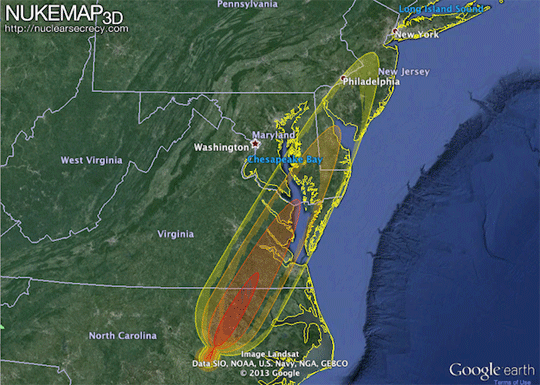
That’s a lot of the east coast. The fallout would likely not fall in such a straight line. And depending on the weather, could bend in many directions and possibly stretch even further. This is all speculative, of course. Most importantly, thankfully, the bombs never detonated in real life.
We know about this ultimate close call thanks to investigate journalist Eric Schlosser. He unearthed this declassified document that details the incident in question through a Freedom of Information Act request while researching his new book, Command and Control, about the nuclear arms race. http://www.theatlanticwire.com/national/2013/09/potential-nuclear-fallout-north-carolina-mapped/69701/
South Carolina was very nearly nuclear bombed by US military

 The Time the U.S. Military Came This Close To Dropping a Nuclear Bomb on North Carolina Slate, By Will Oremus, Sept. 20, 2013 Remember fallout shelters? Air raid drills? Duck and cover?
At the height of the Cold War, Americans lived in perpetual fear of a nuclear attack by the Soviet Union. But perhaps we were afraid of the wrong side.
A declassified document obtained by author Eric Schlosser sheds new light on the 1961 Goldsboro accident, in which a U.S. Air Force B-52 broke apart in midair over North Carolina, dropping a pair of Mark 39 nuclear bombs on the countryside below. The accident is not news, but just how close the military came to wiping out a swath of the Eastern Seaboard has long been debated. For years the military insisted that the hydrogen bombs were never in danger of detonating.
The secret document, written by a nuclear weapons safety supervisor in 1969 and first published by The Guardian today, makes it clearer than ever that was not the case. In fact, three of the four safety mechanisms on one of the bombs were unlocked in the course of the fall. By the time the bomb reached the ground, the only thing preventing it from detonating was a single, simple, low-voltage switch. A short-circuit of that switch as a result of the mid-air breakup—“a postulate that seems credible,” the supervisor writes—could have resulted in mass destruction.
The Mark 39 bombs, Schlosser notes in his new book Command and Control, were some 250 times as powerful as the device that the United States dropped on Hiroshima……..http://www.slate.com/blogs/future_tense/2013/09/20/goldsboro_nuclear_accident_declassified_document_u_s_nearly_nuked_north.html
Cuba’s abandoned unfinished nuclear power plant
Concrete Crypt for Communist Dreams: Cuba’s Unfinished Nuclear Power Plant http://www.slate.com/blogs/atlas_obscura/2013/09/11/the_unfinished_cuban_nuclear_power_plant_abandoned_when_the_ussr_collapsed.html By Atlas Obscura, Sept. 11, 2013 In 1976, Communist companions Cuba and the Soviet Union signed a deal to build a nuclear power plant in Juraqua. Construction on the first of two nuclear reactors began in 1983 with a target operational date of 1993. But a few years before the reactor’s scheduled completion, the USSR collapsed. The flow of crucial Soviet funds ceased, 300 Russian technicians went home, and Cuba was forced to suspend construction on its badly needed power plant.
Lacking nuclear fuel and without the primary components installed, the plant sat in limbo until December 2000, when Russian President Vladimir Putin paid a visit to Cuba. Putin offered Fidel Castro a belated $800 million to finish the first reactor. Despite Cuba’s reliance on imported oil for power, Castro declined. Project status: officially abandoned.
The unfinished plant, a huge, domed concrete structure, sits on the Caribbean coast, across the bay from the city of Cienfuegos.
Russia’s secret maze of underground radioactive trash tunnels
 A Secret Race for Abandoned Nuclear Material http://www.nytimes.com/2013/08/18/world/asia/a-secret-race-for-abandoned-nuclear-material.html?_r=0 By ELLEN BARRY August 17, 2013 Working in top secret over a period of 17 years, Russian and American scientists collaborated to remove hundreds of pounds of plutonium and highly
  enriched uranium — enough to construct at least a dozen nuclear weapons — from a remote Soviet-era nuclear test site in Kazakhstan that had been overrun by impoverished metal scavengers, according to a report released last week by the Belfer Center for Science and International Affairs at Harvard.
The report sheds light on a mysterious $150 million cleanup operation paid for in large part by the United States, whose nuclear scientists feared that terrorists would discover the fissile material and use it to build a dirty bomb.
Over the years, hints emerged that something extraordinarily dangerous had been left behind in a warren of underground tunnels — like the American aerial drones that circled over the site, looking for intruders, or the steel-reinforced concrete that was poured into tunnels and over stretches of earth.
Among the report’s new revelations is that the Soviet testers left behind components, including high-purity plutonium, that could have been used to build not just a dirty bomb but a “relatively sophisticated nuclear device,” an American official told the report’s authors. Continue reading
Britain’s pro nuclear spin in the 1980s – denigrating opponents

Labour and Campaign for Nuclear Disarmament (CND ) were tarred as Communist sympathisers or stooges. Greenham women were projected as naïve (coupled in some narratives with the condescending qualification “well-meaning mothers and grandmothers”, and in others with “squalid” and “dangerous feminists”). The Conservative line was “If you knew what we know, you wouldn’t question the need for Trident and Cruise”. History has confirmed that the peace movement understood much more than we were given credit for. Perhaps that is why Thatcher’s government refused to engage in an intelligent debate over nuclear policy, finding it easier to belittle their opposition while asserting their status quo decisions and preferences as if they were factual, evidence-based necessities.
Pro-nuclear propaganda in 1983: lessons for 2013 50/50 Inclusive Democracy REBECCA JOHNSON 9 August 2013 Read the first.] Cabinet papers and secret government letters from 1983 that have been made public under the 30 year rule show that Margaret Thatcher’s government was more seriously worried about the electoral impact of nuclear weapons deployments than had previously been revealed.
Their concerns included the popular opposition to Trident replacement and to the US siting of cruise missiles at Greenham Common.
Though Labour was tearing itself apart over the break-away faction that formed a new Social Democratic Party (SDP), some 700,000 more people voted for the disarmament-oriented Labour Party of 1983 than in the 1979 election when the Party was led by Prime Minister James Callaghan, who took the first steps towards Trident replacement and the deployment of cruise missiles in 1979. Callaghan lost that election, and Margaret Thatcher became Prime Minister. Labour’s defeat in 1983 had far more to do with the SDP factor in a two-party system, economic reconstruction, and innovative use of media and advertising techniques by the Tories……… Continue reading
A political advantage: the reason why USA bombed Japanese cities
.it wasn’t necessary to use the bomb against the cities of Japan in order to win the war but our possession and demonstration of the bomb would make the Russians more manageable in Europe.
The real purpose in incinerating two high-density civilian population centers, says Stimson, was “to persuade Russia to play ball.”
that’s the very definition of terrorism: using violence or the threat of violence as the means to achieve political ends. It’s terrorism with a vengeance. Americans just don’t do that kind of thing. Americans would never behave in such a horribly depraved and cruel manner. But, in fact, we did. And, as Part II of this article will make devastatingly clear, we still do. And it won’t stop until America awakens to the truth about itself, and, openly acknowledging that truth with a show of genuine heartfelt remorse, proceeds to make amends where amends are due.
America’s Nuclear Madness: Terrorism With A Vengeance (Part I) By Robert Quinn” OpEdNews 8/11/2013 “………The inhumanity of it all couldn’t be more telling. The dropping of the second bomb on Nagasaki was especially brutal and cruel. Knowing of the horrendous horrors that had already been unleashed in Hiroshima, three days later the U.S. did the same thing to the civilian population of Nagasaki. Why? Japan’s surrender was already assured without the bombs. Surely surrender would soon be following on the heels of Hiroshima’s decimation. So, again, why the second bomb?
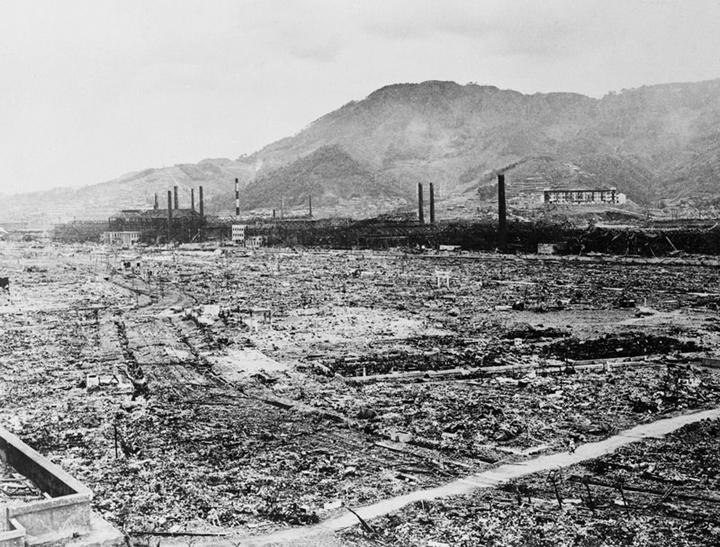
The answer is as simple as it is grotesque. The second bomb was dropped on Nagasaki because Japan’s surrender was never the issue. Getting Japan to surrender was the pretext. The bombs were dropped to make a point. There were political reasons for nuking those two high-density civilian populations, and the United States was not going to let Japan interfere with its political agenda by way of an untimely surrender. The dropping of the second bomb on Nagasaki was part of a political maneuver that had already been decided upon — a one-two punch stratagem designed to strike fear into post-war Russia (our ally in the war against Germany) and convince them to accept their subordinate position on the postwar world stage.
Atomic Bombs Were Dropped On High-Density Civilian Populations In Japan To Make A Political Statement Continue reading
1 This Month
Chernobyl: The Lost Tapes – A good documentary on Chernobyl on SBS available On Demand for the next 3 weeks– https://www.sbs.com.au/ondemand/tv-program/chernobyl-the-lost-tapes/2352741955560

of the week–London Campaign for Nuclear Disarmament

Tell the Ukrainian Government to Drop Prosecution of Peace Activist Yurii Sheliazhenko
To see nuclear-related stories in greater depth and intensity – go to https://nuclearinformation.wordpress.com
-
Archives
- April 2026 (114)
- March 2026 (251)
- February 2026 (268)
- January 2026 (308)
- December 2025 (358)
- November 2025 (359)
- October 2025 (376)
- September 2025 (257)
- August 2025 (319)
- July 2025 (230)
- June 2025 (348)
- May 2025 (261)
-
Categories
- 1
- 1 NUCLEAR ISSUES
- business and costs
- climate change
- culture and arts
- ENERGY
- environment
- health
- history
- indigenous issues
- Legal
- marketing of nuclear
- media
- opposition to nuclear
- PERSONAL STORIES
- politics
- politics international
- Religion and ethics
- safety
- secrets,lies and civil liberties
- spinbuster
- technology
- Uranium
- wastes
- weapons and war
- Women
- 2 WORLD
- ACTION
- AFRICA
- Atrocities
- AUSTRALIA
- Christina's notes
- Christina's themes
- culture and arts
- Events
- Fuk 2022
- Fuk 2023
- Fukushima 2017
- Fukushima 2018
- fukushima 2019
- Fukushima 2020
- Fukushima 2021
- general
- global warming
- Humour (God we need it)
- Nuclear
- RARE EARTHS
- Reference
- resources – print
- Resources -audiovicual
- Weekly Newsletter
- World
- World Nuclear
- YouTube
-
RSS
Entries RSS
Comments RSS
 nuclear-news