Russia, Japan Team Up to Study How Radiation Affects the Next Generation’s DNA
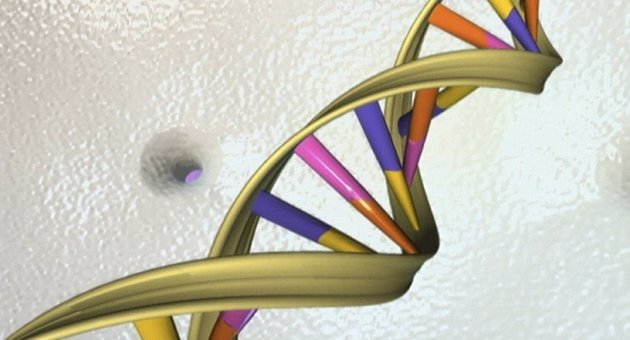
Russia and Japan are set to team up to become leaders in transgenerational healthcare research, to help prevent the effects of nuclear catastrophes being passed genetically from one generation to the next indefinitely.
Both Russia and Japan have a stake in this research, given that both countries are still dealing with radiation exposure via the events in Nagasaki, Hiroshima, Fukushima and Chernobyl. “This research is extremely important in relation to future generations we are responsible for,” said Nomura Taisei, Radiation Biology and Medical Genetics Department Head at National Institute for Biomedical Research at Osaka University.
The professor was at the 15th Congress on Innovation Technologies in Pediatrics and Pediatric Surgery which was held in Moscow from October 25-27, making a report on trasngenerational healthcare. His report shines a light on how exposure to radiation is passed down through generations via DNA mutation.
When DNA is damaged, the consequences for future generations are serious.Birth abnormalities, developmental disorders, a weakened immune system, higher cancer risks, and numerous physical and mental disorders are all the result of these gene mutations passed down to future generations. While the effects of radiation exposure passing between generations has so far not been widely studied in humans, the effects on experimental animal subjects is more widely understood.
Professor Nomura’s experiments on mice proved that genetic effects of radiation exposure can cause genetic defects into the 58th generation. The problem is that Japan has very little data on radiation exposure on humans.
This is where Russia can help, through opening up their database on three tree generations of people: those who were exposed after the Chernobyl disaster, those who were exposed prenatally, and those whose parents were exposed before impregnation. Thus Russia and Japan can now conduct joint comparative research of the effects of radiation on animals and on humans applying the latest technologies.
The Head of Children’s Scientific and Practical Center of Radiation Protection, Larisa Naleva told Sputnik Japan about the importance of this Russian-Japanese research project.
“We assume that the phenomenon of radiation-induced genetic instability has significant effects not only on the health of exposed people but also on the health of their children, first of all, resulting in an increased cancer risk. We have already detected an increase of morbidity in the second generation of exposed people’s descendants and now we are studying the third generation. Today in Russia there are about 135 thousand children who have been exposed or are exposed to radiation to some extent,” said Naleva. By using Japan’s expertise, Naleva hopes that the health risk for subsequent generations of those who were exposed to radiation can be reduced. “And that is the goal of our collaboration with our Japanese colleagues,” she said.
https://sputniknews.com/society/201611021046998030-russia-japan-radiation-dna/
Mother’s Radiation Lab and Clinic
The relatively short video shows a female perspective of how women are dealing with the risk despite the Japanese governments, lack of radiation testing, children’s health checks, financial and social support – the social responsibility to their community
Women suffer the most from this stoic denial that radiation effects the community, causing unnecessary stress from risk of radionuclide ingestion on a child’s growing body, well established to be many times more sensitive to radiation due to rapidly dividing cells programmed by DNA at risk during early development
It is sad a mother’s worldview has been largely left out of the South Australian debate around the whole nuclear cycle dominated by senior male nuclear sales executives and academics
However, that isn’t any surprise, as that is how the world embraced the whole nuclear industry in the first place, that is from a purely patriarchal worldview and that is a matter of our species shameful human history https://www.facebook.com/groups/1314655315214929/
Ionizing radiation May Contribute to Development of Alzheimer’s

University of Southern Denmark
More humans than ever are exposed to higher levels of ionizing radiation from medical equipment, airplanes, etc. A new study suggests that this kind of radiation may be a confounding factor in the neurodegenerative disease Alzheimer´s.
Alzheimer’s disease is the leading cause for dementia in the elderly, and its global prevalence is supposed to increase dramatically in the following decade – up to 80 million patients by 2040.
– It is crucial that we investigate the potential factors behind this disease, says postdoc Stefan J. Kempf, University of Southern Denmark. His research focuses on possible connections between radiation and cognitive impairments.
In a new study, he and an international consortia involving colleagues from Italy, Japan, Germany and Denmark show that low doses of ionising radiation induce molecular changes in the brain that resemble the pathologies of Alzheimer’s.
The study has been published in Oncotarget. Co-authors are from Institute of Radiation Biology/Institute of Pathology, Helmholtz Zentrum München, German Research Center for Environmental Health and Institute for Environmental Sciences in Japan.
Large numbers of people of all age groups are increasingly exposed to ionizing radiation from various sources. Many receive chronic occupational exposure from nuclear technologies or airline travel. The use of medical diagnostics and therapeutic radiology has increased rapidly – for example more than 62 million CT scans per year are currently carried out in USA.
Approximately one third of all diagnostic CT examinations are scans of the head region.
– All these kinds of exposures are low dose and as long as we talk about one or a few exposures in a lifetime I do not see cause for concern. What concerns me is that modern people may be exposed several times in their lifetime and that we don’t know enough about the consequences of accumulated doses, says Stefan J. Kempf.
Recent data suggest that even relatively low radiation doses, similar to those received from a few CT scans, could trigger molecular changes associated with cognitive dysfunction.
In their new study, the researchers have elucidated molecular alterations in the hippocampus of mice. The hippocampus is an important brain region responsible for learning and memory formation and it is known to be negatively affected in Alzheimer´s.
The authors induced changes in the hippocampus by two kinds of chronic low-dose-rate ionizing radiation treatments. The mice were exposed to cumulative doses of 0.3 Gy or 6.0 Gy given at low dose rates of 1 mGy over 24 hours or 20 mGy over 24 hours for 300 days.
– Both dose rates are capable of inducing molecular features that are reminiscent of those found in the Alzheimer’s disease neuropathology, says Stefan J. Kempf.
When a patient gets a head scan, the doses varies between 20 and 100 mGy and lasts for around one minute. When a person flies, he or she gets exposure to ionising radiation coming from space but the rates are by far smaller than a CT scan.
– When you compare these figures you will find that we exposed the mice to a more than 1000 times smaller cumulative dose than what a patient gets from a single CT scan in the same time interval. And even then we could see changes in the synapses within the hippocampus that resemble Alzheimer´s pathology.
According to Stefan J. Kempf, the data indicate that chronic low-dose-rate radiation targets the integration of newborn neurons in existing synaptic wires.
###
Paper: Chronic low-dose-rate ionising radiation affects the hippocampal phosphoproteome in the ApoE?/? Alzheimer mouse model. Forfattere: Stefan Kempf, Dirk Janik, Zarko Barjaktarovic, Ignacia Braga-Tanaka III, Satoshi Tanaka, Frauke Neff, Anna Saran, Martin Røssel Larsen, Soile Tapio. OncoTarget, 20. september 2016.
https://www.eurekalert.org/pub_releases/2016-10/uosd-ctr102716.php
Causal connection between nuclear radiation and Alzheimers’ Disease – European research
Concern that radiation may contribute to development of Alzheimer’s https://www.eurekalert.org/pub_releases/2016-10/uosd-ctr102716.php UNIVERSITY OF SOUTHERN DENMARK MORE HUMANS THAN EVER ARE EXPOSED TO HIGHER LEVELS OF IONIZING RADIATION FROM MEDICAL EQUIPMENT, AIRPLANES, ETC. A NEW STUDY SUGGESTS THAT THIS KIND OF RADIATION MAY BE A CONFOUNDING FACTOR IN THE NEURODEGENERATIVE DISEASE ALZHEIMER´S.
Alzheimer’s disease is the leading cause for dementia in the elderly, and its global prevalence is supposed to increase dramatically in the following decade – up to 80 million patients by 2040.
– It is crucial that we investigate the potential factors behind this disease, says postdoc Stefan J. Kempf, University of Southern Denmark. His research focuses on possible connections between radiation and cognitive impairments.
In a new study, he and an international consortia involving colleagues from Italy, Japan, Germany and Denmark show that low doses of ionising radiation induce molecular changes in the brain that resemble the pathologies of Alzheimer’s. Continue reading
Radiation-absorption tests under development could save lives in nuclear explosion
Direct measurement (like Becquerels) via blood samples described in the article sounds like the way to go.
“The key to understand is that this is something that has never existed and we hope it never gets used,” Josh LaBaer, principal investigator and director of the Biodesign Institute at Arizona State University, told Homeland Preparedness News.
The tests could also have civilian applications as well, LaBaer said, such as in the event of industrial accidents at a nuclear power plant or in medical situations when people are exposed to excessive radiation.

The U.S. government is funding the late-stage development of tests that would quickly determine how much radiation a person has absorbed in the event of a catastrophic nuclear explosion.
The U.S. Department of Health and Human Services’ Office of the Assistant Secretary for Preparedness and Response (ASPR) is sponsoring the development of tests that go beyond detecting whether radiation is on a person’s skin to determining the amount of radiation that has been absorbed into a person’s body.
“The key to understand is that this is something that has never existed and we hope it never gets used,” Josh LaBaer, principal investigator and director of the Biodesign Institute at Arizona State University, told Homeland Preparedness News.
ASPR’s Biomedical Advanced Research and Development Authority (BARDA) will provide more than $21.3 million over four years to develop the tests. Kansas City, Missouri-based MRIGlobal said in a written statement the contract could be extended for up to $100 million over 10 years.
MRIGlobal is partnering with Thermo Fisher Scientific and Arizona State University to lead the development of the program for BARDA. The agency also will provide more than $22.4 million in funding over two years to DxTerity Diagnostics based near Los Angeles.
“The challenge was that in the event of a nuclear bomb in a major American city, there is an instantaneous release of high doses of gamma radiation, which is the type of radiation that travels through the air over large distances,” LaBaer said. “In that type of mass casualty event there would be lots of people who would need to be evaluated.”
The task for researchers was to develop a device that could quickly measure how much radiation large numbers of people had potentially absorbed into their organs and blood cells during a nuclear emergency. Devices currently available today can only detect radiation on the skin.
“The amount of radiation that gets absorbed into the body has a direct implication on how that person gets triaged and managed,” LaBaer said. Absorption of a small or moderate dose of radiation could require medication, while a larger dose could require hospitalization and a potential bone marrow transplant.
BARDA is supporting development of the tests with the goal of potentially purchasing them from one or more of the companies for the Strategic National Stockpile.
After a six-year effort, the university has developed the ASU radiation (ARad) biodosimetry test, which would generate results in about eight hours and could be used on people who were exposed to radiation up to seven days after the event. HHS said the potential exists where 400,000 or more tests could be processed a week.
In the test, a blood sample is taken to isolate the white blood cells in order to collect the genes that have been exposed to radiation. Certain genes are more predictive when it comes to determining the amount of radiation the body was exposed to.
“We were looking for the smallest number of genes we could use but that still were accurate in predicting dose depending on the time after the event,” LaBaer said.
Work to date has been based on animal studies and developing conversion factors to transfer to humans.
The tests could also have civilian applications as well, LaBaer said, such as in the event of industrial accidents at a nuclear power plant or in medical situations when people are exposed to excessive radiation.
Admiral Rickover “father” of the U.S. nuclear navy called for outlawing nuclear reactors
 Bailing out aging nuclear power plants can impact development of renewable energy technologies, Enformable, 17 Oct 2016 “………Rickover: “Outlaw Nuclear Reactors”
The bottom line when it comes to nuclear power comes from Admiral Rickover, considered the “father” of the U.S. nuclear navy as well as being in charge of building Shippingport. When he retired from the Navy in 1982 he addressed a Congressional committee and said—his remarks are included in Cover Up—that until several billion years ago “it was impossible to have any life on Earth; that is, there was so much radiation on Earth you couldn’t have any life—fish or anything. “ Then, “gradually, “the amount of radiation on this planet and probably in the entire system reduced and made it possible for some form of life to begin.”
“Now,” he went on, by utilizing nuclear power “we are creating something which nature tried to destroy to make life possible…every time you produce radiation,” a “horrible force” is unleashed, “in some cases for billions of years.” In other words, nuclear power plants recreate the very radioactive poisons that precluded life from existing. “And,” said Rickover, “I think there the human race is going to wreck itself.”
We must, for the sake of life, Rickover told the Congressional committee, “outlaw nuclear reactors.”
Rickover, deeply involved in nuclear technology, finally saw—as we all must—the light.http://enformable.com/
If they didn’t have mental problems before, Mars travellers sure will afterwards!
 Mars-goers may face permanent brain damage from cosmic radiation Oct. 12, 2016 Deep space travel could cause serious, irreversible brain damage, NBC News reports. Scientists have long known that leaving Earth’s magnetosphere—the magnetic bubble of plasma surrounding our planet—strips astronauts of their protection from radioactive particles, putting them at higher risk for health issues, including heart disease. Now, a new study out this week in Scientific Reports suggests that changes at the cellular level could also lead to worsened anxiety and even brain cancer. That could be bad news for NASA and other commercial space companies that want to send humans to the Red Planet by 2030. But NASA is working on it: The agency is researching methods to prevent exposure to radiation, which could find their way into new, improved space suits. http://www.sciencemag.org/news/sifter/mars-goers-may-face-permanent-brain-damage-cosmic-radiation
France: Public consultation on the draft decree on protection against the dangers of ionizing radiation
Sean Arclight Hervé Courtois CRIIRAD calls to mobilize against the adoption of very high reference levels
to manage nuclear accidents and their consequences.
The French authorities are preparing to establish the zones management criteria contaminated following a nuclear accident (or after an attack affecting a nuclear installation). What level of radiation exposure, and thus risk, will be taken in reference to decide whether or not to hire a particular action to protect the population? Very concretely: to what level of risk you will be condemned to live in contaminated areas? At what level of risk can you expect to be compensated and rehoused in a healthy environment?
The French authorities have retained the levels of effective dose as high as possible: 100 mSv for the accident phase and 20 mSv / year for accidental post phase (while for the public, the maximum dose limit is typically 1 mSv / year and that this value is already at a high level of risk). More limitations are high, lower are the expenses related to the protection and compensation for damage. This choice is unfortunately consistent with the capping of compensation for victims of a major nuclear accident. Nuclear power is exempted from the application of the polluter pays principle: they are the victims who bear the health and economic consequences of the disaster.
This decision does not just happen. It is the fruit of 20 years of efforts of the nuclear lobby, and specifically the French nuclear lobby via the Trojan horse, the FNEC (1). The key idea is to convince people that can be done entirely live in contaminated areas. Just a bit of training and equipment to control their environment, food. These experts have just “forgot” the central problem of the deteriorating health status of people, especially children.
If you are shocked by the image of the Japanese children wear around their necks a dosimeter as a pendant, if it is not the future you want for your children, act!
1. Study Centre on the Protection of the evaluation in the field Nuclear: an association with 4 members (EDF, AREVA, CEA and IRSN) and has widely infiltrated the national and international decision-making and including the ICRP (Jacques Lochard, Director of the FNEC, is now vice chairman of the main committee)
The Ministry of Environment, Energy and Marine has launched a consultation on the draft decree on the Directive 2013/59. Remember that France must transpose the Directive into French law by January 2018. This consultation is an opportunity to denounce the proposals which we find unacceptable and show already our requirements. We later learned of this consultation will end on 30 September.
Take part in the public consultation
and say NO to the obligation to live in contaminated areas!
> Learn more
> How to participate in the public consultation?
The Directive covers many topics which will be discussed further. Other actions will be implemented in the coming weeks. We already rely on your help to relay! https://www.facebook.com/groups/1021186047913052/
Mutational signatures of ionizing radiation in second malignancies
This article is important, and should be seen by as many people as possible, as this scientific study will impact greatly the future of our anti-nuclear cause.
By establishing the genetic signatures of any cancer caused by ionizing radiation, any future denial from the nuclear lobby is now impossible. Those scientifically established signatures will also be extremely helpful in court for any future suit from radiation victims.
Abstract
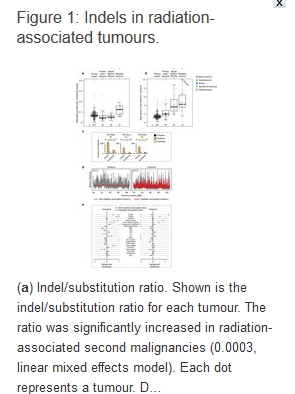
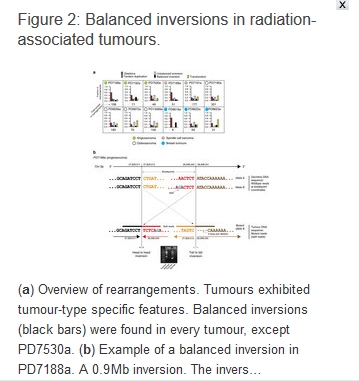
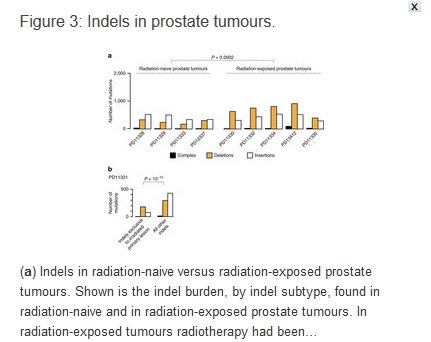
Ionizing radiation is a potent carcinogen, inducing cancer through DNA damage. The signatures of mutations arising in human tissues following in vivo exposure to ionizing radiation have not been documented. Here, we searched for signatures of ionizing radiation in 12 radiation-associated second malignancies of different tumour types. Two signatures of somatic mutation characterize ionizing radiation exposure irrespective of tumour type. Compared with 319 radiation-naive tumours, radiation-associated tumours carry a median extra 201 deletions genome-wide, sized 1–100 base pairs often with microhomology at the junction. Unlike deletions of radiation-naive tumours, these show no variation in density across the genome or correlation with sequence context, replication timing or chromatin structure. Furthermore, we observe a significant increase in balanced inversions in radiation-associated tumours. Both small deletions and inversions generate driver mutations. Thus, ionizing radiation generates distinctive mutational signatures that explain its carcinogenic potential.
Introduction
Exposure to ionizing radiation increases the risk of subsequent cancer. This risk exhibits a strong dose–response relationship, and there appear to be no safe limits for radiation exposure1. This association was first noted by March who observed an increased incidence of leukaemia amongst radiologists2. A leading cause of radiation-induced cancers appears to be exposure to medical radiation, either in the form of radiotherapy for an unrelated malignancy3 or diagnostic radiography4, 5. These iatrogenic tumours arise as de novo neoplasms in a field of therapeutic radiation after a latency period that can span decades6, and are not recurrences of the original cancer7.
Many, but not all, environmental carcinogens induce cancer by increasing the rate of mutation in somatic cells. The physicochemical properties of a given carcinogen govern its interaction with DNA, leading to recurrent ‘signatures’ or patterns of mutations in the genome. These can be reconstructed either from experimental model systems8, 9 or from statistical analyses of cancer genomes in exposed patients10, 11, 12. Ionizing radiation directly damages DNA, and can generate lesions on single bases, single-stranded nicks in the DNA backbone, clustered lesions at several nearby sites and double-stranded DNA breaks13. In experimental systems exposed to radiation, including the murine germline and Arabidopsis thaliana cells, ionizing radiation can cause all classes of mutations, with possible enrichment of indels14, 15, 16, 17, 18, 19, 20, 21, 22. Targeted gene screens in radiation-induced sarcoma have indicated an increased burden of deletions and substitutions with frequent inactivation of TP53 and RB1 (refs 23, 24, 25). In addition, a transcriptome profile that represents a state of chronic oxidative stress has been proposed to be specific to radiation-associated sarcoma26.
We studied the genomes of 12 radiation-associated second malignancies of four different tumour types: osteosarcoma; spindle cell sarcoma; angiosarcoma; breast cancer. These were secondary tumours that arose within a field of therapeutic ionizing radiation and were not thought to be recurrences of the original malignancy treated with radiation. We chose this experimental design for several reasons: the tumours are classic radiotherapy-induced cancers with high attributable risks for the radiation exposure; the radiation exposure occurs over a short time period relative to the evolution of the cancer; and the mutational signatures of sporadic breast cancers and sarcomas have been well documented10, 27, 28, 29. It should be noted that in the absence of biomarkers, a diagnosis of a tumour being radiation-induced cannot be definitively made (see Supplementary Note 1 for clinical details and further discussion).
We subjected these 12 tumours, along with normal tissues from the same patients, to whole-genome sequencing and obtained catalogues of somatic mutations. We compared our findings to 319 radiation-naive breast cancers and sarcomas processed by the same sequencing and bioinformatics pipeline: 251 breast tumours; 33 breast tumours with pathogenic BRCA1 or BRCA2 germline mutations; 35 osteosarcomas (see Methods for cohort details). In addition, we validated our findings in a published series of radiation-naïve and radiation-exposed prostate tumours from ten patients30.
The main aim of our analyses was to search for tumour-type independent, overarching signatures of ionizing radiation. Overall we identified two such signatures in radiation-associative second malignancies, an excess of balanced inversions and of small deletions.
To read more :
http://www.nature.com/ncomms/2016/160907/ncomms12605/full/ncomms12605.html
DNA damage, cancer caused by ionizing radiation identified
This UPI article was published on Sept. 13, 2016.
I added below the source of that UPI article, the study published on the sciences website “Nature” on Sept. 12, 2016.
This article is important, and should be seen by as many people as possible, as this scientific study will impact greatly the future of our anti-nuclear cause.
By establishing the genetic signatures of any cancer caused by ionizing radiation, any future denial from the nuclear lobby is now impossible. Those scientifically established signatures will also be extremely helpful in court for any future suit from radiation victims.
Researchers found mutational signatures left by radiation-caused changes to DNA, which may lead to better treatment of cancers.
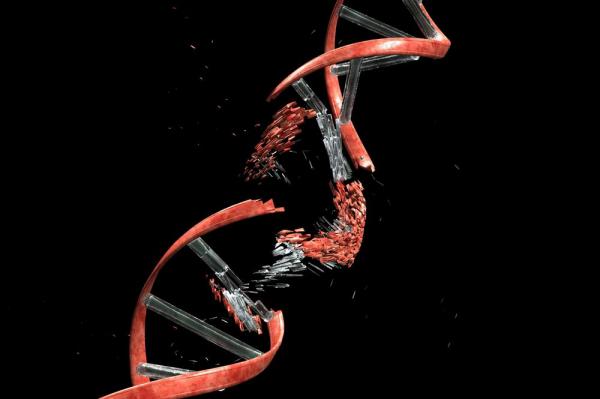
Researchers found mutational signatures which appear to indicate changes to DNA caused by exposure to ionizing radiation, which may allow doctors to better treat cancer caused by non-spontaneous mutations.
LONDON, Sept. 13 (UPI) — Though scientists have suspected ionizing radiation can cause cancer, experiments conducted in England are the first to show the damage it inflicts on DNA and may allow doctors to identify tumors caused by radiation.
In a study published in the journal Nature Communications, scientists showed the effects of gamma rays, X-rays and radioactive particles on DNA, deciphering patterns they think will help differentiate between spontaneous and radiation-caused tumors, allowing for better cancer treatment.
“To find out how radiation could cause cancer, we studied the genomes of cancers caused by radiation in comparison to tumors that arose spontaneously,” Dr. Peter Campbell, a researchers at the Wellcome Trust Sanger Institute, said in a press release. “By comparing the DNA sequences we found two mutational signatures for radiation damage that were independent of cancer type. We then checked the findings with prostate cancers that had or had not been exposed to radiation, and found the same two signatures again. These mutational signatures help us explain how high-energy radiation damages DNA.”
For the study, the researchers looked for mutational signatures in 12 cancer patients with radiation-associated second malignancies, and compared their tumors to 319 from patients not exposed to radiation.
The researchers found two mutational signatures they link to radiation. While one causes small deletions of DNA bases, the other — called a balanced inversion — includes two cuts to DNA, with the middle piece spinning around and rejoining in the opposite direction.
These mutations, especially balanced inversions, which do not happen naturally in the body, increase the potential for cancer to develop, the researchers say.
“This is the first time that scientists have been able to define the damage caused to DNA by ionising radiation,” said Adrienne Flanagan, a professor at the University College London Cancer Institute. “These mutational signatures could be a diagnosis tool for both individual cases, and for groups of cancers, and could help us find out which cancers are caused by radiation. Once we have better understanding of this, we can study whether they should be treated the same or differently to other cancers.”
Mutational signatures of ionizing radiation in second malignancies
« Ionizing radiation is a potent carcinogen, inducing cancer through DNA damage. The signatures of mutations arising in human tissues following in vivo exposure to ionizing radiation have not been documented. Here, we searched for signatures of ionizing radiation in 12 radiation-associated second malignancies of different tumour types. Two signatures of somatic mutation characterize ionizing radiation exposure irrespective of tumour type. Compared with 319 radiation-naive tumours, radiation-associated tumours carry a median extra 201 deletions genome-wide, sized 1–100 base pairs often with microhomology at the junction. Unlike deletions of radiation-naive tumours, these show no variation in density across the genome or correlation with sequence context, replication timing or chromatin structure. Furthermore, we observe a significant increase in balanced inversions in radiation-associated tumours. Both small deletions and inversions generate driver mutations. Thus, ionizing radiation generates distinctive mutational signatures that explain its carcinogenic potential. »
http://www.nature.com/ncomms/2016/160907/ncomms12605/full/ncomms12605.html
Linear No Threshold Theory (LNT) of ionising radiation is backed by new research
Gamma radiation at a human relevant low dose rate is genotoxic in mice, Anne Graupner, Dag M. Eide, Christine Instanes, Jill M. Andersen, Dag A. Brede, Stephen D. Dertinger, Ole C. Lind, Anicke Brandt-Kjelsen, Hans Bjerke, Brit Salbu, Deborah Oughton, Gunnar Brunborg & Ann K. Olsen Scientific Reports 6, Article number: 32977 September 21016
Abstract
Even today, 70 years after Hiroshima and accidents like in Chernobyl and Fukushima, we still have limited knowledge about the health effects of low dose rate (LDR) radiation. Despite their human relevance after occupational and accidental exposure, only few animal studies on the genotoxic effects of chronic LDR radiation have been performed. Selenium (Se) is involved in oxidative stress defence, protecting DNA and other biomolecules from reactive oxygen species (ROS). It is hypothesised that Se deficiency, as it occurs in several parts of the world, may aggravate harmful effects of ROS-inducing stressors such as ionising radiation.
We performed a study in the newly established LDR-facility Figaro on the combined effects of Se deprivation and LDR γ exposure in DNA repair knockout mice (Ogg1−/−) and control animals (Ogg1+/−). Genotoxic effects were seen after continuous radiation (1.4 mGy/h) for 45 days. Chromosomal damage (micronucleus), phenotypic mutations (Pig-a gene mutation of RBCCD24−) and DNA lesions (single strand breaks/alkali labile sites) were significantly increased in blood cells of irradiated animals, covering three types of genotoxic activity.
This study demonstrates that chronic LDR γ radiation is genotoxic in an exposure scenario realistic for humans, supporting the hypothesis that even LDR γ radiation may induce cancer……..

In the present study we demonstrate that exposure to a human relevant LDR γ radiation induces genotoxic effects in mouse blood cells assessed with three separate but complementary assays. These effects were expressed as increased levels of chromosomal damage (micronuclei), phenotypic mutations (RBCCD24−) and DNA lesions (ssb/als). The absolute measured changes were small, but significant. The formation of MN was observed in all irradiated groups independent of genotype or diet, and significant changes were seen in both immature and mature erythrocytes. This is an expected result given the chronic exposure and lack of splenic filtration of circulating MN-containing erythrocytes18……..In summary, exposure to chronic LDR of ionising radiation is indeed genotoxic with potential implications for cancer development, and the response is modified by the availability of Se, an element involved in the antioxidative defence report http://www.nature.com/articles/srep32977
Nuclear Hotseat #271: How Radiation in Oceans Contaminates Our Food Supply – Tim Deere-Jones

This Week’s Featured Interview:
- Tim Deere-Jones is an independent marine pollution consultant and a specialist in the behavior and fate of marine pollutants in ocean, coastal and estuarine environments. He explains how radiation in the ocean from Fukushima and the UK’s Sellafield nuclear facility have impacted food safety at tremendous distances, as far away as the US West Coast. A jaw-dropping eye-opening report. This is an Encore presentation originally presented on Nuclear Hotseat #225 from October 13, 2015.
Numnutz of the Week:
The only thing “super” about Japanese Prime Minister Shinzo Abe-Baby showing up dressed as Super Mario at the Rio Olympics is his gall at continuing to lie about the nuclear contamination awaiting anyone who dares to attend the 2020 Tokyo Radioactive NOlympics. (And that ball he’s holding is pure projection, if not delusion…)

Listen Here:
Study of sea life shows exposure to tritium +increase in temp may increase DNA mutation
Rising temperatures could accelerate radiation induced DNA effects in marine mussels
Increased sea temperatures could dramatically enhance and accelerate radiation-induced DNA effects in marine invertebrates, a new study suggests.
Led by Plymouth University, in conjunction with the Centre for Environment, Fisheries and Aquaculture Science (Cefas), the research for the first time explored the impact of rising temperatures coupled with the presence of tritium, an environmentally relevant radionuclide, on marine mussels (Mytilus galloprovincialis).
Studies carried out under laboratory conditions demonstrated that at radiation dose rates considerably below the recommended international guidelines, induced DNA strand breaks appeared earlier at higher temperature compared to lower temperature. At 15ºC, DNA damage was only significantly elevated after seven days in contrast to 25°C where a similar response was observed after three days.
Scientists involved say this suggests an acceleration of radiation-induced DNA damage and potentially compromising defence mechanisms as indicated by changes in expression profiles of genes involved in heat-shock protection, cell cycle progression and repair of DNA breaks.
Temperature is an abiotic factor of particular concern for assessing the potential impacts of radionuclides, many of them having very long half-lives, on marine species, and with sea surface temperatures forecast to rise 0.5-3.5?C in the next 30-100 years, determining the interaction of radiological exposure has never been more important.
Awadhesh Jha, Professor of Genetic Toxicology & Ecotoxicology, led the study and said: “Ionising radiations are known to induce genetic damage, and radiation-induced genetic damage could be modified by many environmental factors, including temperature. Compared to other radionuclides, large amounts of tritium are discharged, mostly as water, in the marine environment by nuclear power plants (NPPs) and nuclear fuel reprocessing plants (NFRPs). In addition, cooling water from nuclear installations is one of the major sources of tritium in the aquatic environment. As thermal discharges from nuclear facilities is an important environmental issue, second only to the release of radionuclides which could extend for a long distance from the discharge point, such studies are important in determining the hazard and risk to the natural biota and therefore environmental sustainability.”
Brett Lyons, from the Environment and Animal Heath group based in Cefas’ Weymouth laboratory, co-supervised the study and said: “These results are important as they allow us to better understand the risks a warming ocean poses to marine life. We already know climate change is impacting things such as fish physiology, reproduction and migration, but this research is part of a growing body of evidence that is suggesting rises in sea water temperature may increase the risk posed by certain chemical and physical pollutants.”
For the study, published in the Journal of Environmental Radioactivity, the mussels were exposed to tritiated water (HTO) with differing temperatures of 15°C and 25°C, and DNA damage and gene expressions were determined along with accumulation of tritium in different tissues of the mussels over a period of seven days.
In their conclusion, the authors say: “This study is the first to investigate temperature effects on radiation-induced genotoxicity in an ecologically representative marine invertebrate. It represents an important step forward in radioecology in general, and our study suggests that mussels (or similar marine species) exposed to increased temperature and HTO may have a compromised ability to defend against genotoxic insult at the molecular level. This is particularly pertinent in the context of rising sea temperatures and thermal pollution. The study suggests there is still a pressing need to investigate the interactive effects of temperature and other abiotic factors in conjunction with radiation exposure on aquatic organisms.”
Journal Reference:
- Lorna J. Dallas, Tim P. Bean, Andrew Turner, Brett P. Lyons, Awadhesh N. Jha. Exposure to tritiated water at an elevated temperature: Genotoxic and transcriptomic effects in marine mussels (M. galloprovincialis). Journal of Environmental Radioactivity, 2016; 164: 325 DOI: 10.1016/j.jenvrad.2016.07.034
https://www.sciencedaily.com/releases/2016/08/160823103216.htm
The affection of the central nervous system by incorporated radionuclides Cs-137
It has been known for a long time, and without a doubt, that even low levels of radiation in our food or water can have disastrous effects, even at levels of say 30 or 40 Bq/kG of consumed food.


And here is the study itself.
http://chernobyl-today.org/images/stories/bandazhevsky_lelevich_1995.pdf
Astronauts 5 times more likely to die from heart disease due to cosmic radiation
 Cosmic radiation: Apollo astronauts 5 times more likely to die from heart disease, says study Rt.com 29 Jul, 2016 The first study of Apollo astronauts – the only people to have traveled beyond Earth’s protective magnetic shield – has found that those who ventured to the moon are five times more likely to die from heart disease.
The NASA and Florida State University study revealed its findings on Thursday. They state that so far three Apollo astronauts, including Neil Armstrong, the first person to walk on the moon, have died from cardiovascular disease, apparently as a result of the extreme cosmic radiation they were exposed to during their missions. The researchers concentrated on a small group for the study: 42 astronauts who flew in space, seven of whom were Apollo veterans, the other 35 being non-flight astronauts.
The study, published in the Scientific Reports journal, found that Apollo astronauts are four to five times more likely to die from cardiovascular disease death than astronauts who either never entered space or only flew on low-altitude missions.
“These data suggest that human travel into deep space may be more hazardous to cardiovascular health than previously estimated,” it said. https://www.rt.com/usa/353865-apollo-study-heart-disease/#.V5smTINhh9Q.facebook
1 This Month

of the week – Shut Down Drone Warfare!


Tell the Ukrainian Government to Drop Prosecution of Peace Activist Yurii Sheliazhenko

Petition to revoke the licensing of the Near Surface Nuclear Disposal Facility (NSDF) at Chalk River. https://www.ourcommons.ca/petitions/en/Petition/Details?Petition=e-7247
To see nuclear-related stories in greater depth and intensity – go to https://nuclearinformation.wordpress.com
-
Archives
- April 2026 (19)
- March 2026 (251)
- February 2026 (268)
- January 2026 (308)
- December 2025 (358)
- November 2025 (359)
- October 2025 (376)
- September 2025 (257)
- August 2025 (319)
- July 2025 (230)
- June 2025 (348)
- May 2025 (261)
-
Categories
- 1
- 1 NUCLEAR ISSUES
- business and costs
- climate change
- culture and arts
- ENERGY
- environment
- health
- history
- indigenous issues
- Legal
- marketing of nuclear
- media
- opposition to nuclear
- PERSONAL STORIES
- politics
- politics international
- Religion and ethics
- safety
- secrets,lies and civil liberties
- spinbuster
- technology
- Uranium
- wastes
- weapons and war
- Women
- 2 WORLD
- ACTION
- AFRICA
- Atrocities
- AUSTRALIA
- Christina's notes
- Christina's themes
- culture and arts
- Events
- Fuk 2022
- Fuk 2023
- Fukushima 2017
- Fukushima 2018
- fukushima 2019
- Fukushima 2020
- Fukushima 2021
- general
- global warming
- Humour (God we need it)
- Nuclear
- RARE EARTHS
- Reference
- resources – print
- Resources -audiovicual
- Weekly Newsletter
- World
- World Nuclear
- YouTube
-
RSS
Entries RSS
Comments RSS
 nuclear-news