Mururoa Nuclear Radiation Report Scheduled for October
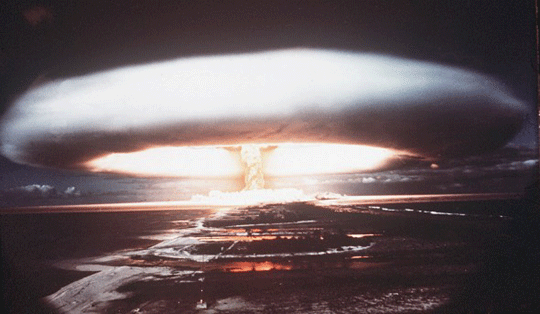 Mururoa Nuclear Radiation Report Scheduled for October http://www.scoop.co.nz/stories/PO1509/S00409/mururoa-nuclear-radiation-report-scheduled-for-october.htm
30 September 2015,
An independent report into likely exposure and risk from radiation during the New Zealand government’s 1973 two-frigate protest against French nuclear testing at Mururoa is expected to be released to MNVG Inc in October. 42 years after the event.
The report was commissioned by Veterans Affairs New Zealand (VANZ) in August and is being carried out by Crown research agency Environmental Science and Research Ltd, .it is addressing three issues:• the external dose rate to veterans from nuclear testing; • the internal (perhaps also external) dose rate from seawater used in ships; • hereditary effect on offspring.
Described as “a scientific report written with consideration of a non-specialist/technical audience”, the report is the result of sustained efforts over the last two years by the Mururoa Nuclear Veterans Group Inc (MNVG Inc) MNVG Inc President, Wayne O’Donnell, says the group – formed in 2013 and registered as a legal society – has been monitoring the health of the veterans, their children and grandchildren, and is establishing a trust fund to enable the medical testing of the veterans’ children and grandchildren, and to help those in need.
He says the report stems from the MNVG Inc’s meetings with Veterans Affairs Minister Craig Foss and VANZ in May. Following that meeting, Foss directed VANZ to commission an independent examination of the issues.
O’Donnell says Foss and Head of Veterans Affairs New Zealand, Jackie Couchman – both relatively new to their positions – have proved far more receptive and open to looking at the issues than their predecessors.
He says the group hopes the results of this work “will establish the truth of the genetic transfer of illnesses related to the nuclear exposure encountered by the crews”.
“We wanted to get it recognised as an issue, and ideally, to get help from the Government in funding research and establishing a Health Trust Fund.”
New Zealand’s protest in 1973 attracted international attention and helped force the French to switch to underground testing.
Around 500 crew, observers (including a government minister, Fraser Colman) and news media sailed aboard HMNZS Canterbury and HMNZS Otago to witness two atmospheric nuclear tests at Mururoa Atoll. HMAS Supply, with a crew of 200 plus, was also deployed into the radiated waters by the Royal Australian Navy to replenish the frigates with Fuel and Food during the deployment. To date these Australian Sailors have not been recognised or offered Health Assistance in relation to their deployment by the Australian Government.
A number of Mururoa veterans – and some of their children – have died at an early age.
MNVG Inc says there has also been a significant number of miscarriages, stillborn children, and children born with deformities or health problems.
The group has been searching for veterans and their descendants to contribute to the research. However, the search has been complicated by the lack of complete data on who was on board the frigates. While MNVG Inc have a full list for Canterbury, no such list can be found within NZDEF Records or archives for Otago.
Contact has been lost with some of the widows and children of those who have died, says O’Donnell. “We need to make contact with these people so that they can be informed of any findings, be part of the testing but most of all receive the duty of care they are entitled to. We also need to record any medical issues suffered by the generational children of the nuclear veterans. Not just now but in future generations.”
At the end of June 2015, 93 veterans who served at Mururoa were receiving a War Disablement Pension under the Veterans’ Support Act. A list of “conclusively presumed conditions” supports veterans of Pacific testing. A veteran diagnosed with a disability on the list is entitled to free medical treatment.
“This number of 93 is minimal, why ?, simply because many Veterans do not know what they are entitled to and there has been no proactive action taken to locate and inform them in the past. Some of our shipmates are simply living with their health issues and eventually dying, totally unaware of the Duty of Care they are entitled to”, Says O’Donnell.
Until now the New Zealand government has taken the position that the available evidence indicated Mururoa veterans were not exposed to harmful doses of ionising radiation in the frigates, neither of which came within 20 nautical miles – the minimum safe distance – of a detonation. However they did sail thru the contaminated cloud and fallout on more than one occasion and drew contaminated water into the ships.
O’Donnell, who was a navy marine engineer and diver, says it is not just a matter of direct exposure to radiation. He says seawater was collected and desalinated to provide drinking water, and food was stored in lockers on the upper deck in direct exposure to any and all fallout and salt water contamination..
“This water had been radiated for years and years. The testing of samples showed that it had high levels. We were ingesting it”.
He says the concern should be whether radiation was involved, not how much: “Any radiation is too much.”
Mururoa Nuclear veterans and families have been waiting 42 years and look forward to the report and further communications with both the Government and VANZ.
Don’t fall for nuclear industry propaganda about radiation “hormesis” !
 Cancer, Coverups and Contamination: The Real Cost of Nuclear Energy 27th September 2015 Andreas Toupadakis Ph.D Contributing Writer for Wake Up World “…….many nuclear industry advocates actually maintain that low-dose nuclear radiation is in fact beneficial to human health. Their theory, known as the “Hormesis Effect”, is deliberate industry propaganda. The human body perceives radiation as a threat to its existence, which results in an intense immune response. The short term result of this immune activity can be a short-term improvement of other existing ailments, however the immune system cannot work permanently in such a state of stress, and as environmental exposure continues, human health inevitably deteriorates. This is also the conclusion of the ECRR which concludes that…
“… hormesis may exist, but if it does exist its long-term effects are likely to be harmful… [When exposed to radiation] immune system surveillance is being potentiated in the short term … [however] the existence of radiation-inducible repair means that the repair systems themselves may be open to attack, also by radiation… If cells were induced into a state of high sensitivity for repair replication, then the cell line would undergo a greater rate of replication throughout the period of stress, and… the consequence of the short-term advantage conferred by hormesis is… accumulated DNA damage caused by high numbers of replication-copying processes.”
Over fifty years ago, questions on radiation and toxicity hazards were raised by at least three groups – the the International Commission on Radiological Protection (ICRP), National Council on Radiation Protection (NCRP), and the Federal Radiation Council (FRC). Continue reading

What Are The Public Health and Environmental Impacts of Radiation Exposure?
Cancer, Coverups and Contamination: The Real Cost of Nuclear Energy 27th September 2015 Andreas Toupadakis Ph.D Contributing Writer for Wake Up World
“………Another important factor in the equation of the cost of nuclear power is public health. This factor is downplayed if  not completely ignored in most cost analyses so, while the corporations continue to benefit, the risks of nuclear power generation are passed onto the unaware public. However, informed citizens know that cancer is devastating their families and ask why. Let’s look at some facts about breast cancer, among so many other kinds.
Breast cancer kills 46,000 women in the U.S. alone, each year. It is well known that cancer rates depend on the degree of exposure to carcinogens. But what are the carcinogens that cause cancer?
Physician, author and activist Dr. Janette D. Sherman MD is a practicing physician who specializes in internal medicine and toxicology with an emphasis on chemicals and nuclear radiation that cause illnesses, including cancer and birth defects. In her fully-documented book “Life’s Delicate Balance: The Causes and Prevntion of Breast Cancer” (New York and London: Taylor and Francis, 2000), Dr. Sherman explains an established cause of breast and other cancers: ionizing radiation from x-rays and from nuclear power plant emissions and the radioactive fallout from atomic bomb tests. Dr. Sherman also asks a simple question, which medical and nuclear insiders are otherwise unable to answer;
“How [else] can one explain the doubling, since 1940, of a woman’s likelihood of developing breast cancer, and also increasing in tandem with prostate and childhood cancers?”
How is it known that ionizing radiation in our environment – that is, in air, water, soil and food – plays an important role in causing breast cancer? Because when women from their non-industrial homelands move to nuclear and industrial countries, their breast cancer rate inevitably goes up. In 1984, a study of Mormon families in Utah downwind from the nuclear tests in Nevada reported elevated numbers of breast cancers. Girls who survived the bombing of Hiroshima are also now dying in excessive numbers from breast cancer. There are also a number of ecological studies showing that women living near nuclear power plants suffer from elevated rates of breast cancers.
It is not a secret that all nuclear power plants leak radioactivity routinely into local air and water, and that any exposure to ionizing radiation increases a woman’s danger of breast cancer. Clearly there is an epidemic of cancer that is sweeping the western world, and the only way to prevent the nuclear industry from further contributing to this problem is to end nuclear power permanently. This is also the conclusion of the ECRR 2010 recommendations report
“The Committee concludes that the present cancer epidemic is a consequence of exposures to global atmospheric weapons fallout in the period 1959-63 and that more recent releases of radioisotopes to the environment from the operation of the nuclear fuel cycle will result in significant increases in cancer and other types of ill health.”
But is breast cancer from nuclear power plants the only cost of nuclear power to public health? How about dozens of other illnesses? Studies have clearly linked radiation exposure to increased rates of childhood cancers, thyroid damage, skin complaints, endocrine disruption, pregnancy issues (such as miscarriage) and emotional trauma, which itself negatively impacts the body.
“In 2007, the latest of a long series of childhood leukemia studies was published: this one from the German Childhood Cancer Registry, showing a statistically significant effect on child cancer in those living within 5km of nuclear plants (KiKK 2007). The size of this study, and the affiliation of the authors, made it impossible to conclude that this was anything but proof of a causal relationship between childhood cancer and nuclear plant exposures to radioactive releases…
“The Committee has examined the considerable weight of evidence relating to the existence of childhood cancer clusters near nuclear sites, including evidence from aggregations of nuclear sites in the UK and Germany and has concluded that it is exposure to internal radiation from discharges from the sites which is the cause of the illness.”………http://wakeup-world.com/2015/09/27/cancer-coverups-and-contamination-the-real-cost-of-nuclear-energy/
Radium isotopes in coal ash – from its thorium and uranium content
- Avner Vengosh
- Heileen Hsu-Kim
- Nancy Lauer DURHAM, N.C. — A new Duke University-led study has revealed the presence of radioactive contaminants in coal ash from all three major U.S. coal-producing basins.The study found that levels of radioactivity in the ash were up to five times higher than in normal soil, and up to 10 times higher than in the parent coal itself because of the way combustion concentrates radioactivity.
The finding raises concerns about the environmental and human health risks posed by coal ash, which is currently
 unregulated and is stored in coal-fired power plants’ holding ponds and landfills nationwide.
“Until now, metals and contaminants such as selenium and arsenic have been the major known contaminants of concern in coal ash,” said Avner Vengosh, professor of geochemistry and water quality at Duke’s Nicholas School of the Environment. “This study raises the possibility we should also be looking for radioactive elements, such as radium isotopes and lead-210, and including them in our monitoring efforts.”
- Radium isotopes and lead-210 occur naturally in coal as chemical by-products of its uranium and thorium content. Continue reading

Anti-radiation pills coming in the mail to residents near Pickering nuclear plant
 Residents near Pickering nuclear plant to receive anti-radiation pills by mail http://toronto.ctvnews.ca/residents-near-pickering-nuclear-plant-to-receive-anti-radiation-pills-by-mail-1.2574427 TV Toronto , September 22, 2015 Residents living near the nuclear power plant in Pickering, Ont., will soon start receiving anti-radiation pills in the mail to protect them in the event of a radiation leak at the facility.
Starting in October, anyone living within a 10-kilometre radius of the Pickering Nuclear Plant will receive a pack of potassium iodide (KI) pills that help prevent thyroid cancer caused by exposure to radioactivity.
“It fills up your thyroid with iodine and therefore, if you ever get exposed to radioactive iodine, it can’t get into your thyroid and it prevents thyroid cancer,” said Ken Gorman, Durham region’s director of environmental health. More than 200,000 homes and businesses near the plant will receive kits containing the pills and a brochure explaining how to administer the treatment. Each package contains enough pills for one family.
Until now, potassium iodide pills have been available at local pharmacies to anyone who wanted to stock up. But in October 2014, the Canadian Nuclear Safety Commission ordered that the pill be distributed to all Canadians living or working within 10 kilometres of a nuclear facility.
In the event of a leak at a nuclear plant, residents are asked to evacuate the area as quickly as possible. If this isn’t possible, the provincial emergency authority recommends that people stay indoors and wait for instruction from authorities. With a report from CTV Toronto’s Austin Delaney
Clusters of Cancer – the shameful nuclear secret of Santa Susana Field Lab’s “Area Four,”
 LA’s Nuclear Secret: Part 1 Tucked away in the hills above the San Fernando and Simi valleys was a 2,800-acre laboratory with a mission that was a mystery to the thousands of people who lived in its shadow 4 Southern California By Joel Grover and Matthew Glasser, 22 Sep 15
“………..Researchers inside and out of government have contended that the radiation and toxic chemicals from Santa Susana might have caused many cancer cases. “The radiation that was released in 1959 and thereafter from Santa Susana is still a danger today,” Dr.Dodge said. “There is absolutely a link between radiation and cancer.”
The I-Team tracked down dozens of people diagnosed with cancer and other illnesses who grew up in the shadow of Santa Susana — in Canoga Park, West Hills, Chatsworth, Thousand Oaks, Simi Valley. Many of them believeh their cancers were caused by radiation and chemicals from the field lab.
Kathryn Seltzer Carlson, 56, and her sisters, Judy and Jennifer, all grew up in Canoga Park around the time of the nuclear meltdown and for years after, and all have battled cancer. “I played in the water, I swam in the water, I drank the water” that ran off the Santa Susana Field Lab, said Carlson, who finished treatment for ovarian cancer earlier this year and is now undergoing chemotherapy for lymphoma. “I’ve had, I don’t know how many cancers.”
Bonnie Klea, a former Santa Susana employee who has lived in West Hills since the 60s, also battled bladder cancer, which is frequently linked to radiation exposure. “Every single house on my street had cancer,” Klea said. A 2007 Centers for Disease Control study found that people living within two miles of the Santa Susana site had a 60 percent higher rate of some cancers.
“There’s some provocative evidence,” said Dr. Hal Morgenstern, an epidemiologist who oversaw the study. “It’s like circumstantial evidence, suggesting there’s a link” between the contamination from Santa Susana and the higher cancer rates.
Silence From the Government
For more than two months, the I-Team asked to speak with someone from the U.S. Department of Energy (DOE), the federal agency that’s responsible for all nuclear testing, to ask why workers were ordered to release dangerous radiation over Los Angeles, why the DOE has never publicly admitted this happened, and what it plans to do to help get the site cleaned up.
The DOE emailed the I-Team, “We will not have anyone available for this segment.”
So the I-Team showed up at a public meeting this month about Santa Susana and asked the DOE’s project manager for the site, Jon Jones, to speak with us. He walked away and wouldn’t speak.
Will the Contamination Ever Be Cleaned Up?
Community residents, many stricken with cancer and other radiation-related illnesses, have been fighting for years to get the government and the private owners of the Santa Susana Field Lab to clean up the contamination that remains on the site.
But efforts in the state legislature and state agencies that oversee toxic sites have, so far, stalled. But residents, with the support of some lawmakers, continue to fight for a full cleanup. “People are continuing to breathe that (radiation) in and to die,” Chatsworth resident Arline Mathews said.”See that this is done immediately, before more lives are lost.” http://www.nbclosangeles.com/investigations/LA-Nuclear-Secret-327896591.html
Radiation risks to interventional cardiologists
 Interventionalists Receive 4.7 Times the Radiation Exposure to Left Side of Head Than Right Side During Invasive Cardiovascular Procedures Published study reveals exposure at 16 times the ambient radiation level WASHINGTON, Sept. 22, 2015 /PRNewswire/ — The results of a research study indicate that interventional cardiologists receive “very high” radiation exposure levels to the left side of the head specifically when performing fluoroscopically guided invasive cardiovascular (CV) procedures. Even with modern imaging equipment and shielding, a significant exposure difference was seen between the two sides of the head. The study was published in JACC: Cardiovascular Interventions, a peer-reviewed journal of the American College of Cardiology. Dr. Ehtisham Mahmud, MD, FACC, FSCAI, chief of Cardiovascular Medicine, director of Sulpizio Cardiovascular Center Medicine and director, Interventional Cardiology at UC San Diego, authored the study.
According to the study, interventionalists received 16 times the ambient radiation level to the left side of the head during an invasive CV procedure. Also, radiation exposure on the left side of the head was 4.7 times higher than exposure on the right side of the head. Interventional cardiologists typically stand anteriorly to the patient, with the left side of their body closest to the patient’s chest and most proximate to the radiation source.
“The implications of this study are significant when considering the subsequent impact ongoing exposure to even low levels of radiation can have on the health of the practitioner over the course of their career,” said Dr. Mahmud………..http://www.prnewswire.com/news-releases/interventionalists-receive-47-times-the-radiation-exposure-to-left-side-of-head-than-right-side-during-invasive-cardiovascular-procedures-300146945.html
Pacific Ocean radioactive isotopes from Atomic Testing compared with from Fukushima nuclear disaster
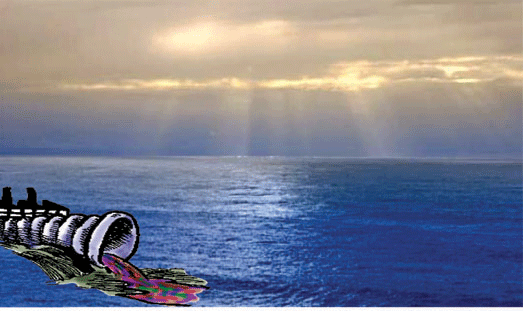 History of Bomb Strontium and Cesium Isotopes in Pacific Compared to Fukushima Sources http://www.dailykos.com/story/2014/01/16/1269942/-History-of-Bomb-Strontium-and-Cesium-Isotopes-in-Pacific-Compared-to-Fukushima-Sources# (EXCELLENT GRAPHS) by MarineChemist
The purpose of this diary is to compare the concentrations of Sr-90 and Cs-137 in the North Pacific Ocean over the last 50 years to the concentrations predicted to arrive on the west coast associated with waters affected by release of radionculides from the Fukushima-Daiichi Nuclear Power Plant. Given present levels that are being measured in the eastern Pacific and barring release rates that significantly exceed past rates in March-April 2011 the impact on marine organisms and the marine environment is going to be very minimal. What follows below the fold is a comparison of the concentrations measured and predicted over much of the Pacific owing to Fukushima to the concentrations that were present in the mid-1960s from the fallout of atmospheric weapons testing that is free from any discussion of safe doses or models of radiation exposure to organisms. Continue reading
How world health will benefit from Iran nuclear deal

 Iran nuclear deal will bolster global health Boston Globe, By Dr. Ali Lotfizadeh and Dr. Mohsen Malekinejad SEPTEMBER 15, 2015 National security and regional stability have dominated the political debate over the Iran nuclear accord in recent weeks. Less discussed, however, are the far-reaching, positive implications for public health that will come when sanctions are lifted, as the deal calls for, and Iran’s medical system can begin to cooperate with the West again.
Sanctions for several years have severely restricted access to life-saving medicines for patients in Iran, leading to serious health consequences. Although the US government introduced loopholes to bypass these sanctions for medical purposes, the loopholes have not worked properly and lives have consequently been lost. With the nuclear agreement in place, thousands of Iranians will once again receive treatments for diseases like cancer and hemophilia.
Yet the calming of political tensions will have broader impact than just inside Iran. Since the revolution of 1979, Iran has been at the forefront of advancing primary medical care for rural populations through a system of robust health networks, which comprises more than 17,000 rural health facilities and a health center for every 7,000 rural residents. This network’s success even drew the interest of public health experts in Mississippi, who collaborated a few years ago with colleagues at Shiraz University of Medical Sciences in Iran to reduce health care disparities between rural and urban parts of the state.
Iran has also launched advanced intervention programs for drug users and is home to two out of three HIV surveillance and treatment knowledge hubs for the Eastern Mediterranean region office of the World Health Organization. These hubs are in charge of knowledge transfer to other countries in the region.
Iran’s vast potential to enhance global health is significantly underutilized right now. For example, since 2013, we have trained local ophthalmologists in Tajikistan to treat the main causes of avoidable blindness through a US-based nongovernmental organization. When we sought ophthalmologists who could provide training in Tajikistan, it was only natural to consider enlisting the expertise of Iranian colleagues. Iran, a neighbor of Tajikistan, is home to several reputable training sites sponsored by the International Congress of Ophthalmology. Iranian physicians speak the language and know the culture of Tajikistan and other countries in the region. They are also less expensive to hire than their American counterparts. But current restrictions make even these small-scale collaborations virtually impossible, despite their clear humanitarian purpose……..
proposed health partnerships transcend political ideologies and improve lives from villages in Tajikistan to small towns in Mississippi. But their success depends on the durability of this nuclear agreement. Iran and America do not see eye-to-eye on many political issues, and the current accord will not change that. But support for this agreement can pave the way toward a shared global responsibility to make the world a healthier place.
Dr. Ali Lotfizadeh is a visiting scholar at UCSF School of Medicine’s Institute for Health Policy Studies. Dr. Mohsen Malekinejad is an assistant professor in the same program. https://www.bostonglobe.com/opinion/2015/09/15/iran-nuclear-deal-will-bolster-global-health/YF7Hobo2RJPsu547uC4lGM/story.html, Boston Globe
Even when it’s cold, UV radiation is a risk
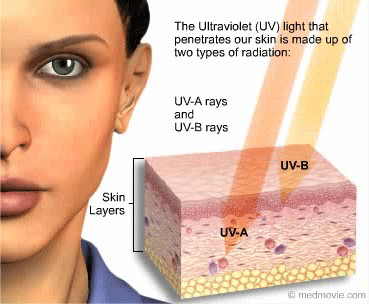 The damages of UV radiation are a daily risk even when you can’t feel the heat of the sun, News Local, Sydney September 12, 2015 IT seems logical to assume that the red hot sunburn we get comes from standing under the hot sun we feel, but it is not quite correct.. Sun damage is a reality that Australians face every day of the year, regardless of how hot the temperature is or how cloudy the sky…….
associate Professor Pablo Fernández-Peñas, who sees the detrimental effects of too much sun exposure.
“We can’t feel UV light and the heat sensation is not related to the amount of UV light,” he said.
“In winter, as days are cooler, people tend to stay longer outdoors.” A 2014 Australian study, “The influence of age and gender in knowledge, behaviours and attitudes towards sun protection”, found the use of sunscreen dropped to between 24 and 49 per cent outside summer.
“When you are just walking from your house to the car or dropping the kids to school, that sun exposure accumulates in the future,” Prof Fernández-Peñas said.
“Australia has the highest mortality of skin cancer in the world.”……..HEALTH EFFECTS OF UV RADIATION
■ Sunburn: can cause permanent and irreversible skin damage that can lay the groundwork for skin cancer
■ Eye damage: photoconjunctivitis, also known as snow blindness or welders flash, and skin cancer of the conjunctiva and skin surrounding the eye
■ Premature ageing: such as skin wrinkling, sagging, blotchiness and roughness …….http://www.dailytelegraph.com.au/newslocal/city-east/why-sunscreen-should-be-a-daily-habit/story-fngr8h22-1227522871234
Outrageous decision of USA’s Nuclear Regulatory Commission (NRC) to cancel research on cancer-nuclear links
 Vital cancer study canceled: NRC will hide the truth about nuclear reactor risks Beyond Nuclear today decried the outrageous decision by the U.S. Nuclear Regulatory Commission (NRC) to cancel a study that would have examined cancer incidence and mortalities and the connection to U.S. nuclear facilities.
“Study after study in Europe has shown a clear rise in childhood leukemia around operating nuclear power facilities, yet the NRC has decided to hide this vital information from the American public,” said Cindy Folkers, radiation and health specialist at Beyond Nuclear.
The study, initiated in 2009 and carried out under the auspices of the National Academy of Sciences (NAS), had completed Phase 1 and was looking at seven pilot nuclear sites around the country, a project that was estimated to cost $8 million.
“An $8 million price tag for the next phase of this study is a drop in the bucket for an agency with a $1 billion annual operating budget,” added Folkers. The NRC identified the “significant amount of time and resources needed and the agency’s current budget constraints” as its excuse for terminating the study.
Folkers noted that, in reality, nuclear industry manipulation, rather than budget constraints, could be behind the NRC’s sudden decision to abandon the NAS study.
In documents obtained by Beyond Nuclear it was revealed that NRC staff had been approached by the president of U.S. National Council on Radiation Protection and Measurements (NCRP), John Boice, offering a cheaper, faster and less sensitive study design to replace the NAS study, although the NRC has not yet agreed to accept the NCRP bid.
Read the full press release and feel free to circulate. http://www.beyondnuclear.org/home/2015/9/8/vital-cancer-study-canceled-nrc-will-hide-the-truth-about-nu.html
IAEA claims ‘no harm from Fukushima’ – they’re wrong
Why The IAEA Claim Of No Harm In Fukushima Is Wrong http://www.fukuleaks.org/web/?p=15006 September 2nd, 2015
Portions of the new IAEA report on Fukushima have been criticized by the media and roundly slammed by Greenpeace. Much of the dispute is around a contradictory statement about the potential thyroid cancers in evacuees. IAEA admits that the exposure data being used is limited and unclear but went on to give a solid prediction there would be no thyroid cancers from Fukushima related exposures.
UNSCEAR and IAEA have been relying on outdated estimates done by the Fukushima Health Survey. The Fukushima Health Survey adopted a dose estimate scheme created by NIRS. There are a number of problems with this dose estimate scheme.
- The NIRS dose estimate is for external exposure only. The critical portion of any exposure related to thyroid cancer is the internal exposure. Usually by the inhalation or ingestion of iodine 131.
- There are no actual radiation readings used for estimates made for exposures during the first three days of the accident. These first three days are also when some of the largest exposures would have happened
- NIRS uses the source term radiation estimate provided by the Japanese government. This estimate has been proven to be extremely low by later studies including one that used CTBTO radiation monitors to back track estimate the levels of radiation released from the plant.
- NIRS assumed most residents evacuated before radiation levels rose, for many this was not the case as not all residents evacuated early in the disaster
- NIRS admits there is considerable uncertainty in their estimates and that recalculations may be in order if new data shows the source term or radiation levels were higher. This has never been done…………..
How ionising radiation gets into water
 by Gordon Edwards, Ph.D.
(1) When nuclear fuel is used in a nuclear reactor or an atomic bomb, the atoms in the fuel are “split” (or “fissioned”) to produce energy. The fission process is triggered by subatomic particles called neutrons. In a nuclear reactor, when the neutrons are stopped, the fission process also stops. This is called “shutting down the reactor.”
(2) But during the nuclear fission process, hundreds of new varieties of radioactive atoms are created that did not exist before. These unwanted radioactive byproducts accumulate in the irradiated nuclear fuel — and they are, collectively, millions of times more radioactive than the original nuclear fuel.
(3) These newly created radioactive materials are classified as fission products, activation products, and transuranic elements. Fission products — like iodine-131, cesium-137 and strontium-90 — are the broken pieces of atoms that have been split. Activation products— like hydrogen-3 (“tritium”), carbon-14 and cobalt-60 — are the result of non-radioactive atoms being transformed into radioactive atoms after absorbing one or more stray neutrons. Transuranic elements — like plutonium, neptunium, curium and americium — are created by transmutation after a massive uranium atom absorbs one or more neutrons to become an even more massive atom (hence “transuranic,” meaning “beyond uranium”).
(4) Because of these intensely radioactive byproducts, irradiated nuclear fuel continues to generate heat for years after the fission process has stopped. This heat (“decay heat”) is caused by the ongoing atomic disintegration of the nuclear waste materials. No one knows how to slow down or shut off the radioactive disintegration of these atoms, so the decay heat is literally unstoppable. But decay heat does gradually diminish over time, becoming much less intense after about 10 years.
(5) However, in the early years following a reactor shutdown, unless decay heat is continually removed as quickly as it is being produced, the temperature of the irradiated fuel can rise to dangerous levels — and radioactive gases, vapors and particles will be given off into the atmosphere at an unacceptable rate.
(6) The most common way to remove decay heat from irradiated fuel is to continually pour water on it. Tepco is doing this at the rate of about 400 tons a day. That water becomes contaminated with fission products, activation products and transuranic elements. Since these waste materials are radiotoxic and harmful to all living things, the water cannot be released to the environment as long as it is contaminated.
(7) Besides the 400 tons of water used daily by Tepco to cool the melted cores of the three crippled reactors, another 400 tons of ground water is pouring into the damaged reactor buildings every day. This water is also becoming radioactively contaminated, so it too must be stored pending decontamination.
(8) Tepco is using an “Advanced Liquid Processing System” (ALPS) that is able to remove 62 different varieties of radioactive materials from the contaminated water — but the process is slow, removal is seldom 100 percent effective, and some varieties of radioactive materials are not removed at all.
(9) Tritium, for example, cannot be removed. Tritium is radioactive hydrogen, and when tritium atoms combine with oxygen atoms we get radioactive water molecules. No filtration system can remove the tritium from the water, because you can’t filter water from water. Released into the environment, tritium enters freely into all living things.
(10) Nuclear power is the ultimate example of the throwaway society. The irradiated fuel has to be sequestered from the environment of living things forever. The high-quality materials used to construct the core area of a nuclear reactor can never be recycled or reused but must be perpetually stored as radioactive waste. Malfunctioning reactors cannot be completely shut off because the decay heat continues long after shutdown. And efforts to cool a badly crippled reactor that has melted down result in enormous volumes of radioactively contaminated water that must be stored or dumped into the environment. No wonder some have called nuclear power “the unforgiving technology.”…….http://akiomatsumura.com/2013/06/experts-explain-effects-of-radioactive-water-at-fukushima.html
Tritium contamination of water: 9 medical implications
by Helen Caldicott, M.D.
(1) There is no way to separate tritium from contaminated water. Tritium, a soft beta emitter, is a potent carcinogen which remains radioactive for over 100 years. It concentrates in aquatic organisms including algae, seaweed, crustaceans and fish. Because it is tasteless, odorless and invisible, it will inevitably be ingested in food, including seafood, over many decades. It combines in the DNA molecule – the gene – where it can induce mutations that later lead to cancer. It causes brain tumors, birth deformities, and cancers of many organs. The situation is dire because there is no way to contain this radioactive water permanently and it will inevitable leak into the Pacific Ocean for over 50 years or longer along with many other very dangerous isotopes including cesium 137 which lasts for 300 years and causes very malignant muscle cancers –rhabdomyosarcomas, strontium 90 which also is radioactive for 300 years and causes bone cancers and leukemia, amongst many other radioactive elements.
(2) All cancers can be induced by radiation, and because much of the land in Fukushima and beyond is contaminated, the food – tea, beef, milk, green vegetables, rice, etc. – will remain radioactive for several hundred years.
(3) “Cleanup” is a misnomer, radioactively contaminated soil, timber, leaves, and water cannot be decontaminated, just possibly moved to another site there to contaminate it.
(4) Incineration of radioactive waste spreads the cancer-inducing agents to other areas including non-contaminated areas of Japan.
(5) Cancers have a long incubation period – 2 to 80 years after people eat or breath radioactively contaminated food or air.
(6) The IAEA says that decommissioning of these reactors will take 50 to 60 years and some people predict that this mess will never be cleaned up and removed.
(7) Where will Japan put this highly radioactive melted fuel, fuel rods and the like? There is absolutely no safe place to store this deadly material (that must be isolated from the exosphere for one million years according to the US EPA) on an island that is riven by earthquakes.
(8) As these radioactive elements continually seep into the water and the ocean and are emitted into the air the incidence of congenital deformities, cancer and genetic defects will inevitably increase over time and into future generations.
(9) Children are 10 to 20 times more sensitive to the carcinogenic effects of radiation than adults (little girls are twice as sensitive as boys) and fetuses are thousands of times more sensitive – one X ray to the pregnant abdomen doubles the incidence of leukemia in the child. http://akiomatsumura.com/2013/06/experts-explain-effects-of-radioactive-water-at-fukushima.html
Cesium – radioactive contamination in Japan
 I am afraid that there are many Japanese people now living on lands equally
contaminated with radioactive cesium. If Japanese children are allowed to routinely ingest foodstuffs contaminated with Cesium-137, they will likely develop the same health problems that we see now in the children and teenagers of Belarus and Ukraine.
Thus it is very important that we recognize the danger posed to children by the routine ingestion of contaminated food with Cesium-137 where ever they might live. It is also important to prevent further nuclear disasters which release these fiendishly toxic poisons into the global ecosystems. Given the immense amounts of long-lived radionuclides which exist at every nuclear power plant this is an urgent task.
The Implications of The Massive Contamination of Japan With Radioactive Cesium
Steven Starr Senior Scientist, Physicians for Social Responsibility Director, University of Missouri, Clinical Laboratory Science Program Helen Caldicott Foundation Fukushima Symposium New York Academy of Medicine, 11 March 2013 A large number of highly radioactive isotopes released by the destruction of the Fukushima Daiichi nuclear power plant grossly contaminated the Japanese mainland. Most of these radionuclides had short half lives which meant they would essentially disappear in a matter of days or months. For many of those who were exposed to them there will be major health consequences.
However, there were some radioactive elements that will not rapidly disappear. And it is these long-lived radionuclides that will remain to negatively affect the health of all complex life forms that are exposed to them.
 Chief among them is Cesium-137, which has taken on special significance because it is has proven to be the most abundant of the long-lived radionuclides that has remained in the environment following the nuclear disasters at Chernobyl and Fukushima. It has a 30 year radioactive half life which is why it persists in the environment. Scientists now believe that it will be 180 to 320 years before the Cesium-137 around the destroyed Chernobyl reactor actually disappears from the environment. Continue reading
1 This Month


No Nuclear in Cwm Llynfi! Stop the nuclear power station near Maesteg.


4 August – WEBINAR – Hiroshima & Nagasaki: Nuclear Bombs Never Again
Tuesday, Aug. 4 at 5 pm PT / 8 pm ET.
Aug 5, 2026 10:00 AM in Australia/Melbourne
Join the Nuclear Bombs Never Again webinar on August 4th at 5pm Pacific Time / 8pm Eastern Time / 9am Japan Standard Time.
Cross generational voices at the intersection of Japan-Korea-US policy and militarization will share their lived experiences, nuclear impacts in these contexts, anti-war strategies, and actions you can take to advocate for a world with Nuclear Bombs Never Again. This 75-minute event is co-hosted by WILPF US and Korea Peace Now.

22,000+ miles voyaging for nuclear disarmament
and a radiation-free environment https://vfpgoldenruleproject.org/
To see nuclear-related stories in greater depth and intensity – go to https://nuclearinformation.wordpress.com
-
Archives
- July 2026 (332)
- June 2026 (287)
- May 2026 (306)
- April 2026 (356)
- March 2026 (251)
- February 2026 (267)
- January 2026 (308)
- December 2025 (358)
- November 2025 (359)
- October 2025 (375)
- September 2025 (257)
- August 2025 (319)
-
Categories
- 1
- 1 NUCLEAR ISSUES
- business and costs
- climate change
- culture and arts
- ENERGY
- environment
- health
- history
- indigenous issues
- Legal
- marketing of nuclear
- media
- opposition to nuclear
- PERSONAL STORIES
- politics
- politics international
- Religion and ethics
- safety
- secrets,lies and civil liberties
- spinbuster
- technology
- Uranium
- wastes
- weapons and war
- Women
- 2 WORLD
- ACTION
- AFRICA
- Atrocities
- AUSTRALIA
- Christina's notes
- Christina's themes
- culture and arts
- Events
- Fuk 2022
- Fuk 2023
- Fukushima 2017
- Fukushima 2018
- fukushima 2019
- Fukushima 2020
- Fukushima 2021
- general
- global warming
- Humour (God we need it)
- Nuclear
- RARE EARTHS
- Reference
- resources – print
- Resources -audiovicual
- Weekly Newsletter
- World
- World Nuclear
- YouTube
-
RSS
Entries RSS
Comments RSS
 nuclear-news