Seven years after the Fukushima, Japan nuclear disaster began, forcing evacuations of at least 160,000 people, research has uncovered significant health impacts affecting monkeys living in the area and exposed to the radiological contamination of their habitat.
Shin-ichi Hayama, a wild animal veterinarian, has been studying the Japanese macaque (Macaca fuscata), or snow monkey, since before the Fukushima nuclear disaster. Now, his research has shown that monkeys in Fukushima have significantly low white and red blood cell counts as well as a reduced growth rate for body weight and smaller head sizes.
Hayama, who began his macaque research in 2008, had access to monkeys culled by Fukushima City as a crop protection measure. He continued his work after the Fukushima nuclear explosions. As a result, he is uniquely positioned to discover how low, chronic radiation exposure can affect generations of monkeys.
The macaque is an old world monkey native to Japan, living in the coldest climates of all of the non-human primates. Like humans, macaques enjoy a good soak in the mountain hot springs in the region. It is even said that they have developed a “hot tub culture” and enjoy time at the pools to get warm during winter.
However, snow monkeys and humans share more than a love of hot springs. Human DNA differs from rhesus monkeys, a relative of the snow monkey, by just 7%. While that 7% can mean the difference between building vast cities to living unsheltered and outdoors, for basic processes like reproduction, these differences begin to fade. Consequently, what is happening to the macaques in Fukushima should send a warning about the implications for human health as well, and especially for evacuees now returning to a region that has been far from “cleaned up” to any satisfactory level.
Hayama’s research group has published two studies, each comparing data before and after the nuclear catastrophe began, and also between exposed and unexposed monkey populations. In a 2014 study, researchers compared monkeys from two regions of Japan, one group of monkeys from the Shimokita region, 400 Km north of Fukushima, and a second group of monkeys from contaminated land in Fukushima.
The monkeys in Fukushima had significantly low white and red blood cell counts. Other blood components were also reduced. The more a radioactive isotope called cesium was present in their muscles, the lower the white blood cell count, suggesting that the exposure to radioactive material contributed to the damaging blood changes. These blood levels have not recovered, even through 2017, meaning that this has become a chronic health issue.
Changes in blood are also found in people inhabiting contaminated areas around Chernobyl. Having a diminished number of white blood cells, which fight disease, can lead to a compromised immune system in monkeys as well as people, making both species unable to fight off all manner of disease.
Hayama followed up his 2014 study with another in 2017 examining the differences in monkey fetus growth before and after the disaster. The researchers measured fetuses collected between 2008 and 2016 from Fukushima City, approximately 70 km from the ruined reactors. Comparing the relative growth of 31 fetuses conceived prior to the disaster and 31 fetuses conceived after the disaster revealed that body weight growth rate and head size were significantly lower in fetuses conceived after the disaster. Yet, there was no significant difference in maternal nutrition, meaning that radiation could be responsible.
Smaller head size indicates that the fetal brain was developmentally retarded although researchers could not identify which part was affected. The mothers’ muscles still contained radioactive cesium as in the 2014 study, although the levels had decreased. These mothers had conceived after the initial disaster began, meaning that their fetuses’ health reflects a continuing exposure from environmental contamination. This study mirrors human studies around Chernobyl that show similar impacts as well as research from atomic bomb survivors. Studies of birds in Chernobyl contaminated areas show that they have smaller brains.
Although Hayama has approached radiation experts to aid with his research, he claims they have rejected it, saying they don’t have resources or time, preferring to focus on humans. But humans can remove themselves from contaminated areas, and many have chosen to stay away despite government policies encouraging return. Tragically, monkeys don’t know to leave, and relocating them is not under discussion, making study of radiation’s impact on their health vital to inform radiation research on humans, the environment, and any resettlement plans the government of Japan may have.
Hayama presented his work most recently as part of the University of Chicago’scommemoration of the 75th Anniversary of the first man-made controlled nuclear chain reaction. His work follows a long, important, and growing line of research demonstrating that radiation can not only damage in the obvious ways we have been told, but in subtle, yet destructive ways that were unexpected before. The implications for humans, other animals, and the environment, are stark. Cindy Folkers is the radiation and health specialist at Beyond Nuclear.
This month marks the seventh anniversary of the triple disaster that hit the east coast of Japan on March 11, 2011, when a 9.1 magnitude quake and tsunami led to a meltdown at the Fukushima Daiichi Nuclear Power Plant. Almost 16,000 people were declared dead.
While the nuclear disaster is becoming a distant memory for most Japanese, for some others it is their everyday reality. Nuclear refugees and evacuees face discrimination, separation from loved ones, and in some cases, they are even forced to return to the former evacuation zone.
The government, worried about people getting exposed to radiation, declared a 20-km evacuation zone around the plant and uprooted close to 165,000 people. As of today, there are still 50,000 people who haven’t returned to Fukushima.
Keiko Owada, 66, is one of them. When I meet her in Tokyo, she refers to the Japanese capital as her home for the past seven years. That will soon change due to the government’s decision to withdraw her free housing subsidies.
Because decontamination work has made progress and food declared safe from radiation, it has been deemed safe to return to most villages within the evacuation zone. The same goes for Owada’s village Naraha, where the evacuation order was lifted two years ago.
Owada is not excited about the prospect of returning to Naraha. “Would I continue to get financial support for my apartment here in Tokyo, I would have stayed here, yes. I’ll tell you why: there is no hospital in Naraha, only a small hospital for first aid. There is no supermarket, only a small convenience store. And the reason is simple: only a few people have returned.”
Life as an evacuee hasn’t always been easy, Owada explains. “It wasn’t like people were treating me any different, but my neighbors never greeted me. I think it’s because of the compensation I received and the free housing. They knew I was from Fukushima, that’s why.”
According to Owada, some of the other evacuees in Tokyo she knows have faced harsher treatment. “I know of others whose cars were damaged on purpose because they had a Fukushima license plate. That’s why I never parked my car in the middle of the parking lot, but always in a corner, so no one could see it.”
If anything, Owada’s story illustrates how many evacuees continued to live in fear. Displaced from their homes, dropped in a new community—the disaster is anything but over for them.
As an evacuee in Tokyo, Owada went back to Fukushima on numerous occasions. She can still recall her first time back in June 2011. The town of Naraha was still a no-go-area, and she and her family only had one hour to visit. “We wore protective clothes against radiation, with only a small plastic bag for gathering some personal belongings. We had too little time, and the bag was too little for our entire family. But I can remember the smell—[there were] rats everywhere and small animals’ feces.”
Of course, there are things she misses about her old town, like growing vegetables and fruits on her land. But it doesn’t take away the concerns she has about the dangers of radiation exposure, despite the government’s reassurance that it is safe to live there.
“Even though the streets and houses are decontaminated, they didn’t even touch with mountains and forests. Radiation hasn’t been cleaned everywhere. My house is right next to the mountains, so my house might get contaminated.”
Akiko Kamata, 66, still remembers how she was surprised by the alarm warning for a tsunami in her village of Odaka. When I meet her at a Tokyo café, she recalls how she sheltered in Fukushima the first few weeks after the disaster. “I still remember taking my first bath after 10 days, it felt so good.”
When Kamata got in touch with relatives living in other parts of Japan, she was shocked to hear one sister-in-law’s initial response. “After the disaster, I wanted to flee to Chiba [a prefecture next to Tokyo], my sister-in-law picked up the telephone and told me I didn’t have to come to their house. ‘You’re contaminated,’ she told me.”
Eventually she did manage to find a place in Chiba, the region she grew up in as a child. “People were nice to us in Chiba. But still I noticed some skepticism. After I asked the regional authorities for financial support their answer was, ‘No, people in Chiba are victims of the earthquake as well.’”
Kamata did receive a one-off compensation payment from TEPCO: 7 million yen per person, or just over $65,600. Her husband received a similar amount.
Although Kamata is thankful for the financial support, they have not been compensated for the loss of income from their family business in Odaka. “I’m thinking about calling in the help of an organization that specializes evacuees with these type of claims,” she says.
Kamata has decided not to return to Odaka. Her husband’s illness (he suffers from a nerve disease that makes him reliant on Kamata’s support) got worse during the evacuation. She fears that it might worsen if they move back to Fukushima.
As Kamata remembers what life was like back in Fukushima, she uses a handkerchief to wipe a tear from her cheek. She barely speaks to her friends anymore.
“The disaster divided our communities, both physically as well as mentally. People got separated. One friend of mine in Chiba is thinking about divorcing her husband. He wants her to come back to Fukushima, but she doesn’t want this. One reason is exposure to radiation, but there are more reasons, such as her child’s school and the fact that they’ve gotten used to life in Tokyo.”
There is one more story she would like to share, Kamata says while crying. “One friend of mine is a farmer in Odaka. She had 10 cows. They evacuated to Chiba just like me and couldn’t go back to Fukushima to feed the cows. Once they could return for the first time to check on the animals, only three of them were still alive. The others died from starvation, and they were all looking at the same direction—the road the farmers would come from to feed them.”
Safecast operates using measurements captured by volunteers. Data is verified and validated when two randomly selected people take the same measurement of the same place. Safecast’s reliable system means local people could count on its data and stay informed. Around 3,000 Safecast devices are deployed worldwide, and 100 to 150 volunteers regularly contribute their time and effort to the project.
As Safecast’s power and influence in society — both inside and outside of Japan — expanded, so did its technologies.
“We are a pro-data group, we are not an activist group,”
Back in 2011, soon after the 3/11 disaster, Safecast was born. Today, the global volunteer-centered citizen science organization is home to the world’s largest open data set of radiation measurements.
Safecast was a response to the lack of publicly available, accurate and trustworthy radiation information. The group initially set out to collect radiation measurements from many sources and put them on a single website. What the volunteers quickly realized was that there was simply not enough official data available.
Soon after the disaster, members attached a homemade Geiger counter to the side of their car and drove around Fukushima taking measurements. They quickly noticed that radiation levels were radically different even between streets, and that the government-issued city averages were far from sufficient as data that could be used by citizens to determine the safety of their areas.
Within weeks the group’s members decided to build their own Geiger counters and collect the data themselves. They picked the name Safecast the following month.
For months after the nuclear disaster began, the government released only very limited information about the spread of radiation. The first informative map of radiation levels in Fukushima, based on aerial surveys, was not available until May 2011. The first map with an adequate level of detail to show contamination in the Tokyo metropolitan area, including infamous “hot spots” in cities such as Kashiwa, Chiba Prefecture, was not released until October that year. As confusion spread and triggered panic among citizens, Safecast was determined to commit itself to one thing: openness. “What Safecast proves is that all the preparation in the world — all the money in the world — still fails if you don’t have a rapid, agile, resilient system,” explains Joi Ito, Safecast co-founder and director of MIT Media Lab, on Safecast’s website.
In 2012, Safecast began working with municipal governments in Fukushima to put Geiger counters on postal delivery cars and collect data. As international attention on the group’s activities grew, Safecast was invited to present its findings at an expert meeting at the International Atomic Energy Agency in February 2014.
Safecast operates using measurements captured by volunteers. Data is verified and validated when two randomly selected people take the same measurement of the same place. Safecast’s reliable system means local people could count on its data and stay informed. Around 3,000 Safecast devices are deployed worldwide, and 100 to 150 volunteers regularly contribute their time and effort to the project. “How do you make a trustworthy system where the people don’t have to trust each other?” Azby Brown, Safecast’s lead researcher, asked during a recent interview at its Shibuya office.
As Safecast’s power and influence in society — both inside and outside of Japan — expanded, so did its technologies. The group’s first mobile device, named “bGeigie” with b standing for bento (boxed lunch), was built and deployed in April 2011. The first of these needed to be tethered to a laptop for data collection. But the group soon developed all-in-one devices. They were gradually shrunk, and the “bGeigie Nano” sold as a kit is now the organization’s main machine. It’s compact and able to accumulate all of the data it captures onto a memory card.
In December, Safecast members were given a special tour of Tokyo Electric Power Co. Holdings’ gutted Fukushima No. 1 nuclear power plant. The operator allowed them, for the first time ever, to bring their sensors on site and openly measure radiation there during the hourlong tour, with the clear understanding that they would publish the data and radiation maps openly online. “We consider it an important step towards transparency on Tepco’s part,” Brown said in an email. Then in January, Safecast managed to install a “Solarcast Nano,” a solar-powered real-time radiation monitor, on the fence of an abandoned facility for the elderly about 2 km from Fukushima No. 1. It is the closest independent real-time data-collection point to the crippled plant. Over the years, the group has collected over 90 million data points worldwide. Each data point comes with a string of data containing the time, GPS coordinates and a radiation measurement.
It’s been seven years since the devastating earthquake and tsunami, and the subsequent meltdown of the nuclear power plant, so why is Safecast’s work still relevant today?
“We are a pro-data group, we are not an activist group,” said Pieter Franken, another Safecast founding member. Safecast is constantly supplying local people with up-to-date information on radiation conditions, allowing them to make crucial decisions such as where and when evacuees can move back. Many locals are also volunteers, motivated by their emotional attachment to the area and determined to do their part in rebuilding their hometown, the group said.
While most of Safecast’s volunteers in Japan are Japanese who wanted to help out as much and as quickly as they could with the skills that were available, the unique composition of the group’s core members — many of whom are non-Japanese and hailing from diverse academic and professional backgrounds — has given the group the advantage of an outside perspective, and an agility that locals lacked. Franken is a computer scientist who has worked in the financial industry for over 25 years, while another founding member, Sean Bonner, has worked in community activism and is currently an associate professor of media and governance at Keio University. And Brown, who is a senior adviser at the Kanazawa Institute of Technology and also teaches at other Japanese universities, is a design and architecture expert. “A true Japanese company would have spent two years making the perfect Geiger counter before they would have released anything,” said Franken. “You need a little bit of extra impulse,” he added. “I think that is where, if you look at the composition of this group, some of us were in a unique position because of our ability to work in Japan, but also work with people outside to provide that spark to go and do it.”
In fact, as Brown explained, they have the ability to work as foreigners in Japan — without facing the social consequences of speaking out, criticizing or breaking rules that have prevented many Japanese and local firms from being able to help out as much as they wanted to. At the same time, most key members of Safecast are long-term residents of Japan and their desire to help amid the disaster was deeply rooted. “Not one of us flew away or would even think of abandoning our home just because there is a disaster. We live in Japan; this is our home,” said Joe Moross, a Safecast engineer and expert on radiation and environmental sensors.
Unfortunately, the environmental effects of the nuclear disaster will persist for decades. Brown believes that because cesium is known to migrate slowly into the soil, there is a possibility that some plants and trees will show higher levels of radioactivity in five to 10 years as the cesium reaches their roots.”We have to keep the pressure up and the only way to do this is to consistently keep on going, even if there is no disaster,” explained Franken. Holding workshops for high school and college students both in Japan and around the world, Safecast is continuing to expand its dominance in the field of independent radiation monitoring. Franken explained that by hosting these events, Safecast hopes to increase its volunteers and people’s awareness about the nuclear issues at hand.
“It’s been an amazing experience to be able to create something positive out of something so negative,” Franken said.
There’s no slowing down for Safecast. “Globally, we still have a lot to fill in,” said Bonner, noting there are still many places that have no or little data, such as Russia and China. “(At the) beginning of last year we started to measure air quality as well, so that’s another effort that we’re starting to reach out to. Between those two things, that’s a significant amount of stuff.
“We haven’t finished what we started,” he said. “We can’t even begin to think of what’s the next thing. We still have a lot of work to do that we’re still deeply engaged in doing.”
In Cumbria 9th March 2018, Nuclear Decommissioning Authority funds have helped two UK businesses
develop a small drone to measure radiation levels in the damaged reactor
building of the Fukushima nuclear power plant in Japan. The lightweight
drone uses lasers to self-navigate deep inside hazardous facilities where
GPS signals cannot reach, and has already been used successfully at
Sellafield.
Help on the way for ill Hanford workers Tri City Herald, BY ANNETTE CARY, acary@tricityherald.co, – March 07, 2018
Ill Hanford workers will no longer have to prove to the state that their poor health was caused by working at the nuclear reservation.
On Wednesday, Gov. Jay Inslee signed sweeping legislation that should help more Hanford workers win approval for state worker compensation claims.
“Washington state has recognized the often terrible price Hanford workers on the front lines of nuclear production and cleanup have to pay for their service to the nation,” Tom Carpenter, executive director of the Seattle-based watchdog group Hanford Challenge, said in a statement………
Workers who spend as little as one eight-hour day at many areas of the nuclear reservation will no longer have to show that working at Hanford caused illnesses ranging from respiratory disease to many cancers.
Instead, the state Department of Labor and Industries must presume that the sickness was the result of a chemical or radiological exposure at Hanford.
The presumption may be rebutted by evidence that proves other causes for the disease, including smoking, lifestyle, hereditary factors, physical fitness or exposures to toxic substances at other jobs or at home.
The bill was first introduced in 2017 out of concern for central Hanford workers who can be exposed to toxic chemical vapors associated with chemicals held in underground tanks.
In March 2017, Lawrence Rouse stood before a state Senate committee and attempted to talk about his illness called toxic encephalopathy, a brain dysfunction caused by exposure to chemicals. He had worked at Hanford for more than 20 years.
As he struggled to get a few clipped words out, his wife took over saying, “He doesn’t speak well. I pretty much speak for him all the time.”
Hanford Challenge and the pipefitters union Local 598 promoted the bill, saying tank farm workers have developed serious neurological and chemical diseases from exposure to chemical vapors………
Under the new law, workers, and families of workers who have died, and been denied compensation in the past can refile a claim under the new standards, according to Hanford Challenge.
…………The claims may be filed any time within the lifetime of the worker, since many illnesses can take years to develop after exposure.
………. Covered diseases under the law include:
▪ respiratory disease
▪ beryllium sensitization or disease
▪ heart problems experienced within 72 hours of an exposure
▪ neurological disease
▪ many cancers, including leukemia, some lymphomas and cancer of the thyroid, breast, esophagus, colon, bone, brain and others, with some exceptions.
The state compensation program is separate from a federal program, the Energy Employees Occupational Illness Compensation Program, that also offers compensation and medical coverage for cancers and other diseases that could have been caused by Hanford exposure.
DOE plans to open a new center to help ill Hanford workers and their survivors sort out their options for compensation and care, including available federal and state programs.
The center is expected to open this spring at 309 Bradley Blvd., Suite 120, Richland.
Today is International Women’s Day “a time to reflect on progress made, to call for change and to celebrate acts of courage and determination by ordinary women who have played an extraordinary role in the history of their countries and communities.”
There are many such women in the anti-nuclear movement. For example..
Mary Olson is the Founder of the Gender and Radiation Impact Project and is clear her life’s mission is to bring to light the disproportionate impact of radiation on girls and women. Over her long career, Olson has studied radiation health consequences with some of the leading radiation researchers of the 20 th Century including Rosalie Bertell, Alice Stewart, Helen Caldicott and Wing, and was featured in the educational film “ The Ultimate Wish: Ending the Nuclear Age” Through her work as a staff biologist and policy analyst at Nuclear Information and Resource Service , she has worked for decades to improve public policy on highly radioactive spent nuclear fuel and plutonium
Below is an excellent fact sheet from the Nuclear Information and Resource Service
little girls (age 0 — 5 years) are twice as likely to
suffer harm from radiation (defined in BEIR VII
as cancer) as little boys in the same age group. iii
In October 2011, NIRS published a briefing paper
Atomic Radiation is More Harmful to Women iv
containing more details about these findings. The
numbers in the BEIR VII tables are the source of
this new information. Gender difference is not
discussed in the report text.
Not every dose of radiation results in detectable
harm–cells have repair
mechanisms. However,
every exposure carries the potential for harm; and
that potential is tied to age of exposure and
gender.
Radiation Exposure Standards Based on Adult
Male Body
While we cannot see or
otherwise detect radiation with
our senses, we can see its
damage….
When the first regulations were made, it was because
soldiers and scientists in the U.S. (virtually all
male to begin with) were working on building
nuclear weapons. The first standards were
“allowable” limits for exposing these men to a
known hazard.
Radiation Levels v Dose
Geiger counters and other devices can detect
levels of radiation and concentrations of
radioactivity. It is much more difficult to say how much of that energy has impacted a living body (dose). Dose is calculated based on body size, weight, distance from the source and assumptions about biological impact. Gender is not factored in a typical determination of a dose. Historically the “dose receptors” were male, and were of a small age range. It is somewhat understandable that the “Reference Man”v was based on a “Standard Man”–a guy of a certain height, weight and age. Clearly such assumptions are no longer valid when there is such a striking gender difference– 40% to 100% greater likelihood of cancer or cancer death (depending on the age) for females, compared to males.vi
Not Only Cancer
Radiation harm includes not only cancer and leukemia, but reduced immunity, reduced fertility, increases in other diseases including heart disease, birth defects including heart defects, other mutations (both heritable and not). When damage is catastrophic to a developing embryo, spontaneous abortion or miscarriage of a pregnancy may result.vii
Gender Mechanism Not Yet Described
Perhaps the reason that the National Academy of Sciences does not discuss the fact that gender has such a large impact on outcome of exposure to radiation is that the causal mechanism is not yet described.
Dr. Rosalie Bertell, one of the icons of research and education on radiation health effects, suggests that one basis may be that the female body has a higher percentage of reproductive tissue than the male body. Dr. Bertell points to
studies showing reproductive organs and tissues are more sensitive to radiation. Nonetheless, Dr. Bertell is clear: “While research is clearly needed, we should PROTECT FIRST.”
Ignoring Gender Results in More Harm
The NAS BEIR VII findings show that males of all ages are more resistant to radiation exposure than females, and also that all children are more vulnerable than adults. The only radiation standard certain to protect everyone is zero. Given the fact that there is no safe dose of radiation, it is an appropriate goal. Any additional exposure above unavoidable naturally occurring radiation should include full disclosure and concurrence of the individual. It is time to adopt non-radioactive practices for making energy, peace, security and healing.
03/10/2012 Mary Olson, NIRS Southeast maryo@nirs.org / 828-252-8409
i See http://www.nirs.org/radiation/
ii BEIR VII, Table 12D‐3 page 312, National Academy Press (Washington, DC) 2006.
iii BEIR VII page 311, Table 12‐D 1.
iv NIRS: Atomic Radiation is More Harmful to Women http://www.nirs.org/radiation/radhealth/radiationwomen.p df
vICRP Publication 23: Reference Man: Anatomical, Physiological and Metabolic Characteristics, 1st Edition
vi IEER: The use of Reference Man in Radiation Protection Standards and Guidance with Recommendations for Change http://www.ieer.org/reports/referenceman.pdf
vii Non‐cancer health effects are documented in classic works of John Gofman, for instance Radiation and Human Health (Random House 1982) and digital documents available: http://www.ratical.org/radiation/overviews.html#CNR and Dr. Rosalie Bertell’s classic work No Immediate Danger, Summer Town Books, 1986.
Anti-Nuclear Movement Founder Backs Cancer Crisis Clean-Up at US Base in Azores, 1 March 2018 , WASHINGTON (Sputnik) – The cancer epidemic sweeping Terceira Island in the Azores, home to the US Air Base at Lajes, is a health crisis that requires an immediate environmental cleanup, Dr. Helen Caldicott, founder of a Nobel Peace Prize anti-nuclear movement told Sputnik.
“The situation is a severe public health problem and all necessary facilities should be immediately devoted to helping these poor people,” Caldicott, founder of Physicians for Social Responsibility, the organization that was the co-winner of the 1985 Nobel Peace Prize, said.
Many inhabitants of Portugal’s Terceira Island on which Lajes is located are suffering from deadly diseases, especially cancer, at rates far higher than the rest of the Azores islands in the eastern Atlantic, the Russia-based Ruptly video agency reported.
Caldicott said the report was consistent with a pattern of environmental recklessness and irresponsibility at other US military facilities round the world.
“The US military has an exceptional reputation for leaving behind their toxic wastes wherever they are located, be it US territory or foreign soil… The situation confronting the residents of Terceira Island is typical of so many severely contaminated areas associated with Pentagon activities,” she said.
According to two reports that the local newspaper Diario Insular obtained via a confidential source, the US military is aware of 30 areas of concern and 17 major fuel spills, with six of them having the maximum level of severity on the island.
The reports also said Terceira had about 38 areas with high concentrations of hydrocarbons and heavy metals, including lead and zinc both in water and soil.
Caldicott said the existence of such concentrations of hazardous substances constituted a very clear and dangerous threat to public health.
“The chemicals named in this article as well as the existence of deadly alpha radioactive emitters are obviously contributing to this terrible cancer epidemic among the local population,” she said.
Caldicott also expressed skepticism that the US Air Force could be persuaded or pressured into carrying out a full-scale environmental clean-up on Terceira Island.
“There are some complex chemical methods now available to help ‘clean’ up these toxic carcinogenic hydrocarbon compounds, but as the waste inventories seem very extensive, I doubt that the Air Force will bother itself to perform such a task. It never has before to my knowledge,” she said.
The radioactive waste would need to be carefully assessed and charted before anything could be done, Caldicott concluded.
With tensions high between the United States and North Korea, there is the possibility that the U.S. would launch a “tactical” nuclear strike in the Korean peninsula. There would be consequences far beyond damage to military sites proposed in such an attack.
There is, of course, the danger that North Korea would retaliate and that tensions would escalate. That’s serious political fallout. As a physician scientist who has has worked with radiation for more than 30 years, I am also concerned about a cancer epidemic that would result from such an attack’s nuclear fallout.
Even without a nuclear war, the incidence of cancer is already rising around the world, up by 33 percent worldwide in the past decade. This is largely due to aging of the population and environmental and behavioral patterns such as cigarette smoking. The last thing we need is more of this dreadful disease.
In my research laboratory, we use extremely small doses of radiation to image very small molecules in order to understand how the body works. All of us who work with radiation know about the lethal effects of large doses, but the radiation exposure to the scientists in my laboratory is monitored very closely. Strict federal guidelines define how much radiation is considered “safe.”
During early morning walks in Seoul last year, while on sabbatical at Yonsei University, I could sense the city’s vulnerability as I heard target practice from the top of nearby hills. Seoul, with a population of 22 million, is a mere 35 miles from the North Korean border and would be affected by nuclear fallout. Indeed, it is a medical likelihood that cancer rates in Seoul and the Korean peninsula would be increased for decades following a nuclear attack.
This fear is also present in The word Areva is scary. It’s a taboo subject unless it’s to magnify the business. People want to talk, but like the Nigerian government, they feel helpless against this multinational. When I was doing my scouting, many people told me that I was putting myself in danger. Here, when you talk about Areva, it’s like a God, you should not call your name out loud.
In the documentary, you show this radioactive dust, poisoned water, houses built with land mines, contaminated food, livestock dying .
Houses must even be destroyed because the clay walls contain radioactivity.
The uranium deposits exploited by Orano (formerly Areva) are poisoning the population, explains Amina Weira, author of a documentary on the subject.
It was a Tuareg encampment swept by bursts of Saharan simoun. Today it is a city that bears the mark of its development as its decadence. In Arlit, in northern Niger, uranium has been a source of hope since the French group Areva (renamed Orano in January) began mining the deposits in the 1970s.
Many nomads and workers came to this arid region. the workers’ city which was then called “the second Paris”. None knew the invisible danger of radioactivity.
Forty years later, Niger became the second largest supplier of uranium to Areva, but the mining of Cominak and Somair contaminated the population in its daily activities. It is in the sanded streets of her childhood that Amina Weira, a 29-year-old Nigerian filmmaker, posed her camera in front of the elders who lived through the early days of mining. In this film entitled La Rage dans le vent, presented in Dakar as part of the Films Femmes Afrique festival, she shows the invisible threat hanging over Arlit. Interview.
In your movie, the main protagonist is your father. You visit your relatives and tell the city of your childhood. Why did you choose this intimate setting?
Amina Weira: Because mine has always been part of our lives. My father worked there as an electrician. When my sisters and I saw him go to work, we imagined he was going to an office. The mine was visible from a distance, until in 2010 we visited his place of work and realized that he was going down into this big hole. I decided to make a film about it. I quickly understood, after research, that behind this activity was hiding something else less visible: irradiation. So I directed my film on the health aspect.
How did you realize the impact of the mine on the health of the inhabitants?
When I was little already, the mother of one of my classmates had health problems every time she came to Arlit. It was necessary to evacuate it to Niamey, more than a thousand kilometers, to cure it. I did not understand why she could not live here. Later, when I wanted to do the film, I asked scientists and doctors about the dangers of mining. In Arlit, there are many health problems. Respiratory difficulties, cancers, women who give birth to poorly trained children … Small, we saw all that, but we did not make the link. People used to say, as often in Africa, “it’s his destiny, it’s God who gave him a child like that”. It is mostly mine retirees who are affected. Many die of paralysis and strange diseases.
In the documentary, you show this radioactive dust, poisoned water, houses built with land mines, contaminated food, livestock dying …
I wanted to bring out everyday life, show all the activities of the city. We see the manufacture of pots: people recover the scrap metal from the mine, melt it and transform it into kitchen utensils that they sell to the population or export to Nigeria. They do not measure the danger of this activity. When they melt iron, the radioactivity is released. This is where Areva must intervene, preventing the population from recovering this contaminated scrap metal.
Houses must even be destroyed because the clay walls contain radioactivity.
It should be understood that in the beginning, Arlit was a camp, a city of miners, then people came to settle, hoping to take advantage of this activity. Today, there are nearly 150,000 inhabitants, including about 4,000 mine workers. Areva created this city from scratch. The workers had to have all the conditions to stay. They had children, it took schools. They were sick, it took hospitals. To build, the inhabitants used the contaminated clay around them. Some neighborhoods are within 200 meters of the mine. The standards are not respected. And sandstorms propagate radioactivity in the city.
We also see women whose livestock die inexplicably.
When we drink Arlit’s water, we feel that it is not quite drinkable, that it is different from the rest of the country. The women talk about Areva employees who only drink mineral water, when they can not afford it. One of the mines is below the water table. Some are therefore deliver water from neighboring regions. A water tower has just been built, but it is not enough to supply the entire city.
You do not present your film as an investigation, there are no scientists or organizations that support your remarks. Why ?
I did not want to dwell on the numbers, but to give the floor to the people. Too often, we give the floor to the leaders of Areva. But many organizations have researched and analyzed radioactivity in the region, such as the Criirad [Commission for Independent Research and Information on Radioactivity], Greenpeace, WHO [World Health Organization]. Radioactivity levels are higher than the rest of the country.
What do you say to Areva?
That they have monopolized our wealth without warning the workers of the risks incurred. They have relied on the ignorance of the people to make profit. The workers live in a city where they pay neither water nor electricity nor rent. There is a certain luxury that keeps them in silence, because it is difficult to spit in the soup. Niger has a very high unemployment rate. An unemployed youth is not going to think twice about offering these benefits. He gets used to this luxury and even if he realizes the harmful effects on his health, he will not say anything for fear of losing his job.
Have you been pressured by Areva during filming?
No, not at all, it is rather the Nigerian authorities who wanted to block me. I had obtained filming authorizations from the National Film Center and Arlit Town Hall. We were arrested twice, but since I was in good standing, they left me alone. The title of the movie, Anger in the Wind, helped me a lot. They thought I was making a film about the wind, the desert, without much knowledge of the synopsis. Why was the film censored in Niger? By fear. When I propose the film to movie theater operators, they say they do not want any problems. They are afraid that my producers, who are part of the alternative environment, are perceived as opponents. I broadcast my film in several French institutes in Africa. That of Niamey also wanted to disseminate it, but it has not received the approval of the Embassy of France.
This fear is also present in the population?
The word Areva is scary. It’s a taboo subject unless it’s to magnify the business. People want to talk, but like the Nigerian government, they feel helpless against this multinational. When I was doing my scouting, many people told me that I was putting myself in danger. Here, when you talk about Areva, it’s like a God, you should not call your name out loud.
Has the film been successful abroad? Yes, it has been around the world since 2016 and has won a dozen awards. After Brazil and the United States, I was invited to Japan. I did not think one day make a movie that would be seen until there. It’s a pride, I tell myself that my work has served something. But I made this film for my country first and I hope that someday it can be seen there.
Towards the end of the film, a group of young Nigerians said, “We have richness in our basement, but all we are left with is radioactivity. Is it a shared feeling? These young people are part of an association whose slogan is “the post-mine”. They say that uranium is a natural resource that will run out one day or another. In Arlit, which exists only by uranium, if this resource disappears or if Areva decides to no longer exploit it, what will become of it? Will the city continue to exist? If Areva leaves today, the only legacy left to them is this radioactive waste. This “post-mine” must be planned now. You have to prepare for that.
RESEARCHERS at The University of the West Indies (UWI) are working assiduously to gather information to educate Jamaicans about the risks of treatments that involve too much exposure to radiation.
The medical use of radiation is known for being the largest, man-made contribution to the overall annual radiation dose of humans receive.
An overview of the researchers’ study mentioned that, according to the World Health Organisation, more than 3.6 billion diagnostic examinations, 37 million nuclear medicine procedures and 7.5 million radiotherapy treatments are executed annually.
Head of the materials and Medical Physics Research Group, Professor Mitko Voutchkov, explained to the Jamaica Observer that radiation damages the (deoxyribonucleic acid) of the healthy tissue cells in one’s body.
“Cancer is the tissue cells that don’t have biological function. Interestingly, they grow quickly and the cancer spreads all over the body. So this is the radiation effect-radiation damage the cells,” he said.
In addition to this, radiation can also cause hair loss, redness of the skin, radiation burns, fatigue, and even osteoporosis, which is a medical condition in which a person’s bones become brittle and fragile.
“The risk comes from the medical diagnostics, especially if you go very frequently to CT (computed tomography) scan. If you do one or two per year it’s fine, but sometimes it [one’s illness] will require much more,” Professor Voutchkov explained.
“MRI (magnetic resonance imaging) is not so much damaging. If they can have an MRI instead of CT scan, let them choose that,” he added.
With the rapid advancements in technology, modern medical radiation equipment are emitting higher radiation doses. The researchers are concerned about people’s risk of overexposure to this man-made radiation.
The research group’s priority is creating a radiation safety culture in medical radiation imaging and radiotherapy. A part of this mandate requires them to carry out “regular quality control and calibration of medical radiation equipment”.
A survey was done on radiological safety practices in diagnostic centres in Jamaica, to assess their compliance with the Nuclear Safety and Radiation Protection Act. Additionally, a control study was conducted in a New York hospital to compare the radiation safety and management practices to that of Jamaica.
The recommendation arising from these studies is that, a management system is needed to keep records of the dose measurements, storage of dosimeters (a device that keeps track of a person’s exposure to radiation), and their safe use.
It is Professor Voutchkov’s notion that Jamaica’s patients need to be educated on the effects that radiation can have on them when they do treatments at diagnostic centres.
“I travel abroad and I see everywhere that they have videos, they have brochures, so the patients, they get prepared, so they accept the risk. Here, we have nothing,” he said.
With adequate information, he told the Sunday Observer, patients can decide whether or not to consult their general practitioner about alternative treatments, where possible.
As for the diagnostic centres, the professor recommends that equipment be checked for radiation levels to which patients are exposed. He asserted that new diagnostic techniques are developed to lower radiation dose, because radiation use during medical diagnostics should be limited.
Now 10 Workers Contaminated With Radioactive Waste At Hanford, OPB, by Anna KingFollow Northwest News Network Feb. 22, 2018
As many as 11 workers may have ingested or inhaled radioactive contamination at the Plutonium Finishing Plant demolition site at Hanford in southeast Washington state. Ten workers are confirmed to have tested positive and one needs more testing to confirm the results.
That’s up from the previous count of six.
The amounts of that contamination are small when compared with an average person’s yearly background exposure. The majority have between 1 and 10 millirems. The average person gets 350 millirems per year from natural and man-made substances.
Hanford cars deemed clean, test positive for radiation, A Hanford employee was told their family car filter was clean, but an independent scientist determined it tested positive for radiation. King5.com Susannah Frame, February 21, 2018
A veteran worker of the Hanford nuclear site has learned that a car filter removed and tested by a scientist in Boston came up contaminated with the radioactive isotope of americium 241. The worker’s car had been deemed “clean” in surveys conducted in December and February by the Hanford government contractor, CH2M Hill.
“I’m just stunned. I’m angry, but that goes without saying. Now I wonder, ‘How far has it gone? Did I take it home? How long has this been going on?’” said the worker who did not want to be identified for fear of retaliation.
Five filters total were collected by the Seattle-based watchdog group, Hanford Challenge, and sent to Kaltofen. The two that came up with radioactive isotopes had previously been declared free of contamination, said Tom Carpenter, executive director of Hanford Challenge.
“Americium is a rare radioactive element, and does not belong in anybody’s engine compartment,” said Carpenter. “The fact that vehicles were checked and released to these workers, only to find that they were still contaminated, raises disturbing questions about the credibility of Hanford’s program.”
“The kind of materials we’re talking about at Hanford are suspected to cause cancer or known to cause cancer. A person’s personal car shouldn’t contain radio-isotopes for weapons manufacturing. That’s pretty simple,” said Kaltofen.
Americium is a radioactive material used in the production of plutonium for nuclear bombs at Hanford from World War II through the Cold War. According to the Environmental Protection Agency (EPA), americium-241 emits alpha particles “poses a significant risk if enough is swallowed or inhaled. Once in the body…it generally stays in the body for decades and continues to expose the surrounding tissues to radiation. This may eventually increase a person’s chance of developing cancer.”
“I’ve driven to Oregon and others have taken their cars out of state. We have no idea how far we’ve spread (radioactive matter),” said the worker with americium on the car filter.
The US Dept. of Energy, which owns Hanford, and its contractor CH2M Hill, have been plagued with a spread of radioactive particles from a demolition project that was supposed to be completed by September 2017. Instead, the project to take down the historic and lethally contaminated Plutonium Finishing Plant (PFP) is on hold as Hanford officials try to find ways to continue the work in a safe manner………..
Since June, the Dept. of Energy reports that 41 PFP workers have tested positive for internal contamination. Forty-three more test results are yet to be returned. In the December loss of control of radiation, 27 government-owned vehicles were found to have contamination on them in addition to the seven private cars.
Plagued by disease, ridiculed for their explanation: A TMI ‘survivors’ group is growing, York Daily Record, Joel Shannon, jshannon@ydr.com 12 Feb 18,
They’re battling health issues and grieving lost loved ones — and they are confident that there’s an explanation for their suffering. Nearly 4,000 people now call themselves “Three Mile Island Survivors” in a private Facebook group.
The group, started in Nov. 2016, believes that the partial meltdown of a TMI reactor on March 28, 1979, was far more dangerous than has been publicly acknowledged. They link the incident to myriad health issues they or loved ones have experienced. They say most people disagree with their belief.
“Most of (the group members) just want the truth,” group administrator Christine Layman said.
The truth as the “TMI survivors” see it: That the incidents of cancer, thyroid issues and other health problems they’ve experienced can be traced back in some way to the incident at TMI. ………
Layman says the group of “survivors” feel pressured to keep quiet about their beliefs, for fear of ridicule. She’s said her mental soundness has been questioned as the result of her opinion: Doctors have attributed her beliefs to anxiety and fear.
But she still believes: She says the truth is hiding in plain sight.
She sees herself as an example. She says her list of health issues has been unusually long: melanoma, fibromyalgia, thyroid problems, infertility and brain lesions. And she lived in the Strinestown area — a few miles from TMI — during the partial meltdown.
She remembers the evacuation, being told to throw a blanket over her four-year-old daughter’s head and drive away. Being told that it was safe to return days later.
She says since then, her daughter has had a scare with cancer. Her granddaughter has spina bifida.
………. She refuses to believe all that suffering can exist so close to the scene of the TMI incident and not be linked — somehow.
And some in the scientific community suggest the “survivors” may — may — be on to something that can be measured, although so far evidence for their claims is thin.
Speaking of the mainstream view that TMI caused no adverse effects, the study’s leader commented: “I’m always wary when people say ‘there’s nothing to see, here.”
Dr. David Goldenberg, a surgeon and thyroid researcher, who led the study after seeing anecdotal evidence for a connection, stopped short of saying that the accident “caused” the thyroid cancer, instead saying there’s a “possible correlation” between the accident and the cancer.
This article seeks to explain how, given Japan’s “nuclear allergy” following World War II, a small coastal town not far from Hiroshima volunteered to host a nuclear power plant in the early 1980s. Where standard explanations of contentious nuclear power siting decisions have focused on the regional power utilities and the central government, this paper instead examines the importance of historical change and civil society at a local level.
Using a microhistorical approach based on interviews and archival materials, and framing our discussion with a popular Japanese television show known as Hatoko’s Sea, we illustrate the agency of municipal actors in the decision-making process. In this way, we highlight the significance of long-term economic transformations, demographic decline, and vertical social networks in local invitations to controversial facilities. These perspectives are particularly important in the wake of the 2011 Fukushima crisis, as the outside world seeks to understand how and why Japan embraced atomic energy.
Decades ago they witnessed nuclear weapons tests in the South Pacific. Now some veterans hope new DNA testing will prove it was responsible for their subsequent ill health, which they say ruined their lives.
“It was awe-inspiring, like another sun hanging in the sky. The blast bowled people over. A few men were on the ground screaming.”
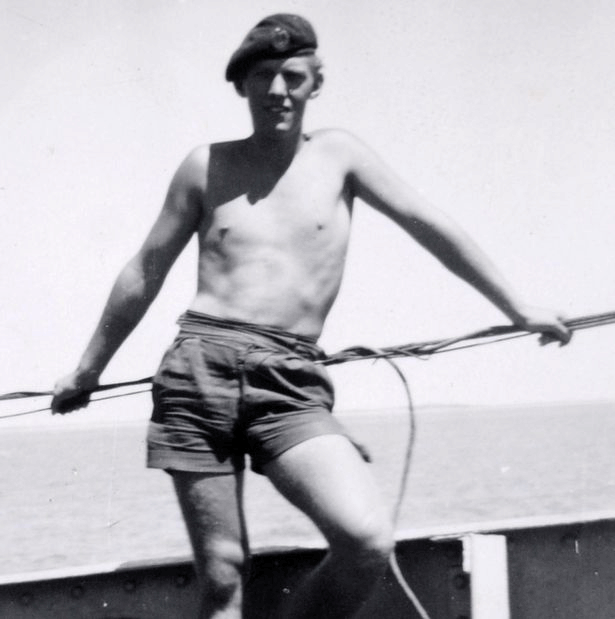
(Picture is not of Bob Fleming. It is of Gomer Hickman)
Bob Fleming was wearing a T-shirt, khaki shorts and flip flops when the bomb went off.
At just 24, he had just witnessed one of the most powerful weapons on earth detonate on Christmas Island in the Pacific Ocean.
It was 1956 and the Cold War threat was growing.
The RAF serviceman was one of around 22,000 British service personnel who witnessed nuclear weapons tests on mainland Australia, the Montebello Islands off Western Australia and Christmas Island in the South Pacific between 1952 and 1958.
With their backs to the bomb, they felt the intense heat from the explosion first.
Then, after the countdown, they were ordered to turn round and look directly at the huge mushroom cloud in front of them.
“We had no protective clothing,” said Bob, who’s from Downham Market in Norfolk.
“We were guinea pigs. It was so bright I could see the bones in my hands with my eyes closed. It was like an X-ray.”
‘Genetic curse’
The veterans say the nuclear tests ruined their lives, causing cancers, fertility problems and birth defects passed down the generations.
Now 83, the great-grandfather believes that three generations of his family are living with the “genetic curse” of those explosions. Sixteen out of 21 of his descendants have had birth defects or health problems.
His youngest daughter, Susanne Ward, has thyroid problems and severe breathing difficulties, and her teeth fell out prematurely.
“It just gets worse as the next generation comes along. Our grandchildren have similar problems,” Suzanne said.
“My dad blames himself, but it isn’t his fault.”
The Fleming family now hope new DNA testing could end decades of uncertainty.Last week, the UK’s first Centre for Health Effects of Radiological and Chemical Agents was launched at Brunel University in London.One of its projects is a three-year genetic study looking for any possible damage to the veterans’ DNA caused by the tests.
Blood samples will be taken from 50 veterans who were stationed at nuclear test sites, and compared with a control group of 50 veterans who served elsewhere.
Blood will also be taken from their wives and any children they have together.
Dr Rhona Anderson, who is leading the study, said a major question to answer is whether “there is a genetic legacy of taking part at these nuclear tests”.
“If no differences (in the DNA) are seen between test and control groups then this will be reassuring for the nuclear community.”
‘No valid evidence link’
Fewer than 3,000 nuclear veterans are still alive today.
They cannot volunteer for the study, as that might lead to bias in the results.
Veterans will be selected using military service records and information available about those who were most at risk of exposure to radiation.
The Ministry of Defence says it is grateful to Britain’s nuclear test veterans for their service, but maintains there is no valid evidence to link participation in these tests to ill health.
The UK is the only nuclear power to deny special recognition and compensation to its bomb test veterans.
The veterans took their case for compensation to the highest court in the land and lost in 2012.
The Supreme Court Justices said the veterans would face great difficulty proving a link between their illnesses and the tests.
In 2015 the Aged Veterans’ Fund was set up by the government using bank industry fines. It will help to fund a series of social and scientific projects.
Doug Hern, who’s 81, and his wife Sandie, from Lincolnshire have been campaigning tirelessly for years.
When Doug was 21 he saw five nuclear explosions on Christmas Island and has suffered ill health ever since.
He said is skeleton is “crumbling”. He has skin problems and bone spurs.
His daughter died, aged 13, from a cancer so rare it did not have a name. He believes this was a consequence of her inheriting his “corrupted genes”.
Sandie Hern is vice-chair of the British Nuclear Test Veterans’ Association (BNTVA)
“The veterans have been treated abominably. They’ve been forgotten. We need this research to see if anything can be done to help their children,” she said.
The overall aim of the new centre at Brunel is to work closely with the veteran community to improve their health and well-being in the future.
After years of personal suffering, the Flemings want to have their DNA tested and are waiting to hear if they have been selected.
Six decades on, nuclear families are still living in the aftermath of the bomb tests, and searching for answers.





 nuclear-news