https://apnews.com/dc5e3c60042741c696dd062462a03cca– 28 June 18, ALBUQUERQUE, N.M. (AP) — Advocates for New Mexicans who many believe were sickened by U.S. uranium mining and nuclear weapons testing have urged Congress to acknowledge their sacrifice and authorize compensation for them.
Navajo Nation Vice President Jonathan Nez and the co-founder of the Tularosa Basin Downwinders Consortium testified during a hearing Wednesday in Washington on a compensation measure.
Sponsored by U.S. Sen. Tom Udall, it proposes expanding eligibility for payouts under the Radiation Exposure and Compensation Act of 1990, which currently covers claims from areas in Nevada, Arizona and Utah that are downwind from a different test site.
Tina Cordova, co-founder of the Tularosa consortium, said many who lived in the area weren’t told about the dangers of the Trinity Test on generations of residents.
They could benefit from the proposal, along with post-1971 uranium mine workers in Northwestern New Mexico.
The US detonated dozens of nuclear bombs in the Marshall Islands between 1946 and 1958 including a thermonuclear weapon 1,100 times more powerful than Hiroshima
By Mark Hodge, 26th June 2018
TERRIFYING footage shows a series of nuclear bomb tests unleashing the fires of hell on an idyllic Pacific Ocean paradise.
The video clips, recently released by the US government, give a glimpse into the horror caused by 67 nuke explosions detonated in Bikini Atoll and Enewetak Atoll in the Marshall Islands between 1946 and 1958.
Carried out in the early days of the Cold War, the tests included the 1954 Castle Bravo bomb which remains the most powerful thermonuclear weapon America has ever detonated.
The civilisation-wrecking 15-megatonne explosive, which exploded near Bikini, was 1,100 times bigger than the atomic bomb used to massacre thousands in Hiroshima in 1945.
Bravo – nearly three times its predicted power – exposed thousands in neighbouring islands to the radioactive fallout despite the 167 residents in Bikini Atoll being evacuated before the first test in 1946.
Fallout from the unprecedented explosion – including radioactive particles – spread around the world.
US government scientists declared Bikini safe for resettlement in the early 1970s but residents were removed in 1978 when it became clear that they were ingesting dangerously high levels of radiation from the contaminated fish, plants and water.
To this day, the small community remain exiled from their home.
Dubbed the Pacific Proving Grounds, the Marshall Island sites were used to carry out atmospheric nuclear tests – meaning the bombs were dropped from planes or detonated while underwater.
During the first test on July 1, 1946, military scientists wanted to see the impact of the bombs on naval warships and even filled the boats with animals such as pigs and rats to study the effects of nuclear fallout on livestock, reports Atomic Heritage Foundation.
Among the tests carried out in Enewetak was the world’s first hydrogen bomb, nicknamed Mike, which was detonated on November 1, 1952.
Between, 1977 and 1979, 4,000 American troops were taken to the former island paradise to clean up the contaminated remnants of the 43 nuke tests there.
Hundreds of the soldiers sent now complain of health problems including cancer, brittle bones and birth defects in their children while many of the them are already dead, reports The New York Times.
Speaking with ABC, Michael Gerrard, the director of the Earth Institute at Columbia University, explained that one of the explosions on Enewetak “didn’t work” causing devastating damage to the environment.
He said: “The plutonium was just broken apart by the conventional explosion, leading to about 400 little chunks of plutonium that were spread around the atoll.”
The troops sent to Enewetak collected and dumped 85,000 cubic metres of radioactive material – while wearing only shorts and t-shirts.
According to ABC, the plutonium in the area has a radioactive half-life of more than 24,000 years.
Islanders started to show signs of cancer in the 1960s, while residents further afield showed elevated risk of thyroid tumours and leukaemia, according to Georgetown University professor Timothy J. Jorgenson.
Former residents of Bikini Atoll and their relatives were awarded more than £1.5billion by the Marshall Islands Nuclear Claims Tribunal which was established in 1988.
But despite being permanently displaced from their home, the US stopped paying compensation in 2011 after Congress refused to provide additional funds.
Remarkably, marine life in Bikini has flourished, a Stanford University study last year.
Hundreds of schools of fish including tuna and sharks have thrived while swimming around coral as big as “cars”, reports The Guardian.
Professor Steve Palumbi’s team said Bikini’s marine life looks normal and healthy and do not have mutations like animals found at the Chernobyl nuke site, despite the island being declared a nuclear wasteland.
Palumbi believes that the absence of humans has in fact benefited the local wildlife.
He said: “The fish populations are better than in some other places because they have been left alone, the sharks are more abundant and the coral are big.
“It is a remarkable environment, quite odd.”
He added: “This is the most destructive thing we have ever done to the ocean, dropping 23 atomic bombs on it, yet the ocean is really striving to come back to life.”
The scientists believe that the worst-affected fish died off decades ago and the current marine life are only exposed to low radiation levels because they frequently swim in and out of the atoll
However, a 2012 United Nations reports found that the Bikini remains uninhabitable to humans because of “near-irreversible environmental contamination”.
The fish cannot be eaten, the plants cannot be farmed because of the contaminated soil and consuming water would be dangerous.
In his paper Professor Jorgensen writes: “What happened to the Marshall Islanders next is a sad story of their constant relocation from island to island, trying to avoid the radioactivity that lingered for decades.
“Over the years following the testing, the Marshall Islanders living on the fallout-contaminated islands ended up breathing, absorbing, drinking and eating considerable amounts of radioactivity.”
Between 1945 and 1963, the US and the Soviet Union carried hundreds of atmospheric nuclear tests.
Gases and “radioactive particles” from those detonations have been spread worldwide, according to a study carried out by the Centers for Disease Control and Prevention (CDC).
At least one CDC report claims that radiation deposits from these tests could eventually be responsible for 11,000 cancer deaths in the US alone.
The organs and tissue of anyone who has lived in the US – which carried out atmospheric nuke tests in Nevada – since 1951, shows signs of being exposed to nuclear fallout.
News Click 21st June 2018 , Sanjay Gope, a 13-year-old boy from Bango village near Jadugora town in
East Singhbhum district of Jharkhand, cannot move or speak because he has
been suffering from muscular dystrophy – a group of disorders that
involves a progressive loss of muscle mass and consequent loss of strength
– for the past nine years. At least one person of his family has to be
with him all the time to look after him. He cannot be left unattended.
Eighteen-year-old Parvati Gope from the same village is suffering from
lumbar scoliosis – a C-shpaed curve formation of her vertebral column.
Rakesh Gope, a 13-year-old school-going boy, is also suffering from
muscular dystrophy. Although he is active and walks with arched feet and
soles, he is unable to speak normally.
A three-year-old child Kartik Gope has been having seizures since birth and is developing muscular dystrophy
too. These examples are not enough; there are hundreds of such cases of
congenital illness and other birth defects in addition to high incidence of
infertility, miscarriages and pre-mature deliveries.
Now, a pertinent question arises here: why are such large number of health hazards being
reported from this remote and overlooked corner of the country? While India
is dreaming to become energy efficient by 2032 by generating 63 Gigawatts
of nuclear power, it is taking a major toll on human lives in a small
township of Jharkhand. Jadugora has the deposits of world’s best quality
uranium ore, magnesium diuranate. It is because of the rich deposits of the
region, India is capitalising its nuclear dreams. The whole belt of the
reactors is affecting the Adivasis (indigenous people) disproportionately
in and around the uranium mining operational area. https://newsclick.in/uranium-mining-jharkhand-radioactive-poisoning-ravaging-lives-villages
Radioactive waste in Coldwater Creek increases cancer risk, says federal report, St Louis Public Radio, BySARAH FENTEM • JUN 18, 2018,
A federal government agency has concluded radioactive contamination in a north St. Louis County creek could cause increased risk of certain types of cancer in residents who live near the north St. Louis County waterway.
The Agency for Toxic Substances and Disease Registry’s public health assessment, released Monday, states that residents who were exposed to the area around Coldwater Creek had a higher risk of exposure to radioactive contaminants, and thus a higher risk of bone cancer, lung cancer or leukemia. The federal organization is also calling for the public to comment and add to the report through Aug. 31.
Advocates for residents near Coldwater Creek were pleased to hear representatives of a federal agency acknowledge what they have long suspected.
“What they’re saying [is] they confirm our exposure could be linked to our cancer and our illnesses,” community activist Kim Visintine said.
The Agency for Toxic Substances and Disease Registry assesses the risk of hazardous waste sites, among other tasks. It’s part of the Department of Health and Human Services and is based at the Centers for Disease Control and Prevention headquarters in Atlanta.
Radioactive waste generated by the Mallinckrodt Company from work on the
Manhattan Project was stored in an open site close to the creek. Over years, that waste migrated into the dirt in the Coldwater Creek bed. A report from the Missouri Department of Health and Senior Services found an increased rate of certain types of cancer in the area around the creek.
According to the federal agency’s report, the highest risk for exposure is in children and adults who lived near the creek in 1960s through the 1990s.
“Our evaluation did find an increased risk of some cancer, especially for the past exposures, people who grew up in the area and played very often or frequently in or near the creek,” said Jill Dykin, an environmental health scientist for the agency.
Dykin added the report can’t link individual people’s health problems with exposures, just draw a connection to the risk.
For Visintine, that’s enough. The former north St. Louis County resident and the co-founder of the group Coldwater Creek – Just the Facts said the report confirms years of suspicions.
“It’s one thing for a group of citizens to say there’s an issue, and another thing to actually receive government validation,” Visintine said
She said the federal acknowledgement could pave the way for residents to receive relief from the government through the Radiation Exposure Compensation Act, which provides compensation to people whose cancers can be linked to nuclear weapons tests.
“The big thing you’re now eligible for these grants and funds for your community screening clinics, for insurance,” Visintine said. “To even get to that point, to pursue legislation, you have to have the CDC acknowledge there was exposure.
“It’s a big long process and we’ve come a long way but we sure have a long way to go.”
…. ….Representatives of the Agency for Toxic Substances and Disease Registry will visit St. Mark’s United Methodist Church in Florissant on June 27 and 28 to answer questions and elicit feedback on the report and will hopefully receive more information to add to its findings.“We’ve been working with the community and some community leaders through our entire process,” Dykin said. “We actually based a lot if the assumptions we made for how frequently and how long kids played in and along Coldwater Creek on information we got from the community.”
They advise people to contact the New Zealand Office of Radiation Safety or their doctor if they think they may have been exposed to radiation from the reactor used to power McMurdo Station, Antarctica, from 1962 to 1979.
The U.S. Department of Defense has assessed the risk of radiation exposure for those who worked near the power plant as low.
However, the Department of Veterans Affairs ruled in November that retired Navy veteran James Landy’s “esophageal, stomach, liver, and brain and spine cancers, [were] incurred in active duty service.”
Landy worked at McMurdo as a C-130 flight engineer from 1970 to 1974 and from 1977 to 1981 before dying at age 63 in 2012, said his widow, Pam Landy.
He had pain in his kidneys and went to the doctor and they sent him to an oncologist who said he had cancer from radiation exposure,” she said in a phone interview Monday from her home in Pensacola, Fla.
Veterans who served in Antarctica should have been warned about the radiation risk, Pam Landy said.
“The government knew that thing was there. If they had given people a heads up he could have been diagnosed early and might have a shot at being alive,” she said. “I got a payout from the VA, but it’s a pittance compared to a life.”
The McMurdo reactor had many malfunctions, but personnel might also have been exposed during its decommissioning when soil and rock from the site was trucked through the base to be shipped off the continent, she said.
Peter Breen, 64, was a New Zealand Army mechanic about 2 miles from McMurdo at Scott Base from 1981 to 1982. Rock and soil from the reactor site was taken to a wharf in open trucks, and Breen fears he could have been exposed to contaminated dust blown by the wind or on ice harvested from nearby cliffs.
He’s campaigning for New Zealand Antarctic veterans to be recognized with a medal and offered health checks.
“It is not compensation that guys are after,” he said in a phone interview from his home in Tauranga, New Zealand. “They want a health-check program.”
Radioactive Dust Found in Homes of Workers at Major US Nuclear Weapons Facility,Radioactive microparticles were detected in the homes of six workers in central Washington state’s Tri-City area who are associated with the Hanford nuclear site, a major Cold War-era plutonium manufacturing facility, scientists have reported. Sputnik News, 14 June 18
A study published this month in the Journal of Environmental Engineering Science reported that small but still dangerous amounts of radioactive elements were found in dust collected by cloth wipes and vacuum cleaners in order to track the potential spread of radiation from one of the United States’ most notorious nuclear cleanup sites.
The same study also found radioactive particles in the homes of nuclear workers associated with the Los Alamos National Laboratory in New Mexico and the Rocky Flats Plant in Colorado. All three sites are heavily associated with nuclear weapons production.
It’s believed the particles could have found their way into the homes in a variety of ways, including being attached to workers’ clothing and being stirred up by wind storms and wildfires, which are common in the region, and blown inside.
The tests found radioactive uranium, thorium, plutonium and americium particles that, while innocuous in the external environment, represent a “potential source of internal radiation exposure” if ingested, warns Marco Kaltofen, a civil engineer affiliated with the Worcester Polytechnic Institute in Massachusetts and author of the study, the Seattle Times reported.
Exposure to these materials increases the risk of cancer, the study noted. Plutonium is “fiendishly toxic, even in small amounts,” said Glenn Seaborg, the physicist who discovered the element in 1941, as quoted in a 2011 fact sheet on the Rocky Flats site. The Agency for Toxic Substances and Disease Registry notes in its public health statement on thorium exposure that the radioactive isotopes can sit in the soil for decades and cause lung cancer if inhaled. Uranium ingestion mainly targets the kidneys, the ATSDR notes, while americium destroys and irradiates bone tissue and can cause bone cancers such as leukemia or lymphoma and damage the thyroid.
“These radioactive particles are tiny and difficult to detect once you get a few inches away, but once inside the body, the distance from our tissue is essentially zero,” Kaltofen explained. While the skin can handle certain amounts of radiation safely, the body’s internal organs have no protection and a tiny amount can prove fatally toxic. Polonium-210, for example, is 250 million times more toxic than hydrogen cyanide, the New York Times reported.
The report’s conclusions come from years of testing coordinated with Hanford Challenge, a Seattle-based organization that has fought for decades for accountability in the federal cleanup of the Hanford site. Kaltofen used an unusual technique that involves both electron microscopy and a specialized X-ray analysis that can detect extremely low levels of radioactive particles. The samples were compared to those taken from the Hanford site, which served as a kind of fingerprint for identifying the particles.
The levels found in the Hanford workers’ homes represented a health risk exceeding that considered acceptable by the International Commission on Radiological Protection’s safety standards.
…….. The Yakama Nation, whose reservation sits only 20 miles from the site, for decades fought turning Hanford into a nuclear waste site, as did other affected tribes such as the Nez Perce and Umatilla nations. Three counties around the Yakama reservation have seen high rates of a rare and fatal birth defect called anencephaly, in which a fetus’ brain and skull fail to fully form, which is believed to be caused by irradiation, Earth Island reported. Higher rates of anencephaly are also associated with sites in Iraq where the US military used depleted uranium rounds during the Iraq War, Iraqi doctors in Basra and Baghdad have noted.
Indigenous nations in Washington aren’t the only ones negatively affected by the US nuclear weapons program: decades of uranium mining in the Navajo Nation have caused extensive irradiation of the countryside, creating a disease known as Navajo Neuropathy, NPR reported. One spring in northeastern Arizona was reported in 2015 to have uranium levels “at least five times greater than safe drinking water standards” by a study published in the journal Environmental Science & Technology. The contamination caused the early deaths of many children who drank from the spring or whose mothers drank the water while pregnant. https://sputniknews.com/us/201806141065421254-Radioactive-Dust-Found-US-Homes/
Chennai: Brain tumour has emerged as a type of cancer that affects a large population of youngsters mostly due to exposure to ionizing radiation.
Though a large number of brain tumours can be non-cancerous, the prevalence of brain tumour of both types is rising in the country. On World Brain Tumour Day, medicos discuss various factors associated with brain tumour.
Unnecessary growth of cells within a part of brain can lead to tumours namely, malignant and benign tumours. The incidence of brain tumour has been growing and statistics on childhood cancer reveal that brain tumour is commonest in girls and even in both sexes in adults in the country, though the data may vary for different states.
“Every year 40,000 to 50,000 people are diagnosed with brain tumour. There are 120 different types of brain tumour and they exhibit different symptoms. People who have been exposed to ionizing radiation for longer periods have an increased risk of brain tumour, especially among the youngsters,” said Dr Suresh Kumar, consultant neurologist, Fortis Malar.
After the central government introduced National Cancer Control Programme, various programmes have been launched to screen and diagnose brain tumour at an early stage, and a significant part of it emphasizes on providing palliative care in end stage.
“Genetic factors are also responsible for the incidence of brain tumours, and high dosage of X-rays is also dangerous and can be a risk factor for brain tumour. Some common symptoms are seizures, headaches, blurred vision, vomiting in morning, while the patient can also have difficulty in walking, speaking and sensation,” said senior neurologist N Dinesh.
Medicos usually suggest surgery, radiotherapy, chemotherapy, steroids and anti-seizure medication as few common treatments. However, the treatment can be individualistic based on the type, location, and stage of the tumour.
Milk in parts of Ukraine has radioactivity levels up to five times over the country’s official safe limit, new research shows.
Scientists from the Greenpeace Research Laboratories at the University of Exeter and the Ukrainian Institute of Agricultural Radiology sampled cow’s milk from private farms and homes in the Rivne region, about 200km from the site of the Chernobyl Nuclear Power Plant explosion in 1986. They found levels of radioactive caesium in milk above Ukraine’s safe limit for adults of 100 Becquerel per litre (Bq/L) at six of 14 settlements studied, and above the children’s limit of 40 Bq/L at eight sites.
The highest levels found were about 500 Bq/L – five times over the limit for adults and more than 12 times that for children.
“More than 30 years after the Chernobyl disaster, people are still routinely exposed to radioactive caesium when consuming locally produced staple foods, including milk, in Chernobyl-affected areas of Ukraine,” said Dr Iryna Labunska, of Greenpeace Research Laboratories at the University of Exeter.
“Many people in the area we studied keep cows for milk, and children are the main consumers of that milk.
“Though the level of soil contamination in the studied areas is not extremely high, radioactive caesium continues to accumulate in milk and other foods, such that the residents of these villages are chronically exposed to radioactivity that presents health risks to almost every system in the body – especially among children.”
The researchers say that some simple protective measures could be taken to bring radiation exposure levels below limits at a cost of less than 10 euros per person per year for the 8,300 people living in the six villages with the highest contamination.
Such measures include applying a caesium binder, called Ferrocyn, to cows, mineral fertilisation of potato fields and feeding pigs with uncontaminated fodder.
The cost of this would decrease each year as radiation levels fall – but if no action is taken, the experts warn that milk contamination will continue to exceed the 100?Bq/L adult limit in parts of Ukraine until at least 2040.
“The Ukrainian government has taken some of these measures in the past, but that stopped in 2009,” Dr Labunska said.
“Government and international monitoring needs to take place, along with help for people affected by this radiation.
“This situation should also act as a warning and a reminder of just how long the legacy of nuclear accidents can be.
“Without adequate countermeasures, what may now seem a purely historical event will remain a daily reality for those communities most impacted.”
NIS 31st May 2018 The Environment Agency (EA) have announced that they are planning to
approve the Atomic Weapons Establishment’s (AWE) application to to
increase the quantity of volatile beta emitters that AWE Aldermaston is
permitted to release into the environment.
Beta emitters are radioactive elements that produce beta radiation. Volatile is a chemistry term which
refers to a substance that tends to vaporise and become a gas. AWE’s
application for the increase to the limit was announced in late January,
and there was a consultation on the application which ended in February.
The Environment Agency have now released a draft decision which approves
the proposed increase to the limit. Under their current license AWE are
allowed to release 4.4 megabecquerels (MBq) of volatile beta emitters into
the air as gas every year. The draft decision allows them to increase the
limit to 100 MBq a year, an increase of 22 times, or 2200%. A becquerel is
a measure of the quantity of radioactive material. One bequerel is the
quantity of material where radioactive decay will occur once every second.
A megabecquerel means one million becquerels of material. The EA is running
a consultation on the draft decision, which closes on the 6th June. https://www.nuclearinfo.org/article/awe-aldermaston/environment-agency-plans-approve-2000-increase-awe-discharge-limit
THE Ministry of Defence (MoD) used British nuclear test pilots like “guinea pigs” during the Cold War, deliberately exposing them to radiation, it has been claimed By ALICE SCARSI, May 31, 2018
The shocking allegation was made by the widow of a pilot who obtained secret documents suggesting her husband took part in a life-threatening experiment.
Shirley Denson, 83, said the documentation shows her husband, Flight Lieutenant Eric Denson, was ordered to fly through the cloud of a thermonuclear explosion at Christmas Island in the Pacific.
The test exposed him to so much radiation he was left with unbearable headaches which eventually brought him to kill himself to make the pain stop, she added.
And the experiment may have affected two of the couple’s four daughters, as Mrs Denson claimed they were born with abnormalities.
The widow, who was handed the papers by the MoD while conducting research about her husband’s service, described the situation “wicked” and “evil”.
“It makes me furious to think it was done on purpose, that my Eric mattered so little to them.”
The documents revealed Fl Lt Denson had flown his Canberra B6 bomber into the mushroom cloud of a 2.8 megaton nuclear explosion on April 28 1958, with X-ray badges on the seat to measure radiation, the Mirror reported.
During the flight, the pilot would have been exposed to 65 years’ worth of normal background radiation during the six-minute flight.
British Nuclear Test Veterans’ Association chairman Alan Owen said: “This is the first time in all our years of campaigning we have ever found evidence this strong.
“Our members always believed they were guinea pigs and this appears to prove some of them were, at best, collateral damage in horrifying experiments.
“We need to know everything – now.”
The MoD denied Fl Lt Denson was purposely exposed to radiation.
The allegations caused outrage among politicians, who urged the MoD to answer the claim.
Deputy Labour leader Tom Watson described the documents as “shocking”, and said the Defence Secretary should issue an unqualified apology to Mrs Denson in the Commons.
He said: “This is a shocking document the MoD cannot wriggle out of.
“We need answers about what experiments were conducted, and how many of the 22,000 nuke vets were involved in them.”
Shadow defence secretary Nia Griffiths said the papers brought to light “deeply worrying revelations” and called for them to be investigated by the MoD.
And Shadow Health Secretary Jonathan Ashworth added: “This is an absolute scandal.”
A spokesman for the MoD rejected the claims saying: “It is not true to say these men were subject to an experiment to look at the effects of radiation.
“The British nuclear testing programme contributed towards keeping our country secure during the Cold War and regular health checks were conducted throughout.
“The National Radiological Protection Board has carried out three studies of nuclear test veterans and found no valid evidence to link this programme to ill health.”
And he exclusively revealed to Express.co.uk: “According to the information available in the Operational Record Books for the squadron, Fl Lt Denson did not fly the same aircraft in the week after his sampling sortie.
“The ‘experiments’ referred to were to determine the best possible arrangement on the body of dosemeters (devices that measure radiation) so that these mens’ exposure could be measured as accurately as possible.”
Ionizing radiation can cause cells to turn cancerous, Pakistan Observer Islamabad : It is well established that exposure to ionizing radiation can result in mutations or other genetic damage that cause cells to turn cancerous.
Now a new study led by researchers with the U.S. Department of Energy’s Lawrence Berkeley National Laboratory (Berkeley Lab) has revealed another way in which radiation can promote cancer development.
Working with cultures of human breast cells, the researchers discovered that radiation exposure can alter the environment surrounding the cells so that future cells are more likely to become cancerous.
“Our work shows that radiation can change the microenvironment of breast cells, and this in turn can allow the growth of abnormal cells with a long-lived phenotype that has a much greater potential to be cancerous,” says Paul Yaswen, a cell biologist and breast cancer research specialist with Berkeley Lab’s Life Sciences Division.
A cell’s phenotype is its full complement of observable physical or biochemical characteristics. Different cells can have phenotypes that look dramatically different or exhibit radically different behaviour even though their genetic makeup (genotype) is identical.
Signals from outside the cell can alter a cell’s phenotype by regulating (or de-regulating) the cell’s use of its genes. Studies have shown that if a cell develops a pre-cancerous phenotype, it can pass on these “epigenetic” changes to its daughters, just as it can pass on genetic mutations.
“Many in the cancer research community, especially radiobiologists, have been slow to acknowledge and incorporate in their work the idea that cells in human tissues are not independent entities, but are highly communicative with each other and with their microenvironment,” Yaswen says. “We provide new evidence that potential cancer agents and their effects must be evaluated at a systems level.”
Yaswen is the corresponding author of a paper describing this study that appears in the on-line journal Breast Cancer Research. Co-authoring the paper were Rituparna Mukhopadhyay, Sylvain Costes, Alexey Bazarov, William Hines and Mary Helen Barcellos-Hoff.
“The work we did was performed with non-lethal but fairly substantial doses of radiation, unlike what a woman would be exposed to during a routine mammogram,” says Yaswen, who is also a member of the Bay Area Breast Cancer and the Environment Research Center. “However, the levels of radiation involved in other procedures, such as CT scans or radiotherapy, do start to approach the levels used in our experiments and could represent sources of concern.”……….
This study was jointly funded the National Institute of Environmental Health Sciences (NIEHS), and the National Cancer Institute (NCI), NIH, through the Bay Area Breast Cancer and the Environment Center, and by the NASA Specialized Center of Research. https://pakobserver.net/ionizing-radiation-can-cause-cells-to-turn-cancerous-5/
Because while science cannot be certain, common sense tells us why successive governments did not test these terrible new weapons in the skies over Britain. Yet for 60 years governments of every stripe denied, ignored or failed our nuclear heroes.
Sixty years ago, Britain sent thousands of men to the middle of the South Pacific and ordered them to take part in one nuclear explosion after another.
Our National Servicemen went to Christmas Island and built a runway, a hospital, and officers’ mess. They put up tents, fuel tanks and refrigeration units. Then they were told to watch as RAF crews dropped hydrogen bombs, and they say the only care taken was to tell them to cover their eyes.
Thirty years ago those men got together and the Mirror told their stories: of leukaemia, rare cancers, miscarriages, birth defects. Of troubled wives and sick children. Of ground crew allegedly contaminated washing down the planes, Royal Engineers who fell sick after collecting bomb-damaged equipment, strapping navy stevedores suddenly struck down by ill health. They fought long court battles, to no avail.
Twenty years ago research from Durham University found evidence that 1 in 3 of the nuclear veterans had bone cancer or leukaemia, and that twice as many veterans had multiple myeloma than successive British governments had admitted.
Eleven years ago research in New Zealand showed survivors of British tests had the same rate of genetic damage as survivors of the Chernobyl nuclear accident. Ten years ago the Isle of Man Tynwald voted to give 8 of its residents, who were nuclear veterans, £6,000 each in recognition of their service. Five years ago those who still survived and their families marched – with walking sticks and wheelchairs – on Downing Street demanding recognition. Not money: just recognition.
Today, of the 22,000 who saw those tests, just 1,500 survive. I met one of them, a West Bromwich born-and-bred gentleman called John Ward, when he came to Parliament to see me. You can see the video of our chat on the Mirror website. I already knew a little of his story but was stunned to learn that in that powerful flash of light from the bomb’s explosion he saw the bones in his hands as though in an X-ray.
And it was incredibly moving to hear him talk of the troubles his family has suffered since. John went on to work for the Wolverhampton Express & Star, the Birmingham Post and later for the government itself in the Cabinet Office, but meanwhile his wife Margaret had difficult pregnancies and a miscarriage, John and his son Mark both recently had tumours removed from their kidneys, and his daughter Denise is, in his words, “a medical mess”.
What struck me about John was his bravery and dignity in the face of terrible experiences, and that he – quite wrongly – holds himself to blame. That because he was ordered into danger, he feels guilt for the problems suffered by his family. Nobody should have to bear that burden.
But there are not many people like John who feel that worry, because most have died. Thousands of men who were the fittest the British armed forces could find to take part in experiments vital to this nation’s future safety and security have passed away many years before they were expected to.
And still they cannot prove what, if anything, happened to them. The records of the time are missing or incomplete, science is simply unable to link genetic changes definitively to radiation from a bomb, and there are so few veterans left it is hard for scientists to find suitable subjects to help them find that silver bullet.
But there is, nevertheless, something we can do. And something we SHOULD do.
Because while science cannot be certain, common sense tells us why successive governments did not test these terrible new weapons in the skies over Britain. Yet for 60 years governments of every stripe denied, ignored or failed our nuclear heroes. We let people like John, and their families, feel ashamed of something that was never their fault. It is a stain on our nation’s record that for so long we asked these men for proof of what was done to them, when all most of them ever wanted was our thanks for doing it.
Now four survivors of those tests have returned to the Pacific proving grounds to bear witness once again. It has been 60 years since they helped Britain to do the improbable, and now it is time for us to repay that debt. Regardless of whether or not these men, or their children, have suffered ill effects as a result of the nuclear tests it is time the nation honoured their service. A medal from the nation would go a long way to healing some of their wounds.
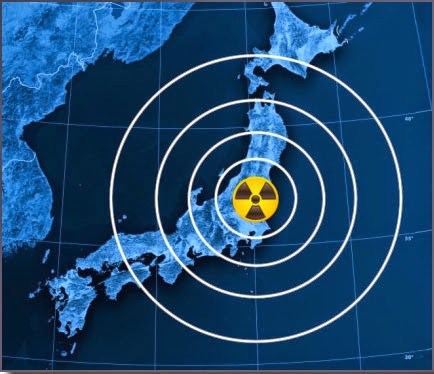
Scientists say there was a significant release of radioactive particles during the Fukushima-Daiichi nuclear accident.
The researchers identified the contamination using a new method and say if the particles are inhaled they could pose long-term health risks to humans.
The new method allows scientists to quickly count the number of caesium-rich micro-particles in Fukushima soils and quantify the amount of radioactivity associated with these particles.
The research, which was carried out by scientists from Kyushu University, Japan, and The University of Manchester, UK, was published in Environmental Science and Technology.
In the immediate aftermath of the Fukushima Daiichi nuclear accident, it was thought that only volatile, gaseous radionuclides, such as caesium and iodine, were released from the damaged reactors. However, in recent years it has become apparent that small radioactive particles, termed caesium-rich micro-particles, were also released.
Scientists have shown that these particles are mainly made of glass, and that they contain significant amounts of radioactive caesium, as well as smaller amounts of other radioisotopes, such as uranium and technetium.
The abundance of these micro-particles in Japanese soils and sediments, and their environmental impact is poorly understood. But the particles are very small and do not dissolve easily, meaning they could pose long-term health risks to humans if inhaled.
Therefore, scientists need to understand how many of the micro-particles are present in Fukushima soils and how much of the soil radioactivity can be attributed to the particles. Until recently, these measurements have proven challenging.
The new method makes use of a technique that is readily available in most Radiochemistry Laboratories called Autoradiography. In the method, an imaging plate is placed over contaminated soil samples covered with a plastic wrap, and the radioactive decay from the soil is recorded as an image on the plate. The image from plate is then read onto a computer.
The scientists say radioactive decay from the caesium-rich micro particles can be differentiated from other forms of caesium contamination in the soil.
The scientists tested the new method on rice paddy soil samples retrieved from different locations within the Fukushima prefecture. The samples were taken close to (4 km) and far away (40 km) from the damaged nuclear reactors. The new method found caesium-rich micro-particles in all of the samples and showed that the amount of caesium associated with the micro-particles in the soil was much larger than expected.
Dr Satoshi Utsunomiya, Associate Professor at Kyushu University, Japan, and the lead author of the study says “when we first started to find caesium-rich micro-particles in Fukushima soil samples, we thought they would turn out to be relatively rare. Now, using this method, we find there are lots of caesium-rich microparticles in exclusion zone soils and also in the soils collected from outside of the exclusion zone”.
Dr Gareth Law, Senior Lecturer in Analytical Radiochemistry at the University of Manchester and an author on the paper, adds: “Our research indicates that significant amounts of caesium were released from the Fukushima Daiichi reactors in particle form.
“This particle form of caesium behaves differently to the other, more soluble forms of caesium in the environment. We now need to push forward and better understand if caesium micro-particles are abundant throughout not only the exclusion zone, but also elsewhere in the Fukushima prefecture; then we can start to gauge their impact”.
The new method can be easily used by other research teams investigating the environmental impact of the Fukushima Daiichi accident.
Dr Utsunomiya adds: “we hope that our method will allow scientists to quickly measure the abundance of caesium-rich micro-particles at other locations and estimate the amount of caesium radioactivity associated with the particles. This information can then inform cost effective, safe management and clean-up of soils contaminated by the nuclear accident”.
TIERRA VERDE, Fla. (WFLA) – The lack of accountability at the Department of Veterans Affairs seems to reaching a level of absurdity.
Thousands of claims filed on behalf of the children and grandchildren of veterans who were exposed to toxins are unaccounted for.
The Vietnam Veterans of America (VVA) says the VA can’t and won’t say what happened to the claims.
Whether its from depleted uranium ammunition used in Iraq or a toxic herbicide called Agent Orange that was sprayed in Vietnam during war, members of America’s military are learning they not only put their lives on the line, but possibly the lives of their children and grandchildren.
“If you’re going to send them there, make sure you take care of them when they come home. That means take care of them and their offspring,” said Marc McCabe, Vietnam Veterans of America Bureau Chief.
McCabe is a battle hardened Marine who fought in Vietnam.
Now in his position as Vietnam Veterans of America Bureau Chief in Florida, he fights with the VA.
The military exposed veterans like Lonnie Kilpatrick and Leroy Foster to Agent Orange. The weed killer wrecked Kilpatrick’s heart.
Foster suffers from terminal cancer.
Kilpatrick’s children and grandchildren were born with multiple health problems.
Foster’s granddaughter was born with 24 fingers and toes.
McCabe filed hundreds of claims with the VA on behalf of children and grandchildren of veterans exposed to toxins.
“And they got lost. The VA cannot account for them. They can’t tell us where they collected it, where they stored it, what they did with it,” explained McCabe.
In fact, according to a letter the VVA received, the VA refuses to disclose information about how it keeps track of such claims.
Rick Weidman, Executive Director for Policy for Vietnam Veterans of America, compared the VA’s refusal to disclose how it handled the claims to a line from the comedy “Animal House.”
“This is the most ridiculous damned thing we’ve heard from the VA since Dean Wormer’s double secret probation,” said Weidman. “If you file a claim and the VA rejects it, they still have to preserve it electronically.”
Weidman believes that until February of this year, the VA rejected the claims and threw them out.
“Once again, the VA is doing everything it can to not do the research, which will show one way or the other if children and grandchildren are affected,” added Weidman. “Their overall strategy is delay, deny, until they all die.”
McCabe points out that the VVA will assist veterans along with their children and grandchildren through the maze of the VA’s claims filing process.
“Collect all your medical records on your children and your grandchildren,” said McCabe. “But most importantly, we tell them, ‘get your military records. Get your military personnel records. Give them to your children. Put them in a safe place because you’ll need that to produce evidence that your dad was in the service.'”
If you need assistance filing a claim for yourself, your child or grandchild, contact Vietnam Veterans of America at 301-585-4000.
The St. Petersburg office number is 727-319-5921.
If you know of something that should be investigated, contact our Target 8 Helpline at 1-800-338-0808.
Contact Steve Andrews at sandrews@wfla.com.
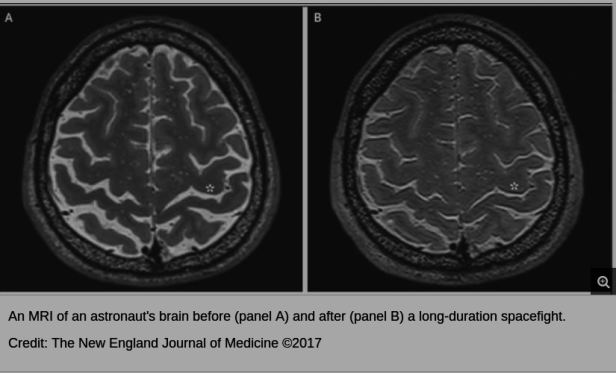
Can we protect the brain from cosmic radiation? Medical News Today ,By Maria CohutAs we prepare to enter a new era of space travel, we must find ways of averting health risks posed by the cosmic environment. Deep space radiation, in particular, is known to impair cognitive function………. One main threat comes from cosmic radiation, which can harm the central nervous system, altering cognitive function and leading to symptoms similar to those found in Alzheimer’s disease.
……. ‘Cosmic radiation may affect brain long-term’Previous research conducted by Rosi and team found that, after mice were exposed to a level of radiation roughly equivalent to what human astronauts might encounter during an outer space mission, their capacity to differentiate between familiar and unfamiliar objects was impaired.
Usually, when mice are faced with two objects — one that is new and unknown to them and one that they formerly explored — they will spend more time familiarizing themselves with the new object.
However, the animals that had been exposed to radiation tended to spend an equal amount of time exploring both objects, which suggested to the researchers that the mice had forgotten they had already been exposed to one of the two.
Other symptoms that the mice presented included problems with social interactions and a sense of elevated anxiety. Rosi and team note that this was likely because of the effect the strong radiation had on the microglia, or nerve cells found in the brain and spinal chord that are part of the central nervous system’s immune mechanism.
When microglia are activated, they can cause symptoms — such as impaired memory recall — that are consistent with those of neurodegenerative disorders.
This is partly due to the fact that they are driven to destroy synapses, or the connections formed between brain cells that allow them to convey information.
“We are starting to have evidence that exposure to deep space radiation might affect brain function over the long-term, but as far as I know, no one had explored any possible countermeasures that might protect astronauts’ brains against this level of radiation exposure.” Susanna Rosi………https://www.medicalnewstoday.com/articles/321898.php





 nuclear-news