The hidden danger of internal radiation emitters – dust particles around nuclear weapons sites

Hidden danger: Radioactive dust is found in communities around nuclear weapons sites, LA Times, By RALPH VARTABEDIAN SEP 28, 2018 “……….Studies by a Massachusetts scientist say that invisible radioactive particles of plutonium, thorium and uranium are showing up in household dust, automotive air cleaners and along hiking trails outside the factories and laboratories that for half a century contributed to the nation’s stockpile of nuclear weapons.
· The findings provide troubling new evidence that the federal government is losing control of at least some of the radioactive byproducts of the country’s weapons program.
· Marco Kaltofen, a nuclear forensics expert and a professor at Worcester Polytechnic Institute, said he collected samples from communities outside three lab sites across the nation and found a wide variation of particle sizes. He said they could deliver lifelong doses that exceed allowable federal standards if inhaled.
· “If you inhale two particles, you will exceed your lifetime dose under occupational standards, and there is a low probability of detecting it,” he said.
· A peer-reviewed study by Kaltofen was published in its final form in May in Environmental Engineering Science. Kaltofen, who also is the principal investigator at the nuclear and chemical forensics consulting firm Boston Chemical Data Corp., released a second study in recent weeks.
· The Energy Department has long insisted that small particles like those collected by Kaltofen deliver minute doses of radioactivity, well below typical public exposures. One of the nation’s leading experts on radioactivity doses, Bruce Napier, who works in the Energy Department’s lab system, said the doses cited by Kaltofen would not pose a threat to public health.
· Such assurances have been rejected by nuclear plant workers, their unions and activists who monitor environmental issues at nearly every lab and nuclear weapons site in the nation.
· Jay Coghlan, executive director of NuclearWatch New Mexico, cited a long history of denial about the claims of “down winders,” the residents of Western states who were exposed to radioactive fallout from atmospheric weapons testing. “We can not trust self-reporting by the Department of Energy,” he said. “I don’t accept that low levels of radioactivity have no risk.”
· Tom Carpenter, executive director of another watchdog group, the Hanford Challenge in central Washington, said as recently as last year that the Energy Department released an unknown quantity of radioactive particles during demolition of a shuttered weapons factory, the Plutonium Finishing Plant.
· After a series of three releases during 2017, the Energy Department shut down the demolition and has yet to resume it. Forty two workers were exposed in the incidents.
· “If you work in a coal mine, you go home with coal dust on you,” Carpenter said. “Same with a textile mill; you go home with cotton dust. These Hanford workers went home with plutonium dust.”
· The second study by Kaltofen, completed in August, reported that fairly high radioactivity levels were found in 30 samples from the communities around the Hanford nuclear site, near Richland, Wash. The samples found contamination on personal vehicles driven inside the Hanford site that would leave mechanics exposed if they worked around the vehicles, the report said.
· Kaltofen also reviewed an internal study in March by an Energy Department contractor, Washington River Protection Solutions, that found a calculated potential dose of 95 milliren for workers, roughly 10 times higher than the federal Environmental Protection Agency standard.
· Kaltofen said a broader independent study should look at residual contamination around Hanford. An Energy Department spokesman at the Hanford site said the office had no comment on the studies.
For his studies, Kaltofen collected samples outside the Los Alamos National Laboratory in New Mexico, the former Rocky Flats weapons plant near Denver and the Hanford site……..
Kaltofen’s sampling found some very high levels of contamination in Los Alamos’ Acid Canyon, a recreational area near a community pool and skate park………
A worker’s exposure to radioactivity, such as walking by a radioactive substance or having particles cling to clothing, is checked by monitors and badges worn by workers at plant sites. Such exposure is like a medical X-ray, which delivers a momentary dose. But inhaling a small particle of plutonium or thorium can go unnoticed by such monitors and deliver a lifetime of alpha radiation right next to lung tissue, Kaltofen said.
“You can walk through a portal monitor without setting it off but you can get a substantial amount of energy from particles in the body,” he said. http://www.latimes.com/local/california/la-na-radiation-hazards-2018-story.html#
Cardiologists and Other Medical Professionals at risk from radiation in nuclear medicine
 How Radiation Exposure Has Been Causing Cancers In Cardiologists and Other Medical Professionals https://www.latestly.com/lifestyle/health-wellness/how-radiation-exposure-has-been-causing-cancers-in-cardiologists-and-other-medical-professionals-409648.html How Radiation Exposure Has Been Causing Cancers In Cardiologists and Other Medical Professionals https://www.latestly.com/lifestyle/health-wellness/how-radiation-exposure-has-been-causing-cancers-in-cardiologists-and-other-medical-professionals-409648.html
|
|
|
Authorities deceive the public on radiation from Fukushima Daiichi
 Informal Labour, Local Citizens and the Tokyo Electric Fukushima
  Daiichi Nuclear Crisis: Responses to Neoliberal Disaster Management Adam Broinowski {extensive footnotes and references on original] September 2018, “……… (Official Medicine: The (Il)logic of Radiation Dosimetry On what basis have these policies on radiation from Fukushima Daiichi been made? Instead of containing contamination, the authorities have mounted a concerted campaign to convince the public that it is safe to live with radiation in areas that should be considered uninhabitable and unusable according to internationally accepted standards. To do so, they have concealed from public knowledge the material conditions of radiation contamination so as to facilitate the return of the evacuee population to ‘normalcy’, or life as it was before 3.11. This position has been further supported by the International Atomic Energy Agency (IAEA), which stated annual doses of up to 20 mSv/y are safe for the total population including women and children.43 The World Health Organisation (WHO) and United Nations Scientific Commission on the Effects of Atomic Radiation (UNSCEAR) also asserted that there were no ‘immediate’ radiation related illnesses or deaths (genpatsu kanren shi 原発 関連死) and declared the major health impact to be psychological.
While the central and prefectural governments have repeatedly reassured the public since the beginning of the disaster that there is no immediate health risk, in May 2011 access to official statistics for cancer-related illnesses (including leukaemia) in Fukushima and southern Miyagi prefectures was shut down. On 6 December 2013, the Special Secrets Protection Law (Tokutei Himitsu Hogo Hō 特定秘密保護法) aimed at restricting government employees and experts from giving journalists access to information deemed sensitive to national security was passed (effective December 2014). Passed at the same time was the Cancer Registration Law (Gan Tōroku Hō 癌登録法), which made it illegal to share medical data or information on radiation-related issues including evaluation of medical data obtained through screenings, and denied public access to certain medical records, with violations punishable with a 2 million yen fine or 5–10 years’ imprisonment. In January 2014, the IAEA, UNSCEAR and Fukushima Prefecture and Fukushima Medical University (FMU) signed a confidentiality agreement to control medical data on radiation. All medical personnel (hospitals) must submit data (mortality, morbidity, general illnesses from radiation exposures) to a central repository run by the FMU and IAEA.44 It is likely this data has been collected in the large Fukushima Centre for Environmental Creation, which opened in Minami-Sōma in late 2015 to communicate ‘accurate information on radiation to the public and dispel anxiety’. This official position contrasts with the results of the first round of the Fukushima Health Management Survey (October 2011 – April 2015) of 370,000 young people (under 18 at the time of the disaster) in Fukushima prefecture since 3.11, as mandated in the Children and Disaster Victims Support Act (June 2012).45 The survey report admitted that paediatric thyroid cancers were ‘several tens of times larger’ (suitei sareru yūbyōsū ni kurabete sūjūbai no ōdā de ōi 推定される有病数に比べて数十倍の オーダーで多い) than the amount estimated.46 By 30 September 2015, as part of the second-round screening (April 2014– March 2016) to be conducted once every two years until the age of 20 and once every five years after 20, there were 15 additional confirmed thyroid cancers coming to a total of 152 malignant or suspected paediatric thyroid cancer cases with 115 surgically confirmed and 37 awaiting surgical confirmation. Almost all have been papillary thyroid cancer with only three as poorly differentiated thyroid cancer (these are no less dangerous). By June 2016, this had increased to 173 confirmed (131) or suspected (42) paediatric thyroid cancer cases.47
The National Cancer Research Center also estimated an increase of childhood thyroid cancer by 61 times, from the 2010 national average of 1–3 per million to 1 in 3,000 children. Continue reading
Heavy radiation effect on astronauts to Mars – now can be measured
Astronauts Going to Mars Will Absorb Crazy Amounts of Radiation. Now We Know How Much. https://www.space.com/41887-mars-radiation-too-much-for-astronauts.html By
THE HIGH TOXICITY AND RADIOTOXICITY OF TRITIUM
 Ken Raskin, Tritium is mostly what the Japanese want to dump from Fukushima. Millions of tons of water with tritium in it. Massive amounts of nuclear waste from Fukushima.
Tritium bombards, and even attaches to tissue covalently. There is usually a lot of UNACCOUNTED FOR RADIONUCLIDE-TRITIUM, around nuclear reactors. That is because the nucleoapes that run the reactors are psychopaths. They have little value for life, human or otherwise. Like radioactice Carbon 14 can, Tritium, binds to tissue. TRITIUM then permanently bombards the heck out of surrounding tissue, with beta rays!
 There was a large study, that showed tritium increases cancer 20 times. It is teratogenic. There are several case studies, of workers with increased rates of granulomas and lymphomas who were chronically exposed for years.
The pronukers go on and on, about k40 which is a nonstart. Even the gaslighters do it. It is Irrelevent, then they trurn around and lie their asses off about the extreme radiotoxicity and biological toxicity of tritium!
The nuclearists encourage the myth of how harmless tritium is. It does not just mostly pass through the body in water. Another blatant lie. It biocumulates in worse ways than radioactive, iodine, cesium, uranium because it becomes a part of the human body. It impairs and destroys reproductive capabilities. There is a comprehensive study done showing it increased cancer several times. It can covalently take the place of hydrogen in the body, in tissue.
FOUR OF THE BIGGEST THINGS NUCLEOAPES AND THEIR APOLOGISTS CONSTANTLY LIE ABOUT
 Ken Raskin, FOUR OF THE BIGGEST THINGS NUCLEOAPES AND THEIR APOLOGISTS CONSTANTLY LIE ABOUT ARE…
1. THE ACTUAL MORTALITY AND MORBIDITY OF RADIONUCLDES AND THEIR EFFECTS
2. THE HIGH TOXIICITY AND RADIOTOXICITY OF TRITIUM
3. THE BIG LIE OF HORMESIS
4. THAT RADIOACTIVE WASTE CAN BE SAFELY STORED – WE ARE ALL LIVING ON THE BEACH NOW! (see https://nuclear-news.net/2018/09/14/no-way-to-store-nuclear-waste-safely-we-are-living-on-the-beach-in-the-usa-in-japan-it-is-much-worse/)
In this post, Ken Raskin covers 1. THE ACTUAL MORTALITY AND MORBIDITY OF RADIONUCLDES AND THEIR EFFECTS
Radionuclides In Industry In Pharmaceuticals (the other items will be published in later posts.)
I have seen first hand, THE RESULTS OF RADIOPHARMACEUTICAL OVEREXPOSURES AND industrial ACCIDENTS with things like cesium 137.
I am constantly amazed, at how willingly, experts are so quick to lowball morbidity and mortality calculations and effects, in the face of Chernobyl and Fukushima. There is no such thing as low-level radioactive waste. Any ingested radionuclide, does its damage and then some. Even in microscopic amounts!
The dose of I131, used for thyroid ablation is about 30 billionths of a gram. It is not necessary to do any radiation modeling for that. I131 is used as a pharmaceutical drug, to destroy thyroid tissue in place of surgery. There is little need for complicated individual dose calculations. There is certainly, no need for any bs radiation modeling. If a bolus of radiopharmaceutical I131 is administered via oral solution, it will find its way to the thyroid to do its dirty deed.
I131 is also a fission product . An acute dose of I131 in the environment, rarely reaches the saturation level of a radiopharmaceutical administered, in a hospital for a thyroidectomy. Global thyroid damage will be observed, for those who are unlucky enough to absorb higher boluses of I131, in an exposure. Thyroid cancer may occur. I saw a case of Iridium Exposure, where a man died in an industrial accident. How many of us have seen bad results of gamma knife therapy or readiopharmaceutical therapy. A lot. Then the rotten frikin nucleoapes have the gall to stand around ans say there were minimal casualties from chernobyl or fukushima.
There is the fella I knew, who worked a brief time in an Uranium complex. Fifteen of his coworkers died before age 50, of cancer. The chickenshits will turn around and tell you, THAT only one worker has died, from radionuclide related causes at fukushima. They will say the Mclatchy study that showed 33,000 or so, nuclear workers died over 2 years, is wrong. They will say it because they are liars, propagandists, professional shills, or unrepentant-ignorant fools.
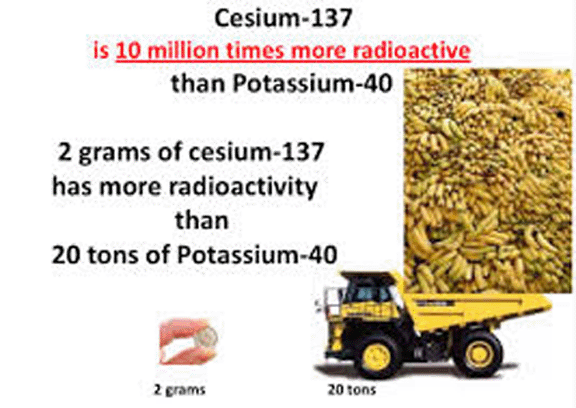
Similar to Iodine131 in it’s incredible toxicity, is Cesium 137 . It is a gamma and beta emmiter. CESIUM 137 Is acutely toxic to heart tissue, at 100 billionths of a gram. Remember chernobyl heart. No radiation modelling is necessary to establish this fact. The observation of heart effects from cesium 137/134 exposure to cesium 137, effects on the heart quite discernable. From the many studies from chernobyl and belarussian victims of chernobyl, observed by Bandhechevsky, Yablokov, and Miller.
Study indicates that global warming, heat waves, bring higher rates of suicide
 Higher temperatures, higher suicide rates, study finds https://thebulletin.org/2018/09/higher-temperatures-higher-suicide-rates-study-finds/?utm_source=Bulletin%20Newsletter&utm_medium=iContact%20email&utm_campaign=September14 By Dan Drollette Jr, September 7, 2018 There may be another, unexpected risk associated with global warming: higher rates of suicide.
For centuries, researchers have noticed that rates of violence and suicide tend to to increase in the summer. In a study published in Nature Climate Change, Stanford University professors showed that temperature increases by 2050 could increase suicide rates by 1.4 percent in the United States and 2.3 percent in Mexico. These seemingly small percentages in the suicide rate are actually quite significant—about twice as large in size as the influence of economic recessions, for example—and might explain why the rate of suicide in the United States has risen dramatically over the last 15 years. In real numbers, it means an additional 21,000 suicides in the US and Mexico per year.
Interestingly, the effects in Texas are some of the highest in the country. Even after the introduction of air conditioning—which would be expected to be a counterbalance—suicide rates there have not declined over recent decades. If anything, the researchers say, the effect has grown stronger in Texas over time.
And the effect is even stronger in Mexico, lending credence to the idea of a connection between how hot it is outside and how much people want to kill themselves. The researchers got it down to a mathematical formula: Every 1-degree Celsius increase in average monthly temperature means an additional 0.7 percent increase in suicides in the United States (and an additional 2.1 percent in Mexico).
In their paper, the authors stressed that rising temperature and climate change alone should not be viewed as direct motivations for suicide. Instead, they point out that these factors may contribute to the risk of suicide by affecting the likelihood that an individual makes a suicide attempt.
The Fukushima nuclear crisis: How communities, doctors, media, and government have responded
 Chapter Title: Informal Labour, Local Citizens and the Tokyo Electric Fukushima Daiichi Nuclear Crisis: Responses to Neoliberal Disaster Management Chapter Author(s): Adam Broinowski Book Title: New Worlds from Below [extensive footnotes and references on original]
 Faced with the post-3.11 reality of government (and corporate) policy that protects economic and security interests over public health and wellbeing, the majority of the 2 million inhabitants of Fukushima Prefecture are either unconscious of or have been encouraged to accept living with radioactive contamination. People dry their clothes outside, drink local tap water and consume local food, swim in outdoor pools and the ocean, consume and sell their own produce or catches. Financial pressure after 3.11 as well as the persistent danger of social marginalisation has made it more difficult to take precautionary measures (i.e. permanent relocation, dual accommodation, importing food and water) and develop and share counter-narratives to the official message. Nevertheless, some continue to conceal their anxiety beneath a mask of superficial calm.
As Fukushima city resident Shiina Chieko observed, the majority of people seem to have adopted denial as a way to excise the present danger from their consciousness. Her sister-in-law, for example, ignored her son’s ‘continuous nosebleeds’, while her mother had decided that the community must endure by pretending that things were no different from pre-3.11 conditions.75 Unlike the claim that risk is evenly distributed, it is likely that greater risk is borne by those who eat processed foods from family restaurants and convenience stores, as well as infants, children and young women who are disproportionately vulnerable to internal radiation exposures. Most mothers, then, have an added burden to shield their children while maintaining a positive front in their family and community.
Some, such as Yokota Asami (40 years old), a small business owner and mother from Kōriyama (60 km from FDNPS), demonstrated initiative in voluntarily evacuating her family. She decided to return (wearing goggles and a mask, she joked) in September 2011 when her son’s regular and continuous nosebleeds (in 30-minute spells) subsided. The Yokotas found themselves the victims of bullying when they called attention to radiation dangers, and were labelled non-nationals (hikokumin 非国民) who had betrayed reconstruction efforts. Her son was the only one to put up his hand when he was asked along with 300 fellow junior high school students if he objected to eating locally produced school lunches. He also chose not to participate in outdoor exercise classes and to go on respite trips instead. When it came time to take the high school entrance exam, he was told by the school principal that those who took breaks could not pass. He took the exam and failed. When he asked to see his results he found that he had, in fact, enough points to pass (the cut-off was 156 while he received 198 out of 250 points). The Yokotas decided that it was better to be a ‘non-national’ and protect one’s health. Their son moved to live in Sapporo.76
In March 2015, Asami reported that doctors undertook paediatric thyroid operations while denying any correlation (inga kankei 因果 関係) with radiation exposures. They also urged their patients to keep their thyroid cancer a secret to enhance their employment or marriage prospects, although it would be difficult to conceal the post-operation scar.77 Yokota also indicated she knew of students having sudden heart attacks and developing leukaemia and other illnesses.78
This seems to be supported by Mr Ōkoshi, a Fukushima city resident, whose two daughters experienced stillbirths after 3.11. WhileŌkoshi found that doctors have regularly advised women in the area to abort after 3.11, presumably to avoid miscarriages and defects, they do not discuss direct causes. He also observed regular illnesses experienced by many of his friends, and some sudden deaths. After a friend (62 years old) started saying strange things, he was diagnosed with brain dysfunction. He died quickly. Another friend (53 years old) was advised by a doctor to monitor a polyp in her breast. When she sought second opinions, she discovered she had accumulated an internal dose of 22 mSv and had a rapidly developing liver cancer. She also died quickly.79 There are many more such stories that are being actively ignored by the authorities. As Shiina put it, ‘we’re getting leukaemia and cataracts and we die suddenly. The TEPCO registrar has been inundated with complaints’.80
While radiation contamination is clearly a health and environmental issue, state-corporate methods deployed by executives to protect (transnational) financial, industry and security interests and assets also make it a political issue.81 As things do not change by themselves, rather than turning one’s frustration inward in self-blame, turning to prayer or deceiving oneself into returning to pre-3.11 lifeways in contaminated areas, Shiina states that people, particularly those most affected, must develop political consciousness.
To achieve this ambitious objective is not as complicated as it might sound. Nishiyama Chikako (60 years old), for example, returned to Kawauchi village to run for the local assembly after the mandatory order was lifted in December 2011. She found, as she commented in her blog, a link between TEPCO and the tripling of the Kawauchi budget post-3.11. Subsequently, she reported that her blog was shut down by unknown hackers on several occasions.82
 This sort of information and communication control appears to be widespread. After 3.11, the central government hired advertising companies Dentsū and Hakuhōdō (formerly McCann Ericson Hakuhodo) to run a ‘public acceptance’ campaign. Young teams were dispatched nationwide to conduct ‘public opinion guidance’ (yoron yūdō 世論誘導). The teams consisted of casual labour (earning 2,000–4,000 yen per hour) hired under a confidentiality clause (shuhi gimu 守秘義務) to manipulate information (jōhō kōsaku 情報工作) and harass internet users.83
 Media professionals have been subjected to similar tactics. The Asahi TV journalist Iwaji Masaki (Hōdō Station), one of the few mainstream journalists covering the Fukushima Daiichi nuclear accident in depth, for example, was intimidated by police for interviewing (December 2012) informal nuclear workers who showed shoddy decontamination practices that entailed contaminated waste disposal rather than removal and the mother of a child with thyroid cancer. Airing the program was delayed until August 2013. Before he could complete his planned segments on the US$1 billion class action for compensation for unusual and serious illnesses filed against TEPCO, General Electric, Hitachi and Tōshiba in 2015 by sailors from the USS Ronald Reagan (which provided assistance quickly after the disaster, and among whose crew 250 were ill and three had died),84 on 29 September 2013, Iwaji was reportedly found dead in his apartment (having suffered carbon monoxide poisoning in a sealed room as he slept). Much speculation followed on social media, including both plausible reasons for suicide and testimonies from friends that knew him well that Iwaji himself stated he would never commit suicide, but the story was conspicuously ignored by major news channels.85
The former mayor of Futaba village Idogawa Katsuichi was harassed on social media for calling attention to illnesses and for the resettlement of pregnant women and children. When Kariya Tetsu characterised Idogawa in his popular manga series (Oishinbo 美味しんぼ), and depicted the manga’s main character as suffering from nosebleeds after visiting Fukushima, Kariya’s editors shut the series down following accusations of ‘spreading rumours’ from some readers, media commentators and high level politicians. Similarly, Takenouchi Mari, a freelance journalist and mother who evacuated from Fukushima in 2011, received thousands of slanderous messages and threats to her two-year-old son and her property after criticising the co-founder of Fukushima ETHOS on her blog in mid-2012. She too reported that her internet account was suspended and her request for a police investigation ignored. She was counter-sued for harassment and subjected to a criminal investigation and civil law suit.86
Among the activists who have been arrested for anti-nuclear protests, the academic Shimoji Masaki of Hannan University (9 December 2012) was arrested by Osaka Prefectural Police and charged with ‘violating the Railway Operation Act’ for walking through an Osaka station concourse while participating in a demonstration against radioactive waste incineration (17 October 2012). Shimoji had reiterated that residents, due to radioactive incineration (which was due to commence in Osaka in February 2013), would be forced to bear the burden of air, food and water contamination.8
Despite such obstacles to developing a political consciousness as well as the obvious difficulties in permanently resettling large populations, it has been not only evacuees who have had to think about their fundamental life priorities after the Fukushima Daiichi nuclear distaster. Some have adopted real (not only psychological) self-protection mechanisms. The voluntary Fukushima Collective Health Clinic (Fukushima Kyōdō Shinryōjo 福島共同診療所), for example, is founded on three principles: respite (hoyō 保養), treatment (shinryō 診療) and healing (iryō 医療). Co-founder Dr Sugii, advocates a return to the 1 mSv/y limit, and seeks to inform those who for whatever reason cannot move from contaminated areas in Fukushima Prefecture.88 This is modelled on Belrad, the independent health clinic in Belarus run by Alexey Nesterenko, which prioritises knowledge, safety and open information on radiation and its health impacts. 86
To counteract the misinformation residents were exposed to post Chernobyl, over time and with limited resources, Belrad and other organisations have disseminated information and organised respite trips for children in affected areas. In 2015, for example, subsidised respite trips were organised for 50,000 children, and results have shown that over two continuous years of respite those who accumulated 25– 35 Bq/kg had reduced the amount to 0 Bq/kg. Unlike the flat limit of 100 Bq/kg of Caesium in food in Japan (50 Bq/kg for milk and infant foods, 10 Bq/kg for drinking water), Belrad recommends an internal radiation limit of 10–30 Bq/kg in the body (although it advises below 10 Bq for infants to avoid lesions and heart irregularities).89 It should be noted that these limits do not guarantee safety against the effects of repeating internal radiation exposure from consuming contaminated foods, which is relative to the length of time the radiation remains and its location in the body.
While some communities, such as the town of Aketo in Tanohama, Iwate Prefecture, have struggled to block the siting of nuclear waste storage facilities,90 others are also organising to reduce radio-accumulation in their children through respite trips,91 as well as concentrating on indoor activities, measuring hotspots and decontaminating public areas and pathways, pooling funds for expensive spectrometers to monitor internal exposure and food and water, incorporating dietary radioprotection, as well as finding ways to reduce anxiety
Many local farmers cannot admit the already near-permanent damage to their land (which may continue for hundreds of years) because it would imply the devaluation of their property and produce as well as threatening their ancestral ties to the land, commitments and future plans. While many are keenly aware of their responsibilities, the push by the Fukushima and central governments to identify and gain access to markets for produce from irradiated areas would make it easier to overlook uncomfortable factors. Some have argued that given the reassurances of safety from the highest authorities, these offical figures should therefore relocate to contaminated areas and consume these products regularly. Despite the fairness of this statement, a more utilitarian logic has prevailed. In the name of reconstruction and revitalisation of Fukushima and the nation, the dilution of Fukushima produce with unirradiated produce to return measurements just under the required limits, radiation spikes in soil and food or the mutation of plants as Caesium replaces potassium (K40), for example, tend to be minimised. In this climate, the distribution and relabelling of Fukushima produce for urban and international markets (i.e. in a black market of cut-price bulk produce picked up by yakuza and other brokers) is likely to continue.
To date, the majority of evacuees have refused to return to (de)contaminated areas. Some claim they are yet to receive accurate information to justify it. Independent specialists such as Hosokawa Kōmei (Citizens’ Commission on Nuclear Energy), who develops models for transition to renewable alternatives, anticipate an increase in evacuee populations as they predict increased resettlement of Fukushima residents over 20–30 years.92 As some evacuees recognise the potential for second or third Fukushimas, they have sought to strengthen their collective identities and rights. Through local organisation and alternative life practices, whether in micro-scale ecovillages and transition towns93 with communal occupancies and squats, parallel currencies and local exchange systems (roughly 70 substantive projects), organic food co-ops, self-sufficient energy systems, local production and recycling, carpools and free kindergartens, such groups are seeking to reconstruct and model core social priorities, focusing on clean food, health and community cooperation rather than the internalised and dreary competition for material accumulation.
Although the accountability of authorities with prior knowledge has yet to be properly investigated, one of the largest groups of collective legal actions to be mounted in Japanese history includes some 20 lawsuits by 10,000 plaintiffs. The Fukushima genpatsu kokuso-dan (Group of Plaintiffs for Criminal Prosecution 福島原発告訴団), formed on 20 April 2012, filed a criminal case (lodged 3 September 2013, Fukushima District Court) against 33 previous and present officers of TEPCO, government officials and medical experts for ‘group irresponsibility’ and the neglect of duty of care, environmental damage and harm to human health. Mutō Ruiko, one of the key plaintiffs, declared the main aim to be symbolic: to publicly record injury, reclaim the victims’ sense of agency and protect the next generation. In short, they were seeking recognition of wrong and harm done rather than primarily financial redress. This moderate aim was undoubtedly tempered by recognition of regulatory capture: those who were cavalier with safety procedures ‘were now in charge of restarts; those responsible for the “safety” campaign were now in charge of the Health Survey; [there has been] no responsibility for the SPEEDI cover-up; and TEPCO is not being held responsible for [faulty] decontamination’.94
The judgement of this case was handed down at the Tokyo District Court on the same day as the announcement of Tokyo’s successful Olympics bid (9 September 2013). The case was dismissed on the grounds that the disaster was beyond predictability (sōteigai 想定外), which made negligence hypothetical.95 A citizens’ panel (Committee for inquest of Prosecution) overturned the dismissal and renewed the claim against three TEPCO executives on 18 December 2013. They demanded, alongside a ruling of negligence against three former TEPCO executives, the inclusion of physical, economic, social and psychological harms: illness, paediatric underdevelopment (radiation exposures, excessive isolation indoors), financial losses (unemployment, loss in property value, rental costs of two homes, relocation, travel, etc.), family and community division, ijime (bullying いじめ) and stress. Many plaintiffs also claimed that their disrupted reliance upon nature,96 as inviolable and precious,97 should be recognised as harm. This too was dismissed and again a citizen’s panel found against the three TEPCO executives.98 In May 2015, 10 groups of plaintiffs formed a network named Hidanren (被弾連, Genpatsu Jiko Higaisha Dantai Renrakukai) comprising 20,000 people. The Fukushima kokuso-dan again made a claim to another citizens’ panel, which found in July 2015 in favour of indicting the three TEPCO executives for trial.99 In addition, a civil case filed in June 2015 by 4,000 plaintiffs from Iwaki seeking to prove negligence and not just harm sought to use previously withheld evidence to show fair warning of a 3.11-type scenario was given. This case focused the court on the operator’s calculation of risk probability of a tsunami of that size and, rather than aiming at financial compensation, it sought to deter nuclear operators from future negligent practices if ruled in favour. In anticipation of out-of-court settlements, the Japanese Government increased the budget for compensation payments to 7 trillion yen (US$56 billion). https://www.jstor.org/stable/pdf/j.ctt1pwtd47.11.pdf?refreqid=excelsior%3Af507747c78b2f0fba7a19d91222e4a72
Radiation caused the deaths of 4,000 clean-up workers, and 70,000 disabled at Chernobyl nuclear disaster
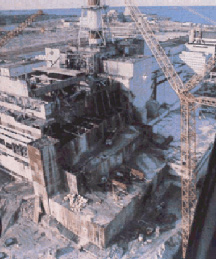 THE ‘LIQUIDATORS’ WHO RISKED IT ALL TO CLEAN UP CHERNOBYL WIRED, LAURA MALLONEE, 09.08.18
THE MELTDOWN AT the Chernobyl Nuclear Power Plant in northern Ukraine on April 26, 1986 was a massive tragedy that ultimately claimed at least 9,000 lives and affected millions more. It also created a toxic mess. Radioactive particles choked the atmosphere and rained down on cities, forests, and roads. In the immediate aftermath, fires had to be put out, debris cleared, contaminated waste buried deep underground.It was, obviously, not an easy task. Remote-controlled bulldozers and other robots proved too weak for the job, their circuitry fried by radiation. So the Soviet Union sent in humans—600,000 of them. These brave firefighters, soldiers, janitors, and miners—the so-called “liquidators”—did everything from hosing down streets to felling trees to building a concrete sarcophagus around the exposed reactor … all the while charged subatomic particles ravaged their cells and shortened their life spans.
“No personal sacrifice was too much for these men and women,” says photographer Tom Skipp. Moved by their story, he visited Slavutych, Ukraine in April to photograph survivors, now in their golden years. The portraits make up his haunting series The Liquidators.
“The liquidators were sent into impossible scenarios where even machines failed,” Skipp says. “Each has a human story seemingly entangled in the complex history of communism and duty to the motherland….
On average, the liquidators were exposed to 120 millisieverts of radiation, about 1,200 times the amount you get from a simple x-ray. In the years following the meltdown, more than 4,000 of them died from radiation-caused cancers, and another 70,000 were disabled by exposure. Still, the liquidators shared a steadfast sense of duty to their government and fellow citizens, even when they didn’t agree with the ruling system or found it difficult to talk about. “I think that there’s a certain amount of fear aligned with speaking out against any wrongdoings that were committed,” Skipp says. “Many live on a state pension.”
Skipp photographed the men and women with his Fujifilm GFX 50 in their homes, as well as at at a local museum dedicated to explaining the history of Chernobyl and Slavutych. Many of the portraits capture them standing proudly but solemnly before an image of the destroyed reactor and beneath a clock stopped at the exact time of the meltdown—the moment that defined their lives forever. https://www.wired.com/story/chernobyl-liquidators-photo-gallery/
A denied claims specialist will be meeting later this month with former atomic workers in eastern Idaho
 Atomic illness claims specialist to hold eastern Idaho sessions https://www.postregister.com/news/local/atomic-illness-claims-specialist-to-hold-eastern-idaho-sessions/article_8a7f0997-f1e0-5d05-8686-6d443442eedb.html, Sep 8, 2018
Deplorable conditions of Japan’s ‘informal’ nuclear workers: Fukushima, radiation and leukaemia
Sworn to secrecy, after a superficial safety education drill, they are sent into highly contaminated, hot and wet labyrinthine areas.
the state also raised nuclear workers’ limits from no more than 50 mSv per year (mSv/y) and 100 mSv/5 years to 250 mSv/y to deal with emergency conditions, and determined that there would be no follow-up health treatment for those exposed to doses below 50 mSv/y, while TEPCO decided to not record radiation levels below 2 mSv/y in the misplaced justification that the effects would be negligible.
poor monitoring and record-keeping has meant that many former nuclear workers who develop leukaemia and other illnesses have been denied government compensation
Informal Labour, Local Citizens and the Tokyo Electric Fukushima Daiichi Nuclear Crisis: Chapter Author(s): Adam Broinowski Book Title: New Worlds from Below [many footnotes and references on original] Sept 18
Nuclear workers are important as sentinels for a broader epidemic of radiation related diseases that may affect the general population. We live with contradictions everyday
Introduction The ongoing disaster at the Fukushima Daiichi nuclear power station (FDNPS), operated by Tokyo Electric Power Company (TEPCO), since 11 March 2011 can be recognised as part of a global phenomenon that has been in development over some time. This disaster occurred within a social and political shift that began in the mid-1970s and that became more acute in the early 1990s in Japan with the downturn of economic growth and greater deregulation and financialisation in the global economy. After 40 years of corporate fealty in return for lifetime contracts guaranteed by corporate unions, as tariff protections were lifted further and the workforce was increasingly casualised, those most acutely affected by a weakening welfare regime were irregular day labourers, or what we might call ‘informal labour’.
During this period, many day labourers evacuated rented rooms (doya どや) and left the various yoseba (urban day labour market よせば, or lit. ‘meeting place’) to take up communal tent living in parks and on riverbanks, where they were increasingly victimised. With independent unions having long been rendered powerless, growing numbers of unemployed, unskilled and precarious youths (freeters フリーター) alongside older, vulnerable and homeless day labourers (these groups together comprising roughly 38 per cent of the workforce in 2015)3 found themselves not only lacking insurance or industrial protection but also in many cases basic living needs. With increasing deindustrialisation and capital flight, regular public outbursts of frustration and anger from these groups have manifested since the Osaka riots of 1992.
In this chapter, first I outline the conditions of irregular workers at nuclear power plants and the excess burden they have borne with the rise of nuclear labour in Japan since the 1970s. I then turn to post-3.11 conditions experienced by residents in radiation-contaminated areas. Contextualising these conditions within the genealogy of radiodosimetry standards, I seek to show, through personal interviews and localised responses, how those who are regularly exposed to radiation from Fukushima Daiichi are now confronting problems similar to those faced by informal nuclear labour for decades in Japan. This analysis shows how, after 40 years or more of environmental movements as discussed in Chapter Four, the struggle continues to find viable solutions to the systemic production of the intertwined problems of environmental crises and labour exploitation, and suggests how potential alternative directions for affected populations may lie in their mutual combination.
Conditions for Informal Labour Employed in Nuclear Power Stations Continue reading
For the first time, Japan acknowledges radiation death from Fukushima, and will compensate the family
 Fukushima disaster: Japan acknowledges first radiation death from nuclear plant hit by tsunami Japan has acknowledged for the first time that a worker at the Fukushima nuclear power plant, destroyed by an earthquake and tsunami more than seven years ago, has died from radiation exposure.
Key points:
- The man had worked at the plant since the earthquake and tsunami in 2011
- He was diagnosed with lung cancer in 2016, in his 50s
- The Health, Labour and Welfare Ministry ruled that compensation should be paid to the family
The Health, Labour and Welfare Ministry ruled that compensation should be paid to the family of the man in his 50s who died from lung cancer, an official said.
The worker had spent his career working at nuclear plants around Japan and worked at the Fukushima Daiichi plant operated by Tokyo Electric Power at least twice after the March 2011 meltdowns at the station.
He was diagnosed with cancer in February 2016, the official said. ……..
The ministry had previously ruled exposure to radiation caused the illnesses of four workers at Fukushima, the official said.
But this was the first death……
Tokyo Electric is facing a string of legal cases seeking compensation over the disaster.
The news came as the northern Hokkaido region was hit by a 6.7 magnitude earthquake, sparking concerns at the three-reactor Tomari nuclear plant, which lost power as a result of the earthquake.
The Tomari plant has been in shutdown since the Fukushima disaster.
The Fukushima crisis led to the shutdown of the country’s nuclear industry, once the world’s third-biggest.
Seven reactors have come back online after a protracted relicensing process.
The majority of Japanese people remain opposed to nuclear power after Fukushima highlighted failings in regulation and operational procedures in the industry.http://www.abc.net.au/news/2018-09-06/first-man-dies-from-radiation-from-fukushima-nuclear-disaster/10208244
Opposition to release of Fukushima radioactive tritium water into the sea; longterm storage the better option
 Fukushima water release into sea faces chorus of opposition https://mail.google.com/mail/u/0/#inbox?compose=DmwnWtDqNzxklZTsLVvsRFtgBQZHzxshPgMCgrVGpNqZnjrqDwNNWbPprDwxPlNFzCVZnfDvsQwVCitizens and environmental groups have expressed opposition to the idea of releasing into the ocean water tainted with tritium, a radioactive substance, from Tokyo Electric Power Company Holdings Inc.’s disaster-stricken Fukushima No. 1 nuclear power plant.“Long-term storage (of the tritium-containing water) is possible from technical and economic standpoints,” Komei Hosokawa, 63, an official of the Citizens’ Commission on Nuclear Energy, said at a public hearing held in Tokyo on Friday by a subcommittee of the Agency for Natural Resources and Energy. “The radiation levels in the water will decrease during the long-term storage,” he added.
At a similar hearing held the same day in Koriyama, Fukushima Prefecture, Aki Hashimoto, a housewife from the city, said, “I never want to see further worsening of ocean pollution from radiation.”
Opinions objecting to the release of the tritium-contaminated water into the ocean were also heard at a hearing held in the Fukushima town of Tomioka on Thursday.
After Friday’s hearings, Ichiro Yamamoto, who heads the subcommittee, told reporters that many participants in the hearings said the tainted water should continue to be held in storage tanks.
The subcommittee will study the option of keeping the water in the tanks, he added.
Tepco is lowering the radiation levels in contaminated water at the Fukushima No. 1 plant using special equipment, but the device cannot remove tritium.
The tritium-tainted water is stored in tanks within the premises of the power plant, which was heavily damaged in the March 2011 earthquake and tsunami.
In 2016, an expert panel of the Agency for Natural Resources and Energy discussed five methods to dispose of the tritium-tainted water —injection deep into the ground, release into the sea after dilution, release into the air through evaporation, conversion into hydrogen through electrolysis, and burying it after it is solidified.
The panel estimated that the ocean release is the cheapest option, costing up to about ¥3.4 billion.
UK, USSR, and US soldiers paid the health costs, as guinea pigs for nuclear bomb blasts

‘We Were Guinea Pigs’: Soldiers Explain What Nuclear Bomb Blasts Feel Like https://motherboard.vice.com/en_us/article/wjk3wb/what-does-a-nuclear-bomb-blast-feel-like, 30 Aug 18
“It was as if someone my size had caught fire and walked through me.” When America dropped the nuclear bombs on Hiroshima and Nagasaki, the world watched as the atomic age began. The effects of the bomb were devastating and linger to this day. No government or military has ever detonated a nuclear bomb during a war since. But they have detonated them for various other reasons—including a series of tests designed to give soldiers a taste of what nuclear war might feel like.
“When the flash hit you, you could see the x-rays of your hands through your closed eyes,” he said. “Then the heat hit you, and that was as if someone my size had caught fire and walked through me. It was an experience that was unearthing. It was so strange. There were guys with bruises and broken legs. We couldn’t believe it. To say it was frightening is an understatement. I think it all shocked us into silence.”
The stories these nuclear veterans told Motherboard were harrowing.
“It was utter devastation. If I was looking at you now, I would see all your bones. You would see all the blood vessels. All I saw was this rising, colossal fireball going up and thunder, lightning, you name it,” David Hemsley, who experienced atomic bomb blasts at the age of 18, told Motherboard. “I think it was too much for some people—some of them were crying, asking for their mum. It was awful.”
“Didn’t know anything about it when we went, we didn’t know what we were going to do when we went, only to be told we were going to be testing bombs. It was just sheer brilliant light,” Robert Fleming said.
The most notorious of these experiments was the Castle Bravo detonation on March 1, 1954. At 15 megatons, it was the highest yield weapon ever tested by the United States, but that high yield was an accident. Weapon scientists anticipated a yield of 6 megatons, but new weapon designs led to the inadvertent discovery of thermonuclear fusion chain reactions. The accident more than doubled the power of the blast.
US Navy sailors on several ships watched the explosion from what they were told was a distance. It was not. “We soon found ourselves under a large, black and orange cloud that seemed to be dropping bright red balls of fire all over the ocean around us,” one witness told journalist Douglas Keeney in 15 Minutes: General Curtis LeMay and the Countdown to Nuclear Annihilation. “I think many of us expected we were witnessing the end of the world.”
The nearby Bikini Atoll, Marshall Islands have never been the same. The tiny island republic experienced fallout from multiple nuclear tests over the years, but the Castle Bravo explosion permanently altered the islands and its people. To this day, its citizens experience birth defects and cancer rates many times higher than those of the general population.
“We were basically used as guinea pigs,” Hern said. “There’s no other word for it.”
These men stood closer to the power of the atom and lived to tell the tale, but the blasts took their toll. Many have chronic health issues and cancers. The blasts sterilized certain soldiers, and higher instances of disease and early death were reported among the kids of those soldiers who did go on to bear children.
The onus is now on the young people to get rid of these weapons,” George Booker said. “With the right sort of education, they will do that.”
Lawmaker presses for quicker action to help military clean-up crews of USA’s 1966 nuclear accident in Spain
https://www.militarytimes.com/veterans/2018/08/29/lawmaker-presses-for-quicker-action-to-help-clean-up-crews-of-a-deadly-military-nuclear-accident/, WASHINGTON — Veterans exposed to radioactive debris more than five decades ago haven’t made much progress in the courts to have their illnesses recognized by the Department of Veterans Affairs, so now they’re hoping Congress can intervene.
1 This Month
Chernobyl: The Lost Tapes – A good documentary on Chernobyl on SBS available On Demand for the next 3 weeks– https://www.sbs.com.au/ondemand/tv-program/chernobyl-the-lost-tapes/2352741955560

of the week–London Campaign for Nuclear Disarmament

Tell the Ukrainian Government to Drop Prosecution of Peace Activist Yurii Sheliazhenko
To see nuclear-related stories in greater depth and intensity – go to https://nuclearinformation.wordpress.com
-
Archives
- April 2026 (126)
- March 2026 (251)
- February 2026 (268)
- January 2026 (308)
- December 2025 (358)
- November 2025 (359)
- October 2025 (376)
- September 2025 (257)
- August 2025 (319)
- July 2025 (230)
- June 2025 (348)
- May 2025 (261)
-
Categories
- 1
- 1 NUCLEAR ISSUES
- business and costs
- climate change
- culture and arts
- ENERGY
- environment
- health
- history
- indigenous issues
- Legal
- marketing of nuclear
- media
- opposition to nuclear
- PERSONAL STORIES
- politics
- politics international
- Religion and ethics
- safety
- secrets,lies and civil liberties
- spinbuster
- technology
- Uranium
- wastes
- weapons and war
- Women
- 2 WORLD
- ACTION
- AFRICA
- Atrocities
- AUSTRALIA
- Christina's notes
- Christina's themes
- culture and arts
- Events
- Fuk 2022
- Fuk 2023
- Fukushima 2017
- Fukushima 2018
- fukushima 2019
- Fukushima 2020
- Fukushima 2021
- general
- global warming
- Humour (God we need it)
- Nuclear
- RARE EARTHS
- Reference
- resources – print
- Resources -audiovicual
- Weekly Newsletter
- World
- World Nuclear
- YouTube
-
RSS
Entries RSS
Comments RSS
 nuclear-news