Unfortunately the Fissionline journal has ceased its publishing and has deleted its content. I have saved some important journals and have added links below to the 3 surviving files left in my possession for you to download for free (as evidence of a well funded nuclear cover up).
Within that vast repository of knowledge was information about the British Nuclear Test Veterans campaign for justice because of the health effects on the veterans and their children by the nuclear weapons testing carried out by the UK Government. As well as fighting for justice for these victims, Fissionline also challenged the Ministry of Defense (MoD) and UK nuclear industry for their complicity in covering up the health effects from nuclear reactor disasters such as Fukushima, Chernobyl and Semipalantisk (Soviet Kazakhstan) etc.
Specific to Fukushima Fissionline covered the the most egregious case of the BBC and their Science Media Centre colleagues (Now called Sense About Science after a rebrand because of Journalists, Nuclear Health Physicists, bloggers and others who pushed back against the “charity”/Corporate Lobbyists version of “The right science”) supporting bad science advise and pro military and industry bias.
Fissionline gave Prof. Geraldine (Gerry) Thomas an interview where she made many of her spurious health and safety claims on public broadcasting platforms around the world whilst promoting nuclear energy. This made her one of the prime lobbyists for the nuclear energy and nuclear weapons industries, in fact she was surprisingly appointed as Officer of the Order of the British Empire (OBE) in the 2019 Birthday Honours for services to science and public health.[9].
Many nuclear professionals etc, reacted against her incorrect and dangerous advice to the families of Fukushima and the wider world, in a series of official complaints and the BBC had to retract its Fukushima video series (3 videos) of her in Japan discussing Fukushima contamination in set of surreal nuclear marketing propaganda pieces (The BBC did this quietly without even informing the complainants), only one of these videos now exists and is a debunk of one of the videos Goddards Journal on You Tube and I recommend you read the comments on YouTube under the video for a detailed breakdown of the types of reaction from both anti nuclear and pro nuclear experts and activists that all agree she was dreadfully wrong in her calculations and so called expert advice.
In an astounding interview with Dr Keith Baverstock (who worked in the World Health Organisation as a radiological health expert) on Fissionline, we saw that he debunked her claims in a blow by blow during his interview. There were two specific articles in Fissionline issues 44 and 45 (you can download the issues for a limited time on the links) that were evidence to this interaction between the UK MOD “Expert” and ex-WHO expert and his testimony also supported the Complainants to the BBC videos.
The way in which the nuclear and military industries (supported by the various departments secretly working behind the auspices of the UK Home Office) have managed the devastating impact to the nuclear industry from the Fukushima Daichi nuclear disaster in 2011 which has been been impressive in its scope and its costs! At the forefront of this is Prof Geraldine Thomas OBE for the UK and people like Michael Shellenberger for the USA nuclear and military complex.
At the same time as Prof Thomas OBE was receiving her Honours from the Queen of England was she thinking about the fate of her opponent (Prof Chris Busby) at the court case for the British Nuclear Veterans (whose children and grandchildren for another 20 generations would be effected) where she used the same and similar arguments, to argue for the Mod against the victims of the UK`s nuclear testing. These same arguments she used to win the case were challenged by Prof Keith Baverstock in a concise and precise way.
Chris Busby had his house raided in a ridiculous over the top display of the operations of Project Servitor (Home Office Stasi like program) being used to embarrass and frighten Prof Busby with his neighbors and friends as well as the wider public.
He returned home that night to find officers had searched his home laboratory and sealed off his home in Bridge Street.
“They destroyed my experiment. It was most irritating,” he said.
Dr Busby said he felt he was being targeted because of his criticism of the government’s current assessment of radiation risks.
Even though huge funding from the UK Home Office and nuclear industry and massive man power costs by the security and police services etc have failed to save the nuclear industry because of costs, lack of transparency, connection to nuclear weapons, depleted uranium weapons etc, not compatible with climate change energy policies nor compatible with future renewable energy transmission infrastructure. Also, multiple nuclear disasters and costs over runs in building nuclear reactors and dealing with nuclear cleanup and nuclear waste disposal etc.
The only winners are the MoD in saving the cost of having to fully compensate their nuclear victims and TEPCO the Japanese energy company responsible for the Fukushima Nuclear disaster not having to fully compensate the victims of the nuclear meltdown.
In fact TEPCOs CEOs were recently found not guilty (in a surprise decision given the evidence) for their part in the bad governance of their company before , during and after the nuclear disaster. Of course, Prof Thomas OBE got an OBE for helping the UK Mod as well as helping TEPCO and the Japanese Government to reassure everyone (the courts and the media) that everything in Fukushima is just wonderful and dandy. Maybe even the UK Government supported Japans anti disaster marketing #TOKYO2020 Olympics bid? It certainly was a WIn WIn situation in that respect!
Of course many would say that any industry or government would not be able to pull off such a coup right in front of our faces? Its a conspiracy theory and fake news but as we see in the field of climate science, good science can be corrupted by bad science if you have enough money and power and control the narrative. Some excellent evidence for this also exists because of brave whistleblowers, publishers and activists and can be found here
Through Cablegate, @WikiLeaks exposed how the Copenhagen climate talks didn't fail to reach consensus; they were sabotaged by polluters who didn't want to pay and those who will lose profit in a low carbon economy. https://t.co/3qUG3tF5uo#Strike4Climate#climatestrike
Feel free to download the 2 evidential articles that were removed from the internet as proof of the power of PR marketing and ownership of perception while it is available.
“If you tell a lie big enough and keep repeating it, people will eventually come to believe it. The lie can be maintained only for such time as the State can shield the people from the political, economic and/or military consequences of the lie. It thus becomes vitally important for the State to use all of its powers to repress dissent, for the truth is the mortal enemy of the lie, and thus by extension, the truth is the greatest enemy of the State.”
‘Like a sunburn on your lungs’: how does the climate crisis impact health?
Children, pregnant women and the elderly are the most at risk from extreme weather and heat – but the impact is already felt across every specialty of medicine
Children, pregnant people and the elderly are the most at risk from extreme weather and rising heat. But the impact of the climate crisis – for patients, doctors and researchers – is already being felt across every specialty of medicine, with worse feared to come……..
As temperatures increase, plants produce more pollen for longer periods of time, intensifying the allergy seasons. Increased concentrations of carbon dioxide in the atmosphere can make plants grow more and cause more grass pollen, which causes allergies in about 20% of people. Carbon dioxide can also increase the allergy-causing effects of pollen.
Pregnancy and newborn complications
Pregnant people are more vulnerable to heat and the air pollution that is being made worse by climate change……….
“We’re finding that we have increasing numbers of children born already in a weakened state from heat and air pollution. That’s a totally different story than thinking about climate change as the cause of hurricanes over Florida … It’s a much more pervasive and ongoing impact.”In the developing world pregnant people can also suffer from food and water scarcity. Insect-borne illnesses – such as the Zika virus, which was spread by mosquitoes – are also a hazard to developing fetuses.
Heart and lung disease
Air pollution gets worse as temperatures rise, stressing both the heart and lungs. The fossil fuel pollution that causes the climate crisis also is linked with increased hospitalizations and deaths from cardiovascular disease, and it is connected with more asthma attacks and other breathing problem……
Risks for children
Children under the age of five experience the majority of the health burden from climate change, according to Salas’ report………
Dehydration and kidney problems
Much hotter days make it harder to stay hydrated. They are linked with electrolyte imbalances, kidney stones and kidney failure. Patients who need dialysis as their kidneys fail can have trouble getting treatment during extreme weather events.
Skin disease
Higher temperatures and the depletion of the ozone layer increase the risk of skin cancer. The same refrigerants and gases that damage the ozone layer contribute to climate change.
Digestive illnesses
Heat is linked with higher risks for salmonella and campylobacter outbreaks. Extreme rains can contaminate drinking water. Harmful algae blooms that thrive in higher temperatures can cause gastrointestinal problems, too.
Infectious disease
Changing temperature and rainfall patterns allow some insects spread farther and transmit malaria, dengue, Lyme disease and West Nile virus. Waterborne cholera and cryptosporidiosis increase with drought and flooding.
Mental health conditions
The American Psychological Association created a 69-page guide on how climate change can induce stress, depression and anxiety. The group says “the connections with mental health are often not part” of the climate-health discussion……….
Neurologic disease
Fossil fuel pollution can increase the risk of stroke. Coal combustion also produces mercury – a neurotoxin for fetuses. Diseases spread by mosquitoes and ticks increase the chance of neurological problems. Extreme heat is also linked with cerebrovascular disease, a disorder that affects blood supply to the brain.
Nutrition
Carbon dioxide emissions are lowering the nutritional density of food crops, reducing plant levels of protein, zinc and iron and leading to more nutritional deficiencies. Food supplies are also disrupted by drought, societal instability and inequity linked with climate change.
Trauma
Extreme weather events, including hurricanes, floods and wildfires, often cause physical injuries. Doctors see minor fractures, crush injuries and smoke inhalation. Extreme heat is also linked with aggression and violence, and the climate crisis globally is connected with violent conflict and forced migration. https://www.theguardian.com/environment/2019/sep/16/climate-crisis-health-risks-extreme-weather
When toxic waste piles — either solid rock or liquid confined behind earthen dams — are left unaddressed, the potential increases for “catastrophic failure
WHILE ‘ZOMBIE’ MINES IDLE, CLEANUP AND WORKERS SUFFER IN LIMBO As the governor of West Virginia and other mine owners warehouse their operations and avoid cleanup, the Trump administration stifles attempts to write rules that could restrict the practice. Center for Public Integrity, 8 Sept 19
……….RADIOACTIVE LEGACY
Remnants of America’s nuclear past litter the Grants Mining District in northwest New Mexico: signs warning of radioactivity, a spiked drill bit outside the New Mexico Mining Museum in Grants, businesses offering to help retired miners get U.S. Department of Labor health benefits.
Mount Taylor — “Tsoodzil” to the Navajo Nation — towers over the landscape. At the base of the 11,305-foot-tall inactive volcano sits the Mount Taylor Mine, idled in 1990 and allowed to flood.
The heyday of Southwestern uranium mining lasted just 30 years. Much of the industry, including this mine, has since remained in standby.
The country’s last operational underground uranium mine shut in 2015, and open-pit mines haven’t produced in decades. Only one mill in Utah and four in-situ-leach operations, in which ore is dissolved belowground and pumped up, are still active. Two other mills and 15 in-situ-leach sites are either officially in standby or not producing. The American uranium industry employed only 372 people last year, down from 1,120 two decades earlier. Production from U.S. uranium mines fell 85 percent during that period, according to the U.S. Energy Information Administration.
At current prices, mining uranium in the Four Corners remains untenable.
But now the Mount Taylor Mine is reopening, at least on paper.
…… the Jackpile-Paguate Uranium Mine, once the world’s largest open-pit uranium mine, is now a Superfund site. In the broader Four Corners region, the U.S. Department of Energy is supposed to clean up more than 20 such Cold War relics, from former mills to waste piles. Some leak arsenic, lead, uranium and other toxic substances into groundwater. Recently, hoofprints were found leading from an unfenced pollution control pond near Slick Rock, Colorado, indicating that cattle likely drink from it.
Just inside the southeastern corner of the Navajo Nation in New Mexico, an unsettling sign hangs from barbed wire: “DANGER. ABANDONED URANIUM MINE,” a pile of mine waste looming behind it. Residents here in the Red Water Pond Road Community are surrounded by two abandoned uranium mines and a mill…….
Living around or working in uranium mines can worsen, or even trigger, autoimmune disorders, kidney disease, respiratory issues, hypertension and cancer. A study by the U.S. Department of Health and Human Services, the University of New Mexico and Navajo agencies found that Navajo Nation citizens, including infants, had elevated levels of uranium in their bodies.
Paul Robinson, Southwest Research and Information Center’s research director, has tracked the industry for more than 40 years. While the New Mexico Mining Act mandates that waste rock and other infrastructure be stabilized before entering standby status, it allows operators to delay reclamation while mining is paused, he said.
“Leaving the wastes that are generated at a mine uncovered is one of the ways to ensure airborne or waterborne release,” Robinson said.
Thompson Bell, a member of the Navajo Nation who spent five years as a mechanic in a uranium mine, grew up here and returned for the study. He said many of his mining coworkers died from lung cancer. The sheep and cattle that used to graze here have all but disappeared, the flocks given up for fear of contamination.
“The thing about uranium, we found out: It destroys humans and land,” Bell said.
Opinion remains split locally about whether the return of relatively high-paying mining jobs — if that ever happened — would be worth the human and environmental consequences. Christine Lowery, a member of the Pueblo of Laguna and a commissioner for the county where the Mount Taylor Mine is located, said she welcomes a cleaner economy.
“Those mines were open for one generation,” she said. “The legacy lasts forever…….
The federal government leaves it to the states to impose limits on uranium-mine idling. The resulting patchwork of state rules are largely anchored on a 147-year-old federal law aimed more at promoting mining than managing it.
Over time, uranium production has dropped, stockpiles remained large, nuclear power’s share of the country’s electricity production fell, and power plants bought more uranium from overseas. Still, mine owners hope for a revival…….
Modern surface mining in Central Appalachia has been linked to health problems ranging from cancer to birth defects. And in a 2012 study, Bernhardt estimated that surface mining impaired about one in three miles of southern West Virginia’s rivers.
But idling poses other risks, Bernhardt said. When toxic waste piles — either solid rock or liquid confined behind earthen dams — are left unaddressed, the potential increases for “catastrophic failure,” she said, even as opportunities to use the land for new purposes are delayed…..
“The destruction of a society”: First the U.S. invaded Iraq — then we left it poisoned Scientist: Bombs, bullets and military hardware abandoned by U.S. forces have left Iraq “toxic for millennia”, Salon.com DAVID MASCIOTRA 7 Sept 19
The political and moral culture of the United States allows for bipartisan cooperation to destroy an entire country, killing hundreds of thousands of people in the process, without even the flimsiest of justification. Then, only a few years later, everyone can act as if it never happened.
In 2011, the U.S. withdrew most of its military personnel from Iraq, leaving the country in ruins. Estimates of the number of civilians who died during the war in Iraq range from 151,000 to 655,000. An additional 4,491 American military personnel perished in the war. Because the bombs have stopped falling from the sky and the invasion and occupation of Iraq no longer makes headlines, Americans likely devote no thought to the devastation that occurred in their name.
With the exception of Rep. Tulsi Gabbard of Hawaii, who is currently polling at or below 2 percent, no candidate for the Democratic presidential nomination has consistently addressed the criminality, cruelty and cavalier wastefulness of American foreign policy. Joe Biden, the frontrunner in the race, not only supported the war in Iraq — despite his recent incoherent claims to the contrary — but as chair of the Senate Foreign Relations Committee acted as its most effective and influential salesman in the Democratic Party.
The blasé attitude of America toward the death and destruction it creates, all while boasting of its benevolence, cannot withstand the scrutiny of science. Dr. Mozhgan Savabieasfahani, an environmental toxicologist at the University of Michigan and recipient of the Rachel Carson Prize, has led several investigative expeditions in Iraq to determine how the pollutants and toxic chemicals from the U.S.-led war are poisoning Iraq’s people and environment. The health effects are catastrophic, and will remain so long after the war reached its official end.
I previously interviewed Savabieasfahani about her initial research, and recently acquired an update regarding her team’s latest discovery that there is a close correlation between proximity to a U.S. military base and birth defects in Iraqi children.
Average Americans, even many who opposed the war in Iraq, seem to believe that once the military campaign is over the casualties of war stop accumulating. What is the purpose of your general research regarding the toxicity of the Iraqi environment resulting from American bombs, munitions and other materials? How does the American invasion and occupation continue to adversely affect the health of Iraqis?
Bombs and bullets have been used on an extreme scale in Iraq. Dropping tons of bombs and releasing millions of bullets leaves toxic residues the in air, water and soil of the targeted population. These pollutants continue to poison those populations years after the bombing stops
What’s more, the United States imported thousands of tons of military equipment into Iraq to use in their occupation. They include, tanks, trucks, bombers, armored vehicles, infantry weapons, antiaircraft systems, artillery and mortars — some of which are coated with depleted uranium, and much more. These eventually find their way into U.S. military junkyards which remain across Iraq.
There are unknown numbers of military junkyards scattered across the Iraqi landscape.
Fluctuations in temperature facilitates the rusting and weathering of military junk, releasing toxic pollutants [including radioactive uranium compounds, neurotoxic lead and mercury, etc.] into the Iraqi environment.
Uranium and its related compounds remain toxic for millennia and poison local populations through food, air and water contamination.
The exposure of pregnant mothers to the pollutions of war, including uranium and thorium, irreversibly damages their unborn children. We found thorium, a product of depleted uranium decay, in the hair of Iraqi children with birth defects who lived in Nasiriyah and Ur City, near a U.S. military base.
The destruction of a society does not stop after U.S. bombs stop falling. Environmental contamination which the U.S. leaves behind continues to destroy our environment and poison our people decades after the bombs have stopped falling. The U.S. has a long history of irreversibly destroying human habitats. That must end…….
Forty-four years after U.S. forces left Vietnam, there are still Vietnamese babies born with birth defects from the American military’s use of Agent Orange. How long do you believe Iraqis will continue to suffer from the American-led war?
If left unmitigated, the population will be permanently exposed to elevated toxic exposures which can impact the Iraqi gene pool.
Through the use of the scientific method, you are gaining the ability to identify a severe problem in Iraq. Considering that the problem is a result of the U.S. invasion, what could the U.S. do to solve or at least mitigate the problem?
The U.S. must be held responsible and forced to clean up all the sites which it has polluted. Technology exists for the cleanup of radiation contamination. The removal and disposal of U.S.-created military junkyards would go a long way towards cleaning toxic releases out of the Iraqi environment.
You are a scientist, not a political analyst, but you must have some thoughts regarding the political implications of your work. How do you react to the lack of substantive conversation about the consequences of war in American politics and the press, and the American establishment’s evasion of responsibility on this issue?
I expect nothing from the American political establishment or their propaganda machines which masquerade as “news media” and feed uncritically off State Department press briefings.
Fortunately, there is a movement to criminalize environmental contamination caused by war. Damage to nature and the human environment must be considered a war crime.
Chernobyl nuclear disaster: Meet the NGO giving children a summer from the still present pollution, Euro News 1 Sept 19, TV hit series Chernobyl may have revived interest in the 1986 nuclear disaster, but for one Spanish NGO, it’s never gone away.
Vallès Obert has helped organise summer holidays in Spain for around 2,000 children from the Chernobyl region since 1995.
It does this by finding families willing to host them.
The time away from the area helps their bodies recover from exposure to the toxic radioactive materials still present in the atmosphere around the diaster site…….
There are many people who have health problems”, explains Natasha, 14, who was born two decades after the incident.
She is being hosted by a family in La Roca del Vallès, near Barcelona, but will soon return to her hometown, Stanyshivka, about 60km from Chernobyl.
“After radiation, some people born cannot speak,” she told Euronews…….
Vallès Obert estimates two months a year outside the polluted environment helps their defences regenerate significantly.
Russian nuclear accident: Medics fear ‘radioactive patients’, https://www.bbc.com/news/world-europe-49432681 23 Aug 19, Russian medics who treated radiation victims after a military explosion in the Arctic had no protection and now fear they were irradiated themselves.
Two of the medics in Arkhangelsk spoke to BBC Russian about the victims’ evacuation, on condition of anonymity.
Five nuclear engineers died on 8 August when an “isotope-fuel” engine blew up at the Nyonoksa test range, officials said. Two military personnel also died.
President Vladimir Putin said the test involved a new weapon system.
Six people were injured in the accident, but officials gave few details about it.
On 14 August Russia’s weather service Rosgidromet revealed that radiation levels had spiked 16 times above normal, in Severodvinsk, a city 47km (29 miles) east of Nyonoksa.
According to the official data, the radiation that reached Severodvinsk was not heavy enough to cause radiation sickness.
Experts in Russia and the West say the test was most likely linked to the new 9M730 Burevestnik nuclear-powered cruise missile, called “Skyfall” by Nato. Last year Mr Putin said the technology would give the missile “unlimited” range.
The Arkhangelsk medics, who spoke to the BBC’s Pavel Aksenov, said at least 90 people came into contact with the casualties, but the military did not warn them of any nuclear contamination risk.
Contamination fears
The medics were at the civilian Arkhangelsk regional hospital, which treated three of the injured, while three other casualties were taken to an Arkhangelsk hospital called Semashko, which is equipped for radiation emergencies.
The medics said they were speaking out now because they feared for their own health and did not want any similar “[safety] violations” to recur.
“We don’t want them to bring us next time not three, but ten people, God forbid, and hide the information from us again,” said one.
The degree of secrecy surrounding the explosion has drawn comparisons with the 1986 Chernobyl disaster, when Soviet officials were slow to admit the truth.
The Arkhangelsk medics said it was clear that the three brought to their regional hospital were very sick. Doctors examined them in the emergency room, then sent them to an operating theatre.
But the emergency room continued to admit other patients for about an hour, the medics said, until the doctors realised that the three “had received a very high radiation dose”. The hospital handles pregnancy complications and other difficult medical conditions.
“The radiation picture was developing by the hour. Blood tests were being done, and every hour you could see that this or that cell count was plunging. That signified a very high radiation dose,” they said.
The hospital staff kept treating the victims despite knowing about the radiation dose. The staff had to improvise some self-protection – for example, they took face masks from the helicopter crews’ emergency kit.
The next day the three victims were transferred to a hospital in Moscow which has radiation specialists. Their condition now is unknown.
Nuclear decontamination
A military team later carried out decontamination work in the Arkhangelsk hospital.
The medics said the casualties’ clothing was removed, along with stretchers and a “highly radioactive bath”.
“Our cleaners should have been advised, they’re just simple country folk, they were just picking up sacks and bundles and carrying them out,” said one.
The other medic said hospital staff were now mentally stressed, knowing that radiation safety information had been withheld from them during the emergency.
Two weeks after the explosion the Russian health ministry said none of the medics at the Arkhangelsk hospitals had received a hazardous radiation dose. Its conclusion was based on medical examination of 91 staff.
Incomplete data
On Monday an international nuclear agency reported that the two Russian radiation monitoring stations nearest to Nyonoksa had gone offline soon after the explosion. The revelation fuelled suspicions that the radiation could have been heavier than officially reported.
The Comprehensive Nuclear Test-Ban Treaty Organization (CTBTO) said the technical failure at those sites was then followed by a failure at two more. It tweeted an animation showing the potential radiation plume from the explosion.
Russia said the weapons test was none of the CTBTO’s business, and added that handing over radiation data was voluntary. Two of the monitoring stations have since started working again.
Two victims of mysterious Russian missile blast ‘died of radiation sickness’ ,By Will Englund and Natalia Abbakumova, SMH, August 22, 2019 Moscow: Two of the Russian specialists killed in the explosion at a White Sea missile testing range died not of traumatic injuries from the blast itself but of radiation sickness before they could be taken to Moscow for treatment, the independent newspaper Novaya Gazeta has reported.The paper cited an unnamed medical worker who was involved in their care. “Two of the patients did not make it to the airport and died,” the person said. “The radiation dose was very high, and symptoms of radiation sickness grew every hour.”
Their bodies were taken to the Burnazyan Federal Medical and Biophysical Centre in Moscow, a leading institution in the fields of radioactive and nuclear medicine.
The explosion occurred on August 8, on a sea-based platform off the village of Nyonoksa, in Russia’s far north. Rosatom, Russia’s atomic agency, said a device employing “isotopic sources of fuel on a liquid propulsion unit” was destroyed. Few additional details were provided…….
The doctors and nurses were made to sign nondisclosure agreements stating that information about the incident is a state secret. A doctor told Novaya: “They don’t understand what a state secret is and what the scope of this secret is and that makes the staff very nervous.” …….
Four sensors in various locations across Russia that are in place to monitor compliance with the Comprehensive Nuclear Test Ban Treaty stopped reporting information shortly after the explosion, as first reported by the Wall Street Journal, but at least one has since resumed.
An independent news website, Znak.com, quoted an unnamed nuclear expert as suggesting that the explosion does not pose a health threat to the general population but that the sensors may have been turned off to prevent disclosure of particular isotopes that would give clues as to the nature of the device being tested on the White Sea.
An editorial in the newspaper Vedemosticriticised the lack of information from the government. “The authorities offer one answer to all the questions: The radiation level in the area of the blast is not excessive, the rest is not your business,” it read. “The authorities’ apparent unwillingness to present all necessary information about what happened and its consequences to society and international experts begets only new suspicions that someone is hiding something.” https://www.smh.com.au/world/europe/two-victims-of-mysterious-russian-missile-blast-died-of-radiation-sickness-20190822-p52jiu.html
Revealed: mental health crisis at Hinkley Point C construction site. Guardian 13th Aug 2019 Several workers on nuclear plant have killed themselves or attempted to,
says union. Hinkley is grappling with a mental illness crisis, with several
attempted suicides since work began in 2016, a Guardian investigation can
reveal.
More than 4,000 workers are on site delivering the vast decade-long
building project, a central plank in Britain’s future energy strategy. But
according to union officials, there has been a surge in suicide attempts
this year, a rise in the number of people off sick with stress, anxiety and
depression, and an increase in workers suffering from mental distress.
Officials from the Unite union say they have been told of 10 suicide
attempts in the first four months of 2019. The Guardian understands at
least two workers connected to the project have taken their lives since
construction started in earnest in 2016.
The main causes of the distress
appear to be loneliness, relationship breakdown and the struggle of being
sometimes hundreds of miles away from family. At Hinkley, workers live on
special campuses in nearby Bridgwater, or else in converted digs in the
town. They work a variety of shift patterns and are shuttled to and from
the site on scores of buses. Some contractors work as much as 11 days on
with three days off, including an extra weekend day for travelling home.
But the Guardian understands that most people can cope with the stress and
pressure of the work. The problems start once they clock off.
Guardian 13th Aug 2019 Angie Young, the health and wellbeing manger at the Hinkley Point C (HPC)
site, does not hesitate when asked what the main cause of mental health
issues there is. “It’s loneliness. You’re living away from home,
living without your family. Loneliness is the big thing.” But a major
complicating factor is that tough men who build stuff are not always great
at talking about feelings. “Our guys are construction guys – they are
macho. The average age is 45-55. They haven’t got someone nagging them to
go and see someone. We’re trying to address that.”
Early in the summer of 1979, Larry King, an underground surveyor at the United Nuclear Corporation’s Church Rock Uranium mine in New Mexico, began noticing something unusual when looking at the south side of the tailings dam. That massive earthen wall was responsible for holding back thousands of tons of toxic water and waste produced by the mine and the nearby mill that extracted uranium from raw ore. And as King saw, there were “fist-sized cracks” developing in that wall. He measured them, reported them to his supervisors, and didn’t think anything more of it.
A few weeks later, at 5:30 a.m. on July 16, 1979, the dam failed, releasing 1,100 tons of uranium waste and 94 million gallons of radioactive water into the Rio Puerco and through Navajo lands, a toxic flood that had devastating consequences on the surrounding area.
“The water, filled with acids from the milling process, twisted a metal culvert in the Puerco,” according to Judy Pasternak’s book Yellow Dirt: A Poisoned Land and the Betrayal of the Navajos. “Sheep keeled over and died, and crops curdled along the banks. The surge of radiation was detected as far away as Sanders, Arizona, fifty miles downstream.” According to a Nuclear Regulatory Commission report, radioactivity levels in the Puerco near the breached dam were 7,000 times that of what is allowed in drinking water.
The heavily contaminated water flowed over the river banks, creating radioactive pools. “There were children up and down the river playing in those stagnant pools, and they were deadly poisonous,” Jorge Winterer, a doctor with Indian Health Service in Gallup, New Mexico, said after the spill.
Earlier this year, standing in his yard next to an old Chevy, King pointed in the direction of the now dry Rio Puerco. “It came right through there,” said King. The unleashed river of waste had flowed through his family’s land just a half-mile from his house. “I remember the terrible odor and the yellowish color of the water.” He recalls seeing an elderly woman who had burned her feet crossing the Puerco while watering her sheep that day.
King still lives on the family land, two miles downstream of the rebuilt dam in the Church Rock chapter of the Navajo Nation. His home is surrounded by a beautiful, unforgiving landscape of red rock cliffs, a scattering of Navajo residences and, if you look closely, fencelines with KEEP OUT signs marking the numerous abandoned uranium sites.
Navajo residents say they have not been given the attention given to other victims of nuclear accidents, even as they remain under the catastrophe’s long shadow, dealing with poisoned livestock and ongoing health problems amid other aftereffects. “We have never been a priority,” said King. “Forty years after the spill and nothing has been done.”
“Our generation is afraid of having children,” said Faith Baldwin, who grew up on the Navajo nation surrounded by abandoned uranium mines. “Cancer runs in our family but it shouldn’t. Cancer, diabetes were nonexistent in Navajo rez.”
During the Cold War, Navajo lands provided much of the raw material for the burgeoning nuclear industry. From 1944 to 1986 some 30 million tons of uranium ore were extracted from mines, but as demand for uranium decreased the mines closed, leaving over a thousand contaminated sites, few of which have been cleaned up.
The Church Rock Chapter has some 20 such contaminated uranium sites, including the mine where King worked. Navajo workers at these places were often poorly paid, underprotected, and uninformed about the danger of radiation exposure. And even before the spill, King said, UNC would routinely pump uranium-contaminated water from the mine into the Puerco, turning the seasonal wash into a toxic “man-made stream.” According to a 1994 report by the U.S. Geological Survey on levels of radioactive elements in the Rio Puerco and Little Colorado River basins, “at least 300 times more uranium and 6 times more total gross alpha activity were released by day-to-day pumping from the underground mines than was released by the spill.”
As a child King remembers playing in the dry Puerco wash, its banks often coated with a “yellowish slime.” And ranchers used the Puerco to water their livestock.
Residents couldn’t have known that the Church Rock dam was at risk of rupturing, but there’s evidence that the United Nuclear Corporation did. King wasn’t the first to notice cracks in the dam: An Army Corps of Engineers report would later find that UNC was aware of the cracks as early as 1977, two years before the breach. That report concluded that UNC failed to properly reinforce the tailings dam, ignored advice from its own engineering consultant that might have prevented the coming disaster, and did not report the cracks to regulators.
“The company was remiss in not heading the problem off,” said Chris Shuey, director of the Uranium Impact Assessment Program at the Southwest Research and Information Center, an organization providing information to the public about the impacts of energy development and resource extraction. Shuey said that UNC failed to repair cracks in the dam while simultaneously overfilling the uranium mill’s toxic tailing ponds that were being held back by that cracking wall.
The cleanup process after the spill was also lacking. Only 1 percent of solid radioactive waste was removed, according to Paul Robinson, the research director at the Southwest Research and Information Center, and no compensation for the nearby residents was provided. In contrast, those affected by the Three Mile Island disaster were paid thanks to the company that operated that plant and its insurers.
“Governments took meaningful measures to deal with the Three Mile Island accident,” said Eric Jantz, a lawyer from the New Mexico Environmental Law Center, “while neither the federal nor New Mexico governments have taken any steps to remediate the Church Rock spill even after 40 years.”
As time went on, the impacts of uranium exposure became more evident to residents. King watched as his former mine coworkers died early deaths. Community members complained of health problems that prior to the entrance of the uranium industry were foreign: kidney disease, bone cancer, and lung cancer afflicting non-smokers.
According to King, the only warnings about radioactivity were a few signs telling residents not to water their livestock in the wash. UNC’s cleanup efforts consisted of hiring some temporary workers to shovel waste from the wash into five-gallon buckets and haul it away, according to Colleen Keane, who made a documentary about the aftermath of the spill called The River That Harms.
In the early 90s, King joined the Eastern Navajo Diné Against Uranium Mining (ENDAUM), a grassroots organization fighting against new uranium projects and trying to mitigate the negative impacts of mining operations. Through that work, King began hearing troubling stories from nearby Red Water Pond Road, a small community sandwiched between three uranium sites where residents “unwittingly used water from contaminated wells to drink, bathe, and hydrate their livestock,” according to a 2017 Reveal article.
“Their sheep were born hairless… like baby rats,” said King. There were also the stories of butchered animals whose insides had turned a sickly yellow. A few years back, one of King’s neighbors killed a sheep. Instead of white, the stomach fat was yellow, “more yellow than those happy faces,” said King, pointing to a stuffed smiley face pinned above his couch. “They got concerned and decided to butcher another one. Pretty soon there was a pile of carcasses, all the same… They burned the whole thing.”
he health impacts of the spill on residents remain poorly understood, with only a few authoritative heath studies having been conducted.
One of the few government studies that came out after the spill did limited testing on both residents (six in total) and livestock. The resulting 1983 report from the New Mexico government, based on Centers for Disease Control (CDC) tests, concluded that Rio Puerco water “may be hazardous if used over several years as the primary source of drinking water, livestock water or irrigation water.” The report goes on to state that “the severity of these hazards is not well known at the time.”
But since then, it’s become more obvious that the spill has had long-lasting and serious effects. In 2015, Tommy Rock, a doctoral student of earth science, uncovered uranium contamination in Rio Puerco water in Sanders, a town in eastern Arizona, by looking at tests stretching back to 2003. “The Church rock spill was the single most likely cause,” he said. “For decades people were unknowingly drinking poisoned tap water.” The water company did not report the contamination to residents, and after Rock’s findings a new company took over operations and is drawing on a different well.
For many residents, the spill has come to embody the broader toxic legacy of the uranium industry on the indigenous lands of the West. According to the EPA, there are over 500 abandoned uranium mines, mill sites, and waste piles on Navajo Nation land that continue to contaminate water, soil, livestock and housing.
“The Church Rock spill symbolizes the governmental and societal indifference to the impacts of uranium development on Indigenous lands,” said Jantz. “The Church Rock spill is the third largest nuclear accident after Fukushima and Chernobyl, and the largest in the US in terms of radiation released, but nobody knows about it.”
“Three Mile Island had more coverage and people were compensated right away,” said King. “I always say we don’t get the same attention because we live in impoverished native community… We live in a sacrifice zone.”
Pacific nuclear veterans’ descendants sought for study. https://www.odt.co.nz/news/national/pacific-nuclear-veterans-descendants-sought-study A search is underway for descendants of service personnel who witnessed a nuclear test at Mururoa Atoll to take part in a nationwide study.A Mururoa Nuclear Veterans Group wants all veterans who were deployed to Mururoa Atoll in 1973, and their families, to be part of a study as it’s believed their children may have been affected by their parents’ exposure to radiation.
The then Labour government sent a frigate to Mururoa Atoll, including then Cabinet Minister Fraser Colman, to protest against French nuclear testing there.
Mururoa Nuclear Veterans Group wants all people on the frigate, and their families to be part of a study as it’s believed their children may have been affected by their parents’ exposure to radiation. The group, which was established in 2013 to press the government to help families with nuclear related illnesses, had 135 members who served at the protest. Of those, 56 had children or grandchildren with unexplained medical conditions.
University of Otago associate professor David McBride, has been tasked with conducting the first medical testing of veterans’ children and grandchildren.
To establish whether genetic transfer of illnesses are related to exposure to nuclear radiation and create a registry “would be difficult but not impossible,” Mr McBride said.
Mururoa Nuclear Veterans Group vice-president, Tony Cox, was concerned veteran’s offspring could be more susceptible to conditions like leukaemia and auto-immune diseases.
“If we don’t do it now, when we die no one else is going to care. Their sickness and problems we consider is directly attributable to our service,” Mr Cox said.
“Be it Operation Grapple, Christmas Island, Mururoa, anywhere else … widows and children especially we are looking for.” The University of Otago will carry out the study from October or November this year, but a registry needs to be created for the study to work.
Mr Cox encouraged anyone with a nuclear testing background to come forward to take part in the study or identify themselves in order to be included in the registry.
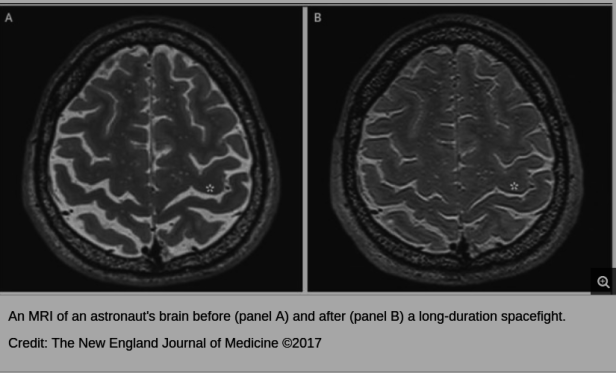
Space Radiation Will Damage Mars Astronauts’ Brains, Space.com By Mike Wall 9 Aug 19, Space radiation will take a toll on astronauts’ brains during the long journey to Mars, a new study suggests.
Mice exposed for six months to the radiation levels prevalent in interplanetary space exhibited serious memory and learning impairments, and they became more anxious and fearful as well, the study reports.
The trip to Mars takes six to nine months one way with current propulsion technology. So, these results should ring a cautionary bell for NASA and other organizations that aim to send people to the Red Planet, study team members said.
These chronic low-dose-rate, low-dose-exposure scenarios are going to increase the risk of developing, perhaps, mission-critical performance deficits,” Limoli told Space.com. “What exactly those are, we’ll never know until we get out there.”
Researchers investigating the effects of deep-space radiation have historically given lab animals acute doses — high levels over a relatively short period of time. But Limoli and his colleagues — led by Munjal Acharya and Janet Baulch of UCI’s Department of Radiation Oncology and Peter Klein of Stanford University’s Department of Neurosurgery — took a different tack.
Using a neutron-irradiation facility, they exposed 40 mice to 1 milligray of radiation per day (1 mGy/day) for six months, about the same dose and duration that astronauts would experience on a trip to or from Mars. (Astronauts in low Earth orbit are exposed to lower doses, because they’re protected by our planet’s magnetosphere.)
“This is the first study that’s looked at space-relevant dose rates,” Limoli said. “And this is the first study to analyze the consequences of the low dose rate over the course of time on functional endpoints in the brain.”
The researchers analyzed the behavior of these mice over the course of the study, measuring the animals’ ability to learn and remember information, their willingness to interact with new mice introduced into their enclosure, and other variables. And at the end of the six months, the scientists euthanized the mice and studied their brains, looking for physiological changes.
All of these measurements and observations were compared with those gathered from a control group of 40 mice, which did not receive the 1 mGy/day dose.
The results were striking. Radiation-exposed mice exhibited more stress behaviors and a decreased ability to learn and remember. The physiological work bolstered these behavioral findings, identifying impaired cellular signaling in two key areas of the brain: the hippocampus, which is associated with learning and memory, and the prefrontal cortex, the site of many complex cognitive functions. …….https://www.space.com/space-radiation-damage-mars-astronauts-brains.html
Kevin Barry in Chernobyl: ‘Misha is an example of what happens when a country is on its knees’ Irish Examiner, August 05, 2019
In 2000 the Irish Examiner sent Kevin Barry, now longlisted for the Booker Prize for his novel Night Boat to Tangier, to Chernobyl. Here we reproduce what he reported
Misha photographed by Eugene Kolzov at the No 1 orphanage in Minsk.Misha, aged seven, is the victim of not one but many sicknesses. His physical disorders, as can be plainly seen, are many and various.
But Misha is the victim of another ailment too, a kind of compassion deficiency.
Chernobyl isn’t fashionable these days, it’s been around so long now. April 26, 1986 seems a long time in the way-distant past. After the initial blurt of paranoia and charitable outreach, the fickle gaze of public interest quickly flicked from the incident at Reactor No 4 to fresher horrors.
Misha, then, has been shuffled way back in the compassion pack. He has fallen behind the other ravaged children who sombrely people the planet’s trouble spots, in places like Mozambique and Ethiopia.
He’s competing with Rwanda and Chechnya. And it’s beginning to tell Misha’s illness is a direct consequence of the Chernobyl explosion.
The radioactive danger in Belarus is not so much in the air now as in the food chain. Professor Yuri Bandashevsky, a dissident scientist, told the Irish Examiner this week that the mutations caused by radiation in children like Misha have by now entered the gene pool and thus the effects of the ‘86 explosion can stretch to infinity.
After criticising the state’s alleged misspending of research money for Chernobyl, Professor Bandashevsky recently found himself banged up in jail for five months, bound at the feet.
Which isn’t the sort of thing that bodes well for the likes of Misha. Some aid continues to filter through. This week, a convoy run by the Chernobyl Children’s Project has been on a drive through Belarus, dispensing almost £2 million in food and medicines.
One of the institutions the orphanage supports is Novinki, a children’s asylum on the outskirts of Minsk. Such is its Dickensian squalor, its actual existence was long denied by the state. This is where you’ll find little Misha.
Project leader Adi Roche says she has known the child since he was a baby, but has been stunned at his deterioration since she last visited in December.
After finding him emaciated and dying this week, the project has placed a Dublin nurse and a local Chernobyl nurse on 24-hour care alert with Misha, an attempt to make whatever is left of his life as painless as possible
“We don’t know how long Misha will live, or if he will live, but we are morally obliged to do everything in our power to attempt saving his life,” said Ms Roche last night.
“‘He is not the only child in Belarus suffering as horrifically as this. he’s just one of many.” she added. “‘These children are the victims of 14 years of neglect by the international community.”’
Many children in Belarus consigned to mental asylums have no mentaI handicap. “All orphaned children with any kind of disability are put into mental asylums if they live beyond the age of four,” she said.
Meanwhile, staffed by1,000 workers, the Chernobyl plant continues operate a couple of kilometres inside the Ukraine border.
The authorities say it will close this year. The concrete sarcophagus built to contain contamination from the reactor has 200 holes and counting.
Orphans of the nuclear age
Kevin Barry, in Chernobyl, finds a land and its people scarred by a disaster from which they may never recover.
Chernobyl at this time of year is beautiful, the borderlands of the Ukraine and Belarus a pastoral and idyllic place. Vast swardes of rich woodland are full of babbling brooks and twittering songbirds, every way you turn, there’s a postcard vista to please even the most jaded eyes.
The locals, however, are edgy. The President of Belarus, Alaksandr Lukashenko — aka ‘Batska’ (‘The Father’) — has decreed that the farmlands here–abouts are now safe to plant and he’s threatening to fly overhead and make sure the workers are toiling.
If not, he says, there will be trouble. Big trouble.
The notion of Batska in an airplane is enough to prompt sleepless nights for those who remain in the Purple Zone, the area most contaminated by the accident in 1986 at Smelter No 4 of the nuclear plant that lies inside the Ukranian border.
In a tragedy of happenstance, because there was a stiff northerly gusting that day, Belarus took the brunt of the damage and because radioactivity is most lethal when it attacks developing human systems, children have borne most of the pain.
But for these children, the most serious ailment is not the thyroid cancer or the leukaemia or the heart trouble or the kidney failure or the various disorders of colon and spleen prompted by Chernobyl.
The greatest danger is the compassion-fatigue. 1986 seems a long time ago now and the incident at Smelter No 4 is no longer swaddled in the necessary event-glamour or crisis-chatter.
When the evening news is an atrocity exhibition, when daily there are hellish dispatches from Mozambique, Ethiopia and Chechnya, the Belarussians fall ever further back in the line.
The foreign correspondents have long since moved on elsewhere. The story of a child developing thyroid cancer over a period of years doesn’t conform neatly with the sound-byte culture.
By this stage, the Belarussians have had enough. A condition of mass denial exists in the country and a native of the village Solchechy in the Purple Zone says that up to around 1993, everybody fretted and freaked out but then they decided, well, to hell with it.
“The mess got to be too much,” she says.
We don’t think about it now. Life is life and we try to get on with it.
This is easier said than done in Belarus. The country’s economy is shot — agriculture was its mainstay and since Chernobyl, the income from farming has been negligible. Almost 30% of the country’s annual turnover goes to the clean-up operation.
Belarus remains the most Soviet of states. There are thickly-piled layers bureaucracy and this tangle of demented protocol regulations and petty restrictions is amorphic, constantly shape-shifting.
KYODOm HIROSHIMA – A Japan-U.S. joint research organization opened one of its radiation research facilities in Hiroshima to the public Monday to raise awareness of the effects of radiation on human health, ahead of the anniversary on Tuesday of the atomic bombing of the city.Although the Hiroshima facility will only be open to the public for two days, the Radiation Effects Research Foundation will open another research facility in the city of Nagasaki on Thursday and Friday to coincide with the city’s Aug. 9 A-bomb anniversary.
This marks the 25th annual public opening of the facility in Minami Ward, Hiroshima. It aims to share research content and help the public better understand the health effects of radiation. The research facility has been collecting data from hibakusha since the institute was established in 1975, when it succeeded the research efforts of its predecessor, the Atomic Bomb Casualty Commission.
Some of the exhibition booths explain the risks of radiation, as well as the role of blood. Visitors can also experiment with freezing cells in liquid nitrogen for preservation, which tends to be popular with children when the experiment is successful.
“The (facility was) full of things I didn’t know were there, like health research on second generation hibakusha. Even as a Hiroshima resident, I learned a lot,” said Sanae Yamamoto, a 41-year-old housewife from Asakita Ward in the city who visited the facility with her children.
Long-Term Radiation Exposure From Space Travel Harms Memory, Mood, D-brief,
By Korey Haynes | August 5, 2019 There’s a major outstanding question lingering over the future of human spaceflight: Just how much radiation can the body handle? While humans have spent more than a year at a time on orbiting space stations without ill effect from radiation, almost all astronaut experience has been in low-Earth orbit. There, humans are still semi-safely enclosed within our planet’s magnetic field, which offers protection from the bulk of space radiation.
Researchers also know that short, powerful doses of radiation are deadly. But less is known about long-term, low-dose radiation — the kind that settlers on Mars or the moon would face.
Now, a team of scientists led by Charles Limoli at the University of California, Irvine, has taken a step toward a better understanding of those long-term risks. The researchers exposed mice to chronic, low-dose radiation for six months. The results are troubling for the future of spaceflight. The radiation left the mice suffering from both memory and mood problems that the scientists say would likely show up in human subjects as well. The results were published Monday in the journal eNeuro.
Radiation on the Brain
In the study, the mice showed “severe impairments in learning and memory,” according to the research paper. The mice were also generally more stressed out by their environments. That isn’t a good sign for space settlers, who will need their wits to face unforeseen struggles. Other studies have also already shown the potential ill effects of the long-term isolation and stress.
In the past, scientists hit lab mice with radiation levels some 100,000 times higher than they’d actually experience on Mars’ surface. But the researchers say their test is the first that has used these lower, more realistic doses of radiation over long periods to study space travel. Their efforts were made possible by a new facility.
The radiation included both neutrons – heavy particles from atomic nuclei – and pure energy in the form of gamma rays and other scattered photons……
Researchers found both physical and chemical changes in the brains they examined, in addition to the behavioral changes they observed in the living mice……..
Sunken Soviet Sub leaking high levels of radiation, Norwegian researchers sayNorwegian researchers have discovered that a Soviet nuclear submarine that sank in the Barents Sea 30 years ago, killing 41 sailors, is leaking radiation at nearly 1 million times normal levels. Bellona, August 5, 2019 by Charles Digges
Norwegian researchers have discovered that a Soviet nuclear submarine that sank in the Barents Sea 30 years ago, killing 41 sailors, is leaking radiation at nearly 1 million times normal levels.
The submarine, called the Komsomolets, was at the time the most advanced in the Soviet Navy. When it went down on April 7,1989, it was carrying two plutonium warheads, which now lie at a depth of 1,680 meters with the rest of the sub’s wreckage, including its reactor. The wreck has caused concern about possible radioactive leakage ever since.
Now those worries have been confirmed. Using a remote-controlled vehicle to probe the wreck, researchers from the Norwegian Radiation and Nuclear Safety Authority found extensive damage to the sub’s hull. Of particular disquiet, they say, are exceptionally high radiation levels in the area around one of the sub’s ventilation pipes.
The highest measurement researchers recorded stood at 800 becquerel per liter. Radiation levels in that body of water typically remain around 0.001 Bq per liter, the authority said.
“We found levels of radioactive cesium…that were close to 1 million times higher than the levels we find in [uncontaminated] seawater,” Hilde Elise Heldal, a researcher from Norway’s Institute of Marine Research who participated in the July 7 mission, told RFE/RL. In remarks to Reuters, she added that: “This is, of course, a higher level than we would usually measure out at sea, but the levels we have found now are not alarming.”
Heldal said team members “weren’t surprised” to discover elevated radiation levels, the BBC reported. Radioactive cesium is easily diluted in the depths of the Barents Sea, and few fish live in the area surrounding the wreck.
What we have found … has very little impact on Norwegian fish and seafood,” Heldal said, according to the Associated Press. “In general, cesium levels in the Norwegian Sea are very low, and as the wreck is so deep, the pollution from Komsomolets is quickly diluted.”
Norwegian scientists have been monitoring the wreck of the Komsomolets – which lies 180 kilometers southwest of Norway’s Bear Island and 350 kilometers northwest of the country’s mainland coast – since the 1990s……..
ven in its watery grave, the Komosomolets is the stuff of Cold War legend. Launched in May of 1983 from Severodvinsk on the Barents Sea, the sub could dive to deeper depths than any other vessel at the time. It was manned by a crew of 69 and could launch both nuclear and conventional weapons.
The Komsomolets had been patrolling the waters for 39 days when a fire broke out in one compartment and quickly spread through the submarine on April 7, 1989, according to the CIA report. Forty-two crew died either in the fire or while awaiting rescue, and the sub sank to the bottom of the sea.
The matter of the Komsomolets shook faith in an already ailing navy. Within two years of the accident, the Soviet Union would cease to be – leaving in its wake hundreds of derelict decommissioned nuclear submarines, and a host of other radioactive hazards dumped by the military.









 nuclear-news