Need to improve Hanford radiation exposure records
|
Some Hanford radiation exposure records could harm workers and taxpayers, report says, https://www.bellinghamherald.com/news/state/washington/article239240843.htm
BY ANNETTE CARY, JANUARY 13, 2020 RICHLAND, WA Recordkeeping at Hanford could be improved to track worker radiation exposure, including to ensure fair compensation for workers who develop cancer, according to an inspection report of the Department of Energy Office of Inspector General. Issues in recordkeeping can be a problem for both individual workers and the federal government under a compensation program for ill workers, said the report released Monday. If a group of workers’ radiation exposure cannot be determined because of lack of records, the compensation program conservatively assumes that working at Hanford caused any of a wide range of cancers and the federal government must offer compensation. Recordkeeping issues also could prevent a worker from having complete records to make an individual case that cancer was caused by radiation exposure. The Energy Employee Occupational Illness Compensation Program Act (EEOICPA) pays each worker $150,000 in compensation for cancer plus medical coverage. An additional payment of up to $250,000 compensation may be made related to wage loss and impairment The program has paid out $1.7 billion to Hanford workers, former workers and their survivors in compensation and reimbursement of medical costs.
Brian Vance, the Department of Energy Hanford manager, disputed that inconsistencies in recordkeeping posed a liability to DOE under the compensation program, but did not explain why in his response to the Office of Inspector General. PAST RADIATION RECORDKEEPING INCOMPLETEThe review of the radiation exposure, or dosimetry program, at Hanford generally found that DOE Hanford contractor Mission Support Alliance was doing a good job of managing radiation exposure records for all Hanford workers. But it raised concerns that about 111 tank farm workers hired in 2014 and 2015 were not given radiation history forms to fill out by their employer, Washington River Protection Solutions. Some may have had previous exposures at the Hanford nuclear reservation or other DOE sites. Although the problem has since been resolved, some workers went without a historical exposure record in the Radiation Exposure Database for up to 3.5 years, according to the IG report. Radiation exposure records “provide key and sensitive information to management and workers, who make decisions based on this information, the IG report said. Although Mission Support Alliance has forms that other Hanford contractors can use to complete records in the site’s Radiation Exposure Database, contractors may instead use their own forms. Those forms do not require all the information that needs to be input into the database, which increases the risks that the database will not be complete and accurate, according to the IG report. DOE responded that it would consider working with Hanford contractors on standardized radiation exposure forms where appropriate. Mission Support Alliance provides sitewide services at Hanford, while contractors Washington River Protection Solutions and CH2M Hill Central Plateau Remediation Co. hires workers for cleanup of environmental contamination at Hanford, including radioactive waste and contamination. The Hanford nuclear reservation is contaminated from the past production of plutonium for the nation’s nuclear weapons program from World War II through the Cold War. REVIEW OF DOSIMETRY REPORTING POLICIESDOE also agreed to review contracts and procedure manuals for consistency in radiation exposure reporting requirements, after the IG report said there were inconsistencies. The report concluded that some of the issues with radiation-exposure records might be because of unclear oversight responsibilities at Hanford. Mission Support Alliance reports to the DOE Hanford Richland Operations Office, while one of the cleanup contractors, the tank farm contractor, reports to the DOE Hanford Office of River Protection. Vance, who oversees both DOE offices, said that was not a problem, but that the two offices will reinforce expectations that existing processes are used to resolve any conflict between contractors on dosimetry service issues. Hanford workers or the survivors of ill workers can learn more about compensation programs and how to apply for them at the Hanford Workforce Engagement Center at 309 Bradley Blvd., Suite 120, in Richland. The center can be reached at 509-376-4932. |
|
New Zealand veterans await nuclear radiation genetic testing study
|
New Zealand veterans await nuclear radiation genetic testing study, https://www.rnz.co.nz/news/national/406922/new-zealand-veterans-await-nuclear-radiation-genetic-testing-study 8 Jan 2029Veterans deployed to the Mururoa Atoll will wait another two months to find out whether their children and grandchildren may be genetically impacted by nuclear radiation.
A Mururoa Nuclear Veterans Group teamed up with Otago University last year to produce a study about whether the families of veterans deployed to Mururoa Atoll in 1973, may have been affected by their parents’ exposure to radiation. University of Otago researcher David McBride is leading the study and said “the public need to know” what veterans had been facing and he hoped this study could help them in their quest for more support for their families. About 145 people participated in the study which took six weeks. It is now being peer reviewed for the New Zealand Medical Journal. “When and if our study is peer reviewed favourably then published, I’m hoping that’s not going to take too long,” he said. He said he suspected the veterans group would have to wait until March or April at the latest. “One of the most out-of-the-ordinary things you can have is exposure to nuclear radiation,” he said. “It certainly was a traumatising experience and they are right inthe fact that they may have passed defect onto their children and grandchildren.” |
|
Radiation-free medical imaging
 Medical City Frisco Launches Radiation-Free Imaging System, Healthcare 01/3/2020| by Will Maddox, Medical City Frisco is working to replace intraoperative radiation devices by using a radiation-free tool to aid spine and cranial procedures. The device will allow surgeon to safely place spinal implants or remove cranial tumors while improving patient safety.
The system is called the Machine-Vision Image Guided Surgery platform, which uses camera technology to identify anatomy and guide tools during procedures. The technology uses only visible light and not radiation to create the image, and is similar to what is used in self-driving vehicles……https://healthcare.dmagazine.com/2020/01/03/medical-city-frisco-launches-radiation-free-imaging-system/
Depleted uranium causing cancer epidemic in Serbia
The number of cancer patients will dramatically increase 20 years after NATO aggression, because that is when uranium has strongest effect, said oncologist Vladimir Cikaric. Now we have 35000 people that suffer from cancer, and in three years that number could climb to 70.000
According to him, there are 35.000 people suffering from cancer, and after 2019 that number could double to 70.000 because the effect of the depleted uranium from Kosovo and from Pcinjski area is spreading over the entire country.
– Serbia is number one in the mortality rate from tumors in Europe, and we have almost three times higher mortality than carcinoma in comparison to the world. The reason is that the dust from the depleted uranium in Pcinski area and Kosovo spread across the entire country. We all breathed it. Because of that we now have drastic increase of leukemia and lymphoma, but also all other types of carcinoma. However, the worst is yet to come. Depleted uranium has the strongest effect after 20 years and it turns healthy cells into cancer cells. That means that from 2019 the number of people who will get sick with cancer will increase, according to some assessments, there will be 70.000 people, which is twice the number we have now. Real health disaster is in front of us, which we can not prevent – warns Cikaric.
Ionising radiation damages brain connections
|
How Radiation Can Affect Brain Connections https://www.technologynetworks.com/neuroscience/news/how-radiation-can-affect-brain-connections-328547 Dec 17,| 2019 Original story from University of Rochester Medical Center, One of the potentially life-altering side effects that patients experience after cranial radiotherapy for brain cancer is cognitive impairment. Researchers now believe that they have pinpointed why this occurs and these findings could point the way for new therapies to protect the brain from the damage caused by radiation.
The new study – which appears in the journal Scientific Reports – shows that radiation exposure triggers an immune response in the brain that severs connections between nerve cells. While the immune system’s role in remodeling the complex network of links between neurons is normal in the healthy brain, radiation appears to send the process into overdrive, resulting in damage that could be responsible for the cognitive and memory problems that patients often face after radiotherapy. Continue reading |
Radiation- high levels near start of Japan’s 2020 Olympic Torch Relay
 Nuclear Radiation Hot Spots Found At Starting Point Of Japan’s 2020 Olympic Torch Relay https://www.gizmodo.com.au/2019/12/nuclear-radiation-hot-spots-found-at-starting-point-of-japans-2020-olympic-torch-relay/, George Dvorsky, Dec 5, 2019, High levels of radiation have been detected near Japan’s J-Village, a sports facility and the starting point of the upcoming Olympic torch relay, according to Greenpeace. The discovery was made by surveyors with Greenpeace Japan, which warns that monitoring and decontamination efforts in Fukushima are inadequate.
Radiation levels as high as 71 microsieverts per hour were found on the surface near J-Village in northeastern Japan, according to a Greenpeace press release issued Wednesday. This level of radiation is hundreds of times greater than what’s stipulated in Japan’s decontamination guidelines, prompting Greenpeace Japan to demand that the Japanese government conduct regular radiation monitoring and decontamination of regions affected by the 2011 Fukushima nuclear disaster.
J-Village National Training Centre is in Fukushima prefecture, which is located 20 kilometres from the damaged nuclear power plant. This sports facility will be the starting point of the Tokyo 2020 Olympic Torch Relay, which is scheduled to begin on March 26, 2020. That J-Village was chosen as the starting point for the relay is by design, as the Japanese government is promoting the games as the “reconstruction Olympics.” The Olympics will begin on July 24, 2020 in Tokyo, some 239 kilometres from the damaged reactors.
|
J-Village recently underwent renovations, and the facility was used to host the Argentina team during the Rugby World Cup held just a few weeks ago, according to Reuters. And as the Guardian reports, the facility served as a “logistics hub” for crews working to manage and decommission the damaged reactors. The readings were made over a two-hour period on October 26 by Greenpeace’s Nuclear Monitoring & Radiation Protection Advisors. High levels of radiation were detected along the boundary of the parking lot and a forest next to J-Village, reports Sankei Shimbun. Readings at ground level were as high as 71 microsieverts, which is 308.7 times more than the nationally accepted 0.23 microsieverts per hour—the standard for decontamination—and 1,775 times the level prior to the Fukushima disaster, according to Greenpeace. Continue reading |
Thorny topic of Fukushima food at the 2020 Olympics
It’s a thorny subject for the authorities. They pitched the Olympics in part as a chance to showcase the recovery of areas affected by the 2011 earthquake, tsunami and nuclear disaster.
Government officials tout strict checks on food from the prefecture as evidence the produce is completely safe, but it remains unclear whether athletes and sports teams from around the world will be convinced.
In Fukushima, producers are keen to see their products served in the Olympic Village and have submitted a bid to the organizers………
It’s a thorny subject for the authorities. They pitched the Olympics in part as a chance to showcase the recovery of areas affected by the 2011 earthquake, tsunami and nuclear disaster.
Government officials tout strict checks on food from the prefecture as evidence the produce is completely safe, but it remains unclear whether athletes and sports teams from around the world will be convinced.
In Fukushima, producers are keen to see their products served in the Olympic Village and have submitted a bid to the organizers.
But the figures have only gone some way to reassuring foreign officials: Numerous countries including China, South Korea and the U.S. maintain restrictions on the import of some or all produce from Fukushima.
South Korea, currently locked in a dispute with Japan over wartime issues, has been vocal about its concerns ahead of the Olympics, even raising the possibility of bringing in its own kitchen and food.
“We have requested the Olympic organizers to provide objective data verified by an independent third body,” the South Korean Sports and Olympic Committee said in a statement earlier this year.
“Since Japan repeatedly said its food from Fukushima is safe, we have demanded they provide statistics and data to back up their claims,” an official with the committee said.
The position underlines a long-running problem for Japan: While it points to its extensive, government-mandated checks as proof of safety, many abroad feel the government is not an objective arbiter…….
The International Olympic Committee has said it is still weighing how to handle the matter……. https://www.japantimes.co.jp/news/2019/11/26/national/fukushima-food-olympics-tokyo-2020/#.Xd7rfugzbIU
New report on Iraqi babies, deformed due to thorium and uranium from U.S. military actions and bases
IRAQI CHILDREN BORN NEAR U.S. MILITARY BASE SHOW ELEVATED RATES OF “SERIOUS CONGENITAL DEFORMITIES,” STUDY FINDS https://theintercept.com/2019/11/25/iraq-children-birth-defects-military/ Murtaza Hussain, November 26 2019, MORE THAN A decade and a half after the 2003 U.S. invasion of Iraq, a new study found that babies are being born today with gruesome birth defects connected to the ongoing American military presence there. The report, issued by a team of independent medical researchers and published in the journal Environmental Pollution, examined congenital anomalies recorded in Iraqi babies born near Tallil Air Base, a base operated by the U.S.-led foreign military coalition. According to the study, babies showing severe birth defects — including neurological problems, congenital heart disease, and paralyzed or missing limbs — also had corresponding elevated levels of a radioactive compound known as thorium in their bodies.
The suffering of Iraqis has been particularly acute. The results of the new study added to a laundry list of negative impacts of the U.S.’s long war there to the long-term health of the country’s population. Previous studies, including some contributed by a team led by Savabieasfahani, have pointed to elevated rates of cancer, miscarriages, and radiological poisoning in places like Fallujah, where the U.S. military carried out major assaults during its occupation of the country.
SOME OF THESE negative health effects of the American war in Iraq can be put down to U.S. forces’ frequent use of munitions containing depleted uranium. Depleted uranium, a byproduct of the enriched uranium used to power nuclear reactors, makes bullets and shells more effective in destroying armored vehicles, owing to its extreme density. But it has been acknowledged to be hazardous to the environment and the long-term health of people living in places where the munitions are used.
“Uranium and thorium were the main focus of this study,” the authors note. “Epidemiological evidence is consistent with an increased risk of congenital anomalies in the offspring of persons exposed to uranium and its depleted forms.” In other words: The researchers found that the more you were around these American weapons, the more likely you were to bear children with deformities and other health problems.
In response to an outcry over its effects, the U.S. military pledged to not use depleted uranium rounds in its bombing campaigns against the Islamic State group in Iraq and Syria, but, despite this pledge, a 2017 investigation by the independent research group AirWars and Foreign Policy magazine found that the military had continued to regularly use rounds containing the toxic compound.
These depleted-uranium munitions are among the causes of hazards not only to the civilians in the foreign lands where the U.S. fights its wars, but also to American service members who took part in these conflicts. The chronic illnesses suffered by U.S. soldiers during the 1991 war in Iraq — often from exposure to uranium munitions and other toxic chemicals — have already been categorized as a condition known as “Gulf War syndrome.” The U.S. government has been less interested into the effects of the American military’s chemical footprint on Iraqis. The use of “burn pits” — toxic open-air fires used to dispose military waste — along with other contaminants has had a lasting impact on the health of current and future Iraqi generations.
Researchers conducting the latest study said that a broader study is needed to get definitive results about these health impacts. The images of babies born with defects at the hospital where the study was conducted, Bint Al-Huda Maternity Hospital, about 10 kilometers from Tallil Air Base, are gruesome and harrowing. Savabieasfahani, the lead researcher, said that without an effort by the U.S. military to clean up its radioactive footprint, babies will continue to be born with deformities that her study and others have documented.
“The radioactive footprint of the military could be cleaned up if we had officials who wanted to do so,” said Savabieasfahani. “Unfortunately, even research into the problem of Iraqi birth defects has to be done by independent toxicologists, because the U.S. military and other institutions are not even interested in this issue.”
On nuclear radiation – past and future – extract from article on Chernobyl
DOES CHERNOBYL STILL MATTER? Public Books, BY GABRIELLE HECHT , 25 Nov 19, “……. The question is not whether an accident of Chernobyl’s gravity can happen elsewhere, but how to prepare for the consequences when it does.
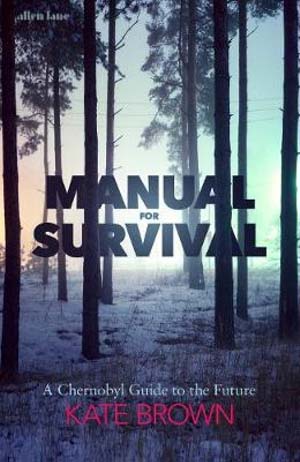 That’s one of the questions Kate Brown considers in Manual for Survival. Offering a wealth of new information and analysis, Brown speeds past the reactor explosion. Instead, she focuses on dozens of previously untold stories about how people coped with their newly radioactive lives.
Brown’s protagonists include women who worked at a wool factory fed by contaminated sheep and butchers ordered to grade meat according to radioactivity. Ukraine, we learn, kept serving as the Soviet breadbasket, despite food radiation levels that exceeded norms. The concentrations of radionuclides were biomagnified by receptive organisms and ecologies, such as mushrooms, wild boar, and the Pripyat Marshes. Defying expectations, some foods, over time, have even become more contaminated.
Brown’s descriptions add historical flesh to arguments first developed by Olga Kuchinskaya, in her 2014 book on Belarus’s Chernobyl experience, The Politics of Invisibility: Public Knowledge about Radiation Health Effects after Chernobyl.
Since the first studies of bomb survivors in Hiroshima and Nagasaki, science on the biological effects of radiation exposure has been subject to controversy. Like all scientific work, these early survivor studies had limitations. Exposure estimates were unreliable.
The largest study began data collection five years after the Hiroshima and Nagasaki blasts, so it didn’t include people who died or moved between 1945 and 1950. Another problem lies in the applicability of these studies. Bomb exposures, such as those in Japan, mostly consist of high, external doses from one big blast. Yet postwar exposures have mainly consisted of low doses, delivered steadily over a long period. They often involve internal exposures—such as inhalation of radioactive particles or consumption of irradiated food—which can be deadlier.
Irrespective of their limitations, however, the findings of these survivor studies have served as the basis for establishing regulatory limits for all types of radiation exposures. Critics argue that extrapolating from the Japan data underestimates low-dose effects: If you’ve already decided that the only possible health effects are the ones you’ve already found, surely you’re missing something? Among other limitations, studies of external gamma radiation exposures cannot illuminate the long-term health effects of inhaling radioactive alpha particles.
Brown injects the work of Dr. Angelina Gus’kova into this story. Gus’kova started treating radiation-induced illnesses in the 1950s, while working at the top-secret Mayak plutonium plant (where the radioactive spills from a 1957 accident continue to contaminate people, land, and water). A neurologist, Gus’kova made observations that extended beyond the narrow cancer focus of most Western practitioners who studied the health effects of radiation exposure. Her patients displayed a wide range of symptoms, which Gus’kova and her colleagues dubbed “chronic radiation syndrome.” Not that they neglected cancer: a 40-year study of 1.5 million people who lived near Mayak found significantly higher cancer and death rates than those reported in Hiroshima and Nagasaki.
The Soviet rubric of “chronic radiation syndrome” did not exist in the West. Yet Gus’kova’s findings did align with those of dissident scientists in the US and the UK. Thomas Mancuso, for example, was pushed out of the US Atomic Energy Commission because he refused to give the Hanford plutonium plant a clean bill of health after finding that workers there sustained high rates of cardiovascular disease, immune system damage, and other illnesses.
Alice Stewart, meanwhile, was shunned by the British establishment after her 1956 research showed that x-raying pregnant women increased the risk of cancer and leukemia in their children by 50 percent. Over the years, these and other scientists whose data challenged the findings of American and European nuclear establishments found themselves sidelined and defunded.
In tandem with perestroika, Chernobyl opened communication between Soviet and Western nuclear experts, engendering what Brown calls an “unholy alliance.” In 1990, the International Atomic Energy Agency (IAEA) sent a mission to Belarus and Ukraine to assess radiation damage. Belarusian scientists reported rising rates of many diseases in contaminated areas. Nevertheless, the IAEA team rejected radiation as a possible cause. Such correlations didn’t appear in Western data.
Instead, the IAEA teams used dose estimates provided by distant Moscow colleagues and ignored local Belarusian and Ukrainian descriptions of people’s actual consumption habits, which included significant amounts of contaminated food and milk. The IAEA assessments neglected the internal exposures resulting from this consumption. Yet these assessments now serve as international reference points. “Underestimating Chernobyl damage,” Brown warns, “has left humans unprepared for the next disaster.” …….
Brown is on the right track. Many modes of scientific inquiry aren’t equipped to address our most urgent questions. Clear causal chains are a laboratory ideal. The real world brims with confounding variables. Some scientists studying Chernobyl’s “exclusion zone”—the region officially declared uninhabitable due to contamination—are trying new techniques to grapple with this reality. Tim Mousseau and Anders Møller, for example, collect data on the zone in its ecological entirety, rather than focusing on single organisms. Their findings belie romantic tales of wildlife resurgence (such as the one offered up by a 2011 PBS special on the radioactive wolves of Chernobyl). They too have met resistance. …..
we can refuse to see Chernobyl and its kin as discrete events of limited duration. Brown, for example, treats Chernobyl as an acceleration of planetary-scale contamination that began with the atomic arms race.
Let’s be clear: the contamination continues. After the triple meltdown at Fukushima, scientists found highly radioactive, cesium-rich microparticles in Tokyo, 150 miles south of the accident site. When inhaled, such particles remain in human lungs, where their decay continues to release radioactivity for decades. Contaminants from future accidents will, in turn, accrete on the radioactive residues of their predecessors. https://www.publicbooks.org/does-chernobyl-still-matter/
20% drop in patient’s radiation dose achieved by U.S. radiologists
|
The report, published Monday, Nov. 18, by the National Council on Radiation Protection and Measurements, showed doses dropped by 15% to 20% among U.S. patients between 2006 and 2016. Per person, the estimated average dose fell from 2.92 millisievert (mSv) in 2006 to 2.16 mSv in 2016. “We are pleased, but not surprised, that despite a steadily increasing and aging population, the medical radiation dose Americans receive is going down,” Continue reading |

Climate change is a health emergency – physicians
Visionary Leaders Symposium: ‘Our planet is our patient.’ http://publichealthnewswire.org/?p=physicians-for-social-responsibility-visionary-leaders-symposium#.XdARGW8_6rw.twitter by Louise Dettman on 11/8/2019 Nearly 200 organizations representing medical, health care and public and environmental health professionals, including APHA, have so far endorsed the 2019 U.S. Call to Action on Climate Change, Health and Equity: A Policy Agenda.It challenges government, business, civil society and the health sector to recognize climate change as a public health emergency and to act now for climate, health and equity.
 “Being health professionals, it’s important for us to realize that our planet is our patient, and it’s in the intensive care unit. We’re doctors to a dying planet and we have a job to do,” said Helen Caldicott, MD, keynote speaker at yesterday’s Physicians for Social Responsibility Visionary Leaders Symposium in Washington, D.C.
A PSR founder and former president, anti-nuclear activist, author and pediatrician from Australia, Caldicott has spent her life educating world leaders and the public about the medical hazards of the nuclear age. She urged those gathered at the Ronald Reagan Building for the symposium to “stop being polite and speak the truth loudly and clearly” about the need for action on climate change. As one of the drafters of the U.S. Call to Action, PSR is using it to mobilize and give voice to more health professionals.
It advocates for policies that promote a just transition to clean, safe renewable energy and energy efficiency; sustainable food production and diets; clean water; active transportation; and green cities. Such policies can lower climate pollution, reduce the incidence of communicable and non-communicable disease, improve mental health and realize significant cost savings in health care.
“I’m not being radical. I’m being a physician,” Caldicott said as she stressed the urgency of the situation; challenged attendees to question the role of politicians, corporations and the military in the production of greenhouse gases; and told everyone to contact members of Congress. “If you don’t use your democracy, they’ll swoop in and use it for you — for their own political and financial gain,” she said.
The U.S. Call to Action urges the health sector itself to reduce greenhouse gas emissions and — as a trusted voice — to effectively communicate the health threats of climate change and the health benefits of climate action. The symposium focused specifically on the role of women in the climate, health and equity movement and the importance of economic justice for the most vulnerable communities.
Heidi Hutner, PhD, a filmmaker, writer and professor at Stony Brook University, moderated an expert panel of women advocates discussing the health hazards of and solutions to nuclear power and climate change. Hutner opened the program with a trailer of her upcoming documentary about the women of Three Mile Island and, along with the other participants, questioned nuclear power as the answer for a just transition to clean energy.
Following the symposium, at the 2019 Visionary Leadership Awards, PSR presented Caldicott with a Lifetime Achievement Award for her work. It also recognized other individuals and organizations for their efforts in advancing nuclear weapons abolition and addressing environmental risks to human health, including the consequences of climate change.
The plight of Fukushima nuclear workers getting leukaemia
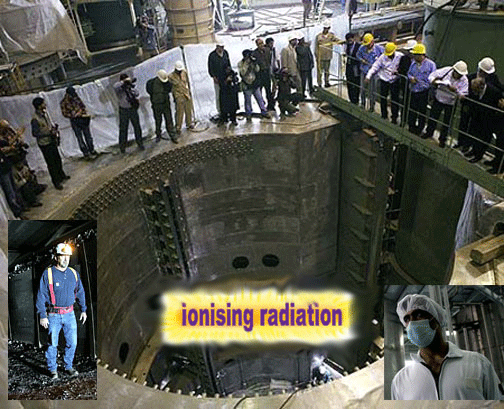 Fukushima Workers Battle Leukemia – and Bureaucracy Unseen Japan Fukushima Workers Battle Leukemia – and Bureaucracy Unseen Japan
by Hiro Ugaya, November 13, 2019 The March 2011 tsunami, and the subsequent meltdown of three reactors at the Fukushima nuclear power plant, has had a devastating impact on Japan. Eight years later, and most journalists – in Japan and abroad – have forgotten about the story. But for many, the struggle continues.
This is especially true of workers who helped assist in the cleanup effort at Fukushima. Some Fukushima workers have contracted severe diseases – including cancer and leukemia – since their work concluded. The government of Japan has even certified that some cases are a result of recovery work. But workers who are fighting for their lives also find themselves fighting the system. Tokyo Electric (TEPCO), which led the recovery effort, refuses to admit any connection between the cleanup work and subsequent diseases in workers. And many insurance companies are pointing to the fine print in private insurance contracts stating they don’t cover accidents at nuclear facilities. Unseen Japan has been pleased to partner with photojournalist Hiro Ugaya (烏賀陽弘道) to translate his interviews with evacuees and former evacuees, and to document the ongoing struggle of the victims of this tragedy. We previously published Hiro’s interview with a mother in the city of Minamisoma. In this installment, we share the first part of Hiro’s interview with Mr. Ikeda (pseudonym), a Fukushima nuclear reactor cleanup volunteer who now finds himself fighting two uphill battles. Translation from an article originally published on Note.mu. Translation by Jay, Editor/Publisher, Unseen Japan. All photos used with permission of Hiro Ugaya.) Ikeda’s StoryFor this installment of the Fukushima Report, I visited Northern Kyushu City in Fukuoka prefecture. I departed from Tokyo and flew west, in the direction opposite Fukushima. I went to Fukuoka, which is quite far from Fukushima. That’s where the leukemia-stricken Ikeda Kazuya (age 44; pseudonym) has lived since participating in the Daichi Nuclear Reactor reconstruction efforts. I had visited Ikeda once in 2017 to hear his story. Among all my interviews here in the Fukushima Report, it’s the one that’s reverberated the loudest. Mr. Ikeda volunteered to participate in the restoration work at the Fukushima Daiichi nuclear power plant. By trade, he’s an independent welder. In March 2011, when so many people died due to the tsunami, he looked at the report of the death of a small child and thought, “I need to do something useful for Tohoku” [Editor: the region of Japan hit by the tsunami]. He asked permission from his boss and threw himself into the reconstruction effort. The interior of the heavy machinery room of Reactor 4 butts up against the nuclear fuel rod pool. But in 2013, Mr. Ikeda came down with leukemia. Mr. Ikeda is one of the first cancer patients that the country recognizes as a work-related accident connected to the Fukushima Daiichi nuclear power plant. Two Fukushima workers contracted leukemia (bone marrow cancer), and one contracted thyroid cancer. The first case of leukemia was recognized in October 2015. The second was recognized in August 2016. The third person, who had thyroid cancer, was certified in December 2016. As of May 2019, there are six patients in the country whose cases have been recognized as occupational accidents caused by work at the Fukushima Daiichi nuclear power plant. To tell the truth, I was quite surprised that the country recognized them as occupational accidents. Judging from the history of pollution diseases, such as Minamata disease and Itai-itai disease, I predicted the government would probably prevaricate and not admit a causal relationship. But the government admitted it readily (employing a lot of rhetoric, of course, such as “This is not an admission of a scientific, causal relationship”). From a global and historical perspective, the admission is rare. In the Three Mile Island nuclear accident (1979) in the US, more than 2000 lawsuits have been filed, but no relationship between health damage and exposure has been admitted in even a single case. The state government naturally won’t admit it, and the courts don’t either. Due to this admission, the assertion that “the radiation leakage from the Fukushima Daiichi nuclear accident is mild enough not to damage health” fell apart. In the Chernobyl nuclear accident in the former Soviet Union, the first to suffer serious harm were the so-called “Liquidators,” the firefighters and soldiers who were the first responders. Nearly 5,000 people died. Naturally, people who are close to radiation-intensive sites will become seriously ill. The same phenomenon occurred in the Fukushima Daiichi nuclear power plant accident. While the case was recognized as a workplace injury, Mr. Ikeda filed a lawsuit against Tokyo Electric (TEPCO), which ran the restoration project. That’s because TEPCO doesn’t “recognize a causal relationship between Mr. Ikeda’s leukemia and exposure to radiation at the Fukushima Daiichi nuclear power plant.” I’ve long found it mysterious that not a single TV station, weekly newspaper, web media or other news outlet has done an article on those like Mr. Ikeda who contracted deadly diseases from the nuclear reactor recovery work. Since the government’s announcement certifying them as workplace injuries, there’s been dead silence. Those affected can’t be heard in their own voices. ……. Mr. Ikeda pointed out something important. People who work in nuclear facilities such as nuclear power plants are not covered by private insurance, even if they have an accident or get sick. It’s in the so-called “disclaimer.” If People who engaged in the dangerous work of recovering the nuclear power plant post-meltdown have been left naked and defenseless. And few people notice it. Even insurance companies don’t care. I want to fix this abnormality…… (Interview: -) There are six people, including yourself, who have been certified as workplace accidents due to cancer or death from overwork in the recovery work of the Fukushima Daiichi nuclear power plant accident. Any contact from them? No, none. I’ve caught sight of the wife of one of the Fukushima workers who died from overwork (karoshi) at rallies in Tokyo. It seems that TEPCO employees and primary subcontractors who got sick will receive 30 million yen [around USD $274,000]. But in return, they can’t sue. That’s what my lawyer emphasized at trial. But that offer doesn’t extend to us (second-tier subcontractors). The owner who hired me also had business owner insurance. Just in case we have an industrial accident. However, we found out later that it wasn’t valid in nuclear facilities, such as nuclear power plants. The insurance companies say it’s too dangerous a place to cover via employer insurance. And yet TEPCO denies responsibility for my leukemia. That’s what you’re contesting in court. That’s right. They’re denying everything. They say it was too low of a dose to bear any relationship. In the previous trial, TEPCO says I developed leukemia due to smoking, drinking, and a vegetable deficiency. That took me aback (laughs). They talk to us like we’re alcoholics…… What evidence is TEPCO presenting to refute you? Search for the stories of scholars who kowtow to the government, you’ll find it (laughs). Who’s providing testimony, besides you? There are various people I think. TEPCO won’t recognize the causal relationship between your leukemia and radiation exposure, correct? If they did, it’ll become a serious obstacle to future nuclear power policy. I was the first person certified, and there’ve been a number since. So there has to be a causal relationship, right? What total dose did you receive? A total of 19.8 millisieverts. Others received more. TEPCO is terrible. It’d be better if they just copped to it. “Others Will End Up Like Me”Why do you think TEPCO should admit responsibility? When this happens to someone else, this won’t be any guarantee, but it’ll give them peace of mind, you know? I mean, it’s not like you can tell people, “Don’t help with recovery efforts.” Other industries offer insurance – who’s going to guarantee workers who enter a nuclear facility if the employer’s primary insurance won’t? That’s what I want to tell people. Fukushima workers who entered the facility had no idea their employer’s primary insurance wouldn’t cover it……. https://unseenjapan.com/fukushima-workers-leukemia-bureaucracy/ |
|
Tritium and other radionuclides are hazardous,even in transport and storage
 Zac Eagle Nuclear Fuel Cycle Watch Australia, 11 Nov 19,
 “The specific aims of disposal are:
(c) To inhibit, reduce and delay the migration of radionuclides at any time from
the waste to the accessible biosphere;
(d) To ensure that the amounts of radionuclides reaching the accessible
biosphere due to any migration from the disposal facility are such that
possible radiological consequences are acceptably low at all times.”
Some radionuclides can NOT be contained as they will diffuse in transport and storage, eg tritium.
Tritium is a carcinogen (causes cancer), teratogen (causes deformations of the embryo during pregnancy) and mutagen (causes mutations to DNA). Even very low rates of tritium exposure can lead to cancer, leukemia, and birth defects. https://www.facebook.com/groups/1021186047913052/
Nuclear medicine has radiation dangers – a reminder to clinicians
Clinicians Get Real on Radiation: ‘Don’t Do Dumb Things’
Awareness of surroundings and others in the room are key to proper cath-lab radiation safety, a VIVA “roundtable” concluded. TCTMD,
By L.A. McKeown November 07, 2019 S VEGAS, NV—Keeping cath lab staff as well as patients safe and within acceptable levels of radiation is a priority that operators can and should be doing on a daily basis, experts here agreed.
The most crucial message for clinicians is that “they are primarily responsible not only for their own personal safety and the patient’s safety, but of everyone in the room,” Mark Bates, MD, DSc (West Virginia University School of Medicine, Morgantown), told TCTMD. He co-moderated a roundtable at VIVA 2019 on radiation protection strategies that provided a glimpse of how the future might look.
“I think 10 years from now we’re going to be in a position where a lot of procedures in the vasculature are going to be done with minimal radiation exposure as we optimize the existing technology, as well as some of the new laser- or light-augmented three-dimensional imaging,” he added…….
he encouraged operators to be aware of their trainees and monitor them for excess radiation exposure.
“As experienced interventionists, we see anatomy that we know is going to be a challenge,” he explained, “[but] we watch our trainees move through the algorithm and change to different wires and different catheters much slower than what we’re used to doing because they need to learn how to do it. Not only are they taking on radiation, but the patients are taking on a lot of extra radiation, too. I think we need to control the time that we allow trainees to perform certain aspects of the procedure.”……
Communication, Visualization, and Behavior Change
Gray noted that while you may have adequate shielding in your cath lab, it won’t help if you don’t use it correctly. A side drape, for example, that gets in your way and is pushed aside out of annoyance may make a difference in exposure levels for everyone in the room.
“That’s really the dumbest thing you could do, so don’t do dumb things,” he said. Gray added that understanding the effects of scatter on yourself may be a simple as looking at your hands for loss of hair on the fingers and wrists. At his institution Geiger counters are used when X-ray badges indicate elevated radiation exposures for individual operators. “So, you have an auditory signal that’s telling you that you’re on the pedal,” he said, adding that it may help in situations where staff are reaching over the table and may not even realize they are being exposed…….. https://www.tctmd.com/news/clinicians-get-real-radiation-dont-do-dumb-things
Deadline looms for nuclear veterans and descendants study
The study lead by University of Otago associate professor David McBride will look into the connection between nuclear veterans and their children, who may have been affected by their parents’ exposure to radiation.
So far only 166 people had signed up, according to Mururoa Nuclear Veterans president Gavin Smith.
Mr Smith implored more to join, saying about 500 people went to the Christmas Island and were exposed to nuclear tests in the 1950s and about 500 went to Mururoa during the 1970s.
“Everyone who has a veteran father or grandfather that served there and has maybe deceased or may be living but mentioned nothing of it, I urge them to contact the University of Otago,” he said.
He said the study was crucial because veteran’s children may have been affected by their parents’ exposure to radiation, which could make their offspring more susceptible to conditions like leukaemia and auto-immune diseases.
“Our study is open to all nuclear veterans. If we don’t do it in our generation, it’s going to be an even bigger battle for the next generation.”
The group, which was established in 2013 to press the government to help families with nuclear related illnesses, had 135 members who served at the protest.
Of those, 56 had children or grandchildren with unexplained medical conditions.
Testing would begin next week at the University of Otago, with a timeframe and details on the study yet to be confirmed.
1 This Month



4 August – WEBINAR – Hiroshima & Nagasaki: Nuclear Bombs Never Again
Tuesday, Aug. 4 at 5 pm PT / 8 pm ET.
Aug 5, 2026 10:00 AM in Australia/Melbourne
Join the Nuclear Bombs Never Again webinar on August 4th at 5pm Pacific Time / 8pm Eastern Time / 9am Japan Standard Time.
Cross generational voices at the intersection of Japan-Korea-US policy and militarization will share their lived experiences, nuclear impacts in these contexts, anti-war strategies, and actions you can take to advocate for a world with Nuclear Bombs Never Again. This 75-minute event is co-hosted by WILPF US and Korea Peace Now.

22,000+ miles voyaging for nuclear disarmament
and a radiation-free environment https://vfpgoldenruleproject.org/
To see nuclear-related stories in greater depth and intensity – go to https://nuclearinformation.wordpress.com
-
Archives
- July 2026 (294)
- June 2026 (287)
- May 2026 (306)
- April 2026 (356)
- March 2026 (251)
- February 2026 (267)
- January 2026 (308)
- December 2025 (358)
- November 2025 (359)
- October 2025 (375)
- September 2025 (257)
- August 2025 (319)
-
Categories
- 1
- 1 NUCLEAR ISSUES
- business and costs
- climate change
- culture and arts
- ENERGY
- environment
- health
- history
- indigenous issues
- Legal
- marketing of nuclear
- media
- opposition to nuclear
- PERSONAL STORIES
- politics
- politics international
- Religion and ethics
- safety
- secrets,lies and civil liberties
- spinbuster
- technology
- Uranium
- wastes
- weapons and war
- Women
- 2 WORLD
- ACTION
- AFRICA
- Atrocities
- AUSTRALIA
- Christina's notes
- Christina's themes
- culture and arts
- Events
- Fuk 2022
- Fuk 2023
- Fukushima 2017
- Fukushima 2018
- fukushima 2019
- Fukushima 2020
- Fukushima 2021
- general
- global warming
- Humour (God we need it)
- Nuclear
- RARE EARTHS
- Reference
- resources – print
- Resources -audiovicual
- Weekly Newsletter
- World
- World Nuclear
- YouTube
-
RSS
Entries RSS
Comments RSS
 nuclear-news