1,000 staff at Sellafield nuclear facility self-isolating amid pandemic
 Coronavirus: 1,000 Sellafield staff self-isolating amid pandemic https://www.bbc.com/news/uk-england-cumbria-51951984 Coronavirus: 1,000 Sellafield staff self-isolating amid pandemic https://www.bbc.com/news/uk-england-cumbria-51951984
18 March 2020
About 1,000 employees at the Sellafield nuclear site in Cumbria are self-isolating amid the coronavirus outbreak. The firm earlier said it was carrying out a controlled shutdown of the Magnox plant, ahead of any absences. The plant in Seascale reprocesses spent fuel and Sellafield Ltd said it was scaling back operations so staff could concentrate on critical processes. The thousand staff represents about 8% of the whole workforce. They are either showing symptoms, have close family who have symptoms, or are having to distance themselves because they have an underlying health condition. On closing the reprocessing site, Sellafield said: “As a proactive measure, to retain the reprocessing stream in a sustainable state for the future, we are moving to a controlled shutdown of the Magnox reprocessing plant over the next few days. “This approach will enable the best opportunity for an effective restart when circumstances permit. With safety in mind, similar measures may be necessary elsewhere across the business.” |
|
The Virus Is Teaching Everyone What Runaway Growth Really Means
The Virus Is Teaching Everyone What Runaway Growth Really Means
To make sense of the spread of Covid-19, economics—particularly black swan events and compound growth—can provide guidance. Bloomberg, By Gernot Wagner, March 20, 2020, Compound growth is relentless. Investors know that all too well: Start saving early, and even low annual growth rates will eventually yield big results.
Black swan events, too, are relentless. The existence of low-probability, high-impact events, in fact, is a powerful explanation for the long-standing “equity premium puzzle,” why equities on average return so much more than bonds and make compound growth all the more powerful.
Climate change is beset with both. I’ve spent a decade trying to explain that to anyone who’ll listen. It’s not levels; it’s growth rates. It’s not what we know— though that’s bad enough—it’s largely about the unknowns and perhaps unknowables.
Black swans need no explanation in the context of the coronavirus pandemic. Compound growth, alas, still does—or at least it did for much too long into the current crisis.
Witnessing the rapid changes in attitudes has been more than educational, to put it mildly. Watching the Trump administration—and, by extension, Fox News—turn 180 degrees almost overnight might be particularly jarring. But this time, even oft-rational leaders were caught off guard. French President Emmanuel Macron went to the theater on Friday, March 6, demonstrating normalcy. The following Tuesday, his culture minister tested positive for the virus. A week later, Macron ordered a complete shutdown of the country. ……
The first question one must ask when looking at any benefit-cost analysis is where it might be so wrong as to overturn the original results. For climate, it’s clear that standard benefit-cost calculations lead to an underestimate of the true cost of each ton of carbon dioxide emitted. Benefits of mitigation are typically higher than calculated, while cost estimates often turn out to be lower than assumed.
For Covid-19, the uncertainties also seem to point in one and only one direction: toward shutting down sooner rather than later. Given that the benefits of shutting down today include include avoiding a later shutdown, it’s hard to see how any of the many other uncertainties could dwarf the relentless compound growth of infections of roughly 33% per day.
It’s exactly this insight that reportedly convinced British Prime Minister Boris Johnson—belatedly—to pursue strong mitigation measures as well. The original U.K. strategy of “herd immunity,” after all, would have implied a significant culling of the herd.
All that points to another significant lesson that applies to the virus as much as to climate and to decision-making more broadly: Your actions inadvertently causing a death (an “error of commission”) might feel worse than the lack of one’s actions leading to that same death (an “error of omission”) but the end result is the same. Error is error, dead is dead.
With Covid-19, the bias goes toward leaders wanting to avoid doing too much at first, lest they are seen to be causing undue economic pain. Omitting early action, meanwhile, has already proved to cause even more pain later on.
Economist Milton Friedman famously argued how actions taken in a crisis “depend on the ideas that are lying around.” In this crisis, it behooves us not to ignore one of the most powerful of economic ideas: how compound growth, in the end, dwarfs all. https://www.bloomberg.com/news/articles/2020-03-20/the-virus-is-teaching-everyone-what-runaway-growth-really-means
Paul Ehrlich on the pandemic and the challenge to civilisation
Paul R. Ehrlich: A pandemic, planetary reckoning, and a path forward, Environmental Health News, Mar 20, 2020
The COVID-19 pandemic is bringing environmental destruction and the deterioration of social and cultural systems into sharp focus. But we can learn from this.
For more than half a century, scientists have been expressing concern over the deterioration of what I like to call the “epidemiological environment.” That environment consists of the constellation of circumstances that influence patterns of disease and factors related to health.
It includes such things as population sizes and densities, diets, speed and type of transportation systems, toxics, climate disruption, frequency of human-animal contacts, availability of medical isolation facilities, stockpiles of medicines, vaccines, and medical equipment.
The epidemiological environment also includes cultural norms: levels of education, equity in societies, competence of leadership. Few aspects of the human predicament do not impinge on our epidemiological environment.
My own interest in one part of that environment, transmissible diseases, started as a grad student working on the evolution of DDT resistance in fruit flies. The results of that research had obvious implications for the evolution of antibiotic resistance, a key element in the epidemiological environment.
It clearly influenced my wife Anne and my scenarios in our 1968 book, The Population Bomb and a section on the epidemiological environment in The Population Explosion, the 1990 sequel book. We were responding not just to our own fears, but the fears of colleagues much more knowledgeable in areas like virology and epidemiology.
Of course, the utter failure of global society to deal appropriately with high probability threats to civilization warned of by the scientific community is hardly limited to pandemics.
Climate disruption is the best recognized of contemporary health threats, but the decay of biodiversity, and “updating” the American nuclear triad as part of the Russian-United States’ “mutually assured imbecility” are among the most critical.
Those, at least, are not obvious to the average citizen or decision-maker, but what about others such as increased flows of plastics and toxics (especially synthetic hormone mimicking compounds) into the global environment?
Everyone knows about volumes of plastics in waste streams and oceans and has personal experience with the thermal paper receipts coated with bisphenol-A (BPA), yet little to no remedies have been undertaken.
Indeed, why are there so few effective responses to the epidemics and the maladies of industrial civilization?……….
Teaching planetary literacyThis seems wildly optimistic in a world that has not even recognized its problems of overpopulation and overconsumption or the impacts on health and well-being of socio-cultural regression: rising xenophobia, racism, religious prejudice, sexism, and, especially, economic inequity. What explains this? There are the causes usually noted, such as the power of money, not just in politics but in global culture as a whole. But a major element is widespread ignorance, partly due to broken educational systems – allowing, for example, mobs of innumerate economists, politicians, and decision-makers in general to believe in perpetual growth in population and consumption. The widespread inability of “educated” people to think is frequently underlined by statements on how “we don’t have a population problem, just a problem of too much consumption.” Can’t they grasp the not-so-difficult idea that a billion people are likely to consume more than a hundred? Case in point on the ignorant “educated”: Donald Trump got a B.S. in economics from the Wharton School of my alma mater, the University of Pennsylvania. To overwhelm this vast ignorance demands resuscitation of our higher education system. Universities and colleges remain stalled in a 19th century Aristotelian state. They have given up any goal except turning out people who will be financially successful in a deteriorating culture — oiling parts of the engine with never a thought for where the train is heading. And that “education” clearly doesn’t even give its products a grasp of such concepts as exponential growth, as the response of Trump and many others to the COVID-19 epidemic have shown. Educational systems have given up any pretense of supplying leadership to society or informing people about what is coming down the track. Faculty members discuss “sustainability” in major universities that will not even divest from fossil fuel stocks. Can the absence of a draft alone explain the difference between the ferment in universities during the Vietnam War and the quiet today with the situation a million times worse? Once again, population size and growth are major factors in this human dilemma – maybe Homo sapiens shouldn’t have tried to organize itself into groups exceeding the Dunbar number, which anthropologist Robin Dunbar showed was about 150 people, the size of hunter-gatherer groups. He also showed that’s roughly the size of groups in which human beings are comfortable today. Rethinking resourcesWhere could all the money come from to make the changes to preserve civilization? That’s one of the challenges for the economists who today are operating in a perpetual-growth fairyland. Much depends on the course of events and whether the debt pyramid collapses. One obvious step, however, is repurposing the military. When Anne and I were working with them on nuclear winter issues, we were greatly impressed by the intelligence and ethics of some of the field-grade officers with whom we were involved. The military is already way ahead of the present civilian government in addressing existential threats like climate disruption. Various military units have already been deployed to deal with emergencies ranging from pandemics to hurricanes, and there is no reason why they cannot be used to help in tasks ranging from building medical isolation facilities to small-scale affordable housing for the homeless. Allocation of resources is part of the epidemiological environment. The gigantic amounts of money wasted on such nearly useless toys as nuclear weapons, aircraft carriers, main battle tanks, and air superiority jet fighters could be redirected toward rebuilding infrastructure such as sewage systems, modernized electric grids and water-handling networks, and on and on. The same can be said for the other funds and activities used for decades to support (often clandestinely) U.S. state terrorism that has cumulatively killed millions since the second World War. Is all this impractical, pie-in-the-sky, never-happen stuff? Sure. But nothing is more impractical than civilization trying to continue business as usual as it circles the drain. The current pandemic disaster may end up damping down consumerism and improving the environment – there are reports of the lethal smog usually blanketing some Chinese cities clearing during pandemic lockdowns. Maybe there’s some chance that people are learning lessons. We can always hope. Paul Ehrlich is the Bing Professor of Population Studies, Emeritus and President of the Center for Conservation Biology at Stanford. https://www.ehn.org/pandemic-population-covid-19-2645518249.html |
|
The vital importance of media accuracy at this critical time
 It’s Vitally Important for Media to Get Facts Right in a Life-or-Death Crisis https://fair.org/home/its-vitally-important-for-media-to-get-facts-right-in-a-life-or-death-crisis/
This won’t be popular to read in some quarters, but federal and state officials need to start adjusting their anti-virus strategy now to avoid an economic recession that will dwarf the harm from 2008–2009…. Barring [a quick vaccine], our leaders and our society will very soon need to shift their virus-fighting strategy to something that is sustainable…. America urgently needs a pandemic strategy that is more economically and socially sustainable than the current national lockdown.
Destruction of habitats, loss of biodiversity, bring pandemics
|
DESTRUCTION OF HABITAT AND LOSS OF BIODIVERSITY ARE CREATING THE PERFECT CONDITIONS FOR DISEASES LIKE COVID-19 TO EMERGE As habitat and biodiversity loss increase globally, the novel coronavirus outbreak may be just the beginning of mass pandemics ENSIA, John Vidal 18 Mar 20, “……… Only a decade or two ago it was widely thought that tropical forests and intact natural environments teeming with exotic wildlife threatened humans by harboring the viruses and pathogens that lead to new diseases in humans like Ebola, HIV and dengue. But a number of researchers today think that it is actually humanity’s destruction of biodiversity that creates the conditions for new viruses and diseases like COVID-19, the viral disease that emerged in China in December 2019, to arise — with profound health and economic impacts in rich and poor countries alike. In fact, a new discipline, planetary health, is emerging that focuses on the increasingly visible connections among the well-being of humans, other living things and entire ecosystems.
Is it possible, then, that it was human activity, such as road building, mining, hunting and logging, that triggered the Ebola epidemics in Mayibout 2 and elsewhere in the 1990s and that is unleashing new terrors today? “We invade tropical forests and other wild landscapes, which harbor so many species of animals and plants — and within those creatures, so many unknown viruses,” David Quammen, author of Spillover: Animal Infections and the Next Pandemic, recently wrote in the New York Times. “We cut the trees; we kill the animals or cage them and send them to markets. We disrupt ecosystems, and we shake viruses loose from their natural hosts. When that happens, they need a new host. Often, we are it.”
Increasing Threat Research suggests that outbreaks of animal-borne and other infectious diseases like Ebola, SARS, bird flu and now COVID-19, caused by a novel coronavirus, are on the rise. Pathogens are crossing from animals to humans, and many are now able to spread quickly to new places. The U.S. Centers for Disease Control and Prevention (CDC) estimates that three-quarters of “new or emerging” diseases that infect humans originate in nonhuman animals. Some, like rabies and plague, crossed from animals centuries ago. Others, like Marburg, which is thought to be transmitted by bats, are still rare. A few, like COVID-19, which emerged last year in Wuhan, China, and MERS, which is linked to camels in the Middle East, are new to humans and spreading globally.
Other diseases that have crossed into humans include Lassa fever, which was first identified in 1969 in Nigeria; Nipah from Malaysia; and SARS from China, which killed more than 700 people and traveled to 30 countries in 2002–03. Some, like Zika and West Nile virus, which emerged in Africa, have mutated and become established on other continents.
Kate Jones, chair of ecology and biodiversity at UCL, calls emerging animal-borne infectious diseases an “increasing and very significant threat to global health, security and economies.” Amplification Effect In 2008, Jones and a team of researchers identified 335 diseases that emerged between 1960 and 2004, at least 60% of which came from non-human animals.
Increasingly, says Jones, these zoonotic diseases are linked to environmental change and human behavior. The disruption of pristine forests driven by logging, mining, road building through remote places, rapid urbanization and population growth is bringing people into closer contact with animal species they may never have been near before, she says. The resulting transmission of disease from wildlife to humans, she says, is now “a hidden cost of human economic development. There are just so many more of us, in every environment. We are going into largely undisturbed places and being exposed more and more. We are creating habitats where viruses are transmitted more easily, and then we are surprised that we have new ones.
Jones studies how land use change contributes to the risk. “We are researching how species in degraded habitats are likely to carry more viruses which can infect humans,” she says. “Simpler systems get an amplification effect. Destroy landscapes, and the species you are left with are the ones humans get the diseases from.”
“There are countless pathogens out there continuing to evolve which at some point could pose a threat to humans,” says Eric Fevre, chair of veterinary infectious diseases at the University of Liverpool’s Institute of Infection and Global Health. “The risk [of pathogens jumping from animals to humans] has always been there.”
The difference between now and a few decades ago, Fevre says, is that diseases are likely to spring up in both urban and natural environments. “We have created densely packed populations where alongside us are bats and rodents and birds, pets and other living things. That creates intense interaction and opportunities for things to move from species to species,” he says. Tip of the Iceberg “Pathogens do not respect species boundaries,” says disease ecologist Thomas Gillespie, an associate professor in Emory University’s Department of Environmental Sciences who studies how shrinking natural habitats and changing behavior add to the risks of diseases spilling over from animals to humans……… https://ensia.com/features/covid-19-coronavirus-biodiversity-planetary-health-zoonoses/
|
|
Nuclear Power Plants: Tritium is a lot more hazardous than they say

tests for statistical significance have been misused in epidemiological studies on cancers near nuclear facilities. These in the past have often concluded that such effects do not occur or they downplayed any effects which did occur. In fact, copious evidence exists throughout the world – over 60 studies – of raised cancer levels near NPPs.
Most (>75%) of these studies found cancer increases but because they were small, their findings were often dismissed as not statistically significant. In other words, they were chucked in the bin marked “not significant” without further consideration.
The Hazards of Tritium, Dr Ian Fairlie, March 13, 2020
Summary
Nuclear facilities emit very large amounts of tritium, 3H, the radioactive isotope of hydrogen. Much evidence from cell/animal studies and radiation biology theory indicates that tritium is more hazardous than gamma rays and most X-rays. However the International Commission on Radiological Protection (ICRP) continues to underestimate tritium’s hazard by recommending a radiation weighting factor (wR) of unity for tritium’s beta particle emissions. Tritium’s exceptionally high molecular exchange rate with hydrogen atoms on adjacent molecules makes it extremely mobile in the environment. This plus the fact that the most common form of tritium is water, ie radioactive water, means that, when tritium is emitted from nuclear facilities, it rapidly contaminates all biota in adjacent areas. Tritium binds with organic matter to form organically bound tritium (OBT) with long residence times in tissues and organs making it more radiotoxic than tritiated water (HTO). Epidemiology studies indicate increases in cancers and congenital malformations near nuclear facilities. It is recommended that nuclear operators and scientists should be properly informed about tritium’s hazards; that tritium’s safety factors should be strengthened; and that a hazard scheme for common radionuclides be established. Continue reading
Dr Ian Fairlea on Epidemiological Evidence of Cancer Risks
 The Hazards of Tritium,https://www.ianfairlie.org/news/the-hazards-of-tritium/ , Dr Ian Fairlie, March 13, 2020 “……….Epidemiological Evidence of Risks Because of methodological limitations, epidemiology studies are a blunt tool for discovering whether adverse effects result from radiation exposures. These limitations include:
- under-ascertainment, …
- strict data requirements….
- confounding factors: the true causes of morbidity or mortality can be uncertain due to confounding factors such as socio-economic status and competing causes of death.
- bias: ……
- poor signal to noise…..
- uncertain doses:……
- wide confidence intervals……
The Abuse of Statistical Significance Tests
How dangerous is a coronavirus infection?

Gene Leonard MDCorona 30 Morbitity Mers 18 Mar 20
Do not listen to conspiracy theories or factoids. It is serious. 86 percent of the people, who already heve the virus in the USA, do not know they have it. It can kill babies and toddlers as well. If you value your loved ones hunker down, and help slow down the deadly virus’s transmission.
How dangerous is a coronavirus infection?
Usually coronavirus illnesses are fairly mild, affecting just the upper airway. But the new virus, as well as both SARS and MERS, are different.
Those three types of betacoronaviruses can latch onto proteins studding the outside of lung cells, and penetrate much deeper into the airway than cold-causing coronaviruses, says Anthony Fauci, director of the U.S. National Institute of Allergy and Infectious Diseases in Bethesda, M.D. The 2019 version is “a disease that causes more lung disease than sniffles,” Fauci says.
Damage to the lungs can make the viruses deadly. In 2003 and 2004, SARS killed nearly 10 percent of the 8,096 people in 29 countries who fell ill. A total of 774 people died, according to the World Health Organization.
MERS is even more deadly, claiming about 30 percent of people it infects. Unlike SARS, outbreaks of that virus are still simmering, Fauci says. Since 2012, MERS has caused 2,494 confirmed cases in 27 countries and killed 858 people.
MERS can spread from person to person, and some “superspreaders” have passed the virus on to many others. Most famously, 186 people contracted MERS after one businessman unwittingly brought the virus to South Korea in 2015 and spread it to others. Another superspreader who caught MERS from that man passed the virus to 82 people over just two days while being treated in a hospital
“Military Intelligence?” 30,000 U.S. soldiers to Corona-infested Europe for “war games”

|
U.S. Army invades virus plagued Europe, http://space4peace.blogspot.com/2020/03/us-army-invades-virus-plagued-europe.html BRUCE K. GAGNON BRUNSWICK, MAINE, UNITED STATES
In the midst of a staggering virus epidemic that has shut much of Europe down, the insane and arrogant United States is presently sending 30,000 Army troops throughout Europe for war games.As the soldiers emerged from their transport planes they shook the hands of US and European military officials welcoming them to the hot bed of corona-virus.
|
|
Tritium – more hazardous than gamma rays and most X-rays
Ian Fairlie 13th March 2020, The Nuclear facilities emit very large amounts of tritium, 3H, the radioactive isotope of hydrogen. Much evidence from cell/animal studies and radiation biology theory indicates that tritium is more hazardous than gamma rays and most X-rays.
However the International Commission on Radiological Protection (ICRP) continues to underestimate tritium’s hazard by recommending a radiation weighting factor (wR) of unity for
tritium’s beta particle emissions. Tritium’s exceptionally high molecular exchange rate with hydrogen atoms on adjacent molecules makes it extremely mobile in the environment.
This plus the fact that the most common form of tritium is water, i.e. radioactive water, means that, when tritium is emitted from nuclear facilities, it rapidly contaminates all biota in adjacent areas. Tritium binds with organic matter to form organically bound tritium (OBT) with long residence times in tissues and organs making it more radiotoxic than tritiated water (HTO).
Epidemiology studies indicate increases in cancers and congenital malformations near
nuclear facilities. It is recommended that nuclear operators and scientists should be properly informed about tritium’s hazards; that tritium’s safety factors should be strengthened; and that a hazard scheme for common radionuclides be established.
Dr Chris Busby exposes the facts on Cancer in US Navy Nuclear Powered Ships

Cancer in US Navy Nuclear Powered Ships https://www.counterpunch.org/2020/03/06/cancer-in-us-navy-nuclear-powered-ships/ by CHRIS BUSBY Here is a good one. In 2011, the nuclear-powered aircraft carrier USS Ronald Reagan was about 100km off the coast of Japan at the time of the Tsunami and the subsequent Fukushima reactor explosions. It was directed by the US government to ride to the rescue in what was later called Operation Tomodachi (friendship)–to provide assistance to the victims of the floods. What no-one on board was told was that the reactors had exploded and a plume of highly radioactive material was blowing east from the site into the path of the vessel. Of course, when this arrived, all the radiation monitors on the boat started screaming, and the planes and helicopters that had flown the rescue sorties were contaminated.
In 2014, following all the publicity about the cancers, a number of US Senators and important people were asking pertinent questions—the Navy had to do something to answer the accusations that the Fukushima radiation was killing those who sailed on Operation Tomodachi. They panicked. A big report was prepared by the US Defense Threat Reduction Agency (DTRA), entitled: Final Report to the Congressional Defense Committees in Response to the Joint Explanatory Statement Accompanying the Department of Defense Appropriations Act, 2014, page 90, “Radiation Exposure” [2]. Never use one word when ten will do
What I discuss in the paper to explain the result is my usual argument about how the radiation protection legislation is wildly incorrect when dealing with internal contamination from radionuclides. The legal limits in USA and the West are based on the comparison of cancers in those exposed to acute external gamma ray doses to the Japanese A-Bomb populations and cannot apply to internal exposures to substances which target DNA (Uranium, Strontium-90) or which provide huge local ionisation to some living cells but nothing at all to others (DU particles, reactor discharge particles).
Nuclear workers work outside at a nuclear site where the discharges get dispersed. Nuclear sailors live in a tin box that also contains the reactors. Nuclear worker studies are based on data that is provided by the nuclear industry to show there are no cancers. The DTRA study had to show more cancers in order to swamp the Ronald Reagan sailors’ cancers. But to do this, they brought out their Queen. And it was taken
Notes.
1) https://www.courthousenews.com/us-sailors-face-grim-diagnoses-after-fukushima-mission/
3) https://seer.cancer.gov/data/
4) https://www.tandfonline.com/doi/abs/10.1080/07357907.2020.1731526?journalCode=icnv20
5) https://www.genetics.org/content/204/4/1627
6) https://royalsocietypublishing.org/doi/10.1098/rspb.2017.1070
7) https://royalsocietypublishing.org/doi/10.1098/rspb.2017.1070
Dr Chris Busby is the Scientific Secretary of the European Committee on Radiation Riskand the author of Uranium and Health – The Health Effects of Exposure to Uranium and Uranium Weapons Fallout (Documents of the ECRR 2010 No 2, Brussels, 2010). For details and current CV see chrisbusbyexposed.org. For accounts of his work see greenaudit.org, llrc.org and nuclearjustice.org.
Japan may have to cancel the Olympics – a “cruise ship on land”
|
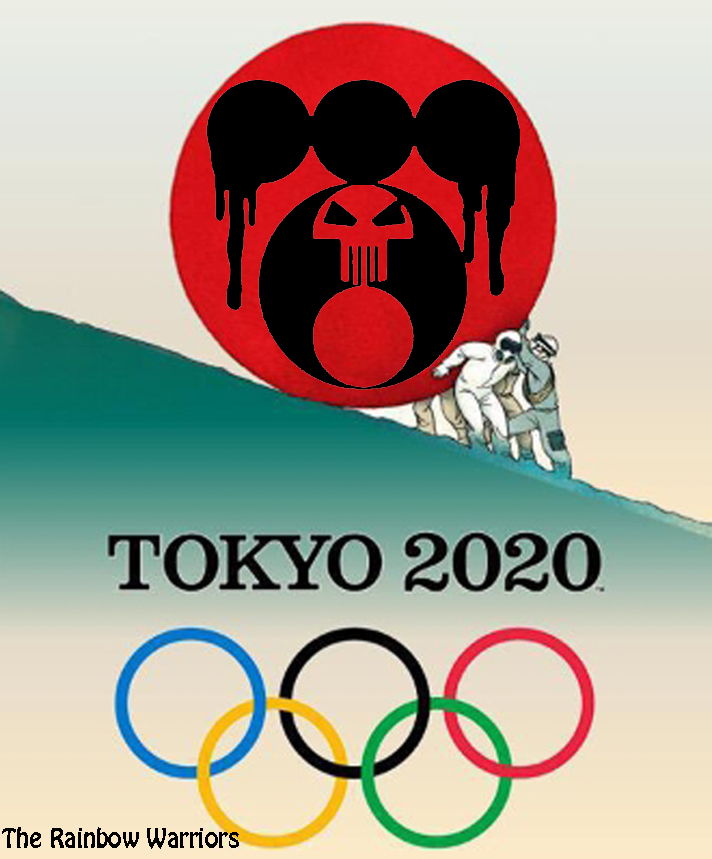
Covid-19 could scupper Prime Minister Abe Shinzo’s pet project “……. To contain the damage to his reputation as well as the coronavirus, on February 27th Mr Abe took the initiative, telling all schools to close until April. Preparing for the worst, he rushed through legislation this week allowing a state of emergency to be declared. And he unveiled an emergency spending package…… The government claims that Japan will return to normal in April. That seems implausible. A state visit by China’s president, Xi Jinping, which was supposed to put the two countries’ listing relationship on an even keel, has already been postponed. ….. Much more rides on the Olympic Games in Tokyo this summer. Mr Abe intends them to foster the patriotism whose absence among ordinary Japanese he laments. He wants the games to make Japan seem open, global and even multicultural. And, though vastly over budget, they are to crown the prime minister’s seven-year rule. To cancel the games would generate not only disappointment among ordinary Japanese but anger at the wasted expense they have already had to bear. But a pandemic would take the decision out of his hands—not least, says Nakano Koichi of Sophia University, because the Olympic village would be “a cruise ship on land”. Bet on a postponement of the games at the very least, and on a long delay before the prime minister’s popularity shines again.https://www.economist.com/asia/2020/03/07/japan-may-have-to-cancel-the-olympics?cid1=cust/ednew/n/bl/n/2020/03/5n/owned/n/n/nwl/n/n/EU/420030/n |
|
Worker at Hinkley Point nuclear station has now developed coronavirus COVID-19
Nuclear testing left a signature of radioactive carbon all around the world
Even after childhood, bomb radiocarbon chronicles the history of our body.
 Your Inner H-Bomb Nuclear testing left a signature of radioactive carbon all around the world—in trees and sharks, in oceans and human bodies. Even as that signal disappears, it’s revealing new secrets to scientists. The Atlantic, Story by Carl Zimmer, 2 Mar 20,
 Coronavirus – right-wing media reactions and conspiracy theories
 A guide to right-wing media reactions and conspiracy theories surrounding coronavirus, MEDIA MATTERS BY KAYLA GOGARTY & COURTNEY HAGLE RESEARCH CONTRIBUTIONS FROM NOOR AL-SIBAI, ALEX KAPLAN, NIKKI MCCANN RAMIREZ & MADELINE PELTZ 02/28/20
-
As the lethal outbreak of coronavirus continues to spread around the world and the U.S. government warns that it will almost certainly also spread within the United States, right-wing media outlets and online accounts are spreading misinformation and conspiracy theories which could have deadly consequences.
The strain of novel coronavirus known as COVID-19 is a respiratory disease that was first detected in the city of Wuhan, China. It swiftly spread and has now been detected in 53 countries, including the United States. So far, the outbreak has led to nearly 3,000 deaths and more than 82,000 cases worldwide, according to The New York Times.
The Centers for Disease Control and Prevention describes the disease behind the current outbreak as part of “a large family of viruses that are common in many different species of animals, including camels, cattle, cats, and bats.” The CDC adds that “rarely, animal coronaviruses can infect people and then spread between people.” Earlier patients in the COVID-19 outbreak appeared to have a link to seafood and animal products, but the virus has since been shown to spread person-to-person.
On January 30, the International Health Regulations Emergency Committee of the World Health Organization declared the outbreak a “public health emergency of international concern,” and on January 31, Health and Human Services Secretary Alex Azar declared a public health emergency in the United States.
As the impact of coronavirus continued to be reported, concerns began to arise that it was driving xenophobic attacks toward people of Asian descent. In New York City, a man assaulted a woman wearing a face mask while calling her a “diseased b****.” On a Los Angeles subway, one man declared that “every disease has ever came from China.” In another incident, a Costco worker in Washington state told an 8-year-old child to “get away” because she believed he may be “from China.” Across the country, there has been an uptick in physical and verbal attacks toward Asian Americans.
In addition to xenophobic sentiments, conspiracy theories and agenda-driven narratives began to arise on the internet and throughout right-wing media, adding more panic and confusion to an already chaotic situation. These conspiracy theories include claims that the Chinese government created coronavirus at a lab in Wuhan; that the United States is using the virus to attack and undermine China from within; and that coronavirus was previously created and patented by former Microsoft CEO Bill Gates.
The virus has also triggered anti-Semitic sentiments, medical and scientific disinformation, and fearmongering from the religious right about the end of the world. In the United States, President Donald Trump and his allies in right-wing media have also absurdly argued that Democrats and the media are politicizing coronavirus for their own gain to make him look bad and cause panic in the stock market, which has plunged in reaction to the potential pandemic. Continue reading
1 This Month



4 August – WEBINAR – Hiroshima & Nagasaki: Nuclear Bombs Never Again
Tuesday, Aug. 4 at 5 pm PT / 8 pm ET.
Aug 5, 2026 10:00 AM in Australia/Melbourne
Join the Nuclear Bombs Never Again webinar on August 4th at 5pm Pacific Time / 8pm Eastern Time / 9am Japan Standard Time.
Cross generational voices at the intersection of Japan-Korea-US policy and militarization will share their lived experiences, nuclear impacts in these contexts, anti-war strategies, and actions you can take to advocate for a world with Nuclear Bombs Never Again. This 75-minute event is co-hosted by WILPF US and Korea Peace Now.

22,000+ miles voyaging for nuclear disarmament
and a radiation-free environment https://vfpgoldenruleproject.org/
To see nuclear-related stories in greater depth and intensity – go to https://nuclearinformation.wordpress.com
-
Archives
- July 2026 (294)
- June 2026 (287)
- May 2026 (306)
- April 2026 (356)
- March 2026 (251)
- February 2026 (267)
- January 2026 (308)
- December 2025 (358)
- November 2025 (359)
- October 2025 (375)
- September 2025 (257)
- August 2025 (319)
-
Categories
- 1
- 1 NUCLEAR ISSUES
- business and costs
- climate change
- culture and arts
- ENERGY
- environment
- health
- history
- indigenous issues
- Legal
- marketing of nuclear
- media
- opposition to nuclear
- PERSONAL STORIES
- politics
- politics international
- Religion and ethics
- safety
- secrets,lies and civil liberties
- spinbuster
- technology
- Uranium
- wastes
- weapons and war
- Women
- 2 WORLD
- ACTION
- AFRICA
- Atrocities
- AUSTRALIA
- Christina's notes
- Christina's themes
- culture and arts
- Events
- Fuk 2022
- Fuk 2023
- Fukushima 2017
- Fukushima 2018
- fukushima 2019
- Fukushima 2020
- Fukushima 2021
- general
- global warming
- Humour (God we need it)
- Nuclear
- RARE EARTHS
- Reference
- resources – print
- Resources -audiovicual
- Weekly Newsletter
- World
- World Nuclear
- YouTube
-
RSS
Entries RSS
Comments RSS
 nuclear-news