Disastrous consequences of an attack on Iran
I think the mischief and misery and unintended consequences of an attack on Iran would be beyond belief.”…..
Ian McEwan: misery of attack on Iran would be beyond belief. Lisa Allardice guardian.co.uk, 25 March 2012 Author says regime is ‘looking very wobbly,’ but that an attack would reunite the country behind its leaders Continue reading
Radiation risk is real, despite what Lynas and Malaysian government say
 Let’s de-politicise the Lynas issue — Stop Lynas Coalition, The Malaysian Insider, March 21, 2012 The majority of us anti-Lynas people feel offended by the government’s unending insistence the issue is politicised. We feel belittled by a government that does not see us rakyat as capable of thinking for ourselves, and so easily hoodwinked by the opposition.
They insist on talking facts, which came to mean solely the IAEA review report, but completely ignored all other dissenting opinions, even if these dissenting opinions are voiced by esteemed professional bodies such as the Bar Council and the Malaysian Medical Association. Perhaps, their members are somehow misled too.
These opinions are raised over time in published articles and public feedback and they have either been poorly addressed, or completely ignored. I hope to raise 3 main ones in this article and request that the government gives them befitting consideration so that we can  de-politicise this Lynas issue.
a) The radiation risk is greater than what Lynas and the Malaysian government are willing to admit Continue reading
Israel to replace nuclear reactor with linear accelerator for nuclear medicine
 Israel to phase out civilian atomic reactor by 2018 Particle accelerator to replace aging, fuel-short reactor By Dan Williams SOREQ, Israel, March 20 (Reuters) – Israel is phasing out a civilian nuclear reactor to which it has admitted foreign inspectors while keeping a second reactor, widely believed to have produced atom bombs, off-limits, officials said on Tuesday.
The small facility at Soreq, which began operations in 1960 with a one-time stock of uranium fuel from the United States, will be replaced by 2017 or 2018 by a particle accelerator fulfilling many of the same research and medical functions…..
http://www.reuters.com/article/2012/03/20/israel-nuclear-idUSL6E8EK3AS20120320
The problem of secondary cancer after radiation therapy
Radiation treatments: Create worse cancer cells — 30 times more potent The Canadian : 19 MARCH 2012 BY TONY ISAACS (NaturalNews) — In a groundbreaking new study just published in the peer reviewed journal Stem Cells, researchers at UCLA’s Jonsson Comprehensive Cancer Center Department of Oncology found that, despite killing half of all tumor cells per treatment, radiation treatments on breast cancer transforms other cancer cells into cancer stem cells which are vastly more treatment-resistant than normal cancer cells.
The new study is yet another blow to the failed and favored mainstream treatment paradigm of trying to cut out, poison out or burn out cancer symptoms (tumors) instead of actually curing cancer.
Senior study author Dr. Frank Pajonk, associate professor of radiation oncology at the Jonsson Center, reported that induced breast cancer stem cells (iBCSC) “were generated by radiation-induced activation of the same cellular pathways used to reprogram normal cells into induced pluripotent stem cells (iPS) in regenerative medicine.” Pjonk, who is also a scientist with the Eli and Edythe Broad Center of Regenerative Medicine at UCLA, added “It was remarkable that these breast cancers used the same reprogramming pathways to fight back against the radiation treatment.”..
… Despite all the billions of dollars spent on cancer, the 40 year “war on cancer” has been a losing one by any honest evaluation. One hundred years ago, anywhere from 1 in 50 to
perhaps 1 in 100 people could be expected to develop cancer. Now it is estimated that 1 in every 2 men and 1 in every 3 women will be diagnosed with cancer in their lifetimes. Despite more people around the world developing cancer and dying from cancer every year, mainstream medicine continues to cling to failed treatments which more often than not fail to eliminate the cancer and help cancer spread and return more aggressively than ever. Notably, two of the three major mainstream cancer treatments – radiation and chemo – are themselves highly carcinogenic……. http://www.agoracosmopolitan.com/news/health/2012/03/19/3511.html
Fukushima cancer toll – years later, especially for nuclear clean-up workers
One group particularly at risk of health harm is the large and growing number of workers required to help control, shut down and clean up the damaged nuclear plants.
On average, the contracted day labourers receive two- to three-times the radiation dose of a regular worker but are not included in utility statistics. And there is no compulsory, centralised system for tracking cumulative radiation exposure or health outcomes of these workers.
Fukushima radiation toll will continue for generations Despite claims that Japan’s Fukushima meltdown caused no deaths, in fact the true health costs of Fukushima’s radiation leaks won’t be known for decades. Independent Australia 18 March 12, Professor Tilman Ruff reports. A year can be a long time in politics. But for the radioactive particles released from Fukushima’s damaged nuclear reactor, a year is just a moment in their life of hundreds or thousands of years.
So, what is the radiological situation at Fukushima one year after the disaster? the extensively damaged plants are still unstable and highly radioactive. This has restricted access and clean-up efforts, which will need to go on for many decades.
Though Japanese authorities declared they’d achieved a “cold shutdown” in December, an arbitrary definition was used: coolant water temperature was less than boiling, pressure inside the reactors was not raised, and the release of radioactive materials from the first layer of containment was below a specified level. But it didn’t mean the nuclear reaction inside the reactors had been stably shut down…. Continue reading
Japanese kids learn about radiation
“Still, there are many children who think nuclear energy is necessary but that’s probably because their parents or relatives have had nuclear-related jobs,”
Third of Fukushima kids got first radiation lessons from disaster: poll Japan Times, 19 March, Kyodo FUKUSHIMA — About a third of the 225 youngsters who were evacuated from around the Fukushima No. 1 nuclear plant last March but still reside in the prefecture say the disaster made them aware of radiation dangers for the first time, a new survey says. Continue reading
USA’s nuclear workers – cancer from radiation exposure

Christina Macpherson's websites & blogs
This article appeared today – and I thought – “Well, what’s the use of this- it is 12 years old? Out of date news, and so forth” And then I thought -” Well, what’s happened to nuclear workers since then?” Has it miraculously become a healthy job? Or is it that no-one is now doing research into the health of nuclear workers? And if not, why not? And if research is being done into the health of nuclear workers, what are the results? Is it all just too scary to publish?
 Richard D. Miller, a policy analyst with the union, said the change was remarkable because the Energy Department and its predecessor, the Atomic Energy Commission, had ”spared no resources in seeking to defeat claims” by employees who said they had been made sick by radiation or chemicals.
 higher-than-expected rates of leukemia, cancer of the lung and bladder, vision difficulties and chronic fatigue syndrome, among other health problems.
AFTER DECADES OF DENIAL (as per normal for nuke industry) . http://nuclearhistory.wordpress.com/2012/03/17/after-decades-of-denial-as-per-normal-for-nuke-industry/#comment-5284 …. Paul Langley’s Nuclear History Blog, 17 March 12, New York Times : US Govt Concedes Plutonium Workers Suffered Illness, Death http://query.nytimes.com/gst/fullpage.html?res=9C05E2DE1E3CF93AA15752C0A9669C8B63&pagewanted=all
 U.S. ACKNOWLEDGES RADIATION KILLED WEAPONS WORKERS , By MATTHEW L. WALD Published: January 29, 2000 WASHINGTON, Jan. 28— After decades of denials, the government is conceding that since the dawn of the atomic age, workers making nuclear weapons have been exposed to radiation and chemicals that have produced cancer and early death.
The new finding — that the exposure led to higher-than-normal rates of a wide range of cancers among workers at 14 nuclear weapons plants — raises the prospect of compensation to them. Although officials cautioned that any decision on that was a long way off, they said a package could amount to tens of millions of dollars for a group that might well include hundreds of families.
The new conclusion comes from the government’s most comprehensive review of studies of worker health and related raw health data. The review accepts the conclusion of many of those studies, some done under contract for the government, that workers were made sick by their exposure. Continue reading
Health problems secondary to radiation therapy
New Report: Cancer and CVD After Radiation Therapy Medscape , Nick Mulcahy March 13, 2012 — Second cancers and cardiovascular disease (CVD) after radiotherapy are being experienced by “an ever-growing number of cancer survivors,” according to the authors of a national report published in the March 7 issue of the Journal of the National Cancer Institute. Continue reading
Japanese do not trust the government about Fukushima radiation
 83% of Fukushima residents and 73% countrywide felt ‘greatly’ or ‘somewhat’ worried about radioactive contamination. More importantly, 70% of people in the three disaster hit prefectures , and 71% people countrywide , felt that government was “hiding” information.
This background of mistrust and deception, coming on top of enormous suffering, haunts the island nation, and especially the 350,000 people, who are living in camps unable to go back home to Fukushima.
 Debris, radiation fear, mistrust still piling up Times of India, Subodh Varma, TNN | Mar 12, It is one year since the Great Eastern Japan Earthquake generated a tsunami that ripped apart the north-eastern sea-coast of Japan leaving over 20,000 people dead and the Fukushima nuclear power plant damaged. The triple disaster is estimated to have caused losses worth $235 billion according to World Bank.
Pictures circulated worldwide by visiting journalists show spectacular scenes of the massive clean up operation launched by the government of Japan. But the reality is numbingly grim. Goshi Honoso , Japan’s environment minister speaking at a routine press conference on February 21, urged local governments to help in cleaning up the debris left behind in Iwate, Miyagi and Fukushima prefectures, the three areas which bore the brunt of the tsunami, reports Kyodo news agency.
Then, he revealed jaw dropping numbers: an estimated 22.53 million tonnes of debris was created by the tsunami . Of this, only 1.18 million tonnes, that is, about 5% has been disposed of.The rest of it is simply bulldozed and piled into giant heaps, some as high as 20 meters high. ….
Bursting the nuclear industry’s bubble that radiation is OK
By October 2011, an article in the journal Nature estimated Fukushima emissions to be more than double that of Chernobyl. How anyone, let alone scientists, could call Fukushima doses “too low” to cause harm in the face of this evidence is astounding.
Within six days of the meltdowns, the plume had reached the U.S. and, within 18 days, it had circled the Northern Hemisphere.
Last month brought the news that 573 deaths in the area near the stricken reactors were certified by coroners as related to the nuclear crisis, with dozens more deaths to be reviewed.
 The dangerous myths of Fukushima: Exposing the ‘no harm’ mantra, Bay View, by Joseph Mangano and Janette Sherman, M.D. March 10, 2012 The myth that Fukushima radiation levels were too low to harm humans persists a year after the meltdown. A March 2, 2012, New York Times article quoted Vanderbilt University professor John Boice: “There’s no opportunity for conducting epidemiological studies that have any chance for success – the doses are just too low.” Wolfgang Weiss of the U.N. Scientific Committee on the Effects of Atomic Radiation also recently said doses observed in screening of Japanese people “are very low.”
Views like these are political, not scientific, virtually identical to what the nuclear industry cheerleaders claim. Nuclear Energy Institute spokesperson Tony Pietrangelo issued a statement in June that “no health effects are expected among the Japanese people as a result of the events at Fukushima.”
In their haste to choke off all consideration of harm from Fukushima radiation, nuclear plant owners and their willing dupes in the
scientific community built a castle against invaders – those open-minded researchers who would first conduct objective research
BEFORE rushing to judgment. The pro-nuclear chants of “no harm” and “no studies needed” are intended to be permanent, as part of damage control created by a dangerous technology that has produced yet another catastrophe.
But just one year after Fukushima, the “no harm” mantra is now being crowded by evidence – evidence to the contrary. Continue reading
Safecast helps Japanese people to learn about radiation
Even if nuclear science and the impact of a nuclear meltdown on human health were simple to understand (and they are not), there is still the rather uneasy fact of dealing with a daily foe: invisible, odourless radiation.
Working with Safecast , which crowdsources radiation readings gathered by volunteers, and combines it with data from other outfits to give a clearer picture of what’s going on, Saito wanted people to be able to determine what was safe for them based on fact, not paranoia or nuclear industry propaganda.
Japan’s radiation: Ignorance isn’t bliss Feeling that officials aren’t doing enough, everyone, farmer to housewife, is learning about radiation contamination. Aljazeera, D. Parvaz 10 Mar 2012 Iitate Village, Japan – Second-generation farmer Muneo Kano has not been able to tend to his cattle or grow crops since the Daiichi nuclear power plant contaminated land, air and sea after being damaged by last year’s earthquake and tsunami.
He had his 11 cows scanned for radiation and sold them to another farm outside the radiation area. Kano’s own seven-hectare farm is 45km from the nuclear site, and the soil has been deemed too contaminated for farming.
And Kano has had to learn all about radiation and soil fast – he now tracks and maps radiation dips and spikes on an iPad, and has a series of maps he consults to check what authorities say about farms in the area.
Soil samples tested in Iitate still contain ten times the acceptable levels of the radioactive isotope Caesium-137 for agricultural soil, and the government has yet to remove the top layers of contaminated soil and wash the streets…. Continue reading
Compensation for uranium workers afflicted by radiation
 some of the workers who were exposed to radiation in those eight years would pay the price
decades later….
the Energy Employees Occupational Illness Compensation Program has paid $7.8 billion in medical bills and compensation to 151,095 individuals.
Radiation workers sought by program May be compensated if Cold War-era job involved uranium Dan Stockman | The Journal Gazette, March 11, 2012 FORT WAYNE – The work lasted only eight years, but the effects scarred a generation for decades. Continue reading
The mental health effects of the nuclear accident at Fukushima
they live in fear of the invisible threat in their midst. …. there is agreement that the Fukushima case is unprecedented.
conflicting information has left them confused and fearful about the future.
“We’re being treated like lab rats. The authorities should have told us as soon as they knew the reactors had melted down and helped us leave immediately
Fukushima residents plagued by health fears of nuclear threat in their midst A year after the power plant’s triple meltdown, conflicting official information leaves families confused and fearful for their future, Justin McCurry in Fukushima guardian.co.uk, 9 March 2012 The noise levels soar inside Fukushima city’s youth centre gymnasium as dozens of nursery school children are let loose on bouncy castles and pits filled with plastic balls.
The handful of teachers and volunteers on duty are in forgiving mood: for the past year, the Fukushima nuclear accident has robbed these children of the simple freedom to run around.
Instead, anxious parents and teachers have confined them to their homes and classrooms, while scientists debate the possible effects of prolonged exposure to low-level radiation on their health. Continue reading
Fukushima’s psychological trauma, as well as radiation cancer risk
Radiation is still leaking from the now-closed Fukushima Dai-ichi nuclear plant, though at a slower pace than it did in the weeks after the March 11 earthquake and tsunami. It’s not immediately fatal but could show up as cancer or other illnesses years later.
The uncertainty breeds fear.
The [cancer] risk is cumulative. The radioactivity in one’s body builds up through various activities, including eating contaminated food every day or staying in a hot spot for an extended period.
Uncertain risks torment Japanese in nuclear zone, THE HINDU, 8 March 12, Yoshiko Ota keeps her windows shut. She never hangs her laundry outdoors. Fearful of birth defects, she warns her daughters — never have children.
This is life with radiation, nearly one year after a tsunami-hit nuclear power plant began spewing it into Ota’s neighbourhood, 60 km away. She’s so worried that she has broken out in hives.
“The government spokesman keeps saying there are no immediate health effects,” the 48-year-old nursery school worker says. “He’s not talking about 10 years or 20 years later. He must think the people of Fukushima are fools. It’s not really OK to live here,” she says. “But we live here.” Continue reading
Radiation therapy – necessary, but can cause secondary cancers
Younger patients are especially susceptible to the effects of radiation, and the three cancers that have been most strongly associated with radiation are breast cancer, thyroid cancer and bone marrow cancers, including leukemia
Clinicians say the benefits of radiation treatment for many types of cancer far outweigh the potential risks of experiencing serious adverse effects years later, and say radiation is now a lot safer than it once was. …. “We try to use radiation as sparingly as possible, but unfortunately, it is frequently part of the cure in a lot of cancers and it’s absolutely necessary,”
Radiation Therapy Linked to Secondary Cancers KBOI News, 7 March 12, (NEW YORK) — While the number of cancer survivors has tripled since the 1970s and continues to grow, the cost of that survival for many has been the development of secondary cancers and cardiovascular disease related to radiation treatment, according to an upcoming report by a scientific committee. Continue reading
1 This Month
26 April – Chernobyl: Inside the Meltdown airs on National Geographic on Sunday 26th April from 4pm
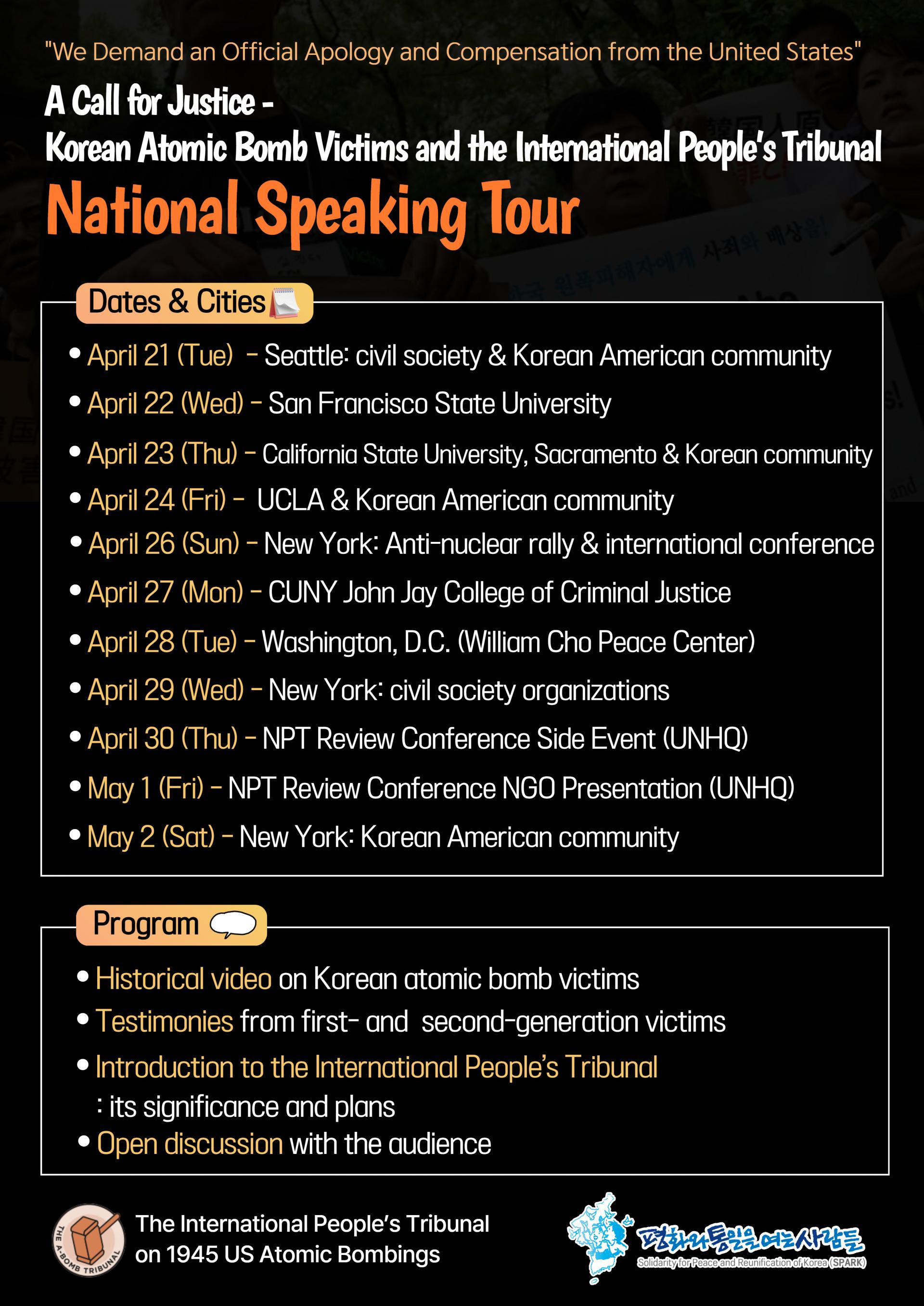
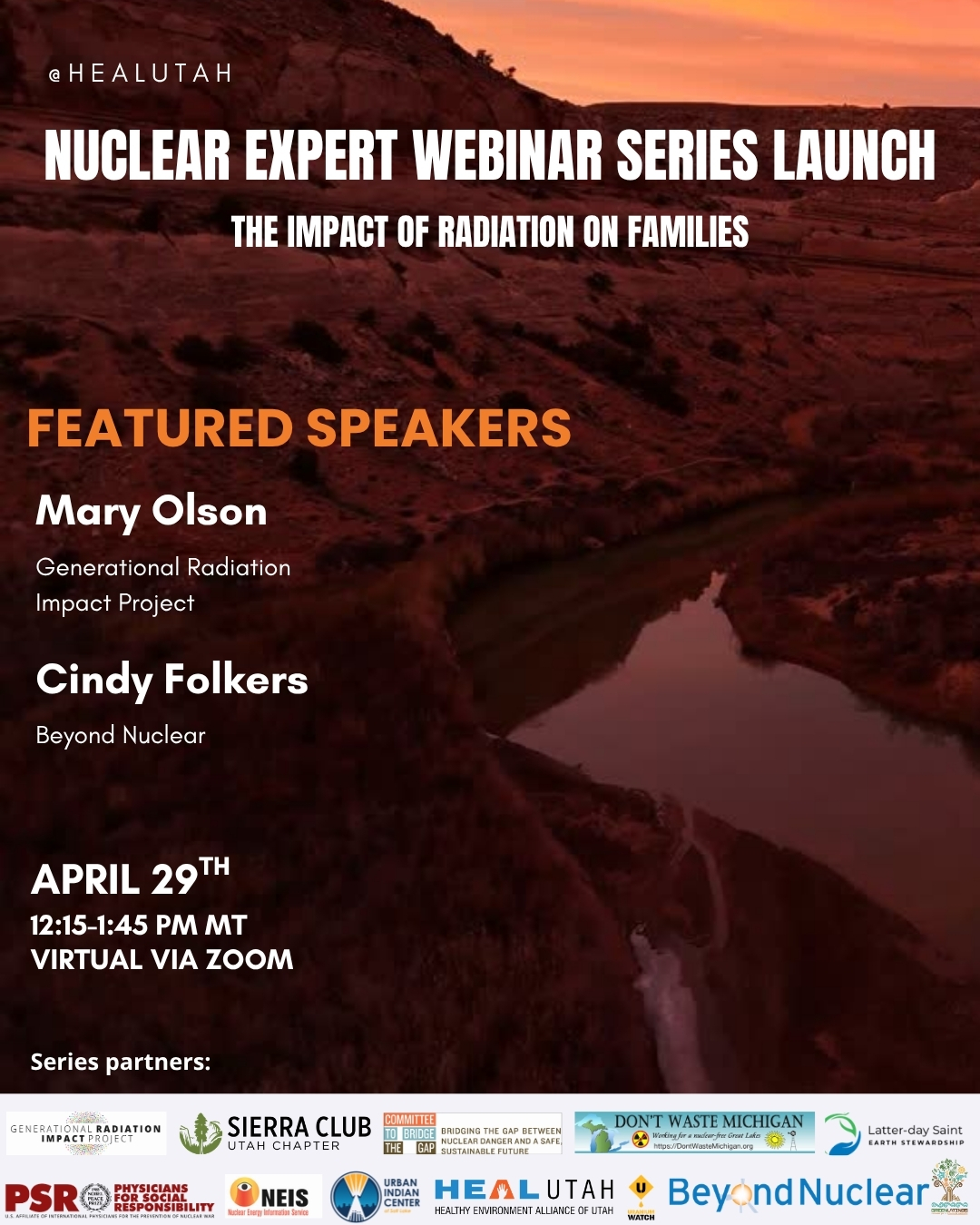
29 April – Nuclear Expert Webinar #1 – Radiation Impacts on Families with Mary Olson and Cindy Folkers
- 12:15 PM MT – 1:45 PM MT
- Location: Virtual – REGISTER TODAY

4 May -West Suburban Peace Coalition to discuss Iran war at May Educational Forum
Monday, May 4, 7:00 – 8:00 PM Central Standard Time
Title: : How Trump’s Narrative Tries to Shape the Reality of the War on Iran.
Contact Walt Zlotow, zlotow@hotmail.com 630 442 3045 for further information
14 May – online event From Bombs to Data Centres: the Face of Nuclear Colonialism

Pine Ridge Uranium is the real threat, not Tehran- Tell Burgum: Stop the Extraction.
Chernobyl: The Lost Tapes – A good documentary on Chernobyl on SBS available On Demand for the next 3 weeks– https://www.sbs.com.au/ondemand/tv-program/chernobyl-the-lost-tapes/2352741955560
To see nuclear-related stories in greater depth and intensity – go to https://nuclearinformation.wordpress.com
-
Archives
- April 2026 (288)
- March 2026 (251)
- February 2026 (268)
- January 2026 (308)
- December 2025 (358)
- November 2025 (359)
- October 2025 (376)
- September 2025 (257)
- August 2025 (319)
- July 2025 (230)
- June 2025 (348)
- May 2025 (261)
-
Categories
- 1
- 1 NUCLEAR ISSUES
- business and costs
- climate change
- culture and arts
- ENERGY
- environment
- health
- history
- indigenous issues
- Legal
- marketing of nuclear
- media
- opposition to nuclear
- PERSONAL STORIES
- politics
- politics international
- Religion and ethics
- safety
- secrets,lies and civil liberties
- spinbuster
- technology
- Uranium
- wastes
- weapons and war
- Women
- 2 WORLD
- ACTION
- AFRICA
- Atrocities
- AUSTRALIA
- Christina's notes
- Christina's themes
- culture and arts
- Events
- Fuk 2022
- Fuk 2023
- Fukushima 2017
- Fukushima 2018
- fukushima 2019
- Fukushima 2020
- Fukushima 2021
- general
- global warming
- Humour (God we need it)
- Nuclear
- RARE EARTHS
- Reference
- resources – print
- Resources -audiovicual
- Weekly Newsletter
- World
- World Nuclear
- YouTube
-
RSS
Entries RSS
Comments RSS
 nuclear-news