Birth defects in iraq from depleted uranium
 Depleted Uranium to Blame for Iraqi Birth Defects? http://www.americamagazine.org/blog/entry.cfm?blog_id=2&entry_id=5425 AMERICA – THE NATIONAL CATHOLIC WEEKLY , OCTOBER 16, 2012 by KEVIN CLARKE The U.S. military has consistently downplayed or denied possible adverse health and environmental effects because of its use of depleted uranium ordnance , yet birth defects and spikes in sometimes odd health problems seem to follow closely behind in communities unfortunate enough to have been the site of the heavy use of such munitions. U.S. and NATO forces used D.U. penetrator munitions in the 1991 Gulf War, the Bosnia war, Serbia and the 2003 invasion of Iraq.
Now in Fallujah, Iraq, the site of two rounds of intense fighting and bombing raids by U.S. forces in March and April 2004, a University of Michigan study (<-warning: not for faint of heart) funded by the World Health Organization has uncovered “staggering” increases in sometimes bizarre birth defects—babies born with brains and other organs outside their bodies—according to a report in Britain’s Independent . The study found that in Fallujah, more than half of all babies born between 2007 and 2010 suffered some kind of birth defect. “Before the siege, this figure was more like one in 10.” Continue reading
Fukushima’s 50 heroes fear discrimination and bullying

 The Economist: “Something strange was afoot” during Prime Minister’s visit to plant — Fukushima 50 muzzled http://enenews.com/economist-strange-afoot-during-prime-ministers-visit-plant-fukushima-50-muzzled Title: Japan’s nuclear disaster: Meet the Fukushima 50? No, you can’t
Source: The Economist Author: Banyan Date: Oct 8, 2012
It has taken the Japanese government more than 18 months to pay tribute to a group of brave men, once known as the “Fukushima 50”, who risked their lives to prevent meltdowns at the Fukushima Dai-ichi nuclear power plant from spiralling out of control.
But when the prime minister, Yoshihiko Noda, belatedly offered official thanks to them on October 7th something strange was afoot: six of the eight men he addressed had their backs to the television cameras, refused to be photographed and did not introduce themselves by name, not even to Mr Noda
The reason: officials from the government and from Tokyo Electric Power (Tepco) quietly admitted that the men wanted to keep their identities secret because they were scared of stigmatisation for being involved in the disaster, such as might lead to the bullying of their children and grandchildren. But Tepco is also muzzling them, presumably for fear that what they say will further discredit the now nationalised company. When I asked if I could at least hand my business card to them to see if they wanted to tell their side of the story, an irate Tepco spokesman answered bluntly: “Impossible.”
…Yet even after Mr Noda’s visit, the men do not get the recognition they deserve. Kyodo, a news agency, relegates any mention of them to the bottom of a boring story about decontamination.
East Kazakhstan’s horror nuclear legacy from Soviet times till now

 Josef Stalin’s nuclear legacy remains in East Kazakhstan Scotsman.com, 9 October 2012 Stalin used the area as a nuclear test site and the local population have been paying a terrible price ever since. The plight of these people in East Kazakhstan has touched the heart of Scottish MEP Struan Stevenson, who has campaigned to bring their situation to wider
recognition for 13 years. Now, in an exclusive article for
The Scotsman, he argues Stalin’s actions could have devastating consequences in the future, too Continue reading
Josef Stalin’s nuclear legacy remains in East Kazakhstan Scotsman.com, 9 October 2012 Stalin used the area as a nuclear test site and the local population have been paying a terrible price ever since. The plight of these people in East Kazakhstan has touched the heart of Scottish MEP Struan Stevenson, who has campaigned to bring their situation to wider
recognition for 13 years. Now, in an exclusive article for
The Scotsman, he argues Stalin’s actions could have devastating consequences in the future, too Continue reading
Japanese government secrecy tightening, over Fukushima health effects
 Officials from Fukushima Prefecture have admitted that they conducted secret meetings with 19 health experts and government officials, discussing the impact of radiation on human health, in the wake of the Fukushima disaster. The meetings were held before official meetings, and participants were instructed not to tell anyone that they had
participated. Meeting materials were collected after the meeting so that they could not be removed from the room, and no minutes were kept.
Fukushima Nuclear Crisis Update for October 2nd to October 4th, 2012 Greenpeace International, by Christine McCann – October 5, 2012 “…..As duties are transferred from the now defunct Nuclear Safety Commission (NSC) to the newly-created Nuclear Regulation Authority (NRA), the Nuclear Energy Library, which gave the public access to over 40,000 documents relating to nuclear power, will close.
The Library was created in 1997 to create transparency after a leak and subsequent cover-up at the Monju fast-breeder. It was heavily visited in the period following the Fukushima nuclear disaster; many documents there are not available online. Experts are criticizing the decision. Continue reading
First case of compensation for cancer in Fukushima worker
 Fukushima workers started having cancer
http://fukushima-diary.com/2012/10/fukushima-workers-started-having-cancer/ by Mochizuki October 5th, 2012 In September, Ministry of Health, Labour and Welfare admitted a Fukushima worker applied for workmen’s compensation insurance. It isfor gastric cancer, esophageal cancer or colon cancer.
This is the first case of the application of workmen’s compensation insurance. The occupational disease department of MHLW is concealing the profile and the integral dose of the worker.
Another nuclear worker commented like this below, Continue reading
Cancers the result of radiological spraying in St. Louis?
She has watched four siblings die of cancer
Victims of suspected radiological spraying in St. Louis suffer thyroid, other cancers — Helicopters covered children in powder — “Oh my God, if they did that there’s no telling what else they’re hiding” http://enenews.com/victims-of-suspected-radiological-spraying-in-st-louis-suffer-thyroid-other-cancers-oh-my-god-if-they-did-that-theres-no-telling-what-else-theyre-hiding October 4th, 2012 Title: Secret Cold War tests in St. Louis raise concerns Source: Associated PressDate: October 4, 2012
“…In the mid-1950s, and again a decade later, the Army used motorized blowers atop a low-income housing high-rise, at schools and from the backs of vehicles, to send a potentially dangerous compound into the already-hazy air in predominantly black areas of St. Louis. Continue reading
Fukushima residents treated with discrimination, like the hibakusha
the same sort of discrimination is happening to people who were exposed to radiation in Fukushima.
Voices of the “Explosion Covered People” http://www.npr.org/blogs/pictureshow/2012/09/25/161755636/voices-of-the-explosion-covered-people More than 65 years after atom bombs were dropped on Hiroshima and Nagasaki, there are still thousands of people suffering. In addition to experiencing lingering effects from the radiation, many are also considered social outcasts.
The term hibakusha in Japanese means “explosion-covered people” and applies to anyone who came within 2 kilometers (approximately 1.25 miles) of the hypocenter of the bomb — within two weeks of the explosion. Thought to be diseased and contagious, many people hid their experience from friends, family and society at large to avoid being shunned. Continue reading
Radiation tablets for Delaware residents near nuclear plant
Delaware residents near nuclear plants urged to take tablets http://www.newsworks.org/index.php/local/item/45173 October 5, 2012 By Nichelle Polston n the next few days, residents who live within a ten mile radius of the Salem/Hope Creek Nuclear Generating Stations will have access to some pills that are usually given out during a radiation emergency.
The Delaware Emergency Management Agency and Delaware Division of
Public Health will distribute potassium iodide also known as KI
tablets. The pills are believed to help protect the thyroid gland
from ingested or inhaled radioactive iodine possibly released in a
radiation emergency. Officials say the medicine does not protect
against external radiation. If you take a look at Delaware’s
emergency plans developed for use in a nuclear incident, you’ll notice
KI tablets are listed as one of the precautions residents should take
along with evacuation.
Delaware received the tablets due to its participation in a program
led by the U.S. Nuclear Regulatory Commission. The pills are only
being distributed in the event of an emergency related to radiation.
If that happens, emergency officials will inform residents in those
areas through messages on Emergency Action System radio stations. When
the emergency messages are aired they will include instructions on how
residents should react, directions to evacuation routes, emergency
reception centers, and also when to take the KI tablets.
In the meantime, the pills will be distributed next week on October
11th at the Townsend Fire Station. They’re also available to
residents who live outside the 10 mile radius area and those who
currently want to get rid of their expired KI tablets. Delaware
Emergency Management Agency Radiological Emergency Planning section
can be reached for more information about the tablets at 302-659-3362.
Fukushima’s new hospital equipment can NOT measure internal radiation
Technohill, the Japanese distributer of this equipment commented on their website that this equipement cannot measure internal exposure unlike the hospital explained on their press conference.
Fukushima hospital imported new WBC equipment, distributer “It can’t measure internal exposure” http://fukushima-diary.com/2012/09/fukushima-hospital-imported-new-wbc-equipment-distributer-it-cant-measure-internal-exposure/ by Mochizuki September 29th, 2012 Kuwano kyoritsu hospital in Koriyama city held a press conference on 9/24/2012. Continue reading
Radiation exposure to Nevada’s Native American communities
The assessment of radiation exposures in Native American communities (Nevada) http://nuclearhistory.wordpress.com/2012/09/28/the-assessment-of-radiation-exposures-in-native-american-communities-nevada/
http://www.ncbi.nlm.nih.gov/pubmed/10795343
Risk Anal. 2000 Feb;20(1):101-11.
The assessment of radiation exposures in Native American communities from nuclear weapons testing in Nevada.
Frohmberg E, Goble R, Sanchez V, Quigley D.
Source
Clark University, Center for Technology, Environment, George Perkins Marsh Institute, Worcester, MA 01610, USA.
Abstract
Native Americans residing in a broad region downwind from the Nevada Test Site during the 1950s and 1960s received significant radiation exposures from nuclear weapons testing. Because of differences in diet, activities, and housing, their radiation exposures are only very imperfectly represented in the Department of Energy dose reconstructions. There are important missing pathways, including exposures to radioactive iodine from eating small game. The dose reconstruction model assumptions about cattle feeding practices across a year are unlikely to apply to the native communities as are other model assumptions about diet. Thus exposures from drinking milk and eating vegetables have not yet been properly estimated for these communities. Through consultations with members of the affected communities, these deficiencies could be corrected and the dose reconstruction extended to Native Americans. An illustration of the feasibility of extending the dose reconstruction is provided by a sample calculation to estimate radiation exposures to the thyroid from eating radio-iodine-contaminated rabbit thyroids after the Sedan test. The illustration is continued with a discussion of how the calculation results may be used to make estimates for other tests and other locations.
PMID: 10795343 [PubMed – indexed for MEDLINE]
Margaret Chan VERSUS World Health Organisation http://tekknorg.wordpress.com/2012/05/27/margaret-chan-versus-world-health-organisation/ May 27, 2012 by Mikkai “it is recognized by the World Health Organization that the International Atomic Energy Agency has the primary responsibility for encouraging, assisting and coordinating research and development and practical application of atomic energy for peaceful uses throughout the world without prejudice to the right of the World Health Organization to concern itself with promoting, developing, assisting and coordinating international health work, including research, in all its aspects. ”http://www.iaea.org/Publications/Documents/Infcircs/Others/inf20.shtml#note_c
VERSUS:
Radiation Is Always Dangerous, Says World Health Organization Director-General: http://concernforhealth.org/radiation-is-always-dangerous-says-world-health-organization-director-general/
“INTERNAL radionuclides are 10 to 100 times more damaging than the equivalent EXTERNALdose” Dr. Michel Fernex, former WHO employee
FROM W.H.O.:http://www.who.int/mediacentre/news/releases/2012/wha65_closes_20120526/en/index.html“Dr Margaret Chan appointed to a second term as Director-General of the World Health Organization by the 65th World Health Assembly” Continue reading
Fukushima study on cows shows how radioactive cesium collects in the kidneys
 New Japan Study: Kidneys accumulate most radioactive cesium by far — Highest levels of any tissue inside cows: http://enenews.com/study-kidneys-accumulated-most-radioactive-cesium-highest-levels-of-any-tissue-inside-japanese-cows September 21st, 2012 By ENENews
« 1 quadrillion becquerels of total strontium into Pacific via wastewater — Giant spike in levels offshore Fukushima many months after 3/11 Chemist: Dangerously elevated hydrocarbons in sinkhole sludge — Levels may be in flammable range »
New Japan Study: Kidneys accumulate most radioactive cesium by far — Highest levels of any tissue inside cows
September 21st, 2012
Title: Radiocesium distribution in the tissues of Japanese black beef heifers fed fallout-contaminated roughage due to the Fukushima Daiichi nuclear power station accident
Source: Biosci Biotechnol Biochem.
Authors: Sasaki K, Hayashi M, Narita T, Motoyama M, Oe M, Ojima K, Nakajima I, Muroya S, Chikuni K, Aikawa K, Ide Y, Nakanishi N, Suzuki N, Shioya S, Takenaka A. (National Institute of Livestock and Grassland Science, National Agriculture and Food Research Organization)
Date: 2012 Aug 7
Abstract
This study examined the accumulation and tissue distribution of radioactive cesium nuclides in Japanese Black beef heifers raised on roughage contaminated with radioactive fallout due to the accident at the Fukushima Daiichi Nuclear Power Station on March 2011. Radiocesium feeding increased both (134)Cs and (137)Cs levels in all tissues tested. The kidney had the highest level and subcutaneous adipose had the lowest of radioactive cesium in the tissues. Different radioactive cesium levels were not found among parts of the muscles. These results indicate that radiocesium accumulated highly in the kidney and homogenously in the skeletal muscles in the heifers.
See the full report here Title: Radiocesium distribution in the tissues of Japanese black beef heifers fed fallout-contaminated roughage due to the Fukushima Daiichi nuclear power station accident
Continuing sickness in children from irradiated food in Belarus
 Children Radiation Maps, Blog by Jan Hemmer April 14, 2012 by Mikkai“………“for 15 years new children were born who, thanks to God, did not experience the first radioactive shock. For 15 years, they have eaten contaminated food. Children receive the highest doses, because the dose coefficients, in a 3 year old child, are 5 times higher than in adults. Contaminate food spreads like locusts In the whole Republic. It is not surprising to find in Minsk, children with a dose load of 700-900 Bq/kg.
I want to draw your attention on the research of Prof. Bandazhevsky. We worked with him. He came to the conclusion that 50 Bq/kg bodyweight in children, represent a threshold where pathologies appear in vital organs like kidneys, liver, heart and others. I want to say that today the health of children is such that if we do not take urgent measures, I cannot see good prospects for our children.” Continue reading
Less than a quarter of Japan’s nuclear engineers think that the industry is trustworthy
Only 23.4 percent, down from 43.8 percent a year earlier, said they “can agree” with the view that “the safety awareness and efforts of those engaged in the use of nuclear energy are trustworthy.”
Atomic engineers feel less confident about nuke safety September 22, 2012 THE ASAHI SHIMBUN After watching one of the world’s worst nuclear disasters in their own backyard, members of the Atomic Energy Society of Japan, a pro-nuclear association of nuclear engineers, are not surprisingly feeling much less confident about the safety of their industry. Continue reading
Radiation caused cancer hit US movie stars
“The connection between fallout radiation and cancer in individual cases has been practically impossible to prove conclusively. But in a group this size you’d expect only 30-some cancers to develop. With 91, I think the tie-in to their exposure on the set of The Conqueror would hold up even in a court of law.”
 FROM PEOPLE MAGAZINE:Occupy the NRC 21 Sept 12, Few moviegoers remember The Conqueror, a sappy 1956 film about a love affair between Genghis Khan and a beautiful captive princess. But to the families of its stars, John Wayne and Susan Hayward, and of its director-producer, Dick Powell, memories of The Conqueror have begun to acquire nightmarish clarity.
The movie was shot from June through August 1954 among the scenic red bluffs and white dunes near Saint George, Utah, an area chosen by Powell for its similarity to the central Asian steppes. At the time it did not seem significant that Saint George was only 137 miles from the atomic testing range at Yucca Flat, Nev.; the federal government, after all, was constantly reassuring local residents back then that the bomb tests posed no health hazard. Now, 17 years after aboveground nuclear tests were outlawed, Saint George is plagued by an extraordinarily high rate of cancer (PEOPLE, Oct. 1, 1979)—and the illustrious alumni of The Conqueror and their offspring are wondering whether their own grim medical histories are more than an uncommon run of bad luck. Continue reading
1 This Month
26 April – Chernobyl: Inside the Meltdown airs on National Geographic on Sunday 26th April from 4pm
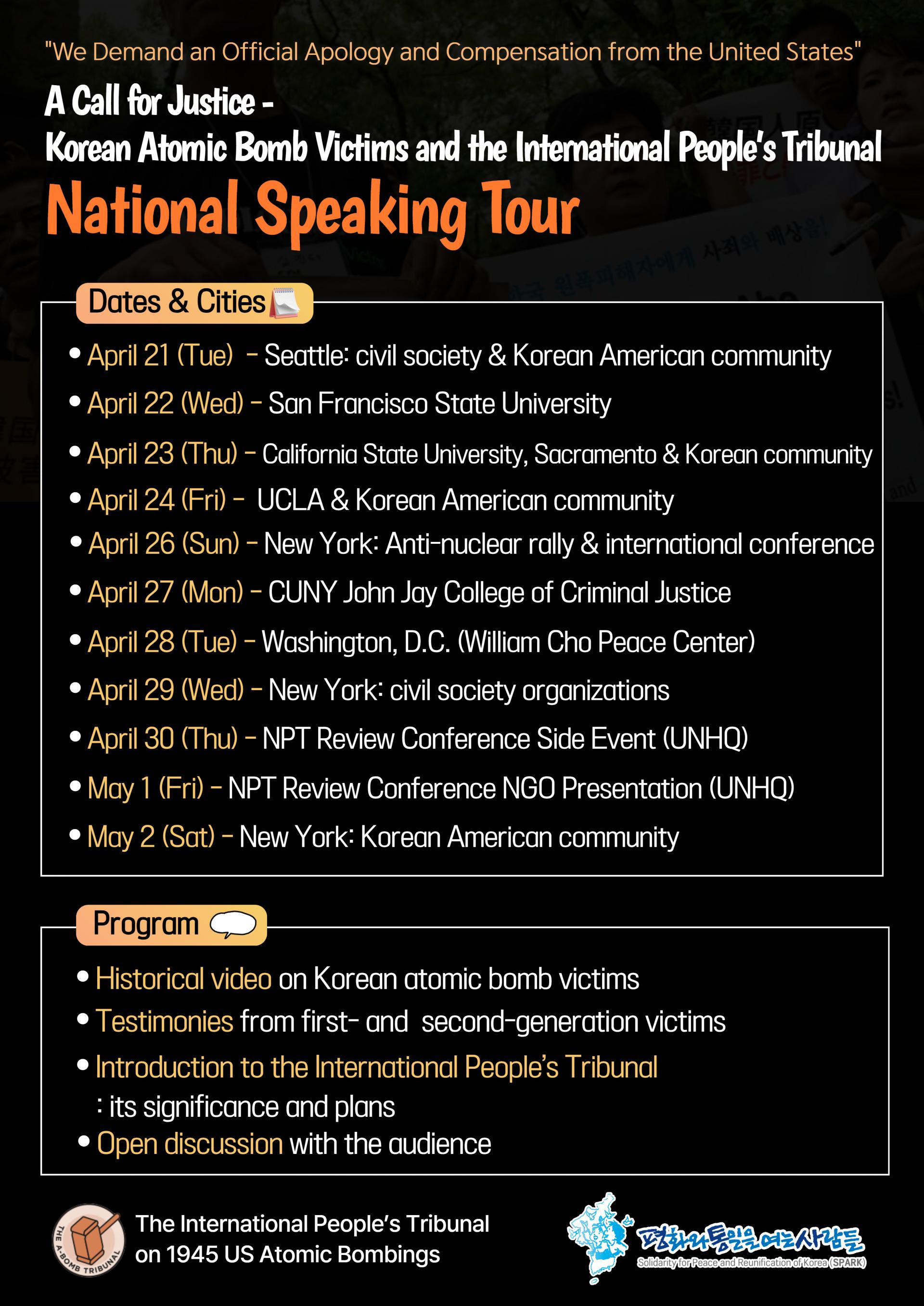
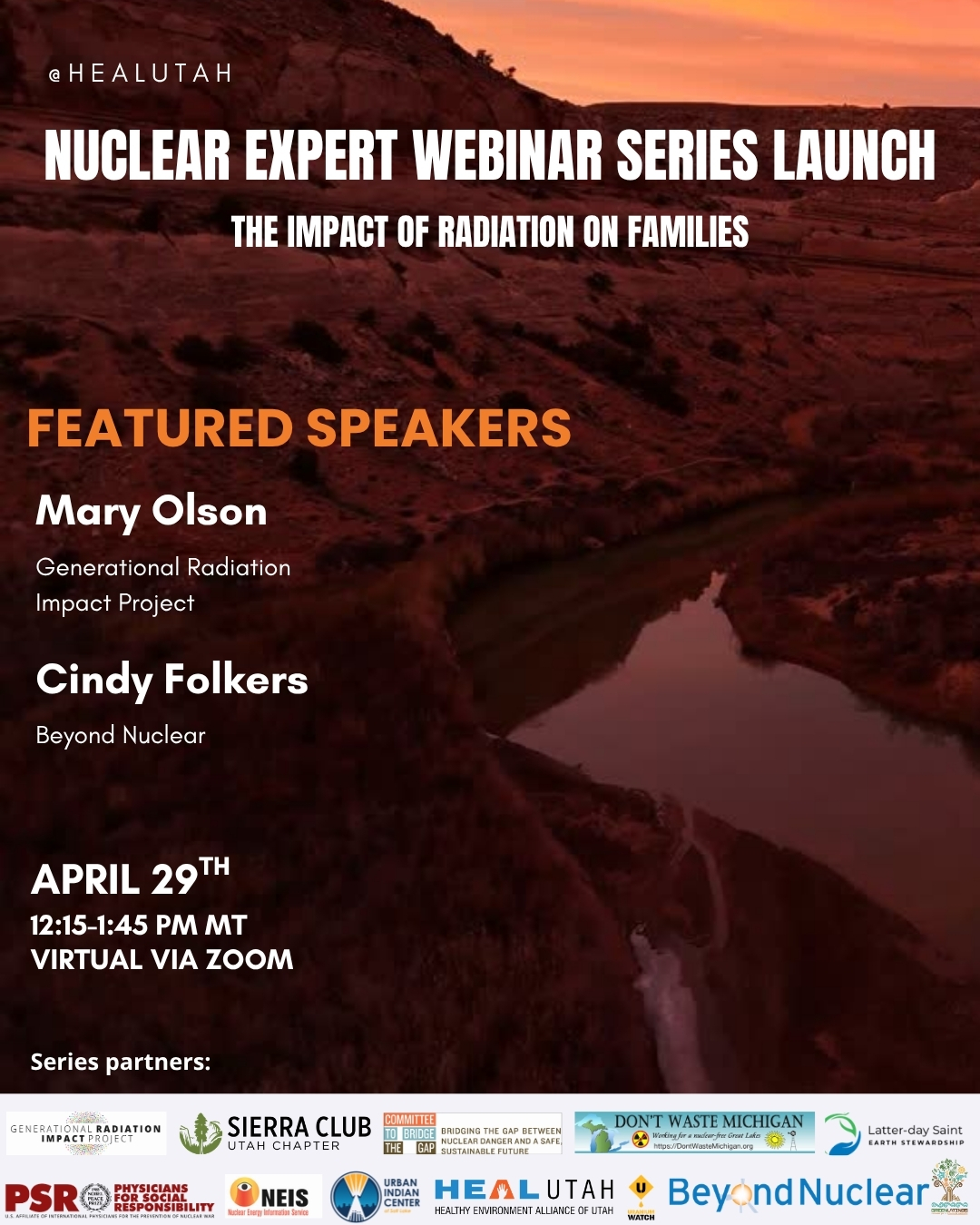
29 April – Nuclear Expert Webinar #1 – Radiation Impacts on Families with Mary Olson and Cindy Folkers
- 12:15 PM MT – 1:45 PM MT
- Location: Virtual – REGISTER TODAY

4 May -West Suburban Peace Coalition to discuss Iran war at May Educational Forum
Monday, May 4, 7:00 – 8:00 PM Central Standard Time
Title: : How Trump’s Narrative Tries to Shape the Reality of the War on Iran.
Contact Walt Zlotow, zlotow@hotmail.com 630 442 3045 for further information
14 May – online event From Bombs to Data Centres: the Face of Nuclear Colonialism

Pine Ridge Uranium is the real threat, not Tehran- Tell Burgum: Stop the Extraction.
Chernobyl: The Lost Tapes – A good documentary on Chernobyl on SBS available On Demand for the next 3 weeks– https://www.sbs.com.au/ondemand/tv-program/chernobyl-the-lost-tapes/2352741955560
To see nuclear-related stories in greater depth and intensity – go to https://nuclearinformation.wordpress.com
-
Archives
- April 2026 (288)
- March 2026 (251)
- February 2026 (268)
- January 2026 (308)
- December 2025 (358)
- November 2025 (359)
- October 2025 (376)
- September 2025 (257)
- August 2025 (319)
- July 2025 (230)
- June 2025 (348)
- May 2025 (261)
-
Categories
- 1
- 1 NUCLEAR ISSUES
- business and costs
- climate change
- culture and arts
- ENERGY
- environment
- health
- history
- indigenous issues
- Legal
- marketing of nuclear
- media
- opposition to nuclear
- PERSONAL STORIES
- politics
- politics international
- Religion and ethics
- safety
- secrets,lies and civil liberties
- spinbuster
- technology
- Uranium
- wastes
- weapons and war
- Women
- 2 WORLD
- ACTION
- AFRICA
- Atrocities
- AUSTRALIA
- Christina's notes
- Christina's themes
- culture and arts
- Events
- Fuk 2022
- Fuk 2023
- Fukushima 2017
- Fukushima 2018
- fukushima 2019
- Fukushima 2020
- Fukushima 2021
- general
- global warming
- Humour (God we need it)
- Nuclear
- RARE EARTHS
- Reference
- resources – print
- Resources -audiovicual
- Weekly Newsletter
- World
- World Nuclear
- YouTube
-
RSS
Entries RSS
Comments RSS
 nuclear-news