Regular radioactive releases into water, air are “normal” says nuclear industry
Radiological releases are an inevitable part of the nuclear power industry
“Dilution is not the solution to radioactive pollution,” “It rather guarantees a chronic exposure over years and decades to tritium, a known cause of cancer, birth defects and genetic damage, to all those who drink Lake Michigan water.”
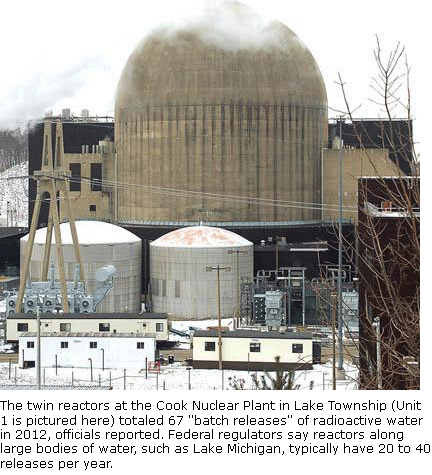 Release of nuclear plant ‘effluents’ into lake described as part of normal cycle Opinions differ on safety of practice Harbor Country News By Andrew Lersten July 17, 2013 COVERT — The May 5 release of about 80 gallons of slightly radioactive water from the Palisades nuclear power plant into Lake Michigan was unusual because it wasn’t planned.
But the incident brought into focus what many Southwest Michigan residents likely didn’t realize: The region’s two nuclear power plants (Palisades and the Donald C. Cook Plant in Lake Township) routinely discharge radioactive material into the air and into Lake Michigan.
In the nuclear industry, it’s called effluents. The federal Nuclear Regulatory Commission allows such releases, as long as they are closely monitored and do not exceed federal radiation release standards set in place by the NRC.
“Plants need to discharge small amounts of radioactive materials to operate,” said Jack Geissner, branch chief for the regional NRC office. Continue reading
How the IAEA negates true medical research on nuclear radiation
 The IAEA wants the people make believe, that the main effect of the atomic catastrophe is psychological.
The Nuclear Cancer inside of the United Nations, blog by Jan Hemmer, June 1, 2013 by Mikkai 妊娠中の日本人女性の避難す
22nd July 1946 – Creation of World Health Organiation (WHO)
10th December 1948 – The UN adopts the Universal Declaration of Human Rights.
July 1957 – Creation of International Atomic Energy Agency (IAEA)
28th May 1959 – Signing of the Agreement WHA 12-40 between WHO and IAEA.
The UN is divided into 7 organisations, of which two are of interest to us, the Economic and Social Council and the Security Council. The “Economic and Social Council” oversees ALL the United Nations agencies with the exception of the “IAEA”. In fact, the IAEA is the only agency that reports directly to the “Security Council” which is made up of representatives of 15 countries, of which 5 are permanent members of the Council : the United States, the Untied Kingdom, the Russian Federation, China and France. These 5 nations are all nuclear powers, both civil and military, and almost all are exporters of nuclear technology.
The 10 remaining members (or countries) have a mandate which lasts for 2 years.
The influence of these 5 permanent members of the Security Council on policy making within the IAEA is enormous and ongoing. With no counterbalancing power, it is almost impossible to claim that the IAEA has an objective view of the nuclear industry and the consequences of its use.
On 28th May 1959, the IAEA (not yet two years old !) and WHO signed an agreement referred to as “WHA 12-40” which, though it might, on paper, appear balanced and reciprocal, in practice, puts WHO in a subordinate position to the IAEA.
The IAEA wants the people make believe, that the main effect of the atomic catastrophe is psychological. This is made in these steps: Continue reading
Radiation sickness: what it is.
With a large enough dose of radiation, for instance, bone marrow will break down almost completely causing major problems with anemia and maintenance of the blood.
this problem is distinct from cancer as caused by radiation.
Geek Answers: What is radiation sickness and why does it happen? GEEK By Graham Templeton Aug. 15, 2013 Acute Radiation Syndrome, more commonly known as radiation sickness, is one of the scarier threats out there, since it’s born of a force we can neither see nor readily detect and its symptoms can be varied and hard to identify. It can range in severity from an upset stomach to a long, painful death, and it often attacks people literally from the inside out. It seems like an almost spooky threat, but there is some very simple science radiation sickness. Essentially, it comes down to the type of radiation that can alter the electrical structure of atoms in the body.

We call such radiation “ionizing radiation” because it carries enough kinetic energy to knock an electron off of an atom it hits, giving that atom a non-standard number of electrons, turning it into an ion. It generally takes quite a bit of energy to achieve this, and ionizing radiation is almost exclusively the result of large and violent events (both manmade and cosmic). A nuclear reactor produces ionizing radiation that must be filtered out with shielding around the core which can — in the event of a disaster — contaminate whole communities, like Chernobyl. Continue reading
Japan’s ghost towns , and the plight of the nuclear refugees
INSIGHT – JAPAN’S NUCLEAR CLEAN-UP: COSTLY, COMPLEX AND AT RISK OF FAILING YAHOO 7 NEWS, 15 AUG 13 BY SOPHIE KNIGHT “……Many have given up hope of ever returning to live in the shadow of the Fukushima nuclear plant. A survey in June showed that a third of the former residents of Iitate, a lush village famed for its fresh produce before the disaster, never want to move back. Half of those said they would prefer to be compensated enough to move elsewhere in Japan to farm.
Nuclear evacuees currently receive a living allowance from plant operator Tokyo Electric Power Co. (Tepco), which is cut off when the government decides they are able to move home again.
“I feel like some people don’t want to go back because they’re happy living off the compensation money from Tepco and they don’t want that to end,” said Hiroaki Inoue, an official from the Ministry of Economy, Trade and Industry spending a year working at the Kawauchi village office to monitor the spending of the reconstruction budget.
But some evacuees say it is unfair to cut off financial support when their previous homes and villages remain unliveable.
“There’s no jobs, no shops open, nothing. It’s become an incredibly difficult place to live and yet they’re saying ‘You can go home now’,” said a single mother evacuated from near Kawauchi, who declined to be named for fear of retribution from the authorities.
“It’s so unfair to say that. It’s not that simple.”
In Tomioka, a coastal ghost town north of the Fukushima plant, ambient radiation remains at 10 times the government’s target. Wild boar wander the streets.
“This could be fixed,” said Yokota on a recent visit. “They could get these levels right down. But the thing is, people didn’t come back quickly enough. That’s fatal.”
(Additional reporting by Antoni Slodkowski; Editing by Kevin Krolicki and Alex Richardson) http://au.news.yahoo.com/world/a/-/world/18506729/insight-japans-nuclear-clean-up-costly-complex-and-at-risk-of-failing/
US navy man attributes his sickness to Fukushima radiation
Paper: Navy sailor’s health melted down after exposure to Fukushima fallout — Now a shaking, withering patient unable to walk by himself — Lives of younger service members “at stake as well” — Doctors won’t give a diagnosis (PHOTOS) http://enenews.com/paper-navy-sailors-health-melted-down-after-exposure-to-fukushima-fallout-now-a-shaking-withering-patient-unable-to-walk-by-himself-lives-of-younger-service-members-at-stake-as-well-d
Title: Without medical diagnosis, Utah sailor lives in limbo
Source: Deseret News (Utah)
Author: Jed Boal,
Published: Aug. 14 2013 [...] Over the last 21 months, [Lt. j.g. Steve Simmons, who served on board the USS Ronald Reagan with the U.S. Navy during Fukushima crisis] said his health has melted down, too, and he’s not alone. […]
He believes he’s suffering from radioactive contamination […]
Since November of 2011 Lt. j.g. Steve Simmons has been sick. He believes he’s suffering from radioactive contamination, but doctors won’t give him a diagnosis. (Simmons Family via Deseret News)
After November 2011, Simmons said he went from being a fitness buff always up for a challenging hike to a shaking and withering patient who cannot walk on his own. He’s lost 25 pounds, down to 128 pounds, and lost 25 percent to 30 percent of his muscle mass.
“The muscle weakness has progressed to the point where he needs 24-hour care,” his wife said.
[…] doctors won’t provide a diagnosis, he said. […]
Simmons is not part of the lawsuit [150 former sailors and Marines suing Tepco].
He’s especially concerned about the younger sailors and Marines. “Their lives are at stake as well,” he said. […]
View photos of Lt. j.g. Simmons here
UPDATE: TV: Many U.S. sailors are suffering serious symptoms of radiation sickness after being contaminated during Fukushima nuclear disaster — USS Ronald Reagan was as close as a mile away
Delay in World Health Organisation reporting on causes of Iraq birth defects
In March 2013, BBC World broadcast a documentary on the story. As with other media reports, Born Under A Bad Sign visited the hospitals and spoke with parents and doctors – all of whom were convinced that the health problems they were witnessing were linked to the war.
Broadcast of the BBC report in March was followed by updates to the WHO’s FAQ. Gone was the petulant ‘No, absolutely not’ from the line on depleted uranium and the first of a series of procedural delays was announced as committees were formed and new analyses proposed. For campaigners seeking disclosure of the data as a first step towards focused research and humanitarian assistance in Iraq, the delays were worrying.
So how can civil society and individuals influence an organisation as monolithic and apparently compromised as the WHO? On the 31st July, Dr Al’aani launched an online petition through Change.org (with the associated twitter hashtag of #Act4Iraq) calling for the WHO to immediately publish the collected data for independent peer review, so that scientific conclusions can be drawn and the affected parents can finally understand what has happened to their children
Birth Defects: Did The Occupation of Iraq Leave a Toxic Legacy? http://www.newleftproject.org/index.php/site/article_comments/birth_defects_did_the_occupation_of_iraq_leave_a_toxic_legacy 6 Aug 13, During the occupation of Iraq, the city of Fallujah bore witness to some of the most intense US combat operations since Vietnam, with 2004’s OperationPhantom Fury widely condemned for its ferocity and disregard for international law.
Paediatrician Dr Samira Al’aani has worked in the city since 1997. In 2006 she began to notice an increase in the number of babies being born with congenital birth defects (CBD). Concerned, she began to log the cases that she saw. Through careful record keeping she has determined that at Fallujah General Hospital, 144 babies are now born with a deformity for every 1000 live births. This is nearly six times higher than the average rate in the UK between 2006 and 2010, and one strong suspicion is that contamination from the toxic constituents of munitions used by occupying forces could be the cause. (photo of Dr A;’aani by Donna Mulhearn)

Now a new nationwide study by the Iraqi Ministry of Health, in collaboration with the World Health Organisation, has the potential to catalyse efforts to understand and confront the issue, but only if science can be allowed to rise above politics. Continue reading
Chernobyl’s trees show radiation damage
 Chernobyl’s legacy recorded in trees By Mark Kinver Environment reporter, BBC News Exposure to radiation from the 1986 Chernobyl accident had a lasting negative legacy on the area’s trees, a study has suggested.
Researchers said the worst effects were recorded in the “first few years” but surviving trees were left vulnerable to environmental stress, such as drought.
They added that young trees appeared to be particularly affected.
Writing in the journal Trees, the team said it was the first study to look at the impact at a landscape scale.
“Our field results were consistent with previous findings that were based on much smaller sample sizes,” explained co-author Tim Mousseau from the University of South Carolina, US.
“They are also consistent with the many reports of genetic impacts to these trees,” he told BBC News.
“Many of the trees show highly abnormal growth forms reflecting the effects of mutations and cell death resulting from radiation exposure.”…… Prof Mousseau and his team hope to follow up this study by carrying out similar work in the Fukushima region in Japan, where logging also had considerable economic importance and pine trees were widely dispersed. http://www.bbc.co.uk/news/science-environment-23619870
Nuclear Test Ban Treaty aimed to protect world from radiation
 The Legacy of the Nuclear Test Ban Treaty, counterpunch by JOSEPH J. MANGANO and JANETTE D. SHERMAN, MD, 5 Aug 13, “…….The treaty is often referred to as a peace treaty, a step against nuclear war. While it was a goodwill gesture between hostile nations, it did nothing to prevent a war, since both sides continued to furiously test weapons underground and add to its already-large stockpiles. Only in the 1970s did non-proliferation treaties begin the process of cutting nuclear arsenals.
The 1963 test ban treaty was actually an environmental and public health action to reduce threats of deadly radiation, especially to the more susceptible infants and children. In a speech urging passage of the treaty, Kennedy – whose prematurely born son died that summer after living only 39 hours – made the case to prevent suffering among the youngest members of society:
“The number of children and grandchildren with cancer in their bones, with leukemia in their blood, or with poison in their lungs might seem statistically small to some, in comparison with natural health hazards. But this is not a natural health hazard, and it is not a statistical issue. The loss of even one human life, or the malformation of even one baby, who may be born long after we are gone, should be of concern to us all. Our children and grandchildren are not merely statistics toward which we can be indifferent.” Officials who had downplayed the idea that fallout was causing cancer and other diseases now told the truth. In October 1964, at a campaign stop in New Mexico, President Lyndon B. Johnson triumphantly told a cheering crowd:
“We cannot and will not abandon the test ban treaty to which I just referred, which is the world’s insurance policy against polluting the air we breathe and the milk we give our children.
Already that policy has paid off more than you will ever know, and since this agreement was signed and the tests stopped, the dread strontium-89 and iodine-131 have disappeared from the environment. The amount of strontium-90 and cesium-137 has already been, in a year, cut in half. This is technical language, but what it means is that we can breathe safely again.”
Johnson was correct. U.S. infant mortality had only dropped 13% in the 14-year period from 1951 to 1965, during bomb testing (the fallout peak was 1964). The next 14 years showed a decline of about 50% – the same 50% drop during the prior 14 year period. The years 1951-1965 had the poorest improvement in infant mortality during the 20th century. Cancer cases in children under age five in Connecticut, the only state with a cancer registry, plunged from 58 to 30 from 1963 to 1968. Years later, a 1999 report by the National Academy of Sciences estimated that up to 212,000 Americans developed thyroid cancer from radioactive iodine in bomb fallout. ….. http://www.counterpunch.org/2013/08/05/the-legacy-of-the-comprehensive-test-ban-treaty/

Fukushima’s radioactive leak now reaches emergency stage

Contaminated water could rise to the ground’s surface within three weeks, national newspaper Asahi Shimbun said on Saturday. Mr. Kinjo said the three-week timeline was not based on NRA’s calculations but acknowledged that if the water reaches the surface, “it would flow extremely fast.”
A Tepco official said on Monday the company plans to start pumping out a further 100 tonnes of groundwater a day around the end of the week.
Radioactive leak from crippled Japanese nuclear plant creating ‘emergency’ http://www.theglobeandmail.com/news/world/radioactive-leak-from-crippled-japanese-nuclear-plant-creating-emergency/article13602630/ ANTONI SLODKOWSKI AND MARI SAITO TOKYO — Reuters Monday, Aug. 05 2013 Highly radioactive water seeping into the ocean from Japan’s crippled Fukushima nuclear plant is creating an “emergency” that the operator is struggling to contain, an official from the country’s nuclear watchdog said on Monday.
This contaminated groundwater has breached an underground barrier, is rising toward the surface and is exceeding legal limits of radioactive discharge, Shinji Kinjo, head of a Nuclear Regulatory Authority (NRA) task force, told Reuters.
Countermeasures planned by Tokyo Electric Power Co. (Tepco), the utility that runs Fukushima, are only a temporary solution, he said.
Tepco’s “sense of crisis is weak,” Mr. Kinjo said. “This is why you can’t just leave it up to Tepco alone” to grapple with the ongoing disaster.
“Right now, we have an emergency,” Continue reading
Nuclear Reactor Decline Means Less Disease
The Legacy of the Nuclear Test Ban Treaty, counterpunch by JOSEPH J. MANGANO and JANETTE D. SHERMAN, MD, 5 Aug 13, “……… Health and safety concerns have plagued nuclear plants for decades. In the 1970s, orders for new reactors stopped as Wall Street investors halted loans for what they saw as poor investments with costly technical problems. However. in the past decade, industry executives promoted nuclear power as an alternative to greenhouse gas emitters (which is a falsehood, since huge amounts of fossil fuel carbon emitters are required to prepare uranium for use), but no new plants were built. The number of U.S. reactors held steady at 104 since 1998 – until earlier this year, when four reactors shut permanently. More closings are expected. Utility companies, facing plunging stock prices and profits, are now laying off workers to cut costs.
Executives claim that reactors are closing because of high costs, higher than other sources such as natural gas and wind power. The full explanation is that costs of these aging, corroding, and leaking units are high because of radiation dangers. Reactors require:
1. Complicated and expensive parts – to ensure dangerous radiation is contained and workers are not exposed
2. Many highly-trained staff – to ensure dangerous radiation is contained, including armed guards.
3. Complex security measures – to keep dangerous radiationaway from the general public and of course, terrorists
4. Replacement of aging, costly parts – to ensure dangerous radiation is contained.
The poor outlook for nuclear power is worldwide. Since the Fukushima disaster over two years ago, only two (2) of 54 reactors in Japan are operating; the others remain closed while safety upgrades are made. In the past few years, 8 of 17 German reactors closed, and the remainder will be shut by 2022. Switzerland has committed to closing its reactors, and Italy scrapped plans to build new ones.
From a health standpoint, reactor shut downs represent preventive health in its purest form, as known poisons are removed from the environment. Journal articles have shown that just two years after reactors closed, local rates of infant deaths and child cancers plunged. A recent study near the Rancho Seco reactor (closed 1989) in Sacramento County, California estimated there were 4,300 fewer cancer cases among county residents in the 20 years after shut down. These findings are similar to what happened nationwide after atmospheric nuclear weapons tests were banned.
The threats to health posed by fallout from bomb tests half a century ago are the same threats from the same radioactive fallout from nuclear reactors today. Bomb tests were banned, health improved, and few would consider resuming such tests. With 116 million Americans living within 50 miles of a nuclear reactor, history can repeat itself. Like the Test Ban Treaty, closing reactors can prove to be an act to improve health in America and worldwide.
Joseph J. Mangano MPH MBA is Executive Director of the Radiation and Public Health Project.
Janette D. Sherman MD is an internist and toxicologist, and editor of Chernobyl: Consequences of the Catastrophe for People and the Environment
http://www.counterpunch.org/2013/08/05/the-legacy-of-the-comprehensive-test-ban-treaty/
Bahrain to set up nuclear radiation monitoring centre
CENTRE TO MONITOR NUCLEAR RADIATION http://www.gulf-daily-news.com/NewsDetails.aspx?storyid=358742By Ahmed Al Omari , Tuesday, August 06, 2013
MANAMA: Bahrain may soon set up a nuclear radiation monitoring centre.
This comes amidst growing concerns over threats of a fallout from Iran’s disputed nuclear power plant at Bushehr, just 300km away from Bahrain, across the Gulf.
The GCC last month raised concerns about radiation leaks from the facility after a 6.3 magnitude earthquake hit Iran in April earlier this year, killing more than 60 people.
Supreme Council for Environment (SCE) director-general Dr Adel Al Zayani believes a National Centre for Radiation could be approved within a week – the National Disaster Committee is currently studying a SCE proposal in this regard.
He said the nuclear threat has become larger with neighbouring countries moving toward using atomic facilities for energy production.
Saudi Arabia has announced plans to set up 16 nuclear reactors within the next 20 years and two are already being built in the UAE.
Dr Al Zayani said the proposed centre is designed to become a resource for the field of radiation and to prevent local disasters if they occur regionally.
“The centre will give Bahrain a more dedicated and faster radiation warning and reporting system.”
The centre will also give training to Bahrainis in subjects such as nuclear physics..
Discovery of medical records of world’s first nuclear bomb radiation victim
 “The records are invaluable as those reporting in detail on changes in her health condition after she was exposed to a fatal level of radiation.”
Medical records of world’s first radiation victim from A-bomb recovered Asahi Shimbun, By YURI OIWA/ Staff Writer, 4 August 13,
Long-lost medical records detailing the sharply deteriorating health of the world’s first recognized radiation sickness patient have been
recovered 68 years after the victim died within weeks of being exposed to the atomic bomb in Hiroshima.
The patient, Midori Naka, a stage actress, died 18 days after she was injured in the nuclear blast on Aug. 6, 1945. She was staying in Hiroshima as part of a traveling theater troupe. After returning to Tokyo a few days later, Naka died while undergoing treatment, which included blood transfusions, at the University of Tokyo Hospital. She was 36.
The discovery came after decades of efforts by researchers to locate her missing records.The hospital kept updates of her condition leading up to her death and the results of her autopsy. But other vital records have been missing until their recent recovery.
Kazuhiko Maekawa, professor emeritus with the University of Tokyo who is expert in treating patients suffering from radiation exposure, hailed the discovery of Naka’s medical records. Continue reading
Israeli study on risks of electromagnetic radiation from cellphones
Put away that cellphone: Israeli study highlights cancer risk Researchers find evidence that changes leading to cell mutations are much more prevalent among heavy talkers By TIMES OF ISRAEL STAFF July 30, 2013 study by Tel Aviv University has shown, for the first time, a clear connection between cellphone use and higher risk of cancer.
Get The Times of Israel’s Daily Edition by email
and never miss our top stories FREE SIGN UP!
Although cellphones are generally regarded as potentially carcinogenic, scientific studies on the issue have been inconclusive until now, a report on the study posted Monday on Science Blog noted.
A study by Tel Aviv University has shown, for the first time, a clear connection between cellphone use and higher risk of cancer.
Get The Times of Israel’s Daily Edition by email
and never miss our top stories FREE SIGN UP!
Although cellphones are generally regarded as potentially carcinogenic, scientific studies on the issue have been inconclusive until now, a report on the study posted Monday on Science Blog noted.
The study waspublished in the scientific journal “Antioxidants and Redox Signaling.” The results, while dramatic, do not establish a direct relationship between cellphone use and cancer development among users, but rather open up new lines of research and establish a clear connection between long-term cellphone use and potentially detrimental side effects on health that can cause molecular changes that can lead to cancer.
In the study, researchers from TAU, Rabin Medical Center and the Technion studied the salivary glands of 20 long-term heavy cellphone users, defined as a mean of 12 years of 30 hours per week of use, and 20 deaf subjects who did not use cellphones or used them only for text messaging.
The researchers hypothesized that because cellphones are generally placed quite close to the salivary glands when used for calls, the effects on cancer risk could be determined by analyzing the saliva of users.
They found that compared to the non-users, the cellphone users’ saliva showed much higher indications of oxidative stress, a process which is regarded as a major risk factor for cancer………….
Human sperm damaged even by low doses of radiation
 Animal studies have shown serious consequences in the offspring when DNA-damaged sperm fertilizes the egg,
the genetic and epigenetic abnormalities observed in the sperm are serious concerns,” said Adiga.
Epigenetic abnormalities are abnormalities induced by the effect of environment on the expression (functioning) of genes, which in this study refers to the prolonged exposure to radiation.
Radiation exposure affects sperm quality: Study, Daijiworld Manipal, August 1 (IANS): Manipal, August 1 (IANS): Long-term exposure to radiation at the workplace may play havoc with your sperm quality, says new research by Indian medical scientists.
A team of fertility experts, led by Manipal University professor of clinical embryology Satish Adiga, analysed sperm quality of 83 men working for three to 18 years in diagnostic or radiation units at various hospitals.
The results were compared with 51 men, also working in hospitals with a similar lifestyle but not exposed to radiation, US journal Public Library of Science ONE reports.
The men’s semen quality was tested for sperm number, vitality, shape and its DNA quality. The amount of radiation absorbed by health workers was also correlated with sperm quality.
Manipal researchers found more abnormal characteristics in the sperm of men exposed to the radiation, such as decrease in sperm motility, altered shape and vitality. Continue reading
Radiation’s genetic effects
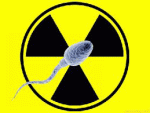 Radiation is Threatening The Formation of Sperm, Cancer Health Centre,
Nuclear radiation: nuclear radiation on the testis, the most powerful destructive effects can easily lead to male infertility. In the testis is the organ most sensitive organ to radiation is one of low doses of radiation are sufficient to significantly lower sperm quality, can cause temporary or even no sperm. 200 to 300 roentgen radiations can cause impaired spermatogenesis, 600 to 800 roentgen doses will enable the complete loss of spermatogenesis, loss of normal fertility.
- X-ray: Studies show that high-dose X-ray can cause sperm abnormalities, reducing the number of low quality, affecting germ cell genes, so that future generations have a serious genetic effects, which cause fetal malformations, miscarriage , premature delivery, mental retardation and so on.http://cancerlive.net/men-health/radiation-is-threatening-the-formation-of-sperm/
1 This Month

Protect Sazan Island from the Trump family! https://secure.avaaz.org/campaign/en/protect_sazan_island_from_the_trump_family_loc/?bqFCVab&v=174511&cl=22707147157&_checksum=5e9dde668860e8231c33699735e16a1fbf22ab2cb01da50c999fe8732b9775ef&utm_source=email&utm_medium=blast_email&utm_campaign=174511
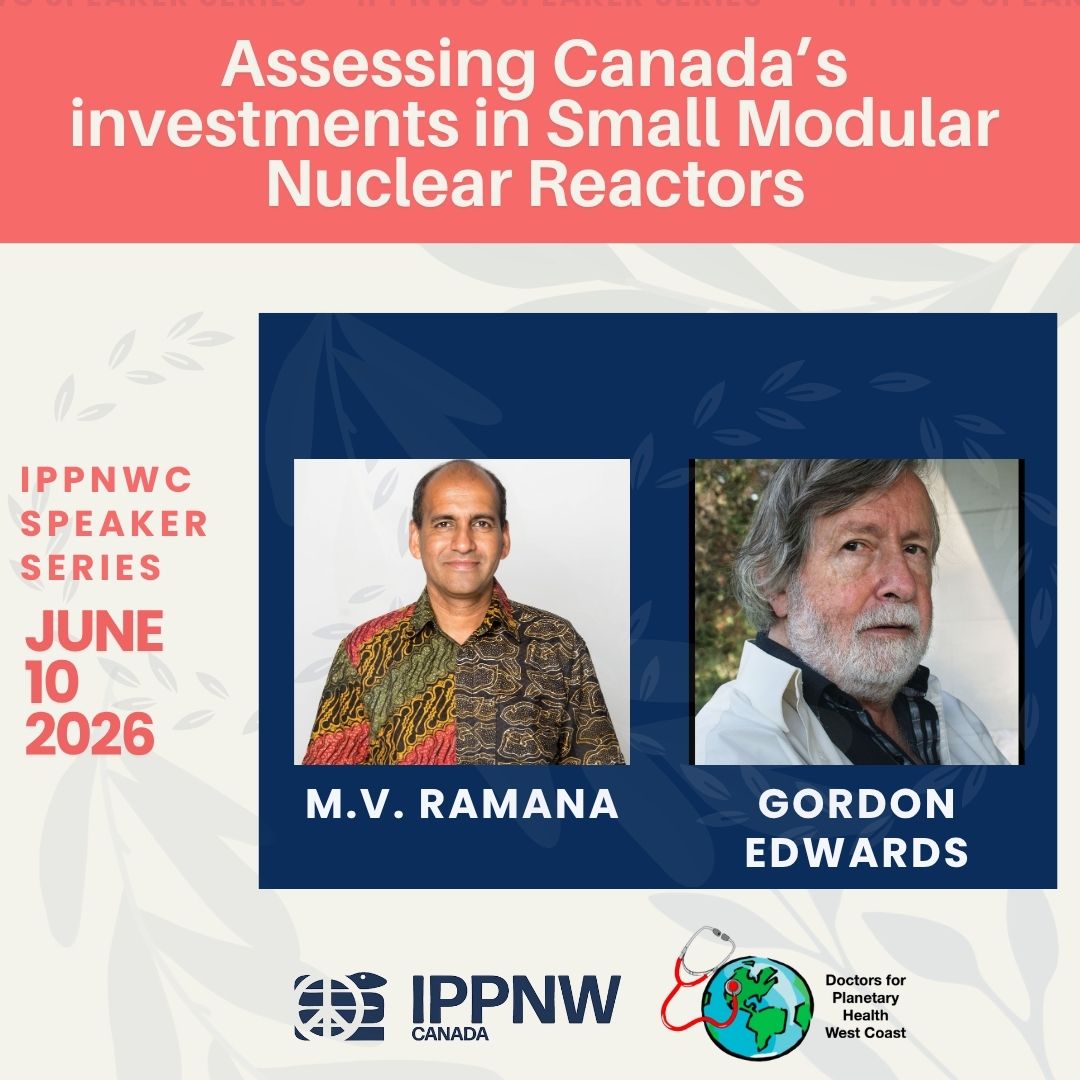
10 June – Assessing Canada’s Investments in Small Modular Nuclear Reactors – https://zoom.us/meeting/register/IiqHA5feRhaEBycOLNTJlA#/registration


Cuba Is Not a Failed State – It Is a Besieged State
PETITION: “Global Appeal to Endorse Palestinian Right of Return of Refugees”
To see nuclear-related stories in greater depth and intensity – go to https://nuclearinformation.wordpress.com
-
Archives
- June 2026 (89)
- May 2026 (306)
- April 2026 (356)
- March 2026 (251)
- February 2026 (268)
- January 2026 (308)
- December 2025 (358)
- November 2025 (359)
- October 2025 (376)
- September 2025 (257)
- August 2025 (319)
- July 2025 (230)
-
Categories
- 1
- 1 NUCLEAR ISSUES
- business and costs
- climate change
- culture and arts
- ENERGY
- environment
- health
- history
- indigenous issues
- Legal
- marketing of nuclear
- media
- opposition to nuclear
- PERSONAL STORIES
- politics
- politics international
- Religion and ethics
- safety
- secrets,lies and civil liberties
- spinbuster
- technology
- Uranium
- wastes
- weapons and war
- Women
- 2 WORLD
- ACTION
- AFRICA
- Atrocities
- AUSTRALIA
- Christina's notes
- Christina's themes
- culture and arts
- Events
- Fuk 2022
- Fuk 2023
- Fukushima 2017
- Fukushima 2018
- fukushima 2019
- Fukushima 2020
- Fukushima 2021
- general
- global warming
- Humour (God we need it)
- Nuclear
- RARE EARTHS
- Reference
- resources – print
- Resources -audiovicual
- Weekly Newsletter
- World
- World Nuclear
- YouTube
-
RSS
Entries RSS
Comments RSS
 nuclear-news