Why did Canadian government stop testing seafoods for radioactive contamination?
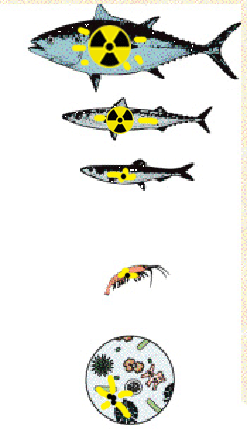
 School Science Project Reveals High Levels Of Fukushima Nuclear Radiation in Grocery Store Seafood Investment Watch By Michael Snyder March 27th, 2014 A Canadian high school student named Bronwyn Delacruz never imagined that her school science project would make headlines all over the world. But that is precisely what has happened. Using a $600 Geiger counter purchased by her father, Delacruz measured seafood bought at local grocery stores for radioactive contamination. What she discovered was absolutely stunning. Much of the seafood, particularly the products that were made in China, tested very high for radiation. So is this being caused by nuclear radiation from Fukushima? Is the seafood that we are eating going to give us cancer and other diseases? The American people deserve the truth, but as you will see below, the U.S. and Canadian governments are not even testing imported seafood for radiation. To say that this is deeply troubling would be a massive understatement.
In fact, what prompted Bronwyn Delacruz to conduct her science project was the fact that the Canadian government stopped testing imported seafood for radiation in 2012…
Alberta high-school student Bronwyn Delacruz loves sushi, but became concerned last summer after learning how little food inspection actually takes place on some of its key ingredients.
The Grade 10 student from Grande Prairie said she was shocked to discover that, in the wake of the 2011 Fukushima nuclear disaster in Japan, the Canadian Food Inspection Agency (CFIA)stopped testing imported foods for radiation in 2012.
And what should be a major red flag for authorities is the fact that the seafood with the highest radiation is coming from China… Armed with a $600 Geiger counter bought by her dad, Delacruz studied a variety of seafoods – particularly seaweeds – as part of an award-winning science project that she will take to a national fair next month.
“Some of the kelp that I found was higher than what the International Atomic Energy Agency sets as radioactive contamination, which is 1,450 counts over a 10-minute period,” she said. “Some of my samples came up as 1,700 or 1,800.”
Delacruz said the samples that “lit up” the most were products from China that she bought in local grocery stores.
It is inexcusable that the Canadian government is not testing this seafood. It isn’t as if they don’t know that it is radioactive. Back in 2012, the Vancouver Sun reported that cesium-137 was being found in a very high percentage of the fish that Japan was selling to Canada…
• 73 percent of the mackerel
• 91 percent of the halibut
• 92 percent of the sardines
• 93 percent of the tuna and eel
• 94 percent of the cod and anchovies
• 100 percent of the carp, seaweed, shark and monkfish
So why was radiation testing for seafood shut down in Canada in 2012?
Someone out there needs to answer some very hard questions……..http://investmentwatchblog.com/school-science-project-reveals-high-levels-of-fukushima-nuclear-radiation-in-grocery-store-seafood/
Rushed to hospital – more Hanford nuclear workers get sick
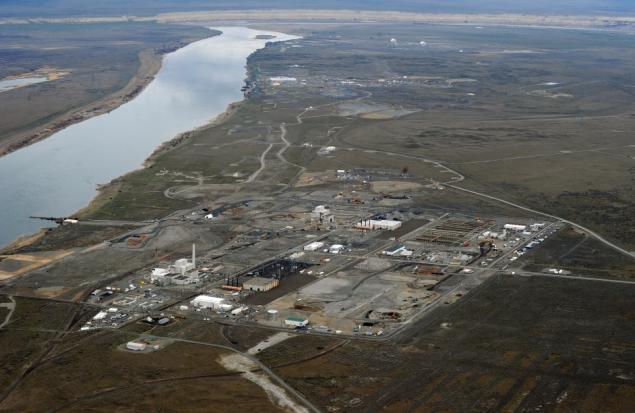 TV: More workers rushed to hospital at U.S. nuclear site — 17 sickened in past week — Former Employee: “It’s pretty scary… to have this many in 8 days is really abnormal” — Company: We’re trying to understand what’s happening (VIDEO) http://enenews.com/tv-more-workers-rushed-to-hospital-at-u-s-nuclear-site-now-17-workers-sickened-in-past-week-former-employee-its-pretty-scary-to-have-this-many-in-8-days-is-really-abnormal-c?utm_source=feedburner&utm_medium=email&utm_campaign=Feed%3A+ENENews+%28Energy+News%29
KING 5 News Seattle, Mar. 26, 2014: Hanford workers sickened by unknown vapors rises to 17— The KING 5 Investigators have found that six Hanford workers were sickened Wednesday from ingesting chemical vapors at the nuclear facility. […] This brings the total to 17 Hanford employees who have needed medical care since last Wednesday due to the inhalation of toxic vapors. […] “Data collection and analysis is underway in the affected (tank) farms to understand what happened and what might be done to reduce the likelihood of future occurrences,” said [Jerry Holloway, External Affairs Manager at U.S. Dept. of Energy’s contractor Washington River Protection Solutions]. […] The incident Wednesday occurred in yet another location at the Hanford site […] Sources tell the reporter 17 people were working on the video inspection when three were suddenly sickened by the release of vapors.
Mike Geffre, retired WRPS employee who spent 26 years at Hanford: “It’s pretty scary. It doesn’t usually happen like this. Usually you see four or five a year. But to have this many in eight days is really abnormal […] Whenever you hear of someone getting tank vapors, you never know what the long term affects are. The affects of exposures like this can show up as health problems years down the road.”
KING 5 News transcript The King 5 investigators learned that workers at the Hanford Nuclear Reservation have been rushed to the hospital. […] I was in Richland doing an interview on this very topic […] during that interview we got word from sources that right at that time that 3 more employees were either going to the hospital here or taken to the onsite medical facility at Hanford because of another such incident […] In those three separate incidents the workers were all at different locations at Hanford, so this isn’t just one problem area where they’re seeing a repeat problem. […] Obviously, workers are concerned, feel there’s a problem here, and they want their employer and the Department of Energy to do something about it.
Ocean radiation soon to reach USA’s West Coast
Scientists Expect Traces of Ocean Radiation Soon Science Tech By Jeff Barnard
The March 2011 tsunami off Japan flooded the Fukushima Dai-Ichi nuclear plant, causing radiation-contaminated water to spill into the Pacific. Airborne radiation was detected in milk and rainwater in the U.S. soon afterward. Now, scientists are using a network of volunteers to measure radiation at beaches along the U.S. West Coast. Continue reading |
|||

Toxicologist finds high levels of cancer caused by uranium in water
 SA toxicologist’s study says higher uranium causes cancers in Malwa http://timesofindia.indiatimes.com/city/chandigarh/SA-toxicologists-study-says-higher-uranium-causes-cancers-in-Malwa/articleshow/32114888.cms Neel Kamal,TNN | Mar 16, 2014 FARIDKOT: Excessive presence of uranium in water in the Malwa region of Punjab is turning out disastrous for the residents of rural areas and is giving birth to cancer, neurological and birth abnormality. Taking leads from her study on the subject, South African clinical metal toxicologist Dr Carin Smit has confirmed that excess prevalence of uranium in human bodies is the biggest reason of cancer in Malwa region of Punjab. The Union and state government in the past had negated the affect of uranium in cancer incidence. Dr Smit had obtained hair samples of 149 children with deformities in 2009 and urine samples in 2010 and had sent these to Micro Trace mineral laboratory in German where it was established that excess prevalence of uranium has caused deformities. These children are being treated at Faridkot. As per Bhabha Atomic Research Center (BARC), the uranium level here have reached up to 1000 parts per billion(ppb) against permissible limit of 15ppb, she said.
 While visiting Baba Farid Centre for Special Children on Saturday, Dr Smit based her submission on a study carried out in Finland in the past and said, “Uranium toxicity is much more there as compared to Malwa region of Punjab but spray of fertilizers is filtered and eating habits are much more safe there, but in Punjab the use of fertilizers, pesticides is at much higher levels, which is leading to cancer and deformities among persons.”
Dr Carin finds faults in the state approach in tackling such an important issue with grave seriousness. She said, “Desiring to conduct a full study to establish excess uranium presence leading to cancer incidence, I had written to Punjab government in 2013 to provide infrastructure to conduct the study with Japanese scientists but an still waiting the government response.” Claiming that presently Punjab is passing through a bad phase on health and environment front, she accused the state government of not being serious to tackle the issue. She said despite knowing the seriousness of the issue, the state government is doing nothing to provide respite to people. “Though courts are serious but the governments are not and Punjab government is not providing proper findings to the court in one petition related to uranium giving birth to cancer in the state,” said Dr Pritpal singh and Amar Singh Azad of Baba Farid centre.
She said a study published recently in a research journal titled ‘Comparing metal concentration in the hair of cancer patients and healthy people living in Malwa region of Punjab’ by scientists from USA and Germany too had mentioned higher toxicity as reason for cancer.
The role of genes in susceptibility to ionising radiation
 Genes Determine People’s Susceptibility to Radiation, Prison Planet, Washington’s Blog March 10, 2014
 Children are much more vulnerable to radiation than full-grown adults.
And yet standards for “acceptable” levels of radiation exposure are based on the ridiculous assumption that everyone is a healthy man in his 20s … and that radioactive particles ingested into the body cause no more damage than radiation hitting the outside of the body.
Similarly, there is a lot of variation between adults in terms of susceptibility to radiation.
For example, Howard Hughes Medical Institute – the second-best endowed medical research foundation in the world – reported in 2009:
Howard Hughes Medical Institute researchers have identified a group of genes that influence a person’s sensitivity to radiation……..
he most widely-accepted and prestigious publication on radiation – the U.S. National Academy of Science’s 2006 report on Health Risks from Exposure to Low Levels of Ionizing Radiation: BEIR VII Phase 2 – includes an 11-page discussion on genetic vulnerability to radiation, concluding:
At the level of whole populations it is feasible that certain inherited combinations of common low-penetrance genes can result in the presence of subpopulations havingsignificantly different susceptibilities to spontaneous and radiation-associated cancer.
***
The key issue is … the extent to which genetic distortion of the distribution of this risk might lead to underprotection of an appreciable fraction of the population.
While the commonly-accepted, mainstream scientific consensus is that even low levels of radiation can cause cancer and other injury, governments world-wide have reacted to the Fukushima crisis byraising “acceptable” radiation levels. And see this.
http://www.prisonplanet.com/genes-determine-peoples-susceptibility-to-radiation.html
USA Veterans’ Affairs finally admit nuclear veteran’s radiation-caused cancer
WWII vet exposed to radiation wins fight with VA http://www.sfgate.com/bayarea/article/WWII-vet-exposed-to-radiation-wins-fight-with-VA-5173107.php Kevin Fagan , January 24, 2014 MILLBRAE – John Brenan rolled his Jeep into freshly bombed Hiroshima in 1945 on a reconnaissance mission to see if there was any enemy left to fight. The only enemy the Army sergeant found in the miles of rubble pulverized by America’s atomic attack was the one he couldn’t see – radiation.
The fallout surrounded his body, and that is almost surely why he got colon cancer four decades later, his doctors told him. Brenan managed to beat the disease, but then came the follow-up battle – filing a disability claim with the U.S. Department of Veterans Affairs.
It took until last week for him to win that battle. And victory only came with the help of a member of Congress. Continue reading
Authorities carefully do not record the harm that uranium mining does to communities
There are few studies to verify the impacts of radiation poisoning on communities because no one with power will fund them, and those impacted are unable to fight corrupt politicians and corporations on their own because they’re poor, isolated, sick, or dead. It apparently doesn’t matter anyway because our County Commissioners and other uranium advocates disregard facts and personal experience as “anecdotal evidence.”
 Uranium mining decimates economies and communities Post Independent Citizen Telegram, Robyn Parker, 23 Jan 14 On Jan. 14, Mesa County Commissioners unanimously voted to permit a uranium mine near Gateway Canyons Resort and John Brown Road, a popular public lands access route. They argued that uranium mining will create a new tourism and recreation industry. Commissioner Justman explained how New Yorkers will appreciate an opportunity to brag to their friends about seeing a real uranium mine.
“How cool would that be?” he asked.
As a person who grew up in a community so contaminated by the uranium industry that the area was declared a Superfund site shortly before I graduated from high school, I can’t help but disagree with Mr. Justman and say it wouldn’t be cool at all. Virtually every point made at the permit hearing last week in favor of a new Mesa County uranium mine should have been used as argument to deny the permit, yet Commissioners perceived those weaknesses as assets. Continue reading
The harsh facts on U.S.S. Reagan’s sailors affected by Fukushima radiation
Is Nuclear Experimentation Fascism? OpEdNews 1/22/2014 By Ethan Indigo Smith (about the author) “…the crew of the U.S.S. Reagan. The U.S.S. Reagan was exposed to radiation after being redirected towards Japan to provide support immediately after the massive Tōhoku earthquake and tsunami off the coast of Japan.
According to an article in the New York Post, Senior Chief Michael Sebourn, a radiation-decontamination officer who tested the aircraft carrier for radiation found that “levels were incredibly dangerous and at one point, the radiation in the air measured 300 times higher than what was considered safe.” The article continues: “The former personal trainer has suffered a series of ailments, starting with severe nosebleeds and headaches and continuing with debilitating weakness” has lost 60 percent of the power in the right side of his body and his limbs have visibly shrunk.” As Senior Chief Michael Sebourn stated, “I’ve had four MRIs, and I’ve been to 20 doctors” No one can figure out what is wrong.” He has since retired from the Navy after 17 years of service.
And he is not alone. According to The Post, “crew members on the aircraft carrier and a half-dozen other support ships are battling cancers, thyroid disease, uterine bleeding and other ailments.” Of the 5,000 sailors on board, at least 70 have contracted some form of radiation sickness, and of those, “at least half” are suffering from some form of cancer,” said lawyer, Paul Garner, who is representing the sailors in a lawsuit against the operators of the Fukushima Daiichi energy plant. “We’re seeing leukemia, testicular cancer and unremitting gynecological bleeding requiring transfusions and other intervention,” said Garner.
In a Voice of Russia report, Mr. Garner elaborated: “it seems that there’s too many people at the same place at the same time without any family background or any reason to believe that they had these issues to now show up with these significant cancers and beyond. So we feel that time will tell in many instances”. especially, because they all had physicals and were all in top health.”
Navy sailor Lindsay Cooper, who was also present on the U.S.S. Reagan, stated that crew members suffered from excruciating diarrhea at the time. “People were s-“-tting themselves in the hallways,” Cooper recalled. “Two weeks after that, my lymph nodes in my neck were swollen. By July, my thyroid shut down.”
When asked about the U.S.S. Reagan’s ability to detect radiation early, sailor Cooper stated “we have a multimillion-dollar radiation-detection system, but” it takes time to be set up and activated”. She went on to describe that after being exposed, “we couldn’t go anywhere. Japan didn’t want us in port, Korea didn’t want us, Guam turned us away. We floated in the water for two and a half months” until Thailand took the stricken sailors in……..http://www.opednews.com/articles/Is-Nuclear-Experimentation-by-Ethan-Indigo-Smith-Fukushima_Nuclear-Cover-up_Nuclear-Meltdown_Nuclear-Waste-140122-627.html
Advice to cardiologists to reduce radiation exposure
Cardiologists urged to reduce inappropriate radiation exposure, Medical Press 8 Jan 14 Cardiologists are being urged to reduce patient radiation exposure in a European Society of Cardiology (ESC) position paper which outlines doses and risks of common cardiology examinations for the first time. The paper is published today in the European Heart Journal.
Lead author, Dr Eugenio Picano, FESC, said: “Cardiologists today, are the true contemporary radiologists. Cardiology accounts for 40% of patient radiology exposure and equals more than 50 chest X-rays per person per year.”
He added: “Unfortunately, radiation risks are not widely known to all cardiologistsand patients and this creates a potential for unwanted damage that will appear as cancers, decades down the line. We need the entire cardiology community to be proactive in minimising the radiological friendly fire in our imaging labs.”
The paper lists doses and risks of the most common cardiology examinations for the first time. Computed tomography (CT), percutaneous coronary intervention (PCI), cardiac electrophysiology and nuclear cardiology deliver a dose equivalent to 750 chest X-rays (with wide variation from 100 to 2,000 chest X-rays) per procedure. These procedures are performed daily in all cardiology in- and out-patient departments, usually more than one procedure per admission. They are used for all forms of cardiac disease, from congenital to heart failure, but more intensively and frequently for ischemic heart disease.
PCI for dilation of coronary artery stenosis totals almost 1 million procedures per year in Europe. The additional lifetime risk of fatal and non-fatal cancer for one PCI ranges from 1 in 1000, to 1 in 100 for a healthy 50 year old man. Risks are 1.38 times higher in women and 4 times higher in children. Children’s higher risk is because their cells divide more quickly and they have more years in which to develop cancer.
Dr Picano said: “Even in the best centres, and even when the income of doctors is not related to number of examinations performed, 30 to 50% of examinations are totally or partially inappropriate according to specialty recommendations. When examinations are appropriate, the dose is often not systematically audited and therefore not optimised, with values which are 2 to 10 times higher than the reference, expected dose.”
The paper aims to reduce the unacceptably high rate of inappropriate examinations and reduce excessive doses in appropriate examinations. Dr Picano said: “In these hard economic times, 50% of the costly and risky advanced imaging examinations we do are for inappropriate indications. Politicians’ top priority should be to audit and cut down on useless and dangerous examinations.”…….http://medicalxpress.com/news/2014-01-cardiologists-urged-inappropriate-exposure.html
Why is USA government stocking up on potassium iodide pills?
Fukushima Anti-Radiation Pills? US Government Official Hangs Up When Asked About Potassium Iodide Purchase Department of Health and Human Services rep. says “no hidden agenda” behind 14 million dose buy By Paul Joseph Watson Global Research, January 03, 2014 An official with the Department of Health and Human Services hung up when asked if the federal government’s purchase of 14 million doses of potassium iodide was linked to the Fukushima crisis. As we reported earlier this week, the DHHS put out a solicitation asking for companies to supply 700,000 packages each containing 20 pills to be delivered before the beginning of next month.
Potassium Iodide helps block radioactive iodine from being absorbed by the thyroid gland and is used by victims of severe nuclear accidents or emergencies.
Questions immediately arose as to whether such a large purchase was routine or if it was linked to concerns about radiation from the crippled Fukushima nuclear plant impacting the west coast of America……..
Is the government’s purchase of 14 million doses of anti-radiation pills merely a routine order, or are they stockpiling potassium iodide in preparation for a nuclear catastrophe which could emerge out of the Fukushima crisis? Either way, the DHHS doesn’t seem too keen on answering questions………..http://www.globalresearch.ca/government-official-hangs-up-when-asked-about-iodide-purchase/5363630
Gloom of Fukushima’s ghost areas
Fukushima ghost towns struggle to recover amid high radiation levels Post-tsunami reconstruction and radiation cleanup could take 10 years, but officials say something has been permanently lost Simon Tisdall in Namie The Guardian, Thursday 2 January 2014 Nearly three years after a major earthquake, tsunami and nuclear radiation leak devastated coastal and inland areas of Japan’sFukushima prefecture, 175 miles north-east of Tokyo, Namie has become a silent town of ghosts and absent lives.
Namie’s 21,000 residents remain evacuated because of continuing high radiation levels, the product of the March 2011 disaster at the Fukushima Daiichi nuclear power station, six miles to the south. Homes, shops and streets are deserted except for the occasional police patrol or checkpoint…..
Namie is nobody’s town now. Nobody lives here, and nobody visits for long. Even the looters have stopped bothering, and no one knows exactly when the inhabitants may be allowed to return permanently – or whether they will want to.
The 2011 catastrophe faded from world headlines long ago, but in Namie, Tomioka, Okuma, Futaba and other blighted towns in the 20-mile evacuation zone around the Fukushima plant, it is a disaster that never ends……..
For Fukushima’s displaced population, the effects of the disaster continue to be deeply felt. The evacuation area was subdivided earlier this year into three zones of higher or lower radiation risk. In the worst affected zone, return will not be allowed before 2017 at the earliest.
In other areas, families and businesses face difficult decisions about whether or not to go back. At present, no one is even allowed to stay overnight. Locals say that whatever happens, many younger people will not return.
There is little or no trust in official pronouncements, given the failure of the Fukushima Daiichi operator, Tokyo Electric Power Company (Tepco), to take adequate measures to protect the plant against the tsunami and the company’s unimpressive post-disaster record.
There are suspicions that the government knows some towns may never be safe to live in again, but refuses to admit it in order to protect Japan’s unpopular nuclear power industry. There is also a sense that Fukushima’s victims have been forgotten……Nobody has died directly as a result of the nuclear disaster, but a close eye is being kept on the incidence of thyroid cancer in children, following the experience of Chernobyl…….
Tetsurou Eguchi, the deputy mayor of Minamisoma City, said the radiation-related cleanup was likely to take another five to six years and could cost as much as ¥350bn (£2bn), much of which would come from the national government. Post-tsunami reconstruction would take up to 10 years. But something intangible had been permanently lost, he said. “When it comes to the economy, and individual and social life, it is very difficult to recover this, compared with how it used to be.”
The most challenging problem, he said, was decontamination. “Basically [the radioactive fallout] is not in the air any more. It’s in the soil.” The area was dependent economically on small businesses, agriculture, fishing and tourism, including the famous annual Soma Nomaoi samurai festival, he said. All had been seriously affected…….
“I don’t think Fukushima is fully supported by the whole country. And that’s what the citizens here think.” http://www.theguardian.com/environment/2014/jan/01/fukushima-ghost-towns-high-radiation-levels-tsunami
The sinister biological effects of uranium inside our bodies
Uranium – the ‘demon metal’ that threatens us all, Ecologist, Chris Busby, 1st January 2014 Fatally flawed – the concept of ‘dose’ “………..We can go back now and ask about the health effects following the Hiroshima bombs. The increase in cancer in the group of Japanese survivors has been and still is the foundation of the current radiation risk model. Of course, the cancers have been correlated with the radiation dose, a huge acute sudden gamma ray dose from the A-bomb.
But what if ‘dose’ is not the correct quantity to predict or explain the cancers? What if the internal exposures to the fallout caused much bigger effects?
Then the ‘control group’, those who were not there at the time of the detonation would also be affected, and the differential cancer yield based on ‘dose’ would be meaningless. There is recent interest in this and in the link between the ‘black rain’ and the cancers.
I jump now to France in 2010 where I am at a big meeting on radiation and health at the University of Paris Sud. I talk with Dr Irina Guseva Canu who has spent several years studying the French Uranium workers. She can’t get her results published, could she cite me as a referee to the journals?
When her findings finally appear in the literature in a rather diluted form they show that the Uranium workers suffer excess risk of leukemia and lymphomas, and also heart disease.
The ‘doses’ are very low, but are not given, though by a forensic analysis of her three papers, they can be deduced. On the basis of the current risk model they are 2,500 times too small to account for the cancers.
There is plenty of other published work that points to the dangers of Uranium exposures, mainly from inhalation of dust particles. There is chromosome analysis of Gulf War Veterans, of New Zealand Test veterans, and of Uranium workers in Namibia. There are laboratory studies of genetic and genomic effects in cell cultures, and there are the cancer rates in North Carolina by Uranium content in soils.
How did the experts get it so wrong?
Apart from the ‘skullduggery argument’, here is a possible answer. There are two things about Uranium which were known since the 1960s but not assembled into a health hazard argument.
Perhaps because of the agreement signed between the WHO and the IAEA in 1959. Perhaps because the scientists in the area were mainly physicists and not interested in the biology of internal exposures. Who knows? Maybe no-one thought of it.
First, Uranium has enormous chemical affinity for DNA and binds to chromosomes. This was discovered in 1961 and ever since then Uranyl salts have been the electron-microscope stain of choice for imaging.
The reason they create such clear, sharp images is that Uranium has the highest atomic number (92) of any natural element. Its 92 electrons block the passage of the electron microscope beam.
But that’s not all they do. They also block gamma rays. The absorption of gamma radiation (natural background radiation) by any element is proportional to roughly the fifth power of the atomic number Z .
So clearly Uranium (like lead (Z = 82), but considerably more so) blocks the passage through the body (the oxygen in water has Z=8) of background gamma radiation.
Uranium in tissues acts as a gamma ray damage multiplier
The energy from the gamma rays, absorbed by the Uranium, is therefore converted into fast photoelectrons – and these smash through the nearest tissue. And of course, the nearest tissue is the DNA in the chromosomes and in mitochondria or any other tissue that the Uranium is bound to.
This idea, as an explanation for all the anomalous biological effects of Uranium was advanced by me first in the CERRIE conference in 2004 and next in a series of papers and reports from various conferences, and an outline can be found on the web. The theory was also reported in New Scientist in 2008 in How war debris could cause cancer.
So if you have Uranium inside you, a lot of it is on the DNA (nuclear scientists say its on the phosphate in the bones, but DNA is phosphate also). And it then acts as an antenna sitting on the DNA – converting background radiation into photoelectrons which smash up the chromosomes like an egg whisk.
Note that to do this the Uranium does not need to be radioactive – just to have a very heavy nucleus with a high atomic number. Of course all isotopes of Uranium are radioactive as well, but the main natural isotopes, U-238 and U-235, are only mildly so. Their health impacts are far, far greater than can be accounted for by its own emissions of radiation.
Hence the chromosome damage found in the miners, the test veterans and the Gulf veterans and the Chernobyl liquidators, all disproportionate by large multiples to their radiation doses…….http://www.theecologist.org/News/news_analysis/2205213/uranium_the_demon_metal_that_threatens_us_all.html
5,000 children at grave risk of cancer from Fukushima radiation
Impact of Fukushima radiation disaster: 5,000 kids could be diagnosed with cancer – scientist http://voiceofrussia.com/2013_12_26/Impact-of-Fukushima-radiation-disaster-5-000-kids-could-be-diagnosed-with-cancer-scientist-1163/ Slowly, the world is waking up to the realities of Japan’s nuclear catastrophe: this disaster is real. USS Reagan and Fukushima cancer levels are miles above comparative levels. Anna Sablina, cancer researcher, Assistant Professor of the University of Leuven and group leader of Flanders Institute of Biotechnology, discussed the impact of Fukushima disaster in an interview with the VoR. Continue reading
A family’s health wrecked by Fukushima nuclear radiation
Fukushima Mother: ‘Strange smell’ at start of nuclear disaster — Health of entire family has deteriorated — More people who stayed have died, more kids have leukemia and cancer — All our thyroid exams turned out totally different when tested in Tokyo (VIDEO) http://enenews.com/fukushima-mother-strange-smell-at-start-of-nuclear-disaster-health-of-entire-family-has-deteriorated-more-people-who-stayed-have-died-more-kids-have-leukemia-and-cancer-all-our-thy
Mother speaking at Fukushima Collective Evacuation Trial Team press conference on Dec. 4, 2013, transcribed by Kiiko and translated by Fukushima Voice, Published Dec. 22, 2013:
[…] I still remember how it was very hard for me and my children to breathe due to strange smell […] Every day the government and specialists said […] “There is no immediate health effect.” […] we ate local vegetables and drank tap water. […] I began to have dry coughs of unknown etiology. When I went to a hospital, I was told “An increasing number of people had the same symptom.” […] My son [and] many others around us, at all ages, also complained of bone pain in the soles of their feet. […] Health of all the family members quickly deteriorated during the period awaiting evacuation. […] My dry cough got so bad to the point of nearly choking in the middle of the night […] arm bone pain was so bad that I could barely open and close doors. […] My grade school age son continued to have nausea and headache […] they found blood in his urine […] he often had diarrhea. I also began to have continuing nausea, headache and diarrhea. […] my son’s blood pressure had gone down to 82/50. […] [We] went to a hospital in Tokyo for thyroid examination. […] all of us had results which were totally different from the results in Fukushima [son diagnosed with thyroid adenomatous goiter and lymphadenopathy with over 10 lymph nodes involved]. When I took him to a hospital in Yamanashi, he was diagnosed with “autonomic nervous system disorder.” […] More people who remained in Fukushima are suffering from the same symptoms as mine. More people have died. There are more children who got leukemia, who began to have bloody noses and who have thyroid cancer. […]
Watch the press conference here
Upfront pack of lies about “background radiation”
 What people call “background” radiation is really the amount of radiation deposited into the environment within the last 100 years from nuclear tests and nuclear accidents (and naturally-occurring substances, such as radon).
Unless the government or nuclear scientists measure and share their data, we are in the dark as to what’s really going on.
Fukushima: Wave of Radiation Will Be Ten Times Bigger than All of the Radiation from Nuclear Tests Combined http://www.globalresearch.ca/fukushima-wave-of-radiation-will-be-ten-times-bigger-than-all-of-the-radiation-from-nuclear-tests-combined/5362422
Putting Fukushima In Perspective
There was no background radioactive cesium before above-ground nuclear testing and nuclear accidents started.
Wikipedia provides some details on the distribution of cesium-137 due to human activities: Continue reading
1 This Month

petition to oppose the rapid increase of space-military industry threatening Jeju Island and the region.
[Petition by April 19th (KST)] Stop the joint military-Hanwha Systems-Jeju Provincial Government Sea Launch!
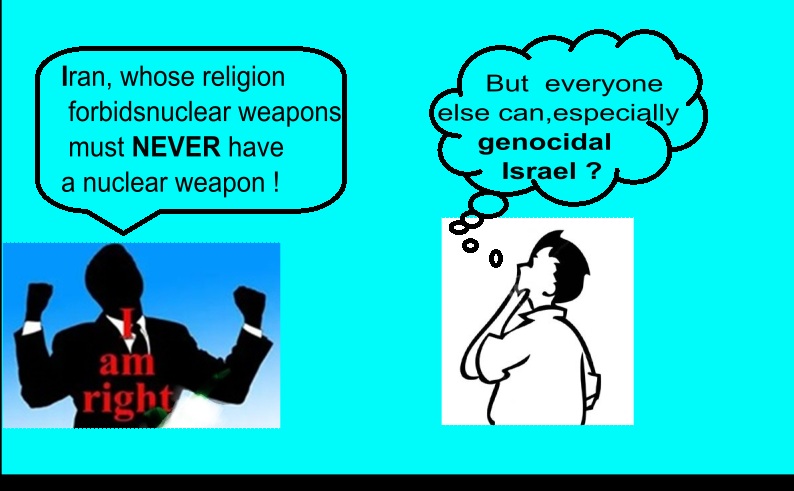
Chernobyl: The Lost Tapes – A good documentary on Chernobyl on SBS available On Demand for the next 3 weeks– https://www.sbs.com.au/ondemand/tv-program/chernobyl-the-lost-tapes/2352741955560

of the week–London Campaign for Nuclear Disarmament

Tell the Ukrainian Government to Drop Prosecution of Peace Activist Yurii Sheliazhenko
To see nuclear-related stories in greater depth and intensity – go to https://nuclearinformation.wordpress.com
-
Archives
- April 2026 (194)
- March 2026 (251)
- February 2026 (268)
- January 2026 (308)
- December 2025 (358)
- November 2025 (359)
- October 2025 (376)
- September 2025 (257)
- August 2025 (319)
- July 2025 (230)
- June 2025 (348)
- May 2025 (261)
-
Categories
- 1
- 1 NUCLEAR ISSUES
- business and costs
- climate change
- culture and arts
- ENERGY
- environment
- health
- history
- indigenous issues
- Legal
- marketing of nuclear
- media
- opposition to nuclear
- PERSONAL STORIES
- politics
- politics international
- Religion and ethics
- safety
- secrets,lies and civil liberties
- spinbuster
- technology
- Uranium
- wastes
- weapons and war
- Women
- 2 WORLD
- ACTION
- AFRICA
- Atrocities
- AUSTRALIA
- Christina's notes
- Christina's themes
- culture and arts
- Events
- Fuk 2022
- Fuk 2023
- Fukushima 2017
- Fukushima 2018
- fukushima 2019
- Fukushima 2020
- Fukushima 2021
- general
- global warming
- Humour (God we need it)
- Nuclear
- RARE EARTHS
- Reference
- resources – print
- Resources -audiovicual
- Weekly Newsletter
- World
- World Nuclear
- YouTube
-
RSS
Entries RSS
Comments RSS
 nuclear-news