Radionuclides from Fukushima reach Hawaiian Islands
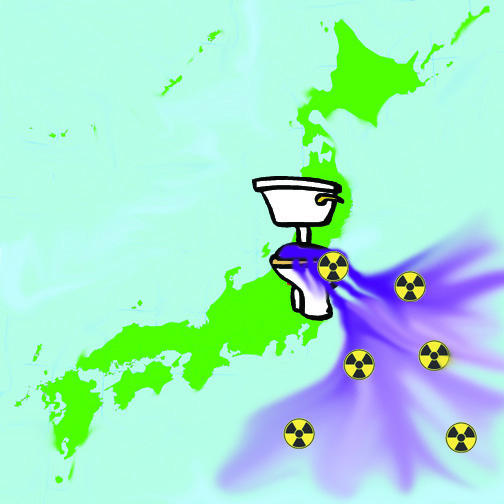 Element from Fukushima plant reaches island cattle; But research finds levels are nothing to be alarmed about http://hawaiitribune-herald.com/news/local-news/element-fukushima-plant-reaches-island-cattle-research-finds-levels-are-nothing-be June 10, 2016 By MAX DIBLE West Hawaii Today KAILUA-KONA — It took only one week for radionuclides to infiltrate the atmosphere above the Hawaiian Islands after they were released from damaged reactors at the Fukushima Daiichi Nuclear Power Plant following the Tohoku earthquake and tsunami March 11, 2011.
By early April of that year, researchers from the University of Hawaii at Manoa began collecting ocean water and sediments to provide a baseline for cesium levels. Cesium is an alkaline earth element and a beta radiation emitter, meaning as it decays it emits electrons that can damage cell structures within the human body.
Establishing a baseline was critical, as data from government-monitored cesium tests from the 1960s through the early 1980s were the most recent available. That monitoring was administered to measure the effects of nuclear weapons testing by the United States in the Pacific following World War II.
Tests by the UH-Manoa research team continued every month through 2011 and were administered every three to six months in subsequent years. They were expanded to include tests on algae, lichen, coconuts, fish and mushrooms. An update on the research was posted on the university’s news website last Friday.
“The conclusion is pretty much that all is safe,” said Henrietta Dulai, associate professor in the Marine and Environmental Geology Division of the UH-Manoa Department of Geology and Geophysics. Dulai oversaw a small research team that included graduate students Hannah Azouz and Trista McKenzie. “Tests are still ongoing, but we do not expect any significant levels at all.”
Ocean currents that might have carried radioactive materials from Japan to Hawaiian shores never made direct contact with the near-shore environment of the Hawaiian Islands, and so ocean water and sediment samples collected by the researchers off Oahu never showed a spike in cesium levels.
However, Dulai said elevated levels were found in ocean water farther north around the Midway Islands and have been detected off the West Coast of the United States and Canada, reaching as far north as Alaska.
While the immediate surrounding oceans were spared, the Hawaiian Islands didn’t escape the disaster totally unscathed.
“The Department of Health monitored precipitation and the atmosphere and also milk,” Dulai said. “They found positive (cesium) hits in all of these.”
Dulai and her team were curious as to why they found nothing in their samples despite the state DOH detecting elevated cesium levels in the atmosphere. The team began collecting samples on precipitation gradients on Oahu and Hawaii Island, where it did locate elevated cesium levels.
A correlation was established between areas of higher rainfall and higher cesium levels in the soil. At higher elevations, more rainfall occurred and more cesium was absorbed by the soil. This is what led to elevated cesium levels detected in milk from grazing cattle.
It turned out that the topography of the islands captured the clouds and to a large extent spared the oceans from excess radioactivity, as cesium deposits from rainfall tended to accumulate on land. While this news might sound concerning, Dulai said residents of the Hawaiian Islands need not be alarmed.
“The natural radioactivity in the soil is orders of magnitude higher than this added cesium level,” Dulai explained. “The added cesium is a tiny fraction of what is there naturally or what was deposited during the nuclear weapons testing.”
Contamination in seafood and mushrooms also was found to be “orders of magnitude below” any health limits set by the FDA. Fish were a primary concern because they migrate, so while they wouldn’t have picked up extra cesium in Hawaiian waters, they might have been contaminated in waters from where they migrated.
Dulai and her team’s research will continue, as will monitoring done by the DOH, according to its website. The website states surveys since May 2011 conducting shoreline surveillance “remain consistent with normal background levels.”
The department also continues to monitor air, precipitation and drinking water using the Environmental Protection Agency’s RadNet system.
Email Max Dible at mdible@westhawaiitoday.com.
New Jersey nuclear reactors can continue guzzling water from Delaware River
 Power stays on: Permit allows 2 N.J. nuclear reactors to keep operating By Bill Gallo Jr. | For NJ.com June 10, 2016 LOWER ALLOWAYS CREEK TWP. — New Jersey Friday granted a five-year permit that will allow PSEG Nuclear to continue to draw billions of gallons of water from the Delaware River to cool two of its nuclear reactors in Salem County.
The Department of Environmental Protection’s permit does not require the plant’s operator, PSEG Nuclear, to build cooling towers at its Artificial Island generating site in Lower Alloways Creek Township, something environmental groups have long urged.
Without this permit, officially known as the New Jersey Pollutant Discharge Elimination System Permit, the two plants, Salem 1 and 2, might have been forced to shut down…….
Salem 1 and 2, when operating at full power, use 3 billion gallons of water a day from the Delaware River. The water is drawn in, circulated through the plants’ “open loop”cooling systems and discharged back into the river………
Environmentalists have long criticized the plants saying they are causing the death of marine life which is being caught on screens at the point of water intake or by actually being sucked into and through the cooling system…….
Bill Gallo Jr. may be reached at bgallo@njadvancemedia.com. http://www.nj.com/salem/index.ssf/2016/06/power_stays_on_permit_allows_2_nj_nuclear_reactors.html
Alarmingly high levels of radiation remain at Bikini Atoll
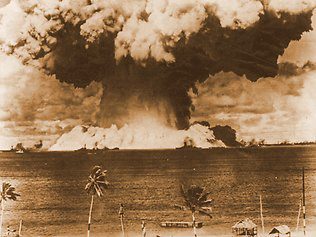 Bikini Atoll radiation levels remain alarmingly high https://www.sciencenews.org/article/bikini-atoll-radiation-levels-remain-alarmingly-high New measurements made decades after Pacific island used to test nuclear bombs BY THOMAS SUMNER , JUNE 6, 2016
Radioactive material such as cesium-137 currently produces, on average, 184 miLLIREMS OF RADIATION PER YEAR ON BIKINI ATOLL. AND SOME PARTS OF THE ISLAND HIT 639 MILLIREMS PER YEAR, RESEARCHERS REPORT ONLINE THE WEEK OF JUNE 6 IN THE PROCEEDINGS OF THE NATIONAL ACADEMY OF SCIENCES. THOSE MEASUREMENTS, MADE LAST YEAR, SURPASS THE 100 MILLIREMS PER YEAR SAFETY STANDARD SET BY THE UNITED STATES AND THE REPUBLIC OF THE MARSHALL ISLANDS, WHICH CONTROLS THE ISLAND.
Scientists had predicted that, by now, radiation levels would have dropped to 16 to 24 millirems per year. But those estimates came from extrapolating from measurements made in the 1970s. The mismatch probably stems from incorrect assumptions about how rapidly radioactive material washes off the island, proposes study coauthor Emlyn Hughes, a physicist at Columbia University.
Whether the higher radiation levels pose a serious health risk to caretakers who live on the island for part of the year depends on how long they stay on the island and whether the local fruit they eat is safe, Hughes says.
EPA PROPOSES SHOCKING THOUSAND-FOLD INCREASE IN RADIOACTIVITY ALLOWED IN DRINKING WATER

 From Diane D’Arrigo at NIRS (Nuclear Information and Resource Service)
Note that the public has 45 days from when it is published in the Federal Register to comment to the EPA on the PAG-Protective Action Guides. I’ll post an alert tomorrow. This is a media release below. Feel free to send it to interested reporters. Direct them to the press contacts listed at the top of the release. Thanks! – Kay C.
Proposal Would Permit Radiation Exposures Equivalent to 250 Chest X-Rays a Year
Washington, D.C. – Yesterday, the U.S. EPA quietly issued proposals to allow radioactive contamination in drinking water at concentrations vastly greater than allowed under the Safe Drinking Water Act. The new guidance would permit radiation exposures equivalent to 250 chest X-rays a year. Today, environmental groups called the proposal “shocking” and “egregious.”
The EPA proposed Protective Action Guides (PAGs) would allow the general population to drink water hundreds to thousands of times more radioactive than is now legal. For example, radioactive iodine-131 has a current limit of 3 pico-curies per liter (pCi/L), in water but the new guidance would allow 10,350 (pCi/L), 3,450 times higher. For strontium-90, which causes leukemia, the current limit is 8 pCi/L; the new proposed value is 7,400 pCi/L, a 925-fold increase.
“Clean Water is essential for health. Just like lead, radiation when ingested in small amounts is very hazardous to our health. It is inconceivable that EPA could now quietly propose allowing enormous increases in radioactive contamination with no action to protect the public, even if concentrations are a thousand times higher than under the Safe Drinking Water Act,” said Dr. Catherine Thomasson, Executive Director of Physicians for Social Responsibility.
The Bush Administration in its last days unsuccessfully tried to put forward similar proposals, which the incoming Obama Administration pulled back. Now, in the waning months of the Obama Administration, EPA’s radiation office is trying again.
“These levels are even higher than those proposed by the Bush Administration—really unprecedented and shocking,” said Diane D’Arrigo, Nuclear Information and Resource Service. Continue reading
America’s EPA lifting the level of radioactivity permitted in drinking water
EPA Pushing Hike in Radioactive Contamination in Drinking Water http://www.corporatecrimereporter.com/news/200/epa-pushing-hike-in-drinking-water-radioactivity/ By Editor June 7th, 2016
The Environmental Protection Agency (EPA) has unveiled a plan allowing radioactive contamination in drinking water at concentrations vastly greater than the levels permitted by the Safe Drinking Water Act for long periods following release of nuclear materials.
The new guidance would permit radiation exposures equivalent to 250 chest X-rays a year for the general population for an unlimited time period.
EPA’s “Protective Action Guides” (or PAGs) dramatically relax allowable doses of radioactive material in public drinking water following a Fukushima-type meltdown or “dirty bomb” attack.
They cover the “intermediate phase” after “releases have been brought under control” – an unspecified period that may last for weeks, months or even years.
The agency has declared that the strict limits for chemical exposure in the Safe Drinking Water Act “may not be appropriate…during a radiation incident.”
EPA states that it “expects that the responsible party…will take action to return to compliance with the Safe Drinking Water Act maximum contaminant levels as soon as practicable” but during the indefinite meantime –
The general population may be exposed to radioactive iodine-131 at 10,350 pico-curies per liter of water.
By contrast, the current limit is 3, resulting in a 3,450-times increase; The current strontium-90 limit of 8 pico-curies per liter would be allowed a 925-fold increase; and
In an attempt to shield “sensitive populations,” the plan proposes 500 millirem per year for the general population but only 100 millirem for children under 15, pregnant or nursing mothers without explaining how these latter groups will get access to less contaminated water.
“Given this monstrous proposal, it unclear what lessons EPA learned from the contaminated water calamity of Flint, Michigan,” said. Public Employees for Environmental Responsibility (PEER) executive director Jeff Ruch. “It is unfathomable that a public health agency would prescribe subjecting people to radioactive concentrations a thousand times above Safe Drinking Water Act limits as a ‘protective’ measure.”
Internal EPA documents obtained under Freedom of Information Act litigation brought by PEER show that EPA itself concluded that proposed concentrations “would exceed MCLs [Maximum Contaminant Limits of the Safe Drinking Water Act] by a factor of 100, 1000, and in two instances, 7 million.”
The internal analysis estimated for one radionuclide that drinking only one small glass of water “would result in an exposure that corresponds to a lifetime of drinking liters of water per day at the MCL level.”
The Bush Administration in its last days unsuccessfully tried to put forward similar proposals, which the incoming Obama Administration pulled back.
Now, in the waning months of the Obama Administration, those plans are moving forward with new exposure limits higher than the Bush plan it had rejected.
“President Obama goes to Hiroshima to urge a nuclear-free world while his EPA facilitates a nuclear-ridden water supply,” added Ruch. “It speaks volumes that the current Obama drinking water plan is less protective than his predecessor’s.”
Asking how to prepare for a nuclear disaster is asking the wrong question
Nuclear power: Asking the wrong questions http://thebulletin.org/chernobyl-fukushima-and-preparedness-next-one/nuclear-power-asking-wrong-questions Steven Starr, 1 June 16
This is a discussion in which, as Manpreet Sethi has noted, all the participants “either argue in favor of nuclear power or decline to argue against it. … [T]hey see no need to eliminate nuclear energy.” That is, the Bulletin has selected experts who may suggest new policies or technological fixes for the nuclear industry, but will not call for the industry’s abolition.
I am a senior scientist with Physicians for Social Responsibility, a group that does call for abolition. Physicians for Social Responsibility is deeply concerned about the medical and ethical consequences of the ongoing production of enormous amounts of high-level nuclear waste. Such waste, hundreds of thousands of tons of it, sits in “cooling pools” next to nuclear power reactors; many individual pools contain more cesium-137 than was released by all atmospheric nuclear weapons tests combined. These utterly lethal radionuclides will require some form of supervision for hundreds of thousands of years if they are to be prevented from entering the biosphere. Thousands of generations of human beings will have to perform the supervision.
Only one country, Finland, has begun work on a permanent repository for high-level waste, but it is not yet operational. The only permanent site for low-level waste in the United States, the Waste Isolation Pilot Plant in New Mexico, is currently closed due to mishaps including a 2014 radiation release. Hence the entire world provides no good examples of safe permanent storage.
But the problem, of course, extends beyond waste—it includes catastrophic releases of radiation, something that the nuclear industry has not managed to prevent in the first 70 years of its existence. And even Sethi admits that “[t]here can never be a perfect strategy for disaster prevention and preparedness.” So there is little reason to think such releases will be prevented in the future.
When they aren’t prevented, as at Chernobyl, the consequences are devastating, as study after study demonstrates.
- The International Physicians for the Prevention of Nuclear War, in a 2011 report called “Health Effects of Chernobyl,” found that 25 years after the disaster, more than 90 percent of “liquidators”—the soldiers and civilians, numbering at least 740,000, who fought to contain the reactor fire and clean up afterwards—were severely ill or had become invalids.
- According to the UN Scientific Committee on the Effects of Atomic Radiation, between 12,000 and 83,000 genetically damaged children will eventually be born in “affected countries of the Chernobyl region,” while 30,000 to 207,000 such children will be born worldwide due to the disaster. These cases will take time to appear—only 10 percent of the overall expected damage can be seen in the first generation after exposure.
- The “TORCH-2016” report, an independent scientific evaluation of Chernobyl’s health effects based entirely upon peer-reviewed sources, finds that about 5 million people in Belarus, Ukraine, and Russia live in areas still highly contaminated by the Chernobyl disaster (with more than 40 kilobecquerels of cesium-137 per square meter). These areas include 18,000 square kilometers in Belarus, 12,000 square kilometers in Ukraine, and 16,000 square kilometers in Russia. About 400 million people live in less contaminated areas (with between 4 and 40 kilobecquerels of cesium-137 per square meter).
- The unfortunate people who must live on these contaminated lands—especially infants and children—suffer greatly from the effects of the long-lived radionuclides (primarily cesium-137) that have contaminated the forests, soils, and foodstuffs to which they are constantly exposed. In 2011, the National Ministry of Emergencies of Ukraine issued a national report entitled “Twenty-five Years after Chernobyl Accident: Safety for the Future.” The report found that by 2001, no more than 10 percent of the children living in the seriously contaminated zones of Ukraine were considered healthy. Prior to the dispersal of radionuclides from the Chernobyl explosion, 90 percent had been healthy.
These are some of the consequences of a single catastrophic nuclear accident. Fukushima, meanwhile, is an example of the ongoing irradiation of the biosphere. There will be more accidents. The nuclear industry will continue to claim that such accidents pose “no significant danger to human health.” The evidence indicates otherwise.
“If they can get you asking the wrong questions,” Thomas Pynchon wrote in Gravity’s Rainbow, “they don’t have to worry about answers.” Asking how to prepare for a nuclear disaster is asking the wrong question. It steers the conversation away from the real issue, which is why nuclear power reactors should be allowed to continue producing mass quantities of nuclear poison that must be isolated from the biosphere for more than 100,000 years—forever, in human terms. The Chernobyl disaster released only a tiny fraction of the radioactive poison that nuclear power has produced. The overwhelming majority that remains is a grave danger, and to ignore it is willful blindness.
China readies nuclear armed submarines for the Pacific
 China to send nuclear-armed submarines into Pacific amid tensions with US
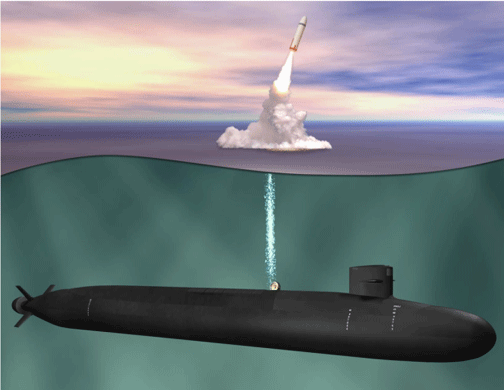
Beijing risks stoking new arms race with move although military says expansion of the US missile defence has left it with no choice, Guardian, Julian Borger , 26 May 16 [ video, excellent graphics] The Chinese military is poised to send submarines armed with nuclear missiles into the Pacific Ocean for the first time, arguing that new US weapons systems have so undermined Beijing’s existing deterrent force that it has been left with no alternative.
Chinese military officials are not commenting on the timing of a maiden patrol, but insist the move is inevitable.
They point to plans unveiled in March to station the US Thaad anti-ballistic system in South Korea, and the development of hypersonic glide missiles potentially capable of hitting China less than an hour after launch, as huge threats to the effectiveness of its land-based deterrent force.
A recent Pentagon report to Congress predicted that “China will probably conduct its first nuclear deterrence patrol sometime in 2016”, though top US officers have made such predictions before…….
Last Tuesday, a US spy plane and two Chinese fighter jets came close to colliding 50 miles of Hainan island, where China’s four Jin-Class ballistic missile submarines are based. A fifth is under construction.
The two countries’ navies have also come uncomfortably close around disputed islands in the same region, and the chance of a clash will be heightened by cat-and-mouse submarine operations, according to Wu Riqiang, an associate professor at the School of International Studies at the Renmin University in Beijing.
“Because China’s SSBNs [nuclear missile submarines] are in the South China Sea, the US navy will try to send spy ships in there and get close to the SSBNs. China’s navy hates that and will try to push them away,” Wu said.
The primary reason Chinese military officials give for the move towards a sea-based deterrent is the expansion of US missile defence, which Moscow also claims is disturbing the global strategic balance and potentially stoking a new arms race.
The decision to deploy Thaad anti-ballistic interceptors in South Korea was taken after North Korea’s fourth nuclear test, and the stated mission of the truck-launched interceptors is to shield the south from missile attack.
But Beijing says the Thaad system’s range extends across much of China and contributes to the undermining of its nuclear deterrent. It has warned Seoul that relations between the two countries could be “destroyed in an instant” if the Thaad deployment goes ahead……
Under Xi’s assertive leadership, China seems determined that the Chinese nuclear deterrent will take finally to the ocean, and it has already taken thestep of putting multiple warheads on its missiles. Those steps are mostly in response to US measures, which in turn were triggered by unrelated actions by the North Koreans.
The law of unintended consequences is in danger of taking the upper hand. “The two sides may thus be stumbling blindly into severe crisis instability and growing competition by China with respect to strategic forces,” Lewis argues. “A competition between unevenly matched forces is inherently unstable.”http://www.theguardian.com/world/2016/may/26/china-send-nuclear-armed-submarines-into-pacific-us
Undersea nuclear deterrence in the Indian Ocean is here to stay
The Indian Ocean Won’t Be a ‘Nuclear Free Zone’ Anytime Soon Undersea nuclear deterrence in the Indian Ocean is here to stay., The Diplomat, By Ankit Panda May 20, 2016 Sartaj Aziz, adviser to Pakistan’s prime minister on foreign affairs, presented an interesting proposal to the Pakistani Senate on Thursday. He said that he would consider having Pakistan introduce a resolution at the United Nations that would urge the body to declare the Indian Ocean a “nuclear free zone.” Leaving aside the fact that the United Nations isn’t in the business of declaring nuclear weapon free zones, Aziz’s comments reflect increasing anxieties in Pakistan about India’s burgeoning sea-based nuclear deterrent.
With the first of Arihant-class of domestically designed ballistic missile submarines rolling out and testing underway of Delhi’s K-4 submarine-launched ballistic missiles ongoing, Delhi is coming closer to operationalizing its sea-based deterrent. (The K-4 has been test launched from the Arihant‘s on-board silos, as I discussed last month.)
Aziz is well aware of these developments. ”Apart from this air defence system, India has also recently conducted tests of nuclear capable, submarine based K4 ballistic missiles. Simultaneously large nuclear powered submarines are being built to carry these nuclear armed missile as a part of its second strike nuclear capability,” he told the Senate, according to a report in Dawn.
Unfortunately, for Pakistan, the United Nations won’t be able to solve this problem anytime soon. Moreover, India won’t be the only country looking to operate nuclear-armed ballistic missile submarines (SSBNs) in the waters of the Indian Ocean. China started operating Song– and Shang-class submarines in the Indian Ocean in 2014, according to the U.S. Department of Defense. Ostensibly, Beijing’s upcoming first overseas military facility—in Djibouti—will play a role in support submarine logistics.
According to the U.S. Defense Department’s most recent report on China’s military, four Chinese Jin-class SSBNs—China’s first sea-based deterrent as well—are operational. These submarines currently operate out off the People’s Liberation Army-Navy’s submarine base at Hainan Island, in the South China Sea, but Beijing may look to have its SSBNs patrolling the Indian Ocean soon enough……
Unsurprisingly, amid increased Chinese sub-surface activity in the Indian Ocean, we’ve seen the United States and India deepen their anti-submarine warfare cooperation. Moreover, Delhi has started extending its maritime patrol and surveillance capabilities further southward; it sent a P-8I Neptune aircraft to the Seychelles earlier this year.
With India’s Arihant-class on the verge of commissioning and Chinese SSBNs possibly on the way to supplement the PLAN’s existing hunter-killer and nuclear attack submarines, the Indian Ocean won’t become a “nuclear free zone” anytime soon. Islamabad could look to build up its own undersea nuclear capabilities, but, as I’ve discussed before, that’ll be limited by a range of factors. http://thediplomat.com/2016/05/the-indian-ocean-wont-be-a-nuclear-free-zone-anytime-soon/
Radium and Lead contaminate rivers From Thousands of Fracking Wastewater Spills
Duke Study: Rivers Contaminated With Radium and Lead From Thousands of Fracking Wastewater Spills. EcoWatch Sharon Kelly, DeSmogBlog | May 9, 2016 Thousands of oil and gas industry wastewater spills in North Dakota have caused “widespread” contamination from radioactive materials, heavy metals and corrosive salts, putting the health of people and wildlife at risk, researchers from Duke University concluded in a newly released peer-reviewed study.
High levels of lead—the same heavy metal that infamously contaminated water in Flint, Michigan—as well as the radioactive element radium, were discovered near spill sites. One substance, selenium, was found in the state’s waters at levels as high as 35 times the federal thresholds set to protect fish, mussels and other wildlife, including those that people eat.
The pollution was found on land as well as in water. The soils in locations where wastewater spilled were laced with significant levels of radium and even higher levels of radium were discovered in the ground downstream from the spills’ origin points, showing that radioactive materials were soaking into the ground and building up as spills flowed over the ground, the researchers said.
The sheer number of spills in the past several years is striking. All told, the Duke University researchers mapped out a total of more than 3,900 accidental spills of oil and gas wastewater in North Dakota alone……. http://ecowatch.com/2016/05/09/radium-lead-fracking/
The 1964 nuclear bomb exploded in South Mississippi – and its effects
In 1964 a nuclear bomb was detonated in South Mississippi http://www.nola.com/health/index.ssf/2016/05/obama_hiroshima_nuclear_bombin.html By Jed Lipinski, NOLA.com | The Times-Picayune The White House announced Tuesday (May 10) that President Barack Obama later this month will visit Hiroshima, Japan, site of the world’s first atomic bombing. It’s the most familiar nuclear explosion in history, but it’s just one of more than 2,000 such explosions — most of them tests — since 1945.
It happened 2,600 feet underground in 1964, when a 5.3-kiloton bomb, one fourth the size of the bomb used on Hiroshima, was detonated deep inside the Tatum Salt Dome in Mississippi. The Tatum Salt Dome explosion was part of a nuclear test to determine whether the U.S. “had the ability to measure Soviet nuclear tests underground in caves,” reporter Mark Schleifstein wrote in The Times-Picayune in 1990.
“The Defense Department and the Atomic Energy Commission — precursor of the Nuclear Regulatory Commission and the Department of Energy — picked as their test site the Tatum Salt Dome southwest of Hattiesburg,” Schleifstein wrote. “It was huge, about a mile across, and relatively remote. Only about 250 families lived within five miles of ground zero.”
Three more blasts — one nuclear, two non-nuclear — followed over the next four years before researchers decided to abandon the site. Officials would later conduct a a massive clean-up effort, dumping 1.3 million gallons of contaminated water and 10,700 cubic yards of contaminated soil into the cavity.
Workers who participated in the clean-up said they were exposed to high levels of radiation on the job. Bill Teck, the chief of security at the site until 1971, was later diagnosed with skin cancer, which a Veterans Administration pathologist attributed to nuclear radiation.
Today, the Mississippi Department of Environmental Quality conducts annual tests of the surface water at the Tatum Dome to monitor slowly dropping levels of tritium, a mildly radioactive type of hydrogen that can seep into water supplies near nuclear power plants.
Respiratory diseases, radioactive fumes – concerns in St Louis County, USA
 AIR POLLUTION, ATOMIC RISKS GROW AS TOXIC DUMP SMOLDER , URBAN NEWS SERVICE, Part 2 of a 2 part series. For part 1 visit “Near Ferguson, Ghosts of Hiroshima Haunt Fuming Landfill“.
BRIDGETON, Missouri – They can’t breathe.
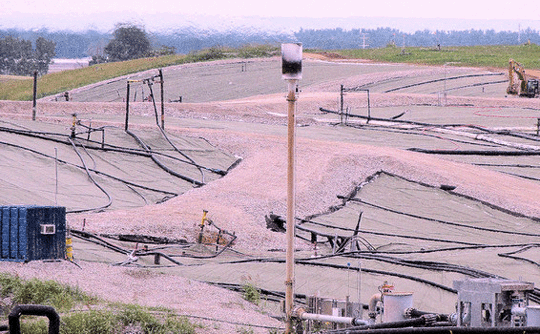
Residents of this community near Ferguson — site of 2014’s police-involved shooting death of teenager Michael Brown — have complained for years about lung troubles caused by toxic fumes tied to radioactive waste linked to the atomic bombs that flattened Hiroshima and Nagasaki.
Missouri’s Department of Health and Senior Services will release a study in June to gauge these concerns. Many here call this step positive, small and too late; a slow-moving, subterranean landfill fire that began in 2010, could boost the site’s toxic-gas emissions.
Some locals have been diagnosed with cancer, which they connect to nuclear waste illegally dumped at the West Lake Landfill by the Cotter Corporation in 1973. This radioactive refuse is from World War II’s top-secret Manhattan Project.
Thanks to these conditions, residents who seek government-assisted relocation feel abandoned. Lengthy fights over who ultimately should control the site have slowed cleanup efforts……..
The Centers for Disease Control and Prevention is reportedly investigating the issue following a September 2014 study by Missouri’s health department. It found that, between 1996 and 2011, the ZIP codes around the landfill included statistically significant, higher incidences of leukemia plus cancers of the colon, prostate, kidney, bladder and brain.
“[The] recent study by St. Louis County is actually the first time that a government entity has asked people if they feel ill,” said Laura Barrett, executive director for the Center for Health, Environment and Justice…….
A 1988 Nuclear Regulatory Commission study revealed that its inspectors discovered in 1974 that the Cotter Corporation — which agreed to buy the atomic refuse from the federal government and dispose of it — mixed this waste with 39,000 tons of topsoil. Cotter illegally covered the West Lake Landfill with this irradiated earth in 1973, according to the nuclear agency’s report.
“It’s not in barrels. Some of it’s mixed in the soil and the garbage,” said Chapman. “Some of it’s just lying on the surface for over 40 years, and none of us knew about this.”……https://urbannewsservice.com/investigations/air-pollution-atomic-risks-grow-toxic-dump-smolder/
Ocean’s small shelled animals suffering from acidification due to global warming
 Acidic oceans are dissolving shells of tiny sea snails, researchers find, ABC News, 2 May 16 By Kieran Jones Small organisms are struggling to survive as the ocean becomes more acidic, researchers say, including tiny sea snails whose shells are dissolving.
Key points:
- Acidification could severely affect the ocean’s food chain
- Small organisms are being damaged and scientists fear it could affect large animals
- A prominent researcher says reducing CO2 emissions would reduce acidification
Researchers fear an increase in acidification in the Southern Ocean could have a severe impact on the food chain off Australia’s south coast.
The concerns come as 350 scientists from more than 30 countries gather in Hobart for an international symposium on the impact of carbon dioxide on the world’s oceans.
Ocean acidification means the pH level of water has decreased, making it inhospitable for small organisms.
CSIRO research scientist Andrew Lenton was part of a team that developed a map of acidification around Australia.
He said the impact was already being felt.
“The changes in Australia are very close to the changes that are occurring everywhere else in the world, so this is really a global problem that Australia is part of,” he said.
“Already there are detectable changes in the Southern Ocean.”
Reducing carbon dioxide emissions would reduce acidification………The impact is also visible in tiny free-swimming sea snails call pteropods, which are a vital part of the diet of many large fish.
Researchers said the percentage of pteropods with dissolving shells observed had doubled since the pre-industrial era and was on track to triple by 2050.
Dr Richard Feely from the US National Oceanic and Atmospheric Administration (NOAA) said reducing carbon dioxide emissions was the best way to avoid acidification.
“In order for us to address ocean acidification on a global scale we would have to add two billion tonnes of calcium carbonate,” he said………http://www.abc.net.au/news/2016-05-02/acidic-oceans-are-dissolving-shells-on-tiny-sea-snails/7376696?section=environment
Nuclear shipwreck still highly radioactive over 60 years later
Details Emerge from Cold War-Era Nuclear Shipwreck, New Historian, David DeMar May 01, 2016 More details have emerged regarding the wreck of the USS Independence, a US Navy vessel deliberately sacrificed in 1946 at the Bikini Atoll nuclear weapons tests at the very inception of the Cold War…….
NOAA and Boeing used a combination of high-resolution sonar imaging and an unmanned submersible known as “Echo Ranger” to locate and safely survey the still-irradiated wreck of the Independence. The resultant case study, plus newly declassified files on the Navy ship straight from the US National Archives, concerning its time as a nuclear weapons testbed, have been published in theJournal of Maritime Archaeology (JNA)……
merging documentary evidence with a study of the physical remains of a maritime archaeological site is a goal that can and should be pursued…….
The infamous tests at Bikini Atoll, The Bikini tests, conceived and undertaken just one year after dropping not one but two nuclear weapons on Japan, at Hiroshima and Nagasaki, to end the Second World War, was one of the most visible and noteworthy events to signal a fundamental shift in postwar history.
 In one of the newly-declassified reports dating from the era, it was suggested that the awesome power of nuclear weaponry represented a new era where the utter destruction of man had become possible, scouring the Earth of nothing but vestigial traces of humanity. http://www.newhistorian.com/details-emerge-cold-war-era-nuclear-shipwreck/6397/
Wildlife continues to suffer seriously from radiation at Chernobyl and Fukushima
Our studies provide new fundamental insights about consequences of chronic, multigenerational exposure to low-dose ionizing radiation. Most importantly, we have found that individual organisms are injured by radiation in a variety of ways. The cumulative effects of these injuries result in lower population sizes and reduced biodiversity in high-radiation areas.
Broad impacts at Chernobyl
 Radiation exposure has caused genetic damage and increased mutation rates in many organisms in the Chernobyl region. So far, we have found little convincing evidence that many organisms there are evolving to become more resistant to radiation.
Organisms’ evolutionary history may play a large role in determining how vulnerable they are to radiation. In our studies, species that have historically shown high mutation rates, such as the barn swallow (Hirundo rustica), the icterine warbler (Hippolais icterina) and the Eurasian blackcap (Sylvia atricapilla), are among the most likely to show population declinesin Chernobyl. Our hypothesis is that species differ in their ability to repair DNA, and this affects both DNA substitution rates and susceptibility to radiation from Chernobyl.
Much like human survivors of the Hiroshima and Nagasaki atomic bombs, birds and mammals at Chernobyl have cataracts in their eyes andsmaller brains. These are direct consequences of exposure to ionizing radiation in air, water and food. Like some cancer patients undergoing radiation therapy, many of the birds have malformed sperm. In the most radioactive areas, up to 40 percent of male birds are completely sterile, with no sperm or just a few dead sperm in their reproductive tracts during the breeding season.
Tumors, presumably cancerous, are obvious on some birds in high-radiation areas. So are developmental abnormalities in some plants and insects.
Given overwhelming evidence of genetic damage and injury to individuals, it is not surprising that populations of many organisms in highly contaminated areas have shrunk. In Chernobyl, all major groups of animals that we surveyed were less abundant in more radioactive areas. This includes birds, butterflies, dragonflies, bees, grasshoppers, spiders and large and small mammals.
Not every species shows the same pattern of decline. Many species, including wolves, show no effects of radiation on their population density. A few species of birds appear to be more abundant in more radioactive areas. In both cases, higher numbers may reflect the fact that there are fewer competitors or predators for these species in highly radioactive areas.
Moreover, vast areas of the Chernobyl Exclusion Zone are not presently heavily contaminated, and appear to provide a refuge for many species. One report published in 2015 described game animals such as wild boar and elk as thriving in the Chernobyl ecosystem. But nearly all documented consequences of radiation in Chernobyl and Fukushima have found that individual organisms exposed to radiation suffer serious harm.
There may be exceptions. For example, substances called antioxidants can defend against the damage to DNA, proteins and lipids caused by ionizing radiation. The levels of antioxidants that individuals have available in their bodies may play an important role in reducing the damage caused by radiation. There is evidence that some birds may have adapted to radiation by changing the way they use antioxidants in their bodies.
Parallels at Fukushima
Recently we have tested the validity of our Chernobyl studies by repeating them in Fukushima, Japan. The 2011 power loss and core meltdown at three nuclear reactors there released about one-tenth as much radioactive material as the Chernobyl disaster.
Overall, we have found similar patterns of declines in abundance and diversity of birds, although some species are more sensitive to radiation than others. We have also found declines in some insects, such as butterflies, which may reflect the accumulation of harmful mutationsover multiple generations.
Our most recent studies at Fukushima have benefited from more sophisticated analyses of radiation doses received by animals. In our most recent paper, we teamed up with radioecologists to reconstruct the doses received by about 7,000 birds. The parallels we have found between Chernobyl and Fukushima provide strong evidence that radiation is the underlying cause of the effects we have observed in both locations.
Some members of the radiation regulatory community have been slow to acknowledge how nuclear accidents have harmed wildlife. For example, the U.N.-sponsored Chernobyl Forum instigated the notion that the accident has had a positive impact on living organisms in the exclusion zone because of the lack of human activities. A more recent report of the United Nations Scientific Committee on the Effects of Atomic Radiation predicts minimal consequences for the biota animal and plant life of the Fukushima region.
Unfortunately these official assessments were largely based on predictions from theoretical models, not on direct empirical observations of the plants and animals living in these regions. Based on our research, and that of others, it is now known that animals living under the full range of stresses in nature are far more sensitive to the effects of radiation than previously believed. Although field studies sometimes lack the controlled settings needed for precise scientific experimentation, they make up for this with a more realistic description of natural processes.
Our emphasis on documenting radiation effects under “natural” conditions using wild organisms has provided many discoveries that will help us to prepare for the next nuclear accident or act of nuclear terrorism. This information is absolutely needed if we are to protect the environment not just for man, but also for the living organisms and ecosystem services that sustain all life on this planet……https://theconversation.com/at-chernobyl-and-fukushima-radioactivity-has-seriously-harmed-wildlife-57030
Climate Change threatens the already leaking Marshall Islands radioactive dome
This dome in the Pacific houses tons of radioactive waste – and it’s leaking
The Runit Dome in the Marshall Islands is a hulking legacy of years of US nuclear testing. Now locals and scientists are warning that rising sea levels caused by climate change could cause 111,000 cubic yards of debris to spill into the ocean , Guardian Coleen Jose, Kim Wall and Jan Hendrik Hinzel on Runit Island 3 July 2015
“……..Officially, this vast structure is known as the Runit Dome. Locals call it The Tomb.

Below the 18-inch concrete cap rests the United States’ cold war legacy to this remote corner of the Pacific Ocean: 111,000 cubic yards of radioactive debris left behind after 12 years of nuclear tests.
Brackish water pools around the edge of the dome, where sections of concrete have started to crack away. Underground, radioactive waste has already started to leach out of the crater: according to a 2013 report by the US Department of Energy, soil around the dome is already more contaminated than its contents.
Now locals, scientists and environmental activists fear that a storm surge, typhoon or other cataclysmic event brought on by climate change could tear the concrete mantel wide open, releasing its contents into the Pacific Ocean.
“Runit Dome represents a tragic confluence of nuclear testing and climate change,” said Michael Gerrard, director of the Sabin Center for Climate Change Law at Columbia University, who visited the dome in 2010.
“It resulted from US nuclear testing and the leaving behind of large quantities of plutonium,” he said. “Now it has been gradually submerged as result of sea level rise from greenhouse gas emissions by industrial countries led by the United States.”
Enewetak Atoll, and the much better-known Bikini Atoll, were the main sites of the United States Pacific Proving Grounds, the setting for dozens of atomic explosions during the early years of the cold war……..http://www.theguardian.com/world/2015/jul/03/runit-dome-pacific-radioactive-waste
1 This Month


No Nuclear in Cwm Llynfi! Stop the nuclear power station near Maesteg.


4 August – WEBINAR – Hiroshima & Nagasaki: Nuclear Bombs Never Again
Tuesday, Aug. 4 at 5 pm PT / 8 pm ET.
Aug 5, 2026 10:00 AM in Australia/Melbourne
Join the Nuclear Bombs Never Again webinar on August 4th at 5pm Pacific Time / 8pm Eastern Time / 9am Japan Standard Time.
Cross generational voices at the intersection of Japan-Korea-US policy and militarization will share their lived experiences, nuclear impacts in these contexts, anti-war strategies, and actions you can take to advocate for a world with Nuclear Bombs Never Again. This 75-minute event is co-hosted by WILPF US and Korea Peace Now.

22,000+ miles voyaging for nuclear disarmament
and a radiation-free environment https://vfpgoldenruleproject.org/
To see nuclear-related stories in greater depth and intensity – go to https://nuclearinformation.wordpress.com
-
Archives
- July 2026 (320)
- June 2026 (287)
- May 2026 (306)
- April 2026 (356)
- March 2026 (251)
- February 2026 (267)
- January 2026 (308)
- December 2025 (358)
- November 2025 (359)
- October 2025 (375)
- September 2025 (257)
- August 2025 (319)
-
Categories
- 1
- 1 NUCLEAR ISSUES
- business and costs
- climate change
- culture and arts
- ENERGY
- environment
- health
- history
- indigenous issues
- Legal
- marketing of nuclear
- media
- opposition to nuclear
- PERSONAL STORIES
- politics
- politics international
- Religion and ethics
- safety
- secrets,lies and civil liberties
- spinbuster
- technology
- Uranium
- wastes
- weapons and war
- Women
- 2 WORLD
- ACTION
- AFRICA
- Atrocities
- AUSTRALIA
- Christina's notes
- Christina's themes
- culture and arts
- Events
- Fuk 2022
- Fuk 2023
- Fukushima 2017
- Fukushima 2018
- fukushima 2019
- Fukushima 2020
- Fukushima 2021
- general
- global warming
- Humour (God we need it)
- Nuclear
- RARE EARTHS
- Reference
- resources – print
- Resources -audiovicual
- Weekly Newsletter
- World
- World Nuclear
- YouTube
-
RSS
Entries RSS
Comments RSS
 nuclear-news