An analysis of 97 studies by the EU-funded review body EKLIPSE concluded that radiation is a potential risk to insect and bird orientation and plant health.
However the charity Buglife warned that despite good evidence of the harms there was little research ongoing to assess the impact, or apply pollution limits.
the proposed torch route samples had the highest mean radioactivity due to their close proximity to the plant. Based on the measurement, we estimated qualitatively that the radiation exposure of people living near the Azuma Sports Park area was 20.7 times higher than that of people living in Tokyo. The main tourist and proposed torch routes had radiation exposure of 24.6 and 60.6 times higher, respectively, than in Tokyo.
our results showed that the highest radioactivity level was at the proposed torch route, which is located to the northeast of the plant.
Olympic officials should consider using the results of this project to decide whether the radioactivity level at the proposed torch route and the Olympic venues are within acceptable level.
Measuring Radioactivity in Soil and Dust Samples from Japan Fukushima IQP Final Report. An Interactive Qualifying Project Report Submitted to the Faculty of the Worcester Polytechnic Instituteby Thang Pham Steven Franca Son Nguyen
Abstract
A radioactivity map of Cesium-137, a radioactive material emitted from the Fukushima Dai-ichi Nuclear Power Plant, was created by examining 30 soil and dust samples originating from Japan. A Sodium Iodide (NaI) detector measured gamma rays emitted from the samples. Qualitative evaluation of human exposure to radio-cesium in five sets of locations in Japan shows the radioactivity of tested samples. The Fukushima section of one of the Olympic proposed torch route has a 60 times higher activity of Cesium-137 than the activity of the samples from Tokyo.
Acknowledgements…….
Executive Summary
Overview
On March 11th, 2011, a magnitude 9.0 earthquake hit the Fukushima Prefecture of Japan (AESJ, 2015, p.19). This resulted in major structural damage to the surrounding area. Following the earthquake, a 13-meter tsunami hit the Fukushima Dai-ichi Nuclear Power Plant and disabled the backup the diesel backup power generator and the cooling water pumps needed to keep the Power Plant running in the event of a disaster. Since power restoration was unsuccessful and there was major structural damage caused to the Units by the tsunami, there were high concentrations of nuclear particles released into the air.
The amount of radioactive materials emitted from the Power Plant raised health and environmental concerns to the people living in the areas around the Fukushima Dai-ichi Nuclear Power Plant. In fact, several studies conducted after the accident determined the activity of radioactive isotopes in the environments. These studies around Fukushima provided excellent understanding of the activity of radioactive isotopes in the environment and the health effects on humans.
With the upcoming XXXII Olympiad in 2020 hosted by Japan, it is necessary to look into the radioactivity of Olympic venues as well as tourist attractions in the host cities. Previous studies pose a major gap because they focused on regions that are closer to the Fukushima Daiichi Nuclear Power Plant, where the highest concentration of radioactive fallout is located. On the other hand, the radioactivity in other locations in Japan is relatively less studied. Since thousands of athletes and millions of visitors are travelling to Japan for the Olympics, there has been widespread concern from the international community about radiation exposure. Therefore, it is important to investigate the extent of radioactive fallout from the Fukushima Dai-ichi incident.
Project goals and Objectives
The goals of the project were to measure the radioactivity of Cesium-137 in soil and dust samples from Japan and to generate a map that illustrates the activity of Cesium-137 in five locations in Japan.Understanding the radioactivity in Japan soil would help in giving an estimation of human exposure to radioactivity in the studied areas. The primary objectives of this project were to:
Perform soil sample preparation for measurement, including categorizing, drying and sub-sampling
Measure the activity of Cesium-137 in the samples and analyze the radioactivity at different locations in Japan.
Generate a map to illustrate the radioactivity level in Japan soil.
Estimate qualitatively human exposure to radioactivity for people living in the studied areas.
Development of methodology
The employment of various study methods and experiment designs helped complete the objectives. Through literature review and discussion with advisors and lab instructors, we were able to develop main steps and setting for our study.
Primarily, we performed preparation for 87 soil and dust samples collected in Japan and transferred to Worcester Polytechnic Institute (WPI). The samples were classified into five categories based on their original location: Tokyo samples, Azuma Sports Park samples, proposed torch route samples, tourist route samples and non-Olympic samples. All the samples were dried and sub-sampled so that their physical conditions were consistent throughout the testing phase. From the 87 samples that are dried and sub-sampled, we eventually further narrowed to 30 samples for radioactivity measurement.
Previous studies on radioactive nuclides accumulation in soil and dust samples from Japan identified that Cesium-137 had the highest concentration among radionuclides in Japan soil (Saito et al., 2015). Therefore, we set our goal to measure the activity of Cesium-137 in the samples from Japan. A thallium-activated sodium iodine detector, or NaI (TI) detector, measured the concentration of Cesium-137 in the soil samples. The calibrating sources used for Cesium137 measurement were Cesium-137, Sodium-22 and Manganese-54. The experiment reported the radioactivity of the background and the radioactivity of Cesium-137 in the samples above the background. Measurements were made in triplicate to provide counting variability statistics.
At the beginning of the project, samples were selected randomly for measurement. Our focus then shifted, as we looked deeper into the four main areas that will be important to the XXXII Olympiad in 2020. These Olympic areas included Azuma Sports Park, tourist attractions in Tokyo, a proposed torch route, and official designated tourist routes. Time constraint and large amount of samples, limited testing which resulted in results on only a limited part of each sample set.
After finishing measuring, the radioactivity of the soil and dust samples helped generate a map that shows the activity of Cesium-137 in Japan soil. Since there was a large variation in the measured activity between samples at different locations, we decided to analyze the results based on the samples’ original locations.
Our results were cross-referenced with information and results gathered from literature reviews. Understanding the activity of Cesium-137 in Japan soil, we were able to give a qualitative estimation of human exposure.
Results and Analysis
By the end of the project, we were able to measure the activity of Cesium-137 in 30 soil and dust samples. The results showed a great variation in radioactivity between samples from different locations. The activity of Cesium-137 in the 30 samples ranged from 38.6 Bq/kg to 28041.5 Bq/kg with the mean radioactivity of 4903.3 Bq/kg (standard deviation, σ= 6611.0 Bq/kg).
Among the five categories of locations, the Tokyo sample set had the lowest radioactivity mean of 117.6 Bq/kg. The following locations are ordered by increasing mean of radioactivity: Azuma Sports Park samples (2703.9 Bq/kg), main tourist routes samples (3206.0 Bq/kg) and proposed torch route samples (7896.0 Bq/kg). Only one of the non-Olympic samples, which originates from the Entrance to Fukushima Dai-ichi waste mounds, had a radioactivity of 14119.8 Bq/kg. Due to this outlier, this sample set was omitted from the other sets.
The measured results showed that the Tokyo sample set had the lowest radioactivity level, which was understandable based on its significant distance from the Fukushima Nuclear Power Plant. On the contrary, the proposed torch route samples had the highest mean radioactivity due to their close proximity to the plant. Based on the measurement, we estimated qualitatively that the radiation exposure of people living near the Azuma Sports Park area was 20.7 times higher than that of people living in Tokyo. The main tourist and proposed torch routes had radiation exposure of 24.6 and 60.6 times higher, respectively, than in Tokyo.
The results in this study were in agreement with published results qualitatively. Saito et al. reported a much higher deposition of Cesium-137 in the area to the northeast of the Fukushima Nuclear Power Plant and the further away from the plant, the lower the deposition of Cesium-137 (2015). Accordingly, our results showed that the highest radioactivity level was at the proposed torch route, which is located to the northeast of the plant. The further away from the plant for example, in Tokyo and the Azuma Sports Park, the lower the activity of Cesium137. However, because of the differences in sampling techniques and reported unit of radioactivity, there could not be an established direct comparison.
Recommendations
Given the aforementioned results, there is significant evidence through our testing, that there are still high amounts of radiation in areas close to the Fukushima Prefecture. Past and current tests found that high amounts of radiation remain at the origin of the disaster. The results showed a significantly higher amount of radioactive materials in the proposed torch route compared to those in Tokyo.
Given the results from testing, we confidently make the following recommendations:
Further study on the activity of Cesium-137 on the proposed torch route is necessary to understand how much radioactive materials remain.
A more detailed study with more soil and dust samples can give a more accurate map of specific areas of interest.
Olympic officials should consider using the results of this project to decide whether the radioactivity level at the proposed torch route and the Olympic venues are within acceptable level. 4. Qualified health professionals should use this data to make connections about short and long-term effects on health.
Times 11th May 2018 , The environment will have less protection after Brexit because the proposed
new green watchdog will lack the power to hold ministers to account,
conservation groups have said.
Michael Gove, the environment secretary, has
unveiled plans for a new independent statutory body to replace the role of
the European Commission in ensuring compliance with rules on reducing air
and water pollution and protecting wildlife in Britain.
An Environmental Principles and Governance Bill will be published in draft form this autumn
and will establish what the government described as a “world-leading body
to hold government to account for environmental outcomes”. However, unlike
the commission, which can take legal action against the government for
failing to observe environmental laws and impose fines, the new body may
only have the authority to issue advisory notices.
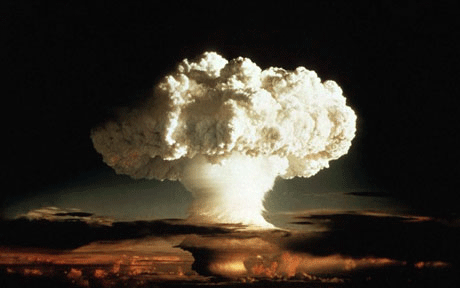
An underground North Korean nuclear test in September last year exploded with 10 times the energy of the atomic bomb that exploded over Nagasaki in 1945.
It also caused the overlying mountain peak to sink by half a metre and shift about 3.5 metres south.
Key points:
North Korea detonated a nuclear bomb under Mt Mantap on September 3, 2017
Using satellite measurements and seismic data, geophysicists calculated the strength of the test and its location — the first time satellite radar has been used this way
The blast was big enough to cause an earthquake and deform the mountain above
These are conclusions drawn by geophysicists, who used satellite radar and instruments that pick up waves travelling through the earth, to calculate the explosion’s depth and strength.
In the journal Science today, they also report signs that a subterranean tunnel system at the test site collapsed 8.5 minutes after the bomb detonated.
In the past, satellite technology — called synthetic radar aperture imagery — has mapped how the ground stretches and warps after earthquakes.
But this is the first time it has been used to examine a nuclear bomb test site, according to Teng Wang, study co-author and a geophysicist at Singapore’s Nanyang Technological University.
Since the United Nations General Assembly adopted the Comprehensive Nuclear-Test-Ban Treaty in 1996, nine nuclear tests have taken place.
Six of these were by North Korea, five of which were at its Mt Mantap facility in the country’s north.
The bombs were detonated in chambers tunnelled into the mountain itself — a granite peak that extends upwards just over 2,200 metres.
But this means the details of the tests, such as the energy produced by the bombs, have been largely unknown outside North Korea — until now.
Eye in the sky, ear to the ground
Dr Wang and his colleagues suspected they could deduce the strength and precise location of the bomb test on September 3 last year, which triggered a magnitude-6.3 earthquake.
Clandestine nuclear activities are tracked by a global monitoring system of sensors that pick up the faint shivers and shudders generated by distant underground blasts and earthquakes.
But while these instruments are capable of picking up the wave signature of a bomb blast thousands of kilometres away, more information is needed to pinpoint exactly where an explosion has taken place.
So in the weeks after the September North Korean bomb test, Dr Wang and his colleagues received images of the Mt Mantap terrain before and after the test, snapped by the German TerraSAR-X satellite.
To map the bumps and dips on the Earth’s entire surface, TerraSAR-X pings radar towards the ground and measures how long it before the signal is bounced back up again.
“As long as the ground is deformed, we can measure it from space using synthetic radar aperture,” Dr Wang said.
Combined with a bit of nifty mathematical modelling — the first time anyone’s modelled an underground nuclear test with radar data — he and his colleagues got a fix on the exact location of the detonation site.
This is a highlight of the work, said Hrvoje Tkalcic, a geophysicist at the Australian National University, who was not involved in the study.
“What’s always difficult is pinpointing an exact location [of a bomb test],” Professor Tkalcic said.
Dr Wang and his team calculated that the top of the mountain subsided about half a metre after the September test, and parts of it shuffled south.
To manage this deformation, the bomb released the energy equivalent to between 109,000 and 276,000 tonnes of TNT in a chamber 450 metres below Mt Mantap’s peak.
The “Fat Man” bomb that exploded over Nagasaki yielded an energy level equivalent to 20,000 tonnes.
Among the data, they found the seismic shivers of a second, smaller event — an aftershock that appeared 700 metres south of, and 8.5 minutes after, the explosion.
The waves produced by the aftershock weren’t consistent with an explosion; rather, it looked like the ground had imploded.
This, the geophysicists suggest, “likely indicates the collapse of the tunnel system of the test site”.
While Dr Wang and his team used data from seismic monitoring systems in China and the surrounding area, Australia has one of the best in the world, Professor Tkalcic said: the Warramunga monitoring station in the Northern Territory, near Tennant Creek.
It’s almost smack bang in the centre of the continent, in an incredibly quiet part of the world, seismically speaking; far from tectonic plate edges, cities and the shoreline, where waves crashing on the coast create seismic noise.
It uses an array of buried instruments to pick up waves that travel through the ground, acting as a giant antenna to amplify weak signals.
“They’re used in the same way as astronomers use arrays of antennas to look at deep space. It’s just that our antennas are pointed to the centre of the earth,” Professor Tkalcic said.
There is also an infrasound detection system at Warramunga station, which detects waves that travel through the atmosphere produced by bomb blasts.
The data is transmitted by satellite to the Comprehensive Nuclear-Test-Ban Treaty Organisation in Vienna, where it is monitored round the clock.
So how do geophysicists know if seismic waves are caused by bomb blasts and not, say, an earthquake or landslide?
In a subterranean explosion, the ground is pushed outwards and compressed, sending a particular type of wave through the ground, Professor Tkalcic said.
An earthquake’s seismic signature is different. If two plates collide, rub against each other or slip, they send out another type of wave.
“We can tell if the first motion was predominantly a compression or if it was a shear type of motion,” Professor Tkalcic said.
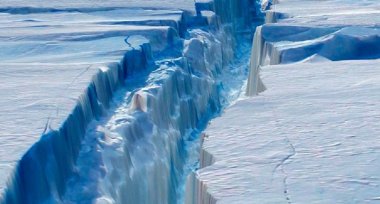
Warming oceans melting Antarctic ice shelves could accelerate sea level rise, Guardian, John Abraham, 9 May 18, “……With global warming, both of the poles are warming quite quickly, and this warming is causing ice to melt in both regions. When we think of ice melting, we may think of it melting from above, as the ice is heated from the air, from sunlight, or from infrared energy from the atmosphere. But in truth, a lot of the melting comes from below. For instance, in the Antarctic, the ice shelves extend from the land out over the water. The bottom of the ice shelf is exposed to the ocean. If the ocean warms up, it can melt the underside of the shelf and cause it to thin or break off into the ocean.
A new study, recently published in Science Advances, looked at these issues. One of the goals of this study was to better understand whether and how the waters underneath the shelf are changing. They had to deal with the buoyancy of the waters. We know that the saltier and colder water is, the denser it is.
Around Antarctica, water at the ocean surface cools down and becomes saltier. These combined effects make the surface waters sink down to the sea floor. But as ice melt increases, fresh water flows into the ocean and interrupts this buoyancy effect. This “freshening” of the water can slow down or shut down the vertical mixing of the ocean. When this happens, the cold waters at the surface cannot sink. The deeper waters retain their heat and melt the ice from below.
The study incorporated measurements of both temperature and salinity (saltiness) at three locations near the Dalton Iceberg Tongue on the Sabrina Coast in East Antarctica. The measurements covered approximately an entire year and gave direct evidence of seasonal variations to the buoyancy of the waters. The researchers showed that a really important component to water-flow patterns were ‘polynyas.’ These are regions of open water that are surrounded by ice, typically by land ice on one side and sea ice on the other side.
When waters from the polynya are cold and salty, the waters sink downwards and form a cold curtain around the ice shelf. However, when the waters are not salty (because fresh water is flowing into the polynya), this protective curtain is disrupted and warm waters can intrude from outside, leading to more ice melt.
Based on this study, we may see increased ice loss in the future – sort of a feedback loop. That concerns us because it will mean more sea level rise (which is already accelerating), and more damage to coastal communities. I asked the lead author, Alesandro Silvano about this work:
Lead author Alesandro Silvano.
We found that freshwater from melting ice shelves is already enough to stop formation of cold and salty waters in some locations around Antarctica. This process causes warming and freshening of Antarctic waters. Ocean warming increases melting of the Antarctic Ice Sheet, causing sea level to rise. Freshening of Antarctic waters weakens the currents that trap heat and carbon dioxide in the ocean, affecting the global climate. In this way local changes in Antarctica can have global implications. Multiple sources of evidence exist now to show that these changes are happening. However, what will happen in Antarctica in the next decades and centuries remains unclear and needs to be understood.
EcoPeace Middle East and the power of environmentalism, Independent Australia, Sophia McNamara
EcoPeace Middle East teach environmental issues to Israeli, Palestinian and Jordanian children in the hopes they’ll bring awareness back to their communities (screen shot via YouTube).
Sophia McNamara introduces Gidon Bromberg and EcoPeace Middle East — an organisation brokering peaceful cooperation with environmentalism.
ECOPEACE MIDDLE EAST is a unique regional organisation that brings together Israeli, Palestinian and Jordanian environmentalists.
It is the only regional non-government organisation (NGO) that exists in Israel, Palestine and Jordan. Among its many battles, Ecopeace Middle East recently helped increase the supply of clean water and energy to Gaza. This is particularly critical considering the United Nations has predicted that Gaza will become uninhabitable by 2020.
I interviewed Israeli co-director and co-founder of EcoPeace Middle East Gidon Bromberg and he told me:
“Just a one hour drive from here in Tel Aviv, there is a water and sanitation crisis in Gaza … Two million people have run out of water. And today, about 97% of the groundwater is undrinkable.”
Bromberg came up with the idea to start EcoPeace when he realised the environment was being completely left out of the peace agenda of the early 1990s.
Originally from Elsternwick in Melbourne, Bromberg attended Elwood High School (formerly Elwood College) and graduated with degrees in Law and Economics from Monash University. Since age 11, Bromberg had known he wanted to return to his family’s hometown of Tel Aviv, Israel.
Straight after university, he made “aliyah“ — a term that describes the process of a Jewish person returning to Israel.
Bromberg came across an advert saying that a newly established non-profit called the Israel Union for Environmental Defence wanted their first lawyer. He volunteered there one day a week for four years, while still working four days a week in private practice, taking a pay cut in the process.
He was then offered a scholarship to study his Masters of Law at the American University in Washington DC, where he ended up being right on the doorstep of negotiations for the Oslo Accords and the Israel-Jordan Peace Treaty. Bromberg’s Masters thesis posed the question: will peace be environmentally sustainable? He concluded that peace could, in fact, be truly harmful to the environment and sustainability unless it was put on the political track.
Bromberg had the idea to create a regional environmental organisation that would address this exact issue. He wanted to hold a meeting with Israeli, Egyptian, Palestinian and Jordanian environmentalists to discuss the possibility of this organisation. He spoke with potential investors in Washington DC — they all told him it was a great idea, but he needed to come back to them when he was older.
In 1994, he went back to Israel and, as part of his scholarship, he worked for a year at the Israel Union of Environmental Defence as a full-time lawyer.
Bromberg immediately wrote to all the potential investors in the United States again, this time from Israel. One of them called him and said he had thought about it and that if he could make the meeting happen, he would fund it. As these were the days before the internet, Bromberg had never met a Palestinian, Jordanian or Egyptian environmentalist.
The World Wildlife Fund had a guide on environmentalist organisations in the region — so he contacted all of them. Bromberg had a meeting in East Jerusalem with a Palestinian environmentalist, who responded to the enquiry, and spoke over the phone to an Egyptian and Jordanian. …..
Today, EcoPeace has adapted to a changed political climate, increased water scarcity and urgency required by climate change. They focus heavily on shared natural resources, regional water security and sustainable development.
A particularly successful initiative by EcoPeace is the Good Water Neighbours Program. This is where youth and adult activists, as well as mayors and municipal staff from Israeli, Palestinian and Jordanian communities all work together across the borders to advance shared solutions for the rehabilitation of natural watersheds.
The Jordan River, possibly the holiest river in the world, with large religious significance in Christianity, Judaism and Islam, “has been turned into little more than an open sewer now,” says Bromberg.
Bromberg says the issue is about more than the river itself:
“The largest number of volunteers from Jordan who have joined ISIS are from Jordan Valley communities. There is a link between ecological demise, poverty, underdevelopment… and then radical, dangerous ideologies. Water security, ours and our neighbours, are national security concerns.”
‘Yes, there is still radiation here’, Gulf News 4 May 18 , Australia’s least likely tourist spot: a test site for atom bombs “……..
“Yes, there is still radiation here,” Robin Matthews ( Australia’s only nuclear tour guide) said as he drove a minibus to the sites where the Australian and British governments dropped seven bombs between 1956 and 1963, which dotted the earth with huge craters and poisoned scores of indigenous people and their descendants.
Back then, the government placed hundreds of human guinea pigs — wearing only shorts and long socks — in the front areas of the test zones. The effects of large doses of radiation were devastating…….
Today, just four people live full time in Maralinga village, a veritable ghost town. Amid the old buildings are new lodgings built for tourists, complete with hot water and Wi-Fi.
In the 1950s and ‘60s, at the height of the Cold War, 35,000 military personnel lived here.
The first nuclear test was conducted in September 1956, two months before the Melbourne Olympics.
That blast — as powerful as the bomb that the US dropped on Hiroshima — was the first of seven atom bombs set off here. But it was the so-called minor tests that were the most harrowing. Carried out in secret, the tests examined how toxic substances, including uranium and plutonium 239, would react when burnt or blown up.
….. Around one area tourists can visit are 22 major pits, each at least 15 metres deep and cased in reinforced concrete to prevent dangerous radiation from seeping out.
The site looks like a recently tilled garden bed, stretching out for hundreds of yards, in a near perfect circle. Dotting the red desert earth are shards of twisted metal. Aside from a few feral camels loping nearby, it is still and silent.
But on October 4 1956, a “nuclear landmine” was detonated here, tearing a crater 40 metres wide and 21 metres deep into the earth.
‘This is their land’
The resulting atomic reaction took only a fraction of a second, but its effects on one indigenous family would last decades. Survivors of the blasts, their children and grandchildren suffered from cataracts, blood diseases, arthritic conditions, stomach cancers and birth defects…….https://gulfnews.com/news/asia/australia/yes-there-is-still-radiation-here-1.2216400
We speak of “dumb creatures” because animal utterances are largely incomprehensible to the human ear. But animals can show us things. And if you know how to look, they might even give you warning signals. Bugs, for example, give warnings where human perception fails. But to understand those warnings, you have to learn how to read their signals.
You can find the insect drawings of the Swiss artist and scientific illustrator, Cornelia Hesse-Honegger, in museums and galleries all over the world. Most of them reflect (and praise) the breathtaking beauty of the insect realm. But their beauty can be deceptive.
In 1987, one year after the Chernobyl nuclear disaster, Hesse-Honegger came across deformed leaf bugs in areas of Sweden that had been hit hard by fallout from Ukraine. She sensed that something was seriously wrong, even though what she saw did not come as a total surprise. Hesse-Honegger had already been working for many years as a scientific illustrator for the Natural History Museum at the University of Zurich. As early as 1967 she had drawn mutations of drosophila fruit flies and houseflies that had been exposed to radiation in the lab.
In the June 19, 2014 video [below on original ] by Michael Segal for Nautilus, Hesse-Honegger explains her background and work.
After studying the bugs in Sweden she illustrated mutations in many places and documented them in her book Why I Am in Österfärnebo? She did field studies near the Krümmel nuclear power plant in Germany and the French reprocessing facility in La Hague, and she made drawings near Three Mile Island and the nuclear test site in Nevada. Logically, one of her insect illustration books is called “The Future’s Mirror.”
In October 2016, she was invited to Japan to give the opening speech at the Citizen-Scientist International Symposium on Radiation Protection in Nihonmatsu, where, at the same time, she showed her work at the Fukushima Art Biennale. But she also took the opportunity to conduct a field study around the Fukushima nuclear power plant. Her studies focus on what are called true bugs — or Heteroptera. These insects belong to the phylum Arthropoda and are a suborder of Hemiptera.
“Since the accident at the Chernobyl nuclear power plant in April 1986 I have collected 18,000 true bugs, cicada and ladybird beetles,” Hesse-Honegger says. “I have conducted epidemiological studies in areas with nuclear power plants, nuclear reprocessing plants, nuclear test areas and the nuclear factories at Hanford. After collecting the true bugs, I examine them and paint some of them with the help of my binocular microscope. With my watercolors I show the quality of disturbances. With the help of maps I can demonstrate the percentage and distribution of disturbances.”
Everywhere she encountered heteroptera bugs and drosophila flies with distinct mutations. Her comment: “While the natural proportion of mutated insects is just one percent, in the places I studied, up to one in five insects shows physical damage. The damage is likely to be caused by the ingestion of radioactive particles.”
What is really alarming, though, is that injured insects are found not only where you might expect them — near the sites of nuclear catastrophes — but also, as Hesse-Honegger discovered, in the vicinity of well-maintained Swiss nuclear power plants under normal operating conditions.
“That is the real catastrophe,” comments Hildegard Breiner, Austrian anti-nuclear activist and a fellow Nuclear-Free Future Award laureate, (in 2015, the Nuclear-Free Future Award Foundation gave its award in the category of Education to Hesse-Honegger.) Breiner shares Hesse-Honegger’s suspicion that bugs and other creatures with short reproductive cycles tell us that “normal operating conditions” at nuclear power plants are anything but normal.
Hesse-Honegger’s work has also inspired other artists, as the short cut-out animation below [on original] by Mary Pedicini illustrates. It includes Hesse-Honegger’s illustrations along with images by the photographer and early motion picture pioneer, Eadweard Muybridge.
The scientist/illustrator also raises her voice against other threats which go mostly unmentioned compared to the more obvious threat scenarios. One such example is the long-term danger of weapons equipped with depleted uranium. The reactions to “bug warnings” and the dangers of depleted uranium indicate that low-level radiation is an issue widely ignored and poorly understood.
Wild boars in Europe, parts of the former Soviet Union and Japan are too radioactive to be safe for human consumption. That sounds like good news for the boars. But only partly so.
The boars are radioactively contaminated due to fallout from the April 26, 1986 Chernobyl, Ukraine nuclear power plant explosion. They were vulnerable because they love mushrooms and truffles. These fungi absorbed the cesium-137 fallout released by the Chernobyl nuclear explosion.
Because they lack stems and roots, mushrooms and other fungi use absorption to obtain nutrition from the atmosphere through their surface cells. As a result, they are prone to absorbing radioactive substances such as cesium-137 and other radionuclides.
When the boars eat the mushrooms and truffles, that radioactive contamination moves up the food chain. The mushrooms are also too radioactive for human consumption.
Consequently, hunters in Saxony, Germany, 700 miles from Chernobyl, still have to have any boar they kill tested first for radioactivity.
Hunters in Sweden are equally wary of killing and eating wild boar, which have been found to be 10 times more radioactive than the “acceptable” (but, as always, not “safe”) limits for consumption.
Wild boars have of course been affected in Japan as well, since the 2011 Fukushima disaster. Apart from roaming at will through the deserted prefecture — where they have even been observed entering and occupying abandoned houses — these animals also carry cesium contamination. However, one study at least has shown that their cesium levels are significantly lower than those of boars affected by Chernobyl fallout.
The unsuitability of wild boars for human consumption resulting from Chernobyl may sound like a win for boars and the vegetarian cause. But this radioactive contamination may come at a price. To date, studies of wildlife in the Chernobyl and Fukushima zones have shown that even if numbers of animals appear to have increased due to the absence of human predators, the health of these species contaminated with radiation has been seriously compromised.
Birds, mice and insects have demonstrated low to zero sperm counts, a tendency to tumors and cataracts, smaller brains, and shorter lifespans. Examination of muscle tissue and bone marrow in Macaque monkeys living in the contaminated areas of Fukushima yielded ominous signs. The monkeys had significantly low white and red blood cell counts as well as a reduced growth rate for body weight and smaller head sizes. The bone marrows of these monkeys were found to be producing almost no blood cells. Instead, the bone marrow has turned almost entirely into white-looking fat.
So far, Europe’s wild boar seem to have been evaluated only in relation to their contribution as a food source. Missing from the studies is what might be happening to the health of the boars themselves, and the implications for future generations of these animals.
“Gleaning the contamination levels of boars once they are killed is not enough,” says Cindy Folkers, radiation and health specialist at Beyond Nuclear, who looked at published studies on boars and radioactivity. “There is no history of their contamination level or any comparison to any damage they may have suffered. The genes could tell us that, but it appears no one is looking.”
Such changes, especially to DNA, can take many years and several generations to manifest as disease. But if negative outcomes do occur, this could signal a decline in the species, with repercussions for other animals along the food chain as well.
“Wild boars are one of the biomagnifiers of radioactivity in the environment,” added Folkers. “They dig in soil that might be slightly contaminated with cesium, inhaling and ingesting it, and foraging for mushrooms, which they then ingest. They are part of the ecosystem that keeps the cesium circulating.”
From Alaska to Australia, scientists are turning to the knowledge of traditional people for a deeper understanding of the natural world. What they are learning is helping them discover more about everything from melting Arctic ice, to protecting fish stocks, to controlling wildfires. BY JIM ROBBINS•APRIL 26, 2018
While he was interviewing Inuit elders in Alaska to find out more about their knowledge of beluga whales and how the mammals might respond to the changing Arctic, researcher Henry Huntington lost track of the conversation as the hunters suddenly switched from the subject of belugas to beavers.
It turned out though, that the hunters were still really talking about whales. There had been an increase in beaver populations, they explained, which had reduced spawning habitat for salmon and other fish, which meant less prey for the belugas and so fewer whales.
“It was a more holistic view of the ecosystem,” said Huntington. And an important tip for whale researchers. “It would be pretty rare for someone studying belugas to be thinking about freshwater ecology.”
Around the globe, researchers are turning to what is known as Traditional Ecological Knowledge (TEK) to fill out an understanding of the natural world. TEK is deep knowledge of a place that has been painstakingly discovered by those who have adapted to it over thousands of years. “People have relied on this detailed knowledge for their survival,” Huntington and a colleague wrote in an article on the subject. “They have literally staked their lives on its accuracy and repeatability.”
Tapping into this traditional wisdom is playing an outsized role in the Arctic, where change is happening rapidly.
This realm has long been studied by disciplines under headings such as ethno-biology, ethno-ornithology, and biocultural diversity. But it has gotten more attention from mainstream scientists lately because of efforts to better understand the world in the face of climate change and the accelerating loss of biodiversity.
Anthropologist Wade Davis, now at the University of British Columbia, refers to the constellation of the world’s cultures as the “ethnosphere,” or “the sum total of all thoughts and dreams, myths, ideas, inspirations, intuitions, brought into being by human imagination since the dawn of consciousness. It’s a symbol of all that we are, and all that we can be, as an astonishingly inquisitive species.”
One estimate says that while native peoples only comprise some 4 or 5 percent of the world’s population, they use almost a quarter of the world’s land surface and manage 11 percent of its forests. “In doing so, they maintain 80 percent of the planet’s biodiversity in, or adjacent to, 85 percent of the world’s protected areas,” writes Gleb Raygorodetsky, a researcher with the POLIS Project on Ecological Governance at the University of Victoria and the author of The Archipelago of Hope: Wisdom and Resilience from the Edge of Climate Change.
Tapping into this wisdom is playing an outsized role in sparsely settled places such as the Arctic, where change is happening rapidly – warming is occurring twice as fast as other parts of the world. Tero Mustonen, a Finnish researcher and chief of his village of Selkie, is pioneering the blending of TEK and mainstream science as the director of a project called the Snowchange Cooperative. “Remote sensing can detect changes,” he says. “But what happens as a result, what does it mean?” That’s where traditional knowledge can come into play as native people who make a living on the landscape as hunters and fishers note the dramatic changes taking place in remote locales – everything from thawing permafrost to change in reindeer migration and other types of biodiversity redistribution.
The Skolt Sami people of Finland, for example, participated in a study that was published in the journal Science last year, which adopted indicators of environmental changes based on TEK. The Sami have seen and documented a decline in salmon in the Näätämö River, for instance. Now, based on their knowledge, they are adapting – reducing the number of seine nets they use to catch fish, restoring spawning sites, and also taking more pike, which prey on young salmon, as part of their catch. The project is part of a co-management process between the Sami and the government of Finland.
It’s not only in the Arctic. Around the world there are efforts to make use of traditional wisdom to gain a better and deeper understanding of the planet – and there is sometimes a lot at stake.
Record brush fires burned across Australia in 2009, killing 173 people and injuring more than 400. The day the number of fires peaked – February 7 – is known as Black Saturday. It led to a great deal of soul searching in Australia, especially as climate warming has exacerbated fire seasons there.
Land managers in Australia have adopted many of the fire-control practices of the aborigines and have partnered with native people.
Bill Gammage is an academic historian and fellow at the Humanities Research Center of the Australian National University, and his book, The Biggest Estate on Earth: How the Aborigines Made Australia, looks at the complex and adept way that aborigines, prior to colonization in 1789, managed the landscape with “fire and no fire” – something called “fire stick farming.”
They used “cool” fires to control everything from biodiversity to water supply to the abundance of wildlife and edible plants. Gammage noted five stages of the indigenous use of fire – first was to control wildfire fuel; second, to maintain diversity; third, to balance species; fourth, to ensure abundance; and five, to locate resources conveniently and predictably. The current regime, he says, is still struggling with number one.
“Controlled fire averted uncontrolled fire,” Gammage says, “and fire or no-fire distributed plants with the precision of a flame edge. In turn, this attracted or deterred grazing animals and located them in habitats each preferred, making them abundant, convenient, and predictable. All was where fire or no-fire put it. Australia was not natural in 1788, but made.”
While the skill of aborigines with fire had been noted before the giant brushfires – early settlers remarked on the “park-like” nature of the landscape – and studied before, it’s taken on new urgency. That’s why Australian land managers have adopted many of the ideas and partnered with native people as co-managers. The fire practices of the aborigines are also being taught and used in other countries.
Scientists have looked to Australian natives for other insights into the natural world. A team of researchers collaborated with natives based on their observations of kites and falcons that fly with flaming branches from a forest fire to start other fires. It’s well known that birds will hunt mice and lizards as they flee the flames of a wildfire. But stories among indigenous people in northern Australia held that some birds actually started fires by dropping a burning branch in unburned places. Based on this TEK, researchers watched and documented this behavior.
“It’s a feeding frenzy, because out of these grasslands comes small birds, lizards, insects, everything fleeing in front of the fire,” said Bob Gosford, an indigenous rights lawyer and ornithologist, who worked on the research, in an interview with the Australian Broadcasting Corporation in 2016.
Another recent study down under found that an ancient practice of using fire to clear land to improve hunting also creates a more diverse mosaic of re-growth that increases the number of the primate prey species: monitor lizards and kangaroos.
“Westerners have done little but isolate ourselves from nature,” said Mark Bonta, an assistant professor at Penn State Altoona who was on a co-author on the paper on fire and raptors. “Yet those who make a point of connecting with our earth in some form have enormous knowledge because they interact with a species. When you get into conservation, [that knowledge] is even more important.” Aboriginal people “don’t see themselves as superior to or separated from animals. They are walking storehouses of knowledge,” he said.
The Maya people of Mesoamerica have much to teach us about farming, experts say. Researchers have found that they preserve an astonishing amount of biodiversity in their forest gardens, in harmony with the surrounding forest. “The active gardens found around Maya forest villagers’ houses shows that it’s the most diverse domestic system in the world,” integrated into the forest ecosystem, writes Anabel Ford, who is head of the MesoAmerican Research Center at the University of California at Santa Barbara. “These forest gardeners are heroes, yet their skill and sophistication have too long been set aside and devalued.”
Some native people have the ability to adopt the “perspective of many creatures and objects – rocks, water, clouds,” a researcher says.
Valuing these life ways is an important part of the process. For the Skolt Sami, writes Mustonen, “seeing their language and culture valued led to an increase in self-esteem and power over their resources.”
It may not just be facts about the natural world that are important in these exchanges, but different ways of being and perceiving. In fact, there are researchers looking into the relationship between some indigenous people and the very different ways they see the world.
Felice Wyndham is an ecological anthropologist and ethnobiologist who has noted that people she has worked with can intimately sense the world beyond their body. “It’s a form of enhanced mindfulness,” she says. “It’s quite common, you see it in most hunter-gatherer groups. It’s an extremely developed skill base of cognitive agility, of being able to put yourself into a viewpoint and perspective of many creatures or objects – rocks, water, clouds.
Among the most important messages from traditional people is their equanimity and optimism. There “is no sense of doom and gloom,” says Raygorodetsky. “Despite dire circumstances, they maintain hope for the future.”
Ottawa Citizen 23rd April 2018, What makes Canada stand out in the world is unlimited natural beauty: miles
of unspoiled forests, lakes, rivers, prairies and tundra. We are a green,
clean country. Or so we like to think.
So it may come as a surprise that we
plan to put 40 per cent of Canada’s radioactive waste in a gigantic dump
at Chalk River, next to the Ottawa River. The dump will hold
“low-level” waste that contains radioactive uranium, plutonium, cesium,
strontium, iodine and tritium (among others).
Rain and melting snow will leach radioactive elements from the dump. Every year, Canadian Nuclear
Laboratories estimates an average of 6.5 million litres of this water will
be treated and discharged into a nearby wetland and thence the Ottawa
River. An unforeseen event – earthquake, deluge or explosion – could
contaminate the Ottawa River and its riverbed from Chalk River to Montreal. http://ottawacitizen.com/opinion/columnists/shacherl
Ostap Semerak called for international help to stop a potential “radiation catastrophe” as the United States also expressed concern over the mine and a key water facility in eastern Ukraine that has temporarily shut down after five workers were shot.
Soviet specialists conducted the underground explosion to free trapped gas at the YunKom mine in Yenakieve, 55km northeast of what is now the militant stronghold of Donetsk, and pumps have kept the blast zone relatively dry ever since.
Separatist officials insist that pumping and special monitoring are no longer necessary, however, citing local and Russian experts who say radioactivity levels in the mine are normal, and that flooding it would pose no threat of contamination to the Donbas region’s water table.
“What the militants are playing at is nothing other than terrorism and political blackmail,” Mr Semerak told members of the European Parliament in Strasbourg.
“Our joint task with international partners is to prevent a second Chernobyl in Donbas,” he said, referring to the atomic power station north of Kiev that exploded in April 1986, showering much of northern Europe with radiation
Drinking water
Earlier this week US state department spokeswoman Heather Nauert wrote on Twitter: “Plans by Russian proxies to flood the abandoned YunKom coal mine… could threaten drinking water of thousands of Ukrainians in Russia-controlled eastern Ukraine. We urge Russia and its proxy authorities to act responsibly.”
Four years of fighting in Donbas have killed more than 10,300 people, displaced 1.6 million and ravaged an industrial region of mines, metal works and chemical plants, creating the potential for a long legacy of environmental problems.
“Any present destabilisation of the mine via flooding could release up to 500 cubic metres of radiation-contaminated mine waters into the ground water table,” the OSCE said.
The conflict frequently disrupts water supplies through Soviet-built canals and pipes that criss-cross the front line, and which workers take considerable risks to maintain and repair after damage by shelling.
Under fire
The Donetsk water filtration plant, which sits right on the frontline, shut down again on Wednesday after five employees were wounded when their bus came under fire the previous day.
Hundreds of thousands of people in government and militia-held territory receive water from the plant, which is often struck by shells despite the presence there of chlorine and other hazardous chemicals.
“The chlorine is being washed out so it doesn’t stay in the pipes. They are halting the pumping station,” said Alexander Yevdokimov, acting head of the Donbas Water company. “It doesn’t mean we have shut it down forever, but we simply need security guarantees for our employees.”
Ms Nauert said the US urged “all forces to withdraw from positions around the Donetsk filtration station and other critical civilian infrastructure”.
Near Matera (ANSA) – Potenza, April 13 – An Italian nuclear plant in the process of being decommissioned was impounded Friday after the nearby sea was found to be contaminated. The ITREC plant at Rotondella near Matera in Basilicata was found to be pouring contaminated run-off water into the Ionian Sea.
Three water collection tanks and the run-off pipe were seized in a probe by Potenza prosecutors.
Possible charges in the case are environmental pollution, misrepresentation, illegal waste disposal and illegal waste trafficking, judicial sources said……http://www.ansa.it/english/news/general_news/2018/04/13/nuke-plant-seized-after-sea-contaminated-4_ccf1d514-352a-4efb-8b42-1f61bf3f97e4.html
Guardian 11th April 2018, The warm Atlantic current linked to severe and abrupt changes in the
climate in the past is now at its weakest in at least 1,600 years, new research shows.
The findings, based on multiple lines of scientific evidence, throw into question previous predictions that a catastrophic
collapse of the Gulf Stream would take centuries to occur. Such a collapse
would see western Europe suffer far more extreme winters, sea levels rise
fast on the eastern seaboard of the US and would disrupt vital tropical
rains.
Radioactively-hot particles detected in dusts and soils from Northern Japan by combination of gamma spectrometry, autoradiography, and SEM/EDS analysis and implications in radiation risk assessment, Science Direct












 nuclear-news